PAPP-A Protein Diagnostic and Prognostic Significance in Acute Coronary Syndromes Without Persistent ST-T-Segment Elevation


 ,
, 
Abstract
1. Introduction
- To assess whether PAPP-A protein determination has diagnostic significance in identifying acute myocardial infarction (AMI).
- To compare the sensitivity, specificity and predictive value of PAPP-A protein with the classic marker of myocardial necrosis—cardiac troponin T (cTnT).
- To assess whether PAPP-A is a significant predictor of adverse cardiovascular events, including cardiovascular death (CD) and AMI, during follow-up at 1, 3, 6 and 12 months.
- To assess whether PAPP-A has prognostic value for the occurrence of restenosis.
2. Materials and Methods
2.1. Study Population
2.2. Biochemical Analysis of Blood Samples
2.3. Echocardiographic Examination
2.4. Clinical Follow-Up Period
2.5. Statistical Analysis
3. Results
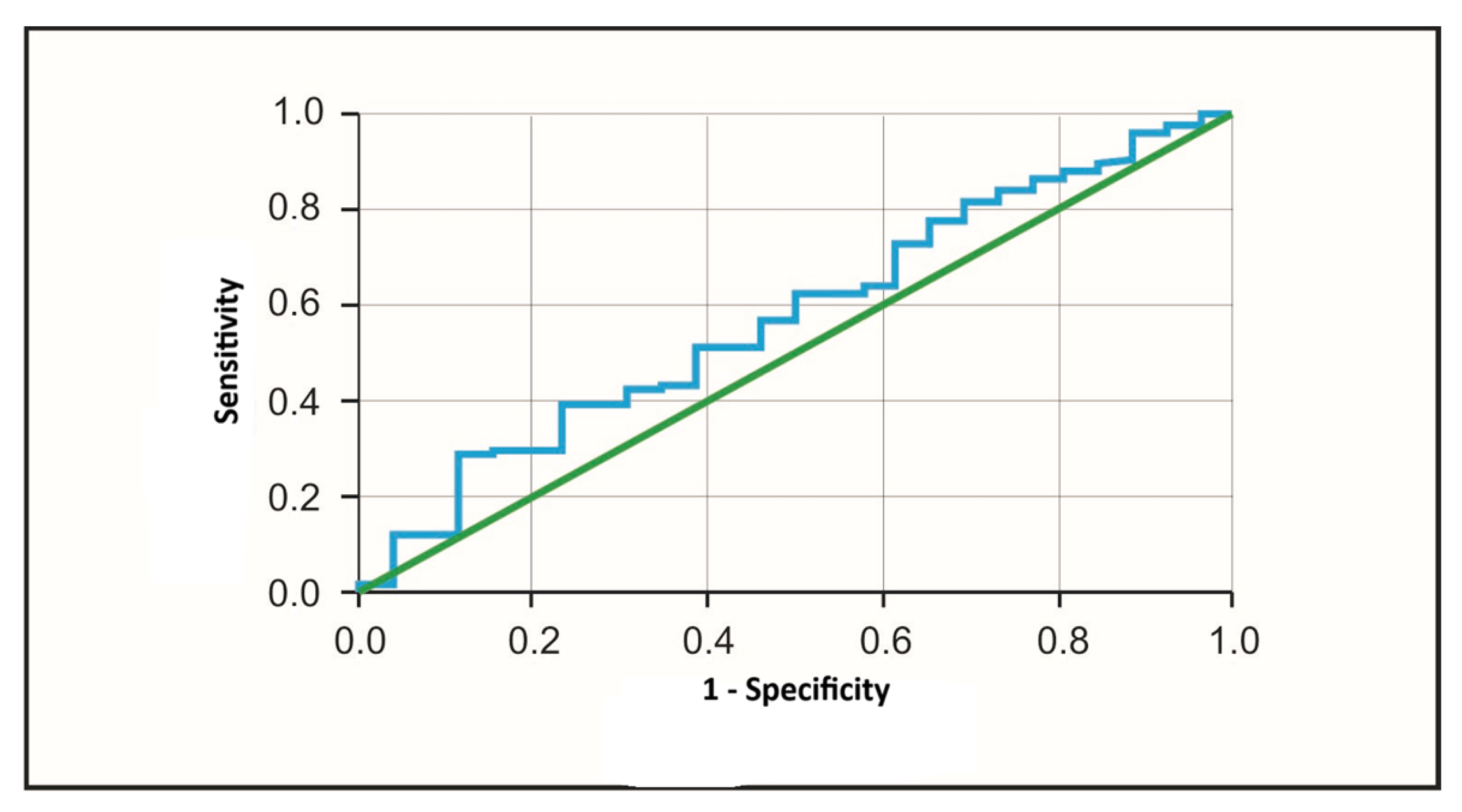
3.1. The Role of PAPP-A Protein in Predicting Myocardial Infarction
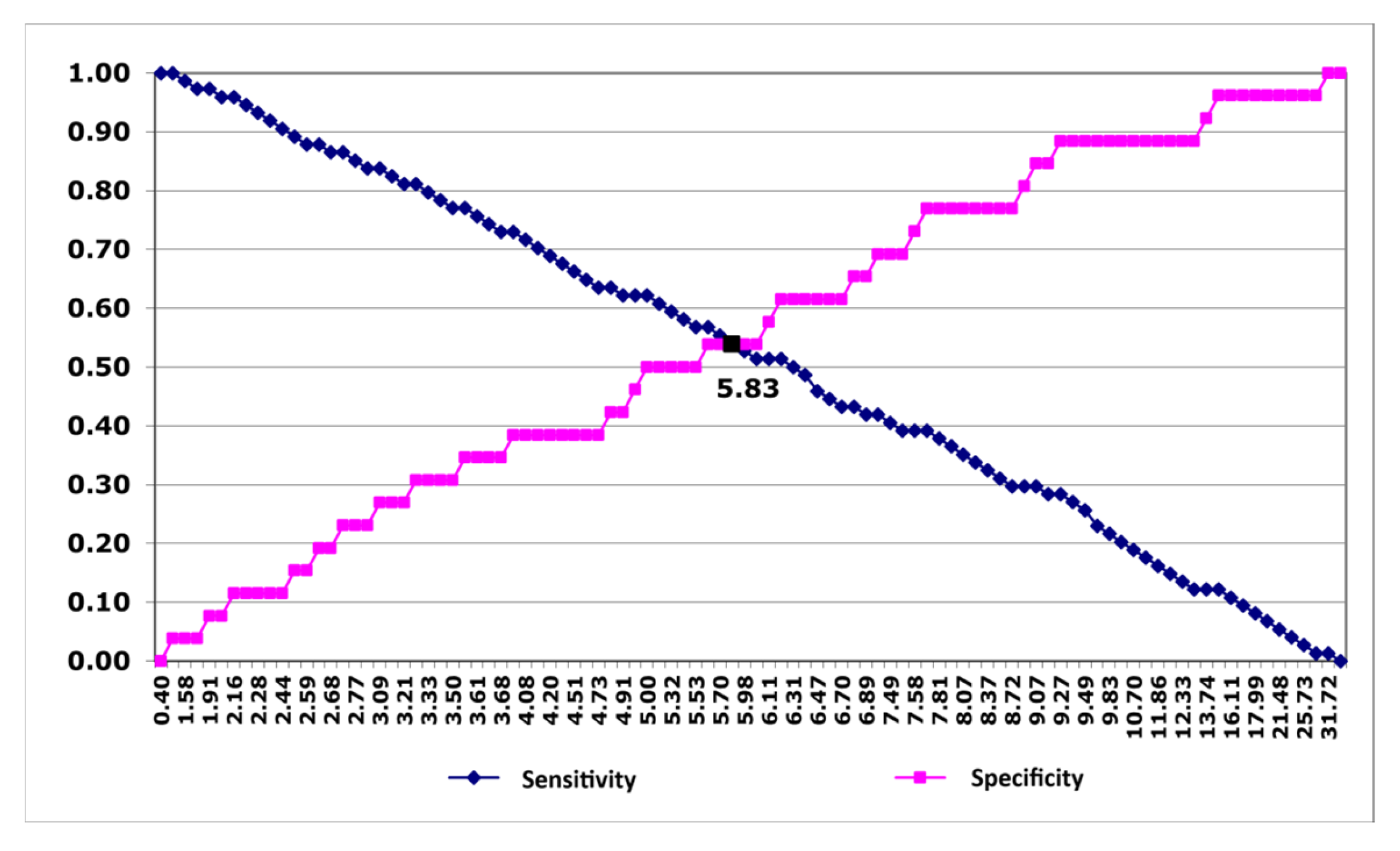
3.2. Comparison of Sensitivity, Specificity and Predictive Values of PAPP-A Protein Versus the cTnT for Predicting NSTEMI
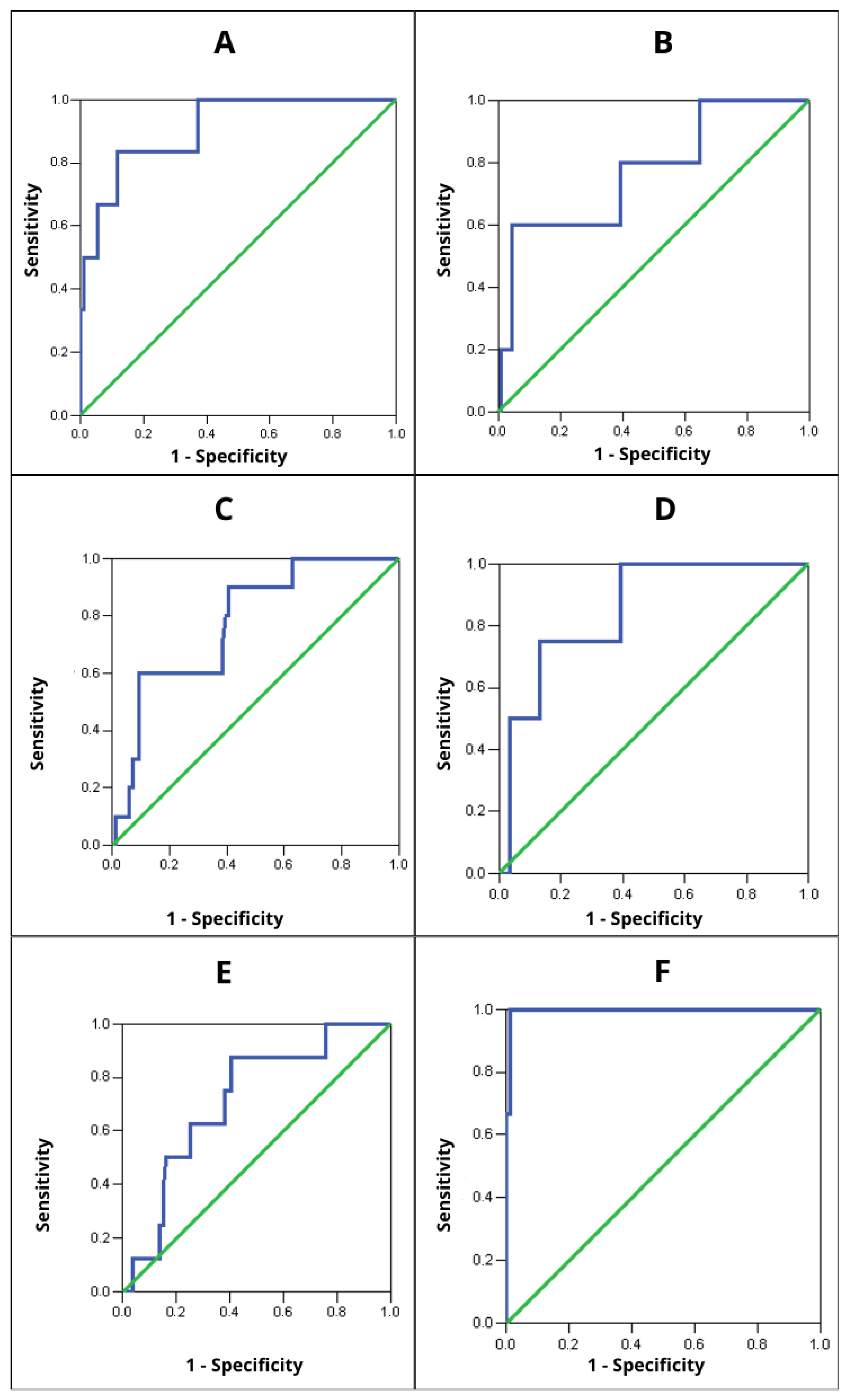
3.3. Assessment of the Associations Between PAPP-A Protein Concentrations and the Occurrence of Adverse Cardiovascular Events
3.3.1. First Month of the Clinical Follow-Up Period
3.3.2. Interval Between the First and the Third Month of the Clinical Follow-Up Period
3.3.3. Interval Between the Third and the Sixth Month of the Clinical Follow-Up Period
3.3.4. Interval Between the Sixth and the Twelfth Month of the Clinical Follow-Up Period
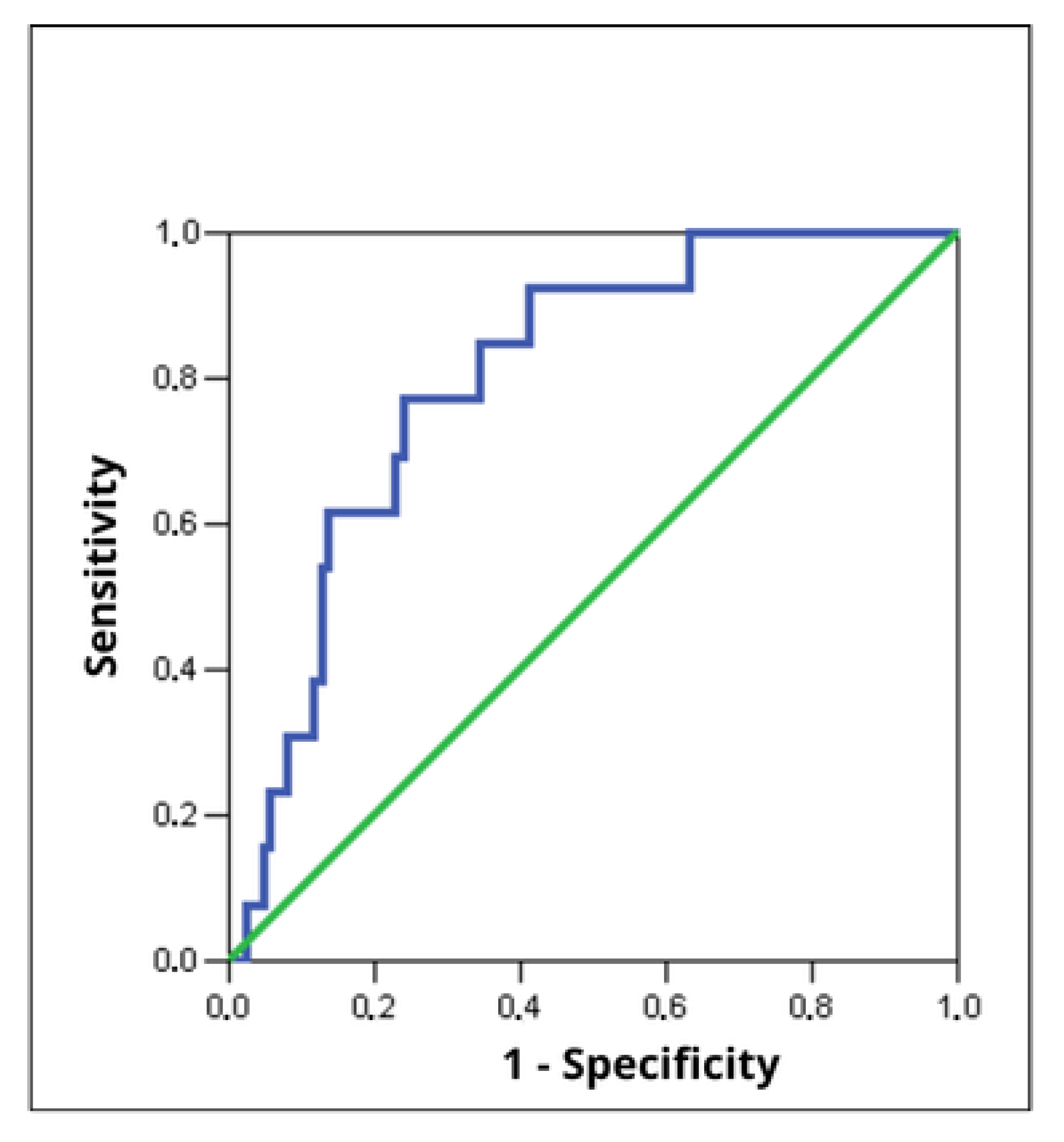
3.3.5. Association Between PAPP-A Protein Concentration and the Occurrence of Restenosis
4. Discussion
5. Limitations
6. Conclusions
Author Contributions
Funding
Institutional Review Board Statement
Informed Consent Statement
Data Availability Statement
Conflicts of Interest
References
- Di Cesare, M.; Perel, P.; Taylor, S.; Kabudula, C.; Bixby, H.; Gaziano, T.A.; McGie, D.V.; Mwangi, J.; Pervan, B.; Narula, J.; et al. The Heart of the World. Glob. Heart 2024, 19, 11. [Google Scholar] [CrossRef] [PubMed]
- Global Burden of Cardiovascular Diseases and Risks 2023 Collaborators. Global, Regional, and National Burden of Cardiovascular Diseases and Risk Factors in 204 Countries and Territories, 1990–2023. J. Am. Coll. Cardiol. 2025, 86, 2167–2243. [CrossRef]
- Chong, B.; Jayabaskaran, J.; Jauhari, S.M.; Chan, S.P.; Goh, R.; Kueh, M.T.W.; Li, H.; Chin, Y.H.; Kong, G.; Anand, V.V.; et al. Global burden of cardiovascular diseases: Projections from 2025 to 2050. Eur. J. Prev. Cardiol. 2025, 32, 1001–1015. [Google Scholar] [CrossRef] [PubMed]
- Kraler, S.; Mueller, C.; Libby, P.; Bhatt, D.L. Acute coronary syndromes: Mechanisms, challenges, and new opportunities. Eur. Heart J. 2025, 46, 2866–2889. [Google Scholar] [CrossRef]
- Rao, S.V.; O’Donoghue, M.L.; Ruel, M.; Rab, T.; Tamis-Holland, J.E.; Alexander, J.H.; Baber, U.; Baker, H.; Cohen, M.G.; Cruz-Ruiz, M.; et al. 2025 ACC/AHA/ACEP/NAEMSP/SCAI Guideline for the Management of Patients with Acute Coronary Syndromes: A Report of the American College of Cardiology/American Heart Association Joint Committee on Clinical Practice Guidelines. Circulation 2025, 151, e771–e862. [Google Scholar] [CrossRef]
- Bhatt, D.L.; Lopes, R.D.; Harrington, R.A. Diagnosis and Treatment of Acute Coronary Syndromes. JAMA 2022, 327, 662. [Google Scholar] [CrossRef]
- Park, K.C.; Gaze, D.C.; Collinson, P.O.; Marber, M.S. Cardiac troponins: From myocardial infarction to chronic disease. Cardiovasc. Res. 2017, 113, 1708–1718. [Google Scholar] [CrossRef]
- Bayes-Genis, A.; Conover, C.A.; Overgaard, M.T.; Bailey, K.R.; Christiansen, M.; Holmes, D.R.; Virmani, R.; Oxvig, C.; Schwartz, R.S. Pregnancy-Associated Plasma Protein A as a Marker of Acute Coronary Syndromes. N. Engl. J. Med. 2001, 345, 1022–1029. [Google Scholar] [CrossRef]
- Conover, C.A.; Oxvig, C. The Pregnancy-Associated Plasma Protein-A (PAPP-A) Story. Endocr. Rev. 2023, 44, 1012–1028. [Google Scholar] [CrossRef]
- Lin, T.-M.; Halbert, S.P.; Kiefer, D.; Spellacy, W.N.; Gall, S. Characterization of four human pregnancy-associated plasma proteins. Am. J. Obstet. Gynecol. 1974, 118, 223–236. [Google Scholar] [CrossRef]
- Li, Y.; Zhou, C.; Zhou, X.; Song, L.; Hui, R. PAPP-A in cardiac and non-cardiac conditions. Clin. Chim. Acta 2013, 417, 67–72. [Google Scholar] [CrossRef] [PubMed]
- Bayes-Genis, A.; Schwartz, R.S.; Lewis, D.A.; Overgaard, M.T.; Christiansen, M.; Oxvig, C.; Ashai, K.; Holmes, D.R., Jr.; Conover, C.A. Insulin-Like Growth Factor Binding Protein-4 Protease Produced by Smooth Muscle Cells Increases in the Coronary Artery After Angioplasty. Arterioscler. Thromb. Vasc. Biol. 2001, 21, 335–341. [Google Scholar] [CrossRef] [PubMed]
- Wittfooth, S.; Qin, Q.-P.; Lund, J.; Tierala, I.; Pulkki, K.; Takalo, H.; Pettersson, K. Immunofluorometric Point-of-Care Assays for the Detection of Acute Coronary Syndrome-Related Noncomplexed Pregnancy-Associated Plasma Protein A. Clin. Chem. 2006, 52, 1794–1801. [Google Scholar] [CrossRef] [PubMed]
- Qin, Q.-P.; Kokkala, S.; Lund, J.; Tamm, N.; Voipio-Pulkki, L.-M.; Pettersson, K. Molecular Distinction of Circulating Pregnancy-Associated Plasma Protein A in Myocardial Infarction and Pregnancy. Clin. Chem. 2005, 51, 75–83. [Google Scholar] [CrossRef]
- Glerup, S.; Boldt, H.B.; Overgaard, M.T.; Sottrup-Jensen, L.; Giudice, L.C.; Oxvig, C. Proteinase Inhibition by Proform of Eosinophil Major Basic Protein (pro-MBP) Is a Multistep Process of Intra- and Intermolecular Disulfide Rearrangements. J. Biol. Chem. 2005, 280, 9823–9832. [Google Scholar] [CrossRef]
- Stocker, R.; Keaney, J.F. New insights on oxidative stress in the artery wall. J. Thromb. Haemost. 2005, 3, 1825–1834. [Google Scholar] [CrossRef]
- Heidari, B.; Fotouhi, A.; Sharifi, F.; Mohammad, K.; Pajouhi, M.; Paydary, K.; Fakhrzadeh, H. Elevated serum levels of pregnancy-associated plasma protein-A in type 2 diabetics compared to healthy controls: Associations with subclinical atherosclerosis parameters. Acta Med. Iran. 2015, 53, 395–402. [Google Scholar]
- Sangiorgi, G.; Mauriello, A.; Bonanno, E.; Oxvig, C.; Conover, C.A.; Christiansen, M.; Trimarchi, S.; Rampoldi, V.; Holmes, D.R., Jr.; Schwartz, R.S.; et al. Pregnancy-Associated Plasma Protein-A Is Markedly Expressed by Monocyte-Macrophage Cells in Vulnerable and Ruptured Carotid Atherosclerotic Plaques. J. Am. Coll. Cardiol. 2006, 47, 2201–2211. [Google Scholar] [CrossRef]
- Consuegra-Sanchez, L.; Fredericks, S.; Kaski, J.C. Pregnancy-associated plasma protein-A (PAPP-A) and cardiovascular risk. Atherosclerosis 2009, 203, 346–352. [Google Scholar] [CrossRef]
- BJespersen, C.H.; Vestergaard, K.R.; Schou, M.; Teisner, B.; Goetze, J.P.; Iversen, K. Pregnancy-Associated Plasma Protein-A and the Vulnerable Plaque. Biomark. Med. 2014, 8, 1033–1047. [Google Scholar] [CrossRef]
- Heider, P.; Pfäffle, N.; Pelisek, J.; Wildgruber, M.; Poppert, H.; Rudelius, M.; Eckstein, H.-H. Is Serum Pregnancy-Associated Plasma Protein A Really a Potential Marker of Atherosclerotic Carotid Plaque Stability? Eur. J. Vasc. Endovasc. Surg. 2010, 39, 668–675. [Google Scholar] [CrossRef] [PubMed][Green Version]
- Cosin-Sales, J.; Christiansen, M.; Kaminski, P.; Oxvig, C.; Overgaard, M.T.; Cole, D.; Holt, D.W.; Kaski, J.C. Pregnancy-Associated Plasma Protein A and Its Endogenous Inhibitor, the Proform of Eosinophil Major Basic Protein (proMBP), Are Related to Complex Stenosis Morphology in Patients with Stable Angina Pectoris. Circulation 2004, 109, 1724–1728. [Google Scholar] [CrossRef] [PubMed]
- Li, W.; Li, H.; Zhou, L.; Wang, Z.; Hua, B. Pregnancy-Associated Plasma Protein A Induces Inflammatory Cytokine Expression by Activating IGF-I/PI3K/Akt Pathways. Mediat. Inflamm. 2019, 2019, 8436985. [Google Scholar] [CrossRef] [PubMed]
- Crea, F.; Andreotti, F. Pregnancy associated plasma protein-A and coronary atherosclerosis: Marker, friend, or foe? The opinions expressed in this article are not necessarily those of the Editors of the European Heart Journal or of the European Society of Cardiology. Eur. Heart J. 2005, 26, 2075–2076. [Google Scholar] [CrossRef]
- Conti, E.; Carrozza, C.; Capoluongo, E.; Volpe, M.; Crea, F.; Zuppi, C.; Andreotti, F. Insulin-Like Growth Factor-1 as a Vascular Protective Factor. Circulation 2004, 110, 2260–2265. [Google Scholar] [CrossRef]
- Lippi, G.; Mattiuzzi, C.; Cervellin, G. Pregnancy-associated plasma protein A (PAPP-A) for the early diagnosis of myocardial infarction: More doubts than certainties. Indian Heart J. 2012, 64, 625–626. [Google Scholar] [CrossRef]
- Parveen, N.; Subhakumari, K.N.; Krishnan, S. Pregnancy Associated Plasma Protein-A (PAPP-A) Levels in Acute Coronary Syndrome: A Case Control Study in a Tertiary Care Centre. Indian J. Clin. Biochem. 2015, 30, 150–154. [Google Scholar] [CrossRef]
- Gururajan, P.; Gurumurthy, P.; Nayar, P.; Rao, G.S.N.; Babu, R.S.; Sarasabharati, A.; Cherian, K.M. Pregnancy associated plasma protein-A (PAPP-A) as an early marker for the diagnosis of acute coronary syndrome. Indian Heart J. 2012, 64, 141–145. [Google Scholar] [CrossRef]
- Yang, Y.; Liu, J.; Zhao, F.; Yuan, Z.; Wang, C.; Chen, K.; Xiao, W. Analysis of correlation between heart failure in the early stage of acute myocardial infarction and serum pregnancy associated plasma protein-A, prealbumin, C-reactive protein, and brain natriuretic peptide levels. Ann. Palliat. Med. 2022, 11, 26–34. [Google Scholar] [CrossRef]
- Mjelva, Ø.R.; Brügger-Andersen, T.; Pönitz, V.; Grundt, H.; Kontny, F.; Staines, H.; Nilsen, D.W.T. Long-term prognostic utility of PAPP-A and calprotectin in suspected acute coronary syndrome. Scand. Cardiovasc. J. 2013, 47, 88–97. [Google Scholar] [CrossRef]
- Qin, Q.-P.; Wittfooth, S.; Pettersson, K. Measurement and clinical significance of circulating PAPP-A in ACS patients. Clin. Chim. Acta 2007, 380, 59–67. [Google Scholar] [CrossRef] [PubMed]
- Sun, Y.; Yi, Z.; Jiang, Z.; Fan, L.; Li, X.; Li, M.; Zhang, B.; Cha, Z.; Liu, Y.; Yuan, F.; et al. Prognostic value of ultra-sensitive pregnancy associated plasma protein-A in patients with acute coronary syndrome. Chin. Acad. Med. Sci. 2012, 34, 369–374. [Google Scholar] [CrossRef]
- Jespersen, C.H.B.; Vestergaard, K.R.; Schou, M.; Teisner, B.; Iversen, K. The effect of heparin on pregnancy associated plasma protein-A concentration in healthy, non-pregnant individuals. Clin. Biochem. 2015, 48, 757–761. [Google Scholar] [CrossRef] [PubMed]
- Engvall, E.; Perlmann, P. Enzyme-linked immunosorbent assay (ELISA) quantitative assay of immunoglobulin G. Immunochemistry 1971, 8, 871–874. [Google Scholar] [CrossRef] [PubMed]
- Voller, A.; Bidwell, D.E.; Bartlett, A. Enzyme immunoassays in diagnostic medicine. Theory and practice. Bull. World Health Organ. 1976, 53, 55–65. [Google Scholar]
- Hornbeck, P.V. Enzyme-Linked Immunosorbent Assays. Curr. Protoc. Immunol. 2015, 110, 2.1.1–2.1.23. [Google Scholar] [CrossRef]
- Omeh, D.J.; Shlofmitz, E. Restenosis of Stented Coronary Arteries. In StatPearls; StatPearls Publishing: Treasure Island, FL, USA, 2025. [Google Scholar]
- Thygesen, K.; Alpert, J.S.; Jaffe, A.S.; Chaitman, B.R.; Bax, J.J.; Morrow, D.A.; White, H.D. Fourth Universal Definition of Myocardial Infarction (2018). J. Am. Coll. Cardiol. 2018, 72, 2231–2264. [Google Scholar] [CrossRef]
- Departament Analiz i Innowacji. NFZ o Zdrowiu, Choroba Niedokrwienna Serca. Available online: https://ezdrowie.gov.pl/pobierz/nfz_o_zdrowiu_choroba_niedokrwienna_serca_v1 (accessed on 13 December 2025).
- Hedayati, T.; Yadav, N.; Khanagavi, J. Non–ST-Segment Acute Coronary Syndromes. Cardiol. Clin. 2018, 36, 37–52. [Google Scholar] [CrossRef]
- Bergmark, B.A.; Mathenge, N.; Merlini, P.A.; Lawrence-Wright, M.B.; Giugliano, R.P. Acute coronary syndromes. Lancet 2022, 399, 1347–1358. [Google Scholar] [CrossRef]
- Antman, E.; Bassand, J.-P.; Klein, W.; Ohman, M.; Lopez Sendon, J.L.; Rydén, L.; Simoons, M.; Tandera, M. Myocardial infarction redefined—A consensus document of The Joint European Society of Cardiology/American College of Cardiology committee for the redefinition of myocardial infarction. J. Am. Coll. Cardiol. 2000, 36, 959–969. [Google Scholar] [CrossRef]
- Morrow, D.A.; de Lemos, J.A. Benchmarks for the Assessment of Novel Cardiovascular Biomarkers. Circulation 2007, 115, 949–952. [Google Scholar] [CrossRef] [PubMed]
- Bagai, A.; Alexander, K.P.; Berger, J.S.; Senior, R.; Sajeev, C.; Pracon, R.; Mavromatis, K.; Lopez-Sendón, J.L.; Gosselin, G.; Diaz, A.; et al. Use of troponin assay 99th percentile as the decision level for myocardial infarction diagnosis. Am. Heart J. 2017, 190, 135–139. [Google Scholar] [CrossRef] [PubMed]
- Apple, F.S.; Sandoval, Y.; Jaffe, A.S.; Ordonez-Llanos, J. Cardiac Troponin Assays: Guide to Understanding Analytical Characteristics and Their Impact on Clinical Care. Clin. Chem. 2017, 63, 73–81. [Google Scholar] [CrossRef] [PubMed]
- Nichenametla, G. Evaluation of Serum Pregnancy Associated Plasma Protein-A & Plasma D-Dimer in Acute Coronary Syndrome. J. Clin. Diagn. Res. 2016, 10, BC01–BC03. [Google Scholar] [CrossRef]
- Guha Sarkar, P.; Ranga, G. Relationship between Serum Levels of Pregnancy Associated Plasma Protein A and Coronary Artery Disease in Males. J. Assoc. Physicians India 2020, 68, 56–58. [Google Scholar]
- You, L.; Li, L.; Zhang, F.; Xu, Q.; Ren, J. A Pilot Study of the Clinical Relevance of the Relationship between the Serum Level of Pregnancy-Associated Plasma Protein A and the Degree of Acute Coronary Syndrome. J. Int. Med. Res. 2010, 38, 625–632. [Google Scholar] [CrossRef]
- Hájek, P.; Macek, M.; Hladíková, M.; Houbová, B.; Alan, D.; Durdil, V.; Fiedler, J.; Malý, M.; Ostádal, P.; Veselka, J.; et al. Pregnancy- associated plasma protein A and proform eosinophilic major basic protein in the detection of different types of coronary artery disease. Physiol. Res. 2008, 57, 23–32. [Google Scholar] [CrossRef]
- Mehrpooya, M.; Malekkandi, M.; Arabloo, M.; Zebardast, J.; Sattartabar, B. The Role of Insulin-Like Growth Factor-1 and Pregnancy-Associated Plasma Protein-A in Diagnosis of Acute Coronary Syndrome and Its Related Morbidities. Adv. J. Emerg. Med. 2020, 4, e18. [Google Scholar] [CrossRef]
- Schaub, N.; Reichlin, T.; Meune, C.; Twerenbold, R.; Haaf, P.; Hochholzer, W.; Niederhauser, N.; Bosshard, P.; Stelzig, C.; Freese, M.; et al. Markers of Plaque Instability in the Early Diagnosis and Risk Stratification of Acute Myocardial Infarction. Clin. Chem. 2012, 58, 246–256. [Google Scholar] [CrossRef]
- Wapner, R.; Thom, E.; Simpson, J.L.; Pergament, E.; Silver, R.; Filkins, K.; Platt, L.; Mahoney, M.; Johnson, A.; Hogge, W.A.; et al. First-Trimester Screening for Trisomies 21 and 18. N. Engl. J. Med. 2003, 349, 1405–1413. [Google Scholar] [CrossRef]
- Christiansen, M.; Jaliashvili, I.; Overgaard, M.T.; Ensinger, C.; Obrist, P.; Oxvig, C. Quantification and characterization of pregnancy-associated complexes of angiotensinogen and the proform of eosinophil major basic protein in serum and amniotic fluid. Clin. Chem. 2000, 46, 1099–1105. [Google Scholar] [CrossRef] [PubMed]
- Overgaard, M.T.; Oxvig, C.; Christiansen, M.; Lawrence, J.B.; Conover, C.A.; Gleich, G.J.; Sottrup-Jensen, L.; Haaning, J. Messenger Ribonucleic Acid Levels of Pregnancy-Associated Plasma Protein-A and the Proform of Eosinophil Major Basic Protein: Expression in Human Reproductive and Nonreproductive Tissues1. Biol. Reprod. 1999, 61, 1083–1089. [Google Scholar] [CrossRef] [PubMed]
- Schindler, A.-M.; Bischof, P. Histochemical Localization of Pregnancy-Associated Plasma Protein A in Fetal, Infant, and Adult Organs and Comparison between Antisera. Gynecol. Obstet. Investig. 1984, 18, 88–94. [Google Scholar] [CrossRef] [PubMed]
- Sjöberg, J.; Wahlström, T.; Seppälä, M.; Rutanen, E.-M.; Koistinen, R.; Koskimies, A.I.; Sinosich, M.J.; Teisner, B.; Grudzinskas, J.G. Seminal Plasma Levels of PAPP-A in Normospermic and Oligospermic Men and Tissue Localization of PAPP-A in the Male Genital Tract. Arch. Androl. 1985, 14, 253–261. [Google Scholar] [CrossRef]
- Qin, Q.-P.; Kokkala, S.; Lund, J.; Tamm, N.; Qin, X.; Lepäntalo, M.; Pettersson, K. Immunoassays Developed for Pregnancy-Associated Plasma Protein-A (PAPP-A) in Pregnancy May Not Recognize PAPP-A in Acute Coronary Syndromes. Clin. Chem. 2006, 52, 398–404. [Google Scholar] [CrossRef]
- Khosravi, J.; Diamandi, A.; Krishna, R.G.; Bodani, U.; Mistry, J.; Khaja, N. Pregnancy associated plasma protein-A: Ultrasensitive immunoassay and determination in coronary heart disease. Clin. Biochem. 2002, 35, 531–538. [Google Scholar] [CrossRef]
- Heeschen, C.; Dimmeler, S.; Hamm, C.W.; Fichtlscherer, S.; Simoons, M.L.; Zeiher, A.M. Pregnancy-associated plasma protein-A levels in patients with acute coronary syndromes. J. Am. Coll. Cardiol. 2005, 45, 229–237. [Google Scholar] [CrossRef]
- Hájek, P.; Macek, M.; Pešková, M.; Hladíková, M.; Hansvenclová, E.; Malý, M.; Veselka, J.; Krebsová, A. High positive predictive value of PAPP-A for acute coronary syndrome diagnosis in heparin-naïve patients. J. Thromb. Thrombolysis 2012, 34, 99–105. [Google Scholar] [CrossRef]
- Aldous, S.J.; Florkowski, C.M.; Crozier, I.G.; George, P.; Mackay, R.; Than, M. High sensitivity troponin outperforms contemporary assays in predicting major adverse cardiac events up to two years in patients with chest pain. Ann. Clin. Biochem. Int. J. Lab. Med. 2011, 48, 249–255. [Google Scholar] [CrossRef][Green Version]
- Lin, Z.; Lim, S.H.; Yap, Q.V.; Tan, C.H.C.; Chan, Y.H.; Wong, H.C.; Shyong Tai, E.S.; Richards, A.M.; Chua, T.S.J. Comparing conventional and high sensitivity troponin T measurements in identifying adverse cardiac events in patients admitted to an Asian emergency department chest pain observation unit. IJC Heart Vasc. 2021, 34, 100758. [Google Scholar] [CrossRef]
- Bonaca, M.P.; Scirica, B.M.; Sabatine, M.S.; Jarolim, P.; Murphy, S.A.; Chamberlin, J.S.; Rhodes, D.W.; Southwick, P.C.; Braunwald, E.; Morrow, D.A. Prospective Evaluation of Pregnancy-Associated Plasma Protein-A and Outcomes in Patients with Acute Coronary Syndromes. J. Am. Coll. Cardiol. 2012, 60, 332–338. [Google Scholar] [CrossRef] [PubMed]
- Lund, J.; Qin, Q.; Ilva, T.; Nikus, K.; Eskola, M.; Porela, P.; Kokkala, S.; Pulkki, K.; Pettersson, K.; Voipio-Pulkki, L.-M. Pregnancy-associated plasma protein A: A biomarker in acute ST-elevation myocardial infarction (STEMI). Ann. Med. 2006, 38, 221–228. [Google Scholar] [CrossRef] [PubMed]
- Iversen, K.K.; Teisner, A.S.; Teisner, B.; Kliem, A.; Thanning, P.; Grande, P.; Clemmensen, P. Pregnancy Associated Plasma Protein A, a Novel, Quick, and Sensitive Marker in ST-Elevation Myocardial Infarction. Am. J. Cardiol. 2008, 101, 1389–1394. [Google Scholar] [CrossRef] [PubMed]
- Qin, Q.-P.; Laitinen, P.; Majamaa-Voltti, K.; Eriksson, S.; Kumpula, E.-K.; Pettersson, K. Release Patterns of Pregnancy Associated Plasma Protein A (PAPP-A) in Patients with Acute Coronary Syndromes. Scand. Cardiovasc. J. 2002, 36, 358–361. [Google Scholar] [CrossRef]
- Schoos, M.; Iversen, K.; Teisner, A.; Teisner, B.; Thaning, P.; Kliem, A.; Grande, P.; Clemmensen, P. Release patterns of pregnancy-associated plasma protein A in patients with acute coronary syndromes assessed by an optimized monoclonal antibody assay. Scand. J. Clin. Lab. Investig. 2009, 69, 121–127. [Google Scholar] [CrossRef]
- Iversen, K.K.; Dalsgaard, M.; Teisner, A.S.; Schoos, M.; Teisner, B.; Nielsen, H.; Grande, P.; Clemmensen, P. Pregnancy-associated plasma protein-a, a marker for outcome in patients suspected for acute coronary syndrome. Clin. Biochem. 2010, 43, 851–857. [Google Scholar] [CrossRef]
- Sinosich, M.J.; Teisner, B.; Davey, M.; Grudzinskas, J.G. Pregnancy Associated Plasma Protein-A: Interaction with Heparin in Crossed Affinity lmmunoelectrophoresis. Aust. N. Z. J. Med. 1981, 11, 429–433. [Google Scholar] [CrossRef]
- Weyer, K.; Overgaard, M.T.; Laursen, L.S.; Nielsen, C.G.; Schmitz, A.; Christiansen, M.; Sottrup-Jensen, L.; Giudice, L.C.; Claus Oxvig, C. Cell surface adhesion of pregnancy-associated plasma protein-A is mediated by four clusters of basic residues located in its third and fourth CCP module. Eur. J. Biochem. 2004, 271, 1525–1535. [Google Scholar] [CrossRef]
- Laursen, L.S.; Overgaard, M.T.; Weyer, K.; Boldt, H.B.; Ebbesen, P.; Christiansen, M.; Laursen, L.S.; Overgaard, M.T.; Weyer, K.; Boldt, H.B.; et al. Cell Surface Targeting of Pregnancy-associated Plasma Protein A Proteolytic Activity. J. Biol. Chem. 2002, 277, 47225–47234. [Google Scholar] [CrossRef]
- Tertti, R.; Wittfooth, S.; Porela, P.; Airaksinen, K.E.; Metsärinne, K.; Pettersson, K. Intravenous Administration of Low Molecular Weight and Unfractionated Heparin Elicits a Rapid Increase in Serum Pregnancy-Associated Plasma Protein A. Clin. Chem. 2009, 55, 1214–1217. [Google Scholar] [CrossRef]
- Wang, G.; Zhang, A.; Han, X.; Zhang, J.; Zhang, G.; Sun, L. Effect of routine heparins treatment in acute coronary syndrome on serum pregnancy-associated plasma protein a concentration. Ann. Clin. Lab. Sci. 2013, 43, 274–277. [Google Scholar]
- Byrne, R.A.; Rossello, X.; Coughlan, J.J.; Barbato, E.; Berry, C.; Chieffo, A.; Claeys, M.J.; Dan, G.-A.; Dweck, M.R.; Galbraith, M. 2023 ESC Guidelines for the management of acute coronary syndromes. Eur. Heart J. 2023, 44, 3720–3826. [Google Scholar] [CrossRef] [PubMed]
- Wittfooth, S.; Tertti, R.; Lepäntalo, M.; Porela, P.; Qin, Q.-P.; Tynjälä, J.; Wittfooth, S.; Tertti, R.; Lepäntalo, M.; Porela, P.; et al. Studies on the effects of heparin products on pregnancy-associated plasma protein A. Clin. Chim. Acta 2011, 412, 376–381. [Google Scholar] [CrossRef] [PubMed]
- Gokhan, I.; Dong, W.; Grubman, D.; Mezue, K.; Yang, D.; Wang, Y.; Gokhan, I.; Dong, W.; Grubman, D.; Mezue, K.; et al. Clinical Biochemistry of Serum Troponin. Diagnostics 2024, 14, 378. [Google Scholar] [CrossRef] [PubMed]
- Katsioupa, M.; Kourampi, I.; Oikonomou, E.; Tsigkou, V.; Theofilis, P.; Charalambous, G.; Katsioupa, M.; Kourampi, I.; Oikonomou, E.; Tsigkou, V.; et al. Novel Biomarkers and Their Role in the Diagnosis and Prognosis of Acute Coronary Syndrome. Life 2023, 13, 1992. [Google Scholar] [CrossRef]
- Newby, L.K.; Christenson, R.H.; Ohman, E.M.; Armstrong, P.W.; Thompson, T.D.; Lee, K.L.; Newby, L.K.; Christenson, R.H.; Ohman, E.M.; Armstrong, P.W.; et al. Value of Serial Troponin T Measures for Early and Late Risk Stratification in Patients with Acute Coronary Syndromes. Circulation 1998, 98, 1853–1859. [Google Scholar] [CrossRef]
- Mahato, K.; Lodh, M.; Parida, A.; Ahirwar, A.K.; Datta, R.R.; Goswami, B. Interplay between PAPP-A, inflammation and adiposity in patients with angiographically proven acute coronary syndrome (ACS). Horm. Mol. Biol. Clin. Investig. 2017, 31, 20160056. [Google Scholar] [CrossRef]
- Ojrzanowski, M.; Figiel, Ł.; Peruga, J.Z.; Sahni, S.; Kasprzak, J.D. Relative value of serum pregnancy-associated plasma protein A (PAPP-A) and GRACE score for a 1-year prognostication: A complement to calculation in patients with suspected acute coronary syndrome. Adv. Clin. Exp. Med. 2018, 27, 1573–1580. [Google Scholar] [CrossRef]
- Li, W.-P.; Neradilek, M.B.; Gu, F.-S.; Isquith, D.A.; Sun, Z.-J.; Wu, X.; Li, H.-W.; Zhao, X.-Q. Pregnancy-associated plasma protein-A is a stronger predictor for adverse cardiovascular outcomes after acute coronary syndrome in type-2 diabetes mellitus. Cardiovasc. Diabetol. 2017, 16, 45. [Google Scholar] [CrossRef]
- Wu, X.-F.; Yang, M.; Qu, A.-J.; Mintz, G.S.; Yang, Y.; Shang, Y.-P.; Gao, H.; Zhang, Y.-C.; Ge, C.-J.; Wang, L.-Y.; et al. Level of Pregnancy-associated Plasma Protein-A Correlates with Coronary Thin-cap Fibroatheroma Burden in Patients with Coronary Artery Disease. Medicine 2016, 95, e2563. [Google Scholar] [CrossRef]
- Laterza, O.F.; Cameron, S.J.; Chappell, D.; Sokoll, L.J.; Green, G.B. Evaluation of pregnancy-associated plasma protein A as a prognostic indicator in acute coronary syndrome patients. Clin. Chim. Acta 2004, 348, 163–169. [Google Scholar] [CrossRef] [PubMed]
- Lund, J.; Qin, Q.-P.; Ilva, T.; Pettersson, K.; Voipio-Pulkki, L.-M.; Porela, P.; Pulkki, K. Circulating Pregnancy-Associated Plasma Protein A Predicts Outcome in Patients with Acute Coronary Syndrome but No Troponin I Elevation. Circulation 2003, 108, 1924–1926. [Google Scholar] [CrossRef] [PubMed]
- O’Neill, W.W.; Weintraub, R.; Grines, C.L.; Meany, T.B.; Brodie, B.R.; Friedman, H.Z.; Ramos, R.G.; Gangadharan, V.; Levin, R.N.; Choksi, N.; et al. A prospective, placebo-controlled, randomized trial of intravenous streptokinase and angioplasty versus lone angioplasty therapy of acute myocardial infarction. Circulation 1992, 86, 1710–1717. [Google Scholar] [CrossRef] [PubMed]
- PCAT Collaborators. Primary coronary angioplasty compared with intravenous thrombolytic therapy for acute myocardial infarction: Six-month follow up analysis of individual patient data from randomized trials. Am. Heart J. 2003, 145, 47–57. [Google Scholar] [CrossRef]
- Zijlstra, F.; Hoorntje, J.C.A.; de Boer, M.-J.; Reiffers, S.; Miedema, K.; Ottervanger, J.P.; van’t Hof, A.W.; Suryapranata, H. Long-Term Benefit of Primary Angioplasty as Compared with Thrombolytic Therapy for Acute Myocardial Infarction. N. Engl. J. Med. 1999, 341, 1413–1419. [Google Scholar] [CrossRef]
- Ottervanger, J.P.; Liem, A.; de Boer, M.-J.; van’t Hof, A.W.J.; Suryapranata, H.; Hoorntje, J.C.A.; Zijlstra, F. Limitation of myocardial infarct size after primary angioplasty: Is a higher patency the only mechanism? Am. Heart J. 1999, 137, 1169–1172. [Google Scholar] [CrossRef]
- Garía, E.; Elízaga, J.; Pérez-Castellano, N.; Serrano, J.A.; Soriano, J.; Abeytua, M.; Botas, J.; Rubio, R.; de Sá, E.L.; López-Sendón, J.L. Primary angioplasty versus systemic thrombolysis in anterior myocardial infarction. J. Am. Coll. Cardiol. 1999, 33, 605–611. [Google Scholar] [CrossRef]
- Andersen, H.R.; Nielsen, T.T.; Vesterlund, T.; Grande, P.; Abildgaard, U.; Thayssen, P.; Pedersen, F.; Mortensen, L.S. Danish multicenter randomized study on fibrinolytic therapy versus acute coronary angioplasty in acute myocardial infarction: Rationale and design of the Danish trial in acute myocardial infarction-2 (DANAMI-2). Am. Heart J. 2003, 146, 234–241. [Google Scholar] [CrossRef]
- Gould, K.L.; Lipscomb, K.; Hamilton, G.W. Physiologic basis for assessing critical coronary stenosis. Am. J. Cardiol. 1974, 33, 87–94. [Google Scholar] [CrossRef]
- de Jaegere, P. Intravascular ultrasound-guided optimized stent deployment Immediate and 6 months clinical and angiographic results from the Multicenter Ultrasound Stenting in Coronaries Study (MUSIC Study). Eur. Heart J. 1998, 19, 1214–1223. [Google Scholar] [CrossRef]
- Nobuyoshi, M.; Kimura, T.; Nosaka, H.; Mioka, S.; Ueno, K.; Yokoi, H.; Hamasaki, N.; Horiuchi, H.; Ohishi, H. Restenosis After Successful Percutaneous Transluminal Coronary Angioplasty: Serial Angiographic Follow-Up of 229 Patients. J. Am. Coll. Cardiol. 1988, 12, 616–623. [Google Scholar] [CrossRef] [PubMed]
- Serruys, P.W.; Luijten, H.E.; Beatt, K.J.; Geuskens, R.; de Feyter, P.J.; van den Brand, M.; Reiber, J.H.; ten Katen, H.J.; van Es, G.A.; Hugenholt, P.G. Incidence of restenosis after successful coronary angioplasty: A time-related phenomenon. A quantitative angiographic study in 342 consecutive patients at 1, 2, 3, and 4 months. Circulation 1988, 77, 361–371. [Google Scholar] [CrossRef] [PubMed]
- Cutlip, D.E.; Chauhan, M.S.; Baim, D.S.; Ho, K.K.L.; Popma, J.J.; Carrozza, J.P.; Cohen, D.J.; Kuntz, R.E. Clinical restenosis after coronary stenting: Perspectives from multicenter clinical trials. J. Am. Coll. Cardiol. 2002, 40, 2082–2089. [Google Scholar] [CrossRef] [PubMed]
- Bengtson, J.R.; Mark, D.B.; Honan, M.B.; Rendall, D.S.; Hinohara, T.; Stack, R.S.; Haltky, M.A.; Califf, R.M.; Lee, K.L.; Pryor, D.B. Detection of restenosis after elective percutaneous transluminal coronary angioplasty using the exercise treadmill test. Am. J. Cardiol. 1990, 65, 28–34. [Google Scholar] [CrossRef]
- Pleva, L.; Kukla, P.; Hlinomaz, O. Treatment of coronary in-stent restenosis: A systematic review. J. Geriatr. Cardiol. 2018, 15, 173–184. [Google Scholar] [CrossRef]
- Assali, A.R.; Moustapha, A.; Sdringola, S.; Denktas, A.E.; Willerson, J.T.; Holmes, D.R.; Smalling, R.W. Acute Coronary Syndrome May Occur with In-Stent Restenosis and Is Associated with Adverse Outcomes (The PRESTO Trial). Am. J. Cardiol. 2006, 98, 729–733. [Google Scholar] [CrossRef]
- Nayak, A.K.; Kawamura, A.; Nesto, R.W.; Davis, G.; Jarbeau, J.; Pyne, C.T.; Gossman, D.E.; Piemonte, T.C.; Riskalla, N.; Chauhan, M.S. Myocardial Infarction as a Presentation of Clinical In-Stent Restenosis. Circ. J. 2006, 70, 1026–1029. [Google Scholar] [CrossRef]
- Bainey, K.R.; Norris, C.M.; Graham, M.M.; Ghali, W.A.; Knudtson, M.L.; Welsh, R.C. Clinical in-stent restenosis with bare metal stents: Is it truly a benign phenomenon? Int. J. Cardiol. 2008, 128, 378–382. [Google Scholar] [CrossRef]
- Chen, M.S.; John, J.M.; Chew, D.P.; Lee, D.S.; Ellis, S.G.; Bhatt, D.L. Bare metal stent restenosis is not a benign clinical entity. Am. Heart J. 2006, 151, 1260–1264. [Google Scholar] [CrossRef]
- Hamm, C.W.; Bassand, J.-P.; Agewall, S.; Bax, J.; Boersma, E.; Bueno, H.; Caso, P.; Dudek, D.; Gielen, S.; Huber, K.; et al. ESC Guidelines for the management of acute coronary syndromes in patients presenting without persistent ST-segment elevation: The Task Force for the management of acute coronary syndromes (ACS) in patients presenting without persistent ST-segment elevation of the European Society of Cardiology (ESC). Eur. Heart J. 2011, 32, 2999–3054. [Google Scholar] [CrossRef]
- Elesber, A.A.; Lerman, A.; Denktas, A.E.; Resch, Z.T.; Jared Bunch, T.; Schwartz, R.S.; Conover, C.A. Pregnancy associated plasma protein-A and risk stratification of patients presenting with chest pain in the emergency department. Int. J. Cardiol. 2007, 117, 365–369. [Google Scholar] [CrossRef]
- Gori, T. Restenosis after Coronary Stent Implantation: Cellular Mechanisms and Potential of Endothelial Progenitor Cells (A Short Guide for the Interventional Cardiologist). Cells 2022, 11, 2094. [Google Scholar] [CrossRef]
- Pradhan, A.; Sharma, P.; Prajapathi, S.; Aracri, M.; Iellamo, F.; Perrone, M.A. Intensive Lipid-Lowering Therapy Following Acute Coronary Syndrome: The Earlier the Better. J. Cardiovasc. Dev. Dis. 2025, 12, 300. [Google Scholar] [CrossRef]
- Mansurova, J.A.; Orekhov, A.; Zhunuspekova, A.S.; Kassymova, A.A.; Karazhanova, L.K. The Impact of Patient Adherence to Dual Antiplatelet Medication Following Percutaneous Coronary Intervention on the Occurrence of Adverse Cardiovascular Events. Patient Prefer. Adherence 2024, 18, 425–434. [Google Scholar] [CrossRef]




| Parameter | Patients with NSTEMI (n = 74) | Patients with UA (n = 26) | p | |
|---|---|---|---|---|
| Age (years) | 63.39 ± 10.52 | 66.50 ± 10.27 | 0.196 ** | |
| Male sex | 48 [64.86%] | 20 [76.92%] | 0.591 * | |
| Dyslipidaemia | 74 [100.0%] | 26 [100.0%] | 1.0 * | |
| Hypertension | 69 [93.20%] | 23 [88.46%] | 0.439 * | |
| Smoking | 61 [82.43%] | 21 [80.77%] | 0.849 * | |
| Obesity | 29 [39.19%] | 9 [34.62%] | 0.679 * | |
| Overweight | 32 [43.24%] | 10 [38.46%] | 0.672 * | |
| T2DM | 30 [40.54%] | 11 [42.31%] | 0.874 * | |
| Impaired fasting blood glucose | 20 [27.03%] | 8 [30.77%] | 0.715 * | |
| Familial occurrence of atherosclerotic diseases | 14 [18.92%] | 5 [19.23%] | 0.972 * | |
| Marginal irregularities in the coronary arteries | 5 [6.76%] | 6 [23.07%] | 0.022 * | |
| Critical stenoses in the coronary arteries | 69 [93.24%] | 20 [76.91%] | 0.022 * | |
| Critical stenoses in | 1 coronary artery | 29 [39.19%] | 6 [23.07%] | 0.138 * |
| 2 coronary arteries | 15 [20.27%] | 7 [26.92%] | 0.481 * | |
| ≥3 coronary arteries | 25 [33.78%] | 7 [26.92%] | 0.519 * | |
| EF value [%] | 56.85 ± 10.15 | 57.73 ± 13.81 | 0.374 * | |
| Number of patients with | EF ≥ 55% | 51 [68.9%] | 19 [73.1%] | 0.374 * |
| 40% ≤ EF < 55% | 19 [25.7%] | 4 [15.4%] | 0.374 * | |
| EF < 40% | 4 [5.4%] | 3 [11.5%] | 0.374 * | |
| Glycemia [mg/dL] | 141.97 ± 78.06 | 125.19 ± 77.23 | 0.187 ** | |
| TC [mg/dL] | 201.92 ± 45.17 | 188.12 ± 43.37 | 0.179 *** | |
| LDL [mg/dL] | 123.97 ± 41.89 | 112.38 ± 38.32 | 0.218 *** | |
| HDL [mg/dL] | 50.54 ± 20.70 | 47.85 ± 19.76 | 0.207 ** | |
| TG [mg/dL] | 135.47 ± 75.06 | 149.62 ± 76.74 | 0.301 ** | |
| Creatinine [mg/dL] | 0.89 ± 0.24 | 0.90 ± 0.22 | 0.396 ** | |
| Uric acid [mg/dL] | 6.44 ± 1.09 | 6.48 ± 1.86 | 0.934 *** | |
| CRP [mg/L] | 7.54 ± 7.56 | 7.40 ± 10.15 | 0.359 ** | |
| Fibrinogen [g/L] | 4.69 ± 2.11 | 5.13 ± 2.40 | 0.376 ** | |
| Leukocytes [103/mm3] | 8.89 ± 2.83 | 8.03 ± 2.48 | 0.132 ** | |
| Neutrophils [%] | 61.79 ± 10.50 | 61.37 ± 8.37 | 0.857 ** | |
| PAPP-A Protein Concentration [mIU/L] | Patients with NSTEMI (n = 74) | Patients with UA (n = 26) | p * |
|---|---|---|---|
| Mean | 7.93 | 6.52 | 0.253 |
| Median | 6.31 | 5.26 | |
| Min | 1.44 | 0.60 | |
| Max | 35.84 | 27.60 | |
| Q25 | 3.62 | 3.04 | |
| Q75 | 9.58 | 7.60 | |
| SD | 6.35 | 5.45 |
| AUC | SE | p * | 95% CI | |
|---|---|---|---|---|
| Lower Limit | Upper Limit | |||
| 0.576 | 0.065 | 0.253 | 0.449 | 0.703 |
| Diagnostic Test | OR | −95% CI | +95% CI |
|---|---|---|---|
| PAPP-A ≥ 5.83 mIU/L | 1.37 | 0.56 | 3.36 |
| Diagnostic Test | Sensitivity | Specificity | PPV | NPV | Chance of Results | |
|---|---|---|---|---|---|---|
| False Positive | False Negative | |||||
| cTnT-1 positive | 58.11% | 100.00% | 100.00% | 45.61% | 0.00% | 41.89% |
| cTnT-2 positive | 100.00% | 100.00% | 100.00% | 100.00% | 0.00% | 0.00% |
| PAPP-A ≥ 5.83 mIU/L | 54.05% | 53.85% | 76.92% | 29.17% | 46.15% | 45.95% |
| Tested Variable | Adverse Event | Cases of Adverse Events in Subgroups | Number of Participants Still in the Follow-Up | AUC | SE | p * | 95% CI | ||
|---|---|---|---|---|---|---|---|---|---|
| NSTEMI | UA | Lower Limit | Upper Limit | ||||||
| PAPP-A protein concentration in the first month of the observation period | CE | 2 | 1 | 97 | 0.908 | 0.057 | 0.001 | 0.797 | 1.019 |
| PAPP-A protein concentration between the first and the third month of the observation period | AMI | 5 | 0 | 95 | 0.771 | 0.116 | 0.042 | 0.544 | 0.999 |
| UCA | 5 | 1 | 95 | 0.777 | 0.070 | 0.004 | 0.641 | 0.914 | |
| PAPP-A protein concentration between the third and the sixth month of the observation period | CE | 5 | 0 | 95 | 0.853 | 0.078 | 0.017 | 0.700 | 1.006 |
| UCA | 5 | 1 | 95 | 0.716 | 0.083 | 0.044 | 0.554 | 0.879 | |
| PAPP-A protein concentration between the sixth and the twelfth month of the observation period | CE | 3 | 1 | 94 | 0.996 | 0.006 | 0.004 | 0.986 | 1.007 |
| Time of Adverse Event Occurrence | Type of Adverse Event | Diagnostic Test | Sensitivity | Specificity | PPV | NPV |
|---|---|---|---|---|---|---|
| The first month of the observation period | CE | PAPP-A protein concentration ≥ 11.44 mIU/L. | 83.33% | 88.30% | 31.25% | 98.81% |
| Between the first and the third month of the observation period | AMI | PAPP-A protein concentration ≥ 16.34 mIU/L | 60.00% | 95.60% | 42.86% | 97.75% |
| Necessity of UCA | PAPP-A protein concentration ≥ 10.7 mIU/L | 60.00% | 90.70% | 42.86% | 95.12% | |
| Between the third and the sixth month of the observation period | CE | PAPP-A protein concentration ≥ 10.14 mIU/L | 75.00% | 86.96% | 20.00% | 98.77% |
| Necessity of UCA | PAPP-A protein concentration ≥ 6.47 mIU/L | 66.67% | 61.63% | 15.38% | 94.64% | |
| Between the sixth and the twelfth month of the observation period | CE | PAPP-A protein concentration ≥ 19.43 mIU/L | 100% | 98.91% | 75.00% | 100% |
| Adverse Event | AUC | SE | p * | 95% CI | |
|---|---|---|---|---|---|
| Lower Limit | Upper Limit | ||||
| Restenosis occurring within 12 months of clinical follow-up | 0.802 | 0.055 | 0.0005 | 0.694 | 0.910 |
| Diagnostic Test | Sensitivity | Specificity | PPV | NPV |
|---|---|---|---|---|
| PAPP-A protein concentration ≥ 8.17 mIU/L | 76.92% | 75.86% | 32.25% | 96.65% |
Disclaimer/Publisher’s Note: The statements, opinions and data contained in all publications are solely those of the individual author(s) and contributor(s) and not of MDPI and/or the editor(s). MDPI and/or the editor(s) disclaim responsibility for any injury to people or property resulting from any ideas, methods, instructions or products referred to in the content. |
© 2026 by the authors. Licensee MDPI, Basel, Switzerland. This article is an open access article distributed under the terms and conditions of the Creative Commons Attribution (CC BY) license.
Share and Cite
Różycka-Kosmalska, M.; Frankowski, R.; Grabarczyk, M.; Sipowicz, K.; Pękala-Wojciechowska, A.; Pietras, T.; Opielak, G.; Kosmalski, M. PAPP-A Protein Diagnostic and Prognostic Significance in Acute Coronary Syndromes Without Persistent ST-T-Segment Elevation. J. Clin. Med. 2026, 15, 1455. https://doi.org/10.3390/jcm15041455
Różycka-Kosmalska M, Frankowski R, Grabarczyk M, Sipowicz K, Pękala-Wojciechowska A, Pietras T, Opielak G, Kosmalski M. PAPP-A Protein Diagnostic and Prognostic Significance in Acute Coronary Syndromes Without Persistent ST-T-Segment Elevation. Journal of Clinical Medicine. 2026; 15(4):1455. https://doi.org/10.3390/jcm15041455
Chicago/Turabian StyleRóżycka-Kosmalska, Monika, Rafał Frankowski, Mikołaj Grabarczyk, Kasper Sipowicz, Anna Pękala-Wojciechowska, Tadeusz Pietras, Grzegorz Opielak, and Marcin Kosmalski. 2026. "PAPP-A Protein Diagnostic and Prognostic Significance in Acute Coronary Syndromes Without Persistent ST-T-Segment Elevation" Journal of Clinical Medicine 15, no. 4: 1455. https://doi.org/10.3390/jcm15041455
APA StyleRóżycka-Kosmalska, M., Frankowski, R., Grabarczyk, M., Sipowicz, K., Pękala-Wojciechowska, A., Pietras, T., Opielak, G., & Kosmalski, M. (2026). PAPP-A Protein Diagnostic and Prognostic Significance in Acute Coronary Syndromes Without Persistent ST-T-Segment Elevation. Journal of Clinical Medicine, 15(4), 1455. https://doi.org/10.3390/jcm15041455