Impact of Type 1 Diabetes on Exercise Capacity and the Maximum Level of Peripheral Fatigue Tolerated

 ,
,  , , and
Abstract
1. Introduction
2. Materials and Methods
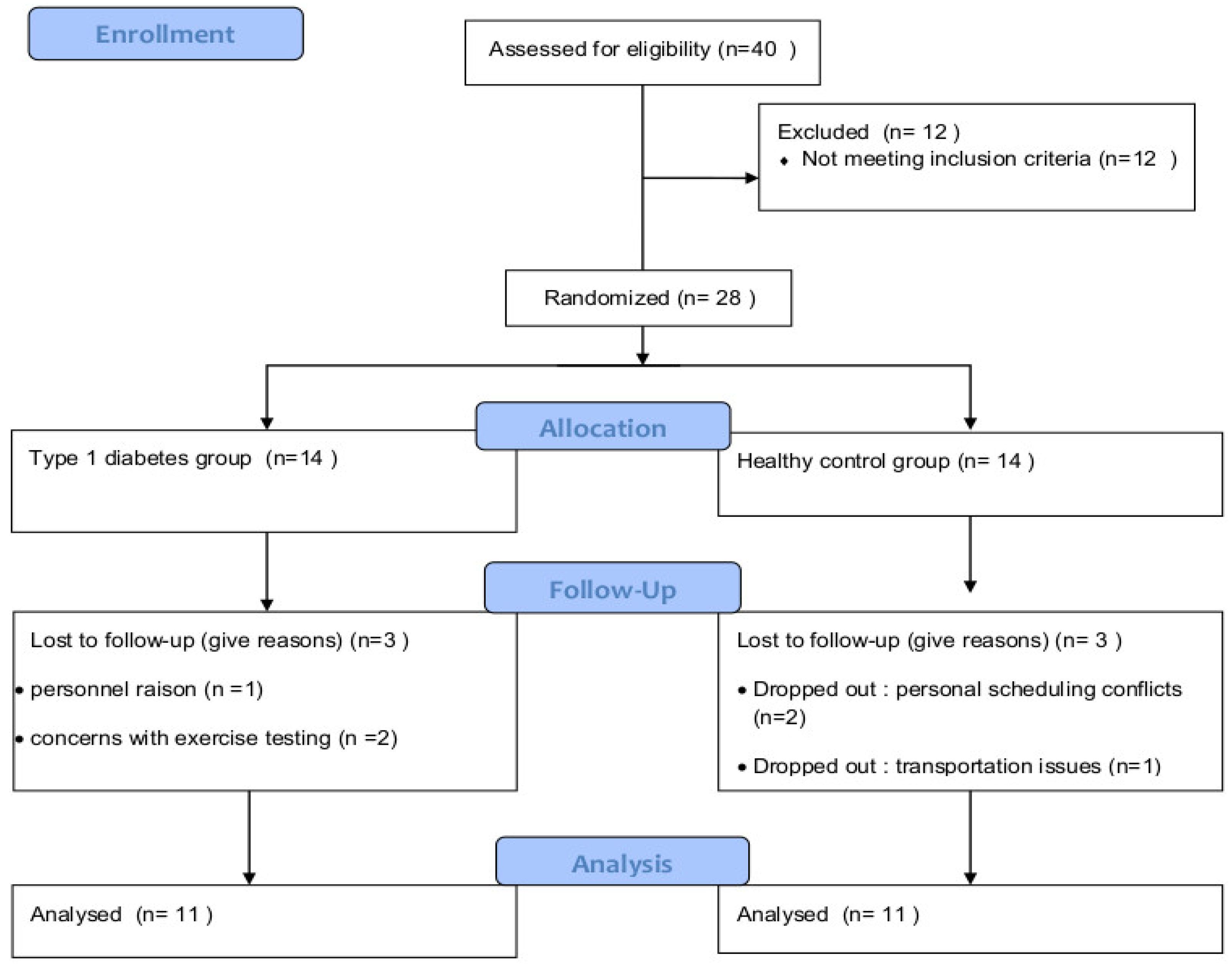
2.1. Participants
2.2. Study Design
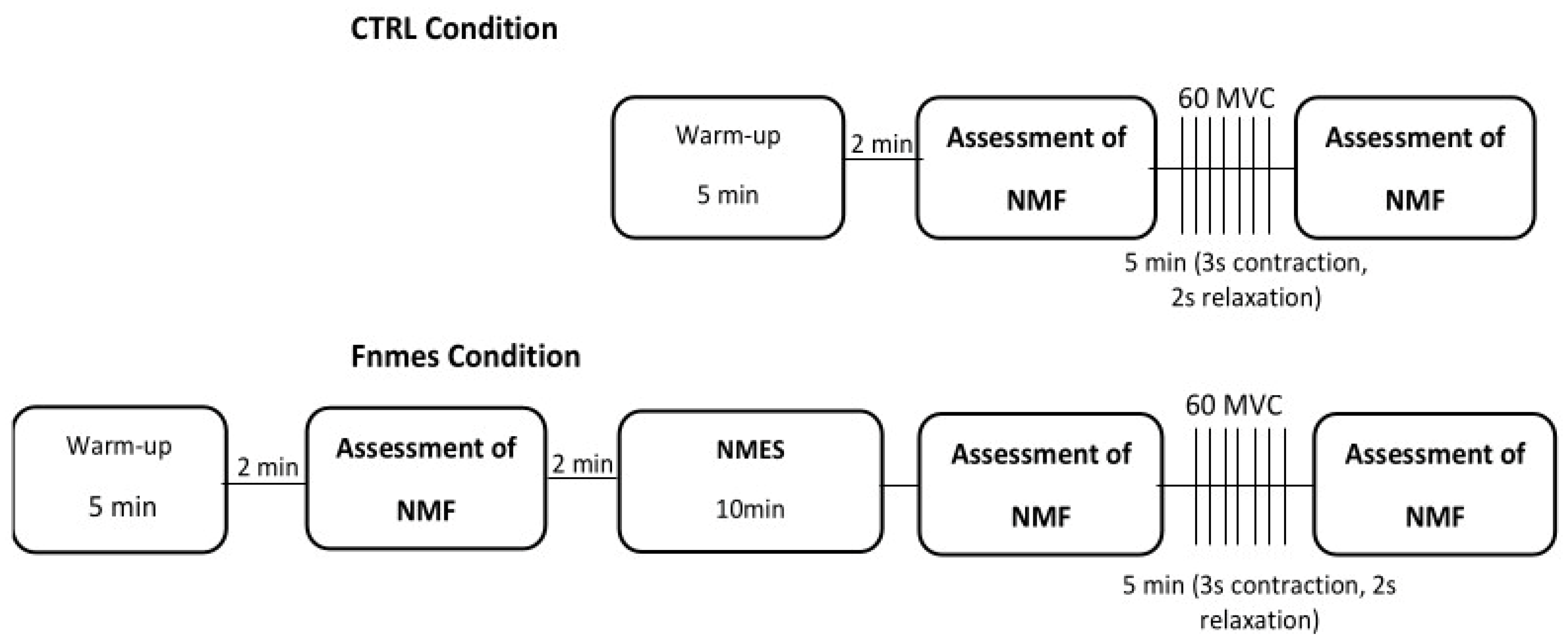
2.2.1. Protocol
2.2.2. Familiarization Session
2.2.3. Experimental Session
2.2.4. Neuromuscular Electrical Stimulation–Related Quadriceps Fatigue
2.2.5. Data Acquisition and Analysis
Evaluation of Quadriceps Neuromuscular Function
Electromyography
Determination of CT and W’
2.3. Statistical Analyses
3. Results
3.1. Baseline Neuromuscular Function
3.2. Effects of NMES on Quadriceps Fatigue
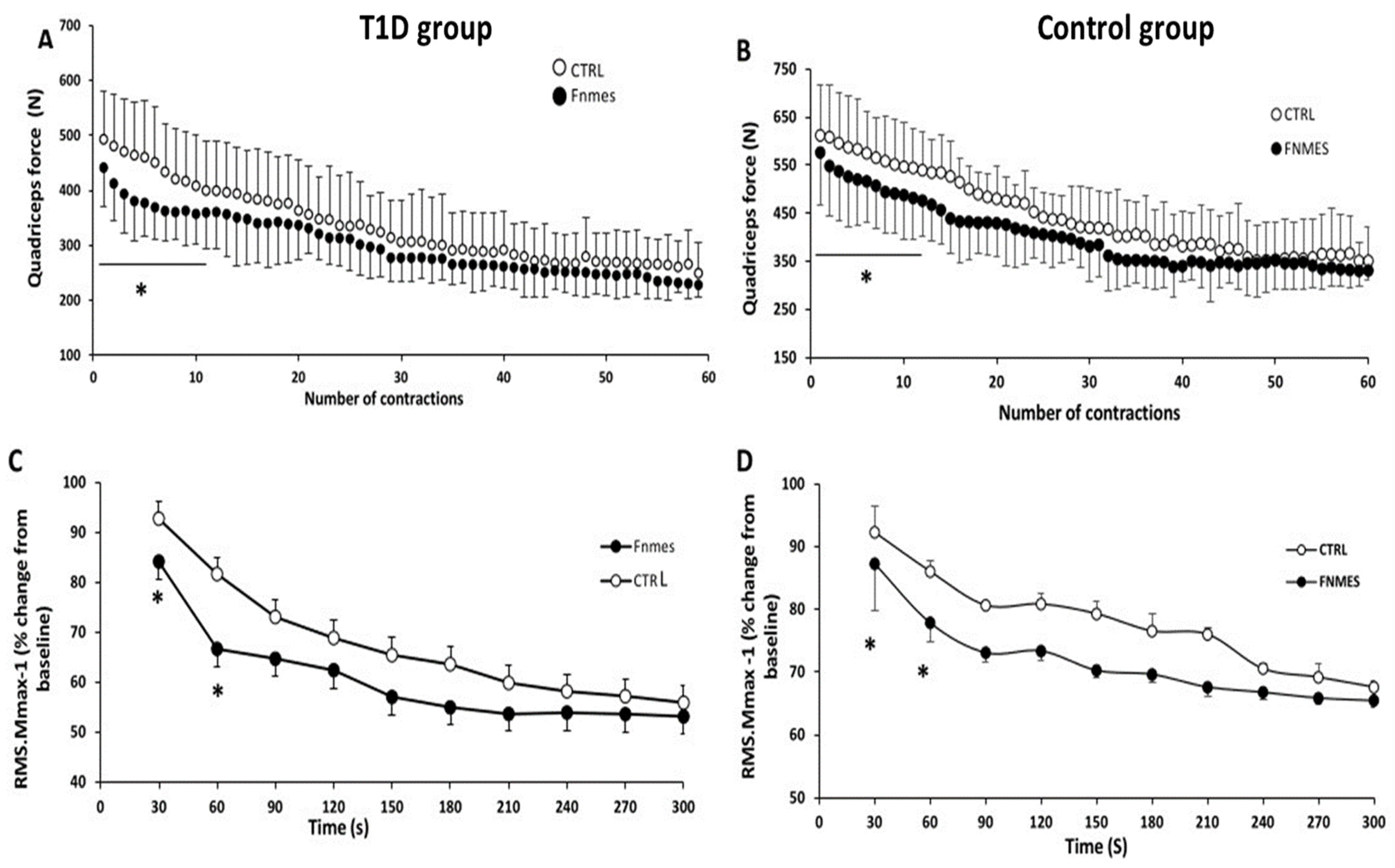
3.3. 60-MVCs Protocol
3.3.1. Exercise Performance
3.3.2. Electromyography
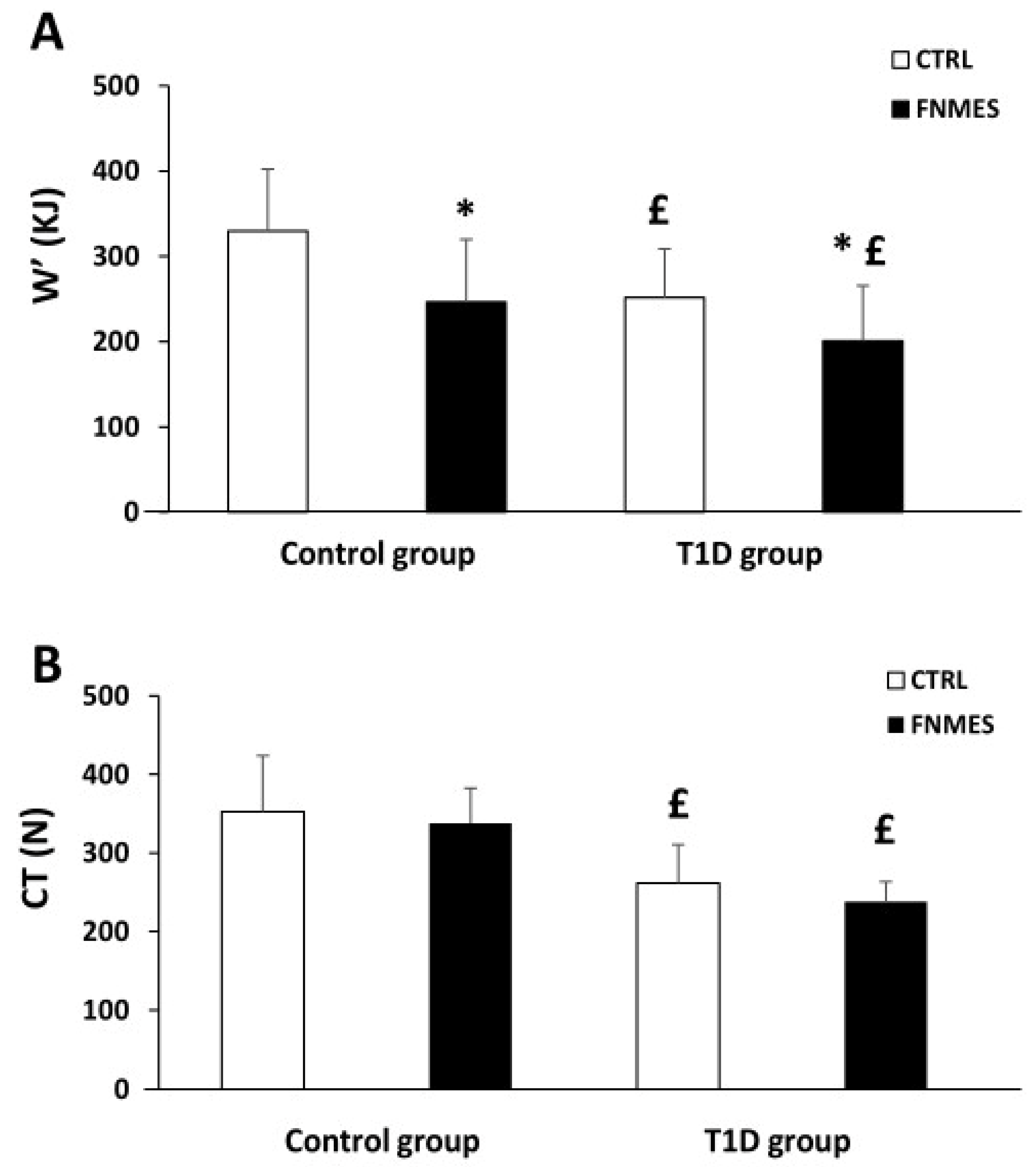
3.3.3. Parameters Associated with the Force-Duration Relationship
3.4. Central and Peripheral Fatigue
4. Discussion
4.1. Exercise Capacity and Peripheral Fatigue Tolerance
4.2. Mechanistic Basis of Reduced Fatigue Tolerance in Type 1 Diabetes
5. Conclusions
Author Contributions
Funding
Institutional Review Board Statement
Informed Consent Statement
Data Availability Statement
Acknowledgments
Conflicts of Interest
Trial Registration
References
- Atkinson, M.A.; Eisenbarth, G.S.; Michels, A.W. Type 1 diabetes. Lancet 2014, 383, 69–82. [Google Scholar] [CrossRef]
- Goedendorp, M.M.; Tack, C.J.; Steggink, E.; Bloot, L.; Bazelmans, E.; Knoop, H. Chronic fatigue in type 1 diabetes: Highly prevalent but not explained by hyperglycemia or glucose variability. Diabetes Care 2014, 37, 73–80. [Google Scholar] [CrossRef]
- Enoka, R.M.; Duchateau, J. Muscle fatigue: What, why and how it influences muscle function. J. Physiol. 2008, 586, 11–23. [Google Scholar] [CrossRef]
- Gandevia, S.C. Spinal and supraspinal factors in human muscle fatigue. Physiol. Rev. 2001, 81, 1725–1789. [Google Scholar] [CrossRef]
- Allen, D.G.; Lamb, G.D.; Westerblad, H. Skeletal muscle fatigue: Cellular mechanisms. Physiol. Rev. 2008, 88, 287–332. [Google Scholar] [CrossRef]
- Almeida, S.; Riddell, M.C.; Cafarelli, E. Slower conduction velocity and motor unit discharge frequency are associated with muscle fatigue during isometric exercise in type 1 diabetes mellitus. Muscle Nerve 2008, 37, 231–240. [Google Scholar] [CrossRef]
- Krause, M.P.; Riddell, M.C.; Hawke, T.J. Effects of type 1 diabetes mellitus on skeletal muscle: Clinical observations and physiological mechanisms. Pediatr. Diabetes 2011, 12, 345–364. [Google Scholar] [CrossRef]
- Andersen, H. Muscular Endurance in Long-Term IDDM Patients. Diabetes Care 1998, 21, 604–609. [Google Scholar] [CrossRef]
- Andersen, H.; Schmitz, O.; Nielsen, S. Decreased isometric muscle strength after acute hyperglycaemia in Type 1 diabetic patients. Diabet. Med. 2005, 22, 1401–1407. [Google Scholar] [CrossRef]
- Orlando, G.; Balducci, S.; Bazzucchi, I.; Pugliese, G.; Sacchetti, M. The impact of type 1 diabetes and diabetic polyneuropathy on muscle strength and fatigability. Acta Diabetol. 2017, 54, 543–550. [Google Scholar] [CrossRef]
- Hureau, T.J.; Romer, L.M.; Amann, M. The “sensory tolerance limit”: A hypothetical construct determining exercise performance? Eur. J. Sport Sci. 2018, 18, 13–24. [Google Scholar] [CrossRef]
- Amann, M.; Proctor, L.T.; Sebranek, J.J.; Pegelow, D.F.; Dempsey, J.A. Opioid-mediated muscle afferents inhibit central motor drive and limit peripheral muscle fatigue development in humans. J. Physiol. 2009, 587, 271–283. [Google Scholar] [CrossRef]
- Blain, G.M.; Mangum, T.S.; Sidhu, S.K.; Weavil, J.C.; Hureau, T.J.; Jessop, J.E.; Bledsoe, A.D.; Richardson, R.S.; Amann, M. Group III/IV muscle afferents limit the intramuscular metabolic perturbation during whole body exercise in humans. J. Physiol. 2016, 594, 5303–5315. [Google Scholar] [CrossRef]
- Hureau, T.J.; Weavil, J.C.; Thurston, T.S.; Wan, H.-Y.; Gifford, J.R.; Jessop, J.E.; Buys, M.J.; Richardson, R.S.; Amann, M. Pharmacological attenuation of group III/IV muscle afferents improves endurance performance when oxygen delivery to locomotor muscles is preserved. J. Appl. Physiol. 2019, 127, 1257–1266. [Google Scholar] [CrossRef]
- Sidhu, S.K.; Weavil, J.C.; Venturelli, M.; Garten, R.S.; Rossman, M.J.; Richardson, R.S.; Gmelch, B.S.; Morgan, D.E.; Amann, M. Spinal μ-opioid receptor-sensitive lower limb muscle afferents determine corticospinal responsiveness and promote central fatigue in upper limb muscle. J. Physiol. 2014, 592, 5011–5024. [Google Scholar] [CrossRef]
- Amann, M.; Dempsey, J.A. Locomotor muscle fatigue modifies central motor drive in healthy humans and imposes a limitation to exercise performance. J. Physiol. 2008, 586, 161–173. [Google Scholar] [CrossRef]
- Amann, M.; Eldridge, M.W.; Lovering, A.T.; Stickland, M.K.; Pegelow, D.F.; Dempsey, J.A. Arterial oxygenation influences central motor output and exercise performance via effects on peripheral locomotor muscle fatigue in humans. J. Physiol. 2006, 575, 937–952. [Google Scholar] [CrossRef]
- Burnley, M.; Vanhatalo, A.; Jones, A.M. Distinct profiles of neuromuscular fatigue during muscle contractions below and above the critical torque in humans. J. Appl. Physiol. 2012, 113, 215–223. [Google Scholar] [CrossRef]
- Hureau, T.J.; Broxterman, R.M.; Weavil, J.C. The mechanistic basis of the power-time relationship: Potential role of the group III/IV muscle afferents. J. Physiol. 2016, 594, 7165–7166. [Google Scholar] [CrossRef]
- Hureau, T.J.; Olivier, N.; Millet, G.Y.; Meste, O.; Blain, G.M. Exercise performance is regulated during repeated sprints to limit the development of peripheral fatigue beyond a critical threshold. Exp. Physiol. 2014, 99, 951–963. [Google Scholar] [CrossRef]
- Morel, B.; Lapole, T.; Liotard, C.; Hautier, C. Critical Peripheral Fatigue Thresholds Among Different Force-Velocity Conditions: An Individual-Based Model Approach. Front. Physiol. 2019, 10, 875. [Google Scholar] [CrossRef]
- Zarzissi, S.; Bouzid, M.A.; Zghal, F.; Rebai, H.; Hureau, T.J. Aging reduces the maximal level of peripheral fatigue tolerable and impairs exercise capacity. Am. J. Physiol. Regul. Integr. Comp. Physiol. 2020, 319, R617–R625. [Google Scholar] [CrossRef]
- Fekih, N.; Zghal, F.; Machfer, A.; Ben Hadj Hassen, H.; Zarizissi, S.; Bouzid, M.A. Peripheral fatigue regulation during knee extensor exercise in type 1 diabetes and consequences on the force–duration relationship. Eur. J. Appl. Physiol. 2023, 124, 897–908. [Google Scholar] [CrossRef]
- Grotle, A.K.; Garcia, E.A.; Huo, Y.; Stone, A.J. Temporal changes in the exercise pressor reflex in type 1 diabetic rats. Am. J. Physiol. Heart Circ. Physiol. 2017, 313, H708–H714. [Google Scholar] [CrossRef]
- Poole, D.C.; Burnley, M.; Vanhatalo, A.; Rossiter, H.B.; Jones, A.M. Critical Power: An Important Fatigue Threshold in Exercise Physiology. Med. Sci. Sports Exerc. 2016, 48, 2320–2334. [Google Scholar] [CrossRef]
- Zarzissi, S.; Zghal, F.; Bouzid, M.A.; Hureau, T.J.; Sahli, S.; Ben Hassen, H.; Rebai, H. Centrally-mediated regulation of peripheral fatigue during knee extensor exercise and consequences on the force-duration relationship in older men. Eur. J. Sport Sci. 2020, 20, 641–649. [Google Scholar] [CrossRef]
- Broxterman, R.M.; Craig, J.C.; Smith, J.R.; Wilcox, S.L.; Jia, C.; Warren, S.; Barstow, T.J. Influence of blood flow occlusion on the development of peripheral and central fatigue during small muscle mass handgrip exercise. J. Physiol. 2015, 593, 4043–4054. [Google Scholar] [CrossRef]
- Beck, T.W. The importance of a priori sample size estimation in strength and conditioning research. J. Strength Cond. Res. 2013, 27, 2323–2337. [Google Scholar] [CrossRef]
- Burnley, M. Estimation of critical torque using intermittent isometric maximal voluntary contractions of the quadriceps in humans. J. Appl. Physiol. 2009, 106, 975–983. [Google Scholar] [CrossRef]
- Maffiuletti, N.A. Physiological and methodological considerations for the use of neuromuscular electrical stimulation. Eur. J. Appl. Physiol. 2010, 110, 223–234. [Google Scholar] [CrossRef]
- Burke, D. Effects of activity on axonal excitability: Implications for motor control studies. Adv. Exp. Med. Biol. 2002, 508, 33–37. [Google Scholar] [CrossRef]
- Kufel, T.J.; Pineda, L.A.; Mador, M.J. Comparison of potentiated and unpotentiated twitches as an index of muscle fatigue. Muscle Nerve 2002, 25, 438–444. [Google Scholar] [CrossRef]
- Merton, P.A. Voluntary strength and fatigue. J. Physiol. 1954, 123, 553–564. [Google Scholar] [CrossRef]
- Schäfer, L.U.; Hayes, M.; Dekerle, J. The magnitude of neuromuscular fatigue is not intensity dependent when cycling above critical power but relates to aerobic and anaerobic capacities. Exp. Physiol. 2019, 104, 209–219. [Google Scholar] [CrossRef]
- Duchateau, J.; Enoka, R.M. Human motor unit recordings: Origins and insight into the integrated motor system. Brain Res. 2011, 1409, 42–61. [Google Scholar] [CrossRef]
- Crowther, G.J.; Milstein, J.M.; Jubrias, S.A.; Kushmerick, M.J.; Gronka, R.K.; Conley, K.E. Altered energetic properties in skeletal muscle of menwith well-controlled insulin-dependent (type 1) diabetes. Am. J. Physiol. Endocrinol. Metab. 2003, 284, E655–E662. [Google Scholar] [CrossRef]
- Fritzsche, K.; Blüher, M.; Schering, S.; Buchwalow, I.B.; Kern, M.; Linke, A.; Oberbach, A.; Adams, V.; Punkt, K. Metabolic profile and nitric oxide synthase expression of skeletal muscle fibers are altered in patients with type 1 diabetes. Exp. Clin. Endocrinol. Diabetes 2008, 116, 606–613. [Google Scholar] [CrossRef]
- Karatzaferi, C.; de Haan, A.; van Mechelen, W.; Sargeant, A.J. Metabolism changes in single human muscle fibres during brief maximal exercise. Exp. Physiol. 2001, 86, 411–415. [Google Scholar] [CrossRef]
- Essén, B.; Jansson, E.; Henriksson, J.; Taylor, A.W.; Saltin, B. Metabolic characteristics of fiber types in human skeletal muscle. Acta Physiol. Scand. 1975, 95, 153–165. [Google Scholar] [CrossRef]
- Ishizawa, R.; Kim, H.K.; Hotta, N.; Iwamoto, G.A.; Vongpatanasin, W.; Mitchell, J.H. Skeletal Muscle Reflex-Induced Sympathetic Dysregulation and Sensitization of Muscle Afferents in Type 1 Diabetic Rats. Hypertension 2020, 75, 1072–1081. [Google Scholar] [CrossRef]
- Chen, X.; Levine, J.D. Hyper-responsivity in a subset of C-fiber nociceptors in a model of painful diabetic neuropathy in the rat. Neuroscience 2001, 102, 185–192. [Google Scholar] [CrossRef]
- Suzuki, Y.; Sato, J.; Kawanishi, M.; Mizumura, K. Lowered response threshold and increased responsiveness to mechanical stimulation of cutaneous nociceptive fibers in streptozotocin-diabetic rat skin in vitro—Correlates of mechanical allodynia and hyperalgesia observed in the early stage of diabetes. Neurosci. Res. 2002, 43, 171–178. [Google Scholar] [CrossRef]
- Broxterman, R.M.; Hureau, T.J.; Layec, G.; Morgan, D.E.; Bledsoe, A.D.; Jessop, J.E.; Amann, M.; Richardson, R.S. Influence of group III/IV muscle afferents on small muscle mass exercise performance: A bioenergetics perspective. J. Physiol. 2018, 596, 2301–2314. [Google Scholar] [CrossRef]



| T1D | CTR | p Value | |
|---|---|---|---|
| Total (Male) | 11 | 11 | |
| Age (years) | 22.5 ± 2.5 | 24.1 ± 3.1 | 0.89 |
| Fat mass (%) | 15.2 ± 2.9 | 14.5 ± 1.7 | 0.78 |
| Height (m) | 1.7 ± 0.14 | 1.7 ± 0.19 | 0.95 |
| Body mass (kg) | 71.4 ± 5.1 | 74.4 ± 4.8 | 0.68 |
| BMI (kg m−2) | 22.4 ± 2.8 | 23.4 ± 2.2 | 0.79 |
| HbA1c (%) | 8.9 ± 0.9 | - | |
| Diabetes duration (years) | 14.5 ± 8.2 | - | |
| Total insulin dose per day (U kg−1) | 0.7 ± 0.2 | - |
| Group | Condition | Pre | Post-NMES | Post | |
|---|---|---|---|---|---|
| MVC | Control | CTRL | 632.9 ± 94.8 | - | 468.4 ± 48.1 * |
| FNMES | 668.1 ± 127.6 | 591.9 ± 120.5 * | 486.4 ± 60.9 *# | ||
| T1D | CTRL | 502.1 ± 131.9 £ | - | 351 ± 97.9 * | |
| FNMES | 532.6 ± 131.6 £ | 493.6 ± 118.8 | 351.8 ± 75.2 *# | ||
| Ptw (N) | Control | CTRL | 162.6 ± 23.1 | - | 79.2 ± 22.9 * |
| FNMES | 168.6 ± 23.3 | 144.6 ± 25.1 * | 85.8 ± 27.2 *# | ||
| T1D | CTRL | 138.8 ± 21.3 £ | 80.9 ± 29.3 * | ||
| FNMES | 134.3 ± 16.5 £ | 121.7 ± 19.5 | 82.9 ± 16.7 *# | ||
| VA (%) | Control | CTRL | 95.1 ± 1.5 | 89.8 ± 1.6 * | |
| FNMES | 95 ± 2.5 | 93 ± 3.3 | 88.9 ± 4.1 *# | ||
| T1D | CTRL | 93 ± 3 | 86.5 ± 4.1 * | ||
| FNMES | 93.3 ± 2.5 | 93.3 ± 3 | 84.8 ± 5.3 *# | ||
| VL Mmax (mv) | Control | CTRL | 7.2 ± 3.6 | 4.6 ± 1.8 * | |
| FNMES | 7.1 ± 2.3 | 5.4 ± 3.5 | 4.8 ± 2.7 | ||
| T1D | CTRL | 5.2 ± 2 | 3.5 ± 1.7 * | ||
| FNMES | 5.3 ± 2.8 £ | 5 ± 2.9 | 3.4 ± 2.4 *# | ||
| VM Mmax (mv) | Control | CTRL | 7.7 ± 3.5 | 5.2 ± 3.1 * | |
| FNMES | 7 ± 2.6 | 5.5 ± 3.1 | 4.9 ± 2.2 * | ||
| T1D | CTRL | 6.1 ± 2.1 | 4.4 ± 2.2 | ||
| FNMES | 5.7 ± 3.3 £ | 5 ± 3.4 | 4.1 ± 2.3 * | ||
| RF Mmax (mv) | Control | CTRL | 5.4 ± 3.4 | 4.2 ± 3.3 | |
| FNMES | 5.3 ± 1.7 | 4.5 ± 1.8 | 4.1 ± 1.6 * | ||
| T1D | CTRL | 5.1 ± 2.4 | 3.9 ± 1.7 | ||
| FNMES | 5.1 ± 2.2 | 4.8 ± 2.1 | 3.8 ± 1.7 *# |
| Variable | Main Effect: Group | Main Effect: Condition | Main Effect: Time | Interaction |
|---|---|---|---|---|
| MVC | F(1,10) = 13.5, p = 0.05, ηp2 = 0.41 | F(1,10) = 5.42, p = 0.35, ηp2 = 0.08 | F(1,10) = 18.45, p < 0.01, ηp2 = 0.68 | F(2,20) = 6.7, p = 0.24, ηp2 = 0.11 |
| Ptw | F(1,10) = 20.4, p < 0.01, ηp2 = 0.65 | F(1,10) = 6.55, p = 0.13, ηp2 = 0.19 | F(1,10) = 31.1, p < 0.01, ηp2 = 0.75 | F(2,20) = 8.1, p = 0.2, ηp2 = 0.2 |
| VA | F(1,10) = 23.8, p < 0.01, ηp2 = 0.70 | F(1,10) = 7.88, p = 0.27, ηp2 = 0.08 | F(1,10) = 16.5, p < 0.01, ηp2 = 0.57 | F(2,20) = 9.1, p =0.14, ηp2 = 0.19 |
| VL Mmax | F(1,10) = 19.4, p =0.02, ηp2 = 0.64 | F(1,10) = 3.23, p = 0.32, ηp2 = 0.03 | F(1,10) = 21.1, p < 0.01, ηp2 = 0.74 | F(2,20) = 4.3, p =0.25, ηp2 = 0.08 |
| VM Mmax | F(1,10) = 4.21, p = 0.32, ηp2 = 0.03 | F(1,10) = 2.5, p = 0.76, ηp2 = 0.01 | F(1,10) = 28.15, p = 0.002, ηp2 = 0.78 | F(2,20) = 33, p = 0.51, ηp2 = 0.02 |
| RF Mmax | F(1,10) = 2.2, p = 0.82, ηp2 = 0.02 | F(1,10) = 5.5, p = 0.76, ηp2 = 0.01 | F(1,10) = 6.20, p = 0.09, ηp2 = 0.31 | F(2,20) = 5.3, p =0.49, ηp2 = 0.09 |
Disclaimer/Publisher’s Note: The statements, opinions and data contained in all publications are solely those of the individual author(s) and contributor(s) and not of MDPI and/or the editor(s). MDPI and/or the editor(s) disclaim responsibility for any injury to people or property resulting from any ideas, methods, instructions or products referred to in the content. |
© 2026 by the authors. Licensee MDPI, Basel, Switzerland. This article is an open access article distributed under the terms and conditions of the Creative Commons Attribution (CC BY) license.
Share and Cite
Fekih, N.; Machfer, A.; Ceylan, H.İ.; Zghal, F.; Zarzissi, S.; Muntean, R.I.; Bouzid, M.A. Impact of Type 1 Diabetes on Exercise Capacity and the Maximum Level of Peripheral Fatigue Tolerated. J. Clin. Med. 2026, 15, 1252. https://doi.org/10.3390/jcm15031252
Fekih N, Machfer A, Ceylan Hİ, Zghal F, Zarzissi S, Muntean RI, Bouzid MA. Impact of Type 1 Diabetes on Exercise Capacity and the Maximum Level of Peripheral Fatigue Tolerated. Journal of Clinical Medicine. 2026; 15(3):1252. https://doi.org/10.3390/jcm15031252
Chicago/Turabian StyleFekih, Nadia, Amal Machfer, Halil İbrahim Ceylan, Firas Zghal, Slim Zarzissi, Raul Ioan Muntean, and Mohamed Amine Bouzid. 2026. "Impact of Type 1 Diabetes on Exercise Capacity and the Maximum Level of Peripheral Fatigue Tolerated" Journal of Clinical Medicine 15, no. 3: 1252. https://doi.org/10.3390/jcm15031252
APA StyleFekih, N., Machfer, A., Ceylan, H. İ., Zghal, F., Zarzissi, S., Muntean, R. I., & Bouzid, M. A. (2026). Impact of Type 1 Diabetes on Exercise Capacity and the Maximum Level of Peripheral Fatigue Tolerated. Journal of Clinical Medicine, 15(3), 1252. https://doi.org/10.3390/jcm15031252