1. Introduction
Prediction models are gaining traction because they can be a foundation for risk stratification, triaging patients according to who is most likely to receive benefit [
1]. Additional insight could be gleaned if clinical measurements (CMs) were prominent in these models: CMs include vital signs and laboratory tests and can provide valuable information about the metabolic status of patients at baseline. Specifically, (a) a diagnosis informs that the patient has a certain disease while CMs reveal the burden imposed by its risk factors or the disease itself, (b) CMs provide insight into the mechanism of injury and (c) CMs add explanatory variables to a prediction model. Of the three, the last warrants more explanation; adding CMs to prediction models is critical to identifying targets for interventions to reduce the risk. For example, causality may be inferred by a dose–response relationship between the CM and risk of mortality. The model would become hypothesis-generating, possibly leading to other studies confirming the mechanism of injury or finding treatments that reduce the risk. The current state of prediction models reveals that they rarely define causality such that they point to further courses of action in this way. A review of the literature revealed that only two prediction models combined several CMs to predict mortality [
2,
3]. Both models incorporated CMs from one timepoint and provided risk scores.
Publications of studies other than prediction models have reported variables derived from CMs in addition to the most recent value, allowing incorporation of time and variability, revealing significant, independent associations. For instance, investigators of a systematic review [
4] found significant associations in short-, medium- and long- term blood pressure variability with all-cause mortality after adjusting for mean blood pressure. Similarly, short- and long- term variability in glycosylated hemoglobin (A1c) has been significantly associated with all-cause mortality as well as micro- and macro- vascular complications [
5,
6,
7,
8,
9]. The studies from these two CMs employed different measures of variability, including standard deviation, standardized residual, coefficient of variation, variation independent of the mean, percent of consecutive CMs that differed by a predetermined threshold, percent of time CMs were within target range, percent of time CMs were above range, percent of time CMs were below range and root mean squared error, acknowledging the importance of incorporating this data while simultaneously implying lack of consensus concerning appropriate variables to represent such data in the medical literature [
4,
10]. It is intuitive that capturing the departure from normal or reference values in terms of magnitude and time in different ways may lead to a better understanding of the underlying pathophysiology [
11]. Studies assessing these variables have been piecemeal, looking at one to three of these variables [
12,
13,
14,
15,
16,
17,
18,
19,
20,
21,
22,
23]. Except for one study [
18], which used data from two CMs, each assessed only one CM, providing an opportunity to incorporate variables into a more comprehensive model evaluating their potential relationship with prognosis. This is important in two ways. First, disease progression is based on many factors, acting through different mechanisms of injury. Second, more than one-quarter of adults in the United States (U.S.) had at least two chronic diseases in 2018; this is expected to double among those aged 50 years and older by 2050 [
24]. With prediction models becoming more mainstream and their inclusion of this type of information being relatively underdeveloped, we sought to develop methods supporting this needed systematic approach.
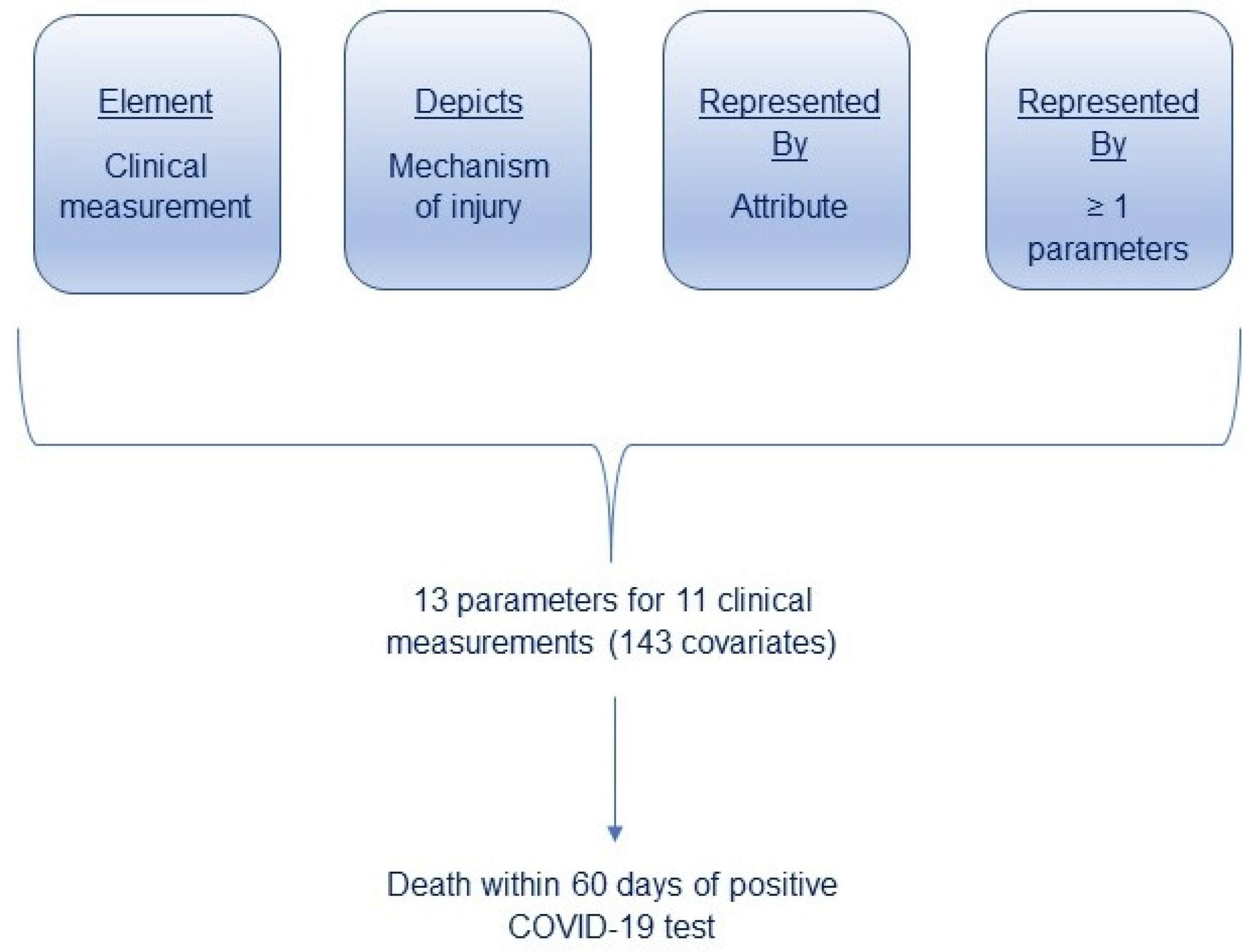
Our approach emulates the way clinicians interpret CMs to reach conclusions about patient metabolic status. Clinicians rarely interpret individual values for CMs without review of neighboring values or other domains of the medical record. Moreover, clinicians often render judgments about several attributes when assessing a CM. Each concept is independent of the others and has clinical implications of its own. For example, a patient with diabetes may have an A1c that meets a metabolic target, but the entire value set could represent a substantial glycemic burden, indicate a tendency to relapse and demonstrate a steep upward trend. In the current study, a parameter is a variable synthesized from the complete value set for a CM that represents one attribute for that CM. To reach conclusions about metabolic status requires extensive processing of all data for a CM, deriving parameters for each attribute and testing the association between derived parameters and the outcome of interest.
Figure 1 conceptualizes the interplay between these components as they relate to the study design. The algorithms used in this study derive these parameters and generate a running summary whenever a new value is added to the set. Thus, the patient’s status relative to any CM can be assessed at any point in time. The purpose of this paper is to describe the methods used for summarizing the effects of values from each patient for each CM. As a case study, we illustrate the clinical utility of using the risk of death following coronavirus disease 2019 (COVID-19) as the basis for prognosis.
2. Materials and Methods
We followed Transparent Reporting of a multivariate prediction model for Individual Prognosis or Diagnosis (TRIPOD) recommendations for development. Cases were identified through VA’s COVID-19 Shared Data Resource (CSDR). Membership in this nationwide registry requires at least one positive nucleic acid amplification test in or external to the VA; the VA had 1731 sites across the U.S. in 2001. The primary outcome was all-cause mortality within 60 days of the first positive result. The outcome was retrieved from the CSDR, which assigns a 1 to those who died and 0 otherwise. Starting in 1997, data domains in the Corporate Data Warehouse (CDW) were interrogated for all measurements entered from the first visit in the VA until 14 days before the diagnosis of COVID-19. This precaution excludes readings that may have been taken during the pre-symptomatic phases of illness. Using CMs routinely collected in periodic health examinations, we retrieved systolic blood pressure (SBP), diastolic blood pressure (DBP), oxygen saturation (O2Sat), height and weight from the file Vital.VitalSign. The latter were used to calculate body mass index (BMI). We also retrieved estimated glomerular filtration rate (eGFR), albuminuria (ALB), hematocrit (HCT), alanine aminotransferase (ALT), A1c, high-density lipoprotein (HDL) and low-density lipoprotein (LDL) from the file Chem.PatientLabChem. The following parameters were derived for each of the 11 CMs (above), categorized by attribute:
(a) Current metabolic control requires that the measurement be compared to an external standard, that both be standardized to a common scale, that the value is timely, that it has not already been enacted upon, that enough time has elapsed since the last treatment change to reach a plateau value and that it is not rapidly increasing or decreasing. Current metabolic control, or lack thereof, indicating severity, is reflected in the most recent value (Value1). The programs used in this study provide the option of raw or standardized values and require the user to specify a treatment target.
With the former parameter being the most straightforward, we turn to more complicated parameters employed to reflect the remaining attributes. In doing so, we reference studies using parameters to establish a baseline with pre-existing long-term data, as appropriate; some require more context than others, as we were unable to identify prior use of some parameters. In this vein, although the existing literature includes time in the therapeutic range of SBP [
12,
13,
14], frequency in the range of SBP [
13], number of CM values at goal in ALT [
15] and A1c [
16] and time above and below range in A1c [
10], we refine these parameters to discern between chronicity and refractoriness of disease, which in turn provides insight into other attributes, as described below.
(b) Chronicity is defined as the total number of days or measurements above or below the target, as appropriate. Each reading was paired with the preceding one. Days between successive abnormal readings were considered not at goal, days between normal readings as at goal, days between a normal and abnormal reading as worsening and days between an abnormal and normal reading as improving. Days not at goal were summarized across all successive pairs in the patient record (FUDaysNotAtGoal). NumNotAtGoal is the total number of measurements outside the target value in the patient record.
(c) Disease burden is the degree to which an abnormality has caused end-organ damage. For chronic diseases, it is almost always a function of severity and exposure time, expressed as the area under the severity x time curve (AUC). AUC has been used by Domanski et al. (2020) for assessing the relationship between LDL and incident CVD events [
17]. The software employed in this study uses a simple trapezoidal estimation technique without interpolation, extrapolation or curve-fitting and includes all readings from the first to the last value. AUC can be large just because the patient is elderly. To eliminate this possibility, we derived AUC only outside the target specified by the user (
AbnAUC), similar to the method by Liu et al. (2021), who used it for LDL and non-HDL for incident peripheral artery disease, and Li et al. (2022), who used it for BMI to assess colorectal cancer risk [
18,
19]. Time-weighted averaging has been used for evaluating the relationships of LDL with CVD events and mortality [
20]. It eliminates the sampling bias that arises from a tendency to measure a CM more frequently when it is abnormal [
25]. The raw average is an overestimate of severity when abnormal readings are more closely spaced than normal ones.
TimeWtAvg is defined as follows: AUC/(Total days of follow-up).
(d) Refractoriness is the repeated failure to achieve a goal and is represented by consecutive abnormal values (a “cluster”). Each cluster begins with a change from a normal to an abnormal value and terminates with the next normal value. The assumption is that an abnormal reading should have triggered an intervention that normalized the measurement. Refractoriness is worse when there are many readings in the cluster, or its duration is long. It can result from the failure to treat, failure of the patient to adhere, failure of the disease to respond, or intolerable side effects. Our program defines a start date, consecutive days not at goal (TimeNotAtGoal) and consecutive readings not at goal (CtNotAtGoal) for each cluster. The least refractory episode has a CtNotAtGoal of one, and refractoriness increases as CtNotAtGoal increases.
(e) Tendency to relapse is based on the occurrence of abnormal values after being at goal. Relapses can occur one or many times and are often caused by a steady progression in disease severity, which requires multiple titrations of treatment. The number of relapses is represented by NumClust. The first abnormal cluster is given the value of one; patients with a tendency to relapse have larger values for NumClust. Relapse and refractoriness have different clinical implications. For example, a person can relapse many times, respond quickly to each intervention and spend little time not at goal. On the other hand, a person with refractoriness can have just one cluster that lasts for years.
(f) Lability refers to variations in a CM from one reading to the next. Spontaneous variation can occur when the test is imprecise or when there are fluctuations in the CM itself. Test imprecision may be due to changes in conditions of testing, often behavioral, or variability in the assay. Results of these tests should be confirmed by repeated sampling. On the other hand, physiologic variability results from a complex relationship among multiple control mechanisms and is important in several conditions. The coefficient of variation (
CoeffVar) for each CM is derived from the grand mean (GrandMean) and standard deviation (GrandStD) for all values in the patient record and given by the expression GrandStD/GrandMean. Chia et al. (2016) use these parameters in the context of labile hypertension, finding significant associations with it and progressive renal dysfunction [
21].
MeanValDiff refers to the average of the absolute difference between all consecutive pairs.
(g) Temporal trends refer to changes over time from one value to another and may be long- or short-term.
NetChange is a measure of long-term trends and refers to the difference between the most recent and first value for each CM, approached similarly to Nakazawa et al. (2022) for eGFR for renal dysfunction [
22]. The software generates the mean of the 3 lagging values for each measurement (Lag3Mean).
Lag3Dev refers to the fractional deviation of the current value from Lag3Mean and is given by the following expression: (Value1—Lag3Mean)/Lag3Mean. One can think of these two parameters as akin to using data for a moving average to reveal longer-term patterns than the change in two sequential CMs and reveal shorter-term patterns of clinical significance than the overall history, by comparing it to the most recent value.
To review, we analyzed the following 13 parameters for each CM:
Value1,
FUDaysNotAtGoal,
NumNotAtGoal,
AbnAUC,
TimeWtAvg,
NumClust,
TimeNotAtGoal,
CtNotAtGoal,
MaxClustDays,
CoeffVar,
MeanValDiff,
NetChange and
Lag3Dev. These values were extracted for each patient from the running summary associated with the most recent value. The default was to use all available readings in the medical record so that metabolic status was defined over the patient’s lifetime. Computer code, though not available, was validated.
Table 1 depicts a summary of parameters by attribute.
Statistical Methods
Since there are 11 CMs of interest, the list of candidate predictors consists of items. Group differences in categorical variables were tested by chi-square analysis. Group differences in continuous variables were analyzed by Student’s t-test and Mann–Whitney U-test.
For each CM, a subset logistic regression was performed to identify which of the 13 parameters were predictive of mortality. A variable was considered significant if the adjusted p-value associated with the coefficient was <0.05. The subset model was then used to assign a predicted probability of death to each patient. Area under the receiver operating characteristic curve (AUROC) analysis was conducted to determine if the predicted probability discriminated between those who lived and died.
Then, the 143 candidate predictors were used to generate a main predictive model. Stepwise logistic regression was applied. Modeling started with the set of the most recent values. Sets related to different criteria were added in succession; if variables that previously entered the model became insignificant, they were removed. A variable was considered significant if the adjusted p-value associated with its coefficient was <0.05. The final model was used to assign a predicted probability of death (PDeathLabs) to each patient based upon all CMs. Again, AUROC analysis was used to determine if PDeathLabs was able to identify those who died. For comparison, single-factor logistic models were developed for age at diagnosis, the 2-year Charlson Comorbidity Index score (Charl2Yrs), lifetime Charlson score (CharlEver), the Elixhauser 2-year score (Elix2Yrs) and lifetime Elixhauser score (ElixEver). Their predicted probabilities were used to derive an AUROC for each.
Using CMs routinely obtained in periodic health examinations over a long time of collection, a few missing values for CMs were anticipated. With the primary outcome being mortality and the knowledge of at least some of the CMs being risk factors for death, specifically as expressed through Value1, patients of interest were those who had at least one abnormal CM at the time of testing positive. Furthermore, chronic disease management was of interest. Therefore, case-wise deletion was used for subset regressions and the main predictive model, making TimeNotAtGoal and CtNotAtGoal relevant only for patients with an abnormal CM at the time of testing positive. (Patients with a normal CM at that time would have missing values.) Similarly, patients who did not have at least 2 consecutive abnormal values for a CM would have missing values for MaxClustDays. Accordingly, study findings pertain to patients with an abnormal CM at the time of testing positive who had at least 2 consecutive abnormal values for a CM at any point during CM collection.
Code was developed and validated in SQL Server Management Studio 18 (Microsoft, Redmond, WA, USA). All statistical analysis was conducted in StataMP 17 (StataCorp LLC, College Station, TX, USA).
3. Results
On 30 September 2021, there were 347,220 COVID-19 patients in VA’s CSDR. Of these, 329,491 patients (94.9%) had CMs at least 14 days prior to testing positive. The mean age at the time of diagnosis was 59.1 ± 16.6 years, 85.5% were male, 23.4% were members of a racial minority, 9.2% were Hispanic, 96.4% were veterans, 0.7% were on supplemental oxygen, 12.2% were current smokers and 9.3% had been fully vaccinated at least 14 days prior. Of those meeting eligibility criteria, 21.6% acquired their infections after 1 July 2021. Overall, 17,934 patients (5.44%) died within 60 days of their diagnosis.
Among the subset regressions performed, all models but the one for ALT converged (
Table 2,
Table 3,
Table 4,
Table 5,
Table 6,
Table 7,
Table 8,
Table 9,
Table 10 and
Table 11). Some AUROCs were close to those of comorbidity indices (i.e., DBP: 0.705 ± 0.002, eGFR: 0.691 ± 0.002, albuminuria: 0.693 ± 0.002, LDL: 0.675 ± 0.002, comorbidity indices’ range: 0.675 ± 0.002 to 0.729 ± 0.002). The number of significant parameters ranged from 7 for HDL to 13 for SBP.
Value1 was significant for 7 CMs,
FUDaysNotAtGoal for 9,
NumNotAtGoal for 9,
AbnAUC for 9,
TimeWtAvg for 9,
NumClust for 10,
TimeNotAtGoal for 6,
CtNotAtGoal for 7,
MaxClustDays for 5,
CoeffVar for 10,
MeanValDiff for 10,
NetChange for 9 and
Lag3Dev for 7.
In the cohort, 239,393 patients had complete sets of data for developing the main model (27.3% missing).
Table 12 shows the components of this model. Of 143 candidate predictors, 49 parameters were identified as statistically significant, independent predictors of all-cause mortality. The main model was used to calculate a predicted probability of death (PDeathLabs) for each subject. The AUROC for PDeathLabs was 0.785 ± 0.002. No difference was found between the AUROC of PDeathLabs and age at diagnosis (0.783 ± 0.002;
p > 0.05). However, the AUROC for PDeathLabs was significantly greater than that of Charl2Yrs (0.704 ± 0.002;
p < 0.001), CharlEver (0.729 ± 0.002;
p < 0.001), Elix2Yrs (0.675 ± 0.002;
p < 0.001) and ElixEver (0.707 ± 0.002;
p < 0.001). Thus, baseline metabolic measurements outperform common comorbidity indices for pre-existing conditions in predicting mortality following COVID-19.
4. Discussion
We propose a comprehensive method for handling pre-existing findings from vital signs and laboratory tests in models predicting mortality following COVID-19. We believe the parameters
MaxClustDays and
NumClust are novel in that we were unable to identify any studies using them or describing their development. Their prevalent significance across CMs in the subset and main models provides evidence of their value and encouragement for future use: in the main model, 7 of 49 (14.3%) parameters constituted these. In line with Maziarz et al. (2017), our observations suggest a variety of parameters derived from CMs capturing departure from normal or reference values in terms of magnitude and time should be included because they have independent prognostic significance, generate insights into the mechanism of action and may be targets for interventions to mitigate the risk [
11]. By including explanatory variables, models can become hypothesis-generating and lead to future studies validating the suspected pathogenesis or interventions targeting the abnormality itself.
The 13 parameters were identified as predictors of mortality in the subset models, revealing convergence between the approach used in clinical practice and CM parameters used in this study. Our main model showed that many parameters besides the most recent value were significant contributors to mortality following COVID-19. For 2 CMs (i.e., LDL and eGFR), disease burden (AbnAUC and TimeWtAvg) contributed to the prediction while the most recent value (Value1) did not. For 6 others (i.e., SBP, BMI, HDL, O2Sat, DBP and ALT), both current metabolic control (Value1) and long-term parameters (NumNotAtGoal, FUDaysNotAtGoal, AbnAUC, TimeWtAvg and NetChange) were independently predictive of death. This finding suggests that CMs have chronic and acute effects on mortality following COVID-19 and that the former should be routinely considered for prediction models. Our results confirm the importance of CM parameters for COVID-19 prognosis, validate the attributes they represent and underscore the hazards of solely using one parameter or using parameters irrespective of time.
The complex interplay of different body systems is revealed by comparing the subset regressions to the main model. When solely assessing parameters relating to one CM, the most influential attributes were lability, disease burden, chronicity and temporal trends. However, when assessing all CMs routinely collected in these patients, the most influential attributes were current metabolic control, disease burden, temporal trends and tendency to relapse, providing further evidence of the importance of assessing both attributes and CMs more systematically. Higher values for O
2SatValue1 and O
2SatTimeWtAvg in our main model independently decreased the risk of mortality. This observation implies that the metabolic consequences of acute hypoxia and the burden imposed by chronic hypoxia create a substrate for COVID-19 injury. The latter may have done so through secondary pulmonary hypertension or may have been a marker for severe lung disease. When looking at the main model of the BP measures of hypertension severity, only SBPTimeWtAvg was a risk factor for mortality following COVID-19. Higher values for DBPValue1 and DBPTimeWtAvg were protective. This paradoxical effect might be explained by the fact that, for a given level of risk posed by SBP, a higher DBP is associated with a lower pulse pressure, reduced systolic wall stress and better coronary perfusion. This analysis suggests that the most important mechanism is long-term elevation of SBP. In a study systematically assessing all documented pre-existing conditions, hypertension was the most important independent risk factor for mortality following COVID-19 [
26].
BMI and obesity are considered risk factors for mortality following COVID-19 [
27,
28]. However, we found that higher values for BMIValue1 in the main model lowered the risk of death. This discrepancy might be explained by the fact that we controlled for the mediators of injury in obesity (SBP, DBP, A1c, HDL and LDL). Once these factors are considered, a higher BMI may only be a marker of better nutrition. This finding illustrates the hazards of drawing conclusions from incompletely specified models. Serum albumin and hematocrit are indicators of nutritional status or catabolism and are powerful predictors of recovery from acute illness. On the other hand, they do not produce cumulative organ injury over the years. Accordingly, AlbValue1 and HCTValue1 were included in the main model with only one of their long-term parameters. A high value for A1cValue1 was identified as a risk factor, while measures of disease burden were not. Thus, recent hyperglycemia is deleterious in COVID-19 infection but microvascular injury developing over decades may not play that much of a role. Likewise, HDLValue1 had a protective effect while the long-term parameters did not. Finally, we found that time-weighted average and abnormal AUC were both included as measures of disease burden for eGFR, ALT, LDL and O
2Sat. These results imply that abnormal AUC provides information about risk independent of the time-weighted average. This study shows there is no justification for arbitrarily selecting one parameter of a CM for modeling unless there is a physiologic basis for doing so, even when more than one parameter describes the same clinical attribute.
We also found that temporal instability in a CM, whether reflected in long- or short-term trends, coefficient of variation, or tendency to relapse, had significant effects on prognosis. The direction and magnitude of this effect varied across CMs and, at times, were counterintuitive. Although counterintuitive findings may indicate true effect, they may also suggest the presence of residual confounding. Specific to COVID-19, future studies should be conducted to identify the mechanisms by which fluctuations in CMs affect mortality. Until then, it is reasonable to include temporal changes in CMs in such models. This recommendation is consistent with the way that clinicians prioritize treatment of abnormal values. For example, many would consider a patient whose A1c rapidly increased from 5.0% to 8.5% to have a poorer prognosis than one whose A1c decreased from 11.0% to 9.0%.
As expected, parameters of chronicity (FUDaysNotAtGoal and NumNotAtGoal) added little to the model once disease burden was considered, with 1 and 3 terms entering the main model, respectively. Refractoriness was shown to have minimal contribution to death as well. First, without any terms entering the model for MaxClustDays, the length of the longest duration of abnormal values for any CM had no impact on death. Second, the number of consecutive abnormal values and the length of time of abnormal values had minimal effect on death. This is evidenced by 1 and 2 terms entering the main model for CtNotAtGoal and TimeNotAtGoal, respectively. Nevertheless, refractoriness remains a useful clinical concept because it could matter for chronic disease management. The situation with refractoriness is juxtaposed with the tendency to relapse; the latter attribute had 7 terms (NumClust) appear in the main model, underscoring the value of clustering and being another attribute revealing the importance of the length of time collecting CMs.
We calculated a predicted probability of death (PDeathLabs) based on complete value sets for the 11 CMs. The AUROC indicated that vital signs and laboratory findings are powerful predictors of outcomes. In fact, the AUROC for PDeathLabs and age at diagnosis were equivalent, while PDeathLabs was consistently superior to Charl2Yrs, CharlEver, Elix2Yrs and ElixEver. With the Charlson Comorbidity Index being noted as the second-most frequently used risk stratification tool in a recent review [
1], these comparisons reveal the potential for PDeathLabs in clinical practice, should it perform as well in other health conditions and populations. In summary, the term generated with our approach is a convenient way to summarize millions of observations for CMs performed on hundreds of thousands of patients. Its greatest utility would be as a covariate in a parent model containing other domains. Unlike conventional comorbidity indices and the only prediction models identified that incorporate several CMs to predict mortality, PDeathLabs provides patient-specific probability of outcome occurrence.
Collectively, the interpretation of parameters and CMs with respect to mortality following COVID-19, placed in the context of two frequently used measures of risk, shows the promise of using such a systematic approach, not only in terms of the number of parameters representing several attributes, but also the number of CMs representing several physiologic mechanisms. The parameters in this study included those previously used in studies as well as novel parameters. We build upon the work by Doumas et al. (2017); they assessed the percentage of blood pressure readings in the therapeutic range over ten years for an association with mortality in about 700,000 patients at fifteen VA Medical Centers, finding a significant relationship [
23]. By also looking at several timepoints of CM values, we expanded the number of parameters related to the inverse of values in therapeutic range to assess chronicity, disease burden, refractoriness, relapses, lability and temporal trends. To this end, we provide unique contributions in comparison to Chen et al. (2024); they looked at the number of alanine aminotransferase (ALT) values over a certain threshold, finding a significant positive relationship between it and the incidence of metabolic-dysfunction-associated fatty liver disease (MAFLD) in multivariate regression analysis [
15]. Whereas they evaluated annual data over three years of ALT values before following for MAFLD, by virtue of our cohort having more CMs over a longer period, we were able to refine such out-of-range values in relation to each cluster for each CM to assess refractoriness. The expansion of parameters used in this study is advocated by two groups of investigators who measured similar phenomena. Kodani et al. (2023) noted that BP variability was more strongly related to adverse events than BP consistency [
13]. Xu et al. (2023) provided a rationale for their measure compared to more typically reported ones by expressing the need to control for sicker patient bias; in the current study, this was handled through time-weighted averages [
16].
We did not include age in our model for PDeathLabs for several reasons. First, we believed it was imperative not to have age supplant those clinical parameters highly correlated with age, such as blood pressure or weight [
26]. Retaining parameters in the model allows for more insight into the physiologic mechanisms than a proxy for disease, such as age. To understand the mechanisms that lead to a fatal outcome, explanatory variables should take precedence over disease markers. They may even be targets for an intervention. Relatedly, models based on demographics do not support decision-making at the point of care. For example, if an elderly patient presents with refractory hypoxemia or terminal renal failure, a physician would propose withdrawing care based on dismal prognosis rather than age, if necessary. Clinicians make recommendations based upon assessment of the underlying conditions. It is the patient’s prerogative to decide what is appropriate based upon age and quality of life.
Limitations
Our conclusions are limited to patients with characteristics similar to the veteran population, who are older and predominantly male. Having said this, similarities exist between the veteran and Medicare populations [
29]. Moreover, higher PDeathLabs identifies those who tend to have chronic illness through two mechanisms. First, many parameters found to be significant required multiple measurements. Second, those followed for longer periods of time have higher values for the parameter even if the absolute elevations are the same. It is unclear if our conclusions are applicable to patients without such indications. Further studies should be conducted on other populations and disease states before the method is widely applied. If validated, our method could revolutionize the way in which CMs are handled in multivariate models.



 ,
,