Umbilical Cord Biomarkers of Nutritional and Metabolic Status in Neonates with Intrauterine Growth Restriction
 ,
,
Abstract
1. Introduction
2. Materials and Methods
2.1. Search Strategy
2.2. Eligibility Criteria
- Population: Neonates diagnosed with IUGR or SGA, irrespective of gestational age.
- Outcomes: Reported neonatal biochemical markers—serum or umbilical cord blood concentrations of vitamin D, calcium, ALP, Zn, Mg, Fe, ferritin, vitamin B9, vitamin B12, INS, or C-pep.
- Design: Prospective or retrospective cohorts, case–control studies, randomized controlled trials, neonatal biochemical surveys, and high-quality systematic reviews
- Period: Published between 2020 and 2025, except for one historically influential study (1998) included for physiological context.
- Indexing: Articles published in peer-reviewed journals indexed in Web of Science
- Language: English.
2.3. Study Selection
2.4. Data Extraction and Synthesis
- cohort characteristics (sample size, gestational age, sex distribution);
- diagnostic criteria for IUGR/SGA (customized growth charts, population charts, Doppler findings);
- type of biological sample (umbilical cord serum/plasma, neonatal venous blood);
- assay methods (ELISA, chemiluminescence, spectrophotometry, immunoassay);
- mean or median biomarker concentrations, reference ranges, and percentile distributions;
- associations between micronutrient status and outcomes such as birth weight, Apgar score, metabolic complications (hypoglycemia, hypocalcemia), or early postnatal morbidity;
- correlations with maternal factors (nutrition, vitamin supplementation, anemia, gestational diabetes, inflammation).
- vitamin D and phosphocalcic metabolism;
- Ca and ALP physiology;
- Fe and ferritin stores;
- Zn and Mg homeostasis;
- Vitamin B9 and vitamin B12 in one-carbon metabolism;
- INS and C-pep as markers of β-cell activity and metabolic adaptation.
2.5. Quality Assessment
- clarity and consistency of IUGR diagnostic criteria;
- sample size and representativeness;
- use of validated laboratory assays;
- adjustment for confounders such as maternal anemia, diabetes, body mass index (BMI), preterm birth, and inflammation;
- whether cord blood or early neonatal measurements were obtained before significant postnatal metabolic adaptation.
3. Relevant Sections
3.1. Vitamin D and Phosphocalcic Metabolism in IUGR
3.2. Ca and ALP: Markers of Bone Maturation and Energy Metabolism in IUGR
3.3. Fe, Ferritin, and Oxidative Metabolism in IUGR
3.4. Zn and Mg: Essential Cofactors in Metabolic Regulation in IUGR Newborns
3.5. Vitamin B9 and Vitamin B12: Epigenetic Control and Metabolic Programming in IUGR Newborns
3.6. The INS–C-Pep Axis in IUGR Newborns
3.7. Summary
4. Discussion
4.1. Micronutrient Deficiency and Neonatal Nutritional Vulnerability
- Vitamin D deficiency impairs Ca absorption and endocrine function, thereby compromising both bone mineralization and pancreatic maturation.
- Fe and ferritin depletion restrict hemoglobin synthesis and mitochondrial activity, which contributes to anemia and heightened oxidative stress.
- Deficiencies in Zn and Mg lead to impaired enzymatic pathways and disruptions in glucose metabolism.
- Inadequate levels of vitamin B9 and vitamin B12 alter one-carbon metabolism,
- subsequently affecting DNA synthesis and methylation processes.
4.2. Endocrine Adaptation: The INS–C-Pep Axis in Neonatal Energy Homeostasis
4.3. Micronutrient–Hormonal Interactions in the Neonate
4.4. Bone Mineral Metabolism and Phosphocalcic Adaptation
4.5. Epigenetic Programming and Long-Term Metabolic Impact
4.6. Postnatal Nutritional Interventions
4.7. Clinical and Preventive Implications for the Neonatal Period
- Early evaluation of growth-restricted infants should incorporate comprehensive biochemical screening.
- Targeted nutritional interventions, encompassing vitamin D and mineral supplementation alongside fortified feeding, demonstrably support postnatal growth and promote optimal bone development.
- Sustained glycemic and metabolic surveillance is crucial for the timely identification of hypoinsulinemia or dysglycemia, thereby enabling the implementation of individualized therapeutic strategies.
- Longitudinal assessment of growth trajectories and metabolic parameters is imperative for the early detection of insulin resistance or alterations in body composition, facilitating the provision of personalized care.
4.8. Summary
5. Discussion and Perspectives
5.1. Evidence Gaps in the Literature
5.2. Conclusions and Future Directions
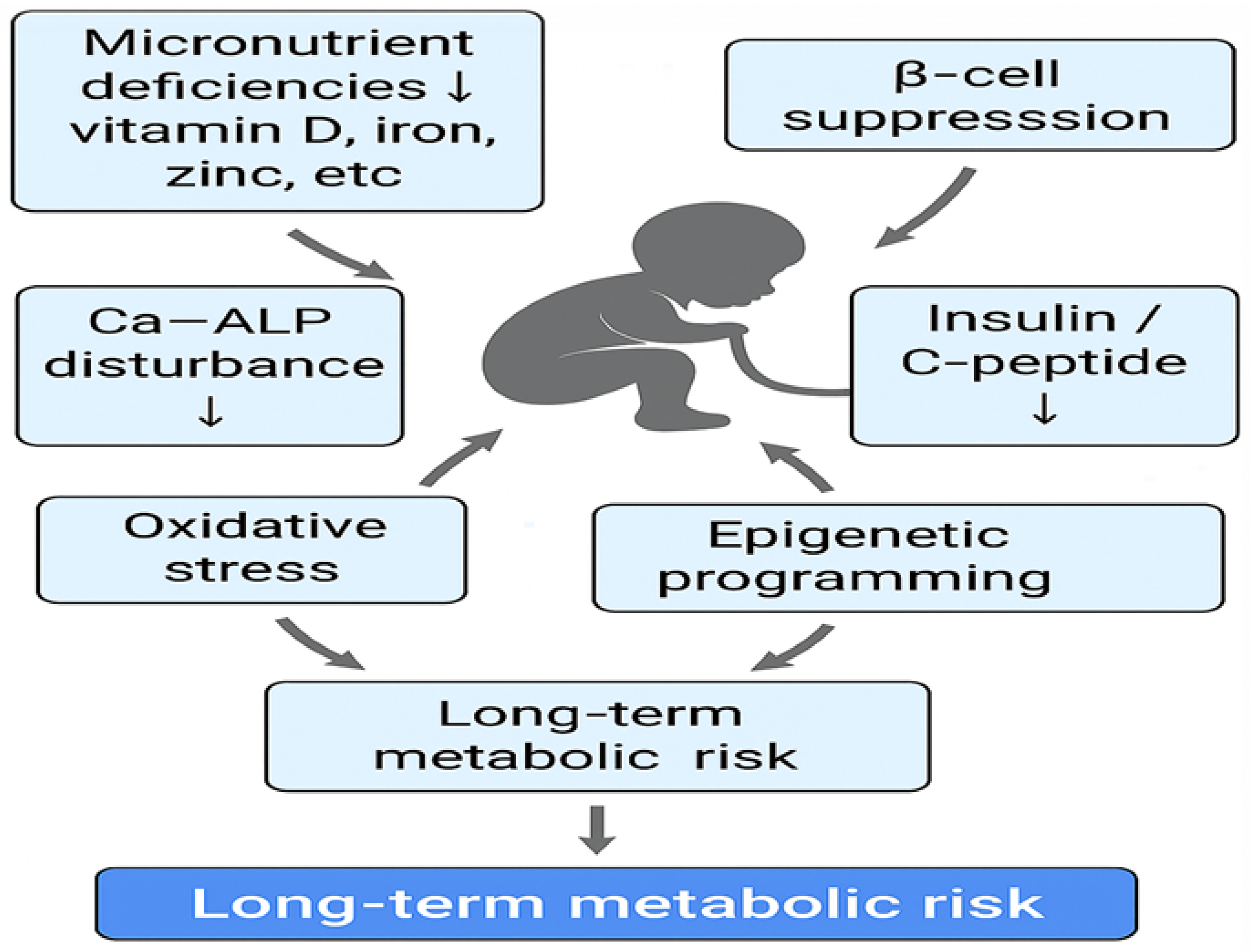
- IUGR newborn start their extrauterine life facing low energy storage, some micronutrient deficits, altered insulin–C-peptide signaling, which jointly impact thermoregulation, glycemic stability, bone mineralization, and immune competence
- Cord-blood serum metabolomics should be considered at birth in IUGR neonates to stratify metabolic risk and guide further supplementation
- Early management of IUGR newborns should couple optimized nutrition with targeted supplementation of vitamins and trace elements (vitamin D, calcium, phosphate, iron, zinc, magnesium, vitamin B)
- Growth and body-composition long-term follow-up is essential, because of the increased risk of insulin resistance, dyslipidemia and hypertension.
- Establishing standardized neonatal reference ranges for micronutrients and endocrine markers tailored for IUGR populations, instead of extrapolating from healthy AGA populations
- Assessing long-term health outcomes based on early nutritional interventions in IUGR neonates
- Conducting research using multi-omics approaches—epigenomics, transcriptomics, metabolomics—in cord blood and placental tissue to map how specific micronutrient and hormonal signatures in IUGR drive persistent changes on both metabolic and neurodevelopmental outcomes.
- Develop feasible algorithms that combine clinical data with cord-blood biomarkers to tailor and individualize nutrition for infants with IUGR.
6. Limitations and Strengths of This Work
Author Contributions
Funding
Data Availability Statement
Acknowledgments
Conflicts of Interest
References
- Cianfarani, S.; Germani, D.; Rossi, P.; Rossi, L.; Germani, A.; Ossicini, C.; Zuppa, A.; Argirò, G.; Holly, J.M.P.; Branca, F. Intrauterine Growth Retardation: Evidence for the Activation of the Insulin-Like Growth Factor (IGF)-Related Growth-Promoting Machinery and the Presence of a Cation-Independent IGF Binding Protein-3 Proteolytic Activity by Two Months of Life. Pediatr. Res. 1998, 44, 374–380. [Google Scholar] [CrossRef]
- Chen, Y.H.; Liu, Z.B.; Ma, L.; Zhang, Z.C.; Fu, L.; Yu, Z.; Chen, W.; Song, Y.P.; Wang, P.; Wang, H.; et al. Gestational Vitamin D Deficiency Causes Placental Insufficiency and Fetal Intrauterine Growth Restriction Partially through Inducing Placental Inflammation. J. Steroid Biochem. Mol. Biol. 2020, 203, 105733. [Google Scholar] [CrossRef]
- Bi, W.G.; Nuyt, A.M.; Weiler, H.; Leduc, L.; Santamaria, C.; Wei, S.Q. Association Between Vitamin D Supplementation During Pregnancy and Offspring Growth, Morbidity, and Mortality: A Systematic Review and Meta-Analysis. JAMA Pediatr. 2018, 172, 635–645. [Google Scholar] [CrossRef]
- Miliku, K.; Vinkhuyzen, A.; Blanken, L.M.; McGrath, J.J.; Eyles, D.W.; Burne, T.H.; Hofman, A.; Tiemeier, H.; Steegers, E.A.; Gaillard, R.; et al. Maternal Vitamin D Concentrations during Pregnancy, Fetal Growth Patterns, and Risks of Adverse Birth Outcomes. Am. J. Clin. Nutr. 2016, 103, 1514–1522. [Google Scholar] [CrossRef]
- Raia-Barjat, T.; Sarkis, C.; Rancon, F.; Thibaudin, L.; Gris, J.-C.; Alfaidy, N.; Chauleur, C. Vitamin D Deficiency during Late Pregnancy Mediates Placenta-Associated Complications. Sci. Rep. 2021, 11, 20708. [Google Scholar] [CrossRef]
- Vestergaard, A.L.; Justesen, S.; Volqvartz, T.; Aagaard, S.K.; Andreasen, M.F.; Lesnikova, I.; Uldbjerg, N.; Larsen, A.; Bor, P. Vitamin D Insufficiency among Danish Pregnant Women—Prevalence and Association with Adverse Obstetric Outcomes and Placental Vitamin D Metabolism. Acta Obstet. Gynecol. Scand. 2020, 100, 480–488. [Google Scholar] [CrossRef]
- Zhao, R.; Zhou, L.; Wang, S.; Yin, H.; Yang, X.; Hao, L. Effect of Maternal Vitamin D Status on Risk of Adverse Birth Outcomes: A Systematic Review and Dose–Response Meta-Analysis of Observational Studies. Eur. J. Nutr. 2022, 61, 2881–2907. [Google Scholar] [CrossRef]
- Abdallah, H.R.; Abdelrazek, A.A.; Youness, E.R.; Orban, H.A.; Mahmoud, M.A.; El Sayed, A.H.; Zaki, M. Assessment of Vitamin Status; A, E and D in Egyptian Neonates with IUGR: A Cross Sectional Study. BMC Pediatr. 2024, 24, 144. [Google Scholar] [CrossRef] [PubMed]
- Vestergaard, A.L.; Christensen, M.; Andreasen, M.F.; Larsen, A.; Bor, P. Vitamin D in Pregnancy (GRAVITD)—A Randomised Controlled Trial Identifying Associations and Mechanisms Linking Maternal Vitamin D Deficiency to Placental Dysfunction and Adverse Pregnancy Outcomes—Study Protocol. BMC Pregnancy Childbirth 2023, 23, 177. [Google Scholar] [CrossRef]
- Arnan, F.; Chalid, M.T.; Farid, M.F.; Lukas, E.; Wewengkang, E. Vitamin D and Intrauterine Growth Restriction: A Cross-Sectional Study. Ital. J. Med. 2024, 18, 20241833. [Google Scholar] [CrossRef]
- Wu, M.; Zhao, M.; Jin, X.; Zhang, Y.; Zheng, X.; Xiao, X. Vitamin D-Related Risk Factors for Preterm and Full-Term Infants at Birth: A Retrospective Study. BMC Pediatr. 2025, 25, 417. [Google Scholar] [CrossRef] [PubMed]
- Briana, D.D.; Gourgiotis, D.; Boutsikou, M.; Baka, S.; Hassiakos, D.; Vraila, V.-M.; Creatsas, G.; Malamitsi-Puchner, A. Perinatal Bone Turnover in Term Pregnancies: The Influence of Intrauterine Growth Restriction. Bone 2008, 42, 307–313. [Google Scholar] [CrossRef] [PubMed]
- Meneghelli, M.; Peruzzo, A.; Priante, E.; Cavicchiolo, M.E.; Bonadies, L.; Moschino, L.; De Terlizzi, F.; Verlato, G. Bone Status and Early Nutrition in Preterm Newborns with and without Intrauterine Growth Restriction. Nutrients 2023, 15, 4753. [Google Scholar] [CrossRef]
- Peruri, G.P.; Murugesan, A.; Mondal, N.; Govindarajalou, R.K.; Keepanasseril, A.; Bobby, Z.; Kamalanathan, S. Metabolic Bone Disease in Preterm Neonates with Fetal Growth Restriction (FGR): A Prospective Cohort Study. Indian Pediatr. 2023, 60, 829–833. [Google Scholar] [CrossRef]
- Cheng, E.; George, A.A.; Bansal, S.K.; Nicoski, P.; Amin, S. Neonatal Hypocalcemia: Common, Uncommon, and Rare Etiologies. NeoReviews 2023, 24, e217–e228. [Google Scholar] [CrossRef]
- Perrone, S.; Caporilli, C.; Grassi, F.; Ferrocino, M.; Biagi, E.; Dell’Orto, V.; Beretta, V.; Petrolini, C.; Gambini, L.; Street, M.E.; et al. Prenatal and Neonatal Bone Health: Updated Review on Early Identification of Newborns at High Risk for Osteopenia. Nutrients 2023, 15, 3515. [Google Scholar] [CrossRef]
- Grover, M.; Ashraf, A.P.; Bowden, S.A.; Calabria, A.; Diaz-Thomas, A.; Krishnan, S.; Miller, J.L.; Robinson, M.-E.; DiMeglio, L.A. Invited Mini Review Metabolic Bone Disease of Prematurity: Overview and Practice Recommendations. Horm. Res. Paediatr. 2024, 98, 40–50. [Google Scholar] [CrossRef]
- Faienza, M.F.; D’Amato, E.; Natale, M.P.; Grano, M.; Chiarito, M.; Brunetti, G.; D’Amato, G. Metabolic Bone Disease of Prematurity: Diagnosis and Management. Front. Pediatr. 2019, 7, 143. [Google Scholar] [CrossRef] [PubMed]
- Improda, N.; Mazzeo, F.; Rossi, A.; Rossi, C.; Improda, F.P.; Izzo, A. Severe Hypercalcemia Associated with Hypophosphatemia in Very Premature Infants: A Case Report. Ital. J. Pediatr. 2021, 47, 155. [Google Scholar] [CrossRef]
- Kim, H.A.; Park, S.-H.; Lee, E.J. Iron Status in Small for Gestational Age and Appropriate for Gestational Age Infants at Birth. Korean J. Pediatr. 2019, 62, 102–107. [Google Scholar] [CrossRef]
- El-Asheer, O.M.; Abo Elela, M.G.M.; Ali, H.G.; Hashem, A.M.; ElGyar, N. Iron Status in Neonates and Its Impact on Their Health Status at Birth. Cureus 2025, 17, e84434. [Google Scholar] [CrossRef] [PubMed]
- Tao, Y.; Kang, J.; Liu, J.; Duan, J.; Wang, F.; Shi, Y.; Li, Y.; Wang, C.; Xu, D.; Qu, X.; et al. Association of Low Birthweight and Small for Gestational Age with Maternal Ferritin Levels: A Retrospective Cohort Study in China. Front. Nutr. 2022, 9, 1002702. [Google Scholar] [CrossRef]
- Hisano, T.; Okada, J.; Tsuda, K.; Iwata, S.; Saitoh, S.; Iwata, O. Control Variables of Serum Ferritin Concentrations in Hospitalized Newborn Infants: An Observational Study. Sci. Rep. 2023, 13, 8424. [Google Scholar] [CrossRef]
- Terrin, G.; Canani, R.B.; Di Chiara, M.; Pietravalle, A.; Aleandri, V.; Conte, F.; De Curtis, M. Zinc in Early Life: A Key Element in the Fetus and Preterm Neonate. Nutrients 2015, 7, 10427–10446. [Google Scholar] [CrossRef]
- Fanni, D.; Gerosa, C.; Nurchi, V.M.; Manchia, M.; Saba, L.; Coghe, F.; Crisponi, G.; Gibo, Y.; Van Eyken, P.; Fanos, V.; et al. The Role of Magnesium in Pregnancy and in Fetal Programming of Adult Diseases. Biol. Trace Elem. Res. 2021, 199, 3647–3657. [Google Scholar] [CrossRef]
- Gupta, N.; Bansal, S.; Gupta, M.; Nadda, A. A Comparative Study of Serum Zinc Levels in Small for Gestational Age Babies and Appropriate for Gestational Age Babies in a Tertiary Hospital, Punjab. J. Fam. Med. Prim. Care 2020, 9, 933–937. [Google Scholar] [CrossRef]
- Garlapati, S.; Venigalla, N.; Mane, S.; Dharmagadda, A.; Sravanthi, K.; Gupta, A. Correlation of Zinc and Copper Levels In Mothers and Cord Blood of Neonates with Prematurity and Intrauterine Growth Pattern. Cureus 2024, 16, e63674. [Google Scholar] [CrossRef] [PubMed]
- Gómez, T.; Bequer, L.; Mollineda, A.; González, O.; Diaz, M.; Fernández, D. Serum Zinc Levels of Cord Blood: Relation to Birth Weight and Gestational Period. J. Trace Elem. Med. Biol. 2015, 30, 180–183. [Google Scholar] [CrossRef] [PubMed]
- Kaveh, M.; Darabi, M.; Sangsari, R.; Moeini, R.; Veysizadeh, M.; Zarkesh, M.R.; Shariat, M. Umbilical Cord Zinc Levels and Neonatal Anthropometric Measures: A Cross-Sectional Study in Iran. Iran. J. Pediatr. 2024, 35, e150308. [Google Scholar] [CrossRef]
- Consales, A.; Agostoni, C.; Cazzola, R.; Ottria, R.; Giannì, M.L. Tracing Zinc’s Role in Preterm Infants’ Health: A Narrative Review. Adv. Nutr. 2024, 15, 100295. [Google Scholar] [CrossRef]
- Takaya, J.; Kaneko, K. Small for Gestational Age and Magnesium in Cord Blood Platelets: Intrauterine Magnesium Deficiency May Induce Metabolic Syndrome in Later Life. J. Pregnancy 2011, 2011, 270474. [Google Scholar] [CrossRef]
- Barbosa, N.O.E.; Okay, T.S.; Leone, C.R. Magnesium and Intrauterine Growth Restriction. J. Am. Coll. Nutr. 2005, 24, 10–15. [Google Scholar] [CrossRef]
- Gr, S.; Holla, R.; Manjrekar, P.; Rao, S. Association of Maternal and Cord Vitamin B12 Levels with Anthropometry in Term Neonates Born to Malnourished Mothers in Coastal South India. F1000Research 2024, 13, 530. [Google Scholar] [CrossRef]
- Bölük, S.Ö.; Şahin, E.; Halıcıoğlu, O.B.; Koç, F.; Aksit, S. Maternal and Cord Blood Vitamin B12, Folate and Homocysteine Levels. J. Pediatr. Res. 2022, 9, 138–145. [Google Scholar] [CrossRef]
- Jyothi, P.P.; Garg, M.; Karthik, V.; Senkadhirdasan, D.; Palanisamy, S.; Rajasulochana, A.R. Association between Maternal Vitamin B12 Status during Pregnancy and Neonatal Outcome—A Cross-Sectional Study. Niger. Postgrad. Med. J. 2025, 32, 142–146. [Google Scholar] [CrossRef]
- Ulloque-Badaracco, J.R.; Hernandez-Bustamante, E.A.; Alarcon-Braga, E.A.; Al-kassab-Córdova, A.; Cabrera-Guzmán, J.C.; Herrera-Añazco, P.; Benites-Zapata, V.A. Vitamin B12, Folate, and Homocysteine in Metabolic Syndrome: A Systematic Review and Meta-Analysis. Front. Endocrinol. 2023, 14, 1221259. [Google Scholar] [CrossRef] [PubMed]
- Briana, D.D.; Fotakis, C.; Kontogeorgou, A.; Gavrili, S.; Georgatzi, S.; Zoumpoulakis, P.; Malamitsi-Puchner, A. Early Human-Milk Metabolome in Cases of Intrauterine Growth–Restricted and Macrosomic Infants. J. Parenter. Enter. Nutr. 2020, 44, 1510–1518. [Google Scholar] [CrossRef]
- Pang, W.W.; Geddes, D.T.; Lai, C.-T.; Michael, N.; Huang, J.; Chan, Y.H.; Cheong, C.Y.; Fok, D.; Pundir, S.; Ng, S.; et al. The Prospective Associations of Fetal Growth-Related Pregnancy Complications with Subsequent Breastfeeding Duration and Markers of Human Milk Production. Am. J. Clin. Nutr. 2025, 121, 478–487. [Google Scholar] [CrossRef] [PubMed]
- Correia, L.; Cardoso, M.; Papoila, A.L.; Alves, M.; Virella, D.; Ramalho, R.; Pereira, P.; Macedo, I.; Tomé, T.; Cohen, Á.; et al. Does Fetal Growth Adequacy Affect the Nutritional Composition of Mothers’ Milk?: A Historical Cohort Study. Am. J. Perinatol. 2023, 40, 163–171. [Google Scholar] [CrossRef]
- Gates, A.; Marin, T.; De Leo, G.; Stansfield, B.K. Review of Preterm Human-Milk Nutrient Composition. Nutr. Clin. Pract. 2021, 36, 1163–1172. [Google Scholar] [CrossRef]
- Cianfarani, S.; Geremia, C.; Scott, C.D.; Germani, D. Growth, IGF System, and Cortisol in Children with Intrauterine Growth Retardation: Is Catch-up Growth Affected by Reprogramming of the Hypothalamic-Pituitary-Adrenal Axis? Pediatr. Res. 2002, 51, 94–99. [Google Scholar] [CrossRef]
- Narai, S.; Kawashima-sonoyama, Y.; Fujimoto, M.; Miura, M.; Adachi, K.; Nanba, E.; Namba, N. Cord Blood from SGA Preterm Infants Exhibits Increased GLUT4 mRNA Expression. Yonago Acta Medica 2021, 64, 57–66. [Google Scholar] [CrossRef] [PubMed]
- Wang, J.; Shen, S.; Price, M.J.; Lu, J.; Sumilo, D.; Kuang, Y.; Manolopoulos, K.; Xia, H.; Qiu, X.; Cheng, K.K.; et al. Glucose, Insulin, and Lipids in Cord Blood of Neonates and Their Association with Birthweight: Differential Metabolic Risk of Large for Gestational Age and Small for Gestational Age Babies. J. Pediatr. 2020, 220, 64–72.e2. [Google Scholar] [CrossRef] [PubMed]
- Osmulski, M.E.; Yu, Y.; Kuang, A.; Josefson, J.L.; Hivert, M.-F.; Scholtens, D.M.; Lowe, W.L. Subtypes of Gestational Diabetes Mellitus Are Differentially Associated with Newborn and Childhood Metabolic Outcomes. Diabetes Care 2025, 48, 390–399. [Google Scholar] [CrossRef] [PubMed]
- Niknam, A.; Tehrani, F.R.; Behboudi-Gandevani, S.; Rahmati, M.; Hedayati, M.; Abedini, M.; Firouzi, F.; Torkestani, F.; Zokaee, M.; Azizi, F. Umbilical Cord Blood Concentration of Connecting Peptide (C-Peptide) and Pregnancy Outcomes. BMC Pregnancy Childbirth 2022, 22, 764. [Google Scholar] [CrossRef]
- Galluzzo, R.N.; Da Correggio, K.S.; Von Wangenheim, A.; Callado, G.Y.; Werner, H.; Júnior, E.A.; Castro, P.T.; Calagna, G.; Onofre, A.S.C. Prenatal Ultrasonographic Markers of Macrossomia and C-Peptide in Gestational Diabetes Mellitus: A Prospective Cohort Study. Diagnostics 2025, 15, 1989. [Google Scholar] [CrossRef]
- Cebeci, B.; Us, M.C. Comparison of Vitamin D and Calcium Levels Between Hospitalized Refugee Newborns and Native Newborns with Early-Onset Hypocalcemia. Med. Bull. Haseki 2024, 62, 22–28. [Google Scholar] [CrossRef]
- Lees, C.; Stampalija, T.; Baschat, A.A.; Da Silva Costa, F.; Ferrazzi, E.; Figueras, F.; Hecher, K.; Kingdom, J.; Poon, L.C.; Salomon, L.J.; et al. ISUOG Practice Guidelines: Diagnosis and Management of Small-for-gestational-age Fetus and Fetal Growth Restriction. Ultrasound Obstet. Gynecol. 2020, 56, 298–312. [Google Scholar] [CrossRef]
- Adam-Raileanu, A.; Miron, I.; Lupu, A.; Bozomitu, L.; Sasaran, M.O.; Russu, R.; Rosu, S.T.; Nedelcu, A.H.; Salaru, D.L.; Baciu, G.; et al. Fetal Growth Restriction and Its Metabolism-Related Long-Term Outcomes—Underlying Mechanisms and Clinical Implications. Nutrients 2025, 17, 555. [Google Scholar] [CrossRef]
- Chassen, S.; Jansson, T. Complex, Coordinated and Highly Regulated Changes in Placental Signaling and Nutrient Transport Capacity in IUGR. Biochim. Biophys. Acta Mol. Basis Dis. 2020, 1866, 165373. [Google Scholar] [CrossRef]
- Voros, C.; Stavros, S.; Sapantzoglou, I.; Mavrogianni, D.; Daskalaki, M.A.; Theodora, M.; Antsaklis, P.; Drakakis, P.; Loutradis, D.; Daskalakis, G. The Role of Placental Mitochondrial Dysfunction in Adverse Perinatal Outcomes: A Systematic Review. J. Clin. Med. 2025, 14, 3838. [Google Scholar] [CrossRef]
- Blok, E.L.; Burger, R.J.; Bergeijk, J.E.; Bourgonje, A.R.; Van Goor, H.; Ganzevoort, W.; Gordijn, S.J. Oxidative Stress Biomarkers for Fetal Growth Restriction in Umbilical Cord Blood: A Scoping Review. Placenta 2024, 154, 88–109. [Google Scholar] [CrossRef]
- Rashid, C.S.; Bansal, A.; Simmons, R.A. Oxidative Stress, Intrauterine Growth Restriction, and Developmental Programming of Type 2 Diabetes. Physiology 2018, 33, 348–359. [Google Scholar] [CrossRef] [PubMed]
- Mutamba, A.K.; He, X.; Wang, T. Therapeutic Advances in Overcoming Intrauterine Growth Restriction Induced Metabolic Syndrome. Front. Pediatr. 2023, 10, 1040742. [Google Scholar] [CrossRef]
- Urrutia-Pereira, M.; Solé, D. Deficiência de vitamina D na gravidez e o seu impacto sobre o feto, o recém-nascido e na infância. Rev. Paul. Pediatr. 2015, 33, 104–113. [Google Scholar] [CrossRef] [PubMed]
- Gerovasili, E.; Sarantaki, A.; Bothou, A.; Deltsidou, A.; Dimitrakopoulou, A.; Diamanti, A. The Role of Vitamin D Deficiency in Placental Dysfunction: A Systematic Review. Metab. Open 2025, 25, 100350. [Google Scholar] [CrossRef]
- Nema, J.; Joshi, N.; Sundrani, D.; Joshi, S. Influence of Maternal One Carbon Metabolites on Placental Programming and Long Term Health. Placenta 2022, 125, 20–28. [Google Scholar] [CrossRef] [PubMed]
- Monasso, G.S.; Küpers, L.K.; Jaddoe, V.W.V.; Heil, S.G.; Felix, J.F. Associations of Circulating Folate, Vitamin B12 and Homocysteine Concentrations in Early Pregnancy and Cord Blood with Epigenetic Gestational Age: The Generation R Study. Clin. Epigenet. 2021, 13, 95. [Google Scholar] [CrossRef]
- Tzschoppe, A.; Riedel, C.; Von Kries, R.; Struwe, E.; Rascher, W.; Dörr, H.G.; Beckmann, M.W.; Schild, R.L.; Goecke, T.W.; Flyvbjerg, A.; et al. Differential Effects of Low Birthweight and Intrauterine Growth Restriction on Umbilical Cord Blood Insulin-like Growth Factor Concentrations. Clin. Endocrinol. 2015, 83, 739–745. [Google Scholar] [CrossRef]
- Limesand, S.W.; Rozance, P.J. Fetal Adaptations in Insulin Secretion Result from High Catecholamines during Placental Insufficiency. J. Physiol. 2017, 595, 5103–5113. [Google Scholar] [CrossRef]
- Thorn, S.; Rozance, P.; Brown, L.; Hay, W. The Intrauterine Growth Restriction Phenotype: Fetal Adaptations and Potential Implications for Later Life Insulin Resistance and Diabetes. Semin. Reprod. Med. 2011, 29, 225–236. [Google Scholar] [CrossRef]
- Josefson, J.L.; Scholtens, D.M.; Kuang, A.; Catalano, P.M.; Lowe, L.P.; Dyer, A.R.; Petito, L.C.; Lowe, J.W.L.; Metzger, B.E.; HAPO Follow-up Study Cooperative Research Group. Newborn Adiposity and Cord Blood C-Peptide as Mediators of the Maternal Metabolic Environment and Childhood Adiposity. Diabetes Care 2021, 44, 1194–1202. [Google Scholar] [CrossRef]
- Deodati, A.; Inzaghi, E.; Cianfarani, S. Epigenetics and In Utero Acquired Predisposition to Metabolic Disease. Front. Genet. 2020, 10, 1270. [Google Scholar] [CrossRef]
- Wang, X.; He, Z.; Ji, J.; Zhang, S.; Li, J.; Zhang, J.; Yu, W.; Yang, H.; Han, Z.; Mi, Y.; et al. Dynamic OGTT-Derived C-Peptide Trajectories for Metabolic Heterogeneity and Adverse Pregnancy Outcomes in Gestational Diabetes Mellitus: A Nested Case-control Study. BMC Med. 2025, 23, 482. [Google Scholar] [CrossRef] [PubMed]
- Berends, L.M.; Fernandez-Twinn, D.S.; Martin-Gronert, M.S.; Cripps, R.L.; Ozanne, S.E. Catch-up Growth Following Intra-Uterine Growth-Restriction Programmes an Insulin-Resistant Phenotype in Adipose Tissue. Int. J. Obes. 2012, 37, 1051–1057. [Google Scholar] [CrossRef]
- Wu, Y.; Zhang, Q.; Xiao, X. The Effect and Potential Mechanism of Maternal Micronutrient Intake on Offspring Glucose Metabolism: An Emerging Field. Front. Nutr. 2021, 8, 763809. [Google Scholar] [CrossRef]
- Nair, A.V.; Hocher, B.; Verkaart, S.; Van Zeeland, F.; Pfab, T.; Slowinski, T.; Chen, Y.-P.; Schlingmann, K.P.; Schaller, A.; Gallati, S.; et al. Loss of Insulin-Induced Activation of TRPM6 Magnesium Channels Results in Impaired Glucose Tolerance during Pregnancy. Proc. Natl. Acad. Sci. USA 2012, 109, 11324–11329. [Google Scholar] [CrossRef] [PubMed]
- Huang, Q.; Merriman, C.; Zhang, H.; Fu, D. Coupling of Insulin Secretion and Display of a Granule-Resident Zinc Transporter ZnT8 on the Surface of Pancreatic Beta Cells. J. Biol. Chem. 2017, 292, 4034–4043. [Google Scholar] [CrossRef]
- Keats, E.C.; Oh, C.; Chau, T.; Khalifa, D.S.; Imdad, A.; Bhutta, Z.A. Effects of Vitamin and Mineral Supplementation during Pregnancy on Maternal, Birth, Child Health and Development Outcomes in Low- and Middle-income Countries: A Systematic Review. Campbell Syst. Rev. 2021, 17, e1127. [Google Scholar] [CrossRef]
- Saraff, V.; Nadar, R.; Shaw, N. Neonatal Bone Disorders. Front. Pediatr. 2021, 9, 602552. [Google Scholar] [CrossRef]
- Moreira, A.; Swischuk, L.; Malloy, M.; Mudd, D.; Blanco, C.; Geary, C. Parathyroid Hormone as a Marker for Metabolic Bone Disease of Prematurity. J. Perinatol. 2014, 34, 787–791. [Google Scholar] [CrossRef] [PubMed]
- McErlean, S.; King, C. Does an abnormally elevated maternal alkaline phosphatase pose problems for the fetus? BMJ Case Rep. 2019, 12, e229109. [Google Scholar] [CrossRef]
- Wang, J.; Zhao, Q.; Chen, B.; Sun, J.; Huang, J.; Meng, J.; Li, S.; Yan, W.; Ren, C.; Hao, L. Risk Factors for Metabolic Bone Disease of Prematurity: A Meta-Analysis. PLoS ONE 2022, 17, e0269180. [Google Scholar] [CrossRef]
- Doan, T.N.A.; Akison, L.K.; Bianco-Miotto, T. Epigenetic Mechanisms Responsible for the Transgenerational Inheritance of Intrauterine Growth Restriction Phenotypes. Front. Endocrinol. 2022, 13, 838737. [Google Scholar] [CrossRef] [PubMed]
- Einstein, F.; Thompson, R.F.; Bhagat, T.D.; Fazzari, M.J.; Verma, A.; Barzilai, N.; Greally, J.M. Cytosine Methylation Dysregulation in Neonates Following Intrauterine Growth Restriction. PLoS ONE 2010, 5, e8887. [Google Scholar] [CrossRef]
- Armengaud, J.B.; Yzydorczyk, C.; Siddeek, B.; Peyter, A.C.; Simeoni, U. Intrauterine Growth Restriction: Clinical Consequences on Health and Disease at Adulthood. Reprod. Toxicol. 2021, 99, 168–176. [Google Scholar] [CrossRef] [PubMed]
- Manapurath, R.; Gadapani, B.; Pereira-da-Silva, L. Body Composition of Infants Born with Intrauterine Growth Restriction: A Systematic Review and Meta-Analysis. Nutrients 2022, 14, 1085. [Google Scholar] [CrossRef]
- Calek, E.; Binder, J.; Palmrich, P.; Eibensteiner, F.; Thajer, A.; Kainz, T.; Harreiter, K.; Berger, A.; Binder, C. Effects of Intrauterine Growth Restriction (IUGR) on Growth and Body Composition Compared to Constitutionally Small Infants. Nutrients 2023, 15, 4158. [Google Scholar] [CrossRef]
- Ruys, C.A.; Van De Lagemaat, M.; Rotteveel, J.; Finken, M.J.J.; Lafeber, H.N. Improving Long-Term Health Outcomes of Preterm Infants: How to Implement the Findings of Nutritional Intervention Studies into Daily Clinical Practice. Eur. J. Pediatr. 2021, 180, 1665–1673. [Google Scholar] [CrossRef]
- Embleton, N.D.M.; Moltu, S.J.; Lapillonne, A.; Akker, C.H.v.D.; Carnielli, V.; Fusch, C.; Gerasimidis, K.; van Goudoever, J.B.; Haiden, N.M.; Iacobelli, S.; et al. Enteral Nutrition in Preterm Infants (2022): A Position Paper From the ES-PGHAN Committee on Nutrition and Invited Experts. J. Pediatr. Gastroenterol. Nutr. 2022, 76, 248–268. [Google Scholar] [CrossRef]
- Paul, S.; Kirkham, E.; Hawton, K.; Mannix, P. Feeding Growth Restricted Premature Neonates: A Challenging Perspective. Sudan. J. Paediatr. 2018, 18, 5–14. [Google Scholar] [CrossRef] [PubMed]
- Lamport, L.; Weinberger, B. Preventing Refeeding Syndrome in IUGR Preterm Infants Receiving Parenteral Protein. J. Acad. Nutr. Diet. 2023, 123, A36. [Google Scholar] [CrossRef]



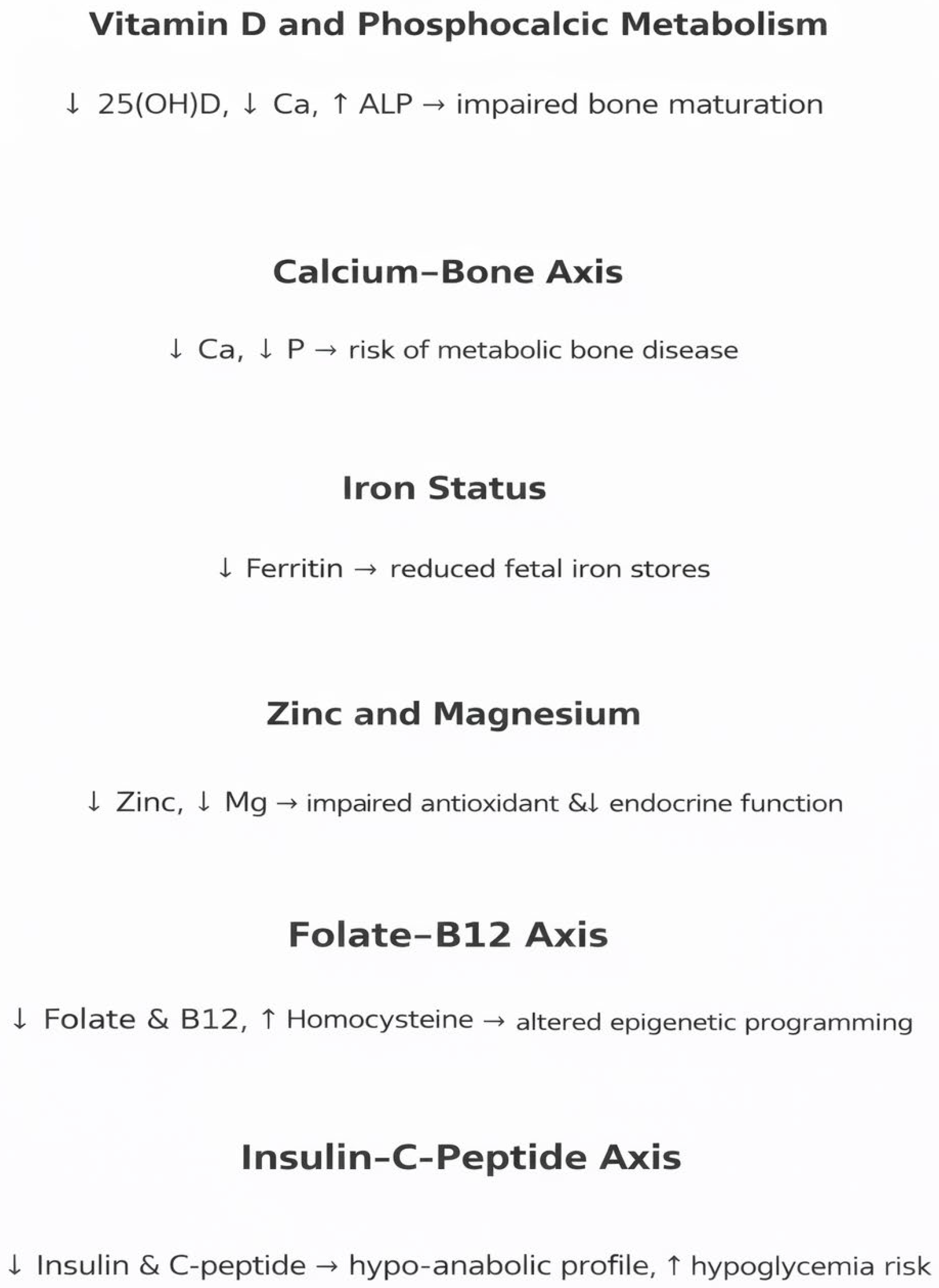
| Domain/Micronutrient or Hormone | Marker (Cord Blood/Early Neonatal) | Pattern in IUGR/SGA vs. AGA | Typical Neonatal Sample/Timing | Main Clinical Implications in IUGR Newborns | Representative References |
|---|---|---|---|---|---|
| Vitamin D3 and phosphocalcic metabolism | 25(OH)D | ↓ significantly | Cord serum; day 1–3 serum | Low fetal vitamin D3 stores; impaired phosphocalcic homeostasis; increased risk of transient hypocalcemia and suboptimal postnatal growth | [2,3,4,5,8,9,10,11] |
| Total/ionized Ca | ↓ or low–normal | First 48–72 h | Transient neonatal hypocalcemia; neuromuscular irritability; need for Ca monitoring and supplementation in severe IUGR | [12,15,47] | |
| ALP | ↑ when mineralization impaired | First week of life | Marker of high bone turnover; early indicator of MBDP, especially in preterm IUGR | [13,16,17,18] | |
| Ca-phosphate–bone status | Phosphate | ↓ in MBDP; paradoxical ↓ Pi + ↑ Ca | First weeks | Impaired bone mineralization; growth plate dysfunction; osteopenia and fracture risk | [13,16,17,18,19] |
| Fe status and oxidative metabolism | Ferritin | ↓ consistently | Cord serum; day 1–3 | Reduced fetal Fe stores; increased risk of Fe-deficiency anemia and impaired neurodevelopment; must interpret with inflammation markers | [20,21,22,23] |
| Hemoglobin/hematocrit | variable, sometimes ↑ | At birth | Polycythemia from chronic hypoxia; risk of hyperviscosity and hyperbilirubinemia | [20,22] | |
| Zn and Mg | Zn | ↓ in cord and serum | Cord blood; first 24–48 h | Impaired antioxidant defenses; immune immaturity; contribution to glycemic instability and poor growth | [26,27,28,29,30] |
| Mg | ↔ or mildly ↓ | Cord or early serum | Subtle effects on neuromuscular excitability and vascular tone; overall less severe than Ca disturbances | [31,32] | |
| Intracellular Mg (platelets) | ↓ in SGA | Cord blood platelets | Reduced intracellular Mg availability; altered cellular energy metabolism | [31] | |
| Vitamin B9 and vitamin B12 | Vitamin B9 | ↓ compared with AGA | Cord blood | Impaired DNA synthesis and cell proliferation; neurodevelopmental vulnerability | [33,34,35,36] |
| Vitamin B12 | ↓ compared with AGA | Cord blood | Disrupted one-carbon metabolism; risk of hyperhomocysteinemia and metabolic programming | [33,34,35,36] | |
| Homocysteine | ↑ where reported | Cord serum | Biomarker of impaired methylation capacity and oxidative stress | [34,36] | |
| Endocrine–metabolic axis | INS | ↓ in IUGR/SGA | Cord plasma | Hypoanabolic profile; reduced glycogen/fat stores; early neonatal hypoglycemia risk; abnormal catch-up growth | [1,42,43] |
| C-pep | ↓ in IUGR; ↑ in infants of diabetic mothers | Cord plasma | Direct β-cell secretion marker; differentiates hypoinsulinemic IUGR vs. hyperinsulinemic GDM | [1,42,43,45,46] | |
| Composite INS–C-pep profile | Low/low in IUGR vs. high/high in GDM | Cord blood | Distinguishes nutrient-deprivation vs. nutrient-excess intrauterine environments; predictive of later INS resistance | [1,42,43,45] |
Disclaimer/Publisher’s Note: The statements, opinions and data contained in all publications are solely those of the individual author(s) and contributor(s) and not of MDPI and/or the editor(s). MDPI and/or the editor(s) disclaim responsibility for any injury to people or property resulting from any ideas, methods, instructions or products referred to in the content. |
© 2026 by the authors. Licensee MDPI, Basel, Switzerland. This article is an open access article distributed under the terms and conditions of the Creative Commons Attribution (CC BY) license.
Share and Cite
Toth, I.H.; Pantea, M.M.; Enatescu, I.; Filimon, A.T.; Kali, F.Y.; Belei, O. Umbilical Cord Biomarkers of Nutritional and Metabolic Status in Neonates with Intrauterine Growth Restriction. J. Clin. Med. 2026, 15, 1043. https://doi.org/10.3390/jcm15031043
Toth IH, Pantea MM, Enatescu I, Filimon AT, Kali FY, Belei O. Umbilical Cord Biomarkers of Nutritional and Metabolic Status in Neonates with Intrauterine Growth Restriction. Journal of Clinical Medicine. 2026; 15(3):1043. https://doi.org/10.3390/jcm15031043
Chicago/Turabian StyleToth, Ioana Hermina, Manuela Marina Pantea, Ileana Enatescu, Angelica Teodora Filimon, Flavia Yasmina Kali, and Oana Belei. 2026. "Umbilical Cord Biomarkers of Nutritional and Metabolic Status in Neonates with Intrauterine Growth Restriction" Journal of Clinical Medicine 15, no. 3: 1043. https://doi.org/10.3390/jcm15031043
APA StyleToth, I. H., Pantea, M. M., Enatescu, I., Filimon, A. T., Kali, F. Y., & Belei, O. (2026). Umbilical Cord Biomarkers of Nutritional and Metabolic Status in Neonates with Intrauterine Growth Restriction. Journal of Clinical Medicine, 15(3), 1043. https://doi.org/10.3390/jcm15031043