The Interplay Between Neuromodulation and Stem Cell Therapy for Sensory-Motor Neuroplasticity After Spinal Cord Injury: A Perspective View



Abstract
1. Introduction
1.1. Neuroplasticity
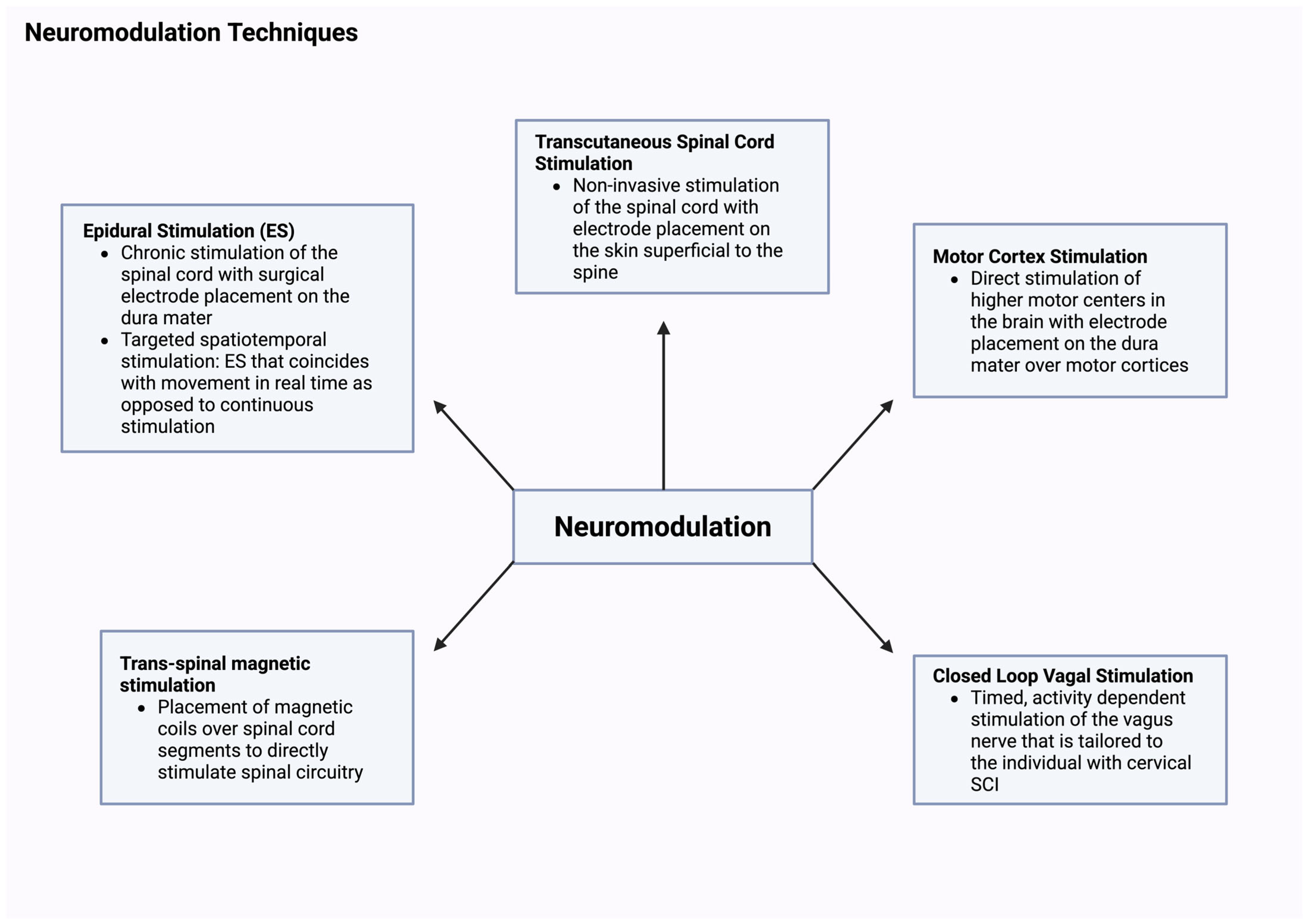
1.2. Neuromodulation
1.2.1. Neuromodulation in the Animal Model
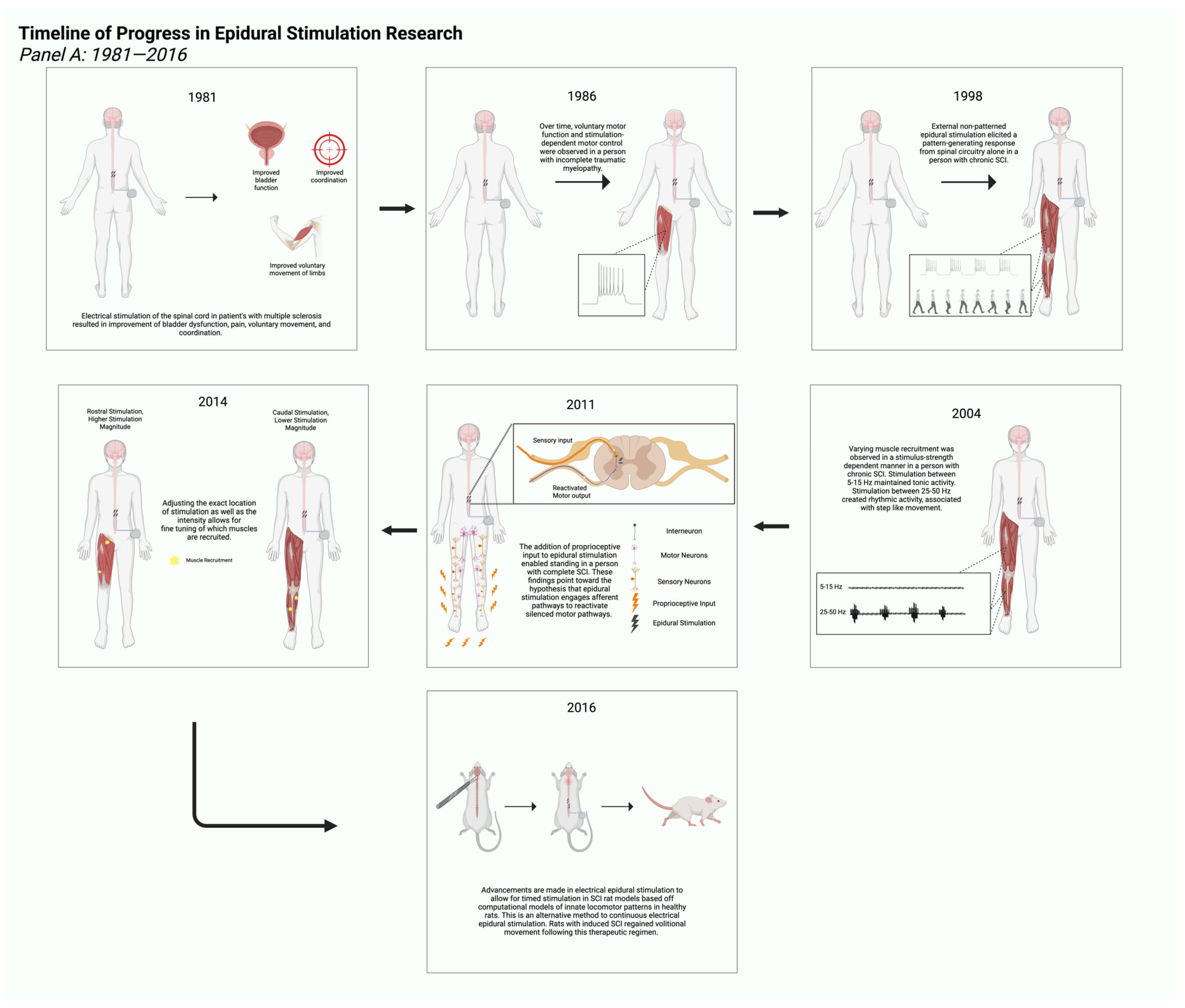
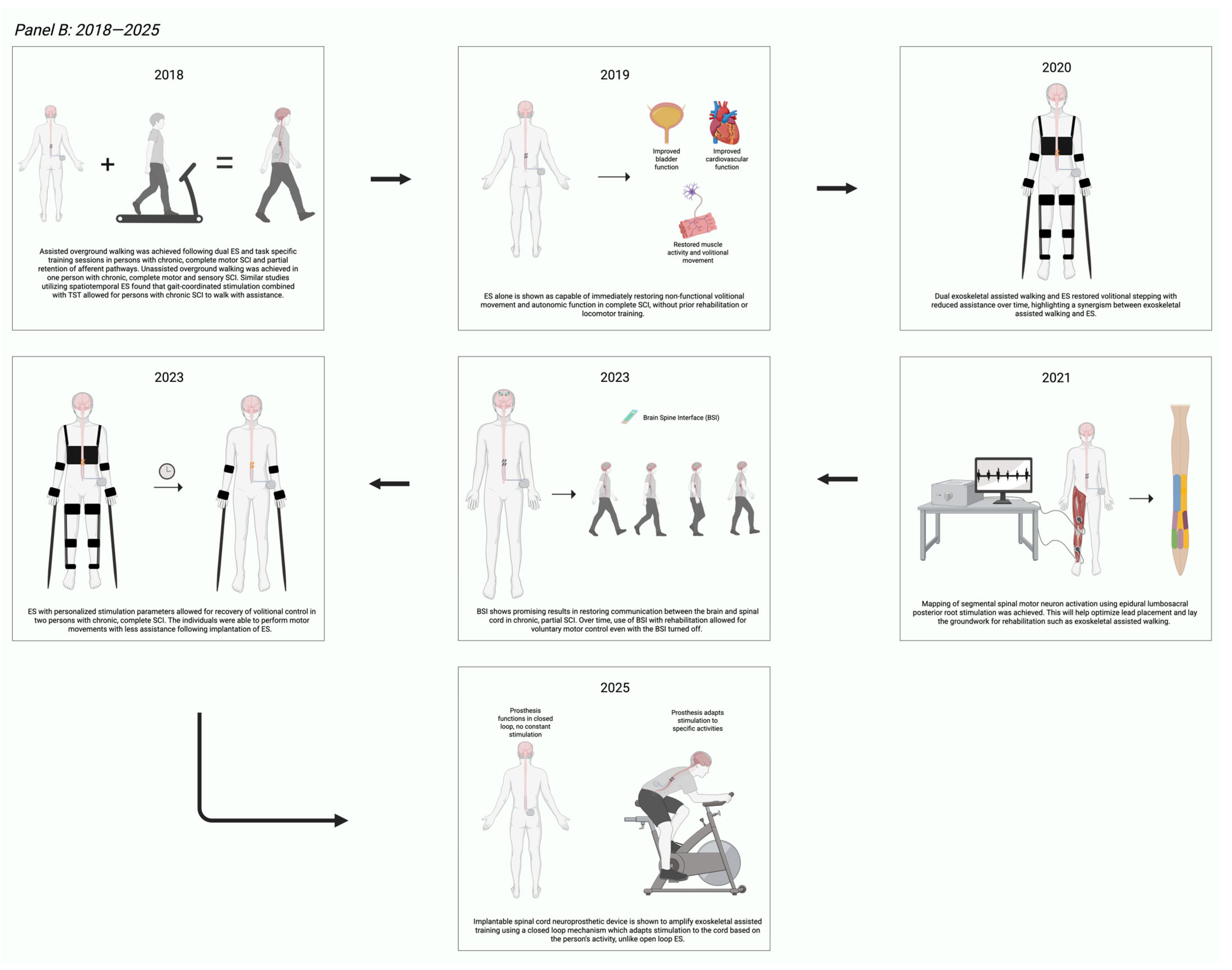
1.2.2. Neuromodulation in the Human Model
1.3. Stem Cells
1.3.1. Stem Cells and Neuroplasticity in the Animal Model
1.3.2. Stem Cells and Human Model with SCI
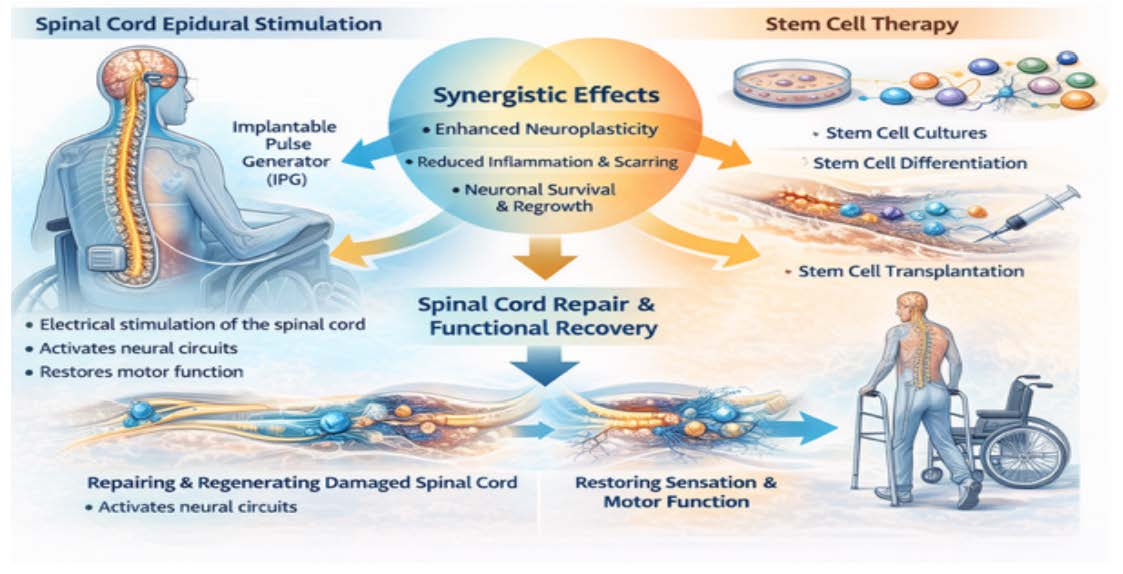
2. Summary and Conclusions
Author Contributions
Funding
Informed Consent Statement
Data Availability Statement
Acknowledgments
Conflicts of Interest
Abbreviations
| CNS | central nervous system |
| CST | corticospinal tract |
| EAW | exoskeletal assisted walking |
| hUMSC | human umbilical Mesenchymal stem cell |
| IPSCs | induced pluripotent stem cell therapy |
| MSC | Mesenchymal stem cell |
| NSC | neural stem cell |
| PA | proprioceptive afferent |
| SCI | spinal cord injury |
| SCES | spinal cord epidural stimulation |
| tSCS | transcutaneous spinal cord stimulation |
| TsT | task-specific training |
References
- National Spinal Cord Injury Statistical Center. Facts and Figures at a Glance 2024; University of Alabama at Birmingham, Department of Physical Medicine and Rehabilitation: Birmingham, AL, USA, 2025. [Google Scholar]
- Ahuja, C.S.; Martin, A.R.; Fehlings, M.G. Recent advances in managing a spinal cord injury secondary to trauma. F1000Research 2016, 5, 1017. [Google Scholar] [CrossRef] [PubMed]
- Mestriner, R.G.; Kalsi-Ryan, S.; Gholamrezaei, G.; Balbinot, G. Editorial: Rehabilitation to guide functional plasticity and regener-ation with novel cellular, pharmacological and neuromodulation therapies. Front Rehabil Sci. 2025, 6, 1563975. [Google Scholar] [CrossRef] [PubMed]
- Molinares, D.M.; Gater, D.R.; Daniel, S.; Pontee, N.L. Nontraumatic Spinal Cord Injury: Epidemiology, Etiology and Management. J. Pers. Med. 2022, 12, 1872. [Google Scholar] [CrossRef] [PubMed]
- Sayenko, D.G.; Angeli, C.; Harkema, S.J.; Edgerton, V.R.; Gerasimenko, Y.P. Neuromodulation of evoked muscle potentials induced by epidural spinal-cord stimulation in paralyzed individuals. J. Neurophysiol. 2014, 111, 1088–1099. [Google Scholar] [CrossRef]
- Darrow, D.; Balser, D.; Netoff, T.I.; Krassioukov, A.; Phillips, A.; Parr, A.; Samadani, U. Epidural Spinal Cord Stimulation Facilitates Immediate Restoration of Dormant Motor and Autonomic Supraspinal Pathways after Chronic Neurologically Complete Spinal Cord Injury. J. Neurotrauma 2019, 36, 2325–2336. [Google Scholar] [CrossRef]
- Oxford University Press. Neural Plasticity; Oxford University Press: Oxford, UK, 2011. [Google Scholar]
- Sharif, H.; Alexander, H.; Azam, A.; Martin, J.H. Dual motor cortex and spinal cord neuromodulation improves rehabilitation efficacy and restores skilled locomotor function in a rat cervical contusion injury model. Exp. Neurol. 2021, 341, 113715. [Google Scholar] [CrossRef]
- Taccola, G.; Sayenko, D.; Gad, P.; Gerasimenko, Y.; Edgerton, V. And yet it moves: Recovery of volitional control after spinal cord injury. Prog. Neurobiol. 2018, 160, 64–81. [Google Scholar] [CrossRef]
- Gadot, R.; Smith, D.N.; Prablek, M.; Grochmal, J.K.; Fuentes, A.; Ropper, A.E. Established and Emerging Therapies in Acute Spinal Cord Injury. Neurospine 2022, 19, 283–296. [Google Scholar] [CrossRef]
- Alizadeh, A.; Dyck, S.M.; Karimi-Abdolrezaee, S. Traumatic spinal cord injury: An overview of pathophysiology, models and acute injury mechanisms. Front. Neurol. 2019, 10, 282. [Google Scholar] [CrossRef]
- Fehlings, M.G.; Tetreault, L.A.; Wilson, J.R.; Kwon, B.K.; Burns, A.S.; Martin, A.R.; Hawryluk, G.; Harrop, J.S. A Clinical Practice Guideline for the Management of Acute Spinal Cord Injury: Introduction, Rationale, and Scope. Glob. Spine J. 2017, 7, 84S–94S. [Google Scholar] [CrossRef]
- Pulverenti, T.S.; Zaaya, M.; Knikou, M. Brain and spinal cord paired stimulation coupled with locomotor training affects polysynaptic flexion reflex circuits in human spinal cord injury. Exp. Brain Res. 2022, 240, 1687–1699. [Google Scholar] [CrossRef] [PubMed]
- Harkema, S.; Gerasimenko, Y.; Hodes, J.; Burdick, J.; Angeli, C.; Chen, Y.; Ferreira, C.; Willhite, A.; Rejc, E.; Grossman, R.G.; et al. Effect of epidural stimulation of the lumbosacral spinal cord on voluntary movement, standing, and assisted stepping after motor complete paraplegia: A case study. Lancet 2011, 377, 1938–1947. [Google Scholar] [CrossRef] [PubMed]
- Gad, P.; Choe, J.; Nandra, M.S.; Zhong, H.; Roy, R.R.; Tai, Y.-C.; Edgerton, V.R. Erratum: Development of a multi-electrode array for spinal cord epidural stimulation to facilitate stepping and standing after a complete spinal cord injury in adult rats. J. Neuroeng. Rehabil. 2015, 12, 33. [Google Scholar] [CrossRef]
- McKenzie, K.; Veit, N.; Aalla, S.; Yang, C.; Giffhorn, M.; Lynott, A.; Buchler, K.; Kishta, A.; Barry, A.; Sandhu, M.; et al. Combining Neuromodulation Strategies in Spinal Cord Injury Gait Rehabilitation: A Proof of Concept, Randomized, Crossover Trial. Arch. Phys. Med. Rehabil. 2024, 105, 1930–1937. [Google Scholar] [CrossRef] [PubMed]
- Jin, B.; Alam, M.; Tierno, A.; Zhong, H.; Roy, R.R.; Gerasimenko, Y.; Lu, D.C.; Edgerton, V.R. Serotonergic Facilitation of Forelimb Functional Recovery in Rats with Cervical Spinal Cord Injury. Neurotherapeutics 2021, 18, 1226–1243. [Google Scholar] [CrossRef]
- Edgerton, V.R.; Harkema, S. Epidural stimulation of the spinal cord in spinal cord injury: Current status and future challenges. Expert Rev. Neurother. 2011, 11, 1351–1353. [Google Scholar] [CrossRef]
- Moxon, K.; Oliviero, A.; Aguilar, J.; Foffani, G. Cortical reorganization after spinal cord injury: Always for good? Neuroscience 2014, 283, 78–94. [Google Scholar] [CrossRef]
- Musienko, P.; Brand, R.v.D.; Märzendorfer, O.; Roy, R.R.; Gerasimenko, Y.; Edgerton, V.R.; Courtine, G. Controlling Specific Locomotor Behaviors through Multidimensional Monoaminergic Modulation of Spinal Circuitries. J. Neurosci. 2011, 31, 9264–9278. [Google Scholar] [CrossRef]
- Minassian, K.; Jilge, B.; Rattay, F.; Pinter, M.M.; Binder, H.; Gerstenbrand, F.; Dimitrijevic, M.R. Stepping-like movements in humans with complete spinal cord injury induced by epidural stimulation of the lumbar cord: Electromyographic study of compound muscle action potentials. Spinal Cord 2004, 42, 401–416. [Google Scholar] [CrossRef]
- Dimitrijevic, M.R.; Gerasimenko, Y.; Pinter, M.M. Evidence for a Spinal Central Pattern Generator in Humansa. Ann. New York Acad. Sci. 1998, 860, 360–376. [Google Scholar] [CrossRef]
- Asboth, L.; Friedli, L.; Beauparlant, J.; Martinez-Gonzalez, C.; Anil, S.; Rey, E.; Baud, L.; Pidpruzhnykova, G.; Anderson, M.A.; Shkorbatova, P.; et al. Cortico–reticulo–spinal circuit reorganization enables functional recovery after severe spinal cord contusion. Nat. Neurosci. 2018, 21, 576–588. [Google Scholar] [CrossRef] [PubMed]
- Bonizzato, M.; Pidpruzhnykova, G.; DiGiovanna, J.; Shkorbatova, P.; Pavlova, N.; Micera, S.; Courtine, G. Brain-controlled modulation of spinal circuits improves recovery from spinal cord injury. Nat. Commun. 2018, 9, 3015. [Google Scholar] [CrossRef] [PubMed]
- Ganzer, P.D.; Darrow, M.J.; Meyers, E.C.; Solorzano, B.R.; Ruiz, A.D.; Robertson, N.M.; Adcock, K.S.; James, J.T.; Jeong, H.S.; Becker, A.M.; et al. Closed-loop neuromodulation restores network connectivity and motor control after spinal cord injury. eLife 2018, 7, e32058. [Google Scholar] [CrossRef] [PubMed]
- Khodaparast, N.; Kilgard, M.P.; Casavant, R.; Ruiz, A.; Qureshi, I.; Ganzer, P.D.; Rennaker, I.R.L.; Hays, S.A. Vagus Nerve Stimulation During Rehabilitative Training Improves Forelimb Recovery After Chronic Ischemic Stroke in Rats. Neurorehabil. Neural Repair 2016, 30, 676–684. [Google Scholar] [CrossRef]
- Dawson, J.; Liu, C.Y.; E Francisco, G.; Cramer, S.C.; Wolf, S.L.; Dixit, A.; Alexander, J.; Ali, R.; Brown, B.L.; Feng, W.; et al. Vagus nerve stimulation paired with rehabilitation for upper limb motor function after ischaemic stroke (VNS-REHAB): A randomised, blinded, pivotal, device trial. Lancet 2021, 397, 1545–1553. [Google Scholar] [CrossRef]
- Gill, M.L.; Grahn, P.J.; Calvert, J.S.; Linde, M.B.; Lavrov, I.A.; Strommen, J.A.; Beck, L.A.; Sayenko, D.G.; Van Straaten, M.G.; Drubach, D.I.; et al. Neuromodulation of lumbosacral spinal networks enables independent stepping after complete paraplegia. Nat. Med. 2018, 24, 1677–1682. [Google Scholar] [CrossRef]
- Wagner, F.B.; Mignardot, J.-B.; Le Goff-Mignardot, C.G.; Demesmaeker, R.; Komi, S.; Capogrosso, M.; Rowald, A.; Seáñez, I.; Caban, M.; Pirondini, E.; et al. Targeted neurotechnology restores walking in humans with spinal cord injury. Nature 2018, 563, 65–71. [Google Scholar] [CrossRef]
- Comino-Suárez, N.; Moreno, J.C.; Megía-García, Á.; Del-Ama, A.J.; Serrano-Muñoz, D.; Avendaño-Coy, J.; Gil-Agudo, Á.; Alcobendas-Maestro, M.; López-López, E.; Gómez-Soriano, J. Transcutaneous spinal cord stimulation combined with robotic-assisted body weight-supported treadmill training enhances motor score and gait recovery in incomplete spinal cord injury: A double-blind randomized controlled clinical trial. J. Neuroeng. Rehabil. 2025, 22, 1–16. [Google Scholar] [CrossRef]
- Zareen, N.; Shinozaki, M.; Ryan, D.; Alexander, H.; Amer, A.; Truong, D.; Khadka, N.; Sarkar, A.; Naeem, S.; Bikson, M.; et al. Motor cortex and spinal cord neuromodulation promote corticospinal tract axonal outgrowth and motor recovery after cervical contusion spinal cord injury. Exp. Neurol. 2017, 297, 179–189. [Google Scholar] [CrossRef]
- Grahn, P.J.; Lavrov, I.A.; Sayenko, D.G.; Van Straaten, M.G.; Gill, M.L.; Strommen, J.A.; Calvert, J.S.; Drubach, D.I.; Beck, L.A.; Linde, M.B.; et al. Enabling Task-Specific Volitional Motor Functions via Spinal Cord Neuromodulation in a Human With Paraplegia. Mayo Clin. Proc. 2017, 92, 544–554. [Google Scholar] [CrossRef]
- Rejc, E.; Angeli, C.A.; Atkinson, D.; Harkema, S.J. Motor recovery after activity-based training with spinal cord epidural stimulation in a chronic motor complete paraplegic. Sci. Rep. 2017, 7, 13476. [Google Scholar] [CrossRef]
- Kazim, S.F.; Bowers, C.A.; Cole, C.D.; Varela, S.; Karimov, Z.; Martinez, E.; Ogulnick, J.V.; Schmidt, M.H. Corticospinal Motor Circuit Plasticity After Spinal Cord Injury: Harnessing Neuroplasticity to Improve Functional Outcomes. Mol. Neurobiol. 2021, 58, 5494–5516. [Google Scholar] [CrossRef] [PubMed]
- Angeli, C.A.; Boakye, M.; Morton, R.A.; Vogt, J.; Benton, K.; Chen, Y.; Ferreira, C.K.; Harkema, S.J. Recovery of Over-Ground Walking after Chronic Motor Complete Spinal Cord Injury. N. Engl. J. Med. 2018, 379, 1244–1250. [Google Scholar] [CrossRef] [PubMed]
- Kilgard, M.P.; Epperson, J.D.; Adehunoluwa, E.A.; Swank, C.; Porter, A.L.; Pruitt, D.T.; Gallaway, H.L.; Stevens, C.; Gillespie, J.; Arnold, D.; et al. Closed-loop vagus nerve stimulation aids recovery from spinal cord injury. Nature 2025, 643, 1030–1036. [Google Scholar] [CrossRef] [PubMed]
- Taccola, G.; Gad, P.; Culaclii, S.; Wang, P.-M.; Liu, W.; Edgerton, V.R. Acute neuromodulation restores spinally-induced motor responses after severe spinal cord injury. Exp. Neurol. 2020, 327, 113246. [Google Scholar] [CrossRef]
- Spungen, A.M.; Dematt, E.J.; Biswas, K.; Jones, K.M.; Mi, Z.; Snodgrass, A.J.; Morin, K.; Asselin, P.K.; Cirnigliaro, C.M.; Kirshblum, S.; et al. Exoskeletal-Assisted Walking in Veterans with Paralysis. JAMA Netw. Open 2024, 7, e2431501. [Google Scholar] [CrossRef]
- Gorgey, A.S.; Gill, S.; Holman, M.E.; Davis, J.C.; Atri, R.; Bai, O.; Goetz, L.; Lester, D.L.; Trainer, R.; Lavis, T.D. The feasibility of using exoskeletal-assisted walking with epidural stimulation: A case report study. Ann. Clin. Transl. Neurol. 2020, 7, 259–265. [Google Scholar] [CrossRef]
- Gorgey, A.S.; Trainer, R.; Sutor, T.W.; Goldsmith, J.A.; Alazzam, A.; Goetz, L.L.; Lester, D.; Lavis, T.D. A case study of percutaneous epidural stimulation to enable motor control in two men after spinal cord injury. Nat. Commun. 2023, 14, 2064. [Google Scholar] [CrossRef]
- Hankov, N.; Caban, M.; Demesmaeker, R.; Roulet, M.; Komi, S.; Xiloyannis, M.; Gehrig, A.; Varescon, C.; Spiess, M.R.; Maggioni, S.; et al. Augmenting rehabilitation robotics with spinal cord neuromodulation: A proof of concept. Sci. Robot. 2025, 10, eadn5564. [Google Scholar] [CrossRef]
- Hofstoetter, U.S.; Perret, I.; Bayart, A.; Lackner, P.; Binder, H.; Freundl, B.; Minassian, K. Spinal motor mapping by epidural stimulation of lumbosacral posterior roots in humans. iScience 2021, 24, 101930. [Google Scholar] [CrossRef]
- Wenger, N.; Moraud, E.M.; Gandar, J.; Musienko, P.; Capogrosso, M.; Baud, L.; Le Goff, C.G.; Barraud, Q.; Pavlova, N.; Dominici, N.; et al. Spatiotemporal neuromodulation therapies engaging muscle synergies improve motor control after spinal cord injury. Nat. Med. 2016, 22, 138–145. [Google Scholar] [CrossRef] [PubMed]
- Lorach, H.; Galvez, A.; Spagnolo, V.; Martel, F.; Karakas, S.; Intering, N.; Vat, M.; Faivre, O.; Harte, C.; Komi, S.; et al. Walking naturally after spinal cord injury using a brain–spine interface. Nature 2023, 618, 126–133. [Google Scholar] [CrossRef] [PubMed]
- Cook, A.W.; Taylor, J.K.; Nidzgorski, F. Results of Spinal Cord Stimulation in Multiple Sclerosis. Ster. Funct. Neurosurg. 1981, 44, 55–61. [Google Scholar] [CrossRef] [PubMed]
- Barolat, G.; Myklebust, J.B.; Wenninger, W. Enhancement of Voluntary Motor Function Following Spinal Cord Stimulation—Case Study. Ster. Funct. Neurosurg. 1986, 49, 307–314. [Google Scholar] [CrossRef]
- Williams, P.; Schelbaum, E.; Ahmanna, C.; Alexander, H.; Kanté, K.; Soares, S.; Sharif, H.; Nothias, F.; Martin, J.H. Combined biomaterial scaffold and neuromodulation strategy to promote tissue repair and corticospinal connectivity after spinal cord injury in a rodent model. Exp. Neurol. 2024, 382, 114965. [Google Scholar] [CrossRef]
- Samejima, S.; Henderson, R.; Pradarelli, J.; Mondello, S.E.; Moritz, C.T. Activity-dependent plasticity and spinal cord stimulation for motor recovery following spinal cord injury. Exp. Neurol. 2022, 357, 114178. [Google Scholar] [CrossRef]
- Krawczenko, A.; Klimczak, A. Adipose Tissue-Derived Mesenchymal Stem/Stromal Cells and Their Contribution to Angiogenic Processes in Tissue Regeneration. Int. J. Mol. Sci. 2022, 23, 2425. [Google Scholar] [CrossRef]
- Zeng, C.-W. Advancing Spinal Cord Injury Treatment through Stem Cell Therapy: A Comprehensive Review of Cell Types, Challenges, and Emerging Technologies in Regenerative Medicine. Int. J. Mol. Sci. 2023, 24, 14349. [Google Scholar] [CrossRef]
- Du, L.; Zhang, L.; Bao, S.; Yan, F.; Jiang, W.; Wang, H.; Dong, C. Electric Stimulation Combined with Biomaterials for Repairing Spinal Cord Injury. ACS Biomater. Sci. Eng. 2025, 11, 3276–3296. [Google Scholar] [CrossRef]
- Mu, Z.; Qin, J.; Zhou, X.; Wang, K. Synergistic effects of human umbilical cord mesenchymal stem cells/neural stem cells and epidural electrical stimulation on spinal cord injury rehabilitation. Sci. Rep. 2024, 14, 26090. [Google Scholar] [CrossRef]
- Saremi, J.; Mahmoodi, N.; Rasouli, M.; Ranjbar, F.E.; Mazaheri, E.L.; Akbari, M.; Hasanzadeh, E.; Azami, M. Advanced approaches to regenerate spinal cord injury: The development of cell and tissue engineering therapy and combinational treatments. Biomed. Pharmacother. 2022, 146, 112529. [Google Scholar] [CrossRef] [PubMed]
- Zhou, Y.; Xu, T.; Zhou, Y.; Han, W.; Wu, Z.; Yang, C.; Chen, X. A review focuses on a neglected and controversial component of SCI: Myelin debris. Front. Immunol. 2024, 15, 1436031. [Google Scholar] [CrossRef] [PubMed]
- Su, Q.; Nasser, M.I.; He, J.; Deng, G.; Ouyang, Q.; Zhuang, D.; Deng, Y.; Hu, H.; Liu, N.; Li, Z.; et al. Engineered Schwann Cell-Based Therapies for Injury Peripheral Nerve Reconstruction. Front. Cell. Neurosci. 2022, 16, 865266. [Google Scholar] [CrossRef] [PubMed]
- Andriot, T.; Ghosh, M.; Pearse, D.D. Engineered Healing: Synergistic Use of Schwann Cells and Biomaterials for Spinal Cord Regeneration. Int. J. Mol. Sci. 2025, 26, 7922. [Google Scholar] [CrossRef]
- Bunge, M.B. Efficacy of Schwann cell transplantation for spinal cord repair is improved with combinatorial strategies. J. Physiol. 2016, 594, 3533–3538. [Google Scholar] [CrossRef]
- Fouad, K.; Schnell, L.; Bunge, M.B.; Schwab, M.E.; Liebscher, T.; Pearse, D.D. Combining Schwann Cell Bridges and Olfactory-Ensheathing Glia Grafts with Chondroitinase Promotes Locomotor Recovery after Complete Transection of the Spinal Cord. J. Neurosci. 2005, 25, 1169–1178. [Google Scholar] [CrossRef]
- Anderson, K.D.; Guest, J.D.; Dietrich, W.D.; Bunge, M.B.; Curiel, R.; Dididze, M.; Green, B.A.; Khan, A.; Pearse, D.D.; Saraf-Lavi, E.; et al. Safety of Autologous Human Schwann Cell Transplantation in Subacute Thoracic Spinal Cord Injury. J. Neurotrauma 2017, 34, 2950–2963. [Google Scholar] [CrossRef]
- Wiliams, R.R.; Bunge, M.B. Schwann cell transplantation. In Progress in Brain Research; Elsevier: Amsterdam, The Netherlands, 2012; Volume 201, pp. 295–312. [Google Scholar] [CrossRef]
- De Freria, C.M.; Van Niekerk, E.; Blesch, A.; Lu, P. Neural Stem Cells: Promoting Axonal Regeneration and Spinal Cord Connec-tivity. Cells. 2021, 10, 3296. [Google Scholar] [CrossRef]
- Levi, A.D.; O Okonkwo, D.; Park, P.; Jenkins, A.L.; Kurpad, S.N.; Parr, A.M.; Ganju, A.; Aarabi, B.; Kim, D.; Casha, S.; et al. Emerging Safety of Intramedullary Transplantation of Human Neural Stem Cells in Chronic Cervical and Thoracic Spinal Cord Injury. Neurosurgery 2017, 82, 562–575. [Google Scholar] [CrossRef]
- Xia, Y.; Zhu, J.; Yang, R.; Wang, H.; Li, Y.; Fu, C. Mesenchymal stem cells in the treatment of spinal cord injury: Mechanisms, current advances and future challenges. Front. Immunol. 2023, 14, 1141601. [Google Scholar] [CrossRef]
- Bhatt, M.; Das, B. Advancements in Spinal Cord Injury Treatment: Integrating Drug Delivery, Biophysical Stimulation, Cell-Based Therapies, and Tissue Engineering Approaches. ACS Appl. Bio Mater. 2025, 8, 6526–6540. [Google Scholar] [CrossRef]
- Gartit, M.; Noumairi, M.; Rhoul, A.; Mahla, H.; EL Oumri, A.A.; EL Anbari, Y. Scientific Advances in Neural Regeneration After Spinal Cord Injury. Cureus 2025, 17, e78630. [Google Scholar] [CrossRef] [PubMed]
- Kadoya, K.; Lu, P.; Nguyen, K.; Lee-Kubli, C.; Kumamaru, H.; Yao, L.; Knackert, J.; Poplawski, G.; Dulin, J.N.; Strobl, H.; et al. Spinal cord reconstitution with homologous neural grafts enables robust corticospinal regeneration. Nat. Med. 2016, 22, 479–487. [Google Scholar] [CrossRef] [PubMed]
- Van Niekerk, E.A.; de Freria, C.M.; Mancarci, B.O.; Groeniger, K.; Kulinich, D.; Riley, T.; Kawaguchi, R.; Okawa, S.; Vokes, T.; Rosenzweig, E.S.; et al. Thiorphan reprograms neurons to promote functional recovery after spinal cord injury. Nature 2025, 648, 402–408. [Google Scholar] [CrossRef] [PubMed]
- Rosenzweig, E.S.; Brock, J.H.; Lu, P.; Kumamaru, H.; A Salegio, E.; Kadoya, K.; Weber, J.L.; Liang, J.J.; Moseanko, R.; Hawbecker, S.; et al. Restorative effects of human neural stem cell grafts on the primate spinal cord. Nat. Med. 2018, 24, 484–490. [Google Scholar] [CrossRef]
- Pawlowski, J.; Apothéloz-Perret-Gentil, L.; Altermatt, F. Environmental DNA: What’s behind the term? Clarifying the terminology and recommendations for its future use in biomonitoring. Mol. Ecol. 2020, 29, 4258–4264. [Google Scholar] [CrossRef]
- Zhou, Q.; Liu, J.; Fang, Q.; Zhang, C.; Liu, W.; Sun, Y. Microglial landscape and signaling in spinal cord injury. Spinal Cord 2025, 63, 418–425. [Google Scholar] [CrossRef]
- Zawadzka, M.; Yeghiazaryan, M.; Niedziółka, S.; Miazga, K.; Kwaśniewska, A.; Bekisz, M.; Sławińska, U. Forced Remyelination Promotes Axon Regeneration in a Rat Model of Spinal Cord Injury. Int. J. Mol. Sci. 2022, 24, 495. [Google Scholar] [CrossRef]
- Jiang, Y.-Q.; Zaaimi, B.; Martin, J.H. Competition with Primary Sensory Afferents Drives Remodeling of Corticospinal Axons in Mature Spinal Motor Circuits. J. Neurosci. 2016, 36, 193–203. [Google Scholar] [CrossRef]
- Zhang, G.; Li, Y.; Reuss, J.L.; Liu, N.; Wu, C.; Li, J.; Xu, S.; Wang, F.; Hazel, T.G.; Cunningham, M.; et al. Stable Intracerebral Transplantation of Neural Stem Cells for the Treatment of Paralysis Due to Ischemic Stroke. STEM CELLS Transl. Med. 2019, 8, 999–1007. [Google Scholar] [CrossRef]
- Glass, J.D.; Hertzberg, V.S.; Boulis, N.M.; Riley, J.; Federici, T.; Polak, M.; Bordeau, J.; Fournier, C.; Johe, K.; Hazel, T.; et al. Transplantation of spinal cord–derived neural stem cells for ALS. Neurology 2016, 87, 392–400. [Google Scholar] [CrossRef]
- Feldman, E.L.; Boulis, N.M.; Hur, J.; Johe, K.; Rutkove, S.B.; Federici, T.; Polak, M.; Bordeau, J.; Sakowski, S.A.; Glass, J.D. Intraspinal neural stem cell transplantation in amyotrophic lateral sclerosis: Phase 1 trial outcomes. Ann. Neurol. 2014, 75, 363–373. [Google Scholar] [CrossRef]
- Sun, F.; He, Z. Neuronal intrinsic barriers for axon regeneration in the adult CNS. Curr. Opin. Neurobiol. 2010, 20, 510–518. [Google Scholar] [CrossRef]
- Shang, Z.; Li, D.; Chen, J.; Wang, R.; Wang, M.; Zhang, B.; Wang, X.; Wanyan, P. What Is the Optimal Timing of Transplantation of Neural Stem Cells in Spinal Cord Injury? A Systematic Review and Network Meta-Analysis Based on Animal Studies. Front. Immunol. 2022, 13, 855309. [Google Scholar] [CrossRef]
- Tashiro, S.; Nishimura, S.; Iwai, H.; Sugai, K.; Zhang, L.; Shinozaki, M.; Iwanami, A.; Toyama, Y.; Liu, M.; Okano, H.; et al. Functional Recovery from Neural Stem/Progenitor Cell Transplantation Combined with Treadmill Training in Mice with Chronic Spinal Cord Injury. Sci. Rep. 2016, 6, 30898. [Google Scholar] [CrossRef]
- Nandakumar, B.; Blumenthal, G.H.; Disse, G.D.; Desmond, P.C.; Ebinu, J.O.; Ricard, J.; Bethea, J.R.; Moxon, K.A. Exercise therapy guides cortical reorganization after midthoracic spinal contusion to enhance control of lower thoracic muscles, supporting functional recovery. Exp. Neurol. 2023, 364, 114394. [Google Scholar] [CrossRef]
- Detloff, M.R.; Quiros-Molina, D.; Javia, A.S.; Daggubati, L.; Nehlsen, A.D.; Naqvi, A.; Ninan, V.; Vannix, K.N.; McMullen, M.-K.; Amin, S.; et al. Delayed Exercise Is Ineffective at Reversing Aberrant Nociceptive Afferent Plasticity or Neuropathic Pain After Spinal Cord Injury in Rats. Neurorehabilit. Neural Repair 2015, 30, 685–700. [Google Scholar] [CrossRef]



| Study | Neuromodulation | Task-Specific Training | Measurements | Key Findings |
|---|---|---|---|---|
| Musienko et al., 2011 [20] | Lumbosacral EES + pharmacologic tuning | Stepping training | Electromyography | 1. Control of dopaminergic, noradrenergic, and serotonergic receptors using pharmacotherapy allowed for fine tuning of hind-limb movements in rats with SCI 2. Combination of EES with monoamine pharmacologic tuning can synergistically upregulate movement in rats with SCI. |
| Bonizzato et al., 2018 [24] | Lumbosacral EES + Deep Brain Stimulation (open- and close-looped) + pharmacologic tuning | Stepping Training | Behavioral Assessments | 1. The addition of deep brain stimulation with serotonergic agonists and EES results in clear improvement after SCI. 2. Locomotor performance differed between stimulus conditions. |
| Zareen et al., 2018 [31] | Motor cortex stimulation | N/A | Stereological quantification using optical fractionator | Measurable increase in biochemical pathways for axonal growth and formation of new synapses, mTOR and Jak/Stat, respectively, following motor cortex stimulation. |
| Asboth et al., 2018 [23] | Lumbosacral EES + pharmacologic tuning | Stepping training | Behavioral Assessments, Anterograde Tract Tracing | Recovery after sever SCI was driven cortico-reticulo-spinal reorganization rather than corticospinal regeneration enabled by spinal neuromodulation. |
| Sharif et al., 2021 [8] | Dual trans-spinal direct stimulation and motor cortex intermittent theta burst stimulation | Horizontal ladder training | CST anterograde tracing, Video analysis of forelimb placement/precision | 1. Rats with SCI who underwent combined physical training and neuromodulation had a statistically significant (p < 0.05) increase in regained motor function at six weeks of rehabilitation when compared to rats that were treated with rehabilitation alone. 2. There was a statistically significant (p < 0.04) increase in corticospinal tract axonal sprouting caudally in the neuromodulation + task specific training group versus the rats who underwent training alone |
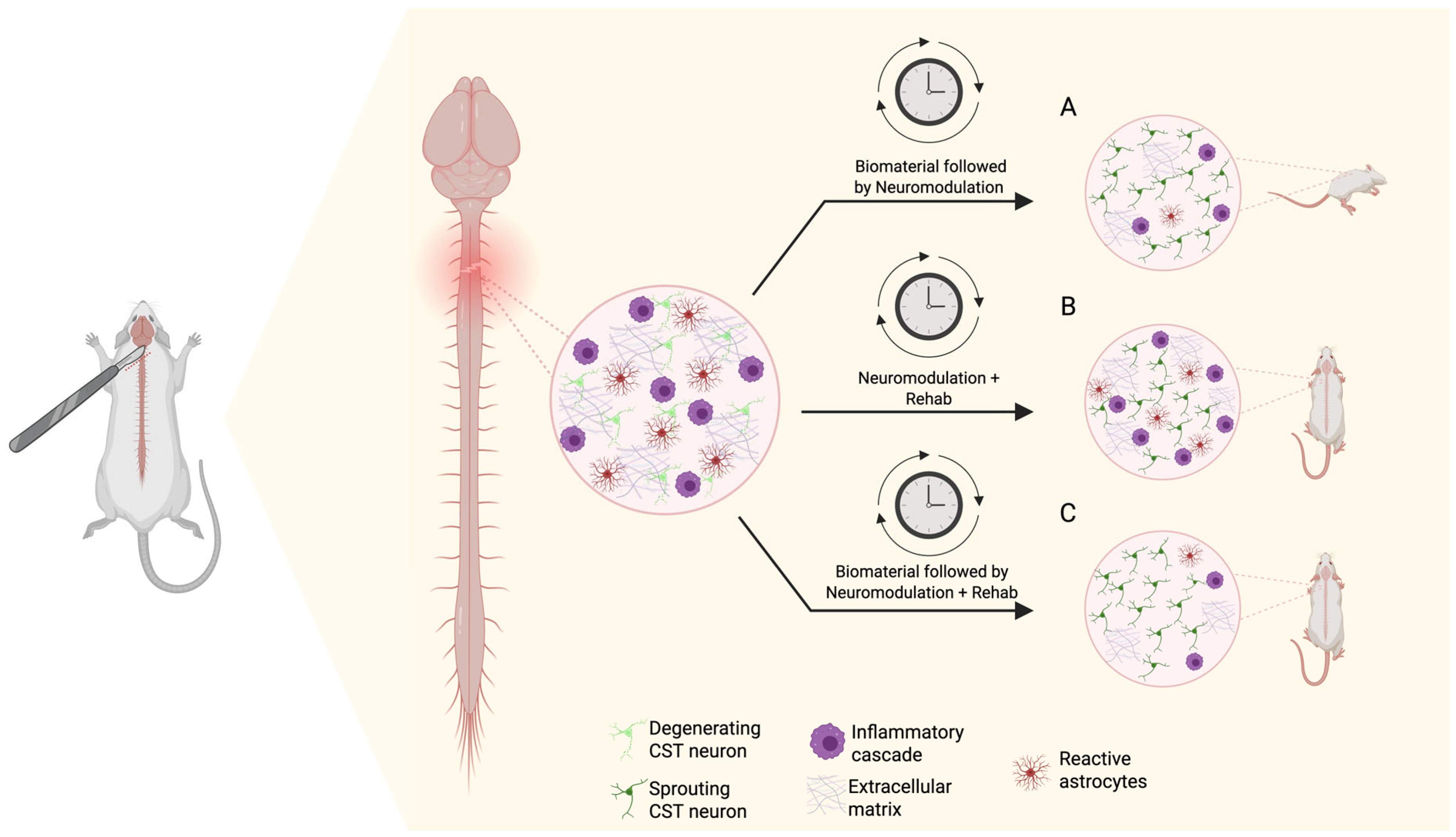
| Williams et al., 2024 [47] | Motor cortex and trans-spinal direct stimulation with healing biomaterial (Cfphs) | N/A | Immunohistology, Fluorescence microscopy | Cfphs administration 3 days following SCI reduced proliferation of secondary and tertiary stage pathology, creating a better environment for subsequent neuromodulation therapy. Significant enhancement in corticospinal tract axon density was observed in injured rat models when compared to injured rats that received Cfphs alone. |
| Study | Neuromodulation | Task-Specific Training | Measurements | Key Findings |
|---|---|---|---|---|
| Harkema et al., 2011 [14] | Lumbosacral EES | Stepping training on a treadmill and standing training | Electromyography, footswitch, ground reaction forces, joint angles, body weight support | 1. EES during task-specific training showed significant EMG activity when compared to task-specific training without EES. 2. A patient with SCI could perform voluntary dorsiflexion at the ankle, flexion at the knee, and toe extension on verbal command with epidural stimulation while supine following 80 sessions of stand-training. |
| Grahn et al., 2017 [32] | Lumbosacral EES | Side-lying lower extremity flexion/extension, steplike movement in upright position, standing training | Electromyography | A patient with SCI was able to stand without trainer assistance for longer than 1.5 min. Patient was also able to voluntarily create step-like movements while upright as well as while side-lying with constant EES. |
| Rejc et al., 2017 [33] | Lumbosacral Epidural SCS | Long-term activity-training (standing, stepping, volitional movements) | EMG, motion capture, ground reaction forces, volitional movement attempts, coordination analysis (JPD) | A patient with chronic motor complete SCI regained volitional lower limb movement and independent standing |
| Angeli et al., 2018 [35] | Lumbosacral EES | Standing and Step Training | EMG | Two participants with complete SCI achieve volitional control of lower-limb muscles and walking with assistive devices |
| Gill et al., 2018 [28] | Lumbosacral EES | Locomotor and stand training | EMG | Neuromodulation of lumbosacral networks enabled independent stepping and standing while TST reinforced network plasticity. |
| Wagner et al., 2018 [29] | Targeted Spatiotemporal Neuromodulation | Gait Training and Walking | EMG | Three participants with chronic SCI achieved stepping and balance assisted ambulation |
| Kazim et al., 2021 [34] | Epidural and Transcutaneous Stimulation, trans-spinal magnetic stimulation | Treadmill, skilled task training | CST Sprouting, EMG, MEPs, DTI imaging | Neuromodulation and task-specific training synergistically enhanced plasticity in corticospinal circuits, evidence of reorganization at all levels of the motor system |
| Samejima et al., 2022 [48] | Epidural and Transcutaneous stimulation Open-loop and Closed-loop | Reach/grip tasks, exoskeleton-assisted training | EMG, Motor evoked potentials (MEPs), Functional assessments, H-reflex Modulation | Spinal Cord Stimulation (SCS) promotes activity-dependent plasticity and motor recovery, Closed-loop may offer enhanced neuroplasticity |
| Mckenzie et al., 2024 [16] | Transcutaneous spinal cord stimulation, acute intermittent hypoxia | Gait training | 10 m walk test, 6 min walk test, Timed Up and Go test (TUG) | Combination of neuromodulatory therapies (AIH, gait training, and tSCS) showed significant improvement in chronic SCI patient’s ability to perform the TUG test when compared to those with tSCS and training alone as well as just training. |
| Comino-Suarez et al., 2025 [30] | Transcutaneous spinal cord stimulation | Robotically assisted walking (Lokomat) | Lower Extremity Motor Score (LEMS), dynamometry, Electromyography,10 m walk test, 6 min walk test, Timed Up and Go test | Controlled clinical study that showed improvement in lower-extremity motor function and the ability to walk in patients with subacute SCI following combined tSCS and robotic-assisted walking training when compared to those who received sham tSCS stimulation. |
| Study | Type of Stem Cells | Supportive Therapy | Measurements | Key Findings |
|---|---|---|---|---|
| Levi et al., 2018 [62] | NSCs | Rehab | ASIA scores | Limited functional improvement as a standalone treatment |
| Xia et al., 2023 [63] | MSCs | Rehab + Pharmacological support | ASIA scores, functional outcomes | Improved neuroplasticity and motor recovery |
| Bhatt & Das, 2025 [64] | MSCs and IPSC | Rehab + Pharmacological support | ASIA scores, EMG, fMRI | Functional recovery, evidence of CST reorganization and plasticity |
| Gartit et al., 2025 [65] | MSCs | Rehab | ASIA scores | Long-term neuroplastic changes and greater functional recovery |
Disclaimer/Publisher’s Note: The statements, opinions and data contained in all publications are solely those of the individual author(s) and contributor(s) and not of MDPI and/or the editor(s). MDPI and/or the editor(s) disclaim responsibility for any injury to people or property resulting from any ideas, methods, instructions or products referred to in the content. |
© 2026 by the authors. Licensee MDPI, Basel, Switzerland. This article is an open access article distributed under the terms and conditions of the Creative Commons Attribution (CC BY) license.
Share and Cite
Yousak, A.; Jose, K.A.; Gorgey, A.S. The Interplay Between Neuromodulation and Stem Cell Therapy for Sensory-Motor Neuroplasticity After Spinal Cord Injury: A Perspective View. J. Clin. Med. 2026, 15, 879. https://doi.org/10.3390/jcm15020879
Yousak A, Jose KA, Gorgey AS. The Interplay Between Neuromodulation and Stem Cell Therapy for Sensory-Motor Neuroplasticity After Spinal Cord Injury: A Perspective View. Journal of Clinical Medicine. 2026; 15(2):879. https://doi.org/10.3390/jcm15020879
Chicago/Turabian StyleYousak, Anthony, Kaci Ann Jose, and Ashraf S. Gorgey. 2026. "The Interplay Between Neuromodulation and Stem Cell Therapy for Sensory-Motor Neuroplasticity After Spinal Cord Injury: A Perspective View" Journal of Clinical Medicine 15, no. 2: 879. https://doi.org/10.3390/jcm15020879
APA StyleYousak, A., Jose, K. A., & Gorgey, A. S. (2026). The Interplay Between Neuromodulation and Stem Cell Therapy for Sensory-Motor Neuroplasticity After Spinal Cord Injury: A Perspective View. Journal of Clinical Medicine, 15(2), 879. https://doi.org/10.3390/jcm15020879