Qoppa as a New Pan-Tumor Synthetic Parameter Derived from Tumor-Associated Biomarkers for Identifying Oncology Patients at High Risk of Metastasis: A Prospective Pilot Study

 ,
,
Abstract
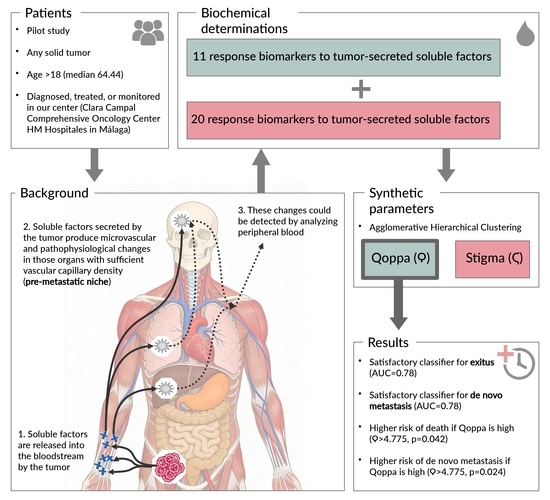
1. Introduction
2. Materials and Methods
2.1. Study Population
2.2. Study Design
2.3. Biomarker Selection
2.4. Blood Sampling and Biochemical Determinations
2.5. Statistical Analyses
3. Results
4. Discussion
5. Conclusions
Supplementary Materials
Author Contributions
Funding
Institutional Review Board Statement
Informed Consent Statement
Data Availability Statement
Acknowledgments
Conflicts of Interest
References
- Li, Y.; Liu, F.; Cai, Q.; Deng, L.; Ouyang, Q.; Zhang, X.H.; Zheng, J. Invasion and metastasis in cancer: Molecular insights and therapeutic targets. Signal Transduct. Target. Ther. 2025, 10, 57. [Google Scholar] [CrossRef]
- Jiang, K.; Parker, M.; Materi, J.; Azad, T.D.; Kamson, D.O.; Kleinberg, L.; Ye, X.; Rincon-Torroella, J.; Bettegowda, C. Epidemiology and survival outcomes of synchronous and metachronous brain metastases: A retrospective population-based study. Neurosurg. Focus 2023, 55, E3. [Google Scholar] [CrossRef]
- Horn, S.R.; Stoltzfus, K.C.; Lehrer, E.J.; Dawson, L.A.; Tchelebi, L.; Gusani, N.J.; Sharma, N.K.; Chen, H.; Trifiletti, D.M.; Zaorsky, N.G. Epidemiology of liver metastases. Cancer Epidemiol. 2020, 67, 101760. [Google Scholar] [CrossRef] [PubMed]
- Chen, H.; Stoltzfus, K.C.; Lehrer, E.J.; Horn, S.R.; Siva, S.; Trifiletti, D.M.; Meng, M.-B.; Verma, V.; Louie, A.V.; Zaorsky, N.G. The Epidemiology of Lung Metastases. Front. Med. 2021, 8, 723396. [Google Scholar] [CrossRef] [PubMed]
- Ryan, C.; Stoltzfus, K.C.; Horn, S.; Chen, H.; Louie, A.V.; Lehrer, E.J.; Trifiletti, D.M.; Fox, E.J.; Abraham, J.A.; Zaorsky, N.G. Epidemiology of bone metastases. Bone 2022, 158, 115783. [Google Scholar] [CrossRef]
- Mao, X.; Mei, R.; Yu, S.; Shou, L.; Zhang, W.; Li, K.; Qiu, Z.; Xie, T.; Sui, X. Emerging Technologies for the Detection of Cancer Micrometastasis. Technol. Cancer Res. Treat. 2022, 21, 15330338221100355. [Google Scholar] [CrossRef]
- Bartolomucci, A.; Nobrega, M.; Ferrier, T.; Dickinson, K.; Kaorey, N.; Nadeau, A.; Castillo, A.; Burnier, J.V. Circulating tumor DNA to monitor treatment response in solid tumors and advance precision oncology. NPJ Precis. Oncol. 2025, 9, 84. [Google Scholar] [CrossRef]
- Ma, L.; Guo, H.; Zhao, Y.; Liu, Z.; Wang, C.; Bu, J.; Sun, T.; Wei, J. Liquid biopsy in cancer current: Status, challenges and future prospects. Signal Transduct. Target. Ther. 2024, 9, 336. [Google Scholar] [CrossRef] [PubMed]
- Sato, Y. Liquid biopsy for minimal residual disease and monitoring in early-stage non-small cell lung cancer: Current clinical utility and implementation challenges. Explor. Med. 2025, 6, 1001349. [Google Scholar] [CrossRef]
- Bai, L.; Lyu, J.; Feng, J.; Qiao, X.; Qu, Y.; Yang, G.; Zhu, Y.; Liao, L.; Gao, H.; Zang, A.; et al. Cancer biomarkers discovered using pan-cancer plasma proteomic profiling. Nat. Biomed. Eng. 2025, 10, 16–38. [Google Scholar] [CrossRef]
- Dong, W.; Lau, C.H.; Li, J.; Huang, Z.; Li, J.; Wu, W.; Chen, X.; Huang, Y.; Huang, X.; Xu, M.; et al. Pan-cancer methylation analysis of circulating cell-free DNA. Cancer Genet. 2025, 296–297, 182–195. [Google Scholar] [CrossRef]
- Bautista, J.M.D.; Zhang, L.; Li, S.; Gao, Y. Deciphering organotropism reveals therapeutic targets in metastasis. Front. Cell Dev. Biol. 2025, 12, 1677481. [Google Scholar] [CrossRef]
- Wang, Y.; Jia, J.; Wang, F.; Fang, Y.; Yang, Y.; Zhou, Q.; Yuan, W.; Gu, X.; Hu, J.; Yang, S. Pre-metastatic niche: Formation, characteristics and therapeutic implication. Signal Transduct. Target. Ther. 2024, 9, 236. [Google Scholar] [CrossRef] [PubMed]
- Paget, S. The distribution of secondary growths in cancer of the breast. Lancet 1889, 133, 571–573. [Google Scholar] [CrossRef]
- Valastyan, S.; Weinberg, R.A. Tumor metastasis: Molecular insights and evolving paradigms. Cell 2011, 147, 275–292. [Google Scholar] [CrossRef] [PubMed]
- Lusby, R.; Dunne, P.; Tiwari, V.K. Tumour invasion and dissemination. Biochem. Soc. Trans. 2022, 50, 1245–1257. [Google Scholar] [CrossRef]
- Zhan, Q.; Liu, B.; Situ, X.; Luo, Y.; Fu, T.; Wang, Y.; Xie, Z.; Ren, L.; Zhu, Y.; He, W.; et al. New insights into the correlations between circulating tumor cells and target organ metastasis. Signal Transduct. Target. Ther. 2023, 8, 465. [Google Scholar] [CrossRef]
- Gao, Y.; Bado, I.; Wang, H.; Zhang, W.; Rosen, J.M.; Zhang, X.H. Metastasis Organotropism: Redefining the Congenial Soil. Dev. Cell 2019, 49, 375–391. [Google Scholar] [CrossRef]
- Fan, X.; Li, B.; Zhang, F.; Liu, M.; Kwan, H.Y.; Liu, Z.; Su, T. FGF19-Activated Hepatic Stellate Cells Release ANGPTL4 that Promotes Colorectal Cancer Liver Metastasis. Adv. Sci. 2025, 12, e2413525. [Google Scholar] [CrossRef]
- Sui, Y.; Chen, J. Hepatic FGF21: Its Emerging Role in Inter-Organ Crosstalk and Cancers. Int. J. Biol. Sci. 2022, 18, 5928. [Google Scholar] [CrossRef]
- Ferioli, M.; Benini, A.; Malizia, C.; Forlani, L.; Medici, F.; Laghi, V.; Ma, J.; Galuppi, A.; Cilla, S.; Buwenge, M.; et al. Classical Prognostic Factors Predict Prognosis Better than Inflammatory Indices in Locally Advanced Cervical Cancer: Results of a Comprehensive Observational Study including Tumor-, Patient-, and Treatment-Related Data (ESTHER Study). J. Pers. Med. 2023, 13, 1229. [Google Scholar] [CrossRef]
- Medici, F.; Ferioli, M.; Forlani, L.; Laghi, V.; Ma, J.; Cilla, S.; Buwenge, M.; Macchia, G.; Deodato, F.; Vadalà, M.; et al. Decoding the Complexity of Systemic Inflammation Predictors in Locally Advanced Cervical Cancer, with Hemoglobin as the Hidden Key (the ESTHER Study). Cancers 2023, 15, 5056. [Google Scholar] [CrossRef] [PubMed]
- León, A.M.; Hall, W.B.; Lino, L.S.; Salcedo, R.A.; García, J.S.; Miranda, G.; Hernandez, R.; Herrera, A.; Zepeda, C. Identification of prognostic factors for survival in patients with metastatic gastric adenocarcinoma in a Mexican population. Rev. De Gastroenterol. De México 2024, 89, 340–346. [Google Scholar] [CrossRef]
- Maloney, S.; Pavlakis, N.; Itchins, M.; Arena, J.; Mittal, A.; Hudson, A.; Colvin, E.; Sahni, S.; Diakos, C.; Chan, D.; et al. The prognostic and predictive role of the neutrophil-to-lymphocyte ratio (NLR), platelet-to-lymphocyte ratio (PLR), and lymphocyte-to-monocyte ratio (LMR) as biomarkers in resected pancreatic cancer. J. Clin. Med. 2023, 12, 1989. [Google Scholar] [CrossRef]
- Grivennikov, S.I.; Greten, F.R.; Karin, M. Immunity, inflammation, and cancer. Cell 2010, 140, 883–899. [Google Scholar] [CrossRef]
- Zheng, J.; Qin, C.; Wang, Q.; Tian, D.; Chen, Z. Circulating tumour DNA-Based molecular residual disease detection in resectable cancers: A systematic review and meta-analysis. eBioMedicine 2024, 103, 105109. [Google Scholar] [CrossRef]
- Peng, Y.; Mei, W.; Ma, K.; Zeng, C. Circulating Tumor DNA and Minimal Residual Disease (MRD) in Solid Tumors: Current Horizons and Future Perspectives. Front. Oncol. 2021, 11, 763790. [Google Scholar] [CrossRef]
- Shaw, J.A.; Page, K.; Wren, E.; de Bruin, E.; Kalashnikova, E.; Hastings, R.; McEwen, R.; Zhang, E.; Wadsley, M.; Acheampong, E.; et al. Serial Postoperative Circulating Tumor DNA Assessment Has Strong Prognostic Value During Long-Term Follow-Up in Patients With Breast Cancer. JCO Precis. Oncol. 2024, 8, e2300456. [Google Scholar] [CrossRef]
- Li, H.; Tang, Y.; Hua, L.; Wang, Z.; Du, G.; Wang, S.; Lu, S.; Li, W. A Systematic Pan-Cancer Analysis of MEIS1 in Human Tumors as Prognostic Biomarker and Immunotherapy Target. J. Clin. Med. 2023, 12, 1646. [Google Scholar] [CrossRef] [PubMed]
- Diaz-Santos, J.; Montoro-Garcia, S.; Medina-Rodriguez, L.; Rodriguez-Valle, A.; Ruiz-Checa, L.; Urquizar-Rodriguez, O.; Vidal-Vanaclocha, F. Qoppa as a new synthetic analytical marker to detect the oncological population at high risk of metastasis during follow-up and optimize the imaging test schedule. In Proceedings of the 3rd International Online Conference on Clinical Medicine, Online, 17–19 November 2025; Available online: https://sciforum.net/paper/view/26821 (accessed on 17 November 2025).
- Tan, M.J.; Teo, Z.; Sng, M.K.; Zhu, P.; Tan, N.S. Emerging roles of angiopoietin-like in human cancer. Mol. Cancer Res. 2012, 10, 677–688. [Google Scholar] [CrossRef] [PubMed]
- Park, M.S.; Kim, S.E.; Lee, P.; Lee, J.H.; Jung, K.H.; Hong, S.S. Potential role of ANGPTL4 in cancer progression, metastasis, and metabolism: A brief review. BMB Rep. 2024, 57, 343–351. [Google Scholar] [CrossRef]
- Benes, P.; Vetvicka, V.; Fusek, M. Cathepsin D-Many functions of one aspartic protease. Crit. Rev. Oncol. Hematol. 2008, 68, 12–28. [Google Scholar] [PubMed]
- Tan, G.J.; Peng, Z.K.; Lu, J.P.; Tang, F.Q. Cathepsins mediate tumor metastasis. World J. Biol. Chem. 2013, 4, 91–101. [Google Scholar] [CrossRef]
- Dalangood, S.; Hu, C.; Yuan, C.; Li, X.; Qiao, W.; Li, H.; Zhang, R.; Li, L.; Li, P.; Yu, X.; et al. Cancer-associated adipocytes mediate CD8+T cell dysfunction via FGF21-driven lipolysis. Cell Rep. 2025, 44, 116526. [Google Scholar] [CrossRef]
- Hu, C.; Qiao, W.; Li, X.; Ning, Z.-K.; Liu, J.; Dalangood, S.; Li, H.; Yu, X.; Zong, Z.; Wen, Z.; et al. Tumor-secreted FGF21 acts as an immune suppressor by rewiring cholesterol metabolism of CD8+T cells. Cell Metab. 2024, 36, 630–647. [Google Scholar] [CrossRef]
- Wischhusen, J.; Melero, I.; Fridman, W.H. Growth/Differentiation Factor-15 (GDF-15): From Biomarker to Novel Targetable Immune Checkpoint. Front. Immunol. 2020, 11, 951. [Google Scholar] [CrossRef]
- Ling, T.; Zhang, J.; Ding, F.; Ma, L. Role of growth differentiation factor 15 in cancer cachexia (Review). Oncol. Lett. 2023, 26, 462. [Google Scholar] [CrossRef] [PubMed]
- You, W.K.; Mcdonald, D.M. The hepatocyte growth factor/c-Met signaling pathway as a therapeutic target to inhibit angiogenesis. BMB Rep. 2008, 41, 833–839. [Google Scholar] [CrossRef]
- Matsumoto, K.; Umitsu, M.; Silva, D.M.D.; Roy, A.; Bottaro, D.P. Hepatocyte growth factor/MET in cancer progression and biomarker discovery. Cancer Sci. 2017, 108, 296–307. [Google Scholar] [CrossRef]
- Taftaf, R.; Liu, X.; Singh, S.; Jia, Y.; Dashzeveg, N.K.; Hoffmann, A.D.; El-Shennawy, L.; Ramos, E.K.; Adorno-Cruz, V.; Schuster, E.J.; et al. ICAM1 initiates CTC cluster formation and trans-endothelial migration in lung metastasis of breast cancer. Nat. Commun. 2021, 12, 4867. [Google Scholar] [CrossRef] [PubMed]
- Bui, T.M.; Wiesolek, H.L.; Sumagin, R. ICAM-1: A master regulator of cellular responses in inflammation, injury resolution, and tumorigenesis. J. Leukoc. Biol. 2020, 108, 787–799. [Google Scholar] [CrossRef]
- Li, R.; Wen, A.; Lin, J. Pro-inflammatory cytokines in the formation of the pre-metastatic niche. Cancers 2020, 12, 3752. [Google Scholar] [CrossRef]
- Zeng, C.; Niu, F.; Li, H.; Huang, Z.; Ke, Y.; Yu, L.; Chen, M. Progress of IL-10 and liver metastasis. Cytokine 2025, 190, 156932. [Google Scholar] [CrossRef] [PubMed]
- Ma, T.; Kong, M. Interleukin-18 and -10 may be associated with lymph node metastasis in breast cancer. Oncol. Lett. 2021, 21, 253. [Google Scholar] [CrossRef] [PubMed]
- Markowitz, G.J.; Yang, P.; Fu, J.; Michelotti, G.A.; Chen, R.; Sui, J.; Yang, B.; Qin, W.-H.; Zhang, Z.; Wang, F.-S.; et al. Inflammation-dependent IL18 signaling restricts hepatocellular carcinoma growth by enhancing the accumulation and activity of tumor- infiltrating lymphocytes. Cancer Res. 2016, 76, 2394–2405. [Google Scholar] [CrossRef] [PubMed]
- Park, S.; Cheon, S.; Cho, D. The Dual Effects of Interleukin-18 in Tumor Progression. Cell Mol. Immunol. 2007, 4, 329–335. [Google Scholar]
- Kang, J.S.; Bae, S.Y.; Kim, H.R.; Kim, Y.S.; Kim, D.J.; Cho, B.J.; Yang, H.-K.; Hwang, Y.-I.; Kim, K.J.; Park, H.S.; et al. Interleukin-18 increases metastasis and immune escape of stomach cancer via the downregulation of CD70 and maintenance of CD44. Carcinogenesis 2009, 30, 1987–1996. [Google Scholar] [CrossRef]
- Maryam, S.; Krukiewicz, K.; Haq, I.U.; Khan, A.A.; Yahya, G.; Cavalu, S. Interleukins (Cytokines) as Biomarkers in Colorectal Cancer: Progression, Detection, and Monitoring. J. Clin. Med. 2023, 12, 3127. [Google Scholar] [CrossRef]
- Obi, N.; Jung, A.Y.; Maurer, T.; Huebner, M.; Johnson, T.; Behrens, S.; Jaskulski, S.; Becher, H.; Chang-Claude, J. Association of circulating leptin, adiponectin, and resistin concentrations with long-term breast cancer prognosis in a German patient cohort. Sci. Rep. 2021, 11, 23526. [Google Scholar] [CrossRef]
- Ebadi, M.; Mazurak, V.C. Potential Biomarkers of Fat Loss as a Feature of Cancer Cachexia. Mediat. Inflamm. 2015, 2015, 820934. [Google Scholar] [CrossRef]
- Galdiero, M.R.; Bianchi, P.; Grizzi, F.; Caro, G.D.; Basso, G.; Ponzetta, A.; Bonavita, E.; Barbagallo, M.; Tartari, S.; Polentarutti, N.; et al. Occurrence and significance of tumor-Associated neutrophils in patients with colorectal cancer. Int. J. Cancer 2016, 139, 446–456. [Google Scholar] [CrossRef]
- Cosic-Mujkanovic, N.; Valadez-Cosmes, P.; Maitz, K.; Lueger, A.; Mihalic, Z.N.; Runtsch, M.C.; Kienzl, M.; Davies, M.J.; Chuang, C.Y.; Heinemann, A.; et al. Myeloperoxidase Alters Lung Cancer Cell Function to Benefit Their Survival. Antioxidants 2023, 12, 1587. [Google Scholar] [CrossRef]
- Wang, X.; Xu, J.; Zhang, H.; Qu, P. The effect of albumin and hemoglobin levels on the prognosis of early-stage cervical cancer: A prospective, single-center–based cohort study. BMC Women’s Health 2023, 23, 553. [Google Scholar] [CrossRef] [PubMed]
- Ji, F.; Fu, S.; Guo, Z.; Pang, H.; Chen, D.; Wang, X.; Ju, W.; Wang, D.; He, X.; Hua, Y.; et al. Prognostic significance of preoperative aspartate aminotransferase to neutrophil ratio index in patients with hepatocellular carcinoma after hepatic resection. Oncotarget 2016, 7, 72276–72289. [Google Scholar] [CrossRef]
- Liu, L.; Wang, W.; Zhang, Y.; Long, J.; Zhang, Z.; Li, Q.; Chen, B.; Li, S.; Hua, Y.; Shen, S.; et al. Declined preoperative aspartate aminotransferase to neutrophil ratio index predicts poor prognosis in patients with intrahepatic cholangiocarcinoma after hepatectomy. Cancer Res. Treat. 2018, 50, 538–550. [Google Scholar] [CrossRef] [PubMed]
- Ekici, O.; Akgun, U.; Buyukdemirci, E.; Avci, S.; Caglayan, V.; Erdogan, A.; Onen, E.; Ozcan, R.; Oner, S. Association of hemoglobin, albumin, lymphocyte and platelet (HALP) score with testicular tumor aggressiveness and prognosis. Urol. J. 2024, 92, 317–323. [Google Scholar] [CrossRef]
- Zhang, D.; Zeng, H.; Pan, Y.; Zhao, Y.; Wang, X.; Chen, J.; Wang, J.; Zhang, Y.; Zhou, Z.; Xu, L.; et al. Liver Tumor Markers, HALP Score, and NLR: Simple, Cost-Effective, Easily Accessible Indexes for Predicting Prognosis in ICC Patients after Surgery. J. Pers. Med. 2022, 12, 2041. [Google Scholar] [CrossRef] [PubMed]
- Koyun, E.; Dindas, F.; Sahin, A.; Cerik, I.B.; Dogdus, M. Screening Tests Predicting Cancer Metastasis in the Etiology of Pericardial Effusion: HALP Score and PNI. Arq. Bras. De Cardiol. 2024, 121, e20230376. [Google Scholar]
- Wu, Z.J.; Lan, B.; Luo, J.; Ameti, A.; Wang, H.; Hu, Q.Y. Impact of preoperative inflammatory and nutritional markers on the prognosis of patients with peritoneal metastasis of colorectal cancer. World J. Gastrointest. Oncol. 2024, 16, 3865–3874. [Google Scholar] [CrossRef]
- Liu, W.C.; Li, M.P.; Hong, W.Y.; Zhong, Y.X.; Sun, B.L.; Huang, S.H.; Liu, Z.-L.; Liu, J.-M. A practical dynamic nomogram model for predicting bone metastasis in patients with thyroid cancer. Front. Endocrinol. 2023, 14, 1142796. [Google Scholar] [CrossRef]
- Menekse, S.; Kut, E.; Almuradova, E. Elevated serum lactate dehydrogenase to albumin ratio is a useful poor prognostic predictor of nivolumab in patients with non-small cell lung cancer. Eur. Rev. Med. Pharmacol. Sci. 2023, 27, 86–94. [Google Scholar] [PubMed]
- Gulturk, I.; Yilmaz, M.; Tacar, S.Y.; Bakkaloglu, O.K.; Sonmezoz, G.B.; Erdal, G.S.; Ozmen, A.; Tural, D. Naples prognostic score may predict overall survival in metastatic pancreatic cancer. J. Cancer Res. Ther. 2024, 20, 249–254. [Google Scholar] [CrossRef] [PubMed]
- Kurashina, R.; Ando, K.; Inoue, M.; Maruyama, R.; Mitani, K.; Takenobu, H.; Haruta, M.; Onuki, R.; Matsuoka, Y.; Kamijo, T.; et al. Pretreatment Hemoglobin Levels and Platelet-to-Lymphocyte Ratio Predict Survival Benefit from Pembrolizumab in Advanced Urothelial Carcinoma. Cancer Diagn. Progn. 2023, 3, 230–235. [Google Scholar] [CrossRef]
- Lee, D.S.; Kim, C.W.; Kim, H.Y.; Ku, Y.M.; Won, Y.D.; Lee, S.L.; Sun, D.S. Association between Posttreatment Serum Platelet-to-Lymphocyte Ratio and Distant Metastases in Patients with Hepatocellular Carcinoma Receiving Curative Radiation Therapy. Cancers 2023, 15, 1978. [Google Scholar] [CrossRef]
- Wang, X.; Gao, Y.; Wang, J.; Chen, L.; Zhang, X.; Chen, M.; Lan, N.; Li, W.; Wu, F.; Ren, J. Predictive Role of Elevated Neutrophil-Lymphocyte Ratio for Bone Metastasis in Esophageal Cancer. Technol. Cancer Res. Treat. 2024, 23, 15330338241272043. [Google Scholar] [CrossRef] [PubMed]
- Zhao, Z.; Yan, M.; Pang, H.; Chen, L.; Tang, X.; Chen, Z.; Chen, X.; Sun, H. Significance of Nutritional-Inflammatory Index as Predictors for Total Neoadjuvant Therapy-Induced Tumor Regression in Locally Advanced Rectal Cancer Patients. J. Inflamm. Res. 2024, 17, 3865–3878. [Google Scholar] [CrossRef]
- Mao, Y.; Liu, J.; Li, J.; Qiu, Y.; Wang, Z.; Li, B.; Liu, S.; Tian, L.; Chen, J. Elevation of preoperative serum hs-CRP is an independent risk factor for malnutrition in patients with gastric cancer. Front. Oncol. 2023, 13, 1173532. [Google Scholar] [CrossRef]
- Wang, K.; Li, K.; Zhang, Z.; Zeng, X.; Sulayman, S.; Ababaike, S.; Wu, Z.; Pan, Y.; Chu, J.; Guan, J.; et al. Prognostic value of combined NP and LHb index with absolute monocyte count in colorectal cancer patients. Sci. Rep. 2025, 15, 8902. [Google Scholar] [CrossRef]
- Wang, Z.; Zhao, S.; Zhang, X.; Mao, X.; Yang, G.; Yuan, M.; Zhou, X. Effect of prognostic nutritional index on laboratory parameters and survival in metastatic colorectal cancer patients treated with fruquintinib: A retrospective study. PeerJ 2024, 12, e18565. [Google Scholar] [CrossRef]
- Mei, J.; Xiao, X.; Liang, N.; Dong, L.; Wei, S.; Mo, L.; Zhao, W.; Cai, Y. Clinical Significance of Serum Iron Metabolism-Related Markers in Patients with Nasopharyngeal Carcinoma. ORL 2023, 85, 223–230. [Google Scholar] [CrossRef]
- Rezazadeh, M.; Kamyabi, A.; Pisheh, R.G.; Noroozie, S.; Amiri, B.S.; Negahi, A.; Radkhah, H. Diagnostic value of peripheral blood inflammatory indices for clinicopathological profile of colorectal cancer: A retrospective observational study. BMC Gastroenterol. 2025, 25, 127. [Google Scholar] [CrossRef]
- Urbanski, G.; Hamel, J.F.; Prouveur, B.; Annweiler, C.; Ghali, A.; Cassereau, J.; Lozac’h, P.; Lavigne, C.; Lacombe, V. Strength of the association of elevated vitamin b12 and solid cancers: An adjusted case-control study. J. Clin. Med. 2020, 9, 474. [Google Scholar] [CrossRef]
- Schöner, L.; Kuklinski, D.; Geissler, A.; Busse, R.; Pross, C. A composite measure for patient-reported outcomes in orthopedic care: Design principles and validity checks. Qual. Life Res. 2023, 32, 2341–2351. [Google Scholar] [CrossRef] [PubMed]
- Becker, W.; Saisana, M.; Paruolo, P.; Vandecasteele, I. Weights and importance in composite indicators: Closing the gap. Ecol. Indic. 2017, 80, 12–22. [Google Scholar] [CrossRef] [PubMed]
- Wannberg, F.; Álvez, M.B.; Qvick, A.; Pongracz, T.; Aguilera, K.; Adolfsson, E.; Essehorn, L.; Gordon, M.; Uhlén, M.; Helenius, G.; et al. Plasma protein profiling predicts cancer in patients with non-specific symptoms. Nat. Commun. 2025, 17, 151. [Google Scholar] [CrossRef] [PubMed]
- Wang, F.; Wang, C.; Chen, S.; Wei, C.; Ji, J.; Liu, Y.; Liang, L.; Chen, Y.; Li, X.; Zhao, L.; et al. Identification of blood-derived exosomal tumor RNA signatures as noninvasive diagnostic biomarkers for multi-cancer: A multi-phase, multi-center study. Mol. Cancer 2025, 24, 60. [Google Scholar] [CrossRef]
- Yang, F.; Xu, C.; Li, C.; Xiang, X.; Zhao, Y.; Hu, C.; Rong, H.; He, Y.; Li, J.; Wang, Y.; et al. Amplification-free cancer diagnosis based on inhibition of Cas12a activity by site-specific 5mC-modified cfDNA. Nucleic. Acids Res. 2025, 53, 22. [Google Scholar] [CrossRef]
- Bie, F.; Wang, Z.; Li, Y.; Guo, W.; Hong, Y.; Han, T.; Lv, F.; Yang, S.; Li, S.; Li, X.; et al. Multimodal analysis of cell-free DNA whole-methylome sequencing for cancer detection and localization. Nat. Commun. 2023, 14, 6042. [Google Scholar] [CrossRef]
- Yagin, B.; Yagin, F.H.; Colak, C.; Inceoglu, F.; Kadry, S.; Kim, J. Cancer Metastasis Prediction and Genomic Biomarker Identification through Machine Learning and eXplainable Artificial Intelligence in Breast Cancer Research. Diagnostics 2023, 13, 3314. [Google Scholar] [CrossRef]
- Knol, J.C.; Lyu, M.; Böttger, F.; Nunes Monteiro, M.; Pham, T.V.; Rolfs, F.; Vallés-Martí, A.; Schelfhorst, T.; Haas, R.R.d.G.-D.; Bijnsdorp, I.V.; et al. The pan-cancer proteome atlas, a mass spectrometry-based landscape for discovering tumor biology, biomarkers, and therapeutic targets. Cancer Cell 2025, 43, 1328–1346.e8. [Google Scholar] [CrossRef]
- Onal Kalkan, N.; Urakcı, Z.; Mermit Erçek, B.; Bilen, E.; Arvas, H.; Akkuş, M.H. Clinical Utility of Pan-Immune Inflammation Value (PIV) in Predicting Prognosis of Endometrial Cancer. J. Clin. Med. 2025, 14, 7885. [Google Scholar] [CrossRef]
- Khilwani, R.; Singh, S. Leveraging Evolutionary Immunology in Interleukin-6 and Interleukin-17 Signaling for Lung Cancer Therapeutics. ACS Pharmacol. Transl. Sci. 2022, 7, 3658–3670. [Google Scholar] [CrossRef] [PubMed]
- Bakkerus, L.; Subtil, B.; Bontkers, H.J.; Gootjes, E.C.; Reijm, M.; Vullings, M.; Verrijp, K.; Bokhorst, J.-M.; Woortman, C.; Nagtegaal, I.D.; et al. Exploring immune status in peripheral blood and tumor tissue in association with survival in patients with multi-organ metastatic colorectal cancer. Oncoimmunology 2024, 13, 2361971. [Google Scholar] [CrossRef] [PubMed]
- Pantel, K.; Alix-Panabières, C. Minimal residual disease as a target for liquid biopsy in patients with solid tumours. Nat. Rev. Clin. Oncol. 2025, 22, 65–77. [Google Scholar] [CrossRef]
- Korff, K.; Müller-Reif, J.B.; Fichtl, D.; Albrecht, V.; Schebesta, A.S.; Itang, E.C.M.; Winter, S.V.; Holdt, L.M.; Teupser, D.; Mann, M.; et al. Pre-analytical drivers of bias in bead-enriched plasma proteomics. EMBO Mol. Med. 2025, 17, 3174–3196. [Google Scholar] [CrossRef] [PubMed]
- Lippi, G.; Plebani, M.; Topol, E. Multi-cancer early detection revisited: Insights and lessons from the PATHFINDER 2 study. Clin. Chem. Lab. Med. 2025, 64, 267–268. [Google Scholar] [CrossRef]
- Egger, M.E.; Alexander, E.; Van Meter, T.; Kong, M.; Maung, A.A.; Valdes, R.; Hall, M.B.; Linder, M.W. Corresponding ctDNA and tumor burden dynamics in metastatic melanoma patients on systemic treatment. Transl. Oncol. 2024, 42, 101883. [Google Scholar] [CrossRef]
- Thompson, J.C.; Scholes, D.G.; Carpenter, E.L.; Aggarwal, C. Molecular response assessment using circulating tumor DNA (ctDNA) in advanced solid tumors. Br. J. Cancer 2023, 129, 1893–1902. [Google Scholar] [CrossRef]
- Jakobsen, A.K.M.; Spindler, K.L.G. ctDNA-Response evaluation criteria in solid tumors—A new measure in medical oncology. Eur. J. Cancer 2022, 180, 180–183. [Google Scholar] [CrossRef]



| Biomarker | Alias | Description |
|---|---|---|
| Angiopoietin-like 4 | ANGPTL4 | Expressed in hepatic and adipose tissues. It exhibits heterogeneous pro-angiogenic roles in metastatic disease progression [31,32]. |
| Cathepsin D | CATD | A lysosomal protease secreted by tumor cells. It functions as a promoter of cancer cell replication, invasive phenotype, and metastatic dissemination [33,34]. |
| Fibroblast Growth Factor 21 | FGF21 | A hepatokine regulated by nutritional status and hypoxia also secreted by tumor microenvironment fibroblasts. It acts as a pivotal immune suppressor leading to CD8+ T cells exhaustion [35,36]. |
| Growth/Differentiation Factor 15 | GDF15 | A member of the transforming growth factor-β superfamily. It is upregulated in systemic inflammation and metabolic response to tumor burden [37,38]. |
| Hepatocyte Growth Factor | HGF | A multifunctional growth factor. It exhibits pro-angiogenic, pro-invasive, and pro-metastatic functions through c-MET signaling pathway activation [39,40]. |
| Intercellular Adhesion Molecule 1 | ICAM1 | An adhesion molecule constitutively expressed on endothelial cells and leukocytes. It is dysregulated in tumor-associated inflammation and participates in premetastatic niche formation [41,42]. |
| Interleukin 6 | IL6 | Pro-inflammatory interleukin that activates STAT3 via JAK signaling in both tumor cells and stromal cells. It facilitates epithelial-mesenchymal transition and suppresses cytotoxic T lymphocyte-mediated anti-tumor immunity [43]. |
| Interleukin 10 | IL10 | Anti-inflammatory interleukin with paradoxical pro-metastatic activity in malignancy. It promotes immune escape through T regulatory cell amplification, PD-L1 upregulation on monocytes, and suppression of CD8+ T cell infiltration and cytotoxic anti-tumor immunity [44,45]. |
| Interleukin 18 | IL18 | Pro-inflammatory interleukin with paradoxical stage- and tissue-dependent functionality. It may suppress the primary tumor, however, may also enhance the invasion ability in metastatic stage [45,46,47,48,49]. |
| Leptin | LEP | An adipokine with pleiotropic roles in metabolic and immune regulation. It is dysregulated by metabolic augmentation secondary to tumor-derived systemic effects [50,51]. |
| Myeloperoxidase | MPO | An enzyme constitutively expressed in neutrophil granulocytes. It serves as a circulating marker of neutrophilic infiltration and inflammatory cell invasion associated with tumor progression [52,53]. |
| Parameter | Alias | Description |
|---|---|---|
| Albumin | alb | Serum albumin concentration in peripheral venous blood (g/dL) [23,54]. |
| Aspartate aminotransferase—platelet count ratio | apri | Aspartate aminotransferase–platelet ratio (apri = AST/ULN of AST/absolute platelet count [109/L] × 100) [21,22]. |
| Aspartate aminotransferase–neutrophil ratio | anri | Aspartate aminotransferase–neutrophil ratio (anri = AST/ULN/absolute neutrophil count [109/L]) [21,22,55,56]. |
| Hemoglobin–albumin–lymphocyte–platelet | halp | Hemoglobin–albumin–lymphocyte–platelet index (halp = 100 × Hemoglobin [g/dL] × Albumin [g/dL]/Absolute peripheral blood lymphocytes × Absolute peripheral blood platelets) [57,58,59]. |
| Hemoglobin | hb | Serum hemoglobin concentration in peripheral venous blood (g/dL) [60,61]. |
| Lactate dehydrogenase–albumin ratio | lar | Lactate dehydrogenase–albumin ratio (lar = Lactate dehydrogenase/Albumin) [62]. |
| Lymphocyte–monocyte ratio | lmr | Lymphocyte–monocyte ratio |
| (lmr = Absolute peripheral blood lymphocytes/Absolute peripheral blood monocytes) [21,22,63]. | ||
| Leukocyte–lymphocyte ratio | llr | Leukocyte–lymphocyte ratio (llr = Absolute peripheral blood leukocytes/Absolute peripheral blood lymphocytes) [21,22]. |
| Neutrophil–lymphocyte ratio | nlr | Neutrophil–lymphocyte ratio (nlr = Absolute peripheral blood neutrophils/Absolute peripheral blood lymphocytes) [23,58,60,64,65,66,67]. |
| Naples prognostic score | nps | Naples prognostic score (nps = Σ npsi for i between 1 and 4, where nps1 = 1 if alb ≥ 4 mg/dL, nps2 = 1 if total cholesterol ≤ 180 mg/dL, nps3 = 1 if nlr > 2.96, and nps4 = 1 if lmr ≥ 4.44) [63]. |
| C-reactive protein | pcr | C-reactive protein concentration in peripheral venous blood [68]. |
| Neutrophil–platelet–lymphocyte–hemoglobin ratio | nplhb | Neutrophil–platelet–lymphocyte–hemoglobin ratio (nplhb = Absolute peripheral blood neutrophils × Absolute peripheral blood platelets/Absolute peripheral blood lymphocytes × Hemoglobin) [69]. |
| Novel prognostic model | npm | Novel prognostic model (npm = Σ npmi for I between 1 and 2, where npm1 = 1 if nplhb ≥ 5.667 and npm2 = 1 if absolute peripheral blood monocytes ≥ 0.5051/mL) [69]. |
| Platelet–lymphocyte ratio | plr | Platelet–lymphocyte ratio (plr = Absolute peripheral blood platelets/Absolute peripheral blood lymphocytes) [23,58,64,65,67]. |
| Prognostic nutritional index | pni | Prognostic nutritional index (pni = 5 × Absolute lymphocytes [109/L] − 10 × Albumin [g/dL]) [59,65,67,70]. |
| Serum iron | si | Serum iron concentration [71]. |
| Systemic immune inflammation index | sii | Systemic immune inflammation index (sii = Absolute peripheral blood neutrophils [/L] × Absolute peripheral blood platelets [/L]/Absolute peripheral blood lymphocytes [/L]) [21,22]. |
| Systemic inflammation response index | siri | Systemic inflammation response index (siri = Absolute peripheral blood neutrophils [/L] × Absolute peripheral blood monocytes [/L]/Absolute peripheral blood lymphocytes [/L]) [72]. |
| Combined platelet–NLR score | copnlr | Combined platelet–nlr score (cop-nlr = Σ copnri for i between 1 and 2, where copnr1 = 1 if nlr > 3 and copnr2 = 1 if absolute platelets > 300 × 109/L) [21,22]. |
| Vitamin B12 | vitb12 | Serum vitamin B12 concentration in peripheral blood (pg/mL) [73]. |
| Characteristic | Value |
|---|---|
| Recruited population (N) | 30 |
| Sex (Female:Male) | 17:13 |
| Age at diagnosis, years (median [range]) | 64.44 [32.31–79.52] |
| Histology | |
| Adenocarcinoma | 8 |
| Endometrioid adenocarcinoma | 1 |
| Serous adenocarcinoma | 1 |
| Clear cell carcinoma | 1 |
| Invasive ductal carcinoma | 5 |
| Squamous cell carcinoma | 1 |
| Invasive lobular carcinoma | 2 |
| Neuroendocrine carcinoma | 4 |
| High grade serous carcinoma | 1 |
| Urothelial carcinoma | 4 |
| Cholangiocarcinoma | 1 |
| Liposarcoma | 1 |
| Origin | |
| Colon | 3 |
| Cervix | 1 |
| Endometrium | 2 |
| Esophagus | 1 |
| Breast | 7 |
| Pancreas | 2 |
| Prostate | 1 |
| Lung | 4 |
| Retroperitoneal | 1 |
| Kidney | 2 |
| Bladder | 3 |
| Gallbladder | 1 |
| Distal biliary tract | 1 |
| Ovary | 1 |
| Stage at diagnosis (median) | 2.5 |
| Tumor burden at diagnosis (median [range]) | 1 [1–13] |
| Metastasis at diagnosis (N (%)) | 7 (23%) |
| Metastatic burden at diagnosis (median [range]) | 0 [0–12] |
| Stage at sample collection (median) | 3.5 |
| Tumor burden at sample collection (median [range]) | 2 [0–14] |
| Metastasis at sample collection (N (%)) | 12 (40%) |
| Metastatic burden at sample collection (median [range]) | 0 [0–12] |
| Stage at post-sampling (median) | 4 |
| Tumor burden at post-sampling (median [range]) | 2 [0–14] |
| Metastasis at post-sampling (N (%)) | 17 (57%) |
| Metastatic burden at post-sampling (median [range]) | 1 [0–12] |
| Stage at end of follow-up (median) | 4 |
| Tumor burden at end of follow-up (median [range]) | 2 [0–22] |
| Metastasis at end of follow-up (N (%)) | 17 (57%) |
| Metastatic burden at end of follow-up (median [range]) | 1 [0–20] |
| Death (N (%)) | 7 (23%) |
| Synthetic Study Variable | Symbol | Number of Parameters | Parameters |
|---|---|---|---|
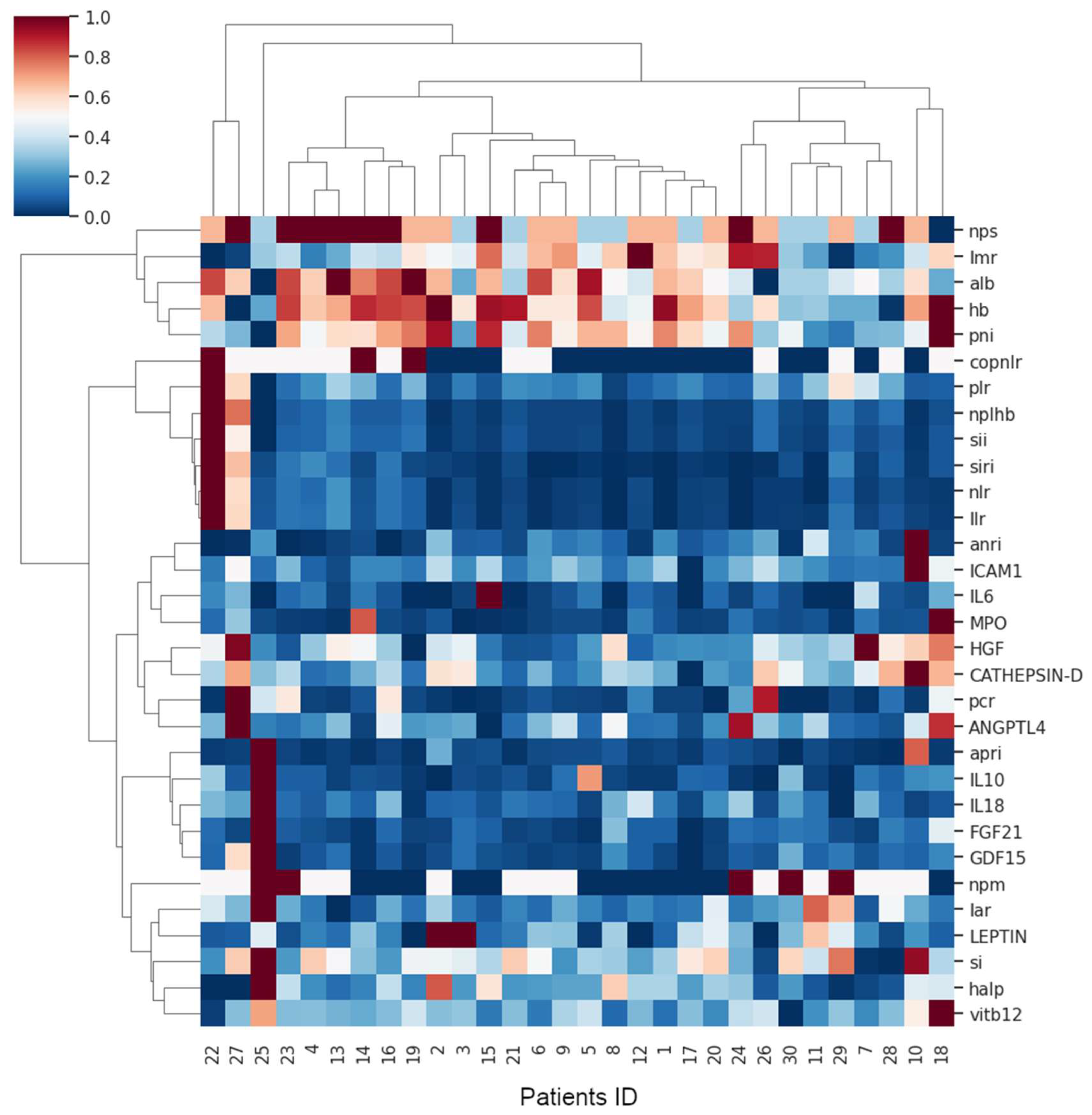
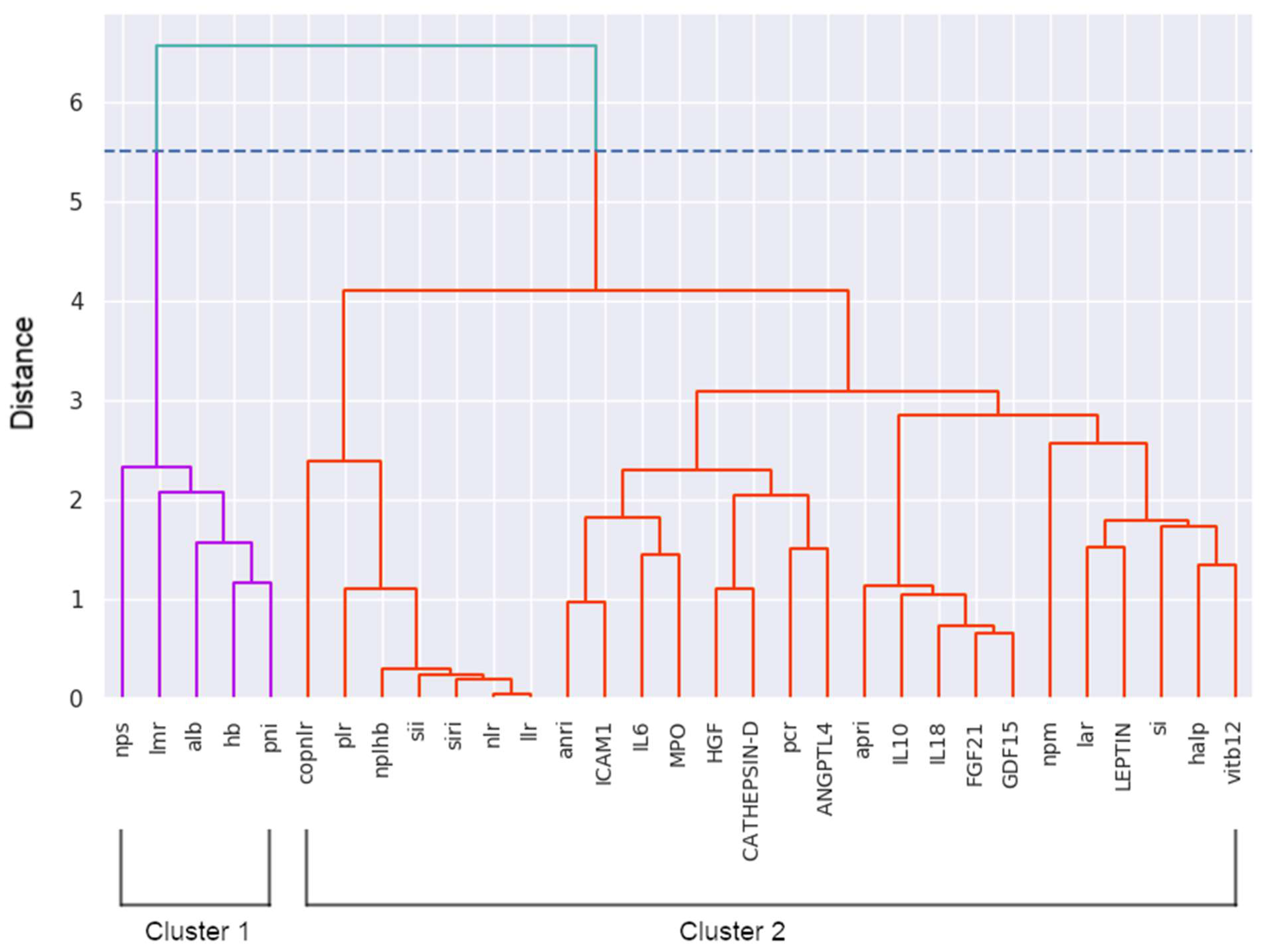
| Stigma | Ϛ | 5 | nps + lmr + alb + hb + pni |
| Qoppa | Ϙ (Ϙ = ϘG + ϘB) | 26 | copnlr + plr + nplhb + sii + siri + nlr + llr + anri + ICAM1 + IL6 + MPO + HGF + CATHEPSIN-D + pcr + ANGPTL4 + apri + IL10 + IL18 + FGF21 + GDF15 + npm + lar + LEPTIN + si + halp + vitb12 |
| Qoppa global laboratory parameters’ contribution | ϘG | 15 | copnlr + plr + nplhb + sii + siri + nlr + llr + anri + pcr + apri + npm + lar + si + halp + vitb12 |
| Qoppa response biomarkers’ contribution | ϘB | 11 | ICAM1 + IL6 + MPO + HGF + CATHEPSIN-D + ANGPTL4 + IL10 + IL18 + FGF21 + GDF15 + LEPTIN |
| Case Study | Sample Size (N) | Original AUC | Optimism Corrected AUC | 95% Confidence Interval | p-Value | Sensitivity | Specificity |
|---|---|---|---|---|---|---|---|
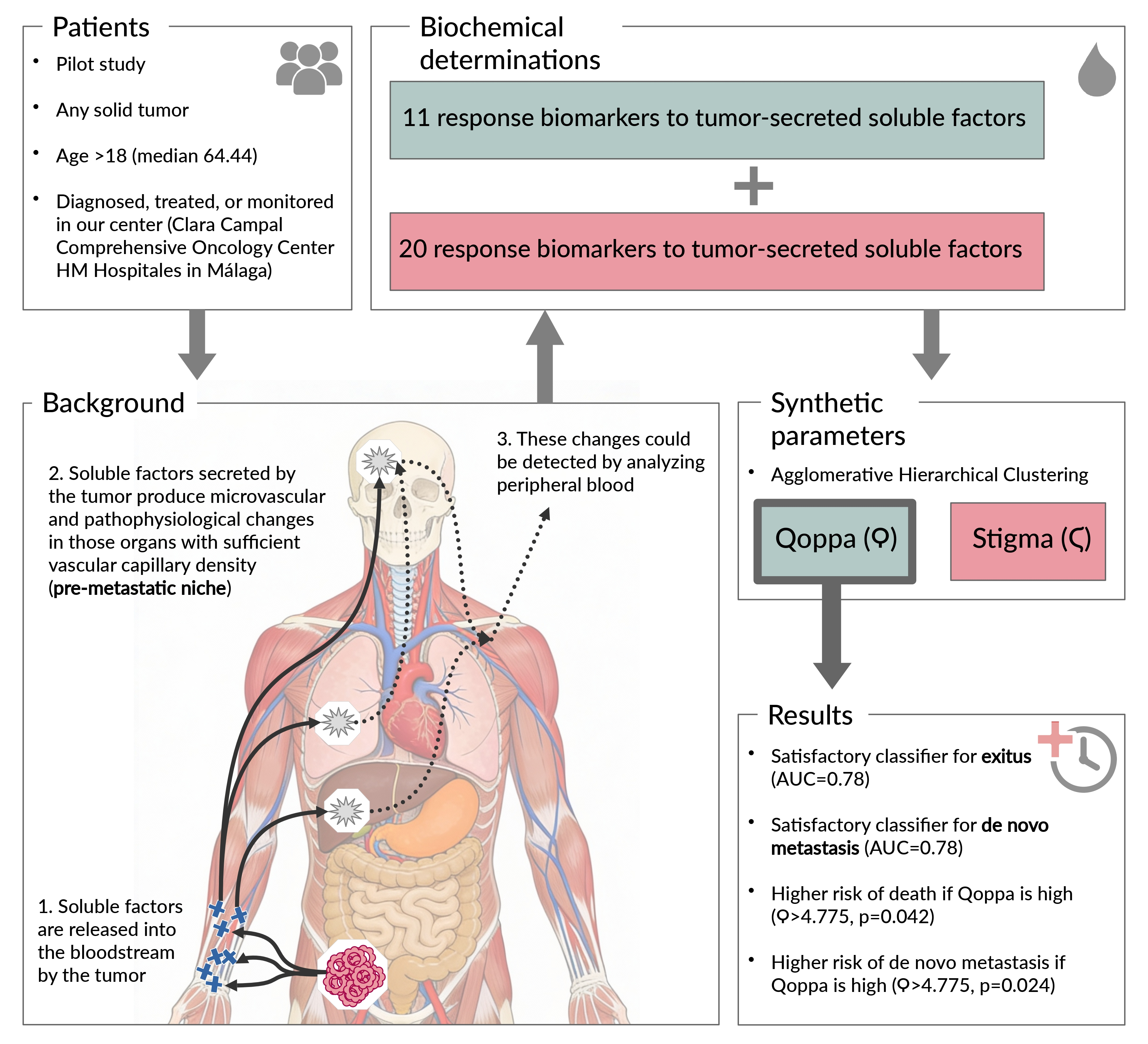
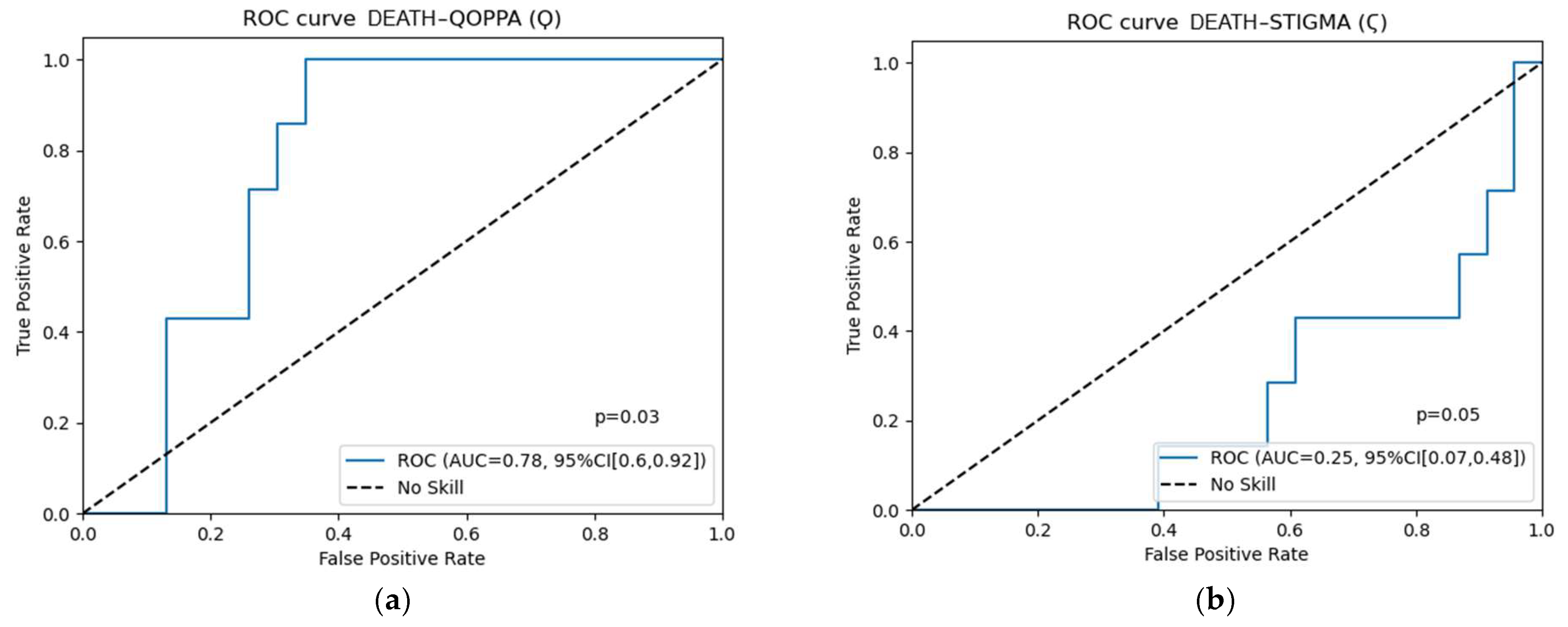
| Qoppa for risk of death (Figure 3a) | 30 | 0.78 | 0.77 | 0.60–0.92 | 0.03 | 1 | 0.65 |
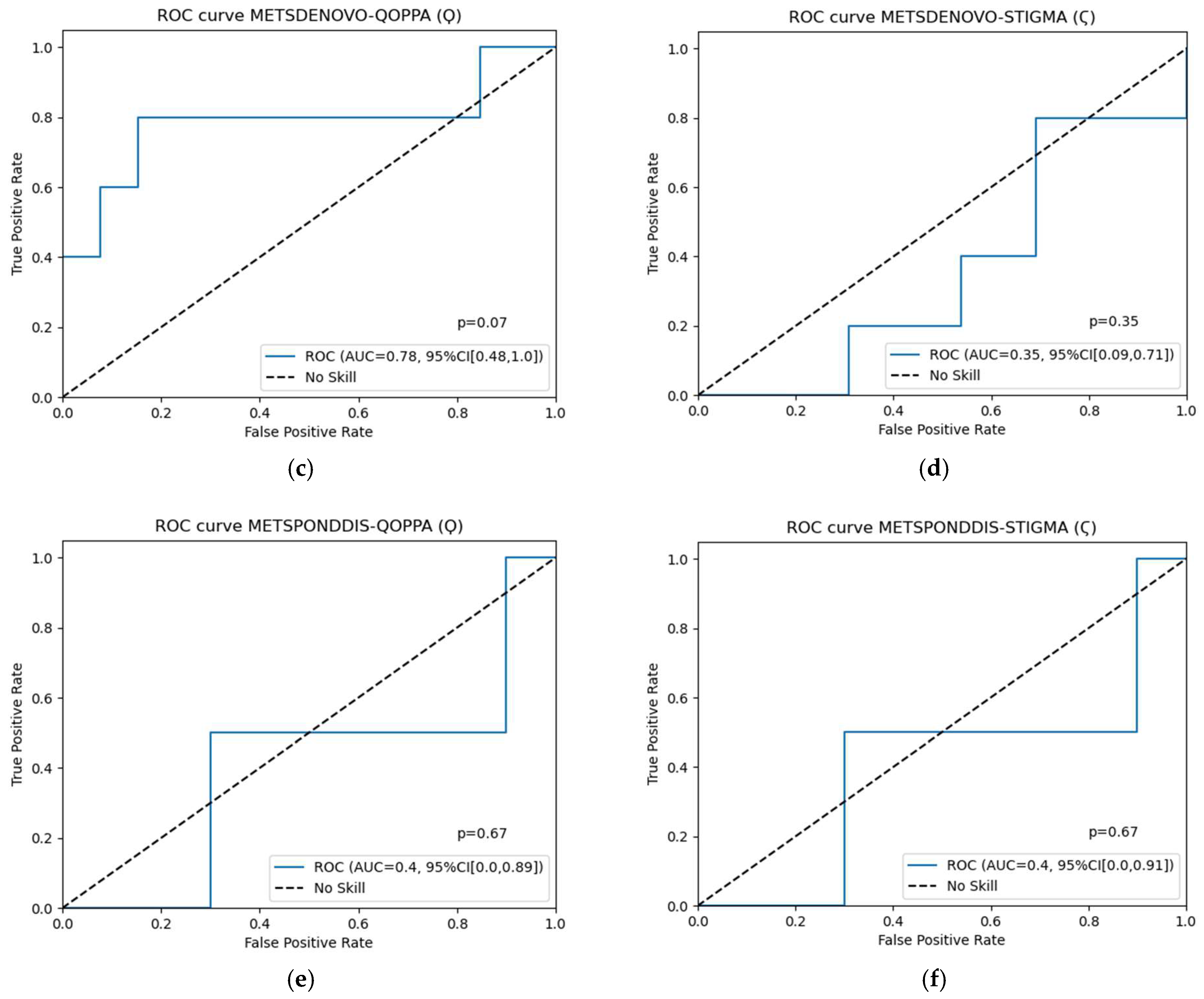
| Qoppa for risk of development of metastasis de novo in patients with no metastasis at sample collection (Figure 3c) | 18 | 0.78 | 0.77 | 0.48–1.0 | 0.07 | 0.8 | 0.84 |
Disclaimer/Publisher’s Note: The statements, opinions and data contained in all publications are solely those of the individual author(s) and contributor(s) and not of MDPI and/or the editor(s). MDPI and/or the editor(s) disclaim responsibility for any injury to people or property resulting from any ideas, methods, instructions or products referred to in the content. |
© 2026 by the authors. Licensee MDPI, Basel, Switzerland. This article is an open access article distributed under the terms and conditions of the Creative Commons Attribution (CC BY) license.
Share and Cite
Diaz-Santos, J.; Rodriguez-Valle, A.; Berrocal-Gavilan, B.; Urquizar-Rodriguez, O.; Montoro-Garcia, S. Qoppa as a New Pan-Tumor Synthetic Parameter Derived from Tumor-Associated Biomarkers for Identifying Oncology Patients at High Risk of Metastasis: A Prospective Pilot Study. J. Clin. Med. 2026, 15, 846. https://doi.org/10.3390/jcm15020846
Diaz-Santos J, Rodriguez-Valle A, Berrocal-Gavilan B, Urquizar-Rodriguez O, Montoro-Garcia S. Qoppa as a New Pan-Tumor Synthetic Parameter Derived from Tumor-Associated Biomarkers for Identifying Oncology Patients at High Risk of Metastasis: A Prospective Pilot Study. Journal of Clinical Medicine. 2026; 15(2):846. https://doi.org/10.3390/jcm15020846
Chicago/Turabian StyleDiaz-Santos, Javier, Alba Rodriguez-Valle, Beatriz Berrocal-Gavilan, Olivia Urquizar-Rodriguez, and Silvia Montoro-Garcia. 2026. "Qoppa as a New Pan-Tumor Synthetic Parameter Derived from Tumor-Associated Biomarkers for Identifying Oncology Patients at High Risk of Metastasis: A Prospective Pilot Study" Journal of Clinical Medicine 15, no. 2: 846. https://doi.org/10.3390/jcm15020846
APA StyleDiaz-Santos, J., Rodriguez-Valle, A., Berrocal-Gavilan, B., Urquizar-Rodriguez, O., & Montoro-Garcia, S. (2026). Qoppa as a New Pan-Tumor Synthetic Parameter Derived from Tumor-Associated Biomarkers for Identifying Oncology Patients at High Risk of Metastasis: A Prospective Pilot Study. Journal of Clinical Medicine, 15(2), 846. https://doi.org/10.3390/jcm15020846