A New Histology-Based Prognostic Index for Acute Lymphoblastic Leukemia: Preliminary Results of the “ALL Urayasu Classification”
 , , , , ,
Abstract
1. Introduction
2. Materials and Methods
2.1. Patients and Sample Collection
2.2. IHC
2.3. Statistical Analysis
3. Results
3.1. Comparison of Survival Times Between Groups Using Kaplan–Meier Survival Curves and the Log-Rank Test
3.1.1. Overall Survival Time of ALL Patients (Various Prognostic Factors)
3.1.2. Overall Survival (OS) of ALL Patients According to the Presence or Absence of Prognostic Factor Expression After Immunohistochemical Staining (IHC)
3.1.3. Univariate Analysis of Histological Immunostaining Revealed That the Overall Survival Rate of ALL Patients Differed Depending on the Presence or Absence of Each of the Two Prognostic Factors (Figure 3)


| Category | Subcategory | Factors (♯Significant Difference:) | n | Median OS (Months) | Years Survival Rate | p Value | Figure |
|---|---|---|---|---|---|---|---|
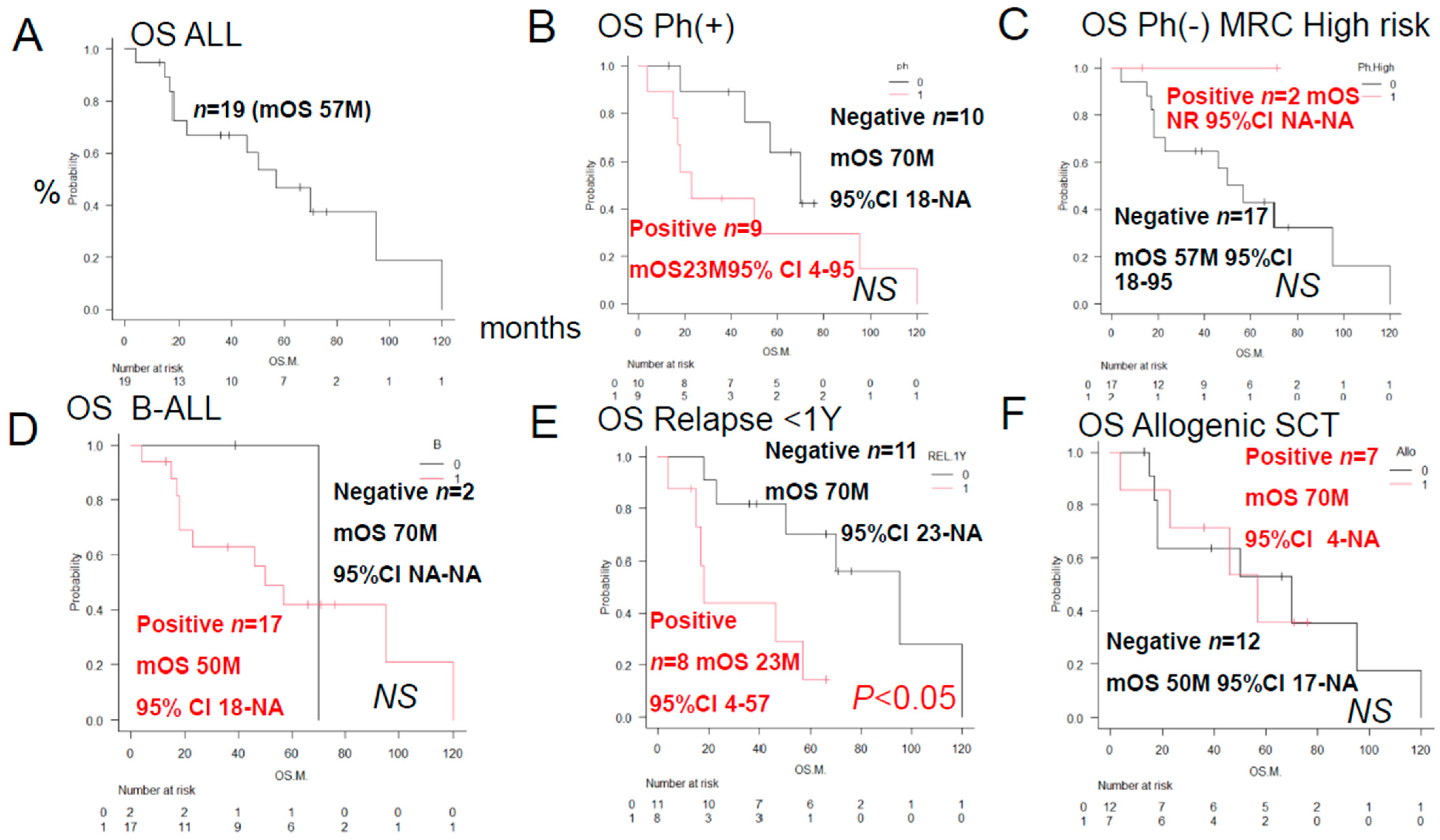
| Total | ALL | All Patients | 19 | 57M | 5Y 44% | Figure 1A | |
| ELN | MRC classification for ALL | MRC ph (+) | 9 | 23M | 5Y 28% | NS | Figure 1B |
| MRC ph (−) High risk | 2 | NR | 5Y100% | NS | Figure 1C | ||
| MRC ph (−) Standard risk | 8 | 70M | 5Y 58% | NS | Figure 1D | ||
| Other prognostic factor | Within 1Y relapse | 8 | 23M | 5Y 14% | * p < 0.05 | Figure 1E | |
| Allogenic transplantation | 7 | 70M | 5Y 36% | NS | Figure 1F | ||
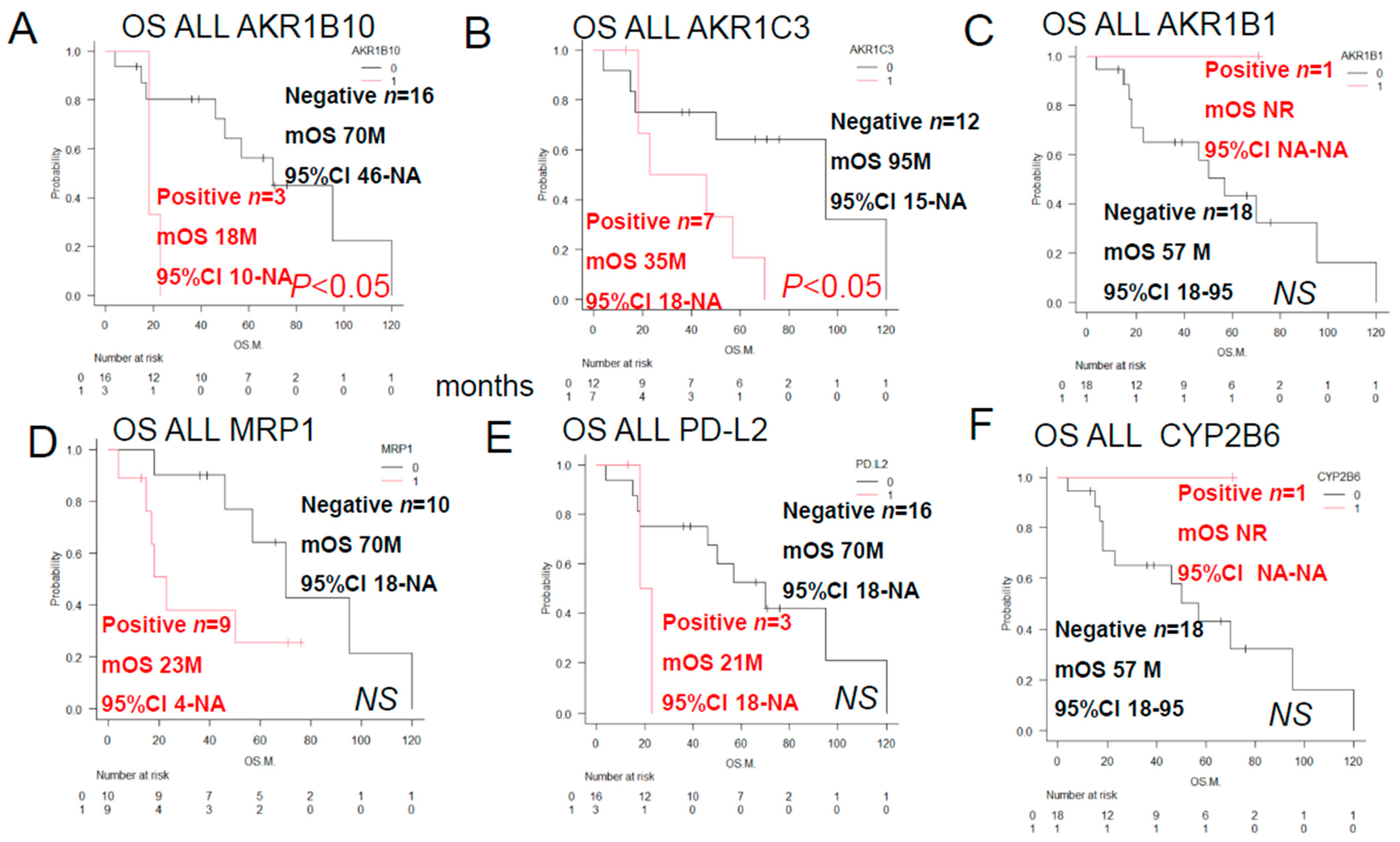
| CHO metabolic enzyme | AKR1B1 family | AKR1B10 (♯) | 3 | 18M | 5Y 0% | * p < 0.05 | Figure 2A |
| AKR1C3 | 7 | 35M | 5Y 18% | * p < 0.05 | Figure 2B | ||
| AKR1B1 | 1 | NR | 5Y100% | NS | Figure 2C | ||
| Fibrosis | Silver stain | 6 | 95M | 5Y 78% | NS | ||
| HO efflux pump | MDR1 | 0 | |||||
| MRP1 | 9 | 23M | 5Y 22% | NS | Figure 2D | ||
| MTX efflux pump | MTX efflux pump | MRP4 | 0 | ||||
| Immune check point | Immune check point | PD-1 | 0 | ||||
| PD-L1 | 0 | ||||||
| PD-L2 | 3 | 21M | 5Y 0% | NS | Figure 2E | ||
| OH metabolic enzyme | C activating enzyme | CYP2B6 | 1 | NR | 5Y 100% | NS | Figure 2F |
| CHOP metabolic enzyme | CYP3A4 | 0 | |||||
| Microenvironment | ER stress proteins | GRP78 | 8 | 70M | 5Y 56% | NS | |
| GRP94 | 13 | 57M | 5Y 48% | NS | |||
| TGF beta1 | 7 | 50M | 5Y 42% | NS | |||
| TNF alpha1 | |||||||
| Others | GST | 7 | 73M | 5Y 50% | NS | ||
| Ki-67 | 12 | 46M | 5Y 22% | NS | |||
| MYC | 5 | 40M | 5Y 0% | NS | |||
| P53 | 1 | NR | 5Y 100% | NS | |||
| TP | 0 | ||||||
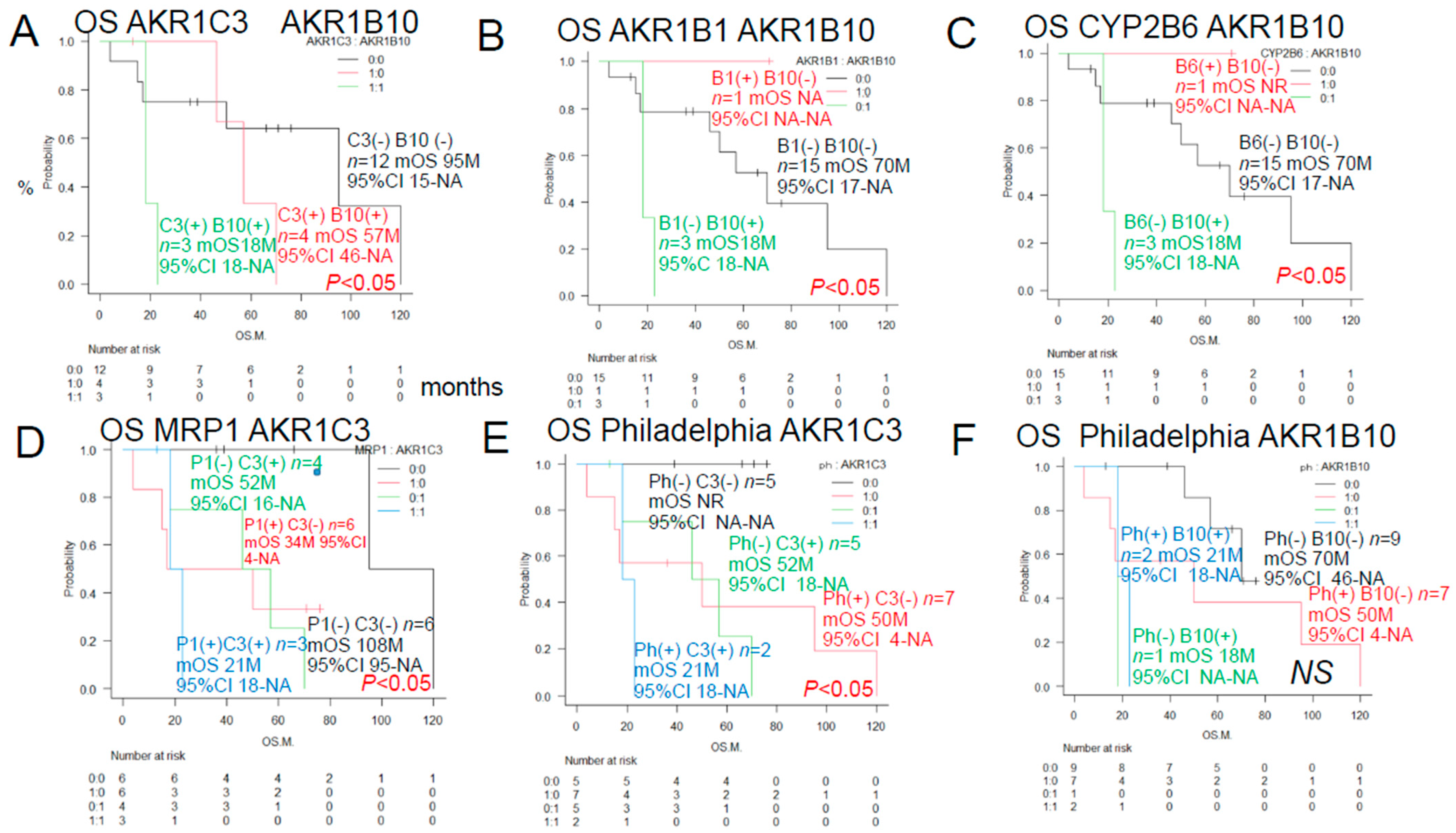
| Significant combination | AKR1 family | AKR1C3(+), AKR1B10(+) (♯) | 3 | 18M | 5Y 0% | * p < 0.05 | Figure 3A |
| other than Urayasu | AKR1B1(−), AKR1B10(+) (♯) | 3 | 18M | 5Y 0% | * p < 0.05 | Figure 3B | |
| classification for ALL | CYP2B6(−), AKR1B10(+) (♯) | 3 | 18M | 5Y 0% | * p < 0.05 | Figure 3C | |
| MRP1(+), AKR1C3(+) (♯) | 3 | 21M | 5Y 0% | * p < 0.05 | Figure 3D | ||
| Ph(+), AKR1C3(+) (♯) | 2 | 21M | 5Y 0% | * p < 0.05 | Figure 3E | ||
| Ph(+), AKR1B10(+) | 2 | 21M | 5Y 0% | NS | Figure 3F | ||
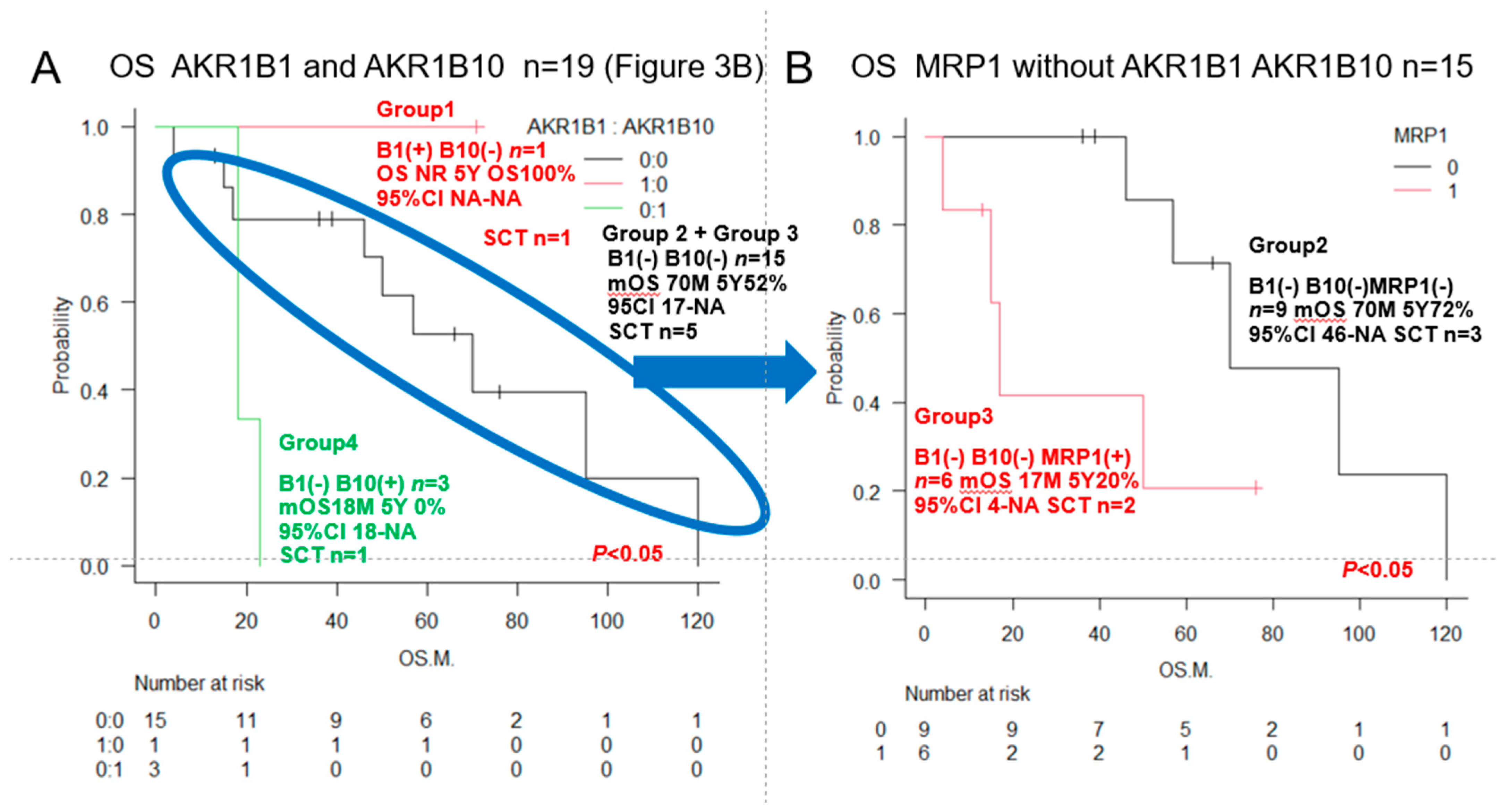
| Urayasu classification | Group 1 | AKR1B1(+), 1B10(−) (♯) | 1 | NR | 5Y 100% | * p < 0.05 | Figure 3B and Figure 4A |
| for ALL | Group 2 | AKR1B1(−), 1B10(−)MRP1(−) (♯) | 9 | 70M | 5Y 48% | * p < 0.05 | Figure 4B |
| Group 3 | AKR1B1(−), 1B10(−)MRP1(+) (♯) | 6 | 17M | 5Y 20% | * p < 0.05 | Figure 4B | |
| Group 4 | AKR1B1(−), 1B10(+) (♯) | 3 | 18M | 5Y 0% | * p < 0.05 | Figure 3B and Figure 4A |
3.2. Urayasu Classification for ALL
- Group 1 (good prognosis group): AKR1B1(+) AKR1B10 (−), n = 1.
- Group 2: AKR1B1(−) AKR1B10(−) MRP(-), n = 9.
- Group 3: AKR1B1(−) AKR1B10(−) MRP(+), n = 6.
- (Group 2 and Group 3 showed a more favorable prognosis than Group 4.)
- Group 4 (poor prognosis group): AKR1B1(−) AKR1B10(+), n = 3. Significant differences in the OS rates were observed among the four groups. These results are also shown in Table 2.
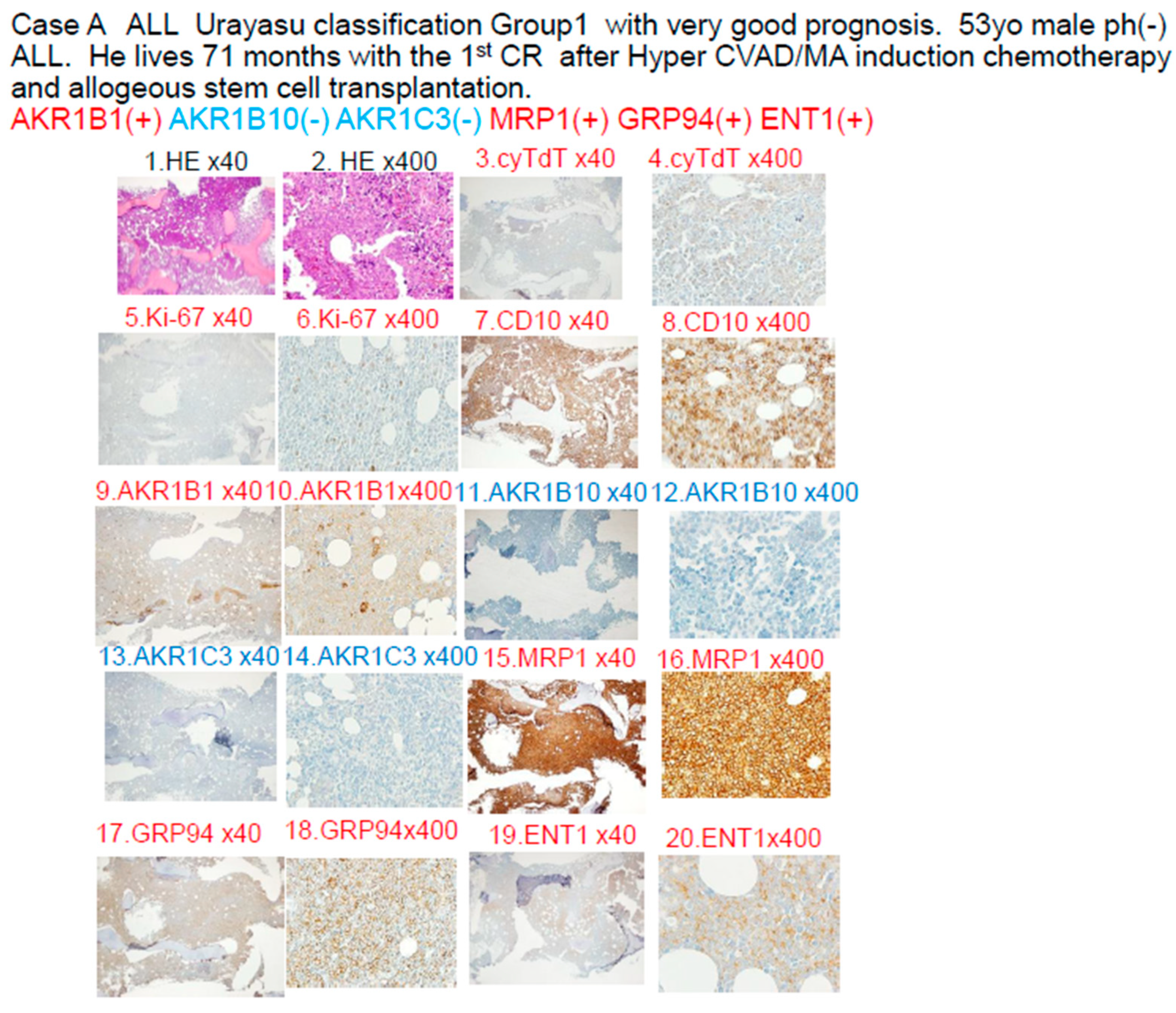
3.3. Case A Presentation: Urayasu Classification for ALL (Figure 5)

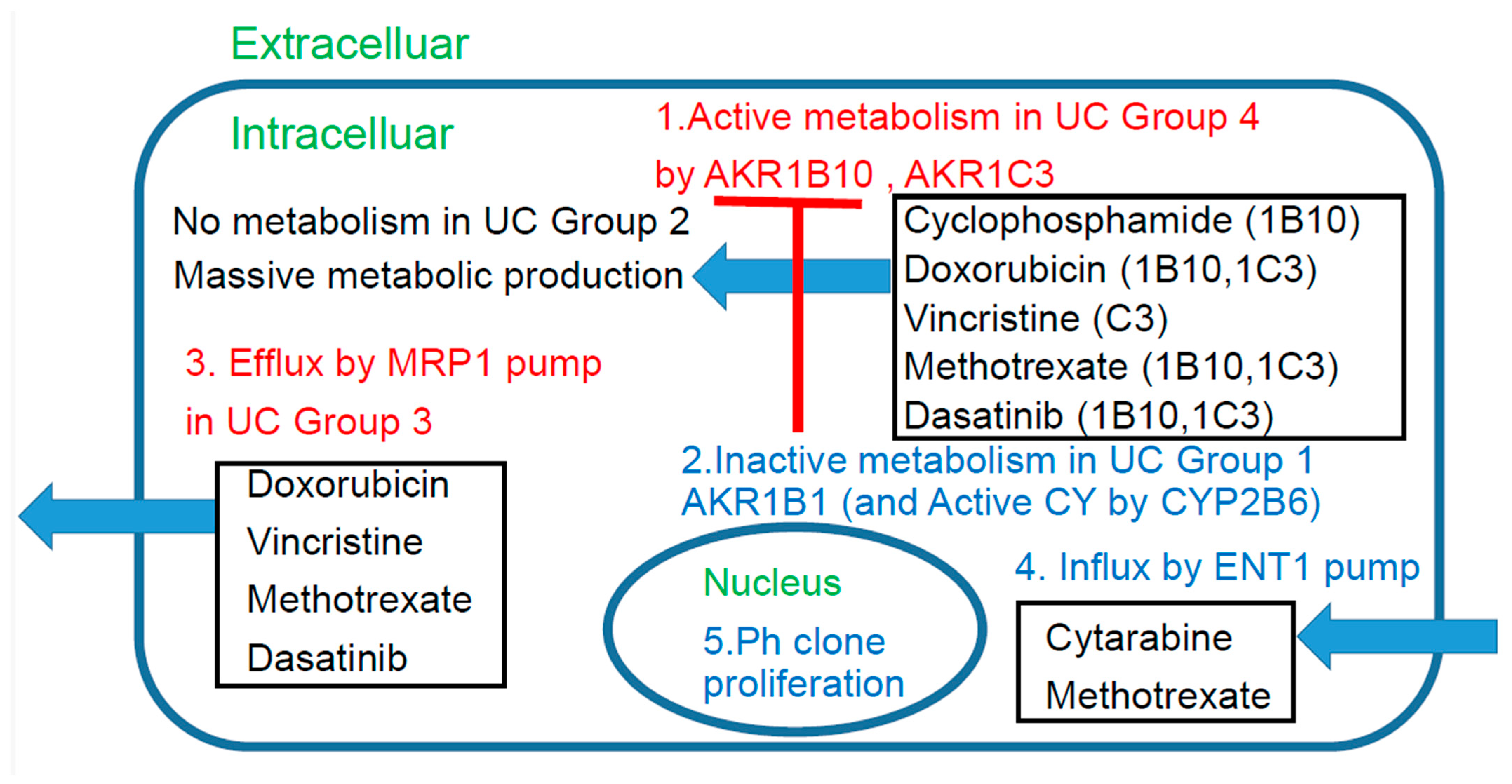
3.4. Abstract Schema in This Study
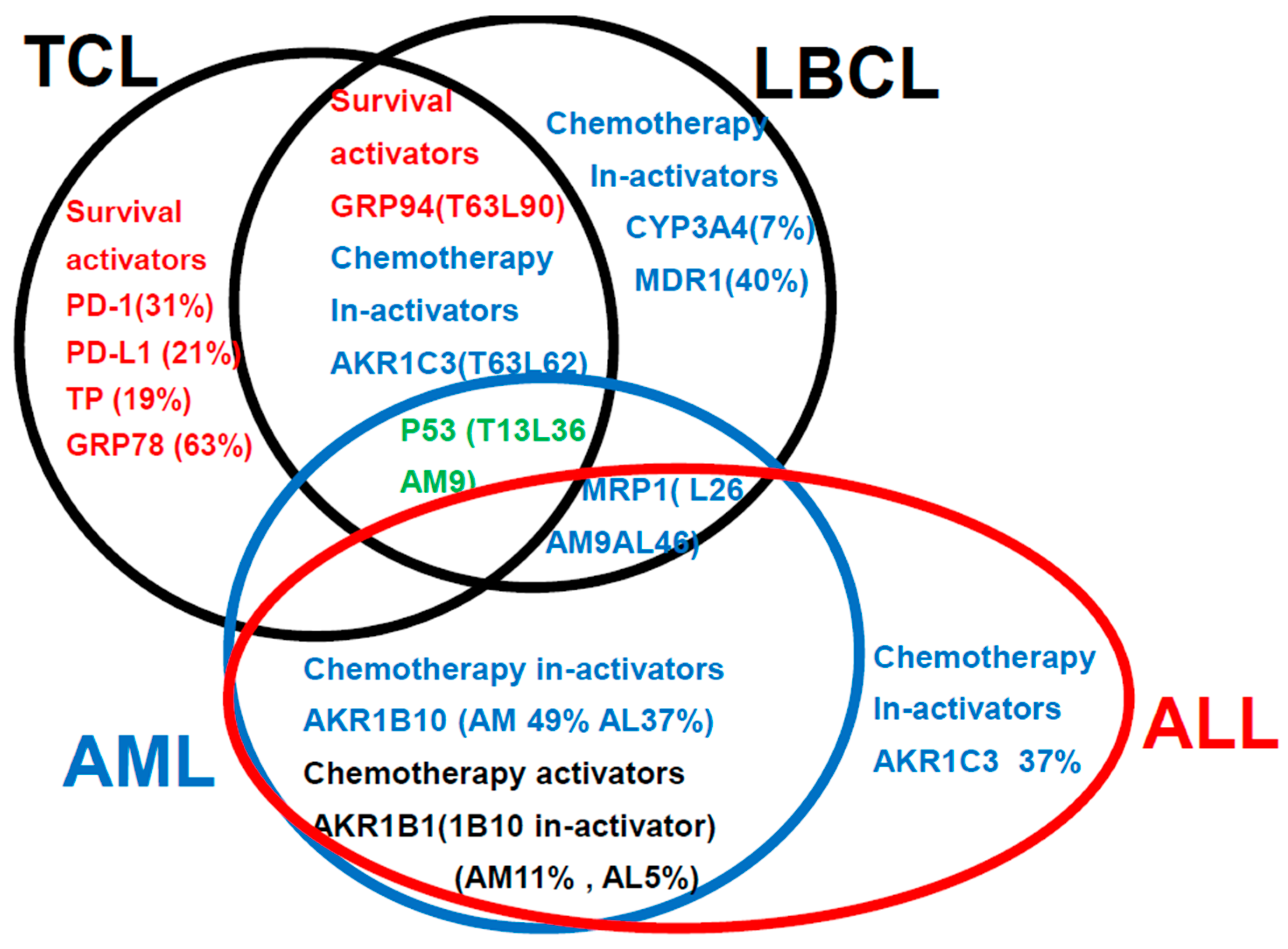
3.5. Summarization of the Review of the Literature [2,3,4] Plus Findings of This Study (Figure 7)

4. Discussion
4.1. Discussion Based on the Urayasu Classification for ALL Proposed in This Study (Table 1 and Table 2, Figure 1, Figure 2, Figure 3 and Figure 4)
4.2. Discussion Based on the Study of ALL Cases (Figure 5)
4.3. Discussion Based on the Study of ALL Cases (Figure 6)
4.4. Discussion Based on the Findings of Both Our Previous Studies [1,2,3] and This Study (Figure 7)
5. Conclusions
Author Contributions
Funding
Institutional Review Board Statement
Informed Consent Statement
Data Availability Statement
Acknowledgments
Conflicts of Interest
Patient and Public Involvement
Abbreviations
| ALL (AL) | Acute lymphoid leukemia |
| AML (AM) | Acute myeloid leukemia |
| CVAD | Cyclophosphamide, vincristine, Adriamycin, dexamethasone |
| MA | Methotrexate, cytosine arabinoside |
| OS | Overall survival |
| IHC | Immunohistochemical staining |
| KM | Kaplan–Meier |
| MRP1 | Multidrug resistance-associated protein 1 |
| AKR1B10 | Aldo-keto reductase family 1 member B10 |
| AKR1B1 | Aldo-keto reductase family 1 member B1 |
| AKR1C3 | Aldo-keto reductase family 1 member C3 |
| CYP2B6 | Cytochrome P450 2B6 |
| ELN | European Leukemia Net |
| MRC | Medical Research Council |
| LBCL | Large B-cell lymphoma |
| TCL | Aggressive T-cell lymphoma |
| GRP94 | Glucose-regulated protein 94 |
| GRP78 | Glucose-regulated protein 78 |
| B-ALL | B-cell acute lymphoblastic leukemia |
| CHO | Cyclophosphamide, Hydroxyl doxorubicin, oncovin |
| TGFβ1 | Transforming growth factor β1 |
| TNFα1 | Tumor necrosis factor α1 |
| TNFR | Tumor necrosis factor receptor |
| PD-1 | Programmed cell death-1 |
| PD-L1 | Programmed cell death–ligand 1 |
| ENT1 | Equilibrative nucleoside transporter 1 |
| MDR1 | Multidrug resistance 1 |
| CYP3A4 | Cytochrome P450 3A4 |
| TKI | Tyrosin kinase inhibitor |
| TP | Thymidine phosphorylase |
| GST | Glutathione sulfate transferase |
| CR | Complete remission |
| PD | Progressive disease |
| M | Months |
| NS | Not significant |
| Ph | Philadelphia |
| NR | not reached |
| ER | endoplasmic reticulum |
| UG | Urayasu classification |
| Significant difference * denotes p < 0.05. | |
References
- Emran, T.B.; Shahriar, A.; Mahmud, A.R.; Rahman, T.; Abir, M.H.; Siddiquee, M.F.-.R.; Ahmed, H.; Rahman, N.; Nainu, F.; Wahyudin, E.; et al. Multidrug Resistance in Cancer: Understanding Molecular Mechanisms, Immunoprevention and Therapeutic Approaches. Front. Oncol. 2022, 12, 891652. [Google Scholar] [CrossRef]
- Nitta, H.; Takizawa, H.; Mitsumori, T.; Iizuka-Honma, H.; Araki, Y.; Fujishiro, M.; Tomita, S.; Kishikawa, S.; Hashizume, A.; Noguchi, M.; et al. Possible New Histological Prognostic Index for Large B-Cell Lymphoma. J. Clin. Med. 2023, 12, 6324. [Google Scholar] [CrossRef]
- Nitta, H.; Takizawa, H.; Mitsumori, T.; Iizuka-Honma, H.; Ochiai, T.; Furuya, C.; Araki, Y.; Fujishiro, M.; Tomita, S.; Noguchi, M.; et al. A New Histology-Based Prognostic Index for Aggressive T-Cell lymphoma: Preliminary Results of the “TCL Urayasu Classification”. J. Clin. Med. 2024, 13, 3870. [Google Scholar] [CrossRef]
- Mitsumori, T.; Nitta, H.; Takizawa, H.; Iizuka-Honma, H.; Furuya, C.; Fujishiro, M.; Tomita, S.; Hashizume, A.; Sawada, T.; Noguchi, M.; et al. A New Histology-Based Prognostic Index for Acute Myeloid Leukemia: Preliminary Results for the “AML Urayasu Classification”. J. Clin. Med. 2025, 14, 1989. [Google Scholar] [CrossRef]
- Rowe, J.M.; Buck, G.; Burnett, A.K.; Chopra, R.; Wiernik, P.H.; Richards, S.M.; Lazarus, H.M.; Franklin, I.M.; Litzow, M.R.; Ciobanu, N.; et al. Induction therapy for adults with acute lymphoblastic leukemia: Results of more than 1500 patients from the international ALL trial: MRC UKALL XII/ECOG E2993. Blood 2005, 106, 3760–3767. [Google Scholar] [CrossRef]
- Duan, X.; Iwanowycz, S.; Ngoi, S.; Hill, M.; Zhao, Q.; Liu, B. Molecular Chaperone GRP94/GP96in Cancers: Oncogenesis and Therapeutic Target. Front. Oncol. 2021, 11, 629846. [Google Scholar] [CrossRef] [PubMed]
- Lee, A.S. Glucose-regulated proteins in cancer: Molecular mechanisms and therapeutic potential. Nat. Rev. Cancer 2014, 14, 263–276. [Google Scholar] [CrossRef]
- Akinyemi, A.O.; Simpson, K.E.; Oyelere, S.F.; Nur, M.; Ngule, C.M.; Owoyemi, B.C.D.; Ayarick, V.A.; Oyelami, F.F.; Obaleye, O.; Esoe, D.-P.; et al. Unveiling the dark side of glucose-regulated protein 78 (GRP78) in cancers and other human pathology: A systematic review. Mol. Med. 2023, 29, 112. [Google Scholar] [CrossRef]
- Angeles-Floriano, T.; Rivera-Torruco, G.; García-Maldonado, P.; Juárez, E.; Gonzalez, Y.; Parra-Ortega, I.; Vilchis-Ordoñez, A.; Lopez-Martinez, B.; Arriaga-Pizano, L.; Orozco-Ruíz, D.; et al. Cell surface expression of GRP78 and CXCR4 is associated with childhood high-risk acute lymphoblastic leukemia at diagnostics. Sci. Rep. 2022, 12, 2322. [Google Scholar] [CrossRef]
- Hebbar, N.; Epperly, R.; Vaidya, A.; Thanekar, U.; Moore, S.E.; Umeda, M.; Ma, J.; Patil, S.L.; Langfitt, D.; Huang, S.; et al. CAR T cells redirected to cell surface GRP78 display robust anti-acute myeloid leukemia activity and do not target hematopoietic progenitor cells. Nat. Commun. 2022, 13, 587. [Google Scholar] [CrossRef]
- Haque, S.; Morris, J.C. Transforming growth factor-β: A therapeutic target for cancer. Hum. Vaccines Immunother. 2017, 13, 1741–1750. [Google Scholar] [CrossRef] [PubMed]
- Timmins, M.A.; Ringshausen, I. Transforming Growth Factor-Beta Orchestrates Tumour and Bystander Cells in B-Cell Non-Hodgkin Lymphoma. Cancers 2022, 14, 1772. [Google Scholar] [CrossRef]
- Idriss, H.T.; Naismith, J.H. TNF alpha and the TNF receptor superfamily: Structure-function relationship(s). Microsc. Res. Tech. 2000, 50, 184–195. [Google Scholar] [CrossRef]
- Takizawa, H.; Araki, Y.; Fujishiro, M.; Tomita, S.; Kishikawa, S.; Hashizume, A.; Mitsumori, T.; Nitta, H.; Iizuka-Honma, H.; Sawada, T.; et al. Role of TGF-beta1 and TNF-alpha1 produced by neoplastic cells in the pathogenesis of fibrosis in patients with hematologic neoplasms. J. Clin. Exp. Hematop. 2023, 63, 83–89. [Google Scholar] [CrossRef]
- Prada, J.P.; Wangorsch, G.; Kucka, K.; Lang, I.; Dandekar, T.; Wajant, H. A systems-biology model of the tumor necrosis factor (TNF) interactions with TNF receptor 1 and 2. Bioinformatics 2021, 37, 669–676. [Google Scholar] [CrossRef] [PubMed]
- Vinante, F.; Rigo, A.; Tecchio, C.; Morosato, L.; Nadali, G.; Ricetti, M.M.; Krampera, M.; Zanolin, E.; Locatelli, F.; Gallati, H.; et al. Serum levels of p55 and p75 soluble TNF receptors in adult acute leukaemia at diagnosis: Correlation with clinical and biological features and outcome. Br. J. Haematol. 1998, 102, 1025–1034. [Google Scholar] [CrossRef]
- Cisterne, A.; Baraz, R.; I Khan, N.; Welschinger, R.; Basnett, J.; Fung, C.; Rizos, H.; Bradstock, K.F.; Bendall, L.J. Silencer of Death Domains Controls Cell Death through Tumour Necrosis Factor-Receptor 1 and Caspase-10 in Acute Lymphoblastic Leukemia. PLoS ONE 2014, 9, e103383. [Google Scholar] [CrossRef]
- Xu, X.; Zhang, W.; Xuan, L.; Yu, Y.; Zheng, W.; Tao, F.; Nemechek, J.; He, C.; Ma, W.; Han, X.; et al. PD-1 signalling defines and protects leukaemic stem cells from T cell receptor-induced cell death in T cell acute lymphoblastic leukaemia. Nat. Cell Biol. 2023, 25, 170–182. [Google Scholar] [CrossRef]
- Cao, H.; Wu, T.; Zhou, X.; Xie, S.; Sun, H.; Sun, Y.; Li, Y. Progress of research on PD-1/PD-L1 in leukemia. Front. Immunol. 2023, 14, 1265299. [Google Scholar] [CrossRef]
- Mortensen, J.B.; Monrad, I.; Enemark, M.B.; Ludvigsen, M.; Kamper, P.; Bjerre, M.; D’Amore, F. Soluble programmed cell death protein 1 (sPD-1) and the soluble programmed cell death ligands 1 and 2 (sPD-L1 and sPD-L2) in lymphoid malignancies. Eur. J. Haematol. 2021, 107, 81–91. [Google Scholar] [CrossRef]
- Takagaki, K.; Katsuma, S.; Kaminishi, Y.; Horio, T.; Nakagawa, S.; Tanaka, T.; Ohgi, T.; Yano, J. Gene-Expression Profiling Reveals Down-Regulation of Equilibrative Nucleoside Transporter 1 (ENT1) in Ara-C-Resistant CCRF-CEM-Derived Cells. J. Biochem. 2004, 136, 733–740. [Google Scholar] [CrossRef] [PubMed]
- Valera, E.T.; Scrideli, C.A.; Queiroz, R.G.D.P.; Mori, B.M.O.; Tone, L.G. Multiple drug resistance protein (MDR-1), multidrug resistance-related protein (MRP) and lung resistance protein (LRP) gene expression in childhood acute lymphoblastic leukemia. Sao Paulo Med. J. 2004, 122, 166–171. [Google Scholar] [CrossRef]
- Jaramillo, A.C.; Cloos, J.; Lemos, C.; Stam, R.W.; Kaspers, G.J.; Jansen, G.; Peters, G.J. Ex vivo resistance in childhood acute lymphoblastic leukemia: Correlations between BCRP, MRP1, MRP4 and MRP5 ABC transporter expression and intracellular methotrexate polyglutamate accumulation. Leuk. Res. 2019, 79, 45–51. [Google Scholar] [CrossRef]
- Brüggemann, M.; Trautmann, H.; Hoelzer, D.; Kneba, M.; Gökbuget, N.; Raff, T. Multidrug resistance–associated protein 4 (MRP4) gene polymorphisms and treatment response in adult acute lymphoblastic leukemia. Blood 2009, 114, 5400–5401. [Google Scholar] [CrossRef][Green Version]
- Gézsi, A.; Lautner-Csorba, O.; Erdélyi, D.; Hullám, G.; Antal, P.; Semsei, Á.F.; Kutszegi, N.; Hegyi, M.; Csordás, K.; Kovács, G.; et al. In interaction with gender a common CYP3A4 polymorphism may influence the survival rate of chemotherapy for childhood acute lymphoblastic leukemia. Pharmacogenomics J. 2015, 15, 241–247. [Google Scholar] [CrossRef] [PubMed]
- Xiong, X.; Yu, D.; Gao, Q.; Zhang, Y.; Yin, Q.; Chen, X.; Xiao, H.; Tong, R. Association between CYP2B6 c. 516G> T variant and acute leukaemia: A protocol for systematic review and meta-analysis. Medicine 2021, 100, e26740. [Google Scholar] [CrossRef] [PubMed]
- Verma, K.; Zang, T.; Penning, T.M.; Trippier, P.C. Potent and Highly Selective Aldo–Keto Reductase 1C3 (AKR1C3) Inhibitors Act as Chemotherapeutic Potentiators in Acute Myeloid Leukemia and T-Cell Acute Lymphoblastic Leukemia. J. Med. Chem. 2019, 62, 3590–3616. [Google Scholar] [CrossRef]
- Laffin, B.; Petrash, J.M. Expression of the Aldo-Ketoreductases AKR1B1 and AKR1B10 in Human Cancers. Front. Pharmacol. 2012, 3, 104. [Google Scholar] [CrossRef]
- Penning, T.M.; Jonnalagadda, S.; Trippier, P.C.; Rižner, T.L. Aldo-Keto Reductases and Cancer Drug Resistance. Pharmacol. Rev. 2021, 73, 1150–1171. [Google Scholar] [CrossRef]
- Büküm, N.; Novotná, E.; Morell, A.; Želazková, J.; Laštovičková, L.; Čermáková, L.; Portillo, R.; Solich, P.; Wsól, V. Inhibition of AKR1B10-mediated metabolism of daunorubicin as a novel off-target effect for the Bcr-Abl tyrosine kinase inhibitor dasatinib. Biochem. Pharmacol. 2021, 192, 114710. [Google Scholar] [CrossRef]
- Nie, X.; Clifford, P.M.; Bhat, R.; Heintzelman, R.; Abraham, M.; Hou, J.S. Thymidine phosphorylase expression in B-cell lymphomas and its significance: A new prognostic marker? Anal. Quant. Cytopathol. Histpathol. 2013, 35, 301–305. [Google Scholar] [PubMed]
- van Leeuwen, F.N. Therapeutic targeting of mutated p53 in acute lymphoblastic leukemia. Haematologica 2020, 105, 10–11. [Google Scholar] [CrossRef]
- Behrens, K.; Brajanovski, N.; Xu, Z.; Viney, E.M.; DiRago, L.; Hediyeh-Zadeh, S.; Davis, M.J.; Pearson, R.B.; Sanij, E.; Alexander, W.S.; et al. ERG and c-MYC regulate a critical gene network in BCR::ABL1-driven B cell acute lymphoblastic leukemia. Sci. Adv. 2024, 10, eadj8803. [Google Scholar] [CrossRef] [PubMed]
- Baba, S.M.; Pandith, A.A.; Shah, Z.A.; Geelani, S.A.; Bhat, J.R.; Gul, A.; Guru, S.A.; El-Serehy, H.A.; Koul, A.M.; Mansoor, S. GSTT1null and rs156697 Polymorphism in GSTO2 Influence the Risk and Therapeutic Outcome of B-Acute Lymphoblastic Leukemia Patients. Front. Oncol. 2021, 11, 714421. [Google Scholar] [CrossRef]
- Davies, S.M.; Robison, L.L.; Buckley, J.D.; Tjoa, T.; Woods, W.G.; Radloff, G.A.; Ross, J.A.; Perentesis, J.P. Glutathione S-Transferase Polymorphisms and Outcome of Chemotherapy in Childhood Acute Myeloid Leukemia. J. Clin. Oncol. 2001, 19, 1279–1287. [Google Scholar] [CrossRef]
- Kanda, Y. Investigation of the freely available easy-to-use software ‘EZR’ for medical statistics. Bone Marrow Transplant. 2013, 48, 452–458. [Google Scholar] [CrossRef]
- Liu, X.; Hu, Z.; Qu, J.; Li, J.; Gong, K.; Wang, L.; Jiang, J.; Li, X.; He, R.; Duan, L.; et al. AKR1B10 confers resistance to radiotherapy via FFA/TLR4/NF-κB axis in nasopharyngeal carcinoma. Int. J. Biol. Sci. 2021, 17, 756–767. [Google Scholar] [CrossRef] [PubMed]


| Characteristics of ALL Patients in This Analysis | This Study | MRC UKALL(5) | p (t-Test) |
|---|---|---|---|
| n = 19 | n = 995 | ||
| WHO Classification, 5th edition | |||
| B-cell lymphoblastic leukaemias/lymphomas | 17 (89%) | 627 (63%) | |
| B-lymphoblastic leukaemia/lymphoma with BCR-ABL1 fusion | 10 (53%) | 239 (24%) | p < 0.05 |
| B-lymphoblastic leukaemia/lymphoma, NOS | 4 (21%) | nd | |
| B-lymphoblastic leukaemia/lymphoma with high hyperdiploidy | 2 (11%) | nd | |
| B-lymphoblastic leukaemia/lymphoma with hypodiploidy | 1 (5%) | nd | |
| B-lymphoblastic leukaemia/lymphoma with ETV6:RUNX1 fusion | 1 (5%) | nd | |
| T-lymphoblastic leukaemia/lymphoma | 2 (11%) | 190 (19%) | |
| Age > 35 years (%) (16–76 yo) | 13 (68%) | 344 (35%) | p < 0.05 |
| Male (%) | 12 (63%) | 619 (62%) | |
| WBC count > 30 × 109/L | 7 (37%) | nd | |
| Induction chemothrapy | |||
| Cyclophosphamide + Doxorubicin + Vincristine + Dexamethathone | 19 (100%) | 995 (100%) | |
| to Methothraxat + Cytosine adabinoside | |||
| Outcome | |||
| Complete remission (CR) | 17 (89%) | 905 (91%) | |
| Relapse within one year | 8 (42%) | nd | |
| Progressive disease (PD) | 2 (11%) | nd | |
| Allogenic transplantation | 7 (37%) | nd | |
| Overall survival (OS) at 5 years | 8 (42%) | 378 (38%) |
Disclaimer/Publisher’s Note: The statements, opinions and data contained in all publications are solely those of the individual author(s) and contributor(s) and not of MDPI and/or the editor(s). MDPI and/or the editor(s) disclaim responsibility for any injury to people or property resulting from any ideas, methods, instructions or products referred to in the content. |
© 2026 by the authors. Licensee MDPI, Basel, Switzerland. This article is an open access article distributed under the terms and conditions of the Creative Commons Attribution (CC BY) license.
Share and Cite
Mitsumori, T.; Nitta, H.; Takizawa, H.; Iizuka-Honma, H.; Furuya, C.; Maruo, S.; Fujishiro, M.; Tomita, S.; Hashizume, A.; Sawada, T.; et al. A New Histology-Based Prognostic Index for Acute Lymphoblastic Leukemia: Preliminary Results of the “ALL Urayasu Classification”. J. Clin. Med. 2026, 15, 768. https://doi.org/10.3390/jcm15020768
Mitsumori T, Nitta H, Takizawa H, Iizuka-Honma H, Furuya C, Maruo S, Fujishiro M, Tomita S, Hashizume A, Sawada T, et al. A New Histology-Based Prognostic Index for Acute Lymphoblastic Leukemia: Preliminary Results of the “ALL Urayasu Classification”. Journal of Clinical Medicine. 2026; 15(2):768. https://doi.org/10.3390/jcm15020768
Chicago/Turabian StyleMitsumori, Toru, Hideaki Nitta, Haruko Takizawa, Hiroko Iizuka-Honma, Chiho Furuya, Suiki Maruo, Maki Fujishiro, Shigeki Tomita, Akane Hashizume, Tomohiro Sawada, and et al. 2026. "A New Histology-Based Prognostic Index for Acute Lymphoblastic Leukemia: Preliminary Results of the “ALL Urayasu Classification”" Journal of Clinical Medicine 15, no. 2: 768. https://doi.org/10.3390/jcm15020768
APA StyleMitsumori, T., Nitta, H., Takizawa, H., Iizuka-Honma, H., Furuya, C., Maruo, S., Fujishiro, M., Tomita, S., Hashizume, A., Sawada, T., Miyake, K., Okubo, M., Sekiguchi, Y., & Noguchi, M. (2026). A New Histology-Based Prognostic Index for Acute Lymphoblastic Leukemia: Preliminary Results of the “ALL Urayasu Classification”. Journal of Clinical Medicine, 15(2), 768. https://doi.org/10.3390/jcm15020768