1. Introduction
Flatfoot (pes planovalgus) represents one of the most frequent deformities encountered in pediatric orthopedics, characterized by a decrease or collapse of the medial longitudinal arch, valgus deviation of the hindfoot, and forefoot abduction [
1,
2]. While physiologic flatfoot is common in toddlers and tends to resolve spontaneously as the musculoskeletal system matures, a subset of patients remains symptomatic, presenting with pain, fatigue during ambulation, or functional impairment that warrants medical or surgical intervention [
3,
4].
The etiology of pediatric flatfoot is multifactorial, involving ligamentous laxity, obesity, neuromuscular disorders, or structural abnormalities such as tarsal coalitions [
5,
6]. The condition is generally classified as flexible or rigid, with the flexible variant being far more prevalent [
7]. In most cases, conservative management including orthotic support, stretching exercises, and physical therapy constitutes the first line of treatment; however, persistent symptomatic deformities unresponsive to conservative care may require surgery [
8].
Historical perspectives on pes planus have changed significantly over time. As summarized by a review in 2023, flatfoot was traditionally viewed as a pathologic deformity associated with weakness and poor physical function, which led to aggressive use of orthoses and early corrective interventions. Modern biomechanical and developmental research, however, demonstrates that most flexible flatfeet in children are physiological variants, with symptoms, other than arch height determining the need for treatment. This shift from a purely morphological to a functional understanding of flatfoot underpins contemporary interest in procedures that restore alignment while preserving subtalar mobility, such as arthroereisis, and contrasts them with more stabilizing options like the Grice arthrodesis [
9].
Flexible flatfoot tends to resemble a normal foot after age 5–6 and remains flexible at any age, whereas rigid flatfeet caused by congenital malformations (vertical or oblique talus) do not correct spontaneously and require early diagnosis and treatment [
10]. Multiple surgical options have been described for correcting symptomatic flatfoot, including extra-articular subtalar arthrodesis (Grice procedure), subtalar arthroereisis, and calcaneal osteotomies [
11,
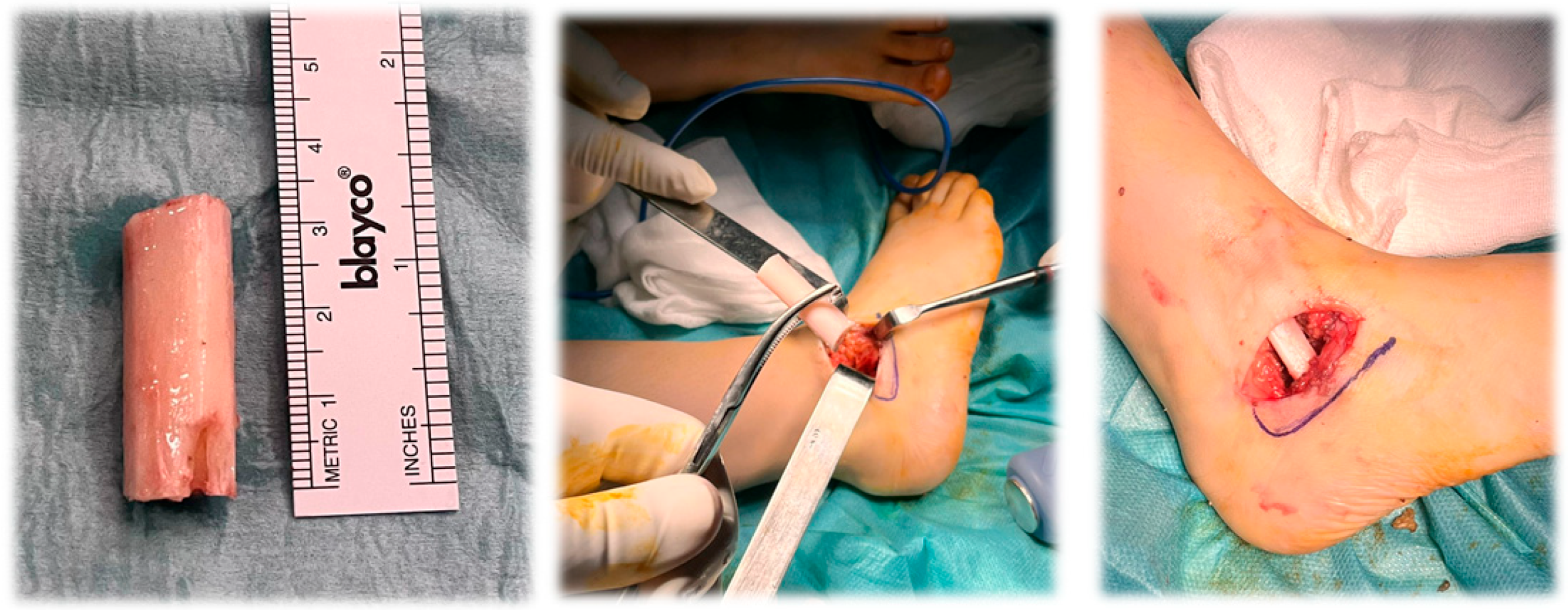
12]. The Grice arthrodesis, first described in 1952 for paralytic valgus deformities, involves placing a cortical bone graft between the talus and calcaneus to block excessive eversion while maintaining growth potential [
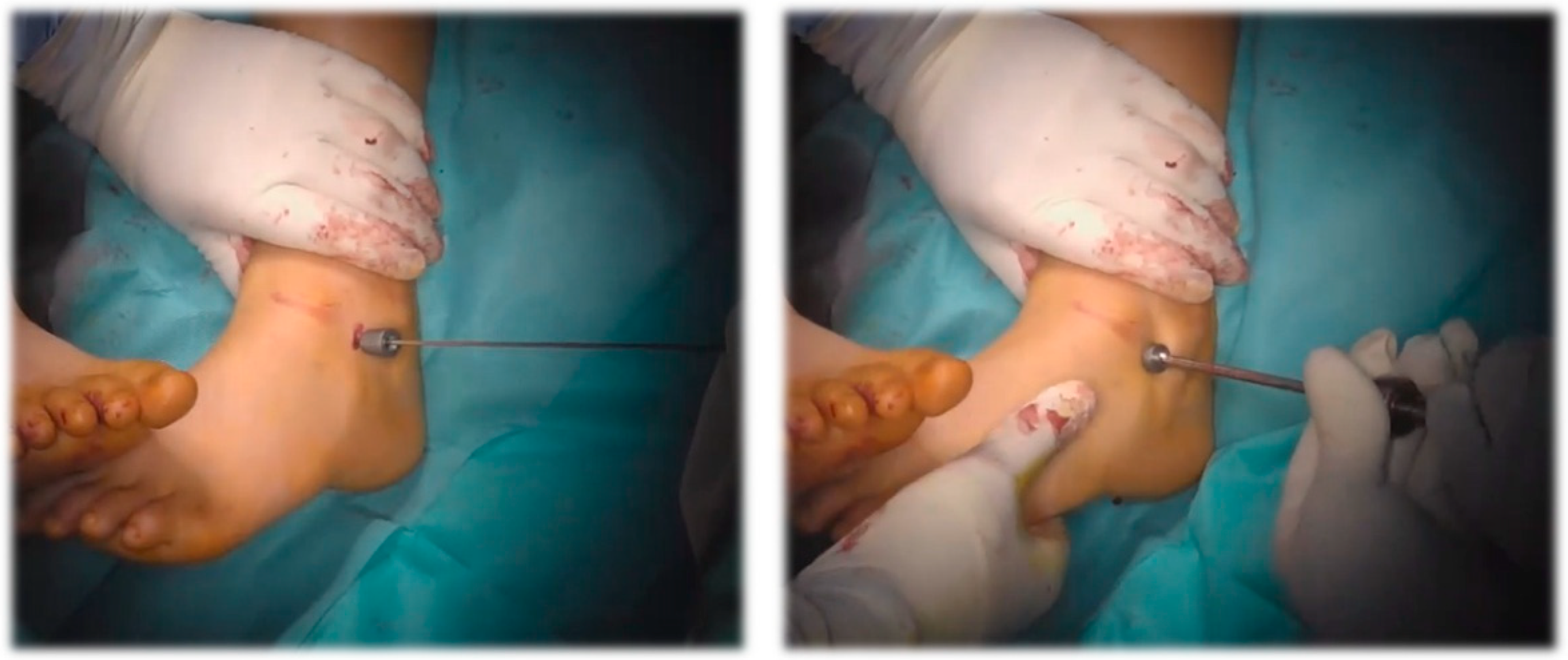
13]. In contrast, subtalar arthroereisis is a minimally invasive technique in which a small implant is inserted into the sinus tarsi to limit pronation and restore the physiological arch [
1,
14].
Both procedures have demonstrated favorable clinical and radiological outcomes in children [
13,
15,
16], yet they differ in invasiveness, rehabilitation time, and long-term stability. The Grice technique remains preferred for younger patients and those with neurological impairment, whereas arthroereisis is favored in older children with flexible deformities and preserved muscle balance [
17,
18].
Despite the widespread use of both procedures, there is no consensus regarding their optimal indications, comparative radiographic effectiveness, or age-related biomechanical advantages. Most available studies evaluate each technique separately, often in small cohorts, and direct comparative data remain scarce, particularly in pediatric populations with mixed etiologies. Furthermore, surgeons frequently face overlapping indications—older children with flexible idiopathic deformities may be candidates for both procedures, while younger patients with mild neuromuscular imbalance represent a gray zone in which evidence-based guidelines are lacking. This absence of objective comparative analysis has created significant variability in surgical decision-making, underscoring the need for studies directly evaluating radiographic outcomes between Grice arthrodesis and arthroereisis. The present work aims to address this gap by providing a large-scale, radiographically focused comparison of both techniques within a single institution over more than a decade.
Given the ongoing debate regarding the optimal surgical approach, this study aims to analyze and compare the indications, limitations, and radiographic outcomes of the Grice extra-articular subtalar arthrodesis and the subtalar arthroereisis in the treatment of pediatric flatfoot. By correlating clinical and imaging findings, the present work seeks to define evidence-based criteria that may guide surgical decision-making and optimize long-term functional results in this population.
3. Results
Patient demographics and baseline characteristics are summarized in
Table 1. Substantial differences between groups were observed at baseline. Patients undergoing the Grice procedure were younger and included all cases with cerebral palsy, whereas the arthroereisis group consisted exclusively of neurologically normal patients. Achilles tendon lengthening was performed in all Grice cases but in fewer than half of arthroereisis cases.
Radiographic outcomes demonstrated significant postoperative improvement within each surgical group across all measured parameters (Meary’s angle, calcaneal pitch, Kite’s angle, and talonavicular uncovering; all p < 0.05). These results are presented descriptively due to the marked baseline heterogeneity between groups.
No adjustment for confounding variables or clustering of bilateral feet was performed. Between-group comparisons should therefore be interpreted cautiously and are reported for exploratory purposes only.
Missing data were handled by complete case analysis. Only patients with available paired preoperative and postoperative radiographic measurements were included. No imputation of missing values was performed.
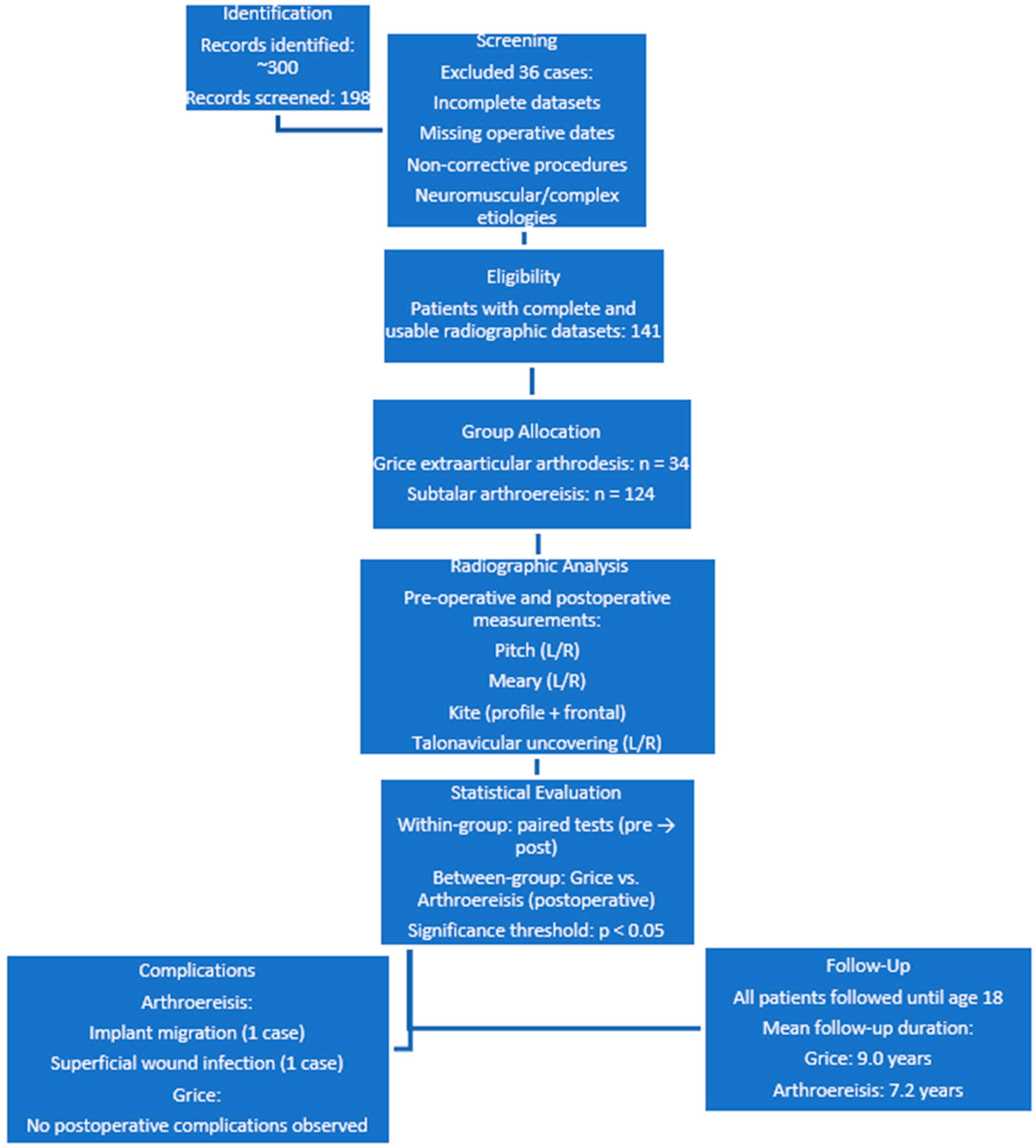
A total of 158 unique patients (were included in the analysis: 34 patients (54 feet) treated with the Grice procedure and 124 (232 feet) with arthroereisis.
The mean follow-up period for the Grice group was 9.0 years (95% CI, 7.53–10.47; range, 4–14 years), while for the arthroereisis group it was 7.2 years (95% CI, 6.71–7.61; range, 2–13 years).
Patient demographics and characteristics are presented in
Table 1. The mean age at the time of surgery was 9.0 ± 3.1 years in the Grice group and 10.8 ± 2.6 years in the Arthroereisis group. The Grice cohort included 14 males and 20 females, while the Arthroereisis group comprised 84 males and 40 females. All patients with cerebral palsy (CP) were treated using the Grice technique (18 patients; 52.9%), whereas no Arthroereisis patients had CP. Achilles tendon lengthening was performed in all Grice cases (100%) and in 59 Arthroereisis cases. Regarding laterality, Grice procedures were more frequently bilateral (20/34), and Arthroereisis was also predominantly bilateral (108/124).
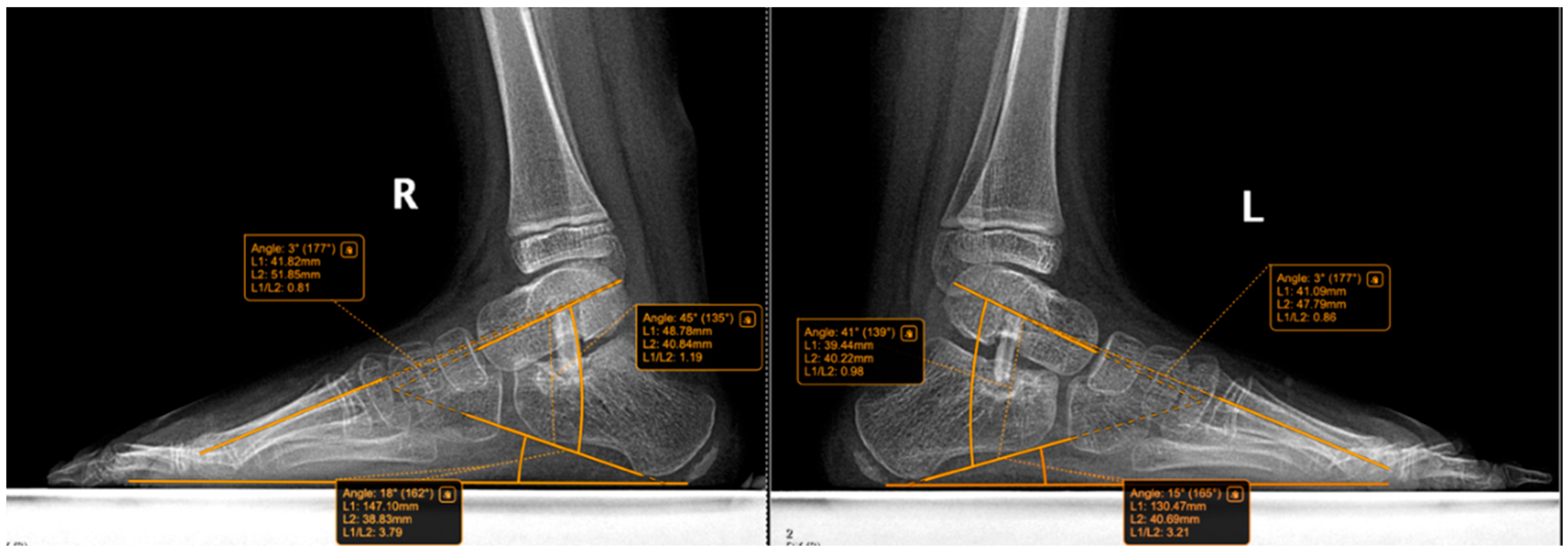
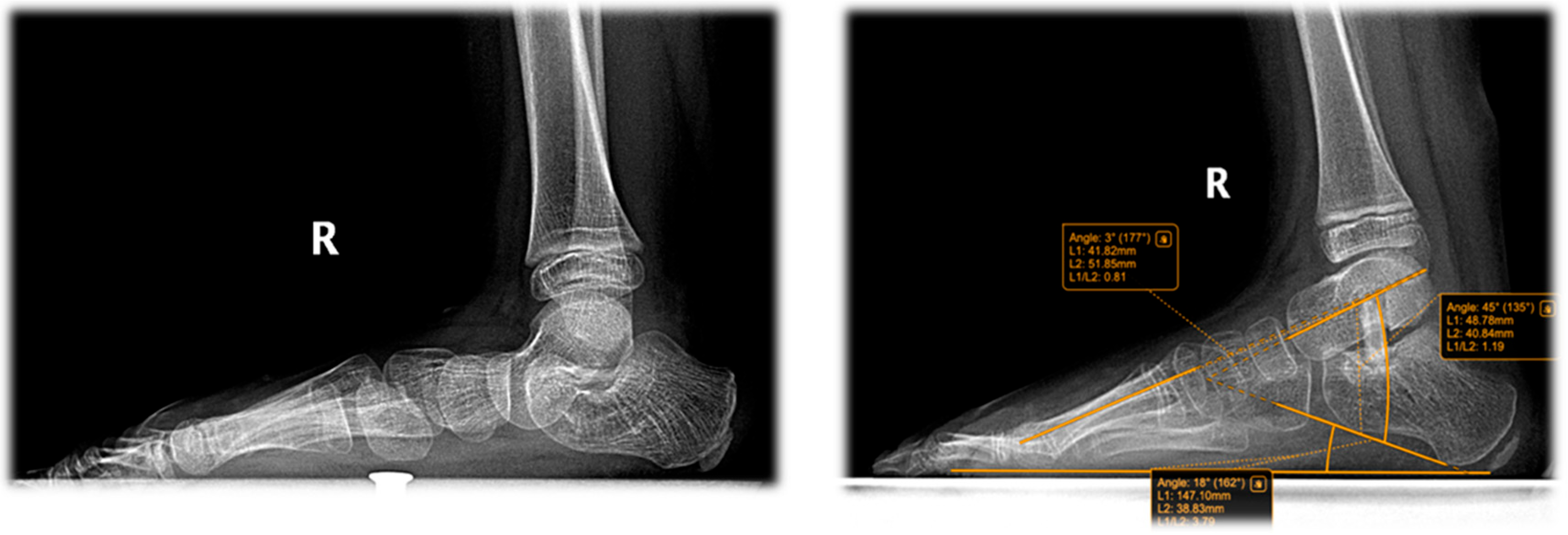
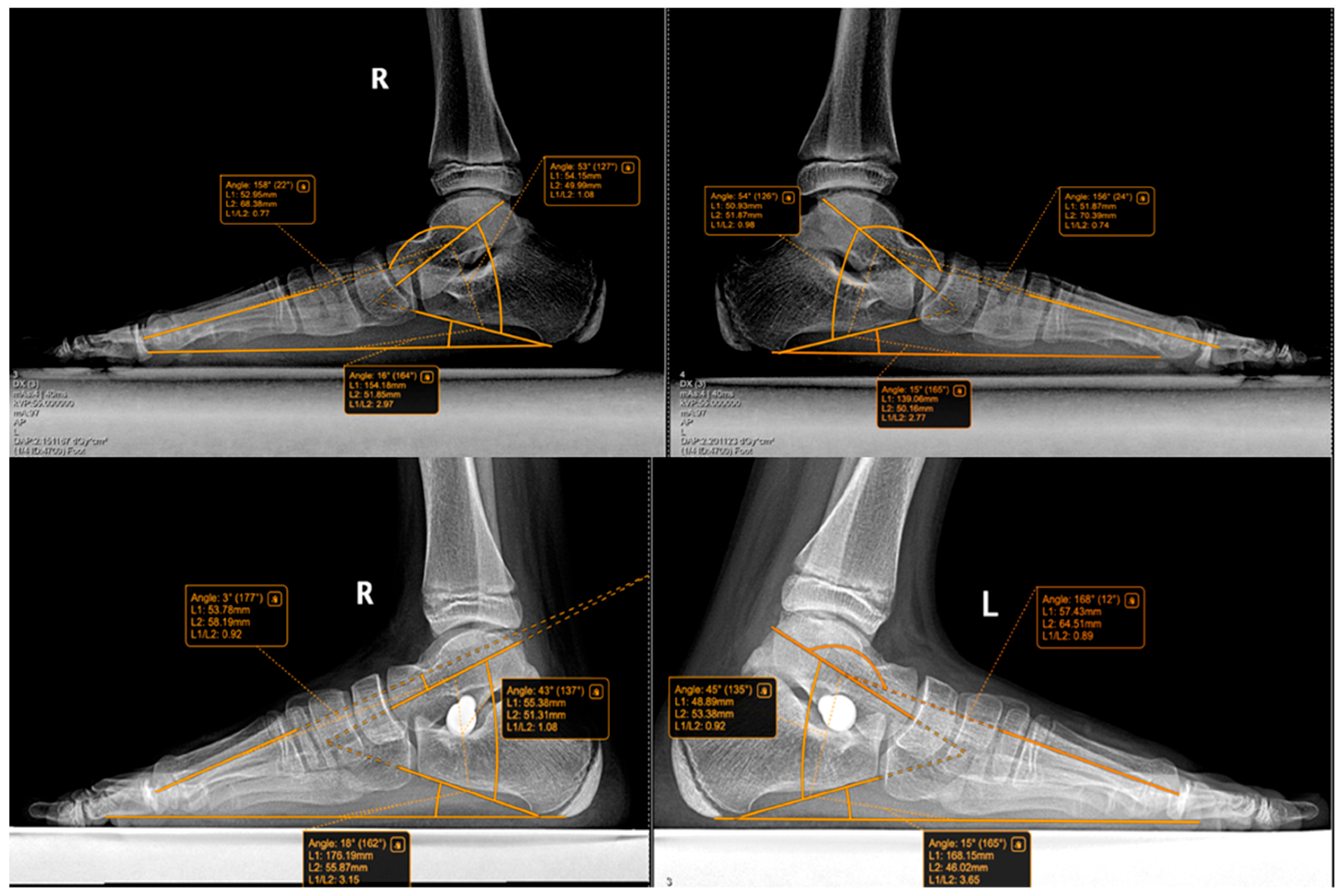
Significant postoperative improvements were observed in all evaluated radiographic parameters across both groups. In the Grice group, the mean Meary’s angle improved markedly, with an average correction of approximately 19.8° ± 9.2 on the right and 18.6° ± 8.7 on the left (both
p < 0.001), as seen in
Table 2.
The Arthroereisis group also demonstrated significant improvements, though of smaller magnitude, averaging 13.1° ± 7.5 on the right and 12.9° ± 7.2 on the left (
p < 0.001). Between-group comparison showed a statistically significant difference in Meary’s angle correction favoring the Grice technique (
p = 0.024) as seen in
Table 3.
For the Pitch angle, both groups exhibited a postoperative increase consistent with improved longitudinal arch height. The mean increase was +9.2° ± 7.2 on the left and +8.7° ± 6.8 on the right in the Arthroereisis group, compared with +5.5° ± 6.2 and +5.3° ± 5.9 in the Grice group, respectively (p = 0.055 between groups).
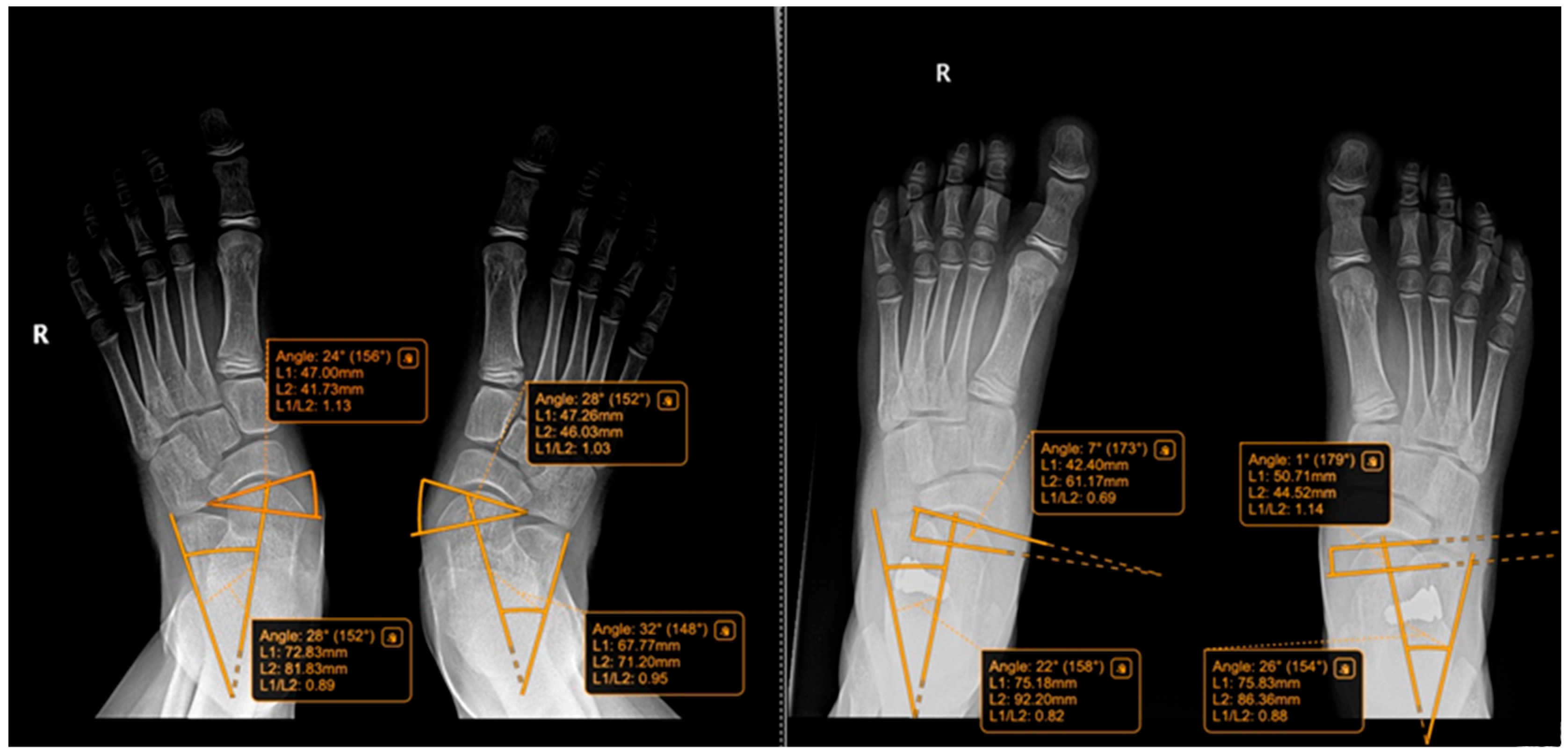
Kite’s angle improved significantly in both frontal and profile planes, with no meaningful intergroup differences (p > 0.05). Similarly, reductions were noted in talonavicular uncovering and restoration of the Cyma line continuity across both cohorts, all achieving within-group significance (p < 0.001) but without statistical difference between procedures.
Overall, both surgical techniques produced significant postoperative radiographic correction of flatfoot parameters as seen in
Table 4. The Grice arthrodesis resulted in greater angular realignment of the Meary axis, whereas Arthroereisis achieved higher Pitch angle recovery, particularly in older, neurologically normal patients. Despite these tendencies, no other between-group comparisons reached statistical significance, confirming that both approaches effectively corrected the deformity on radiographic grounds.
4. Discussion
This study demonstrates that both the Grice extra-articular subtalar arthrodesis and subtalar arthroereisis provide statistically significant radiographic correction in pediatric flexible flatfoot, confirming the effectiveness of both procedures in restoring normal foot alignment within their respective indication groups. The analysis of 158 unique patients revealed that each technique produced substantial improvements across all measured angular parameters, with distinct biomechanical advantages depending on patient age and deformity type.
In the Grice cohort, mean Meary’s angle improved from 20.4° (L) and 23.6° (R) preoperatively to 3.4° (L) and 3.8° (R) postoperatively (p < 0.001), corresponding to an average correction of approximately −19.8° ± 9.2 on the right and −18.6° ± 8.7 on the left. These values indicate nearly complete normalization (<3°), consistent with the structural realignment achieved by extra-articular subtalar grafting. Talonavicular uncovering also decreased markedly from 30.7° (L) and 26.1° (R) to 17.7° (L) and 18.4° (R) (p < 0.001), confirming medial column stabilization.
In the arthroereisis group, mean Meary’s angle decreased from 15.4° (L) and 16.1° (R) to 3.2° (L) and 3.1° (R) respectively (p < 0.001), with an average correction of −13.1° ± 7.5 (R) and −12.9° ± 7.2 (L). The Pitch angle increased significantly from 12.3° (L) and 12.1° (R) to 21.4° (L) and 21.2° (R) (p < 0.001) reflecting the restoration of longitudinal arch height. Kite’s angle improved in both planes (frontal: 40.6° → 30.4° L, 40.6° → 31.1° R; profile: 47.5° → 41.7° L, 48.4° → 41.5° R; all p < 0.001), confirming global correction of hindfoot valgus. These findings demonstrate that both operations achieved significant radiological normalization within their respective cohorts and indication groups.
Although all within-group changes were significant, inter-group comparisons identified specific tendencies. The Grice technique achieved greater correction of Meary’s angle (Δ = −19.8° vs. −13.1°, p = 0.024), indicating superior alignment of the talus-first metatarsal axis likely due to its rigid bony stabilization. Conversely, arthroereisis resulted in a larger Pitch angle increase (+9.2° vs. +5.5°, p = 0.055), reflecting enhanced restoration of the medial longitudinal arch without over-correction. Other angles (Kite, uncovering, Cyma line) improved comparably between procedures (p > 0.05), suggesting that both techniques achieve equivalent global correction of foot morphology within their respective indication groups.
Postoperative inter-group testing (Welch’s t-test) showed no significant differences in Meary’s, Pitch, or Kite frontal angles, but Grice exhibited higher Kite profile angles (46.2° L, 46.1° R) compared with arthroereisis (41.7° L, 41.5° R; p = 0.008 and p = 0.018), and higher talonavicular uncovering values (17.7° L, 18.4° R vs. 8.8° L, 9.0° R; p ≤ 0.001). These differences likely reflect the intrinsic rigidity of the Grice construct and the residual mobility preserved after arthroereisis.
The magnitude of correction observed aligns with published data. Mosca (2010) reported that calcaneal lengthening and Grice arthrodesis achieve durable angular normalization in valgus deformities, particularly in neuromuscular cases [
1]. Bollmann et al. (2015) reviewed 92 Grice procedures and observed postoperative Meary’s angles of 2–5°, consistent with our mean 3.5° range [
17].
For arthroereisis, Bernasconi et al. (2017) and Caravaggi et al. (2018) documented mean postoperative Meary’s angles of 2–4° and Pitch improvements of 7–10°, similar to our results [
15,
16]. Classical orthopedic references consistently define pediatric foot surgery as a balance between anatomical correction and preservation of growth potential, while differing slightly in their emphasis on surgical execution. McGlamry emphasizes meticulous anatomical dissection and biomechanical restoration as the foundation of durable correction in foot surgery [
19], whereas Morrissy focuses on structured, step-by-step operative planning and detailed visual guidance adapted to pediatric anatomy [
20]. In contrast, Jianu highlights pragmatic, experience-based adaptations of these principles within pediatric orthopedic practice, with particular attention to surgical timing and technical simplicity [
21]. Despite these nuanced differences, all three sources converge on the importance of precise alignment, careful soft-tissue handling, and age-appropriate techniques as key determinants of successful outcomes in pediatric foot surgery. Recent systematic reviews confirm arthroereisis as an effective, minimally invasive option providing reproducible radiographic correction with low complication rates [
22,
23]. The slightly larger residual Meary and talonavicular angles in our arthroereisis group may reflect inclusion of older, idiopathic cases with partially adaptive soft-tissue structures.
The data support the concept that both operations can achieve physiological alignment but should be applied selectively. Grice arthrodesis remains particularly suited for younger or neurologically impaired patients requiring permanent stabilization, while arthroereisis provides adequate correction for flexible deformities with preserved subtalar motion. The statistically greater Meary correction after Grice corroborates its effectiveness in more severe deformities, whereas the higher postoperative Pitch following arthroereisis indicates better arch reconstitution in flexible cases.
No major between-group differences in final radiological alignment confirm that both methods reach equivalent corrective goals when appropriately indicated.
These patterns mirror prior biomechanical and radiographic analyses. Mosca (2010) [
1] emphasized that the Grice extra-articular arthrodesis remains the most reliable option for stabilizing valgus deformities in patients with neuromuscular or rigid flatfoot, providing long-term structural correction without compromising ankle motion. Bollmann et al. (2015) [
17] In their series, the lateral talo–first metatarsal angle improved from a mean of −36.98° to −12.32°, the calcaneal pitch increased from 2.95° to 7.55°, and the lateral talo–calcaneal angle decreased from 49.52° to 31.49°, reflecting substantial correction of hindfoot valgus and restoration of the medial longitudinal arch. Comparable trends were documented in our study, where the Meary angle improved from 20–23° preoperatively to 3–4° postoperatively, and the calcaneal pitch rose from 12–13° to 18–19°, indicating near-physiological sagittal alignment of the medial column. Furthermore, the reductions in the anteroposterior and lateral Kite angles and in talonavicular uncovering mirrored the radiographic improvements described by Bollmann and colleagues. Taken together, these findings underscore the reproducibility and efficacy of the Grice extra-articular arthrodesis in achieving durable realignment of valgus deformities of the hindfoot in the pediatric population.
For arthroereisis, our findings correspond to modern literature emphasizing minimally invasive correction. Bernasconi et al. (2017) [
15] who highlighted the role of subtalar arthroereisis as a minimally invasive and reversible technique that achieves reliable correction of flexible flatfoot in pediatric and adult populations. They reported significant postoperative improvement in both radiographic and clinical outcomes, with correction of Meary’s and talonavicular angles comparable to more extensive surgical procedures. In our cohort, similar trends were observed, as postoperative angular measurements approached physiological ranges with low complication rates and stable correction over time. These parallels reinforce the growing evidence that arthroereisis can provide durable and functionally satisfactory results when appropriately indicated, particularly in flexible deformities without severe structural or neurological involvement.
Caravaggi et al. (2018) [
16] emphasized the dynamic nature of subtalar arthroereisis, which corrects deformity through a temporary, implant-based modulation of motion rather than rigid fixation. This dynamic correction permits progressive realignment during growth while maintaining subtalar joint mobility and allowing bone remodeling. Such characteristics make the procedure particularly suited for pediatric patients, as also observed in our cohort, where postoperative alignment was achieved without the loss of joint function, which may explain the higher postoperative Pitch values and improved arch congruency observed in our patients. Smith et al. (2021) [
22], in a systematic review encompassing over 1200 cases, reported mean improvements of 9° in Meary’s angle and 3.5° in Pitch. The physiological correction and joint preservation seen in our cohort are thus in line with the recognized advantages of the arthroereisis technique.
When comparing the two techniques, our data echo the findings of Giannini and Caravaggi (2018) [
16], who proposed that the choice between procedures should be tailored to the underlying etiology and rigidity of deformity. Grice arthrodesis achieves lasting correction but sacrifices subtalar mobility, making it suitable for neuromuscular or rigid cases, whereas arthroereisis offers dynamic realignment ideal for idiopathic flexible flatfoot. The small but consistent differences between postoperative angular outcomes highlight this complementarity rather than competition between techniques. Eventually, with the Grice procedure, the fibular graft will undergo resorption; however, the correction will be maintained, as shown in
Figure 9.
Our results are consistent with the findings of a previous study by our team, which reported that subtalar arthroereisis in children and adolescents with flexible flatfoot led not only to radiographic correction but also to significant improvements in sports performance, foot aesthetics, and overall quality of life [
24]. Similarly to our findings, the present study confirms that restoring the physiological alignment of the foot through minimally invasive stabilization translates into both functional and psychosocial benefits. These aspects are particularly relevant in the pediatric population, where rapid recovery and early return to normal activities play an essential role in long-term satisfaction and treatment success.
Although both procedures aim to correct symptomatic flexible flatfoot, the indications for Grice arthrodesis and arthroereisis differed substantially in our population and reflect established biomechanical and clinical principles. In our series, Grice arthrodesis was selected primarily for younger patients and those with neuromuscular impairment, particularly cerebral palsy, where valgus deformity tends to be more rigid, progressive, and associated with abnormal muscle tone. These cases require a stable extra-articular construct capable of maintaining correction during growth, which explains why all CP patients in our cohort underwent the Grice technique. Conversely, arthroereisis was used predominantly in older children with flexible idiopathic deformities, where subtalar motion is preserved and a dynamic, minimally invasive correction is preferable. The larger postoperative Pitch angle observed in this group supports the notion that arthroereisis is most effective in patients with flexible arch collapse but intact neuromuscular control. Therefore, our findings reinforce the age- and etiology-based indications proposed in previous literature, while providing objective radiographic confirmation that the two procedures address distinct clinical subsets rather than interchangeable surgical options.
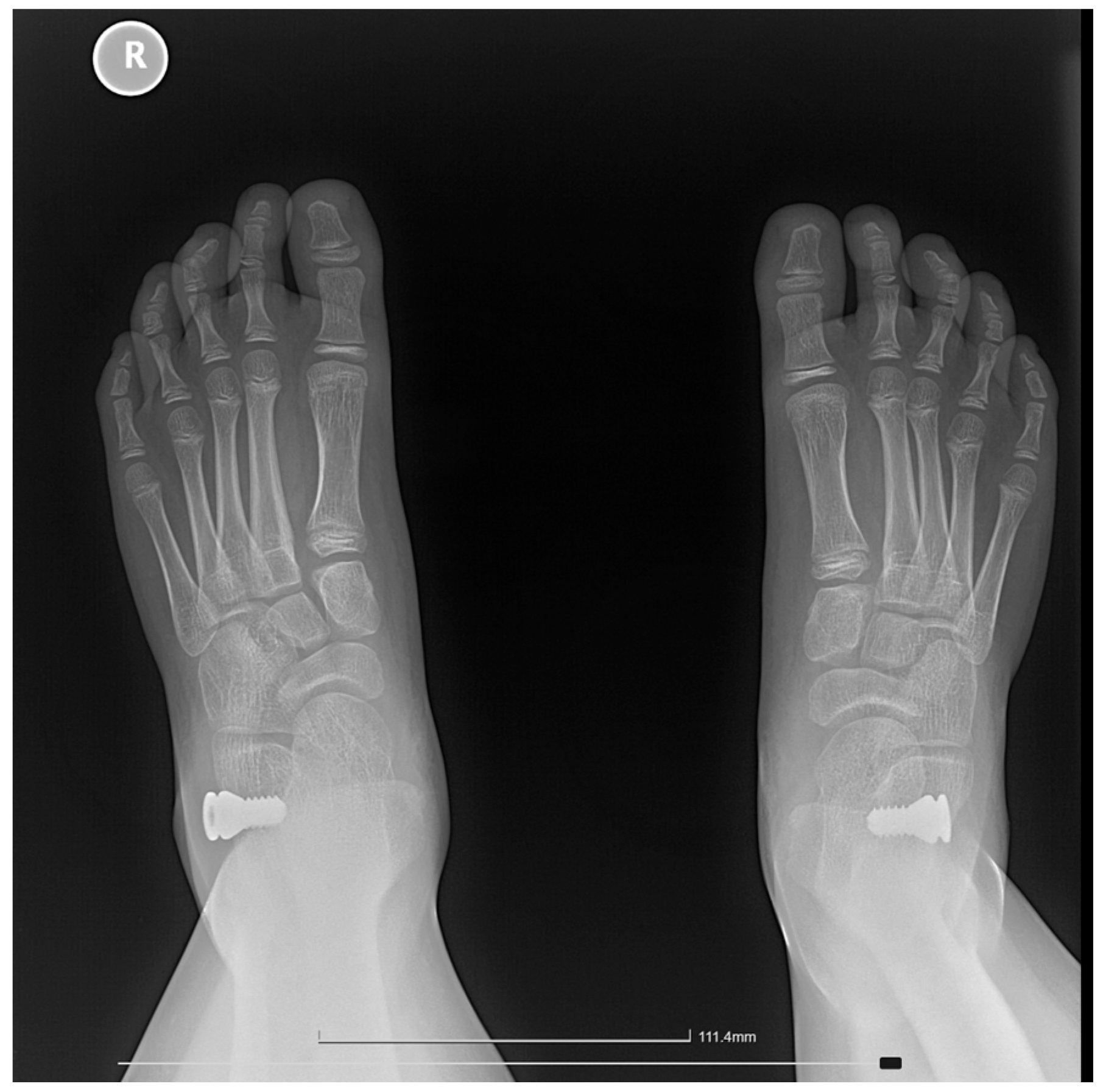
Postoperative complications were infrequent across both groups. One patient in the arthroereisis group experienced implant migration as seen in
Figure 10, which required revision surgery. Another case of superficial wound infection occurred in the Grice group and resolved with targeted antibiotic therapy and local care. No cases of neurovascular injury, persistent pain, or recurrence were observed during the follow-up period. Overall, both techniques demonstrated a favorable safety profile within their respective indication groups.
Importantly, direct comparison between the two surgical techniques is limited by confounding by indication. The Grice procedure was preferentially used in younger patients and those with neuromuscular impairment, whereas arthroereisis was reserved for older children with idiopathic flexible flatfoot. These populations are inherently non-comparable, and the observed differences in radiographic correction may reflect baseline pathology rather than true procedural superiority.
All patients were monitored from the time of surgery until reaching 18 years of age. The shorter follow-up in the arthroereisis cohort reflects the more recent implementation of this minimally invasive technique in our department, compared with the longer-established Grice procedure.
This study has several important limitations. First, its retrospective observational design precludes causal inference. Second, the two treatment groups were inherently non-comparable due to confounding by indication, particularly the inclusion of all cerebral palsy cases in the Grice group and exclusively idiopathic cases in the arthroereisis group. Third, no adjustment was performed for baseline differences, clustering of bilateral feet within patients, or potential surgeon-related effects, limiting the validity of between-group comparisons.
Fourth, outcomes were limited to radiographic parameters, and no standardized clinical or patient-reported outcome measures were available. As radiographic correction does not necessarily translate into functional improvement or patient satisfaction, the clinical relevance of the findings should be interpreted with caution. Finally, missing data were addressed using complete-case analysis, which may introduce selection bias and limit generalizability. No multivariable adjustment was performed due to confounding by indication and baseline non-comparability between treatment groups, and all between-group analyses should be interpreted as descriptive.
The retrospective design, moderate sample disparity between groups (34 vs. 124 patients), and reliance on radiographic rather than functional outcomes. Follow-up duration varied, and implant type was not stratified in the arthroereisis cohort. Nevertheless, the dataset’s size and bilateral measurement approach strengthen the reliability of statistical findings. A major limitation of this study is the absence of standardized pain or functional outcome measures such as the AOFAS Hindfoot Scale, the Oxford Ankle Foot Questionnaire for Children (OxAFQ-C), or visual analogue pain scores. Although radiographic correction is essential for understanding biomechanical improvement, it does not fully capture the patient’ s functional recovery or subjective satisfaction. Previous studies have demonstrated that both Grice arthrodesis and arthroereisis lead to significant improvements in pain, activity tolerance, and quality of life [
24]; however, the retrospective nature of our cohort and incomplete documentation of PROMs prevented their inclusion in the present analysis. Future prospective studies will incorporate systematic functional scoring to provide a more comprehensive assessment of clinical outcomes alongside radiographic parameters.
Both the Grice extraarticular subtalar arthrodesis and subtalar arthroereisis procedures achieved significant radiographic correction of symptomatic flexible flatfoot in children within their respective indication groups. Across all measured parameters Pitch, Meary, Kite, and talonavicular uncovering angles postoperative values approached normal reference ranges, reflecting restoration of the medial longitudinal arch and hindfoot alignment.
The Grice technique demonstrated reliable long-term outcomes with consistent correction in both sagittal and coronal planes, particularly in patients with neuromuscular or structural etiologies. Arthroereisis, a minimally invasive alternative, provided comparable alignment improvement with shorter operative times, reduced surgical morbidity, and good maintenance of correction during growth.
Despite the smaller cohort and longer follow-up in the Grice group, both interventions proved effective and safe in pediatric patients. The few complications observed one implant migration and one superficial wound infection were manageable without compromising final results.
Continued prospective evaluation with functional and long-term radiological follow-up is warranted to refine patient selection and confirm durability of correction into skeletal maturity.