Stress Response During a Three-Month Follow-Up of a Historical Cohort of People with Cancer: Subjective Hyper-Energy and the DYMERS Framework for a Future Preventive Approach
 , , , , , , , , , and
Abstract
1. Background
2. Methods
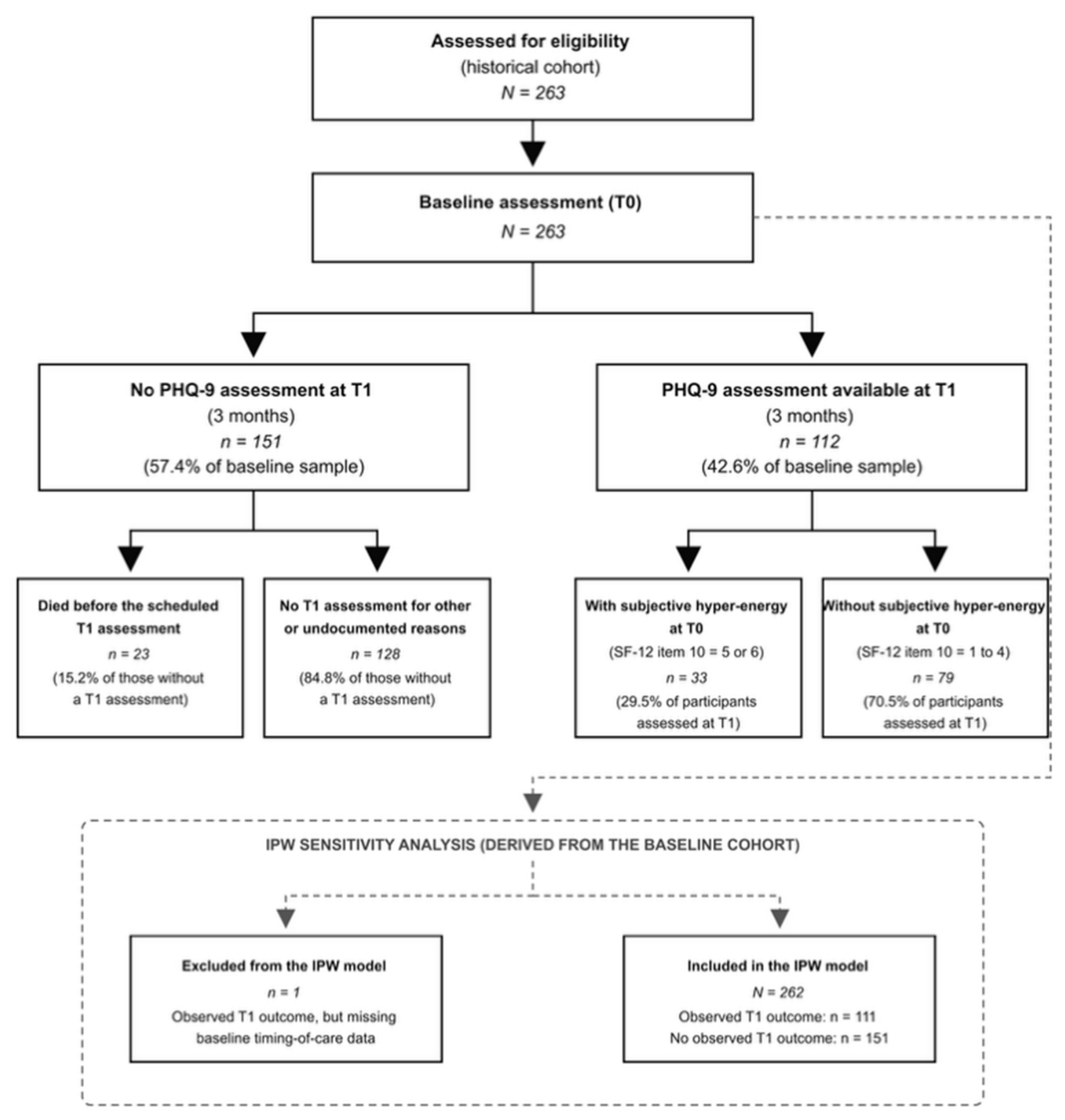
2.1. Design and Study Samples
2.2. Recruitment
2.3. Study Tools
2.4. Ethical Aspect
2.5. Statistical Analysis
3. Results
4. Discussion
4.1. Strengths and Limitations
4.2. Novelties and Contributions
4.3. Clinical Implications
5. Conclusions
Supplementary Materials
Author Contributions
Funding
Institutional Review Board Statement
Informed Consent Statement
Data Availability Statement
Conflicts of Interest
Abbreviations
References
- Pitman, A.; Suleman, S.; Hyde, N.; Hodgkiss, A. Depression and anxiety in patients with cancer. BMJ 2018, 361, k1415. [Google Scholar] [CrossRef] [Scilit] [PubMed]
- Riba, M.B.; Donovan, K.A.; Andersen, B.; Braun, I.; Breitbart, W.S.; Brewer, B.W.; Buchmann, L.O.; Clark, M.M.; Collins, M.; Corbett, C.; et al. Distress management, version 3.2019, NCCN Clinical Practice Guidelines in Oncology. J. Natl. Compr. Cancer Netw. 2019, 17, 1229–1249. [Google Scholar] [CrossRef] [Scilit] [PubMed]
- Caruso, R.; Nanni, M.G.; Riba, M.B.; Sabato, S.; Grassi, L. Depressive spectrum disorders in cancer: Diagnostic issues and intervention. A critical review. Curr. Psychiatry Rep. 2017, 19, 33. [Google Scholar] [CrossRef] [Scilit] [PubMed]
- Hendy, A.; Ibrahim, R.K.; Darwish, A.; Al Sabbah, S.; Shalby, A.Y.M.; Khubrani, R.; Alawad, A.E.; Abdelaliem, S.M.F.; Wahba, N.M.I. Sleep disturbance, cancer-related fatigue, and depression as determinants of quality of life among breast cancer patients undergoing chemotherapy: A cross-sectional study. BMC Cancer 2025, 25, 1122. [Google Scholar] [CrossRef] [Scilit] [PubMed]
- Tao, L.; Lv, J.; Zhong, T.; Zeng, X.; Han, M.; Fu, L.; Chen, H. Effects of sleep disturbance, cancer-related fatigue, and psychological distress on breast cancer patients’ quality of life: A prospective longitudinal observational study. Sci. Rep. 2024, 14, 8632. [Google Scholar] [CrossRef] [Scilit] [PubMed]
- Strøm, L.; Zachariae, R.; Wu, L.M.; Meldgaard, P.; Ancoli-Israel, S.; Lekander, M.; Mroczek, D.; Amidi, A. Longitudinal investigation of sleep and circadian rest–activity rhythms in non-small-cell lung cancer patients during immunotherapy and associations with fatigue, depression, and perceived stress. Sleep Med. 2025, 134, 106740. [Google Scholar] [CrossRef] [Scilit] [PubMed]
- Monteleone, P.; Martiadis, V.; Maj, M. Circadian rhythms and treatment implications in depression. Prog. Neuropsychopharmacol. Biol. Psychiatry 2011, 35, 1569–1574. [Google Scholar] [CrossRef] [Scilit] [PubMed]
- Akiskal, H.S. The Bipolar Spectrum: New Concepts in Classification and Diagnosis. In Psychiatry Update; The American Psychiatric Association Annual Review; Grinspoon, L., Ed.; American Psychiatric Press: Washington, DC, USA, 1983; Volume 2, pp. 271–292. [Google Scholar]
- Ghaemi, S.N. Bipolar spectrum: A review of the concept and a vision for the future. Psychiatry Investig. 2013, 10, 218. [Google Scholar] [CrossRef] [Scilit] [PubMed]
- Koukopoulos, A.; Ghaemi, S.N. The primacy of mania: A reconsideration of mood disorders. Eur. Psychiatry 2009, 24, 125–134. [Google Scholar] [CrossRef] [Scilit] [PubMed]
- Kotzalidis, G.; Rapinesi, C.; Savoja, V.; Cuomo, I.; Simonetti, A.; Ambrosi, E.; Panaccione, I.; Gubbini, S.; De Rossi, P.; De Chiara, L.; et al. Neurobiological evidence for the primacy of mania hypothesis. Curr. Neuropharmacol. 2017, 15, 339–352. [Google Scholar] [CrossRef] [Scilit] [PubMed]
- American Psychiatric Association. Diagnostic and Statistical Manual of Mental Disorders: DSM-5; American Psychiatric Association: Washington, DC, USA, 2013. [Google Scholar]
- Zimmerman, M.; Galione, J.N.; Ruggero, C.J.; Chelminski, I.; McGlinchey, J.B.; Dalrymple, K.; Young, D. Performance of the mood disorders questionnaire in a psychiatric outpatient setting. Bipolar Disord. 2009, 11, 759–765. [Google Scholar] [CrossRef] [Scilit] [PubMed]
- Zimmerman, M.; Galione, J.N.; Ruggero, C.J.; Chelminski, I.; Dalrymple, K.; Young, D. Are screening scales for bipolar disorder good enough to be used in clinical practice? Compr. Psychiatry 2011, 52, 600–606. [Google Scholar] [CrossRef] [Scilit] [PubMed]
- Zimmerman, M.; Galione, J.N.; Ruggero, C.J.; Chelminski, I.; Young, D.; Dalrymple, K.; McGlinchey, J.B. Screening for bipolar disorder and finding borderline personality disorder. J. Clin. Psychiatry 2010, 71, 1212–1217. [Google Scholar] [CrossRef] [Scilit] [PubMed]
- Carta, M.G.; Angst, J. Screening for bipolar disorders: A public health issue. J. Affect Disord. 2016, 205, 139–143. [Google Scholar] [CrossRef] [Scilit] [PubMed]
- Carta, M.G.; Ouali, U.; Perra, A.; Ben Cheikh Ahmed, A.; Boe, L.; Aissa, A.; Lorrai, S.; Cossu, G.; Aresti, A.; Preti, A.; et al. Living with bipolar disorder in the time of Covid-19: Biorhythms during the severe lockdown in Cagliari, Italy, and the moderate lockdown in Tunis, Tunisia. Front. Psychiatry 2021, 12, 634765. [Google Scholar] [CrossRef] [Scilit] [PubMed]
- Primavera, D.; Aviles Gonzalez, C.I.; Romano, F.; Kalcev, G.; Pinna, S.; Minerba, L.; Scano, A.; Orrù, G.; Cossu, G. Does the response to a stressful condition in older adults with life rhythm dysregulations provide evidence of the existence of the “dysregulation of mood, Energy, and Social Rhythms Syndrome”? Healthcare 2023, 12, 87. [Google Scholar] [CrossRef] [Scilit] [PubMed]
- Carta, M.G.; Kalcev, G.; Fornaro, M.; Pinna, S.; Gonzalez, C.I.A.; Nardi, A.E.; Primavera, D. Does screening for bipolar disorders identify a “dysregulation of mood, energy, and social rhythms syndrome” (DYMERS)? A heuristic working hypothesis. J. Clin. Med. 2023, 12, 516. [Google Scholar] [CrossRef] [Scilit] [PubMed]
- Kalcev, G.; Cossu, G.; Preti, A.; Littera, M.T.; Frau, S.; Primavera, D.; Zaccheddu, R.; Matza, V.; Ermellino, M.; Pintus, E.; et al. Development and validation of the Questionnaire for Adaptive Hyperactivity and Goal Achievement (AHGA). Clin. Pract. Epidemiol. Ment. Health 2023, 19, e174501792303281. [Google Scholar] [CrossRef] [Scilit] [PubMed]
- Kalcev, G.; Scano, A.; Orrù, G.; Primavera, D.; Cossu, G.; Nardi, A.E.; Carta, M.G. Is a genetic variant associated with bipolar disorder frequent in people without bipolar disorder but with characteristics of hyperactivity and novelty seeking? Clin. Pract. Epidemiol. Ment. Health 2023, 19, e174501792303280. [Google Scholar] [CrossRef] [Scilit] [PubMed]
- Carta, M.G.; Kalcev, G.; Scano, A.; Primavera, D.; Orrù, G.; Gureye, O.; Cossu, G.; Nardi, A.E. Is Bipolar Disorder the Consequence of a Genetic Weakness or Not Having Correctly Used a Potential Adaptive Condition? Brain Sci. 2022, 13, 16. [Google Scholar] [CrossRef] [Scilit] [PubMed]
- Barlattani, T.; Soltmann, B.; D’Amelio, C.; Socci, V.; Pacitti, F.; Pompili, M.; Ritter, P. The influence of PER3 VNTR genotypes on the age of onset in a group of bipolar I disorder patients: An exploratory study. Int. J. Bipolar Disord. 2024, 12, 25. [Google Scholar] [CrossRef] [Scilit] [PubMed]
- Atzeni, M.; Fornaro, M.; Tusconi, M.; Aviles Gonzalez, C.I.; Cantone, E.; Pintus, E.; Dursun, S.M.; Nardi, A.E.; Sancassiani, F.; Carta, M.G. Can adaptive hyperactivation result in a positive score on the Mood Disorder Questionnaire? Evidence from a case-control study over a community survey. Front. Psychiatry 2026, 16, 1626277. [Google Scholar] [CrossRef] [Scilit] [PubMed]
- Primavera, D.; Cossu, G.; Marchegiani, S.; Preti, A.; Nardi, A.E. Does the dysregulation of social rhythms syndrome (DYMERS) be considered an essential component of panic disorders? Clin. Pract. Epidemiol. Ment. Health 2024, 20, e17450179293272. [Google Scholar] [CrossRef] [Scilit] [PubMed]
- Sanchez-Ruiz, J.A.; Coombes, B.J.; Pazdernik, V.M.; Melhuish Beaupre, L.M.; Jenkins, G.D.; Pendegraft, R.S.; Batzler, A.; Ozerdem, A.; McElroy, S.L.; Gardea-Resendez, M.A.; et al. Clinical and genetic contributions to medical comorbidity in bipolar disorder: A study using electronic health records-linked biobank data. Mol. Psychiatry 2024, 29, 2701–2713. [Google Scholar] [CrossRef] [Scilit] [PubMed]
- Chrobak, A.A.; Przydacz, M.; Chłosta, M.; Machalska, K.; Turek, A.; Popiół, M.; Skalski, M.; Arciszewska-Leszczuk, A.; Chłosta, P.; Siwek, M.; et al. Bipolar spectrum in prostate cancer patients and its role in stress related symptoms. Psychooncology 2023, 32, 438–445. [Google Scholar] [CrossRef] [Scilit] [PubMed]
- Kesebir, S.; Koc, M.I.; Yosmaoglu, A. Bipolar spectrum disorder may be associated with family history of diseases. J. Clin. Med. Res. 2020, 12, 251–254. [Google Scholar] [CrossRef] [Scilit] [PubMed]
- Aviles Gonzalez, C.I.; Angermeyer, M.; Deiana, L.; Loi, C.; Murgia, E.; Holzinger, A.; Cossu, G.; Massa, E.; Romano, F.; Scartozzi, M.; et al. The Quality of Life of people with Solid Cancer is less worse than other diseases with better prognosis, except in the presence of depression. Clin. Pract. Epidemiol. Ment. Health 2021, 17, 315–323. [Google Scholar] [CrossRef] [Scilit] [PubMed]
- Sancassiani, F.; Mulas, O.; Madeddu, C.; Massa, E.; La Nasa, G.; Caocci, G.; Romano, F.; Garau, V.; Orrù, G.; Scartozzi, M.; et al. Low adherence to therapy and co-morbid depressive episodes are independent determinants of early death in people with cancer. World Cancer Res. J. 2023, 10, e2707. [Google Scholar]
- La Nasa, G.; Caocci, G.; Morelli, E.; Massa, E.; Farci, A.; Deiana, L.; Pintus, E.; Scartozzi, M.; Sancassiani, F. Health-related quality of life in patients with onco-hematological diseases. Clin. Pract. Epidemiol. Ment. Health 2020, 16, 174–179. [Google Scholar] [CrossRef] [Scilit] [PubMed]
- Sancassiani, F.; Massa, E.; Pibia, C.; Perda, G.; Boe, L.; Fantozzi, E.; Cossu, G.; Caocci, G.; Mulas, O.; Morelli, E.; et al. The association between major depressive disorder and premature death risk in hematologic and solid cancer: A longitudinal cohort study. J. Public Health Res. 2021, 10, 2247. [Google Scholar] [CrossRef] [Scilit] [PubMed]
- Ouali, U.; Aissa, A.; Rejaibi, S.; Zoghlami, N.; Larnaout, A.; Zgueb, Y.; Zid, M.; Skhiri, H.A.; Kalcev, G.; Tusconi, M.; et al. Hyperactivity and Risk for Dysregulation of Mood, Energy, and Social Rhythms Syndrome (DYMERS): Standardization of a Simple One-Item Screener versus the Mood Disorder Questionnaire (MDQ). J. Clin. Med. 2024, 13, 4433. [Google Scholar] [CrossRef] [Scilit] [PubMed]
- von Elm, E.; Altman, D.G.; Egger, M.; Pocock, S.J.; Gøtzsche, P.C.; Vandenbroucke, J.P.; STROBE Initiative. The Strengthening the Reporting of Observational Studies in Epidemiology (STROBE) statement: Guidelines for reporting observational studies. J. Clin. Epidemiol. 2008, 61, 344–349. [Google Scholar] [CrossRef] [Scilit] [PubMed]
- Ware, J.E., Jr.; Kosinski, M.; Keller, S.D. A 12-item short-form health survey: Construction of scales and preliminary tests of reliability and validity. Med. Care 1996, 34, 220–233. [Google Scholar] [CrossRef] [Scilit] [PubMed]
- Kodraliu, G.; Mosconi, P.; Groth, N.; Carmosino, G.; Perilli, A.; Gianicolo, E.A.; Rossi, C.; Apolone, G. Subjective health status assessment: Evaluation of the Italian version of the SF-12 Health Survey. Results from the MiOS Project. J. Epidemiol. Biostat. 2001, 6, 305–316. [Google Scholar] [CrossRef] [Scilit] [PubMed]
- Kroenke, K.; Spitzer, R.L.; Williams, J.B.W. The PHQ-9: Validity of a brief depression severity measure. J. Gen. Intern Med. 2001, 16, 606–613. [Google Scholar] [CrossRef] [Scilit] [PubMed]
- Mazzotti, E.; Fassone, G.; Picardi, A.; Sagoni, E.; Ramieri, L.; Lega, I.; Camaioni, D.; Abeni, D.; Pasquini, P. Il Patient health questionnaire (PHQ) per lo screening dei disturbi psichiatrici: Uno studio di validazione nei confronti della intervista clinica strutturata per il DSM-IV asse I (SCID-I). Ital. J. Psychopathol. 2003, 9, 235–242. [Google Scholar]
- Hartung, T.J.; Friedrich, M.; Johansen, C.; Wittchen, H.U.; Faller, H.; Koch, U.; Brähler, E.; Härter, M.; Keller, M.; Schulz, H.; et al. The Hospital Anxiety and Depression Scale and the 9-item Patient Health Questionnaire as screening instruments for depression in patients with cancer. Cancer 2017, 123, 4236–4243. [Google Scholar] [CrossRef] [Scilit] [PubMed]
- World Medical Association. Declaration of Helsinki: Ethical principles for medical research involving human subjects. JAMA 2013, 310, 2191–2194. [Google Scholar] [CrossRef] [Scilit] [PubMed]
- Luo, Y.; Mao, D.; Zhang, L.; Zhu, B.; Yang, Z.; Miao, J.; Zhang, L. Trajectories of depression and predictors in lung cancer patients undergoing chemotherapy: Growth mixture model. BMC Psychiatry 2024, 24, 578. [Google Scholar] [CrossRef] [Scilit] [PubMed]
- Chong, M.Y.; Frenken, K.G.; Eussen, S.J.P.M.; Koster, A.; Pot, G.K.; Breukink, S.O.; Janssen-Heijnen, M.; Keulen, E.T.P.; Bijnens, W.; Buffart, L.M.; et al. Longitudinal associations of diurnal rest-activity rhythms with fatigue, insomnia, and health-related quality of life in survivors of colorectal cancer up to 5 years post-treatment. Int. J. Behav. Nutr. Phys. Act. 2024, 21, 51. [Google Scholar] [CrossRef] [Scilit] [PubMed]
- O’Connor, E.; Henninger, M.; Perdue, L.A.; Coppola, E.L.; Thomas, R.; Gaynes, B.N. Screening for Depression, Anxiety, and Suicide Risk in Adults: A Systematic Evidence Review for the U.S. Preventive Services Task Force; Report No.: 22-05295-EF-1; Agency for Healthcare Research and Quality: Rockville, MD, USA, 2023. [Google Scholar]
- Martinez, A.; Teklu, S.M.; Tahir, P.; Garcia, M.E. Validity of the Spanish-language Patient Health Questionnaires 2 and 9: A systematic review and meta-analysis. JAMA Netw. Open 2023, 6, e2336529. [Google Scholar] [CrossRef] [Scilit] [PubMed]
- Mitchell, A.J.; Chan, M.; Bhatti, H.; Halton, M.; Grassi, L.; Johansen, C.; Meader, N. Prevalence of depression, anxiety, and adjustment disorder in oncological, haematological, and palliative-care settings: A meta-analysis of 94 interview-based studies. Lancet Oncol. 2011, 12, 160–174. [Google Scholar] [CrossRef] [Scilit] [PubMed]
- Carta, M.G.; Angermeyer, M.C. The triumph of the DSM and patient-centered psychiatry. Cult. Med. Psychiatry 2015, 39, 200–203. [Google Scholar] [CrossRef] [Scilit] [PubMed]
- Diefenbacher, A.; Strain, J.J. Consultation-liaison psychiatry: Stability and change over a 10-year-period. Gen. Hosp. Psychiatry 2002, 24, 249–256. [Google Scholar] [CrossRef] [Scilit] [PubMed]
- Bastien, C.H.; Vallières, A.; Morin, C.M. Validation of the Insomnia Severity Index as an outcome measure for insomnia research. Sleep Med. 2001, 2, 297–307. [Google Scholar] [CrossRef] [Scilit] [PubMed]
- Martiadis, V.; Pessina, E.; Martini, A.; Marzolla, M.; Bergesio, C.; Barbaro, F.; Cavallo, A.; Raffone, F.; Cattaneo, C.I. Insomnia severity in psychiatric outpatients: Real-world Insomnia Severity Index data from an Italian community mental health center. Brain Sci. 2026, 16, 617. [Google Scholar] [CrossRef] [Scilit] [PubMed]
- Carta, M.G.; Cossu, G.; Pintus, E.; Zaccheddu, R.; Callia, O.; Conti, G.; Pintus, M.; Gonzalez, C.I.; Massidda, M.V.; Mura, G.; et al. Moderate exercise improves cognitive function in healthy elderly people: Results of a Randomized Controlled Trial. Clin. Pract. Epidemiol. Ment. Health 2021, 17, 75–80. [Google Scholar] [CrossRef] [Scilit] [PubMed]
- Cossu, G.; Aviles Gonzalez, C.I.; Minerba, L.; Demontis, R.; Pau, M.; Velluzzi, F.; Ferreli, C.; Atzori, L.; Machado, S.; Fortin, D.; et al. Exercise improves long-term social and behavioral rhythms in older adults: Did it play a role during the COVID-19 lockdown? J. Public Health Res. 2022, 11, jphr-2021. [Google Scholar] [CrossRef] [Scilit] [PubMed]
- Perra, A.; Galetti, A.; Zaccheddu, R.; Locci, A.; Piludu, F.; Preti, A.; Primavera, D.; Di Natale, L.; Nardi, A.E.; Kurotshka, P.K.; et al. A recovery-oriented program for people with bipolar disorder through Virtual Reality-based Cognitive Remediation: Results of a feasibility randomized clinical trial. J. Clin. Med. 2023, 12, 2142. [Google Scholar] [CrossRef] [Scilit] [PubMed]
- Sancassiani, F.; Perra, A.; Vacca, V.; Monni, M.; Corrias, A.; Lorrai, S.; Arippa, F.; Lorrai, G.; Carta, D.; Ardu, M.; et al. Immersive virtual reality cognitive training in older adults with mild cognitive impairment: Feasibility results from a randomized controlled trial. J. Psychosom. Res. 2026, 211, 112935. [Google Scholar] [CrossRef] [Scilit] [PubMed]
- Sancassiani, F.; Murri, M.B.; Madeddu, C.; Atzeni, M.; Kalcev, G.; Zaccagnino, B.; Olivetti, A.F.; Azzolina, D.; Cruciata, M.; Nanni, M.G.; et al. Cost-effectiveness of transcranial magnetic stimulation and virtual reality-based cognitive remediation for depressive symptoms among cancer patients: Protocol for a three-arm randomized controlled trial. Clin. Pract. Epidemiol. Ment. Health 2026, 22, e17450179376750. [Google Scholar] [CrossRef] [Scilit] [PubMed]


| Evidence Area | Existing Evidence |
Principal Unresolved Issue | Incremental Contribution of the Present Study |
|---|---|---|---|
| Depression and cancer-related fatigue | Depression and fatigue or reduced energy frequently co-occur in patients with cancer and are associated with poorer quality of life and clinical outcomes [1,2,3,4,5,29]. | Energy has predominantly been examined in terms of fatigue or reduced energy; subjective hyper-energy has received little attention. | Examines the opposite end of the subjective-energy dimension by comparing patients with and without baseline hyper-energy. |
| Bipolar-spectrum characteristics and cancer | Epidemiological and clinical studies have suggested associations between bipolar disorder or bipolar-spectrum traits and some oncological conditions, potentially involving shared biological and inflammatory pathways [26,27,28]. | These studies do not establish whether subjective hyper-energy among patients without diagnosed bipolar disorder is associated with subsequent depressive symptoms during cancer treatment. | Explores subjective hyper-energy without equating it with bipolar disorder, hypomania or a bipolar-spectrum diagnosis. |
| DYMERS and stress-related hyperactivation | Previous DYMERS work proposed that persistent hyperactivation combined with disrupted biological and social rhythms may represent a maladaptive response to prolonged stress [18,19,24,25]. SF-12 item 10 has also been associated with MDQ scores in non-oncological samples [33]. | DYMERS remains a hypothesis-generating framework and has not been validated as a clinical syndrome; evidence in oncology is particularly limited. | Extends the DYMERS hypothesis to an oncological context using SF-12 item 10 as a proxy for subjective hyper-energy, without claiming to assess or validate DYMERS. |
| Present study | Secondary exploratory analysis of a historical cohort of patients receiving cancer care, with baseline hyper-energy and PHQ-9 assessed over three months. | The design does not directly assess hyperactivity, bipolarity, chronic stress or biological rhythms and cannot establish causal mechanisms. | Provides preliminary longitudinal evidence on the relationship between baseline subjective hyper-energy and depressive symptoms and identifies priorities for specifically designed prospective studies. |
| Overall Sample (n = 263) | Not Retained at T1 (n = 151) | Retained at T1 (n = 112) | Retained at T1 Without Hyper-Energy at T0 (n = 79) | Retained at T1 with Hyper-Energy at T0 (n = 33) | Retained vs. Not Retained Among Participants Without Hyper-Energy at T0 | Retained vs. Not Retained Among Participants with Hyper-Energy at T0 | Hyper-Energy vs. No Hyper-Energy Among Participants Retained at T1 | |
|---|---|---|---|---|---|---|---|---|
| Sex (female) | 132 (50.2%) | 72 (47.7%) | 60 (53.6%) | 47 (59.5%) | 13 (39.4%) | χ2 = 1.876 p = 0.171 | χ2 = 0.010 p = 0.919 | χ2 = 3.781 p = 0.052 |
| Age | 61.21 ± 13.62 | 60.32 ± 14.88 | 62.39 ± 11.68 | 62.19 ± 12.14 | 62.88 ± 10.67 | F = 0.505 p = 0.4782 df 1; 197 | F = 1.760 p = 0.1894 df 1; 63 | F = 0.090 p = 0.765 df 1; 110 |
| First visit or time since the beginning of care <6 months | 111 (42.2%) | 61 (40.4%) | 50 (44.6%) | 40 (50.6%) | 10 (30.3%) | χ2 = 1.172 p = 0.190 | χ2 = 0.376 p = 0.540 | χ2 = 3.89 p = 0.049 |
| Cancer type (blood) | 62 (23.6%) | 47 (31.1%) | 15 (13.4%) | 10 (12.7%) | 5 (15.1%) | χ2 = 6.96 p = 0.008 | χ2 = 5.26 p = 0.0218 | Fisher’s exact test: p = 0.76 |
| Cancer type (solid) | 201 (76.4%) | 104 (68.9%) | 97 (86.6%) | 69 (87.3%) | 28 (84.8%) | χ2 = 6.96 p = 0.008 | χ2 = 5.26 p = 0.0218 | Fisher’s exact test: p = 0.76 |
| Cancer stage (1 or 2) | 29 (11.0%) | 18 (11.9%) | 11 (9.8%) | 9 (11.4%) | 2 (6.1%) | χ2 = 0.018 p = 0.893 | Fisher’s exact test p = 0.427 | Fisher’s exact test: p = 0.721 |
| Cancer stage (3 or 4) | 234 (89.0%) | 133 (88.1%) | 101 (90.2%) | 70 (88.6%) | 31 (93.9%) | χ2 = 0.018 p = 0.893 | Fisher’s exact test p = 0.427 | Fisher’s exact test: p = 0.721 |
| Depressive Episodes (PHQ-9 score >9) | 79 (30%) | 55 (36.4%) | 24 (21.4%) | 21 (26.6%) | 3 (9.1%) | χ2 = 4.425 p = 0.0354 | χ2 = 0.590 p = 0.442 | χ2 = 4.230 p = 0.0397 |
| PHQ-9 Score (T0) | PHQ-9 Score (T1) | Difference T1 − T0 | |
|---|---|---|---|
| With hyper-energy (n = 33) | 4.27 ± 3.42 | 5.61 ± 3.85 | 1.33 ± 4.28 |
| Without hyper-energy (n = 79) | 7.48 ± 4.39 | 7.04 ± 3.71 | −0.44 ± 3.33 |
| ANOVA one-way | F = 14.046 p < 0.001 1;110 df | F = 3.394 p = 0.068 1;110 df | F = 5.577 p = 0.020 1;110 df |
| Depressive Episodes PHQ-9 >9 (T0) | Depressive Episodes PHQ-9 >9 (T1) | New Cases with a Depressive Episode | |
|---|---|---|---|
| With hyper-energy (n = 33) | 3 (9.1%) | 6 (18.2%) | 5/30 |
| Without hyper-energy (n = 79) | 21 (26.6%) | 18 (22.8%) | 4/58 |
| χ2 = 4.229 p = 0.040 | χ2 = 0.293 p = 0.588 | Risk Ratio 2.42, 95% CI 0.70–8.34; Fisher’s exact p = 0.264 |
Disclaimer/Publisher’s Note: The statements, opinions and data contained in all publications are solely those of the individual author(s) and contributor(s) and not of MDPI and/or the editor(s). MDPI and/or the editor(s) disclaim responsibility for any injury to people or property resulting from any ideas, methods, instructions or products referred to in the content. |
© 2026 by the authors. Licensee MDPI, Basel, Switzerland. This article is an open access article distributed under the terms and conditions of the Creative Commons Attribution (CC BY) license.
Share and Cite
Sancassiani, F.; Kalcev, G.; Pintus, E.; Lorrai, S.; Cantone, E.; Madeddu, C.; Mulas, O.; Caocci, G.; Machado, S.; Cruciata, M.; et al. Stress Response During a Three-Month Follow-Up of a Historical Cohort of People with Cancer: Subjective Hyper-Energy and the DYMERS Framework for a Future Preventive Approach. J. Clin. Med. 2026, 15, 6354. https://doi.org/10.3390/jcm15166354
Sancassiani F, Kalcev G, Pintus E, Lorrai S, Cantone E, Madeddu C, Mulas O, Caocci G, Machado S, Cruciata M, et al. Stress Response During a Three-Month Follow-Up of a Historical Cohort of People with Cancer: Subjective Hyper-Energy and the DYMERS Framework for a Future Preventive Approach. Journal of Clinical Medicine. 2026; 15(16):6354. https://doi.org/10.3390/jcm15166354
Chicago/Turabian StyleSancassiani, Federica, Goce Kalcev, Elisa Pintus, Stefano Lorrai, Elisa Cantone, Clelia Madeddu, Olga Mulas, Giovanni Caocci, Sergio Machado, Marco Cruciata, and et al. 2026. "Stress Response During a Three-Month Follow-Up of a Historical Cohort of People with Cancer: Subjective Hyper-Energy and the DYMERS Framework for a Future Preventive Approach" Journal of Clinical Medicine 15, no. 16: 6354. https://doi.org/10.3390/jcm15166354
APA StyleSancassiani, F., Kalcev, G., Pintus, E., Lorrai, S., Cantone, E., Madeddu, C., Mulas, O., Caocci, G., Machado, S., Cruciata, M., Muscettola, A., Caruso, R., Nanni, M. G., Murri, M. B., Grassi, L., & Carta, M. G. (2026). Stress Response During a Three-Month Follow-Up of a Historical Cohort of People with Cancer: Subjective Hyper-Energy and the DYMERS Framework for a Future Preventive Approach. Journal of Clinical Medicine, 15(16), 6354. https://doi.org/10.3390/jcm15166354