1. Introduction
Sudden sensorineural hearing loss (SSHL) is an otologic emergency, most commonly characterized by a rapid deterioration in hearing thresholds of 30 decibels (dB) at three consecutive audiometric frequencies occurring within 72 h. It is also described as a functional impairment attributable to injury of the cochlear hair cells and/or spiral ganglion neurons within the auditory pathway [
1]. Although SSHL may arise across the lifespan, epidemiological data indicate that it is reported most frequently in middle-aged individuals [
2]. The etiopathogenesis of SSHL is multifactorial. Proposed contributors include infectious, autoimmune, and neurological disorders; trauma; diabetes mellitus; vascular and neoplastic conditions; and metabolic disturbances. Furthermore, several individual and environmental exposures, such as depression, tobacco use, obesity, alcohol consumption, meteorological variables, and ambient air pollution, have been implicated as potential risk modifiers [
3]. While existing evidence suggests that air pollutants may adversely affect auditory function through direct toxicity and by promoting oxidative stress-driven free radical generation in the inner ear, the contribution of ambient air pollution to hearing loss remains insufficiently recognized [
4].
Ambient air pollution, accelerated by ongoing urbanization, is a pervasive environmental health challenge with consequences extending from local to global scales. Because of its substantial impact on human health, air quality has become a major public health priority worldwide. Accordingly, researchers and responsible authorities have increasingly focused on the monitoring and analysis of atmospheric pollutant concentrations to define the scope of the problem and to inform mitigation strategies [
5]. Beyond measures aimed at protecting and improving air quality, timely communication of air pollution information to the public, often via mass media, also has important public health implications. However, while specialists can readily interpret pollutant measurements, these data are often difficult for the general public and local decision makers to understand. For this reason, the Air Quality Index (AQI) is widely used to translate pollutant concentrations into easily understood categories, such as “good,” “moderate,” “poor,” and “hazardous.” In many countries, AQI calculation methods and thresholds align with national air quality standards [
6]. This standardization is crucial, as exposure to air pollutants has been directly linked to increased oxidative stress and adverse effects on multiple organ systems [
7]. Underscoring this growing threat to global public health, Shaddick and colleagues reported that more than half of the world’s population continues to be exposed to air pollution levels that substantially exceed the limits recommended by the World Health Organization [
8].
Air pollution threatens population health by contributing to both acute and chronic disease burdens and has been described as an emerging problem, particularly in developing countries [
9,
10]. Globally, air pollution was identified as a leading contributor to mortality from 1990 to 2019 [
11]. In industrialized settings, environmental factors such as prevailing winds may amplify particulate emissions from plants, petrochemical facilities, and factories, potentially increasing mortality [
12]. Particulate matter exposure has been directly linked to severe outcomes, including lung cancer; evidence also supports associations with neurological and cardiometabolic conditions such as Parkinson’s disease, hypertension, dementia, and cardiovascular disease [
13,
14]. The health effects of air pollutant exposure extend well beyond respiratory morbidity, which includes asthma and dyspnea, to encompass ocular disease, intestinal inflammation, and digestive system cancers. Furthermore, psychological outcomes, including depression, stress, anxiety, sleep disturbances, and suicide, have also been reported [
15]. Crucially, both short- and long-term exposure to ambient pollutants may increase the occurrence of otologic conditions, such as otitis media and SSHL [
16]. Additionally, prior research has examined the auditory effects of other environmental exposures, including cigarette smoke and heavy metals [
17,
18].
Of the commonly monitored pollutants, particulate matter (PM
10 and PM
2.5), nitrogen dioxide (NO
2) and carbon monoxide (CO) have been reported to be associated with an increased occurrence of sudden sensorineural hearing loss (SSHL) [
16]. To estimate the independent contribution of ambient pollutants to SSHL more accurately, analyses that account for potential confounders and integrate evidence from the literature and region-specific data are required. Given the substantial psychosocial consequences of hearing loss and the economic burden of treatment, clarifying the role of air pollution in the etiology of SSHL could be clinically and publicly health-relevant. Therefore, it would be beneficial for researchers and medical professionals to evaluate the role of air pollution in sudden hearing loss. Thus, this study aimed to examine the association between environmental factors, particularly air pollution, and sudden sensorineural hearing loss.
3. Results
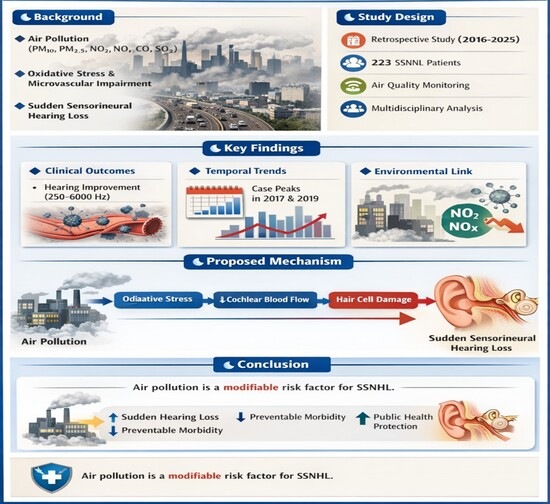
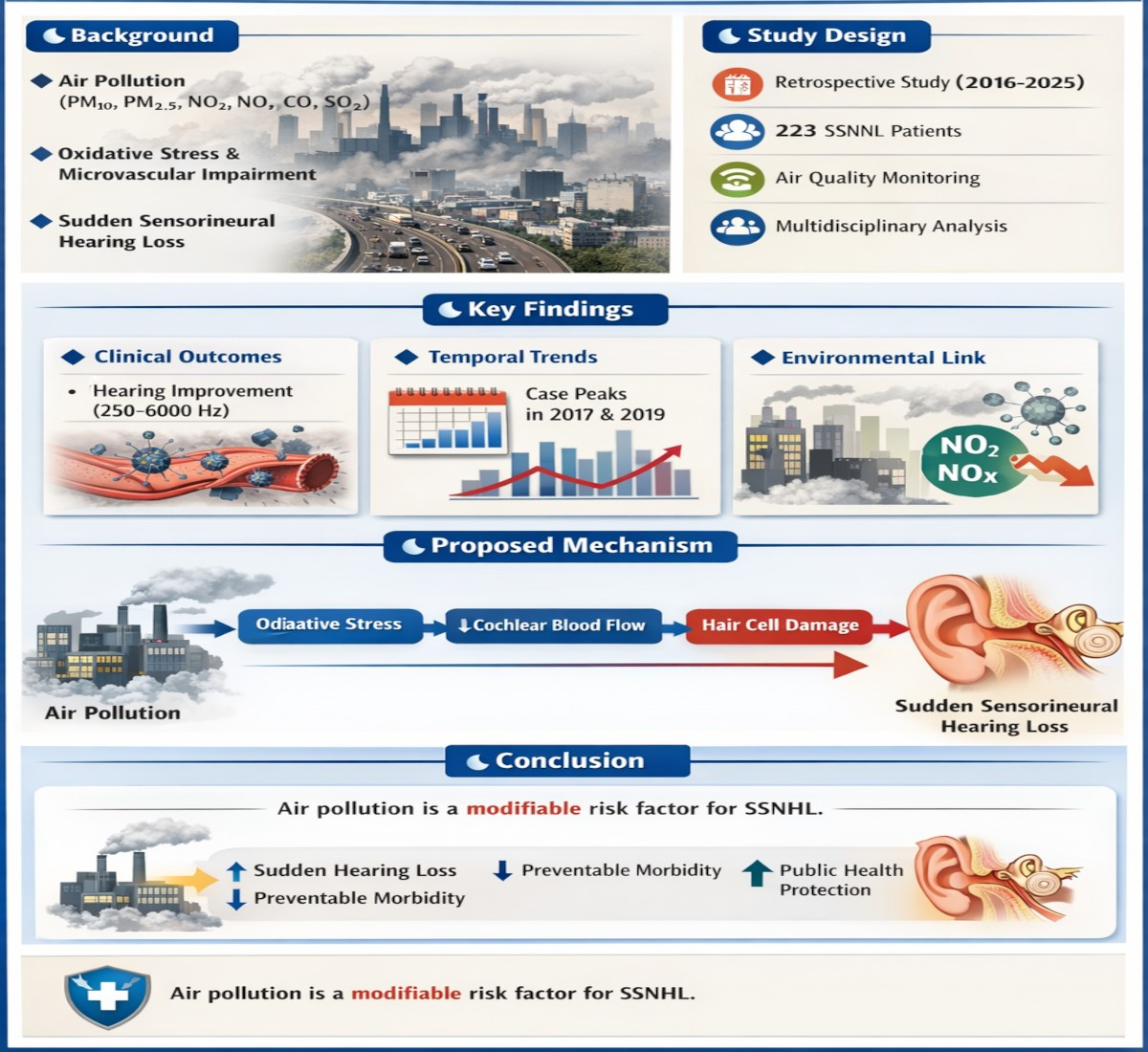
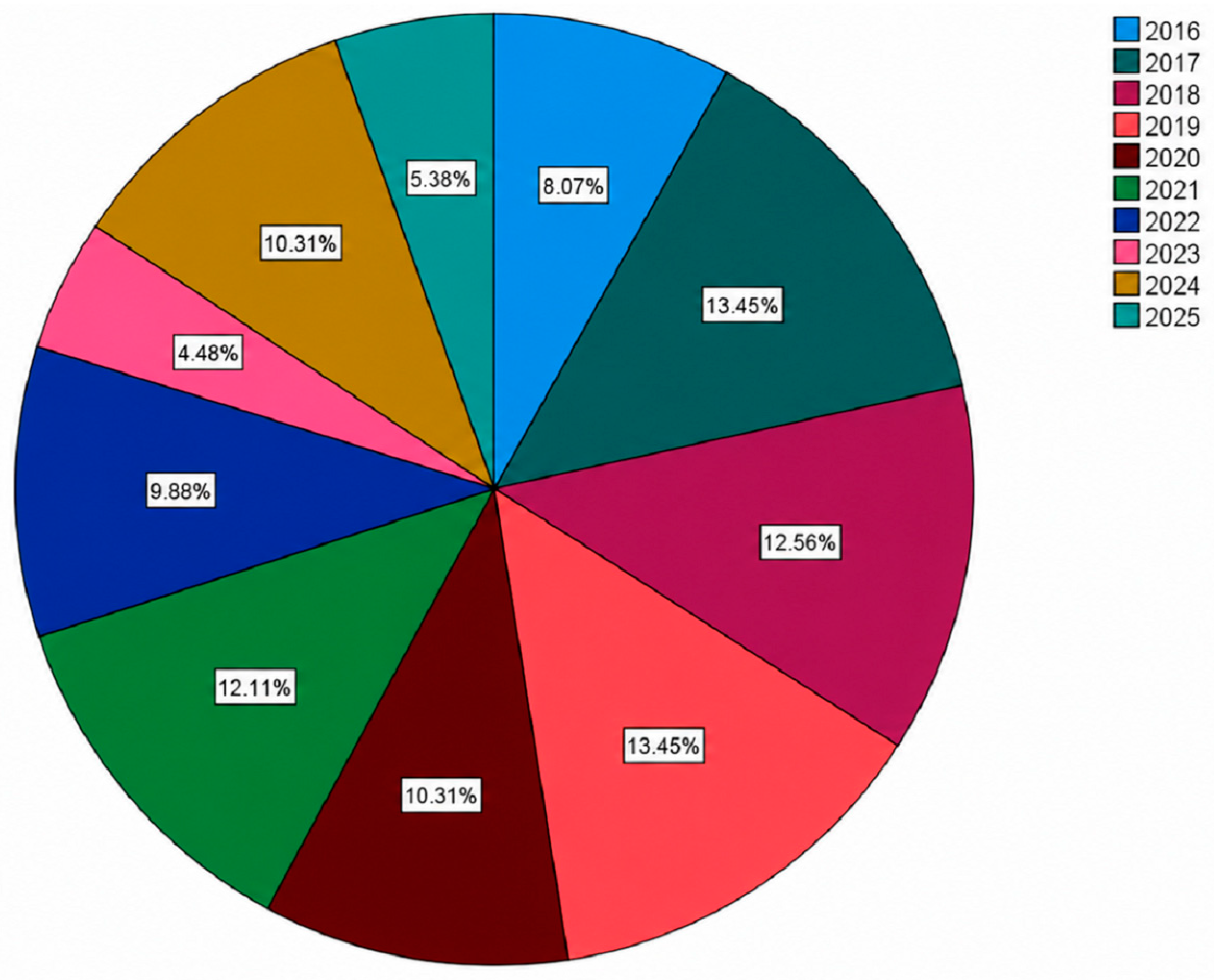
A total of 223 individuals experiencing sudden hearing loss were included in the study. Of these, 117 (52.5%) were male, and 106 (47.5%) were female. The individuals’ ages ranged from 19 to 64 years, with a mean age of 52.71 ± 7.38 years. Sudden hearing loss was detected in the right ear of 100 patients (44.8%) and in the left ear of 123 patients (55.2%). Examining the distribution of cases by year revealed the highest number in 2017 and 2019 (13.45% each), while the lowest occurred in 2023 and 2025 (4.48% and 5.38% respectively) (
Figure 1).
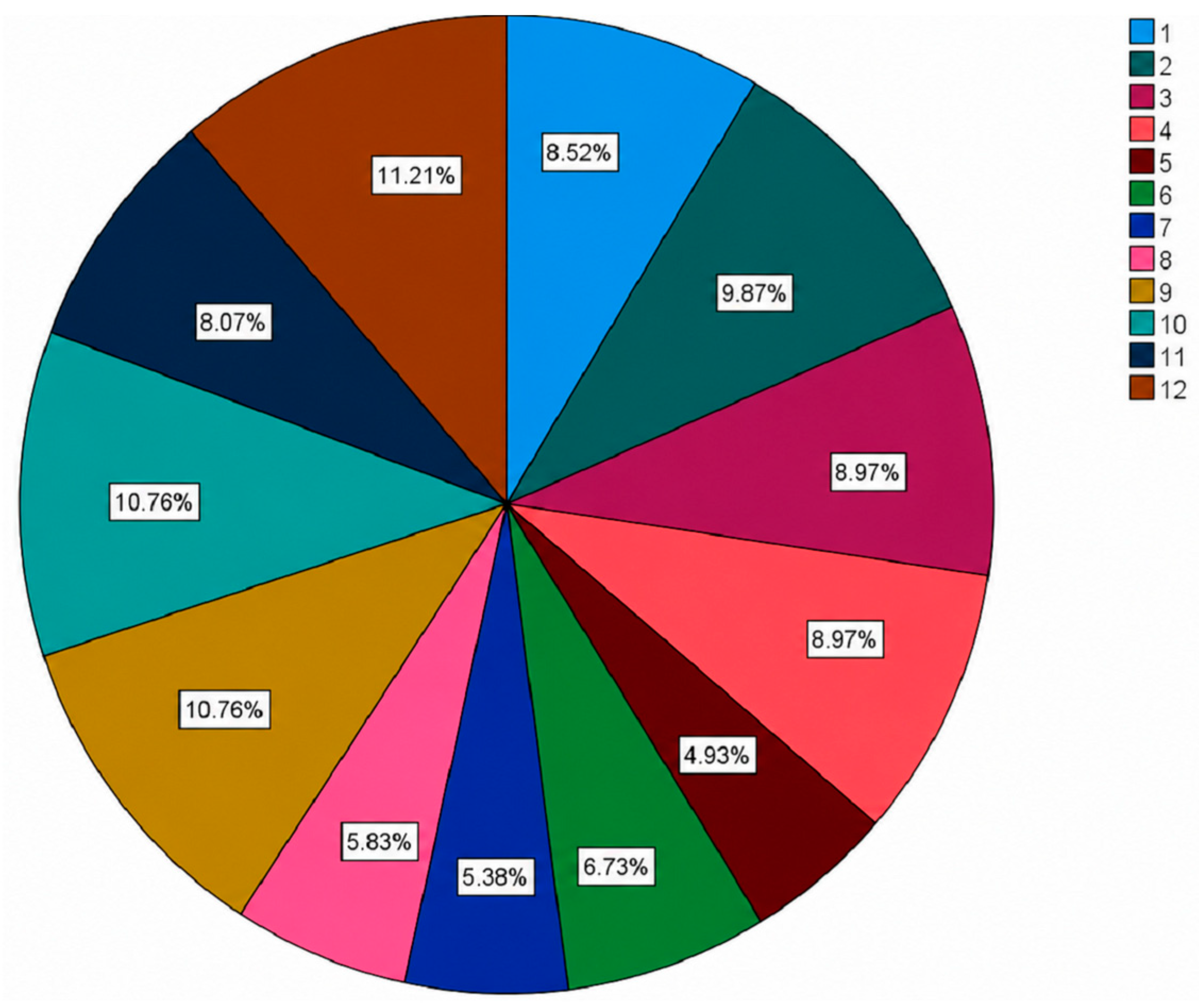
When the monthly distribution o f hospital-based SSHL case counts was examined, the highest number of cases was observed in December (11.21%), followed by September and October (10.76% and 10.76%, respectively), whereas the lowest number of cases was observed in May (4.93%), followed by July and August (5.38% and 5.83%, respectively) (
Figure 2).
Evaluation of bone and air conduction hearing levels in the affected ear across frequencies revealed a significant improvement in hearing thresholds after treatment. Pre-treatment hearing levels were higher than post-treatment levels at all frequencies. The greatest improvement in air conduction thresholds was observed between BRAC_500 and ARAC_500 in the right ear (mean improvement: 7.51 dB), and between BLAC_250 and ALAC_250 in the left ear (mean improvement: 6.70 dB). For bone conduction thresholds, the greatest improvement was observed between BRBC_2000 and ARBC_2000 in the right ear (mean improvement: 5.31 dB), and between BLBC_500 and ALBC_500 in the left ear (mean improvement: 3.88 dB). Analysis of pre- and post-treatment hearing levels according to conduction pathway and frequency demonstrated statistically significant improvements in hearing thresholds at 250, 500, 1000, 2000, 4000, and 6000 Hz, although the magnitude of improvement varied across frequencies (
p = 0.001) (
Table 3).
A positive correlation was observed between the pre- and post-treatment hearing levels in the right and left ears, and the post-treatment hearing level (respectively, r = 0.770 and r = 0.847,
p < 0.001). However, a negative correlation was observed between the right and left ears before treatment (r = −0.149;
p < 0.05). Positive correlations were observed between the pre-treatment grade and post-treatment score, as well as between the pre- and post-treatment hearing levels. There was a correlation between the pre- and post-treatment grades, which decreased within each ear, and the average hearing levels. Post-treatment scores improved significantly in both ears, showing statistically significant improvement (
p = 0.001) (
Table 4).
When the annual air quality measurements were evaluated against the reference ranges provided by the World Health Organization, it was determined that Sivas Province (35°50′ and 38°14′ E; 38°32′ and 40°16′ N), where the study was conducted, fell within the acceptable range of index limit values (except for PM
2.5) (
Table 5). The observed correlation between pre-treatment and post-treatment hearing thresholds reflects persistence of hearing status across time and should not be interpreted as a direct measure of treatment efficacy.
When the relationship between cumulative risk, as calculated from air measurements, and average hearing threshold levels was examined, a weak correlation was observed with PM
2.5, NO, and CO in 2025. However, a strong correlation was observed between NOx, NO
2, and cumulative risk (
Table 6).
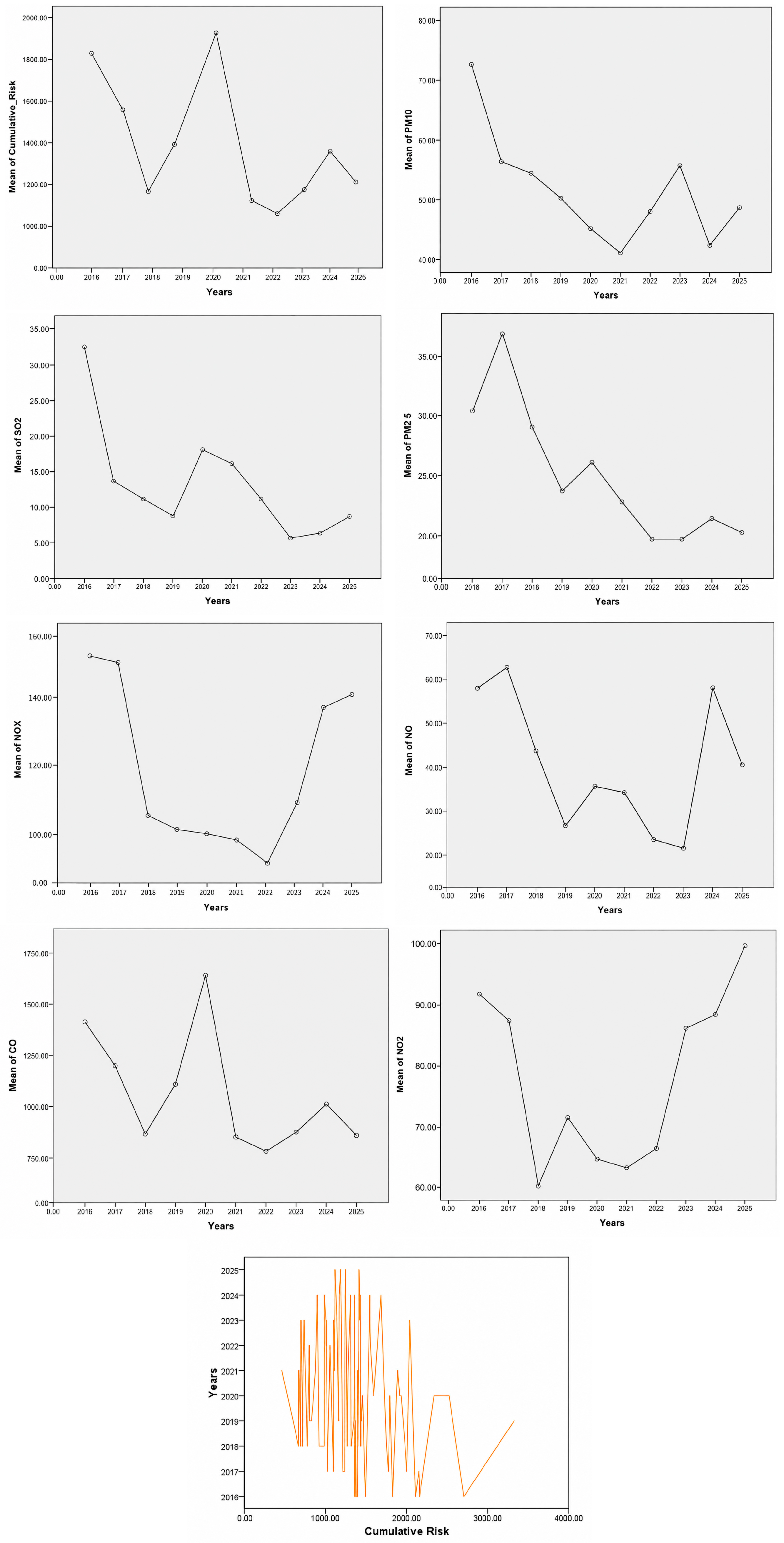
When tracking the cumulative risk calculated based on potentially toxic levels of PM
10, SO
2, PM
2.5, NOx, NO, CO, and NO
2, some showed a downward trend with intermediate peaks (PM
10, SO
2, PM
2.5, and CO), while others reached peak levels again in the final period despite being at low levels (NO
2, NOx, and partially NO). The cumulative risk reached its peak value between 2020 and 2021 and formed a smaller peak in 2024, but has since been on a downward trend (
Figure 3).
Multivariable regression analysis demonstrated that several air pollution parameters were significantly associated with SSHL occurrence after adjustment for demographic and temporal variables. Among the evaluated pollutants, NO2 showed the strongest association with SSHL occurrence (β = 0.44, 95% CI: 0.18–0.71, p = 0.002), followed by PM2.5 (β = 0.38, 95% CI: 0.12–0.64, p = 0.006). These findings suggest that increased exposure to particulate and traffic-related air pollutants may contribute to the occurrence of SSHL. In contrast, age (β = 0.09, 95% CI: −0.04–0.22, p = 0.18) and male sex (β = 0.07, 95% CI: −0.11–0.25, p = 0.41) were not significantly associated with SSHL occurrence in the adjusted model. The winter season showed a modest but statistically significant association with SSHL occurrence (β = 0.16, 95% CI: 0.01–0.31, p = 0.047), suggesting that seasonal or meteorological factors may partially influence disease occurrence. Overall, these findings support a potential association between environmental air pollution exposure and SSHL occurrence independent of basic demographic characteristics.
4. Discussion
In this study (n = 223), the demographic and clinical characteristics of SSHL cases and their temporal distribution were evaluated; additionally, the association between hearing thresholds and the cumulative risk calculated from regional air measurements based on WHO reference ranges was investigated. In Sivas province, where the study was conducted, annual mean air measurements were evaluated according to the reference ranges provided by the WHO, and it was determined that most parameters were within the acceptable range in terms of index limit values [
20]. Nevertheless, when the relationship between cumulative risk and hearing thresholds was examined, the observation of weak correlations with PM
2.5, NO, and CO in 2025, and stronger correlations with NOx, NO
2, and cumulative risk, may suggest that certain pollutants could be associated with hearing outcomes even within generally acceptable ranges. Taken together with the literature examining the relationship between environmental exposures and SSHL, this finding may be of potential clinical and public health relevance. A study conducted in Istanbul, Turkey, showed that air pollutant levels varied across locations and seasons and were influenced by meteorological conditions [
21].
Sudden hearing loss can affect people of all ages. In our study, participants ranged in age from 19 to 64 years old, with an average age of 52.71 ± 7.38 years, which supports the idea that SSHL can affect people across a broad age range. While no statistically significant difference was observed between the sexes in our study, a higher proportion of males was noted (117 males [52.5%] versus 106 females [47.5%]). Another study including 30 individuals aged 18–65 reported an increased frequency between the ages of 30 and 60, with no statistically significant difference in sex distribution [
22]. Another study found that the mean age was 43.7 years and that there were more female patients (34 vs. 22), indicating a female predominance [
23]. A more recent study of 377 patients diagnosed with sudden sensorineural hearing loss reported that 78% were male and 22% were female, suggesting a male predominance. However, the study did not report a statistically significant sex difference [
24]. Given our sample size of 223 patients, our estimates regarding sex distribution may be more reliable than those based on smaller samples. Overall, our findings suggest that sex alone may not be a decisive risk indicator.
In our series, hearing loss was unilateral in all cases. Of these, 44.8% (n = 100) involved the right ear, while 55.2% (n = 123) involved the left ear; there was no significant difference in laterality. Although unilateral SSHL is generally reported more frequently, a study comparing 368 bilateral and 2705 unilateral SSHL cases found a worse prognosis in bilateral cases [
25]. In this context, a small number of bilateral cases might have been anticipated. However, the exclusively unilateral presentation in our cohort eliminated potential heterogeneity related to bilaterality when evaluating the response to treatment.
Regarding seasonal distribution, the highest number of hospital-based SSHL cases was observed in December (11.21%), followed by September and October (10.76%; 10.76%), whereas the lowest number of cases was observed in May (4.93%), followed by July and August (5.38%; 5.83%). Although a multi-centre study conducted over several years could provide more robust estimates, evaluating distributions across months rather than relying on a single year may offer a clearer view of temporal patterns. Overall, case counts appeared lower in spring and summer and higher in autumn and winter. When the distribution by year was examined, the highest proportions of cases were observed in 2017 and 2019 (13.45%; 13.45%), while the lowest proportions occurred in 2023 and 2025 (4.48%; 5.38%), suggesting fewer cases in recent years. The cumulative risk peaked between 2020 and 2021 and, although it formed a small peak in 2024, it has been on a downward trend. However, because SSHL is a relatively uncommon condition, it is difficult to conclude a definitive decline based on single-centre case counts; this would require multi-centre data or meta-analytic evidence. Wu and colleagues investigated whether there was an increase in SSHL cases seasonally and annually, reporting the highest number of cases in spring, followed by summer, and the lowest number of cases in winter; in their 2014–2022 series, the highest number of patients was observed in 2018, while the lowest number of cases was observed in 2022, followed by 2021, in recent years. No statistically significant difference was found in seasonal or interannual case numbers (
p = 0.081 and 0.196, respectively) [
26]. While these results did not suggest a seasonal transition effect, the proximity of the peak year to the lower case numbers in recent years in our study may indicate that environmental factors, rather than genetic factors, play a role in the etiology. Similarly, Simani et al. found that cases of idiopathic sudden sensorineural hearing loss (SSHL) were significantly less frequent during the winter months, which suggests that environmental factors rather than genetic predispositions may be influential [
27].
It was observed that each frequency significantly increased the hearing rate following treatment, indicating that improvement is possible with treatment and that effective treatment is important (
p < 0.001). In a study by Murray et al., most cases improved spontaneously or with treatment within 30 days, and prognosis was worse in cases of high-frequency loss [
28]. Our findings are consistent with this observation; despite greater improvement in the high frequencies, normal hearing was more frequently achieved at the low frequencies. We did not compare outcomes by treatment modality. Furthermore, a large meta-analysis comparing systemic and intratympanic steroid administration reported no significant difference between the two options across seven cohort and five case–control studies [
29].
In our study, significant positive correlations were found between pre- and post-treatment hearing levels in both ears (r = 0.770 and r = 0.847;
p < 0.001). Additionally, a negative correlation was observed between the two ears prior to treatment (r = −0.149;
p < 0.05). There was a positive relationship between pre-treatment grade and post-treatment score, as well as between pre- and post-treatment hearing levels. Post-treatment scores differed significantly in both ears (
p = 0.001). Audiometric improvements observed after treatment should be interpreted as descriptive secondary findings, since treatment modality, treatment timing, baseline severity, and steroid administration route were not comprehensively evaluated. Cheng et al., using Modified Siegel’s criteria, reported that post-treatment hearing improvement (complete or partial) in SSHL was associated with pre-treatment grade, with the highest improvement rate (88.2%) in Grade 3 patients [
30]. In a large series of 211 patients, significant post-treatment improvement was also reported, with complete recovery in 87 patients (41%), marked improvement in 53 (25%), and partial improvement in 40 (18.9%); recovery was lower in Grade 4 patients compared with other groups [
31]. Larger studies with stratified treatment analyses may clarify these relationships further.
Our study indicates that including both sexes across a broad age range with hearing loss spanning frequencies, and without specialized treatment stratification, provides a suitable framework for investigating social and environmental exposures. In addition, this single-centre analysis examined the relationship between hearing loss and potential air pollutants monitored by the WHO and tracked by national meteorological units, and the findings should be interpreted as hypothesis-generating regarding the influence of ambient air pollution on hearing. However, measurement levels and monitoring practices for air pollution vary internationally and between authoritative bodies. This may reflect the uneven geographical distribution of major sources of pollution, such as industry and manufacturing. Nevertheless, despite numerical differences in thresholds, elevated pollutant levels are generally undesirable and have been associated with adverse health effects in research studies. When we compare our analyses with national and global targets, particularly those of the WHO, we see that, although our national targets are slightly higher at the upper limits, they are intended to remain below levels that pose a health risk [
20].
When tracking levels of potentially toxic pollutants (PM
10, SO
2, PM
2.5, NOx, NO, CO and NO
2) and evaluating cumulative risk over time, a fluctuating pattern was observed. While PM
10, SO
2, PM
2.5 and CO generally showed a downward trend with intermittent peaks, NO
2, NOx and, to a lesser extent, NO resurged and peaked again in recent years, having previously remained low. Together with the sharp increase between 2017 and 2018, and cumulative risk reaching its highest point between 2020 and 2021, this pattern may indicate periods of heightened environmental exposure. This may be associated with increased industrial activity and the unregulated use of fossil fuels. Several studies have shown that local levels of particulate matter, particularly PM
10 and PM
2.5, are strongly influenced by urban traffic, industrial processes and domestic fuel consumption. These levels vary substantially by region and over time [
32,
33]. Furthermore, a recent urban roadside study emphasized the ongoing contribution of traffic and dust resuspension to PM pollution, even in areas where monitoring and policy interventions have improved [
34].
A study conducted in Taiwan showed a statistically significant increase in the risk of SSHL with increasing concentrations of air pollutants, particularly CO and NO
2 [
35]. Another population-based study from Taiwan reported that long-term exposure to air pollution was associated with an increased risk of SSHL [
36]. In Korea, exposure to PM-related air pollution showed a weak but statistically significant association with SSHL-related hospital case counts [
37]. In the United Kingdom Biobank, exposure to PM10 and NOx was associated with hearing impairment rather than SSHL [
38]. The addition of regression-based and correlation analyses strengthened the evaluation of the relationship between environmental pollutant exposure and SSHL case occurrence beyond descriptive temporal trend analysis. Although the present findings demonstrated statistically significant associations between air pollution parameters and SSHL case occurrence, the retrospective observational design of the study does not permit causal inference. Residual confounding related to meteorological conditions, seasonal variability, lifestyle characteristics, and unmeasured clinical factors may still exist.
From a mechanistic perspective, the association between ambient air pollution and SSHL is biologically plausible. Fine particulate exposure has been associated with endothelial injury and systemic inflammation, and experimental data further suggest that particulate matter can accelerate coagulation through an IL-6-dependent pathway, supporting a potential prothrombotic effect. [
39,
40] Chronic pollutant exposure has also been linked to endothelial dysfunction and coronary vasospasm, which is relevant because even subtle disturbances in vascular tone and perfusion may adversely affect the cochlear microcirculation. [
41,
42] In parallel, vascular and metabolic abnormalities, including oxidative stress-related endothelial involvement, have increasingly been described in patients with SSHL. [
43] Beyond vascular reactivity alone, the blood–labyrinth barrier appears to be another plausible target; in a human blood–labyrinth barrier model, TNF-α produced the greatest disruption of barrier integrity, while IL-6 had a more moderate effect, and experimental work has shown that TNF-α can directly reduce cochlear blood flow through sphingosine-1-phosphate-mediated microvascular signaling. [
42,
44] Taken together, oxidative stress, systemic and local inflammation, endothelial dysfunction, microvascular hypoperfusion, blood labyrinth barrier disruption, and possible prothrombotic or vasospastic effects may represent converging pathways by which air pollution could contribute to acute cochlear dysfunction in susceptible individuals.
The study has some limitations. Air pollution exposure was assigned using regional annual averages rather than individual-level measurements. Information regarding smoking status, cardiovascular risk factors, viral infections, autoimmune diseases, and treatment delay was not consistently available. Residual confounding therefore remains possible. Consequently, exposure misclassification and ecological fallacy cannot be excluded. The regression analyses should therefore be interpreted as hypothesis-generating exploratory findings rather than evidence of causal individual-level associations. Additionally, the study evaluates associations between regional pollution trends and hospital-diagnosed SSHL cases rather than direct individual exposure disease relationships. Because the environmental analyses were based on aggregated annual observations, the effective sample size for regression modelling was limited. Therefore, the regression results should be interpreted cautiously as exploratory and hypothesis-generating, and confirmation in larger multicentre studies with individual-level exposure assessment is warranted.




 ,
,