Real-World Prescribing Patterns of Clomiphene Citrate for Male Infertility: A National Cross-Sectional Survey of Urologists in Türkiye
 , , ,
, , ,
Abstract
1. Introduction
2. Materials and Methods
2.1. Study Design and Ethical Approval
2.2. Survey Development and Structure
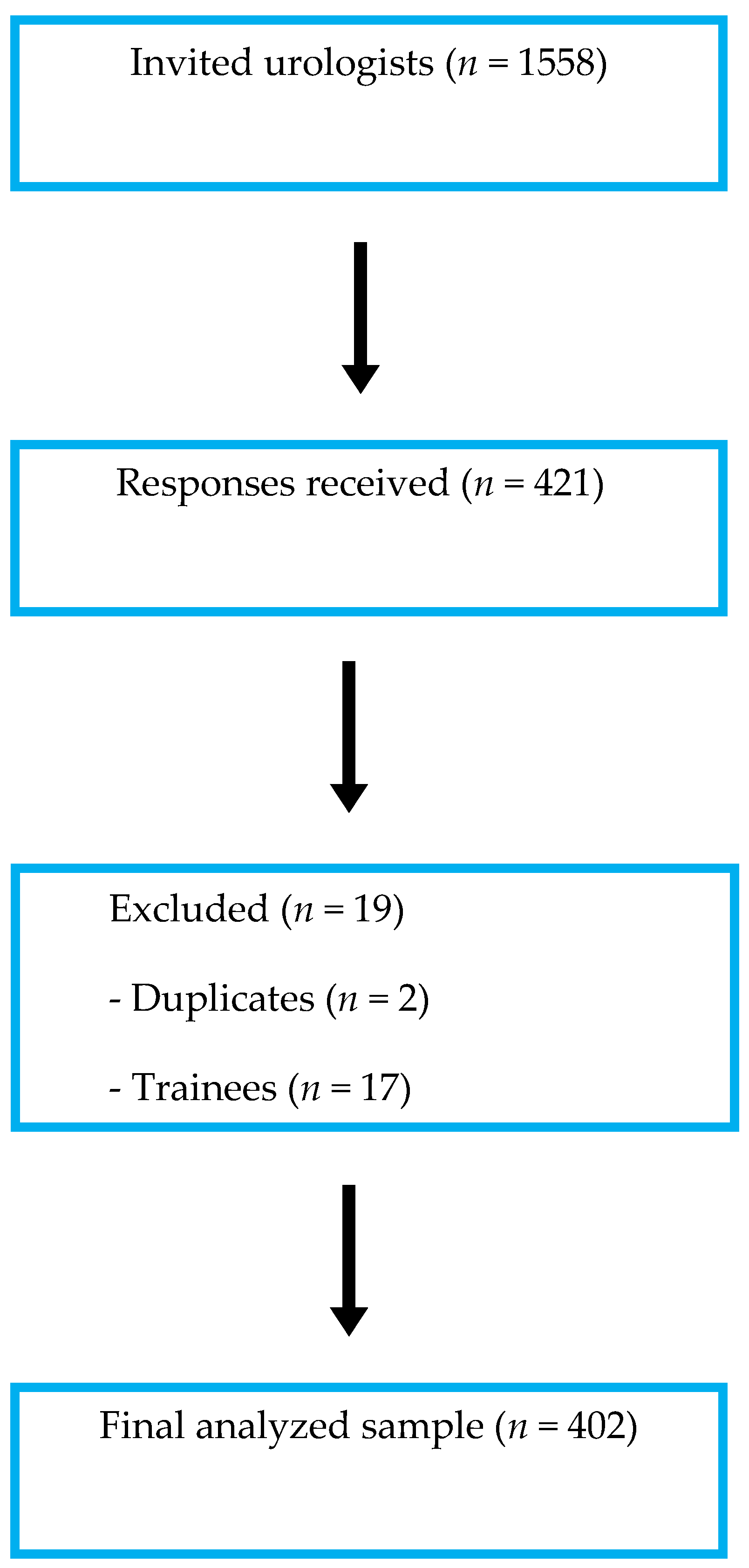
2.3. Data Collection and Study Population
2.4. Statistical Analysis
3. Results
3.1. Participant Demographics and Professional Characteristics
3.2. Reasons for Non-Use of Clomiphene Citrate
3.3. Indications, Contraindications, and Treatment Goals
3.4. Pretreatment Evaluation and Treatment Strategies
3.5. Risk Counseling and Follow-Up Practices
3.6. Treatment Success Definitions and Management Strategies
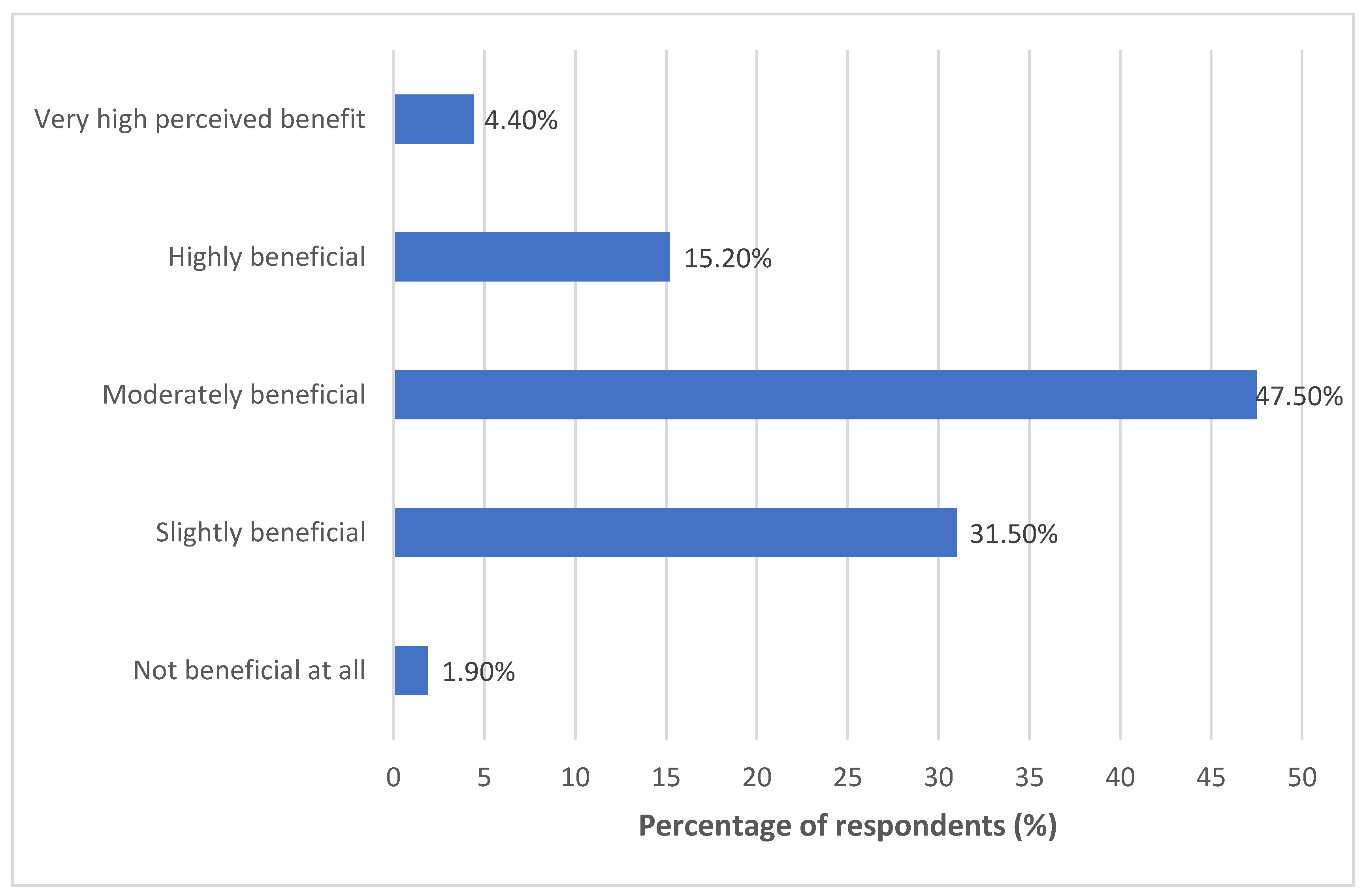
3.7. Perceived Success Rates and Adverse Effects
4. Discussion
4.1. Principal Findings
4.2. Navigating the Evidence-Guideline Gap: The Role of Experience
4.3. Surrogate Endpoints and Reproductive Outcomes
4.4. Patient Selection and the Indication Paradox
4.5. Dosing, Monitoring, and Empirical Pragmatism
4.6. Safety Perceptions and Gaps in Informed Consent
4.7. Strengths, Limitations, and Clinical Implications
5. Conclusions
Author Contributions
Funding
Institutional Review Board Statement
Informed Consent Statement
Data Availability Statement
Conflicts of Interest
Abbreviations
| APHRODITE | Addressing Male Patients with Hypogonadism and/or Infertility Owing to Altered Idiopathic Testicular Function |
| ART | Assisted reproductive technology |
| AUA | American Urological Association |
| CC | Clomiphene citrate |
| CHERRIES | Checklist for Reporting Results of Internet E-Surveys |
| CI | Confidence interval |
| DEXA | Dual-energy X-ray absorptiometry |
| DNA | Deoxyribonucleic acid |
| EAU | European Association of Urology |
| EMT | Empirical medical therapy |
| FDA | Food and Drug Administration |
| FSH | Follicle-stimulating hormone |
| hCG | Human chorionic gonadotropin |
| hMG | Human menopausal gonadotropin |
| IQR | Interquartile range |
| LH | Luteinizing hormone |
| OR | Odds ratio |
| SERM | Selective estrogen receptor modulator |
| SPSS | Statistical Package for the Social Sciences |
| STROBE | Strengthening the Reporting of Observational Studies in Epidemiology |
References
- World Health Organization. WHO Manual for the Standardized Investigation and Diagnosis of the Infertile Couple; Cambridge University Press: Cambridge, UK, 2000. [Google Scholar]
- Inhorn, M.C.; Patrizio, P. Infertility around the Globe: New Thinking on Gender, Reproductive Technologies and Global Movements in the 21st Century. Hum. Reprod. Update 2015, 21, 411–426. [Google Scholar] [CrossRef] [PubMed]
- Kumar, N.; Singh, A.K. Trends of Male Factor Infertility, A Significant Cause of Infertility: A Review of the Literature. J. Hum. Reprod. Sci. 2015, 8, 191–196. [Google Scholar] [CrossRef] [PubMed]
- Minhas, S.; Boeri, L.; Capogrosso, P.; Cocci, A.; Corona, G.; Dinkelman-Smit, M.; Falcone, M.; Jensen, C.F.; Gül, M.; Kalkanli, A.; et al. European Association of Urology Guidelines on Male Sexual and Reproductive Health: 2025 Update on Male Infertility. Eur. Urol. 2025, 87, 601–616. [Google Scholar] [CrossRef] [PubMed]
- Surampudi, P.; Swerdloff, R.S.; Wang, C. An Update on Male Hypogonadism Therapy. Expert Opin. Pharmacother. 2014, 15, 1247–1264. [Google Scholar] [CrossRef] [PubMed]
- Corona, G.; Rastrelli, G.; Maggi, M. The Pharmacotherapy of Male Hypogonadism besides Androgens. Expert Opin. Pharmacother. 2015, 16, 369–387. [Google Scholar] [CrossRef] [PubMed]
- Ribeiro, R.S.; Abucham, J. Clomiphene Fails to Revert Hypogonadism in Most Male Patients with Conventionally Treated Nonfunctioning Pituitary Adenomas. Arq. Bras. Endocrinol. Metabol. 2011, 55, 266–271. [Google Scholar] [CrossRef] [PubMed][Green Version]
- Brannigan, R.E.; Hermanson, L.; Kaczmarek, J.; Kim, S.K.; Kirkby, E.; Tanrikut, C. Updates to Male Infertility: AUA/ASRM Guideline. J. Urol. 2024, 212, 789–799. [Google Scholar] [CrossRef] [PubMed]
- Cannarella, R.; Condorelli, R.A.; Mongioì, L.M.; Barbagallo, F.; Calogero, A.E.; La Vignera, S. Effects of the Selective Estrogen Receptor Modulators for the Treatment of Male Infertility: A Systematic Review and Meta-Analysis. Expert Opin. Pharmacother. 2019, 20, 1517–1525. [Google Scholar] [CrossRef] [PubMed]
- U.S. Food and Drug Administration. Clomid (Clomiphene Citrate Tablets USP): Prescribing Information. Available online: https://www.accessdata.fda.gov/drugsatfda_docs/label/2012/016131s026lbl.pdf (accessed on 6 January 2026).
- Willets, A.E.; Corbo, J.M.; Brown, J.N. Clomiphene for the Treatment of Male Infertility. Reprod. Sci. 2013, 20, 739–744. [Google Scholar] [CrossRef] [PubMed]
- Huijben, M.; Huijsmans, R.L.N.; Lock, M.T.W.T.; de Kemp, V.F.; de Kort, L.M.O.; van Breda, J.H.M.K. Clomiphene Citrate for Male Infertility: A Systematic Review and Meta-Analysis. Andrology 2023, 11, 987–996. [Google Scholar] [CrossRef] [PubMed]
- Sokol, R.Z.; Steiner, B.S.; Bustillo, M.; Petersen, G.; Swerdloff, R.S. A Controlled Comparison of the Efficacy of Clomiphene Citrate in Male Infertility. Fertil. Steril. 1988, 49, 865–870. [Google Scholar] [CrossRef] [PubMed]
- Wheeler, K.M.; Smith, R.P.; Kumar, R.A.; Setia, S.; Costabile, R.A.; Kavoussi, P.K. A Comparison of Secondary Polycythemia in Hypogonadal Men Treated with Clomiphene Citrate versus Testosterone Replacement: A Multi-Institutional Study. J. Urol. 2017, 197, 1127–1131. [Google Scholar] [CrossRef] [PubMed]
- Rimmer, M.P.; Howie, R.A.; Subramanian, V.; Anderson, R.A.; Bertolla, R.P.; Beebeejaun, Y.; Bortoletto, P.; Sunkara, S.K.; Mitchell, R.T.; Pacey, A.; et al. Outcome Reporting across Randomized Controlled Trials Evaluating Potential Treatments for Male Infertility: A Systematic Review. Hum. Reprod. Open 2022, 2022, hoac010. [Google Scholar] [CrossRef] [PubMed]
- Khashaba, S.; Krishan, A.; Bruce, A.; Almaghlouth, A.; Huang, J.; Mima, M.; Niederberger, C. Efficacy of Clomiphene Citrate and Tamoxifen on Pregnancy Rates in Idiopathic Male Subfertility: A Systematic Review and Meta-Analysis. Asian J. Urol. 2025, 12, 15–22. [Google Scholar] [CrossRef] [PubMed]
- Thaker, H.; Ko, E.Y.; Sabanegh, E.S.; Brannigan, R.E.; Alukal, J.P.; Samplaski, M.K. Empirical Medical Therapy for Idiopathic Male Infertility. FS Rep. 2020, 1, 15–20. [Google Scholar] [CrossRef] [PubMed]
- Catford, S.R.; Katz, D.; McLachlan, R.I. Use of Empirical Medical Therapies for Idiopathic Male Infertility in Australia and New Zealand. Clin. Endocrinol. 2024, 100, 565–574. [Google Scholar] [CrossRef] [PubMed]
- Ko, E.Y.; Siddiqi, K.; Brannigan, R.E.; Sabanegh, E.S., Jr. Empirical Medical Therapy for Idiopathic Male Infertility. J. Urol. 2012, 187, 973–978. [Google Scholar] [CrossRef] [PubMed]
- Guo, D.P.; Zlatev, D.V.; Li, S.; Baker, L.C.; Eisenberg, M.L. Demographics, Usage Patterns, and Safety of Male Users of Clomiphene in the United States. World J. Men’s Health 2020, 38, 220–225. [Google Scholar] [CrossRef] [PubMed]
- Çeker, G.; Deliktaş, H.; Gül, Ü.; Turunç, T. The Andrology Working Group of the Society of Urological Surgery in Turkiye: Bridging Academic Gaps and Advancing Male Reproductive or Sexual Health. J. Urol. Surg. 2025, 12, 101–107. [Google Scholar] [CrossRef]
- Glatstein, I.Z.; Harlow, B.L.; Hornstein, M.D. Practice Patterns among Reproductive Endocrinologists: The Infertility Evaluation. Fertil. Steril. 1997, 67, 443–451. [Google Scholar] [CrossRef] [PubMed]
- Barnhart, K.T.; Nakajima, S.T.; Puscheck, E.; Price, T.M.; Baker, V.L.; Segars, J. Practice Patterns, Satisfaction, and Demographics of Reproductive Endocrinologists: Results of the 2014 Society for Reproductive Endocrinology and Infertility Workforce Survey. Fertil. Steril. 2016, 105, 1281–1286. [Google Scholar] [CrossRef] [PubMed]
- Von Elm, E.; Altman, D.G.; Egger, M.; Pocock, S.J.; Gøtzsche, P.C.; Vandenbroucke, J.P. The Strengthening the Reporting of Observational Studies in Epidemiology (STROBE) Statement: Guidelines for Reporting Observational Studies. Lancet 2007, 370, 1453–1457. [Google Scholar] [CrossRef] [PubMed]
- Eysenbach, G. Improving the Quality of Web Surveys: The Checklist for Reporting Results of Internet E-Surveys (CHERRIES). J. Med. Internet Res. 2004, 6, e34. [Google Scholar] [CrossRef] [PubMed]
- Shukla, J.; Moni, S.N.; Hasan, M.M.; Islam, M.A.; Shikha, A.N.; Jahan, N.W.; Ishrat, S. Clomiphene Citrate Improves Sperm Parameters in Infertile Men with Idiopathic Oligoasthenozoospermia. Clin. Exp. Reprod. Med. 2025, 52, 252–258. [Google Scholar] [CrossRef] [PubMed]
- Chua, M.E.; Escusa, K.G.; Luna, S.; Tapia, L.C.; Dofitas, B.; Morales, M. Revisiting Oestrogen Antagonists (Clomiphene or Tamoxifen) as Medical Empiric Therapy for Idiopathic Male Infertility: A Meta-Analysis. Andrology 2013, 1, 749–757. [Google Scholar] [CrossRef] [PubMed]
- Santi, D.; Pallotti, F.; Tienforti, D.; Spaggiari, G.; Barbonetti, A. Empirical Hormonal Treatments for Idiopathic Male Infertility: A Network Meta-Analysis Comparing Antiestrogens and Follicle-Stimulating Hormone. Eur. J. Endocrinol. 2025, 193, S95–S105. [Google Scholar] [CrossRef] [PubMed]
- World Health Organization. A Double-Blind Trial of Clomiphene Citrate for the Treatment of Idiopathic Male Infertility. Int. J. Androl. 1992, 15, 299–307. [Google Scholar] [CrossRef] [PubMed]
- Esteves, S.C.; Humaidan, P.; Ubaldi, F.M.; Alviggi, C.; Antonio, L.; Barratt, C.L.; Behre, H.M.; Jørgensen, N.; Pacey, A.A.; Simoni, M.; et al. APHRODITE Criteria: Addressing Male Patients with Hypogonadism and/or Infertility Owing to Altered Idiopathic Testicular Function. Reprod. Biomed. Online 2023, 48, 103647. [Google Scholar] [CrossRef] [PubMed]
- Jiang, T.; Osadchiy, V.; Santamaria, A.; Zheng, M.H.; Modiri, N.; Sigalos, J.T.; Regets, K.V.; Mills, J.N.; Eleswarapu, S.V. Initial Gonadotropin Levels and Sperm Parameters Differentiate the Response to Clomiphene Citrate in Subfertile Men. Transl. Androl. Urol. 2022, 11, 116–123. [Google Scholar] [CrossRef] [PubMed]
- Hohl, A.; Chavez, M.P.; Pasqualotto, E.; Ferreira, R.O.M.; Sande-Lee, S.V.; Ronsoni, M.F. Clomiphene or Enclomiphene Citrate for the Treatment of Male Hypogonadism: A Systematic Review and Meta-Analysis of Randomized Controlled Trials. Arch. Endocrinol. Metab. 2025, 69, e250093. [Google Scholar] [CrossRef] [PubMed]
- Krzastek, S.C.; Sharma, D.; Abdullah, N.; Sultan, M.; Machen, G.L.; Wenzel, J.L.; Ells, A.; Chen, X.; Kavoussi, M.; Costabile, R.A.; et al. Long-Term Safety and Efficacy of Clomiphene Citrate for the Treatment of Hypogonadism. J. Urol. 2019, 202, 1029–1035. [Google Scholar] [CrossRef] [PubMed]
- Gundewar, T.; Kuchakulla, M.; Ramasamy, R. A Paradoxical Decline in Semen Parameters in Men Treated with Clomiphene Citrate: A Systematic Review. Andrologia 2021, 53, e13848. [Google Scholar] [CrossRef] [PubMed]
- Purvin, V.A. Visual Disturbance Secondary to Clomiphene Citrate. Arch. Ophthalmol. 1995, 113, 482–484. [Google Scholar] [CrossRef] [PubMed]
- Kavoussi, P.K.; Machen, G.L.; Wenzel, J.L.; Ellis, A.M.; Kavoussi, M.; Kavoussi, K.M.; Kavoussi, S.K. Medical Treatments for Hypogonadism Do Not Significantly Increase the Risk of Deep Vein Thrombosis over General Population Risk. Urology 2019, 124, 127–130. [Google Scholar] [CrossRef] [PubMed]
- Kacker, R.; Conners, W.; Zade, J.; Morgentaler, A. Bone Mineral Density and Response to Treatment in Men Younger than 50 Years with Testosterone Deficiency and Sexual Dysfunction or Infertility. J. Urol. 2014, 191, 1072–1076. [Google Scholar] [CrossRef] [PubMed]
- General Medical Council. Prescribing Unlicensed Medicines. Available online: https://www.gmc-uk.org/professional-standards/the-professional-standards/good-practice-in-prescribing-and-managing-medicines-and-devices/prescribing-unlicensed-medicines (accessed on 18 June 2026).
- Omar, M.I.; Pal, R.P.; Kelly, B.D.; Bruins, H.M.; Yuan, Y.; Diemer, T.; Krausz, C.; Tournaye, H.; Kopa, Z.; Jungwirth, A.; et al. Benefits of Empiric Nutritional and Medical Therapy for Semen Parameters and Pregnancy and Live Birth Rates in Couples with Idiopathic Infertility: A Systematic Review and Meta-Analysis. Eur. Urol. 2019, 75, 615–625. [Google Scholar] [CrossRef] [PubMed]
- Cunningham, C.T.; Quan, H.; Hemmelgarn, B.; Noseworthy, T.; Beck, C.A.; Dixon, E.; Samuel, S.; Ghali, W.A.; Sykes, L.L.; Jetté, N. Exploring Physician Specialist Response Rates to Web-Based Surveys. BMC Med. Res. Methodol. 2015, 15, 32. [Google Scholar] [CrossRef] [PubMed]
- Weaver, L.; Beebe, T.J.; Rockwood, T. The Impact of Survey Mode on the Response Rate in a Survey of the Factors That Influence Minnesota Physicians’ Disclosure Practices. BMC Med. Res. Methodol. 2019, 19, 73. [Google Scholar] [CrossRef] [PubMed]
- American Association for Public Opinion Research. Standard Definitions: Final Dispositions of Case Codes and Outcome Rates for Surveys, 10th ed.; American Association for Public Opinion Research: Deerfield, IL, USA, 2025; Available online: https://aapor.org/standards-and-ethics/standard-definitions/ (accessed on 3 May 2026).



| Variable | Category | Yes (n, %) | No (n, %) | p Value |
|---|---|---|---|---|
| Age (continuous) | Median (IQR) | 46.5 (16.0) | 41.0 (13.0) | <0.001 y |
| Gender | Male | 158 (100) | 242 (99.2) | 0.522 |
| Female | 0 (0.0) | 2 (0.8) | ||
| Age group (years) | 30–39 | 40 (25.3) a | 105 (43.0) b | <0.001 χ |
| 40–49 | 53 (33.5) | 83 (34.0) | ||
| 50–59 | 36 (22.8) a | 34 (13.9) b | ||
| 60–69 | 23 (14.6) a | 20 (8.2) b | ||
| 70–79 | 6 (3.8) a | 2 (0.8) b | ||
| Academic degree | Specialist | 89 (56.3) | 144 (59.0) | 0.658 |
| Assistant Professor | 17 (10.8) | 30 (12.3) | ||
| Associate Professor | 31 (19.6) | 47 (19.3) | ||
| Professor | 21 (13.3) | 23 (9.4) | ||
| Years as a urology specialist | <5 years | 16 (10.1) a | 73 (29.9) b | 0.001 χ |
| 5–10 years | 28 (17.7) | 47 (19.3) | ||
| 11–20 years | 46 (29.1) | 73 (29.9) | ||
| >20 years | 68 (43.0) a | 51 (20.9)ᵇ | ||
| Type of institution | State hospital | 33 (20.9) | 60 (24.6) | 0.001 χ |
| Training & research/City hospital | 30 (19.0) a | 111 (45.5) b | ||
| University hospital | 34 (21.5) | 37 (15.2) | ||
| Private hospital/clinic | 61 (38.6) a | 36 (14.8) b | ||
| Main urology subspecialty | General urology | 130 (82.3) | 191 (78.3) | <0.001 χ |
| Andrology | 18 (11.4) a | 6 (2.5) b | ||
| Uro-oncology | 4 (2.5) a | 20 (8.2) b | ||
| Endourology | 5 (3.2) a | 20 (8.2) b | ||
| Functional urology | 1 (0.6) | 3 (1.2) | ||
| Pediatric urology | 0 (0.0) | 4 (1.6) | ||
| Infertility patient proportion | None | 1 (0.6) | 2 (0.8) | <0.001 χ |
| <10% | 92 (58.2) a | 192 (78.7) b | ||
| 11–25% | 47 (29.7) a | 45 (18.4) b | ||
| 26–50% | 11 (7.0) a | 5 (2.0) b | ||
| 51–75% | 2 (1.3) | 0 (0.0) | ||
| >75% | 5 (3.2) a | 0 (0.0) b | ||
| Weekly new male infertility cases | None | 1 (0.6) | 8 (3.3) | 0.004 χ |
| 1–5 | 97 (61.4) a | 177 (72.5) b | ||
| 6–10 | 37 (23.4) | 45 (18.4) | ||
| 11–20 | 20 (12.7) a | 10 (4.1) b | ||
| 21–50 | 3 (1.9) | 4 (1.6) |
| Variable | OR | 95% CI | p-Value |
|---|---|---|---|
| >20 years of experience | 2.18 | 1.34–3.56 | 0.002 |
| Private practice | 2.90 | 1.70–4.93 | <0.001 |
| Andrology practice | 2.35 | 0.85–6.49 | 0.098 |
| >5 cases/week | 2.27 | 1.41–3.67 | 0.001 |
| Reason for Non-Use | n (Responses) | % of Respondents * |
|---|---|---|
| Insufficient evidence/uncertain efficacy | 97 | 39.8 |
| Inconsistency with clinical guidelines | 90 | 36.9 |
| Uncertainty in patient selection | 72 | 29.5 |
| Lack of knowledge or experience | 70 | 28.7 |
| Preference for alternative treatments | 56 | 23.0 |
| Referral to ART as the first-line approach | 55 | 22.5 |
| Lack of benefit in personal clinical experience | 43 | 17.6 |
| Concerns about adverse effects | 37 | 15.2 |
| Medico-legal concerns | 30 | 12.3 |
| Lack of FDA approval | 22 | 9.0 |
| Laboratory and follow-up limitations | 20 | 8.2 |
| Risk of paradoxical deterioration in semen parameters | 16 | 6.6 |
| Drug availability or cost issues | 16 | 6.6 |
| Referral to endocrinology | 16 | 6.6 |
| Patient preference or poor compliance | 15 | 6.1 |
| Concerns regarding bone health/monitoring burden | 3 | 1.2 |
| Other | 9 | 3.7 |
| Total responses | 667 | 273.4 |
| Domain | Item | n | % of Respondents * |
|---|---|---|---|
| Indications | Idiopathic male infertility | 122 | 77.2 |
| Hypogonadotropic hypogonadism | 75 | 47.5 | |
| Unexplained infertility | 67 | 42.4 | |
| Hypergonadotropic hypogonadism | 17 | 10.8 | |
| Other | 7 | 4.4 | |
| Contraindications | Hypergonadotropic hypogonadism | 124 | 78.5 |
| Hypogonadotropic hypogonadism | 42 | 26.6 | |
| Unexplained infertility | 22 | 13.9 | |
| Idiopathic male infertility | 10 | 6.3 | |
| Other | 2 | 1.3 | |
| Primary treatment goals | Increase sperm count | 134 | 84.8 |
| Increase serum testosterone | 101 | 63.9 | |
| Improve sperm motility | 66 | 41.8 | |
| Increase pregnancy or live birth rate | 65 | 41.1 | |
| Improve morphology | 44 | 27.8 | |
| Improve libido/sexual function | 44 | 27.8 |
| Category | Parameter/Strategy | n | % |
|---|---|---|---|
| Pretreatment assessment | Semen analysis | 141 | 89.2 |
| Total testosterone | 138 | 87.3 | |
| FSH | 138 | 87.3 | |
| LH | 121 | 76.6 | |
| Estradiol | 90 | 57.0 | |
| Physical examination | 88 | 55.7 | |
| Prolactin | 71 | 44.9 | |
| Liver function tests | 71 | 44.9 | |
| Erectile function evaluation | 63 | 39.9 | |
| Free testosterone | 55 | 34.8 | |
| Scrotal ultrasonography | 55 | 34.8 | |
| Sperm DNA fragmentation/advanced tests | 19 | 12.0 | |
| DEXA scan | 1 | 0.6 | |
| Dosing regimen | 25 mg/day | 44 | 27.8 |
| 50 mg/day | 37 | 23.4 | |
| 50 mg/day (25 on/5 off) | 34 | 21.5 | |
| 25 mg (25 on/5 off) | 23 | 14.6 | |
| 50 mg every other day | 14 | 8.9 | |
| ≥100 mg/day | 2 | 1.3 | |
| Other/individualized regimen | 4 | 2.5 | |
| Treatment modality | CC and antioxidants/supplements | 127 | 80.4 |
| CC monotherapy | 37 | 23.4 | |
| CC and aromatase inhibitor | 22 | 13.9 | |
| CC and gonadotropins | 18 | 11.4 |
| Domain | Item | n | % |
|---|---|---|---|
| Risks routinely discussed | Elevated liver enzymes | 66 | 41.8 |
| Gynecomastia | 57 | 36.1 | |
| Libido changes | 56 | 35.4 | |
| Thromboembolic complications | 51 | 32.3 | |
| Mood changes/irritability | 42 | 26.6 | |
| Headache | 33 | 20.9 | |
| Visual disturbances | 30 | 19.0 | |
| Sperm deterioration | 24 | 15.2 | |
| Bone mineral density loss | 18 | 11.4 | |
| No routine counseling | 50 | 31.6 | |
| Parameters at first follow-up | Total testosterone | 119 | 75.3 |
| Physical examination | 111 | 70.3 | |
| FSH | 109 | 69.0 | |
| LH | 94 | 59.5 | |
| Estradiol | 64 | 40.5 | |
| Liver function tests | 66 | 41.8 | |
| Semen analysis | 32 | 20.3 | |
| Advanced semen tests | 5 | 3.2 | |
| Follow-up timing | Monthly | 34 | 21.5 |
| Every 3 months | 114 | 72.2 | |
| Every 6 months | 7 | 4.4 | |
| No routine follow-up | 2 | 1.3 | |
| Typical treatment duration | 4–6 months | 94 | 59.5 |
| 3 months | 32 | 20.3 | |
| 7–9 months | 15 | 9.5 | |
| 10–12 months | 12 | 7.6 |
| Domain | Definition/Strategy | n | % |
|---|---|---|---|
| Definition of success | Semen parameter improvement | 149 | 94.3 |
| Spontaneous pregnancy | 105 | 66.5 | |
| Increased ART success | 74 | 46.8 | |
| Serum testosterone increases | 77 | 48.7 | |
| Symptom improvement | 52 | 32.9 | |
| Management of responders at 3 months | Continue the same dose up to 6 months | 96 | 60.8 |
| Discontinue treatment | 27 | 17.1 | |
| Gradually taper the dose | 14 | 8.9 | |
| Continue up to 12 months | 14 | 8.9 | |
| Introduce drug holidays at defined intervals | 15 | 9.5 | |
| Continue treatment until pregnancy is achieved | 11 | 7.0 | |
| Management of non-responders at 3 months | Refer to ART | 111 | 70.3 |
| Add antioxidants/supplements | 54 | 34.2 | |
| Continue current treatment and reassess after 3 months | 33 | 20.9 | |
| Switch to another empirical therapy | 35 | 22.2 | |
| Add gonadotropins (FSH or hMG) | 31 | 19.6 | |
| Add an aromatase inhibitor to the current treatment | 20 | 12.7 | |
| Increase the dose of the current treatment | 11 | 7.0 |
| Adverse Effect | None, n (%) | Rare, n (%) | Occasional, n (%) | Frequent, n (%) | Undecided, n (%) |
|---|---|---|---|---|---|
| Visual disturbances | 93 (58.9) | 51 (32.3) | 8 (5.1) | 2 (1.3) | 4 (2.5) |
| Mood changes/irritability | 54 (34.2) | 71 (44.9) | 21 (13.3) | 5 (3.2) | 7 (4.4) |
| Changes in libido | 46 (29.1) | 62 (39.2) | 38 (24.1) | 7 (4.4) | 5 (3.2) |
| Gastrointestinal complaints | 53 (33.5) | 79 (50) | 18 (11.4) | 4 (2.5) | 4 (2.5) |
| Elevated liver enzymes | 52 (32.9) | 75 (47.5) | 21 (13.3) | 4 (2.5) | 6 (3.8) |
| Deterioration in semen parameters | 54 (34.2) | 76 (48.1) | 21 (13.3) | 4 (2.5) | 3 (1.9) |
| Headache/dizziness | 62 (39.2) | 62 (39.2) | 24 (15.2) | 6 (3.8) | 4 (2.5) |
| Decrease in bone mineral density | 86 (54.4) | 56 (35.4) | 5 (3.2) | 1 (0.6) | 10 (6.3) |
Disclaimer/Publisher’s Note: The statements, opinions and data contained in all publications are solely those of the individual author(s) and contributor(s) and not of MDPI and/or the editor(s). MDPI and/or the editor(s) disclaim responsibility for any injury to people or property resulting from any ideas, methods, instructions or products referred to in the content. |
© 2026 by the authors. Licensee MDPI, Basel, Switzerland. This article is an open access article distributed under the terms and conditions of the Creative Commons Attribution (CC BY) license.
Share and Cite
Bahceci, T.; Çeker, G.; Ceyhan, E.; Albaz, A.C.; Duran, M.B.; Özer, C.; Gül, M. Real-World Prescribing Patterns of Clomiphene Citrate for Male Infertility: A National Cross-Sectional Survey of Urologists in Türkiye. J. Clin. Med. 2026, 15, 5014. https://doi.org/10.3390/jcm15135014
Bahceci T, Çeker G, Ceyhan E, Albaz AC, Duran MB, Özer C, Gül M. Real-World Prescribing Patterns of Clomiphene Citrate for Male Infertility: A National Cross-Sectional Survey of Urologists in Türkiye. Journal of Clinical Medicine. 2026; 15(13):5014. https://doi.org/10.3390/jcm15135014
Chicago/Turabian StyleBahceci, Tuncer, Gökhan Çeker, Erman Ceyhan, Ali Can Albaz, Mesut Berkan Duran, Cevahir Özer, and Murat Gül. 2026. "Real-World Prescribing Patterns of Clomiphene Citrate for Male Infertility: A National Cross-Sectional Survey of Urologists in Türkiye" Journal of Clinical Medicine 15, no. 13: 5014. https://doi.org/10.3390/jcm15135014
APA StyleBahceci, T., Çeker, G., Ceyhan, E., Albaz, A. C., Duran, M. B., Özer, C., & Gül, M. (2026). Real-World Prescribing Patterns of Clomiphene Citrate for Male Infertility: A National Cross-Sectional Survey of Urologists in Türkiye. Journal of Clinical Medicine, 15(13), 5014. https://doi.org/10.3390/jcm15135014