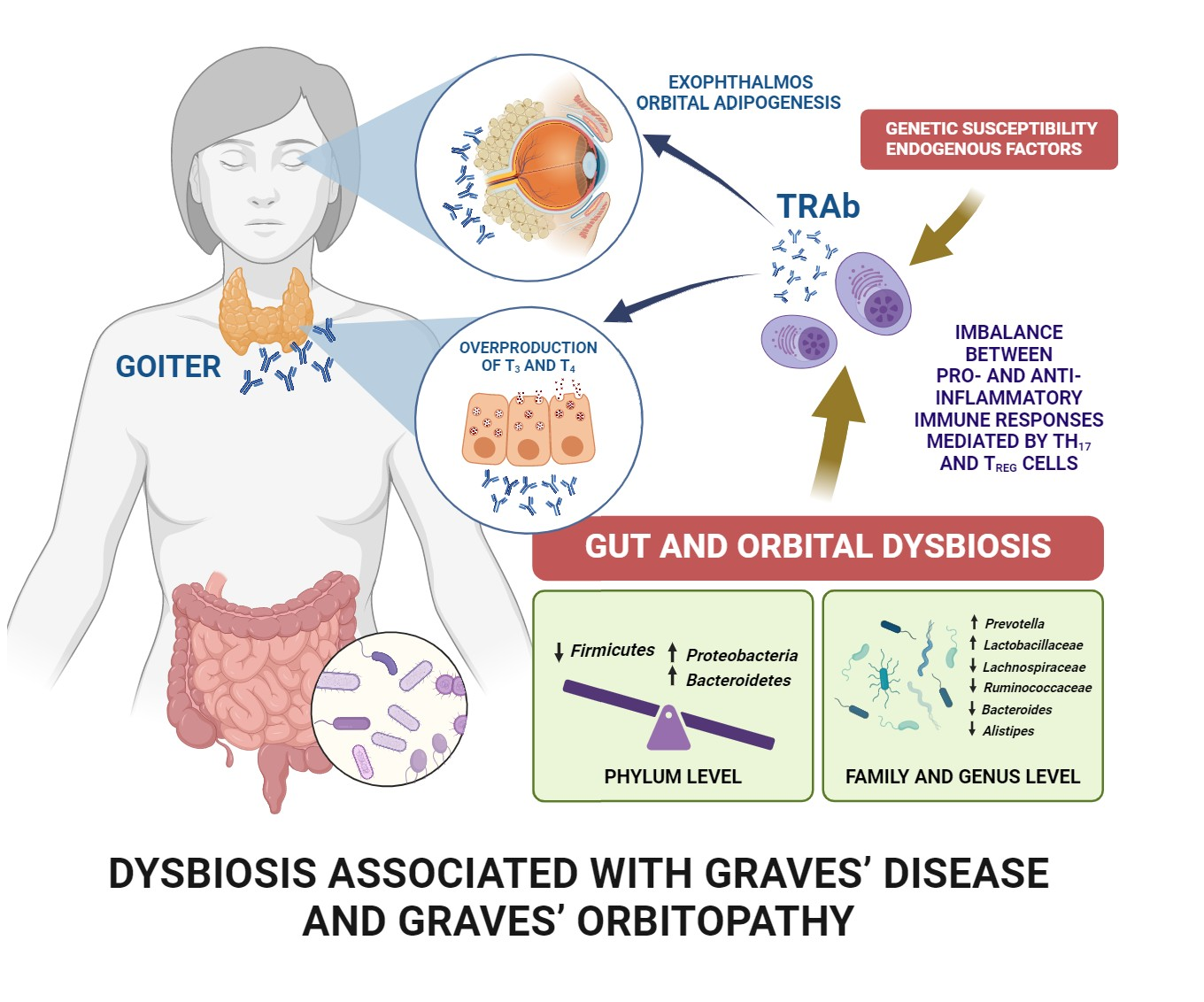


Gut and Orbital Dysbiosis Associated with Graves’ Disease and Graves’ Orbitopathy: A Systematic Review


Abstract
1. Introduction
2. Methods
2.1. Search Strategy and Data Extraction
2.2. Inclusion and Exclusion Criteria
- ▪
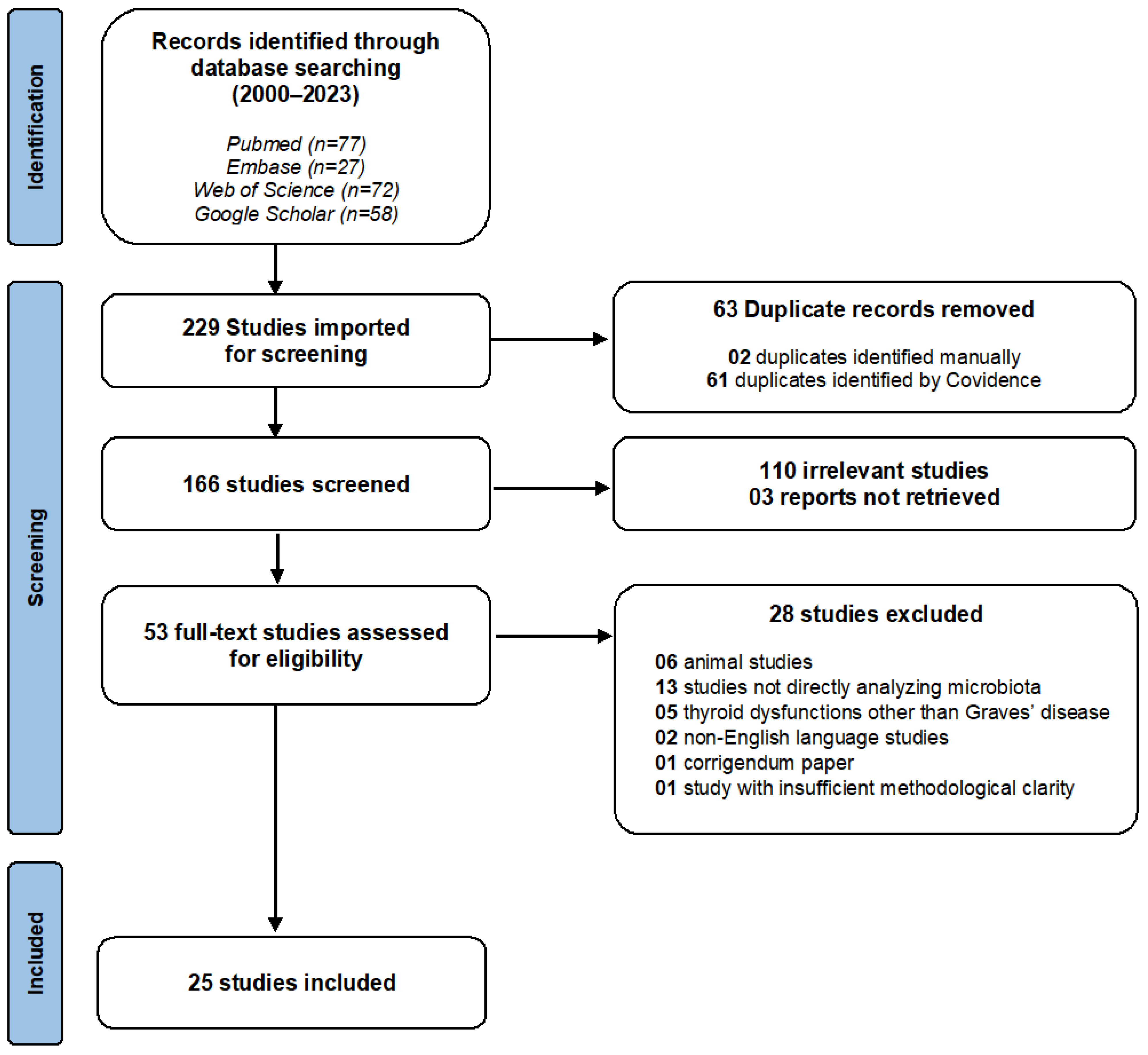
- Population: We included adult patients diagnosed with GD according to conventional criteria and/or GO according to EUGOGO criteria [5]. We excluded animal studies, individuals under 18 years old, pregnant or breastfeeding women, and those with other thyroid diseases or orbital conditions. Exclusions also comprised individuals with conditions influencing microbiota, severe diseases, extreme diets, or substance abuse.
- ▪
- Intervention: Our study included newly diagnosed, untreated patients as well as those treated with antithyroid drugs (ATDs). We excluded patients taking medications that could affect the microbiota.
- ▪
- Comparison: We considered healthy controls (HCs) or patients with varying severity grades of GD/GO for comparison.
- ▪
- Outcomes: Our primary objective was to identify microbial signatures specifically associated with GD/GO by analyzing changes in microbial richness, evenness, and composition (see Appendix A). We excluded studies not directly exploring the microbiota.
- ▪
- Study Type: We included cross-sectional, case–control, and prospective cohort studies while excluding conference reports, expert opinions, literature reviews, and case reports.
- ▪
- Language: Studies published in English were included, while those in other languages were excluded.
2.3. Quality Assessment
3. Results
3.1. Study Selection and Characteristics
3.2. Alpha and Beta Diversities in GD/GO
3.3. Taxonomic Composition Associated with GD/GO
3.4. Association Between Host Microbiota and the Severity of GD/GO
3.5. Effect of ATDs on the Microbiota in GD/GO
4. Discussion
5. Limitations
6. Conclusions
Supplementary Materials
Author Contributions
Funding
Institutional Review Board Statement
Informed Consent Statement
Data Availability Statement
Conflicts of Interest
Abbreviations
| AITDs | Autoimmune Thyroid Disorders |
| ATD | Antithyroid Drugs |
| EUGOGO | European Group on Graves’ Orbitopathy |
| F/B ratio | Firmicutes to Bacteroidetes ratio |
| GD | Graves’ Disease |
| GO | Graves’ Orbitopathy |
| HC | Healthy Control |
| IBD | Inflammatory Bowel Disease |
| MMI | Methimazole |
| PICO | Population, Intervention, Comparison, and Outcome |
| PRISMA | Preferred Reporting Items for Systematic Reviews and Meta-Analyses |
| PTU | Propylthiouracil |
| SCFAs | Short-Chain Fatty Acids |
| TRAb | Thyroid Receptor Autoantibodies |
Appendix A. Key Microbiome-Related Terminology in Human Health and Disease
- ▪
- Microbiome: The microbiome is the collective set of genomes from microorganisms (including bacteria, fungi, viruses, and archaea) that inhabit a particular environment, such as the human body. It not only includes the microorganisms themselves but also their genetic material, functioning as an ecological system that interacts with the host and influences various physiological processes.
- ▪
- Microbiota: The microbiota refers to the community of microorganisms, including bacteria, fungi, viruses, and other microbes, that live in a specific environment, such as the gut, skin, or oral cavity. It is often examined in terms of its composition, diversity, and its impact on health and disease.
- ▪
- Microbiota Taxonomy refers to the classification system used to organize microorganisms within a microbiota, helping to categorize their diversity and relationships. It follows a hierarchical structure, with key taxonomic levels including: Domain (e.g., Bacteria, Archaea) ⮞ Phylum (e.g., Firmicutes, Proteobacteria) ⮞ Class (e.g., Clostridia, Gamma-proteobacteria) ⮞ Order (e.g., Lactobacillales) ⮞ Family (e.g., Lactobacillaceae) ⮞ Genus (e.g., Lactobacillus, Bacteroides) ⮞ Species (e.g., Lactobacillus acidophilus, Bacteroides fragilis).
- ▪
- Dysbiosis: This term is most commonly used to describe an overall disruption in the microbiota’s composition. This can involve alterations, disturbances, abnormal composition, or a reduction in diversity. Dysbiosis is typically associated with an imbalance in microbial communities, which is generally considered harmful, and may also refer to changes in the relative abundance of specific genera within the microbiota.
- ▪
- Alpha diversity refers to the diversity of microorganisms within a single microbial community, such as in the human gut or skin. It is measured by the number of species (richness) and how evenly they are distributed (evenness). Higher alpha diversity is typically associated with better health, while lower diversity may indicate dysbiosis or disease.
- ▪
- Beta diversity refers to the comparison of microbial diversity between different environments or samples, such as patients with Graves’ disease and non-healthy individuals. It measures the differences in species composition between these groups, reflecting how similar or distinct their microbial communities are.
- ▪
- Shannon Diversity Index: A measure of both the richness and evenness of species in a community, with higher values indicating greater diversity.
- ▪
- Chao1 Diversity: An estimator of species richness that accounts for rare or undetected species, providing a more accurate count of total species in a community.
- ▪
- ACE Richness: A measure of species richness that, like Chao1, estimates the total number of species in a community, particularly by considering rare species.
- ▪
- Pielou’s Evenness Index: A measure of how evenly the species are distributed in a community, with values closer to 1 indicating more even distribution.
- ▪
- Simpson Index: A measure of diversity that accounts for both richness and the relative abundance of species, with lower values indicating higher diversity.
References
- Kahaly, G.J.; Bartalena, L.; Hegedüs, L.; Leenhardt, L.; Poppe, K.; Pearce, S.H. 2018 European Thyroid Association Guideline for the Management of Graves’ Hyperthyroidism. Eur. Thyroid J. 2018, 7, 167–186. [Google Scholar] [CrossRef] [PubMed] [PubMed Central]
- Antonelli, A.; Ferrari, S.M.; Ragusa, F.; Elia, G.; Paparo, S.R.; Ruffilli, I.; Patrizio, A.; Giusti, C.; Gonnella, D.; Cristaudo, A.; et al. Graves’ disease: Epidemiology, genetic and environmental risk factors and viruses. Best Pract. Res. Clin. Endocrinol. Metab. 2020, 34, 101387. [Google Scholar] [CrossRef]
- Wémeau, J.-L.; Klein, M.; Sadoul, J.-L.; Briet, C.; Vélayoudom-Céphise, F.-L. Graves’ disease: Introduction, epidemiology, endogenous and environmental pathogenic factors. Ann. Endocrinol. 2018, 79, 599–607. [Google Scholar] [CrossRef]
- Bartalena, L. Diagnosis and management of Graves disease: A global overview. Nat. Rev. Endocrinol. 2013, 9, 724–734. [Google Scholar] [CrossRef] [PubMed]
- Bartalena, L.; Kahaly, G.J.; Baldeschi, L.; Dayan, C.M.; Eckstein, A.; Marcocci, C.; Marino, M.; Vaidya, B.; Wiersinga, W.M. The 2021 European Group on Graves’ orbitopathy (EUGOGO) clinical practice guidelines for the medical management of Graves’ orbitopathy. Eur. J. Endocrinol. 2021, 185, G43–G67. [Google Scholar] [CrossRef] [PubMed]
- Cui, X.; Wang, F.; Liu, C. A review of TSHR- and IGF-1R-related pathogenesis and treatment of Graves’ orbitopathy. Front. Immunol. 2023, 14, 1062045. [Google Scholar] [CrossRef] [PubMed] [PubMed Central]
- Gong, B.; Wang, C.; Meng, F.; Wang, H.; Song, B.; Yang, Y.; Shan, Z. Association Between Gut Microbiota and Autoimmune Thyroid Disease: A Systematic Review and Meta-Analysis. Front. Endocrinol. 2021, 12, 774362. [Google Scholar] [CrossRef] [PubMed] [PubMed Central]
- Bargiel, P.; Szczuko, M.; Stachowska, L.; Prowans, P.; Czapla, N.; Markowska, M.; Petriczko, J.; Kledzik, J.; Jędrzejczyk-Kledzik, A.; Palma, J.; et al. Microbiome Metabolites and Thyroid Dysfunction. J. Clin. Med. 2021, 10, 3609. [Google Scholar] [CrossRef] [PubMed] [PubMed Central]
- Fröhlich, E.; Wahl, R. Microbiota and Thyroid Interaction in Health and Disease. Trends Endocrinol. Metab. TEM 2019, 30, 479–490. [Google Scholar] [CrossRef] [PubMed]
- Chen, Y.; Zhou, J.; Wang, L. Role and Mechanism of Gut Microbiota in Human Disease. Front. Cell Infect. Microbiol. 2021, 11, 625913. [Google Scholar] [CrossRef] [PubMed] [PubMed Central]
- Ruigrok, R.A.A.A.; Weersma, R.K.; Vich Vila, A. The emerging role of the small intestinal microbiota in human health and disease. Gut Microbes 2023, 15, 2201155. [Google Scholar] [CrossRef]
- Belvoncikova, P.; Maronek, M.; Gardlik, R. Gut Dysbiosis and Fecal Microbiota Transplantation in Autoimmune Diseases. Int. J. Mol. Sci. 2022, 23, 10729. [Google Scholar] [CrossRef] [PubMed] [PubMed Central]
- Christovich, A.; Luo, X.M. Gut Microbiota, Leaky Gut, and Autoimmune Diseases. Front. Immunol. 2022, 13, 946248. [Google Scholar] [CrossRef] [PubMed] [PubMed Central]
- Schmidt, T.S.B.; Raes, J.; Bork, P. The Human Gut Microbiome: From Association to Modulation. Cell 2018, 172, 1198–1215. [Google Scholar] [CrossRef] [PubMed]
- Belizário, J.E.; Faintuch, J. Microbiome and Gut Dysbiosis. In Metabolic Interaction in Infection; (Experientia Supplementum); Silvestre, R., Torrado, E., Eds.; Springer International Publishing: Cham, Switzerland, 2018; pp. 459–476. [Google Scholar]
- Karimi Behnagh, A.; Bourbour, M.; Moghaddam Shiri, S.; Asadi, O.; Honardoost, M. Microbiome and thyroid diseases: Future precision studies of the gut–thyroid axis to facilitate the adjuvant treatment. Iran. J. Microbiol. 2026, 18, 172–185. [Google Scholar] [CrossRef] [PubMed]
- Study Quality Assessment Tools|NHLBI, NIH. Available online: https://www.nhlbi.nih.gov/health-topics/study-quality-assessment-tools (accessed on 12 February 2024).
- Ishaq, H.M.; Mohammad, I.S.; Shahzad, M.; Ma, C.; Raza, M.A.; Wu, X.; Guo, H.; Shi, P.; Xu, J. Molecular Alteration Analysis of Human Gut Microbial Composition in Graves’ disease Patients. Int. J. Biol. Sci. 2018, 14, 1558–1570. [Google Scholar] [CrossRef] [PubMed] [PubMed Central]
- Shi, T.T.; Xin, Z.; Hua, L.; Zhao, R.X.; Yang, Y.L.; Wang, H.; Zhang, S.; Liu, W.; Xie, R.-R. Alterations in the intestinal microbiota of patients with severe and active Graves’ orbitopathy: A cross-sectional study. J. Endocrinol. Investig. 2019, 42, 967–978. [Google Scholar] [CrossRef]
- Shi, T.T.; Hua, L.; Wang, H.; Xin, Z. The Potential Link between Gut Microbiota and Serum TRAb in Chinese Patients with Severe and Active Graves’ Orbitopathy. Int. J. Endocrinol. 2019, 2019, 9736968. [Google Scholar] [CrossRef] [PubMed] [PubMed Central]
- Yang, M.; Sun, B.; Li, J.; Yang, B.; Xu, J.; Zhou, X. Alteration of the Intestinal Flora may Participate in the Development of Graves’ Disease: A Study Conducted Among the Han Population in Southwest China. Endocr. Connect. 2019, 8, 822–828. [Google Scholar] [CrossRef]
- Yan, H.X.; An, W.C.; Chen, F.; An, B.; Pan, Y.; Jin, J.; Xia, X.-P.; Cui, Z.-J.; Jiang, L.; Zhou, S.-J.; et al. Intestinal microbiota changes in Graves’ disease: A prospective clinical study. Biosci. Rep. 2020, 40, BSR20191242. [Google Scholar] [CrossRef] [PubMed] [PubMed Central]
- Su, X.; Yin, X.; Liu, Y.; Yan, X.; Zhang, S.; Wang, X. Gut Dysbiosis Contributes to the Imbalance of Treg and Th17 Cells in Graves’ Disease Patients by Propionic Acid. J. Clin. Endocrinol. Metab. 2020, 105, 3526–3547. [Google Scholar] [CrossRef] [PubMed]
- Sun, J.; Zhao, F.; Lin, B.; Feng, J.; Wu, X.; Liu, Y.; Zhao, L.; Zhu, B.; Wei, Y. Gut Microbiota Participates in Antithyroid Drug Induced Liver Injury Through the Lipopolysaccharide Related Signaling Pathway. Front. Pharmacol. 2020, 11, 598170. [Google Scholar] [CrossRef] [PubMed] [PubMed Central]
- Cornejo-Pareja, I.; Ruiz-Limón, P.; Gómez-Pérez, A.M.; Molina-Vega, M.; Moreno-Indias, I.; Tinahones, F.J. Differential microbial pattern description in subjects with autoimmune-based thyroid diseases: A pilot study. J. Pers. Med. 2020, 10, 192. [Google Scholar] [CrossRef] [PubMed]
- Zhu, Q.; Hou, Q.; Huang, S.; Ou, Q.; Huo, D.; Vázquez-Baeza, Y.; Cen, C.; Cantu, V.; Estaki, M.; Chang, H.; et al. Compositional and genetic alterations in Graves’ disease gut microbiome reveal specific diagnostic biomarkers. ISME J. 2021, 15, 3399–3411. [Google Scholar] [CrossRef]
- Chang, S.C.; Lin, S.F.; Chen, S.T.; Chang, P.Y.; Yeh, Y.M.; Lo, F.S.; Lu, J.-J. Alterations of Gut Microbiota in Patients With Graves’ Disease. Front. Cell Infect. Microbiol. 2021, 11, 663131. [Google Scholar] [CrossRef] [PubMed] [PubMed Central]
- El-Zawawy, H.T.; Ahmed, S.M.; El-Attar, E.A.; Ahmed, A.A.; Roshdy, Y.S.; Header, D.A. Study of gut microbiome in Egyptian patients with autoimmune thyroid diseases. Int. J. Clin. Pract. 2021, 75, e14038. [Google Scholar] [CrossRef]
- Chen, J.; Wang, W.; Guo, Z.; Huang, S.; Lei, H.; Zang, P. Associations Between Gut Microbiota and Thyroidal Function Status in Chinese Patients With Graves’ Disease. J. Endocrinol. Investig. 2021, 44, 1913–1926. [Google Scholar] [CrossRef]
- Huo, D.; Cen, C.; Chang, H.; Ou, Q.; Jiang, S.; Pan, Y.; Chen, K.; Zhang, J. Probiotic Bifidobacterium longum supplied with methimazole improved the thyroid function of Graves’ disease patients through the gut-thyroid axis. Commun. Biol. 2021, 4, 1046. [Google Scholar] [CrossRef] [PubMed] [PubMed Central]
- Jiang, W.; Yu, X.; Kosik, R.O.; Song, Y.; Qiao, T.; Tong, J.; Liu, S.; Fan, S.; Luo, Q.; Chai, L.; et al. Gut Microbiota May Play a Significant Role in the Pathogenesis of Graves’ Disease. Thyroid. Off. J. Am. Thyroid. Assoc. 2021, 31, 810–820. [Google Scholar] [CrossRef] [PubMed] [PubMed Central]
- Shi, T.T.; Xin, Z.; Hua, L.; Wang, H.; Zhao, R.X.; Yang, Y.L. Comparative Assessment of Gut Microbial Composition and Function in Patients With Graves’ Disease and Graves’ Orbitopathy. J. Endocrinol. Investig. 2021, 44, 297–310. [Google Scholar] [CrossRef]
- Ji, X.; Dong, K.; Pu, J.; Yang, J.; Zhang, Z.; Ning, X.; Ma, Q.; Kang, Z.; Xu, J.; Sun, B. Comparison of the ocular surface microbiota between thyroid-associated ophthalmopathy patients and healthy subjects. Front. Cell Infect. Microbiol. 2022, 12, 914749. [Google Scholar] [CrossRef] [PubMed] [PubMed Central]
- Li, Y.; Wang, F.; Hou, Z.; Nie, Z.; Ma, L.; Hui, S.; Li, D. Microbiome in orbital fat under thyroid associated ophthalmopathy. Med. Microecol. 2022, 13, 100058. [Google Scholar] [CrossRef]
- Han, Z.; Cen, C.; Ou, Q.; Pan, Y.; Zhang, J.; Huo, D.; Chen, K. The potential prebiotic berberine combined with methimazole improved the therapeutic effect of Graves’ disease patients through regulating the intestinal microbiome. Front. Immunol. 2022, 12, 826067. [Google Scholar] [CrossRef] [PubMed]
- Yang, M.; Zheng, X.; Wu, Y.; Zhang, R.; Yang, Q.; Yu, Z.; Liu, J.; Zha, B.; Gong, Q.; Yang, B.; et al. Preliminary Observation of the Changes in the Intestinal Flora of Patients With Graves’ Disease Before and After Methimazole Treatment. Front. Cell Infect. Microbiol. 2022, 12, 794711. [Google Scholar] [CrossRef] [PubMed] [PubMed Central]
- Zhao, H.; Yuan, L.; Zhu, D.; Sun, B.; Du, J.; Wang, J. Alterations and Mechanism of Gut Microbiota in Graves’ Disease and Hashimoto’s Thyroiditis. Pol. J. Microbiol. 2022, 71, 173–189. [Google Scholar] [CrossRef] [PubMed] [PubMed Central]
- Jiang, W.; Lu, G.; Qiao, T.; Yu, X.; Luo, Q.; Tong, J.; Fan, S.; Chai, L.; Gao, D.; Wang, R.; et al. Integrated microbiome and metabolome analysis reveals a distinct microbial and metabolic signature in Graves’ disease and hypothyroidism. Heliyon 2023, 9, e21463. [Google Scholar] [CrossRef]
- Deng, Y.; Wang, J.; Xie, G.; Zou, G.; Li, S.; Zhang, J.; Cai, W.; Xu, J. Correlation between gut microbiota and the development of Graves’ disease: A prospective study. iScience 2023, 26, 107188. [Google Scholar] [CrossRef]
- Zhang, Q.; Tong, B.; Xie, Z.; Li, Y.; Wang, L.; Luo, B.; Qi, X. Changes in the gut microbiota of patients with Graves’ orbitopathy according to severity grade. Clin. Exp. Ophthalmol. 2023, 51, 808–821. [Google Scholar] [CrossRef]
- Biscarini, F.; Masetti, G.; Muller, I.; Verhasselt, H.L.; Covelli, D.; Colucci, G.; Zhang, L.; Draman, M.S.; Okosieme, O.; Taylor, P.; et al. Gut Microbiome Associated with Graves Disease and Graves Orbitopathy: The INDIGO Multicenter European Study. J. Clin. Endocrinol. Metab. 2023, 108, 2065–2077. [Google Scholar] [CrossRef]
- Fenneman, A.C.; van der Spek, A.H.; Hartstra, A.; Havik, S.; Salonen, A.; de Vos, W.M.; Soeters, M.R.; Saeed, P.; Nieuwdorp, M.; Rampanelli, E. Intestinal permeability is associated with aggravated inflammation and myofibroblast accumulation in Graves’ orbitopathy: The MicroGO study. Front. Endocrinol. 2023, 14, 1173481. [Google Scholar] [CrossRef] [PubMed] [PubMed Central]
- Köhling, H.L.; Plummer, S.F.; Marchesi, J.R.; Davidge, K.S.; Ludgate, M. The microbiota and autoimmunity: Their role in thyroid autoimmune diseases. Clin. Immunol. Orlando Fla. 2017, 183, 63–74. [Google Scholar] [CrossRef] [PubMed]
- Cuan-Baltazar, Y.; Soto-Vega, E. Microorganisms associated to thyroid autoimmunity. Autoimmun. Rev. 2020, 19, 102614. [Google Scholar] [CrossRef] [PubMed]
- Cao, J.; Wang, N.; Luo, Y.; Ma, C.; Chen, Z.; Chenzhao, C.; Zhang, F.; Qi, X.; Xiong, W. A cause–effect relationship between Graves’ disease and the gut microbiome contributes to the thyroid–gut axis: A bidirectional two-sample Mendelian randomization study. Front. Immunol. 2023, 14, 977587. [Google Scholar] [CrossRef] [PubMed] [PubMed Central]
- Moshkelgosha, S.; Verhasselt, H.L.; Masetti, G.; Covelli, D.; Biscarini, F.; Horstmann, M.; Daser, A.; Westendorf, A.M.; Jesenek, C.; Philipp, S.; et al. Modulating gut microbiota in a mouse model of Graves’ orbitopathy and its impact on induced disease. Microbiome 2021, 9, 45. [Google Scholar] [CrossRef] [PubMed] [PubMed Central]
- Moshkelgosha, S.; Masetti, G.; Berchner-Pfannschmidt, U.; Verhasselt, H.L.; Horstmann, M.; Diaz-Cano, S. Gut Microbiome in BALB/c and C57BL/6J Mice Undergoing Experimental Thyroid Autoimmunity Associate With Differences in Immunological Responses and Thyroid Function. Horm. Metab. Res. 2018, 50, 932–941. [Google Scholar] [CrossRef]
- Houtman, T.A.; Eckermann, H.A.; Smidt, H.; De Weerth, C. Gut microbiota and BMI throughout childhood: The role of firmicutes, bacteroidetes, and short-chain fatty acid producers. Sci. Rep. 2022, 12, 3140. [Google Scholar] [CrossRef] [PubMed]
- Stojanov, S.; Berlec, A.; Štrukelj, B. The Influence of Probiotics on the Firmicutes/Bacteroidetes Ratio in the Treatment of Obesity and Inflammatory Bowel disease. Microorganisms 2020, 8, 1715. [Google Scholar] [CrossRef] [PubMed] [PubMed Central]
- Magne, F.; Gotteland, M.; Gauthier, L.; Zazueta, A.; Pesoa, S.; Navarrete, P.; Balamurugan, R. The Firmicutes/Bacteroidetes Ratio: A Relevant Marker of Gut Dysbiosis in Obese Patients? Nutrients 2020, 12, 1474. [Google Scholar] [CrossRef] [PubMed]
- Talapko, J.; Včev, A.; Meštrović, T.; Pustijanac, E.; Jukić, M.; Škrlec, I. Homeostasis and Dysbiosis of the Intestinal Microbiota: Comparing Hallmarks of a Healthy State with Changes in Inflammatory Bowel Disease. Microorganisms 2022, 10, 2405. [Google Scholar] [CrossRef] [PubMed] [PubMed Central]
- Vacca, M.; Celano, G.; Calabrese, F.M.; Portincasa, P.; Gobbetti, M.; De Angelis, M. The Controversial Role of Human Gut Lachnospiraceae. Microorganisms 2020, 8, 573. [Google Scholar] [CrossRef] [PubMed] [PubMed Central]
- Abdugheni, R.; Wang, W.; Wang, Y.; Du, M.; Liu, F.; Zhou, N.; Jiang, C.; Wang, C.; Wu, L.; Ma, J.; et al. Metabolite profiling of human-originated Lachnospiraceae at the strain level. iMeta 2022, 1, e58. [Google Scholar] [CrossRef]
- Rocha-Ramírez, L.M.; Pérez-Solano, R.A.; Castañón-Alonso, S.L.; Moreno Guerrero, S.S.; Ramírez Pacheco, A.; García Garibay, M. Probiotic Lactobacillus Strains Stimulate the Inflammatory Response and Activate Human Macrophages. J. Immunol. Res. 2017, 2017, 4607491. [Google Scholar] [CrossRef]
- Wei, Y.; Li, Y.; Yan, L.; Sun, C.; Miao, Q.; Wang, Q. Alterations of Gut Microbiome in Autoimmune Hepatitis. Gut 2020, 69, 569–577. [Google Scholar] [CrossRef] [PubMed]
- Wang, W.; Chen, L.; Zhou, R.; Wang, X.; Song, L.; Huang, S. Increased Proportions of Bifidobacterium and the Lactobacillus Group and Loss of Butyrate-Producing Bacteria in Inflammatory Bowel Disease. J. Clin. Microbiol. 2014, 52, 398–406. [Google Scholar] [CrossRef] [PubMed]
- Effenberger, M.; Reider, S.; Waschina, S.; Bronowski, C.; Enrich, B.; Adolph, T.E.; Koch, R.; Moschen, A.R.; Rosenstiel, P.; Aden, K.; et al. Microbial Butyrate Synthesis Indicates Therapeutic Efficacy of Azathioprine in IBD Patients. J. Crohn’s Colitis 2021, 15, 88–98. [Google Scholar] [CrossRef] [PubMed]
- Miquel, S.; Martín, R.; Rossi, O.; Bermúdez-Humarán, L.G.; Chatel, J.M.; Sokol, H.; Thomas, M.; Wells, J.M.; Langella, P. Faecalibacterium prausnitzii and human intestinal health. Curr. Opin. Microbiol. 2013, 16, 255–261. [Google Scholar] [CrossRef] [PubMed]
- Martín, R.; Rios-Covian, D.; Huillet, E.; Auger, S.; Khazaal, S.; Bermúdez-Humarán, L.G.; Sokol, H.; Chatel, J.-M.; Langella, P. Faecalibacterium: A bacterial genus with promising human health applications. FEMS Microbiol. Rev. 2023, 47, fuad039. [Google Scholar] [CrossRef] [PubMed]
- Breyner, N.M.; Michon, C.; de Sousa, C.S.; Vilas Boas, P.B.; Chain, F.; Azevedo, V.A.; Langella, P.; Chatel, J.M. Microbial Anti-Inflammatory Molecule (MAM) from Faecalibacterium prausnitzii Shows a Protective Effect on DNBS and DSS-Induced Colitis Model in Mice through Inhibition of NF-κB Pathway. Front. Microbiol. 2017, 8, 114. [Google Scholar] [CrossRef] [PubMed] [PubMed Central]
- Torimoto, K.; Okada, Y.; Nakayamada, S.; Kubo, S.; Kurozumi, A.; Narisawa, M.; Tanaka, Y. Comprehensive immunophenotypic analysis reveals the pathological involvement of Th17 cells in Graves’ disease. Sci. Rep. 2022, 12, 16880. [Google Scholar] [CrossRef] [PubMed] [PubMed Central]
- Wang, Y.; Fang, S.; Zhou, H. Pathogenic role of Th17 cells in autoimmune thyroid disease and their underlying mechanisms. Best Pract. Res. Clin. Endocrinol. Metab. 2023, 37, 101743. [Google Scholar] [CrossRef] [PubMed]
- Lu, Y.; Xing, C.; Zhang, C.; Lv, X.; Liu, G.; Chen, F.; Hou, Z.; Zhang, D. Promotion of IL-17/NF-κB signaling in autoimmune thyroid diseases. Exp. Ther. Med. 2023, 25, 51. [Google Scholar] [CrossRef] [PubMed] [PubMed Central]
- Larsen, J.M. The immune response to Prevotella bacteria in chronic inflammatory disease. Immunology 2017, 151, 363–374. [Google Scholar] [CrossRef] [PubMed] [PubMed Central]
- Tett, A.; Pasolli, E.; Masetti, G.; Ercolini, D.; Segata, N. Prevotella diversity, niches and interactions with the human host. Nat. Rev. Microbiol. 2021, 19, 585–599. [Google Scholar] [CrossRef] [PubMed]
- Pianta, A.; Arvikar, S.; Strle, K.; Drouin, E.E.; Wang, Q.; Costello, C.E. Evidence of the Immune Relevance of Prevotella copri, a Gut Microbe, in Patients With Rheumatoid Arthritis. Arthritis Rheumatol. 2017, 69, 964–975. [Google Scholar] [CrossRef]
- Parker, B.J.; Wearsch, P.A.; Veloo, A.C.M.; Rodriguez-Palacios, A. The Genus Alistipes: Gut Bacteria With Emerging Implications to Inflammation, Cancer, and Mental Health. Front. Immunol. 2020, 11, 906. [Google Scholar] [CrossRef] [PubMed] [PubMed Central]
- Bindels, L.B.; Porporato, P.; Dewulf, E.M.; Verrax, J.; Neyrinck, A.M.; Martin, J.C.; Scott, K.P.; Calderon, P.B.; Feron, O.; Muccioli, G.G.; et al. Gut microbiota-derived propionate reduces cancer cell proliferation in the liver. Br. J. Cancer 2012, 107, 1337–1344. [Google Scholar] [CrossRef] [PubMed] [PubMed Central]
- Li, J.; Sung, C.Y.J.; Lee, N.; Ni, Y.; Pihlajamäki, J.; Panagiotou, G.; El-Nezami, H. Probiotics modulated gut microbiota suppresses hepatocellular carcinoma growth in mice. Proc. Natl. Acad. Sci. USA 2016, 113, E1306–E1315. [Google Scholar] [CrossRef] [PubMed] [PubMed Central]

| Authors | Country | Study Design | Microbiota Site | Sample Size | Main Objective |
|---|---|---|---|---|---|
| Ishaq et al. [18] | Pakistan and China (2018) | Case–control | Fecal | 27 GD vs. 11 HC | Evaluate the diversity and similarity of intestinal microbiota qualitatively and quantitatively in GD as compared to their healthy counterparts. |
| Shi et al. [19] | China (2019a) | Case–control | Fecal | 33 GO vs. 32 HC | Investigate whether GO patients differ from healthy controls in the fecal microbiota. |
| Shi et al. [20] | China (2019b) | Cross-sectional | Fecal | 31 GO | Explore the relationships between gut microbiota and GO-related traits. |
| Yang et al. [21] | China (2019) | Case–control | Fecal | 15 GD vs. 15 HC | Explore the association of intestinal flora alteration with the development of GD among the Han population in southwest China. |
| Yan et al. [22] | China (2020) | Case–control | Fecal | 39 GD vs. 07 HC | Investigate changes in intestinal flora that may occur in the setting of GD. |
| Su et al. [23] | China (2020) | Case–control | Fecal | 63 GD vs. 58 HC | Investigate the association and mechanism between intestinal flora and GD. |
| Sun et al. [24] | China (2020) | Prospective | Fecal | 40 GD vs. 50 HC | Observe changes in the gut microbiota structure caused by ATDs. |
| Cornejo-Pareja et al. [25] | Spain (2020) | Case–control | Fecal | 09 GD vs. 11 HC | Investigate the possible relationship between gut microbiota composition and the most frequent AITDs. |
| Zhu et al. [26] | China (2021) | Case–control | Fecal |
100 GD (36 Mild GD + 64 Severe GD)
vs 62 HC | Describe the intestinal microbial characteristics and microbial mutations of GD patients. |
| Chang et al. [27] | China (2021) | Case–control | Fecal | 55 GD vs. 48 HC | Characterize the composition of gut microbiota in GD patients. |
| El-Zawawy et al. [28] | Egypt (2021) | Case–control | Fecal | 13 GD vs. 30 HC | Elucidate changes in gut microbiome in Egyptian patients with ATDs. |
| Chen et al. [29] | China (2021) | Prospective | Fecal | 15 GD vs. 14 HC | Investigate the correlation between human gut microbiota and clinical characteristics and thyroidal functional status of GD. |
| Huo et al. [30] | China (2021) | Prospective | Fecal | 26 GD: 08 treated with MMI 09 treated with (MMI + black-bean) 09 treated with (MMI + probiotic Bifidobacterium longum) | Evaluate the curative effects of probiotics supplied with MI on thyroid function of patients with GD. |
| Jiang et al. [31] | China (2021) | Case–control | Fecal | 45 GD vs. 59 HC | Examine the makeup and metabolic function of microbiota in GD patients. |
| Shi et al. [32] | China (2021) | Case–control | Fecal | 30 GD vs. 33 GO vs. 32 HC | Identify specific intestinal bacteria of GD and GO, respectively. |
| Ji et al. [33] | China (2022) | Case–control | Ocular surface | 67 GO vs. 22 HC | Investigate the diversity and composition of the ocular microbiota in patients with GO. |
| Li et al. [34] | China (2022) | Case–control | Orbital adipose tissue | 27 GO vs. 27 HC | Investigate whether bacteria were present in the orbital adipose tissue of subjects with GO and if the amount and composition of these bacteria were correlated with the disease phenotypes. |
| Han et al. [35] | China (2022) | Prospective | Fecal |
08 GD treated with MMI
10 GD treated with MMI + Berberine | Explore the mechanism by which the combination of MMI and berberine may regulate the intestinal microbiota of patients with GD. |
| Yang et al. [36] | China (2022) | Case–control | Fecal | 18 Untreated GD vs. 10 Treated GD vs. 11 HC | Analyze the relationships between changes in the intestinal flora, thyroid function, and relevant thyroid antibodies in GD patients before and after MMI treatment. |
| Zhao et al. [37] | China (2022) | Case–control | Fecal | 27 GD vs. 16 HC | Explore the role of gut microbiota in GD and HT. |
| Jiang et al. [38] | China (2023) | Case–control | Fecal | 39 GD vs. 48 HC | Identify specific microbiota and metabolites that could distinguish Graves’ disease patients, hypothyroidism patients, and controls. |
| Deng et al. [39] | China (2023) | Prospective | Fecal | 65 GD vs. 33 HC | Profile the gut microbiota of patients newly diagnosed with GD before and after treatment. |
| Zhang et al. [40] | China (2023) | Case–control | Fecal | 62 GO: (20 mild, 25 moderate, 17 severe) vs. 18HC | Explore the changes of gut microbiota in GO patients of different severity grades. |
| Biscarini et al. [41] | UK, Italy, Belgium, and Germany (2023) | Prospective | Fecal | 59 GD vs. 46 GO vs. 41 HC | Compare the fecal microbiota in GD patients, with GO of varying severity, and HCs. |
| Fenneman et al. [42] | Netherlands (2023) | Case–control |
Fecal
Orbital adipose tissue samples (for operated GO) | 57 GO (42 non-operated + 15 operated) vs. 15 HC (operated) | Evaluate the hypothesis stating that enhanced intestinal permeability may aggravate orbital inflammation. |
| 1st Autor | Alpha Diversity | Beta Diversity | Taxonomic Composition | Additional Findings | |
|---|---|---|---|---|---|
| Phylum Level | Genus Level | ||||
| Ishaq et al. (2018) [18] | ↓ α-diversity in GD. | Distinct microbiota structure from HCs. | F/B ratio ↓ in GD vs. HCs. Bacteroidetes ↑, Actinobacteria ↑, Proteobacteria ↑; Firmicutes ↓ in GD vs. HCs. | Prevotella_9 ↑, Haemophilus ↑ in GD vs. HCs. Bacteroides ↓, Ruminococcus ↓, Dialister ↓, Alistipes ↓ in GD vs. HCs. | |
| Yang et al. (2019) [21] | ↓ α-diversity indices in GD. | Separated microbiota structure from HCs. | F/B ratio ↑ in GD vs. HCs. Firmicutes ↑, Proteobacteria ↑, Actinobacillus ↑ in GD vs. HCs. | Oribacterium ↑, Mogibacterium ↑, Lactobacillus ↑, and Aggregatibacter ↑ in GD vs. HCs. Prevotella ↑ (non-significant) in GD vs. HCs. | |
| Yan et al. (2020) [22] | ↓ richness and ↓ evenness in GD. | Distinct flora clustering from HCs. | N/D | Bacilli ↑, Lactobacillales ↑; Prevotella ↑, Megamonas ↑, and Veillonella ↑ in GD vs. HCs. Ruminococcus ↓, Rikenellaceae ↓, Alistipes ↓ in GD vs. HCs. | |
| Su et al. (2020) [23] | ↓ α-diversity in GD. | Distinct microbiota composition from HCs. | F/B ratio ↓ in GD vs. HCs. Proteobacteria ↑, Saccharibacteria ↑, Verrucomicrobia ↑ in GD vs. HCs. | The random forest analysis also showed that 3 intestinal bacteria (Bacteroides, Alistipes, Prevotella) could distinguish GD patients from HCs with 85% accuracy. Yersinia enterocolitica significantly ↑ in GD patients with diarrhea than in GD patients without diarrhea and HCs. | The Pielou and Simpson indexes were significantly negative with the intensity of the disease. |
| Sun et al. (2020) [24] | Richness ↑ in GD. Richness ↑ after ATDs. Evenness ↑ after ATDs (but still < HCs). | β-diversity deviation of GD from HCs. Greater post-ATD deviation from HCs. Partial deviation from baseline after treatment. | F/B ratio ↑ pre-ATD. F/B ratio ↑ in treated GD vs. HCs. | Faecalibacterium ↓, Clostridium_sensu_stricto_1 ↓, Eubacterium_rectale ↑, Romboutsia ↑, and Dorea ↑ after ATDs. | ATD altered gut microbiota structure. |
| Cornejo-Pareja et al. (2020) [25] | The bacterial richness was comparable between GD and HC groups. Evenness ↓ in GD patients | Gut microbiota from both groups was different. | No significant difference in the F/B ratio between the two groups. | Fusobacterium ↑, Faecalibacterium ↓ in GD vs. HCs. The Prevotella genus seemed to be characteristic of the GD group. | TRAb level positively correlated with Lactobacillus and Pasteurellaceae. TRAb level negatively correlated with Faecalibacterium. |
| Zhu et al. (2021) [26] | α-diversity ↓ in severe GD. | Intestinal microbiota in the HC and mild GD groups were similar. In severe GD: distinct separation. | N/D | In all GD: Coprobacillus ↑, Streptococcus ↑, Rothia ↑. In severe GD: Faecalibacterium_prausnitzii ↓, Butyricimonas_faecalis ↓, Bifidobacterium_adolescentis ↓, Akkermansia_muciniphila ↓. | |
| Chang et al. (2021) [27] | The microbial richness and evenness of the GD group were similar to that of the HCs. | The overall community structure was distinctive between the two sample groups. | F/B ratio ↓ in GD vs. HCs. Bacteroidetes ↑,Actinobacteria ↑, Firmicutes ↓ in GD vs. HCs. | Bacteroides ↑, Prevotella_9 ↑, Faecalibacterium ↓, Lachnospiraceae_NK4A136_group ↓ in GD vs. HCs. | |
| El-Zawawy et al. (2021) [28] | No significant difference in α diversity was observed between the two groups. | The similarity in gut microbiota between GD and HC group was 68%. | F/B ratio ↓ in GD vs. HCs. | Prevotella ↑ in GD vs. HCs. | Significant positive TRAb correlation with Bacteroidetes. |
| Chen et al. (2021) [29] | Abundance ↓ and diversity ↓ in GD vs. HCs. Abundance ↑ and diversity ↑ after treatment. | Distinct composition and structure in GD vs. HCs. | F/B ratio ↓ in untreated GD vs. HCs. Proteobacteria ↓ and Synergistetes ↓ in GD vs. HCs. Proteobacteria ↑ after ATDs vs. pre-ATDs. | Lactobacillus ↑, Veillonella ↑, Streptococcus ↑ in GD vs. HCs. Post-ATD changes: Blautia ↓, Corynebacter ↓, Ruminococcus ↓, Streptococcus ↓; Phascolarctobacterium ↑. | Positive TRAb correlation with Lactobacillus and Ruminococcus. Negative TRAb correlation with Synergistetes and Phascolarctobacterium. |
| Huo et al. (2021) [30] | Microbial α-diversity ↓ after 6-month MMI vs. baseline. | MMI-induced microbiota alteration in GD. Black-bean adjuvant MMI maintain microbiome homeostasis during 6-month treatment. | Not studied | Faecalibacterium prausnitzii ↓, Ligilactobacillus salivarius ↓, Lactococcus lactis ↓, Porphyromonas spp. ↓, Prevotella spp. ↓ in patients treated with MMI. | Bifidobacterium longum adjuvant MMI → improved thyroid function and TRAb ↓. |
| Jiang et al. (2021) [31] | Diversity ↓ and abundances of specific taxa ↓ in GD vs. HCs. | Microbial composition distinct in GD vs. HCs. | F/B ratio ↓ in untreated GD vs. HCs. | Faecalibacterium ↑, Bacteroides ↑, Prevotella_9 ↑, Bifidobacterium ↑, Blautia ↓, Subdoligranulum ↓, [Eubacterium]_rectale_group ↓ in GD vs. HCs. | Bacteroides, Blautia, [Eubacterium]_hallii_group, Anaerostipes, Lactobacillus, Dorea could serve as diagnostic biomarkers of GD. |
| Han et al. (2022) [35] | α-diversity ↓ in MMI-treated GD patients. α-diversity ↑ after MMI treatment supplemented with berberine. | The addition of berberine reshaped the structure of the patients’ gut microbiota in contrast to MMI alone. | N/D | MMI alone failed to modulate the gut microbiota of the patients. Microbiota shift after MMI + berberine: Lactococcus lactis ↑, Enterobacter hormaechei ↓, Chryseobacterium indologenes ↓, and Prevotella spp. ↓. | |
| Yang et al. (2022) [36] | Intestinal diversity ↓ in GD vs. HCs. Diversity in untreated GD > treated GD. | Partial overlap among HCs, untreated GD, and treated GD. | F/B ratio ↓ in GD vs. HCs. Actinobacteria ↑, Cyanobacteria ↑, TM7 ↑; Firmicutes ↓, [Thermi] ↓ in untreated GD vs. HCs. Proteobacteria ↑, TM7 ↑; [Thermi] ↓ in treated GD vs. HCs. Actinobacteria ↑ in untreated GD vs. treated GD. | Collinsella ↑ in untreated GD vs. HCs and treated GD. Bifidobacterium ↑; Dialister ↓; Roseburia ↓ in untreated GD vs. HCs. Prevotella ↓ in treated GD vs. HCs and untreated GD. | |
| Zhao et al. (2022) [37] | α-diversity ↑ in GD vs. HCs. | Gut microbiota significantly different between the GD group and HC group. | Proteobacteria ↑, Firmicutes ↑, Cyanobacteria ↑ in GD vs. HCs. | Prevotella_9 ↑, Ruminococcus_2 ↑, Lachnospiraceae_NK4A136_group ↑ in GD vs. HCs. | Bacillus, Blautia, and Ornithinimicrobium could be used as potential markers of GD. |
| Jiang et al. (2023) [38] | α-diversity ↓ in GD vs. HCs. | Significant distinction in microbial composition between GD and HC groups. | F/B ratio ↓ in GD vs. HCs. | Bacteroides ↑, Lactobacillus ↑, Blautia ↓, [Eubacterium]_hallii_group ↓, Collinsella ↓ in GD vs. HCs. | |
| Deng et al. (2023) [39] | Richness ↓ and evenness ↓ in GD vs. HCs. | Gut microbiota composition of patients with GD was significantly different from that of HCs. | No significant difference in the F/B ratio in GD vs. HCs. | Streptococcus ↑, Veillonella ↑, Erysipelatoclostridium ↑, Roseburia ↓, Romboutsia ↓, Lachnospira ↓, Eubacterium ventriosum ↓ in GD vs. HCs. | Gradual microbiota reconstruction and recovery of the intestinal flora in GD after ATD treatment. |
| Authors | Site | Alpha Diversity | Beta Diversity | Taxonomic Composition | Additional Findings | |
|---|---|---|---|---|---|---|
| Phylum Level | Genus Level | |||||
| Shi et al. (2019a) [19] | Fecal | α-diversity ↓ in GO vs. HCs. | Significant separation in fecal microbiota between GO patients and HCs. | Bacteroidetes ↑ and Firmicutes ↓ in GO vs. HCs. | Prevotellaceae ↑, Blautia ↓, Fusicatenibacter ↓, Butyricicoccus ↓, Anaerostipes ↓, and Collinsella ↓ in GO vs. HCs. | Positive correlation of TRAb with Succinivibrionaceae. |
| Shi et al. (2019b) [20] | Fecal | N/D | Not applicable | Firmicutes and Bacteroidetes: most predominant phyla in GO patients. Bacteroidetes: very high proportion among top OTUs. | N/D | The genera, s_Prevotella_copri and f_Prevotellaceae, showed a significant positive correlation with TRAb. |
| Shi et al. (2021) [32] | Fecal | Shannon ↓ in GO vs. HCs. Chao1 = no difference. ACE = no difference. | Clear separation in intestinal bacteria in GO vs. HCs. | F/B ratio ↓ in GO vs. HCs. Bacteroidetes ↑ and Firmicutes ↓ in GO vs. HCs. | Unidentified_Prevotellaceae ↑, Blautia ↓, Fusicatenibacter ↓, Butyricicoccus ↓, Anaerostipes ↓, Collinsella ↓ in GO vs. HCs. Subdoligranulum ↑, Bilophila ↑, Blautia ↓, Anaerostipes ↓, Dorea ↓, Butyricicoccus ↓, Romboutsia ↓, Fusicatenibacter ↓, unidentified_Lachnospiraceae ↓, unidentified_Clostridiales ↓, Collinsella ↓, Intestinibacter ↓, and Phascolarctobacterium ↓ in GO vs. GD | |
| Ji et al. (2022) [33] | Ocular surface | No significant difference in α diversity between the GO vs. HCs. | No significant aggregation difference between the two groups | Dominant phyla (same order in both groups): Proteobacteria > Firmicutes > Actinobacteria > Bacteroidetes. Proteobacteria ↑, Firmicutes ↓, Acidobacteriota ↑, Verrucomicrobiota ↑, and Actinobacteria ↓ in GO vs. HCs. | Bacillus ↑, Brevundimonas ↑, and Corynebacterium ↓ in GO vs. HCs. | Paracoccus, Haemophilus, Lactobacillus, and Bifidobacterium positively correlated with the severity of clinical manifestations or disease activity. |
| Li et al. (2022) [34] | Orbital adipose tissue | GO orbital fat microbiota diversity ↓ vs. HCs. | Significant differences between GO patients and HCs. | Bacteroidetes ↑ and Firmicutes ↓ in GO vs. HCs. | Pseudomonas ↑, Comamonas ↑, Brevundimonas ↑, Aeromonas ↑, Flavobacterium ↑, and Janthinobacterium ↑ in GO vs. HCs. | |
| Zhang et al. (2023) [40] | Fecal | No significant difference in gut microbiota α diversity between the groups. | The gut microbial community between the control and GO groups differed significantly. | No F/B ratio across four groups. | Faecalibacterium prausnitzii ↑ in moderate–severe vs. mild GO. Klebsiella pneumoniae ↑ in sight-threatening GO. | Klebsiella_pneumoniae was a potential GO-related pathogen, which may regulate the metabolic pathways to affect GO progression. |
| Biscarini et al. (2023) [41] | Fecal | N/D | N/D | F/B ratio ↑ in GO vs. HCs and ↑ in all GD/GO cases. Actinobacteria ↑ in GD and GO vs. HCs; GO > GD. Bacteroidetes ↓ in GD and GO vs. HCs. | Mild GO: Bacteroides spp. ↓, Bifidobacterium spp. ↑, Fusicatenibacter spp. ↑. Moderate–severe GO: Roseburia spp. ↑ vs. HCs, GD, and mild GO. | Bacteroides spp. represented one of the top bacterial biomarkers when predicting GO severity. All genera uniquely associated with TRAb were Firmicutes of the Clostridiales family. |
| Fenneman et al. (2023) [42] | Fecal Orbital adipose tissue samples | N/D | N/D | N/D | Bacteroides spp. and Dialister spp., were positively correlated with the concentration of serum lipopolysaccharide-binding protein, linking the gut to local orbital inflammation. | Lactobacillus abundance in stool samples was shown to be associated with the severity of GO and specifically with orbital adipogenesis. |
Disclaimer/Publisher’s Note: The statements, opinions and data contained in all publications are solely those of the individual author(s) and contributor(s) and not of MDPI and/or the editor(s). MDPI and/or the editor(s) disclaim responsibility for any injury to people or property resulting from any ideas, methods, instructions or products referred to in the content. |
© 2026 by the authors. Licensee MDPI, Basel, Switzerland. This article is an open access article distributed under the terms and conditions of the Creative Commons Attribution (CC BY) license.
Share and Cite
Missaoui, A.M.; Trimeche, O.; Hajji, E.; Mosbah, H. Gut and Orbital Dysbiosis Associated with Graves’ Disease and Graves’ Orbitopathy: A Systematic Review. J. Clin. Med. 2026, 15, 4586. https://doi.org/10.3390/jcm15124586
Missaoui AM, Trimeche O, Hajji E, Mosbah H. Gut and Orbital Dysbiosis Associated with Graves’ Disease and Graves’ Orbitopathy: A Systematic Review. Journal of Clinical Medicine. 2026; 15(12):4586. https://doi.org/10.3390/jcm15124586
Chicago/Turabian StyleMissaoui, Abdel Mohaimen, Oumeyma Trimeche, Ekram Hajji, and Helena Mosbah. 2026. "Gut and Orbital Dysbiosis Associated with Graves’ Disease and Graves’ Orbitopathy: A Systematic Review" Journal of Clinical Medicine 15, no. 12: 4586. https://doi.org/10.3390/jcm15124586
APA StyleMissaoui, A. M., Trimeche, O., Hajji, E., & Mosbah, H. (2026). Gut and Orbital Dysbiosis Associated with Graves’ Disease and Graves’ Orbitopathy: A Systematic Review. Journal of Clinical Medicine, 15(12), 4586. https://doi.org/10.3390/jcm15124586