Cancer Therapy-Related Cardiac Dysfunction: Pooled Incidence of Subclinical and Clinical Presentations Using Multimodal Multi-Parametric Imaging—A Systematic Review and Meta Analysis

 , , , , , , , , ,
Abstract
1. Introduction
2. Methods
2.1. Search Strategy
2.2. Eligibility Criteria and Screening
2.3. Data Extraction
2.4. Risk of Bias Assessment
2.5. Statistical Analysis
3. Results
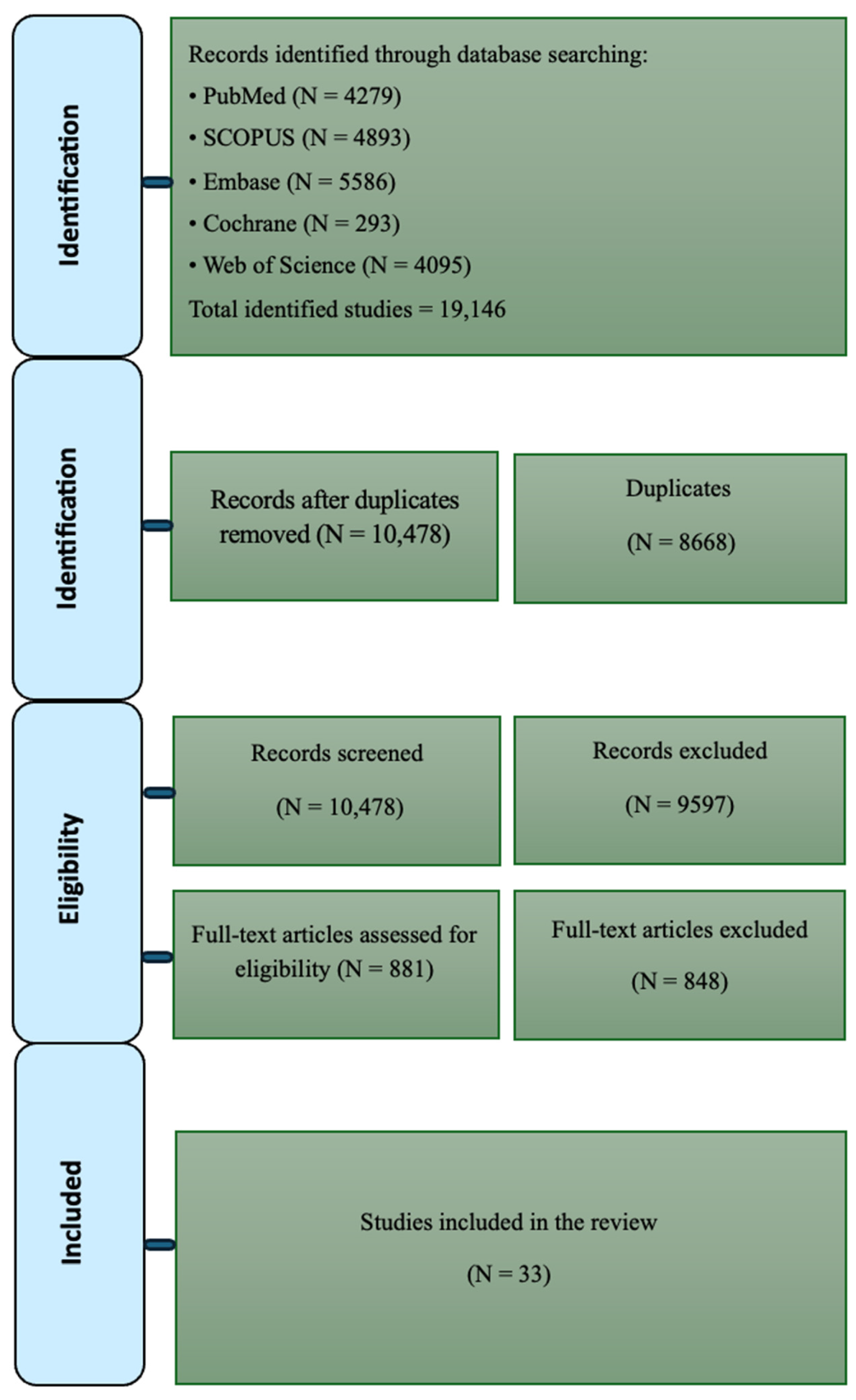
3.1. Search in Databases
3.2. Baseline Characteristics of Included Studies
3.3. Imaging-Based CTRCD Outcomes
3.4. Definitions of Cardiotoxicity by Imaging Modality
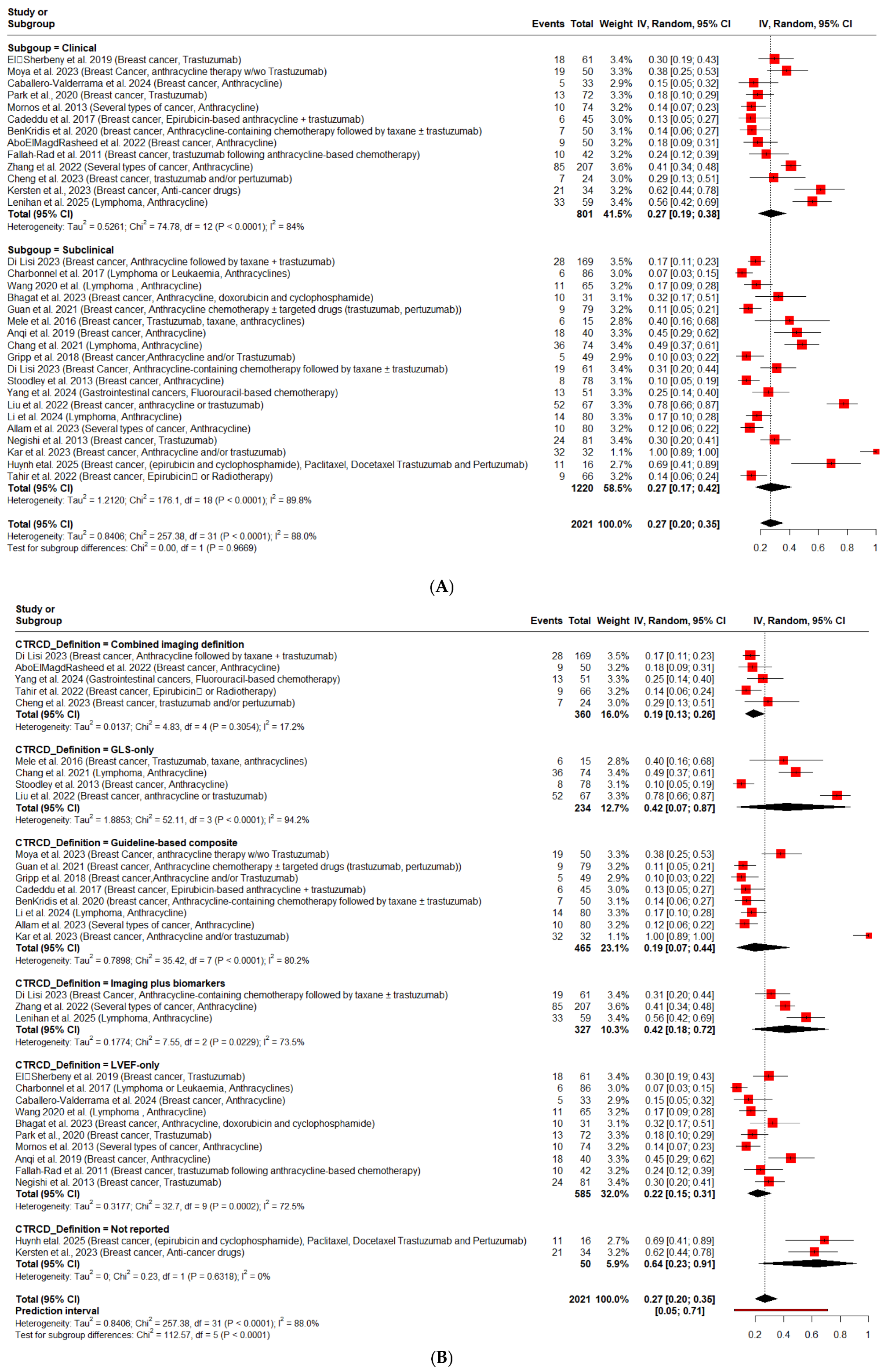
3.5. Pooled Incidence of CTRCD
3.6. Meta-Regression Analysis of Baseline Parameters
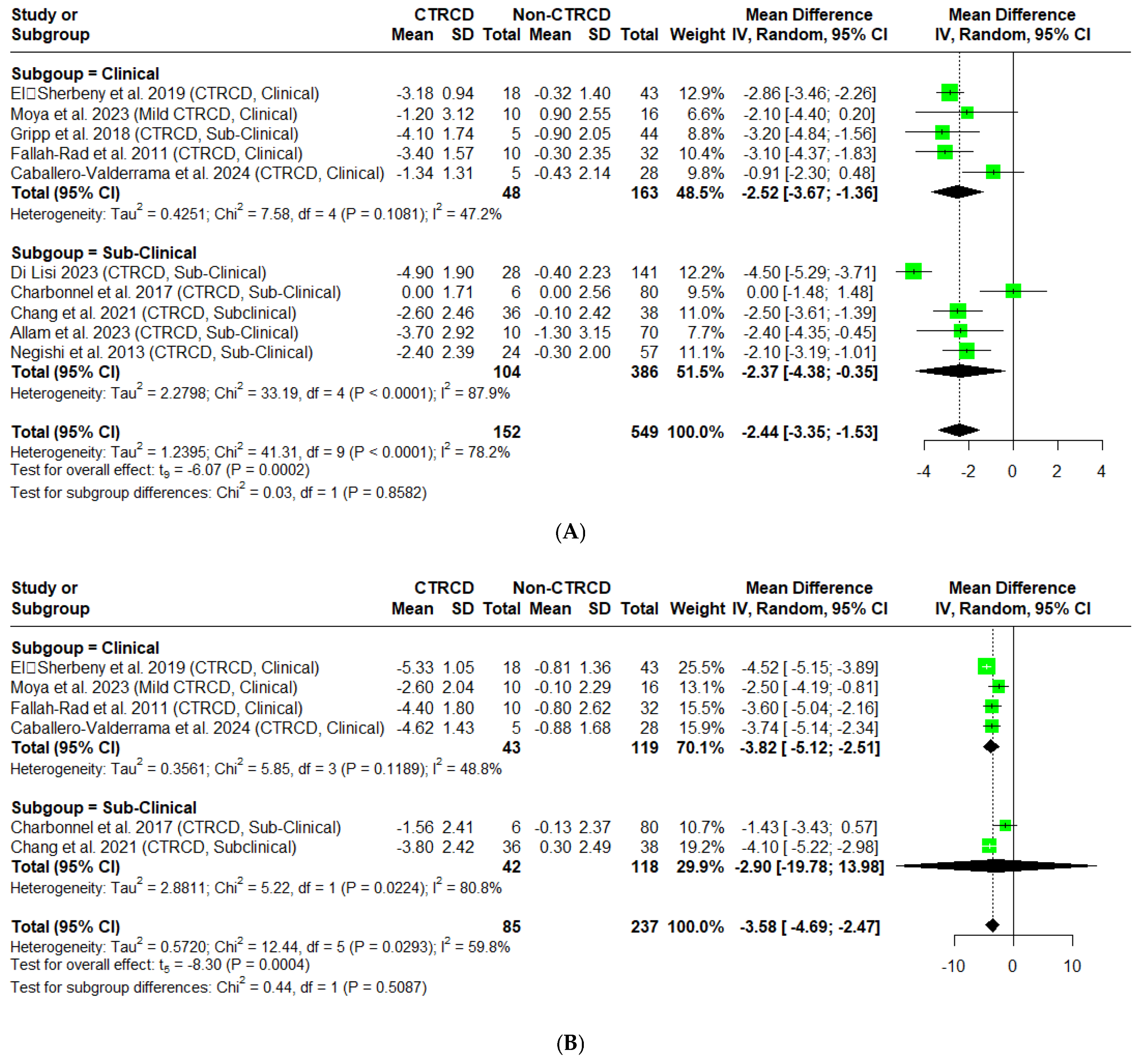
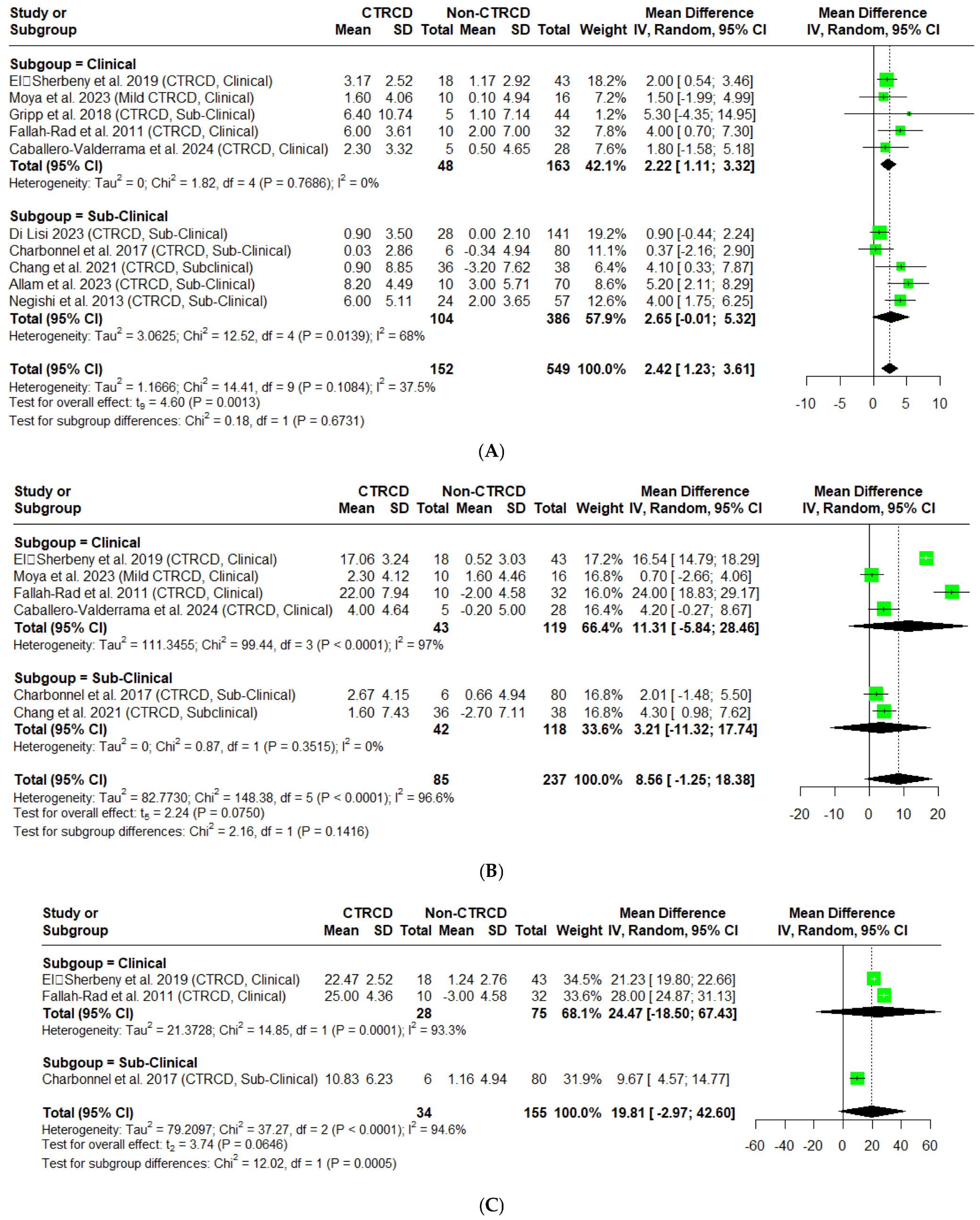
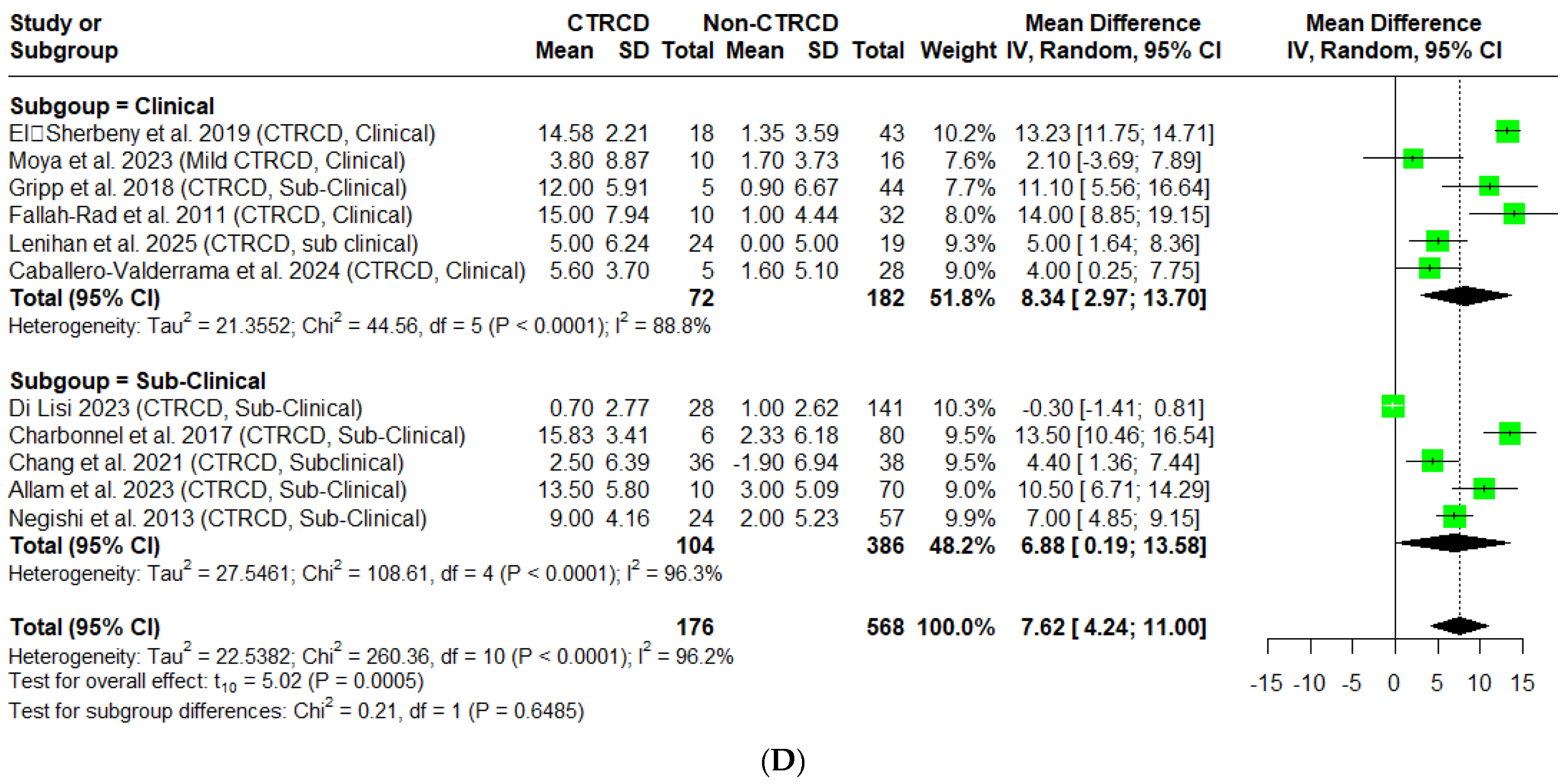
3.7. Primary Comparison of Changes in GLS and LVEF from Baseline (CTRCD vs. Non-CTRCD)
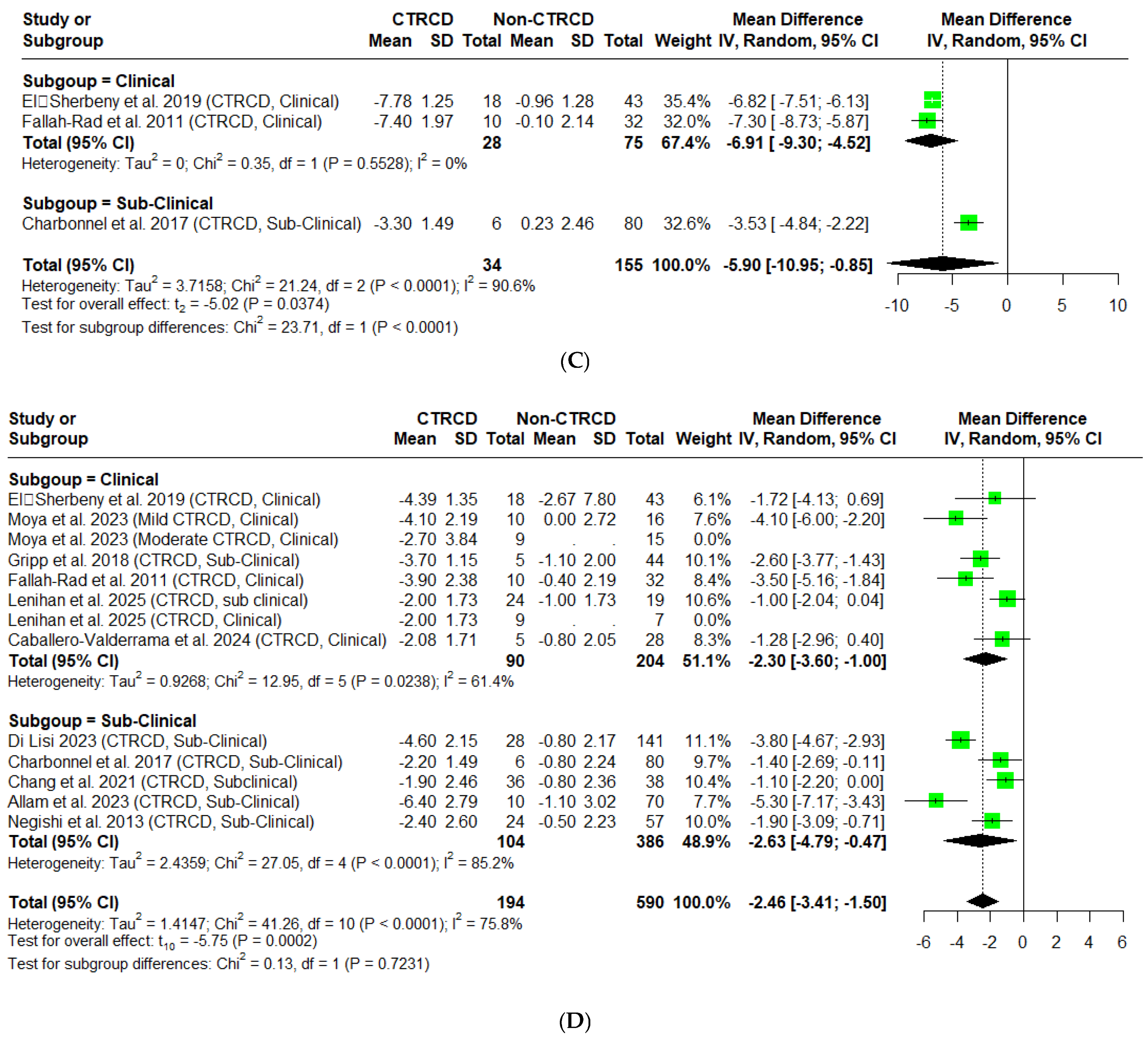
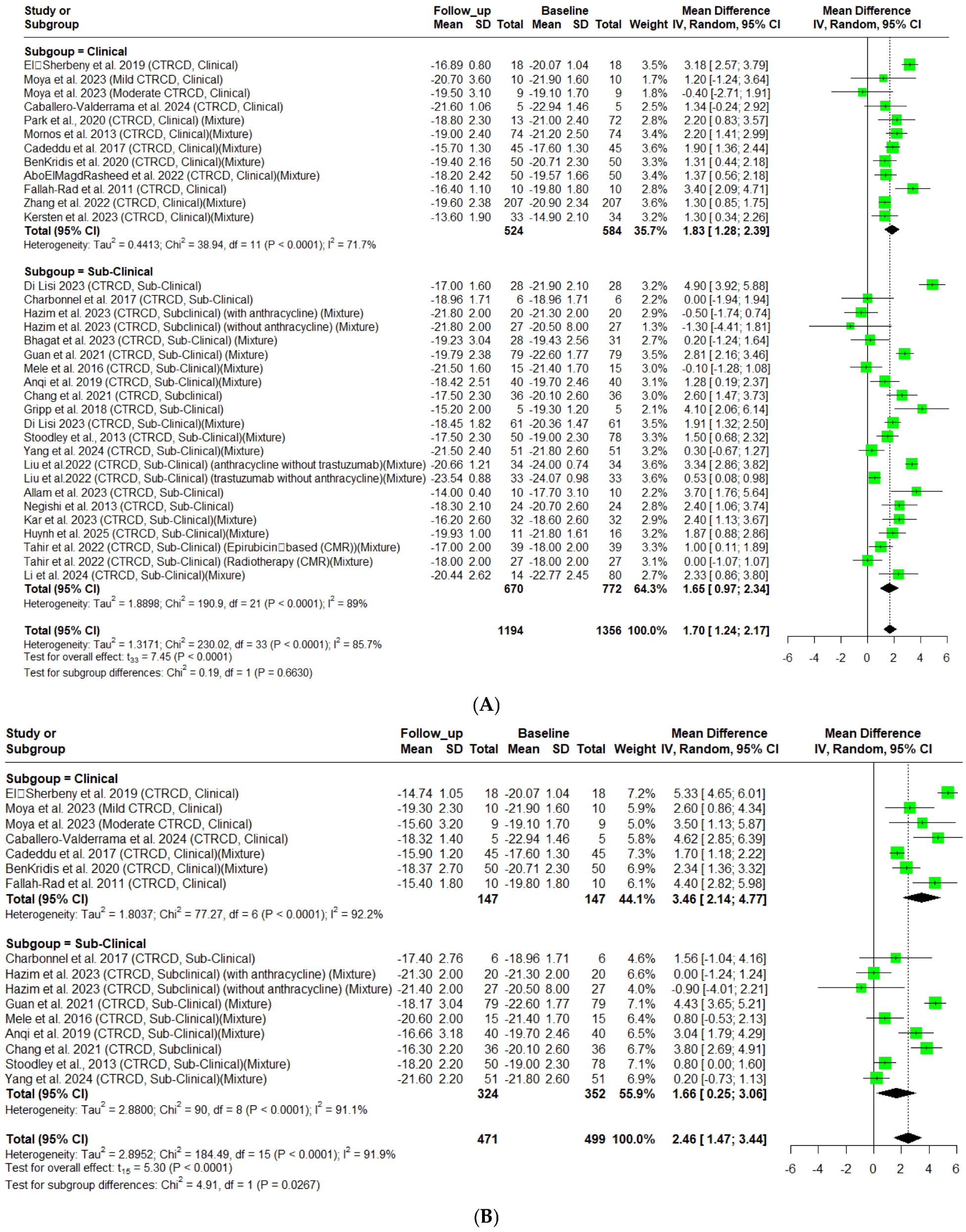
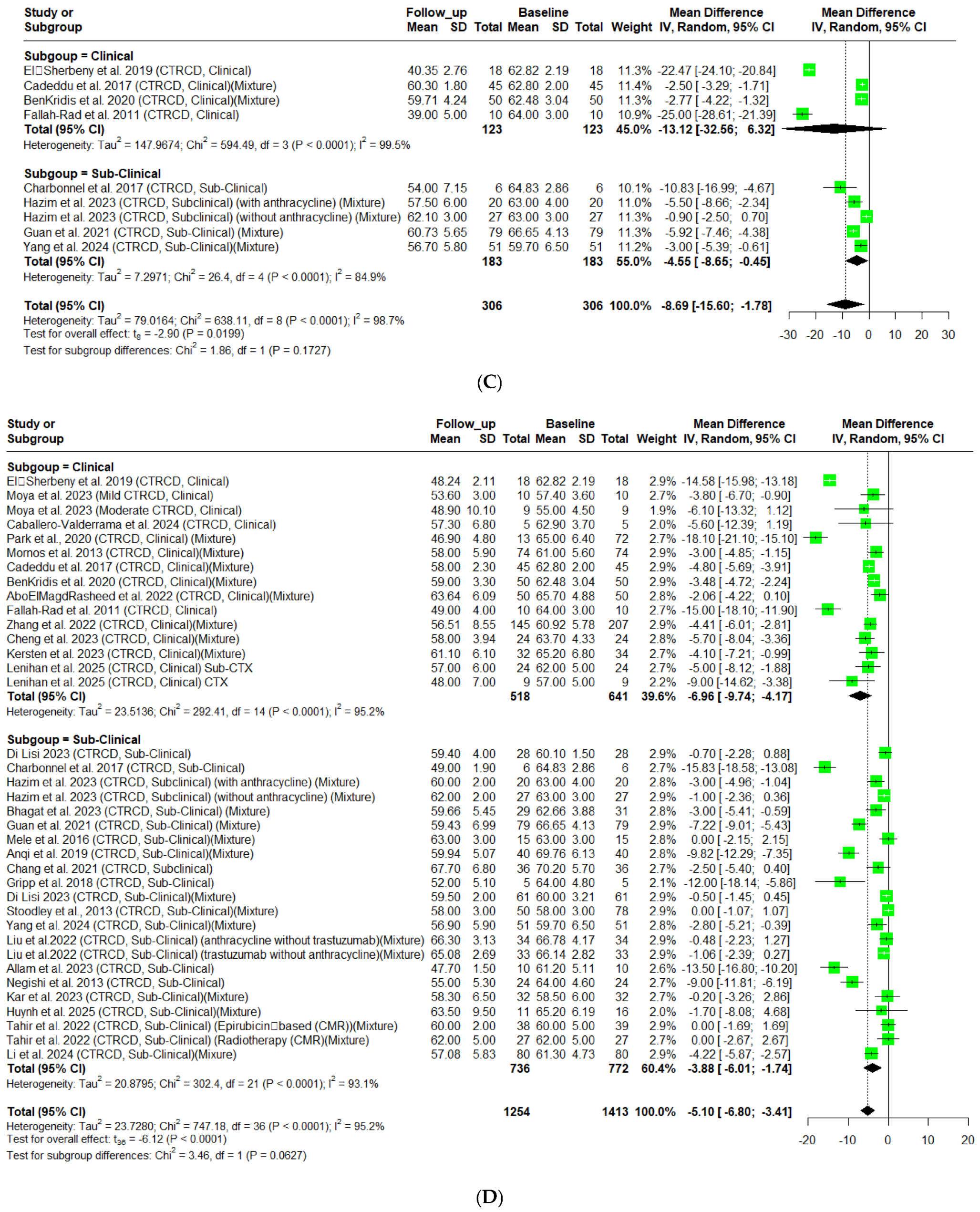
3.8. Longitudinal Changes Within the CTRCD Cohort
3.9. Consistent with the GLS Findings, LVEF Significantly Declined Across All Follow-Up Visits in the CTRCD Group
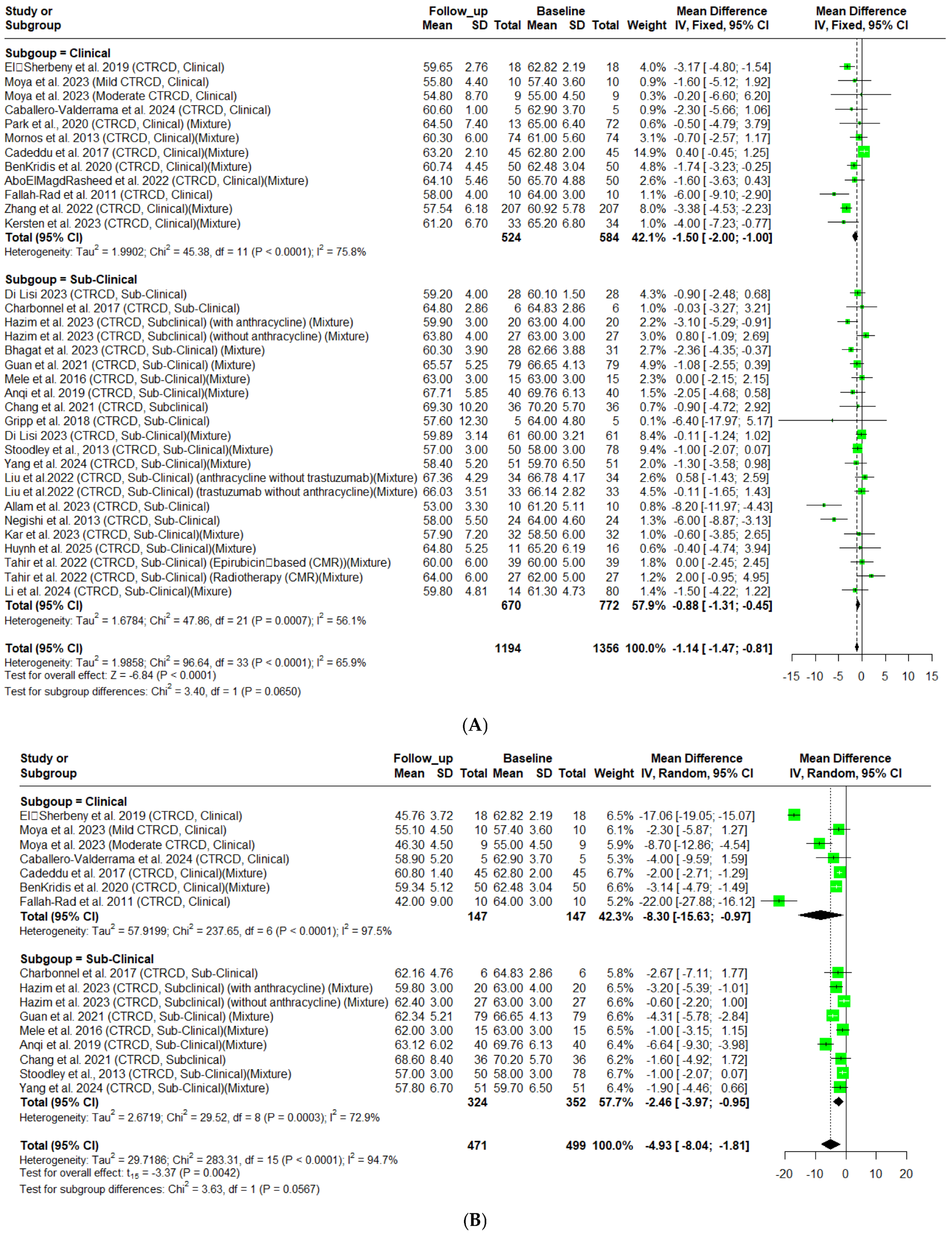
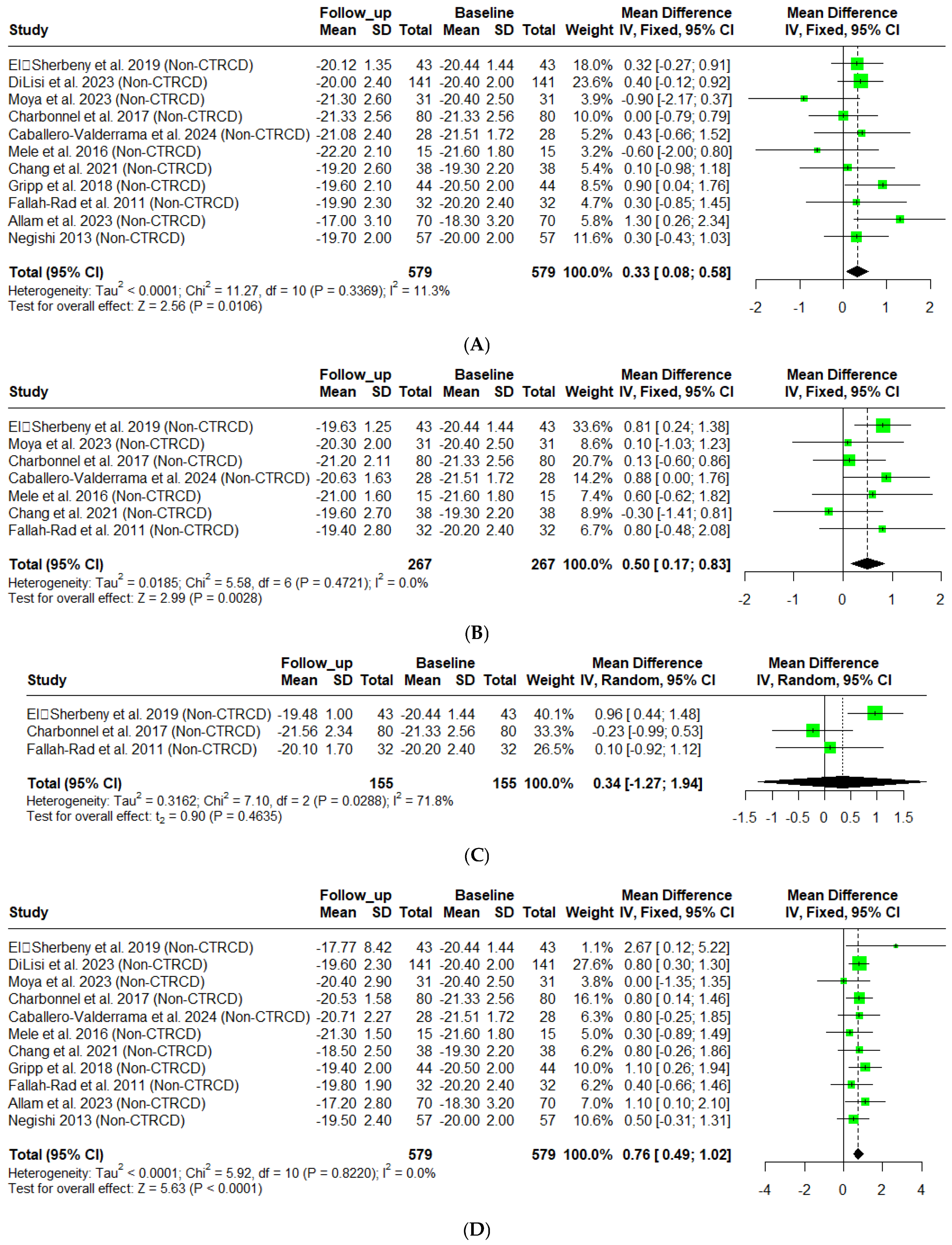
3.10. Longitudinal Changes Within the Non-CTRCD Cohort
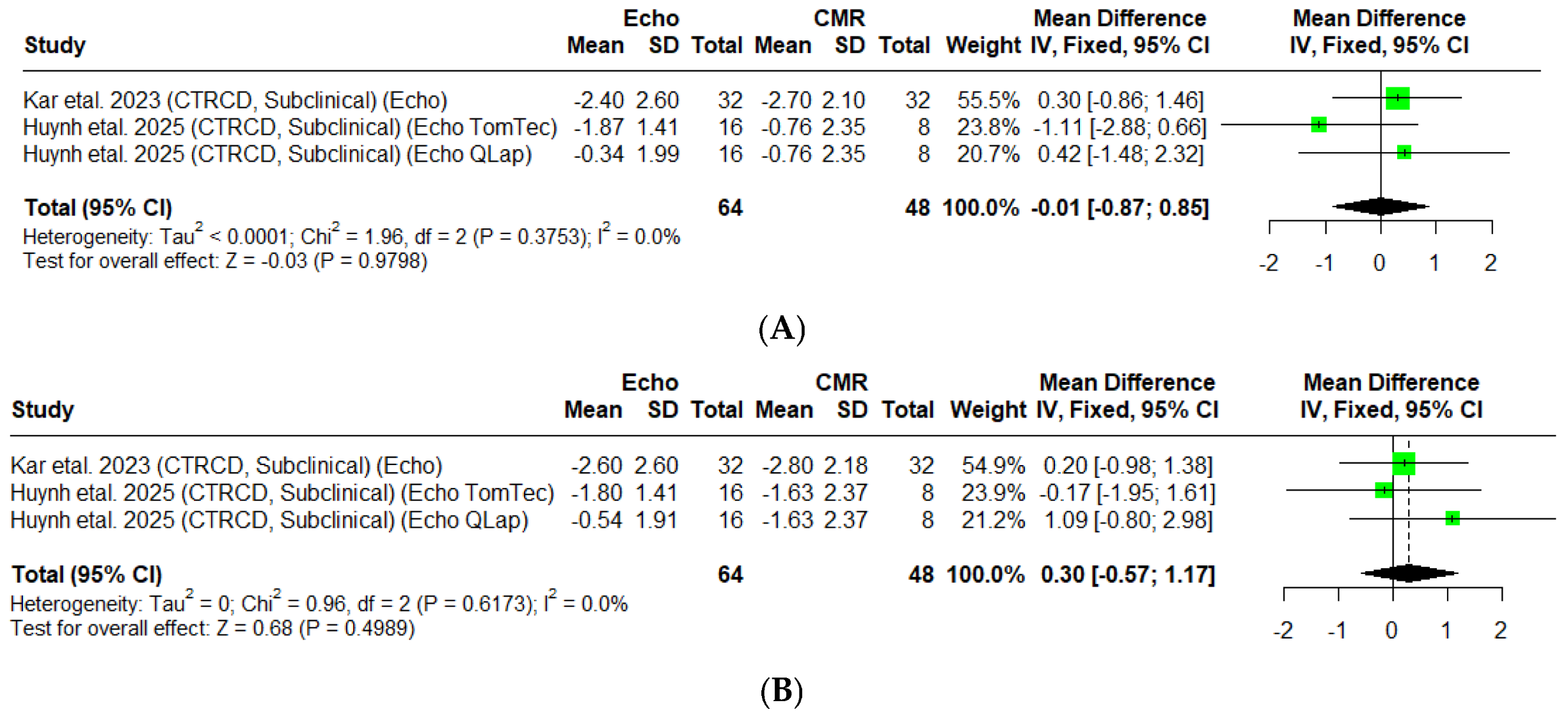
3.11. Comparison of Imaging Modalities (Echocardiography vs. CMR)
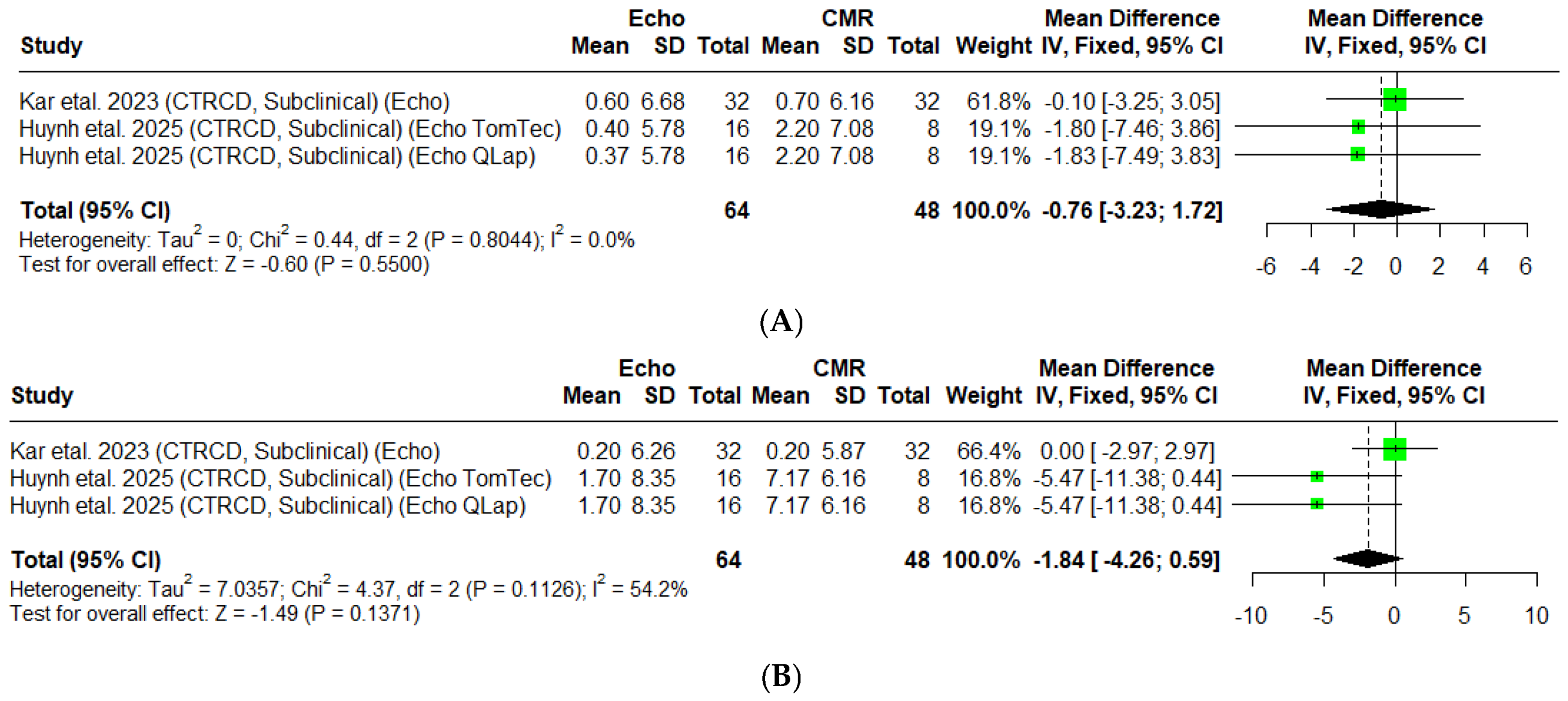
3.12. Changes in Cardiac Function Assessed Exclusively by CMR
3.13. Subgroup Analysis Based on a Guideline-Based Definition
4. Discussion
4.1. Main Findings
4.2. CTRCD Incidence and Definition-Related Heterogeneity
4.3. Interpretation of GLS and LVEF Findings
4.4. Imaging Modality Considerations
4.5. Baseline Function and Risk Interpretation
4.6. Clinical Implications
4.7. Strengths and Limitations
5. Conclusions
Supplementary Materials
Author Contributions
Funding
Institutional Review Board Statement
Informed Consent Statement
Data Availability Statement
Conflicts of Interest
Abbreviations
| Anti HER2 | Anti-Human Epidermal Growth Factor Receptor 2 |
| BNP | B-type natriuretic peptide |
| CHF | Congestive heart failure |
| CI | Confidence interval |
| CMR | Cardiac magnetic resonance (imaging) |
| CTRCD | Cancer therapy related cardiac dysfunction |
| GLS | Global longitudinal strain |
| LV | Left ventricle |
| LVEF | Left ventricular ejection fraction |
| RCT | Randomised controlled trial |
References
- Azzam, M.; Wasef, M.; Khalaf, H.; Al-Habbaa, A. 3D-based strain analysis and cardiotoxicity detection in cancer patients received chemotherapy. BMC Cancer 2023, 23, 760. [Google Scholar] [CrossRef] [PubMed]
- Esteban-Fernandez, A.; Carvajal Estupiñan, J.F.; Gavira-Gómez, J.J.; Pernas, S.; Moliner, P.; Garay, A.; Sánchez-González, Á.; Fernández-Rozas, I.; González-Costello, J. Clinical Profile and Prognosis of a Real-World Cohort of Patients with Moderate or Severe Cancer Therapy-Induced Cardiac Dysfunction. Front. Cardiovasc. Med. 2021, 8, 721080. [Google Scholar] [CrossRef]
- Lyon, A.R.; López-Fernández, T.; Couch, L.S.; Asteggiano, R.; Aznar, M.C.; Bergler-Klein, J.; Boriani, G.; Cardinale, D.; Cordoba, R.; Cosyns, B.; et al. 2022 ESC Guidelines on cardio-oncology developed in collaboration with the European Hematology Association (EHA), the European Society for Therapeutic Radiology and Oncology (ESTRO) and the International Cardio-Oncology Society (IC-OS). Eur. Heart J. 2022, 43, 4229–4361. [Google Scholar] [CrossRef]
- Altena, R.; Perik, P.J.; van Veldhuisen, D.J.; de Vries, E.G.E.; Gietema, J.A. Cardiovascular toxicity caused by cancer treatment: Strategies for early detection. Lancet Oncol. 2009, 10, 391–399. [Google Scholar] [CrossRef]
- Tan, T.C.; Scherrer-Crosbie, M. Assessing the Cardiac Toxicity of Chemotherapeutic Agents: Role of Echocardiography. Curr. Cardiovasc. Imaging Rep. 2012, 5, 403–409. [Google Scholar] [CrossRef]
- Dobson, R.; Ghosh, A.K.; Ky, B.; Marwick, T.; Stout, M.; Harkness, A.; Steeds, R.; Robinson, S.; Oxborough, D.; Adlam, D.; et al. British Society for Echocardiography and British Cardio-Oncology Society guideline for transthoracic echocardiographic assessment of adult cancer patients receiving anthracyclines and/or trastuzumab. Echo Res. Pract. 2021, 8, G1–G18. [Google Scholar] [CrossRef]
- Fallah-Rad, N.; Walker, J.R.; Wassef, A.; Lytwyn, M.; Bohonis, S.; Fang, T.; Tian, G.; Kirkpatrick, I.D.C.; Singal, P.K.; Krahn, M.; et al. The utility of cardiac biomarkers, tissue velocity and strain imaging, and cardiac magnetic resonance imaging in predicting early left ventricular dysfunction in patients with human epidermal growth factor receptor II-positive breast cancer treated with adjuvant trastuzumab therapy. J. Am. Coll. Cardiol. 2011, 57, 2263–2270. [Google Scholar] [PubMed]
- Alexandre, J.; Cautela, J.; Ederhy, S.; Damaj, G.L.; Salem, J.E.; Barlesi, F.; Farnault, L.; Charbonnier, A.; Mirabel, M.; Champiat, S.; et al. Cardiovascular Toxicity Related to Cancer Treatment: A Pragmatic Approach to the American and European Cardio-Oncology Guidelines. J. Am. Heart Assoc. 2020, 9, e018403. [Google Scholar] [CrossRef]
- Baron, T.; Berglund, L.; Hedin, E.M.; Flachskampf, F.A. Test-retest reliability of new and conventional echocardiographic parameters of left ventricular systolic function. Clin. Res. Cardiol. 2019, 108, 355–365. [Google Scholar] [CrossRef] [PubMed]
- Karlsen, S.; Dahlslett, T.; Grenne, B.; Sjøli, B.; Smiseth, O.A.; Edvardsen, T.; Brunvand, H. Global longitudinal strain is a more reproducible measure of left ventricular function than ejection fraction regardless of echocardiographic training. Cardiovasc. Ultrasound 2019, 17, 18. [Google Scholar] [CrossRef]
- Oikonomou, E.K.; Kokkinidis, D.G.; Kampaktsis, P.N.; Amir, E.A.; Marwick, T.H.; Gupta, D.; Thavendiranathan, P. Assessment of Prognostic Value of Left Ventricular Global Longitudinal Strain for Early Prediction of Chemotherapy-Induced Cardiotoxicity: A Systematic Review and Meta-analysis. JAMA Cardiol. 2019, 4, 1007–1018. [Google Scholar] [CrossRef]
- Zhang, K.W.; Finkelman, B.S.; Gulati, G.; Narayan, H.K.; Upshaw, J.; Narayan, V.; Plappert, T.; Englefield, V.; Smith, A.M.; Zhang, C.; et al. Abnormalities in 3-Dimensional Left Ventricular Mechanics With Anthracycline Chemotherapy Are Associated With Systolic and Diastolic Dysfunction. JACC Cardiovasc. Imaging 2018, 11, 1059–1068. [Google Scholar] [CrossRef]
- Santoro, C.; Arpino, G.; Esposito, R.; Lembo, M.; Paciolla, I.; Cardalesi, C.; de Simone, G.; Trimarco, B.; De Placido, S.; Galderisi, M. 2D and 3D strain for detection of subclinical anthracycline cardiotoxicity in breast cancer patients: A balance with feasibility. Eur. Heart J. Cardiovasc. Imaging 2017, 18, 930–936. [Google Scholar] [CrossRef]
- Kersten, J.; Fink, V.; Kersten, M.; May, L.; Nunn, S.; Tadic, M.; Huober, J.; Bekes, I.; Radermacher, M.; Hombach, V.; et al. CMR reveals myocardial damage from cardiotoxic oncologic therapies in breast cancer patients. Int. J. Cardiovasc. Imaging 2024, 40, 225–235. [Google Scholar] [CrossRef] [PubMed]
- Page, M.J.; McKenzie, J.E.; Bossuyt, P.M.; Boutron, I.; Hoffmann, T.C.; Mulrow, C.D.; Shamseer, L.; Tetzlaff, J.M.; Akl, E.A.; Brennan, S.E.; et al. The PRISMA 2020 statement: An updated guideline for reporting systematic reviews. BMJ 2021, 372, 71. [Google Scholar] [CrossRef]
- Cumpston, M.; Li, T.; Page, M.J.; Chandler, J.; Welch, V.A.; Higgins, J.P.T.; Thomas, J. Updated guidance for trusted systematic reviews: A new edition of the Cochrane Handbook for Systematic Reviews of Interventions. Cochrane Database Syst. Rev. 2019, 10, ED000142. [Google Scholar] [CrossRef]
- Sterne, J.A.; Hernán, M.A.; Reeves, B.C.; Savović, J.; Berkman, N.D.; Viswanathan, M.; Henry, D.; Altman, D.G.; Ansari, M.T.; Boutron, I.; et al. ROBINS-I: A tool for assessing risk of bias in non-randomised studies of interventions. BMJ 2016, 355, i4919. [Google Scholar] [CrossRef]
- Balduzzi, S.; Rücker, G.; Schwarzer, G. How to perform a meta-analysis with R: A practical tutorial. BMJ Ment. Health 2019, 22, 153–160. [Google Scholar] [CrossRef] [PubMed]
- Rasheed, R.S.A.E.M.; El Sokkary, H.; El Amrosy, M.Z.; El Setiha, M.; Salama, M.M.A.E.M. Role of Myocardial Strain Imaging by Echocardiography for the Early Detection of Anthracyclines-Induced Cardiotoxicity. J. Saudi Heart Assoc. 2022, 34, 32–40. [Google Scholar] [CrossRef]
- Allam, H.; Kamal, M.; Bendary, M.; Osama, A.; El Eleimy, H.A.; Bendary, A. The diagnostic value of global longitudinal strain combined with cardiac biomarkers on early detection of anthracycline-related cardiac dysfunction. J. Echocardiogr. 2023, 21, 165–172. [Google Scholar] [CrossRef] [PubMed]
- Anqi, Y.; Yu, Z.; Mingjun, X.; Xiaoli, K.; Mengmeng, L.; Fangfang, L.; Mei, Z. Use of echocardiography to monitor myocardial damage during anthracycline chemotherapy. Echocardiography 2019, 36, 495–502. [Google Scholar] [CrossRef]
- Ben Kridis, W.; Sghaier, S.; Charfeddine, S.; Toumi, N.; Daoud, J.; Kammoun, S.; Khanfir, A. A Prospective Study About Trastuzumab-induced Cardiotoxicity in HER2-positive Breast Cancer. Am. J. Clin. Oncol. 2020, 43, 510–516. [Google Scholar] [CrossRef]
- Bhagat, A.A.; Kalogeropoulos, A.P.; Baer, L.; Lacey, M.; Kort, S.; Skopicki, H.A.; Butler, J.; Bloom, M.W. Biomarkers and Strain Echocardiography for the Detection of Subclinical Cardiotoxicity in Breast Cancer Patients Receiving Anthracyclines. J. Pers. Med. 2023, 13, 1710. [Google Scholar] [CrossRef] [PubMed]
- Caballero-Valderrama, M.d.R.; Bevilacqua, E.; Echevarría, M.; Salvador-Bofill, F.J.; Ordóñez, A.; López-Haldón, J.E.; Smani, T.; Calderón-Sánchez, E.M. Early Myocardial Strain Reduction and miR-122-5p Elevation Associated with Interstitial Fibrosis in Anthracycline-Induced Cardiotoxicity. Biomedicines 2024, 13, 45. [Google Scholar] [CrossRef]
- Cadeddu, C.; Piras, A.; Dessì, M.; Madeddu, C.; Mantovani, G.; Scartozzi, M.; Hagendorff, A.; Colonna, P.; Mercuro, G. Timing of the negative effects of trastuzumab on cardiac mechanics after anthracycline chemotherapy. Int. J. Cardiovasc. Imaging 2017, 33, 197–207. [Google Scholar] [CrossRef] [PubMed]
- Chang, H.Y.; Lee, C.H.; Su, P.L.; Li, S.S.; Chen, M.Y.; Chen, Y.P.; Hsu, Y.T.; Tsai, W.C.; Liu, P.Y.; Chen, T.Y.; et al. Subtle cardiac dysfunction in lymphoma patients receiving low to moderate dose chemotherapy. Sci. Rep. 2021, 11, 7100. [Google Scholar] [CrossRef]
- Charbonnel, C.; Convers-Domart, R.; Rigaudeau, S.; Taksin, A.L.; Baron, N.; Lambert, J.; Ghez, S.; Georges, J.L.; Farhat, H.; Lambert, J.; et al. Assessment of global longitudinal strain at low-dose anthracycline-based chemotherapy, for the prediction of subsequent cardiotoxicity. Eur. Heart J. Cardiovasc. Imaging 2017, 18, 392–401. [Google Scholar] [CrossRef]
- Cheng, S.; Wang, J.; Wang, Y.; Qi, L.; Li, F.; Liu, J.; Chen, J.; Fan, Y.; Xie, L. Longitudinal assessment of cardiac parameters through MRI in breast cancer patients treated with anti-HER2 therapy. Eur. Radiol. Exp. 2023, 7, 22. [Google Scholar] [CrossRef] [PubMed]
- Di Lisi, D.; Manno, G.; Madaudo, C.; Filorizzo, C.; Intravaia, R.C.M.; Galassi, A.R.; Incorvaia, L.; Russo, A.; Novo, G. Chemotherapy-related cardiac dysfunction: The usefulness of myocardial work indices. Int. J. Cardiovasc. Imaging 2023, 39, 1845–1853. [Google Scholar] [CrossRef]
- Di Lisi, D.; Moreo, A.; Casavecchia, G.; Cadeddu Dessalvi, C.; Bergamini, C.; Zito, C.; Madaudo, C.; Madonna, R.; Cameli, M.; Novo, G. Atrial Strain Assessment for the Early Detection of Cancer Therapy-Related Cardiac Dysfunction in Breast Cancer Women (The STRANO STUDY: Atrial Strain in Cardio-Oncology). J. Clin. Med. 2023, 12, 7127. [Google Scholar] [CrossRef]
- El-Sherbeny, W.S.; Sabry, N.M.; Sharbay, R.M. Prediction of trastuzumab-induced cardiotoxicity in breast cancer patients receiving anthracycline-based chemotherapy. J. Echocardiogr. 2019, 17, 76–83. [Google Scholar] [CrossRef] [PubMed]
- Gripp, E.A.; Oliveira, G.E.; Feijó, L.A.; Garcia, M.I.; Xavier, S.S.; Sousa, A.S. Global Longitudinal Strain Accuracy for Cardiotoxicity Prediction in a Cohort of Breast Cancer Patients During Anthracycline and/or Trastuzumab Treatment. Arq. Bras. Cardiol. 2018, 110, 140–150. [Google Scholar] [CrossRef]
- Guan, J.; Bao, W.; Xu, Y.; Yang, W.; Li, M.; Xu, M.; Zhang, Y.; Zhang, M. Assessment of Myocardial Work in Cancer Therapy-Related Cardiac Dysfunction and Analysis of CTRCD Prediction by Echocardiography. Front. Pharmacol. 2021, 12, 770580. [Google Scholar] [CrossRef]
- Hazim, A.; Nhola, L.F.; Kailash, V.; Zhang, S.; Sandhu, N.P.; Lerman, A.; Loprinzi, C.L.; Ruddy, K.J.; Villarraga, H.R.; Lewis, B.; et al. Changes in vascular function and correlation with cardiotoxicity in women with newly diagnosed breast cancer undergoing HER2-directed therapy with and without anthracycline/cyclophosphamide. Eur. Heart J. Open 2023, 4, oead130. [Google Scholar] [CrossRef] [PubMed]
- Huynh, J.; Malmgren, A.; Kraen, M.; Trägårdh, E.; Dencker, M. Comparison of echocardiographic and cardiac magnetic resonance imaging measurements of systolic function during breast cancer therapy. BMC Cardiovasc. Disord. 2025, 25, 653. [Google Scholar] [CrossRef] [PubMed]
- Kar, J.; Cohen, M.V.; McQuiston, S.A.; Malozzi, C.M. Can global longitudinal strain (GLS) with magnetic resonance prognosticate early cancer therapy-related cardiac dysfunction (CTRCD) in breast cancer patients, a prospective study? Magn. Reson. Imaging 2023, 97, 68–81. [Google Scholar] [CrossRef]
- Lenihan, D.; Whayne, J.; Osman, F.; Rivero, R.; Montenbruck, M.; Schwarz, A.K.; Kelle, S.; Wülfing, P.; Dent, S.; Andre, F.; et al. Myocardial Strain Measurements Obtained with Fast-Strain-Encoded Cardiac Magnetic Resonance for the Risk Prediction and Early Detection of Chemotherapy-Related Cardiotoxicity Compared to Left Ventricular Ejection Fraction. Diagnostics 2025, 15, 1948. [Google Scholar] [CrossRef]
- Li, Z.; Zhao, R.; Zhang, Q.; Shen, Y.; Shu, X.; Cheng, L. Left atrial reservoir longitudinal strain and its incremental value to the left ventricular global longitudinal strain in predicting anthracycline-induced cardiotoxicity. Echocardiography 2024, 41, e15805. [Google Scholar] [CrossRef]
- Liu, W.; Li, W.; Li, H.; Li, Z.; Zhao, P.; Guo, Z.; Liu, C.; Sun, L.; Wang, Z. Two-dimensional speckle tracking echocardiography help identify breast cancer therapeutics-related cardiac dysfunction. BMC Cardiovasc. Disord. 2022, 22, 548. [Google Scholar] [CrossRef]
- Mele, D.; Malagutti, P.; Indelli, M.; Ferrari, L.; Casadei, F.; Da Ros, L.; Pollina, A.; Fiorencis, A.; Frassoldati, A.; Ferrari, R. Reversibility of Left Ventricle Longitudinal Strain Alterations Induced by Adjuvant Therapy in Early Breast Cancer Patients. Ultrasound Med. Biol. 2016, 42, 125–132. [Google Scholar] [CrossRef]
- Mornoş, C.; Petrescu, L. Early detection of anthracycline-mediated cardiotoxicity: The value of considering both global longitudinal left ventricular strain and twist. Can. J. Physiol. Pharmacol. 2013, 91, 601–607. [Google Scholar] [CrossRef] [PubMed]
- Moya, A.; Buytaert, D.; Beles, M.; Paolisso, P.; Duchenne, J.; Huygh, G.; Langmans, C.; Roelstraete, A.; Verstreken, S.; Goethals, M.; et al. Serial Non-Invasive Myocardial Work Measurements for Patient Risk Stratification and Early Detection of Cancer Therapeutics-Related Cardiac Dysfunction in Breast Cancer Patients: A Single-Centre Observational Study. J. Clin. Med. 2023, 12, 1652. [Google Scholar] [CrossRef]
- Negishi, K.; Negishi, T.; Hare, J.L.; Haluska, B.A.; Plana, J.C.; Marwick, T.H. Independent and incremental value of deformation indices for prediction of trastuzumab-induced cardiotoxicity. J. Am. Soc. Echocardiogr. 2013, 26, 493–498. [Google Scholar] [CrossRef]
- Park, H.; Kim, K.H.; Kim, H.Y.; Cho, J.Y.; Yoon, H.J.; Hong, Y.J.; Park, H.W.; Kim, J.H.; Ahn, Y.; Jeong, M.H.; et al. Left atrial longitudinal strain as a predictor of Cancer therapeutics-related cardiac dysfunction in patients with breast Cancer. Cardiovasc. Ultrasound 2020, 18, 28. [Google Scholar] [CrossRef]
- Stoodley, P.W.; Richards, D.A.B.; Boyd, A.; Hui, R.; Harnett, P.R.; Meikle, S.R.; Byth, K.; Stuart, K.; Clarke, J.L.; Thomas, L. Left ventricular systolic function in HER2/neu negative breast cancer patients treated with anthracycline chemotherapy: A comparative analysis of left ventricular ejection fraction and myocardial strain imaging over 12 months. Eur. J. Cancer 2013, 49, 3396–3403. [Google Scholar] [CrossRef]
- Tahir, E.; Azar, M.; Shihada, S.; Seiffert, K.; Goy, Y.; Beitzen-Heineke, A.; Molwitz, I.; Muellerleile, K.; Stehning, C.; Schön, G.; et al. Myocardial injury detected by T1 and T2 mapping on CMR predicts subsequent cancer therapy-related cardiac dysfunction in patients with breast cancer treated by epirubicin-based chemotherapy or left-sided RT. Eur. Radiol. 2022, 32, 1853–1865. [Google Scholar] [CrossRef]
- Wang, B.; Yu, Y.; Zhang, Y.; Hao, X.; Zhao, H.; Yang, S.; Sun, Q.; Wang, Y. Speckle tracking echocardiography in the early detection and prediction of anthracycline cardiotoxicity in diffuse large B-cell lymphoma treated with (R)-CHOP regimen. Echocardiography 2020, 37, 421–428. [Google Scholar] [CrossRef]
- Yang, W.; Yang, J.X.; Guan, J.Y.; Bao, W.Y.; Zhang, M. Value of Myocardial Strain in Monitoring Fluorouracil-Based Chemotherapy-Related Cardiac Dysfunction in Gastrointestinal Cancer Patients. Chin. Med. Sci. J. 2024, 39, 273–281. [Google Scholar] [PubMed]
- Zhang, W.; Azibani, F.; Libhaber, E.; Okello, E.; Kayima, J.; Ssinabulya, I.; Leeta, J.; Orem, J.; Sliwa, K. Detecting subclinical anthracycline therapy-related cardiac dysfunction in patients attending Uganda Cancer Institute. Future Oncol. 2022, 18, 2675–2685. [Google Scholar] [CrossRef]
- Cantoni, V.; Green, R.; Assante, R.; D’Antonio, A.; Maio, F.; Criscuolo, E.; Bologna, R.; Petretta, M.; Cuocolo, A.; Acampa, W. Prevalence of cancer therapy cardiotoxicity as assessed by imaging procedures: A scoping review. Cancer Med. 2023, 12, 11396–11407. [Google Scholar] [CrossRef] [PubMed]
- Rakisheva, A.; Farmakis, D.; Attanasio, A.; Bayes Genis, A.; Cohen-Solal, A.; Gulati, G.; Halle, M.; Hill, L.; Lopez Fernandez, T.; Lyon, A.R.; et al. Prevention of cancer therapy-related cardiac dysfunction and heart failure in cancer patients and survivors. A Clinical Consensus Statement of the Heart Failure Association, the European Association of Preventive Cardiology of the ESC, and the ESC Council of Cardio-Oncology. Eur. J. Heart Fail. 2025, 27, 2084–2099. [Google Scholar]
- Negishi, T.; Thavendiranathan, P.; Penicka, M.; Lemieux, J.; Aakhus, S.; Miyazaki, S.; Shirazi, M.; Galderisi, M.; Cho, G.Y.; Popescu, B.A.; et al. Cardioprotection Using Strain-Guided Management of Potentially Cardiotoxic Cancer Therapy: 3-Year Results of the SUCCOUR Trial. JACC Cardiovasc. Imaging 2023, 16, 269–278. [Google Scholar] [CrossRef] [PubMed]
- Schuster, A.; Stahnke, V.C.; Unterberg-Buchwald, C.; Kowallick, J.T.; Lamata, P.; Steinmetz, M.; Kutty, S.; Fasshauer, M.; Staab, W.; Sohns, J.M.; et al. Cardiovascular magnetic resonance feature-tracking assessment of myocardial mechanics: Intervendor agreement and considerations regarding reproducibility. Clin. Radiol. 2015, 70, 989–998. [Google Scholar] [CrossRef] [PubMed]
- Ananthapadmanabhan, S.; Vo, G.; Nguyen, T.; Dimitri, H.; Otton, J. Direct comparison of multilayer left ventricular global longitudinal strain using CMR feature tracking and speckle tracking echocardiography. BMC Cardiovasc. Disord. 2021, 21, 107. [Google Scholar] [CrossRef]
- Terluk, A.; Stefani, L.; Boyd, A.; Vo, K.; Byth, K.; Hui, R.; Richards, D.; Thomas, L. Redefining anthracycline-related subclinical cardiotoxicity: ‘Absolute’ and ‘relative’ change in longitudinal strain. ESC Heart Fail. 2024, 11, 3210–3221. [Google Scholar] [CrossRef]
- Marwick, T.H. Global Longitudinal Strain Monitoring to Guide Cardioprotective Medications During Anthracycline Treatment. Curr. Oncol. Rep. 2022, 24, 687–694. [Google Scholar] [CrossRef]
- Slawinski, G.; Hawryszko, M.; Liżewska-Springer, A.; Nabiałek-Trojanowska, I.; Lewicka, E. Global Longitudinal Strain in Cardio-Oncology: A Review. Cancers 2023, 15, 986. [Google Scholar] [CrossRef] [PubMed]









| Panel A. Echocardiography-Only Studies (n = 27) | ||||||||||
|---|---|---|---|---|---|---|---|---|---|---|
| Study | Sample Size (N) | Design | Age (Years) | Female (%) | Baseline GLS (Echo) | Baseline LVEF (Echo) | Cancer Type | Cancer Therapy | ||
| AboElMagdRasheed et al. 2022 [19] | 50 | Prospective | 45.3 ± 12.1 | 38 (76%) | −19.57 ± 1.66 | 65.7 ± 4.88 | Breast/Lymphoma/Others | Anthracyclines | ||
| Allam et al. 2023 [20] | 80 | Prospective | 51 ± 11 | 55 (68.8%) | - | - | Breast/Haematological/Colon/Others | Anthracyclines | ||
| Anqi et al. 2019 [21] | 40 | Prospective | 47.3 ± 9.9 | 40 (100%) | −19.7 ± 2.46 | 69.76 ± 6.13 | Breast | Anthracyclines | ||
| BenKridis et al. 2020 [22] | 50 | Prospective | 49.6 ± 8.5 | 50 (100%) | −20.71 ± 2.30 | 62.48 ± 3.04 | Breast (HER2-positive) | Trastuzumab ± Anthracyclines | ||
| Bhagat et al. 2023 [23] | 31 | Prospective | 50 (46–55) | 31 (100%) | −19.43 ± 2.56 | 62.66 ± 3.88 | Breast | Anthracyclines | ||
| Caballero-Valderrama et al. 2024 [24] | 33 | Prospective | 52.8 ± 10.2 | 33 (100%) | −21.73 ± 1.74 | 61.5 ± 4.9 | Breast | Anthracyclines (Epirubicin) | ||
| Cadeddu et al. 2017 [25] | 45 | Prospective | 51.4 ± 9.1 | 45 (100%) | −17.6 ± 1.3 | 62.8 ± 2.0 | Breast | Anthracyclines + Trastuzumab | ||
| Chang et al. 2021 [26] | 74 | Prospective | 57.9 ± 17.0 | 32 (43%) | −19.7 ± 2.5 | 69.1 ± 7.0 | Lymphoma | Anthracyclines | ||
| Charbonnel et al. 2017 [27] | 86 | Prospective | 48 (30–63.5) | 31 (36%) | −21.16 ± 2.86 | 65.66 ± 5.27 | Lymphoma/Leukaemia | Anthracyclines | ||
| DiLisi et al. 2023 [29] | 61 | Prospective | 53 ± 9.4 | 61 (100%) | −20.36 ± 1.47 | 60.0 ± 3.21 | Breast | Anthracyclines ± Trastuzumab | ||
| DiLisi et al. 2023 [30] | 169 | Prospective | 55 ± 10.8 | 169 (100%) | −20.7 ± 2.1 | 60.0 ± 1.7 | Breast | Anthracyclines ± Trastuzumab | ||
| El-Sherbeny et al. 2019 [31] | 61 | Prospective | 47.4 ± 9.1 | 61 (100%) | - | - | Breast (HER2-positive) | Anthracyclines + Trastuzumab | ||
| Fallah-Rad et al. 2011 [7] | 42 | Prospective | 47 ± 9 | 42 (100%) | - | - | Breast (HER2-positive) | Anthracyclines + Trastuzumab | ||
| Gripp et al. 2018 [32] | 49 | Prospective | 49.7 ± 12.2 | 49 (100%) | - | - | Breast | Anthracyclines ± Trastuzumab | ||
| Guan et al. 2021 [33] | 79 | Prospective | 48 | 79 (100%) | −22.6 ± 1.77 | 66.65 ± 4.13 | Breast | Anthracyclines ± Trastuzumab | ||
| Hazim et al. 2023 [34] | 47 | Prospective | 52 ± 12 | 47 (100%) | - | - | Breast (HER2-positive) | HER2-directed therapy ± Anthracyclines | ||
| Li et al. 2024 [38] | 80 | Prospective | 54.1 ± 8.5 | 42 (52.5%) | −22.77 ± 2.45 | 61.3 ± 4.73 | Lymphoma | Anthracyclines | ||
| Liu et al. 2022 [39] | 67 | Prospective | 49.5 ± 6.0 | 67 (100%) | - | - | Breast | Anthracyclines or Trastuzumab | ||
| Mele et al. 2016 [40] | 30 | Prospective | 53 ± 11 | 29 (97%) | −21.5 ± 1.7 | 63 ± 3 | Breast | Anthracyclines ± Trastuzumab | ||
| Mornos et al. 2013 [41] | 74 | Prospective | 51 ± 11 | 43 (58%) | −21.2 ± 2.5 | 61 ± 5.6 | Breast/Lymphoma/Leukaemia/Osteosarcoma | Anthracyclines | ||
| Moya et al. 2023 [42] | 50 | Prospective | 56 ± 12 | 50 (100%) | - | - | Breast | Anthracyclines ± Trastuzumab | ||
| Negishi et al. 2013 [43] | 81 | Prospective | 50 ± 11 | 81 (100%) | - | - | Breast | Trastuzumab ± Anthracyclines | ||
| Park et al. 2020 [44] | 72 | Retrospective | 49.0 ± 8.7 | 72 (100%) | −21.0 ± 2.4 | 65.0 ± 6.4 | Breast (HER2-positive) | Anthracyclines + Trastuzumab | ||
| Stoodley et al. 2013 [45] | 78 | Prospective | 52 ± 10 | 77 (99%) | −19.0 ± 2.3 | 58.0 ± 3.0 | Breast (HER2-negative) | Anthracyclines | ||
| Wang et al. 2020 [47] | 65 | Prospective | 51.3 ± 13.5 | 34 (52.3%) | −19.9 ± 3.2 | 61.2 ± 5.4 | Diffuse large B-cell lymphoma | Anthracyclines (R-CHOP) | ||
| Yang et al. 2024 [48] | 51 | Prospective | 57 (51–62) | 8 (16%) | −21.8 ± 2.6 | 59.7 ± 6.5 | Gastrointestinal (Gastric/Colorectal) | Fluorouracil-based chemotherapy | ||
| Zhang et al. 2022 [49] | 207 | Prospective | 42 (20–69) | 178 (86%) | −20.9 ± 2.34 | 60.92 ± 5.78 | Breast/Lymphoma/Sarcoma | Anthracyclines | ||
| Panel B. Cardiac magnetic resonance (CMR)-only studies (n = 4) | ||||||||||
| Study | Sample size (N) | Design | Age (years) | Female (%) | Baseline GLS (CMR) | Baseline LVEF (CMR) | Cancer type | Cancer therapy | ||
| Cheng et al. 2023 [28] | 24 | Prospective | 47 ± 11 | 24 (100%) | −16.0 ± 1.6 | 63.7 ± 4.33 | Breast (HER2-positive) | Anti-HER2 (Trastuzumab ± Pertuzumab) | ||
| Kersten et al. 2023 [14] | 34 | Prospective | 50.2 ± 10.3 | 34 (100%) | −14.9 ± 2.1 | 65.2 ± 6.8 | Breast | Anthracyclines | ||
| Lenihan et al. 2025 [37] | 59 | Prospective | 54 ± 14 | 50 (85%) | −20.0 ± 2.0 | 61 ± 5 | Breast/Lymphoma | Anthracyclines ± Trastuzumab | ||
| Tahir et al. 2022 [46] | 66 | Prospective | 53 ± 13 | 66 (100%) | - | - | Breast | Epirubicin-based chemotherapy ± Radiotherapy | ||
| Panel C. Studies reporting both echocardiography and Cardiac magnetic resonance (CMR) at baseline (n = 2) | ||||||||||
| Study | Sample size (N) | Design | Age (years) | Female (%) | GLS (Echo) | LVEF (Echo) | GLS (CMR) | LVEF (CMR) | Cancer type | Cancer therapy |
| Huynh et al. 2025 [35] | 16 | Prospective | 61 (51–69.5) | 16 (100%) | −21.8 ± 1.61 | 65.2 ± 6.19 | −19.16 ± 2.71 | 72.5 ± 6.36 | Breast | Cytotoxic chemotherapy (Anthracyclines ± Anti-HER2) |
| Kar et al. 2023 [36] | 32 | Prospective | 59.4 ± 9.7 | 32 (100%) | −18.6 ± 2.6 | 58.5 ± 6.0 | −18.8 ± 1.5 | 58.0 ± 5.6 | Breast | Anthracyclines + Trastuzumab |
| Panel A. Echocardiography-Only Studies (n = 27) | |||||||
|---|---|---|---|---|---|---|---|
| Study | Analyzed Population (N) * | Follow-Up (Months) | Imaging Modality | Subclinical CTRCD N (%) | Clinical CTRCD N (%) | Total CTRCD N (%) | Outcome CTRCD |
| AboElMagd et al. 2022 [19] | 50 | 6 | Echo | 9 (18%) | 4 (8%) | 9 (18%) | Sub-Clinical/Clinical |
| Allam et al. 2023 [20] | 80 | 3 | Echo | - | 10 (12.5%) | 10 (12.5%) | Clinical |
| Anqi et al. 2019 [21] | 40 | - | Echo | 18 (45%) | - | 18 (45%) | Sub-Clinical |
| BenKridis et al. 2020 [22] | 50 | 15 | Echo | - | 2 (4.0%) | 7 (14.0%) | Clinical |
| Bhagat et al. 2023 [23] | 26 | 6 | Echo | 10 (38.0%) | 7 (26%) | 10 (38.0%) | Sub-Clinical/Clinical |
| Caballero et al. 2024 [24] | 33 | 12 | Echo | 9 (27.27%) | 5 (15.15%) | 9 (27.27%) | Sub-Clinical/Clinical |
| Cadeddu et al. 2017 [25] | 45 | 12 | Echo | - | 6 (13.3%) | 6 (13.3%) | Clinical |
| Chang et al. 2021 [26] | 74 | 12 | Echo | 36 (49%) | - | 36 (49%) | Sub-Clinical |
| Charbonnel et al. 2017 [27] | 86 | 12 | Echo | - | 6 (7.0%) | 6 (7.0%) | Clinical |
| DiLisi et al. 2023 [29] | 61 | 6 | Echo | 23 (31%) | 0 (0%) | 23 (31%) | Sub-Clinical |
| DiLisi et al. 2023 [30] | 169 | 6 | Echo | 28 (17%) | - | 28 (17%) | Sub-Clinical |
| El-Sherbeny et al. 2019 [31] | 61 | 12 | Echo | - | 18 (29.5%) | 18 (29.5%) | Clinical |
| Fallah-Rad et al. 2011 [7] | 42 | 12 | Echo | - | 10 (25%) | 10 (25%) | Clinical |
| Gripp et al. 2018 [32] | 49 | 12 | Echo | - | 5 (10%) | 5 (10%) | Clinical |
| Guan et al. 2021 [33] | 79 | 6 | Echo | - | 9 (11.4%) | 9 (11.4%) | Clinical |
| Hazim et al. 2023 [34] | 47 | 12 | Echo | - | 7 (14.9%) | 7 (14.9%) | Clinical |
| Li et al. 2024 [38] | 80 | 4 | Echo | - | 14 (17.5%) | 14 (17.5%) | Clinical |
| Liu et al. 2022 [39] | 67 | - | Echo | 52 (78%) ** | - | 52 (78%) | Sub-Clinical |
| Mele et al. 2016 [40] | 27 | - | Echo | 6 (20%) | - | 6 (20%) | Sub-Clinical |
| Mornos et al. 2013 [41] | 74 | 12 | Echo | - | 10 (13.5%) | 10 (13.5%) | Clinical |
| Moya et al. 2023 [42] | 50 | 12 | Echo | 10 (20%) | 9 (18%) | 19 (38%) | Sub-Clinical/Clinical |
| Negishi et al. 2013 [43] | 81 | 12 | Echo | 24 (30%) | - | 24 (30%) | Clinical |
| Park et al. 2020 [44] | 72 | - | Echo | - | 13 (18.1%) | 13 (18.1%) | Clinical |
| Stoodley et al. 2013 [45] | 45 | 12 | Echo | 8 (16%) | - | 8 (16%) | Sub-Clinical |
| Wang et al. 2020 [47] | 65 | 10 | Echo | - | 11 (16.9%) | 11 (16.9%) | Clinical |
| Yang et al. 2024 [48] | 51 | - | Echo | - | - | 6 (11.8%) | - |
| Zhang et al. 2022 [49] | 145 | 6 | Echo | 69 (35.0%) | 16 (8.8%) | 69 (35.0%) | Sub-Clinical/Clinical |
| Panel B. Cardiac magnetic resonance (CMR)-only studies (n = 4) | |||||||
| Study | Analyzedpopulation (N) | Follow-up (months) | Imaging Modality | Subclinical CTRCD N (%) | Clinical CTRCD N (%) | Total CTRCD N (%) | Outcome CTRCD |
| Cheng et al. 2023 [28] | 24 | 3 | CMR | 4 (16.7%) | 2 (8.3%) | 6 (25%) | Sub-Clinical/Clinical |
| Kersten et al. 2023 [14] | 32 | 12 | CMR | 18 (56.3%) | - | 18 (56.3%) | Sub-Clinical |
| Lenihan et al. 2025 [37] | 59 | 12 | CMR | 24 (41%) | 9 (15%) | 24 (41%) | Sub-Clinical/Clinical |
| Tahir et al. 2022 [46] | 66 | 13 | CMR | - | - | 9 (14%) | - |
| Panel C. Studies reporting both echocardiography and Cardiac magnetic resonance (CMR) at baseline (n = 2) | |||||||
| Study | Analyzedpopulation (N) | Follow-up (months) | Imaging Modality | Subclinical CTRCD N (%) | Clinical CTRCD N (%) | Total CTRCD N (%) | Outcome CTRCD |
| Huynh et al. 2025 [35] | 11 | 6 | Echo/CMR | - | - | - | - |
| Kar et al. 2023 [36] | 32 | 6 | Echo/CMR | - | - | 9 (28.1%) | - |
| Panel A. Echocardiography-Only Studies (n = 27) | ||
|---|---|---|
| Study | Definitions of Cardiotoxicity | Definition Category |
| AboElMagd et al. 2022 [19] | Drop in global longitudinal strain (GLS) ≥15% from baseline preceding a reduction in LVEF, with LVEF decline defined as ≥5% with symptoms or ≥10% without symptoms to <55%. | combined imaging definition |
| Allam et al. 2023 [20] | Anthracycline-related cardiac dysfunction per ESC 2022 guidelines: new LVEF reduction ≥10 percentage points to 40–49%, supported by GLS decrease and elevated hs-Troponin-I and NT-proBNP. | guideline-based composite |
| Anqi et al. 2019 [21] | Decrease in LVEF > 10% from the normal lower limit without heart failure symptoms, or >5% with symptoms. | LVEF-only |
| BenKridis et al. 2020 [22] | Asymptomatic LVEF decrease of 10–15% to <50% or >15% decrease in left ventricular longitudinal myocardial strain, or symptomatic heart failure with LVEF < 50% (ESC criteria). | guideline-based composite |
| Bhagat et al. 2023 [23] | Decrease in LVEF > 20% when the baseline LVEF is normal or a decrease in LVEF > 10% when the baseline LVEF is less than the institutional lower limit of normal a decrease in LVEF > 5% with an absolute LVEF < 55% and accompanying symptoms of clinical HF, or a decrease in LVEF > 10% with an absolute LVEF < 55% without clinical HF | LVEF-only |
| Caballero et al. 2024 [24] | Decrease in LVEF > 10% compared with baseline value, with final LVEF < 53%. | LVEF-only |
| Cadeddu et al. 2017 [25] | LVEF reduction ≥5% to <55% with symptoms or ≥10% to <55% without symptoms (Cardiac Review and Evaluation Committee criteria). | guideline-based composite |
| Chang et al. 2021 [26] | Relative reduction in left ventricular global longitudinal strain (GLS) ≥15% from baseline. | GLS-only |
| Charbonnel et al. 2017 [27] | Decrease in LVEF > 10 percentage points to <53%. | LVEF-only |
| DiLisi et al. 2023 [29] | Subclinical cardiac dysfunction defined as a relative decrease in GLS ≥ 12% from baseline; CTRCD defined as absolute LVEF decrease ≥10% to <50% or absolute LVEF decrease >20% | combined imaging definition |
| DiLisi et al. 2023 [30] | Asymptomatic mild CTRCD is defined as the presence of preserved LVEF ≥ 50% but a new relative decline in (GLS) > 15% from baseline and/or a new rise in cardiac biomarkers | imaging plus biomarkers |
| El-Sherbeny et al. 2019 [31] | EF reduction ≥5% to <55% with heart failure symptoms, or asymptomatic EF reduction ≥10% to <55%. | LVEF-only |
| Fallah-Rad et al. 2011 [7] | LVEF decline ≥10% to <55% with signs or symptoms of congestive heart failure requiring drug discontinuation. | LVEF-only |
| Gripp et al. 2018 [32] | LVEF reduction ≥5% to <55% with symptoms or ≥10% to <55% without symptoms (trastuzumab committee criteria). | guideline-based composite |
| Guan et al. 2021 [33] | Absolute LVEF reduction >5% to <53% with symptoms, or >10% to <53% without symptoms (ESC guidelines). | guideline-based composite |
| Hazim et al. 2023 [34] | Decrease in the left ventricular ejection fraction (LVEF) of >10% to a value <53% | LVEF-only |
| Li et al. 2024 [38] | New LVEF reduction ≥10 percentage points to ≤50% (ESC 2022), with additional assessment based on left atrial reservoir longitudinal strain (LASr), LV GLS, and composite LAVGLS. | guideline-based composite |
| Liu et al. 2022 [39] | CTRCD) defined as ≥15% absolute fall in LV global longitudinal strain (GLS) indicating subclinical myocardial toxicity; LVEF preserved or no significant early change | GLS-only |
| Mele et al. 2016 [40] | Relative reduction in GLS > 10% from baseline as marker of LV systolic dysfunction; no significant LV-EF change; reversibility of GLS alterations studied | GLS-only |
| Mornos et al. 2013 [41] | LVEF reduction ≥5% to <55% with symptoms or ≥10% to <55% without symptoms. | LVEF-only |
| Moya et al. 2023 [42] | Mild CTRCD: LVEF ≥ 50% with GLS decline >15%; Moderate CTRCD: LVEF < 50% with GLS decline >15%; Severe CTRCD: LVEF < 40%. | guideline-based composite |
| Negishi et al. 2013 [43] | EF decline >10% from baseline within 12 months, or symptomatic reduction of 5%, or asymptomatic reduction of 10% to EF < 55%. | LVEF-only |
| Park et al. 2020 [44] | LVEF decrease >10% from baseline to <55% following trastuzumab therapy. | LVEF-only |
| Stoodley et al. 2013 [45] | Subclinical left ventricular systolic dysfunction indicated by relative reduction in global longitudinal peak systolic strain ≥10%. | GLS-only |
| Wang et al. 2020 [47] | LVEF reduction >10% to <53%, confirmed by repeat echocardiography. | LVEF-only |
| Yang et al. 2024 [48] | LVEF decrease ≥5% to <53% with heart failure symptoms or ≥10% to <53% without symptoms; relative LV GLS decrease ≥15% from baseline. | combined imaging definition |
| Zhang et al. 2022 [49] | Subclinical ATRCD diagnosed as LVEF ≥ 50% with relative global longitudinal strain (GLS) decrease ≥15% and/or positive troponin-I; Clinical ATRCD diagnosed as LVEF decrease >10 percentage points to <50% | imaging plus biomarkers |
| Panel B. Cardiac magnetic resonance (CMR)-only studies (n = 4) | ||
| Study | Definitions of cardiotoxicity | Definition category |
| Cheng et al. 2023 [28] | LVEF reduction >10% to <55% and/or GLS change >15%. | combined imaging definition |
| Kersten et al. 2023 [14] | Not reported. | Not reported |
| Lenihan et al. 2025 [37] | Asymptomatic LVEF decrease ≥10% with absolute value ≥53%, GLS decrease >15% from baseline, or abnormal cardiac biomarkers (troponin I, BNP, or NT-proBNP); absolute LVEF reduction ≥10% from baseline to <53% with heart failure symptoms or abnormal cardiac biomarkers. | imaging plus biomarkers |
| Tahir et al. 2022 [46] | LVEF decline ≥10% to <55% or GLS change >15% at FU2. | combined imaging definition |
| Panel C. Studies reporting both echocardiography and Cardiac magnetic resonance (CMR) at baseline (n = 2) | ||
| Study | Definitions of cardiotoxicity | Definition category |
| Huynh et al. 2025 [35] | Not reported. | Not reported |
| Kar et al. 2023 [36] | Impaired global longitudinal strain (GLS) worsening >15% relative to baseline (International Cardio-Oncology Society and ASE-EACVI criteria). | guideline-based composite |
| Variable | β | 95% CI | p Value |
|---|---|---|---|
| Baseline GLS | 0.16 | [−0.09, 0.42] | 0.195 |
| Baseline EF | 0.03 | [−0.12, 0.19] | 0.668 |
Disclaimer/Publisher’s Note: The statements, opinions and data contained in all publications are solely those of the individual author(s) and contributor(s) and not of MDPI and/or the editor(s). MDPI and/or the editor(s) disclaim responsibility for any injury to people or property resulting from any ideas, methods, instructions or products referred to in the content. |
© 2026 by the authors. Licensee MDPI, Basel, Switzerland. This article is an open access article distributed under the terms and conditions of the Creative Commons Attribution (CC BY) license.
Share and Cite
Altamimi, M.; Hasabo, E.A.; Elgadi, A.; Eissa, A.Y.H.; Alrawa, S.S.; Aboali, A.A.; Mahgoub, I.M.; Abdalmotalib, M.M.; Mohammed, T.N.; Ali, S.; et al. Cancer Therapy-Related Cardiac Dysfunction: Pooled Incidence of Subclinical and Clinical Presentations Using Multimodal Multi-Parametric Imaging—A Systematic Review and Meta Analysis. J. Clin. Med. 2026, 15, 4520. https://doi.org/10.3390/jcm15124520
Altamimi M, Hasabo EA, Elgadi A, Eissa AYH, Alrawa SS, Aboali AA, Mahgoub IM, Abdalmotalib MM, Mohammed TN, Ali S, et al. Cancer Therapy-Related Cardiac Dysfunction: Pooled Incidence of Subclinical and Clinical Presentations Using Multimodal Multi-Parametric Imaging—A Systematic Review and Meta Analysis. Journal of Clinical Medicine. 2026; 15(12):4520. https://doi.org/10.3390/jcm15124520
Chicago/Turabian StyleAltamimi, Mohamad, Elfatih A. Hasabo, Ammar Elgadi, Abdullatif Yasir H. Eissa, Salma S. Alrawa, Amira A. Aboali, Ibrahim M. Mahgoub, Malaz M. Abdalmotalib, Tibyan Noorallah Mohammed, Sanaa Ali, and et al. 2026. "Cancer Therapy-Related Cardiac Dysfunction: Pooled Incidence of Subclinical and Clinical Presentations Using Multimodal Multi-Parametric Imaging—A Systematic Review and Meta Analysis" Journal of Clinical Medicine 15, no. 12: 4520. https://doi.org/10.3390/jcm15124520
APA StyleAltamimi, M., Hasabo, E. A., Elgadi, A., Eissa, A. Y. H., Alrawa, S. S., Aboali, A. A., Mahgoub, I. M., Abdalmotalib, M. M., Mohammed, T. N., Ali, S., Alfadul, E. S. A., Jawed, M. A., & Soliman, O. (2026). Cancer Therapy-Related Cardiac Dysfunction: Pooled Incidence of Subclinical and Clinical Presentations Using Multimodal Multi-Parametric Imaging—A Systematic Review and Meta Analysis. Journal of Clinical Medicine, 15(12), 4520. https://doi.org/10.3390/jcm15124520