Precision Medicine in Non-Hodgkin Lymphoma: Advances in BTK Inhibition, CD30-Directed Antibody–Drug Conjugates, and HDAC-Mediated Epigenetic Therapy with Pirtobrutinib, Brentuximab Vedotin, and Belinostat

Abstract
1. Introduction
2. Pirtobrutinib
3. Brentuximab Vedotin
4. Belinostat
5. Advancing Frontiers in Non-Hodgkin Lymphoma: Future Directions and Emerging Approaches
6. Conclusions
Author Contributions
Funding
Institutional Review Board Statement
Informed Consent Statement
Data Availability Statement
Acknowledgments
Conflicts of Interest
Abbreviations
| Ac | acetyl group |
| ADC(s) | antibody–drug conjugate(s) |
| AE | adverse event |
| AITL | angioimmunoblastic T-cell lymphoma |
| ALCL | anaplastic large cell lymphoma |
| ALK−ALCL | anaplastic lymphoma kinase-negative anaplastic large cell lymphoma |
| Allo-HSCT | allogeneic hematopoietic stem cell transplantation |
| Auto-HSCT | autologous hematopoietic stem cell transplantation |
| Axi-cel | axicabtagene ciloleucel |
| BCR | B-cell receptor |
| Bel-CHOP | belinostat plus cyclophosphamide, doxorubicin, vincristine, prednisone |
| BR | bendamustine plus rituximab |
| BTK | Bruton tyrosine kinase |
| BTKi | Bruton tyrosine kinase inhibitor |
| BV | brentuximab vedotin |
| CAR-T | chimeric antigen receptor T-cell |
| Ca2+ | calcium ions |
| CBC | complete blood count |
| CD | cluster of differentiation |
| CHOP | cyclophosphamide, doxorubicin, vincristine, prednisone |
| CHP | cyclophosphamide, doxorubicin, prednisone |
| COO | cell of origin |
| CR(s) | complete response(s) |
| CRS | cytokine release syndrome |
| cBTKi | covalent Bruton tyrosine kinase inhibitor |
| CTCL | cutaneous T-cell lymphoma |
| DAG | diacylglycerol |
| DLBCL | diffuse large B-cell lymphoma |
| DoR | duration of response |
| ECOG | Eastern Cooperative Oncology Group performance status |
| FL | follicular lymphoma |
| GVHD | graft-versus-host disease |
| HAT | histone acetyltransferase |
| HBV | hepatitis B virus |
| HDAC(s) | histone deacetylase(s) |
| HGBCL | high-grade B-cell lymphoma |
| HR | hazard ratio |
| ICANS | immune effector cell-associated neurotoxicity syndrome |
| Igα (CD79A) | immunoglobulin alpha chain |
| Igβ (CD79B) | immunoglobulin beta chain |
| IPI | International Prognostic Index |
| IP3 | inositol 1,4,5-trisphosphate |
| IRC | independent review committee |
| ISRT | involved-site radiotherapy |
| LBCL | large B-cell lymphoma |
| Liso-cel | lisocabtagene maraleucel |
| LYN | LYN proto-oncogene, Src family tyrosine kinase |
| MCL | mantle cell lymphoma |
| MF | mycosis fungoides |
| MMAE | monomethyl auristatin E |
| MYC | MYC proto-oncogene |
| NCCN | National Comprehensive Cancer Network |
References
- NCCN Clinical Practice Guidelines in Oncology: B-Cell Lymphomas. National Comprehensive Cancer Network. Available online: https://www.nccn.org/guidelines/guidelines-detail?category=1&id=1480 (accessed on 15 April 2026).
- NCCN Clinical Practice Guidelines in Oncology: T-Cell Lymphomas. National Comprehensive Cancer Network. Available online: https://www.nccn.org/guidelines/guidelines-detail?category=1&id=1483 (accessed on 15 April 2026).
- Attygalle, A.D.; Chan, J.K.C.; Coupland, S.E.; Du, M.-Q.; Ferry, J.A.; de Jong, D.; Gratzinger, D.; Lim, M.S.; Naresh, K.N.; Nicolae, A.; et al. The 5th Edition of the World Health Organization Classification of Mature Lymphoid and Stromal Tumors—An Overview and Update. Leuk. Lymphoma 2024, 65, 413–429. [Google Scholar] [CrossRef]
- Küppers, R. Mechanisms of B-cell lymphoma pathogenesis. Nat. Rev. Cancer 2005, 5, 251–262. [Google Scholar] [CrossRef]
- Chapuy, B.; Cheng, H.; Watahiki, A.; Ducar, M.D.; Tan, Y.; Chen, L.; Roemer, M.G.M.; Ouyang, J.; Christie, A.L.; Zhang, L.; et al. Diffuse Large B-Cell Lymphoma Patient-Derived Xenograft Models Capture the Molecular and Biological Heterogeneity of the Disease. Blood 2016, 127, 2203–2213. [Google Scholar] [CrossRef]
- Blombery, P.; de Jong, D.; Ferry, J.A.; Hsi, E.D.; Ondrejka, S.L.; Seymour, J.F.; Zamò, A.; Tzankov, A. Closing the gap between biology and classification in splenic B-cell lymphomas. Histopathology 2025, 86, 69–78. [Google Scholar] [CrossRef]
- Tilly, H.; Gomes da Silva, M.; Vitolo, U.; Jack, A.; Meignan, M.; Lopez-Guillermo, A.; Walewski, J.; André, M.; Johnson, P.W.; Pfreundschuh, M.; et al. Diffuse large B-cell lymphoma (DLBCL): ESMO clinical practice guidelines. Ann. Oncol. 2015, 26, v116–v125. [Google Scholar] [CrossRef]
- Coiffier, B.; Sarkozy, C. Diffuse large B-cell lymphoma: R-CHOP failure—What to do? Hematol. Am. Soc. Hematol. Educ. Program 2016, 2016, 366–378. [Google Scholar] [CrossRef]
- Friedberg, J.W. Relapsed/refractory diffuse large B-cell lymphoma. Hematol. Am. Soc. Hematol. Educ. Program 2011, 2011, 498–505. [Google Scholar] [CrossRef]
- Tun, A.M.; Ansell, S.M. Immunotherapy in Hodgkin and non-Hodgkin lymphoma: Innate, adaptive and targeted immunological strategies. Cancer Treat. Rev. 2020, 88, 102042. [Google Scholar] [CrossRef]
- Abramson, J.S.; Ghosh, N.; Smith, S.M. ADCs, BiTEs, CARs, and small molecules: A new era of targeted therapy in non-Hodgkin lymphoma. Am. Soc. Clin. Oncol. Educ. Book 2020, 40, 302–313. [Google Scholar] [CrossRef]
- Sehn, L.H.; Salles, G. Diffuse large B-cell lymphoma. N. Engl. J. Med. 2021, 384, 842–858. [Google Scholar] [CrossRef]
- Lenz, G.; Staudt, L.M. Aggressive lymphomas. N. Engl. J. Med. 2010, 362, 1417–1429. [Google Scholar] [CrossRef]
- Gisselbrecht, C.; Van Den Neste, E. How I manage patients with relapsed/refractory diffuse large B-cell lymphoma. Br. J. Haematol. 2018, 182, 633–643. [Google Scholar] [CrossRef]
- Gong, I.Y.; Kuruvilla, J. Management of relapsed/refractory diffuse large B-cell lymphoma in the era of novel agents and new approaches. Leuk. Lymphoma 2026, 67, 756–784. [Google Scholar] [CrossRef]
- Ernst, M.; Oeser, A.; Besiroglu, B.; Caro-Valenzuela, J.; Abd El Aziz, M.; Monsef, I.; Borchmann, P.; Estcourt, L.J.; Skoetz, N.; Goldkuhle, M. Chimeric Antigen Receptor (CAR) T-Cell Therapy for People with Relapsed or Refractory Diffuse Large B-Cell Lymphoma. Cochrane Database Syst. Rev. 2021, 9, CD013365. [Google Scholar] [CrossRef]
- Scott, D.W.; Gascoyne, R.D. The tumour microenvironment in B-cell lymphomas. Nat. Rev. Cancer 2014, 14, 517–534. [Google Scholar] [CrossRef]
- Nowakowski, G.S.; Czuczman, M.S. ABC, GCB, and double-hit diffuse large B-cell lymphoma: Does subtype make a difference in therapy selection? Am. Soc. Clin. Oncol. Educ. Book 2015, 35, e449–e457. [Google Scholar] [CrossRef]
- Makita, S.; Hosoba, R.; Tobinai, K. Safety Considerations with Targeted Therapy Drugs for B-Cell Non-Hodgkin Lymphoma. Expert Opin. Drug Saf. 2020, 19, 1105–1120. [Google Scholar] [CrossRef]
- Wang, L.; Qin, W.; Huo, Y.J.; Li, X.; Shi, Q.; Rasko, J.E.J.; Janin, A.; Zhao, W.L. Advances in targeted therapy for malignant lymphoma. Signal Transduct. Target. Ther. 2020, 5, 15. [Google Scholar] [CrossRef]
- Chaudhari, J.; Shah, N.N. Targeted therapies and immunotherapies for diffuse large B-cell lymphoma. Cancers 2025, 17, 2517. [Google Scholar] [CrossRef]
- Tiwari, B.; Afshan, R.; Sridhar, S. Targeted therapies and resistance mechanisms in lymphoma: Current landscape and emerging solutions. Oncoscience 2025, 12, 156–167. [Google Scholar] [CrossRef]
- Cox, M.C.; Bocci, G. Metronomic chemotherapy regimens and targeted therapies in non-Hodgkin lymphoma: The best of two worlds. Cancer Lett. 2022, 524, 144–150. [Google Scholar] [CrossRef]
- Manji, F.; Puckrin, R.; Stewart, D.A. Novel synthetic drugs for the treatment of non-Hodgkin lymphoma. Expert Opin. Pharmacother. 2021, 22, 1417–1427. [Google Scholar] [CrossRef]
- Bühler, M.M.; Martin-Subero, J.I.; Pan-Hammarström, Q.; Campo, E.; Rosenquist, R. Towards precision medicine in lymphoid malignancies. J. Intern. Med. 2022, 292, 221–242. [Google Scholar] [CrossRef]
- Saeidnia, M.; Shokri, M.; Nourmohammadi, H.; Radmehr, S.; Babashahi, M.; Moradi, M.; Karimian, M.; Panji, M.; Motevaseli, E. Advancing the diagnosis of non-Hodgkin lymphoma through next-generation sequencing in developing countries: An evaluation of progress—A narrative review. Health Sci. Rep. 2026, 9, e71873. [Google Scholar] [CrossRef]
- Autio, M.; Brück, O.; Pollari, M.; Karjalainen-Lindsberg, M.-L.; Beiske, K.; Mészaros Jørgen-sen, J.; Holte, H.; Pellinen, T.; Leivonen, S.-K.; Leppä, S.; et al. Characterization of tumor microenvironment and cell interaction patterns in testicular and diffuse large B-cell lymphomas. Haematologica 2025, 110, 1339–1350. [Google Scholar] [CrossRef]
- García-Domínguez, D.J.; Hontecillas-Prieto, L.; Palazón-Carrión, N.; Jiménez-Cortegana, C.; Sánchez-Margalet, V.; de la Cruz-Merino, L. Tumor immune microenvironment in lymphoma: Focus on epigenetics. Cancers 2022, 14, 1469. [Google Scholar] [CrossRef]
- Byrd, J.C.; Harrington, B.; O’Brien, S.; Jones, J.A.; Schuh, A.; Devereux, S.; Chaves, J.; Wierda, W.G.; Awan, F.T.; Brown, J.R.; et al. Acalabrutinib (ACP-196) in relapsed chronic lymphocytic leukemia. N. Engl. J. Med. 2016, 374, 323–332. [Google Scholar] [CrossRef]
- Woyach, J.A.; Furman, R.R.; Liu, T.-M.; Ozer, H.G.; Zapatka, M.; Ruppert, A.S.; Xue, L.; Li, D.H.-H.; Steggerda, S.M.; Versele, M.; et al. Resistance mechanisms for the Bruton’s tyro-sine kinase inhibitor ibrutinib. N. Engl. J. Med. 2014, 370, 2286–2294. [Google Scholar] [CrossRef]
- Moldovianu, A.-M.; Stoia, R.; Vasilica, M.; Ursuleac, I.; Badelita, S.N.; Tomescu, A.A.; Pre-da, O.D.; Bardas, A.; Cirstea, M.; Coriu, D.; et al. Real-world clinical outcomes and adverse events in patients with chronic lymphocytic leukemia treated with ibrutinib. Medicina 2023, 59, 324. [Google Scholar] [CrossRef]
- Telaraja, D.; Kasamon, Y.L.; Collazo, J.S.; Leong, R.; Wang, K.; Li, P.; Dahmane, E.; Yang, Y.; Earp, J.; Grimstein, M.; et al. FDA approval summary: Pirtobrutinib for relapsed or refrac-tory mantle cell lymphoma. Clin. Cancer Res. 2024, 30, 17–22. [Google Scholar] [CrossRef]
- Mato, A.R.; Shah, N.N.; Jurczak, W.; Cheah, C.Y.; Pagel, J.M.; Woyach, J.A.; Fakhri, B.; Eyre, T.A.; Lamanna, N.; Patel, M.R.; et al. Pirtobrutinib in relapsed or refractory B-cell malignancies (BRUIN): A phase 1/2 study. Lancet 2021, 397, 892–901. [Google Scholar] [CrossRef]
- Caserta, S.; Martino, E.A.; Vigna, E.; Bruzzese, A.; Amodio, N.; Lucia, E.; Olivito, V.; Labanca, C.; Mendicino, F.; Morabito, F.; et al. Bruton tyrosine kinase inhibitors in mantle cell lymphoma: What are the current options? Eur. J. Haematol. 2025, 115, 599–609. [Google Scholar] [CrossRef]
- Pro, B.; Advani, R.; Brice, P.; Bartlett, N.L.; Rosenblatt, J.D.; Illidge, T.; Matous, J.; Ramchandren, R.; Fanale, M.; Connors, J.M.; et al. Brentuximab vedotin in relapsed or refractory systemic anaplastic large-cell lymphoma. J. Clin. Oncol. 2012, 30, 2190–2196. [Google Scholar] [CrossRef]
- Horwitz, S.; O’Connor, O.A.; Pro, B.; Illidge, T.; Fanale, M.; Advani, R.; Bartlett, N.L.; Christensen, J.H.; Morschhauser, F.; Domingo-Domenech, E.; et al. Erratum in: Department of Error: Brentuximab vedotin with chemotherapy for CD30-positive PTCL (ECHELON-2). Lancet 2019, 393, 228. [Google Scholar] [CrossRef]
- Sanders, S.; Stewart, D.A. Targeting non-Hodgkin lymphoma with blinatumomab. Expert Opin. Biol. Ther. 2017, 17, 1013–1017. [Google Scholar] [CrossRef]
- Younes, A.; Ansell, S.M. Novel agents in Hodgkin lymphoma. Semin. Hematol. 2016, 53, 186–189. [Google Scholar] [CrossRef]
- Letafati, A.; Chaijani, R.M.; Edalat, F.; Eslami, N.; Askari, H.; Askari, F.; Shirvani, S.; Talebzadeh, H.; Tarahomi, M.; MirKhani, N.; et al. Advances in epigenetic treatment of adult T-cell leukemia/lymphoma. Clin. Epigenet. 2025, 17, 39. [Google Scholar] [CrossRef]
- O’Connor, O.A.; Horwitz, S.; Masszi, T.; Van Hoof, A.; Brown, P.; Doorduijn, J.; Hess, G.; Jurczak, W.; Knoblauch, P.; Chawla, S.; et al. Belinostat in Patients with Relapsed or Refractory Peripheral T-Cell Lymphoma: Results of the Pivotal Phase II BELIEF (CLN-19) Study. J. Clin. Oncol. 2015, 33, 2492–2499. [Google Scholar] [CrossRef]
- Lam, H.P.J.; Amin, F.; Arulogun, S.O.; Gleeson, M. Nodal peripheral T-cell lymphoma: Therapeutic challenges and future perspectives. Cancers 2025, 17, 1134. [Google Scholar] [CrossRef]
- Meeuwes, F.O.; Serroukh, Y.I.M.; van der Poel, M.W.M.; Plattel, W.J.; Nijland, M. Relapsed and refractory peripheral T-cell lymphoma: Treatment, challenges and future perspectives. Leuk. Lymphoma 2025, 66, 2341–2356. [Google Scholar] [CrossRef]
- June, C.H.; O’Connor, R.S.; Kawalekar, O.U.; Ghassemi, S.; Milone, M.C. CAR T cell immunotherapy for human cancer. Science 2018, 359, 1361–1365. [Google Scholar] [CrossRef]
- Schuster, S.J.; Bishop, M.R.; Tam, C.S.; Waller, E.K.; Borchmann, P.; McGuirk, J.P.; Jäger, U.; Jaglowski, S.; Andreadis, C.; Westin, J.R.; et al. Tisagenlecleucel in adult relapsed or refractory diffuse large B-cell lymphoma. N. Engl. J. Med. 2019, 380, 45–56. [Google Scholar] [CrossRef]
- Pomykala, K.L.; Fendler, W.P.; Vermesh, O.; Umutlu, L.; Herrmann, K.; Seifert, R. Molecular imaging of lymphoma: Future directions and perspectives. Semin. Nucl. Med. 2023, 53, 449–456. [Google Scholar] [CrossRef]
- Roschewski, M.; Rossi, D.; Kurtz, D.M.; Alizadeh, A.A.; Wilson, W.H. Circulating tumor DNA in lymphoma: Principles and future directions. Blood Cancer Discov. 2022, 3, 5–15. [Google Scholar] [CrossRef]
- Kurtz, D.M.; Scherer, F.; Jin, M.C.; Soo, J.; Craig, A.F.M.; Esfahani, M.S.; Chabon, J.J.; Stehr, H.; Liu, C.L.; Tibshirani, R.; et al. Circulating tumor DNA measurements as early outcome predictors in diffuse large B-cell lymphoma. J. Clin. Oncol. 2018, 36, 2845–2853. [Google Scholar] [CrossRef] [PubMed]
- Roth, J.A.; Kratochvil, D.; Perkins, K.; Zhang, W. Cost-efficiency modeling of conversion to biosimilar rituximab-based R-CHOP in diffuse large B-cell lymphoma in Medicare. J. Med. Econ. 2026, 29, 1089–1098. [Google Scholar] [CrossRef]
- Kim, H.-O. BTK inhibitors and next-generation BTK-targeted therapeutics for B-cell malignancies. Arch. Pharm. Res. 2025, 48, 426–449. [Google Scholar] [CrossRef]
- Schmidt, A. Pirtobrutinib for the treatment of B-cell malignancies: Recent developments. Hematol. Blood Transfus. 2024, 22, 162. [Google Scholar] [CrossRef]
- Wang, M.L.; Rule, S.; Martin, P.; Goy, A.; Auer, R.; Kahl, B.S.; Jurczak, W.; Advani, R.H.; Romaguera, J.E.; Williams, M.E.; et al. Targeting BTK with ibrutinib in relapsed or refractory mantle-cell lymphoma. N. Engl. J. Med. 2013, 369, 507–516. [Google Scholar] [CrossRef] [PubMed]
- Burger, J.A.; Tedeschi, A.; Barr, P.M.; Robak, T.; Owen, C.; Ghia, P.; Bairey, O.; Hillmen, P.; Bartlett, N.L.; Li, J.; et al. Ibrutinib as initial therapy for patients with chronic lymphocytic leukemia. N. Engl. J. Med. 2015, 373, 2425–2437. [Google Scholar] [CrossRef]
- Ahn, I.E.; Underbayev, C.; Albitar, A.; Herman, S.E.M.; Tian, X.; Maric, I.; Arthur, D.C.; Wake, L.; Pittaluga, S.; Yuan, C.M.; et al. Clonal evolution leading to ibrutinib resistance in chronic lymphocytic leukemia. Blood 2017, 129, 1469–1479. [Google Scholar] [CrossRef]
- Wang, M.; Rule, S.; Zinzani, P.L.; Goy, A.; Casasnovas, O.; Smith, S.D.; Damaj, G.; Doorduijn, J.; Lamy, T.; Morschhauser, F.; et al. Acalabrutinib in relapsed or refractory mantle cell lymphoma (ACE-LY-004): A single-arm, multicentre, phase 2 trial. Lancet 2018, 391, 659–667. [Google Scholar] [CrossRef]
- Gomez, E.B.; Ebata, K.; Randeria, H.S.; Rosendahl, M.S.; Cedervall, E.P.; Morales, T.H.; Hanson, L.M.; Brown, N.E.; Gong, X.; Stephens, J.; et al. Preclinical characterization of pirtobrutinib, a highly selective, noncovalent (reversible) BTK inhibitor. Blood 2023, 142, 62–72. [Google Scholar] [CrossRef]
- Nakhoda, S.; Vistarop, A.; Wang, Y.L. Resistance to Bruton tyrosine kinase inhibition in chronic lymphocytic leukaemia and non-Hodgkin lymphoma. Br. J. Haematol. 2023, 200, 137–149. [Google Scholar] [CrossRef]
- Mouhssine, S.; Maher, N.; Matti, B.F.; Alwan, A.F.; Gaidano, G. Targeting BTK in B cell malignancies: From mode of action to resistance mechanisms. Int. J. Mol. Sci. 2024, 25, 3234. [Google Scholar] [CrossRef]
- Davis, R.E.; Ngo, V.N.; Lenz, G.; Tolar, P.; Young, R.M.; Romesser, P.B.; Kohlhammer, H.; Lamy, L.; Zhao, H.; Yang, Y.; et al. Chronic active B-cell-receptor signalling in diffuse large B-cell lymphoma. Nature 2010, 463, 88–92. [Google Scholar] [CrossRef]
- Valla, K.; Flowers, C.R.; Koff, J.L. Targeting the B cell receptor pathway in non-Hodgkin lymphoma. Expert Opin. Investig. Drugs 2018, 27, 513–522. [Google Scholar] [CrossRef]
- Sibaud, V.; Beylot-Barry, M.; Protin, C.; Vigarios, E.; Recher, C.; Ysebaert, L. Dermatological Toxicities of Bruton’s Tyrosine Kinase Inhibitors. Am. J. Clin. Dermatol. 2020, 21, 799–812. [Google Scholar] [CrossRef]
- Robak, T.; Witkowska, M.; Smolewski, P. The role of Bruton’s kinase inhibitors in chronic lymphocytic leukemia: Current status and future directions. Cancers 2022, 14, 771. [Google Scholar] [CrossRef]
- Gu, D.; Tang, H.; Wu, J.; Li, J.; Miao, Y. Targeting Bruton tyrosine kinase using non-covalent inhibitors in B cell malignancies. J. Hematol. Oncol. 2021, 14, 40. [Google Scholar] [CrossRef]
- Shah, N.N.; Wang, M.; Roeker, L.E.; Patel, K.; Woyach, J.A.; Wierda, W.G.; Ujjani, C.S.; Eyre, T.A.; Zinzani, P.L.; Alencar, A.J.; et al. Pirtobrutinib monotherapy in Bruton tyrosine kinase inhibitor-intolerant patients with B-cell malignancies: Results of the phase I/II BRUIN trial. Haematologica 2025, 110, 92–102. [Google Scholar] [CrossRef]
- Jensen, J.L.; Mato, A.R.; Pena, C.; Roeker, L.E.; Coombs, C.C. The potential of pirtobrutinib in multiple B-cell malignancies. Ther. Adv. Hematol. 2022, 13, 20406207221101697. [Google Scholar] [CrossRef]
- Keam, S.J. Pirtobrutinib: First approval. Drugs 2023, 83, 547–553. [Google Scholar] [CrossRef]
- Davis, D.D.; Ohana, Z.; Pham, H.M. Pirtobrutinib: A novel non-covalent BTK inhibitor for the treatment of adults with relapsed/refractory mantle cell lymphoma. J. Oncol. Pharm. Pract. 2024, 30, 182–188. [Google Scholar] [CrossRef]
- De, S.K. Pirtobrutinib: First non-covalent tyrosine kinase inhibitor for treating relapsed or refractory mantle cell lymphoma in adults. Curr. Med. Chem. 2024, 31, 4757–4762. [Google Scholar] [CrossRef]
- Pirtobrutinib is an Orally Active, Highly Selective and non-Covalent BTK Inhibitor. Network of Cancer Research. Available online: https://www.cancer-research-network.com/2021/05/06/pirtobrutinib-is-an-orally-active-highly-selective-and-non-covalent-btk-inhibitor/ (accessed on 6 April 2026).
- Mato, A.R.; Woyach, J.A.; Brown, J.R.; Ghia, P.; Patel, K.; Eyre, T.A.; Munir, T.; Lech-Maranda, E.; Lamanna, N.; Tam, C.S.; et al. Pirtobrutinib after a covalent BTK inhibitor in chronic lymphocytic leukemia. N. Engl. J. Med. 2023, 389, 33–44. [Google Scholar] [CrossRef]
- Ibrahim, S.; Pham, N.; Sahni, A.; Sekeres, S.; Cool, A.; Taylor, J.; Coombs, C.C. Pirtobrutinib in the treatment of chronic lymphocytic leukemia or small lymphocytic lymphoma. Future Oncol. 2025, 21, 3435–3445. [Google Scholar] [CrossRef]
- Molica, S.; Allsup, D. Pirtobrutinib in chronic lymphocytic leukemia: Navigating resistance and the personalisation of BTK-targeted therapy. Cancers 2025, 17, 2974. [Google Scholar] [CrossRef]
- Wang, M.L.; Jurczak, W.; Zinzani, P.L.; Eyre, T.A.; Cheah, C.Y.; Ujjani, C.S.; Koh, Y.; Izutsu, K.; Gerson, J.N.; Flinn, I.W.; et al. Pirtobrutinib in covalent Bruton tyrosine kinase inhibitor pretreated mantle-cell lymphoma. J. Clin. Oncol. 2023, 41, 3988–3997. [Google Scholar] [CrossRef]
- Aydilek, E.; Wulf, G.; Schwarz, F.; Bacher, U.; Rummel, M.; Stiefel, O.; Kerkhoff, A.; Maulhardt, M.; Melchardt, T.; Pabst, T.; et al. Outcomes of pirtobrutinib for relapsed/refractory mantle cell lymphoma in a compassionate use program in Europe. Cancer Med. 2024, 13, e7289. [Google Scholar] [CrossRef]
- Shah, N.N.; Zinzani, P.L.; Wang, M.; Nasta, S.D.; Lech-Maranda, E.; Ogawa, Y.; Fakhri, B.; Kuss, B.; Miyashita, K.; Patel, K.; et al. Pirtobrutinib, a highly selective, noncovalent (reversible) BTKi in relapsed/refractory follicular lymphoma: Phase 1/2 BRUIN study. Blood Adv. 2025, 9, 5954–5964. [Google Scholar] [CrossRef]
- Patel, K.; Vose, J.M.; Nasta, S.D.; Brown, J.R.; Maddocks, K.J.; Woyach, J.A.; Shah, N.N.; Fakhri, B.; Tessoulin, B.; Ma, S.; et al. Pirtobrutinib, a highly selective, noncovalent (reversible) BTKi in relapsed/refractory marginal zone lymphoma: Phase 1/2 BRUIN study. Blood Adv. 2026, 10, 2441–2451. [Google Scholar] [CrossRef]
- Thompson, P.A.; Siddiqi, T. Treatment of Richter’s syndrome. Hematol. Am. Soc. Hematol. Educ. Program 2022, 2022, 329–336. [Google Scholar] [CrossRef]
- Le, H.; Baek, G.; Huang, I.; Siu, C.; Shadman, M. The evolving therapeutic landscape of Richter transformation. Curr. Hematol. Malig. Rep. 2025, 20, 21. [Google Scholar] [CrossRef]
- Eyre, T.A.; Shah, N.N.; Dreyling, M.; Jurczak, W.; Wang, Y.; Cheah, C.Y.; Song, Y.; Gandhi, M.; Chay, C.; Sharman, J.; et al. BRUIN MCL-321: Phase III study of pirtobrutinib versus investigator choice of BTK inhibitor in BTK inhibitor-naive mantle cell lymphoma. Future Oncol. 2022, 18, 3961–3969. [Google Scholar] [CrossRef]
- Salles, G.; Chen, J.M.H.; Zhang, I.; Kerbauy, F.; Wu, J.J.; Wade, S.W.; Nunes, A.; Feng, C.; Kloos, I.; Peng, W.; et al. Matching-adjusted indirect comparison of brexucabtagene autoleucel (ZUMA-2) and pirtobrutinib (BRUIN) in patients with relapsed/refractory mantle cell lymphoma previously treated with a covalent Bruton tyrosine kinase inhibitor. Adv. Ther. 2024, 41, 1938–1952. [Google Scholar] [CrossRef]
- Yoon, J.T.; Zhou, Y.; Mikhaleva, M.; Choi, D.S.; Fernandes, S.M.; Armand, P.; Bessnow, A.C.; Crombie, J.L.; Fisher, D.C.; Jacobsen, E.D.; et al. Characteristics and outcomes of patients with double refractory and double exposed chronic lymphocytic leukemia. Blood Adv. 2025, 9, 2808–2817. [Google Scholar] [CrossRef]
- Islam, P. Current treatment options in relapsed and refractory chronic lymphocytic leukemia/small lymphocytic lymphoma: A review. Curr. Treat. Options Oncol. 2023, 24, 1259–1273. [Google Scholar] [CrossRef]
- Sharman, J.P.; Jurczak, W.; Coombs, C.C.; Hill, M.; Wang, D.; Ku, N.C.; Guntur, A.; Shahda, S.; Leow, C.C.; Ghia, P.; et al. PB1864: BRUIN CLL-321: A phase 3 open-label, randomized study of pirtobrutinib vs investigator’s choice of idelalisib + rituximab or bendamustine + rituximab in BTKi pretreated CLL/SLL (trial in progress). Hemasphere 2022, 6, 1744–1745. [Google Scholar] [CrossRef]
- Tantawy, S.I.; Aslan, B.; Manyam, G.; Iles, L.R.; Timofeeva, N.; Singh, N.; Jain, N.; Ferrajoli, A.; Thompson, P.A.; Patel, K.P.; et al. Pharmacological profiling in CLL patients during pirtobrutinib therapy and disease progression. Blood Cancer J. 2025, 15, 183. [Google Scholar] [CrossRef]
- Woyach, J.A.; Qiu, L.; Grosicki, S.; Wrobel, T.; Capra, M.; Czyz, J.; Yi, S.; Eom, K.-S.; Panovská, A.; Jurczak, W.; et al. Pirtobrutinib versus ibrutinib in treatment-naïve and relapsed/refractory chronic lymphocytic leukemia/small lymphocytic lymphoma. J. Clin. Oncol. 2026, 44, 476–485. [Google Scholar] [CrossRef]
- Xu, J.; Lin, J.; Gan, H.; He, Q.; Wang, W.; Liu, Y. Investigation of the mechanism of hypertension caused by BTKi in the treatment of hematologic diseases. Front. Pharmacol. 2025, 16, 1585061. [Google Scholar] [CrossRef]
- Quartermaine, C.; Ghazi, S.M.; Yasin, A.; Awan, F.T.; Fradley, M.; Wiczer, T.; Kalathoor, S.; Ferdousi, M.; Krishan, S.; Habib, A.; et al. Cardiovascular toxicities of BTK inhibitors in chronic lymphocytic leukemia: JACC: CardioOncology state-of-the-art review. JACC CardioOncol. 2023, 5, 570–590. [Google Scholar] [CrossRef]
- Gambril, J.A.; Ghazi, S.M.; Sansoterra, S.; Ferdousi, M.; Kola-Kehinde, O.; Ruz, P.; Kittai, A.S.; Rogers, K.; Grever, M.; Bhat, S.; et al. Atrial fibrillation burden and clinical outcomes following BTK inhibitor initiation. Leukemia 2024, 38, 2141–2149. [Google Scholar] [CrossRef]
- Shadman, M. Diagnosis and treatment of chronic lymphocytic leukemia: A review. JAMA 2023, 329, 918–932. [Google Scholar] [CrossRef]
- Yi, S.; Cao, J.; Feng, R.; Zhou, K.; Qiu, L.; Li, F.; Yang, H.Y.; Zhou, H.; Hui, W.; Cui, J.; et al. A Comprehensive Analysis of Pirtobrutinib in Chinese Patients with Chronic Lymphocytic Leukaemia/Small Lymphocytic Lymphoma (CLL/SLL): Results from the Phase 3 Study BRUIN CLL-321. Br. J. Haematol. 2026, 208, 926–936. [Google Scholar] [CrossRef]
- Mehra, S.; Nicholls, M.; Taylor, J. The evolving role of Bruton’s tyrosine kinase inhibitors in B cell lymphomas. Int. J. Mol. Sci. 2024, 25, 7516. [Google Scholar] [CrossRef]
- Kojima, K.; Watanabe, S.; Takeuchi, A.; Kunisawa, N.; Yoshida, S. BTK inhibitors potently impair platelet aggregation as a class effect independent of BTK specificity or dose in CLL and MCL. J. Clin. Exp. Hematop. 2025, 65, 174–179. [Google Scholar] [CrossRef]
- Dasanu, C.A.; Mann, S.K.; Baidya, M.; Mdluli, X.P.; Stapleton, A.E.; Codreanu, I. Evaluation of infectious morbidity due to BTK inhibitors in indolent B-cell lymphomas: Latest research findings and systematic analysis. Expert Opin. Pharmacother. 2024, 25, 1525–1540. [Google Scholar] [CrossRef]
- Coombs, C.C.; Woyach, J.A.; Brown, J.R.; Ghia, P.; Roeker, L.E.; Patel, K.; Eyre, T.A.; Tam, C.S.; Seymour, J.F.; Shah, N.N.; et al. Patient-reported outcomes among patients with mantle cell lymphoma or chronic lymphocytic leukemia receiving pirtobrutinib in the BRUIN phase 1/2 study: Final analysis. Curr. Med. Res. Opin. 2025, 41, 2323–2338. [Google Scholar] [CrossRef]
- Cappell, K.M.; Kochenderfer, J.N. Long-term outcomes following CAR T cell therapy: What we know so far. Nat. Rev. Clin. Oncol. 2023, 20, 359–371. [Google Scholar] [CrossRef]
- Study Evaluating Pirtobrutinib in Combination with Rituximab and Venetoclax in Participants with Previously Untreated Mantle Cell Lymphoma (GATE1). Identifier: NCT06522386. ClinicalTrials.gov. Available online: https://clinicaltrials.gov/study/NCT06522386 (accessed on 15 April 2026).
- Study of Pirtobrutinib in Combination with Venetoclax in Participants with Relapsed/Refractory Mantle Cell Lymphoma. Identifier: NCT05529069. ClinicalTrials.gov. Available online: https://clinicaltrials.gov/study/NCT05529069 (accessed on 15 April 2026).
- Study of Pirtobrutinib in Combination with Rituximab in Participants with Previously Untreated Mantle Cell Lymphoma. Identifier: NCT06263491. ClinicalTrials.gov. Available online: https://clinicaltrials.gov/study/NCT06263491 (accessed on 15 April 2026).
- Study of Pirtobrutinib in Combination with Glofitamab in Participants with Relapsed/Refractory Mantle Cell Lymphoma. Identifier: NCT06252675. ClinicalTrials.gov. Available online: https://clinicaltrials.gov/study/NCT06252675 (accessed on 15 April 2026).
- Wang, W.; Cai, Q.; Liu, Y.; Nie, L.; Lee, H.H.; Yan, F.; Fei, Y.; Yao, Y.; Li, Y.; Tan, L.; et al. TCA cycle mode switch determines the fate of pirtobrutinib-tolerant persister cells in mantle cell lymphoma. Blood 2025, 146, 2544–2560. [Google Scholar] [CrossRef]
- Zhang, J.; Lu, X.; Li, J.; Miao, Y. Combining BTK inhibitors with BCL2 inhibitors for treating chronic lymphocytic leukemia and mantle cell lymphoma. Biomark. Res. 2022, 10, 17. [Google Scholar] [CrossRef]
- Sagiv-Barfi, I.; Kohrt, H.E.K.; Czerwinski, D.K.; Ng, P.P.; Chang, B.Y.; Levy, R. Therapeutic antitumor immunity by checkpoint blockade is enhanced by ibrutinib, an inhibitor of both BTK and ITK. Proc. Natl. Acad. Sci. USA 2015, 112, E966–E972. [Google Scholar] [CrossRef]
- Jiang, Q.; Peng, Y.; Herling, C.D.; Herling, M. The immunomodulatory mechanisms of BTK inhibition in CLL and beyond. Cancers 2024, 16, 3574. [Google Scholar] [CrossRef]
- Wang, E.; Mi, X.; Thompson, M.C.; Montoya, S.; Notti, R.Q.; Afaghani, J.; Durham, B.H.; Penson, A.; Witkowski, M.T.; Lu, S.X.; et al. Mechanisms of resistance to noncovalent Bruton’s tyrosine kinase inhibitors. N. Engl. J. Med. 2022, 386, 735–743. [Google Scholar] [CrossRef]
- Wiśniewski, K.; Puła, B. A review of resistance mechanisms to Bruton’s kinase inhibitors in chronic lymphocytic leukemia. Int. J. Mol. Sci. 2024, 25, 5246. [Google Scholar] [CrossRef]
- Burger, J.A.; Landau, D.A.; Taylor-Weiner, A.; Bozic, I.; Zhang, H.; Sarosiek, K.; Wang, L.; Stewart, C.; Fan, J.; Hoellenriegel, J.; et al. Clonal evolution in patients with chronic lymphocytic leukaemia developing resistance to BTK inhibition. Nat. Commun. 2016, 7, 11589. [Google Scholar] [CrossRef]
- Molica, S. Redefining efficacy and safety endpoints for chronic lymphocytic leukemia in the era of targeted therapy. Expert Rev. Hematol. 2023, 16, 803–806. [Google Scholar] [CrossRef]
- Montoya, S.; Thompson, M.C. Non-covalent Bruton’s tyrosine kinase inhibitors in the treatment of chronic lymphocytic leukemia. Cancers 2023, 15, 3648. [Google Scholar] [CrossRef]
- Tam, C.S.; Thompson, P.A. BTK inhibitors in CLL: Second-generation drugs and beyond. Blood Adv. 2024, 8, 2300–2309. [Google Scholar] [CrossRef]
- Molica, S.; Allsup, D. Pirtobrutinib at the crossroads: Shaping its future role in chronic lymphocytic leukemia (CLL) care. Eur. J. Haematol. 2026, 117, 9–16. [Google Scholar] [CrossRef]
- JAYPIRCA (pirtobrutinib) Prescribing Information. Eli Lilly and Company. Available online: https://pi.lilly.com/us/jaypirca-uspi.pdf (accessed on 15 April 2026).
- Wang, J.F.; Wang, Y. Evaluating pirtobrutinib for the treatment of relapsed or refractory mantle cell lymphoma. Expert Rev. Hematol. 2024, 17, 651–659. [Google Scholar] [CrossRef]
- Wierda, W.G.; Shah, N.N.; Cheah, C.Y.; Lewis, D.; Hoffmann, M.S.; Coombs, C.C.; Lamanna, N.; Ma, S.; Jagadeesh, D.; Munir, T.; et al. Pirtobrutinib, a highly selective, non-covalent (reversible) BTK inhibitor in patients with B-cell malignancies: Analysis of the Richter transformation subgroup from the multicentre, open-label, phase 1/2 BRUIN study. Lancet Haematol. 2024, 11, e682–e692. [Google Scholar] [CrossRef]
- Younes, A.; Bartlett, N.L.; Leonard, J.P.; Kennedy, D.A.; Lynch, C.M.; Sievers, E.L.; Forero-Torres, A. Brentuximab vedotin (SGN-35) for relapsed CD30-positive lymphomas. N. Engl. J. Med. 2010, 363, 1812–1821. [Google Scholar] [CrossRef]
- Senter, P.D.; Sievers, E.L. The discovery and development of brentuximab vedotin for use in relapsed Hodgkin lymphoma and systemic anaplastic large cell lymphoma. Nat. Biotechnol. 2012, 30, 631–637. [Google Scholar] [CrossRef]
- Stein, H.; Falini, B. CD30 as a target molecule in the diagnosis and therapy of lymphomas. Am. J. Hematol. 2025, 101, 110–128. [Google Scholar] [CrossRef]
- van der Weyden, C.A.; Pileri, S.A.; Feldman, A.L.; Whisstock, J.; Prince, H.M. Understanding CD30 biology and therapeutic targeting: A historical perspective providing insight into future directions. Blood Cancer J. 2017, 7, e603. [Google Scholar] [CrossRef]
- Ansell, S.M.; Radford, J.; Connors, J.M.; Długosz-Danecka, M.; Kim, W.-S.; Gallamini, A.; Ramchandren, R.; Friedberg, J.W.; Advani, R.; Hutchings, M.; et al. Overall survival with brentuximab vedotin in stage III or IV Hodgkin’s lymphoma. N. Engl. J. Med. 2022, 387, 310–320. [Google Scholar] [CrossRef]
- Tanaka, Y. Prognostic and immunomodulatory roles of CD30 in diffuse large B-cell lymphoma: A cell-of-origin- and microenvironment-dependent paradigm. J. Clin. Exp. Hematop. 2025, 65, 247–252. [Google Scholar] [CrossRef]
- van de Donk, N.W.C.J.; Dhimolea, E. Brentuximab vedotin. MAbs 2012, 4, 458–465. [Google Scholar] [CrossRef] [PubMed]
- Chen, J.; Jaracz, S.; Zhao, X.; Chen, S.; Ojima, I. Antibody-Cytotoxic Agent Conjugates for Cancer Therapy. Expert Opin. Drug Deliv. 2005, 2, 873–890. [Google Scholar] [CrossRef]
- Schirrmann, T.; Steinwand, M.; Wezler, X.; Ten Haaf, A.; Tur, M.K.; Barth, S. CD30 as a Therapeutic Target for Lymphoma. BioDrugs 2014, 28, 181–209. [Google Scholar] [CrossRef] [PubMed]
- Wang, Y.; Cheng, X.; Li, X.; Chen, W.; Zhang, X.; Liu, Y. Bystander effect in antibody–drug conjugates: Navigating the fine line in tumor heterogeneity. Crit. Rev. Oncol. Hematol. 2025, 216, 104979. [Google Scholar] [CrossRef]
- Shi, R.; Jia, L.; Lv, Z.; Cui, J. Another power of antibody–drug conjugates: Immunomodulatory effect and clinical applications. Front. Immunol. 2025, 16, 1632705. [Google Scholar] [CrossRef]
- Collins, G.P.; Bruce, D.; Eyre, T.A. New therapies in T-cell lymphoma. Lymphoma Chronic Lymphocytic Leuk. 2014, 4, 1–8. [Google Scholar] [CrossRef]
- Younes, A.; Gopal, A.K.; Smith, S.E.; Ansell, S.M.; Rosenblatt, J.D.; Savage, K.J.; Ramchandren, R.; Bartlett, N.L.; Cheson, B.D.; de Vos, S.; et al. Results of a pivotal phase II study of brentuximab vedotin for patients with relapsed or refractory Hodgkin’s lymphoma. J. Clin. Oncol. 2012, 30, 2183–2189. [Google Scholar] [CrossRef]
- Bradley, A.M.; Devine, M.; DeRemer, D. Brentuximab vedotin: An anti-CD30 antibody–drug conjugate. Am. J. Health Syst. Pharm. 2013, 70, 589–597. [Google Scholar] [CrossRef] [PubMed]
- Ogura, M.; Tobinai, K.; Hatake, K.; Ishizawa, K.; Uike, N.; Uchida, T.; Suzuki, T.; Aoki, T.; Watanabe, T.; Maruyama, D.; et al. Phase I/II study of brentuximab vedotin in Japanese patients with relapsed or refractory CD30-positive Hodgkin’s lymphoma or systemic anaplastic large-cell lymphoma. Cancer Sci. 2014, 105, 840–846. [Google Scholar] [CrossRef]
- Chen, R.; Chen, B. Brentuximab vedotin for relapsed or refractory Hodgkin’s lymphoma. Drug Des. Devel. Ther. 2015, 9, 1729–1733. [Google Scholar] [CrossRef]
- Scott, L.J. Brentuximab vedotin: A review in CD30-positive Hodgkin lymphoma. Drugs 2017, 77, 435–445. [Google Scholar] [CrossRef] [PubMed]
- Horwitz, S.; O’Connor, O.A.; Pro, B.; Trümper, L.; Iyer, S.; Advani, R.; Bartlett, N.L.; Christensen, J.H.; Morschhauser, F.; Domingo-Domenech, E.; et al. The ECHELON-2 trial: 5-year results of a randomized, phase III study of brentuximab vedotin with chemotherapy for CD30-positive peripheral T-cell lymphoma. Ann. Oncol. 2022, 33, 288–298. [Google Scholar] [CrossRef]
- Akkad, N.; Mehta-Shah, N. SOHO state of the art updates and next questions: Optimizing frontline treatment for peripheral T-cell lymphoma. Clin. Lymphoma Myeloma Leuk. 2026, 26, 265–272. [Google Scholar] [CrossRef] [PubMed]
- Saleh, N.; O’Connor, O.A. Are CHOP-plus really CHOP-minus propositions in the treatment of PTCL? A comprehensive assessment of the strategy. Blood Adv. 2026, 10, 3867–3877. [Google Scholar] [CrossRef]
- Kim, T.Y.; Kim, T.J.; Han, E.J.; Min, G.J.; Cho, S.G.; Jeon, Y. Impact of KMT2A rearrangement on peripheral T-cell lymphoma, not otherwise specified, and angioimmunoblastic T-cell lymphoma. Biomedicines 2025, 13, 2347. [Google Scholar] [CrossRef]
- Sidaway, P. Haematological Cancer: Brentuximab Effective in Untreated Hodgkin Lymphoma. Nat. Rev. Clin. Oncol. 2018, 15, 68. [Google Scholar] [CrossRef]
- Picardi, M.; Vincenzi, A.; Giordano, C.; Pugliese, N.; Scarpa, A.; Lombardi, A.; Vigliar, E.; Troncone, G.; Cappiello, R.; Mascolo, M.; et al. Brentuximab vedotin with adriamycin, vinblastine, and dacarbazine for patients aged 18–59 years with untreated advanced stage classical Hodgkin lymphoma: The largest real-life series from Southern Italy cancer centers. Eur. J. Haematol. 2026, 116, 174–184. [Google Scholar] [CrossRef]
- Herrera, A.F.; LeBlanc, M.; Castellino, S.M.; Li, H.; Rutherford, S.C.; Evens, A.M.; Davison, K.; Punnett, A.; Parsons, S.K.; Ahmed, S.; et al. Nivolumab Plus AVD in Advanced-Stage Classic Hodgkin’s Lymphoma. N. Engl. J. Med. 2024, 391, 1379–1389. [Google Scholar] [CrossRef]
- Moskowitz, C.H.; Nademanee, A.; Masszi, T.; Agura, E.; Holowiecki, J.; Abidi, M.H.; Chen, A.I.; Stiff, P.; Gianni, A.M.; Carella, A.; et al. Erratum in: Department of Error: Brentuximab vedotin as consolidation therapy after autologous stem-cell transplantation in patients with Hodgkin’s lymphoma at risk of relapse or progression (AETHERA): A randomised, double-blind, placebo-controlled, phase 3 trial. Lancet 2015, 386, 532. [Google Scholar] [CrossRef]
- Moskowitz, C.H.; Walewski, J.; Nademanee, A.; Masszi, T.; Agura, E.; Holowiecki, J.; Abidi, M.H.; Chen, A.I.; Stiff, P.; Viviani, S.; et al. Five-year PFS from the AETHERA trial of brentuximab vedotin for Hodgkin lymphoma at high risk of progression or relapse. Blood 2018, 132, 2639–2642. [Google Scholar] [CrossRef]
- Koyun, D.; Şahin, U.; Cengiz Seval, G.; Gören, D.; Gökmen, A.; Civriz Bozdağ, S.; Toprak, S.K.; Kurt Yüksel, M.; Topçuoğlu, P.; Arslan, Ö.; et al. Allogeneic hematopoietic cell transplantation for relapsed/refractory Hodgkin lymphoma: A multicenter real-world experience. Turk. J. Haematol. 2026, 43, 116–130. [Google Scholar] [CrossRef]
- Prince, H.M.; Kim, Y.H.; Horwitz, S.M.; Dummer, R.; Scarisbrick, J.; Quaglino, P.; Zinzani, P.L.; Wolter, P.; Sanches, J.A.; Ortiz-Romero, P.L.; et al. Brentuximab vedotin or physician’s choice in CD30-positive cutaneous T-cell lymphoma (ALCANZA): An international, open-label, randomised, phase 3, multicentre trial. Lancet 2017, 390, 555–566. [Google Scholar] [CrossRef]
- Dummer, R.; Prince, H.M.; Whittaker, S.; Horwitz, S.M.; Kim, Y.H.; Scarisbrick, J.; Quaglino, P.; Zinzani, P.L.; Wolter, P.; Eradat, H.; et al. Patient-Reported Quality of Life in Patients with Relapsed/Refractory Cutaneous T-Cell Lymphoma: Results from the Randomised Phase III ALCANZA Study. Eur. J. Cancer 2020, 133, 120–130. [Google Scholar] [CrossRef]
- Bartlett, N.L.; Hahn, U.; Kim, W.-S.; Fleury, I.; Laribi, K.; Bergua, J.-M.; Bouabdallah, K.; Forward, N.; Bijou, F.; MacDonald, D.; et al. Brentuximab vedotin combination for relapsed diffuse large B-cell lymphoma. J. Clin. Oncol. 2025, 43, 1061–1072. [Google Scholar] [CrossRef]
- Bartlett, N.L.; Hahn, U.; Kim, W.-S.; Fleury, I.; Laribi, K.; Bergua, J.-M.; Bouabdallah, K.; Forward, N.; Bijou, F.; MacDonald, D.; et al. Plain language summary of the ECHELON-3 study: Brentuximab vedotin combination treatment in people with diffuse large B-cell lymphoma. Future Oncol. 2025, 21, 1965–1983. [Google Scholar] [CrossRef]
- Chong, E.A.; Tomasulo, E.B.; Barta, S.K. 2026 update on the management of diffuse large B-cell lymphoma. Am. J. Hematol. 2026, 101, 832–863. [Google Scholar] [CrossRef]
- Herrera, A.F.; Chen, L.; Nieto, Y.; Holmberg, L.; Johnston, P.; Mei, M.; Popplewell, L.; Armenian, S.; Cao, T.; Farol, L.; et al. Brentuximab vedotin plus nivolumab after autologous haematopoietic stem-cell transplantation for adult patients with high-risk classic Hodgkin lymphoma: A multicentre, phase 2 trial. Lancet Haematol. 2023, 10, e14–e23. [Google Scholar] [CrossRef]
- Massaro, F.; Meuleman, N.; Bron, D.; Vercruyssen, M.; Maerevoet, M. Brentuximab vedotin and pembrolizumab combination in patients with relapsed/refractory Hodgkin lymphoma: A single-centre retrospective analysis. Cancers 2022, 14, 982. [Google Scholar] [CrossRef] [PubMed]
- Chen, R.W. Is There a Place for the Combination of Brentuximab Vedotin and Bendamustine in Treatment of Patients with Relapsed/Refractory Hodgkin Lymphoma? Ann. Transl. Med. 2018, 6, 238. [Google Scholar] [CrossRef] [PubMed]
- Tournilhac, O.; Bouabdallah, K.; Lecolant, S.; Hacini, M.; Laribi, K.; Bailly, S.; Belmondo, T.; Maerevoet, M.; Ysebaert, L.; Guidez, S.; et al. Brentuximab vedotin addition to gemcitabine in relapsed or refractory peripheral T-cell lymphoma: A LYSA phase 2 study. Blood Adv. 2025, 9, 6292–6304. [Google Scholar] [CrossRef] [PubMed]
- Makita, S.; Maruyama, D.; Tobinai, K. Safety and efficacy of brentuximab vedotin in the treatment of classic Hodgkin lymphoma. Onco Targets Ther. 2020, 13, 5993–6009. [Google Scholar] [CrossRef]
- Yi, J.H.; Park, Y.H.; Lee, M.W.; Yoo, K.H.; Hong, J.; Eom, H.S. Brentuximab vedotin combined with cisplatin, cytarabine, and dexamethasone treatment in transplant-eligible Korean patients with relapsed or refractory Hodgkin’s lymphoma. Blood Res. 2025, 60, 62. [Google Scholar] [CrossRef]
- Rausch, C.; Bacher, U.; Rabaglio, M.; Vorburger, C.; Klingenberg, A.; Banz, Y.; Daskalakis, M.; Pabst, T. Randomized phase II study of brentuximab vedotin with high-dose chemotherapy in CD30-positive lymphoma. Hematol. Oncol. 2025, 43, e70143. [Google Scholar] [CrossRef] [PubMed]
- Abramson, J.S.; Stuver, R.; Herrera, A.; Patterson, E.; Wen, Y.P.; Moskowitz, A. Management of peripheral neuropathy associated with brentuximab vedotin in the frontline treatment of classical Hodgkin lymphoma. Crit. Rev. Oncol. Hematol. 2024, 204, 104499. [Google Scholar] [CrossRef] [PubMed]
- Advani, R.H.; Moskowitz, A.J.; Bartlett, N.L.; Vose, J.M.; Ramchandren, R.; Feldman, T.A.; LaCasce, A.S.; Christian, B.A.; Ansell, S.M.; Moskowitz, C.H.; et al. Brentuximab vedotin in combination with nivolumab in relapsed or refractory Hodgkin lymphoma: 3-year study results. Blood 2021, 138, 427–438. [Google Scholar] [CrossRef]
- Vassilakopoulos, T.P. Relapsed or Refractory Classical Hodgkin Lymphoma: Which Immunotherapy, and When? Lancet Oncol. 2021, 22, 417–419. [Google Scholar] [CrossRef]
- Johnson, N.A.; Zinzani, P.L.; Domingo-Domenech, E.; Brody, J.; Kline, J.; Shah, B.D.; Mehta, A.N.; Ghesquieres, H.; Savage, K.J.; Barr, P.M.; et al. Nivolumab plus brentuximab vedotin for relapsed/refractory diffuse large B-cell lymphoma. Future Oncol. 2026, 22, 93–99. [Google Scholar] [CrossRef]
- Carson, K.R.; Newsome, S.D.; Kim, E.J.; Wagner-Johnston, N.D.; von Geldern, G.; Moskowitz, C.H.; Moskowitz, A.J.; Rook, A.H.; Jalan, P.; Loren, A.W.; et al. Progressive multifocal leukoencephalopathy associated with brentuximab vedotin therapy: A report of 5 cases from the Southern Network on Adverse Reactions (SONAR) project. Cancer 2014, 120, 2464–2471. [Google Scholar] [CrossRef] [PubMed]
- Jagadeesh, D.; Horwitz, S.; Bartlett, N.L.; Kim, Y.; Jacobsen, E.; Duvic, M.; Little, M.; Trepicchio, W.; Fenton, K.; Onsum, M.; et al. Response to brentuximab vedotin by CD30 expression in non-Hodgkin lymphoma. Oncologist 2022, 27, 864–873. [Google Scholar] [CrossRef]
- Dumitru, A.V.; Țăpoi, D.A.; Halcu, G.; Munteanu, O.; Dumitrascu, D.-I.; Ceaușu, M.C.; Gheorghișan-Gălățeanu, A.-A. The polyvalent role of CD30 for cancer diagnosis and treatment. Cells 2023, 12, 1783. [Google Scholar] [CrossRef]
- Gu, A.; Masturov, Y.; Rekant, M.; Miller, A. Brentuximab-induced peripheral neuropathy in the setting of radiation-induced brachial plexopathy. Cureus 2026, 18, e103554. [Google Scholar] [CrossRef]
- Reagan, P.M.; Magnuson, A.; Portell, C.A.; Baran, A.; Casulo, C.; Williams, A.R.; Wallace, D.S.; Barr, P.M.; Friedberg, J.W. Brentuximab vedotin and dose-attenuated chemoimmunotherapy for patients 75 years and older with diffuse large B-cell lymphoma with analysis of outcomes by frailty. J. Geriatr. Oncol. 2026, 17, 102932. [Google Scholar] [CrossRef] [PubMed]
- Yasuda, H.; Yasuda, M.; Komatsu, N. Chemotherapy for non-Hodgkin lymphoma in the hemodialysis patient: A comprehensive review. Cancer Sci. 2021, 112, 2607–2624. [Google Scholar] [CrossRef]
- Stuver, R.; Epstein-Peterson, Z.D.; Johnson, W.T.; Khan, N.; Lewis, N.; Moskowitz, A.J.; Sauter, C.S.; Horwitz, S. Current treatment of peripheral T-cell lymphoma. Oncology 2022, 36, 293–305. [Google Scholar] [CrossRef] [PubMed]
- Degtyarev, E.; Bolaños, N.; Brody, J.D.; Buchbinder, A.; Buyse, M.; Fuchs, M.; Halabi, S.; Hemmings, R.; Masood, A.; Newsome, S.; et al. End points in clinical trials in diffuse large B-cell lymphoma: Time for more dialogue? Future Oncol. 2024, 20, 1601–1615. [Google Scholar] [CrossRef]
- Berger, G.K.; McBride, A.; Lawson, S.; Royball, K.; Yun, S.; Gee, K.; Riaz, I.B.; Saleh, A.A.; Puvvada, S.; Anwer, F. Brentuximab vedotin for treatment of non-Hodgkin lymphomas: A systematic review. Crit. Rev. Oncol. Hematol. 2016, 109, 42–50. [Google Scholar] [CrossRef]
- Yang, Y.; Liu, S.-R.; Wang, L.; Zhang, R.; Xie, J. Frontline brentuximab vedotin-based therapy for newly diagnosed classical Hodgkin lymphoma: A meta-analysis of randomized controlled trials. Front. Oncol. 2025, 15, 1636923. [Google Scholar] [CrossRef]
- Schroers-Martin, J.G.; Advani, R. When should we use it? The role of brentuximab vedotin in 2024. Hematol. Am. Soc. Hematol. Educ. Program 2024, 2024, 511–516. [Google Scholar] [CrossRef] [PubMed]
- Delacruz, W.; Setlik, R.; Hassantoufighi, A.; Daya, S.; Cooper, S.; Selby, D.; Brown, A. Novel brentuximab vedotin combination therapies show promising activity in highly refractory CD30+ non-Hodgkin lymphoma: A case series and review of the literature. Case Rep. Oncol. Med. 2016, 2016, 2596423. [Google Scholar] [CrossRef]
- Sureda, A.; Pavlovsky, A.; Haidar, D.; Kristo, F.; Stache, V.; Zomas, A. Real-world outcomes of brentuximab vedotin as consolidation therapy after autologous stem cell transplantation in relapsed/refractory Hodgkin lymphoma: A systematic review and meta-analysis. Bone Marrow Transpl. 2025, 60, 820–831. [Google Scholar] [CrossRef]
- Shah, G.L.; Moskowitz, C.H. Transplant strategies in relapsed/refractory Hodgkin lymphoma. Blood 2018, 131, 1689–1697. [Google Scholar] [CrossRef]
- Massa, H.; Massaro, F.; Maerevoet, M. Combination of brentuximab vedotin and pembrolizumab as salvage treatment before autologous stem cell transplantation and maintenance in patients with relapsed/refractory Hodgkin lymphoma. Biomedicines 2025, 13, 252. [Google Scholar] [CrossRef]
- He, L.; Chen, N.; Dai, L.; Peng, X. Advances and challenges of immunotherapies in NK/T cell lymphomas. iScience 2023, 26, 108192. [Google Scholar] [CrossRef]
- Zhang, H.; Yan, Y.; Yi, S.; Sun, Q. Advancements in targeting CD30 for lymphoma therapy: A historical perspective and future directions. Expert Rev. Hematol. 2025, 18, 373–386. [Google Scholar] [CrossRef]
- Zhang, Q.; Liu, Y. Survival trends and prognostic modeling in ALK-positive anaplastic large cell lymphoma: A population-based study in the brentuximab vedotin era. Cancer Med. 2026, 15, e71695. [Google Scholar] [CrossRef]
- ADCETRIS (Brentuximab Vedotin) Prescribing Information. Seagen Inc. Available online: https://labeling.pfizer.com/ShowLabeling.aspx?id=20629 (accessed on 15 April 2026).
- Brentuximab Vedotin (Adcetris) Prescribing Information. U.S. Food and Drug Administration. Available online: https://www.accessdata.fda.gov/drugsatfda_docs/label/2014/125388_s056s078lbl.pdf (accessed on 15 April 2026).
- Prince, H.M.; Dickinson, M. Romidepsin for cutaneous T-cell lymphoma. Clin. Cancer Res. 2012, 18, 3509–3515. [Google Scholar] [CrossRef]
- Lee, H.-Z.; Kwitkowski, V.E.; Del Valle, P.L.; Ricci, M.S.; Saber, H.; Habtemariam, B.A.; Bullock, J.; Bloomquist, E.; Shen, Y.L.; Chen, X.-H.; et al. FDA Approval: Belinostat for the Treatment of Patients with Relapsed or Refractory Peripheral T-cell Lymphoma. Clin. Cancer Res. 2015, 21, 2666–2670. [Google Scholar] [CrossRef]
- Dawson, M.A.; Kouzarides, T. Cancer epigenetics: From mechanism to therapy. Cell 2012, 150, 12–27. [Google Scholar] [CrossRef]
- Jones, P.A.; Baylin, S.B. The epigenomics of cancer. Cell 2007, 128, 683–692. [Google Scholar] [CrossRef]
- Iqbal, J.; Wright, G.; Wang, C.; Rosenwald, A.; Gascoyne, R.D.; Weisenburger, D.D.; Greiner, T.C.; Smith, L.; Guo, S.; Wilcox, R.A.; et al. Gene expression signatures delineate biological and prognostic subgroups in peripheral T-cell lymphoma. Blood 2014, 123, 2915–2923. [Google Scholar] [CrossRef]
- Marks, P.A.; Xu, W.-S. Histone deacetylase inhibitors: Potential in cancer therapy. J. Cell Biochem. 2009, 107, 600–608. [Google Scholar] [CrossRef]
- West, A.C.; Johnstone, R.W. New and emerging HDAC inhibitors for cancer treatment. J. Clin. Investig. 2014, 124, 30–39. [Google Scholar] [CrossRef]
- Patel, R.; Modi, A.; Vekariya, H. Discovery and development of HDAC inhibitors: Approaches for the treatment of cancer—A mini-review. Curr. Drug Discov. Technol. 2024, 21, e230224227378. [Google Scholar] [CrossRef]
- Zhang, Q.; Wang, S.; Chen, J.; Yu, Z. Histone deacetylases (HDACs) guided novel therapies for T-cell lymphomas. Int. J. Med. Sci. 2019, 16, 424–442. [Google Scholar] [CrossRef]
- Li, Y.; Wang, F.; Chen, X.; Wang, J.; Zhao, Y.; Li, Y.; He, B. Zinc-dependent deacetylase (HDAC) inhibitors with different zinc binding groups. Curr. Top. Med. Chem. 2019, 19, 223–241. [Google Scholar] [CrossRef]
- Bolden, J.E.; Peart, M.J.; Johnstone, R.W. Anticancer activities of histone deacetylase inhibitors. Nat. Rev. Drug Discov. 2006, 5, 769–784. [Google Scholar] [CrossRef]
- Kroesen, M.; Gielen, P.; Brok, I.C.; Armandari, I.; Hoogerbrugge, P.M.; Adema, G.J. HDAC inhibitors and immunotherapy: A double-edged sword? Oncotarget 2014, 5, 6558–6572. [Google Scholar] [CrossRef]
- Apuri, S.; Sokol, L. An overview of investigational histone deacetylase inhibitors (HDACis) for the treatment of non-Hodgkin’s lymphoma. Expert Opin. Investig. Drugs 2016, 25, 687–696. [Google Scholar] [CrossRef]
- Chung, C. Current targeted therapies in lymphomas. Am. J. Health Syst. Pharm. 2019, 76, 1825–1834. [Google Scholar] [CrossRef]
- Lu, G.; Jin, S.; Lin, S.; Gong, Y.; Zhang, L.; Yang, J.; Mou, W.; Du, J. Update on histone deacetylase inhibitors in peripheral T-cell lymphoma (PTCL). Clin. Epigenet. 2023, 15, 124. [Google Scholar] [CrossRef]
- Beleodaq® (Belinostat) for Injection. Available online: https://beleodaq.com/hcp/about (accessed on 6 April 2026).
- Moskowitz, A.J.; Horwitz, S.M. Targeting histone deacetylases in T-cell lymphoma. Leuk. Lymphoma 2017, 58, 1306–1319. [Google Scholar] [CrossRef]
- Poole, R.M. Belinostat: First global approval. Drugs 2014, 74, 1543–1554. [Google Scholar] [CrossRef] [PubMed]
- Thompson, C.A. Belinostat approved for use in treating rare lymphoma. Am. J. Health Syst. Pharm. 2014, 71, 1328. [Google Scholar] [CrossRef]
- Rashidi, A.; Cashen, A.F. Belinostat for the treatment of relapsed or refractory peripheral T-cell lymphoma. Future Oncol. 2015, 11, 1659–1664. [Google Scholar] [CrossRef]
- Cliff, E.R.S.; Russler-Germain, D.A.; Daval, C.J.R.; Kesselheim, A.S. US Food and Drug Administration’s directive to deal with delayed confirmatory trials: Lessons from pralatrexate and belinostat for T-cell lymphoma. J. Clin. Oncol. 2024, 42, 3901–3904. [Google Scholar] [CrossRef] [PubMed]
- Vose, J.; Armitage, J.; Weisenburger, D.; International T-Cell Lymphoma Project. International peripheral T-cell and natural killer/T-cell lymphoma study: Pathology findings and clinical outcomes. J. Clin. Oncol. 2008, 26, 4124–4130. [Google Scholar] [CrossRef]
- Broccoli, A.; Zinzani, P.L. Peripheral T-cell lymphoma, not otherwise specified. Blood 2017, 129, 1103–1112. [Google Scholar] [CrossRef]
- Gisselbrecht, C.; Sibon, D. New perspectives in the therapeutic approach of peripheral T-cell lymphoma. Curr. Opin. Oncol. 2018, 30, 285–291. [Google Scholar] [CrossRef]
- Ito, Y.; Makita, S.; Tobinai, K. Development of new agents for peripheral T-cell lymphoma. Expert Opin. Biol. Ther. 2019, 19, 197–209. [Google Scholar] [CrossRef] [PubMed]
- O’Connor, O.A.; Ma, H.; Chan, J.Y.S.; Kim, S.J.; Yoon, S.E.; Kim, W.S. Peripheral T-cell lymphoma: From biology to practice to the future. Cancer Treat. Rev. 2024, 129, 102793. [Google Scholar] [CrossRef]
- Steele, N.L.; Plumb, J.A.; Vidal, L.; Tjørnelund, J.; Knoblauch, P.; Rasmussen, A.; Ooi, C.E.; Buhl-Jensen, P.; Brown, R.; Evans, T.R.J.; et al. A phase 1 phar-macokinetic and pharmacodynamic study of the histone deacetylase inhibi-tor belinostat in patients with advanced solid tumors. Clin. Cancer Res. 2008, 14, 804–810. [Google Scholar] [CrossRef]
- Sawas, A.; Ma, H.; Shustov, A.; Hsu, P.; Bhat, G.; Acosta, M.; Horwitz, S.; O’Connor, O.A. Characterizing the belinostat response in patients with relapsed or refractory angioimmunoblastic T-cell lymphoma. Leuk. Lymphoma 2020, 61, 2003–2007. [Google Scholar] [CrossRef] [PubMed]
- Johnston, P.B.; Cashen, A.F.; Nikolinakos, P.G.; Beaven, A.W.; Barta, S.K.; Bhat, G.; Hasal, S.J.; De Vos, S.; Oki, Y.; Deng, C.; et al. Belinostat in combination with standard cyclophosphamide, doxorubicin, vincristine and prednisone as first-line treatment for patients with newly diagnosed peripheral T-cell lymphoma. Exp. Hematol. Oncol. 2021, 10, 15. [Google Scholar] [CrossRef] [PubMed]
- Diyabalanage, H.V.K.; Granda, M.L.; Hooker, J.M. Combination therapy: Histone deacetylase inhibitors and platinum-based chemotherapeutics for cancer. Cancer Lett. 2012, 329, 1–8. [Google Scholar] [CrossRef]
- Thurn, K.T.; Thomas, S.; Moore, A.; Munster, P.N. Rational therapeutic combinations with histone deacetylase inhibitors for the treatment of cancer. Future Oncol. 2011, 7, 263–283. [Google Scholar] [CrossRef]
- Reimer, P. New developments in the treatment of peripheral T-cell lymphoma—Role of belinostat. Cancer Manag. Res. 2015, 7, 145–151. [Google Scholar] [CrossRef]
- Odenike, O.; Halpern, A.; Godley, L.A.; Madzo, J.; Karrison, T.; Green, M.; Fulton, N.; Mattison, R.J.; Yee, K.W.L.; Bennett, M.; et al. A phase I and pharmacodynamic study of the histone deacetylase inhibitor belinostat plus azacitidine in advanced myeloid neoplasia. Investig. New Drugs 2015, 33, 371–379. [Google Scholar] [CrossRef]
- Horwitz, S.M. The emerging role of histone deacetylase inhibitors in treating T-cell lymphomas. Curr. Hematol. Malig. Rep. 2011, 6, 67–72. [Google Scholar] [CrossRef] [PubMed]
- Wang, M.; Fang, X.; Wang, X. Emerging role of histone deacetylase inhibitors in the treatment of diffuse large B-cell lymphoma. Leuk. Lymphoma 2020, 61, 763–775. [Google Scholar] [CrossRef]
- Irimia, R.; Piccaluga, P.P. Histone deacetylase inhibitors for peripheral T-cell lymphomas. Cancers 2024, 16, 3359. [Google Scholar] [CrossRef] [PubMed]
- Passero, F.C., Jr.; Ravi, D.; McDonald, J.T.; Beheshti, A.; David, K.A.; Evens, A.M. Combinatorial ixazomib and belinostat therapy induces NFE2L2-dependent apoptosis in Hodgkin and T-cell lymphoma. Br. J. Haematol. 2020, 188, 295–308. [Google Scholar] [CrossRef]
- El Omari, N.; Bakrim, S.; Khalid, A.; Albratty, M.; Abdalla, A.N.; Lee, L.-H.; Goh, K.W.; Ming, L.C.; Bouyahya, A. Anticancer Clinical Efficiency and Stochastic Mechanisms of Belinostat. Biomed. Pharmacother. 2023, 165, 115212. [Google Scholar] [CrossRef]
- Jimura, N.; Fujii, K.; Qiao, Z.; Tsuchiya, R.; Yoshimatsu, Y.; Kondo, T.; Kanekura, T. Kinome profiling analysis identified Src pathway as a novel therapeutic target in combination with histone deacetylase inhibitors for cutaneous T-cell lymphoma. J. Dermatol. Sci. 2021, 101, 194–201. [Google Scholar] [CrossRef]
- Hu, X.; Li, L.; Nkwocha, J.; Vasiyani, H.; Kazi, A.; Sebti, S.; Grant, S. Geranylgeranyl transferase-1 inhibitor GGTI-2417 enhances the anti-tumour efficacy of histone deacetylase inhibitors in different T-cell lymphoma lines. Br. J. Haematol. 2025, 207, 2368–2378. [Google Scholar] [CrossRef]
- Allen, P.B.; Lechowicz, M.J. Hematologic toxicity is rare in relapsed patients treated with belinostat: A systematic review of belinostat toxicity and safety in peripheral T-cell lymphomas. Cancer Manag. Res. 2018, 10, 6731–6742. [Google Scholar] [CrossRef] [PubMed]
- Begum, R.; Parsons, J.L.; Jones, A.M. Adverse drug reaction profiles of histone deacetylase inhibitors. Sci. Rep. 2025, 15, 35880. [Google Scholar] [CrossRef]
- Subramanian, S.; Bates, S.E.; Wright, J.J.; Espinoza-Delgado, I.; Piekarz, R.L. Clinical toxicities of histone deacetylase inhibitors. Pharmaceuticals 2010, 3, 2751–2767. [Google Scholar] [CrossRef]
- Wolska-Washer, A.; Smolewski, P.; Robak, T. Advances in the pharmacotherapeutic options for primary nodal peripheral T-cell lymphoma. Expert Opin. Pharmacother. 2021, 22, 1203–1215. [Google Scholar] [CrossRef] [PubMed]
- Molife, R.; Fong, P.; Scurr, M.; Judson, I.; Kaye, S.; de Bono, J. HDAC inhibitors and cardiac safety. Clin. Cancer Res. 2007, 13, 1068. [Google Scholar] [CrossRef] [PubMed][Green Version]
- Zhang, L.-Y.; Wang, Y.-Y.; Wen, R.; Zhang, T.-N.; Yang, N. Role of histone deacetylase and inhibitors in cardiovascular diseases. Cell Prolif. 2025, 58, e70077. [Google Scholar] [CrossRef]
- Steele, N.L.; Plumb, J.A.; Vidal, L.; Tjørnelund, J.; Knoblauch, P.; Buhl-Jensen, P.; Molife, R.; Brown, R.; de Bono, J.S.; Evans, T.R.J. Pharmacokinetic and pharmacodynamic properties of an oral formulation of the histone deacetylase inhibitor belinostat (PXD101). Cancer Chemother. Pharmacol. 2011, 67, 1273–1279. [Google Scholar] [CrossRef]
- Goey, A.K.L.; Sissung, T.M.; Peer, C.J.; Trepel, J.B.; Lee, M.-J.; Tomita, Y.; Ehrlich, S.; Bryla, C.; Balasubramaniam, S.; Piekarz, R.; et al. Effects of UGT1A1 genotype on the pharmacokinetics, pharmacodynamics, and toxicities of belinostat administered by 48-hour continuous infusion in patients with cancer. J. Clin. Pharmacol. 2016, 56, 461–473. [Google Scholar] [CrossRef] [PubMed]
- Goey, A.K.; Figg, W.D. UGT genotyping in belinostat dosing. Pharmacol. Res. 2016, 105, 22–27. [Google Scholar] [CrossRef]
- Fardi, M.; Solali, S.; Farshdousti Hagh, M. Epigenetic mechanisms as a new approach in cancer treatment: An updated review. Genes Dis. 2018, 5, 304–311. [Google Scholar] [CrossRef] [PubMed]
- Lyu, G.; Li, D. PLEKHG7 expression: A biomarker for prognosis and targeted therapy in diffuse large B-cell lymphoma. Protein Pept. Lett. 2025, 32, 657–666. [Google Scholar] [CrossRef] [PubMed]
- Molife, L.R.; de Bono, J.S. Belinostat: Clinical applications in solid tumors and lymphoma. Expert Opin. Investig. Drugs 2011, 20, 1723–1732. [Google Scholar] [CrossRef]
- Mak, V.; Hamm, J.; Chhanabhai, M.; Shenkier, T.; Klasa, R.; Sehn, L.H.; Villa, D.; Gascoyne, R.D.; Connors, J.M.; Savage, K.J. Survival of patients with peripheral T-cell lymphoma after first relapse or progression: Spectrum of disease and rare long-term survivors. J. Clin. Oncol. 2013, 31, 1970–1976. [Google Scholar] [CrossRef]
- Atalay, F.; Yeşilaltay, A. Long-term successful use of belinostat in a patient with relapsed-refractory angioimmunoblastic lymphoma who has previously been heavily treated. J. Cancer Res. Ther. 2024, 20, 1049–1052. [Google Scholar] [CrossRef]
- Simon, F.; Al-Sawaf, O.; Seymour, J.F.; Eichhorst, B. Surrogate endpoints in mature B-cell neoplasms—Meaningful or misleading? Leukemia 2025, 39, 25–28. [Google Scholar] [CrossRef]
- Ma, H.; Cheng, B.; Falchi, L.; Marchi, E.; Sawas, A.; Bhagat, G.; O’Connor, O.A. Survival benefit in patients with peripheral T-cell lymphomas after treatments with novel therapies and clinical trials. Hematol. Oncol. 2020, 38, 51–58. [Google Scholar] [CrossRef]
- Cheng, Y.Y.; Jin, H.C.; Chan, M.W.Y.; Chu, W.K.; Grusch, M. Epigenetic biomarkers in cancer. Dis. Markers 2018, 2018, 4987103. [Google Scholar] [CrossRef] [PubMed]
- Islam, S.; Espitia, C.M.; Persky, D.O.; Carew, J.S.; Nawrocki, S.T. Resistance to histone deacetylase inhibitors confers hypersensitivity to oncolytic reovirus therapy. Blood Adv. 2020, 4, 5297–5310. [Google Scholar] [CrossRef]
- Daśko, M.; de Pascual-Teresa, B.; Ortín, I.; Ramos, A. HDAC inhibitors: Innovative strategies for their design and applications. Molecules 2022, 27, 715. [Google Scholar] [CrossRef]
- Bennett, R.L.; Licht, J.D. Targeting epigenetics in cancer. Annu. Rev. Pharmacol. Toxicol. 2018, 58, 187–207. [Google Scholar] [CrossRef]
- Pichler, A.S.; Amador, C.; Fujimoto, A.; Takeuchi, K.; de Jong, D.; Iqbal, J.; Staber, P.B. Advances in peripheral T-cell lymphomas: Pathogenesis, genetic landscapes and emerging therapeutic targets. Histopathology 2024, 86, 119–133. [Google Scholar] [CrossRef]
- Huang, Y.-H.; Qiu, Y.-R.; Zhang, Q.-L.; Cai, M.-C.; Yu, H.; Zhang, J.-M.; Jiang, L.; Ji, M.-M.; Xu, P.-P.; Wang, L.; et al. Genomic and transcriptomic profiling of peripheral T cell lymphoma reveals distinct molecular and microenvironment subtypes. Cell Rep. Med. 2024, 5, 101416. [Google Scholar] [CrossRef]
- Harrop, S.; Abeyakoon, C.; Van Der Weyden, C.; Prince, H.M. Targeted Approaches to T-Cell Lymphoma. J. Pers. Med. 2021, 11, 481. [Google Scholar] [CrossRef] [PubMed]
- Shirouchi, Y.; Yamauchi, N.; Maruyama, D. Recent Advances and Future Perspectives in Frontline Treatment of Peripheral T-Cell Lymphoma. Jpn. J. Clin. Oncol. 2026, 56, 24–32. [Google Scholar] [CrossRef] [PubMed]
- Hawash, M. Next-Generation HDAC Inhibitors: Advancing Zinc-Binding Group Design for Enhanced Cancer Therapy. Cells 2025, 14, 1997. [Google Scholar] [CrossRef]
- Rojek, A.E.; Smith, S.M. Emerging Immunotherapy Advances for Non-Hodgkin Lymphomas: Engaging T Cells in the Fight. Hematol. Am. Soc. Hematol. Educ. Program 2025, 2025, 334–341. [Google Scholar] [CrossRef]
- Lunning, M.A.; Moskowitz, A.J.; Horwitz, S. Strategies for relapsed peripheral T-cell lymphoma: The tail that wags the curve. J. Clin. Oncol. 2013, 31, 1922–1927. [Google Scholar] [CrossRef][Green Version]
- Belinostat (Beleodaq) Prescribing Information. U.S. Food and Drug Administration. Available online: https://www.accessdata.fda.gov/drugsatfda_docs/label/2014/206256lbl.pdf (accessed on 15 April 2026).
- Li, Q.; Xia, C.; Li, H.; Yan, X.; Yang, F.; Cao, M.; Zhang, S.; Teng, Y.; He, S.; Cao, M.; et al. Disparities in 36 Cancers across 185 Countries: Secondary Analysis of Global Cancer Statistics. Front. Med. 2024, 18, 911–920. [Google Scholar] [CrossRef]
- Campo, E. The 2022 Classifications of Lymphoid Neoplasms: Keynote. Pathologie 2023, 44, 121–127. [Google Scholar] [CrossRef]
- Alizadeh, A.A.; Eisen, M.B.; Davis, R.E.; Ma, C.; Lossos, I.S.; Rosenwald, A.; Boldrick, J.C.; Sabet, H.; Tran, T.; Yu, X.; et al. Distinct types of diffuse large B-cell lymphoma identified by gene expression profiling. Nature 2000, 403, 503–511. [Google Scholar] [CrossRef]
- Schmitz, R.; Wright, G.W.; Huang, D.W.; Johnson, C.A.; Phelan, J.D.; Wang, J.Q.; Roulland, S.; Kasbekar, M.; Young, R.M.; Shaffer, A.L.; et al. Genetics and pathogenesis of diffuse large B-cell lymphoma. N. Engl. J. Med. 2018, 378, 1396–1407. [Google Scholar] [CrossRef]
- Shadman, M.; Davids, M.S. How I treat patients with CLL after prior treatment with a covalent BTK inhibitor and a BCL-2 inhibitor. Blood 2025, 146, 2029–2036. [Google Scholar] [CrossRef]
- Jamroziak, K.; Puła, B.; Walewski, J. Current treatment of chronic lymphocytic leukemia. Curr. Treat. Options Oncol. 2017, 18, 5. [Google Scholar] [CrossRef]
- Nawaratne, V.; Sondhi, A.K.; Abdel-Wahab, O.; Taylor, J. New means and challenges in the targeting of BTK. Clin. Cancer Res. 2024, 30, 2333–2341. [Google Scholar] [CrossRef]
- Sun, R.; Li, R.C.; Li, H.Y.; Wang, N.; Xu, T.Y.; Tian, S.; Fu, D.; Li, C.; Zhang, F.Y.; Feng, Y.; et al. Genetic and transcriptomic profiles identify potential therapeutic targets of concurrent follicular and diffuse large B-cell lymphoma and transformed follicular lymphoma. Hematol. Oncol. 2026, 44, e70188. [Google Scholar] [CrossRef]
- Straus, D.J.; Długosz-Danecka, M.; Alekseev, S.; Illés, Á.; Picardi, M.; Lech-Maranda, E.; Feldman, T.; Smolewski, P.; Savage, K.J.; Bartlett, N.L.; et al. Brentuximab vedotin with chemotherapy for stage III/IV classical Hodgkin lymphoma: 3-year update of the ECHELON-1 study. Blood 2020, 135, 735–742. [Google Scholar] [CrossRef]
- Liang, J.-H.; Hua, W.; Yin, H.; Li, Y.; Zhang, X.-Y.; Liang, J.-H.; Zhu, L.-Q.; Gao, R.; Wang, C.-X.; Shao, Y.; et al. Clinical implications of ctDNA-based minimal residual disease detection in newly diagnosed peripheral T-cell lymphoma: A single-center cohort study. Cell Commun. Signal. 2025, 23, 441. [Google Scholar] [CrossRef]
- Jean-Louis, G.; Cherng, H.J. Measurable residual disease testing during treatment with bispecific antibodies for lymphoma. Cancers 2025, 17, 1153. [Google Scholar] [CrossRef]
- Schuster, S.J.; Svoboda, J.; Chong, E.A.; Nasta, S.D.; Mato, A.R.; Anak, Ö.; Brogdon, J.L.; Pruteanu-Malinici, I.; Bhoj, V.; Landsburg, D.; et al. Chimeric antigen receptor T cells in refractory B-cell lymphomas. N. Engl. J. Med. 2017, 377, 2545–2554. [Google Scholar] [CrossRef]
- Neelapu, S.S.; Chavez, J.C.; Sehgal, A.R.; Epperla, N.; Ulrickson, M.L.; Bachy, E.; Munshi, P.N.; Casulo, C.; Maloney, D.G.; de Vos, S.; et al. Five-year follow-up analysis of ZUMA-5: Axicabtagene ciloleucel in relapsed/refractory indolent non-Hodgkin lymphoma. J. Clin. Oncol. 2025, 43, 3573–3577. [Google Scholar] [CrossRef]
- Phillips, T.J.; Carlo-Stella, C.; Morschhauser, F.; Bachy, E.; Crump, M.; Trněný, M.; Bartlett, N.L.; Zaucha, J.; Wrobel, T.; Offner, F.; et al. Glofitamab in relapsed/refractory mantle cell lymphoma: Results from a phase I/II study. J. Clin. Oncol. 2025, 43, 318–328. [Google Scholar] [CrossRef]
- Sehn, L.H.; Bartlett, N.L.; Matasar, M.J.; Schuster, S.J.; Assouline, S.E.; Giri, P.; Kuruvilla, J.; Shadman, M.; Cheah, C.Y.; Dietrich, S.; et al. Long-term 3-year follow-up of mosunetuzumab in relapsed or refractory follicular lymphoma after ≥2 prior therapies. Blood 2025, 145, 708–719. [Google Scholar] [CrossRef]
- Tavarozzi, R.; Maher, N.; Catania, G.; Zacchi, G.; D’Andrea, F.; Sofia, A.; Zanni, M.; Ladetto, M. Evolving therapeutic strategies in mantle cell lymphoma: Advancements and future directions. Leukemia 2026, 40, 857–871. [Google Scholar] [CrossRef]
- Li, J.; Zhang, L.; Yu, Z.; Bao, Z.; Li, D.; Wang, L. The impact of AI on modern oncology from early detection to personalized cancer treatment. npj Precis. Oncol. 2026, 10, 69. [Google Scholar] [CrossRef]
- Wang, W.; Zhou, H.; Tan, S.; Qin, D.; Wang, S.; Xu, C.; Lei, X.; Li, W.; Wang, L.; Fu, S.; et al. Dual targeting of PI3Kδ and PPARα enhances antitumor activity via FoxO1 activation in follicular lymphoma. Cell Death Dis. 2026, 17, 341. [Google Scholar] [CrossRef]
- Tam, C.S.; Allan, J.N.; Siddiqi, T.; Kipps, T.J.; Jacobs, R.; Opat, S.; Barr, P.M.; Tedeschi, A.; Trentin, L.; Bannerji, R.; et al. Fixed-duration ibrutinib plus venetoclax for first-line treatment of CLL: Primary analysis of the CAPTIVATE FD cohort. Blood 2022, 139, 3278–3289. [Google Scholar] [CrossRef]
- Kumar, A.; Soumerai, J.; Abramson, J.S.; Barnes, J.A.; Caron, P.; Chhabra, S.; Chabowska, M.; Dogan, A.; Falchi, L.; Grieve, C.; et al. Zanubrutinib, obinutuzumab, and venetoclax for first-line treatment of mantle cell lymphoma with a TP53 mutation. Blood 2025, 145, 497–507. [Google Scholar] [CrossRef]
- Flinn, I.W.; Hillmen, P.; Montillo, M.; Nagy, Z.; Illés, Á.; Etienne, G.; Delgado, J.; Kuss, B.J.; Tam, C.S.; Gasztonyi, Z.; et al. The phase 3 DUO trial: Duvelisib vs ofatumumab in relapsed and refractory CLL/SLL. Blood 2018, 132, 2446–2455. [Google Scholar] [CrossRef]
- Davids, M.S.; Roberts, A.W.; Seymour, J.F.; Pagel, J.M.; Kahl, B.S.; Wierda, W.G.; Puvvada, S.; Kipps, T.J.; Anderson, M.A.; Salem, A.H.; et al. Phase I first-in-human study of venetoclax in patients with relapsed or refractory non-Hodgkin lymphoma. J. Clin. Oncol. 2017, 35, 826–833. [Google Scholar] [CrossRef]
- Wierda, W.G.; Allan, J.N.; Siddiqi, T.; Kipps, T.J.; Opat, S.; Tedeschi, A.; Badoux, X.C.; Kuss, B.J.; Jackson, S.; Moreno, C.; et al. Ibrutinib plus venetoclax for first-line treatment of chronic lymphocytic leukemia: Primary analysis results from the minimal residual disease cohort of the randomized phase II CAPTIVATE study. J. Clin. Oncol. 2021, 39, 3853–3865. [Google Scholar] [CrossRef] [PubMed]
- Feng, X.; Guo, W.; Wang, Y.; Li, J.; Zhao, Y.; Qu, L.; Yan, X.; Li, J.; Guo, Q.; Young, K.H.; et al. The short-term efficacy and safety of brentuximab vedotin plus cyclophosphamide, epirubicin and prednisone in untreated PTCL: A real-world, retrospective study. Adv. Ther. 2022, 39, 532–543. [Google Scholar] [CrossRef]
- Lynch, R.C. Toward a Cure for Classical Hodgkin Lymphoma without Chemotherapy. Blood 2024, 143, 741–742. [Google Scholar] [CrossRef]
- Shi, Y.; Li, X. Challenges of CD30 expression and its impact on targeted treatment responses in non-Hodgkin lymphoma: New perspectives for evaluation and validation. Pathol. Res. Pract. 2025, 272, 156098. [Google Scholar] [CrossRef] [PubMed]
- Burke, G.A.A. Brentuximab Vedotin: Frontline Help in ALCL. Blood 2021, 137, 3581–3582. [Google Scholar] [CrossRef] [PubMed]
- Campbell, P.; Thomas, C.M. Belinostat for the treatment of relapsed or refractory peripheral T-cell lymphoma. J. Oncol. Pharm. Pract. 2017, 23, 143–147. [Google Scholar] [CrossRef]
- Nosaka, K. Recent progress in T-cell malignancies including adult T-cell leukemia-lymphoma. Int. J. Hematol. 2026, 123, 473–475. [Google Scholar] [CrossRef] [PubMed]
- Ge, T.; Gu, X.; Jia, R.; Ge, S.; Chai, P.; Zhuang, A.; Fan, X. Crosstalk between metabolic reprogramming and epigenetics in cancer: Updates on mechanisms and therapeutic opportunities. Cancer Commun. 2022, 42, 1049–1082. [Google Scholar] [CrossRef] [PubMed]
- Wang, H.; Fu, B.-B.; Gale, R.P.; Liang, Y. NK-/T-cell lymphomas. Leukemia 2021, 35, 2460–2468. [Google Scholar] [CrossRef] [PubMed]
- Nagler, A.; Perriello, V.M.; Falini, L.; Falini, B. How I treat refractory/relapsed diffuse large B-cell lymphomas with CD19-directed chimeric antigen receptor T cells. Br. J. Haematol. 2023, 201, 396–410. [Google Scholar] [CrossRef]
- Zhou, X.; Tu, S.; Wang, C.; Huang, R.; Deng, L.; Song, C.; Yue, C.; He, Y.; Yang, J.; Liang, Z.; et al. Phase I trial of fourth-generation anti-CD19 chimeric antigen receptor T cells against relapsed or refractory B cell non-Hodgkin lymphomas. Front. Immunol. 2020, 11, 564099. [Google Scholar] [CrossRef]
- Hijazi, A.; Locke, F.L.; Scholler, N.; Mattie, M.; Filosto, S.; Bedognetti, D.; Galon, J. Facts and hopes: CAR T-cell therapy and immune contexture in non-Hodgkin lymphoma. Clin. Cancer Res. 2025, 31, 3834–3843. [Google Scholar] [CrossRef]
- Bachiller, M.; Barceló-Genestar, N.; Rodriguez-Garcia, A.; Alserawan, L.; Dobaño-López, C.; Giménez-Alejandre, M.; Castellsagué, J.; Colell, S.; Otero-Mateo, M.; Antoñana-Vildosola, A.; et al. ARI0003: Co-transduced CD19/BCMA dual-targeting CAR-T cells for the treatment of non-Hodgkin lymphoma. Mol. Ther. 2025, 33, 317–335. [Google Scholar] [CrossRef] [PubMed]
- Wang, C.; Guo, Y.; Han, F.; Zhang, Y.; Liu, C.; Wu, Z.; Tong, C.; Yang, Q.; Lu, Y.; Zhong, Y.; et al. Demethylation-primed tandem CD19/CD20 CAR T cells in relapsed/refractory B-cell lymphoma: A phase I/II trial. Nat. Commun. 2026. Online Ahead of Print. [Google Scholar] [CrossRef]
- Watanabe, T. CD19 CAR-T cell therapy for relapsed or refractory nodal and gastrointestinal follicular lymphoma: Current advances and future perspectives. Curr. Gastroenterol. Rep. 2025, 27, 75. [Google Scholar] [CrossRef]
- Ruella, M.; Korell, F.; Porazzi, P.; Maus, M.V. Mechanisms of resistance to chimeric antigen receptor-T cells in haematological malignancies. Nat. Rev. Drug Discov. 2023, 22, 976–995. [Google Scholar] [CrossRef]
- Tang, W.; Yu, S. Potential of small-molecule targeted drugs in combination with CAR-T cell therapy for hematologic lymphomas. Front. Immunol. 2026, 17, 1792910. [Google Scholar] [CrossRef]
- Anurogo, D.; Luthfiana, D.; Anripa, N.; Fauziah, A.I.; Soleha, M.; Rahmah, L.; Ratnawati, H.; Wargasetia, T.L.; Pratiwi, S.E.; Siregar, R.N.; et al. The art of bioimmunogenomics (BIGs) 5.0 in CAR-T cell therapy for lymphoma management. Adv. Pharm. Bull. 2024, 14, 314–330. [Google Scholar] [CrossRef] [PubMed]
- Lai, C.; Hu, J.; Wu, Z.; He, K.; Li, J.; Zhu, W.; Liu, C.; He, W.; Xu, K. A global multidimensional analysis of the chimeric antigen receptor T-cell therapy clinical trial landscape and development trends. Biomark. Res. 2026, 14, 33. [Google Scholar] [CrossRef]
- Jin, S.; Liu, Y.; Zhang, Y.; Zhou, F.; You, L.; Zhang, J. Bispecific T cell engagers targeting CD20/CD3 in B-cell lymphoma: Latest updates from 2023 EHA annual meeting. Ther. Adv. Chronic Dis. 2023, 14, 20406223231215701. [Google Scholar] [CrossRef]
- Sun, L.L.; Ellerman, D.; Mathieu, M.; Hristopoulos, M.; Chen, X.; Li, Y.; Yan, X.; Clark, R.; Reyes, A.; Stefanich, E.; et al. Anti-CD20/CD3 T cell-dependent bispecific antibody for the treatment of B cell malignancies. Sci. Transl. Med. 2015, 7, 287ra70. [Google Scholar] [CrossRef]
- Dandamudi, D.B.; Konieczna, I.M.; Calabrese, K.M.; Wielgos-Bonvallet, M.; Kweekel, C.; Gresnigt-van den Heuvel, E.; Iyer, R.; Ellis, P.; Rodriguez, L.; Parikh, A.; et al. Combinability of epcoritamab CD20-targeting T-cell engager and CD20 antibody-targeted therapies in B-cell non-Hodgkin lymphoma. Leuk. Lymphoma 2025, 66, 1688–1699. [Google Scholar] [CrossRef]
- Abou Dalle, I.; Dulery, R.; Moukalled, N.; Ricard, L.; Stocker, N.; El-Cheikh, J.; Mohty, M.; Bazarbachi, A. Bi- and tri-specific antibodies in non-Hodgkin lymphoma: Current data and perspectives. Blood Cancer J. 2024, 14, 23. [Google Scholar] [CrossRef] [PubMed]
- Labanca, C.; Martino, E.A.; Vigna, E.; Bruzzese, A.; Mendicino, F.; De Luca, P.; Lucia, E.; Olivito, V.; Fragliasso, V.; Neri, A.; et al. Mosunetuzumab for the treatment of follicular lymphoma. Expert Opin. Biol. Ther. 2024, 24, 1039–1048. [Google Scholar] [CrossRef]
- Sam, J.; Leclercq-Cohen, G.; Gebhardt, S.; Surowka, M.; Herter, S.; Lechner, K.; Relf, J.; Briner, S.; Varol, A.; Appelt, B.; et al. Preclinical advances in glofitamab combinations: A new frontier for non-Hodgkin lymphoma. Blood 2025, 146, 1824–1836. [Google Scholar] [CrossRef] [PubMed]
- Zhang, P.; Zhang, G.; Wan, X. Challenges and new technologies in adoptive cell therapy. J. Hematol. Oncol. 2023, 16, 97. [Google Scholar] [CrossRef]
- Zhou, L.; Cheng, W.; Luo, Q.; Huang, C.; Yu, L. Targeting epigenetic reprogramming in DLBCL and its interaction with the tumor microenvironment for novel therapeutic approaches. Int. Immunopharmacol. 2025, 161, 115012. [Google Scholar] [CrossRef]
- Fu, L.; Zhou, X.; Zhang, X.; Li, X.; Zhang, F.; Gu, H.; Wang, X. Circulating tumor DNA in lymphoma: Technologies and applications. J. Hematol. Oncol. 2025, 18, 29. [Google Scholar] [CrossRef] [PubMed]
- Loi, S.; Salgado, R. AI-driven biomarkers for antibody-drug conjugates. Cancer Cell 2025, 43, 1000–1002. [Google Scholar] [CrossRef]
- Topol, E.J. High-performance medicine: The convergence of human and artificial intelligence. Nat. Med. 2019, 25, 44–56. [Google Scholar] [CrossRef]
- Esteva, A.; Robicquet, A.; Ramsundar, B.; Kuleshov, V.; DePristo, M.; Chou, K.; Cui, C.; Corrado, G.; Thrun, S.; Dean, J.; et al. A guide to deep learning in healthcare. Nat. Med. 2019, 25, 24–29. [Google Scholar] [CrossRef]
- Popescu, D.C.; Găman, M.A. Artificial intelligence for risk stratification in diffuse large B-cell lymphoma: A systematic review of classification models and predictive performances. Med. Sci. 2025, 13, 280. [Google Scholar] [CrossRef]
- Luan, Y.; Li, X.; Luan, Y.; Luo, J.; Dong, Q.; Ye, S.; Li, Y.; Li, Y.; Jia, L.; Yang, J.; et al. Therapeutic challenges in peripheral T-cell lymphoma. Mol. Cancer 2024, 23, 2. [Google Scholar] [CrossRef]
- Claudel, A.; Cottereau, A.-S.; Bachy, E.; Itti, E.; Feugier, P.; Rossi, C.; Lemonnier, F.; Camus, V.; Daguindau, N.; Cartron, G.; et al. Combined PET and ctDNA response as a predictor of POD24 for follicular lymphoma after first-line induction treatment. Blood 2025, 146, 913–925. [Google Scholar] [CrossRef]
- Leslie, L.A.; Skarbnik, A.P.; Bejot, C.; Stives, S.; Feldman, T.A.; Goy, A.H. Targeting indolent non-Hodgkin lymphoma. Expert Rev. Hematol. 2017, 10, 299–313. [Google Scholar] [CrossRef]
- Luke, J.J.; Patel, M.R.; Blumenschein, G.R.; Hamilton, E.; Chmielowski, B.; Ulahannan, S.V.; Connolly, R.M.; Santa-Maria, C.A.; Wang, J.; Bahadur, S.W.; et al. The PD-1- and LAG-3-targeting bispecific molecule tebotelimab in solid tumors and hematologic cancers: A phase 1 trial. Nat. Med. 2023, 29, 2814–2824. [Google Scholar] [CrossRef] [PubMed]
- Gribbin, C.; Chen, J.; Martin, P.; Ruan, J. Novel treatment for mantle cell lymphoma—Impact of BTK inhibitors and beyond. Leuk. Lymphoma 2024, 65, 1–13. [Google Scholar] [CrossRef] [PubMed]
- Chu, Y.; Liu, Y.; Fang, X.; Jiang, Y.; Ding, M.; Ge, X.; Yuan, D.; Lu, K.; Li, P.; Li, Y.; et al. The epidemiological patterns of non-Hodgkin lymphoma: Global estimates of disease burden, risk factors, and temporal trends. Front. Oncol. 2023, 13, 1059914. [Google Scholar] [CrossRef]
- Al-Sawaf, O.; Jen, M.-H.; Hess, L.M.; Zhang, J.; Goebel, B.; Pagel, J.M.; Abhyankar, S.; Davids, M.S.; Eyre, T.A. Pirtobrutinib versus venetoclax in covalent Bruton tyrosine kinase inhibitor-pretreated chronic lymphocytic leukemia: A matching-adjusted indirect comparison. Haematologica 2024, 109, 1866–1873. [Google Scholar] [CrossRef]
- Coombs, C.C. Noncovalent BTK inhibitors in B-cell lymphoma. Clin. Adv. Hematol. Oncol. 2023, 21, 100–103. [Google Scholar] [PubMed]
- Caridà, G.; Martino, E.A.; Bruzzese, A.; Caracciolo, D.; Labanca, C.; Mendicino, F.; Lucia, E.; Olivito, V.; Rossi, T.; Neri, A.; et al. Relapsed/refractory follicular lymphoma: Current advances and emerging perspectives. Eur. J. Haematol. 2025, 114, 775–784. [Google Scholar] [CrossRef] [PubMed]
- Shirouchi, Y.; Maruyama, D. Novel agents and therapeutic advances in T cell lymphoma. Int. J. Hematol. 2026, 123, 496–503. [Google Scholar] [CrossRef]
- Akkad, N.; Huen, A.; Iyer, S.P. Targeting cutaneous T-cell lymphoma in non-Hodgkin lymphoma: What’s new for investigational agents? Expert Opin. Investig. Drugs 2026. Online Ahead of Print. [Google Scholar] [CrossRef]
- Woodcock, J.; LaVange, L.M. Master protocols to study multiple therapies, multiple diseases, or both. N. Engl. J. Med. 2017, 377, 62–70. [Google Scholar] [CrossRef]
- Dabrowska-Iwanicka, A.; Nowakowski, G.S. DLBCL: Who is high risk and how should treatment be optimized? Blood 2024, 144, 2573–2582. [Google Scholar] [CrossRef] [PubMed]
- Park, J.J.H.; Siden, E.; Zoratti, M.J.; Dron, L.; Harari, O.; Singer, J.; Lester, R.T.; Thorlund, K.; Mills, E.J. Systematic review of basket trials, umbrella trials, and platform trials: A landscape analysis of master protocols. Trials 2019, 20, 572. [Google Scholar] [CrossRef]
- Gautam, S.; Gautam, B.; Shilpakar, R.; KC, S.; Kurmi, O.P. CAR-T cell therapy in developing countries: How long should we wait? J. Immunother. Cancer 2024, 12, e009611. [Google Scholar] [CrossRef]
- Krown, S.E. Cancer in resource-limited settings. J. Acquir. Immune Defic. Syndr. 2011, 56, 297–299. [Google Scholar] [CrossRef]
- Shouse, G. Update on bi-specific monoclonal antibodies for blood cancers. Curr. Opin. Oncol. 2023, 35, 441–445. [Google Scholar] [CrossRef]
- Kubuschok, B.; Trepel, M. Learning from the failures of drug discovery in B-cell non-Hodgkin lymphomas and perspectives for the future: Chronic lymphocytic leukemia and diffuse large B-cell lymphoma as two ends of a spectrum in drug development. Expert Opin. Drug Discov. 2017, 12, 733–745. [Google Scholar] [CrossRef]
- Fanale, M.A.; Horwitz, S.M.; Forero-Torres, A.; Bartlett, N.L.; Advani, R.H.; Pro, B.; Chen, R.W.; Davies, A.; Illidge, T.; Huebner, D.; et al. Brentuximab vedotin in the front-line treatment of patients with CD30+ peripheral T-cell lymphomas: Results of a phase I study. J. Clin. Oncol. 2014, 32, 3137–3143. [Google Scholar] [CrossRef]
- Sawas, A.; Radeski, D.; O’Connor, O.A. Belinostat in patients with refractory or relapsed peripheral T-cell lymphoma: A perspective review. Ther. Adv. Hematol. 2015, 6, 202–208. [Google Scholar] [CrossRef]
- Eyre, T.A.; Cwynarski, K.; d’Amore, F.; de Leval, L.; Dreyling, M.; Eichenauer, D.A.; Ferreri, A.J.M.; Giné, E.; Kersten, M.J.; Ladetto, M.; et al. Lymphomas: ESMO Clinical Practice Guideline for Diagnosis, Treatment and Follow-Up. Ann. Oncol. 2025, 36, 1263–1284. [Google Scholar] [CrossRef]
- Tilly, H.; Morschhauser, F.; Sehn, L.H.; Friedberg, J.W.; Trněný, M.; Sharman, J.P.; Herbaux, C.; Burke, J.M.; Matasar, M.; Rai, S.; et al. Polatuzumab Vedotin in Previously Untreated Diffuse Large B-Cell Lymphoma. N. Engl. J. Med. 2022, 386, 351–363. [Google Scholar] [CrossRef]
- Coiffier, B.; Lepage, E.; Briere, J.; Herbrecht, R.; Tilly, H.; Bouabdallah, R.; Morel, P.; Van Den Neste, E.; Salles, G.; Gaulard, P.; et al. CHOP Chemotherapy Plus Rituximab Compared with CHOP Alone in Elderly Patients with Diffuse Large-B-Cell Lymphoma. N. Engl. J. Med. 2002, 346, 235–242. [Google Scholar] [CrossRef]
- Rummel, M.J.; Niederle, N.; Maschmeyer, G.; Banat, G.A.; von Grünhagen, U.; Losem, C.; Kofahl-Krause, D.; Heil, G.; Welslau, M.; Balser, C.; et al. Bendamustine Plus Rituximab versus CHOP Plus Rituximab as First-Line Treatment for Patients with Indolent and Mantle-Cell Lymphomas: An Open-Label, Multicentre, Randomised, Phase 3 Non-Inferiority Trial. Lancet 2013, 381, 1203–1210. [Google Scholar] [CrossRef]
- Flinn, I.W.; van der Jagt, R.; Kahl, B.S.; Wood, P.; Hawkins, T.E.; Macdonald, D.; Hertzberg, M.; Kwan, Y.-L.; Simpson, D.; Craig, M.; et al. Randomized Trial of Bendamustine-Rituximab or R-CHOP/R-CVP in First-Line Treatment of Indolent NHL or MCL: The BRIGHT Study. Blood 2014, 123, 2944–2952. [Google Scholar] [CrossRef]
- Salles, G.; Duell, J.; González Barca, E.; Tournilhac, O.; Jurczak, W.; Liberati, A.M.; Nagy, Z.; Obr, A.; Gaidano, G.; André, M.; et al. Tafasitamab Plus Lenalidomide in Relapsed or Refractory Diffuse Large B-Cell Lymphoma (L-MIND): A Multicentre, Prospective, Single-Arm, Phase 2 Study. Lancet Oncol. 2020, 21, 978–988. [Google Scholar] [CrossRef]
- Thieblemont, C.; Karimi, Y.H.; Ghesquieres, H.; Cheah, C.Y.; Clausen, M.R.; Cunningham, D.; Jurczak, W.; Do, Y.R.; Gasiorowski, R.; Lewis, D.J.; et al. Epcoritamab in Relapsed/Refractory Large B-Cell Lymphoma: 2-Year Follow-Up from the Pivotal EPCORE NHL-1 Trial. Leukemia 2024, 38, 2653–2662. [Google Scholar] [CrossRef]
- Dickinson, M.J.; Carlo-Stella, C.; Morschhauser, F.; Bachy, E.; Corradini, P.; Iacoboni, G.; Khan, C.; Wróbel, T.; Offner, F.; Trněný, M.; et al. Glofitamab for Relapsed or Refractory Diffuse Large B-Cell Lymphoma. N. Engl. J. Med. 2022, 387, 2220–2231. [Google Scholar] [CrossRef]
- Budde, L.E.; Sehn, L.H.; Matasar, M.; Schuster, S.J.; Assouline, S.; Giri, P.; Kuruvilla, J.; Canales, M.; Dietrich, S.; Fay, K.; et al. Safety and Efficacy of Mosunetuzumab, a Bispecific Antibody, in Patients with Relapsed or Refractory Follicular Lymphoma: A Single-Arm, Multicentre, Phase 2 Study. Lancet Oncol. 2022, 23, 1055–1065. [Google Scholar] [CrossRef]
- Locke, F.L.; Ghobadi, A.; Jacobson, C.A.; Miklos, D.B.; Lekakis, L.J.; Oluwole, O.O.; Lin, Y.; Braunschweig, I.; Hill, B.T.; Timmerman, J.M.; et al. Long-Term Safety and Activity of Axicabtagene Ciloleucel in Refractory Large B-Cell Lymphoma (ZUMA-1): A Single-Arm, Multicentre, Phase 1–2 Trial. Lancet Oncol. 2019, 20, 31–42. [Google Scholar] [CrossRef]
- Abramson, J.S.; Palomba, M.L.; Gordon, L.I.; Lunning, M.A.; Wang, M.; Arnason, J.; Mehta, A.; Purev, E.; Maloney, D.G.; Andreadis, C.; et al. Lisocabtagene Maraleucel for Patients with Relapsed or Refractory Large B-Cell Lymphomas (TRANSCEND NHL 001): A Multicentre Seamless Design Study. Lancet 2020, 396, 839–852. [Google Scholar] [CrossRef]

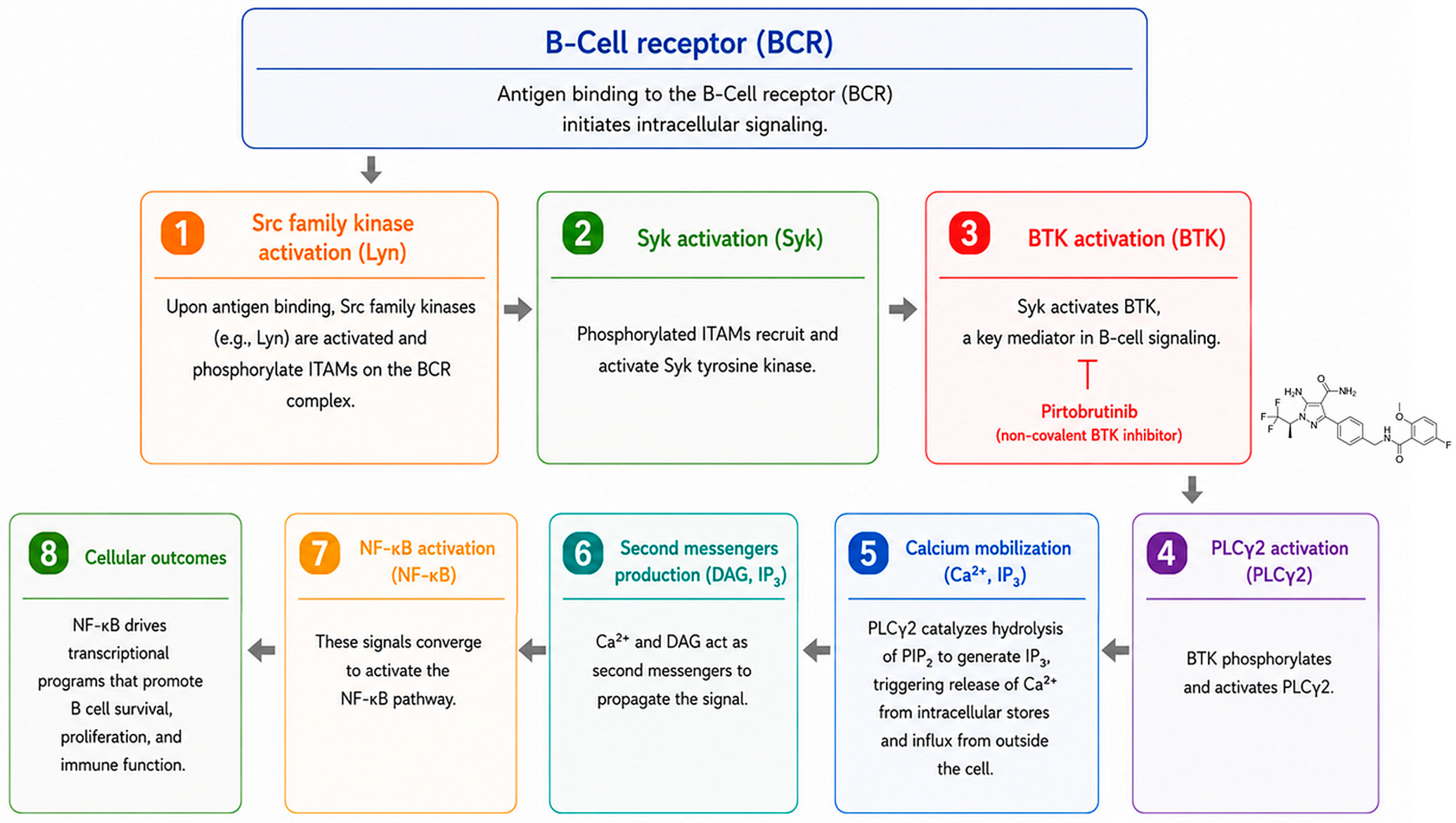



| TEAE | Frequency/Severity | Timing/Clinical Features | Recommended Management |
|---|---|---|---|
| Infections | Common; severity variable, including grade ≥ 3 events | May occur at any time during treatment; includes respiratory and viral infections, with higher clinical relevance in heavily pretreated or immunocompromised patients | Monitor closely for fever and infection symptoms; initiate prompt diagnostic workup and antimicrobial therapy as indicated; consider dose interruption for severe infection. |
| Hemorrhage/bruising/contusion | Common overall; major hemorrhage uncommon | Usually low-grade bruising or contusion, but serious bleeding can occur; risk may increase with anticoagulants, antiplatelet agents, or thrombocytopenia | Review bleeding risk and concomitant medications; monitor clinically; interrupt treatment for significant bleeding and resume only after risk–benefit reassessment. |
| Cytopenias (neutropenia, anemia, thrombocytopenia) | Common; may be grade ≥ 3, especially neutropenia | Often detected during routine monitoring; may contribute to infection risk, fatigue, or bleeding | Perform serial CBC monitoring; use dose interruption or reduction for clinically significant cytopenias; provide growth factor support or transfusion as appropriate. |
| Fatigue | Common; usually grade 1–2 | Frequently reported across BRUIN cohorts; may accumulate over time and may be multifactorial | Evaluate reversible causes, optimize hydration and nutrition, encourage activity pacing, and consider dose modification for persistent grade ≥ 3 fatigue. |
| Gastrointestinal toxicity (diarrhea, nausea, abdominal symptoms) | Common; mostly grade 1–2 | Usually early or intermittent during therapy; generally manageable with supportive care | Use hydration, dietary adjustment, and antidiarrheal/antiemetic therapy as needed; consider dose modification for persistent or severe symptoms. |
| Musculoskeletal and constitutional symptoms (musculoskeletal pain, arthralgia, headache) | Common; usually low grade | May emerge during ongoing therapy; typically non-limiting but can affect quality of life | Symptomatic treatment with analgesics and supportive care; reassess if persistent or function-limiting. |
| Dyspnea/cough | Common; usually grade 1–2, occasionally clinically significant | May reflect treatment-related symptoms, infection, anemia, or underlying cardiopulmonary disease | Evaluate for infection, anemia, and disease progression; manage symptomatically; interrupt therapy if severe or unexplained. |
| Cardiac arrhythmias (including atrial fibrillation/flutter) | Uncommon; grade ≥ 3 events relatively infrequent | May occur during treatment, particularly in patients with prior cardiac disease or risk factors | Assess baseline cardiovascular history; monitor clinically for palpitations or rhythm disturbance; interrupt and manage according to severity. |
| Rash and other cutaneous events | Less common; usually mild to moderate | Typically develops during treatment exposure and is often manageable | Use emollients, antihistamines, or topical corticosteroids when needed; interrupt treatment for severe skin toxicity. |
| Laboratory abnormalities/biochemical changes | Variable; may include grade ≥ 3 hematologic laboratory abnormalities | Usually detected on routine monitoring rather than by symptoms alone | Regular laboratory surveillance and correction of reversible abnormalities; manage according to severity and associated clinical findings. |
| Rare serious events (severe infection, major bleeding, cardiac events) | Rare but clinically important | More relevant in older, heavily pretreated, or comorbid populations | Prompt evaluation, treatment interruption, and specialist-directed management when severe toxicity is suspected. |
| Trial/Study | Population | Cancer Setting | Design | Combination | Key Findings | Inclusion/ Eligibility Criteria |
|---|---|---|---|---|---|---|
| BRUIN phase 1/2 (NCT03740529) [33] | R/R B-cell malignancies; key NHL cohort: MCL after prior covalent BTKi | R/R NHL (primarily MCL) | Multicenter, open-label, phase 1/2 | Monotherapy | ORR ~52% in cBTKi-pretreated MCL; durable responses | ≥1 prior therapy; prior covalent BTKi required for MCL cohort |
| BRUIN MCL registration cohort [111] | n = 120 R/R MCL; median ~3 prior lines | R/R MCL after ≥2 prior lines incl. BTKi | Open-label, single-arm | Monotherapy | ORR 50%, CR 13%, median DoR 8.3 months; basis for approval | Prior BTKi required; majority refractory |
| BRUIN MCL-321 (NCT04662255) [78] | Previously treated, BTKi-naïve MCL | R/R MCL (earlier-line) | Global, randomized, phase III | Monotherapy vs. investigator’s choice BTKi | Ongoing confirmatory trial; primary endpoint: PFS | ≥1 prior therapy; no prior BTKi |
| BRUIN (follicular lymphoma cohort) [74] | R/R FL; median ~3 prior lines | R/R indolent NHL (FL) | Phase 1/2 cohort analysis | Monotherapy | ORR ~52%, CR ~16.7%; median DoR ~10 months | Relapsed/refractory FL |
| BRUIN (marginal zone lymphoma cohort) [75] | R/R MZL | R/R indolent NHL (MZL) | Phase 1/2 cohort analysis | Monotherapy | ORR ~55%; durable responses | Prior therapy required |
| BRUIN (Richter transformation cohort) [112] | RT (DLBCL-type) | Aggressive lymphoma | Phase 1/2 subgroup analysis | Monotherapy | Encouraging activity in high-risk population | Prior therapies allowed |
| GATE1 (NCT06522386) [95] | Previously untreated MCL | Frontline MCL | Phase II | Pirtobrutinib + rituximab + venetoclax | Ongoing triplet targeted strategy | Untreated MCL |
| Pirtobrutinib + venetoclax (NCT05529069) [96] | Relapsed/refractory MCL | R/R MCL | Phase II | Combination | Ongoing; BTK–BCL2 targeting | Prior therapy required |
| Pirtobrutinib + rituximab (NCT06263491) [97] | Newly diagnosed low/intermediate-risk MCL | Frontline MCL | Phase II | Combination | Ongoing chemo-free strategy | Untreated MCL |
| Pirtobrutinib + glofitamab (NCT06252675) [98] | Relapsed/refractory mantle cell lymphoma | R/R MCL | Phase II | Combination | Ongoing exploratory regimen | Relapsed/refractory disease |
| TEAE | Frequency/Severity | Timing/Clinical Features | Recommended Management |
|---|---|---|---|
| Peripheral neuropathy | Common; cumulative; usually grade 1–2, but may reach grade ≥ 3 | A key toxicity across NHL studies. In ECHELON-2, peripheral neuropathy occurred in 52% and was predominantly sensory, with median onset at 2 months; in ECHELON-3, it occurred in 27%, with median onset at 3 months. | Regular neurologic assessment; dose delay, reduction, or discontinuation for persistent or severe neuropathy; supportive care for neuropathic symptoms. |
| Hematologic toxicity (neutropenia, anemia, thrombocytopenia, febrile neutropenia) | Common; neutropenia may be severe, especially in combination regimens | In ECHELON-2, febrile neutropenia occurred in 18% with A + CHP versus 15% with CHOP. In ECHELON-3, dose delays were commonly driven by neutropenia (23%) and thrombocytopenia (8%). | CBC monitoring before each cycle; growth factor support when indicated; dose modification; transfusion or infection-directed management as needed; urgent treatment of febrile neutropenia. |
| Gastrointestinal toxicity (nausea, diarrhea, constipation, vomiting, abdominal pain, decreased appetite) | Common; mostly grade 1–2 | In ECHELON-2, nausea and diarrhea were among the adverse reactions seen more often with A + CHP; in ECHELON-3, diarrhea occurred in 31% of patients receiving BV-based therapy. | Antiemetics, hydration, dietary support, bowel regimen, and dose adjustment for persistent or severe symptoms. |
| Fatigue/asthenia | Common; generally low grade, occasionally grade ≥ 3 | Fatigue is a recurrent toxicity in BV-treated NHL populations. In ECHELON-2, fatigue/asthenia was more frequent with A + CHP than CHOP; in ECHELON-3, fatigue occurred in 46% of BV-treated patients. | Assess reversible contributors, optimize nutrition and hydration, encourage activity pacing, and consider dose modification for persistent grade ≥ 3 fatigue. |
| Pyrexia and infections | Common to serious; severity variable | In ECHELON-2, pyrexia was more frequent with A + CHP. In ECHELON-3, serious adverse reactions included pneumonia (21%), COVID-19 (13%), sepsis (9%), and febrile neutropenia (7%). | Prompt infection workup, antimicrobial therapy when indicated, supportive care, and treatment interruption for serious infectious events. |
| Respiratory toxicity/pulmonary events | Less common but potentially severe | May present with dyspnea, cough, pneumonitis, interstitial changes, or infectious pneumonia. Pulmonary toxicity is included in the prescribing information warnings; pneumonia was a major serious AE in ECHELON-3. | Evaluate urgently to distinguish infection, drug toxicity, and disease progression; interrupt treatment; provide supportive care; discontinue in severe or recurrent cases. |
| Cutaneous toxicity (rash, pruritus) | Common; usually mild to moderate | Rash is among the common adverse reactions reported with BV-containing regimens, including ECHELON-3. | Emollients, antihistamines, topical corticosteroids if needed, and treatment interruption for severe skin toxicity. |
| Infusion-related reactions | Uncommon to less common; occasionally severe | Typically occur during or shortly after infusion; manifestations may include chills, nausea, dyspnea, pruritus, pyrexia, or cough. | Slow or interrupt infusion, provide symptomatic treatment, consider premedication in selected patients, and discontinue for severe recurrent reactions. |
| Hepatotoxicity | Uncommon but clinically relevant; occasionally severe | Can occur after the first dose or on rechallenge, with transaminase and/or bilirubin elevation. | Monitor liver function tests before and during therapy; delay, reduce, or discontinue treatment for clinically significant hepatotoxicity. |
| Serious neurologic and opportunistic events (including PML) | Rare but potentially life-threatening | The prescribing information carries a boxed warning for JC virus-associated PML; onset may occur at variable times after treatment initiation. | Immediate evaluation of new neurologic symptoms; hold therapy if PML is suspected; permanently discontinue if confirmed. |
| Rare serious systemic events (pancreatitis, severe dermatologic reactions, gastrointestinal complications, hyperglycemia) | Rare but clinically important | These events are less frequent but are highlighted in the prescribing information as important safety concerns. | Prompt evaluation and supportive management; interrupt or discontinue treatment according to severity and clinical context. |
| Trial/Study | Population | Cancer Setting | Design | Combination | Key Findings | Inclusion/ Eligibility Criteria |
|---|---|---|---|---|---|---|
| Study 2 (NCT00866047) [35] | Relapsed/refractory sALCL (n = 58) | Relapsed/refractory | Phase II, open-label, single-arm, multicenter | Brentuximab vedotin | ORR 86%, CR 57%; median DoR 12.6 months; durable responses in heavily pretreated patients | Histologically confirmed sALCL; ≥1 prior systemic therapy; relapsed or refractory disease; prior auto-HSCT allowed |
| ECHELON-2 (NCT01777152) [36] | Previously untreated CD30+ PTCL, including sALCL, PTCL-NOS, AITL (n = 452) | Front-line | Phase III, randomized, double-blind, active-controlled | Brentuximab vedotin + CHP vs. CHOP | Improved PFS (48.2 vs. 20.8 months; HR 0.71) and OS benefit; established BV + CHP as standard in CD30+ PTCL | CD30 expression ≥10%; untreated PTCL; ECOG 0–1; adequate organ function |
| ALCANZA (NCT01578499) [140] | CD30+ cutaneous T-cell lymphoma (CTCL), including mycosis fungoides and pcALCL (n = 131) | Relapsed/refractory | Phase III, randomized, open-label, multicenter | Brentuximab vedotin vs. physician’s choice (methotrexate or bexarotene) | Durable response ≥4 months: 56.3% vs. 12.5%; superior disease control vs. standard options | Prior systemic therapy; CD30+ MF or pcALCL; candidates for systemic treatment |
| ECHELON-3 (NCT04404283) [142] | Relapsed/refractory LBCL, including DLBCL and HGBL (n = 230) | Relapsed/refractory | Phase III, randomized, double-blind, placebo-controlled | Brentuximab vedotin + lenalidomide + rituximab vs. placebo + lenalidomide + rituximab | Improved OS (13.8 vs. 8.5 months; HR 0.63); PFS and ORR benefit (64.3% vs. 41.5%) | ≥2 prior lines; transplant/CAR-T ineligible; ECOG 0–2; measurable disease |
| TEAE | Frequency/Severity | Timing/Clinical Features | Recommended Management |
|---|---|---|---|
| Gastrointestinal toxicity (nausea, vomiting, decreased appetite, diarrhea, constipation, abdominal pain) | Common; mostly grade 1–2 | Usually early during treatment; may reduce oral intake and impair tolerability | Antiemetics, hydration, dietary support, bowel regimen, and dose delay/reduction for persistent or severe symptoms |
| Fatigue | Common; usually grade 1–2, occasionally grade ≥ 3 | May emerge early and accumulate over cycles; often multifactorial | Assess reversible causes, optimize supportive care, and consider dose modification for persistent grade ≥ 3 fatigue |
| Hematologic toxicity (anemia, thrombocytopenia, neutropenia, febrile neutropenia) | Common; clinically significant in some patients | May occur during early or subsequent cycles, especially in heavily pretreated patients | Regular CBC monitoring, dose interruption/reduction, transfusional support, and prompt management of febrile neutropenia or severe cytopenias |
| Pyrexia and infections | Common to less common; severity variable | Fever may be isolated or associated with infection, particularly in cytopenic patients | Prompt evaluation for infection, supportive care, antimicrobial therapy when indicated, and treatment interruption for serious events |
| Respiratory and fluid-related events (dyspnea, cough, peripheral edema) | Common; occasionally grade ≥ 3 | May reflect treatment effect, infection, anemia, comorbidity, or disease progression | Clinical assessment, supportive management, and treatment interruption with further workup for severe symptoms |
| Cutaneous toxicity (rash, pruritus) | Usually mild to moderate | Develops during treatment exposure; generally manageable | Emollients, antihistamines, topical corticosteroids if needed, and treatment interruption for severe skin toxicity |
| Laboratory abnormalities (hypokalemia, elevated LDH, other biochemical changes) | Usually mild to moderate; occasionally clinically relevant | Often detected on routine monitoring | Serial laboratory monitoring, electrolyte replacement, and correction of contributing factors |
| Cardiovascular events (QT prolongation, hypotension, dizziness) | Less common but clinically relevant | May occur during infusion or early cycles; risk increased by electrolyte imbalance or cardiac comorbidity | Review concomitant drugs, correct electrolytes, monitor at-risk patients, and interrupt treatment for symptomatic or severe events |
| Hepatotoxicity | Uncommon but potentially severe | May present with elevated liver enzymes or clinical liver dysfunction | Monitor liver function tests before and during therapy; interrupt or discontinue treatment for significant hepatic toxicity |
| Rare serious events (tumor lysis syndrome, multisystem toxicity) | Rare but potentially life-threatening | More likely early in treatment, particularly in patients with high tumor burden | Risk assessment, prophylaxis in high-risk patients, close monitoring, and immediate supportive management with treatment interruption if suspected |
| Infusion-related and other less frequent general events (chills, headache, phlebitis, infusion-site pain) | Usually low grade | Typically occur during or shortly after infusion | Symptomatic treatment, local supportive care, and infusion interruption/slowing if clinically indicated |
| Trial/Study | Population | Cancer Setting | Design | Combination | Key Findings | Inclusion/ Eligibility Criteria |
|---|---|---|---|---|---|---|
| BELIEF (NCT00865969) [40] | Relapsed/refractory PTCL (n = 129), including PTCL-NOS, AITL, ALK−ALCL; subset with thrombocytopenia (n ≈ 38) | Relapsed/refractory | Phase II, open-label, single-arm, multicenter (with post hoc subgroup analysis) | Belinostat monotherapy | ORR 25.8%, CR 10.8%; median DoR 13.6 months; clinically meaningful activity in heavily pretreated PTCL; subset analysis: maintained activity (~15–20% ORR) in patients with thrombocytopenia with manageable hematologic toxicity | ≥1 prior systemic therapy; histologically confirmed PTCL; measurable disease; ECOG 0–2; adequate organ function; platelet count < 100 × 109/L permitted in subset |
| Bel-CHOP Phase I/II combination study (NCT01839097) [204] | Relapsed/refractory aggressive NHL, including PTCL and DLBCL | Relapsed/refractory | Phase I/II, open-label, dose-escalation and expansion | Belinostat + CHOP (Bel-CHOP) | Acceptable safety profile; high response rates in PTCL cohorts (ORR > 80% in some subsets); supports combination strategies | Untreated or relapsed aggressive NHL; adequate organ function; ECOG 0–2; dose-limiting toxicity assessment in escalation phase |
| Early phase study (NCT00274651) [202] | Relapsed/refractory T-cell lymphoma and other NHL subtypes | Relapsed/refractory | Phase I, open-label, dose-escalation | Belinostat monotherapy | Demonstrated safety, tolerability, and preliminary antitumor activity; established recommended dosing schedule | Advanced NHL after prior therapy; measurable disease; adequate marrow, hepatic, and renal function |
| Belinostat + carboplatin/paclitaxel (NCT00421889) [207] | Relapsed/refractory aggressive lymphomas (including PTCL and DLBCL) | Relapsed/refractory | Phase I/II | Combination (chemotherapy backbone) | Manageable toxicity; preliminary antitumor activity | Relapsed/refractory NHL; adequate organ function |
| Belinostat + azacitidine (NCT00351975) [208] | T-cell lymphomas (PTCL) | Relapsed/refractory | Phase I/II | Combination (epigenetic therapy) | Early evidence of synergistic activity via dual epigenetic modulation | Relapsed/refractory PTCL; measurable disease |
| Belinostat-based HDAC combinations (various early-phase studies) [209,210,211] | Advanced lymphomas (various NHL subtypes) | Relapsed/refractory | Early phase | Combination (epigenetic/targeted) | Exploratory strategies; limited clinical data | Advanced NHL; prior therapies allowed |
| Agent | Therapeutic Class | Primary Molecular Target | Main NHL Indications | Biomarker Relevance | Key Resistance Mechanisms | Major Toxicities | Evidence Maturity | Potential Combination Strategies |
|---|---|---|---|---|---|---|---|---|
| Pirtobrutinib | Noncovalent Bruton tyrosine kinase (BTK) inhibitor | BTK within B-cell receptor (BCR) signaling pathway | Relapsed/refractory mantle cell lymphoma (MCL); other relapsed B-cell NHL subtypes under investigation | BTK pathway dependence; prior covalent BTK inhibitor exposure; B-cell molecular phenotype | BTK-independent signaling escape; PLCγ2 alterations; clonal evolution; microenvironment-mediated survival signaling | Neutropenia, fatigue, infections, diarrhea, bleeding events, atrial fibrillation (less frequent than with earlier BTK inhibitors) | Primarily early-phase and registration-supporting evidence; ongoing confirmatory studies | Venetoclax; anti-CD20 monoclonal antibodies; bispecific antibodies; CAR-T sequencing approaches |
| Brentuximab Vedotin | CD30-directed antibody–drug conjugate (ADC) | CD30 surface antigen linked to monomethyl auristatin E (MMAE) payload | Systemic anaplastic large-cell lymphoma (sALCL); CD30-positive peripheral T-cell lymphoma (PTCL); selected CD30-positive diffuse large B-cell lymphoma (DLBCL) | CD30 expression level and distribution; tumor microenvironment characteristics | CD30 downregulation or heterogeneity; impaired ADC internalization; drug efflux mechanisms; MMAE resistance | Peripheral neuropathy, neutropenia, fatigue, infusion-related reactions, infections | Randomized and practice-changing evidence in selected CD30-positive lymphomas | Nivolumab; chemotherapy regimens (e.g., CHP); bispecific antibodies; immune-based combinations |
| Belinostat | Histone deacetylase (HDAC) inhibitor | Class I and II HDAC enzymes involved in epigenetic regulation | Relapsed/refractory peripheral T-cell lymphoma (PTCL) | Epigenetic dysregulation; histone acetylation profiles; exploratory chromatin-remodeling markers | Epigenetic adaptation; compensatory survival signaling; tumor heterogeneity; limited biomarker-guided selection | Nausea, fatigue, thrombocytopenia, anemia, infections, hepatic enzyme elevation | Primarily single-arm and early-phase evidence; limited randomized confirmatory data | Hypomethylating agents; chemotherapy combinations; immunomodulatory agents; exploratory targeted combinations |
| Modality | Indication/When Used | Example Regimens/Agents | Key Evidence | Biomarkers/Toxicity |
|---|---|---|---|---|
| Active surveillance | Asymptomatic, low–tumor burden indolent NHL (e.g., FL) | Observation | NCCN/ESMO guidance [1,2,318] | No immediate biomarker-driven trigger; risk of delayed treatment; requires close monitoring |
| Radiotherapy (ISRT) | Limited-stage disease; palliation of localized symptoms | Involved-site RT | Practice guidelines [1,2,318] | Site-dependent toxicity; marrow suppression; organ-specific late effects |
| Front-line chemoimmunotherapy (aggressive B-cell NHL) | Newly diagnosed DLBCL and aggressive B-cell NHL | R-CHOP; pola-R-CHP | POLARIX; historical R-CHOP trials [319,320] | COO subtype, MYC/BCL2/BCL6; toxicities: cytopenias, cardiotoxicity, neuropathy |
| Anti-CD20–based therapy (indolent NHL) | First-line or relapsed follicular and CD20 + NHL | Rituximab monotherapy; BR; rituximab-chemotherapy followed by maintenance in selected cases | StiL; BRIGHT [321,322] | CD20 expression; infections, hypogammaglobulinemia, HBV reactivation |
| BTKi (MCL) | Relapsed/refractory MCL | Pirtobrutinib | BRUIN study [33] | MCL subtype; bleeding, infections, atrial arrhythmias (class effect) |
| Immunomodulatory combinations | Transplant-ineligible relapsed/refractory DLBCL | Tafasitamab + lenalidomide | L-MIND [323] | CD19 expression; neutropenia, infections, thromboembolism |
| Bispecific antibodies | Relapsed/refractory B-cell NHL (DLBCL, FL) | Epcoritamab; glofitamab; mosunetuzumab | EPCORE NHL-1; NP30179; GO29781 [324,325,326] | CD20 expression; CRS, ICANS, cytopenias |
| ADCs | Front-line (selected) or relapsed NHL; CD30+ PTCL | Polatuzumab vedotin; brentuximab vedotin; brentuximab vedotin + lenalidomide + rituximab in relapsed/refractory LBCL | POLARIX; ECHELON-2 [36,319] | CD79b (pola), CD30 (BV); neuropathy, cytopenias |
| Epigenetic therapy (HDAC inhibitors) | Relapsed/refractory PTCL | Belinostat | BELIEF trial [40] | No routine biomarker; myelosuppression, fatigue, hepatotoxicity |
| CAR-T cell therapy | Relapsed/refractory LBCL; early relapse or refractory disease | Axi-cel; liso-cel; other approved CD19 CAR-T products by subtype/line | ZUMA-1; TRANSCEND [327,328] | CD19 expression; CRS, ICANS, prolonged cytopenias |
| Stem-cell transplantation | Selected relapsed/refractory aggressive NHL or PTCL | Auto-HSCT; allo-HSCT in selected cases | Historical transplant data [1,2,318] | Fitness, disease status; TRM, GVHD (allo), infections |
Disclaimer/Publisher’s Note: The statements, opinions and data contained in all publications are solely those of the individual author(s) and contributor(s) and not of MDPI and/or the editor(s). MDPI and/or the editor(s) disclaim responsibility for any injury to people or property resulting from any ideas, methods, instructions or products referred to in the content. |
© 2026 by the authors. Licensee MDPI, Basel, Switzerland. This article is an open access article distributed under the terms and conditions of the Creative Commons Attribution (CC BY) license.
Share and Cite
Kawczak, P.; Bączek, T. Precision Medicine in Non-Hodgkin Lymphoma: Advances in BTK Inhibition, CD30-Directed Antibody–Drug Conjugates, and HDAC-Mediated Epigenetic Therapy with Pirtobrutinib, Brentuximab Vedotin, and Belinostat. J. Clin. Med. 2026, 15, 4425. https://doi.org/10.3390/jcm15124425
Kawczak P, Bączek T. Precision Medicine in Non-Hodgkin Lymphoma: Advances in BTK Inhibition, CD30-Directed Antibody–Drug Conjugates, and HDAC-Mediated Epigenetic Therapy with Pirtobrutinib, Brentuximab Vedotin, and Belinostat. Journal of Clinical Medicine. 2026; 15(12):4425. https://doi.org/10.3390/jcm15124425
Chicago/Turabian StyleKawczak, Piotr, and Tomasz Bączek. 2026. "Precision Medicine in Non-Hodgkin Lymphoma: Advances in BTK Inhibition, CD30-Directed Antibody–Drug Conjugates, and HDAC-Mediated Epigenetic Therapy with Pirtobrutinib, Brentuximab Vedotin, and Belinostat" Journal of Clinical Medicine 15, no. 12: 4425. https://doi.org/10.3390/jcm15124425
APA StyleKawczak, P., & Bączek, T. (2026). Precision Medicine in Non-Hodgkin Lymphoma: Advances in BTK Inhibition, CD30-Directed Antibody–Drug Conjugates, and HDAC-Mediated Epigenetic Therapy with Pirtobrutinib, Brentuximab Vedotin, and Belinostat. Journal of Clinical Medicine, 15(12), 4425. https://doi.org/10.3390/jcm15124425