Effectiveness of Therapeutic Exercise in Reducing the Severity of Primary Dysmenorrhea and Associated Symptoms: A Systematic Review and Meta-Analysis

 ,
,  ,
,  ,
,  and
and
Abstract
1. Introduction
2. Materials and Methods
2.1. Protocol
2.2. Data Sources and Searches
2.3. Study Selection
2.4. Data Extraction
2.5. Risk of Bias and Certainty of Evidence Assessment
2.6. Statistical Methods
3. Results
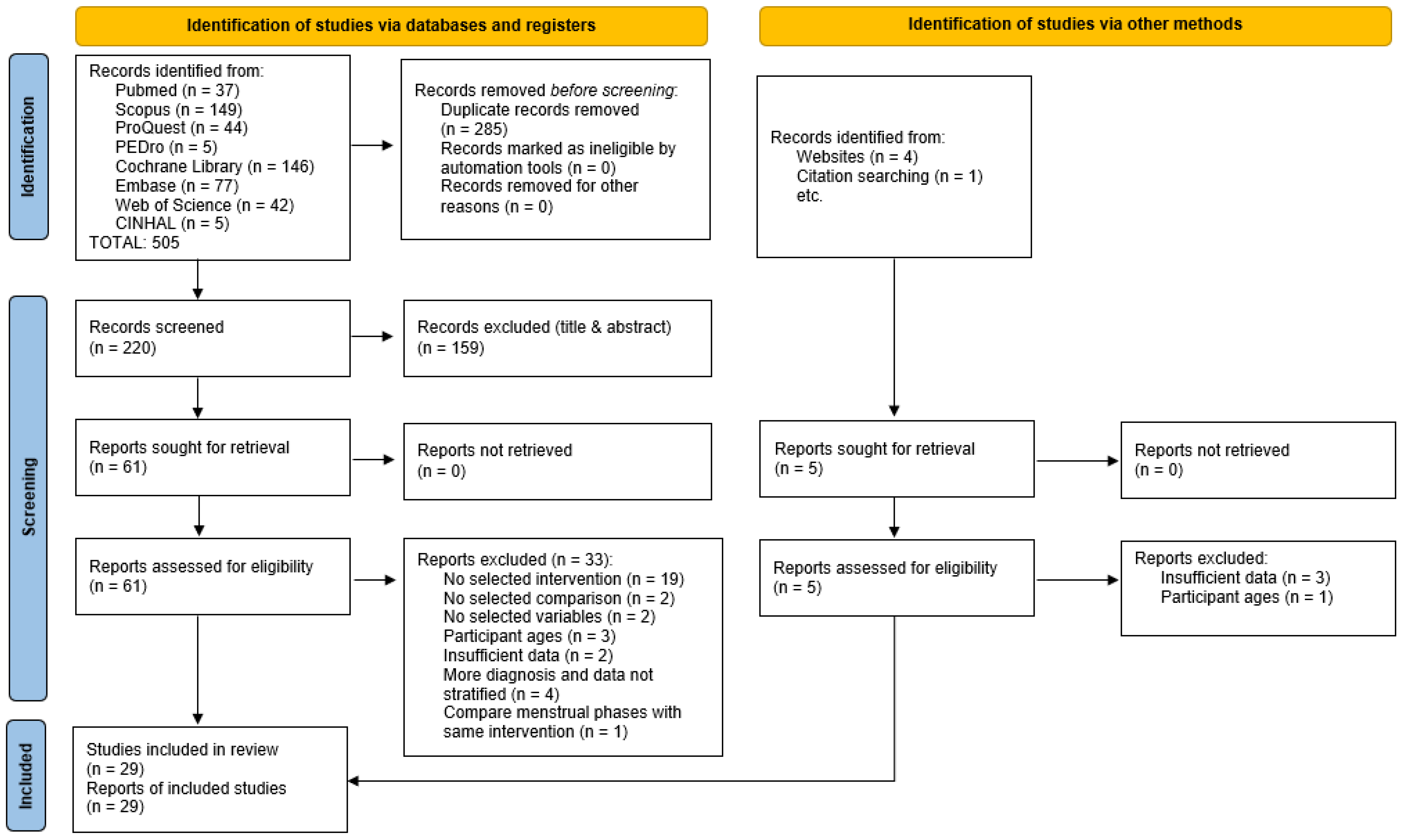
3.1. Study Selection
3.2. Characteristics of the Included Studies
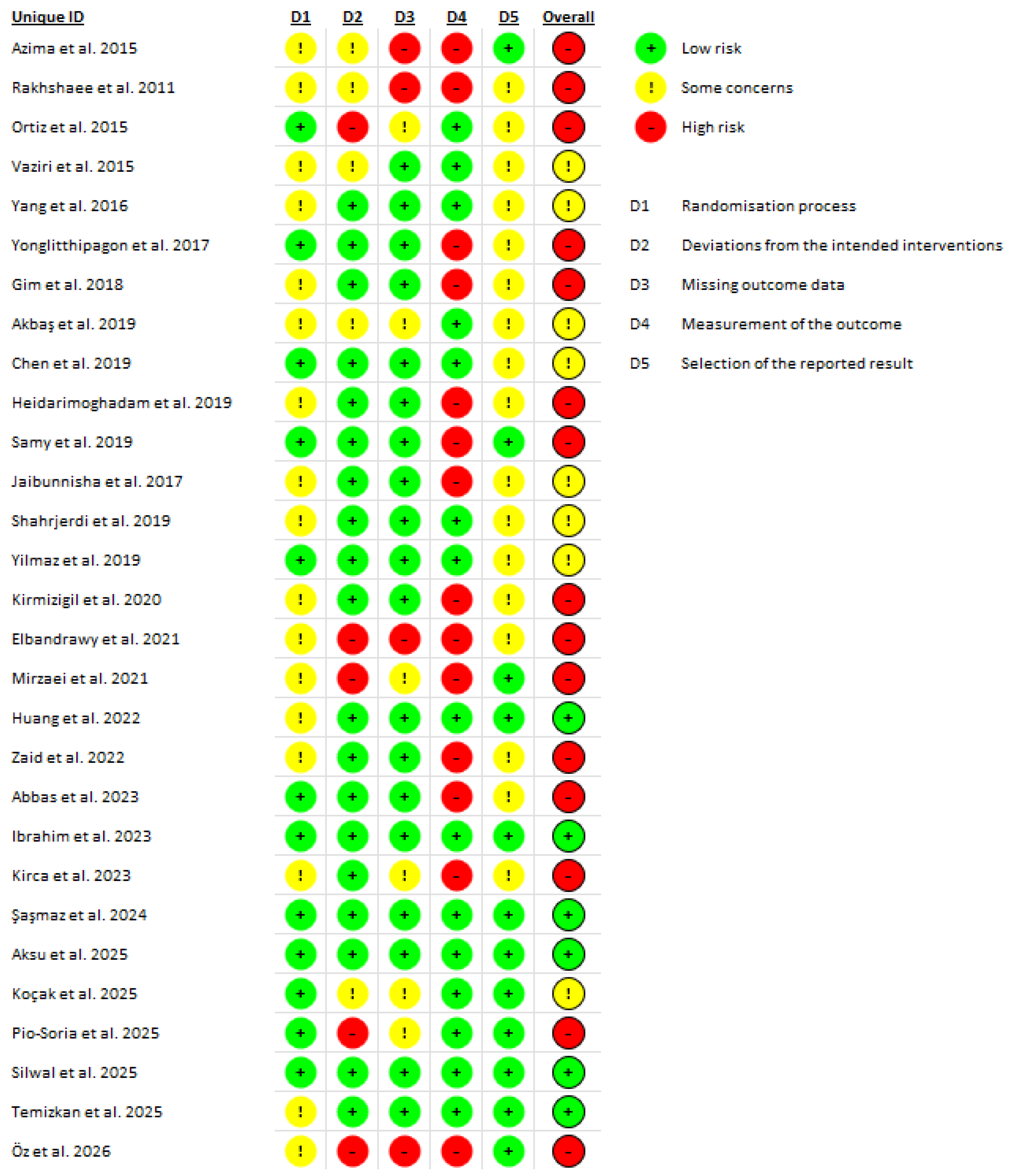
3.3. Risk of Bias
3.4. Quantitative Analysis of the Included Studies
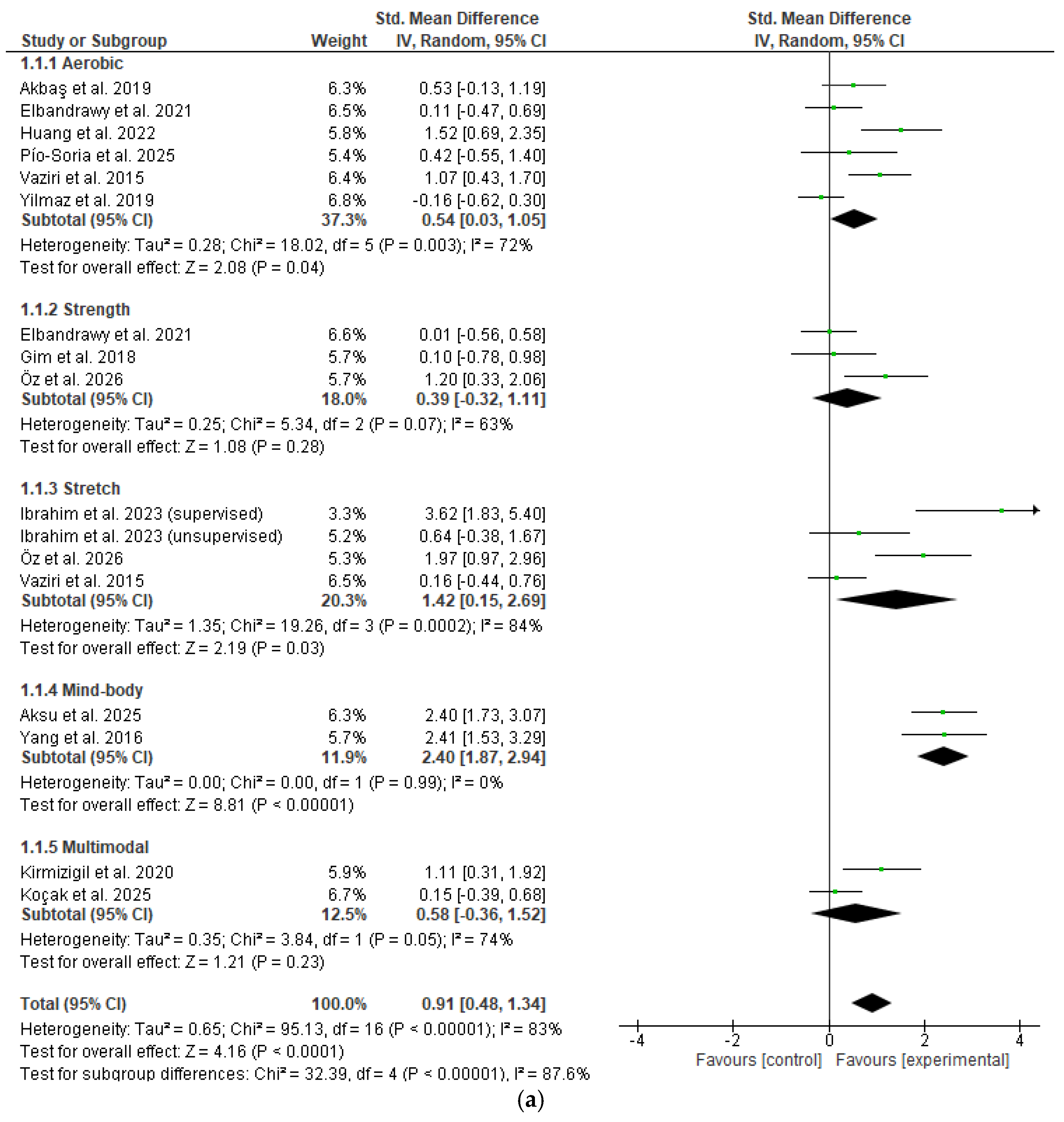
3.4.1. Symptom Severity
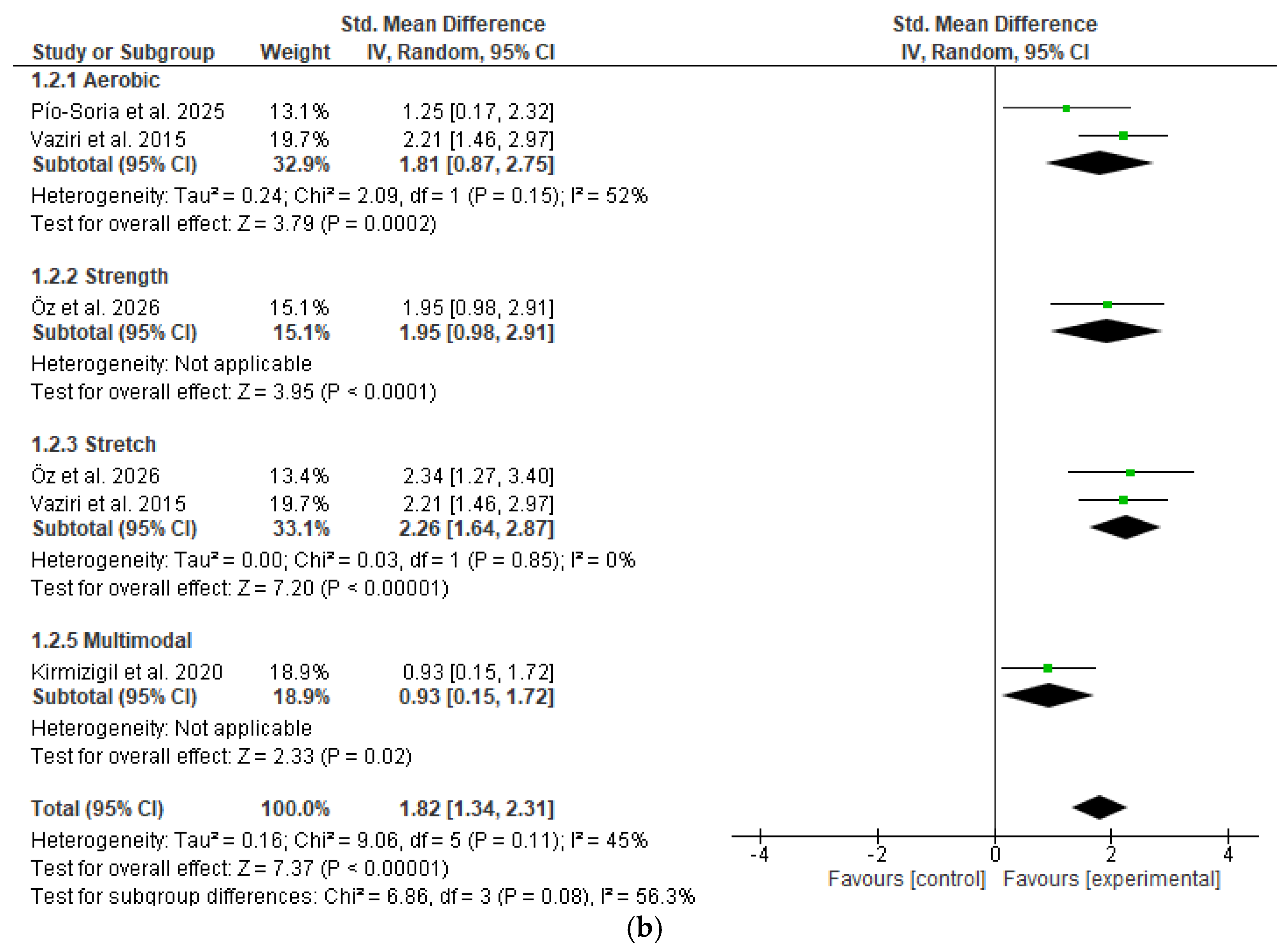
3.4.2. Pain Intensity
3.4.3. Pain Duration
3.4.4. Secondary Outcomes
3.5. Secondary Subgroup Analysis
3.6. Dropouts Analysis
3.7. Publication Bias
4. Discussion
4.1. Clinical Implications
4.2. Limitations
5. Conclusions
Supplementary Materials
Author Contributions
Funding
Institutional Review Board Statement
Informed Consent Statement
Data Availability Statement
Acknowledgments
Conflicts of Interest
Abbreviations
| PD | Primary dysmenorrhea |
| TE | Therapeutic exercise |
| PRISMA | Preferred Reporting Items for Systematic Reviews and Meta-Analyses |
| CENTRAL | Cochrane Central Register of Controlled Trials |
| RCT | Randomized controlled trial |
| MeSH | Medical Subject Headings |
| COMET | Core outcome measures in effectiveness trials |
| RoB | Risk of bias |
| GRADE | Grading of Recommendations Assessment, Development and Evaluation |
| MD | Mean difference |
| SMD | Standardized mean difference |
| CI | Confidence interval |
| MDQ | Menstrual Distress Questionnaire |
| MSQ | Menstrual Symptom Questionnaire |
| PMSS | Premenstrual Syndrome Scale |
| VMS | Verbal Multidimensional Scoring system |
| VAS | Visual Analogue Scale |
| NRS | Numerical Rating Scale |
| SF-36 | 36-Item Short Form Health Survey |
| SF-12 | 12-Item Short Form Health Survey |
| STAI | Spielberger State–Trait Anxiety Inventory |
| DASS-21 | Depression Anxiety Stress Scale-21 |
| BDI | Beck Depression Inventory |
| PSQI | Pittsburgh Sleep Quality Index |
| WHIIRS | Women’s Health Initiative Insomnia Rating Scale |
References
- de Arruda, G.T.; Barbosa-Silva, J.; Driusso, P.; Pathmanathan, C.; Armijo-Olivo, S.; Avila, M.A. Worldwide prevalence of dys-menorrhea: A systematic review and meta-analysis across 70 countries. Pain 2026, 167, 41–55. [Google Scholar] [CrossRef] [PubMed]
- Latthe, P.; Latthe, M.; Say, L.; Gülmezoglu, M.; Khan, K.S. WHO systematic review of prevalence of chronic pelvic pain: A neglected reproductive health morbidity. BMC Public Health 2006, 6, 177. [Google Scholar] [CrossRef]
- Dydyk, A.M.; Singh, C.; Gupta, N. Chronic Pelvic Pain. 2025 May 2. In StatPearls [Internet]; Last Update: 2 May 2025; StatPearls Publishing: Treasure Island, FL, USA, 2026. [Google Scholar]
- Samaha, I.; Donayeva, A.; Amanzholkyzy, A.; Abdelazim, I.; Nurgaliyeva, R.; Gubasheva, G.; Saparbayev, S.; Ayaganov, D.; Kaldybayeva, A. The impact of primary dysmenorrhea on adolescents’ activities and school attendance. J. Med. Life 2023, 16, 1462–1467. [Google Scholar] [CrossRef] [PubMed]
- Serya, H.; El-Kurdy, R.; Serria, E.; El-Gilany, A.H. Dysmenorrhea among working women and its effect on their work productivity and activity impairment. J. Egypt. Public Health Assoc. 2025, 100, 18. [Google Scholar] [CrossRef] [PubMed]
- Adib-Rad, H.; Kheirkha, F.; Faramarzi, M.; Omidvar, S.; Basirat, Z.; Haji Ahmadi, M. Primary Dysmenorrhea Associated with Psychological Distress in Medical Sciences Students in The North of Iran: A Cross-Sectional Study. Int. J. Fertil. Steril. 2022, 16, 224–229. [Google Scholar] [CrossRef]
- Ishikura, I.A.; Hachul, H.; Tufik, S.; Andersen, M.L. Dysmenorrhea and Sleep: A Review. Sleep Med. Clin. 2023, 18, 449–461. [Google Scholar] [CrossRef]
- Burnett, M.; Lemyre, M. No. 345-Primary Dysmenorrhea Consensus Guideline. J. Obstet. Gynaecol. Can. JOGC 2017, 39, 585–595. [Google Scholar] [CrossRef]
- Jaleel, G.; Abu Shaphe, M.; Khan, A.R.; Malhotra, D.; Khan, H.; Parveen, S.; Qasheesh, M.; Beg, R.A.; Chahal, A.; Ahmad, F.; et al. Effect of Exercises on Central and Endocrine System for Pain Modulation in Primary Dysmenorrhea. J. Lifestyle Med. 2022, 12, 15–25. [Google Scholar] [CrossRef]
- Kannan, P.; Cheung, K.K.; Lau, B.W.M. Does aerobic exercise induced-analgesia occur through hormone and inflammatory cytokine-mediated mechanisms in primary dysmenorrhea? Med. Hypotheses 2019, 123, 50–54. [Google Scholar] [CrossRef]
- Cai, J.; Liu, M.; Jing, Y.; Yin, Z.; Kong, N.; Guo, C. Aerobic exercise to alleviate primary dysmenorrhea in adolescents and young women: A systematic review and meta-analysis of randomized controlled trials. Acta Obstet. Gynecol. Scand. 2025, 104, 815–828. [Google Scholar] [CrossRef]
- Xiang, Y.; Li, Q.; Lu, Z.; Yu, Z.; Ma, G.; Liu, S.; Li, Y. Efficacy and safety of therapeutic exercise for primary dysmenorrhea: A sys-tematic review and meta-analysis. Front. Med. 2025, 12, 1540557. [Google Scholar] [CrossRef] [PubMed]
- Tsai, I.C.; Hsu, C.W.; Chang, C.H.; Lei, W.T.; Tseng, P.T.; Chang, K.V. Comparative Effectiveness of Different Exercises for Reducing Pain Intensity in Primary Dysmenorrhea: A Systematic Review and Network Meta-analysis of Randomized Controlled Trials. Sports Med. Open 2024, 10, 63. [Google Scholar] [CrossRef]
- Zheng, Q.; Huang, G.; Cao, W.; Zhao, Y. Comparative effectiveness of exercise interventions for primary dysmenorrhea: A systematic review and network meta-analysis. BMC Womens Health 2024, 24, 610. [Google Scholar] [CrossRef]
- De Sanctis, V.; Soliman, A.; Bernasconi, S.; Bianchin, L.; Bona, G.; Bozzola, M.; Buzi, F.; De Sanctis, C.; Tonini, G.; Rigon, F.; et al. Primary Dysmenorrhea in Adolescents: Prevalence, Impact and Recent Knowledge. Pediatr. Endocrinol. Rev. PER 2015, 13, 512–520. [Google Scholar] [PubMed]
- Page, M.J.; McKenzie, J.E.; Bossuyt, P.M.; Boutron, I.; Hoffmann, T.C.; Mulrow, C.D.; Shamseer, L.; Tetzlaff, J.M.; Akl, E.A.; Brennan, S.E.; et al. The PRISMA 2020 statement: An updated guideline for reporting systematic reviews. BMJ 2021, 372, n71. [Google Scholar] [CrossRef] [PubMed]
- Higgins, J.; Green, S. Cochrane Handbook for Systematic Reviews of Interventions. Cochrane Collab, 2nd ed.; John Willey & Sons: Chichester, UK, 2019. [Google Scholar]
- Williamson, P.R.; Altman, D.G.; Bagley, H.; Barnes, K.L.; Blazeby, J.M.; Brookes, S.T.; Clarke, M.; Gargon, E.; Gorst, S.; Harman, N.; et al. The COMET Handbook: Version 1.0. Trials 2017, 18, 280. [Google Scholar] [CrossRef]
- Kim, P.-W.; Kim, S.; Kim, D.-I.; Cha, J.; Lee, H.-S.; Ko, M.M.; Jang, S.; Yang, C.; Lee, M.S. Development of the Korean Medicine Core Outcome Set for Primary Dysmenorrhea (COS-PD-KM) for Herbal Medicine Treatment of Primary Dysmenorrhea in Primary Clinics. Int. J. Environ. Res. Public Health 2022, 19, 15321. [Google Scholar] [CrossRef] [PubMed]
- Ortiz, M.I.; Cortés-Márquez, S.K.; Romero-Quezada, L.C.; Murguía-Cánovas, G.; Jaramillo-Díaz, A.P. Effect of a physiotherapy program in women with primary dysmenorrhea. Eur. J. Obstet. Gynecol. Reprod. Biol. 2015, 194, 24–29. [Google Scholar] [CrossRef] [PubMed]
- Sterne, J.A.C.; Savović, J.; Page, M.J.; Elbers, R.G.; Blencowe, N.S.; Boutron, I.; Cates, C.J.; Cheng, H.Y.; Corbett, M.S.; Eldridge, S.M.; et al. RoB 2: A revised tool for assessing risk of bias in randomised trials. BMJ 2019, 366, l4898. [Google Scholar] [CrossRef]
- Guyatt, G.; Oxman, A.D.; Akl, E.A.; Kunz, R.; Vist, G.; Brozek, J.; Norris, S.; Falck-Ytter, Y.; Glasziou, P.; DeBeer, H.; et al. GRADE guidelines: 1. Introduction-GRADE evidence profiles and summary of findings tables. J. Clin. Epidemiol. 2011, 64, 383–394. [Google Scholar] [CrossRef] [PubMed]
- Xu, J.; Gao, Y.; Tian, J. Evaluating Tools for Assessing Bias in a Meta-Analysis of Clinical Trials on Race and RAS Blockade. JAMA 2024, 332, 1485–1486. [Google Scholar] [CrossRef]
- Abbas, M.; Afify, A.; Sayed, A. Impact of Different Exercise Techniques on Menstrual Pain Severity in Postacute Covid-19 Women. J. Popul. Ther. Clin. Pharmacol. 2023, 30, 177–183. [Google Scholar] [CrossRef]
- Elbandrawy, A.M.; Elhakk, S.M. Comparison between the effects of aerobic and isometric exercises on primary dysmenorrhea. Acta Gymnica 2021, 51, e2021.014. [Google Scholar] [CrossRef]
- Samy, A.; Zaki, S.S.; Metwally, A.A.; Mahmoud, D.S.E.; Elzahaby, I.M.; Amin, A.H.; Eissa, A.I.; Abbas, A.M.; Hussein, A.H.; Talaat, B.; et al. The Effect of Zumba Exercise on Reducing Menstrual Pain in Young Women with Primary Dysmenorrhea: A Randomized Controlled Trial. J. Pediatr. Adolesc. Gynecol. 2019, 32, 541–545. [Google Scholar] [CrossRef] [PubMed]
- Akbaş, E.; Erdem, E.U.; Akbaş, E.; Erdem, E.U. Effectiveness of Group Aerobic Training on Menstrual Cycle Symptoms in Primary Dysmenorrhea. Med. J. Bakirkoy 2019, 15, 209–216. [Google Scholar] [CrossRef]
- Aksu, A.; Vefikuluçay Yılmaz, D. The effect of yoga practice on pain intensity, menstruation symptoms and quality of life of nursing students with primary dysmenorrhea. Health Care Women Int. 2025, 46, 162–176. [Google Scholar] [CrossRef]
- Kirca, N.; Celik, A.S. The effect of yoga on pain level in primary dysmenorrhea. Health Care Women Int. 2023, 44, 601–620. [Google Scholar] [CrossRef]
- Kirmizigil, B.; Demiralp, C. Effectiveness of functional exercises on pain and sleep quality in patients with primary dysmenorrhea: A randomized clinical trial. Arch. Gynecol. Obstet. 2020, 302, 153–163. [Google Scholar] [CrossRef] [PubMed]
- Koçak, M.; Şevgin, Ö. The effect of exercise on menstrual symptoms: A randomized controlled trial. BMC Womens Health 2025, 25, 406. [Google Scholar] [CrossRef]
- Öz, A.; Yana, M. Comparison of resistance and stretching exercises in women with primary dysmenorrhea: A randomized controlled trial. J. Back. Musculoskelet. Rehabil. 2026, 39, 127–141. [Google Scholar] [CrossRef]
- Şaşmaz, Y.; Bayram, G.A. Investigation of the effect of an online yoga-based exercise program on women with primary dysmenorrhea: A randomized controlled trial. Türk. Fiz. Ve Rehabil. Derg. 2024, 35, 159–169. [Google Scholar] [CrossRef]
- Temizkan, S.; Budak, M. The effects of kinesiological taping and aerobic exercise in women with primary dysmenorrhea: A randomized single-blind controlled trial. Turk. J. Physiother. Rehabil. 2025, 36, 133–142. [Google Scholar] [CrossRef]
- Yilmaz-Akyuz, E.; Aydin-Kartal, Y. The effect of diet and aerobic exercise on Premenstrual Syndrome: Randomized controlled trial. Rev. Nutr. 2019, 32, e180246. [Google Scholar] [CrossRef]
- Azima, S.; Bakhshayesh, H.R.; Abbasnia, K.; Kaviani, M.; Sayadi, M. The Effect of Isometric Exercises on Primary Dysmenorrhea: A Randomized Controlled Clinical Trial. Galen. Med. J. 2015, 4, e168. [Google Scholar] [CrossRef]
- Heidarimoghadam, R.; Abdolmaleki, E.; Kazemi, F.; Masoumi, S.Z.; Khodakarami, B.; Mohammadi, Y. The Effect of Exercise Plan Based on FITT Protocol on Primary Dysmenorrhea in Medical Students: A Clinical Trial Study. J. Res. Health Sci. 2019, 19, e00456. [Google Scholar] [PubMed]
- Mirzaei, F.; Younesian, A.; Goli, S.; Bolbol Haghighi, N. A comparative study on the effects of wheat germ extract and flexibility exercises on primary dysmenorrhea in nonathlete female students: A randomized clinical trial. Koomesh J. 2021, 23, 540–548. [Google Scholar] [CrossRef]
- Rakhshaee, Z. Effect of three yoga poses (cobra, cat and fish poses) in women with primary dysmenorrhea: A randomized clinical trial. J. Pediatr. Adolesc. Gynecol. 2011, 24, 192–196. [Google Scholar] [CrossRef]
- Shahrjerdi, S.; Mahmoudi, F.; Sheikhhoseini, R.; Shahrjerdi, S. Effect of Core Stability Exercises on Primary Dysmenorrhea: A Randomized Controlled Trial. J. Mod. Rehabil. 2019, 13, 113–122. [Google Scholar] [CrossRef]
- Vaziri, F.; Hoseini, A.; Kamali, F.; Abdali, K.; Hadianfard, M.; Sayadi, M. Comparing the effects of aerobic and stretching exercises on the intensity of primary dysmenorrhea in the students of universities of bushehr. J. Fam. Reprod. Health 2015, 9, 23–28. [Google Scholar]
- Chen, H.M.; Hu, H.M. Randomized Trial of Modified Stretching Exercise Program for Menstrual Low Back Pain. West. J. Nurs. Res. 2019, 41, 238–257. [Google Scholar] [CrossRef] [PubMed]
- Huang, W.C.; Chiu, P.C.; Ho, C.H. The Sprint-Interval Exercise Using a Spinning Bike Improves Physical Fitness and Ameliorates Primary Dysmenorrhea Symptoms Through Hormone and Inflammation Modulations: A Randomized Controlled Trial. J. Sports Sci. Med. 2022, 21, 595–607. [Google Scholar] [CrossRef] [PubMed]
- Gim, M.; Choi, J.H. Effect of Gym Ball Exercise and Music Therapy on Menstrual Discomfort. Indian J. Public Health Res. Dev. 2018, 9, 700. [Google Scholar] [CrossRef]
- Yang, N.Y.; Kim, S.D. Effects of a Yoga Program on Menstrual Cramps and Menstrual Distress in Undergraduate Students with Primary Dysmenorrhea: A Single-Blind, Randomized Controlled Trial. J. Altern. Complement. Med. 2016, 22, 732–738. [Google Scholar] [CrossRef]
- Ibrahim, Z.M.; Alharkan, B.S.; Alanzi, E.H.; Alnasban, H.A.; Alsuwailem, M.M.; Khalil, W.K.A. Efficacy of active stretching exercises against symptoms of primary dysmenorrhoea in young adult females: A randomized controlled trial. Physiother. Q. 2023, 31, 46–52. [Google Scholar] [CrossRef]
- Jaibunnisha Gomathi, B.; Goerge, U. Effect of Selected Muscle Stretching Exercises on Primary Dysmenorrhoea among Student Nurses. Int. J. Nurs. Educ. 2017, 9, 69. [Google Scholar] [CrossRef]
- Silwal, K.; Kodali, P.B.; Sharma, H.; Biswas, P.; Menghani, J.; Tewani, G.; Nair, P.M. Efficacy of Arogya Rakshak Panchatantra (Five Lifestyle Principles) on Heart Rate Variability and Menstrual Symptoms in Primary Dysmenorrhea: A Randomized Controlled Trial. J. Integr. Complement. Med. 2025, 31, 471–482. [Google Scholar] [CrossRef] [PubMed]
- Pio-Soria, A.; Zahran, D.; Roldán-Ruiz, A. Effect of Moderate-to-High-Intensity Interval Aerobic Exercise on Clinical Symptoms During the Menstrual Cycle: A Pilot Randomized Controlled Trial. Healthcare 2025, 13, 3113. [Google Scholar] [CrossRef]
- Yonglitthipagon, P.; Muansiangsai, S.; Wongkhumngern, W.; Donpunha, W.; Chanavirut, R.; Siritaratiwat, W.; Mato, L.; Eungpinichpong, W.; Janyacharoen, T. Effect of yoga on the menstrual pain, physical fitness, and quality of life of young women with primary dysmenorrhea. J. Bodyw. Mov. Ther. 2017, 21, 840–846. [Google Scholar] [CrossRef]
- Zaid, N.S.N.; Muhamad, A.S.; Kuan, G.; Zon, E.M. The effect of isometric exercise on the intensity and duration of pain among physically inactive young females with primary dysmenorrhea. J. Phys. Educ. Sport 2022, 22, 2777. [Google Scholar] [CrossRef]
- Bahutair, S.N.; Dube, R.; Gnanadhas, A.; Masharifa, F.; Linus, L.; Mohamed, M.A.; Patni, M.M.; Al-Yafeai, T.M.Q.; Elsalous, S.H. Prevalence of Poor Sleep Quality and Its Association with Dysmenorrhea Among Female Undergraduate Students at a Health Sciences University in the UAE. Healthcare 2026, 14, 474. [Google Scholar] [CrossRef]
- Alneel, G.A.; Jareebi, M.A.; Otayf, D.A.H.; Almraysi, S.A.; Alhassan, R.A.; Zughaibi, A.H.; Muzaiiadi, S.Y.; Abdulhaq, A.A.; Alzubair, M.H.; Alramadhan, H.A.; et al. Impact of Dysmenorrhea Severity on Mental Wellbeing and Quality of Life Among Saudi Women: A Cross-Sectional Study. Medicina 2026, 62, 4. [Google Scholar] [CrossRef] [PubMed]
- Woo, H.L.; Ji, H.R.; Kim, S.; Suh, H.S.; Kim, K.-I.; Lee, J.M.; Park, K.S. Efficacy and safety of herbal medicine (Dangguijagyag-san) for primary dysmenorrhea: Study protocol for a randomized, double-blind, placebo-controlled, parallel-group, multi-center trial. Integr. Med. Res. 2020, 9, 100394. [Google Scholar] [CrossRef] [PubMed]
- Çinar, G.N.; Mümüşoğlu, S.; Akbayrak, T.; Gürşen, C.; Özgül, S. A comparison of the effects of aerobic exercise and yoga training in primary dysmenorrhea: A single-blind randomized clinical trial. Eur. J. Obstet. Gynecol. Reprod. Biol. 2026, 317, 114853. [Google Scholar] [CrossRef] [PubMed]






| Author/ Year/ Country | Sample and Interventions Characteristics | Intervention Parameters | Outcomes | Drop Outs (EG/CG) | |||||
|---|---|---|---|---|---|---|---|---|---|
| Experimental Group | Control Group | ||||||||
| n | Age | Intervention | n | Age | Intervention | ||||
| Abbas, M 2023 Egypt [24] | 15 | 24.33 (2.79) | Multimodal | 15 | 24.67 (2.49) | NI | 4/w 3 ss/w 30 m/ss | Pain intensity (VAS) | 0/0 |
| Akbas, E 2019 Turkey [27] | 18 | 21.10 (1.59) | Aerobic | 19 | 21.20 (1.47) | NI | 4 w 3 ss/w 50 m/ss | Symptom severity (PMSS) Pain intensity (VAS) | 5/3 |
| Aksu, A 2024 Turkey [28] | 30 | 19.9 (1.2) | Mind–body | 30 | 20.2 (1.2) | NI | 12 w 2 ss/w 60 m/ss | Pain intensity (VAS) Symptom severity (MSQ) | 0/0 |
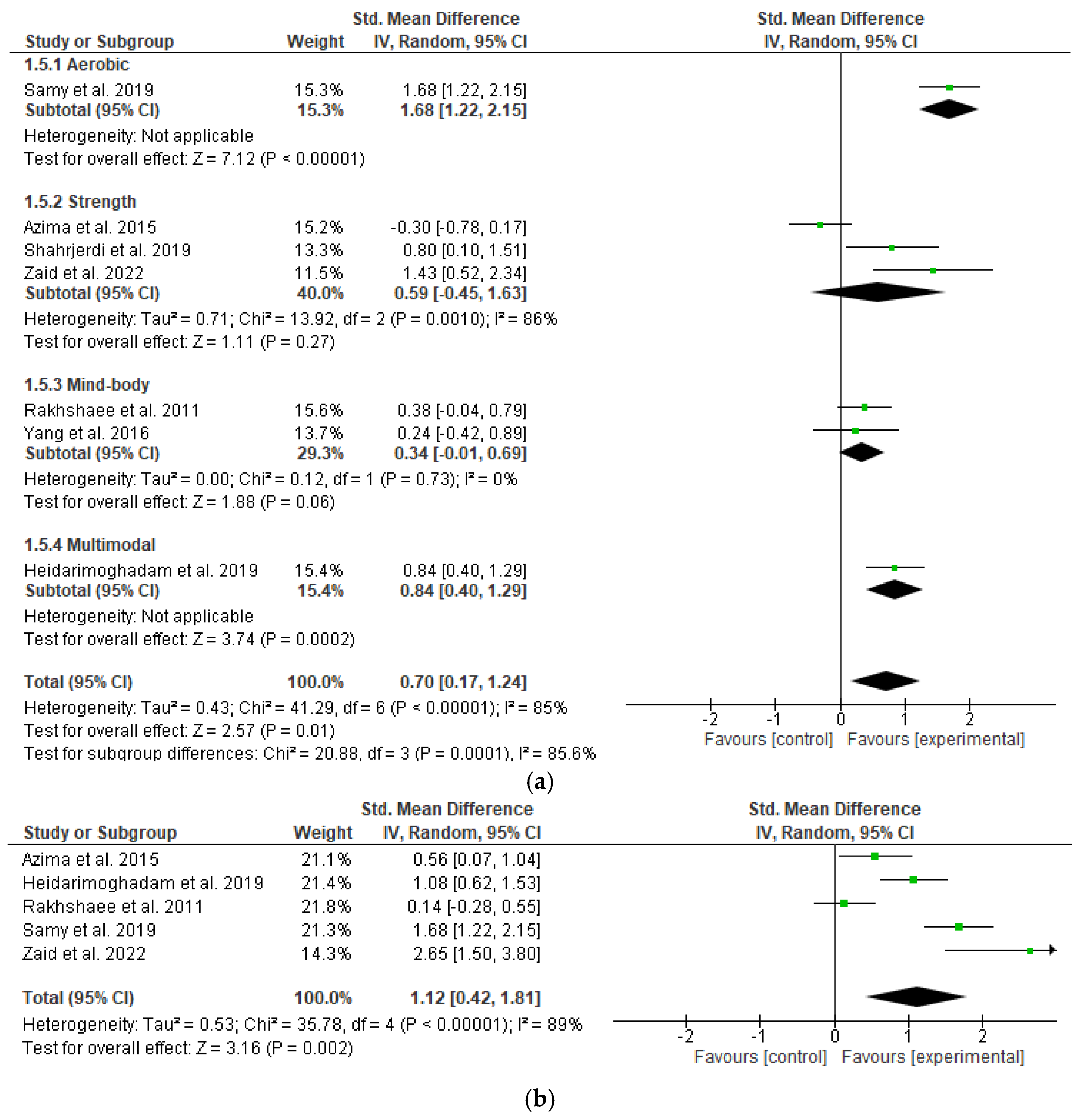
| Azima, S 2015 Iran [36] | 34 | 21.08 (1.21) | Strength | 34 | 20.73 (1.08) | NI | 8 w 5 ss/w | Pain intensity (VAS) Pain duration (h) | 6/6 |
| Chen, HM 2019 Taiwan [42] | 63 | 21.25 (0.47) | Stretch | 64 | 21.26 (0.48) | NI | 12 m 3 ss/w 50 m/ss | Pain intensity (VAS) | 42/42 |
| Elbandrawy, A 2021 Egypt [25] | 35 | 22.40 (1.94) | Aerobic | 35 | 22.47 (1.55) | NI | 8 w 3 ss/w 45 m/ss | Pain intensity (VAS) Symptom severity (MSQ) | 0/0/0 |
| 35 | 22.37 (1.87) | Strength | |||||||
| Gim, M 2018 South Korea [44] | 10 | 19.20 (1.55) | Strength | 10 | 19.00 (0.82) | NI | 12 w 3 ss/w | Pain intensity (VAS) Symptom severity (MDQ) | 0/0 |
| Heidarimoghadam, R 2019 Iran [37] | 43 | 18.67 (0.64) | Multimodal | 43 | 18.62 (0.65) | NI | 8 w 3 ss/w 20–47 m/ss | Pain intensity (MGPQ) Pain duration (h) | 0/0 |
| Huang, WC 2022 Taiwan [43] | 15 | 20.6 (2.5) | Aerobic | 15 | 21.5 (2.1) | NI | 10 w 2 ss/w 30–35 m/ss | Pain intensity (VAS) Symptom severity (MDQ) Anxiety (4-point Likert) Sleep quality (4-point Likert) | 1/1 |
| Ibrahim, Z 2023 Saudi Arabia [46] | 11 | 21 (1.34) | Stretch (supervised) | 11 | 20.6 (1.29) | NI | 4 w 3 ss/w 30–45 m/ss | Pain intensity (VAS) Symptom severity (VMS) | 0/0/0 |
| 11 | 21.2 (1.17) | Stretch (non-supervised) | |||||||
| Jaibunnisha 2017 India [47] | 35 | NR | Stretch | 35 | NR | NI | 8 w 6 ss/w 10 m/ss | Pain intensity (NRS) | 2/1 |
| Kirca, N 2023 Turkey [29] | 30 | 20.30 (0.46) | Mind–body | 30 | 20.46 (0.50) | NI | 12 w 1 ss/w 60 m/ss | Pain intensity (VAS) | 2/5 |
| Kirmizigil, B 2020 Turkey [30] | 14 | 22.9 (2.1) | Multimodal | 14 | 23.1 (1.8) | NI | 8 w 3 ss/w 45 m/ss | Pain intensity (VAS) Symptom severity (MSQ) Sleep quality (PSQI) | 0/0 |
| Koçak, M 2025 Turkey [31] | 27 | 30.3 (6.3) | Multimodal | 27 | 32.7 (6.6) | NI | 12 w 3 ss/w 30 m/ss | Symptom severity (MSQ) Sleep quality (PSQI) | 5/4 |
| Mirzaei 2021 Iran [38] | 20 | 23.70 (3.46) | Stretch | 20 | 25.15 (3.01) | NI | 8 w 4 ss/w | Pain intensity (VAS) | 2/2 |
| Ortiz, M 2015 Mexico [20] | 83 | 20.2 (1.8) | Multimodal | 77 | 20.4 (1.2) | NI | 12 w 3 ss/w 50 m/ss | Pain intensity (VAS) | 13/13 |
| Öz, A 2026 Turkey [32] | 19 | 19.42 (1.46) | Strength | 18 | 20.94 (1.70) | NI | 8 w 3 ss/w 50–60 m/ss | Pain intensity (VAS) Symptom severity (MSQ) QoL (SF-36) Sleep quality (PSQI) | 3/3 |
| 17 | 19.24 (1.48) | Stretch | |||||||
| Pio-Soria, A 2025 Spain [49] | 7 | 20.4 (1.2) | Aerobic | 10 | 20.4 (1.2) | NI | 8 w 2 ss/w 26 m/ss | Pain intensity (VAS) Symptom severity (CVM-22) QoL (SF-12) Anxiety (DASS-21) Sleep quality (WHIRS) | 3/2 |
| Rakhshaee, Z 2011 Iran [39] | 50 | 20.86 (SD NR) | Mind–body | 42 | 20.45 (SD NR) | NI | 8 w 7 ss/w 20 m/ss | Pain intensity (VAS) Pain duration (h) | NR |
| Samy, A 2019 Egypt [26] | 49 | 21.41 (1.49) | Aerobic | 49 | 21.53 (1.47) | NI | 8 w 2 ss/w 60 m/ss | Pain intensity (VAS) Pain duration (h) | 0/0 |
| Şaşmaz, Y 2024 Turkey [33] | 25 | 23.9 (2.3) | Mind–body | 25 | 24.2 (2.9) | NI | 8 w 2 ss/w 50 m/ss | Pain intensity (VAS) QoL (SF-36) | 4/4 |
| Shahrjerdi, S 2019 Iran [40] | 17 | 21.71 (0.99) | Strength | 17 | 22.43 (0.85) | NI | 8 w 3 ss/w 45–60 m/ss | Pain intensity (VAS) Pain duration (h) | 0/0 |
| Silwal, K 2025 India [48] | 26 | 20.96 (2.59) | Mind–body | 25 | 21.36 (1.99) | NI | 8 w | Pain intensity (VAS) QoL (SF-12) | 0/1 |
| Temizkan, S 2025 Turkey [34] | 15 | 21.20 (1.01) | Aerobic | 15 | 24 (1.73) | NI | 3 w 2 ss/w 45 m/ss | QoL (SF-36) | 0/0 |
| Vaziri, F 2015 Iran [41] | 35 | 21.10 (2.07) | Aerobic | 35 | 20.43 (1.83) | NI | 8 w 3 ss/w 20 m/ss | Symptom severity (MSQ) | NR |
| 35 | 20.81 (1.94) | Stretch | |||||||
| Yang, NY 2016 South Korea [45] | 18 | 21.0 (SD NR) | Mind–body | 18 | 21.0 (SD NR) | NI | 12 w 1 ss/w 60 m/ss | Pain intensity (VAS) Pain duration (h) Symptom severity (MDQ) | 0/0 |
| Yilmaz, E 2019 Turkey [35] | 35 | 19.28 (1.63) | Aerobic | 36 | 19.61 (2.11) | NI | 12 w 3 ss/w 30 m/ss | Symptom severity (PMSS) | 2/1 |
| Yonglitthipagon, P 2017 Thailand [50] | 17 | 19.71 (1.36) | Mind–body | 17 | 20.06 (1.03) | NI | 12 w 2 ss/w 30 m/ss | Pain intensity (VAS) QoL (SF-36) | 0/0 |
| Zaid, N 2022 Malaysia [51] | 12 | 22.58 (0.79) | Strength | 12 | 22.58 (0.90) | NI | 8 w 5 ss/w 10 m/ss | Pain intensity (VAS) Pain duration (h) | 0/0 |
| Certainty Assessment | Nº of Patients | Effect | Certainty | Importance | |||||||
|---|---|---|---|---|---|---|---|---|---|---|---|
| № of Studies | Study Design | Risk of Bias | Inconsistency | Indirectness | Imprecision | Other Considerations | TE | Control | Absolute (95% CI) | ||
| Symptom severity (assessed with: MDQ, MSQ, PMSS, VMS) | |||||||||||
| 13 | RCT | serious a | serious b | not serious | not serious | publication bias strongly suspected c | 370 | 275 | SMD, 0.91 (0.48 to 1.34) | ⨁◯◯◯ Very low a,b,c | CRITICAL |
| Pain intensity (assessed with: VAS, NRS) | |||||||||||
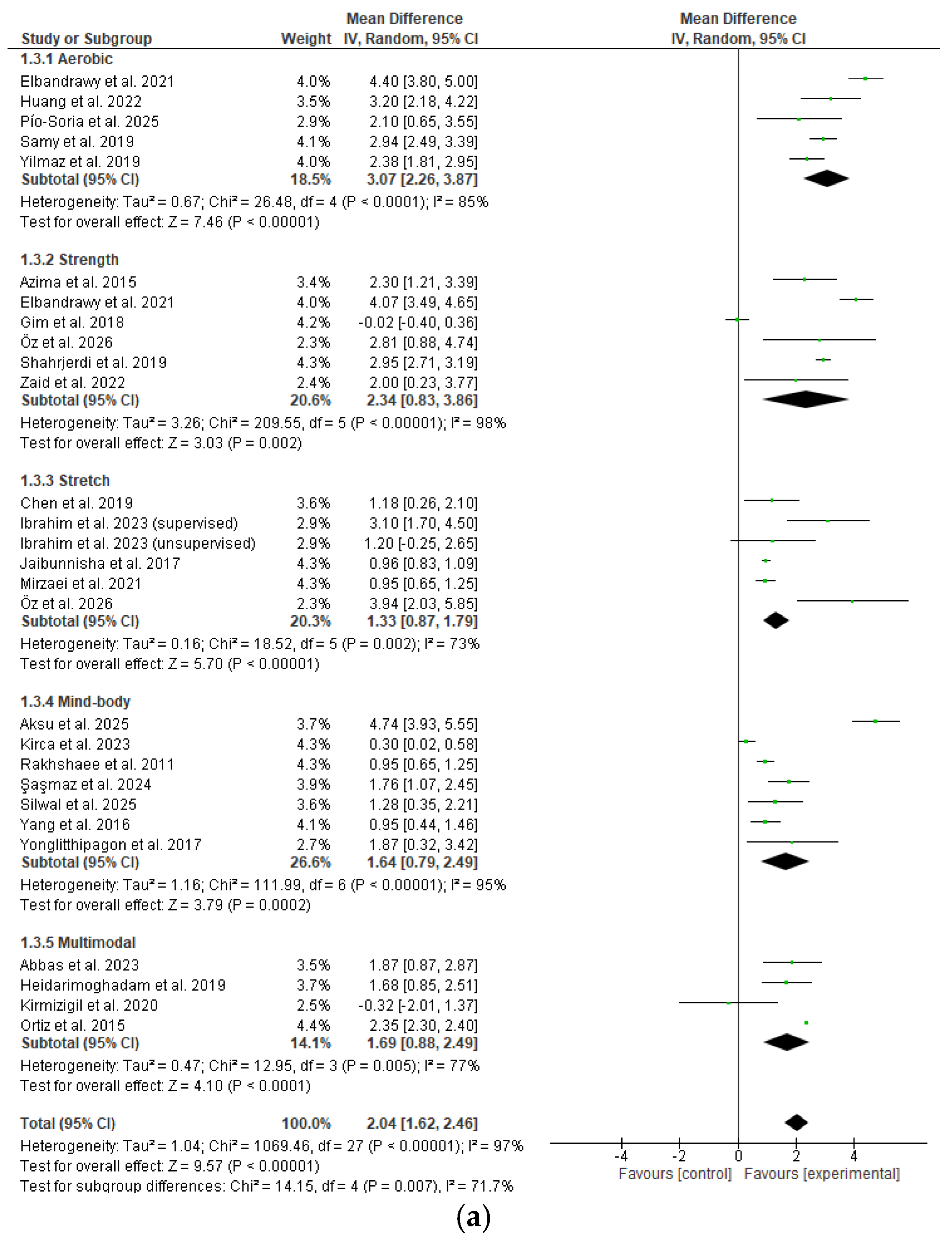
| 25 | RCT | serious a | serious b | not serious | not serious | publication bias strongly suspected c | 782 | 707 | MD, −2.04 (−2.46 to −1.62) | ⨁◯◯◯ Very low a,b,c | CRITICAL |
| Pain duration (assessed with: hours per day; hours per menstrual cycle) | |||||||||||
| 7 | RCT | serious a | serious b | not serious | not serious | none | 223 | 215 | SMD, −0.70 (−1.24 to −0.17) | ⨁⨁◯◯ Low a,b | CRITICAL |
| Quality of life (assessed with: SF-36, SF-12) | |||||||||||
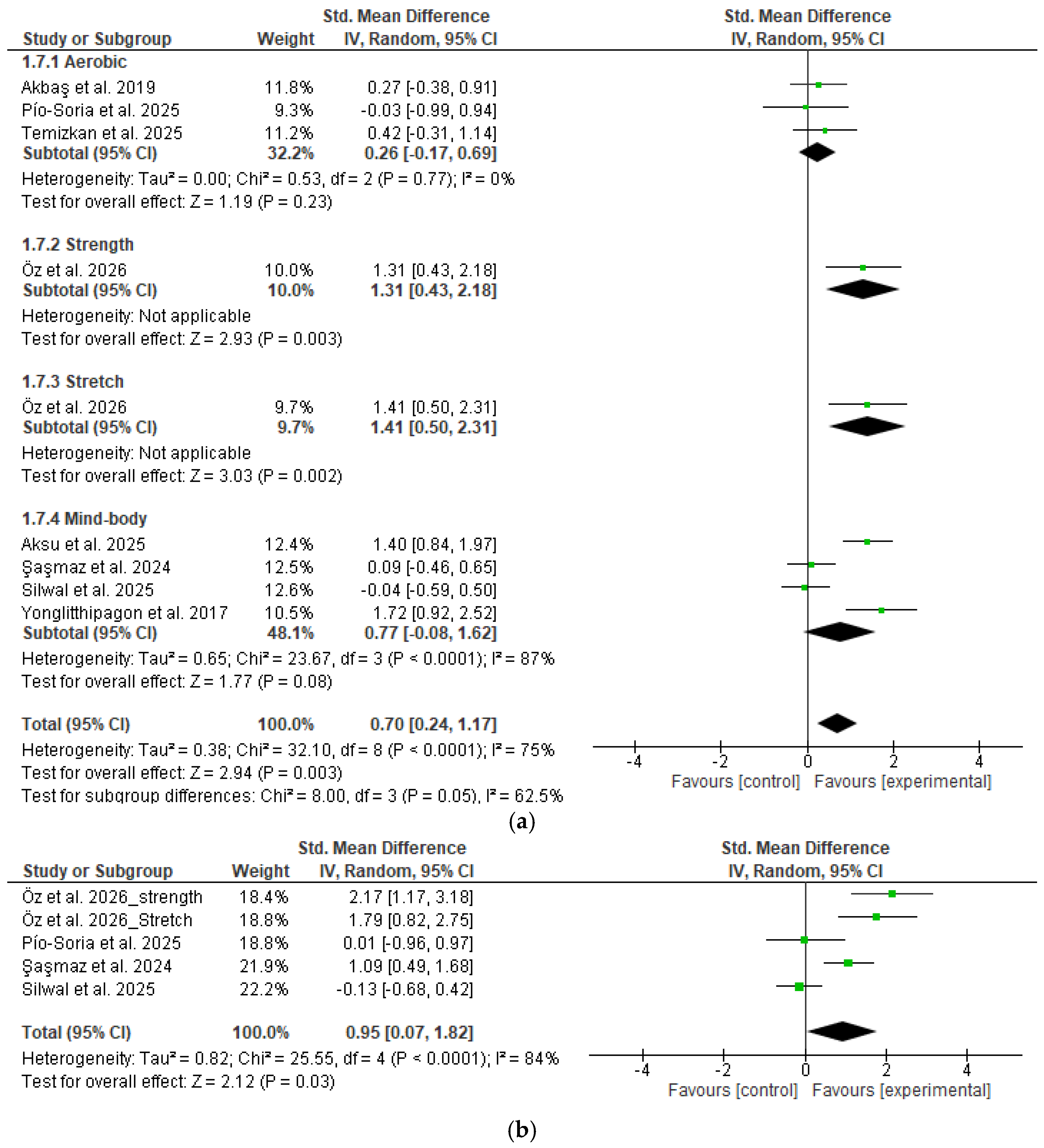
| 8 | RCT | serious a | serious b | not serious | not serious | none | 174 | 159 | SMD, 0.70 (0.24 to 1.17) | ⨁⨁◯◯ Low a,b | IMPORTANT |
| Anxiety (assessed with: STAI, DASS-21, BDI, Likert-type scale) | |||||||||||
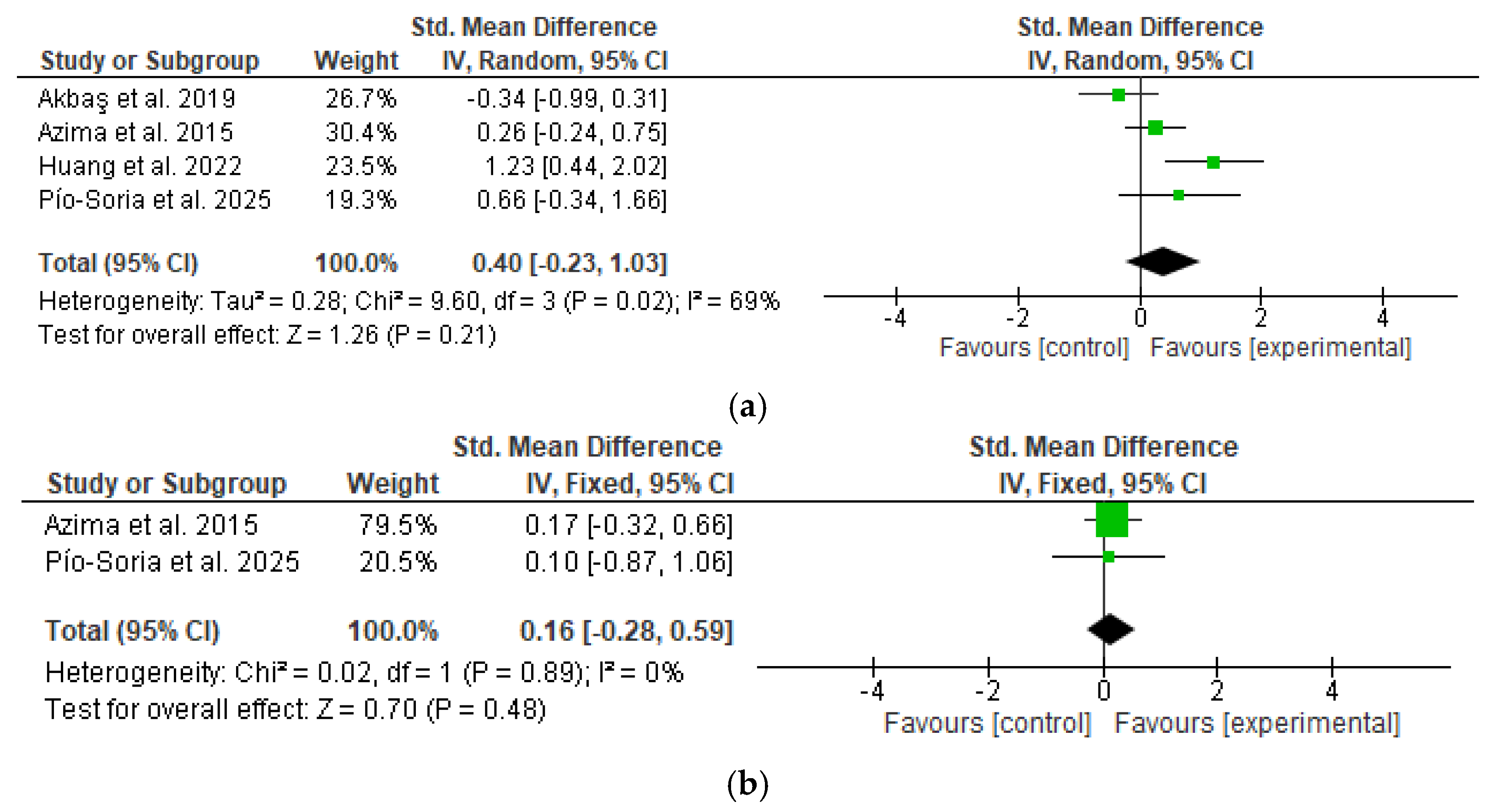
| 4 | RCT | serious a | serious b | not serious | serious d | none | 72 | 76 | SMD, 0.40 (−0.23 to 1.03) | ⨁◯◯◯ Very low a,b,d | IMPORTANT |
| Sleep quality (assessed with: PSQI, WHIIRS) | |||||||||||
| 5 | RCT | serious a | not serious | not serious | serious d | none | 99 | 84 | SMD, 0.33 (0.02 to 0.63) | ⨁⨁◯◯ Low a,d | IMPORTANT |
Disclaimer/Publisher’s Note: The statements, opinions and data contained in all publications are solely those of the individual author(s) and contributor(s) and not of MDPI and/or the editor(s). MDPI and/or the editor(s) disclaim responsibility for any injury to people or property resulting from any ideas, methods, instructions or products referred to in the content. |
© 2026 by the authors. Licensee MDPI, Basel, Switzerland. This article is an open access article distributed under the terms and conditions of the Creative Commons Attribution (CC BY) license.
Share and Cite
Arroyo-Fernández, R.; Lirio-Romero, C.; Quezada-Bascuñán, C.A.; Cigarroa, I.; Marzetti, E.; Bravo-Esteban, E. Effectiveness of Therapeutic Exercise in Reducing the Severity of Primary Dysmenorrhea and Associated Symptoms: A Systematic Review and Meta-Analysis. J. Clin. Med. 2026, 15, 4418. https://doi.org/10.3390/jcm15124418
Arroyo-Fernández R, Lirio-Romero C, Quezada-Bascuñán CA, Cigarroa I, Marzetti E, Bravo-Esteban E. Effectiveness of Therapeutic Exercise in Reducing the Severity of Primary Dysmenorrhea and Associated Symptoms: A Systematic Review and Meta-Analysis. Journal of Clinical Medicine. 2026; 15(12):4418. https://doi.org/10.3390/jcm15124418
Chicago/Turabian StyleArroyo-Fernández, Rubén, Cristina Lirio-Romero, Claudia A. Quezada-Bascuñán, Igor Cigarroa, Emanuele Marzetti, and Elisabeth Bravo-Esteban. 2026. "Effectiveness of Therapeutic Exercise in Reducing the Severity of Primary Dysmenorrhea and Associated Symptoms: A Systematic Review and Meta-Analysis" Journal of Clinical Medicine 15, no. 12: 4418. https://doi.org/10.3390/jcm15124418
APA StyleArroyo-Fernández, R., Lirio-Romero, C., Quezada-Bascuñán, C. A., Cigarroa, I., Marzetti, E., & Bravo-Esteban, E. (2026). Effectiveness of Therapeutic Exercise in Reducing the Severity of Primary Dysmenorrhea and Associated Symptoms: A Systematic Review and Meta-Analysis. Journal of Clinical Medicine, 15(12), 4418. https://doi.org/10.3390/jcm15124418