Article

Geographic Disparities in Access to Glaucoma Surgery: Lessons from a Nationwide Registry Study

1
Department of Drug Design and Pharmacology, University of Copenhagen, 2100 Copenhagen, Denmark
2
Scandinavian Eye Center, 2900 Hellerup, Denmark
3
Dine Øjenlæger, 2960 Rungsted Kyst, Denmark
4
Department of Ophthalmology, Rigshospitalet, 2600 Glostrup, Denmark
5
Department of Ophthalmology, Aalborg University Hospital, 9000 Aalborg, Denmark
*
Author to whom correspondence should be addressed.
J. Clin. Med. 2026, 15(11), 4357; https://doi.org/10.3390/jcm15114357
Submission received: 7 April 2026 / Revised: 24 May 2026 / Accepted: 1 June 2026 / Published: 4 June 2026
(This article belongs to the Special Issue Glaucoma Surgery: Current Challenges and Future Perspectives)

Abstract

Background: Glaucoma is a progressive, age-related optic neuropathy and a leading cause of irreversible blindness worldwide. Ensuring timely diagnosis and equitable access to surgical care is therefore essential to prevent avoidable vision loss. Methods: Nationwide registry-based data on hospital-based glaucoma diagnoses and surgical procedures over an 11-year period were analyzed and stratified by treatment region and area of residence. Population data were age-stratified to allow calculation of standardized diagnosis and surgery rates per 10,000 population aged ≥ 60 years. Regional comparisons were performed, and demographic projections for populations aged ≥ 60 years were generated using an exponential smoothing state space model. Results: Geographic variation in glaucoma care was observed, despite broadly similar demographic profiles across regions. Surgery-to-diagnosis ratios among individuals aged ≥ 60 years differed markedly between regions. Relevant for future healthcare planning, age forecasting suggests an increase in people aged ≥ 60 years over the coming years. Conclusions: Geographic disparities in glaucoma surgical care may persist even in well-resourced healthcare systems. Centralization of surgical services may contribute to differences, although explanations such as variation in referral patterns and clinical decision-making cannot be excluded. These findings highlight a broader, internationally relevant challenge: aligning glaucoma care delivery with shifting demographic needs.

1. Introduction

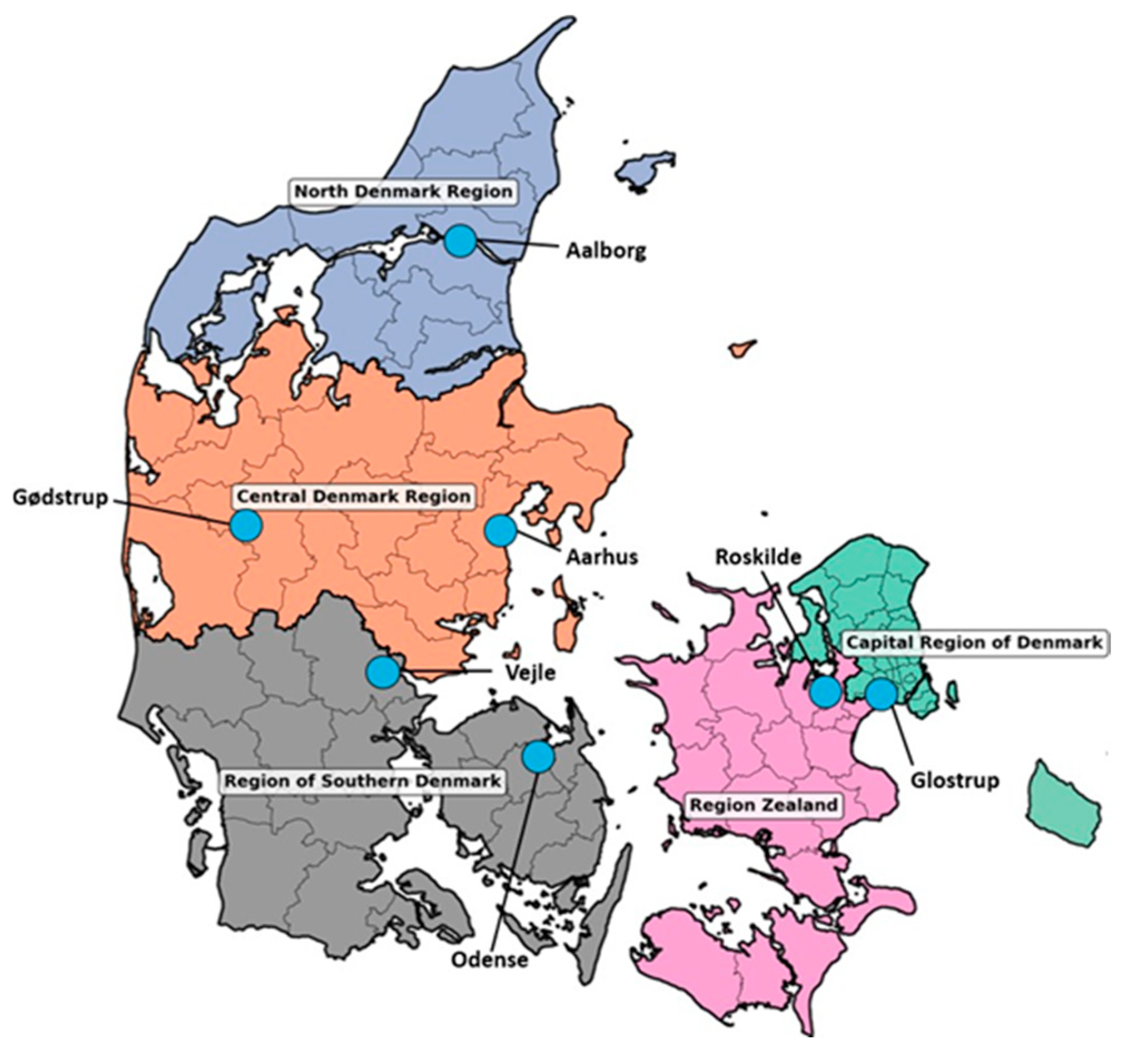
Healthcare systems in many high-income countries are organized into regional structures responsible for delivering hospital-based care to defined populations. Denmark represents one such model, currently comprising five administrative regions and 98 municipalities (see Figure 1). Within this system, patients are generally referred and treated within their own region unless highly specialized care is required.
Glaucoma surgery in Denmark is highly centralized and only performed within the public hospitals, with procedures performed at a limited number of locations (7 out of 29 public hospitals), serving large geographic catchment areas [1]. This configuration reflects a broader international trend toward centralization of specialized surgical services. However, such models may introduce access challenges, particularly for patients living in rural or underserved areas, where travel distances are longer and the density of referring ophthalmologists is lower [2,3]. These structural factors are not unique to Denmark but are observed across many healthcare systems where service consolidation has been implemented.
At the same time, demographic changes are reshaping the demand for glaucoma care globally. Life expectancy continues to increase, and the proportion of elderly individuals is rising across most European countries and other high-income settings [4]. In Denmark, glaucoma prevalence exceeds 6% by the age of 70 and increases steeply thereafter [5,6]. Consistent with international patterns, more than 80% of glaucoma surgeries are performed in individuals aged 60 years and above [7]. As populations age, the demand for timely surgical intervention is therefore expected to grow substantially [8,9,10].
Despite universal healthcare coverage, the interaction between centralized surgical capacity, regional demographic variation, and the geographic distribution of ophthalmic services may contribute to unequal access to care [1,3]. Similar challenges have been described internationally, where factors such as travel distance, referral pathways, and local resource availability influence not only disease detection but also the likelihood of receiving timely surgical treatment and appropriate follow-up [2].
Using Denmark as a model system, this study investigates whether measurable regional- and municipality-level differences exist in glaucoma diagnosis and surgical treatment. We hypothesized that glaucoma surgical activity would vary substantially across Danish regions and municipalities, reflecting differences in healthcare organization, demographic composition, and geographic access to specialized ophthalmic services. We further hypothesized that projected population ageing may increase future regional pressure on glaucoma-related healthcare services. These findings are intended to provide insights that are applicable beyond Denmark, highlighting structural and demographic factors that may contribute to variation in glaucoma treatment in other healthcare systems facing similar organizational and demographic transitions. While previous studies have examined disparities in glaucoma care utilization and geographic access to ophthalmic services, few have evaluated nationwide variation in glaucoma surgical activity within a universal healthcare system.

2. Materials and Methods

2.1. Data Collection

Count data from Danish hospitals were collected based on 10 ICD-10 diagnosis codes and 40 procedure codes of glaucoma surgeries from the period 2013 to 2023 on the regional and municipality levels. Regional-level data were defined as the region in which the treatment was carried out for the patient. Municipality-level data were defined as the municipality of residence for the patient. Glaucoma diagnoses and surgeries from the period 2013 to 2023 were grouped on the 5 Danish regions and on the 98 Danish municipalities. The data were analyzed as aggregated counts of recorded procedures and hospital diagnosis registrations. The data were collected from the Danish National Patient Register (LPR) [11] (via https://www.esundhed.dk/Emner/Operationer-og-diagnoser/Landspatientregisteret-Avanceret-udtraek, accessed 10 December 2024). All diagnoses defined as glaucoma were included. See Appendix A. To determine glaucoma-related codes we used the European Glaucoma Society Guidelines for Glaucoma [12]. For surgeries, all surgeries related to glaucoma according to the Danish Health Data Authority were included. Non-invasive surgery types such as selective laser trabeculoplasty and iridotomy were excluded, as these types of non-invasive laser surgeries are also performed in certain ophthalmic private practices and not only in hospitals. An overview of procedure codes included in the study can be found in Appendix B. Diagnosis and surgery data points (at a specific year and municipality/region) with less than five counts were suppressed and set to zero prior to data access due to national data protection regulations. Therefore, values below 5 were indistinguishable from true zero values in the dataset. Population data grouped by age from the total Danish population was collected from Statistics Denmark from the time period 2013–2024 (via https://www.statistikbanken.dk/20021, accessed 10 December 2024). A yearly mean of four quarterly population counts from the register FOLK1A was calculated for each year for the whole country and for each region. For municipalities, the count of citizens grouped per one year of age was collected from the register BY2. These data were also grouped on the 5 Danish treatment regions and on the 98 Danish municipalities of residence, allowing population- and age-adjusted glaucoma analyses.

2.2. Statistical Analysis

Statistical analyses were performed with Python version 3.12 using Cursor and R version 4.5.1 using RStudio.

2.3. Calculation of Normalized Surgery and Diagnosis Rates

For each region r ∈ {1, 2, …, 5} and municipality m ∈ {1, 2, …, 98} at year t, normalized surgery and diagnosis rates were calculated per 10,000 population aged 60 years and above.

2.3.1. Surgery Rate

Given that the risk of glaucoma increases with age and that people aged 60 years and above account for the majority of glaucoma cases, an age-adjusted population denominator was used to calculate surgery rates. The surgery rate for region r (or municipality m) at year t was calculated as
S u r g e r y   R a t e   = S r , t P 60 + , r , t × 10,000
where Sr,t denotes the total number of surgery procedures in region r (or municipality m) during year t, and P60+,r,t represents the total population aged 60 years and above in region r (or municipality m) at year t.
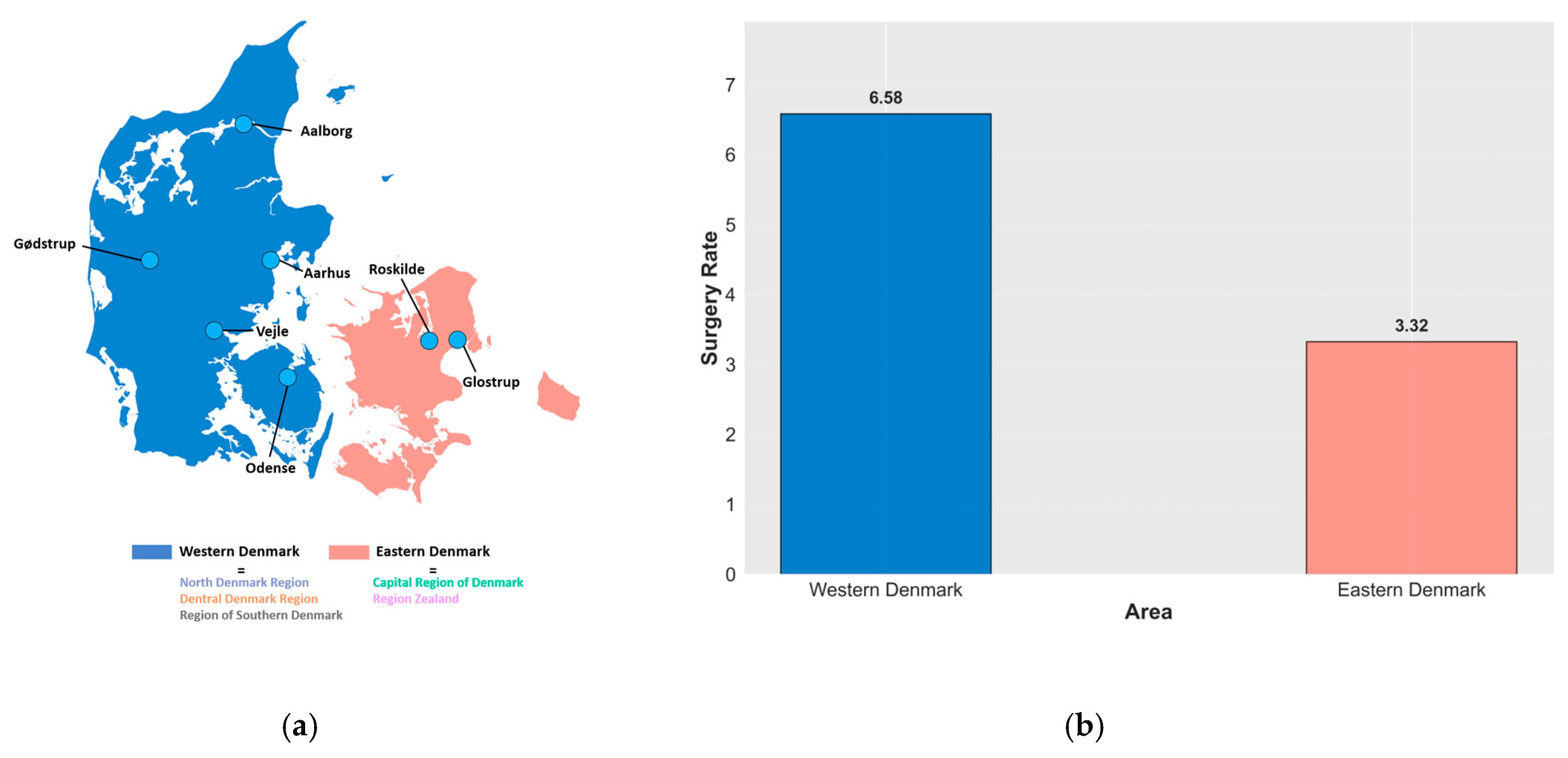
A descriptive, hypothesis-generating comparison of surgery rates between Western Denmark and Eastern Denmark was applied. Here, Western Denmark was defined as the North Denmark Region, the Central Denmark Region, and the Region of Southern Denmark. Eastern Denmark was defined as the Capital Region of Denmark and Region Zealand. For this comparison, the municipality of residence numbers were used. The groups were normalized based on the average total population of Western Denmark and Eastern Denmark, respectively, in the study period.

2.3.2. Diagnosis Rate

Hospital diagnosis rates were also calculated using an age-adjusted population denominator. The diagnosis rate for region r (or municipality m) at year t was calculated as
D i a g n o s i s   R a t e = D r , t P 60 + , r , t × 10,000
where Dr,t denotes the total number of glaucoma diagnoses in region r (or municipality m) during year t, and P60+,r,t represents the total population aged 60 years and above in region r (or municipality m) at year t.

2.4. Negative Binomial Regression

To analyze regional trends of surgery rates across the five Danish regions (2013–2023), a negative binomial regression [13] model with region-specific time trends was employed. A negative binomial model was chosen as preliminary inspection of the data showed strong overdispersion, with the variance exceeding the mean of the surgery counts. Model fit was evaluated by comparing observed and predicted counts and through inspection of residual patterns, which did not indicate major lack of fit.
For each region, a negative binomial regression model with the following specification was fitted:
log(µit) = β0 + β1Yearst+ log(Pop60+,it)
where µit is the expected surgery count for region i in year t, Yearst is years since 2013 (0–10), and Pop60+,it is an offset term to adjust for regional differences in the population aged 60 years and above. The negative binomial regression analysis was designed as a descriptive ecological assessment of regional trends in glaucoma-related surgical activity rather than inferential patient-level models. Accordingly, the findings based on this analysis should be interpreted as population-level associations, and causal or individual-level inferences cannot be drawn from the aggregated registry data.

2.5. Surgery-to-Diagnosis Ratio

To assess treatment intensity, the ratio of glaucoma surgeries to diagnoses (surgery-to-diagnosis ratio, %) for each region and municipality over the 2013–2023 period was calculated.
This metric represents the relation between the count of aggregated hospital glaucoma diagnoses and the count of aggregated glaucoma surgical procedures. Municipalities with unavailable diagnosis counts during the study period were excluded from the analysis, as surgery-to-diagnosis ratios could not be meaningfully calculated for these locations. Surgery-to-diagnosis ratios were calculated as
S u r g e r y t o d i a g n o s i s   R a t i o = S r , t D r , t × 100 %
where Sr,t denotes the total number of surgeries in region r (or municipality m) during year t, and Dr,t denotes the total number of hospital diagnoses in region r (or municipality m) during year t.

2.6. Age Forecasting Model

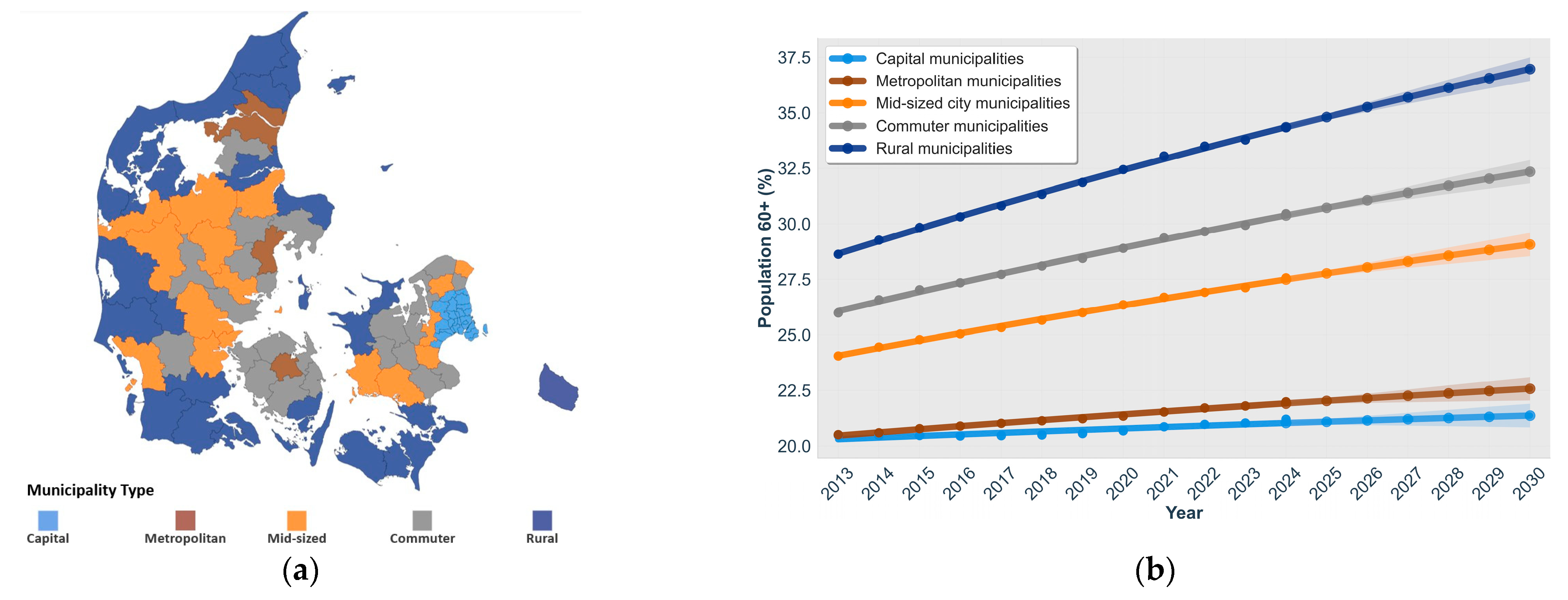
Using the historical population data of age distribution in Denmark, an additive error, damped additive trend, no seasonal, exponential smoothing state space (AAdNETS) forecast model was applied to predict the development in the proportion of people aged 60 years and above until 2030 [14]. We chose ETS modelling for the forecast over more complex approaches such as cohort-component projection which requires detailed birth, death, and migration data unavailable for our study and ARIMA (AutoRegressive Integrated Moving Average) models, which require longer time series. ETS provides a transparent, well-established method suitable for short-term demographic forecasts with limited historical data. The forecast model was applied across five municipality groupings specified in Section 2.7 after aggregating counts.

2.7. Definition of Urban and Rural Areas

The grouping of urban and rural areas was defined on a municipality level as per the official definitions by Statistics Denmark: https://www.dst.dk/da/Statistik/temaer/land-og-by (accessed 10 December 2024). The classifications are based on city size and job accessibility: Hovedstadskommuner (Capital municipalities: ≥200,000 accessible jobs), Storbykommuner (Metropolitan municipalities: cities with ≥100,000 inhabitants and <200,000 accessible jobs), Provinsbykommuner (Mid-sized city municipalities: cities with ≥30,000 inhabitants and <200,000 accessible jobs), Oplandskommuner (Commuter municipalities: <30,000 inhabitants and ≥40,000 accessible jobs), and Landkommuner (Rural municipalities: <30,000 inhabitants and <40,000 accessible jobs).

3. Results

3.1. Surgery Rates

Average surgery rates for municipalities during the period 2013–2023 are shown in Figure 2. Clear geographical differences were observed across the country. Overall, surgery rates were higher among residents of municipalities in Western Denmark than Eastern Denmark, with particularly high rates in municipalities within the North Denmark Region. For the full overview of municipality surgery rates, see Appendix C.

Western vs. Eastern Denmark

Over the study period, Western Denmark had an average total population of approximately 3.2 million people with an average age of 41.9 years and five glaucoma surgery sites. Eastern Denmark had an average total population of approximately 2.8 million people with an average age of 41.5 years and two glaucoma surgery sites. An overview can be found in Table 1. The average surgery rate for Western Denmark during the study period was 6.58. In Eastern Denmark the average surgery rate during the period was 3.32. See Figure 3.

3.2. Negative Binomial Regression Analysis

Negative binomial regression models revealed heterogeneity in trends of glaucoma surgery rates across Denmark’s five regions. An overview of the results of the models can be found in Table 2.
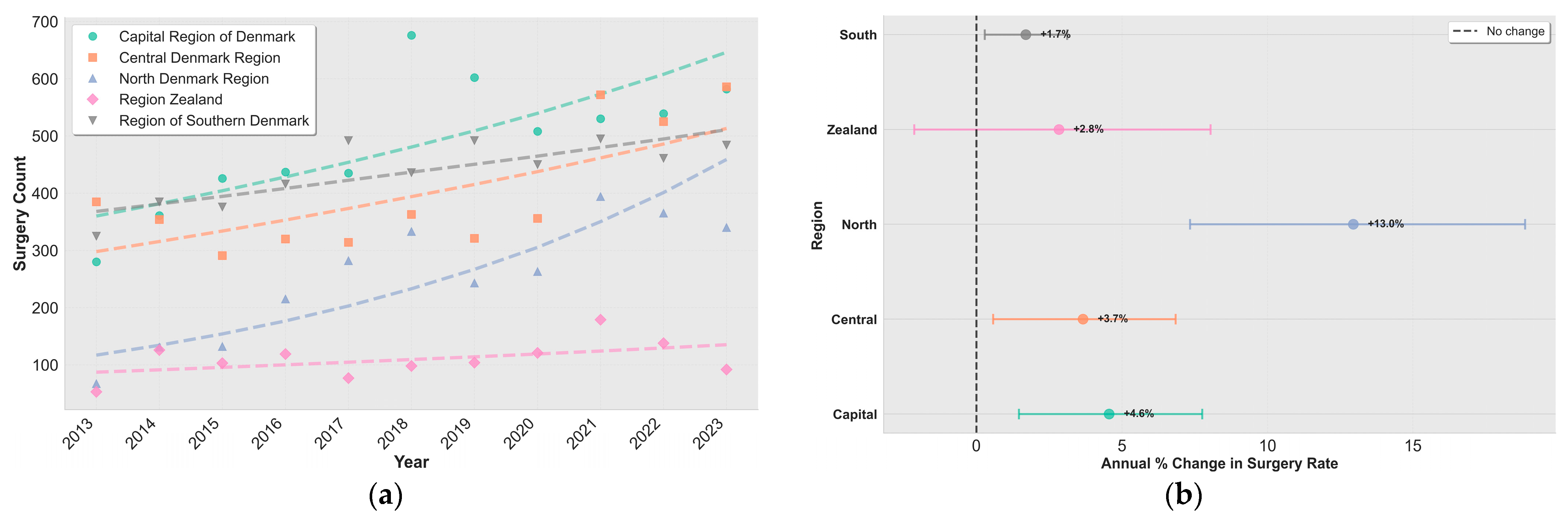
All five regions demonstrated positive trends, indicating overall increasing surgery rates over the 2013–2023 period in the population aged 60 years and above (Figure 4). However, the magnitude of these increases varied substantially, as did the raw number of surgeries per region (Figure 4). The North Denmark Region exhibited the steepest increase with a rate ratio of 1.130. Region Zealand was the only region that did not show a statistically significant increase. The Region of Southern Denmark exhibited the smallest significant increase, with a rate ratio of 1.017.
The large difference in annual growth rates between the North Denmark Region and the other four regions indicates variation in the utilization of glaucoma surgery. Over the 11-year study period, these differential trends have resulted in greater divergence of regional surgery rates.

3.3. Diagnosis Rates

Hospital diagnosis rates were calculated for municipalities in Denmark. Diagnosis rates exhibited geographic variation across Danish municipalities; however, we did not observe clear regional patterns when analyzing diagnosis rates on their own. For the full overview of diagnosis rates, see Appendix D.

3.4. Surgery-to-Diagnosis Ratios

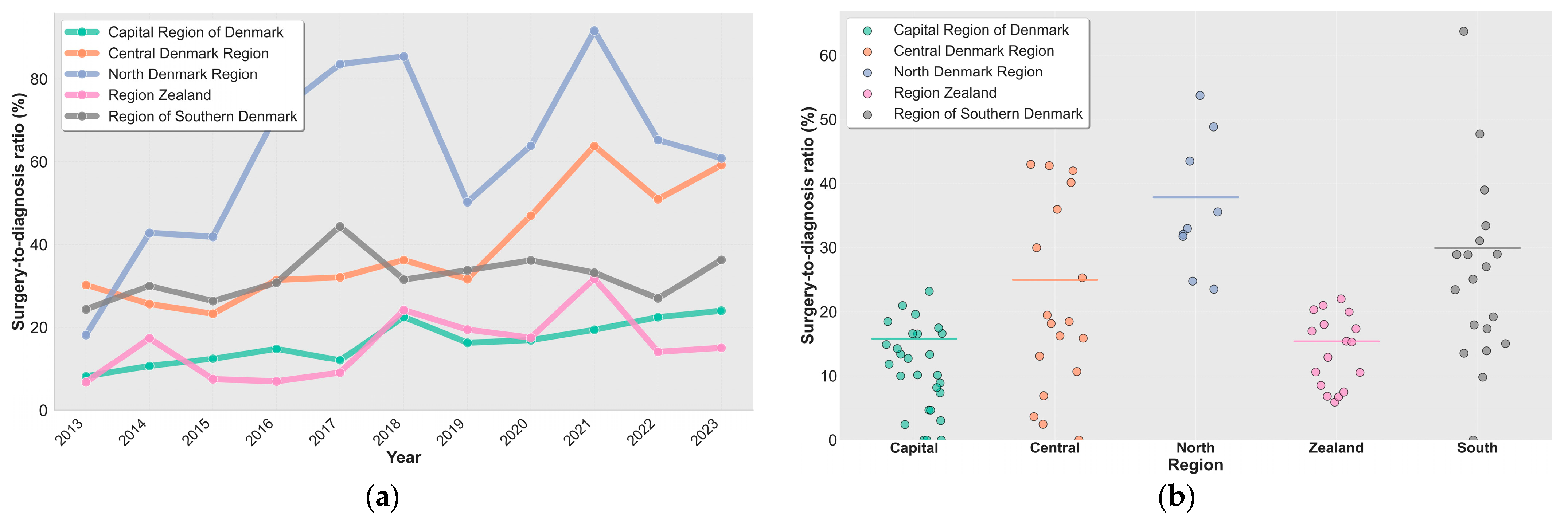
The surgery-to-diagnosis ratios varied substantially across regions, revealing disparities in treatment patterns (Figure 5). Western regions demonstrated higher surgery-to-diagnosis ratios than Eastern regions throughout the study period.
The North Denmark Region demonstrated the highest surgery-to-diagnosis ratios, averaging 61.2% over the study period (range: 18.1–91.7%). The Central Denmark Region showed an increasing trend from 30.2% in 2013 to 59.1% in 2023, with notable acceleration after 2019. The Region of Southern Denmark maintained relatively stable ratios, averaging 31.3%. In contrast, Eastern regions demonstrated substantially lower surgery-to-diagnosis ratios. The Capital Region of Denmark averaged 16.1% while Region Zealand demonstrated the lowest surgery-to-diagnosis ratio, averaging 14.8%.
At the municipality level, ratios among municipalities (n = 90) ranged from 0% to 63.8%. Substantial within-region variation was observed across all regions.

3.5. Age Forecasting

As described in Section 2.6, an AAdNETS forecast model was used to make a short-term prediction of the increase in the proportion of people aged 60 years and above in Denmark. An overview of the forecasting model results can be found in Table 3. The forecast shows differences in demographic ageing trajectories (Figure 6). By 2030, rural municipalities are projected to reach 36.97% aged 60+, a 2.63 percentage point (pp) increase from 2024. In contrast, capital municipalities show minimal ageing at 21.37%, only a 0.17 pp increase. Intermediate municipality types show a clear urbanization gradient: commuter municipalities 32.35% (+1.89 pp), mid-sized city municipalities 29.07% (+1.50 pp), and metropolitan municipalities 22.58% (+0.59 pp). The urban–rural (capital–rural) disparity reaches 15.60 pp by 2030.

4. Discussion

This population-based registry study suggests geographic variation in glaucoma surgical care over more than a decade. While the data are derived from a single national healthcare system, the observed patterns reflect challenges that are highly relevant across many high-income countries. Even within a universal healthcare model, marked differences in surgery rates can persist between regions with otherwise comparable demographic profiles.

4.1. Geographic Disparities and Healthcare Infrastructure

The findings suggest that differences in healthcare organization, including the degree of centralization of specialized surgical services, may contribute to the observed geographic variation in hospital-based surgical activity. In this setting, regions with fewer surgical centres relative to their population exhibited lower surgical rates, suggesting that infrastructure density is a potential determinant of treatment availability. Importantly, the present registry-based analyses cannot determine the extent to which these patterns reflect differences in clinical need, disease severity, access to care, or healthcare delivery. The observed geographic variation may reflect differences in healthcare organization, referral pathways, coding practices, or concentration of specialized ophthalmic services. As such, the findings should be interpreted as descriptive evidence of geographic disparity rather than direct evidence of undertreatment, reduced access, or capacity limitations. Similar patterns have been reported internationally, where centralization of subspecialized services, although intended to improve quality and efficiency, may inadvertently create access barriers for geographically dispersed populations [15,16].
Consistent with international evidence, substantial within-region variation was observed. Rural–urban gradients are widely documented across healthcare systems and are associated with delayed diagnosis, reduced treatment uptake, and poorer outcomes in chronic eye diseases [17].
In addition, the concentration of surgical services may influence not only access but also system dynamics such as capacity expansion, innovation, and procedural adoption. Health services research suggests that limited provider density and reduced competition can contribute to lower procedural volumes and slower implementation of new techniques, further widening regional gaps in care [18].

4.2. Demographic Change and Future Demand

In many countries, the proportion of individuals aged 60 years and above is rising, with particularly rapid growth in rural and non-metropolitan areas. Given that glaucoma prevalence increases steeply with age, typically affecting 4–10% of individuals over 60, this demographic shift is expected to increase demand for both medical and surgical management [6,19].
While population ageing is not necessarily a direct predictor of surgical volume, it does represent a major and universal driver of increasing glaucoma burden. Future healthcare planning should align with evolving demographic trends to combat potential geographic imbalances [16,20].

4.3. Surgery-to-Diagnosis Variability

Variation in the relation between the number of hospital diagnoses and the number of surgical procedures was observed both between and within regions [15,17]. Overall surgical activity appeared low compared to other high-income countries [6]. Disparities in the uptake of newer surgical technologies have been reported internationally and are often linked to reimbursement structures, training opportunities, and organizational factors [21,22].

4.4. Implications for Healthcare Systems

Taken together, these findings illustrate a broader, globally relevant challenge: aligning glaucoma care delivery with evolving demographic and geographic realities. Centralized models of care, while beneficial in some respects, must be balanced against the need for accessibility, particularly in ageing and geographically dispersed populations. Potential strategies to address these challenges include the following:
  • Expanding surgical capacity through decentralization or shared-care models;
  • Increasing the involvement of non-hospital-based ophthalmologists in surgical care;
  • Enhancing referral pathways and outreach to underserved areas.
Such approaches may help reduce geographic differences, improve timely access to care, and better match service provision to population needs.

4.5. Strengths and Limitations

The strengths of this study include its large-scale, population-based design and long observation period, enabling detailed assessment of geographic variation and temporal trends. The integration of demographic projections further strengthens its relevance for future healthcare planning.
While the nationwide registry framework provided broad population-level coverage, a major limitation of this approach is the inability to assess individual-level clinical factors such as disease severity, treatment indications, and patient preferences, as well as incomplete capture of diagnoses outside hospital settings. As a result, surgery-to-diagnosis ratios should be interpreted as possible indicators of healthcare delivery rather than precise measures of clinical need.
The aggregation of procedure codes may mask variation in surgical practice patterns. The included procedure codes represent a heterogeneous group of glaucoma-related interventions and may have included non-primary glaucoma procedures, potentially introducing some degree of procedural misclassification. Stratified analyses by procedure type were considered but were limited by low counts in subcategories, particularly at the municipality level, which would reduce statistical robustness and increase the impact of data suppression. Further, the suppression of low counts (<5) may disproportionately affect estimates, especially in smaller municipalities where apparent zero counts may include suppressed low counts rather than the true absence of surgery or diagnosis. Thus, the data suppression potentially leads to downward bias in municipality-level estimates.
In Denmark, patients may receive care outside their region of residence if highly specialized treatment is required. Cross-regional patient mobility may influence the observed patterns, and this could lead to under- or overestimation of surgical activity in specific regions.

5. Conclusions

This study highlights geographic disparities within glaucoma surgical care, with marked differences both between and within regions. While the data are drawn from Denmark, similar patterns are likely to exist in many healthcare systems where specialized surgical services are centralized, rural populations are growing, or the distribution of ophthalmic expertise is uneven.
The combination of structural limitations and demographic ageing creates a trajectory in which demand may outpace capacity, potentially placing patients at higher risk of delayed intervention. Such disparities underscore the broader challenge of ensuring equitable access to care in any health system, regardless of funding model or national wealth.
Addressing this challenge may require bringing surgical services closer to patients by leveraging all available ophthalmic expertise. Strategies may include decentralizing care, expanding surgical provision outside highly centralized hospital settings, enabling qualified ophthalmologists to contribute to surgical treatment, and improving referral pathways to optimize patient access.
Future research should evaluate patient-level outcomes to determine whether geographic disparities translate into differences in vision preservation, quality of life, and long-term clinical outcomes. Qualitative studies capturing patient and provider perspectives will be critical to designing targeted interventions that improve access and reduce unwarranted variation.
As populations continue to age globally, ensuring sufficient and equitable access to glaucoma surgery is a priority for healthcare systems worldwide. Proactive planning, capacity expansion, and redistribution of resources are likely essential to reduce the societal burden of glaucoma.

Author Contributions

Conceptualization, H.K., K.H. and M.K.; methodology, J.R., C.E.-H., J.N.S. and M.K.; data curation, C.E.-H.; formal analysis, J.R., C.E.-H., J.N.S. and M.K.; writing—original draft preparation, J.N.S.; writing—review and editing, C.E.-H., J.R., H.K., K.H. and M.K. All authors have read and agreed to the published version of the manuscript.

Funding

This research received no external funding.

Institutional Review Board Statement

This study is based solely on aggregated publicly available population-level count data from the Danish Health Data Authority. The Danish Health Data Authority only requires ethical approval when working on individual-level health data (https://english.sundhedsdatastyrelsen.dk/health-data-and-registers/research-services/before-applying-for-data, accessed 10 December 2024).

Informed Consent Statement

Patient consent was waived. This study was based exclusively on publicly available, aggregated population-level data and did not involve identifiable human participants or the collection of individual-level personal data.

Data Availability Statement

The surgery and diagnosis count data presented in this study are available on request from the corresponding author as it is no longer available from the original website (https://www.esundhed.dk/Emner/Operationer-og-diagnoser/Landspatientregisteret-Avanceret-udtraek, accessed 10 December 2024). The population data presented in the study are openly available via https://www.statistikbanken.dk/20021 (accessed 10 December 2024) and the registers FOLK1A and BY2.

Conflicts of Interest

Jens Rovelt is employed at Astellas Pharma A/S. The authors declare no conflicts of interest.

Abbreviations

The following abbreviations are used in this manuscript:
ETSError, Trend, Seasonal
AAdNETSAdditive error, Additive Damped trend, No seasonal ETS
ARIMAAuto-Regressive Integrated Moving Average
ppPercentage points
NANot available

Appendix A

Table A1. ICD-10 glaucoma diagnosis codes included in the study.
ICD-10 CodeDiagnosis
DH400Glaucoma suspect
DH401Primary open-angle glaucoma
DH402Primary angle-closure glaucoma
DH403Traumatic glaucoma
DH404Glaucoma secondary to eye inflammation
DH405Glaucoma secondary to other eye disease
DH406Drug-induced glaucoma
DH408Other forms of glaucoma
DH409Glaucoma, unspecified

Appendix B

Table A2. Glaucoma surgery procedures included in the study.
Procedure CodeProcedure DescriptionProcedure Group
KCHB00Laser synechiolysisOther glaucoma related surgeries
KCHB10Puncture and irrigation of anterior chamberOther glaucoma related surgeries
KCHB15Puncture of anterior chamber with aqueous humor exchangeOther glaucoma related surgeries
KCHB20GoniotomyAngle surgery
KCHB30GoniopunctureAngle surgery
KCHB40GoniosynechiolysisAngle surgery
KCHB50TrabeculotomyFiltering surgery
KCHB60Anterior synechiolysisOther glaucoma related surgeries
KCHB65Posterior synechiolysisOther glaucoma related surgeries
KCHB99Other operation on anterior chamber or angleOther glaucoma related surgeries
KCHC10Peripheral iridectomyOther glaucoma related surgeries
KCHC20Sector iridectomyOther glaucoma related surgeries
KCHC30Central iridectomyOther glaucoma related surgeries
KCHD05Laser dilatation of microchannelOther glaucoma related surgeries
KCHD10TrabeculectomyFiltering surgery
KCHD15Trabeculectomy with/without iridectomyFiltering surgery
KCHD20Trepanation of scleraOther glaucoma related surgeries
KCHD30Trabeculectomy with laserFiltering surgery
KCHD31PhacotrabeculectomyFiltering surgery
KCHD35Trabeculectomy with drainage implantationFiltering surgery
KCHD36Revision oftrabeculectomyRevision
KCHD40IridencleisisOther glaucoma related surgeries
KCHD41Needling of filtration blebRevision
KCHD50Creation of shunt to anterior chamberDrainage devices
KCHD50ACreation of large shuntin anterior chamberDrainage devices
KCHD50BCreation of small shuntin anterior chamberDrainage devices
KCHD60Deepsclerectomy without implantOther glaucoma related surgeries
KCHD65Deepsclerectomy with implantOther glaucoma related surgeries
KCHD99Other filtration operationFiltering surgery
KCHE10Excision of pathological tissue in irisOther glaucoma related surgeries
KCHE20Laser treatment of pathological tissue in irisOther glaucoma related surgeries
KCHE99Other operation on pathological tissue in irisOther glaucoma related surgeries
KCHF00Excision of pathological tissue in ciliary bodyOther glaucoma related surgeries
KCHF05Transscleral laser or ultrasound coagulation of ciliary bodyCyclodestructive procedures
KCHF10Transpupillary laser coagulation of ciliary bodyCyclodestructive procedures
KCHF15Cryotherapy of ciliary bodyCyclodestructive procedures
KCHF20Electrocoagulation of ciliary bodyCyclodestructive procedures
KCHF30CyclodialysisCyclodestructive procedures
KCHF99Other operation on ciliary bodyCyclodestructive procedures
KCHW99Other operation on anterior chamber, angle, iris or ciliary bodyCyclodestructive procedures

Appendix C

Table A3. Average glaucoma surgery rates by municipality (2013–2023).
MunicipalityRegionSurgery Rate
AalborgNorth17.44
JammerbugtNorth16.35
AarhusCentral14.12
KoldingSouth13.85
FrederikshavnNorth13.75
VejleSouth12.40
VesthimmerlandsNorth12.20
MariagerfjordNorth11.93
BrønderslevNorth11.92
HjørringNorth10.85
HorsensCentral10.71
RandersCentral10.26
RebildNorth10.22
EsbjergSouth9.68
SilkeborgCentral9.68
KøbenhavnCapital9.39
HaderslevSouth9.36
OdenseSouth9.26
SkanderborgCentral9.18
RoskildeZealand8.17
VardeSouth8.10
FrederiksbergCapital7.86
FavrskovCentral7.71
GentofteCapital6.99
FredericiaSouth6.82
VejenSouth6.66
MiddelfartSouth6.65
ViborgCentral6.26
Faaborg-MidtfynSouth6.19
AabenraaSouth6.18
Lyngby-TaarbækCapital5.77
HerningCentral5.52
AssensSouth5.52
SyddjursCentral5.49
VordingborgZealand5.27
SlagelseZealand5.19
GreveZealand4.95
HedenstedCentral4.89
SkiveCentral4.82
SønderborgSouth4.76
SvendborgSouth4.64
Høje-TaastrupCapital4.51
HolbækZealand4.46
NyborgSouth4.41
NorddjursCentral4.40
LejreZealand4.32
FredensborgCapital4.31
HolstebroCentral4.22
AllerødCapital4.22
FuresøCapital4.18
KøgeZealand3.91
RudersdalCapital3.86
TårnbyCapital3.80
NæstvedZealand3.79
GladsaxeCapital3.74
MorsøNorth3.72
GuldborgsundZealand3.72
EgedalCapital3.62
HvidovreCapital3.59
HelsingørCapital3.56
BallerupCapital3.53
FrederikssundCapital3.47
ThistedNorth3.40
TønderSouth3.38
BillundSouth3.26
AlbertslundCapital3.17
BrøndbyCapital2.85
BornholmCapital2.84
OdderCentral2.79
Ikast-BrandeCentral2.71
KalundborgZealand2.55
LollandZealand2.51
HillerødCapital2.35
RingstedZealand2.14
NordfynsSouth2.08
SorøZealand1.97
SolrødZealand1.80
FaxeZealand1.71
KertemindeSouth1.61
GribskovCapital1.48
DragørCapital1.39
OdsherredZealand1.37
StevnsZealand1.33
RødovreCapital1.19
HerlevCapital0.93
LangelandSouth0.87
Ringkøbing-SkjernCentral0.78
StruerCentral0.67
LemvigCentral0.66
HalsnæsCapital0.65
HørsholmCapital0.52
FanøSouth0
GlostrupCapital0
IshøjCapital0
LæsøNorth0
SamsøCentral0
VallensbækCapital0
ÆrøSouth0

Appendix D

Table A4. Average glaucoma diagnosis rates by municipality (2013–2023).
MunicipalityRegionDiagnosis Rate
SamsøCentral84.84
GreveZealand46.43
KoldingSouth44.81
VejleSouth42.76
GentofteCapital42.11
RoskildeZealand41.42
KøbenhavnCapital40.70
FrederiksbergCapital40.41
HolstebroCentral39.84
RudersdalCapital39.56
FrederikshavnNorth38.88
VesthimmerlandsNorth38.70
GladsaxeCapital37.53
SkiveCentral36.60
MariagerfjordNorth36.57
BallerupCapital35.09
Lyngby-TaarbækCapital33.29
SilkeborgCentral33.20
BrøndbyCapital32.66
HaderslevSouth32.25
RebildNorth32.25
KøgeZealand30.90
JammerbugtNorth30.71
HerningCentral30.59
HerlevCapital30.22
FaxeZealand29.06
HvidovreCapital28.14
LejreZealand28.12
EgedalCapital27.89
OdenseSouth27.65
Høje-TaastrupCapital27.43
StruerCentral27.34
MiddelfartSouth27.29
Faaborg-MidtfynSouth27.25
HedenstedCentral27.23
BrønderslevNorth27.21
RødovreCapital27.05
FrederikssundCapital26.92
TårnbyCapital26.78
SønderborgSouth26.77
RingstedZealand26.26
SolrødZealand26.02
HorsensCentral25.40
FuresøCapital25.31
HolbækZealand25.20
VordingborgZealand25.10
NæstvedZealand25.08
HelsingørCapital24.52
RandersCentral24.17
VejenSouth23.98
IshøjCapital23.90
SkanderborgCentral23.78
SlagelseZealand23.73
FredensborgCapital23.70
NorddjursCentral23.48
BillundSouth22.87
NyborgSouth22.72
HørsholmCapital22.56
HjørringNorth22.13
FavrskovCentral22.05
GlostrupCapital21.91
SyddjursCentral21.89
OdsherredZealand20.78
HillerødCapital20.76
DragørCapital19.92
TønderSouth19.90
VallensbækCapital19.52
LemvigCentral19.16
SorøZealand19.12
StevnsZealand18.82
GribskovCapital18.80
GuldborgsundZealand18.49
FredericiaSouth17.63
KertemindeSouth17.47
OdderCentral17.25
VardeSouth17.05
Ikast-BrandeCentral16.89
SvendborgSouth16.10
MorsøNorth15.90
HalsnæsCapital15.44
EsbjergSouth15.18
ViborgCentral15.05
LollandZealand14.91
KalundborgZealand14.73
ThistedNorth14.15
NordfynsSouth13.92
BornholmCapital13.73
Ringkøbing-SkjernCentral10.90
LangelandSouth6.22
ÆrøSouth5.16
AarhusCentralNA
AlbertslundCapitalNA
AllerødCapitalNA
AssensSouthNA
FanøSouthNA
AalborgNorthNA
AabenraaSouthNA
LæsøNorthNA

References

  1. Birk, H.O.; Vrangbæk, K.; Rudkjøbing, A.; Krasnik, A.; Eriksen, A.; Richardson, E.; Jervelund, S.S. Denmark: Health System Review 2024; European Observatory on Health Systems and Policies: Copenhagen, Denmark, 2024. [Google Scholar]
  2. Funk, I.T.; Strelow, B.A.; Klifto, M.R.; Knight, O.J.; Van Buren, E.V.; Lin, F.-C.; Fleischman, D. The relationship of travel distance to postoperative follow-up care on glaucoma surgery outcomes. J. Glaucoma 2020, 29, 1056–1064. [Google Scholar] [CrossRef]
  3. Christiansen, T.; Vrangbæk, K. Hospital centralization and performance in Denmark—Ten years on. Health Policy 2018, 122, 321–328. [Google Scholar] [CrossRef] [PubMed]
  4. Knudsen, A. Forecasting the disease burden in the Nordic countries in 2050: An analysis of the GBD study. Eur. J. Public Health 2025, 35, 355–356. [Google Scholar] [CrossRef]
  5. Kolko, M.; Horwitz, A. Omkring 100.000 Anvender Medicin Mod Grøn Stær. Available online: https://ojenforeningen.dk/artikler/omkring-100000-anvender-medicin-mod-groen-staer (accessed on 25 November 2025).
  6. Kolko, M.; Horwitz, A.; Thygesen, J.; Jeppesen, J.; Torp-Pedersen, C. The prevalence and incidence of glaucoma in Denmark in a fifteen year period: A nationwide study. PLoS ONE 2015, 10, e0132048. [Google Scholar] [CrossRef] [PubMed]
  7. Horwitz, A.; Klemp, M.; Rovelt, J.; Horwitz, H.; Torp-Pedersen, C.; Kolko, M. Inferring glaucoma status from prescriptions, diagnoses, and operations data: A Danish nationwide study. PLoS ONE 2023, 18, e0292439. [Google Scholar] [CrossRef] [PubMed]
  8. Długosz, Z. Population ageing in Europe. Procedia Soc. Behav. Sci. 2011, 19, 47–55. [Google Scholar] [CrossRef]
  9. European Commission. Population Ageing in Europe: Facts, Implications and Policies 2014; Directorate-General for Research and Innovation: Luxembourg, 2014. [Google Scholar]
  10. Oksuzyan, A.; Höhn, A.; Pedersen, J.K.; Rau, R.; Lindahl-Jacobsen, R.; Christensen, K. Preparing for the future: The chang- ing demographic composition of hospital patients in Denmark between 2013 and 2050. PLoS ONE 2020, 15, e0238912. [Google Scholar] [CrossRef] [PubMed]
  11. Lynge, E.; Sandegaard, J.L.; Rebolj, M. The Danish National Patient Register. Scand. J. Public Health 2011, 39, 30–33. [Google Scholar] [CrossRef] [PubMed]
  12. European Glaucoma Society. Terminology and Guidelines for Glaucoma, 5th ed.; European Glaucoma Society: Savona, Italy, 2020. [Google Scholar]
  13. Davis, R.A.; Wu, R. A negative binomial model for time series of counts. Biometrika 2009, 96, 735–749. [Google Scholar] [CrossRef]
  14. Sbrana, G.; Silvestrini, A. Forecasting with the damped trend model using the structural approach. Int. J. Prod. Econ. 2020, 226, 107654. [Google Scholar] [CrossRef]
  15. Elam, A.R.; Andrews, C.; Musch, D.C.; Lee, P.P.; Stein, J.D. Large disparities in receipt of glaucoma care between enrollees in Medicaid and those with private insurance. Ophthalmology 2017, 124, 1442–1448. [Google Scholar] [CrossRef] [PubMed]
  16. Fraser, S.; Bunce, C.; Wormald, R.; Brunner, E. Deprivation and late presentation of glaucoma: Case-control study. BMJ 2001, 322, 639–643. [Google Scholar] [CrossRef] [PubMed]
  17. Chou, C.F.; Barker, L.E.; Crews, J.E.; Primo, S.A.; Zhang, X.; Elliott, A.F.; Bullard, K.M.; Geiss, L.S.; Saaddine, J.B. Disparities in eye care utilization among United States adults with visual impairment: Findings from the Behavioral Risk Factor Surveillance System 2006–2009. Am. J. Ophthalmol. 2012, 154, S45–S52.e1. [Google Scholar] [CrossRef] [PubMed]
  18. Najera Saltos, D.; Kristensen, S.R. How economic policies which drive competition amongst hospitals impacts quality of care: The case of the English NHS (a systematic review). Am. J. Surg. 2025, 244, 116237. [Google Scholar] [CrossRef] [PubMed]
  19. Tham, Y.-C.; Li, X.; Wong, T.Y.; Quigley, H.A.; Aung, T.; Cheng, C.-Y. Global prevalence of glaucoma and projections of glaucoma burden through 2040. Ophthalmology 2014, 121, 2081–2090. [Google Scholar] [CrossRef] [PubMed]
  20. Lokhande, A.; Aziz, K.; Fujita, A.; Pasquale, L.R.; Shen, L.Q.; Friedman, D.S.; Boland, M.V.; Lorch, A.C.; Miller, J.W.; Wang, M.; et al. Geographic distribution of access to glaucoma surgery. Ophthalmology 2025, 132, 1382–1392. [Google Scholar] [CrossRef] [PubMed]
  21. Luebke, J.; Boehringer, D.; Anton, A.; Daniel, M.; Reinhard, T.; Lang, S. Trends in surgical glaucoma treatment in Germany between 2006 and 2018. Clin. Epidemiol. 2021, 13, 581–592. [Google Scholar] [CrossRef] [PubMed]
  22. Mansouri, K.; Medeiros, F.A.; Weinreb, R.N. Global rates of glaucoma surgery. Graefe’s Arch. Clin. Exp. Ophthalmol. 2013, 251, 2609–2615. [Google Scholar] [CrossRef] [PubMed]
Figure 1. Map of Denmark visualizing the division of regions and municipalities. The locations for glaucoma surgery are shown as blue dots.
Jcm 15 04357 g001
Figure 2. Surgery rates in Danish municipalities, 2013–2023 average. Surgery rates were calculated as counts of surgery procedures per 10,000 population aged 60 years and above. Darker colours indicate low surgery rates, while lighter colours indicate high surgery rates. Municipalities with zero registered surgeries in the period are shown as grey.
Jcm 15 04357 g002
Figure 3. Descriptive comparison of surgery rates between Western and Eastern Denmark. (a) Geographical representation of Western and Eastern Denmark. (b) Surgery rates for Western Denmark and Eastern Denmark, 2013–2023 average. Surgery rates were calculated as counts of surgery procedures per 10,000 population aged 60 years and above.
Jcm 15 04357 g003
Figure 4. Negative binomial regression analysis of surgery count data for each of the five Danish regions in the period 2013–2023. (a) Observed annual glaucoma surgery counts (markers) and negative binomial model predictions (dashed lines) by region, 2013–2023. (b) Annual percentage change in surgery rates by region from negative binomial regression model, 2013–2023. Error bars represent 95% confidence intervals.
Jcm 15 04357 g004
Figure 5. Surgery-to-diagnosis ratios (%) in Danish regions and municipalities for the period 2013–2023. (a) Surgery-to-diagnosis ratios (%) in Danish regions for the period 2013–2023. (b) Average surgery-to-diagnosis ratios (%) in Danish municipalities grouped by the five regions for the period 2013–2023. Region-wide municipality averages are shown as horizontal lines.
Jcm 15 04357 g005
Figure 6. ETS forecast of proportion (%) of people aged ≥ 60 for five municipality types, defined by Statistics Denmark. (a) Geographical visualization of the five different types of municipalities as defined by Statistics Denmark. (b) ETS forecast of population share of people aged ≥ 60 (%) in the five types of municipalities with 95% confidence intervals.
Jcm 15 04357 g006
Table 1. Comparison of demographics between Western and Eastern Denmark.
Western DenmarkEastern Denmark
Average population~3.2 million~2.8 million
Average age41.9 years41.5 years
Glaucoma surgery sites5 locations2 locations
Table 2. Annual trends in surgery rates by Danish regions using negative binomial regression.
RegionRate Ratio (95% CI)p-Value
North Denmark Region1.130 [1.073, 1.189]<0.001
Capital Region of Denmark1.046 [1.015, 1.078]<0.001
Central Denmark Region1.037 [1.006, 1.068]0.002
Region Zealand1.028 [0.979, 1.080]0.118
Region of Southern Denmark 1.017 [1.003, 1.031]<0.001
Note: Rate ratios of annual changes in surgery rates estimated using negative binomial regression models. Values greater than 1 indicate increasing trends. p-values were evaluated at a 5% significance level.
Table 3. Population ageing forecasts by municipality type: 2024 baseline and 2030 projections.
Municipality Type2024 (%)
Aged 60+
2030 (%)
Aged 60+
Absolute
Change
Relative
Change
Rural municipalities34.3436.97+2.63 pp+7.6%
Commuter municipalities30.4632.35+1.89 pp+6.2%
Mid-sized city municipalities27.5729.07+1.50 pp+5.5%
Metropolitan municipalities21.9822.58+0.59 pp+2.7%
Capital municipalities21.2021.37+0.17 pp+0.8%
Note: Forecasts based on ETS (A, Ad, N) models with damped trend fitted to 2013–2024 population data. Values for 2030 represent point estimates with 95% confidence intervals found in Figure 6. pp = percentage points.
Disclaimer/Publisher’s Note: The statements, opinions and data contained in all publications are solely those of the individual author(s) and contributor(s) and not of MDPI and/or the editor(s). MDPI and/or the editor(s) disclaim responsibility for any injury to people or property resulting from any ideas, methods, instructions or products referred to in the content.