1. Introduction
As the population ages, the number of patients undergoing surgery for degenerative spinal diseases is continuing to rise [
1]. Hence, fusion surgery for lumbar spinal diseases is widely performed [
2]. The types of fusion surgeries include posterolateral fusion (PLF), anterior lumbar interbody fusion (ALIF), oblique lumbar interbody fusion (OLIF), lateral lumbar interbody fusion (LLIF), posterior lumbar interbody fusion (PLIF), and transforaminal lumbar interbody fusion (TLIF). Among these, posterior approaches such as PLIF and TLIF are more frequently performed because they can extensively remove pain generators, result in relatively lower complication rates, and are associated with good prognosis [
3,
4].
Bone grafting is commonly performed inside a cage to promote interbody fusion, and a broad selection of graft materials may be used. While autologous bone grafts have traditionally been favored for fusion, technological advances have facilitated the widespread use of allografts, demineralized bone matrix (DBM), ceramics, recombinant human bone morphogenetic protein-2 (rh-BMP-2), and anorganic bone matrix/15-amino acid peptide fragments (ABM/P-15) [
5,
6].
Among these graft options, rh-BMP-2 has demonstrated high efficacy in ALIF. In 2002, rh-BMP-2, marketed as Infuse (Medtronic, Minneapolis, MN), a Chinese hamster ovary (CHO)-derived rh-BMP-2 (C.BMP-2), was approved by the US Food and Drug Administration (FDA) for use in single-level ALIF [
7]. However, its use in PLIF is off-label and concerns regarding safety and efficacy persist. Recently, a novel form of rh-BMP-2,
Escherichia coli-derived rh-BMP-2 (E.BMP-2), has been developed. Unlike C.BMP-2, there are few studies on E.BMP-2, and most available studies have focused on PLF. Investigations specifically addressing PLIF are rare. Furthermore, most previous studies have primarily focused on fusion rates and clinical outcomes. Only a limited number of studies have systematically evaluated postoperative changes in biochemical markers or radiologic findings after PLIF [
8,
9,
10]. Rh-BMP-2 is known to trigger a transient inflammatory response which may be reflected in postoperative biochemical markers. Radiologic changes such as osteolysis or adjacent vertebral body alterations can occur following its use [
10,
11]. However, the relationship between early postoperative biochemical changes and later radiologic changes remains unclear, particularly in the context of PLIF using E.BMP-2. Therefore, in this study, we aimed to investigate postoperative changes in biochemical markers and radiological findings following the use of E.BMP-2 in PLIF, and to explore their potential association with clinical outcomes.
2. Materials and Methods
2.1. Patients and Study Design
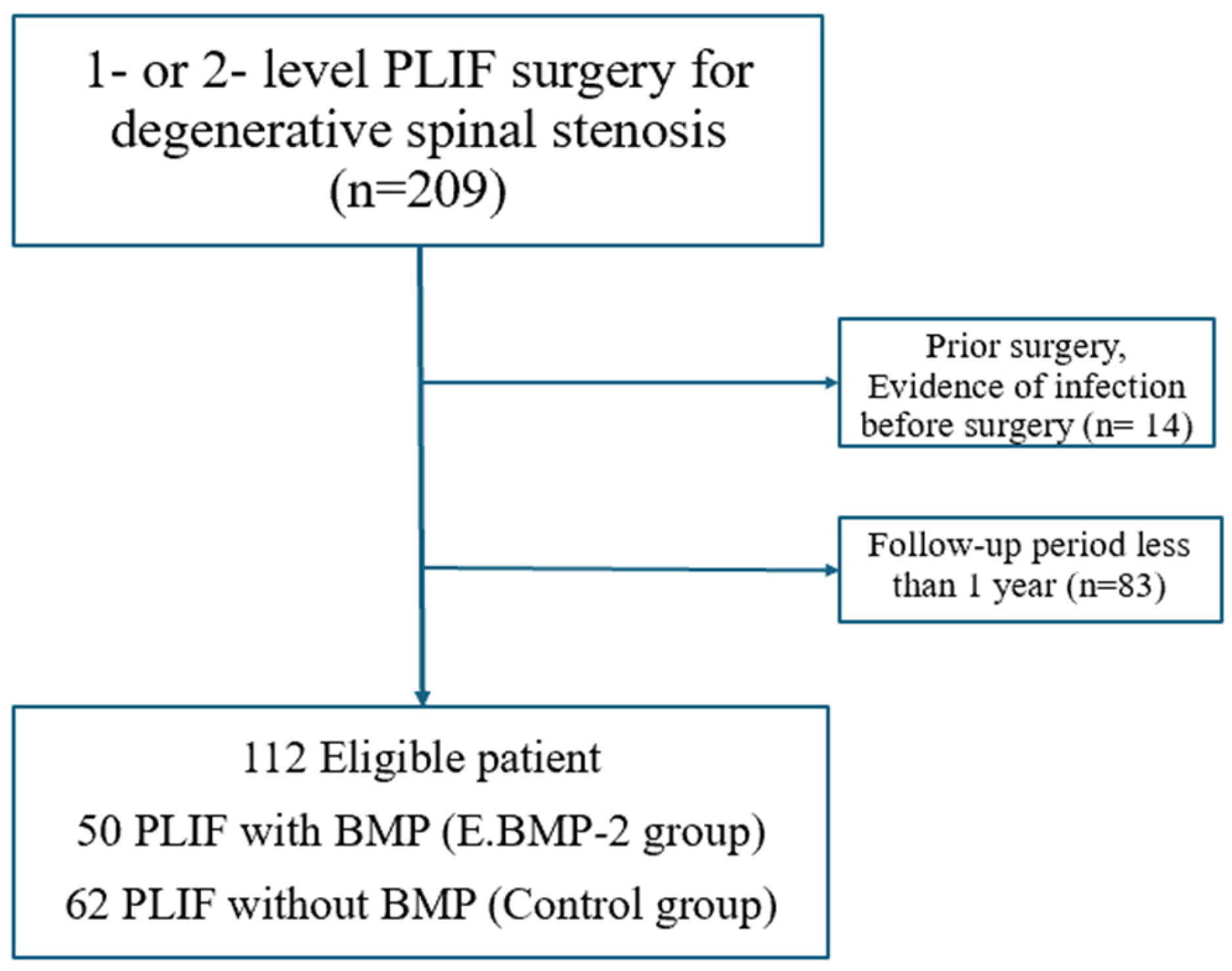
This retrospective study was conducted at a single institution from 2022 to 2023. The study was approved by the Institutional Review Board (IRB) of Yonsei University College of Medicine, Gangnam Severance Hospital (IRB No.3-2024-0432). The inclusion criteria included patients who underwent PLIF with local autologous bone or E.BMP-2/hydroxyapatite (HA) for degenerative lumbar disease with persistent symptoms that were unresponsive to adequate conservative management. Eligible patients underwent either single- or two-level PLIF. The exclusion criteria included a history of spinal surgery; history of surgery for trauma, infection, tumors, or conditions unrelated to degenerative lumbar disease; those with preoperative evidence of other infections; and patients with a follow-up duration of less than 1 year (
Figure 1).
2.2. Surgical Methods
All surgeries were performed under general anesthesia, and a standard posterior approach was used in all patients. The patients were placed in a prone position on a Jackson table. A midline skin incision measuring 10–12 cm was made, followed by subperiosteal dissection. Following exposure of the lamina and mammillary processes, subtotal laminectomy and extensive facetectomy were performed to expose the intervertebral disc. The nucleus and cartilaginous end plates were removed, and bilateral annulotomy was performed. Disc shavers and curettes were used to prepare the endplates, with care taken to avoid damage to the bony endplates. PEEK cages (Lumfix cage, CGBio Co., Ltd., Seoul, Republic of Korea) were used for both the E.BMP-2 and Control groups. In the E.BMP-2 group, the cages were filled with autologous bone from the laminectomy site in combination with E.BMP-2 and HA granules (Novosis; CG Bio Co., Ltd., Seoul, Republic of Korea), whereas the cages in the Control group were filled with autologous bone from the laminectomy site. An amount of 0.5 mg E.BMP-2 was used at each level based on a previous study [
10]. After endplate preparation, the autologous bone and DBM were packed into the disc space, and the cage was inserted tightly into the disc space using a root retractor while protecting the nerve. Gelfoam and fibrin glue were applied to seal the annulotomy sites and minimize E.BMP-2 leakage. Pedicle screw fixation was performed after cage insertion. After confirming hemostasis, the wound was closed layer-by-layer.
2.3. Outcome Measures
Demographic and perioperative data such as sex, age, length of hospital stay, number of operated levels, body mass index (BMI), presence of osteoporosis, comorbidities (hypertension, diabetes, cardiovascular disease, pulmonary disease, and kidney disease), alcohol consumption, smoking status, and complications such as postoperative fever and infection were collected and analyzed. Clinical outcomes were assessed using the visual analog scale (VAS) preoperatively, 1 month postoperatively and at 1 year postoperatively.
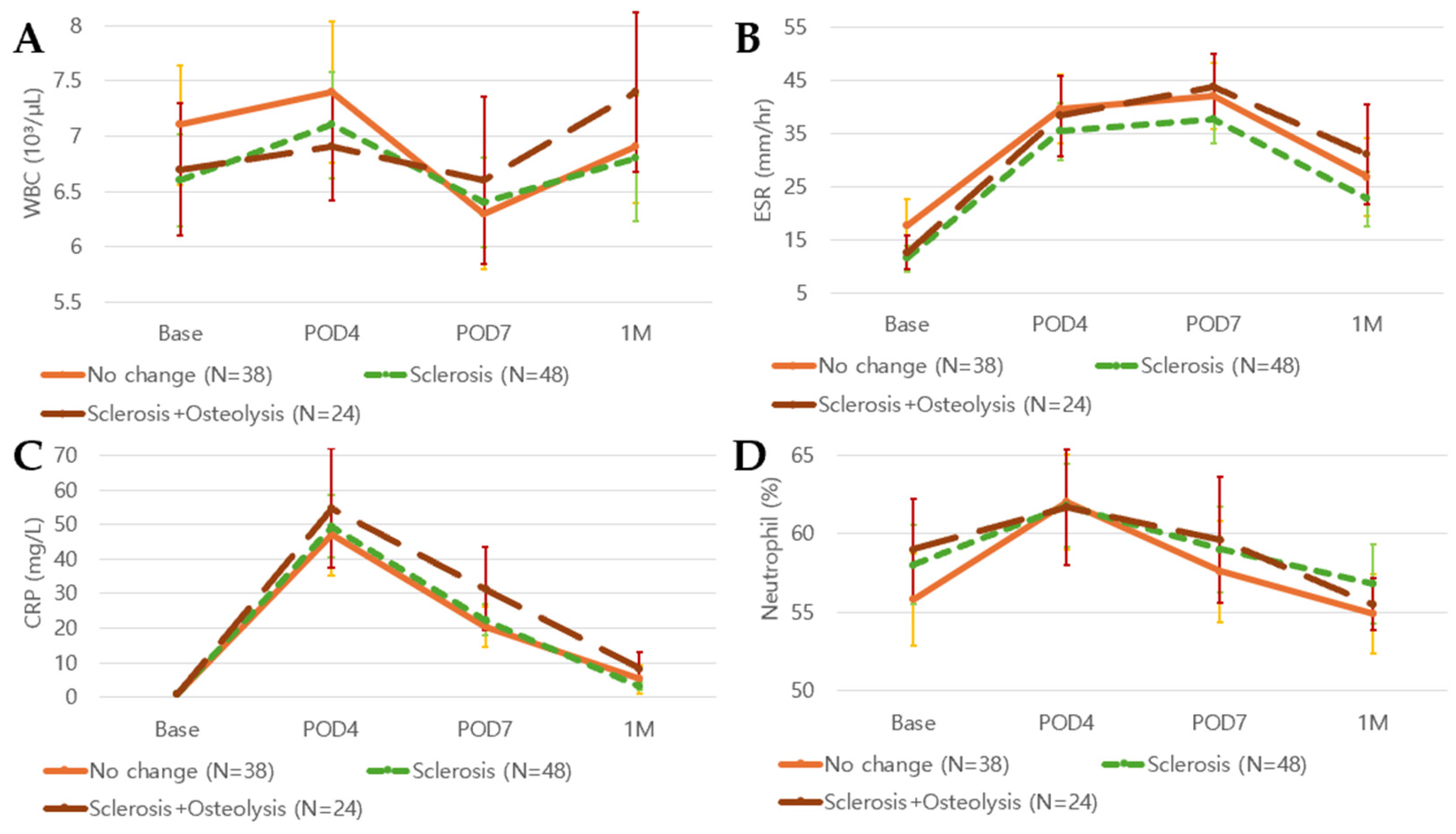
Biochemical inflammatory markers, including white blood cell (WBC) count, erythrocyte sedimentation rate (ESR), C-reactive protein (CRP), and neutrophil levels, were also assessed. Blood serum samples were obtained the day before surgery, with additional postoperative samples collected on day 4, day 7, and at 1 month.
Radiological outcomes were evaluated using computed tomography (CT). CT was performed preoperatively and at 1 year postoperatively. The bone fusion status was assessed according to the Bridwell interbody fusion grading system based on CT [
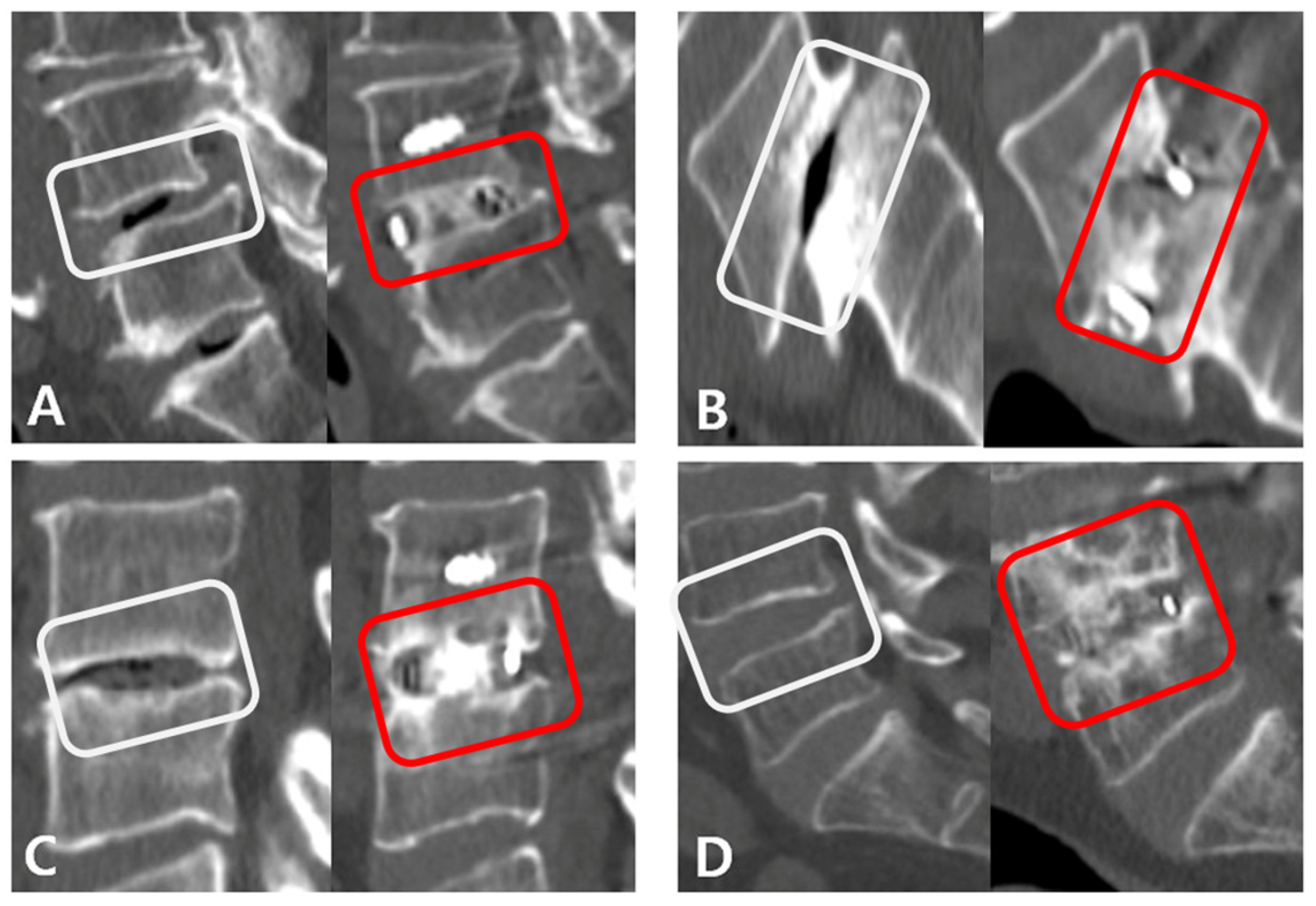
12]. The Bridwell fusion grading system was defined as follows: Grade I, fused with remodeling and trabeculae present; Grade II, graft was intact, not fully remodeled and incorporated, but no lucency was present; Grade III, graft was intact, potential lucency was present at the top and bottom of the graft; and Grade IV, fusion was absent with collapse/resorption of the graft (
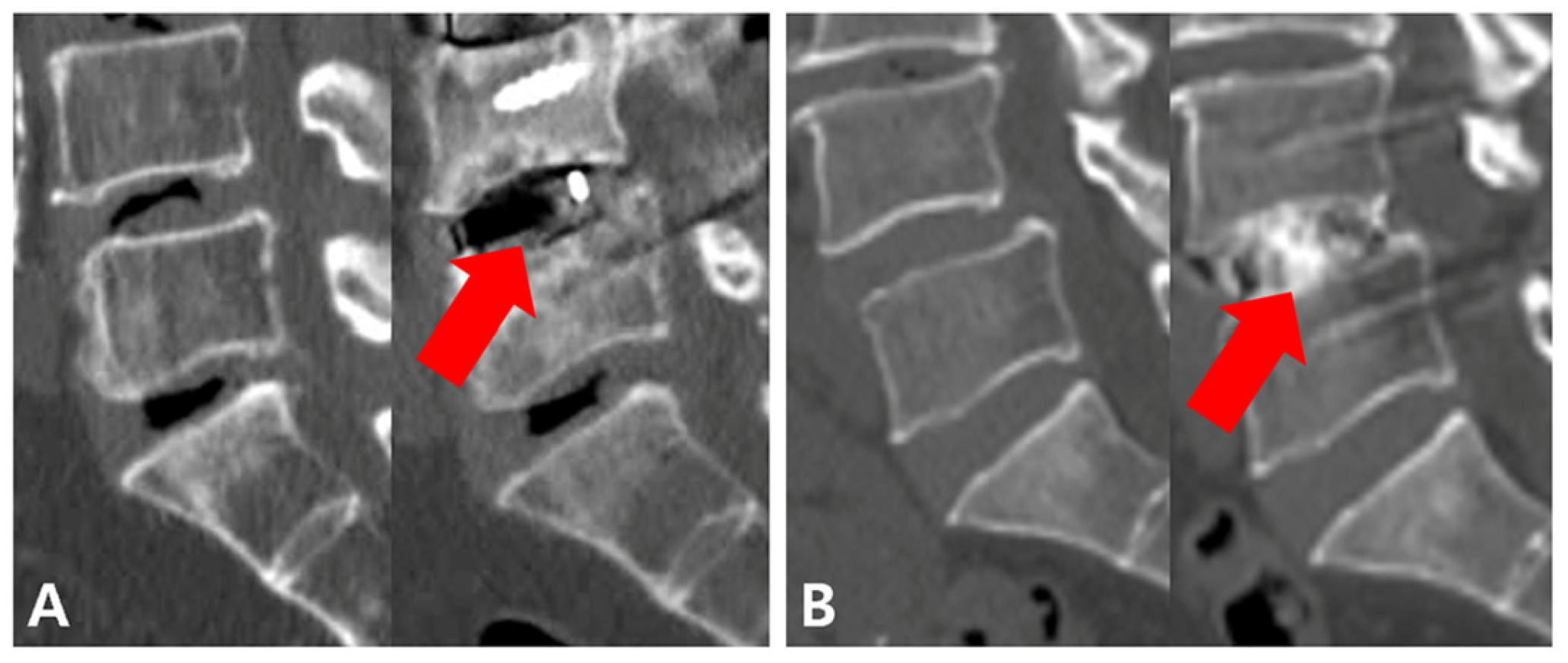
Figure 2). Adjacent vertebral body changes were determined by comparing preoperative CT scans and 1-year follow-up and classified into four categories: no change, osteolysis, sclerosis, and sclerosis combined with osteolysis (
Figure 3). Radiologic outcomes, including fusion status based on Bridwell grading system, were assessed by two independent spine surgeons. In case of disagreement, a consensus was reached through joint review and discussion. The complications were also analyzed.
2.4. Statistical Analysis
All statistical analyses were performed using R statistical software version 4.2.3 (R Foundation for Statistical Computing, Vienna, Austria). Continuous variables were presented as mean ± standard deviation, depending on the data distribution, and categorical variables were expressed as counts and percentages. The normality of continuous variables was assessed using the Shapiro–Wilk test. For normally distributed variables, between-group comparisons were performed using the independent t-test or one-way analysis of variance (ANOVA). For non-normally distributed variables, non-parametric tests (Mann–Whitney U test or Kruskal–Wallis test) were applied. Categorical variables were compared using the chi-square test or Fisher’s exact test, as appropriate. Correlation analyses were performed using Pearson’s correlation to explore potential associations between variables. To adjust for potential confounding, multivariate regression analysis was performed including age, sex, and the number of operated levels. In addition, propensity score matching was conducted using these variables. To account for repeated measurements over time, linear mixed-effects models were applied, including fixed effects for group, time, and group–time interaction with subject-level random effects. Effect sizes were reported as odds ratios for categorical outcomes, along with corresponding 95% confidence intervals (CIs). Statistical significance was defined as a p-value of less than 0.05.
4. Discussion
As society ages, the prevalence of degenerative spinal diseases continues to increase [
1,
2]. Non-union remains one of the most common complications of lumbar fusion and may lead to pain, instability, and poor clinical outcomes. Reported non-union rates vary widely, and several risk factors, including age, smoking, and the number of fused levels, have been related to fusion failure [
13,
14]. To enhance fusion outcomes, various bone graft materials and osteoinductive agents including rh-BMP-2, have been introduced and widely investigated in spinal fusion surgery [
5,
6].
Recombinant human BMP-2 (rh-BMP-2) is an osteoinductive agent widely used in spinal fusion. While its use is approved for ALIF, applications in PLIF remain off-label. Recently, E.BMP-2 has been developed as an alternative to C.BMP-2, with comparable osteoinductive properties reported in experimental and clinical studies [
15,
16]. However, few studies have investigated the use of E.BMP-2 in PLIF surgery, and most available studies have focused on PLF surgery [
8,
9,
10,
17]. Therefore, we conducted this study to evaluate the efficacy of E.BMP-2 in PLIF. A previous study demonstrated that 0.5 mg of E.BMP-2 represents the minimum effective dose required to achieve fusion in PLF surgery [
8], and that 0.3–0.5 mg per level may be sufficient in PLIF surgery [
10]. In this study, the E.BMP-2 group received 0.5 mg of E.BMP-2 per level in combination with autologous bone and DBM, whereas the Control group received autologous bone and DBM. In the present study, no significant difference in fusion rate was observed between groups, and E.BMP-2 was not significantly associated with fusion outcomes in adjusted analyses. These findings suggest that E.BMP-2 was not associated with improved fusion outcomes at the applied dose. Although differences in postoperative inflammatory responses and bone remodeling patterns have been reported in previous studies [
18], any such interpretations in this study remain speculative, as it was not designed to investigate underlying biological mechanisms. In addition, although several baseline variables, including BMI, osteoporosis, and comorbidities, were comparable between groups, they were not included in the adjusted models due to the limited sample size and concerns regarding model overfitting. The inclusion of these variables in sensitivity analyses may have further strengthened confounding control. Therefore, residual confounding cannot be excluded. Furthermore, as no direct comparisons across different E.BMP-2 dosage levels were performed, conclusions regarding optimal dosing cannot be drawn. Therefore, further studies are required to clarify the optimal and minimum effective dose of E.BMP-2 in PLIF surgery.
Complications associated with the use of BMP in lumbar fusion surgery include vertebral osteolysis, graft subsidence, postoperative radiculitis, postoperative seroma or hematoma, ectopic bone formation, and retrograde ejaculation [
19,
20,
21,
22]. Although higher doses of BMP may enhance fusion rates, they may also increase the risk of adverse events [
23]; therefore, identifying the minimum effective dose remains important.
Few studies have investigated changes in biochemical markers and radiological findings following PLIF surgery. In uncomplicated postoperative courses, inflammatory markers typically show transient elevations, whereas persistent or secondary increases may suggest infection [
24,
25,
26,
27]. In our study, both groups showed similar temporal patterns of postoperative inflammatory markers, with early postoperative peaks followed by gradual decline, while ESR peaked later. Although CRP showed a significant group-time interaction, these differences were not consistently associated with clinical outcomes or radiologic changes. Therefore, a direct causal or clinically predictive relationship between early postoperative CRP levels and long-term structural changes cannot be established. With respect to radiologic findings, the E.BMP-2 group demonstrated a higher prevalence of both sclerosis and osteolysis in adjacent VB changes compared with the Control group. These findings are consistent with previously reported bone remodeling changes [
28,
29]; however, no significant associations were identified between these radiologic findings and systemic inflammatory markers, and the underlying biological mechanisms cannot be determined from the present data.
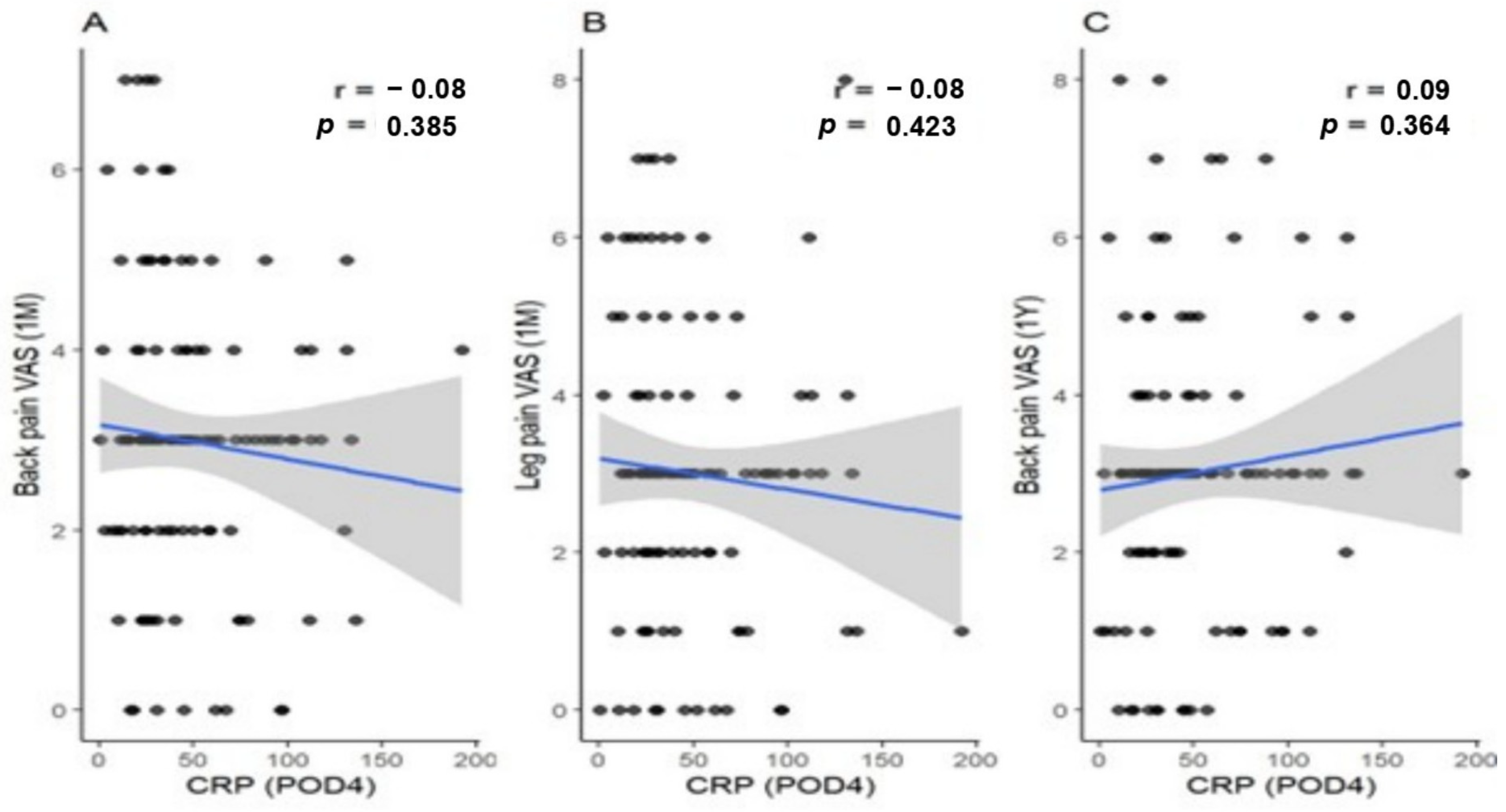
In addition, we assessed the relationship between VAS scores and both radiologic findings and biochemical inflammatory markers. No significant differences were observed in inflammatory markers or VAS scores across subgroups, and no significant correlations were identified between VAS scores and either inflammatory markers or radiologic parameters. Given the small sample size of the osteolysis subgroup and multiple comparisons performed without formal adjustment, these analyses should be considered hypothesis-generating, and their clinical relevance remains unclear.
This study has several limitations. First, the sample size was relatively small, particularly for subgroup analyses, which may have limited statistical power. Second, the 1-year follow-up period may be insufficient to fully evaluate bone fusion after PLIF surgery. Third, clinical outcomes were assessed using only VAS scores without validated functional outcome measures, such as the Oswestry Disability Index (ODI). Fourth, although multivariate regression and propensity-score-matched analyses were performed, residual confounding cannot be excluded. Furthermore, as this was an observational study, causal relationships cannot be established. Fifth, multiple comparisons were performed without formal adjustment, which may increase the risk of type I error. Finally, as a single-center retrospective study, the generalizability of these findings is limited. Further prospective studies with larger sample sizes and longer follow-up are required to validate these findings.




 ,
,