The Autophagy–Inflammation Axis in Kawasaki Disease: Pathogenic Mechanisms and Translational Opportunities

Abstract
1. Introduction
Methods of the Review
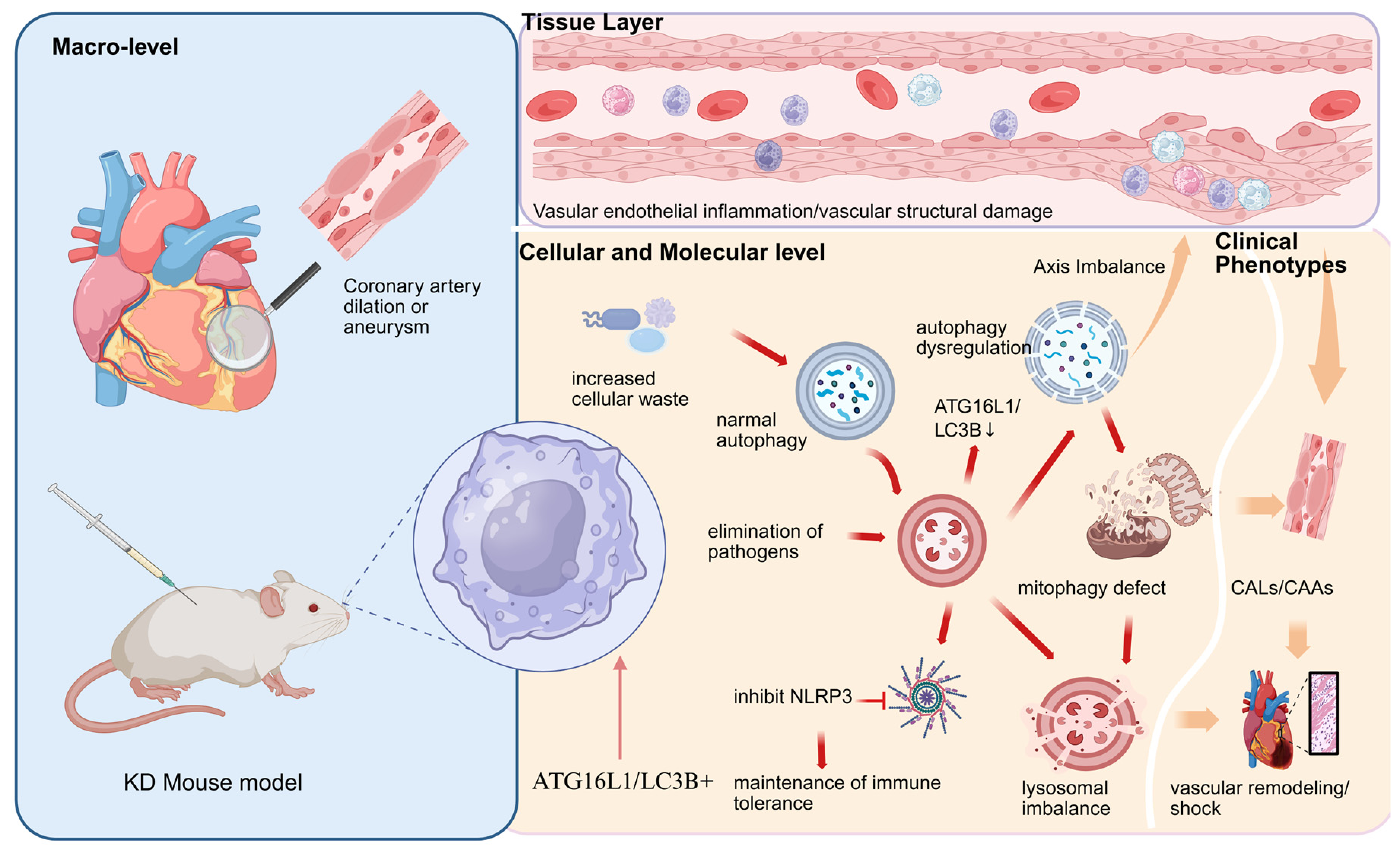
2. Molecular Mechanisms of the Autophagy–Inflammation Axis
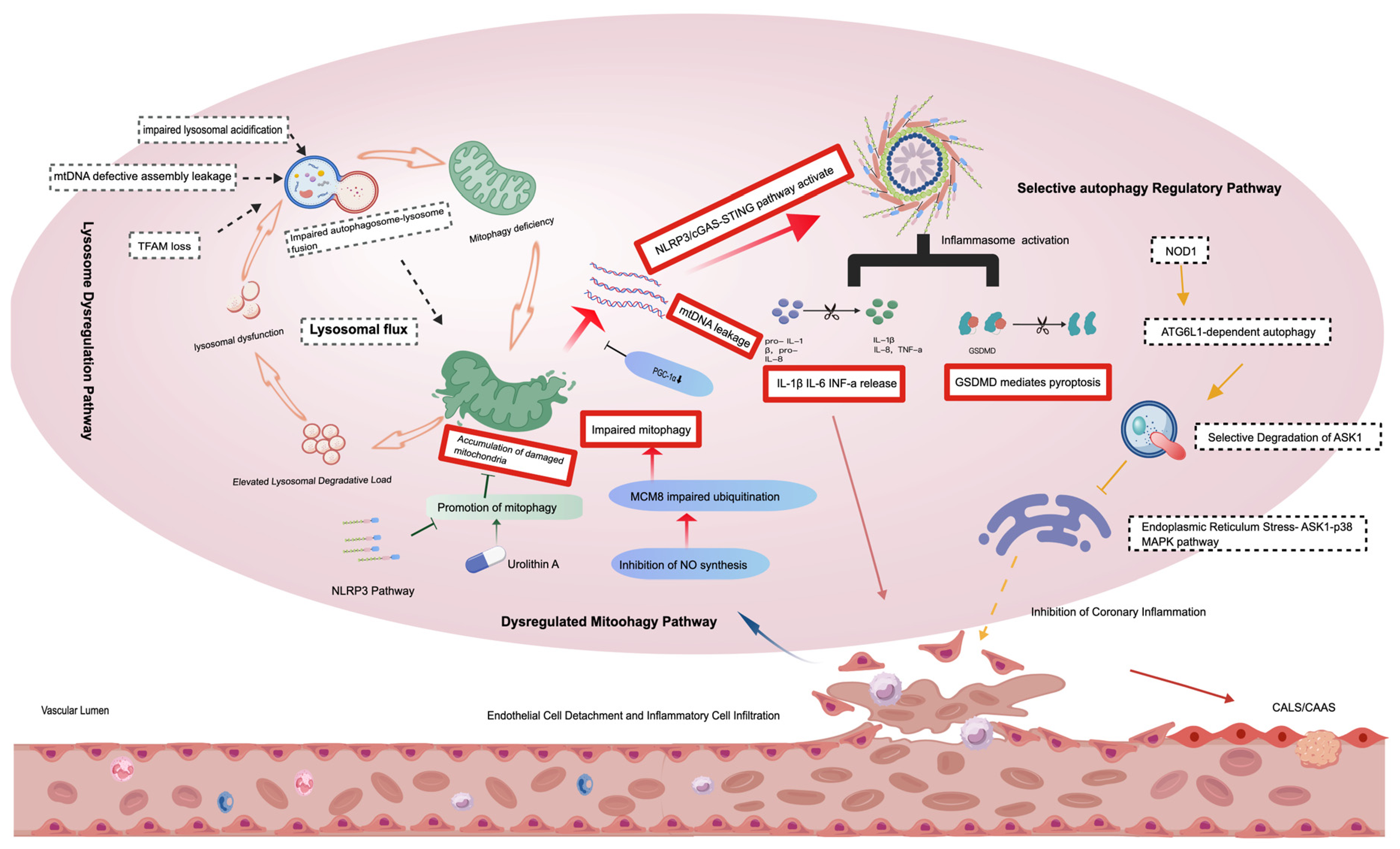
2.1. Mitophagy Abnormalities and Inflammatory Signaling Activation
2.2. Lysosomal Homeostasis Imbalance and Inflammasome Activation
2.3. Synergistic Effects of Mitophagy Defects and Lysosomal Dysfunction
2.4. Specific Regulation of Inflammatory Responses by Selective Autophagy
3. Dynamic Imbalance Characteristics of the Autophagy–Inflammation Axis in Kawasaki Disease
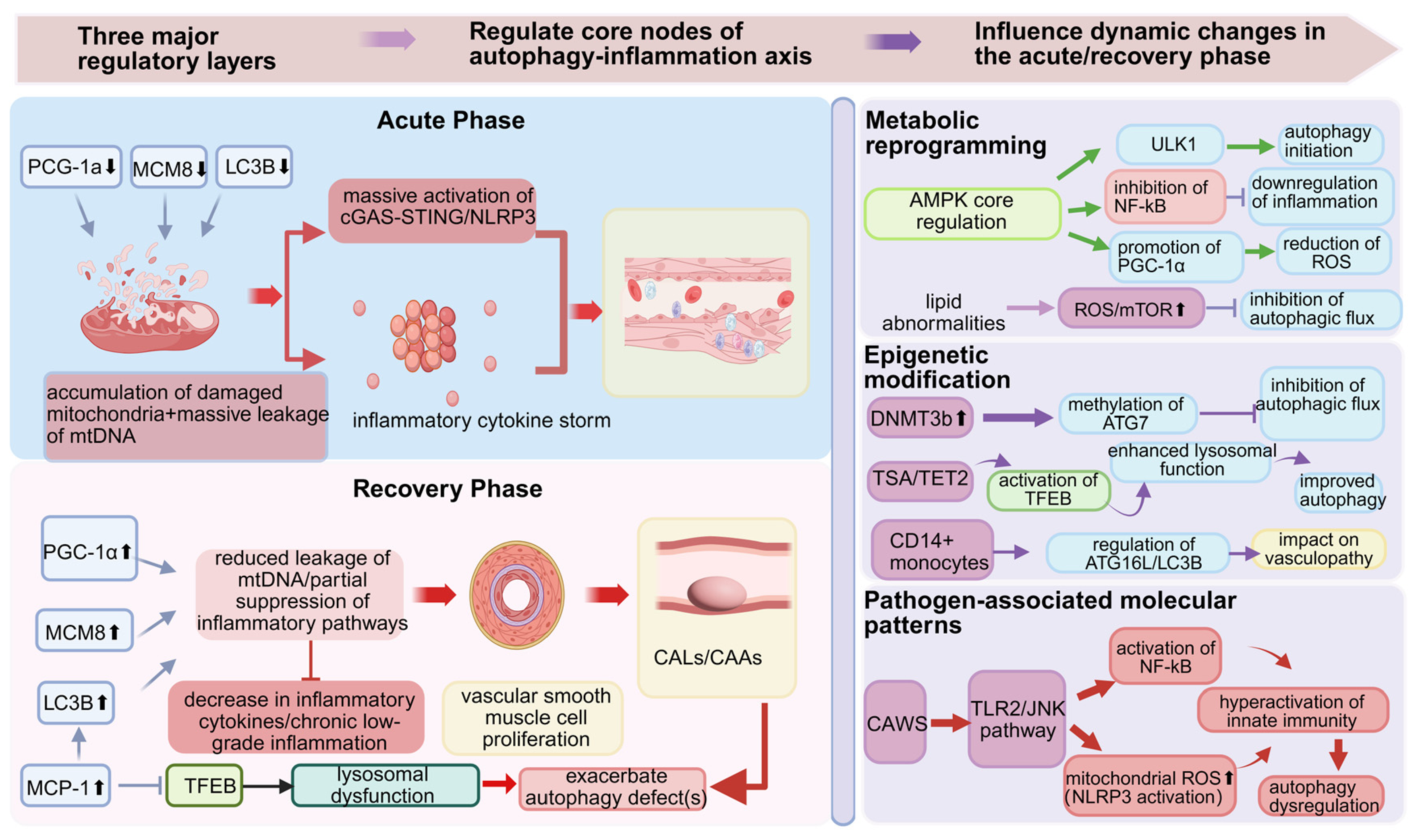
3.1. Pathophysiological Changes in Acute and Recovery Phases
3.2. Clinical and Experimental Evidence Support
4. Multi-Level Regulatory Network of the Autophagy–Inflammation Axis
4.1. Metabolic Reprogramming Regulation
4.2. Epigenetic Modification Regulation
4.3. Pathogen-Associated Molecular Pattern Activation
5. Therapeutic Strategies Targeting the Autophagy–Inflammation Axis
5.1. Current Standard of Care and Unmet Need
5.2. A Framework for Evaluating Novel Therapies
5.3. Clinically Applied and Near-Term Candidates
Anakinra (IL-1 Receptor Antagonist)
5.4. Preclinical Candidates with KD-Specific Evidence
5.4.1. Sirolimus (Rapamycin)
5.4.2. Necrosulfonamide (GSDMD Inhibitor)
5.4.3. Resveratrol
5.5. Mechanistically Supported Candidates Awaiting KD Validation
5.5.1. Metformin
5.5.2. Urolithin A
5.5.3. ASK1 Inhibitors (e.g., Selonsertib)
5.6. Novel Targets at the Discovery Stage
FCGR3B-S100A12 Axis Inhibitors
5.7. Integration, Challenges, and Translational Roadmap

| Agent/Target | Mechanism of Action (Related to Axis) | Evidence Source and Model | Proposed Therapeutic Objective | Clinical Readiness (KD) | Key Limitations/Safety Considerations |
|---|---|---|---|---|---|
| Anakinra | IL-1 receptor antagonist; inhibits NLRP3 inflammasome output. | Clinical evidence: Case series in refractory KD [32,33]; genetic association (IL1B polymorphism) with IVIG resistance [31]. | Rescue therapy for IVIG-resistant disease. | Clinical use (refractory cases) | Subcutaneous administration; high cost; need for larger controlled trials. |
| Sirolimus (Rapamycin) | mTOR inhibitor; induces autophagy; inhibits endothelial inflammation via AKT/mTOR pathway. | Preclinical, KD-specific: In vitro (KD murine model) [34]. | Prevention of coronary artery remodeling. | Experimental | Narrow therapeutic window; immunosuppression risk; unclear timing in acute phase. |
| Necrosulfonamide | Inhibits gasdermin D (GSDMD), blocking pyroptosis and IL-1β release. | Preclinical, KD-specific: In vitro (KD serum-induced pyroptosis in macrophages/HUVECs) [14,15]. | Mitigation of acute, severe endothelial inflammation. | Early preclinical | Specificity, pharmacokinetics, and in vivo efficacy not validated; no clinical-grade inhibitors. |
| Resveratrol | Activates SIRT1/AMPK to enhance autophagy; antioxidant and anti-inflammatory. | Preclinical, KD-specific: In vitro (human coronary artery endothelial cells) [36]; in vivo (KD mouse model) [35]. | Adjunctive antioxidant and anti-inflammatory agent. | Experimental/Nutraceutical | Poor oral bioavailability; rapid metabolism; no controlled clinical trials in KD. |
| Metformin | Activates AMPK, promotes autophagy and inhibits NF-κB signaling. | Mechanistic extrapolation (non-KD): Studies in metabolic/cardiovascular fields [25]. No KD-specific data. | Hypothesis-generating: Metabolic modulator to restore axis balance. | Hypothesis-generating | Complete absence of efficacy and safety data in KD models or patients. |
| Urolithin A | Enhances mitophagy, inhibits cGAS-STING signaling. | Mechanistic extrapolation (non-KD): Studies in aging and inflammation models [5,12]. No direct KD evidence. | Hypothesis-generating: Preventative or disease-modifying agent targeting mitochondrial dysfunction. | Hypothesis-generating | Lack of KD model data; high inter-individual variation in production. |
| ASK1 Inhibitors (e.g., Selonsertib) | Inhibits ASK1-p38 MAPK pathway, a stress-activated inflammatory cascade. | Indirect mechanistic support: Study showing NOD1 degrades ASK1 to suppress inflammation [13]. Inhibitor not tested in KD. | Potential target for mitigating vascular inflammatory signaling. | Target validation stage | Lack of pediatric/KD model data; clinical development of lead compound faced challenges. |
| caspase-1 Inhibitor | Inhibits caspase-1, blocks GSDMD cleavage and IL-1β/IL-18 maturation. | Mechanistic extrapolation (non-KD): Studies in other disease models (e.g., fibrosis) [38]. No KD evidence. | Potential upstream inhibitor of inflammasome activation. | Target validation stage | Absence of KD model data and unproven vascular efficacy in KD context. |
| FCGR3B-S100A12 Axis Inhibitor | Inhibits a novel pro-thrombotic and pro-inflammatory pathway. | Preclinical, novel KD pathway: In vitro mechanistic study in a KD context [37]. | Potential KD-specific target for intervention. | Discovery stage | Causal role in vivo unproven; no clinical inhibitors exist; requires extensive validation. |
6. Discussion
6.1. Outstanding Questions and Future Directions
6.2. Translational Roadmap and Clinical Implications
7. Conclusions
Author Contributions
Funding
Institutional Review Board Statement
Informed Consent Statement
Data Availability Statement
Conflicts of Interest
References
- Chang, L.; Yang, H.-W.; Lin, T.-Y.; Yang, K.D. Perspective of Immunopathogenesis and Immunotherapies for Kawasaki Disease. Front. Pediatr. 2021, 9, 697632. [Google Scholar] [CrossRef]
- Hara, T.; Yamamura, K.; Sakai, Y. The Up-to-date Pathophysiology of Kawasaki Disease. Clin. Transl. Immunol. 2021, 10, e1284. [Google Scholar] [CrossRef]
- Qiu, Y.; Zhang, Y.; Li, Y.; Hua, Y.; Zhang, Y. Molecular Mechanisms of Endothelial Dysfunction in Kawasaki-Disease-Associated Vasculitis. Front. Cardiovasc. Med. 2022, 9, 981010. [Google Scholar] [CrossRef]
- Wang, Y.; Li, T. Advances in Understanding Kawasaki Disease-related Immuno-inflammatory Response and Vascular Endothelial Dysfunction. Pediatr. Investig. 2022, 6, 271–279. [Google Scholar] [CrossRef] [PubMed]
- Marek-Iannucci, S.; Ozdemir, A.B.; Moreira, D.; Gomez, A.C.; Lane, M.; Porritt, R.A.; Lee, Y.; Shimada, K.; Abe, M.; Stotland, A.; et al. Autophagy-Mitophagy Induction Attenuates Cardiovascular Inflammation in a Murine Model of Kawasaki Disease Vasculitis. JCI Insight 2021, 6, e151981. [Google Scholar] [CrossRef]
- Levine, B.; Mizushima, N.; Virgin, H.W. Autophagy in Immunity and Inflammation. Nature 2011, 469, 323–335. [Google Scholar] [CrossRef]
- Song, S.; Chen, L.; Zhou, Y.; Huang, J.; Xu, Y.; Li, G.; Ding, G.; Xiao, T.; Huang, M. Single Cell Sequencing Technology Reveals the Correlation between B Lymphocytes and Vascular Inflammatory Symptoms of Kawasaki Disease. Transl. Pediatr. 2025, 14, 582–596. [Google Scholar] [CrossRef]
- Chen, Y.; Yang, M.; Zhang, M.; Wang, H.; Zheng, Y.; Sun, R.; Li, X. Single-Cell Transcriptome Reveals Potential Mechanisms for Coronary Artery Lesions in Kawasaki Disease. Arterioscler. Thromb. Vasc. Biol. 2024, 44, 866–882. [Google Scholar] [CrossRef] [PubMed]
- Lin, M.; Xian, H.; Chen, Z.; Wang, S.; Liu, M.; Liang, W.; Tang, Q.; Liu, Y.; Huang, W.; Che, D.; et al. MCM8-Mediated Mitophagy Protects Vascular Health in Response to Nitric Oxide Signaling in a Mouse Model of Kawasaki Disease. Nat. Cardiovasc. Res. 2023, 2, 778–792. [Google Scholar] [CrossRef] [PubMed]
- Li, A.; Gao, M.; Liu, B.; Qin, Y.; Chen, L.; Liu, H.; Wu, H.; Gong, G. Mitochondrial Autophagy: Molecular Mechanisms and Implications for Cardiovascular Disease. Cell Death Dis. 2022, 13, 444. [Google Scholar] [CrossRef]
- West, A.P.; Khoury-Hanold, W.; Staron, M.; Tal, M.C.; Pineda, C.M.; Lang, S.M.; Bestwick, M.; Duguay, B.A.; Raimundo, N.; MacDuff, D.A.; et al. Mitochondrial DNA Stress Primes the Antiviral Innate Immune Response. Nature 2015, 520, 553–557. [Google Scholar] [CrossRef] [PubMed]
- Madsen, H.B.; Park, J.-H.; Chu, X.; Hou, Y.; Li, Z.; Rasmussen, L.J.; Croteau, D.L.; Bohr, V.A.; Akbari, M. The cGAS-STING Signaling Pathway Is Modulated by Urolithin A. Mech. Ageing Dev. 2024, 217, 111897. [Google Scholar] [CrossRef]
- Kimura, Y.; Kimura, M.; Miura, N.; Yoshino, Y.; Kono, H. NOD1 Deficiency Promotes Inflammation via Autophagic Degradation of ASK1. Commun. Biol. 2025, 8, 781. [Google Scholar] [CrossRef]
- Han, X.-Y.; Qi, H.-R. Pyroptosis in Kawasaki Disease: From Mechanisms to Targeted Interventions. Front. Immunol. 2025, 16, 1566985. [Google Scholar] [CrossRef]
- Jia, C.; Zhang, J.; Chen, H.; Zhuge, Y.; Chen, H.; Qian, F.; Zhou, K.; Niu, C.; Wang, F.; Qiu, H.; et al. Endothelial Cell Pyroptosis Plays an Important Role in Kawasaki Disease via HMGB1/RAGE/Cathespin B Signaling Pathway and NLRP3 Inflammasome Activation. Cell Death Dis. 2019, 10, 778. [Google Scholar] [CrossRef] [PubMed]
- Wang, Z.; Xie, L.; Ding, G.; Song, S.; Chen, L.; Li, G.; Xia, M.; Han, D.; Zheng, Y.; Liu, J.; et al. Single-Cell RNA Sequencing of Peripheral Blood Mononuclear Cells from Acute Kawasaki Disease Patients. Nat. Commun. 2021, 12, 5444. [Google Scholar] [CrossRef]
- Asano; Ogawa. Expression of Monocyte Chemoattractant Protein-1 in Kawasaki Disease: The Anti-inflammatory Effect of Gamma Globulin Therapy. Scand. J. Immunol. 2000, 51, 98–103. [Google Scholar] [CrossRef]
- Noval Rivas, M.; Arditi, M. Kawasaki Disease: Pathophysiology and Insights from Mouse Models. Nat. Rev. Rheumatol. 2020, 16, 391–405. [Google Scholar] [CrossRef]
- Lee, Y.; Schulte, D.J.; Shimada, K.; Chen, S.; Crother, T.R.; Chiba, N.; Fishbein, M.C.; Lehman, T.J.A.; Arditi, M. Interleukin-1 Is Crucial for the Induction of Coronary Artery Inflammation in a Mouse Model of Kawasaki Disease. Am. Heart Assoc. J. 2012, 125, 12. [Google Scholar] [CrossRef]
- Wang, L.; Hauenstein, A.V. The NLRP3 Inflammasome: Mechanism of Action, Role in Disease and Therapies. Mol. Asp. Med. 2020, 76, 100889. [Google Scholar] [CrossRef] [PubMed]
- Maruyama, D.; Kocatürk, B.; Lee, Y.; Abe, M.; Lane, M.; Moreira, D.; Chen, S.; Fishbein, M.C.; Porritt, R.A.; Noval Rivas, M.; et al. MicroRNA-223 Regulates the Development of Cardiovascular Lesions in LCWE-Induced Murine Kawasaki Disease Vasculitis by Repressing the NLRP3 Inflammasome. Front. Pediatr. 2021, 9, 662953. [Google Scholar] [CrossRef]
- Zhang, D.; Wang, X.; Zhu, L.; Chen, Y.; Yang, C.; Zhong, Z.; Kong, X.; Nan, J.; Wang, C.; Hu, H.; et al. TIMD4hiMHCIIhi Macrophages Preserve Heart Function through Retnla. JACC Basic Transl. Sci. 2025, 10, 65–84. [Google Scholar] [CrossRef] [PubMed]
- Askin, L.; Abus, S.; Tanriverdi, O. Resistin and Cardiovascular Disease: A Review of the Current Literature Regarding Clinical and Pathological Relationships. Curr. Cardiol. Rev. 2022, 18, e290721195114. [Google Scholar] [CrossRef] [PubMed]
- Patel, L.; Buckels, A.C.; Kinghorn, I.J.; Murdock, P.R.; Holbrook, J.D.; Plumpton, C.; Macphee, C.H.; Smith, S.A. Resistin Is Expressed in Human Macrophages and Directly Regulated by PPARγ activators. Biochem. Biophys. Res. Commun. 2023, 300, 472–476. [Google Scholar] [CrossRef]
- Salminen, A.; Hyttinen, J.M.T.; Kaarniranta, K. AMP-Activated Protein Kinase Inhibits NF-κB Signaling and Inflammation: Impact on Healthspan and Lifespan. J. Mol. Med. 2011, 89, 667–676. [Google Scholar] [CrossRef]
- Singh, A.; Mahapatra, K.K.; Praharaj, P.P.; Patra, S.; Mishra, S.R.; Patil, S.; Bhutia, S.K. Prolonged Glutamine Starvation Reactivates mTOR to Inhibit Autophagy and Initiate Autophagic Lysosome Reformation to Maintain Cell Viability. Int. J. Biochem. Cell Biol. 2024, 177, 106694. [Google Scholar] [CrossRef]
- Mak, T.W.; Grusdat, M.; Duncan, G.S.; Dostert, C.; Nonnenmacher, Y.; Cox, M.; Binsfeld, C.; Hao, Z.; Brüstle, A.; Itsumi, M.; et al. Glutathione Primes T Cell Metabolism for Inflammation. Immunity 2017, 46, 1089–1090. [Google Scholar] [CrossRef]
- Wang, X.; Han, L.; Jiang, J.; Fan, Z.; Hua, Y.; He, L.; Li, Y. Alterations in Bile Acid Metabolites Associated with Pathogenicity and IVIG Resistance in Kawasaki Disease. Front. Cardiovasc. Med. 2025, 12, 1549900. [Google Scholar] [CrossRef]
- Qiao, Z.; Xu, Z.; Xiao, Q.; Yang, Y.; Ying, J.; Xiang, L.; Zhang, C. Dysfunction of ATG7-Dependent Autophagy Dysregulates the Antioxidant Response and Contributes to Oxidative Stress-Induced Biological Impairments in Human Epidermal Melanocytes. Cell Death Discov. 2020, 6, 31. [Google Scholar] [CrossRef] [PubMed]
- Song, S.; Chen, L.; Zhou, Y.; Xu, Y.; Li, G.; Shen, L.; Xiao, T.; Huang, M. CD14+ Monocytes: The Immune Communication Hub in Early Vasculitis Symptoms of Kawasaki Disease. Front. Immunol. 2025, 16, 1557231. [Google Scholar] [CrossRef]
- Weng, K.-P.; Hsieh, K.-S.; Ho, T.-Y.; Huang, S.-H.; Lai, C.-R.; Chiu, Y.-T.; Huang, S.-C.; Lin, C.-C.; Hwang, Y.-T.; Ger, L.-P. IL-1B Polymorphism in Association with Initial Intravenous Immunoglobulin Treatment Failure in Taiwanese Children with Kawasaki Disease. Circ. J. 2010, 74, 544–551. [Google Scholar] [CrossRef]
- Kone-Paut, I.; Cimaz, R.; Herberg, J.; Bates, O.; Carbasse, A.; Saulnier, J.P.; Maggio, M.C.; Anton, J.; Piram, M. The Use of Interleukin 1 Receptor Antagonist (Anakinra) in Kawasaki Disease: A Retrospective Cases Series. Autoimmun. Rev. 2018, 17, 768–774. [Google Scholar] [CrossRef]
- Guillaume, M.-P.; Reumaux, H.; Dubos, F. Usefulness and Safety of Anakinra in Refractory Kawasaki Disease Complicated by Coronary Artery Aneurysm. Cardiol. Young 2018, 28, 739–742. [Google Scholar] [CrossRef]
- Stock, A.T.; Parsons, S.; D’Silva, D.B.; Hansen, J.A.; Sharma, V.J.; James, F.; Starkey, G.; D’Costa, R.; Gordon, C.L.; Wicks, I.P. Mechanistic Target of Rapamycin Inhibition Prevents Coronary Artery Remodeling in a Murine Model of Kawasaki Disease. Arthritis Rheumatol. 2023, 75, 305–317. [Google Scholar] [CrossRef] [PubMed]
- Fengmei, X.; Ruiping, L.; Huanli, G.; Dongmei, W.; Na, S. Resveratrol Alleviates Kawasaki Disease-Induced Myocardial Injury via Inhibition of Apoptosis and Autophagy. J. Cent. South Univ. 2021, 46, 1102–1108. [Google Scholar]
- Huang, F.-C.; Kuo, H.-C.; Huang, Y.-H.; Yu, H.-R.; Li, S.-C.; Kuo, H.-C. Anti-Inflammatory Effect of Resveratrol in Human Coronary Arterial Endothelial Cells via Induction of Autophagy: Implication for the Treatment of Kawasaki Disease. BMC Pharmacol. Toxicol. 2017, 18, 3. [Google Scholar] [CrossRef] [PubMed]
- Wu, M.; Wang, W.; Yang, Z.; Long, G.; Zhang, Y.; Yang, D. Illuminating the Enigmatic Pathogenesis of Kawasaki Disease: Unveiling Novel Therapeutic Avenues by Targeting FCGR3B-S100A12 Pathway. Eur. J. Pharmacol. 2025, 987, 177154. [Google Scholar] [CrossRef] [PubMed]
- Shi, Y.; Hu, Y.; Li, J.; Chen, H.; Zhong, Q.; Ma, X.; Li, X.; Zhang, S.; Zhuang, S.; Liu, N. Inhibition of Caspase-1 Suppresses GSDMD-mediated Peritoneal Mesothelial Cell Pyroptosis and Inflammation in Peritoneal Fibrosis. Small 2025, 21, 2409362. [Google Scholar] [CrossRef]


Disclaimer/Publisher’s Note: The statements, opinions and data contained in all publications are solely those of the individual author(s) and contributor(s) and not of MDPI and/or the editor(s). MDPI and/or the editor(s) disclaim responsibility for any injury to people or property resulting from any ideas, methods, instructions or products referred to in the content. |
© 2026 by the authors. Licensee MDPI, Basel, Switzerland. This article is an open access article distributed under the terms and conditions of the Creative Commons Attribution (CC BY) license.
Share and Cite
Xu, Q.; Wu, Y.; Ding, Y. The Autophagy–Inflammation Axis in Kawasaki Disease: Pathogenic Mechanisms and Translational Opportunities. J. Clin. Med. 2026, 15, 3918. https://doi.org/10.3390/jcm15103918
Xu Q, Wu Y, Ding Y. The Autophagy–Inflammation Axis in Kawasaki Disease: Pathogenic Mechanisms and Translational Opportunities. Journal of Clinical Medicine. 2026; 15(10):3918. https://doi.org/10.3390/jcm15103918
Chicago/Turabian StyleXu, Qian, Yali Wu, and Yan Ding. 2026. "The Autophagy–Inflammation Axis in Kawasaki Disease: Pathogenic Mechanisms and Translational Opportunities" Journal of Clinical Medicine 15, no. 10: 3918. https://doi.org/10.3390/jcm15103918
APA StyleXu, Q., Wu, Y., & Ding, Y. (2026). The Autophagy–Inflammation Axis in Kawasaki Disease: Pathogenic Mechanisms and Translational Opportunities. Journal of Clinical Medicine, 15(10), 3918. https://doi.org/10.3390/jcm15103918