Iron Deficiency and Oral Treatments: Limitations, Pharmacokinetics, and the Role of Iron Protein Succinylate in Clinical Practice


Abstract
1. Introduction
2. Iron Physiology and Metabolism
3. Challenges of Conventional Iron Supplementation
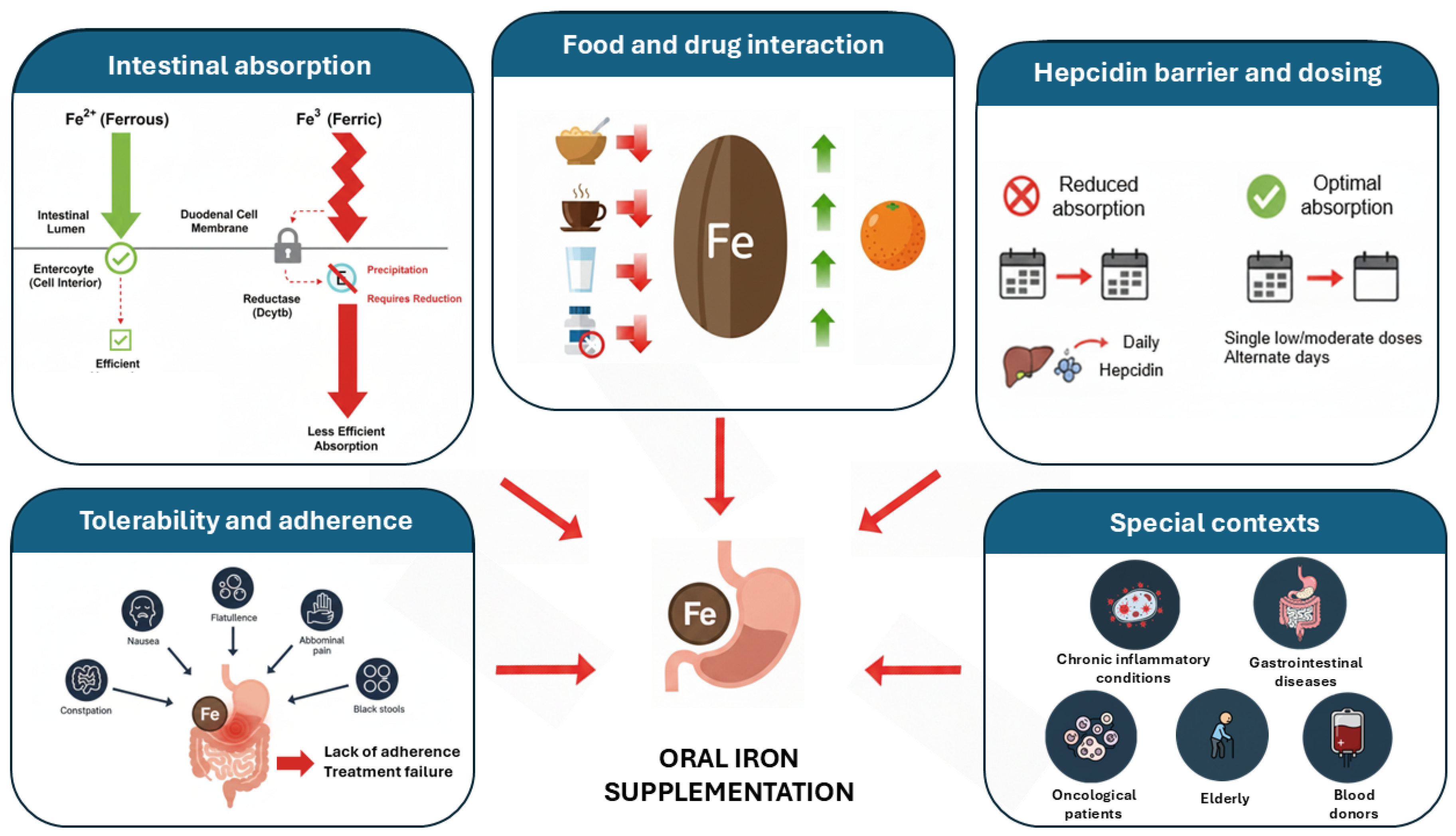
3.1. Metabolic Barriers to Oral Iron Uptake
3.2. Absorption Barriers: Food and Drug Interactions
3.3. Hepcidin-Informed Dosing Constraints
3.4. Gastrointestinal Tolerability and Adherence Barriers
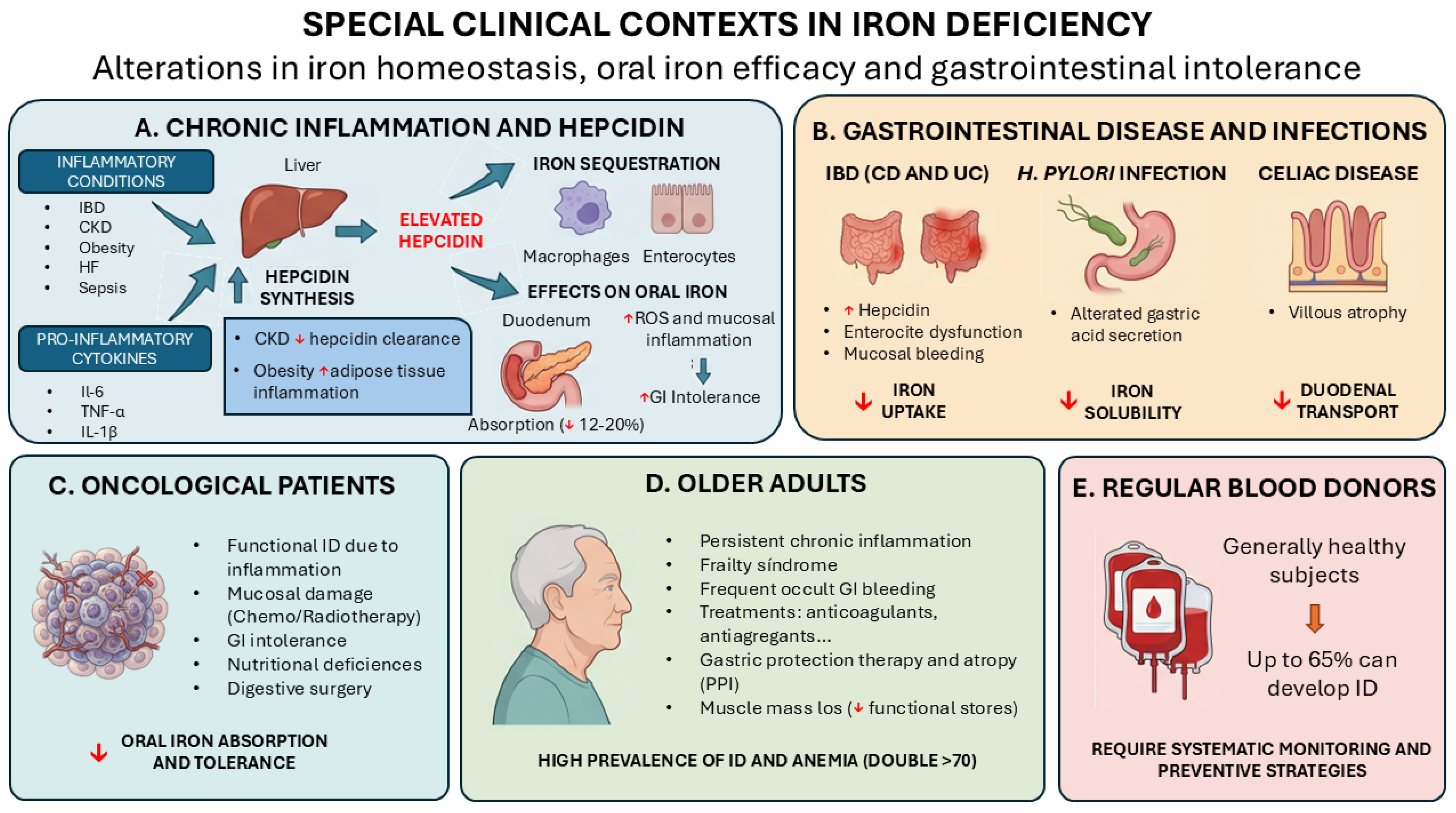
3.5. Special Clinical Contexts in ID: Inflammation, Malabsorption, Cancer, Older Adults, and Blood Donation
4. IPS: Oral Solution with a Specific Mechanism of Action
5. Comparative Benefits of IPS in Clinical Studies
5.1. Optimized Hematologic Efficacy and Bioavailability with Shorter Treatment

| Study | Design | Treatment Arms | Population | Variables | Efficacy Outcomes | Safety Outcomes |
|---|---|---|---|---|---|---|
| Di Giacomo et al., 1987 [71] | Randomized open-label clinical trial | A: IPS 80 mg Fe3+ daily; B: Ferritin complex 80 mg Fe3+ daily; C: Ferrous sulfate 105 mg Fe2+ daily. Duration: 28 days (efficacy) + 6 h PK sub-study. | 40 adults with iron-deficiency anemia (10 per arm for PK, 30 for efficacy). | Serum iron kinetics (7 time points); Hb, SI, TIBC, TSAT; estimated iron absorption. | Ferrous sulfate produced a faster early rise in serum iron, but IPS maintained higher and steadier levels. Slightly higher absorption with IPS (6.1%) vs. FS (5.9%). | N/A |
| Landucci et al., 1987 [62] | Randomized open-label controlled clinical trial | A: IPS 80 mg Fe3+ daily; B: Ferrous sulfate 105 mg Fe2+ daily. Duration: 30 days. | 40 blood donors (11 men, 29 women; mean age 36 years) with low ferritin (<30 ng/100 mL). | RBC, Hb, HCT, MCV, SI, transferrin, ferritin; iron absorption (Gordulek formula); tolerability. | IPS significantly increased serum iron (p < 0.001) and absorption (18.7%) vs. FS (6.4%). Both improved ferritin, restoring iron stores. | Good overall tolerance; one digestive disorder with IPS and one constipation case with FS. |
| Bregani et al., 1990 [72] | Comparative clinical trial | A: IPS 80 mg Fe3+ daily; B: Slow-release FS 105 mg Fe2+ daily. Duration: 40 days. | 40 adults with iron-deficiency anemia (Hb 7–11.5 g/dL, Fe < 50 µg/dL, TSAT < 15%). | Hb increase per day, plasma iron, RBC, HCT; tolerability. | IPS and FS achieved similar Hb recovery (0.055 vs. 0.048 g/dL/day). | IPS significantly better tolerated; fewer GI reactions (p < 0.001). |
| Pogliani et al., 1990 [73] | Randomized single-blind clinical trial | A: IPS 80 mg Fe3+ daily; B: IPS 120 mg Fe3+ daily; C: Extended-release FS 105 mg Fe2+ daily. Duration: 60 days. | 54 adults with iron-deficiency anemia (mean age 57 years): 22, 19, and 13 per arm. | Hb, HCT, SI, RBC; tolerability. | All groups improved; Hb increase greater with IPS. Both IPS doses showed superior tolerability to FS. | Fewer adverse events with IPS; 4 patients discontinued FS due to intolerance. |
| Marcacci et al., 1989 [76] | Randomized single-blind clinical trial | Solid forms: IPS (80 mg Fe2+/day, chewable) vs. FS (100 mg Fe2+/day, capsules). Liquid forms: IPS (80 mg Fe2+/day, vials) vs. sodium ferric gluconate (80 mg Fe3+/day). Duration: 40 days. | 250 women (15–50 years, pregnant/non-pregnant) with iron deficiency or microcytic anemia. | Hb, ferritin, serum iron, HCT, clinical symptoms. | IPS produced greater increases in Hb and RBC vs. FS (p < 0.01); iron absorption higher with IPS (17.7% vs. 10.7%). | IPS better tolerated; lowest complaint/benefit ratio (0.52 vs. 2.25). |
| Liguori et al., 1993 [77] | Randomized double-blind, double-dummy, multicenter clinical trial | A: IPS 120 mg Fe3+ daily (two 60 mg tablets); B: Controlled-release FS 105 mg Fe2+ daily. Duration: 60 days. | 1095 adults with iron deficiency or iron-deficiency anemia (546 IPS; 549 FS). | Hb, HCT, ferritin; global response; tolerability. | Both normalized Hb and ferritin, but IPS yielded higher increases and higher success rate (78.9% vs. 67.6%). | IPS caused fewer adverse events (11.5% vs. 26.3%), mainly mild GI discomfort. |
| Najean et al., 1995 [74] | Randomized double-blind multicenter phase III trial | A: IPS 120 mg Fe3+ daily; B: Controlled-release FS 105 mg Fe2+ daily. Duration: 60 days. | 174 patients (98% women) with mild-to-moderate iron-deficiency anemia. | Hb, HCT, RBC, plasma iron, TSAT, ferritin; clinical symptoms; safety. | Both treatments equally effective for anemia correction. | IPS better tolerated; fewer GI symptoms (p < 0.05), especially diarrhea (10% vs. 25%). |
| Pujol Farriols et al., 2002 [75] | Comparative observational clinical study | A: IPS 80 mg Fe3+ daily (2 vials/day); B: FS 210 mg Fe2+/day first month, then 105 mg/day. Duration: 6 months. | 60 adults (30 per group) with chronic iron-deficiency anemia (Hb < 10 g/dL, ferritin < 30 µg/dL). | Hb, ferritin, RBC, MCV; long-term tolerability. | Both achieved Hb normalization (~85%); no significant efficacy difference (p > 0.3). | IPS had fewer adverse effects (3% vs. 13%); mild nausea only, no discontinuations. |
| Minganti et al., 1995 [80] | Randomized single-blind clinical trial | A: Ferrimannitol-ovoalbumin 80 mg Fe3+ daily; B: IPS 80 mg Fe3+ daily. Duration: 28 days. | 15 pregnant women in first trimester with Hb ≤ 11 g/dL (7 A; 8 B). | Hb, RBC, serum iron, transferrin, MCV, MCH, MCHC; tolerability. | Only ferri-mannitol-albumin showed a significant Hb increase (p = 0.0146); final Hb higher than IPS (p = 0.023). | Tolerability good or optimal in both; no dropouts for side effects. |
| Rayado et al., 1996 [63] | Randomized phase IV comparative clinical trial | A: Ferrimanitol-ovoalbumin 40 mg Fe3+ daily; B: IPS 40 mg Fe3+ daily. Duration: 13 weeks (weeks 24–32 of gestation). | 394 pregnant women (347 evaluable: 172 A; 175 B). | Hb, RBC, HCT, MCV, MCH, ferritin; prevention of gestational anemia; safety. | Both effectively prevented gestational anemia (96.5% non-anemic). Ferritin rose more with ferrimanitol–ovoalbumin (p = 0.001); Hb, RBC, HCT, MCV, MCH, similar between groups. | Acceptable tolerability in both groups; very few mild digestive complaints. |
5.2. Superior Tolerability Compared to Conventional Ferrous and Ferric Salts, in Addition to a Significant Reduction in Gastrointestinal Adverse Effects
6. Optimizing Oral Iron Treatment: Practical Recommendations
7. Conclusions
Author Contributions
Funding
Institutional Review Board Statement
Informed Consent Statement
Data Availability Statement
Acknowledgments
Conflicts of Interest
Abbreviations
| AE | Adverse event |
| AGA | American Gastroenterological Association |
| BMP | Bone morphogenetic protein |
| CD | Crohn’s disease |
| CKD | Chronic kidney disease |
| DMT1 | Divalent metal transporter 1 |
| EHA | European Hematology Association |
| Fe2+ | Ferrous iron |
| Fe3+ | Ferric iron |
| FeSO4 | Ferrous sulfate |
| GI | Gastrointestinal |
| Hb | Hemoglobin |
| HCP1 | Heme carrier protein 1 |
| HCT | Hematocrit |
| HF | Heart failure |
| IBD | Inflammatory bowel disease |
| ID | Iron deficiency |
| IDA | Iron deficiency anemia |
| IL-1β | Interleukin-1 beta |
| IL-6 | Interleukin-6 |
| IPS | Iron protein succinylate |
| IV | Intravenous |
| JAK | Janus kinase |
| MCH | Mean corpuscular hemoglobin |
| MCHC | Mean corpuscular hemoglobin concentration |
| MCV | Mean corpuscular volume |
| NHANES III | National Health and Nutrition Examination Survey III |
| PK | Pharmacokinetic |
| PPI | Proton pump inhibitor |
| RBC | Red blood cells |
| ROS | Reactive oxygen species |
| SI | Serum iron |
| STAT3 | Signal transducer and activator of transcription 3 |
| TIBC | Total iron-binding capacity |
| TNF-α | Tumor necrosis factor-alpha |
| TSAT | Transferrin saturation |
| UC | Ulcerative colitis |
| WHO | World Health Organization |
References
- UNICEF; United Nations University; World Health Organization. Iron Deficiency Anaemia: Assessment, Prevention, and Control: A Guide for Programme Managers; WHO: Geneva, Switzerland, 2001. [Google Scholar]
- Wang, M.; Gao, H.; Wang, J.; Cao, C.; Ying, X.; Wei, Y.; Yu, Z.; Shao, J.; Dong, H.; Yang, M. Global Burden and Inequality of Iron Deficiency: Findings from the Global Burden of Disease Datasets 1990–2017. Nutr. J. 2022, 21, 16. [Google Scholar] [CrossRef]
- Means, R.T. Iron Deficiency and Iron Deficiency Anemia: Implications and Impact in Pregnancy, Fetal Development, and Early Childhood Parameters. Nutrients 2020, 12, 447. [Google Scholar] [CrossRef] [PubMed]
- Tapiero, H.; Gaté, L.; Tew, K.D. Iron: Deficiencies and Requirements. Biomed. Pharmacother. 2001, 55, 324–332. [Google Scholar] [CrossRef]
- Pasricha, S.-R.; Tye-Din, J.; Muckenthaler, M.U.; Swinkels, D.W. Iron Deficiency. The Lancet 2021, 397, 233–248. [Google Scholar] [CrossRef] [PubMed]
- Montoro-Huguet, M.A.; Santolaria-Piedrafita, S.; Cañamares-Orbis, P.; García-Erce, J.A. Iron Deficiency in Celiac Disease: Prevalence, Health Impact, and Clinical Management. Nutrients 2021, 13, 3437. [Google Scholar] [CrossRef]
- Montoro, M.; Cucala, M.; Lanas, Á.; Villanueva, C.; Hervás, A.J.; Alcedo, J.; Gisbert, J.P.; Aisa, Á.P.; Bujanda, L.; Calvet, X.; et al. Indications and Hemoglobin Thresholds for Red Blood Cell Transfusion and Iron Replacement in Adults with Gastrointestinal Bleeding: An Algorithm Proposed by Gastroenterologists and Patient Blood Management Experts. Front. Med. 2022, 9, 903739. [Google Scholar] [CrossRef] [PubMed]
- Cappellini, M.D.; Comin-Colet, J.; De Francisco, A.; Dignass, A.; Doehner, W.; Lam, C.S.; Macdougall, I.C.; Rogler, G.; Camaschella, C.; Kadir, R.; et al. Iron Deficiency across Chronic Inflammatory Conditions: International Expert Opinion on Definition, Diagnosis, and Management. Am. J. Hematol. 2017, 92, 1068–1078. [Google Scholar] [CrossRef]
- Daru, J.; Zamora, J.; Fernández-Félix, B.M.; Vogel, J.; Oladapo, O.T.; Morisaki, N.; Tunçalp, Ö.; Torloni, M.R.; Mittal, S.; Jayaratne, K.; et al. Risk of Maternal Mortality in Women with Severe Anaemia during Pregnancy and Post Partum: A Multilevel Analysis. Lancet Glob. Health 2018, 6, e548–e554. [Google Scholar] [CrossRef]
- McCann, S.; Perapoch Amadó, M.; Moore, S.E. The Role of Iron in Brain Development: A Systematic Review. Nutrients 2020, 12, 2001. [Google Scholar] [CrossRef]
- Tounian, P.; Chouraqui, J.-P. Fer et nutrition. Arch. Pédiatr. 2017, 24, 5S23–5S31. [Google Scholar] [CrossRef]
- Barahona Realpe, M.I.; Guerra Santacruz, T.A.; Castro Jalca, J.E. Deficiencia de hierro en niños con o sin anemia: Diagnóstico diferencial y factores de riesgo. Polo Conoc. Rev. Científico—Prof. 2021, 6, 150–172. [Google Scholar]
- World Health Organization. WHO Guideline on Use of Ferritin Concentrations to Assess Iron Status in Individuals and Populations. Available online: https://www.ncbi.nlm.nih.gov/books/NBK569877/ (accessed on 22 July 2025).
- The Urgent Need to Implement Patient Blood Management: Policy Brief. Available online: https://www.who.int/es/publications/i/item/9789240035744 (accessed on 22 July 2025).
- World Health Organization. Guidance on Implementing Patient Blood Management to Improve Global Blood Health Status; World Health Organization: Geneva, Switzerland, 2024; ISBN 9789240104662. [Google Scholar]
- Rivilla Marugán, L.; Lorente Aznar, T.; Molinero Rodriguez, M.; García-Erce, J.A. Anaemia and the elderly: Critical review of its definition and prevalence. Rev. Esp. Geriatr. Gerontol. 2019, 54, 189–194. [Google Scholar] [CrossRef]
- Abiri, B.; Vafa, M. Iron Deficiency and Anemia in Cancer Patients: The Role of Iron Treatment in Anemic Cancer Patients. Nutr. Cancer 2020, 72, 864–872. [Google Scholar] [CrossRef] [PubMed]
- Gargallo-Puyuelo, C.J.; Alfambra, E.; García-Erce, J.A.; Gomollon, F. Iron Treatment May Be Difficult in Inflammatory Diseases: Inflammatory Bowel Disease as a Paradigm. Nutrients 2018, 10, 1959. [Google Scholar] [CrossRef]
- García Erce, J.A.; Altés, A.; López Rubio, M.; Remacha, A.F.; on behalf of the Spanish Erythropathology Group of the Spanish Society of Haematology and Haemotherapy; other Members of the Spanish Erythropathology Group of the Spanish Society of Haematology and Haemotherapy. Management of Iron Deficiency in Various Clinical Conditions and the Role of Intravenous Iron: Recommendations of the Spanish Erythropathology Group of the Spanish Society of Haematology and Haemotherapy. Rev. Clin. Esp. 2020, 220, 31–42. [Google Scholar] [CrossRef]
- Martinez-Frances, A. Efficacy and Tolerability of Oral Iron Protein Succinylate in the Treatment of Iron Deficiency Anemia in Adults with Diverse Pathologies. Am. J. Intern. Med. 2021, 9, 171–185. [Google Scholar] [CrossRef]
- Santiago, P. Ferrous versus Ferric Oral Iron Formulations for the Treatment of Iron Deficiency: A Clinical Overview. Sci. World J. 2012, 2012, 846824. [Google Scholar] [CrossRef] [PubMed]
- Muñoz, M.; Villar, I.; García-Erce, J.A. An Update on Iron Physiology. World J. Gastroenterol. 2009, 15, 4617–4626. [Google Scholar] [CrossRef] [PubMed]
- Muñoz, M.; García-Erce, J.A.; Remacha, A.F. Disorders of Iron Metabolism. Part 1: Molecular Basis of Iron Homoeostasis. J. Clin. Pathol. 2011, 64, 281–286. [Google Scholar] [CrossRef]
- Piskin, E.; Cianciosi, D.; Gulec, S.; Tomas, M.; Capanoglu, E. Iron Absorption: Factors, Limitations, and Improvement Methods. ACS Omega 2022, 7, 20441–20456. [Google Scholar] [CrossRef]
- Han, O. Molecular Mechanism of Intestinal Iron Absorption. Metallomics 2011, 3, 103–109. [Google Scholar] [CrossRef]
- Conrad, M.E.; Umbreit, J.N.; Moore, E.G. Regulation of Iron Absorption: Proteins Involved in Duodenal Mucosal Uptake and Transport. J. Am. Coll. Nutr. 1993, 12, 720–728. [Google Scholar] [CrossRef] [PubMed]
- Ganz, T. New Regulators of Systemic Iron Homeostasis. Signal Transduct. Target. Ther. 2021, 6, 280. [Google Scholar] [CrossRef]
- Ganz, T.; Nemeth, E. Hepcidin and Iron Homeostasis. Biochim. Biophys. Acta 2012, 1823, 1434–1443. [Google Scholar] [CrossRef] [PubMed]
- Nemeth, E.; Ganz, T. Hepcidin-Ferroportin Interaction Controls Systemic Iron Homeostasis. Int. J. Mol. Sci. 2021, 22, 6493. [Google Scholar] [CrossRef]
- Kowdley, K.V.; Gochanour, E.M.; Sundaram, V.; Shah, R.A.; Handa, P. Hepcidin Signaling in Health and Disease: Ironing Out the Details. Hepatol. Commun. 2021, 5, 723–735. [Google Scholar] [CrossRef] [PubMed]
- Ganz, T. Hepcidin and Iron Regulation, 10 Years Later. Blood 2011, 117, 4425–4433. [Google Scholar] [CrossRef]
- Pfeiffer, C.M.; Looker, A.C. Laboratory Methodologies for Indicators of Iron Status: Strengths, Limitations, and Analytical Challenges. Am. J. Clin. Nutr. 2017, 106, 1606S–1614S. [Google Scholar] [CrossRef]
- Dignass, A.; Farrag, K.; Stein, J. Limitations of Serum Ferritin in Diagnosing Iron Deficiency in Inflammatory Conditions. Int. J. Chronic Dis. 2018, 2018, 9394060. [Google Scholar] [CrossRef]
- DeLoughery, T.G.; Jackson, C.S.; Ko, C.W.; Rockey, D.C. AGA Clinical Practice Update on Management of Iron Deficiency Anemia: Expert Review. Clin. Gastroenterol. Hepatol. Off. Clin. Pract. J. Am. Gastroenterol. Assoc. 2024, 22, 1575–1583. [Google Scholar] [CrossRef]
- Camaschella, C. Iron Deficiency: New Insights into Diagnosis and Treatment. Hematology 2015, 2015, 8–13. [Google Scholar] [CrossRef] [PubMed]
- Restrepo-Gallego, M.; Díaz, L.E.; Rondó, P.H.C. Classic and Emergent Indicators for the Assessment of Human Iron Status. Crit. Rev. Food Sci. Nutr. 2021, 61, 2827–2840. [Google Scholar] [CrossRef]
- World Health Organization. Guideline on Haemoglobin Cutoffs to Define Anaemia in Individuals and Populations; WHO Guidelines Approved by the Guidelines Review Committee; World Health Organization: Geneva, Switzerland, 2024; ISBN 978-92-4-008854-2. [Google Scholar]
- García-Erce, J.A.; Lorente-Aznar, T.; Rivilla-Marugán, L. Influence of Gender, Age and Residence Altitude on Haemoglobin Levels and the Prevalence of Anaemia. Med. Clin. 2019, 153, 424–429. [Google Scholar] [CrossRef]
- Ems, T.; St Lucia, K.; Huecker, M.R. Biochemistry, Iron Absorption. In StatPearls; StatPearls Publishing: Treasure Island, FL, USA, 2025. [Google Scholar]
- Campbell, N.R.; Hasinoff, B.B. Iron Supplements: A Common Cause of Drug Interactions. Br. J. Clin. Pharmacol. 1991, 31, 251–255. [Google Scholar] [CrossRef]
- Moretti, D.; Goede, J.S.; Zeder, C.; Jiskra, M.; Chatzinakou, V.; Tjalsma, H.; Melse-Boonstra, A.; Brittenham, G.; Swinkels, D.W.; Zimmermann, M.B. Oral Iron Supplements Increase Hepcidin and Decrease Iron Absorption from Daily or Twice-Daily Doses in Iron-Depleted Young Women. Blood 2015, 126, 1981–1989. [Google Scholar] [CrossRef]
- Stoffel, N.U.; Cercamondi, C.I.; Brittenham, G.; Zeder, C.; Geurts-Moespot, A.J.; Swinkels, D.W.; Moretti, D.; Zimmermann, M.B. Iron Absorption from Oral Iron Supplements given on Consecutive versus Alternate Days and as Single Morning Doses versus Twice-Daily Split Dosing in Iron-Depleted Women: Two Open-Label, Randomised Controlled Trials. Lancet Haematol. 2017, 4, e524–e533. [Google Scholar] [CrossRef]
- Anghel, L.; Dinu, C.; Patraș, D.; Ciubară, A.; Chiscop, I. Iron Deficiency Treatment in Heart Failure-Challenges and Therapeutic Solutions. J. Clin. Med. 2025, 14, 2934. [Google Scholar] [CrossRef]
- Chibanda, Y.; Brookes, M.; Churchill, D.; Al-Hassi, H. The Ferritin, Hepcidin and Cytokines Link in the Diagnoses of Iron Deficiency Anaemia during Pregnancy: A Review. Int. J. Mol. Sci. 2023, 24, 13323. [Google Scholar] [CrossRef]
- Bloor, S.R.; Schutte, R.; Hobson, A.R. Oral Iron Supplementation—Gastrointestinal Side Effects and the Impact on the Gut Microbiota. Available online: https://www.mdpi.com/2036-7481/12/2/33 (accessed on 14 July 2025).
- Tolkien, Z.; Stecher, L.; Mander, A.P.; Pereira, D.I.A.; Powell, J.J. Ferrous Sulfate Supplementation Causes Significant Gastrointestinal Side-Effects in Adults: A Systematic Review and Meta-Analysis. PLoS ONE 2015, 10, e0117383. [Google Scholar] [CrossRef] [PubMed]
- Pantopoulos, K. Oral Iron Supplementation: New Formulations, Old Questions. Haematologica 2024, 109, 2790–2801. [Google Scholar] [CrossRef] [PubMed]
- Badura, K.; Janc, J.; Wąsik, J.; Gnitecki, S.; Skwira, S.; Młynarska, E.; Rysz, J.; Franczyk, B. Anemia of Chronic Kidney Disease-A Narrative Review of Its Pathophysiology, Diagnosis, and Management. Biomedicines 2024, 12, 1191. [Google Scholar] [CrossRef] [PubMed]
- Berton, P.F.; Gambero, A. Hepcidin and Inflammation Associated with Iron Deficiency in Childhood Obesity—A Systematic Review. J. Pediatr. (Rio J.) 2024, 100, 124–131. [Google Scholar] [CrossRef]
- Sangkhae, V.; Fisher, A.L.; Ganz, T.; Nemeth, E. Iron Homeostasis During Pregnancy: Maternal, Placental, and Fetal Regulatory Mechanisms. Annu. Rev. Nutr. 2023, 43, 279–300. [Google Scholar] [CrossRef]
- Malesza, I.J.; Bartkowiak-Wieczorek, J.; Winkler-Galicki, J.; Nowicka, A.; Dzięciołowska, D.; Błaszczyk, M.; Gajniak, P.; Słowińska, K.; Niepolski, L.; Walkowiak, J.; et al. The Dark Side of Iron: The Relationship between Iron, Inflammation and Gut Microbiota in Selected Diseases Associated with Iron Deficiency Anaemia—A Narrative Review. Nutrients 2022, 14, 3478. [Google Scholar] [CrossRef]
- Czempik, P.F.; Wiórek, A. Iron Deficiency in Sepsis Patients Based on Reticulocyte Hemoglobin and Hepcidin Concentration: A Prospective Cohort Study. Arch. Med. Sci. AMS 2023, 19, 805–809. [Google Scholar] [CrossRef] [PubMed]
- Barni, S.; Gascòn, P.; Petrelli, F.; García-Erce, J.A.; Pedrazzoli, P.; Rosti, G.; Giordano, G.; Mafodda, A.; Múñoz, M. Position Paper on Management of Iron Deficiency in Adult Cancer Patients. Expert Rev. Hematol. 2017, 10, 685–695. [Google Scholar] [CrossRef]
- Anemia En El Paciente Oncológico: Un Reto En Medicina Perioperatoria—Revista Chilena de Anestesia. Available online: https://revistachilenadeanestesia.cl/anemia-en-el-paciente-oncologico-un-reto-en-medicina-perioperatoria/ (accessed on 23 July 2025).
- Zawadzki, B.; Mazur, G.; Butrym, A. Iron Dysregulation and Frailty Syndrome. J. Clin. Med. 2021, 10, 5596. [Google Scholar] [CrossRef]
- Burton, J.K.; Yates, L.C.; Whyte, L.; Fitzsimons, E.; Stott, D.J. New Horizons in Iron Deficiency Anaemia in Older Adults. Age Ageing 2020, 49, 309–318. [Google Scholar] [CrossRef] [PubMed]
- Manckoundia, P.; Konaté, A.; Hacquin, A.; Nuss, V.; Mihai, A.-M.; Vovelle, J.; Dipanda, M.; Putot, S.; Barben, J.; Putot, A. Iron in the General Population and Specificities in Older Adults: Metabolism, Causes and Consequences of Decrease or Overload, and Biological Assessment. Clin. Interv. Aging 2020, 15, 1927–1938. [Google Scholar] [CrossRef]
- Martínez Francés, A.; Leal Martínez-Bujanda, J. Efficacy and Tolerability of Oral Iron Protein Succinylate: A Systematic Review of Three Decades of Research. Curr. Med. Res. Opin. 2020, 36, 613–623. [Google Scholar] [CrossRef]
- Urso, K.; Leal Martínez-Bujanda, J.; Del Prado, J.M. Iron Protein Succinylate in the Management of Iron Deficiency Anemia: A Comparative Study with Ferrous Sulphate at Low and High Therapeutic Doses. Nutrients 2021, 13, 968. [Google Scholar] [CrossRef] [PubMed]
- Raja, K.B.; Jafri, S.E.; Dickson, D.; Acebròn, A.; Cremonesi, P.; Fossati, G.; Simpson, R.J. Involvement of Iron (Ferric) Reduction in the Iron Absorption Mechanism of a Trivalent Iron-Protein Complex (Iron Protein Succinylate). Pharmacol. Toxicol. 2000, 87, 108–115. [Google Scholar] [CrossRef]
- Shilpashree, B.G.; Arora, S.; Sharma, V.; Bajaj, R.K.; Tomar, S.K. Preparation of Iron Bound Succinylated Milk Protein Concentrate and Evaluation of Its Stability. Food Chem. 2016, 196, 800–807. [Google Scholar] [CrossRef]
- Landucci, G.; Frontespezi, S. Treatment of Iron Deficiency Conditions in Blood Donors: Controlled Study of Iron Sulphate versus Iron Protein Succinylate. J. Int. Med. Res. 1987, 15, 379–382. [Google Scholar] [CrossRef]
- Rayado, B.; Carrillo, J.A.; Fernandez-Esteban, J.A.; Gómez-Cedillo, A.; Martin, M.; Coronel, P. Estudio Comparativo Entre 2 Proteínas Férricas En La Prevención de La Anemia Ferropénica Gestacional. Clin. E Investig. EN Ginecol. Obstet. 1997, 24, 46–50. [Google Scholar]
- Bianchi, F.; Cavassini, G.; Leo, P. Iron Protein Succinylate in the Treatment of Iron Deficiency: Potential Interaction with H2-Receptor Antagonists. Int. J. Clin. Pharmacol. 1993, 31, 209–217. [Google Scholar]
- Cremonesi, P.; Strada, D.; Galimberti, G.; Sportoletti, G. Iron Derivatives of Modified Milk Protein. Arzneimittelforschung 1984, 34, 948–952. [Google Scholar]
- Cremonesi, P.; Caramazza, I. Chemical and Biological Characterization of Iron-Protein Succinylate (ITF 282). Int. J. Clin. Pharmacol. 1993, 31, 40–51. [Google Scholar]
- Köpcke, W.; Sauerland, M.C. Meta-Analysis of Efficacy and Tolerability Data on Iron Proteinsuccinylate in Patients with Iron Deficiency Anemia of Different Severity. Arzneimittelforschung 1995, 45, 1211–1216. [Google Scholar]
- Cremonesi, P.; Acebron, A.; Raja, K.B.; Simpson, R.J. Iron Absorption: Biochemical and Molecular Insights into the Importance of Iron Species for Intestinal Uptake. Pharmacol. Toxicol. 2002, 91, 97–102. [Google Scholar] [CrossRef]
- Boddy, K.; Will, G. Succinic Acid and Iron Absorption. Scott. Med. J. 1967, 12, 183–185. [Google Scholar] [CrossRef]
- Brise, H.; Hallberg, L. Effect of Succinic Acid on Iron Absorption. Acta Med. Scand. 1962, 171, 59–73. [Google Scholar] [CrossRef] [PubMed]
- Di Giacomo, G.; Di Virgilio, D. Loading Serum Iron Curve and Iron Absoption after the Administration of Three Different Preparations. La Riv Medica Ital. 1987, VI, 4–5. [Google Scholar]
- Bregani, E.; Pogliani, E.; Scotti, A. Pilot Clinical Trial Legofer vs. Ferrograd—Summary of Final Results. 1990; Italfarmaco Internal Report.
- Pogliani, E.; Scotti, A.; Acuto, G. Clinical Efficacy and Tolerability of Iron Protein Succinylate in Comparison to Slow Release Iron Sulphate in Sideropenic Anemia. 1990; Italfarmaco Internal Report.
- Najean, Y.; Acuto, G.; Scotti, A. Multicentre Double-Blind Clinical Trial of Iron Protein Succinylate in Comparison With Iron Sulfate in the Treatment of Iron Deficiency Anaemia. Clin. Drug Investig. 1995, 10, 198–207. [Google Scholar] [CrossRef]
- Pujol Farriols, R.; Anglada Oriol, M.; Formiga Pérez, F.; Fernández-Sabe, N.; Mitjavila Vileró, F.; Vidaller Palacín, A. Iron protein-succinylate in the treatment of adult iron-deficiency anemia. An. Med. Interna Madr. Spain 2002, 19, 651–652. [Google Scholar]
- Marcacci, B.; Pierfederici, P.; Signorelli, R.; Tartaglia, P.; Zinelli, G. Comparative Evaluation of Iron Proteinsuccinylate Efficacy and Tolerability in the Treatment of Iron Deficiency in Obstetrical and Gynecological Patients vs. Organic and Inorganic Iron Salts. 1989; Italfarmaco Internal Report.
- Liguori, L. Iron Protein Succinylate in the Treatment of Iron Deficiency: Controlled, Double-Blind, Multicenter Clinical Trial on over 1000 Patients. Int. J. Clin. Pharmacol. 1993, 31, 103–123. [Google Scholar]
- Abbati, G.; Incerti, F.; Boarini, C.; Pileri, F.; Bocchi, D.; Ventura, P.; Buzzetti, E.; Pietrangelo, A. Safety and Efficacy of Sucrosomial Iron in Inflammatory Bowel Disease Patients with Iron Deficiency Anemia. Intern. Emerg. Med. 2019, 14, 423–431. [Google Scholar] [CrossRef]
- Danisi, M.; Frontespezi, S. Terapia Dell’anemia Sideropenica: Studio Controllato Ferritina versus Ferroproteinsuccinilato. Riforma Med. 1987, 457–459. [Google Scholar]
- Minganti, E.; Farina, A.; Farina, F.; Calora, A.; d’Aloja, P.; Dossi, L.; Pittini, L. Indagine Clinica Sull’efficacia Terapeutica e Sulla Tollerabilità Della Ferri-Mannitol-Albumina in Gravidanza. Giorn. It Ost. Gin. 1995, 10, 597–600. [Google Scholar]
- De Pretis, G.; Bertozzo, A.; Rizza, F. Studio Sull’assorbimento de Ferroproteinsuccinilao, Un Composto a Ase Di Ferro Coniugato Con Proteine Succinilate, in Confronto Con Gluconato Di Ferro. Basi Raz. Ter. 1988, 18, 145–148. [Google Scholar]
- Finelli, C.; Vianelli, N.; Robbi, C.; Scotti, A. Valutazione Dell’assorbimento Di Un Composto a Base Di Ferro Coniugato a Proteine Succinilate (Ferroproteinsuccinilato) in Confronto Con Ferritina Estrattiva. Basi Razion. Della Ter. 1988, 18, 51–54. [Google Scholar]
- De Luca, M.; Passariello, C.; Mastrantoni, M. Mancata Liberazione Di Fe-Ione Nel Cavo Orale Ad Opera Di Un Nuovo Composto Di Ferro (Ferroproteinsuccinilato). Ter. Mod. 1989, 3, 9–11. [Google Scholar]
- Hua, L.; Hou, J.; Zhang, P.; Zhao, C.; Liu, Y.; Li, J. Ricerca Sulla Dinamica Del Metabolismo Del Medicinale ITF 282. 1990; Italfarmaco Internal Report.
- Will, G.; Boddy, K. Influence of Succinic Acid on Absorption of Iron Studied by Whole-Body Monitoring. Am. J. Clin. Nutr. 1970, 23, 779–781. [Google Scholar] [CrossRef]
- Deriu, L.; Mastrantoni, M. Assorbimiento in Rapporto Con Il Pasto Di Un Composto Di Ferro Coniugato Con Proteine Succinilate. Riforma Med. 1988, 103, 389–390. [Google Scholar]
- WHO. Iron Deficiency Anemia. Assessment, Prevention, and Control; WHO: Geneva, Switzerland, 2001. [Google Scholar]
- Izquierdo, L. Efficacy and Tolerability of Oral Iron Protein Succinylate in the Treatment of Iron Deficiency Anemia in Adults with Gastrointestinal Diseases. Int. J. Gastroenterol. 2021, 5, 40. [Google Scholar] [CrossRef]
- Benson, A.E.; Lo, J.O.; Achebe, M.O.; Aslan, J.S.; Auerbach, M.; Bannow, B.T.S.; Boller, M.J.; Deloughery, T.G.; Dingman, J.; Van Doren, L.; et al. Management of Iron Deficiency in Children, Adults, and Pregnant Individuals: Evidence-Based and Expert Consensus Recommendations. Lancet Haematol. 2025, 12, e376–e388. [Google Scholar] [CrossRef] [PubMed]
- Iolascon, A.; Andolfo, I.; Russo, R.; Sanchez, M.; Busti, F.; Swinkels, D.; Aguilar Martinez, P.; Bou-Fakhredin, R.; Muckenthaler, M.U.; Unal, S.; et al. Recommendations for Diagnosis, Treatment, and Prevention of Iron Deficiency and Iron Deficiency Anemia. HemaSphere 2024, 8, e108. [Google Scholar] [CrossRef] [PubMed]
- Alleyne, M.; Horne, M.K.; Miller, J.L. Individualized Treatment for Iron-Deficiency Anemia in Adults. Am. J. Med. 2008, 121, 943–948. [Google Scholar] [CrossRef] [PubMed]
- Ning, S.; Zeller, M.P. Management of Iron Deficiency. Hematol. Am. Soc. Hematol. Educ. Program 2019, 2019, 315–322. [Google Scholar] [CrossRef]
- Management of Iron Deficiency | Hematology, ASH Education Program | American Society of Hematology. Available online: https://ashpublications.org/hematology/article/2019/1/315/422602/Management-of-iron-deficiency (accessed on 23 July 2025).


| Active Substance | Chemical Form | Route of Administration |
|---|---|---|
| Ferrous sulfate | Fe2+ | Oral |
| Ferrous fumarate | Fe2+ | Oral |
| Ferrous gluconate | Fe2+ | Oral |
| Ferric polymaltose | Fe3+ | Oral |
| Iron protein succinylate | Fe3+ | Oral |
| Sucrosomial iron | Fe3+ | Oral |
| Ferric carboxymaltose | Fe3+ | IV |
| Ferric sucrose | Fe3+ | IV |
| Ferric isomaltoside | Fe3+ | IM/IV |
| Low-molecular-weight iron dextran | Fe3+ | IM/IV |
| Ferric gluconate | Fe3+ | IV |
| Aspect | IPS vs. Conventional Oral Iron |
|---|---|
| Iron form and release mechanism [57,58,60,61,70] | IPS (Fe3+–succinylated casein) shows pH-dependent release, protecting the gastric mucosa; ferrous and ferric salts cause more epigastric irritation. |
| Absorption efficiency [57,58,68,69] | IPS demonstrates equal or greater absorption than ferrous sulfate due to controlled release and succinic acid enhancement. |
| Pharmacokinetics [71] | IPS achieves steady serum iron levels over 6 h, while FeSO4 shows sharper but less stable peaks. |
| In vivo absorption [62] | IPS reached a mean absorption of 18.7%, confirming efficient intestinal uptake. |
| Short-term hematologic efficacy [72,73] | IPS produced higher Hb gains (0.055–0.070 g/dL/day) than slow-release FeSO4 (0.048 g/dL/day). |
| Multicenter clinical trials [77] | IPS normalized anemia in 60 days, achieving higher Hb, Hct, and ferritin than FeSO4 (78.9% vs. 67.6% response). |
| Therapeutic equivalence [74] | IPS and FeSO4 both corrected anemia within 60 days in a double-blind multicenter trial. |
| Long-term efficacy [75] | IPS and FeSO4 achieved similar Hb and ferritin normalization after 6 months (83% vs. 87%). |
| Reproductive-age women [76] | IPS yielded greater Hb and RBC increases and higher iron absorption (17.7% vs. 10.7%) than FeSO4. |
| Pregnancy outcomes [63,80] | IPS prevented gestational anemia (96.5% non-anemic) with good tolerance; early pregnancy results favored ferri-mannitol-albumin. |
| Serum iron and ferritin response [61] | IPS 80 mg Fe3+ raised serum iron and ferritin significantly; FeSO4 showed no relevant change. Sucrosomial iron does not rebuild iron stores. |
| Treatment duration [57] | IPS reached hematologic correction ~15% faster than ferrous salts (49 vs. 58 days). |
| Bioavailability dynamics [71,72,73,74,75] | IPS showed absorption similar to iron gluconate and slightly below FeSO4 (7–9%). |
| Effect of food on absorption [86] | IPS absorption unaffected by meals; FeSO4 absorption reduced by ≈40% with food. |
| Tolerability (overall) [72,73,75,77] | IPS showed markedly fewer AEs (3–11%) vs. FeSO4 (13–26%), with no serious events. |
| Pregnancy safety [63,80] | IPS showed excellent safety with no withdrawals; conventional salts caused more GI discomfort. |
| Subpopulation | Summary of Outcomes |
|---|---|
| Women [76] | IPS showed greater improvement in hematologic parameters and better gastrointestinal tolerance than ferrous sulfate. |
| Pregnant women [63,80] | IPS was comparable in efficacy and safety to conventional iron salts. |
| Blood donors [62,71] | IPS achieved faster and steadier increases in serum iron and ferritin levels than ferrous sulfate. |
| Patients with chronic gastrointestinal conditions [75] | IPS demonstrated better gastrointestinal tolerability and lower incidence of adverse effects than ferrous sulfate. |
| Aspect | Recommendation |
|---|---|
| Treatment | |
| Formulation | Selection should consider tolerability and patient context, and it may be useful to ask whether the patient has previously taken oral iron; if they have and tolerated it well, the same formulation can be used. |
| Dose (adults) | 40–80 mg of elemental iron once daily is generally sufficient, while higher doses may be less effective and are certainly less well tolerated. |
| Dose (children) | 3–6 mg/kg/day of elemental iron, divided into 2–3 doses. |
| Frequency | Once-daily dosing is preferred; avoid more than one dose per day due to increased side effects and hepcidin-mediated reduced absorption. |
| Alternate-day dosing | May be considered in cases of poor tolerance, with comparable efficacy and better gastrointestinal tolerability. |
| Food interactions | Iron should preferably be taken between meals or at bedtime; avoid coffee, tea, dairy, calcium-rich foods, and high-phytate meals within at least one hour. |
| Vitamin C | Co-administration with 80–500 mg of vitamin C may enhance absorption, even in the presence of calcium or fiber. |
| Time of day | Taking iron at bedtime with water may improve adherence and reduce interference from dietary inhibitors. |
| Monitoring | |
| Hemoglobin response | Evaluate hemoglobin after 4 weeks of treatment; an increase of ≥1 g/dL indicates adequate response. |
| Duration of treatment | Continue for at least 3 months after anemia correction to ensure repletion of iron stores. Treatment discontinuation may be considered once ferritin is >100 ng/mL and transferrin saturation is >20%. |
| Special populations | |
| Pregnancy | Oral iron is first-line during the first trimester if tolerated. In the second and third trimesters, switch to IV iron if anemia is moderate/severe or response is inadequate. |
| Elderly patients | Oral iron may be used initially if tolerated but monitor closely due to frequent gastrointestinal side effects and comorbidities affecting absorption. |
| Chronic inflammation/cancer | Oral iron can be attempted in mild, stable disease, but is often ineffective in active inflammation due to hepcidin blockade; switch to IV if needed. It is also recommended to review disease-specific guidelines and consensus documents to align with their recommendations regarding iron deficiency management. |
| Post-bariatric surgery | Oral iron may be less effective due to anatomical and absorptive changes; consider IV iron if response is insufficient. |
Disclaimer/Publisher’s Note: The statements, opinions and data contained in all publications are solely those of the individual author(s) and contributor(s) and not of MDPI and/or the editor(s). MDPI and/or the editor(s) disclaim responsibility for any injury to people or property resulting from any ideas, methods, instructions or products referred to in the content. |
© 2026 by the authors. Licensee MDPI, Basel, Switzerland. This article is an open access article distributed under the terms and conditions of the Creative Commons Attribution (CC BY) license.
Share and Cite
García-Erce, J.A.; García-López, S.; Martínez-Francés, A. Iron Deficiency and Oral Treatments: Limitations, Pharmacokinetics, and the Role of Iron Protein Succinylate in Clinical Practice. J. Clin. Med. 2026, 15, 3691. https://doi.org/10.3390/jcm15103691
García-Erce JA, García-López S, Martínez-Francés A. Iron Deficiency and Oral Treatments: Limitations, Pharmacokinetics, and the Role of Iron Protein Succinylate in Clinical Practice. Journal of Clinical Medicine. 2026; 15(10):3691. https://doi.org/10.3390/jcm15103691
Chicago/Turabian StyleGarcía-Erce, José Antonio, Santiago García-López, and Antonio Martínez-Francés. 2026. "Iron Deficiency and Oral Treatments: Limitations, Pharmacokinetics, and the Role of Iron Protein Succinylate in Clinical Practice" Journal of Clinical Medicine 15, no. 10: 3691. https://doi.org/10.3390/jcm15103691
APA StyleGarcía-Erce, J. A., García-López, S., & Martínez-Francés, A. (2026). Iron Deficiency and Oral Treatments: Limitations, Pharmacokinetics, and the Role of Iron Protein Succinylate in Clinical Practice. Journal of Clinical Medicine, 15(10), 3691. https://doi.org/10.3390/jcm15103691