Case Report

Endoscopic Decompression of Radiculopathy Caused by Vertebral Artery Loop Formation: Case Report and Literature Review

Department of Neurosurgery, Nowon Eulji Medical Center, Eulji University, Seoul 01830, Republic of Korea
*
Author to whom correspondence should be addressed.
J. Clin. Med. 2026, 15(10), 3643; https://doi.org/10.3390/jcm15103643
Submission received: 15 March 2026 / Revised: 7 May 2026 / Accepted: 8 May 2026 / Published: 9 May 2026
(This article belongs to the Section Clinical Neurology)

Abstract

Background: Cervical radiculopathy due to vertebral artery loop formation (VALF) is rare. This case demonstrates endoscopic posterior foraminotomy after failed conservative treatment. Methods: We report a case of VALF treated by means of uniportal full-endoscopic posterior foraminotomy. A focused narrative literature review identified prior surgical cases of VALF-related cervical radiculopathy. Case description: A 69-year-old woman had a 4-month right C5 radiculopathy (neck pain, arm radiation, Spurling-positive) due to VALF at C4-5, confirmed via MRI and CT angiography. After failed conservative treatment, full-endoscopic posterior foraminotomy was performed; the symptoms resolved at 3 months. Conclusions: Clinicians should be aware that vertebral artery loop formation, although rare, is an important potential cause of cervical radiculopathy. In suspected cases, the vertebral artery should be carefully evaluated with MR or CT angiography to confirm the presence of a loop formation. Full-endoscopic posterior foraminotomy may be technically feasible for carefully selected patients with VALF-related cervical radiculopathy, demonstrating short-term symptom improvement in this case.

1. Introduction

Cervical radiculopathy caused by foraminal pathology, either from disc herniation or degenerative narrowing of the foramen, is a very common condition. However, in cases of unresolved radiating pain, clinicians must keep in mind some rare entities, such as cysts, tumors, and vascular malformations, including vertebral artery loop formation (VALF) [1,2,3,4,5].
Whereas conservative therapy is effective in many patients, persistent symptoms may ultimately require surgical intervention. The reported surgical options for VALF include microvascular decompression, foraminotomy with sectioning of the compressed rootlet, and vascular reconstruction; VALF remains an uncommon entity without a standardized treatment algorithm, and various surgical techniques have been described. While posterior decompression for VALF has been described, uniportal full-endoscopic posterior foraminotomy without arterial transposition represents a novel minimally invasive approach.
Herein, we report a case demonstrating the technical feasibility of full-endoscopic posterior decompression for VALF-related radiculopathy, while recognizing the limitations inherent to a single-case experience.

2. Focused Narrative Literature Review of Surgically Treated Symptomatic VALF

We conducted a focused narrative review of English-language case reports (1970–2025) describing the surgical treatment of symptomatic VALF (including cervical radiculopathy and related compressive syndromes). Inclusion was based on confirmed neural compression by VALF requiring surgery. Search terms included “cervical”, “radiculopathy”, “vertebral artery”, “loop”, “operation”, and “surgery”, cross-referenced with Boolean operators.
Eligibility was assessed by title and abstract review. Studies were included if they reported surgically treated symptomatic VALF causing cervical radiculopathy or related compressive neurological symptoms. The exclusion criteria comprised trauma to the skull/spine, infections, tumors, or autoimmune diseases. From eligible studies, we extracted the demographics, symptoms, affected level, surgical approach, and outcomes for each patient. In total, 21 studies encompassing 23 patients met the inclusion criteria (Table 1). Because the available evidence consisted almost entirely of isolated case reports and small case series, no formal quality assessment or meta-analytic synthesis was performed.

3. Case Description

A 69-year-old woman presented to the neurosurgical department with a 4-month history of neck pain, right upper extremity radiating pain, and a tingling sensation in her arm. Her symptoms were aggravated by the Spurling maneuver and partially relieved upon shoulder abduction. The symptom was prevalent, concordant with right C5 dermatomal innervation. Motor examination showed Medical Research Council grade 5 strength in all extremities, including the deltoid, biceps, wrist extensors, triceps, and hand grip. Sensory examination demonstrated subjective dysesthesia over the right C5 dermatome without a clear distal peripheral nerve distribution. Deep tendon reflexes were symmetric, and no pathologic reflexes were identified; Hoffmann sign and Babinski sign were negative. The differential diagnosis included degenerative cervical foraminal stenosis, shoulder pathology, peripheral nerve entrapment, and brachial plexopathy. Shoulder pathology was considered less likely because the pain was provoked by cervical Spurling maneuver, partially relieved by shoulder abduction, and accompanied by imaging evidence of focal neural compression within the right C4-5 foramen. Peripheral nerve entrapment and brachial plexopathy were considered less likely because the symptoms followed a dermatomal rather than peripheral nerve distribution, and electromyography supported right cervical radiculopathy. Concomitant degenerative cervical disease at the involved level was evaluated on MRI and CT, but no compressive disc herniation or foraminal stenosis sufficient to explain the symptoms was identified apart from the vascular lesion.
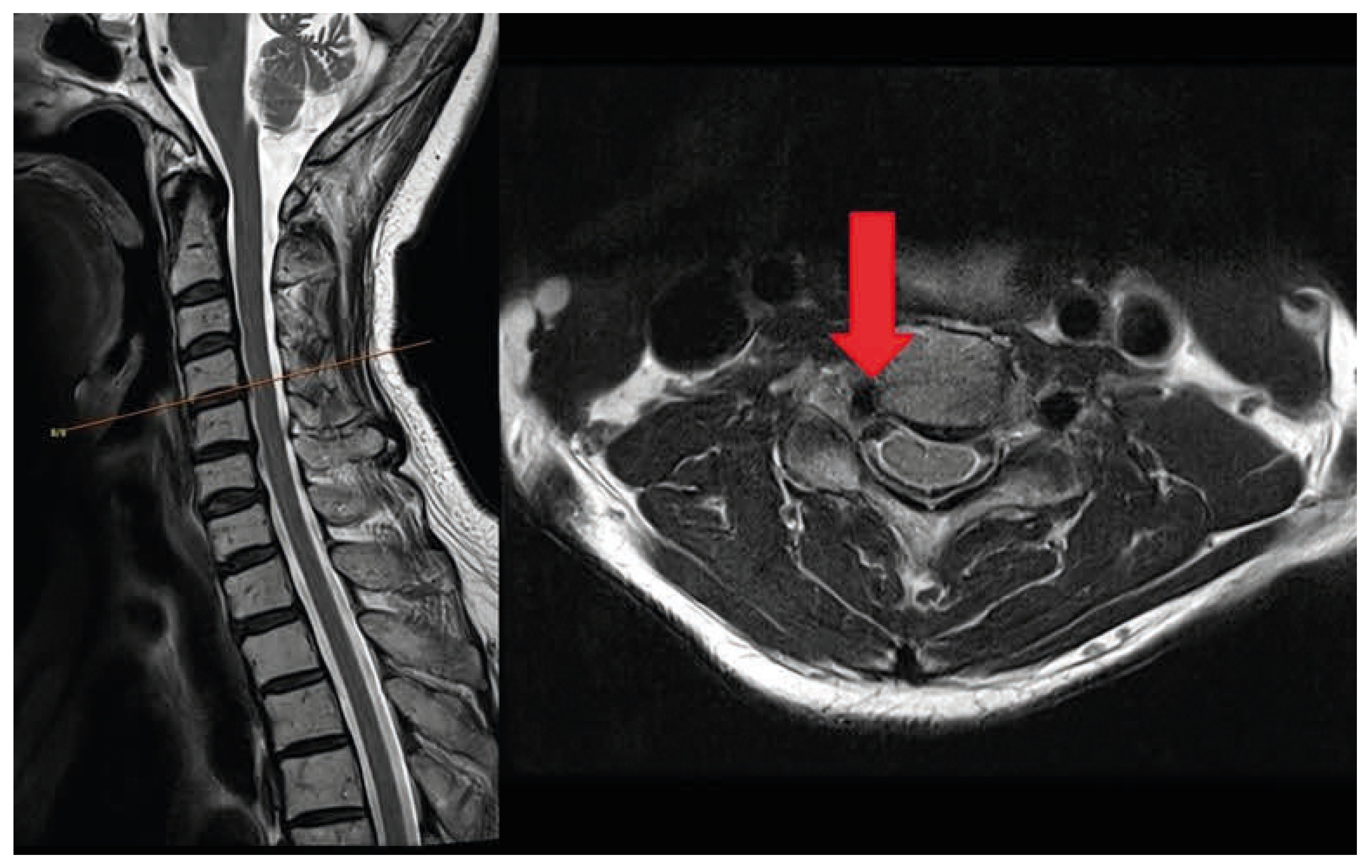
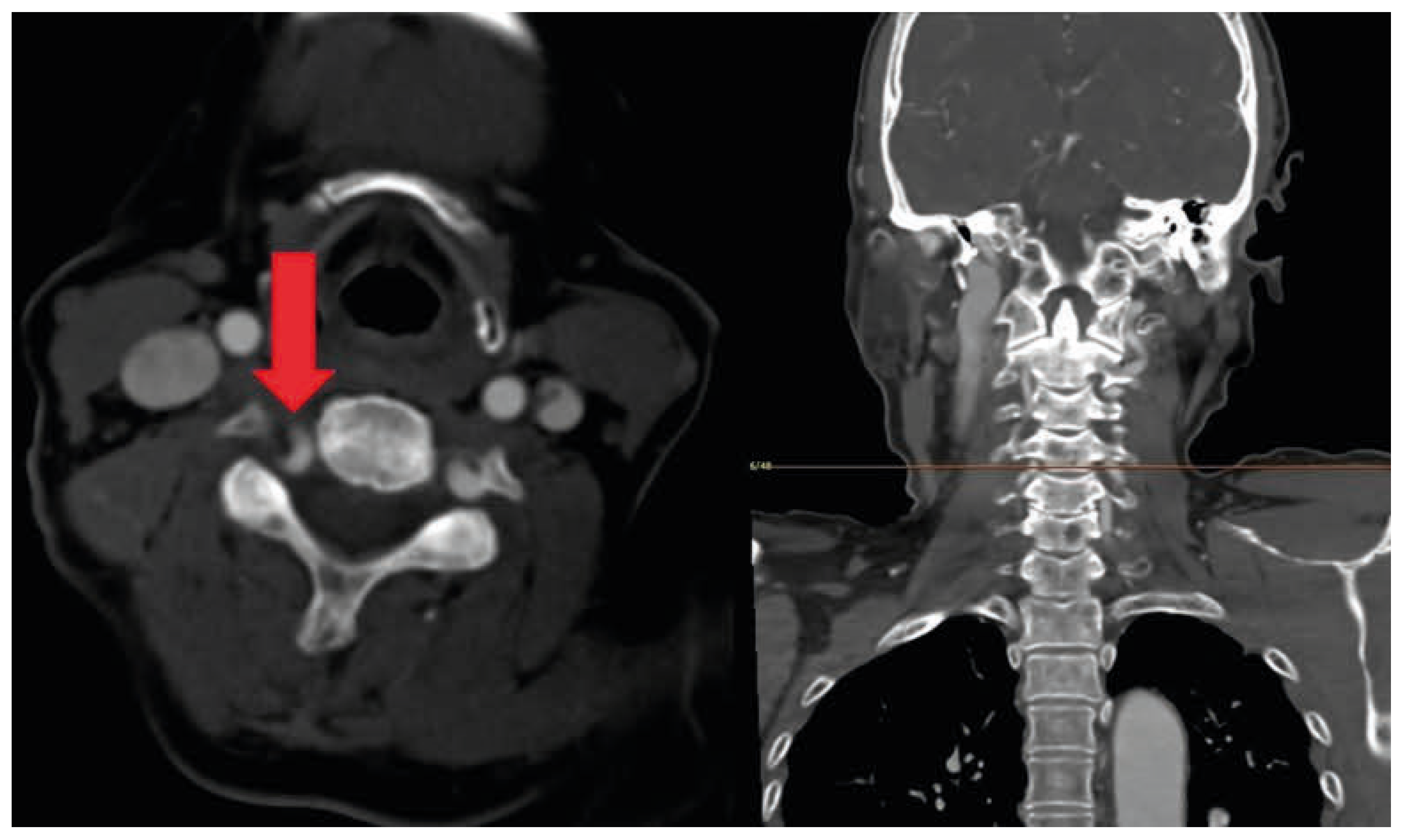
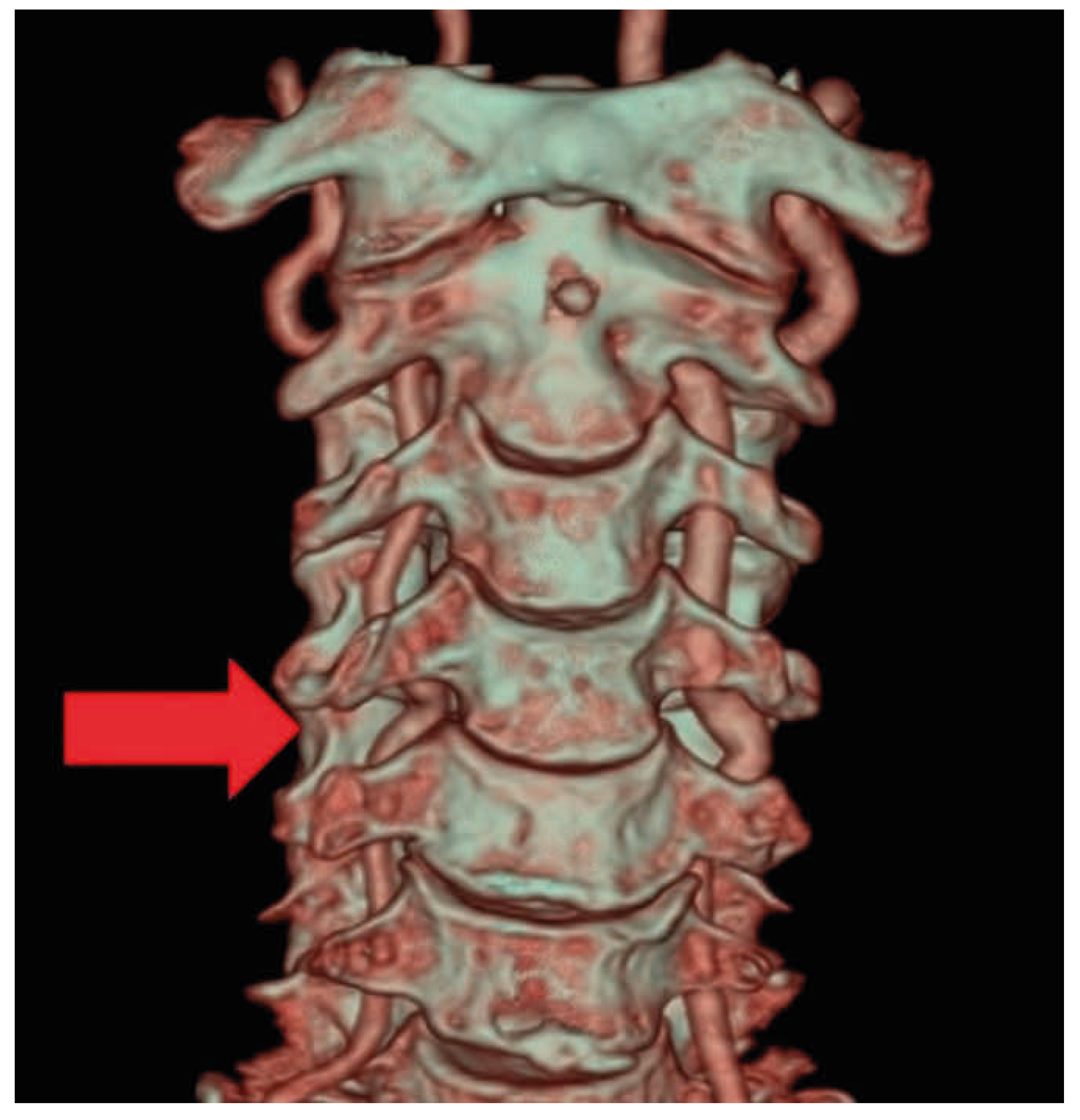
Magnetic resonance imaging (MRI) of the cervical spine revealed a vascular structure in the right C4-5 foramen compressing the right C5 nerve root (Figure 1). Neck computed tomography angiography (CTA) also revealed a vertebral artery in the right C4-5 foramen (Figure 2). Three-dimensional reconstruction produced an image consistent with vertebral artery loop formation at the right C4-5 level (Figure 3). Electromyography (EMG) confirmed right cervical 5th radiculopathy. Conservative management was attempted for approximately 3 months and included non-steroidal anti-inflammatory drugs, pregabalin, and physical therapy. These measures provided only limited and temporary symptom relief, and the patient continued to experience persistent radicular pain that interfered with daily activities. Because the symptoms remained refractory despite adequate nonoperative treatment and imaging demonstrated a structurally compressive vascular lesion at the symptomatic level, surgical treatment was considered. Cervical transforaminal or selective nerve root injection was not pursued because of the vascular nature of the lesion and the potential risk of vertebral artery injury.
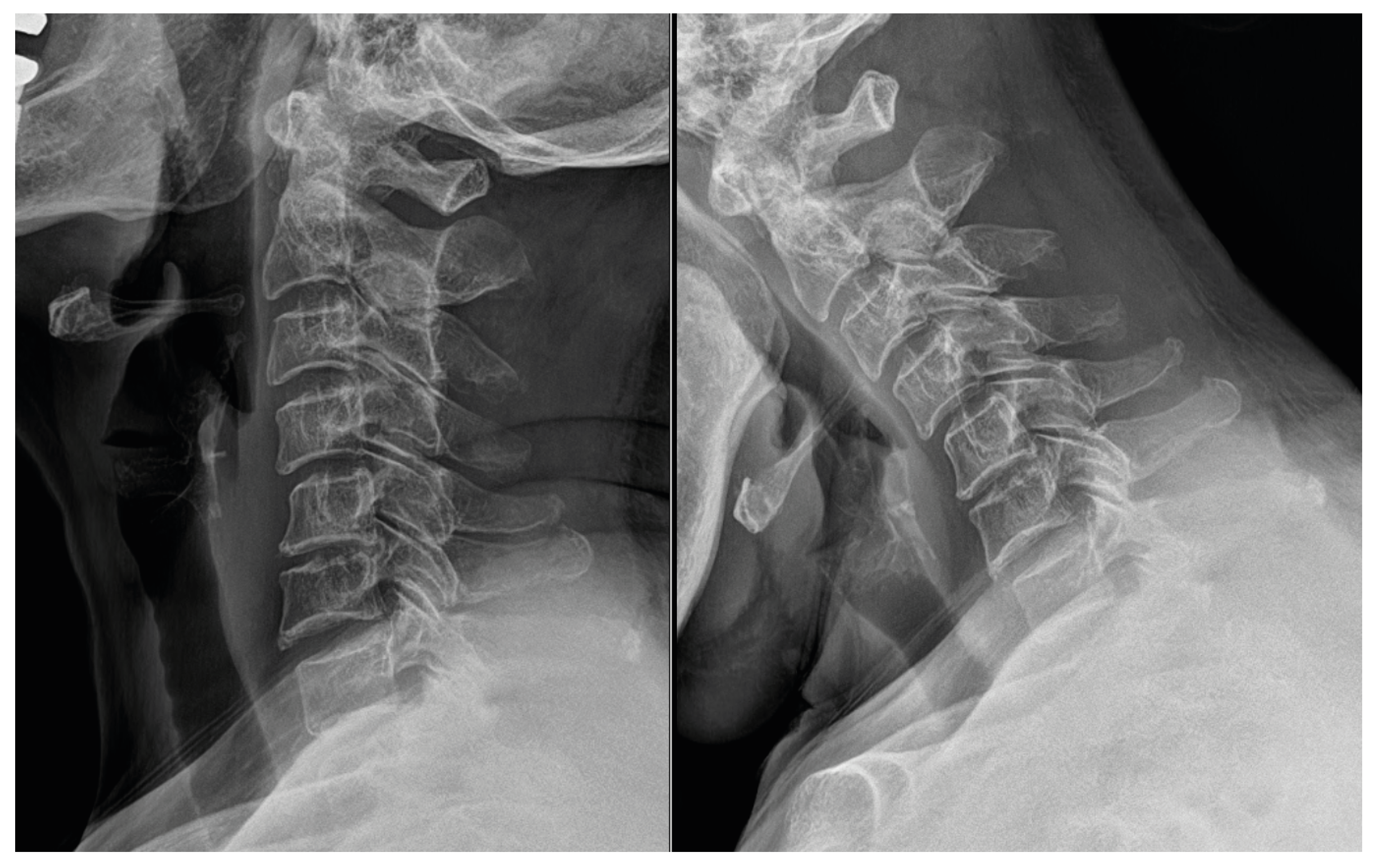
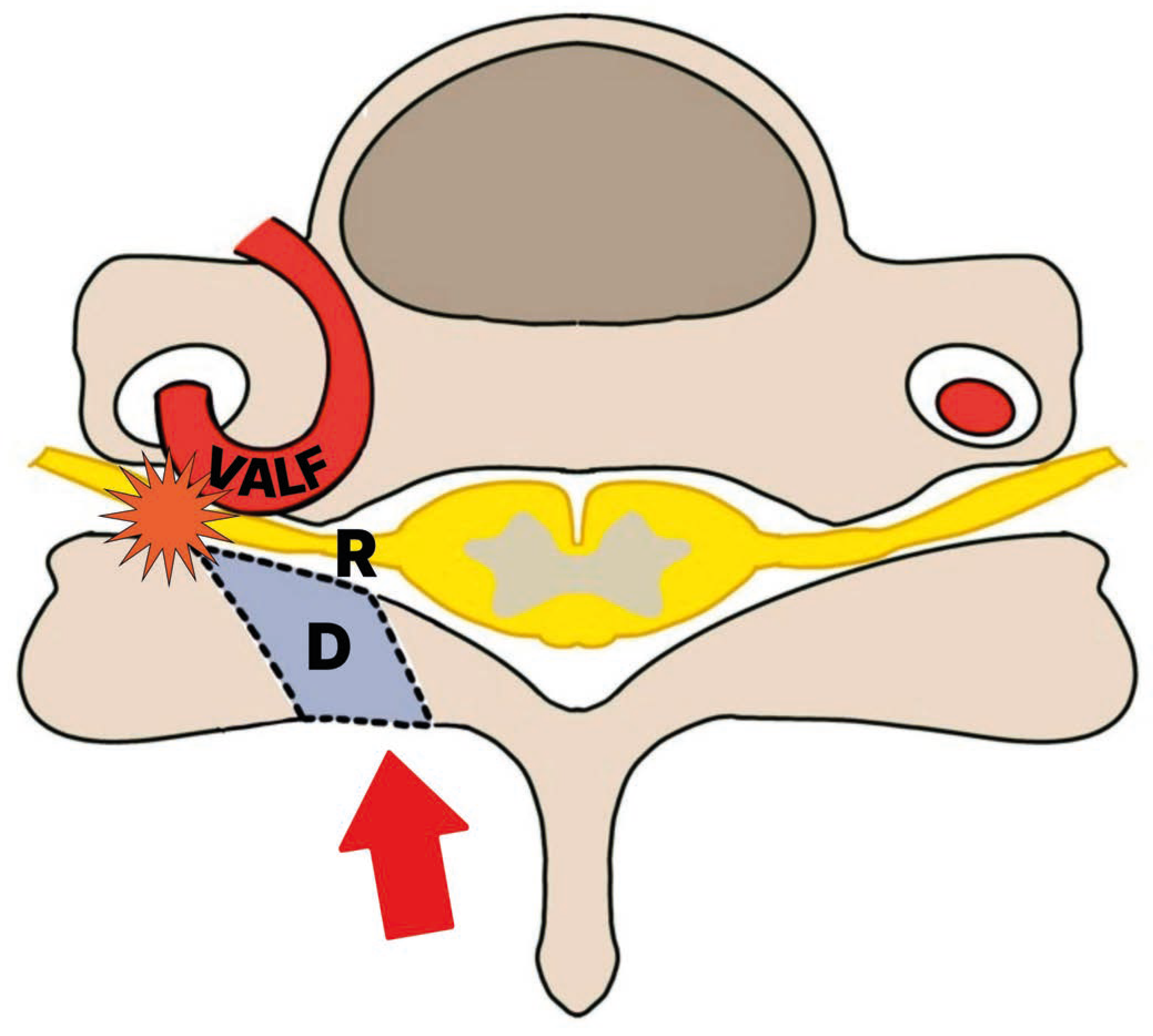
After 3 months of failed conservative management, uniportal full-endoscopic posterior C4-5 foraminotomy was performed in the prone position under general anesthesia. The V-point (medial facet border) was identified fluoroscopically. Intraoperative navigation, Doppler ultrasonography, and neuromonitoring were not used in this case. To minimize vascular risk, surgical exposure was deliberately limited to the minimum extent necessary for neural decompression, and complete circumferential dissection of the vertebral artery loop was intentionally avoided. In preparation for possible vertebral artery injury, hemostatic agents and microsurgical instruments were prepared in advance, and conversion to an open microscopic surgery with tamponade and vascular control was planned as a bailout strategy if uncontrolled arterial bleeding occurred. Sequential dilators created a working channel; drilling targeted the superior lamina inferior edge to the medial inferior/superior articular processes. Approximately 20% of the facet joint was resected. Ligamentum flavum was resected, exposing dura and venous plexus. Radiofrequency ablation achieved hemostasis. A nerve hook was then used to gently dissect the C5 root away from the vascular loop, which was located ventral to the nerve root, under fluoroscopic guidance. Complete circumferential exposure of the vertebral artery loop was not attempted; instead, decompression was judged by adequate mobilization of the nerve root and relief of ventral compression. No intraoperative video was recorded, given the retrospective nature of this single-case report (Figure 4 illustrates the decompression). This point is emphasized as a technical limitation of the procedure. An anti-adhesion agent (X-Block®, BMI Korea, Seoul, Republic of Korea) was applied. The operative time was 50 min, and the estimated blood loss was 20 mL. Extension and flexion X-ray imaging were performed 2 months after surgery, and no abnormalities such as instability were confirmed (Figure 5). At the 3-month follow-up, symptoms had resolved completely (VAS-neck 0/10, VAS-arm 0/10), and no complications were observed. Nevertheless, this follow-up duration is insufficient to draw conclusions regarding long-term durability, recurrence, or delayed instability.

4. Discussion

VALF represents a tortuous course of the VA that may protrude into the neural foramen or spinal canal. The clinical significance of VALF is twofold: it can directly compress neural structures, resulting in radiculopathy, and it markedly increases the risk of catastrophic vertebral artery injury during cervical spine surgery or transforaminal epidural steroid injections [17]. Clinicians should therefore recognize VALF as both a potential pain generator and an important vascular hazard in the cervical spine.
The pathophysiology of VALF-related radiculopathy primarily involves mechanical compression of the cervical nerve root by the aberrant arterial loop [17]. Dynamic factors may also contribute, as arterial pulsation and cervical motion can exacerbate irritation of the nerve root, which is consistent with the reproduction of radicular symptoms on provocative maneuvers such as the Spurling test [22]. This mechanism explains how a vascular lesion can mimic a typical degenerative cervical lesion both clinically and radiologically.
Few surgically treated cases of symptomatic VALF causing cervical radiculopathy or other neural compressive symptoms have been reported in the literature. The radiographic prevalence of VALF is 0.6–7.5%; symptomatic radiculopathy is much rarer [1,2,3,4,5]. Once VALF-related radiculopathy is identified, conservative management is appropriate initially, while surgery may be considered for persistent symptoms or neurological deficits despite adequate nonoperative treatment. Surgical treatment should therefore be considered in patients with refractory pain or neurological deficits despite adequate conservative management. Various surgical strategies have been described, including anterior and posterior decompression, microvascular decompression (MVD), vascular reconstruction and, in selected cases, endovascular coiling [7,11,14,15,25].
Our review of the literature identified 21 articles including 23 patients who underwent surgical management for symptomatic VALF causing cervical radiculopathy or related neural compressive symptoms between 1970 and 2025 (Table 1). Among these, 12 patients were treated via an anterior approach for bony decompression with or without MVD, 9 via posterior decompression, 1 with endovascular coiling, and 1 with anterior cervical discectomy and fusion. In cases using MVD, surgeons employed either an interposition graft (such as Teflon or Dacron) or an allograft sling to transpose or separate the vertebral artery loop from the affected nerve root.
Surgically, the anterolateral approach permits the direct exposure and relocation or reconstruction of the vertebral artery loop, thereby addressing the primary compressive pathology. This route offers the possibility of arterial transposition or re-anastomosis but carries potential risks such as injury to the recurrent laryngeal nerve, dysphagia, and direct vascular damage, even though these complications have rarely been reported in published series [19]. In contrast, the posterior approach is more familiar to most neurosurgeons and provides direct access to the exiting nerve root, allowing direct decompression of the neural elements and indirect decompression of the artery without necessarily manipulating the vertebral artery loop itself.
However, the posterior approach has important limitations. It often requires more extensive bone removal, including laminectomy and foraminotomy, and may necessitate drilling of the transverse foramen to mobilize the artery. Because the cervical nerve root typically lies between the vertebral artery and the surgeon, visualization and control of the artery can be limited, increasing the risk of nerve injury and iatrogenic instability that may require additional fusion [19]. Thus, the choice of approach should be individualized, balancing the need for definitive decompression against the risks of vascular and neural complications.
Although the anterior approach is more frequently reported, several authors have shown that a posterior approach for vertebral artery loop-related nerve compression is also safe and effective, with good rates of symptomatic improvement. In previously described posterior cases, surgeons performed direct decompression of both the nerve root and the vertebral artery using combinations of foraminotomy, partial facetectomy, and MVD. Nevertheless, both anterior and posterior open procedures carry an inherent risk of vertebral artery injury and potential subsequent posterior circulation infarction.
In our case, we treated the patient using a uniportal full-endoscopic posterior approach through an approximately 1-inch incision. Although the vertebral artery loop could not be completely visualized, the compressed cervical nerve root was sufficiently decompressed from the dorsal aspect, and careful dissection of the ventral portion of the root using a hook created a safe corridor between the VALF and the nerve. The use of an endoscopic drill, combined with frequent palpation of the medial pedicle wall using a nerve hook, helped to limit facet joint resection and may reduce the risk of iatrogenic segmental instability compared with more extensive open posterior decompression. However, this surgical approach involves trade-offs, including limited visualization of the arterial loop, and no single approach can currently be considered standard for this rare pathology.
This experience suggests that radiculopathy caused by vascular malformations such as VALF can be effectively managed by selectively decompressing the posterior aspect of the compressed nerve root using minimally invasive full-endoscopic surgery in carefully selected patients. Rather than focusing on detailed technical nuances, our report emphasizes the conceptual feasibility of treating VALF-related cervical radiculopathy with an endoscopic posterior approach that avoids direct manipulation of the vertebral artery. Unlike prior posterior cases requiring MVD or extensive facetectomy, our approach used full-endoscopic decompression without direct arterial manipulation. As endoscopic spine techniques continue to evolve, this strategy may represent an attractive alternative to traditional open procedures in carefully selected patients.
Clinicians should maintain a high index of suspicion for vertebral artery loop formation in patients with atypical or refractory cervical radiculopathy, especially when imaging reveals unusual foraminal vascular structures or bony erosion. In suspected cases, preoperative MR angiography or CT angiography is essential to confirm the presence and exact course of the loop and to guide surgical planning while minimizing the risk of iatrogenic vascular injury. Full-endoscopic posterior decompression, as demonstrated in this case, may offer a minimally invasive option after failure of conservative management; however, broader claims regarding safety and efficacy require additional clinical experience and long-term follow-up.

5. Conclusions

This report describes a rare case of vertebral artery loop formation (VALF) causing refractory cervical radiculopathy, which was treated with uniportal full-endoscopic posterior foraminotomy. This case demonstrates the technical feasibility of uniportal full-endoscopic posterior foraminotomy for VALF-related cervical radiculopathy in a carefully selected patient, achieving short-term symptom relief without arterial manipulation. Nevertheless, conclusions regarding reproducibility, long-term outcomes, and overall safety should remain cautious.

Author Contributions

Conceptualization, methodology, software, validation, formal analysis, investigation, resources, data curation, T.H.Y. and I.-S.B.; writing—original draft preparation, T.H.Y. and I.-S.B.; writing—review and editing, I.-S.B., H.I.K., J.H.K. and C.J.; visualization, T.H.Y.; supervision, J.H.K. and C.J. All authors have read and agreed to the published version of the manuscript.

Funding

This research received no external funding.

Institutional Review Board Statement

This study was conducted in accordance with the Declaration of Helsinki. Institutional Review Board (IRB) approval was not required for this case report, as it involved a single patient and did not include any experimental procedures.

Informed Consent Statement

Informed consent was obtained from the individual for the publication of this case.

Data Availability Statement

The data presented in this study are available upon request from the corresponding author. No new data were created or analyzed in this study.

Conflicts of Interest

The authors declare no conflicts of interest.

Abbreviations

The following abbreviations are used in this manuscript:
VALFVertebral artery loop formation
VAVertebral artery
MRIMagnetic resonance imaging
CTAComputed tomography angiography
VASVisual analogue scale
MVDMicrovascular decompression

References

  1. Kim, H.S.; Lee, J.H.; Cheh, G.; Lee, S.-H. Cervical Radiculopathy Caused by Vertebral Artery Loop Formation: A Case Report and Review of the Literature. J. Korean Neurosurg. Soc. 2010, 48, 465–468. [Google Scholar] [CrossRef] [PubMed]
  2. Chibbaro, S.; Mirone, G.; Yasuda, M.; Marsella, M.; Di Emidio, P.; George, B. Vertebral Artery Loop—A Cause of Cervical Radiculopathy. World Neurosurg. 2012, 78, 375.e11–375.e13. [Google Scholar] [CrossRef]
  3. Doweidar, A.; Al-Sayed, S.; Al-Kandery, S. Symptomatic Vertebral Artery Loop: A Case Report and Review of Literature. J. Radiol. Case Rep. 2014, 8, 35–41. [Google Scholar] [CrossRef]
  4. Wood, L.; Czyz, M.; Forster, S.; Boszczyk, B.M. The Diagnosis and Management of a Vertebral Artery Loop Causing Cervical Radiculopathy. Eur. Spine J. 2021, 30, 1–6. [Google Scholar] [CrossRef]
  5. Tonsbeek, A.M.; Groen, J.L.; Vleggeert-Lankamp, C.L.A.M. Surgical Interventions for Cervical Radiculopathy Caused by a Vertebral Artery Loop: A Case Report and Review of the Literature. World Neurosurg. 2020, 135, 28–34. [Google Scholar] [CrossRef]
  6. Zimmerman, H.B.; Farrell, W.J. Cervical Vertebral Erosion Caused by Vertebral Artery Tortuosity. Am. J. Roentgenol. Radium Ther. Nucl. Med. 1970, 108, 767–770. [Google Scholar] [CrossRef]
  7. Anderson, R.E.; Shealy, C.N. Cervical Pedicle Erosion and Rootlet Compression Caused by a Tortuous Vertebral Artery. Radiology 1970, 96, 537–538. [Google Scholar] [CrossRef]
  8. Sharma, R.R.; Parekh, H.C.; Prabhu, S.; Gurusinghe, N.T.; Bertolis, G. Compression of the C-2 Root by a Rare Anomalous Ectatic Vertebral Artery. Case Report. J. Neurosurg. 1993, 78, 669–672. [Google Scholar] [CrossRef]
  9. Satoh, S.; Yamamoto, N.; Kitagawa, Y.; Umemori, T.; Sasaki, T.; Iida, T. Cervical Cord Compression by the Anomalous Vertebral Artery Presenting with Neuralgic Pain. Case Report. J. Neurosurg. 1993, 79, 283–285. [Google Scholar] [CrossRef] [PubMed]
  10. Duthel, R.; Tudor, C.; Motuo-Fotso, M.J.; Brunon, J. Cervical Root Compression by a Loop of the Vertebral Artery: Case Report. Neurosurgery 1994, 35, 140–142. [Google Scholar] [CrossRef] [PubMed]
  11. Detwiler, P.W.; Porter, R.W.; Harrington, T.R.; Sonntag, V.K.; Spetzler, R.F. Vascular Decompression of a Vertebral Artery Loop Producing Cervical Radiculopathy. Case Report. J. Neurosurg. 1998, 89, 485–488. [Google Scholar] [CrossRef]
  12. Sakaida, H.; Okada, M.; Yamamoto, A. Vascular Reconstruction of a Vertebral Artery Loop Causing Cervical Radiculopathy and Vertebrobasilar Insufficiency. J. Neurosurg. 2001, 94, 145–149. [Google Scholar] [CrossRef] [PubMed]
  13. Korinth, M.C.; Mull, M. Vertebral Artery Loop Causing Cervical Radiculopathy. Surg. Neurol. 2007, 67, 172–173. [Google Scholar] [CrossRef]
  14. Dahdaleh, N.S.; Albert, G.W.; Hasan, D.M. Multiple Symptomatic Vertebral Artery Loops Treated with Posterior Cervical Fusion. J. Clin. Neurosci. 2010, 17, 788–790. [Google Scholar] [CrossRef] [PubMed]
  15. Hage, Z.A.; Amin-Hanjani, S.; Wen, D.; Charbel, F.T. Surgical Management of Cervical Radiculopathy Caused by Redundant Vertebral Artery Loop. J. Neurosurg. Spine 2012, 17, 337–341. [Google Scholar] [CrossRef] [PubMed]
  16. Tandon, A.; Chandela, S.; Langer, D.; Sen, C. A Novel Sling Technique for Microvascular Decompression of a Rare Anomalous Vertebral Artery Causing Cervical Radiculopathy. Neurosurg. Focus. 2013, 35, E2. [Google Scholar] [CrossRef]
  17. Ekşi, M.Ş.; Toktaş, Z.O.; Yılmaz, B.; Demir, M.K.; Özcan-Ekşi, E.E.; Bayoumi, A.B.; Yener, Y.; Akakın, A.; Konya, D. Vertebral Artery Loops in Surgical Perspective. Eur. Spine J. 2016, 25, 4171–4180. [Google Scholar] [CrossRef]
  18. Ju, C.I.; Kim, J.M.; Kim, J.G.; Kim, S.W.; Lee, S.M. A New Sling Technique in Cervical Radiculopathy Caused by Vertebral Artery Loop Compression. World Neurosurg. 2017, 104, 1049.e11–1049.e15. [Google Scholar] [CrossRef]
  19. Wang, D.D.; Burkhardt, J.-K.; Magill, S.T.; Lawton, M.T. Anterior Transposition of Anomalous Tortuous Vertebral Artery Causing Cervical Radiculopathy: A Report of 2 Cases and Review of Literature. World Neurosurg. 2017, 101, 289–295. [Google Scholar] [CrossRef]
  20. Venteicher, A.S.; Quddusi, A.; Coumans, J.V. Anterolateral Approach for a Cervical Nerve Root Compression Syndrome Due to an Ectatic Vertebral Artery. Oper. Neurosurg. 2019, 17, E29–E32. [Google Scholar] [CrossRef]
  21. Khansuheb, M.Z.; Kouznetsov, E.; Manchak, M.; Durrani, Q.; Drofa, A. Vertebral Artery Sacrifice: Novel Strategy in Treatment of Vertebral Artery Loop. World Neurosurg. 2020, 134, 280–283. [Google Scholar] [CrossRef] [PubMed]
  22. Farshad, M.; Spirig, J.M.; Burkhard, M.D. Anterior Artery Release, Distraction and Fusion (ARDF) for Radiculopathy Caused by a Vertebral Artery Loop. Eur. Spine J. 2022, 31, 3696–3702. [Google Scholar] [CrossRef] [PubMed]
  23. Semonche, A.; Rinaldo, L.; Lee, Y.; Dubnicoff, T.; Matles, H.; Chou, D.; Abla, A.; Chang, E.F. Microvascular Decompression of a Vertebral Artery Loop Causing Cervical Radiculopathy: Illustrative Case. J. Neurosurg. Case Lessons 2024, 7, CASE23254. [Google Scholar] [CrossRef]
  24. Benato, A.; Creatura, D.; Barrey, C.Y. Cervical Radiculopathy Due to Intraforaminal Vertebral Artery Loop-Posterior Microvascular Decompression with Graft Interposition Technique. Surg. Neurol. Int. 2025, 16, 398. [Google Scholar] [CrossRef] [PubMed]
  25. Bruneau, M.; Cornelius, J.F.; George, B. Microsurgical Cervical Nerve Root Decompression by Anterolateral Approach. Neurosurgery 2006, 58, ONS108-113; discussion ONS108-113. [Google Scholar] [CrossRef]
Figure 1. Magnetic resonance imaging of the cervical spine showing a vascular structure occupying the right C4-5 neural foramen (Red arrow).
Jcm 15 03643 g001
Figure 2. Neck computed tomography angiography demonstrating the vertebral artery coursing into and compressing the right C4-5 neural foramen (Red arrow).
Jcm 15 03643 g002
Figure 3. Three-dimensional reconstruction of computed tomography angiography showing a vertebral artery loop at the right C4-5 level (Red arrow).
Jcm 15 03643 g003
Figure 4. Illustration showing C5 nerve root compression by VALF and endoscopic posterior decompression corridor (red arrow). VALF, vertebral artery loop formation; R, root; D, decompression part.
Jcm 15 03643 g004
Figure 5. Postoperative plain radiography demonstrating no instability after endoscopic posterior decompression.
Jcm 15 03643 g005
Table 1. Reported surgical cases of symptomatic vertebral artery loop formation (VLAS) causing cervical radiculopathy or related neural compressive symptoms.
Authors, YearSex, AgeVALF-Related SymptomsLevelSurgical TechniqueOutcome
Zimmerman et al., 1970 [6]F, 50Cervical pain, Lt. occipital painC4-5, Lt.Posterior decompressionAsymptomatic at 10 months
Anderson et al., 1970 [7]F, 54Facial pain, Lt. neck painC3-4, Lt.Posterior decompressionAsymptomatic for several months
Sharma et al., 1993 [8]F, 75Occipital neuralgia, cervical myelopathyC2-3, Lt.Posterior decompression and fusion, MVD with SurgicelResidual spasticity at 1.5 years after surgery
Satoh et al., 1993 [9]F, 59Lt neck and arm painC1, LtSuboccipital decompressionAsymptomatic at 2 years
Duthel et al., 1994 [10]F, 37Lt arm pain, shoulder painC5-6, LtAnterolateral decompression, MVD with TeflonAsymptomatic at 3 months
Detwiler et al., 1998 [11]M, 70Rt neck painC3-4, RtPosterior decompression with MVDAsymptomatic at 2 years
Sakaida et al., 2001 [12]M, 62Lt shoulder pain, arm painC4-5, LtAnterolateral decompression, VA transection with anastomosisAsymptomatic at 2 years
Korinth et al., 2007 [13]F, 68Cervical radiculopathyC4-5, RtAnterolateral decompression, MVD with TeflonFollow-up length not reported
Dahdaleh et al., 2010 [14]M, 55Neck pain, shoulder painC2-3, C3-4, Lt.Post-cervical fusion w/o decompressionAsymptomatic at 6 months
Hage et al., 2012 [15]F, 27Cervical radiculopathyC6-7, RtAnterolateral decompression, MVDAsymptomatic at 13 months
Chibbaro et al., 2012 [2]F, 50Cervical radiculopathyC5-6, LtAnterolateral decompression, MVDAsymptomatic at 1 year
Tandon et al., 2013 [16]F, 52Neck pain, arm painC4-5, RtAnterolateral decompression, MVD with slingAsymptomatic at 1 year
Ekşi at al., 2016 [17]M, 60Neck pain, Lt arm weaknessC5-6, Lt.Posterior decompressionFollow-up length not reported
Ju et al., 2017 [18]F, 52Neck pain, Lt arm numbnessC6-7, LtAnterolateral decompression, MVD with slingFollow-up length not reported
Wang et al., 2017 [19]F, 51Cervical radiculopathyC5-6, LtAnterolateral decompression, MVD with TeflonNumbness at 4 months
Wang et al., 2017 [19]F, 49Neck pain, occiput painC3-4, Lt.Anterolateral decompression, MVDImproved at 6 months
Venteicher et al., 2019 [20]F, 72Cervical radiculopathyC4-5, RtAnterolateral decompression, MVD with pledgetAsymptomatic at 1 year
Khansuheb et al., 2020 [21]F, 62Cervical radiculopathyC6-7, LtEndovascular coiling for VA sacrificeAsymptomatic at 9 months
Wood et al., 2021 [4]M, 35Cervical radiculopathyC5-6, Lt.Anterolateral decompression, MVD with DacronFollow-up length not reported
Wood et al., 2021 [4]F, 48Cervical radiculopathyC3-4, C4-5, LtAnterolateral decompression, MVD with DacronFollow-up length not reported
Farshad et al., 2022 [22]F, 76Cervical radiculopathyC5-6, RtAnterior discectomy and fusion, foraminotomyAsymptomatic at 1 year
Semonche et al., 2024 [23]M, 49Neck pain, migraineC3-4, LtPosterior decompression and fusion, MVD with TeflonAsymptomatic at 1 year
Benato et al., 2025 [24]M, 57Neck pain, shoulder painC5-6, Lt.Posterior decompression, MVD with graftonFollow-up length not reported
MVD, microvascular decompression; VA, vertebral artery.
Disclaimer/Publisher’s Note: The statements, opinions and data contained in all publications are solely those of the individual author(s) and contributor(s) and not of MDPI and/or the editor(s). MDPI and/or the editor(s) disclaim responsibility for any injury to people or property resulting from any ideas, methods, instructions or products referred to in the content.