Atrophic Long-Bone Non-Union: Current Insights into Pathogenesis and Management—A Narrative Review

 ,
,  ,
,  and
and 
Abstract
1. Introduction
2. Methodology
2.1. Objective
2.2. Literature Search and Study Selection
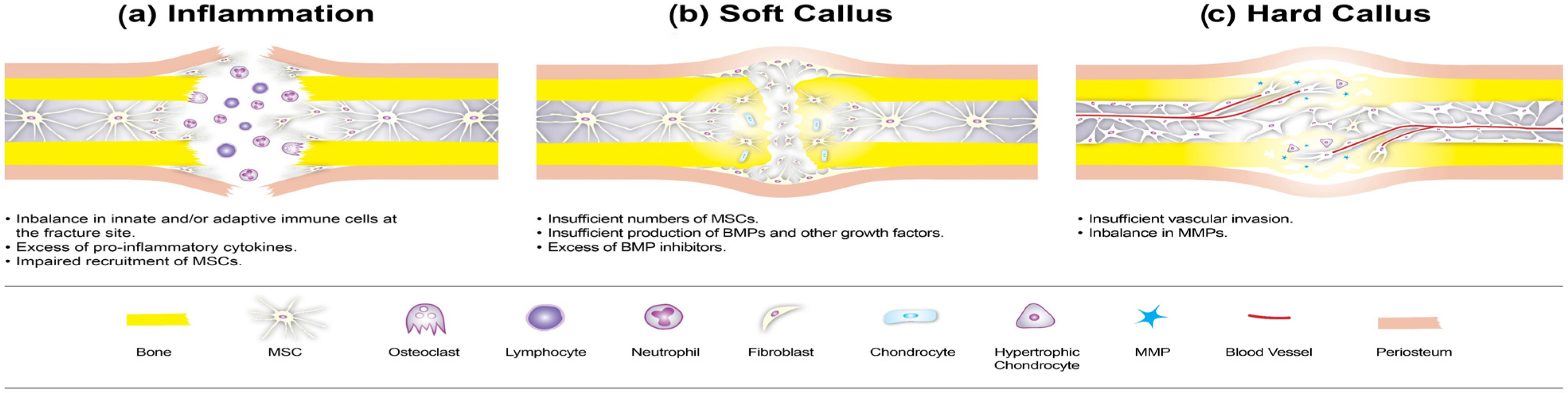
3. Theories on Pathogenesis of Atrophic Long-Bone Non-Union
3.1. Uncontrolled Behavior of Immune Cells
3.2. Local or Systemic Deficiency in MSCs
3.3. Cells Acting at Late Stages of Fracture Repair
4. Management of Atrophic Long-Bone Non-Union
4.1. The Impact of Atrophic Long-Bone Non-Union
4.2. Treatment Options for Atrophic Long-Bone Non-Union
4.3. Non-Operative Management of Atrophic Long-Bone Non-Union
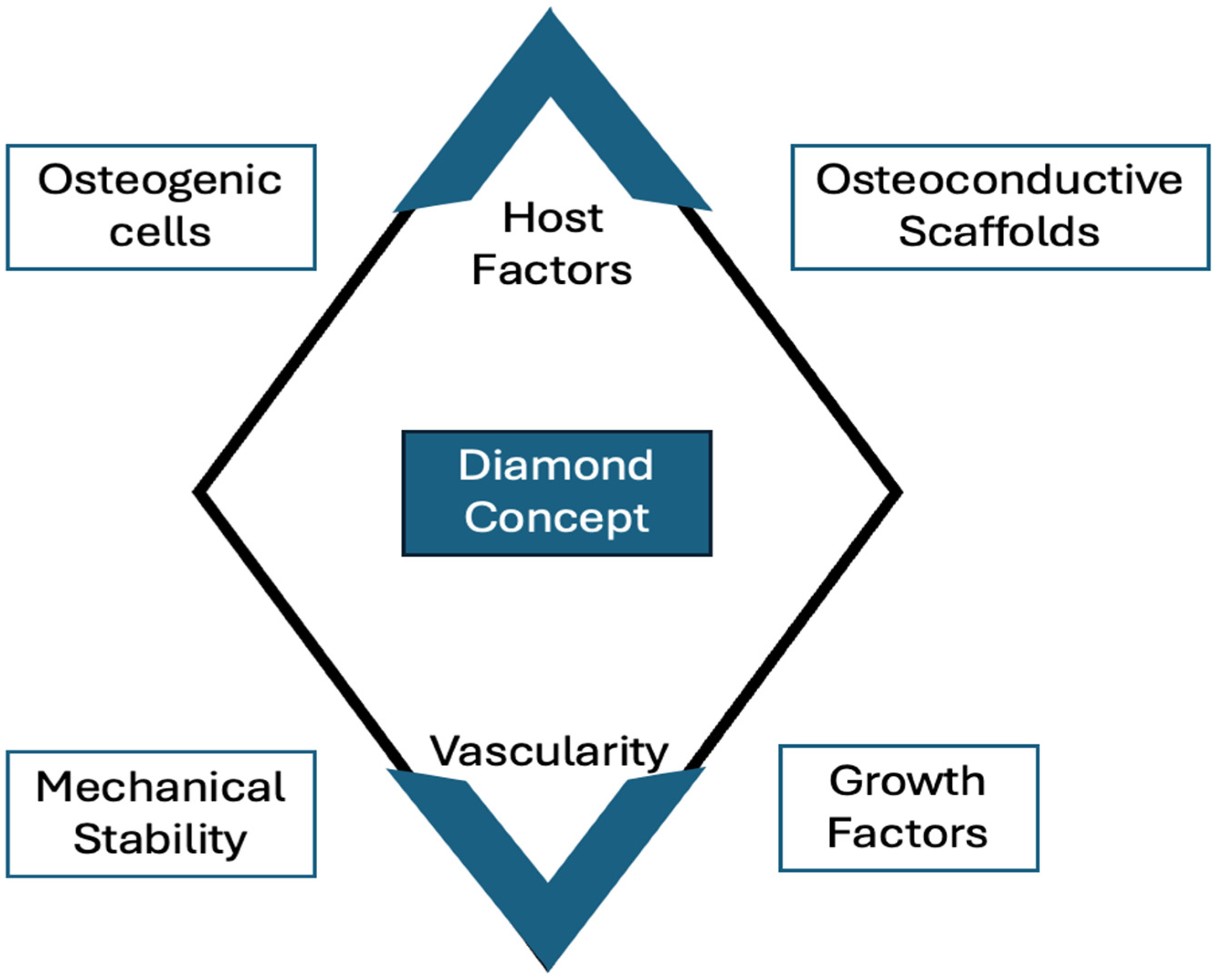
4.4. The “Diamond Concept” for Surgical Management of Atrophic Long-Bone Non-Union
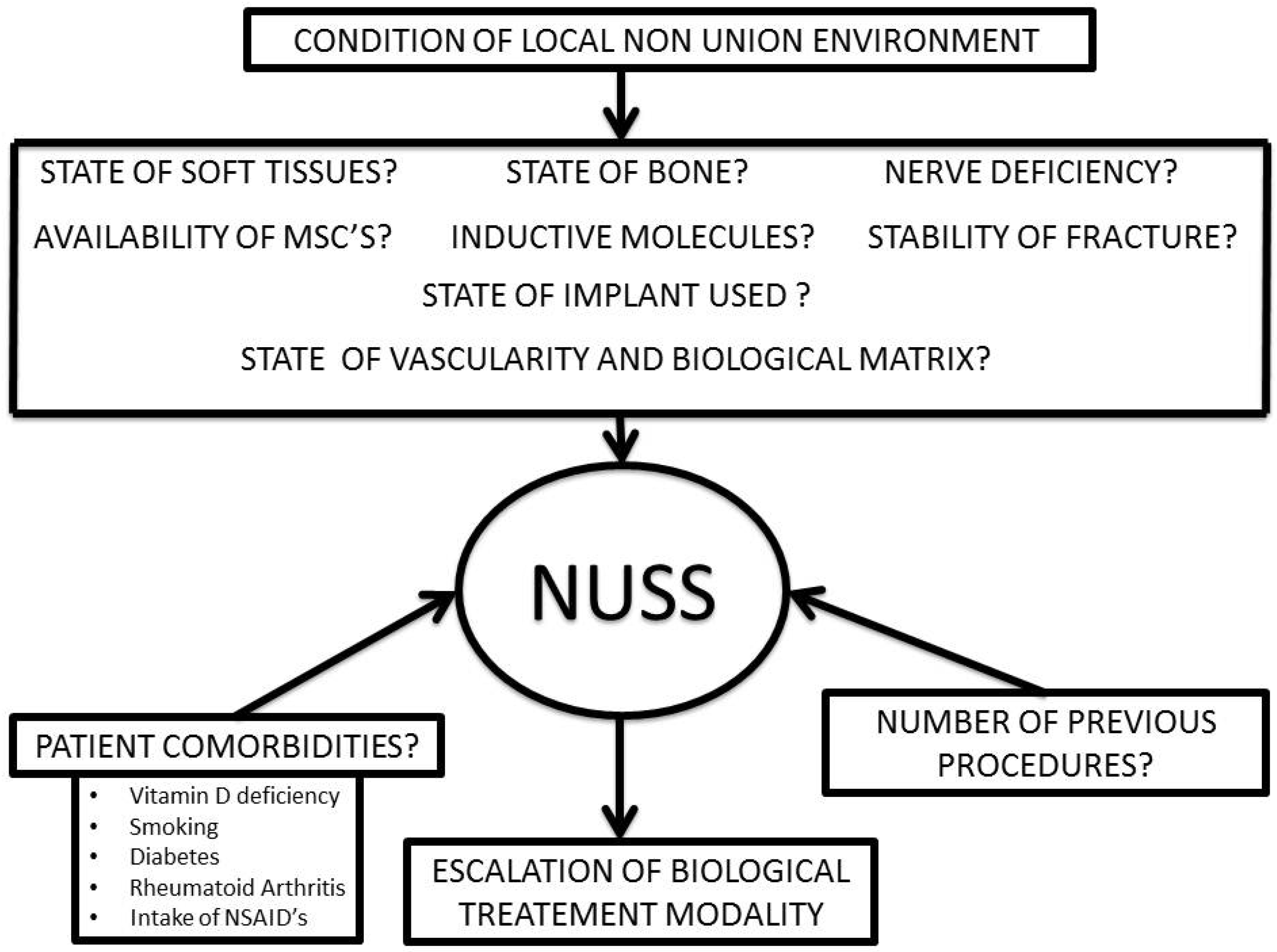
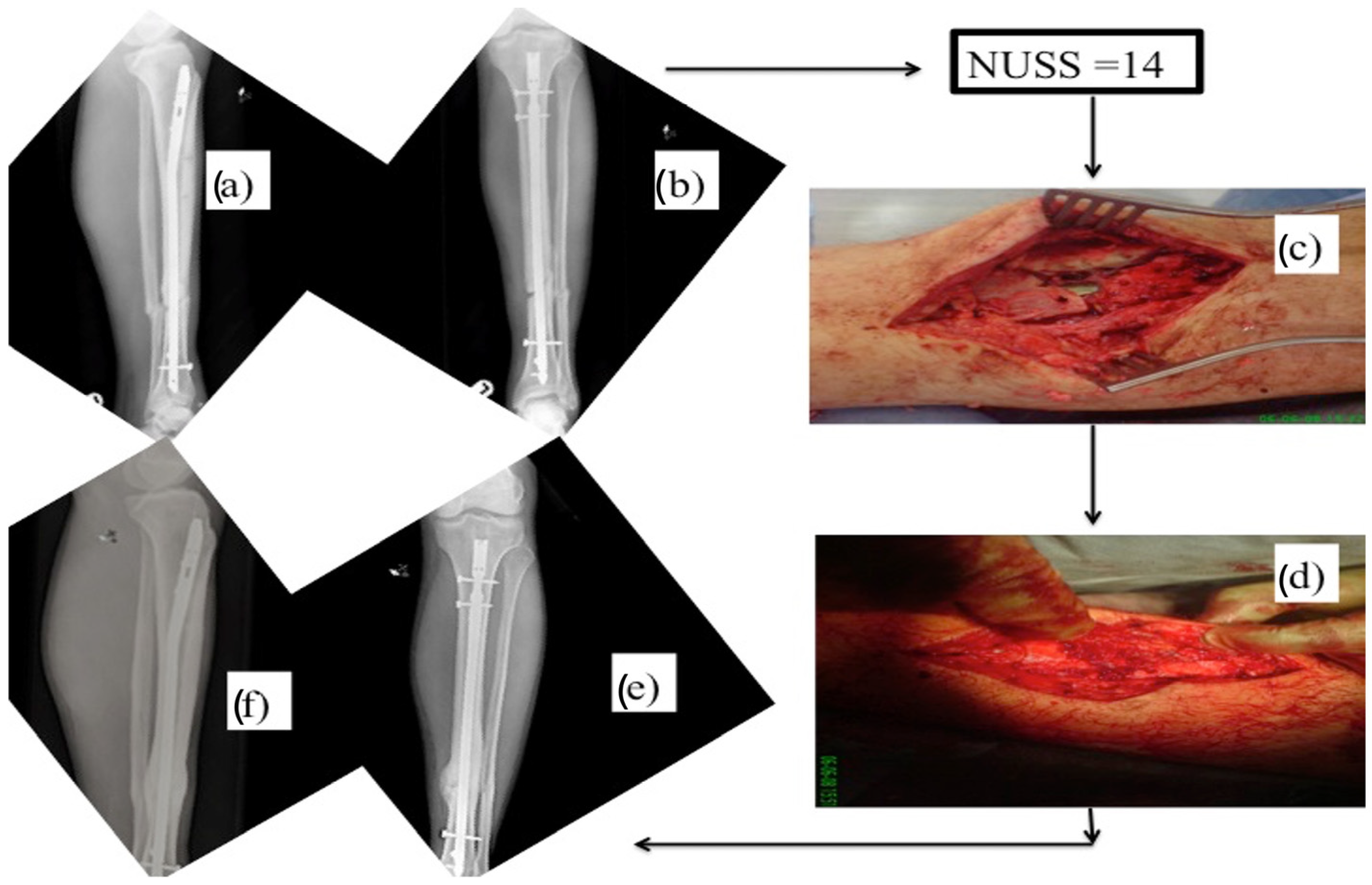
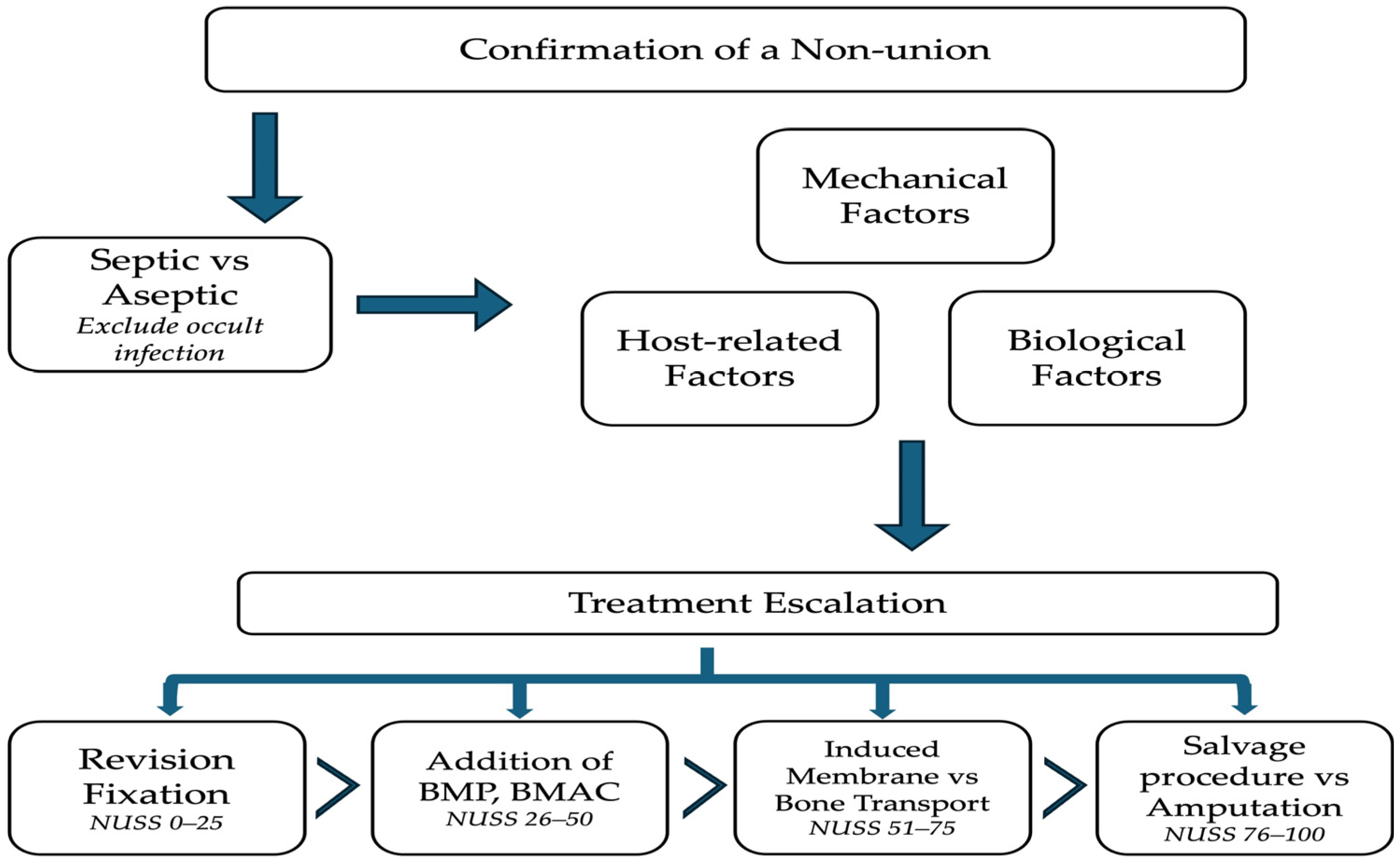
4.5. An Algorithmic Approach to the Management of Atrophic Long-Bone Non-Union
5. Conclusions
Author Contributions
Funding
Institutional Review Board Statement
Data Availability Statement
Conflicts of Interest
Abbreviations
| MSCs | Mesenchymal stem cells |
| BMP | Bone morphogenetic protein |
| NUSS | Non-Union Scoring System |
| VEGF | Vascular endothelial growth factor |
| PDGF | Platelet-derived growth factor |
| SDF-1 | Stromal-derived factor-1 |
References
- Bishop, J.A.; Palanca, A.A.; Bellino, M.J.; Lowenberg, D.W. Assessment of compromised fracture healing. J. Am. Acad. Orthop. Surg. 2012, 20, 273–282. [Google Scholar] [CrossRef] [PubMed]
- Miranda, M.; Moon, M. Treatment strategy for nonunions and malunions. In Surgical Treatment of Orthopaedic Trauma; Stannard, J., Schmidt, A., Kregor, P., Eds.; Thieme: New York, NY, USA, 2007; Volume 1, pp. 77–100. [Google Scholar]
- Mills, L.A.; Simpson, A.H.R.W. The relative incidence of fracture non-union in the Scottish population (5.17 million): A 5-year epidemiological study. BMJ Open 2013, 3, e002276. [Google Scholar] [CrossRef]
- Dimitriou, R.; Tsiridis, E.; Giannoudis, P.V. Current concepts of molecular aspects of bone healing. Injury 2005, 36, 1392–1404. [Google Scholar] [CrossRef]
- Copuroglu, C.; Calori, G.M.; Giannoudis, P.V. Fracture non-union: Who is at risk? Injury 2013, 44, 1379–1382. [Google Scholar] [CrossRef] [PubMed]
- Schmidt-Bleek, K.; Schell, H.; Lienau, J.; Schulz, N.; Hoff, P.; Pfaff, M.; Schmidt, G.; Martin, C.; Perka, C.; Buttgereit, F.; et al. Initial immune reaction and angiogenesis in bone healing. J. Tissue Eng. Regen. Med. 2014, 8, 120–130. [Google Scholar] [CrossRef]
- Reinke, S.; Geissler, S.; Taylor, W.R.; Schmidt-Bleek, K.; Juelke, K.; Schwachmeyer, V.; Dahne, M.; Hartwig, T.; Akyüz, L.; Meisel, C.; et al. Terminally differentiated CD8 + T cells negatively affect bone regeneration in humans. Sci. Transl. Med. 2013, 5, 177ra36. [Google Scholar] [CrossRef]
- Rupp, M.; Biehl, C.; Budak, M.; Thormann, U.; Heiss, C.; Alt, V. Diaphyseal long bone nonunions-types, aetiology, economics, and treatment recommendations. Int. Orthop. 2018, 42, 247–258. [Google Scholar] [CrossRef]
- Schneider, P.S.; Sandman, E.; Martineau, P.A. Osteoimmunology: Effects of Standard Orthopaedic Interventions on Inflammatory Response and Early Fracture Healing. J. Am. Acad. Orthop. Surg. 2018, 26, 343–352. [Google Scholar] [CrossRef]
- Ono, T.; Takayanagi, H. Osteoimmunology in Bone Fracture Healing. Curr. Osteoporos. Rep. 2017, 15, 367–375. [Google Scholar] [CrossRef]
- Baht, G.S.; Vi, L.; Alman, B.A. The Role of the Immune Cells in Fracture Healing. Curr. Osteoporos. Rep. 2018, 16, 138–145. [Google Scholar] [CrossRef] [PubMed]
- Hoff, P.; Gaber, T.; Strehl, C.; Schmidt-Bleek, K.; Lang, A.; Huscher, D.; Burmester, G.R.; Schmidmaier, G.; Perka, C.; Duda, G.N.; et al. Immunological characterization of the early human fracture hematoma. Immunol. Res. 2016, 64, 1195–1206. [Google Scholar] [CrossRef]
- Walters, G.; Pountos, I.; Giannoudis, P.V. The cytokines and micro-environment of fracture haematoma: Current evidence. J. Tissue Eng. Regen. Med. 2018, 12, e1662–e1677. [Google Scholar] [CrossRef]
- Bissinger, O.; Kreutzer, K.; Götz, C.; Hapfelmeier, A.; Pautke, C.; Vogt, S.; Wexel, G.; Wolff, K.-D.; Tischer, T.; Prodinger, P.M. A biomechanical, micro-computertomographic and histological analysis of the influence of diclofenac and prednisolone on fracture healing in vivo. BMC Musculoskelet. Disord. 2016, 17, 383. [Google Scholar] [CrossRef] [PubMed]
- Rapp, A.E.; Bindl, R.; Recknagel, S.; Erbacher, A.; Müller, I.; Schrezenmeier, H.; Ehrnthaller, C.; Gebhard, F.; Ignatius, A. Fracture Healing Is Delayed in Immunodeficient NOD/scid-IL2Rγcnull Mice. PLoS ONE 2016, 11, e0147465. [Google Scholar] [CrossRef] [PubMed]
- Satoh, K.; Mark, H.; Zachrisson, P.; Rydevik, B.; Byröd, G.; Kikuchi, S.-I.; Sekiguchi, M. Effect of methotrexate on fracture healing. Fukushima J. Med. Sci. 2011, 57, 11–18. [Google Scholar] [CrossRef] [PubMed]
- Hoff, P.; Gaber, T.; Schmidt-Bleek, K.; Sentürk, U.; Tran, C.L.; Blankenstein, K.; Lütkecosmann, S.; Bredahl, J.; Schüler, H.J.; Simon, P.; et al. Immunologically restricted patients exhibit a pronounced inflammation and inadequate response to hypoxia in fracture hematomas. Immunol. Res. 2011, 51, 116–122. [Google Scholar] [CrossRef]
- Cheng, A.; Krishnan, L.; Pradhan, P.; Weinstock, L.D.; Wood, L.B.; Roy, K.; Guldberg, R.E. Impaired Bone Healing Following Treatment of Established Nonunion Correlates with Serum Cytokine Expression. J. Orthop. Res. 2019, 37, 299–307. [Google Scholar] [CrossRef]
- Wagner, J.M.; Schmidt, S.V.; Dadras, M.; Huber, J.; Wallner, C.; Dittfeld, S.; Becerikli, M.; Jaurich, H.; Reinkemeier, F.; Drysch, M.; et al. Inflammatory processes and elevated osteoclast activity chaperon atrophic non-union establishment in a murine model. J. Transl. Med. 2019, 17, 416. [Google Scholar] [CrossRef]
- de Seny, D.; Cobraiville, G.; Leprince, P.; Fillet, M.; Collin, C.; Mathieu, M.; Hauzeur, J.P.; Gangji, V.; Malaise, M.G. Biomarkers of inflammation and innate immunity in atrophic nonunion fracture. J. Transl. Med. 2016, 14, 258. [Google Scholar] [CrossRef]
- Maruyama, M.; Rhee, C.; Utsunomiya, T.; Zhang, N.; Ueno, M.; Yao, Z.; Goodman, S.B. Modulation of the Inflammatory Response and Bone Healing. Front. Endocrinol. 2020, 11, 386. [Google Scholar] [CrossRef]
- Osta, B.; Benedetti, G.; Miossec, P. Classical and Paradoxical Effects of TNF-α on Bone Homeostasis. Front. Immunol. 2014, 5, 48. [Google Scholar] [CrossRef]
- Wagner, J.M.; Schmidt, S.V.; Dadras, M.; Wallner, C.; Huber, J.; Sogorski, A.; Sacher, M.; Reinkemeier, F.; Dittfeld, S.; Becerikli, M.; et al. TNF-α modulation via Etanercept restores bone regeneration of atrophic non-unions. Bone 2020, 141, 115569. [Google Scholar] [CrossRef]
- Karnes, J.M.; Daffner, S.D.; Watkins, C.M. Multiple roles of tumor necrosis factor-alpha in fracture healing. Bone 2015, 78, 87–93. [Google Scholar] [CrossRef]
- Bajada, S.; Marshall, M.J.; Wright, K.T.; Richardson, J.B.; Johnson, W.E.B. Decreased osteogenesis, increased cell senescence and elevated Dickkopf-1 secretion in human fracture non union stromal cells. Bone 2009, 45, 726–735. [Google Scholar] [CrossRef]
- Kloen, P.; Doty, S.B.; Gordon, E.; Rubel, I.F.; Goumans, M.-J.; Helfet, D.L. Expression and activation of the BMP-signaling components in human fracture nonunions. J. Bone Jt. Surg. 2002, 84, 1909–1918. [Google Scholar] [CrossRef]
- Schira, J.; Schulte, M.; Döbele, C.; Wallner, C.; Abraham, S.; Daigeler, A.; Kneser, U.; Lehnhardt, M.; Behr, B. Human scaphoid non-unions exhibit increased osteoclast activity compared to adjacent cancellous bone. J. Cell. Mol. Med. 2015, 19, 2842–2850. [Google Scholar] [CrossRef]
- Han, X.G.; Wang, D.K.; Gao, F.; Liu, R.H.; Bi, Z.G. Bone morphogenetic protein 2 and decorin expression in old fracture fragments and surrounding tissues. Genet. Mol. Res. 2015, 14, 11063–11072. [Google Scholar] [CrossRef] [PubMed]
- Kumagai, K.; Vasanji, A.; Drazba, J.A.; Butler, R.S.; Muschler, G.F. Circulating cells with osteogenic potential are physiologically mobilized into the fracture healing site in the parabiotic mice model. J. Orthop. Res. 2008, 26, 165–175. [Google Scholar] [CrossRef] [PubMed]
- Hernigou, P.; Poignard, A.; Beaujean, F.; Rouard, H. Percutaneous autologous bone-marrow grafting for nonunions. Influence of the number and concentration of progenitor cells. J. Bone Jt. Surg. 2005, 87, 1430–1437. [Google Scholar] [CrossRef]
- Oe, K.; Miwa, M.; Sakai, Y.; Lee, S.Y.; Kuroda, R.; Kurosaka, M. An in vitro study demonstrating that haematomas found at the site of human fractures contain progenitor cells with multilineage capacity. J. Bone Jt. Surg. Br. 2007, 89, 133–138. [Google Scholar] [CrossRef] [PubMed]
- Ismail, H.D.; Phedy, P.; Kholinne, E.; Kusnadi, Y.; Sandhow, L.; Merlina, M. Existence of mesenchymal stem cells in sites of atrophic nonunion. Bone Jt. Res. 2013, 2, 112–115. [Google Scholar] [CrossRef] [PubMed]
- El-Jawhari, J.J.; Kleftouris, G.; El-Sherbiny, Y.; Saleeb, H.; West, R.M.; Jones, E.; Giannoudis, P.V. Defective Proliferation and Osteogenic Potential with Altered Immunoregulatory phenotype of Native Bone marrow-Multipotential Stromal Cells in Atrophic Fracture Non-Union. Sci. Rep. 2019, 9, 17340. [Google Scholar] [CrossRef]
- Shen, F.; Xiao, H.; Shi, Q. Mesenchymal stem cells derived from the fibrotic tissue of atrophic nonunion or the bone marrow of iliac crest: A donor-matched comparison. Regen. Ther. 2023, 24, 398–406. [Google Scholar] [CrossRef]
- Tawonsawatruk, T.; Kelly, M.; Simpson, H. Evaluation of native mesenchymal stem cells from bone marrow and local tissue in an atrophic nonunion model. Tissue Eng. Part C Methods 2014, 20, 524–532. [Google Scholar] [CrossRef]
- Bewersdorf, T.N.; Hofmann, J.; Boehm, L.; Findeisen, S.; Schamberger, C.; Lingner, T.; Sommer, U.; Schmidmaier, G.; Grossner, T. In-vitro evaluation of the proliferative and osteogenic activity of atrophic non-union derived mesenchymal stem cells compared to autologous bone graft derived mesenchymal stem cells. Eur. J. Trauma Emerg. Surg. 2026, 52, 48. [Google Scholar] [CrossRef]
- Vallim, F.C.; Guimarães, J.A.M.; Dias, R.B.M.; Sartore, R.C.; Cavalcanti, A.d.S.; Leal, A.C.; Duarte, M.E.L.; Bonfim, D.C. Atrophic nonunion stromal cells form bone and recreate the bone marrow environment in vivo. OTA Int. Open Access J. Orthop. Trauma 2018, 1, e008. [Google Scholar] [CrossRef]
- Wang, L.; Tower, R.J.; Chandra, A.; Yao, L.; Tong, W.; Xiong, Z.; Tang, K.; Zhang, Y.; Liu, X.S.; Boerckel, J.D.; et al. Periosteal Mesenchymal Progenitor Dysfunction and Extraskeletally-Derived Fibrosis Contribute to Atrophic Fracture Nonunion. J. Bone Miner. Res. 2019, 34, 520–532. [Google Scholar] [CrossRef] [PubMed]
- Sun, D.; Yuan, D.; Zhang, X. A new hypothesis on the mechanism of atrophic non-union. Med. Hypotheses 2011, 77, 69–70. [Google Scholar] [CrossRef]
- Yu, Y.Y.; Lieu, S.; Lu, C.; Miclau, T.; Marcucio, R.S.; Colnot, C. Immunolocalization of BMPs, BMP antagonists, receptors, and effectors during fracture repair. Bone 2010, 46, 841–851. [Google Scholar] [CrossRef] [PubMed]
- Kwong, F.N.K.; Hoyland, J.A.; Freemont, A.J.; Evans, C.H. Altered relative expression of BMPs and BMP inhibitors in cartilaginous areas of human fractures progressing towards nonunion. J. Orthop. Res. 2009, 27, 752–757. [Google Scholar] [CrossRef]
- Seebach, C.; Henrich, D.; Tewksbury, R.; Wilhelm, K.; Marzi, I. Number and proliferative capacity of human mesenchymal stem cells are modulated positively in multiple trauma patients and negatively in atrophic nonunions. Calcif. Tissue Int. 2007, 80, 294–300. [Google Scholar] [CrossRef]
- Mathieu, M.; Rigutto, S.; Ingels, A.; Spruyt, D.; Stricwant, N.; Kharroubi, I.; Albarani, V.; Jayankura, M.; Rasschaert, J.; Bastianelli, E.; et al. Decreased pool of mesenchymal stem cells is associated with altered chemokines serum levels in atrophic nonunion fractures. Bone 2013, 53, 391–398. [Google Scholar] [CrossRef]
- Hernigou, P.; Trousselier, M.; Roubineau, F.; Bouthors, C.; Chevallier, N.; Rouard, H.; Flouzat-Lachaniette, C.H. Local transplantation of bone marrow concentrated granulocytes precursors can cure without antibiotics infected nonunion of polytraumatic patients in absence of bone defect. Int. Orthop. 2016, 40, 2331–2338. [Google Scholar] [CrossRef] [PubMed]
- Cui, C.; Lin, F.; Xia, L.; Zhang, X. Mesenchymal stem cells therapy for the treatment of non-union fractures: A systematic review and meta-analysis. BMC Musculoskelet. Disord. 2025, 26, 245. [Google Scholar] [CrossRef]
- Orozco Delclós, L.; Soler Rich, R.; Arriaza Loureda, R.; Moreno García, A.; Gómez Barrena, E. Efficacy and safety of autologous or allogeneic mesenchymal stromal cells from adult adipose tissue expanded and combined with tricalcium phosphate biomaterial for the surgical treatment of atrophic nonunion of long bones: A phase II clinical trial. J. Transl. Med. 2024, 22, 493. [Google Scholar] [CrossRef] [PubMed]
- Giannoudis, P.V.; Kanakaris, N.K.; Dimitriou, R.; Gill, I.; Kolimarala, V.; Montgomery, R.J. The synergistic effect of autograft and BMP-7 in the treatment of atrophic nonunions. Clin. Orthop. Relat. Res. 2009, 467, 3239–3248. [Google Scholar] [CrossRef] [PubMed]
- Choi, W.; Kim, B.-S.; Cho, W.-T.; Lim, E.J.; Choi, J.S.; Ryu, Y.K.; Cho, J.-W.; Sakong, S.; Oh, J.-K. Efficacy and safety of recombinant human bone morphogenetic protein-2 (rhBMP-2) combined with autologous bone for the treatment of long bone nonunion: A report of a prospective case series. Injury 2024, 55, 111711. [Google Scholar] [CrossRef]
- Haubruck, P.; Tanner, M.C.; Vlachopoulos, W.; Hagelskamp, S.; Miska, M.; Ober, J.; Fischer, C.; Schmidmaier, G. Comparison of the clinical effectiveness of Bone Morphogenic Protein (BMP) -2 and -7 in the adjunct treatment of lower limb nonunions. Orthop. Traumatol. Surg. Res. 2018, 104, 1241–1248. [Google Scholar] [CrossRef]
- Fuchs, T.; Stolberg-Stolberg, J.; Michel, P.A.; Garcia, P.; Amler, S.; Wähnert, D.; Raschke, M.J. Effect of Bone Morphogenetic Protein-2 in the Treatment of Long Bone Non-Unions. J. Clin. Med. 2021, 10, 4597. [Google Scholar] [CrossRef]
- Papanagiotou, M.; Dailiana, Z.H.; Karachalios, T.; Varitimidis, S.; Vlychou, M.; Hantes, M.; Malizos, K.N. RhBMP-7 for the treatment of nonunion of fractures of long bones. Bone Jt. J. 2015, 97-B, 997–1003. [Google Scholar] [CrossRef]
- Friedlaender, G.E.; Perry, C.R.; Cole, J.D.; Cook, S.D.; Cierny, G.; Muschler, G.F.; Zych, G.A.; Calhoun, J.H.; LaForte, A.J.; Yin, S. Osteogenic protein-1 (bone morphogenetic protein-7) in the treatment of tibial nonunions. J. Bone Jt. Surg. 2001, 83-A, S151–S158. [Google Scholar] [CrossRef]
- Papanna, M.; Al-Hadithy, N.; Somanchi, B.; Sewell, M.D.; Robinson, P.; Khan, S.; Wilkes, R. The use of bone morphogenic protein-7 (OP-1) in the management of resistant non-unions in the upper and lower limb. Injury 2012, 43, 1135–1140. [Google Scholar] [CrossRef]
- Kaipel, M.; Schützenberger, S.; Schultz, A.; Ferguson, J.; Slezak, P.; Morton, T.J.; Van Griensven, M.; Redl, H. BMP-2 but not VEGF or PDGF in fibrin matrix supports bone healing in a delayed-union rat model. J. Orthop. Res. 2012, 30, 1563–1569. [Google Scholar] [CrossRef]
- Makino, T.; Hak, D.J.; Hazelwood, S.J.; Curtiss, S.; Reddi, A.H. Prevention of atrophic nonunion development by recombinant human bone morphogenetic protein-7. J. Orthop. Res. 2005, 23, 632–638. [Google Scholar] [CrossRef] [PubMed][Green Version]
- Moghaddam, A.; Breier, L.; Haubruck, P.; Bender, D.; Biglari, B.; Wentzensen, A.; Zimmermann, G. Non-unions treated with bone morphogenic protein 7: Introducing the quantitative measurement of human serum cytokine levels as promising tool in evaluation of adjunct non-union therapy. J. Inflamm. 2016, 13, 3. [Google Scholar] [CrossRef]
- Schmidmaier, G.; Schwabe, P.; Wildemann, B.; Haas, N.P. Use of bone morphogenetic proteins for treatment of non-unions and future perspectives. Injury 2007, 38, S35–S41. [Google Scholar] [CrossRef]
- Orth, M.; Kruse, N.; Braun, B.; Scheuer, C.; Holstein, J.; Khalil, A.; Yu, X.; Murphy, W.; Pohlemann, T.; Laschke, M.; et al. BMP-2-coated mineral coated microparticles improve bone repair in atrophic non-unions. Eur. Cell. Mater. 2017, 33, 1–12. [Google Scholar] [CrossRef] [PubMed]
- Fajardo, M.; Liu, C.-J.; Ilalov, K.; Egol, K.A. Matrix metalloproteinases that associate with and cleave bone morphogenetic protein-2 in vitro are elevated in hypertrophic fracture nonunion tissue. J. Orthop. Trauma 2010, 24, 557–563. [Google Scholar] [CrossRef] [PubMed]
- Henle, P.; Zimmermann, G.; Weiss, S. Matrix metalloproteinases and failed fracture healing. Bone 2005, 37, 791–798. [Google Scholar] [CrossRef]
- Menger, M.M.; Laschke, M.W.; Nussler, A.K.; Menger, M.D.; Histing, T. The vascularization paradox of non-union formation. Angiogenesis 2022, 25, 279–290. [Google Scholar] [CrossRef]
- Garcia, P.; Pieruschka, A.; Klein, M.; Tami, A.; Histing, T.; Holstein, J.; Scheuer, C.; Pohlemann, T.; Menger, M.D. Temporal and Spatial Vascularization Patterns of Unions and Nonunions: Role of Vascular Endothelial Growth Factor and Bone Morphogenetic Proteins. J. Bone Jt. Surg. 2012, 94, 49–58. [Google Scholar] [CrossRef]
- Menger, M.M.; Bremer, P.; Scheuer, C.; Rollmann, M.F.; Braun, B.J.; Herath, S.C.; Orth, M.; Später, T.; Pohlemann, T.; Histing, T. Pantoprazole impairs fracture healing in aged mice. Sci. Rep. 2020, 10, 22376. [Google Scholar] [CrossRef]
- Chen, X.; Wang, C.; Zhou, D.; Zhao, G.; Li, Z.; Duan, N. Accumulation of advanced glycation end products promotes atrophic nonunion incidence in mice through a CtBP1/2-dependent mechanism. Exp. Cell Res. 2023, 432, 113765. [Google Scholar] [CrossRef]
- Zhang, W.; Duan, N.; Zhang, Q.; Song, T.; Li, Z.; Chen, X.; Wang, K. The intracellular NADH level regulates atrophic nonunion pathogenesis through the CtBP2-p300-Runx2 transcriptional complex. Int. J. Biol. Sci. 2018, 14, 2023–2036. [Google Scholar] [CrossRef]
- Chen, X.; Wang, C.; Zhao, G.; Li, Z.; Zhang, W.; Song, T.; Zhang, C.; Duan, N. Suppression of DNMT2/3 by proinflammatory cytokines inhibits CtBP1/2-dependent genes to promote the occurrence of atrophic nonunion. Cytokine 2023, 173, 156436. [Google Scholar] [CrossRef]
- Chen, X.; Zhang, W.; Zhang, Q.; Song, T.; Yu, Z.; Li, Z.; Duan, N.; Dang, X. NSM00158 Specifically Disrupts the CtBP2-p300 Interaction to Reverse CtBP2-Mediated Transrepression and Prevent the Occurrence of Nonunion. Mol. Cells 2020, 43, 517–529. [Google Scholar] [CrossRef]
- Colnot, C.; Thompson, Z.; Miclau, T.; Werb, Z.; Helms, J.A. Altered fracture repair in the absence of MMP9. Development 2003, 130, 4123–4133. [Google Scholar] [CrossRef] [PubMed]
- Kosaki, N.; Takaishi, H.; Kamekura, S.; Kimura, T.; Okada, Y.; Minqi, L.; Amizuka, N.; Chung, U.-I.; Nakamura, K.; Kawaguchi, H.; et al. Impaired bone fracture healing in matrix metalloproteinase-13 deficient mice. Biochem. Biophys. Res. Commun. 2007, 354, 846–851. [Google Scholar] [CrossRef] [PubMed]
- Sathyendra, V.; Donahue, H.J.; Vrana, K.E.; Berg, A.; Fryzel, D.; Gandhi, J.; Reid, J.S. Single Nucleotide Polymorphisms in Osteogenic Genes in Atrophic Delayed Fracture-Healing: A Preliminary Investigation. J. Bone Jt. Surg. Am. 2014, 96, 1242–1248. [Google Scholar] [CrossRef]
- Zeckey, C.; Hildebrand, F.; Glaubitz, L.; Jürgens, S.; Ludwig, T.; Andruszkow, H.; Hüfner, T.; Krettek, C.; Stuhrmann, M. Are polymorphisms of molecules involved in bone healing correlated to aseptic femoral and tibial shaft non-unions? J. Orthop. Res. 2011, 29, 1724–1731. [Google Scholar] [CrossRef] [PubMed]
- Almalki, S.G.; Agrawal, D.K. Effects of matrix metalloproteinases on the fate of mesenchymal stem cells. Stem Cell Res. Ther. 2016, 7, 129. [Google Scholar] [CrossRef] [PubMed]
- Cabral-Pacheco, G.A.; Garza-Veloz, I.; la Rosa, C.C.-D.; Ramirez-Acuña, J.M.; Perez-Romero, B.A.; Guerrero-Rodriguez, J.F.; Martinez-Avila, N.; Martinez-Fierro, M.L. The Roles of Matrix Metalloproteinases and Their Inhibitors in Human Diseases. Int. J. Mol. Sci. 2020, 21, 9739. [Google Scholar] [CrossRef] [PubMed]
- Chu, T.; Liu, Y.; Wang, Z.B.; Zhu, P.B.; Jiao, W.; Wen, J.; Gong, S.B. Sustained Vascular Endothelial Growth Factor Blockade by Antivascular Endothelial Growth Factor Antibodies Results in Nonunion in the Process of Fracture Healing in Rabbits. J. Trauma Acute Care Surg. 2009, 66, 1180. [Google Scholar] [CrossRef]
- Hausman, M.R.; Schaffler, M.B.; Majeska, R.J. Prevention of fracture healing in rats by an inhibitor of angiogenesis. Bone 2001, 29, 560–564. [Google Scholar] [CrossRef]
- Fassbender, M.; Strobel, C.; Rauhe, J.; Bergmann, C.; Schmidmaier, G.; Wildemann, B. Local inhibition of angiogenesis results in an atrophic non-union in a rat osteotomy model. Eur. Cell. Mater. 2011, 22, 1–11. [Google Scholar] [CrossRef]
- Roberto-Rodrigues, M.; Fernandes, R.; Senos, R.; Scoralick, A.; Bastos, A.; Santos, T.; Viana, L.; Lima, I.; Guzman-Silva, M.; Kfoury-Júnior, J. Novel rat model of nonunion fracture with vascular deficit. Injury 2015, 46, 649–654. [Google Scholar] [CrossRef]
- Minkwitz, S.; Faßbender, M.; Kronbach, Z.; Wildemann, B. Longitudinal analysis of osteogenic and angiogenic signaling factors in healing models mimicking atrophic and hypertrophic non-unions in rats. PLoS ONE 2015, 10, e0124217. [Google Scholar] [CrossRef]
- Eckardt, H.; Ding, M.; Lind, M.; Hansen, E.S.; Christensen, K.S.; Hvid, I. Recombinant human vascular endothelial growth factor enhances bone healing in an experimental nonunion model. J. Bone Jt. Surg. Br. 2005, 87-B, 1434–1438. [Google Scholar] [CrossRef]
- Orth, M.; Shenar, A.K.; Scheuer, C.; Braun, B.J.; Herath, S.C.; Holstein, J.H.; Histing, T.; Yu, X.; Murphy, W.L.; Pohlemann, T.; et al. VEGF-loaded mineral-coated microparticles improve bone repair and are associated with increased expression of epo and RUNX-2 in murine non-unions. J. Orthop. Res. 2019, 37, 821–831. [Google Scholar] [CrossRef] [PubMed]
- Geiger, F.; Bertram, H.; Berger, I.; Lorenz, H.; Wall, O.; Eckhardt, C.; Simank, H.-G.; Richter, W. Vascular endothelial growth factor gene-activated matrix (VEGF165-GAM) enhances osteogenesis and angiogenesis in large segmental bone defects. J. Bone Miner. Res. 2005, 20, 2028–2035. [Google Scholar] [CrossRef] [PubMed]
- Cuthbert, R.J.; Jones, E.; Sanjurjo-Rodríguez, C.; Lotfy, A.; Ganguly, P.; Churchman, S.M.; Kastana, P.; Tan, H.B.; McGonagle, D.; Papadimitriou, E.; et al. Regulation of Angiogenesis Discriminates Tissue Resident MSCs from Effective and Defective Osteogenic Environments. J. Clin. Med. 2020, 9, 1628. [Google Scholar] [CrossRef] [PubMed]
- Reed, A.A.C.; Joyner, C.J.; Isefuku, S.; Brownlow, H.C.; Simpson, A.H.R.W. Vascularity in a new model of atrophic nonunion. J. Bone Jt. Surg. Br. 2003, 85, 604–610. [Google Scholar] [CrossRef]
- Reed, A.A.C.; Joyner, C.J.; Brownlow, H.C.; Simpson, A.H.R.W. Human atrophic fracture non-unions are not avascular. J. Orthop. Res. 2002, 20, 593–599. [Google Scholar] [CrossRef] [PubMed]
- Schwabe, P.; Simon, P.; Kronbach, Z.; Schmidmaier, G.; Wildemann, B. A pilot study investigating the histology and growth factor content of human non-union tissue. Int. Orthop. 2014, 38, 2623–2629. [Google Scholar] [CrossRef]
- Brownlow, H.C.; Reed, A.; Simpson, A.H.R.W. The vascularity of atrophic non-unions. Injury 2002, 33, 145–150. [Google Scholar] [CrossRef]
- Sarahrudi, K.; Thomas, A.; Braunsteiner, T.; Wolf, H.; Vécsei, V.; Aharinejad, S. VEGF serum concentrations in patients with long bone fractures: A comparison between impaired and normal fracture healing. J. Orthop. Res. 2009, 27, 1293–1297. [Google Scholar] [CrossRef] [PubMed]
- Busse, J.W.; Bhandari, M.; Sprague, S.; Johnson-Masotti, A.P.; Gafni, A. An economic analysis of management strategies for closed and open grade I tibial shaft fractures. Acta Orthop. 2005, 76, 705–712. [Google Scholar] [CrossRef]
- Patil, S.; Montgomery, R. Management of complex tibial and femoral nonunion using the Ilizarov technique, and its cost implications. J. Bone Jt. Surg. Br. 2006, 88, 928–932. [Google Scholar] [CrossRef]
- Mishima, H.; Sugaya, H.; Yoshioka, T.; Wada, H.; Aoto, K.; Hyodo, K.; Tomaru, Y.; Kumagai, H.; Akaogi, H.; Ochiai, N.; et al. 2. The Effect of Combined Therapy, Percutaneous Autologous Concentrated Bone Marrow Grafting and Low-Intensity Pulsed Ultrasound (LIPUS), on the Treatment of Non-Unions. J. Orthop. Trauma 2016, 30, S2. [Google Scholar] [CrossRef]
- Yu, P.; Huang, L.; Wang, L.; Cai, L.; Tu, D. Nail dynamization for delayed union and nonunion in femur and tibia fractures following intramedullary nailing: A systematic review and meta-analysis. Injury 2025, 56, 112748. [Google Scholar] [CrossRef]
- Kettunen, J.; Mäkelä, E.A.; Turunen, V.; Suomalainen, O.; Partanen, K. Percutaneous bone grafting in the treatment of the delayed union and non-union of tibial fractures. Injury 2002, 33, 239–245. [Google Scholar] [CrossRef]
- Cevolani, L.; Bianchi, G.; Costantino, E.; Staals, E.; Lucarelli, E.; Spazzoli, B.; Frisoni, T.; Donati, D.M. Minimally invasive treatment of long bone non-unions with bone marrow concentrate, demineralized bone matrix and platelet-rich fibrin in 38 patients. J. Tissue Eng. Regen. Med. 2021, 15, 831–840. [Google Scholar] [CrossRef]
- Guimarães, J.A.M.; Duarte, M.E.L.; Fernandes, M.B.C.; Vianna, V.F.; Rocha, T.H.N.; Bonfim, D.C.; Casado, P.L.; Guimarães, I.C.C.D.V.; Velarde, L.G.C.; Dutra, H.S.; et al. The effect of autologous concentrated bone-marrow grafting on the healing of femoral shaft non-unions after locked intramedullary nailing. Injury 2014, 45, S7–S13. [Google Scholar] [CrossRef]
- Pretorius, J.; Barry, M.; Fadul, A.; Murphy, C.G. Low-Intensity Pulsed Ultrasound Therapy in Patients With Post-traumatic Delayed Union and Non-union. Cureus 2022, 14, e32267. [Google Scholar] [CrossRef] [PubMed]
- Leighton, R.; Watson, J.T.; Giannoudis, P.; Papakostidis, C.; Harrison, A.; Steen, R.G. Healing of fracture nonunions treated with low-intensity pulsed ultrasound (LIPUS): A systematic review and meta-analysis. Injury 2017, 48, 1339–1347. [Google Scholar] [CrossRef]
- Peng, L.; Fu, C.; Xiong, F.; Zhang, Q.; Liang, Z.; Chen, L.; He, C.; Wei, Q. Effectiveness of Pulsed Electromagnetic Fields on Bone Healing: A Systematic Review and Meta-Analysis of Randomized Controlled Trials. Bioelectromagnetics 2020, 41, 323–337. [Google Scholar] [CrossRef]
- Aleem, I.S.; Aleem, I.; Evaniew, N.; Busse, J.W.; Yaszemski, M.; Agarwal, A.; Einhorn, T.; Bhandari, M. Efficacy of Electrical Stimulators for Bone Healing: A Meta-Analysis of Randomized Sham-Controlled Trials. Sci. Rep. 2016, 6, 31724. [Google Scholar] [CrossRef] [PubMed]
- Harrison, A.J.; Redler, M.R.; Taylor, D.M.; Mahmood, A.; Jones, J.T.; Arai, Y.; Watanabe, Y. Instructional review of key factors to achieve successful outcomes when using low-intensity pulsed ultrasound in fracture repair. EFORT Open Rev. 2022, 7, 817–826. [Google Scholar] [CrossRef] [PubMed]
- Chaudhry, S.; Rajan, R.; Rubin, S.; Papamerkouriou, Y. Low intensity pulsed ultrasound (Lipus) as a non-surgical cost effective method of managing atrophic non-union. J. Orthop. Surg. Rehabil. 2019, 3, 1–5. [Google Scholar]
- Roussignol, X.; Currey, C.; Duparc, F.; Dujardin, F. Indications and results for the Exogen™ ultrasound system in the management of non-union: A 59-case pilot study. Orthop. Traumatol. Surg. Res. 2012, 98, 206–213. [Google Scholar] [CrossRef]
- Gupta, A.K.; Srivastava, K.P.; Avasthi, S. Pulsed electromagnetic stimulation in nonunion of tibial diaphyseal fractures. Indian J. Orthop. 2009, 43, 156–160. [Google Scholar] [CrossRef]
- Griffin, X.L.; Costa, M.L.; Parsons, N.; Smith, N. Electromagnetic Field Stimulation for Treating Delayed Union or Non-Union of Long Bone Fractures in Adults-GRIFFIN, XL-2011 | Cochrane Library. Available online: https://www.cochranelibrary.com/cdsr/doi/10.1002/14651858.CD008471.pub2/full (accessed on 26 March 2026).
- Punt, B.J.; den Hoed, P.T.; Fontijne, W.P.J. Pulsed electromagnetic fields in the treatment of nonunion. Eur. J. Orthop. Surg. Traumatol. 2008, 18, 127–133. [Google Scholar] [CrossRef][Green Version]
- Shi, H.-F.; Xiong, J.; Chen, Y.-X.; Wang, J.-F.; Qiu, X.-S.; Wang, Y.-H.; Qiu, Y. Early application of pulsed electromagnetic field in the treatment of postoperative delayed union of long-bone fractures: A prospective randomized controlled study. BMC Musculoskelet. Disord. 2013, 14, 35. [Google Scholar] [CrossRef]
- Gwechenberger, M.; Rauscha, F.; Stix, G.; Schmid, G.; Strametz-Juranek, J. Interference of programmed electromagnetic stimulation with pacemakers and automatic implantable cardioverter defibrillators. Bioelectromagnetics 2006, 27, 365–377. [Google Scholar] [CrossRef]
- Aaron, R.K.; Ciombor, D.M.; Simon, B.J. Treatment of Nonunions With Electric and Electromagnetic Fields. Clin. Orthop. Relat. Res. 2004, 419, 21–29. [Google Scholar] [CrossRef]
- Giannoudis, P.V.; Einhorn, T.A.; Marsh, D. Fracture healing: The diamond concept. Injury 2007, 38, S3–S6. [Google Scholar] [CrossRef] [PubMed]
- Giannoudis, P.V.; Ahmad, M.A.; Mineo, G.V.; Tosounidis, T.I.; Calori, G.M.; Kanakaris, N.K. Subtrochanteric fracture non-unions with implant failure managed with the ‘Diamond’ concept. Injury 2013, 44, S76–S81. [Google Scholar] [CrossRef] [PubMed]
- Wang, S.; Chen, J.; Wu, J.; Peng, Z.; Wang, K.; Zhang, X.; Wu, F.; Jie, K. Based on the diamond concept, application of platelet-rich plasma in the treatment of aseptic femoral shaft nonunion: A retrospective controlled study on 66 patients. Injury 2025, 56, 112325. [Google Scholar] [CrossRef]
- Lu, F.; Groven, R.V.M.; van Griensven, M.; Poeze, M.; Geurts, J.A.P.; Qiu, S.S.; Blokhuis, T.J. Polytherapy versus monotherapy in the treatment of tibial non-unions: A retrospective study. J. Orthop. Traumatol. 2024, 25, 21. [Google Scholar] [CrossRef] [PubMed]
- Findeisen, S.; Schwilk, M.; Haubruck, P.; Ferbert, T.; Helbig, L.; Miska, M.; Schmidmaier, G.; Tanner, M.C. Matched-Pair Analysis: Large-Sized Defects in Surgery of Lower Limb Nonunions. J. Clin. Med. 2023, 12, 4239. [Google Scholar] [CrossRef]
- Chamseddine, A.H.; Mouchantaf, M.E.; Freiha, K.F.; Asfour, A.H.; Dib, A.A.; Wardani, H.M.; Bazzal, A.M.; Nahed, G.E. Bridge plating with decortication, autologous bone graft, and tight closure: A “stepwise surgical diamond concept” for treatment of nonunion in a series of fifty five patients. Int. Orthop. 2022, 46, 1241–1251. [Google Scholar] [CrossRef] [PubMed]
- Tanner, M.C.; Heller, R.A.; Grimm, A.; Zimmermann, S.; Pilz, M.; Jurytko, L.; Miska, M.; Helbig, L.; Schmidmaier, G.; Haubruck, P. The Influence of an Occult Infection on the Outcome of Autologous Bone Grafting During Surgical Bone Reconstruction: A Large Single-Center Case-Control Study. J. Inflamm. Res. 2021, 14, 995–1005. [Google Scholar] [CrossRef] [PubMed]
- Raven, T.F.; Moghaddam, A.; Ermisch, C.; Westhauser, F.; Heller, R.; Bruckner, T.; Schmidmaier, G. Use of Masquelet technique in treatment of septic and atrophic fracture nonunion. Injury 2019, 50, 40–54. [Google Scholar] [CrossRef]
- Moghaddam, A.; Thaler, B.; Bruckner, T.; Tanner, M.; Schmidmaier, G. Treatment of atrophic femoral non-unions according to the diamond concept: Results of one- and two-step surgical procedure. J. Orthop. 2017, 14, 123–133. [Google Scholar] [CrossRef]
- Moghaddam, A.; Zietzschmann, S.; Bruckner, T.; Schmidmaier, G. Treatment of atrophic tibia non-unions according to ‘diamond concept’: Results of one- and two-step treatment. Injury 2015, 46, S39–S50. [Google Scholar] [CrossRef]
- Ollivier, M.; Gay, A.; Cerlier, A.; Lunebourg, A.; Argenson, J.; Parratte, S. Can we achieve bone healing using the diamond concept without bone grafting for recalcitrant tibial nonunions? Injury 2015, 46, 1383–1388. [Google Scholar] [CrossRef] [PubMed]
- Giannoudis, P.V.; Gudipati, S.; Harwood, P.; Kanakaris, N.K. Long bone non-unions treated with the diamond concept: A case series of 64 patients. Injury 2015, 46, S48–S54. [Google Scholar] [CrossRef]
- Miska, M.; Findeisen, S.; Tanner, M.; Biglari, B.; Studier-Fischer, S.; Grützner, P.A.; Schmidmaier, G.; Moghaddam, A. Treatment of nonunions in fractures of the humeral shaft according to the Diamond Concept. Bone Jt. J. 2016, 98-B, 81–87. [Google Scholar] [CrossRef] [PubMed]
- Calori, G.; Colombo, M.; Mazza, E.; Ripamonti, C.; Mazzola, S.; Marelli, N.; Mineo, G. Monotherapy vs. polytherapy in the treatment of forearm non-unions and bone defects. Injury 2013, 44, S63–S69. [Google Scholar] [CrossRef]
- Calori, G.M.; Phillips, M.; Jeetle, S.; Tagliabue, L.; Giannoudis, P.V. Classification of non-union: Need for a new scoring system? Injury 2008, 39, S59–S63. [Google Scholar] [CrossRef]
- Abumunaser, L.A.; Al-Sayyad, M.J. Evaluation of the calori et Al nonunion scoring system in a retrospective case series. Orthopedics 2011, 34, 359. [Google Scholar] [CrossRef] [PubMed]
- Calori, G.M.; Colombo, M.; Mazza, E.; Mazzola, S.; Malagoli, E.; Marelli, N.; Corradi, A. Validation of the Non-Union Scoring System in 300 long bone non-unions. Injury 2014, 45, S93–S97. [Google Scholar] [CrossRef] [PubMed]
- Rodham, P.L.; Giannoudis, V.P.; Kanakaris, N.K.; Giannoudis, P.V. Biological aspects to enhance fracture healing. EFORT Open Rev. 2023, 8, 264–282. [Google Scholar] [CrossRef] [PubMed]



| Author (Year) | Study Design | Number of Cases (Location) | Type of Non-Union | Complication Rate | Definition of Union | Length of Follow-Up | Union Rate |
|---|---|---|---|---|---|---|---|
| Wang (2025) [110] | Retrospective case–control | 39 (femur) | Aseptic (atrophic) | 24% (non-union, chronic pain, wound drainage) | 3+ bridging cortices on XR | Minimum 12 months | 100% (+PRP) 87% (−PRP) |
| Lu (2024) [111] | Retrospective cohort | 15 (tibia) | NR | NR | RUST ≥ 10 and no further intervention | 18 months | 93% |
| Findeisen (2023) [112] | Retrospective matched-pair analysis | 78 (femur, tibia) | Septic (48.7%) and Aseptic (51.3%) | NR | 3+ bridging cortices on XR or CT | Minimum 12 months or full consolidation | 66.7% (bone defect < 5 cm) 53.8% (bone defect ≥ 5 cm) |
| Chamseddine (2022) [113] | Retrospective review | 53 (multiple sites) | Aseptic | 7.5% (at site of ICBG) | 3+ bridging cortices on XR and painless fracture site on palpation and weight bearing. | 5–81 months (mean: 40.8 months) | 98.1% |
| Tanner (2021) [114] | Retrospective case–control | 202 (lower limb) | Aseptic (79.2%), Septic (20.8%) | NR | 3+ bridging cortices on XR or CT | Minimum 12 months | 79.4% (Aseptic) 71.4% (Septic) |
| Raven (2019) [115] | Prospective cohort | 150 (multiple sites) | Aseptic (64%), Septic (36%) | 37.3% (persistent non-union, disordered wound healing, etc.) | NR | 12 months | 84.4% (Aseptic) 72.2% (Septic) |
| Haubruck (2018) [49] | Retrospective case–control | 156 (femur, tibia) | Aseptic (65.4%) Septic (34.6%) | NR | 3+ bridging cortices on XR or CT | Minimum 12 months | 91% (BMP-2) 58% (BMP-7) 67.9% (overall) |
| Moghaddam (2017) [116] | Retrospective cohort | 88 (femur) | Aseptic (82%) Septic (18%) | 38% (persistent non-union, material failure, etc.) | 3+ planes of consolidation, no implant loosening | Minimum 12 months | 95% (One-step—Aseptic, small defect) 64% (Two-step—Large defect and/or signs of infection) |
| Miska (2016) [120] | NR | 50 (humerus) | 16% (implant breakage, plate cut-out, hematoma, re-infection) | 3+ bridging cortices on XR or CT | Median 12 months (11–29 months) | 80.4% | |
| Giannoudis (2015) [119] | Retrospective case series | 64 (multiple sites) | Aseptic | 7.8% (superficial infection, heterotopic bone, DVT) | 3+ bridging cortices on AP and lateral XRs | Minimum 12 months (12–32 months) | 98.4% |
| Moghaddam (2015) [117] | Retrospective cohort | 99 (tibia) | Aseptic (65%) Septic (35%) | 34% (non-union, disordered wound healing, etc.) | 3+ bridging cortices, no secondary implant loosening | Minimum 12 months | 84% (one-step: aseptic, defect < 1 cm) 80% (two-step—signs of infection, or defect > 1 cm) |
| Ollivier (2015) [118] | Retrospective case series | 20 (tibia) | Aseptic | 10% (infection, persistent pain) | Painless full weightbearing, bridging callous on two cortices (XR) and confirmed by CT scan. | Minimum 12 months, mean 14 months | 90% |
| Giannoudis (2013) [109] | Retrospective case series | 14 (subtrochanteric femur) | Aseptic | 43% (medical complications (MI, unrelated death), DVT, PE, breakage of blade plate) | NR | Mean 26 months (16–48) | 100% |
| Calori (2013) [121] | Retrospective cohort | 19 (forearm) | Aseptic | 20% donor site (infection, prolonged pain) | 3+ bridging cortices on XR or CT | Minimum 12 months | 89.47% |
Disclaimer/Publisher’s Note: The statements, opinions and data contained in all publications are solely those of the individual author(s) and contributor(s) and not of MDPI and/or the editor(s). MDPI and/or the editor(s) disclaim responsibility for any injury to people or property resulting from any ideas, methods, instructions or products referred to in the content. |
© 2026 by the authors. Licensee MDPI, Basel, Switzerland. This article is an open access article distributed under the terms and conditions of the Creative Commons Attribution (CC BY) license.
Share and Cite
Giannoudis, V.P.; Barber, H.F.; Giordano, V.; Kanakaris, N.K.; Giannoudis, P.V. Atrophic Long-Bone Non-Union: Current Insights into Pathogenesis and Management—A Narrative Review. J. Clin. Med. 2026, 15, 3611. https://doi.org/10.3390/jcm15103611
Giannoudis VP, Barber HF, Giordano V, Kanakaris NK, Giannoudis PV. Atrophic Long-Bone Non-Union: Current Insights into Pathogenesis and Management—A Narrative Review. Journal of Clinical Medicine. 2026; 15(10):3611. https://doi.org/10.3390/jcm15103611
Chicago/Turabian StyleGiannoudis, Vasileios P., Helena F. Barber, Vincenzo Giordano, Nikolaos K. Kanakaris, and Peter V. Giannoudis. 2026. "Atrophic Long-Bone Non-Union: Current Insights into Pathogenesis and Management—A Narrative Review" Journal of Clinical Medicine 15, no. 10: 3611. https://doi.org/10.3390/jcm15103611
APA StyleGiannoudis, V. P., Barber, H. F., Giordano, V., Kanakaris, N. K., & Giannoudis, P. V. (2026). Atrophic Long-Bone Non-Union: Current Insights into Pathogenesis and Management—A Narrative Review. Journal of Clinical Medicine, 15(10), 3611. https://doi.org/10.3390/jcm15103611