Selected Parameters of the Mental State of Women with Endometriosis—A Systematic Review


Abstract
1. Introduction
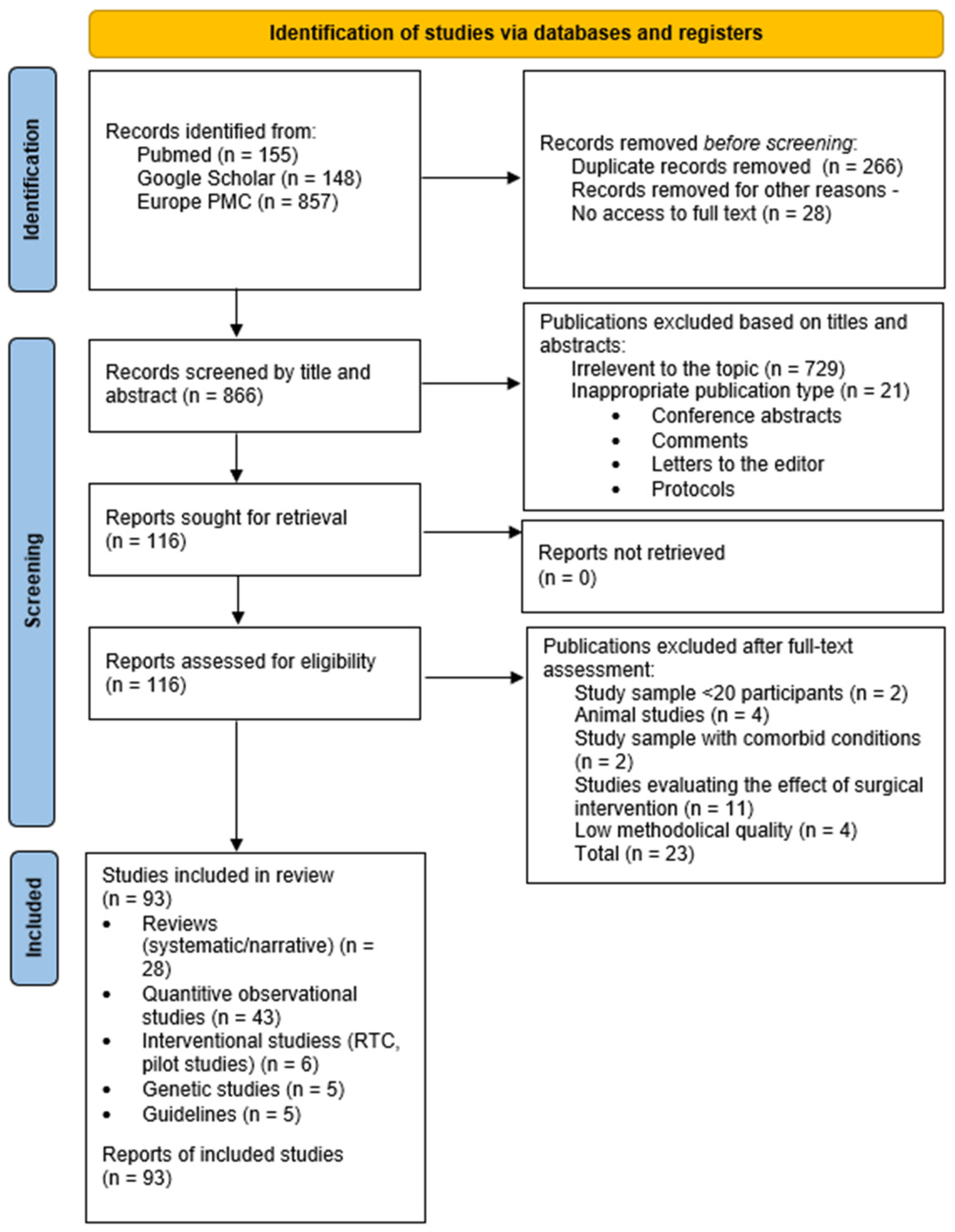
2. Materials and Methods
3. Results
3.1. Psychosocial and Somatic Determinants of the Quality of Life of Women with Endometriosis
3.2. The Relationship Between Endometriosis Symptoms and Sexual Satisfaction and Partner Relationships
3.3. Potential Mechanisms Linking Endometriosis and Depression
The Importance of Pain and Inflammation in Endometriosis
3.4. The Importance of the Gut–Brain Axis in the Pathogenesis of Mental Disorders in Patients with Endometriosis
3.5. Genetic and Epigenetic Relationships Between Endometriosis and Depression
3.6. Treatment Strategies and Psychotherapeutic Interventions
3.7. Comparison of the Effectiveness of Psychological Interventions, Partner Role and Self-Acceptance in Patients with Endometriosis
4. Discussion
5. Conclusions
Supplementary Materials
Author Contributions
Funding
Institutional Review Board Statement
Informed Consent Statement
Data Availability Statement
Conflicts of Interest
Abbreviations
| CBT | Cognitive Behavioral Therapy |
| CNS | Central Nervous System |
| DETECT | Neuropathic Pain DETECT Questionnaire |
| EE | Environmental Enrichment |
| EM | Endometriosis |
| GABA | Gamma-Aminobutyric Acid |
| GnRH | Gonadotropin-Releasing Hormone |
| HADS-7 | Hospital Anxiety and Depression Scale-7 |
| HPA | Hypothalamic–Pituitary–Adrenal |
| HRQoL | Health-Related Quality of Life |
| IL-6 | Interleukin 6 |
| IL-8 | Interleukin 8 |
| MeSH | Medical Subject Headings |
| MRA | Mendelian Randomization Analysis |
| OR | Odds Ratio |
| PGE2 | Prostaglandin E2 |
| PMC | PubMed Central |
| PRISMA | Preferred Reporting Items for Systematic Reviews and Meta-Analyses |
| PROSPERO | International Prospective Register of Systematic Reviews |
| SCFAs | Short-Chain Fatty Acids |
| SSS-W | Sexual Satisfaction Scale for Women |
| TNF-α | Tumor Necrosis Factor Alpha |
| UK | United Kingdom |
| WHO | World Health Organization |
References
- Cousins, F.L.; McKinnon, B.D.; Mortlock, S.; Fitzgerald, H.C.; Zhang, C.; Montgomery, G.W.; Gargett, C.E. New concepts on the etiology of endometriosis. J. Obstet. Gynaecol. Res. 2023, 49, 1090–1105. [Google Scholar] [CrossRef]
- Chandel, P.K.; Maurya, P.K.; Hussain, S.; Vashistha, D.; Sharma, S. Endometriosis and Depression: A Double Agony for Women. Ann. Neurosci. 2023, 30, 205–209. [Google Scholar] [CrossRef]
- van Stein, K.; Schubert, K.; Ditzen, B.; Weise, C. Understanding Psychological Symptoms of Endometriosis from a Research Domain Criteria Perspective. J. Clin. Med. 2023, 12, 4056. [Google Scholar] [CrossRef] [PubMed]
- Rosendo-Chalma, P.; Díaz-Landy, E.N.; Antonio-Véjar, V.; Ortiz Tejedor, J.G.; Reytor-González, C.; Simancas-Racines, D.; Bigoni-Ordóñez, G.D. Endometriosis: Challenges in Clinical Molecular Diagnostics and Treatment. Int. J. Mol. Sci. 2025, 26, 3979. [Google Scholar] [CrossRef] [PubMed]
- Kedzia, M.; Basta, P.; Czajkowski, K.; Gogacz, M.; Spaczynski, R.; Mroczkowska, B.; Stojko, R.; Szaflik, T.; Szubert, M.; Szyllo, K.; et al. Guidelines of the Polish Society of Gynecologists and Obstetricians on the management of women with endometriosis. Ginekol. Pol. 2024, 95, 729–758. [Google Scholar] [CrossRef]
- Sherwani, S.; Khan, M.W.A.; Rajendrasozhan, S.; Al-Motair, K.; Husain, Q.; Khan, W.A. The vicious cycle of chronic endometriosis and depression—An immunological and physiological perspective. Front. Med. 2024, 11, 1425691. [Google Scholar] [CrossRef]
- Dla Pacjenta. Narodowy Fundusz Zdrowia (NFZ)—Finansujemy Zdrowie Polaków. Available online: https://www.gov.pl/web/zdrowie/leczenie-endometriozy--bezplatna-kompleksowa-opieka (accessed on 15 November 2025).
- Czubak, P.; Herda, K.; Niewiadomska, I.; Putowski, L.; Łańcut, M.; Masłyk, M. Understanding Endometriosis: A Broad Review of Its Causes, Management, and Impact. Int. J. Mol. Sci. 2025, 26, 8878. [Google Scholar] [CrossRef] [PubMed]
- Muharam, R.; Amalia, T.; Pratama, G.; Harzif, A.K.; Agiananda, F.; Maidarti, M.; Azyati, M.; Sumapraja, K.; Winarto, H.; Wiweko, B.; et al. Chronic Pelvic Pain in Women with Endometriosis is Associated with Psychiatric Disorder and Quality of Life Deterioration. Int. J. Women’s Health 2022, 14, 131–138. [Google Scholar] [CrossRef]
- World Health Organization. Endometriosis. 2025. Available online: https://www.who.int/news-room/fact-sheets/detail/endometriosis (accessed on 31 March 2025).
- Zippl, A.L.; Reiser, E.; Seeber, B. Endometriosis and mental health disorders: Identification and treatment as part of a multimodal approach. Fertil. Steril. 2024, 121, 370–378. [Google Scholar] [CrossRef]
- Maulenkul, T.; Kuandyk, A.; Makhadiyeva, D.; Dautova, A.; Terzic, M.; Oshibayeva, A.; Moldaliyev, I.; Ayazbekov, A.; Maimakov, T.; Saruarov, Y.; et al. Understanding the impact of endometriosis on women’s life: An integrative review of systematic reviews. BMC Women’s Health 2024, 24, 524. [Google Scholar] [CrossRef]
- Mousa, M.; Al-Jefout, M.; Alsafar, H.; Becker, C.M.; Zondervan, K.T.; Rahmioglu, N. Impact of Endometriosis in Women of Arab Ancestry on: Health-Related Quality of Life, Work Productivity, and Diagnostic Delay. Front. Glob. Women’s Health 2021, 2, 708410. [Google Scholar] [CrossRef] [PubMed]
- Ramin-Wright, A.; Schwartz, A.S.K.; Geraedts, K.; Rauchfuss, M.; Wölfler, M.M.; Haeberlin, F.; von Orelli, S.; Eberhard, M.; Imthurn, B.; Imesch, P.; et al. Fatigue—A symptom in endometriosis. Hum. Reprod. 2018, 33, 1459–1465. [Google Scholar] [CrossRef] [PubMed]
- González-Echevarría, A.M.; Rosario, E.; Acevedo, S.; Flores, I. Impact of coping strategies on quality of life of adolescents and young women with endometriosis. J. Psychosom. Obstet. Gynecol. 2019, 40, 138–145. [Google Scholar] [CrossRef]
- Facchin, F.; Buggio, L.; Dridi, D.; Vercellini, P. A woman’s worth: The psychological impact of beliefs about motherhood, female identity, and infertility on childless women with endometriosis. J. Health Psychol. 2021, 26, 1026–1034. [Google Scholar] [CrossRef]
- Mundo-López, A.; Ocón-Hernández, O.; San-Sebastián, A.P.; Galiano-Castillo, N.; Rodríguez-Pérez, O.; Arroyo-Luque, M.S.; Arroyo-Morales, M.; Cantarero-Villanueva, I.; Fernández-Lao, C.; Artacho-Cordón, F.; et al. Contribution of Chronic Fatigue to Psychosocial Status and Quality of Life in Spanish Women Diagnosed with Endometriosis. Int. J. Environ. Res. Public Health 2020, 17, 3831. [Google Scholar] [CrossRef]
- Facchin, F.; Buggio, L.; Roncella, E.; Somigliana, E.; Ottolini, F.; Dridi, D.; Roberto, A.; Vercellini, P. Sleep disturbances, fatigue and psychological health in women with endometriosis: A matched pair case–control study. Reprod. Biomed. Online 2021, 43, 1027–1034. [Google Scholar] [CrossRef]
- Facchin, F.; Barbara, G.; Saita, E.; Mosconi, P.; Roberto, A.; Fedele, L.; Vercellini, P. Impact of endometriosis on quality of life and mental health: Pelvic pain makes the difference. J. Psychosom. Obstet. Gynecol. 2015, 36, 135–141. [Google Scholar] [CrossRef] [PubMed]
- Kalfas, M.; Chisari, C.; Windgassen, S. Psychosocial factors associated with pain and health-related quality of life in Endometriosis: A systematic review. Eur. J. Pain 2022, 26, 1827–1848. [Google Scholar] [CrossRef]
- Matasariu, R.D.; Mihaila, A.; Iacob, M.; Dumitrascu, I.; Onofriescu, M.; Crumpei Tanasa, I.; Vulpoi, C. Psycho-Social Aspects of Quality of Life in Women with Endometriosis. Acta Endocrinol. 2017, 13, 334–339. [Google Scholar] [CrossRef]
- Dipankar, S.P.; Kushram, B.; Unnikrishnan, P.; Gowda, J.R.; Shrivastava, R.; Daitkar, A.R.; Jaiswal, V. Psychological Distress and Quality of Life in Women with Endometriosis: A Narrative Review of Therapeutic Approaches and Challenges. Cureus 2025, 17, e80180. [Google Scholar] [CrossRef]
- Delanerolle, G.; Ramakrishnan, R.; Hapangama, D.; Zeng, Y.; Shetty, A.; Elneil, S.; Chong, S.; Hirsch, M.; Oyewole, M.; Phiri, P.; et al. A systematic review and meta-analysis of the Endometriosis and Mental-Health Sequelae; The ELEMI Project. Women’s Health 2021, 17, 17455065211019717. [Google Scholar] [CrossRef]
- Chaggar, P.; Tellum, T.; Thanatsis, N.; De Braud, L.V.; Setty, T.; Jurkovic, D. Impact of deep or ovarian endometriosis on pelvic pain and quality of life: Prospective cross-sectional ultrasound study. Ultrasound Obstet. Gynecol. 2025, 65, 372–383. [Google Scholar] [CrossRef]
- Baldi, E.; Meneo, D.; Cerolini, S.; Gelfo, F.; Baglioni, C. Sleep Health and Psychological Wellbeing in Adult Women: A Specific Focus on Endometriosis—A Survey Study. J. Clin. Med. 2025, 14, 2103. [Google Scholar] [CrossRef]
- He, G.; Chen, J.; Peng, Z.; Feng, K.; Luo, C.; Zeng, X. A study on the correlation between quality of life and unhealthy emotion among patients with endometriosis. Front. Psychol. 2022, 13, 830698. [Google Scholar] [CrossRef]
- Olliges, E.; Bobinger, A.; Weber, A.; Hoffmann, V.; Schmitz, T.; Popovici, R.M.; Meissner, K. The physical, psychological, and social day-to-day experience of women living with endometriosis compared to healthy age-matched controls—A mixed-methods study. Front. Glob. Women’s Health 2021, 2, 767114. [Google Scholar] [CrossRef]
- Kogelman, L.J.A.; Rytter, D.; Hummelshoj, L.; Hansen, K.E.; Kirk, U.B.; Beauchamp, J.L.; Bay, J.T.; Bruun, M.T.; Brøns, N.; Erikstrup, C.; et al. The burden of endometriosis on quality of life in Danish women: An analysis of the Danish Blood Donor Study. BMC Med. 2025, 23, 560. [Google Scholar] [CrossRef] [PubMed]
- Mallorquí, A.; Fortuna, A.; Segura, E.; Cardona, G.; Espinosa, M.; Quintas-Marquès, L.; Gracia, M.; Angulo-Antúnez, E.; Carmona, F.; Martínez-Zamora, M.-A. Prevalence of anhedonia in women with deep endometriosis. Sci. Rep. 2025, 15, 752. [Google Scholar] [CrossRef]
- Mollazadeh, S.; Najmabadi, K.M.; Mirghafourvand, M.; Khadivzadeh, T.; Moghri, J.; Hafizi, L. The health-promoting lifestyle and its relationship with the impacts of endometriosis on women’s lives in Iran, 2022: A cross-sectional study. BMC Women’s Health 2025, 25, 153. [Google Scholar] [CrossRef] [PubMed]
- Manu, A.; Poenaru, E.; Duica, F.; Bausic, A.I.G.; Coroleuca, B.C.; Coroleuca, C.A.; Iacob, C.; Rosca, I.; Bratila, E. Quality of Life Assessment and Clinical Implications for Women with Endometriosis Through Validated Tools: A Narrative Review. Medicina 2025, 61, 1729. [Google Scholar] [CrossRef]
- Mosterd, D.; Mikocka-Walus, A.; Van Niekerk, L.; Skvarc, D.; Evans, S. Comparing psychological distress, health-related quality of life and pain in people diagnosed with endometriosis and those suspected to have endometriosis. Res. Sq. 2025. [Google Scholar] [CrossRef]
- Salinas-Asensio, M.D.M.; Álvarez-Salvago, F.; Mundo-López, A.; Ocón-Hernández, O.; Lozano-Lozano, M.; López-Garzón, M.; Postigo-Martín, P.; Arroyo-Morales, M.; Rodríguez-Ruiz, Á.; Fernández-Lao, C.; et al. Changes in fatigue, health-related fitness, sleep quality, mental health, gastrointestinal complaints and sexual function after a multimodal supervised therapeutic exercise program in women with endometriosis unresponsive to conventional therapy: A secondary analysis of a randomized controlled trial. Eur. J. Obstet. Gynecol. Reprod. Biol. 2025, 312, 114083. [Google Scholar] [CrossRef] [PubMed]
- Kovács-Szabó, Z.; Ács, P.; Prémusz, V.; Makai, A.; Hock, M. Psychological, Symptom-Related, and Lifestyle Predictors of Health-Related Quality of Life in Hungarian Women with Endometriosis. J. Clin. Med. 2025, 14, 7004. [Google Scholar] [CrossRef]
- Bień, A.; Pokropska, A.; Grzesik-Gąsior, J.; Korżyńska-Piętas, M.; Pieczykolan, A.; Zarajczyk, M.; Ali Pour, R.; Frydrysiak-Brzozowska, A.; Rzońca, E. Quality of life in women with endometriosis: The importance of Socio-demographic, diagnostic-therapeutic, and psychological factors. J. Clin. Med. 2025, 14, 4268. [Google Scholar] [CrossRef] [PubMed]
- Vallée, A.; Arutkin, M.; Ceccaldi, P.F.; Ayoubi, J.M. Quality of life identification by unsupervised cluster analysis: A new approach to modelling the burden of endometriosis. PLoS ONE 2025, 20, e0317178. [Google Scholar] [CrossRef]
- Noditi, A.R.; Bostan, I.S.; Scurtu, F.; Ionescu, D.; Mehedintu, A.M.; Petca, A.; Mehedintu, C.; Bostan, M.; Rotaru, A.M. Analysis of the Biopsychosocial Impacts Associated with Endometriosis to Improve Patient Care. J. Clin. Med. 2025, 14, 2158. [Google Scholar] [CrossRef]
- Panvino, F.; Paparella, R.; Pisani, F.; Tarani, F.; Ferraguti, G.; Fiore, M.; Ardizzone, I.; Tarani, L. Endometriosis in adolescence: A narrative review of the psychological and clinical implications. Diagnostics 2025, 15, 548. [Google Scholar] [CrossRef] [PubMed]
- Katz, C.; Evans, S.; Mikocka-Walus, A. “Listen to women as if they were your most cherished person”: Australian women’s perspectives on living with the pain of endometriosis: A mixed-methods study. J. Health Psychol. 2025, 30, 1899–1914. [Google Scholar] [CrossRef]
- Kaveh, M.; Moghadam, M.N.; Safari, M.; Chaichian, S.; Kashi, A.M.; Afshari, M.; Sadegi, K. The impact of early diagnosis of endometriosis on quality of life. Arch. Gynecol. Obstet. 2025, 311, 1415–1421. [Google Scholar] [CrossRef]
- Cagnacci, A.; Della Vecchia, E.; Xholli, A. Chronic pelvic pain improvement: Impact on quality of life and mood. Gynecol. Endocrinol. 2019, 35, 502–505. [Google Scholar] [CrossRef]
- Breton, Z.; Stern, E.; Pinault, M.; Lhuillery, D.; Petit, E.; Panel, P.; Alexaline, M. A Digital Program for Daily Life Management with Endometriosis: Pilot Cohort Study on Symptoms and Quality of Life Among Participants. JMIR Form. Res. 2025, 9, e58262. [Google Scholar] [CrossRef]
- Grundström, H.; Engman, L.; Rimhagen, E.; Söderstierna, C.; Flink, I. Experiences of communication in women with endometriosis: Perceived validation and invalidation in different contexts, and associations with health-related quality of life. J. Psychosom. Obstet. Gynecol. 2023, 44, 2264483. [Google Scholar] [CrossRef]
- Zarecki, C.; Satran, C.; Kaldawy, A.; Tesler, R.; Bord, S. Understanding the role of social negativity in Perceived Life Course Impact and mental health among women with Endometriosis. J. Clin. Med. 2025, 14, 4761. [Google Scholar] [CrossRef]
- Kupec, T.; Kennes, L.N.; Senger, R.; Meyer-Wilmes, P.; Najjari, L.; Stickeler, E.; Wittenborn, J. The multifactorial burden of endometriosis: Predictors of quality of life. J. Clin. Med. 2025, 14, 323. [Google Scholar] [CrossRef]
- Bień, A.; Pokropska, A.; Grzesik-Gąsior, J.; Korżyńska-Piętas, M.; Zarajczyk, M.; Rzońca, E.; Jurek, K. Clinical factors affecting the quality of life of women with endometriosis. J. Adv. Nurs. 2025, 81, 4667–4680. [Google Scholar] [CrossRef]
- Kling, J.M.; Ghaith, S.; Smith, T.; Kapoor, E.; Wasson, M.; Mara, K.; Enders, F.T.; Faubion, S.; Kuhle, C. Evaluating the Link Between Self-Reported Endometriosis and Female Sexual Dysfunction. J. Sex. Med. 2022, 19, 1553–1561, Correction in J. Sex Med. 2023, 20, 707–708.. [Google Scholar] [CrossRef]
- Kfoury, M.; Barakat, H.; Hallit, S.; Saliba, S. Association between endometriosis and sexual satisfaction among a sample of lebanese women. BMC Women’s Health 2023, 23, 164. [Google Scholar] [CrossRef] [PubMed]
- Amza, M.; Sima, R.M.; Conea, I.M.; Bobei, T.I.; Augustin, F.E.; Pleş, L. The impact of endometriosis on patients’ quality of sexual life. J. Med. Life 2025, 18, 90–93. [Google Scholar] [CrossRef] [PubMed]
- Chapron, C.; Marcellin, L.; Borghese, B.; Santulli, P. Rethinking mechanisms, diagnosis and management of endometriosis. Nat. Rev. Endocrinol. 2019, 15, 666–682. [Google Scholar] [CrossRef]
- Sullivan-Myers, C.; Sherman, K.A.; Beath, A.P.; Cooper, M.J.W.; Duckworth, T.J. Body image, self-compassion, and sexual distress in individuals living with endometriosis. J. Psychosom. Res. 2023, 167, 111197. [Google Scholar] [CrossRef] [PubMed]
- Pasternack, S.; Suvilehto, J.; Härkki, P.; Heikinheimo, O.; Sipilä, R.; Kalso, E. Pain, Emotions, Interoception, and Bodily Sensations in Patients with Endometriosis. Eur. J. Pain 2025, 29, e70144. [Google Scholar] [CrossRef]
- Schick, M.; Germeyer, A.; Böttcher, B.; Hecht, S.; Geiser, M.; Rösner, S.; Eckstein, M.; Vomstein, K.; Toth, B.; Strowitzki, T.; et al. Partners matter: The psychosocial well-being of couples when dealing with endometriosis. Health Qual. Life Outcomes 2022, 20, 86. [Google Scholar] [CrossRef]
- Facchin, F.; Buggio, L.; Vercellini, P.; Frassineti, A.; Beltrami, S.; Saita, E. Quality of intimate relationships, dyadic coping, and psychological health in women with endometriosis: Results from an online survey. J. Psychosom. Res. 2021, 146, 110502. [Google Scholar] [CrossRef]
- Chen, J.; Ge, Y.; Jin, X.; Huang, H.; Shan, X.; Xu, X. The mediating effect of social support on the relationship between intimacy and perceived partner responsiveness in endometriosis women of childbearing age. Front. Psychol. 2024, 15, 1437335. [Google Scholar] [CrossRef] [PubMed]
- Coxon, L.; Wiech, K.; Vincent, K. Is There a Neuropathic-Like Component to Endometriosis-Associated Pain? Results from a Large Cohort Questionnaire Study. Front. Pain Res. 2021, 2, 743812. [Google Scholar] [CrossRef]
- Cerruto, M.A. Chronic Pelvic Pain and Chronic Pelvic Pain Syndrome: Classification and Epidemiology. In Chronic Pelvic Pain and Pelvic Dysfunctions; Springer: Cham, Switzerland, 2021; pp. 49–60. [Google Scholar]
- Hoffman, D. Central and peripheral pain generators in women with chronic pelvic pain: Patient centered assessment and treatment. Curr. Rheumatol. Rev. 2015, 11, 146–166. [Google Scholar] [CrossRef] [PubMed]
- Aredo, J.V.; Heyrana, K.J.; Karp, B.I.; Shah, J.P.; Stratton, P. Relating Chronic Pelvic Pain and Endometriosis to Signs of Sensitization and Myofascial Pain and Dysfunction. Semin. Reprod. Med. 2017, 35, 88–97. [Google Scholar] [CrossRef] [PubMed]
- Gruber, T.M.; Mechsner, S. Pathogenesis of Endometriosis: The Origin of Pain and Subfertility. Cells 2021, 10, 1381. [Google Scholar] [CrossRef]
- Kanti, F.S.; Allard, V.; Métivier, A.-A.; Lemyre, M.; Arendas, K.; Maheux-Lacroix, S. Pain Phenotypes in Endometriosis: A Population-Based Study Using Latent Class Analysis. BJOG Int. J. Obstet. Gynaecol. 2025, 132, 492–503. [Google Scholar] [CrossRef]
- Rodríguez-Lozano, D.C.; Meza-Rodríguez, M.D.P.; Cruz-Orozco, O.P.; Sánchez-Ramírez, B.; Olguin-Ortega, A.; Silvestri-Tomassoni, J.R.; Corona-Barsse, G.; Escobar-Ponce, L.F.; Solis Paredes, J.; Dominguez-Trejo, B.; et al. Emotional dysregulation in women with endometriosis with cyclical and non-cyclical chronic pelvic pain. BMC Women’s Health 2022, 22, 525. [Google Scholar] [CrossRef]
- Goodwin, E.; do Valle, H.; Nitschke, A.S.; Puyat, J.H.; Yong, P.J.; Hanley, G.E. Endometriosis, symptoms, and risk for depression and/or anxiety: A population-based retrospective study. BMC Women’s Health 2025, 25, 479. [Google Scholar] [CrossRef]
- Moore, C.; Cogan, N.; Williams, L. Illness perceptions among individuals with endometriosis and their longitudinal associations with psychological distress and pain. J. Health Psychol. 2025, 30, 4284–4297. [Google Scholar] [CrossRef] [PubMed]
- Jiang, L.; Jiang, L.; Ma, S. Bidirectional Mendelian randomization and cross-sectional study reveal depression as a causal risk factor for endometriosis. Medicine 2025, 104, e45729. [Google Scholar] [CrossRef] [PubMed]
- van Barneveld, E.; de Hertogh, M.; Vork, L.; van Hanegem, N.; van Osch, F.H.M.; Kruimel, J.W.; Bongers, M.Y.; Leue, C.; Lim, A.C. Patient-specific affect-abdominal pain interactions in endometriosis: An experience sampling method (ESM) study. J. Psychosom. Obstet. Gynecol. 2022, 43, 237–243. [Google Scholar] [CrossRef]
- Quintas-Marquès, L.; Valdés-Bango, M.; Box, C.; Gràcia, M.; Rius, M.; Carmona, F.; Martínez-Zamora, M. Multidimensional Evaluation of Myofascial Pelvic Pain and Other Comorbidities in Endometriosis Patients. J. Clin. Med. 2025, 14, 3455. [Google Scholar] [CrossRef] [PubMed]
- Gouesbet, S.; Lambert, S.; Amazouz, H.; Breton, Z.; Tran, V.T.; Missmer, S.; Kvaskoff, M. Retrospective Assessment of Endometriosis Pain Over the Life Course: A Reliability Study Within the ComPaRe-Endometriosis Cohort. Eur. J. Pain 2025, 29, e70040. [Google Scholar] [CrossRef]
- Vuontisjärvi, S.; Rossi, H.R.; Herrala, S.; Morin-Papunen, L.; Tapanainen, J.S.; Karjula, S.; Karppinen, J.; Auvinen, J.; Piltonen, T.T. The Long-Term Footprint of Endometriosis: Population-Based Cohort Analysis Reveals Increased Pain Symptoms and Decreased Pain Tolerance at Age 46 Years. J. Pain 2018, 19, 754–763. [Google Scholar] [CrossRef]
- Kupec, T.; Wagels, L.; Caspers, R.; Meyer-Wilmes, P.; Najjari, L.; Stickeler, E.; Wittenborn, J. Predictors of anxiety in endometriosis patients. Arch. Gynecol. Obstet. 2025, 311, 1371–1377. [Google Scholar] [CrossRef]
- Viscardi, M.F.; Piacenti, I.; Musella, A.; Cacciamani, L.; Piccioni, M.G.; Manganaro, L.; Muzii, L.; Porpora, M.G. Endometriosis in Adolescents: A Closer Look at the Pain Characteristics and Atypical Symptoms: A Prospective Cohort Study. J. Clin. Med. 2025, 14, 1392. [Google Scholar] [CrossRef]
- Pickup, B.; Sharpe, L.; Todd, J. Development of the COMPASS model of endometriosis: A COmprehensive model of pain encompassing agency, systemic factors and sense making. Br. J. Health Psychol. 2025, 30, e12794. [Google Scholar] [CrossRef]
- Berryman, A.; Machado, L. Cognitive Functioning in Females with Endometriosis-Associated Chronic Pelvic Pain: A Literature Review. Arch. Clin. Neuropsychol. 2025, 40, 1066–1080. [Google Scholar] [CrossRef]
- Breton, Z.; Gouesbet, S.; Amazouz, H.; Schoefs, H.; Tran, V.T.; Falissard, B.; Corruble, E.; Kvaskoff, M. Factors associated with anxiety and depression symptoms among women with endometriosis: A cross-sectional study within the ComPaRe-Endometriosis cohort. J. Psychosom. Res. 2025, 196, 112329. [Google Scholar] [CrossRef] [PubMed]
- Winter, G.; Hart, R.A.; Charlesworth, R.P.G.; Sharpley, C.F. Gut microbiome and depression: What we know and what we need to know. Rev. Neurosci. 2018, 29, 629–643. [Google Scholar] [CrossRef] [PubMed]
- Yuanyue, L.; Qian, H.; Ling, L.; Liufeng, Y.; Jing, G.; Xiaomei, W. Impact of gut microbiota on endometriosis: Linking physical injury to mental health. Front. Cell. Infect. Microbiol. 2025, 15, 1526063. [Google Scholar] [CrossRef] [PubMed]
- Kiewa, J.; Mortlock, S.; Meltzer-Brody, S.; Middeldorp, C.; Wray, N.R.; Byrne, E.M. A Common Genetic Factor Underlies Genetic Risk for Gynaecological and Reproductive Disorders and Is Correlated with Risk to Depression. Neuroendocrinology 2023, 113, 1059–1075. [Google Scholar] [CrossRef]
- Yuanyue, L.; Dimei, O.; Ling, L.; Dongyan, R.; Xiaomei, W. Association between endometriosis and gut microbiota: Systematic review and meta-analysis. Front. Microbiol. 2025, 16, 1552134. [Google Scholar] [CrossRef]
- Cuffaro, F.; Russo, E.; Amedei, A. Endometriosis, Pain, and Related Psychological Disorders: Unveiling the Interplay among the Microbiome, Inflammation, and Oxidative Stress as a Common Thread. Int. J. Mol. Sci. 2024, 25, 6473. [Google Scholar] [CrossRef]
- Zondervan, K.T.; Becker, C.M.; Missmer, S.A. Endometriosis. N. Engl. J. Med. 2020, 382, 1244–1256. [Google Scholar] [CrossRef]
- Estes, S.J.; Huisingh, C.E.; Chiuve Stephanie, E.; Petruski-Ivleva, N.; Missmer, S.A. Depression, Anxiety, and Self-Directed Violence in Women with Endometriosis: A Retrospective Matched-Cohort Study. Am. J. Epidemiol. 2021, 190, 843–852. [Google Scholar] [CrossRef]
- Adewuyi, E.O.; Mehta, D.; Sapkota, Y.; Auta, A.; Yoshihara, K.; Nyegaard, M.; Griffiths, L.R.; Montgomery, G.W.; Chasman, D.I.; Nyholt, D.R. Genetic analysis of endometriosis and depression identifies shared loci and implicates causal links with gastric mucosa abnormality. Hum. Genet. 2021, 140, 529–552. [Google Scholar] [CrossRef]
- McGrath, I.M.; Montgomery, G.W.; Mortlock, S. Insights from Mendelian randomization and genetic correlation analyses into the relationship between endometriosis and its comorbidities. Hum. Reprod. Update 2023, 29, 655–674. [Google Scholar] [CrossRef]
- Yang, F.; Liu, B.; Xu, L.; Liu, H. Age at surgery and recurrence of ovarian endometrioma after conservative surgery: A meta-analysis including 3125 patients. Arch. Gynecol. Obstet. 2020, 302, 23–30. [Google Scholar] [CrossRef]
- Donatti, L.; Malvezzi, H.; de Azevedo, B.C.; Baracat, E.C.; Podgaec, S. Cognitive Behavioral Therapy in Endometriosis, Psychological Based Intervention: A Systematic Review. Rev. Bras. Ginecol. Obstet. 2022, 44, 295–303. [Google Scholar] [CrossRef] [PubMed]
- Pereira, M.G.; Ribeiro, I.; Ferreira, H.; Osório, F.; Nogueira-Silva, C.; Almeida, A.C. Psychological Morbidity in Endometriosis: A Couple’s Study. Int. J. Environ. Res. Public Health 2021, 18, 10598. [Google Scholar] [CrossRef]
- Candan, A.; Kohl Schwartz, A.; Birchler, K.; Leeners, B. Psychosomatic comorbidity in endometriosis: A multi-center, cross-sectional study identifying an underestimated factor in current medical support. J. Psychosom. Res. 2025, 196, 112346. [Google Scholar] [CrossRef] [PubMed]
- Geller, S.; Levy, S.; Avitsur, R. Examining the relationship between endometriosis and psychological distress: Roles of cultural background, body image and self-criticism in women’s health. Health Psychol. Behav. Med. 2025, 13, 2511980. [Google Scholar] [CrossRef]
- Facchin, F.; Grosso, F.; Saita, E.; Vercellini, P.; Pagnini, F. Can self-compassion and mindfulness predict psychological wellbeing in individuals with endometriosis? Findings from an online survey. BMC Women’s Health 2025, 25, 310. [Google Scholar] [CrossRef]
- Skinner, C.M.; Kuijer, R.G. The role of self-compassion in protecting psychological wellbeing and health-related quality of life in those with endometriosis: A prospective study. J. Psychosom. Res. 2025, 196, 112322. [Google Scholar] [CrossRef]
- De Hoyos, G.; Ramos-Sostre, D.; Torres-Reverón, A.; Barros-Cartagena, B.; López-Rodríguez, V.; Nieves-Vázquez, C.; Santiago-Saavedra, F.; Appleyard, C.B.; Castro, E.M.; Flores, I. Efficacy of an environmental enrichment intervention for endometriosis: A pilot study. Front. Psychol. 2023, 14, 1225790. [Google Scholar] [CrossRef]
- Geller, S.; Levy, S.; Ashkeloni, S.; Roeh, B.; Sbiet, E.; Avitsur, R. Predictors of Psychological Distress in Women with Endometriosis: The Role of Multimorbidity, Body Image, and Self-Criticism. Int. J. Environ. Res. Public Health 2021, 18, 3453. [Google Scholar] [CrossRef] [PubMed]
- Farshi, N.; Hasanpour, S.; Mirghafourvand, M.; Esmaeilpour, K. Effect of self-care counselling on depression and anxiety in women with endometriosis: A randomized controlled trial. BMC Psychiatry 2020, 20, 391. [Google Scholar] [CrossRef]
- Moscucci, F.; Bucciarelli, V.; Gallina, S.; Sciomer, S.; Mattioli, A.V.; Maffei, S.; Nodari, S.; Pedrinelli, R.; Andreozzi, P.; Basili, S.; et al. Obstructive sleep apnea syndrome (OSAS) in women: A forgotten cardiovascular risk factor. Maturitas 2025, 193, 108170. [Google Scholar] [CrossRef]
- Page, M.J.; McKenzie, J.E.; Bossuyt, P.M.; Boutron, I.; Hoffmann, T.C.; Mulrow, C.D.; Shamseer, L.; Tetzlaff, J.M.; Akl, E.A.; Brennan, S.E.; et al. The PRISMA 2020 statement: An updated guideline for reporting systematic reviews. BMJ 2021, 372, n71. [Google Scholar] [CrossRef]
- Tricco, A.C.; Lillie, E.; Zarin, W.; O’Brien, K.K.; Colquhoun, H.; Levac, D.; Moher, D.; Peters, M.D.J.; Horsley, T.; Weeks, L.; et al. PRISMA Extension for Scoping Reviews (PRISMAScR): Checklist and Explanation. Ann. Intern. Med. 2018, 169, 467–473. [Google Scholar] [CrossRef]


| Position | Type of Psychosocial Factor | Study Type, Study Group Size | Methodology | Conclusions | Source |
|---|---|---|---|---|---|
| 1 | Affective; Cognitive | Systematic review N = 5419 | NRS, VAS, SF-MPQ, HRQoL (EHP-30, SF-36), HADS, BDI/BAI, PSS, PCS, PSWQ, DERS, TAS, AIS, Rosenberg Self-Esteem, personality scales | Support, biopsychosocial model of endometriosis and highlighting the role of psychosocial factors in the development of the disease. | Kalfas M, Chisari C, Windgassen S. Psychosocial factors associated with pain and health-related quality of life in endometriosis: a systematic review. Eur J Pain.2022;26(10):2070–2088. [20] |
| 2 | Affective; Social | Cross-sectional + observation al study N = 205 | FPI, EHP-30, BDI | The impact of somatic and emotional symptoms on quality of life and psychosocial burden. | Matasariu RD, Onofriescu M, Ionescu CA, et al. Psycho-social aspects of quality of life in women with endometriosis. Acta Endocrinol (Buchar). 2017;13(3):334–339. [21] |
| 3 | Affective; Social; Cognitive/Behavioral | Narrative Review | Depression and anxiety scales; HRQoL (EHP-30, SF-36); pain scales | The adverse impact of anxiety, depression, stress and social isolation on quality of life regardless of the stage of endometriosis. | Dipankar SP, Sharma S, Patel R, et al. Psychological distress and quality of life in women with endometriosis: a narrative review of therapeutic approaches and challenges. Cureus. 2025;17(1):e80180. [22] |
| 4 | Affective | Systematic review (34 studies), meta-analysis (15 studies) | HADS, BDI, STAI; diagnostic tools for mental disorders; CPP; dyspareunia; HRQoL | Endometriosis is a condition associated with significant psychological burden, including anxiety and depression. | Delanerolle G, Niazi A, Lu Z, et al. A systematic review and meta-analysis of endometriosis and mental health sequelae: the ELEMI project. Womens Health (Lond). 2021;17:17455065211019717. [23] |
| 5 | Affective | Cross-sectional study N = 514 | Pelvic pain questionnaire (NRS); EQ-5D, EQ-VAS; Ultrasound according to IDEA | Deep or ovarian endometriosis visualized on ultrasound does not always correlate with pain and quality of life, which justifies the diagnosis of other causes of the symptoms and the importance of comprehensive counseling. | Chaggar P, Alcazar JL, Guerriero S, et al. Impact of deep or ovarian endometriosis on pelvic pain and quality of life: a prospective cross-sectional ultrasound study. Ultrasound Obstet Gynecol. 2025;65(3):372– 383. [24] |
| 6 | Affective; Cognitive/Emotional | Cross-sectional study N = 338 | ISI, HADS, DERS-SF; sleep measures (satisfaction, vigilance, efficiency, timing) | Bidirectional relationship between pain and anxiety symptoms and the relationship between sleep quality and the severity of endometriosis and psychological difficulties | Baldi E, Meneo D, et al. Sleep health and psychological well-being in adult women: a specific focus on endometriosis—a survey study. J Clin Med. 2025;14(6):2103. [25] |
| 7 | Affective; Cognitive/Social | Cross-sectional observation al study N = 139 | SF-12 (PCS, MCS), HAMA, SDS | Strong association between quality of life and anxiety levels and the presence of depression in women with endometriosis. | He G, Chen J, Peng Z, Luo C, Zeng X. Correlation between quality of life and unhealthy emotions among patients with endometriosis. Front Psychol. 2022;13:830698. [26] |
| 8 | Affective; Behavioral/Emotion Regulation | Case-control study (matched pair) N = 246 | PSQI, ISI, ESS, HADS, SF-12 | The key importance of sleep and fatigue in the comprehensive care of women with endometriosis. | Facchin F, Burggio L, Roncella E, et al. Sleep disturbances, fatigue and psychological health in women with endometriosis: a matched pair case-control study. Reprod Biomed Online. 2021;43(6):1035–1044. [18] |
| 9 | Affective; Behavioral/Emotion Regulation | Cross-sectional study N = 230 | PFS, HADS, PCS, PSQI, GIQLI, FSFI, MOS-SSS, EHP-30 | Fatigue as a key symptom of endometriosis, mediating the relationship between pain, psychosocial functioning and quality of life, indicating the need to consider fatigue and cognitive factors in planning interventions. | Mundo-López A, Carmona F, Gómez-Carranza E, et al. Contribution of chronic fatigue to psychosocial status and quality of life in Spanish women diagnosed with endometriosis. Int J Environ Res Public Health. 2020;17(11):3831. [17] |
| 10 | Affective; Social | Cross-sectional study (case-control/population) N = 2610 | SF-36v2, WPAI, WERF-EPHect EPQ-M | Significant deterioration in quality of life and productivity in Arab women with endometriosis. | Mousa M, Al-Jefout M, Alsafar B, Becker CM, Zondervan KT, Rahmioglu N. Impact of endometriosis in women of Arab ancestry on health-related quality of life, work productivity, and diagnostic delay. Front Glob Womens Health. 2021;2:708410. [13] |
| 11 | Affective; Social; Cognitive/Behavioral | Cross-sectional study (Mixed-methods) N = 23 | HADS, SF-12, PHQ-15, Functional Well-being-7; interviews; symptom diary | Significant association of anxiety and depression with endometriosis in research results. | Olliges E, Bobinger A, Weber A, et al. Physical, psychological, and social day-to-day experience of women living with endometriosis compared to healthy age-matched controls: a mixed-methods study. Front Glob Womens Health. 2021;2:767114. [27] |
| 12 | Affective; Social; Somatic | Cross-sectional/an alytical study N = 953 | QoL tools: EHP-30, SF-36; registry/survey data | The persistent strong impact of endometriosis on quality of life in the general population; the need to include the problem in clinical care also outside specialist centres. | Kogelman LJK, et al. The burden of endometriosis on quality of life in Danish women: an analysis of the Danish Blood Donor Study. BMC Med. 2025;23. [28] |
| 13 | Affective; Somatic | Cross-sectional study N = 199 | SHAPS, BDI-II, HADS, NRS | The need to expand care for patients with endometriosis to include the assessment of anhedonia and loss of pleasure, in addition to symptoms of anxiety and depression. | Mallorquí A, Fortuna A, Segura M, et al. Prevalence of anhedonia in women with deep endometriosis. Sci Rep. 2024;14:84772. [29] |
| 14 | Behavioral; Social; Somatic | Cross-sectional study N = 200 | HPLP, EIQ | The need to integrate health-promoting activities and support a healthy lifestyle in endometriosis treatment strategies. | Mollazadeh S, Najmabadi KM, Mirghafourvand M. Health-promoting lifestyle and its relationship with the effects of endometriosis on women’s lives in Iran: a cross-sectional study. BMC Womens Health. 2022;22. [30] |
| 15 | Cognitive; Affective; Somatic | Narrative Review | SF-36, WHOQOL-BREF, EQ-5D, EHP-30, EHP-5, FertiQoL, FPI | A review of QoL tools confirming the need for a multidimensional approach, encompassing psychological well-being and social functioning. | Manu A. Quality of life assessment and clinical implications for women with endometriosis through validated tools: a narrative review. Medicina (Kaunas). 2024;61(10):1729. [31] |
| 16 | Affective; Cognitive; Somatic | Cross-sectional study N = 653 | DASS-21, EHP-5, NRS | Diagnostic delays as a significant source of psychological burden; the need for therapeutic support before diagnosis. | Mosterd D, et al. Comparing psychological distress, health-related quality of life and pain in diagnosed versus suspected endometriosis. Preprint. 2025. [32] |
| 17 | Behavioral; Affective; Somatic | Randomize d controlled trial N = 31 | PFS, PSQI, HADS, GIQLI, FSFI; physical fitness tests: back dynamometer, Schöber, Flamingo, 6MWT | Multimodal therapeutic training as an effective support for the treatment of endometriosis. | Salinas-Asensio M.D.M., et al. Changes in fatigue, sleep quality, mental health and sexual function after a multimodal supervised exercise program in women with endometriosis unresponsive to conventional therapy. Eur J Obstet Gynecol Reprod Biol. 2025;114083. [33] |
| 18 | Cognitive; Affective; Behavioral; Social | Cross-sectional study N = 262 | PPIQ, PSEQ, PSS-10, NRS, GPAQ, SF-36 | Results supporting a biopsychosocial approach to endometriosis. | Kovács-Szabó Z, Ács P, Prémusz V, Makai A, Hock M. Psychological, symptom-related, and lifestyle predictors of health-related quality of life in Hungarian women with endometriosis. J Clin Med. 2021;10:7004. [34] |
| 19 | Affective; Cognitive | Cross-sectional study N = 425 | EHP, LOT-R, GSES; socio- Economic and diagnostic-therapeutic questionnaire | Self-efficacy and optimism as protective psychological resources in endometriosis; need for integration in clinical care. | Bień A, Pokropska A, Grzesik-Gąsior J, et al. Quality of life in women with endometriosis: the importance of sociodemographic, diagnostic-therapeutic, and psychological factors. J Clin Med. 2025;14(12):4268. (Bień, Pokropska, Grzesik-Gąsior, Korżyńska-Piętas, Pieczykolan Agnieszkaand Zarajczyk, et al., 2025) [35] |
| 20 | Behavioral; Social; Somatic | Cross-sectional study N = 200 | HPLP, EIQ; sociodemograph ic questionnaires | The need to take into account lifestyle factors and social support in carepatientswith endometriosis. | Mollazadeh S., Najmabadi KM, Mirghafourvand M. Health-promoting lifestyle and its relationship with the effects of endometriosis on women’s lives in Iran: a cross-sectional study. BMC Womens Health. 2022;22. [30] |
| 21 | Cognitive; Behavioral; Affective | Cross-sectional/an alytical study N = 644 | QoL clustering; SF-36 or other QoL profile | Personalized care as a key element in the management of women with endometriosis. | Vallée A. Quality of life identification by unsupervised cluster analysis: a new approach to modeling the burden of endometriosis. PLoS One. 2024;19:e0317178. [36] |
| 22 | Affective; Cognitive; Behavioral; Social | Narrative literature review | EHP-30, SF-36, HADS, BDI; pain scales; biopsychosocial models | The need to implement a biopsychosocial approach in clinical care. | Noditi A., et al. Analysis of the biopsychosocial impacts associated with endometriosis to improve patient care. J Clin Med. 2023;12(7):2158. [37] |
| 23 | Affective; Cognitive; Behavioral | Narrative literature review | HADS, EHP-30; adolescent health tools | Early diagnosis and psychological support as key elements of care; significant impact of adolescent endometriosis on psychosocial development. | Panvino F., et al. Endometriosis in adolescence: A narrative review of the psychological and clinical implications 2025;15(5):548. [38] |
| 24 | Affective; Somatic | Cross-sectional study N = 212 | SHAPS, NRS, HADS, BDI-II | Anhedonia as an overlooked aspect of mental health; an indication for routine psychological assessment in women with endometriosis. | Mallorquí A, Fortuna A, Segura M, et al. Prevalence of anhedonia in women with deep endometriosis. Sci Rep. 2024;14:84772. [29] |
| 25 | Affective; Social; Cognitive | Cross-sectional study (Mixed-methods) N = 533 | FSI, DASS-21, MSPSS, WHOQOL-BREF | Validation of patient experiences as one of the key determinants of quality of life | Katz C, Armor M, et al. “Listen to women as if they were your most cherished person”: an Australian mixed-methods study on endometriosis care. J Health Psychol. 2024;29:13591053241250101. [39] |
| 26 | Affective; Cognitive; Social | Prospective cohort study N = 205 | EHP, VAS, EHP-30 | No evidence of improved quality of life as a result of early diagnosis and treatment; confirmed pain reduction in patients. | Kaveh M, Nakhaee Moghadam M. The impact of early diagnosis of endometriosis on quality of life. Arch Gynecol Obstet. 2025;312. [40] |
| 27 | Affective; Cognitive; Symptom-related | Prospective study (quasi- experimenta l) N = 117 | SF-36, STAI-Y1, SDS, VAS | Pain reduction does not necessarily translate into improved mental health. | Cagnacci A, et al. Chronic pelvic pain improvement: impact on quality of life and mood. J Psychosom Obstet Gynaecol. 2018;39(4):256–262. [41] |
| 28 | Cognitive; Behavioral; Affective | Pilot cohort study (digital health) N = 241 | Symptom Monitoring App; EHP-30; NRS; EHP-5; EQ-5D | Digital programs as a valuable addition to therapy for women with endometriosis. | Breton Z, Stern E, et al. A digital program for daily life management with endometriosis: a feasibility study. JMIR. 2023;25:e58262. [42] |
| 29 | Social; Affective; Cognitive | Cross-sectional study (mixed-methods) N = 389 | EHP-30, VIRS, PHQ-9, GAD-7 | The key role of communication in shaping the quality of life; validation of the patient’s experience as a protective factor, lackvalidation as a risk factor for worsening HRQoL. | Grundström H, et al. Experiences of communication with healthcare professionals in women with endometriosis. Health Commun. 2023. [43] |
| 30 | Social; Affective; Cognitive | Cross-sectional study N = 543 | Social Negativity Scale, PLCI, SF-12 | The negative impact of social relationships as a psychosocial factor; the importance of assessing patients’ social environment and psychoeducational interventions. | Zarecki C. et al. Understanding the role of social negativity in percived life course impact and mental health among woman with endometriosis. J Clin Med. 2025;14(13):4761. [44] |
| 31 | Affective; Cognitive; Symptom-related | Cross-sectional study with regression N = 175 | EHP-30, NRS, VAS, ESHRE guidelines | Quality of life depends on the nature of the symptomsmorethan the stage of disease progression; the crucial importance of pain control. | Kupec T., et al. The multifactorial burden of endometriosis: prediction of quality of life. J Clin Med. 2025;14(2):323. [45] |
| 32 | Affective; Symptom-related | Cross-sectional study N = 425 | EHP-30, VAS/NRS, symptom scales | The importance of effective pain management and consideration of comorbidities for improving QoL. | Bień A., et al. Clinical factors affecting the quality of life of women with endometriosis. J Adv Nurs. 2025;81(8):4667–4680 [46] |
| Somatic Symptoms and Complications | Impact on Mental Well-Being | Important Psychological Factors | Psychosocial Consequences |
|---|---|---|---|
| Chronic pelvic pain | Depressive disorders, low mood, anxiety | Pain catastrophization, anticipatory anxiety, feeling of helplessness | Lack of understanding from the environment, diagnostic delay, lack of adequate support |
| Painful periods (dysmenorrhoea) | Emotional tension, irritability | Reduced stress tolerance, negative beliefs about the disease | Professional withdrawal, marginalization of symptoms (“normalization of pain”) |
| Abnormal bleeding | Sleep disturbances, exhaustion | Constant worrying | Difficulties in fulfilling professional roles and social activities |
| Dyspareunia | Decreased quality of sexual life, avoidance of intercourse | Fear of pain, negative body image | Tensions in the relationship, decreased satisfaction with the partner relationship |
| Pain when urinating/defecating | Intensification of somatic symptoms of anxiety | Interoceptive hypersensitivity, avoidance of painful stimuli | Social isolation |
| Fatigue, insomnia | Increased susceptibility to depressive and anxiety disorders | Emotional regulation disorders, low mental resilience | Deterioration of productivity in every sphere of functioning |
| Fertility problems | Sense of loss, lowered self-esteem | Internalization of negative beliefs about oneself | Stigmatization, feeling of social pressure, relationship tensions |
Disclaimer/Publisher’s Note: The statements, opinions and data contained in all publications are solely those of the individual author(s) and contributor(s) and not of MDPI and/or the editor(s). MDPI and/or the editor(s) disclaim responsibility for any injury to people or property resulting from any ideas, methods, instructions or products referred to in the content. |
© 2026 by the authors. Licensee MDPI, Basel, Switzerland. This article is an open access article distributed under the terms and conditions of the Creative Commons Attribution (CC BY) license.
Share and Cite
Zieliński, D.; Tokarczyk, K.; Piegza, M. Selected Parameters of the Mental State of Women with Endometriosis—A Systematic Review. J. Clin. Med. 2026, 15, 3598. https://doi.org/10.3390/jcm15103598
Zieliński D, Tokarczyk K, Piegza M. Selected Parameters of the Mental State of Women with Endometriosis—A Systematic Review. Journal of Clinical Medicine. 2026; 15(10):3598. https://doi.org/10.3390/jcm15103598
Chicago/Turabian StyleZieliński, Damian, Kamila Tokarczyk, and Magdalena Piegza. 2026. "Selected Parameters of the Mental State of Women with Endometriosis—A Systematic Review" Journal of Clinical Medicine 15, no. 10: 3598. https://doi.org/10.3390/jcm15103598
APA StyleZieliński, D., Tokarczyk, K., & Piegza, M. (2026). Selected Parameters of the Mental State of Women with Endometriosis—A Systematic Review. Journal of Clinical Medicine, 15(10), 3598. https://doi.org/10.3390/jcm15103598