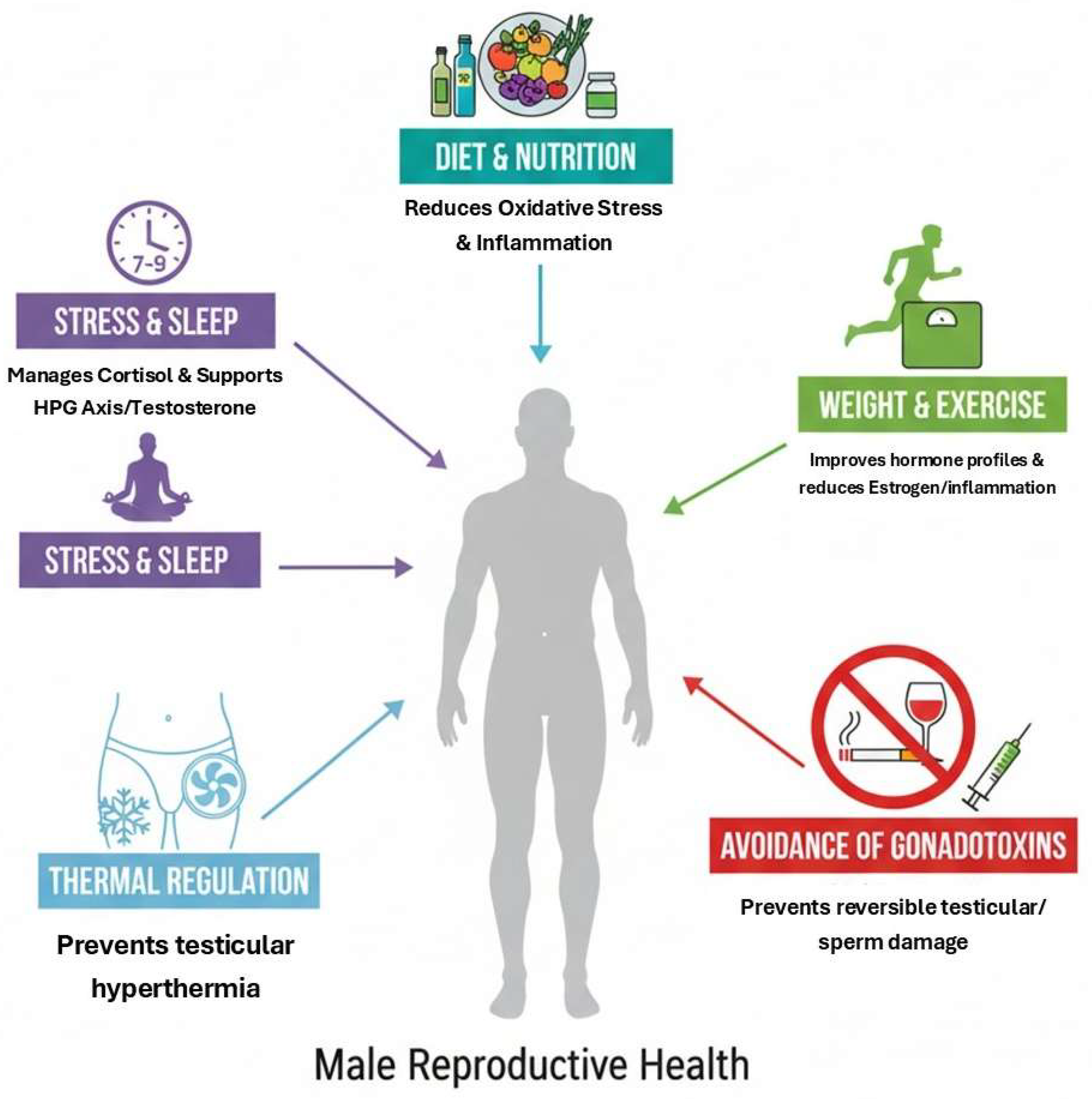
Male Infertility: A Comprehensive Review of Urological Causes and Contemporary Management

 , , , , ,
  ,
,  add
Show full author list
add
Show full author list
Abstract
1. Introduction
2. Etiological Risk Factors in Male Infertility—Genetics and Environment
3. Classification of Male Infertility
4. Key Urological Conditions Impacting Male Fertility
4.1. Varicocele
4.2. Obstructive Azoospermia
4.3. Erectile Dysfunction
4.4. Peyronie’s Disease
4.5. Other Significant Urological Conditions
5. The Role of Lifestyle Modifications in Male Fertility
5.1. Dietary Patterns and Targeted Nutritional Supplementation
5.2. Weight Management and Physical Activity
5.3. Avoidance of Gonadotoxins
5.4. Management of Stress and Sleep Hygiene
5.5. A Stepwise Clinical Protocol for Lifestyle Optimization
6. The Role of Assisted Reproductive Technologies
7. Conclusions
Author Contributions
Funding
Institutional Review Board Statement
Informed Consent Statement
Data Availability Statement
Conflicts of Interest
References
- Carson, S.A.; Kallen, A.N. Diagnosis and Management of Infertility. JAMA 2021, 326, 65–76. [Google Scholar] [CrossRef]
- Kaltsas, A.; Koumenis, A.; Stavropoulos, M.; Kratiras, Z.; Deligiannis, D.; Adamos, K.; Chrisofos, M. Male Infertility and Reduced Life Expectancy: Epidemiology, Mechanisms, and Clinical Implications. J. Clin. Med. 2025, 14, 3930. [Google Scholar] [CrossRef]
- Babakhanzadeh, E.; Nazari, M.; Ghasemifar, S.; Khodadadian, A. Some of the Factors Involved in Male Infertility: A Prospective Review. Int. J. Gen. Med. 2020, 13, 29–41. [Google Scholar] [CrossRef]
- Assidi, M. Infertility in Men: Advances towards a Comprehensive and Integrative Strategy for Precision Theranostics. Cells 2022, 11, 1711. [Google Scholar] [CrossRef]
- Hibi, H.; Sugie, M.; Ohori, T.; Sonohara, M.; Fukunaga, N.; Asada, Y. Secondary male infertility: The importance of the urological assessment for couples who desire children in later life. Nagoya J. Med. Sci. 2022, 84, 133–138. [Google Scholar] [CrossRef]
- Fallara, G.; Capogrosso, P.; Pozzi, E.; Belladelli, F.; Corsini, C.; Boeri, L.; Candela, L.; Schifano, N.; Dehò, F.; Castiglione, F.; et al. The Effect of Varicocele Treatment on Fertility in Adults: A Systematic Review and Meta-analysis of Published Prospective Trials. Eur. Urol. Focus 2023, 9, 154–161. [Google Scholar] [CrossRef]
- Hubbard, L.; Rambhatla, A.; Colpi, G.M. Differentiation between nonobstructive azoospermia and obstructive azoospermia: Then and now. Asian J. Androl. 2024, 27, 298–306. [Google Scholar] [CrossRef]
- Lotti, F.; Maggi, M. Sexual dysfunction and male infertility. Nat. Rev. Urol. 2018, 15, 287–307. [Google Scholar] [CrossRef]
- Krausz, C. Male infertility: Pathogenesis and clinical diagnosis. Best Pract. Res. Clin. Endocrinol. Metab. 2011, 25, 271–285. [Google Scholar] [CrossRef]
- Kaltsas, A.; Zachariou, A.; Dimitriadis, F.; Chrisofos, M.; Sofikitis, N. Empirical Treatments for Male Infertility: A Focus on Lifestyle Modifications and Medicines. Diseases 2024, 12, 209. [Google Scholar] [CrossRef]
- Mazzilli, R.; Rucci, C.; Vaiarelli, A.; Cimadomo, D.; Ubaldi, F.M.; Foresta, C.; Ferlin, A. Male factor infertility and assisted reproductive technologies: Indications, minimum access criteria and outcomes. J. Endocrinol. Investig. 2023, 46, 1079–1085. [Google Scholar] [CrossRef]
- Pallotti, F.; Buonacquisto, A.; Cicolani, G.; Conflitti, A.C.; Lombardo, F.; Paoli, D. Evolution of the incidence of male fertility disorders over the last decades. Mol. Aspects Med. 2025, 105, 101398. [Google Scholar] [CrossRef]
- Levine, H.; Jørgensen, N.; Martino-Andrade, A.; Mendiola, J.; Weksler-Derri, D.; Jolles, M.; Pinotti, R.; Swan, S.H. Temporal trends in sperm count: A systematic review and meta-regression analysis of samples collected globally in the 20th and 21st centuries. Hum. Reprod. Update 2023, 29, 157–176. [Google Scholar] [CrossRef]
- Jafari, H.; Mirzaiinajmabadi, K.; Roudsari, R.L.; Rakhshkhorshid, M. The factors affecting male infertility: A systematic review. Int. J. Reprod. Biomed. 2021, 19, 681–688. [Google Scholar] [CrossRef]
- Krishnan, S.; Daly, M.P.; Kipping, R.; Harrison, C. A systematic review of interventions to improve male knowledge of fertility and fertility-related risk factors. Hum. Fertil. 2024, 27, 2328066. [Google Scholar] [CrossRef]
- Chen, X.; Zhang, X.; Jiang, T.; Xu, W. Klinefelter syndrome: Etiology and clinical considerations in male infertility. Biol. Reprod. 2024, 111, 516–528. [Google Scholar] [CrossRef]
- Hawksworth, D.J.; Szafran, A.A.; Jordan, P.W.; Dobs, A.S.; Herati, A.S. Infertility in Patients with Klinefelter Syndrome: Optimal Timing for Sperm and Testicular Tissue Cryopreservation. Rev. Urol. 2018, 20, 56–62. [Google Scholar] [CrossRef]
- Pazoki, N.; Salehi, M.; Angaji, S.A.; Abdollahpour-Alitappeh, M. Elucidating the impact of Y chromosome microdeletions and altered gene expression on male fertility in assisted reproduction. Hum. Mol. Genet. 2024, 33, 1540–1553. [Google Scholar] [CrossRef]
- Kaltsas, A. Cystic Fibrosis and Male Infertility: From Genetics to Future Perspectives in Assisted Reproductive Technologies. Genes 2025, 16, 994. [Google Scholar] [CrossRef]
- de Souza, D.A.S.; Faucz, F.R.; Pereira-Ferrari, L.; Sotomaior, V.S.; Raskin, S. Congenital Bilateral Absence of the Vas Deferens as an Atypical Form of Cystic Fibrosis: Reproductive Implications and Genetic Counseling. Andrology 2018, 6, 127–135. [Google Scholar] [CrossRef]
- Miyamoto, T.; Minase, G.; Shin, T.; Ueda, H.; Okada, H.; Sengoku, K. Human male infertility and its genetic causes. Reprod. Med. Biol. 2017, 16, 81–88. [Google Scholar] [CrossRef]
- Houston, B.J.; Merriner, D.J.; Stathatos, G.G.; Nguyen, J.H.; O’Connor, A.E.; Lopes, A.M.; Conrad, D.F.; Baker, M.; Dunleavy, J.E.; O’Bryan, M.K. Genetic mutation of Cep76 results in male infertility due to abnormal sperm tail composition. Life Sci. Alliance 2024, 7, e202302452. [Google Scholar] [CrossRef] [PubMed]
- Huhtaniemi, I.; Alevizaki, M. Mutations along the hypothalamic-pituitary-gonadal axis affecting male reproduction. Reprod. Biomed. Online 2007, 15, 622–632. [Google Scholar] [CrossRef] [PubMed]
- Bhagavath, B.; Xu, N.; Ozata, M.; Rosenfield, R.L.; Bick, D.P.; Sherins, R.J.; Layman, L.C. KAL1 mutations are not a common cause of idiopathic hypogonadotrophic hypogonadism in humans. Mol. Hum. Reprod. 2007, 13, 165–170. [Google Scholar] [CrossRef]
- Layman, L.C.; Cohen, D.P.; Xie, J.; Smith, G.D. Clinical phenotype and infertility treatment in a male with hypogonadotropic hypogonadism due to mutations Ala129Asp/Arg262Gln of the gonadotropin-releasing hormone receptor. Fertil. Steril. 2002, 78, 1317–1320. [Google Scholar] [CrossRef]
- Hosseini, M.; Khalafiyan, A.; Zare, M.; Karimzadeh, H.; Bahrami, B.; Hammami, B.; Kazemi, M. Sperm epigenetics and male infertility: Unraveling the molecular puzzle. Hum. Genom. 2024, 18, 57. [Google Scholar] [CrossRef]
- Aloisi, V.; Ceretti, E.; Zani, D.; Epicoco, I.; Viola, G.C.V.; Marullo, M.; Donato, F.; Aloisio, G.; Lorenzetti, S.; Montano, L. Ambient air pollutants and sperm quality in healthy Italian young men: A multicenter prospective cohort study with repeated measures. Environ. Res. 2025, 287, 123108. [Google Scholar] [CrossRef]
- Krzastek, S.C.; Farhi, J.; Gray, M.; Smith, R.P. Impact of environmental toxin exposure on male fertility potential. Transl. Androl. Urol. 2020, 9, 2797–2813. [Google Scholar] [CrossRef]
- Wdowiak, A.; Skrzypek, M.; Stec, M.; Panasiuk, L. Effect of ionizing radiation on the male reproductive system. Ann. Agric. Environ. Med. AAEM 2019, 26, 210–216. [Google Scholar] [CrossRef] [PubMed]
- Belladelli, F.; Basran, S.; Eisenberg, M.L. Male Fertility and Physical Exercise. World J. Mens Health 2023, 41, 482–488. [Google Scholar] [CrossRef]
- Rocco, L.; Saleh, R.; Mahmutoglu, A.M.; Shah, R.; Agarwal, A. Obesity and male infertility—A tenuous relationship: Facts discerned for the busy clinicians. Arab J. Urol. 2025, 23, 169–176. [Google Scholar] [CrossRef]
- Harlev, A.; Agarwal, A.; Gunes, S.O.; Shetty, A.; du Plessis, S.S. Smoking and Male Infertility: An Evidence-Based Review. World J. Mens Health 2015, 33, 143–160. [Google Scholar] [CrossRef]
- Payne, K.S.; Mazur, D.J.; Hotaling, J.M.; Pastuszak, A.W. Cannabis and Male Fertility: A Systematic Review. J. Urol. 2019, 202, 674–681. [Google Scholar] [CrossRef] [PubMed]
- Finelli, R.; Mottola, F.; Agarwal, A. Impact of Alcohol Consumption on Male Fertility Potential: A Narrative Review. Int. J. Environ. Res. Public Health 2021, 19, 328. [Google Scholar] [CrossRef] [PubMed]
- Mulawkar, P.M.; Maheshwari, P.N.; Gauhar, V.; Agrawal, S.G.; Mohammed, T.O.; Singh, A.G.; Tak, G.R.; Shah, U.S.; Shukla, D.P.; Mamankar, D. Use of Anabolic-Androgenic Steroids and Male Fertility: A Systematic Review and Meta-analysis. J. Hum. Reprod. Sci. 2023, 16, 268–285. [Google Scholar] [CrossRef] [PubMed]
- Kaltsas, A.; Moustakli, E.; Zikopoulos, A.; Georgiou, I.; Dimitriadis, F.; Symeonidis, E.N.; Markou, E.; Michaelidis, T.M.; Tien, D.M.B.; Giannakis, I.; et al. Impact of Advanced Paternal Age on Fertility and Risks of Genetic Disorders in Offspring. Genes 2023, 14, 486. [Google Scholar] [CrossRef]
- Leslie, S.W.; Soon-Sutton, T.L.; Khan, M.A. Male Infertility. In StatPearls; StatPearls Publishing: Treasure Island, FL, USA, 2025. [Google Scholar]
- Wyrwoll, M.J.; van der Heijden, G.W.; Krausz, C.; Aston, K.I.; Kliesch, S.; McLachlan, R.; Ramos, L.; Conrad, D.F.; O’Bryan, M.K.; Veltman, J.A.; et al. Improved phenotypic classification of male infertility to promote discovery of genetic causes. Nat. Rev. Urol. 2024, 21, 91–101. [Google Scholar] [CrossRef]
- Cocuzza, M.; Alvarenga, C.; Pagani, R. The epidemiology and etiology of azoospermia. Clinics 2013, 68, 15–26. [Google Scholar] [CrossRef]
- Baker, K.; Sabanegh, E. Obstructive azoospermia: Reconstructive techniques and results. Clinics 2013, 68, 61–73. [Google Scholar] [CrossRef]
- Schuppe, H.-C.; Pilatz, A.; Hossain, H.; Diemer, T.; Wagenlehner, F.; Weidner, W. Urogenital Infection as a Risk Factor for Male Infertility. Dtsch. Ärztebl. Int. 2017, 114, 339–346. [Google Scholar] [CrossRef]
- Hubbard, L.; Rambhatla, A.; Glina, S. Nonobstructive azoospermia: An etiologic review. Asian J. Androl. 2025, 27, 279–287. [Google Scholar] [CrossRef] [PubMed]
- Sharma, A.; Minhas, S.; Dhillo, W.S.; Jayasena, C.N. Male infertility due to testicular disorders. J. Clin. Endocrinol. Metab. 2020, 106, e442–e459. [Google Scholar] [CrossRef] [PubMed]
- Salvio, G.; Balercia, G.; Kadioglu, A. Hypogonadotropic hypogonadism as a cause of NOA and its treatment. Asian J. Androl. 2024, 27, 322–329. [Google Scholar] [CrossRef]
- Aitken, R.J. The Male Is Significantly Implicated as the Cause of Unexplained Infertility. Semin. Reprod. Med. 2020, 38, 3–20. [Google Scholar] [CrossRef]
- Sadeghi, M.R. Unexplained Infertility, the Controversial Matter in Management of Infertile Couples. J. Reprod. Infertil. 2015, 16, 1–2. [Google Scholar]
- Quaas, A.; Dokras, A. Diagnosis and Treatment of Unexplained Infertility. Rev. Obstet. Gynecol. 2008, 1, 69–76. [Google Scholar]
- Raperport, C.; Desai, J.; Qureshi, D.; Rustin, E.; Balaji, A.; Chronopoulou, E.; Homburg, R.; Khan, K.S.; Bhide, P. The definition of unexplained infertility: A systematic review. BJOG Int. J. Obstet. Gynaecol. 2024, 131, 880–897. [Google Scholar] [CrossRef] [PubMed]
- Minhas, S.; Boeri, L.; Capogrosso, P.; Cocci, A.; Corona, G.; Dinkelman-Smit, M.; Falcone, M.; Jensen, C.F.; Gül, M.; Kalkanli, A.; et al. European Association of Urology Guidelines on Male Sexual and Reproductive Health: 2025 Update on Male Infertility. Eur. Urol. 2025, 87, 601–616. [Google Scholar] [CrossRef]
- Fallara, G.; Pozzi, E.; Belladelli, F.; Boeri, L.; Capogrosso, P.; Corona, G.; D’Arma, A.; Alfano, M.; Montorsi, F.; Salonia, A. A Systematic Review and Meta-analysis on the Impact of Infertility on Men’s General Health. Eur. Urol. Focus 2024, 10, 98–106. [Google Scholar] [CrossRef]
- Papanikolaou, N.; Luo, R.; Jayasena, C.N. Fertility Considerations in Hypogonadal Men. Endocrinol. Metab. Clin. N. Am. 2022, 51, 133–148. [Google Scholar] [CrossRef]
- Fink, J.; Ide, H.; Horie, S. Management of Male Fertility in Hypogonadal Patients on Testosterone Replacement Therapy. Med. Kaunas Lith. 2024, 60, 275. [Google Scholar] [CrossRef]
- Napolitano, L.; Barone, B.; Morra, S.; Celentano, G.; La Rocca, R.; Capece, M.; Morgera, V.; Turco, C.; Caputo, V.F.; Spena, G.; et al. Hypogonadism in patients with prader willi syndrome: A narrative review. Int. J. Mol. Sci. 2021, 22, 1993. [Google Scholar] [CrossRef]
- Alsaikhan, B.; Alrabeeah, K.; Delouya, G.; Zini, A. Epidemiology of varicocele. Asian J. Androl. 2016, 18, 179–181. [Google Scholar] [CrossRef] [PubMed]
- Shafi, H.; Esmaeilzadeh, S.; Delavar, M.A.; Haydari, F.H.; Mahdinejad, N.; Abedi, S. Prevalence of Varicocele among Primary and Secondary Infertile Men: Association with Occupation, Smoking and Drinking Alcohol. N. Am. J. Med. Sci. 2014, 6, 532–535. [Google Scholar] [CrossRef] [PubMed]
- Lomboy, J.R.; Coward, R.M. The Varicocele: Clinical Presentation, Evaluation, and Surgical Management. Semin. Interv. Radiol. 2016, 33, 163–169. [Google Scholar] [CrossRef]
- Kantartzi, P.D.; Goulis, C.D.; Goulis, G.D.; Papadimas, I. Male infertility and varicocele: Myths and reality. Hippokratia 2007, 11, 99–104. [Google Scholar] [PubMed]
- Jensen, C.F.S.; Østergren, P.; Dupree, J.M.; Ohl, D.A.; Sønksen, J.; Fode, M. Varicocele and male infertility. Nat. Rev. Urol. 2017, 14, 523–533. [Google Scholar] [CrossRef]
- Takács, T.; Szabó, A.; Kopa, Z. Recent Trends in the Management of Varicocele. J. Clin. Med. 2025, 14, 5445. [Google Scholar] [CrossRef]
- Colpi, G.M.; Francavilla, S.; Haidl, G.; Link, K.; Behre, H.M.; Goulis, D.G.; Krausz, C.; Giwercman, A. European Academy of Andrology guideline Management of oligo-astheno-teratozoospermia. Andrology 2018, 6, 513–524. [Google Scholar] [CrossRef]
- Valentino, M.; Bertolotto, M.; Derchi, L.; Pavlica, P. Children and adults varicocele: Diagnostic issues and therapeutical strategies. J. Ultrasound 2014, 17, 185–193. [Google Scholar] [CrossRef]
- Franco, A.; Proietti, F.; Palombi, V.; Savarese, G.; Guidotti, M.; Leonardo, C.; Ferro, F.; Manna, C.; Franco, G. Varicocele: To Treat or Not to Treat? J. Clin. Med. 2023, 12, 4062. [Google Scholar] [CrossRef]
- Chan, P. Management options of varicoceles. Indian J. Urol. IJU J. Urol. Soc. India 2011, 27, 65–73. [Google Scholar] [CrossRef] [PubMed]
- Napolitano, L.; Pandolfo, S.D.; Aveta, A.; Cirigliano, L.; Martino, R.; Mattiello, G.; Celentano, G.; Barone, B.; Rosati, C.; La Rocca, R.; et al. The Management of Clinical Varicocele: Robotic Surgery Approach. Front. Reprod. Health 2022, 4, 791330. [Google Scholar] [CrossRef] [PubMed]
- Wosnitzer, M.S.; Goldstein, M. Obstructive azoospermia. Urol. Clin. N. Am. 2014, 41, 83–95. [Google Scholar] [CrossRef]
- Schlegel, P.N. Causes of azoospermia and their management. Reprod. Fertil. Dev. 2004, 16, 561–572. [Google Scholar] [CrossRef] [PubMed]
- Hamada, A.J.; Esteves, S.C.; Agarwal, A. A comprehensive review of genetics and genetic testing in azoospermia. Clinics 2013, 68, 39–60. [Google Scholar] [CrossRef]
- Lenk, S.; Oesterwitz, H. Diagnosis and treatment of obstructive azoospermia. Acta Chir. Hung. 1994, 34, 183–188. [Google Scholar]
- Andrade, D.L.; Viana, M.C.; Esteves, S.C. Differential Diagnosis of Azoospermia in Men with Infertility. J. Clin. Med. 2021, 10, 3144. [Google Scholar] [CrossRef]
- Shi, F.; Liu, Y.; Chen, Z.; Li, D.; Yao, Y.; Zhou, M.; Zhuo, Y.; Ma, X.; Cao, D. An integrated approach for improving clinical management of non-obstructive azoospermia. Andrology 2024, 12, 1312–1323. [Google Scholar] [CrossRef]
- Practice Committee of the American Society for Reproductive Medicine in collaboration with the Society for Male Reproduction and Urology. The management of obstructive azoospermia: A committee opinion. Fertil. Steril. 2019, 111, 873–880. [Google Scholar] [CrossRef]
- Bernie, A.M.; Ramasamy, R.; Stember, D.S.; Stahl, P.J. Microsurgical epididymal sperm aspiration: Indications, techniques and outcomes. Asian J. Androl. 2013, 15, 40–43. [Google Scholar] [CrossRef] [PubMed]
- Ogouma, L.; Berthaut, I.; Lévy, R.; Hamid, R.H.; Prades, M.; Audouin, M.; Sermondade, N.; Dupont, C. Testicular sperm extraction (TESE) outcomes in the context of malignant disease: A systematic review. Asian J. Androl. 2022, 24, 584–590. [Google Scholar] [CrossRef]
- Zheng, J.-F.; Chen, X.-B.; Zhao, L.-W.; Gao, M.-Z.; Peng, J.; Qu, X.-Q.; Shi, H.-J.; Jin, X.-L. ICSI treatment of severe male infertility can achieve prospective embryo quality compared with IVF of fertile donor sperm on sibling oocytes. Asian J. Androl. 2015, 17, 845–849. [Google Scholar] [CrossRef]
- Mazzilli, F. Erectile Dysfunction: Causes, Diagnosis and Treatment: An Update. J. Clin. Med. 2022, 11, 6429. [Google Scholar] [CrossRef] [PubMed]
- Liu, Y.; Wang, Y.; Pu, Z.; Wang, Y.; Zhang, Y.; Dong, C.; Zeng, Y.; Zhou, S. Sexual Dysfunction in Infertile Men: A Systematic Review and Meta-Analysis. Sex. Med. 2022, 10, 100528. [Google Scholar] [CrossRef]
- Ma, J.; Zhang, Y.; Bao, B.; Chen, W.; Li, H.; Wang, B. Prevalence and associated factors of erectile dysfunction, psychological disorders, and sexual performance in primary vs. secondary infertility men. Reprod. Biol. Endocrinol. RBE 2021, 19, 43. [Google Scholar] [CrossRef]
- Lowy, M.; Ramanathan, V. Erectile dysfunction: Causes, assessment and management options. Aust. Prescr. 2022, 45, 159–161. [Google Scholar] [CrossRef]
- Cantone, E.; Massanova, M.; Crocetto, F.; Barone, B.; Esposito, F.; Arcaniolo, D.; Corlianò, F.; Romano, L.; Motta, G.; Celia, A. The relationship between obstructive sleep apnoea and erectile dysfunction: An underdiagnosed link? A prospective cross-sectional study. Andrologia 2022, 54, e14504. [Google Scholar] [CrossRef]
- Romano, L.; Zagari, R.M.; Arcaniolo, D.; Crocetto, F.; Spirito, L.; Sciorio, C.; Gravina, A.G.; Dajti, E.; Barone, B.; La Rocca, R.; et al. Sexual dysfunction in gastroenterological patients: Do gastroenterologists care enough? A nationwide survey from the Italian Society of Gastroenterology (SIGE). Dig. Liver Dis. 2022, 54, 1494–1501. [Google Scholar] [CrossRef]
- Ong, Y.N.; Tan, Y.G.; Handayani, D.; How, C.H. Erectile dysfunction: Assessment and management in primary care. Singapore Med. J. 2024, 65, 190–194. [Google Scholar] [CrossRef] [PubMed]
- Argiolas, A.; Argiolas, F.M.; Argiolas, G.; Melis, M.R. Erectile Dysfunction: Treatments, Advances and New Therapeutic Strategies. Brain Sci. 2023, 13, 802. [Google Scholar] [CrossRef]
- Lee, H.; Hwang, E.C.; Oh, C.K.; Lee, S.; Yu, H.S.; Lim, J.S.; Kim, H.W.; Walsh, T.; Kim, M.H.; Jung, J.H.; et al. Testosterone replacement in men with sexual dysfunction. Cochrane Database Syst. Rev. 2024, 1, CD013071. [Google Scholar] [CrossRef]
- Rambhatla, A.; Mills, J.N.; Rajfer, J. The Role of Estrogen Modulators in Male Hypogonadism and Infertility. Rev. Urol. 2016, 18, 66–72. [Google Scholar] [CrossRef] [PubMed]
- Köhler, T.S.; Munarriz, R.; Parker, J.; Bettocchi, C.; Hatzichristodoulou, G.; Martins, F.E.; Moncada, I.; Osmonov, D.; Park, S.H.; Ralph, D.; et al. Penile prosthesis for erectile dysfunction: Recommendations from the 5th International Consultation on Sexual Medicine. Sex. Med. Rev. 2025, 13, 144–171. [Google Scholar] [CrossRef] [PubMed]
- Hoyland, K.; Vasdev, N.; Adshead, J. The Use of Vacuum Erection Devices in Erectile Dysfunction After Radical Prostatectomy. Rev. Urol. 2013, 15, 67–71. [Google Scholar]
- Dewitte, M.; Bettocchi, C.; Carvalho, J.; Corona, G.; Flink, I.; Limoncin, E.; Pascoal, P.; Reisman, Y.; Van Lankveld, J. A Psychosocial Approach to Erectile Dysfunction: Position Statements from the European Society of Sexual Medicine (ESSM). Sex. Med. 2021, 9, 100434. [Google Scholar] [CrossRef]
- Al-Thakafi, S.; Al-Hathal, N. Peyronie’s disease: A literature review on epidemiology, genetics, pathophysiology, diagnosis and work-up. Transl. Androl. Urol. 2016, 5, 280–289. [Google Scholar] [CrossRef]
- Hatfield, B.S.; King, C.R.; Udager, A.M.; Williamson, S.R.; Gandhi, J.S.; Amin, M.B.; Spruill, L.; Lindsey, K.G.; Pillappa, R.; Roseman, J.T.; et al. Peyronie disease: A clinicopathologic study of 71 cases with emphasis on histopathologic patterns and prevalent metaplastic ossification. Hum. Pathol. 2020, 104, 9–17. [Google Scholar] [CrossRef]
- Crocetto, F.; Barone, B.; Manfredi, C.; Trama, F.; Romano, L.; Romeo, M.; Russo, G.; Sicignano, E.; Persico, F.; Aveta, A.; et al. Are insulin resistance and non-alcoholic fatty liver disease associated with peyronie’s disease? A pilot study. J. Physiol. Pharmacol. 2022, 73, 53–62. [Google Scholar] [CrossRef]
- Crocetto, F.; Imbimbo, C.; Barone, B.; Turchino, D.; Bracale, U.M.; Peluso, A.; Panagrosso, M.; Falcone, A.; Mirto, B.F.; De Luca, L.; et al. Which inflammatory marker, between systemic immune-inflammation index and neutrophil to eosinophil ratio, is associated with Peyronie’s disease and are there any implications for a better understanding of its mechanisms? Basic Clin. Androl. 2023, 33, 38. [Google Scholar] [CrossRef]
- Illiano, E.; Trama, F.; Mancini, V.; Ruffo, A.; Romeo, G.; Riccardo, F.; Fabi, C.; Carrieri, G.; Crocetto, F.; Iacono, F.; et al. Peyronie’s disease may negatively impact the sexual experience of a couple and female sexual function: A single center study. Transl. Androl. Urol. 2021, 10, 555–562. [Google Scholar] [CrossRef]
- Nelson, C.J.; Mulhall, J.P. Psychological impact of Peyronie’s disease: A review. J. Sex. Med. 2013, 10, 653–660. [Google Scholar] [CrossRef]
- Thach, S.; Pommier, B.; Soulier, V. The impact of Peyronie’s disease on couples. Fr. J. Urol. 2024, 34, 102595. [Google Scholar] [CrossRef]
- Kim, D.S.; Yang, H.J.; Jeong, H.C.; Moon, K.H.; Lee, D.S.; Song, S.H.; Lee, W.K. Korean Society for Sexual Medicine and Andrology Clinical Practice Guideline Committee Diagnosis and Management of Peyronie’s Disease: A Clinical Consensus Statement and Recommendations from the Korean Society for Sexual Medicine and Andrology. World J. Mens Health 2025, 43, 50–59. [Google Scholar] [CrossRef] [PubMed]
- Calace, F.P.; Napolitano, L.; Langella, N.A.; Barone, B.; Trama, F. Peyronie’s disease: Where are we at? J. Basic Clin. Physiol. Pharmacol. 2023, 34, 1–4. [Google Scholar] [CrossRef]
- Brimley, S.C.; Yafi, F.A.; Greenberg, J.; Hellstrom, W.J.G.; Tue Nguyen, H.M.; Hatzichristodoulou, G. Review of Management Options for Active-Phase Peyronie’s Disease. Sex. Med. Rev. 2019, 7, 329–337. [Google Scholar] [CrossRef]
- Almeida, J.L.; Felício, J.; Martins, F.E. Surgical Planning and Strategies for Peyronie’s Disease. Sex. Med. Rev. 2021, 9, 478–487. [Google Scholar] [CrossRef] [PubMed]
- Kadıoğlu, A.; Salabaş, E.; Özmez, A.; Ural, A.F.; Yücel, Ö.B.; Ortaç, M.; Pazır, Y.; Ermeç, B. Peyronie’s disease surgery: Surgical outcomes of 268 cases. Turk. J. Urol. 2018, 44, 10–15. [Google Scholar] [CrossRef]
- Fawzy, F.; Hussein, A.; Eid, M.M.; Kashash, A.M.E.; Salem, H.K. Cryptorchidism and Fertility. Clin. Med. Insights Reprod. Health 2015, 9, 39. [Google Scholar] [CrossRef] [PubMed]
- Henriksen, A.L.; Poulsen, I.-M.; Sørensen, F.; Fedder, J. Paternity After Treatment of Cryptorchidism: A Systematic Review. J. Clin. Med. 2025, 14, 4768. [Google Scholar] [CrossRef]
- Jacobsen, F.M.; Rudlang, T.M.; Fode, M.; Østergren, P.B.; Sønksen, J.; Ohl, D.A.; Jensen, C.F.S. The Impact of Testicular Torsion on Testicular Function. World J. Mens Health 2020, 38, 298–307. [Google Scholar] [CrossRef]
- Zhang, X.; Zhang, J.; Cai, Z.; Wang, X.; Lu, W.; Li, H. Effect of unilateral testicular torsion at different ages on male fertility. J. Int. Med. Res. 2020, 48, 0300060520918792. [Google Scholar] [CrossRef]
- Leathersich, S.; Hart, R.J. Immune infertility in men. Fertil. Steril. 2022, 117, 1121–1131. [Google Scholar] [CrossRef] [PubMed]
- Mukherjee, A.G.; Gopalakrishnan, A.V. Anti-sperm Antibodies as an Increasing Threat to Male Fertility: Immunological Insights, Diagnostic and Therapeutic Strategies. Reprod. Sci. 2024, 31, 3303–3322. [Google Scholar] [CrossRef] [PubMed]
- Silva, A.F.; Ramalho-Santos, J.; Amaral, S. The impact of antisperm antibodies on human male reproductive function: An update. Reproduction 2021, 162, R55–R71. [Google Scholar] [CrossRef]
- Qinyu, Z.; Jitao, S.; Yang, X.; Yue, D.; Hao, Z. Chronic prostatitis and male infertility: Association mechanism and research progress. World J. Urol. 2025, 43, 599. [Google Scholar] [CrossRef] [PubMed]
- Crocetto, F.; Barone, B.; De Luca, L.; Creta, M. Granulomatous prostatitis: A challenging differential diagnosis to take into consideration. Future Oncol. 2020, 16, 805–806. [Google Scholar] [CrossRef]
- Haidl, G.; Allam, J.P.; Schuppe, H.-C. Chronic epididymitis: Impact on semen parameters and therapeutic options. Andrologia 2008, 40, 92–96. [Google Scholar] [CrossRef]
- Elizagaray, M.L.; Barrachina, F.; Avenatti, M.C.; Bastepe, I.; Chen, A.; Odriozola, A.; Ukairo, O.; Da Ros, V.G.; Ottino, K.; Subiran, N.; et al. Chronic inflammation drives epididymal tertiary lymphoid structure formation and autoimmune fertility disorders in mice. Nat. Commun. 2025, 16, 8742. [Google Scholar] [CrossRef]
- Zhao, H.; Yu, C.; He, C.; Mei, C.; Liao, A.; Huang, D. The Immune Characteristics of the Epididymis and the Immune Pathway of the Epididymitis Caused by Different Pathogens. Front. Immunol. 2020, 11, 2115. [Google Scholar] [CrossRef]
- Priadko, K.; Romano, L.; Olivieri, S.; Romeo, M.; Barone, B.; Sciorio, C.; Spirito, L.; Morelli, M.; Crocetto, F.; Arcaniolo, D.; et al. Intestinal microbiota, intestinal permeability and the urogenital tract: Is there a pathophysiological link? J. Physiol. Pharmacol. 2022, 73, 575–585. [Google Scholar] [CrossRef]
- Napolitano, L.; Barone, B.; Crocetto, F.; Capece, M.; La Rocca, R. The COVID-19 pandemic: Is it a wolf consuming fertility? Int. J. Fertil. Steril. 2020, 14, 159–160. [Google Scholar] [CrossRef]
- Cole, R.M.; Andino, J.J.; Daignault-Newton, S.; Quallich, S.A.; Hadj-Moussa, M. Epididymectomy Is an Effective Treatment for Chronic Epididymal Pain. Urol. Pract. 2024, 11, 409–415. [Google Scholar] [CrossRef]
- Nickel, J.C. Chronic Epididymitis: A Practical Approach to Understanding and Managing a Difficult Urologic Enigma. Rev. Urol. 2003, 5, 209–215. [Google Scholar]
- Shah, R. Surgical sperm retrieval: Techniques and their indications. Indian J. Urol. IJU J. Urol. Soc. India 2011, 27, 102–109. [Google Scholar] [CrossRef]
- Konstantinidis, C.; Zachariou, A.; Evgeni, E.; Çayan, S.; Boeri, L.; Agarwal, A. Recent Advances in the Diagnosis and Management of Retrograde Ejaculation: A Narrative Review. Diagnostics 2025, 15, 726. [Google Scholar] [CrossRef]
- Meng, X.; Fan, L.; Wang, T.; Wang, S.; Wang, Z.; Liu, J. Electroejaculation combined with assisted reproductive technology in psychogenic anejaculation patients refractory to penile vibratory stimulation. Transl. Androl. Urol. 2018, 7, S17–S22. [Google Scholar] [CrossRef] [PubMed]
- Hu, J.; Nagao, K.; Tai, T.; Kobayashi, H.; Nakajima, K. Randomized crossover trial of amoxapine versus vitamin B12 for retrograde ejaculation. Int. Braz. J. Urol. Off. J. Braz. Soc. Urol. 2017, 43, 496–504. [Google Scholar] [CrossRef] [PubMed]
- Stavros, S.; Potiris, A.; Molopodi, E.; Mavrogianni, D.; Zikopoulos, A.; Louis, K.; Karampitsakos, T.; Nazou, E.; Sioutis, D.; Christodoulaki, C.; et al. Sperm DNA Fragmentation: Unraveling Its Imperative Impact on Male Infertility Based on Recent Evidence. Int. J. Mol. Sci. 2024, 25, 10167. [Google Scholar] [CrossRef] [PubMed]
- Yazdanpanah Ghadikolaei, P.; Ghaleno, L.R.; Vesali, S.; Janzamin, E.; Gilani, M.A.S.; Sajadi, H.; Dizaj, A.V.T.; Shahverdi, A.; Drevet, J.R.; Moghadam Masouleh, A.A. Epidemiology of sperm DNA fragmentation in a retrospective cohort of 1191 men. Andrology 2023, 11, 1663–1672. [Google Scholar] [CrossRef]
- Andrabi, S.W.; Ara, A.; Saharan, A.; Jaffar, M.; Gugnani, N.; Esteves, S.C. Sperm DNA Fragmentation: Causes, evaluation and management in male infertility. JBRA Assist. Reprod. 2024, 28, 306–319. [Google Scholar] [CrossRef]
- Cho, C.-L.; Agarwal, A.; Majzoub, A.; Esteves, S.C. Clinical utility of sperm DNA fragmentation testing: Concise practice recommendations. Transl. Androl. Urol. 2017, 6, S366–S373. [Google Scholar] [CrossRef]
- Alahmar, A.T.; Singh, R.; Palani, A. Sperm DNA Fragmentation in Reproductive Medicine: A Review. J. Hum. Reprod. Sci. 2022, 15, 206–218. [Google Scholar] [CrossRef]
- Mendes, S.; Sá, R.; Magalhães, M.; Marques, F.; Sousa, M.; Silva, E. The Role of ROS as a Double-Edged Sword in (In)Fertility: The Impact of Cancer Treatment. Cancers 2022, 14, 1585. [Google Scholar] [CrossRef] [PubMed]
- Guerriero, G.; Trocchia, S.; Abdel-Gawad, F.K.; Ciarcia, G. Roles of Reactive Oxygen Species in the Spermatogenesis Regulation. Front. Endocrinol. 2014, 5, 56. [Google Scholar] [CrossRef] [PubMed]
- Sharifi-Rad, M.; Anil Kumar, N.V.; Zucca, P.; Varoni, E.M.; Dini, L.; Panzarini, E.; Rajkovic, J.; Tsouh Fokou, P.V.; Azzini, E.; Peluso, I.; et al. Lifestyle, Oxidative Stress, and Antioxidants: Back and Forth in the Pathophysiology of Chronic Diseases. Front. Physiol. 2020, 11, 694. [Google Scholar] [CrossRef] [PubMed]
- Carraro, E.; Schilirò, T.; Biorci, F.; Romanazzi, V.; Degan, R.; Buonocore, D.; Verri, M.; Dossena, M.; Bonetta, S.; Gilli, G.; et al. Physical Activity, Lifestyle Factors and Oxidative Stress in Middle Age Healthy Subjects. Int. J. Environ. Res. Public Health 2018, 15, 1152. [Google Scholar] [CrossRef]
- Wang, Y.; Fu, X.; Li, H. Mechanisms of oxidative stress-induced sperm dysfunction. Front. Endocrinol. 2025, 16, 1520835. [Google Scholar] [CrossRef]
- Dutta, S.; Majzoub, A.; Agarwal, A. Oxidative stress and sperm function: A systematic review on evaluation and management. Arab J. Urol. 2019, 17, 87–97. [Google Scholar] [CrossRef]
- Borges, E.; Zanetti, B.F.; Setti, A.S.; Braga, D.P.d.A.F.; Provenza, R.R.; Iaconelli, A. Sperm DNA fragmentation is correlated with poor embryo development, lower implantation rate, and higher miscarriage rate in reproductive cycles of non-male factor infertility. Fertil. Steril. 2019, 112, 483–490. [Google Scholar] [CrossRef]
- Machałowski, T.; Machałowska, J.; Gill, K.; Ziętek, M.; Piasecka, M.; Mrugacz, G.; Ciepiela, P. Sperm DNA Fragmentation Impairs Early Embryo Development but Is Not Predictive of Pregnancy Outcomes: Insights from 870 ICSI Cycles. Int. J. Mol. Sci. 2025, 26, 7923. [Google Scholar] [CrossRef] [PubMed]
- Rotimi, D.E.; Singh, S.K. Implications of lifestyle factors on male reproductive health. JBRA Assist. Reprod. 2024, 28, 320–330. [Google Scholar] [CrossRef]
- Yazici, S.; Del Biondo, D.; Napodano, G.; Grillo, M.; Calace, F.P.; Prezioso, D.; Crocetto, F.; Barone, B. Risk Factors for Testicular Cancer: Environment, Genes and Infections—Is It All? Med. Lith. 2023, 59, 724. [Google Scholar] [CrossRef]
- Salonia, A.; Capogrosso, P.; Boeri, L.; Cocci, A.; Corona, G.; Dinkelman-Smit, M.; Falcone, M.; Jensen, C.F.; Gül, M.; Kalkanli, A.; et al. European Association of Urology Guidelines on Male Sexual and Reproductive Health: 2025 Update on Male Hypogonadism, Erectile Dysfunction, Premature Ejaculation, and Peyronie’s Disease. Eur. Urol. 2025, 88, 76–102. [Google Scholar] [CrossRef]
- Fusco, G.M.; Cirillo, L.; Abate, M.; Morra, S.; Morgera, V.; Barone, B.; Crocetto, F.; Cacace, G.; Di Bello, F.; Spirito, L.; et al. Male infertility, what Mobile Health Applications “know”: Quality analysis and adherence to European Association of Urology Guidelines. Arch. Ital. Urol. E Androl. 2022, 94, 470–475. [Google Scholar] [CrossRef]
- Lahimer, M.; Abou Diwan, M.; Montjean, D.; Cabry, R.; Bach, V.; Ajina, M.; Ben Ali, H.; Benkhalifa, M.; Khorsi-Cauet, H. Endocrine disrupting chemicals and male fertility: From physiological to molecular effects. Front. Public Health 2023, 11, 1232646. [Google Scholar] [CrossRef]
- Walke, G.; Gaurkar, S.S.; Prasad, R.; Lohakare, T.; Wanjari, M. The Impact of Oxidative Stress on Male Reproductive Function: Exploring the Role of Antioxidant Supplementation. Cureus 2023, 15, e42583. [Google Scholar] [CrossRef]
- Bocu, K.; Boeri, L.; Mahmutoglu, A.M.; Vogiatzi, P. Can lifestyle changes significantly improve male fertility: A narrative review? Arab J. Urol. Int. J. 2024, 23, 190–200. [Google Scholar] [CrossRef] [PubMed]
- Skoracka, K.; Eder, P.; Łykowska-Szuber, L.; Dobrowolska, A.; Krela-Kaźmierczak, I. Diet and Nutritional Factors in Male (In)fertility—Underestimated Factors. J. Clin. Med. 2020, 9, 1400. [Google Scholar] [CrossRef] [PubMed]
- Almujaydil, M.S. The Role of Dietary Nutrients in Male Infertility: A Review. Life 2023, 13, 519. [Google Scholar] [CrossRef]
- Petre, G.C.; Francini-Pesenti, F.; Di Nisio, A.; De Toni, L.; Grande, G.; Mingardi, A.; Cusmano, A.; Spinella, P.; Ferlin, A.; Garolla, A. Observational Cross-Sectional Study on Mediterranean Diet and Sperm Parameters. Nutrients 2023, 15, 4989. [Google Scholar] [CrossRef]
- Romano, L.; Fonticelli, M.; Miranda, A.; Priadko, K.; Napolitano, L.; Crocetto, F.; Barone, B.; Arcaniolo, D.; Spirito, L.; Manfredi, C.; et al. Sexual dysfunctions in inflammatory bowel disease: Role of Mediterranean diet and quality of life. Andrology 2025, 13, 1693–1701. [Google Scholar] [CrossRef]
- Michaelsen, M.P.; Poulsen, M.; Bjerregaard, A.A.; Borgstrøm, M.; Poulsen, L.K.; Chortsen, M.B.; Henriksen, S.G.; Kesmodel, U.S. The Effect of Dietary Supplements on Male Infertility in Terms of Pregnancy, Live Birth, and Sperm Parameters: A Systematic Review and Meta-Analysis. Nutrients 2025, 17, 1710. [Google Scholar] [CrossRef] [PubMed]
- Ghewade, P.; Vagha, S.; Ghewade, B.; Gadkari, P. Role of Dietary Antioxidant Supplements in Male Infertility: A Review. Cureus 2024, 16, e61951. [Google Scholar] [CrossRef] [PubMed]
- Napolitano, L.; Cirillo, L.; Maria Fusco, G.; Abate, M.; Morgera, V.; Cacace, G.; Celentano, G.; Barone, B.; Spirito, L.; Mirone, V.; et al. Natural treatments for erectile dysfunction: A focus on mobile health applications. Arch. Ital. Urol. E Androl. 2022, 94, 373–374. [Google Scholar] [CrossRef]
- Garolla, A.; Petre, G.C.; Francini-Pesenti, F.; De Toni, L.; Vitagliano, A.; Di Nisio, A.; Foresta, C. Dietary Supplements for Male Infertility: A Critical Evaluation of Their Composition. Nutrients 2020, 12, 1472. [Google Scholar] [CrossRef]
- Baydilli, N.; Selvi, İ.; Akınsal, E.C.; Zararsız, G.E.; Ekmekçioğlu, O. How does body mass index affect semen parameters and reproductive hormones in infertile males? Turk. J. Urol. 2020, 46, 101–107. [Google Scholar] [CrossRef]
- Barbouni, K.; Jotautis, V.; Metallinou, D.; Diamanti, A.; Orovou, E.; Liepinaitienė, A.; Nikolaidis, P.; Karampas, G.; Sarantaki, A. When Weight Matters: How Obesity Impacts Reproductive Health and Pregnancy-A Systematic Review. Curr. Obes. Rep. 2025, 14, 37. [Google Scholar] [CrossRef]
- Andersen, E.; Juhl, C.R.; Kjøller, E.T.; Lundgren, J.R.; Janus, C.; Dehestani, Y.; Saupstad, M.; Ingerslev, L.R.; Duun, O.M.; Jensen, S.B.K.; et al. Sperm count is increased by diet-induced weight loss and maintained by exercise or GLP-1 analogue treatment: A randomized controlled trial. Hum. Reprod. 2022, 37, 1414–1422. [Google Scholar] [CrossRef] [PubMed]
- Zańko, A.; Pawłowski, M.; Milewski, R. The Impact of Physical Exercise on Male Fertility Through Its Association with Various Processes and Aspects of Human Biology. J. Clin. Med. 2025, 14, 3442. [Google Scholar] [CrossRef]
- Adelowo, O.E.; Akindele, B.M.; Adegbola, C.A.; Oyedokun, P.A.; Akhigbe, T.M.; Akhigbe, R.E. Unraveling the complexity of the impact of physical exercise on male reproductive functions: A review of both sides of a coin. Front. Physiol. 2024, 15, 1492771. [Google Scholar] [CrossRef]
- Dai, J.-B.; Wang, Z.-X.; Qiao, Z.-D. The hazardous effects of tobacco smoking on male fertility. Asian J. Androl. 2015, 17, 954–960. [Google Scholar] [CrossRef]
- Ragheb, A.; Abdelbary, A.; Massoud, A.; Abd Elkhalek, M.; Elbatanony, A. Evaluating the effect of smoking and its cessation on semen parameters. Reprod. Fertil. 2025, 6, e240135. [Google Scholar] [CrossRef]
- Nguyen-Thanh, T.; Hoang-Thi, A.-P.; Anh Thu, D.T. Investigating the association between alcohol intake and male reproductive function: A current meta-analysis. Heliyon 2023, 9, e15723. [Google Scholar] [CrossRef]
- Rosati, L.; Chianese, T.; Mileo, A.; De Falco, M.; Capaldo, A. Cocaine Effects on Reproductive Behavior and Fertility: An Overview. Vet. Sci. 2023, 10, 484. [Google Scholar] [CrossRef] [PubMed]
- Tatem, A.J.; Beilan, J.; Kovac, J.R.; Lipshultz, L.I. Management of Anabolic Steroid-Induced Infertility: Novel Strategies for Fertility Maintenance and Recovery. World J. Mens Health 2020, 38, 141–150. [Google Scholar] [CrossRef]
- Pérez-Crespo, M.; Pintado, B.; Gutiérrez-Adán, A. Scrotal heat stress effects on sperm viability, sperm DNA integrity, and the offspring sex ratio in mice. Mol. Reprod. Dev. 2008, 75, 40–47. [Google Scholar] [CrossRef] [PubMed]
- He, Y.; Wang, B.; Huang, J.; Zhang, D.; Yuan, Y. Environmental pollutants and male infertility: Effects on CatSper. Ecotoxicol. Environ. Saf. 2024, 277, 116341. [Google Scholar] [CrossRef]
- Crocetto, F.; Risolo, R.; Colapietro, R.; Bellavita, R.; Barone, B.; Ballini, A.; Arrigoni, R.; Caputo, V.F.; Luca, G.; Grieco, P.; et al. Heavy Metal Pollution and Male Fertility: An Overview on Adverse Biological Effects and Socio-Economic Implications. Endocr. Metab. Immune Disord.-Drug Targets 2023, 23, 129–146. [Google Scholar] [CrossRef] [PubMed]
- Nargund, V.H. Effects of psychological stress on male fertility. Nat. Rev. Urol. 2015, 12, 373–382. [Google Scholar] [CrossRef]
- Cavalhas-Almeida, C.; Cristo, M.I.; Cavadas, C.; Ramalho-Santos, J.; Álvaro, A.R.; Amaral, S. Sleep and male (In)Fertility: A comprehensive overview. Sleep Med. Rev. 2025, 81, 102080. [Google Scholar] [CrossRef]
- Agarwal, A.; Roychoudhury, S.; Bjugstad, K.B.; Cho, C.-L. Oxidation-reduction potential of semen: What is its role in the treatment of male infertility? Ther. Adv. Urol. 2016, 8, 302–318. [Google Scholar] [CrossRef] [PubMed]
- Zurera-Egea, C.; Mateo, S.; Novo, S.; Asensio, M.; Boada, M.; Antich, M.; Rovira, S.; Sarrate, Z.; Blanco, J.; Anton, E. The Utility of Sperm DNA Fragmentation as a Diagnostic Tool for Male Infertility and Its Predictive Value for Assisted Reproductive Technology Outcomes. Int. J. Mol. Sci. 2025, 26, 6314. [Google Scholar] [CrossRef]
- Benidir, T.; Remondini, T.; Lau, S.; Jarvi, K.A. Evaluation of patient compliance with the use of scrotal cooling devices. FS Rep. 2021, 2, 289–295. [Google Scholar] [CrossRef] [PubMed]
- Zhou, R.; Zhang, M.; Ge, C.; Xiong, Y.; Wang, M.; Wu, K.; Zhang, Y. Association of male sleep quality with semen parameters and pregnancy outcomes in infertile couple. Basic Clin. Androl. 2025, 35, 37. [Google Scholar] [CrossRef]
- Ilacqua, A.; Izzo, G.; Emerenziani, G.P.; Baldari, C.; Aversa, A. Lifestyle and fertility: The influence of stress and quality of life on male fertility. Reprod. Biol. Endocrinol. RBE 2018, 16, 115. [Google Scholar] [CrossRef]
- Faa, G.; Manchia, M.; Fanos, V. Assisted Reproductive Technologies: A New Player in the Foetal Programming of Childhood and Adult Diseases? Pediatr. Rep. 2024, 16, 329–338. [Google Scholar] [CrossRef] [PubMed]
- Allahbadia, G.N. Intrauterine Insemination: Fundamentals Revisited. J. Obstet. Gynaecol. India 2017, 67, 385–392. [Google Scholar] [CrossRef]
- Singh, K.; Dewani, D. Recent Advancements in In Vitro Fertilisation. Cureus 2022, 14, e30116. [Google Scholar] [CrossRef] [PubMed]
- Chamayou, S.; Giacone, F.; Cannarella, R.; Guglielmino, A. What Does Intracytoplasmic Sperm Injection Change in Embryonic Development? The Spermatozoon Contribution. J. Clin. Med. 2023, 12, 671. [Google Scholar] [CrossRef]
- Romano, M.; Cirillo, F.; Ravaioli, N.; Morenghi, E.; Negri, L.; Ozgur, B.; Albani, E.; Levi-Setti, P.E. Reproductive and obstetric outcomes in TESE-ICSI cycles: A comparison between obstructive and non-obstructive azoospermia. Andrology 2025, 13, 159–168. [Google Scholar] [CrossRef] [PubMed]
- Hibi, H.; Sonohara, M.; Sugie, M.; Fukunaga, N.; Asada, Y. Microscopic Epididymal Sperm Aspiration (MESA) Should be Employed Over Testicular Sperm Extraction (TESE) Sperm Retrieval Surgery for Obstructive Azoospermia (OA). Cureus 2023, 15, e40659. [Google Scholar] [CrossRef] [PubMed]
- Compans, M.-C.; Beaujouan, E.; Skirbekk, V. Time to birth for spontaneous and ART births among infertile groups. BMC Womens Health 2025, 25, 521. [Google Scholar] [CrossRef] [PubMed]


| Category | Examples | Mechanism of Impact on Fertility |
|---|---|---|
| Genetic Factors | ||
| Chromosomal | Klinefelter Syndrome (47, XXY) | Causes testicular fibrosis and primary testicular failure (azoospermia). |
| Monogenic | CFTR mutations (CBAVD), Y-chromosome microdeletions (AZF regions) | Causes obstructive azoospermia or disrupts specific stages of spermatogenesis. |
| Epigenetic | Altered DNA methylation/histone modification | Paternal lifestyle can cause transmissible changes affecting embryo/offspring health. |
| Environmental & Lifestyle Factors | ||
| Endocrine Disruptors | Pesticides, Phthalates | Mimic or block hormones, disrupting the hypothalamic–pituitary–gonadal axis |
| Physical Hazards | Heat, Ionizing Radiation | Directly damages spermatogonia, impairing sperm production |
| Lifestyle | Obesity, Smoking, Excessive Alcohol, Anabolic Steroids | Causes oxidative stress, hormonal suppression, inflammation and direct sperm damage. |
| Paternal Age | Advanced Age | Gradual decline in semen quality, increased DNA fragmentation and de novo mutations |
| Condition | Prevalence | Pathophysiology | Diagnostic Workup |
|---|---|---|---|
| Varicocele | 15–20% general population; 35–40% primary infertility; 80% secondary infertility | Testicular hyperthermia, venous stasis, hypoxia and oxidative stress damaging sperm | Physical exam, scrotal Doppler ultrasound |
| Obstructive Azoospermia | 40% of azoospermia cases | Physical blockage preventing sperm passage despite normal production. | Azoospermia on semen analysis, normal testicular volume, normal FSH |
| Erectile Dysfunction | >50% of men aged 40–70 | Mechanical barrier to conception. Multifactorial etiology (vascular, neurological, hormonal, psychological) | Medical history, sexual history, IIEF questionnaire, physical exam, hormonal profile |
| Peyronie’s Disease | 3–9% of men | Fibrous plaques cause penile curvature, making intercourse difficult or impossible. | Medical history, physical exam, penile ultrasound |
| Cryptorchidism | ~1% of males at 1 year; higher in premature infants | Abnormal testicular descent leads to impaired germ cell development, hyperthermia and increased risk of malignancy, even after correction. | Physical exam, scrotal/abdominal ultrasound. Diagnosis is clinical. |
| Testicular torsion | Urological emergency | Ischemia–reperfusion injury causes oxidative stress & potential immunologic damage to both testes. | Clinical diagnosis, scrotal Doppler ultrasound, surgery |
| Immunological Infertility | Variable; associated with barrier disruption | Breach of the blood-testis barrier leads to antisperm antibody formation, impairing sperm motility and function. | Semen analysis with mixed antiglobulin reaction test or immunobead test for antisperm antibody detection. |
| Chronic Prostatitis | Common in adult males | Chronic inflammation contributes to a hostile seminal environment via leukocytospermia and elevated oxidative stress, compromising sperm function. | Medical history, physical exam, semen analysis and cultures. |
| Chronic Epididymitis/Orchitis | Post-infectious | Obstructive scarring and inflammatory damage to sperm | Medical history, physical exam, sperm cultures, scrotal Doppler ultrasound |
| Retrograde Ejaculation | Relatively rare but significant cause | Failure of bladder neck closure during emission, leading to semen flowing into the bladder. Can be caused by diabetes, surgery, neurological disorders or medications. | Post-ejaculatory urinalysis (presence of sperm). Medical history for identifying etiology. |
| Sperm DNA Fragmentation | Common endpoint of many insults | Damaged sperm DNA impairs embryo development and implantation. | Specialized sperm function tests |
| Condition | Treatment Options | Key Considerations |
|---|---|---|
| Varicocele | Microsurgical Varicocele or Percutaneous Embolization | Improve semen parameters in 60–80% of men |
| Obstructive Azoospermia | Microsurgical reconstruction or Sperm Retrieval | Reconstruction is the first choice if feasible. Sperm retrieval + ICSI enables paternity for most men |
| Erectile Dysfunction | PDE5 inhibitors as first line; Gonadotropins/SERMs for hypogonadism; Intracavernosal injections, vacuum devices and penile prosthesis as second and third line | Tailor to etiology and fertility goals |
| Peyronie’s Disease | Oral meds and intralesional injections during the acute phase, while surgery for chronic phase | Restore ability to have penetrative intercourse |
| Cryptorchidism | Surgical Orchidopexy, typically performed between 6 and 18 months of age. | Early surgical correction is crucial to preserve fertility potential and facilitate cancer surveillance, though some impairment of spermatogenesis may persist |
| Testicular torsion | Emergent surgical detorsion & bilateral orchiopexy | Salvage the testis and protect contralateral testis from immunologic damage. Time is critical: surgery ideally within 6 h of symptom onset |
| Immunological Infertility | Corticosteroids. Utilize ART | Medical immunosuppression has limited efficacy and significant risks. ART is the most effective strategy to overcome antibody-mediated impairment of fertilization |
| Chronic Prostatitis | Antibiotics, alpha-blockers, anti-inflammatory agents and supportive measures | Focus is on symptom control and reducing the pro-inflammatory seminal environment. A direct causal link to infertility is debated, but treatment may improve sperm quality |
| Chronic Epididymitis/Orchitis | Antibiotics/Antivirals for infectious cases; otherwise, anti-inflammatories and analgesics. Surgery or ART for persistent obstruction | Management depends on etiology. A significant challenge is diagnosing and managing nonbacterial/idiopathic cases. The primary goals are to resolve active infection/inflammation and to bypass any resulting obstruction. |
| Retrograde Ejaculation | Medical Therapy. Sperm Retrieval from post-ejaculation urine or via bladder catheterization for use in ART | Pharmacotherapy aims to restore antegrade ejaculation. When medication fails, retrieval of viable sperm from urine for ART |
| Sperm DNA fragmentation | Treat root cause, antioxidants, ART | Reduce DNA damage and use ART to bypass the functional defect. |
Disclaimer/Publisher’s Note: The statements, opinions and data contained in all publications are solely those of the individual author(s) and contributor(s) and not of MDPI and/or the editor(s). MDPI and/or the editor(s) disclaim responsibility for any injury to people or property resulting from any ideas, methods, instructions or products referred to in the content. |
© 2026 by the authors. Licensee MDPI, Basel, Switzerland. This article is an open access article distributed under the terms and conditions of the Creative Commons Attribution (CC BY) license.
Share and Cite
Barone, B.; Amicuzi, U.; Tammaro, S.; Olivetta, M.; Stizzo, M.; Musone, M.; Napolitano, L.; De Luca, L.; Reccia, P.; Capone, F.; et al. Male Infertility: A Comprehensive Review of Urological Causes and Contemporary Management. J. Clin. Med. 2026, 15, 397. https://doi.org/10.3390/jcm15010397
Barone B, Amicuzi U, Tammaro S, Olivetta M, Stizzo M, Musone M, Napolitano L, De Luca L, Reccia P, Capone F, et al. Male Infertility: A Comprehensive Review of Urological Causes and Contemporary Management. Journal of Clinical Medicine. 2026; 15(1):397. https://doi.org/10.3390/jcm15010397
Chicago/Turabian StyleBarone, Biagio, Ugo Amicuzi, Simone Tammaro, Michelangelo Olivetta, Marco Stizzo, Michele Musone, Luigi Napolitano, Luigi De Luca, Pasquale Reccia, Federico Capone, and et al. 2026. "Male Infertility: A Comprehensive Review of Urological Causes and Contemporary Management" Journal of Clinical Medicine 15, no. 1: 397. https://doi.org/10.3390/jcm15010397
APA StyleBarone, B., Amicuzi, U., Tammaro, S., Olivetta, M., Stizzo, M., Musone, M., Napolitano, L., De Luca, L., Reccia, P., Capone, F., Lecce, A., Pagano, G., Imperatore, S., Chianese, S., Papi, S., Della Rosa, G., Dinacci, F., Coppola, M., Madonna, A., ... Crocetto, F. (2026). Male Infertility: A Comprehensive Review of Urological Causes and Contemporary Management. Journal of Clinical Medicine, 15(1), 397. https://doi.org/10.3390/jcm15010397