Systematic Review

Temporomandibular Disorders and Orofacial Outcomes in Subjects with Neck Pain and/or Cervicogenic Headache: A Systematic Review with Meta-Analysis


by
Paolo Bizzarri
1,2,*,
Andrea Giusti
2,
Marco Pernici
2,
Paolo Bulzacca
2,
Giacomo Asquini
2,3,
Filippo Maselli
2,
Firas Mourad
4,5,6,
Edoardo Balli
2,
Giulia Pisacane
2,
Cecilia Bagnoli
2,
Anna Manzari
2,
Marco Pompi
2 and
Aldo Scafoglieri
1
1
Experimental Anatomy Research Group (EXAN), Vrije Universiteit Brussel (VUB), B-1090 Brussels, Belgium
2
Department of Human Neurosciences, University of Roma “La Sapienza”, 00185 Rome, Italy
3
Centre of Precision Rehabilitation for Spinal Pain, School of Sport, Exercise and Rehabilitation Sciences, College of Life and Environmental Sciences, University of Birmingham, Birmingham B15 2TT, UK
4
Department of Health, LUNEX University of Applied Sciences, 50, Avenue du Parc des Sports, 4671 Differdange, Luxembourg
5
Luxembourg Health & Sport Sciences Research Institute A.s.b.l., 50, Avenue du Parc des Sports, 4671 Differdange, Luxembourg
6
Facoltà Dipartimentale di Medicina e Chirurgia, Università Campus Bio-Medico di Roma, 00128 Roma, Italy
*
Author to whom correspondence should be addressed.
J. Clin. Med. 2026, 15(1), 266; https://doi.org/10.3390/jcm15010266
Submission received: 23 September 2025 / Revised: 23 October 2025 / Accepted: 17 December 2025 / Published: 29 December 2025
(This article belongs to the Section Dentistry, Oral Surgery and Oral Medicine)

Abstract

Introduction: Temporomandibular disorders (TMDs), neck pain (NP), and cervicogenic headache (CGH) frequently co-occur. We aimed to assess TMD prevalence and orofacial clinical features in adults with NP or CGH versus asymptomatic controls. Methods: We searched PubMed, CINAHL, Web of Science, and Scopus from inception to 31 July 2025. Eligible designs were analytical cross-sectional studies comparing TMD prevalence, signs, or symptoms between NP/CGH patients and controls. Outcomes included TMD prevalence, jaw mobility, masticatory muscle pressure pain thresholds (PPT), and palpation findings. Risk of bias was appraised with the JBI analytical cross-sectional checklist. Random-effects meta-analyses synthesized odds ratios (ORs) for dichotomous and mean/standardized mean differences (MDs/SMDs) for continuous outcomes; heterogeneity was quantified with I2 (and τ2 where available). Small-study effects were inspected visually (k < 10). Certainty of evidence was assessed with GRADE. Results: From 4130 records, nine studies met the criteria (eight NP, 400 subjects; one CGH, 44 subjects). NP was associated with higher TMD prevalence versus controls (OR 3.64, 95% CI 1.35–9.84; I2 = 13%). Jaw mobility was reduced in either pain-free opening (one study), unassisted opening (one study), or maximum assisted opening (three studies; MD −6.16 mm, 95% CI −10.05; −2.28; I2 = 83%). PPTs were lower in symptomatic groups for masseter (SMD −1.11, 95% CI −1.89 to −0.32; three studies; I2 = 92.6%) and temporalis (SMD −0.77, 95% CI −1.04 to −0.50; five studies; I2 = 69%). Myofascial trigger points and pain on palpation of masticatory muscles or TMJ were more frequent in experimental groups. Discussion: The findings suggest consistent associations between NP/CGH and TMD prevalence with signs of orofacial dysfunctions. Certainty of evidence was very low due to the cross-sectional design, incomplete confounding control, and moderate heterogeneity for several outcomes. Conclusions: Adults with NP/CGH show higher TMD prevalence and reduced jaw mobility with lower masticatory PPTs. The results support integrated assessment, and prospective longitudinal studies are needed.

1. Introduction

Temporomandibular disorders (TMDs) are a heterogeneous group of musculoskeletal conditions involving the temporomandibular joints (TMJs), masticatory muscles, and associated orofacial structures [1]. Primary characteristics can include pain in the jaw area, restricted mouth mobility, and TMJ sounds. The Research Diagnostic Criteria for Temporomandibular Disorders (RDC/TMD) [2] and the more recent Diagnostic Criteria for Temporomandibular Disorders (DC/TMD) [1] are internationally recognized reference standards for diagnostic classification. Patients with TMDs often report symptoms of neck pain or headache [3].
Neck pain (NP), particularly in its persistent stage, constitutes an extremely prevalent musculoskeletal condition [4]. In the United States, a prevalence of 54% has been estimated in a population sample of 189,977 subjects [3,5], with higher prevalence in women. Cervicogenic headache (CGH) is a specific headache subtype, recognized as a secondary headache linked to the cervical region, classified by the International Headache Society (IHS) and included in the International Classification of Headache Disorders (ICHD-3) [6]. Diagnosis of CGH relies on specific characteristics of CGH, including reduced neck mobility, mechanical pain provocation, ipsilateral neck and arm pain, and relief via local anesthetic blocks. Although less common, it has an estimated prevalence of 0.4–2.5% in the general population, and 15–20% in patients with chronic headache [7].
Signs and symptoms of TMDs are common in the general population, with prevalence rates varying considerably across studies depending on the diagnostic criteria used [8]. Most reports converge on an estimated prevalence of approximately 10–15%. A diagnosis of joint-related TMDs (e.g., disc displacement with reduction) does not necessarily imply the need for treatment, which should be guided by the presence of pain or functional limitation and considered within a biopsychosocial framework [9].
Despite being distinct clinical entities, TMDs, cervical pain, and headache are frequently reported as coexisting conditions, posing significant challenges in clinical management. Several studies have shown a high prevalence of NP and/or headache in TMD patients. Specifically, the prevalences of headache and NP in patients with TMDs have been reported at 54.2% (OR. 7.0; 95% CI 6.6–7.5) and 52.5 (OR 7.9; 95% CI 7.5–8–4), respectively [3]. Specifically, CGH has been reported in 28% of patients with TMDs [7,10]. Moreover, patients with migraine and tension-type headache have an overall higher risk of TMDs, with an increased prevalence associated with higher headache frequency [11].
To explain the comorbidity between TMDs, NP, and CGH, numerous mechanisms have been hypothesized highlighting a complex neurophysiological and biomechanical interrelationship. The convergence of proprioceptive and nociceptive afferents from the C1–C4 into the trigeminal nucleus caudalis suggests a reciprocal interaction under dysfunctional conditions, providing a neurophysiological basis for clinical overlap [12]. This trigeminocervical convergence may facilitate referred pain between the two regions, associated with a regional mechanical hypersensitivity (e.g., myofascial pain). Central and peripheral sensitization are believed to play a crucial role, with patients experiencing concomitant chronic neck pain (CNP) and myogenic TMDs often demonstrating more widespread pain and distal hyperalgesia, fostering chronic pain conditions [13]. Furthermore, masticatory muscle pain is frequently observed in individuals with neck and shoulder disorders, including whiplash-associated disorders [14].
TMJs are closely related to the cervical region from an anatomical and biomechanical point of view. Although the scientific literature does not support a postural influence of TMDs and orofacial pain on spinal pain [15,16], a biomechanical interrelationship between the jaw and the cervical spine exists. Experimental studies showed an influence of artificial positioning of the cervical spine on TMJ biomechanics [17]. In addition, specific activities of the jaw are reported to modify the excursion of the Flexion Rotation Test [18]. Awake and sleep bruxism may represent key factors in masticatory muscle overload, particularly jaw bracing [19]. Such bruxism behaviors have been shown to involve the activation of cervical muscles [20], potentially facilitating NP.
Subjects with chronic craniofacial pain often report a disabling condition, linked to psychological distress. Perceived stress, anxiety, and depression may represent a link between bruxism, TMDs, headaches, and NP. Collectively, these factors can enhance central mechanisms of pain perception, therefore promoting symptom spreading, and have been found to be important risk factors for TMDs or NP and their chronicity [21,22].
Although extensive literature has examined the prevalence and severity of NP and headache in individuals with TMDs, and a significant clinical association has been established [11,16], to the best of our knowledge, to date, no systematic review has directly compared TMD diagnoses and orofacial signs and symptoms in patients with NP and/or CGH against asymptomatic controls. Identifying these associations is crucial for a better understanding of the complex interaction of these conditions and could guide diagnostic and therapeutic management, even in patients who do not present with apparent facial pain but may show pre-clinical signs of TMDs, thereby facilitating early and more effective interventions. Several studies have examined temporomandibular disorder-directed interventions (e.g., physiotherapy, arthrocentesis) and report measurable effects on neck pain in patients with these comorbid conditions [23].
Therefore, the objective of this systematic review was to synthesize the available evidence from cross-sectional studies to evaluate and compare the presence and characteris-tics of TMDs and orofacial outcomes in individuals affected by cervical pain and/or CGH compared to healthy subjects.

2. Materials and Methods

This systematic review was conducted in accordance with the guidelines of the Meta-analysis of Observational Studies in Epidemiology (MOOSE) [24] group and the Preferred Reporting Items for Systematic Reviews and Meta-Analyses (PRISMA) [25] (Table S4). The protocol was prospectively registered in the PROSPERO database (registration number: CRD420250621942).

2.1. Information Sources

We included analytical cross-sectional studies published in English that compared the presence and characteristics of TMDs in adults with NP and/or CGH to adults without such disorders. A comprehensive electronic search was performed in PubMed, CINAHL, Web of Science, and Scopus. The literature search was performed from inception until 7 July 2025. The complete search strategy is available in the Supplementary Material (Table S3).
No time restrictions were applied to the searches. Additionally, reference lists of the included studies were screened for further eligible articles. All screening was performed using the Rayyan platform (https://www.rayyan.ai/; accessed on 10 July 2025). Our preliminary search yielded no longitudinal observational studies (e.g., cohort or retrospective designs) investigating the association between CGH or NP and TMDs or other orofacial outcomes. Accordingly, the present systematic review was restricted to cross-sectional studies.

2.2. Eligibility Criteria

Eligible studies were required to meet the following criteria:
  • Design: cross-sectional studies;
  • Adult population (≥18 years);
  • Exposure group: subjects with cervical pain and/or CGH, defined according to the International Classification of Headache Disorders (ICHD-3) or authors’ diagnostic criteria consistent with these definitions;
  • Control group: subjects without cervical pain or CGH;
  • Outcomes: prevalence of TMD, or assessment of TMD-related signs and symptoms (e.g., bruxism, orofacial pressure pain thresholds (PPTs), myofascial trigger points, and mandibular mobility).
Exclusion criteria included
  • Case reports;
  • Studies on adolescents or pediatric populations;
  • Studies lacking a control group;
  • Headache or orofacial symptoms without a clear diagnostic framework (e.g., RDC/TMD, ICHD-3).
Studies limited to headache or reporting only non-specific “facial pain” were excluded to avoid diagnostic overlap with odontogenic pain, trigeminal neuralgia, or primary headache disorders [26]. Studies including experimental groups with combined craniocervical comorbidities (e.g., neck pain with TMDs or neck pain with primary headaches) were excluded. Given the heterogeneity of TMD classifications across the literature, we accepted diagnostic criteria as reported in each study if they referred to validated clinical tools (e.g., RDC/TMD, DC/TMD).
When available, subgroup analyses were planned according to the specific TMD diagnosis. In studies that reported both joint and painful TMDs, data were extracted separately for each subgroup. Conversely, in studies where the two conditions were reported as mutually exclusive, and only one diagnosis was provided, the TMD was classified as “unspecified”. Meta-regression was conducted when ≥10 studies contributed to the outcome [27]; otherwise, heterogeneity was addressed via planned subgroup or narrative synthesis.
In studies comparing multiple groups, data extraction was limited to participants presenting with NP or CGH alone and to those without neck pain. When more than one control group was available, data were preferentially extracted from the group most com-parable to the experimental sample in terms of sex distribution, occupational background, and other relevant characteristics.

2.3. Study Inclusion and Data Extraction

Two independent reviewers (PB, MP) screened all articles by title, abstract, and full text. Disagreements were resolved through consensus, and if necessary, consultation with a third reviewer (PB). For each eligible study, two reviewers (PB, MP) independently ex-tracted data, including author, year, country, sample size, participant demographics (age, sex), diagnostic criteria for cervical pain or cervicogenic headache, diagnostic criteria for TMDs, prevalence of TMDs in cases and controls, quantitative measures (e.g., pressure pain threshold), and main statistical outcomes. Authors of the included studies were contacted for data clarification when necessary.
Methodological quality was assessed using the Joanna Briggs Institute (JBI) Critical Appraisal Checklist for Analytical Cross-Sectional Studies [28], which evaluates sample selection, validity and reliability of measurements, control of confounding factors, and appropriateness of statistical analyses. Each item was rated as “Yes,” “No,” “Unclear,” or “Not applicable.” Two independent reviewers (PB, MP) performed the assessment, with disagreements resolved through discussion with a third reviewer.

2.4. Statistical Analysis and Meta-Analysis

Descriptive statistics were used to summarize study characteristics and TMD prevalence in participants with and without NP or CGH. Dichotomous outcomes were pooled as odds ratios using the Mantel–Haenszel method; computations were performed on the log(OR) scale for variance estimation and results were back-transformed to the natural OR scale for reporting, with two-sided 95% confidence intervals (α = 0.05). Continuous outcomes were pooled as mean differences when studies used identical scales, or as standardized mean differences (Hedges’ g, small-sample corrected) when scales differed. The primary model for all meta-analyzed outcomes was random-effects with DerSimonian–Laird estimation of the between-study variance (τ2). For continuous data, when only standard errors or 95% confidence intervals were reported [29], standard deviations were derived using standard formulas prior to pooling. Between-study heterogeneity was summarized using Cochran’s Q, I2, and τ2.
Where at least two studies reported comparable outcomes with sufficient data, a random-effects meta-analysis was planned to account for expected heterogeneity. Heterogeneity was quantified with the I2 and τ2 statistics. We interpreted between-study heterogeneity using the following a priori thresholds commonly applied in meta-analyses [30]: I2 = 0% (none), 0–25% (low), 25–50% (moderate), and >50% (high) [31]. Publication bias was assessed using funnel plots. Because each outcome involved fewer than 10 studies, formal asymmetry tests (e.g., Egger’s, Begg’s) were not performed due to low power and inflated false-positive risk [27]. Statistical analyses were performed using Review Manager 5.3 (RevMan, The Nordic Cochrane Centre, The Cochrane Collaboration, Copenhagen, Denmark). Certainty of evidence was assessed using the GRADE approach, starting observational evidence at low and rating down for risk of bias, inconsistency, indirectness, imprecision, and publication bias.

3. Results

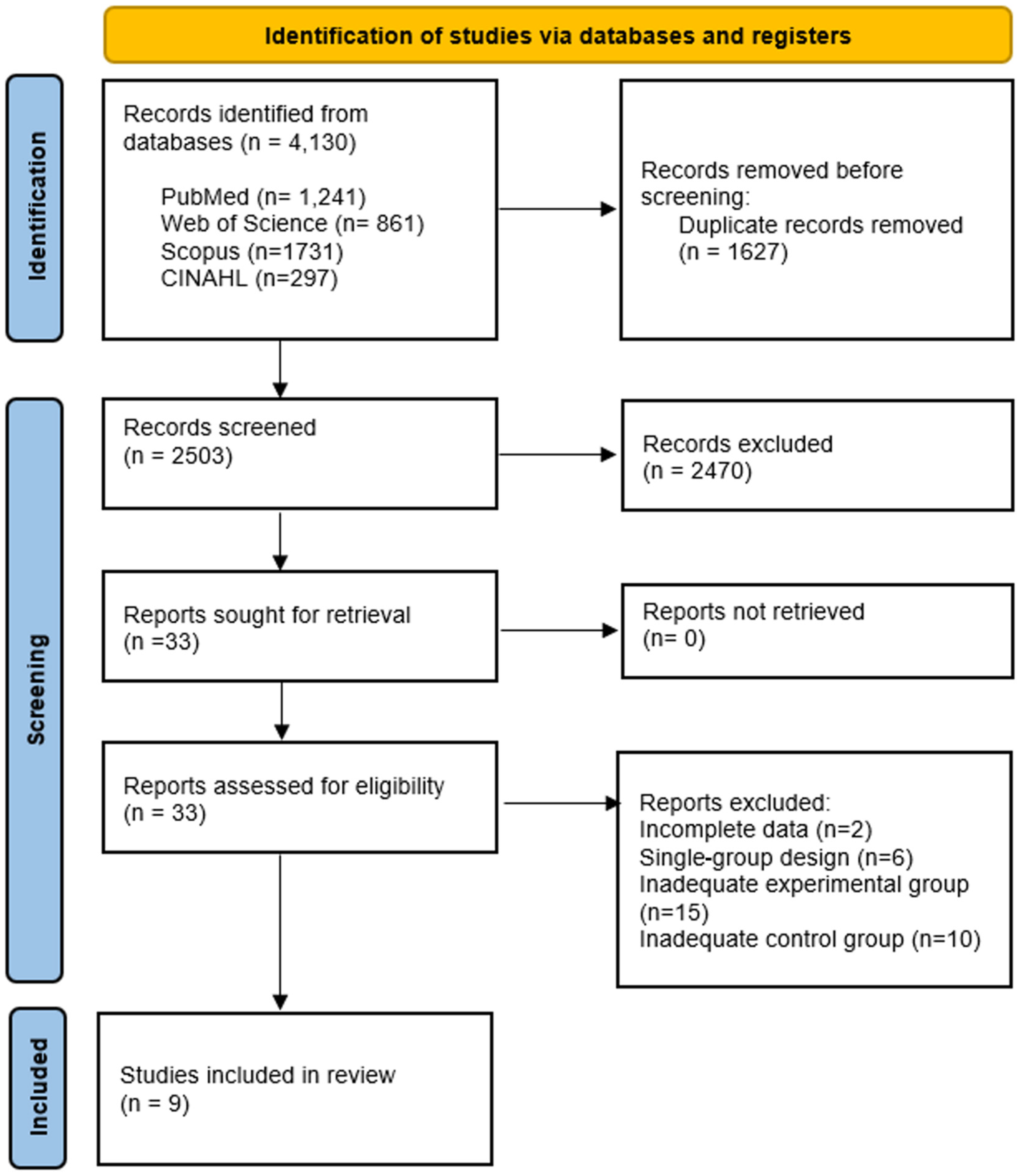
The initial search yielded 4130 records, which were reduced to 2503 after removal of duplicates. Following title and abstract screening, 33 articles were assessed in full text for eligibility. Six studies were excluded due to a single-arm design, fifteen because the experimental group did not meet eligibility criteria, and ten because of inadequate control groups. Two studies reported incomplete data. The corresponding authors were contacted for clarification, but we received no replies; therefore, these studies were excluded. Ultimately, nine studies fulfilled the inclusion criteria and were incorporated into this systematic review [29,32,33,34,35,36,37,38,39]. The study selection process is summarized in a PRISMA flow diagram (Figure 1).
Studies were conducted in Brazil [29,38,39], Spain [32,34,36,37], Turkey [33], and Belgium [35], with data collected in university communities, in physical therapy clinics, or via general population recruitment. Four studies [29,35,38,39] exclusively included female participants, while others reported female representation from 50% to 90% per group. NP was consistently defined by symptom duration (≥3 months), Neck Disability Index (NDI) scores (≥4), and pain intensity (NPRS/VAS ≥ 3). All articles regarding neck pain included chronic patients (symptom duration ≥ 3 months). In the study by Mingels [35] and colleagues, the diagnosis of CGH was established according to the ICHD-3 criteria [6]. Common exclusion criteria encompassed previous trauma, surgery, radiculopathy, fibromyalgia, pre-existing orofacial pain, medication use, and high psychological distress. Asymptomatic controls were defined by the absence of NP or headache. With the exception of the three studies assessing TMD prevalence [29,33,38], all studies reported the presence of TMDs or orofacial pain as exclusion criteria for both experimental and control groups. The study characteristics are reported in Table 1.
The main outcomes investigated were the prevalence of TMDs, orofacial PPTs, presence of myofascial trigger points, and mandibular mobility. Certainty of evidence is reported in Table 2.

3.1. TMD Prevalence

Three studies reported TMD prevalence in both experimental and control groups. All studies included participants with chronic neck pain in the experimental cohort and employed the Research Diagnostic Criteria for Temporomandibular Disorders (RDC/TMD) for diagnostic assessment. Two articles [29,38] exclusively enrolled female participants, while in the study by Guzel [33], females accounted for 51% of the control group and 58% of the CNP group.
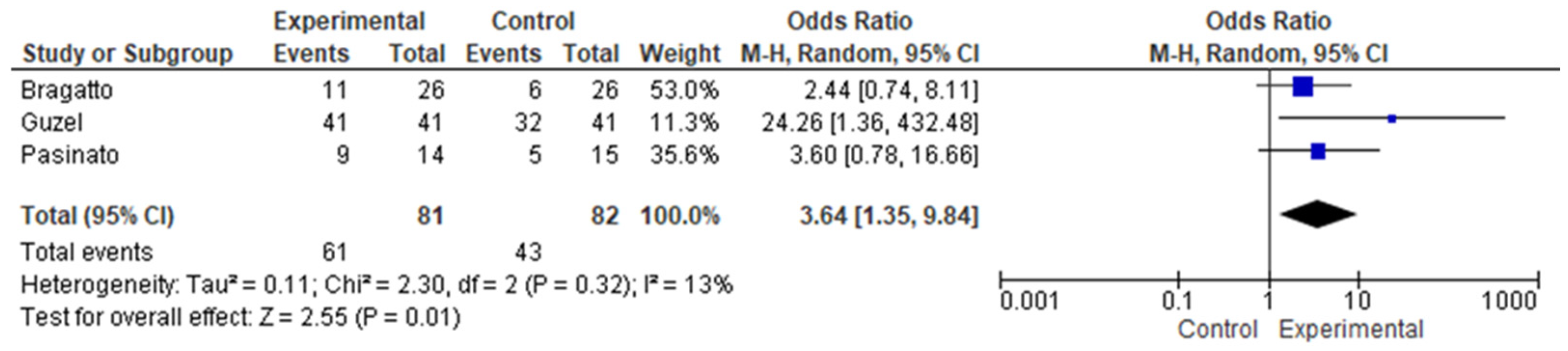
Consistently across studies, the prevalence of TMDs was higher among participants with CNP relative to healthy controls. Meta-analysis of three studies demonstrated an increased risk of TMDs in individuals with CNP compared with controls, with low heterogeneity (pooled prevalence: 68.9% vs. 44.8%; OR = 3.64, 95% CI 1.35–9.84; I2 = 13%) (Figure 2). Subgroup analyses by specific TMD subtypes could not be conducted due to incomplete data reporting.

3.2. Jaw Mobility

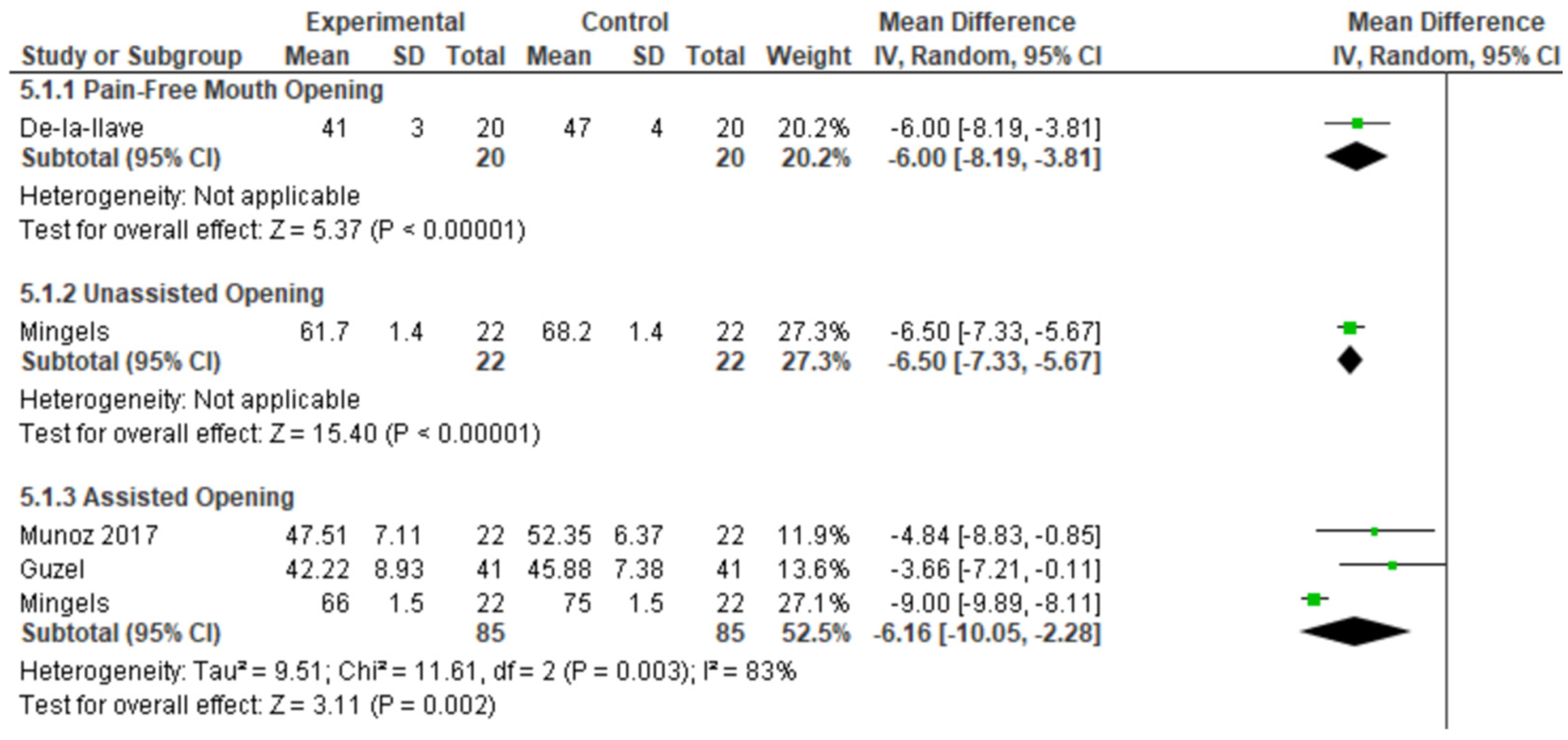
Mandibular mobility was assessed in four studies [32,33,35,36], which reported reduced ranges of movement in patients with NP or CGH (Figure 3). All four studies reported results for jaw opening, measured in three studies using a ruler and in one with a caliper. One study assessed jaw opening in patients with CGH compared to controls. De-la-Llave-Rincón et al. (2012) [32] observed that pain-free opening was significantly smaller in the NP group (41 ± 3 mm) compared with controls (47 ± 4 mm, p < 0.01). In Mingels et al. (2019) [35], unassisted opening was 61.7 ± 1.4 mm in CGH patients versus 68.2 ± 1.4 mm in controls (p < 0.01). Meta-analysis of three studies reporting maximum assisted mouth (MMO) opening showed a mean difference of 6.16 mm (−10.05, −2.28) between study groups and controls, with high heterogeneity (I2 = 83%). Funnel plot of the meta-analysis on assisted mouth opening are reported in Supplementary Material (Figure S1). Guzel and colleagues [33] also assessed right and left laterotrusion and protrusion, reporting lower values in patients compared to asymptomatic controls (Table S1).

3.3. Masticatory Muscle PPTs

Pressure pain thresholds (PPTs) were consistently evaluated with pressure algometers to quantify mechanical hyperalgesia across different cranio-mandibular anatomical sites. Three studies [29,34,36] assessed PPTs over the masseter muscle and five studies [29,34,35,37,39] over the temporalis muscle. With the exception of the study by La Touche et al. [34], measurements were performed over specific muscle regions [29,35,37,39]. Both digital and mechanical algometers were employed, and PPT values were reported using different units, including grams per square centimeter (g/cm2) [29], kilograms per square centimeter (kg/cm2) [34,36,39], and kilopascals per square centimeter (kPa/cm2) [35]. Bragatto et al. [29] conducted bilateral PPT assessments but reported data only for the right side. The corresponding authors were approached for clarification, but additional data could not be obtained.
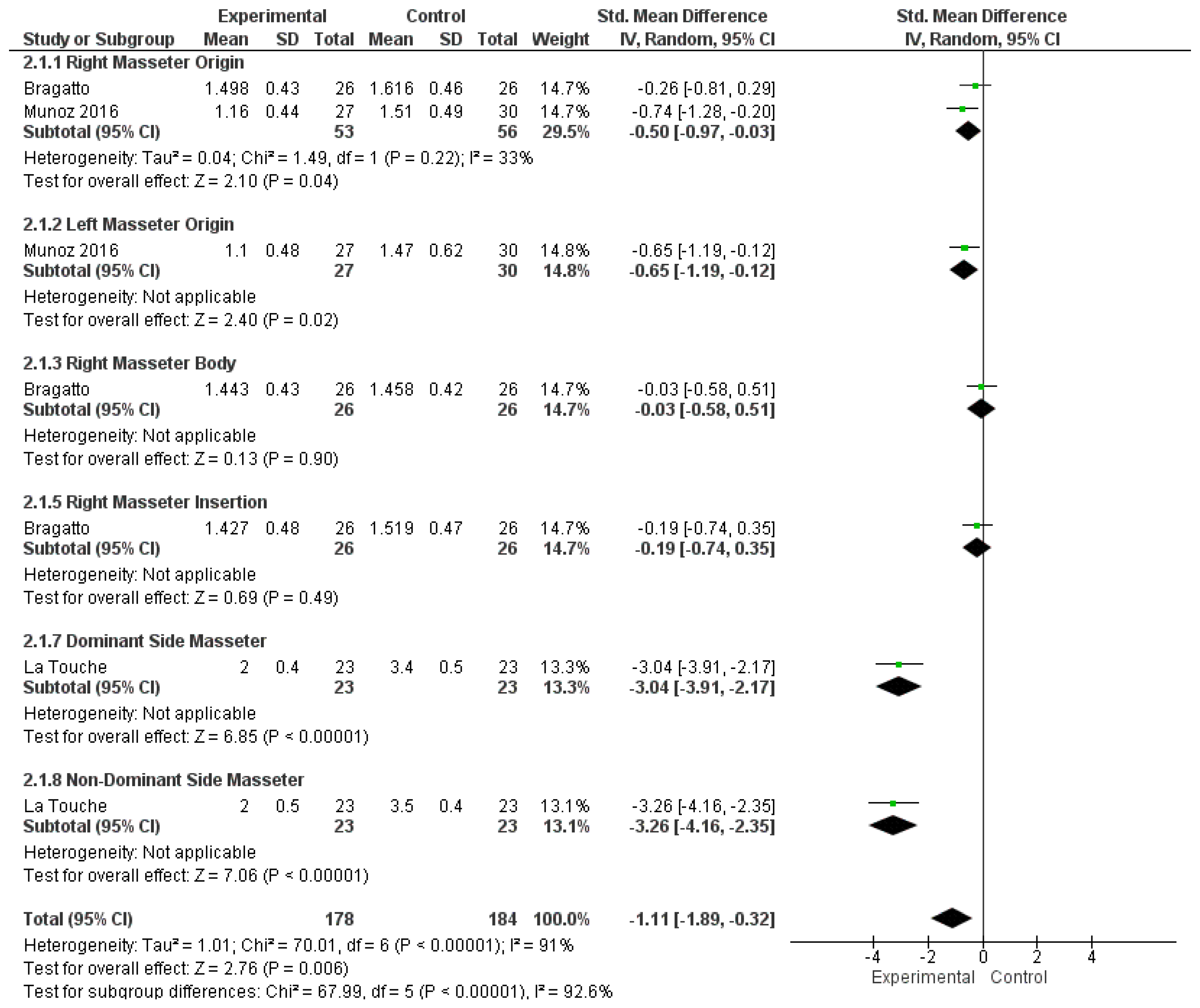
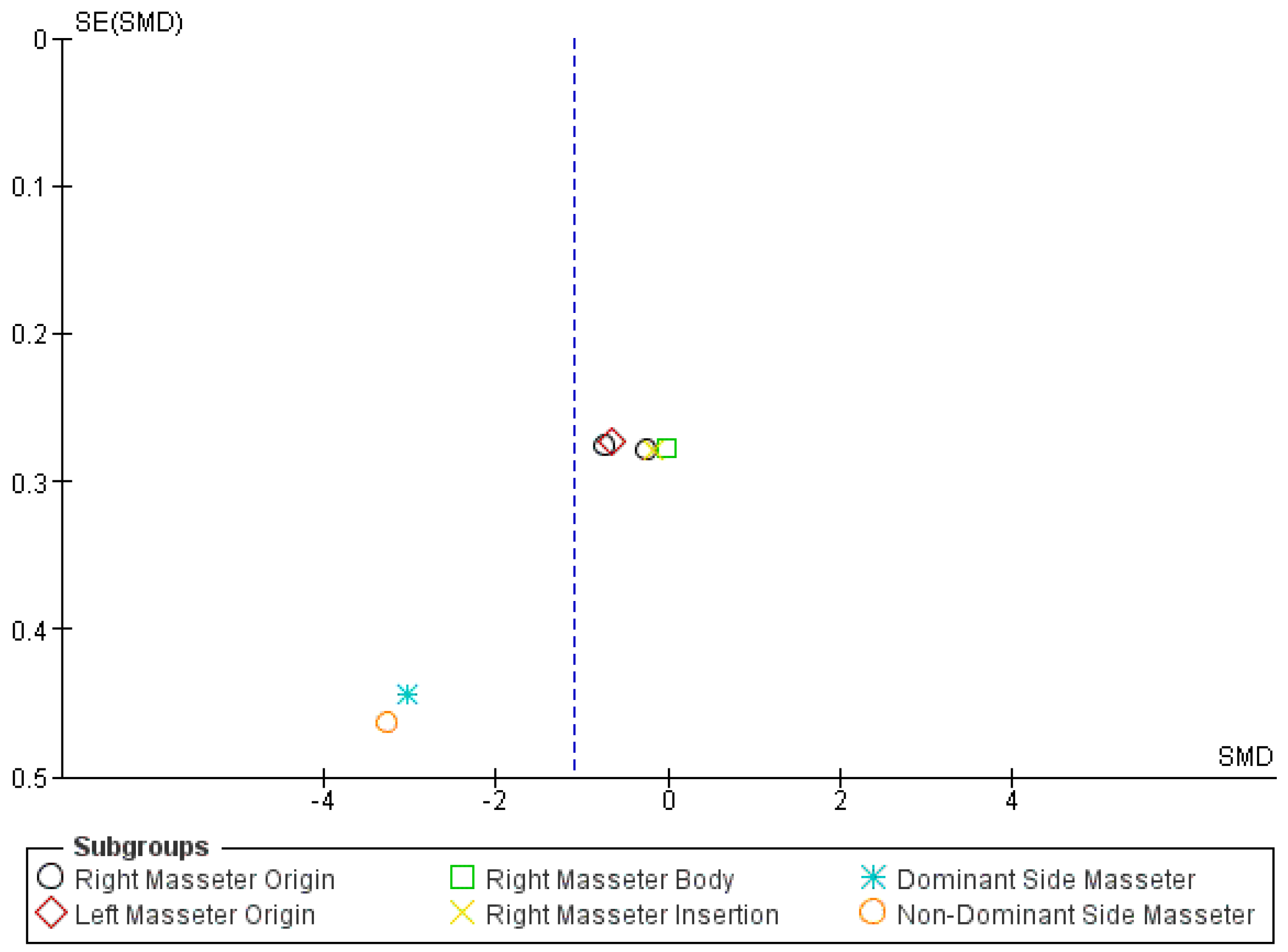
Pooled analysis of masseter PPTs demonstrated increased mechanical sensitivity in individuals with neck pain compared to controls (SMD −1.11; 95% CI −1.89 to −0.32), corresponding to a large effect size with high heterogeneity (I2 = 92.6%) (Figure 4). After exclusion of the study by La Touche, based on potential publication bias identified through visual inspection of the funnel plot and forest plot (Figure 5), the pooled SMD for masseter PPTs de-creased to −0.38 (95% CI −0.65 to −0.11), indicating a moderate effect size with low heterogeneity (I2 = 8%).
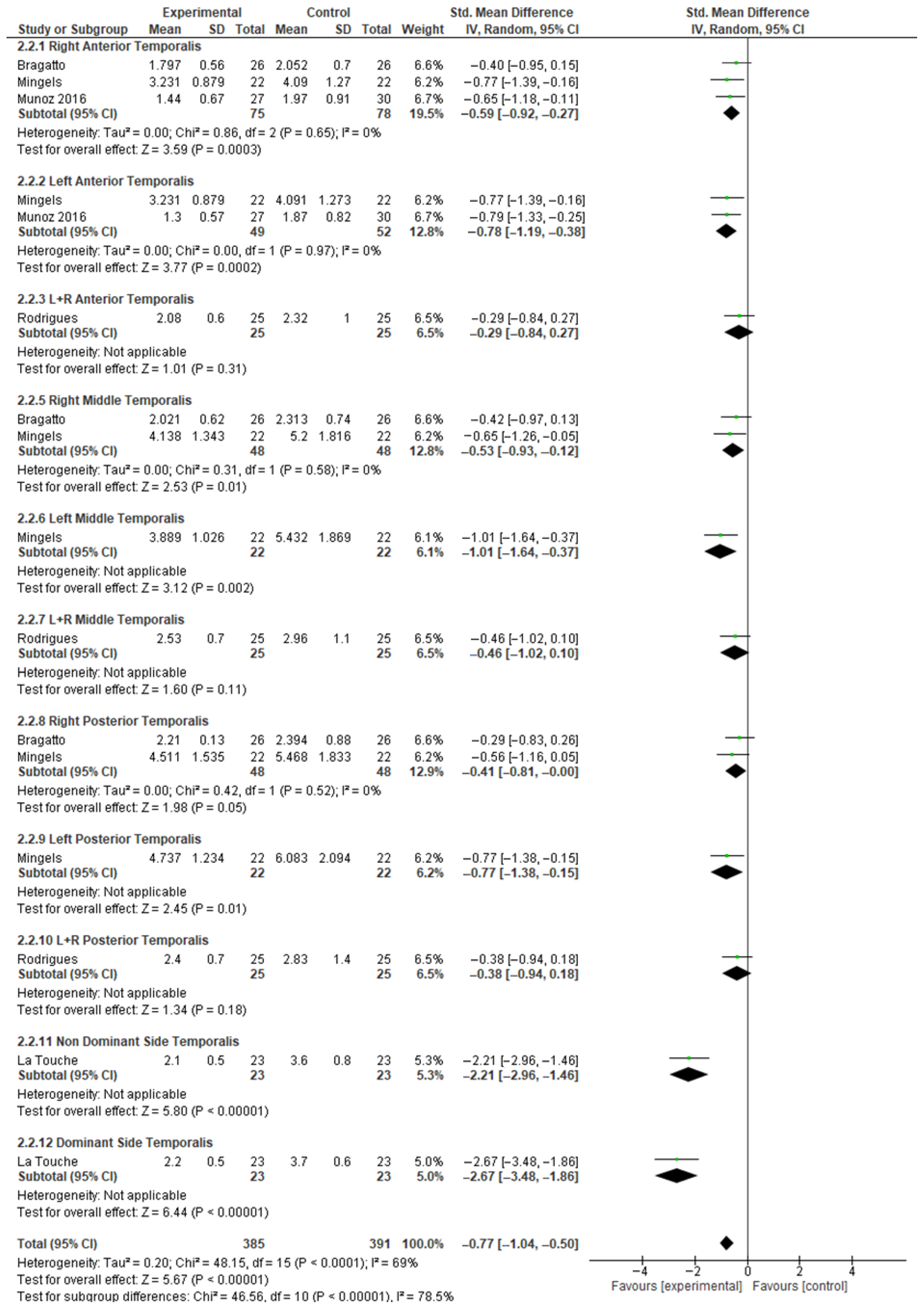
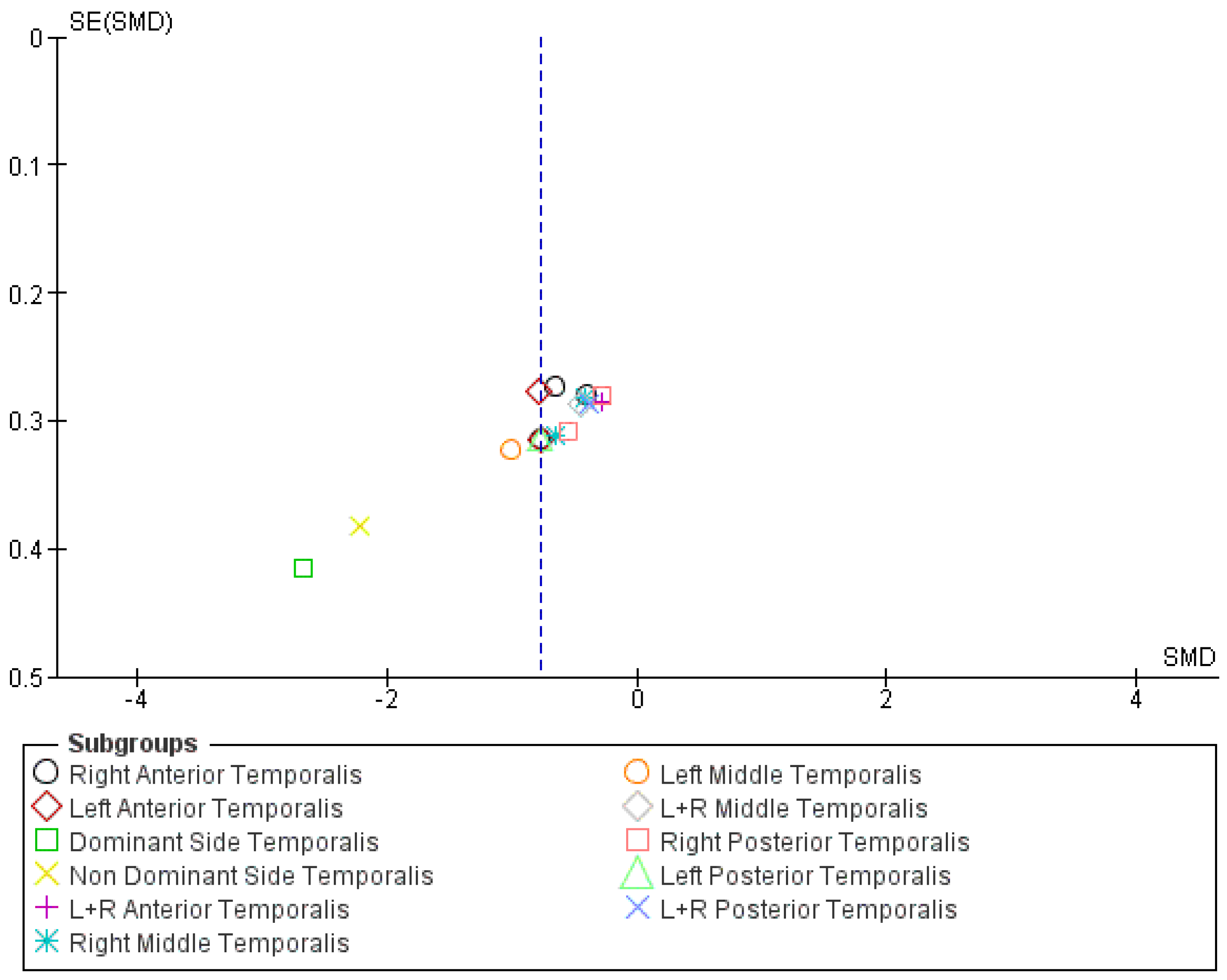
Pooled analysis of temporalis PPTs indicated increased mechanical sensitivity in individuals with neck pain or CGH compared with controls (SMD −0.77; 95% CI −1.04 to −0.50) (Figure 6), reflecting a moderate effect size with high heterogeneity (I2 = 69%). After exclusion of the study by La Touche et al. (Figure 7), the pooled SMD for temporalis PPTs was −0.57 (95% CI −0.72 to −0.42), corresponding to a moderate effect size with no heterogeneity (I2 = 0%).

3.4. Pain at Palpation and Myofascial Pain

The anatomical sites assessed for pain at palpation included a wide range of craniofacial structures. Methods of assessment varied across studies: some studies applied intensity scales such as the Numerical Pain Rating Scale (NPRS) [29] or a binary response (“pain” vs. “no pain”) [33,35]. For the diagnosis of myofascial trigger points (TrPs), authors used the procedure described by Gerwin et al. [32,40].
De-la-Llave-Rincón et al. (2012) [32] reported a significantly greater number of latent TrPs in the masticatory muscles (masseter and temporalis) of patients with CNP compared with controls (median four TrPs vs. one TrP, p < 0.001). Similarly, Guzel [33] also found higher palpation pain responses in orofacial regions of patients compared with healthy controls. Complete data are presented in Table S2—Supplementary Material.

3.5. Methodological Quality

The methodological quality of the included cross-sectional studies was assessed using the JBI Critical Appraisal Checklist (Table 3). All studies fulfilled minimum quality standards and were retained in this review, although limitations were noted. Inclusion criteria, populations, and settings were generally well defined, and validated instruments were consistently employed for outcome assessment. The main methodological weakness concerned the handling of confounders, which were often not identified or adequately controlled. Only a few studies, such as La Touche et al. (2010) [34] and Rodrigues et al. (2024) [39], incorporated covariates or stratified designs. Overall, the studies were considered methodologically acceptable, but their constraints should be considered when interpreting the findings.

4. Discussion

This systematic review synthesized current evidence on the prevalence and clinical features of temporomandibular disorders, mandibular ROM, orofacial pressure pain thresholds (PPTs), and orofacial pain at palpation in individuals with NP and/or CGH compared with asymptomatic controls. Across studies, patients with cervical pain or CGH consistently exhibited higher TMD prevalence, reduced PPTs, increased frequency of temporomandibular trigger points, and decreased mandibular mobility, supporting a significant clinical association likely underpinned by shared neurophysiological mechanisms, with potential biomechanical consequences [34].
Our results are aligned with evidence from headache disorders, where migraine and tension-type headache are associated with higher risk of painful or mixed TMDs, and vice versa [11,41]. Collectively, these findings highlight the clinical relevance of comprehensive assessment strategies addressing both craniofacial and cervical regions in patients with craniocervical symptoms.
The pathophysiological link between these conditions arises from convergence of trigeminal and upper cervical (C1–C3) nociceptive afferents within the trigeminocervical nucleus. This integration promotes central sensitization and regional symptoms [12]. The trigeminocervical complex (TCC) constitutes the substrate where trigeminal and cervical inputs meet, facilitating cross-sensitization and reciprocal pain referral, thus explaining symptom overlap and diagnostic challenges [42].
CGH should not be viewed as separate from cervical musculoskeletal pain, since both share the same pathophysiological basis in the TCC. Afferents from C2 and C3 converge onto second-order neurons, enabling referral of cervical nociception as headache and fostering sensitization [43]. This mechanism explains how cervical disorders may manifest as CGH and aligns with ICHD-3 criteria attributing headache to neck pathology, supporting a continuum rather than distinct entities [44,45].
Several studies explicitly excluded diagnosed TMD to isolate the effects of NP or CGH on orofacial outcomes [32,34,35,36,37,39]. On one hand, this approach strengthens internal validity for hypotheses such as trigeminal sensitization. On the other hand, it reduces external generalizability, since TMD and NP frequently coexist. Therefore, these studies may even underestimate the true prevalence and severity of TMD manifestations in general clinical populations, and their clinical impact.
Furthermore, we observed consistently reduced orofacial PPTs in the experimental groups, reflecting heightened pain sensitivity in the masticatory muscles and adjacent structures. This is a typical manifestation of peripheral and central sensitization [12], where receptive fields expand beyond territories as a consequence of altered neuronal properties within spinal nociceptive pathways. Importantly, sensitization processes appear to develop even without self-reported orofacial pain, suggesting that underlying neurophysiological alterations can occur in the absence of a defined pain diagnosis. From a clinical point of view, PPTs over the masseter showed significant negative correlations with both NP intensity and duration [34], emphasizing its relevance in both evaluation and consequently management of NP or CGH patients.
Even if orofacial influence in NP should be taken into account, it appears to play the role of a contributing factor in cervical disorders more than being the primary source of neck pain. Reductions in PPTs compared to controls were observed to be greater at the cervical level (C5–C6 joint) compared with trigeminal sites, reflecting greater cervical sensitization [34].
Mandibular musculoskeletal impairments, with reduced maximal mouth opening and restricted excursions, were associated with NP or CGH in this review. These findings reinforce the hypothesized association between neck pain and subclinical jaw impairments, which may occur even in the absence of specific TMD diagnoses or orofacial pain. Moreover, the literature suggests that musculoskeletal impairments of the jaw and the neck may be linked in neck pain populations. Reduced cervical muscle strength and endurance and reduced range of movement correlated with pain severity in the studies included in this review [33,38]. Such findings may be explained by reflex inhibition associated with pain and altered motor control strategies. Central sensitization has direct motor consequences, and the excitement of trigeminal motoneurons can result in involuntary synergistic co-contractions of the masticatory muscles, thereby restricting movement. This hypothesis is supported by a significant negative association between headache frequency and maximal mouth opening in subjects with CGH [35], and pain duration and intensity in NP subjects [34].
Moreover, the burden of NP seems to be influenced by the coexistence of TMDs and NP, with higher Neck Disability Index (NDI) scores [29]. Conversely, TMD-directed therapies, including TMJ injection, physiotherapy, and musculoskeletal interventions, have been observed to improve headache intensity, neck pain, and neck disability in patients with orofacial and cervical comorbidities [23,46,47].
These painful comorbidities are not limited to peripheral dysfunction but may also reflect amplified central sensitization, as indicated by widespread hyperalgesia and a higher number of pain sites. Patients with concurrent TMDs and NP frequently report diffuse pain distribution. In line with these findings, Muñoz-García et al. (2017) [36] demonstrated that individuals with TMDs and CNP presented with a greater number of widespread pain sites compared to those with CNP alone, suggesting impaired central pain modulation. The widespread distribution of this hypersensitivity, also affecting extra-trigeminal sites such as the anterior tibialis muscle area [35,37], emphasizes that these alterations may involve supraspinal pain mechanisms, possibly being included in a generalized painful condition typical in central sensitization.
Beyond musculoskeletal impairments and symptoms, psychosocial and behavioral factors may play a crucial role in the interaction between TMDs and cervical pain, and explain part of a generalized painful clinical profile, with impaired descending pain modulation. Patients with concurrent TMDs and neck pain consistently report higher levels of pain catastrophizing, anxiety, and perceived stress [36,37]. These factors are well-established contributors to pain chronification, promoting maladaptive coping strategies and impairment [48]. Within the DC/TMD classification [1], psychosocial assessment is included as Axis II, highlighting the recognized impact of psychosocial factors on temporomandibular disorders [49]. Nevertheless, the detailed evaluation of these characteristics extends beyond the specific objectives of the present systematic review.
Although our search did not yield studies assessing the prevalence of bruxism among individuals with NP or CGH, bruxism has been proposed as a possible mechanism linking cervical and temporomandibular dysfunction [50]. Awake bruxism [51], through increased masticatory muscle activation and joint loading, may exacerbate cervical impairments by reinforcing recruitment of cervical stabilizers and perpetuating muscle pain [20]. Elevated pain responses during palpation of masticatory muscles and nociception originating in neck muscles may also be explained by myogenic overload, including excessive or prolonged loading in individuals with chronic neck pain [52]. Although not assessed across the included studies, bruxism represents a potentially modifiable behavioral factor contributing to pain persistence in the upper quadrant region [53].

4.1. Clinical Implications

The findings highlight the necessity of a multidisciplinary approach for patients presenting with cervical pain, CGH, or TMD. Clinical assessment should extend beyond regional examination to include palpation of masticatory and cervical muscles, evaluation of mandibular and cervical mobility, and screening for psychosocial distress and parafunctional behaviors. Given the evidence of neuroanatomical convergence and central sensitization [12], therapeutic strategies targeting one system are likely to influence the other, as shown in other musculoskeletal disorders [54,55]. Integrated interventions, including manual therapy [56,57], exercise therapy [58,59], cognitive–behavioral support [53], and education on pain neuroscience and parafunctional habits [60], should be considered.
The findings underscore the need for integrated clinical management. Dentists, physiotherapists, neurologists, and other clinicians should routinely screen for TMD signs and symptoms in patients with cervical pain/CGH.

4.2. Strengths and Limitations

Several limitations must be considered when interpreting the results. Small sample sizes and reliance on convenience sampling, often involving predominantly young women [34,36], limit the generalizability of the findings. In some studies, exclusively female participants were recruited. Due to the higher prevalence of TMDs and orofacial symptoms in female populations, such findings restrict external validity to male populations.
Most studies applied unadjusted analyses for confounders, while effect sizes and power calculations were poorly reported. These limitations reduce the strength of the evidence. Moreover, the cross-sectional design of all included studies precludes causal inference and prevents the establishment of clear temporal or directional relationships between cervical pain/CGH and TMDs.
Finally, psychosocial and behavioral dimensions were not consistently assessed [61]. Key factors such as stress, anxiety, depression, and bruxism were seldom incorporated into study protocols. The limited integration of these variables is a critical gap, considering their established role in the biopsychosocial model of chronic pain.
This review synthesized evidence from nine analytical cross-sectional studies. Most of these investigations employed validated diagnostic criteria and outcome measures, thereby strengthening the reliability of the findings. Several studies also applied standardized protocols for the assessment of mandibular mobility, which enhanced methodological consistency across cohorts.

4.3. Future Research

Future research should prioritize prospective and longitudinal designs with larger, methodologically robust samples to establish causal relationships and clarify the natural progression of comorbid TMDs and cervical pain/CGH. Diverse cohorts should be included, encompassing both sexes and multiple TMD subtypes, to improve generalizability beyond the predominantly young female populations of existing studies.
Uniform use of validated diagnostic criteria is essential to enhance comparability across studies. Standardized frameworks such as the DC/TMD for temporomandibular disorders [1] and the ICHD-3 for headache classification [6] should be systematically applied to ensure methodological consistency and reliability of findings.
The contribution of bruxism [62], particularly awake bruxism, requires systematic investigation through validated and standardized assessment tools [50]. Clarifying its role as a mediator or comorbidity in the interaction between cervical and temporomandibular dysfunctions would provide important insights into both pathophysiology and management.

5. Conclusions

This review highlights an association between TMDs and orofacial symptoms, and NP or CGH. Methodological heterogeneity and the limitations of cross-sectional designs constrain causal inference. Future research should adopt longitudinal approaches and systematically integrate psychosocial dimensions to advance mechanistic understanding and optimize multimodal care.

Supplementary Materials

The following supporting information can be downloaded at https://www.mdpi.com/article/10.3390/jcm15010266/s1, Figure S1: Funnel plot of the meta-analysis on assisted mouth opening; Table. S1: Study results; Table S2: Summary of Findings (GRADE).; Table S3: Search Strategy; Table S4: PRISMA checklist.

Author Contributions

Conceptualization, P.B. (Paolo Bizzarri) and A.G.; methodology, A.S. and G.A.; formal analysis, M.P. (Marco Pompi) and P.B. (Paolo Bizzarri); investigation, M.P. (Marco Pernici) and P.B. (Paolo Bulzacca); data curation, P.B. (Paolo Bizzarri) and G.P.; writing—original draft preparation, P.B. (Paolo Bizzarri) and F.M.; writing—review and editing, E.B., M.P. (Marco Pernici), G.A., G.P., F.M. (Filippo Maselli), F.M. (Firas Mourad), C.B., A.M., M.P. (Marco Pompi), A.G., P.B. (Paolo Bulzacca), and A.S.; visualization, A.S. and A.G.; supervision, F.M. (Filippo Maselli) and F.M. (Firas Mourad); project administration, P.B. (Paolo Bulzacca) and A.M.; funding acquisition not applicable. All authors have read and agreed to the published version of the manuscript.

Funding

This research received no external funding.

Institutional Review Board Statement

Not applicable.

Informed Consent Statement

Not applicable.

Data Availability Statement

No additional datasets were generated for this manuscript.

Acknowledgments

During the preparation of this manuscript, the author used large language models for the purposes of grammar correction and improving textual fluency. The authors have reviewed and edited the output and take full responsibility for the content of this publication.

Conflicts of Interest

The authors declare no conflicts of interest.

Abbreviations

The following abbreviations are used in this manuscript:
TMDTemporomandibular Disorder
NPNeck Pain
CNPChronic Neck Pain
CGHCervicogenic Headache
TMJTemporomandibular Joint
IHSInternational Headache Society
RDC/TMDResearch Diagnostic Criteria for Temporomandibular Disorders
DC/TMDDiagnostic Criteria for Temporomandibular Disorders
OROdds Ratio
PPTPressure Pain Threshold
CIConfidence Interval
NDINeck Disability Index
NPRSNumeric Pain Rating Scale
GPGeneral Practitioner
PTPhysical Therapy
VASVisual Analogic Scale
SMDStandardized Mean Difference

References

  1. Schiffman, E.; Ohrbach, R.; Truelove, E.; Look, J.; Anderson, G.; Goulet, J.-P.; List, T.; Svensson, P.; Gonzalez, Y.; Lobbezoo, F.; et al. Diagnostic Criteria for Temporomandibular Disorders (DC/TMD) for Clinical and Research Applications: Recommendations of the International RDC/TMD Consortium Network* and Orofacial Pain Special Interest Group. J. Oral Facial Pain Headache 2014, 28, 6–27. [Google Scholar] [CrossRef] [PubMed]
  2. Dworkin, S.F.; LeResche, L. Research Diagnostic Criteria for Temporomandibular Disorders: Review, Criteria, Examinations and Specifications, Critique. J. Craniomandib. Disord. Facial Oral Pain 1992, 6, 301–355. [Google Scholar]
  3. Plesh, O.; Adams, S.; Gansky, S. Temporomandibular Joint and Muscle Disorder (TMJMD)-Type Pain and Co-Morbid Pains in a National US Sample. J. Orofac. Pain 2011, 25, 190–198. [Google Scholar] [PubMed]
  4. GBD 2021 Neck Pain Collaborators. Global, Regional, and National Burden of Neck Pain, 1990–2020, and Projections to 2050: A Systematic Analysis of the Global Burden of Disease Study 2021. Lancet Rheumatol. 2024, 6, e142–e155. [Google Scholar] [CrossRef]
  5. Hoy, D.G.; Protani, M.; De, R.; Buchbinder, R. The Epidemiology of Neck Pain. Best Pract. Res. Clin. Rheumatol. 2010, 24, 783–792. [Google Scholar] [CrossRef]
  6. Headache Classification Committee of the International Headache Society (IHS). The International Classification of Headache Disorders, 3rd Edition. Cephalalgia Int. J. Headache 2018, 38, 1–211. [Google Scholar] [CrossRef]
  7. Haldeman, S.; Dagenais, S. Choosing a Treatment for Cervicogenic Headache: When? What? How Much? Spine J. Off. J. N. Am. Spine Soc. 2010, 10, 169–171. [Google Scholar] [CrossRef]
  8. Manfredini, D.; Guarda-Nardini, L.; Winocur, E.; Piccotti, F.; Ahlberg, J.; Lobbezoo, F. Research Diagnostic Criteria for Temporomandibular Disorders: A Systematic Review of Axis I Epidemiologic Findings. Oral Surg. Oral Med. Oral Pathol. Oral Radiol. Endod. 2011, 112, 453–462. [Google Scholar] [CrossRef]
  9. Manfredini, D.; Häggman-Henrikson, B.; Al Jaghsi, A.; Baad-Hansen, L.; Beecroft, E.; Bijelic, T.; Bracci, A.; Brinkmann, L.; Bucci, R.; Colonna, A.; et al. Temporomandibular Disorders: INfORM/IADR Key Points for Good Clinical Practice Based on Standard of Care. Cranio J. Craniomandib. Pract. 2025, 43, 1–5. [Google Scholar] [CrossRef]
  10. Greenbaum, T.; Dvir, Z.; Emodi-Perlman, A.; Reiter, S.; Rubin, P.; Winocur, E. The Association between Specific Temporomandibular Disorders and Cervicogenic Headache. Musculoskelet. Sci. Pract. 2021, 52, 102321. [Google Scholar] [CrossRef]
  11. Bizzarri, P.; Manfredini, D.; Koutris, M.; Bartolini, M.; Buzzatti, L.; Bagnoli, C.; Scafoglieri, A. Temporomandibular Disorders in Migraine and Tension-Type Headache Patients: A Systematic Review with Meta-Analysis. J. Oral Facial Pain Headache 2024, 38, 11. [Google Scholar] [CrossRef]
  12. Chichorro, J.G.; Porreca, F.; Sessle, B. Mechanisms of Craniofacial Pain. Cephalalgia Int. J. Headache 2017, 37, 613–626. [Google Scholar] [CrossRef] [PubMed]
  13. Fernández-de-las-Peñas, C.; Galán-del-Río, F.; Fernández-Carnero, J.; Pesquera, J.; Arendt-Nielsen, L.; Svensson, P. Bilateral Widespread Mechanical Pain Sensitivity in Women with Myofascial Temporomandibular Disorder: Evidence of Impairment in Central Nociceptive Processing. J. Pain 2009, 10, 1170–1178. [Google Scholar] [CrossRef] [PubMed]
  14. Ribeiro, D.C.; Belgrave, A.; Naden, A.; Fang, H.; Matthews, P.; Parshottam, S. The Prevalence of Myofascial Trigger Points in Neck and Shoulder-Related Disorders: A Systematic Review of the Literature. BMC Musculoskelet. Disord. 2018, 19, 252. [Google Scholar] [CrossRef] [PubMed]
  15. Manfredini, D.; Castroflorio, T.; Perinetti, G.; Guarda-Nardini, L. Dental Occlusion, Body Posture and Temporomandibular Disorders: Where We Are Now and Where We Are Heading For. J. Oral Rehabil. 2012, 39, 463–471. [Google Scholar] [CrossRef]
  16. Cuenca-Martinez, F.; Herranz-Gomez, A.; Madronero-Miguel, B.; Reina-Varona, A.; La Touche, R.; Angulo-Diaz-Parreno, S.; Pardo-Montero, J.; del Corral, T.; Lopez-de-Uralde-Villanueva, I. Craniocervical and Cervical Spine Features of Patients with Temporomandibular Disorders: A Systematic Review and Meta-Analysis of Observational Studies. J. Clin. Med. 2020, 9, 2806. [Google Scholar] [CrossRef]
  17. La Touche, R.; París-Alemany, A.; von Piekartz, H.; Mannheimer, J.S.; Fernández-Carnero, J.; Rocabado, M. The Influence of Cranio-Cervical Posture on Maximal Mouth Opening and Pressure Pain Threshold in Patients with Myofascial Temporomandibular Pain Disorders. Clin. J. Pain 2011, 27, 48–55. [Google Scholar] [CrossRef]
  18. Grondin, F.; Hall, T.; von Piekartz, H. Does Altered Mandibular Position and Dental Occlusion Influence Upper Cervical Movement: A Cross-Sectional Study in Asymptomatic People. Musculoskelet. Sci. Pract. 2017, 27, 85–90. [Google Scholar] [CrossRef]
  19. Colonna, A.; Bracci, A.; Manfredini, D. Bracing: The Hidden Side of the Moon. Cranio J. Craniomandib. Pract. 2025, 43, 711–713. [Google Scholar] [CrossRef]
  20. Gouw, S.; Frowein, A.; Braem, C.; de Wijer, A.; Creugers, N.H.J.; Pasman, J.W.; Doorduin, J.; Kalaykova, S.I. Coherence of Jaw and Neck Muscle Activity during Sleep Bruxism. J. Oral Rehabil. 2020, 47, 432–440. [Google Scholar] [CrossRef]
  21. Schipholt, I.J.L.; Coppieters, M.W.; Diepens, M.; Hoekstra, T.; Ostelo, R.W.J.G.; Barbe, M.F.; Meijer, O.G.; Bontkes, H.J.; Scholten-Peeters, G.G.M. Systemic Inflammation, Sleep, and Psychological Factors Determine Recovery Trajectories for People with Neck Pain: An Exploratory Study. J. Pain 2024, 25, 104496. [Google Scholar] [CrossRef] [PubMed]
  22. Manfredini, D.; Landi, N.; Bandettini Di Poggio, A.; Dell’Osso, L.; Bosco, M. A Critical Review on the Importance of Psychological Factors in Temporomandibular Disorders. Minerva Stomatol. 2003, 52, 321–326, 327–330. [Google Scholar]
  23. Guarda-Nardini, L.; Cadorin, C.; Frizziero, A.; Masiero, S.; Manfredini, D. Interrelationship between Temporomandibular Joint Osteoarthritis (OA) and Cervical Spine Pain: Effects of Intra-Articular Injection with Hyaluronic Acid. Cranio J. Craniomandib. Pract. 2017, 35, 276–282. [Google Scholar] [CrossRef] [PubMed]
  24. Stroup, D.F.; Berlin, J.A.; Morton, S.C.; Olkin, I.; Williamson, G.D.; Rennie, D.; Moher, D.; Becker, B.J.; Sipe, T.A.; Thacker, S.B. Meta-Analysis of Observational Studies in Epidemiology: A Proposal for Reporting. Meta-Analysis of Observational Studies in Epidemiology (MOOSE) Group. JAMA 2000, 283, 2008–2012. [Google Scholar] [CrossRef]
  25. Page, M.J.; McKenzie, J.E.; Bossuyt, P.M.; Boutron, I.; Hoffmann, T.C.; Mulrow, C.D.; Shamseer, L.; Tetzlaff, J.M.; Akl, E.A.; Brennan, S.E.; et al. The PRISMA 2020 Statement: An Updated Guideline for Reporting Systematic Reviews. BMJ 2021, 372, n71. [Google Scholar] [CrossRef]
  26. International Classification of Orofacial Pain, 1st Edition (ICOP). Cephalalgia Int. J. Headache 2020, 40, 129–221. [CrossRef]
  27. Higgins, J.P.T.; Thomas, J.; Chandler, J.; Cumpston, M.; Li, T.; Page, M.J.; Welch, V.A. (Eds.) Cochrane Handbook for Systematic Reviews of Interventions Version 6.5 (Updated August 2024); Cochrane: London, UK, 2024; Available online: www.Cochrane.Org/Handbook (accessed on 15 July 2025).
  28. Moola, S.; Munn, Z.; Tufanaru, C.; Aromataris, E.; Sears, K.; Sfetcu, R.; Currie, M.; Qureshi, R.; Mattis, P.; Lisy, K.; et al. Chapter 7: Systematic Reviews of Etiology and Risk. In JBI Manual for Evidence Synthesis; Aromataris, E., Munn, Z., Eds.; JBI: Adelaide, Australia, 2020. [Google Scholar]
  29. Bragatto, M.M.; Bevilaqua-Grossi, D.; Regalo, S.C.; Sousa, J.D.; Chaves, T.C. Associations among Temporomandibular Disorders, Chronic Neck Pain and Neck Pain Disability in Computer Office Workers: A Pilot Study. J. Oral Rehabil. 2016, 43, 321–332. [Google Scholar] [CrossRef]
  30. Page, M.J.; Altman, D.G.; McKenzie, J.E.; Shamseer, L.; Ahmadzai, N.; Wolfe, D.; Yazdi, F.; Catalá-López, F.; Tricco, A.C.; Moher, D. Flaws in the Application and Interpretation of Statistical Analyses in Systematic Reviews of Therapeutic Interventions Were Common: A Cross-Sectional Analysis. J. Clin. Epidemiol. 2018, 95, 7–18. [Google Scholar] [CrossRef]
  31. Higgins, J.P.T.; Thompson, S.G.; Deeks, J.J.; Altman, D.G. Measuring Inconsistency in Meta-Analyses. BMJ 2003, 327, 557–560. [Google Scholar] [CrossRef]
  32. De-la-Llave-Rincon, A.I.; Alonso-Blanco, C.; Gil-Crujera, A.; Ambite-Quesada, S.; Svensson, P.; Fernández-de-Las-Peñas, C. Myofascial Trigger Points in the Masticatory Muscles in Patients with and without Chronic Mechanical Neck Pain. J. Manip. Physiol. Ther. 2012, 35, 678–684. [Google Scholar] [CrossRef]
  33. ÇelïK Güzel, H.; Araci, A.; Aslan Telcï, E.; Cimbiz, A. Evaluation of Temporomandibular Joint Dysfunction in Patients with Chronic Neck Pain. Int. J. Tradit. Complement. Med. Res. 2022, 3, 117–124. [Google Scholar] [CrossRef]
  34. La Touche, R.; Fernández-de-Las-Peñas, C.; Fernández-Carnero, J.; Díaz-Parreño, S.; Paris-Alemany, A.; Arendt-Nielsen, L. Bilateral Mechanical-Pain Sensitivity over the Trigeminal Region in Patients with Chronic Mechanical Neck Pain. J. Pain Off. J. Am. Pain Soc. 2010, 11, 256–263. [Google Scholar] [CrossRef] [PubMed]
  35. Mingels, S.; Dankaerts, W.; Granitzer, M. Preclinical Signs of a Temporomandibular Disorder in Female Patients with Episodic Cervicogenic Headache Versus Asymptomatic Controls: A Cross-Sectional Study. PM&R 2019, 11, 1287–1295. [Google Scholar] [CrossRef]
  36. Muñoz-García, D.; López-de-Uralde-Villanueva, I.; Beltran-Alacreu, H.; La Touche, R.; Fernández-Carnero, J. Patients with Concomitant Chronic Neck Pain and Myofascial Pain in Masticatory Muscles Have More Widespread Pain and Distal Hyperalgesia than Patients with Only Chronic Neck Pain. Pain Med. 2017, 18, 526–537. [Google Scholar] [CrossRef] [PubMed][Green Version]
  37. Muñoz-García, D.; Gil-Martínez, A.; López-López, A.; Lopez-de-Uralde-Villanueva, I.; La Touche, R.; Fernández-Carnero, J. Chronic Neck Pain and Cervico-Craniofacial Pain Patients Express Similar Levels of Neck Pain-Related Disability, Pain Catastrophizing, and Cervical Range of Motion. Pain Res. Treat. 2016, 2016, 7296032. [Google Scholar] [CrossRef]
  38. Pasinato, F.; Bordin, J.; Santos-Couto-Paz, C.C.; Souza, J.A.; Corrêa, E.C.R. Cervical-Scapular Muscles Strength and Severity of Temporomandibular Disorder in Women with Mechanical Neck Pain. Fisioter. Mov. 2016, 29, 269–278. [Google Scholar] [CrossRef][Green Version]
  39. Rodrigues, A.; Bigal, L.M.; Bragatto, M.M.; Dach, F.; Bevilaqua-Grossi, D.; Bigal, M.E.; Fernández-de-las-Peñas, C.; Florencio, L.L. Cervical Muscle Parameters and Allodynia in Migraine and Cervical Pain—A Controlled Study. Eur. J. Pain 2024, 28, 565–577. [Google Scholar] [CrossRef]
  40. Gerwin, R.D.; Shannon, S.; Hong, C.Z.; Hubbard, D.; Gevirtz, R. Interrater Reliability in Myofascial Trigger Point Examination. Pain 1997, 69, 65–73. [Google Scholar] [CrossRef]
  41. Tchivileva, I.E.; Ohrbach, R.; Fillingim, R.B.; Greenspan, J.D.; Maixner, W.; Slade, G.D. Temporal Change in Headache and Its Contribution to the Risk of Developing First-Onset Temporomandibular Disorder in the Orofacial Pain: Prospective Evaluation and Risk Assessment (OPPERA) Study. Pain 2017, 158, 120–129. [Google Scholar] [CrossRef]
  42. Sessle, B.J. Peripheral and Central Mechanisms of Orofacial Inflammatory Pain. In International Review of Neurobiology; Kobayashi, M., Koshikawa, N., Iwata, K., Waddington, J.L., Eds.; Translating Mechanisms Orofacial Neurological Disorder; Academic Press: Cambridge, MA, USA, 2011; Volume 97, pp. 179–206. [Google Scholar]
  43. Piovesan, E.J.; Kowacs, P.A.; Oshinsky, M.L. Convergence of Cervical and Trigeminal Sensory Afferents. Curr. Pain Headache Rep. 2003, 7, 377–383. [Google Scholar] [CrossRef]
  44. Bogduk, N. Cervicogenic Headache: Anatomic Basis and Pathophysiologic Mechanisms. Curr. Pain Headache Rep. 2001, 5, 382–386. [Google Scholar] [CrossRef] [PubMed]
  45. Bogduk, N. Distinguishing Primary Headache Disorders from Cervicogenic Headache: Clinical and Therapeutic Implications. Headache Curr. 2005, 2, 27–36. [Google Scholar] [CrossRef]
  46. Crăciun, M.D.; Geman, O.; Leuciuc, F.V.; Holubiac, I.Ş.; Gheorghiţă, D.; Filip, F. Effectiveness of Physiotherapy in the Treatment of Temporomandibular Joint Dysfunction and the Relationship with Cervical Spine. Biomedicines 2022, 10, 2962. [Google Scholar] [CrossRef] [PubMed]
  47. Garrigós-Pedrón, M.; La Touche, R.; Navarro-Desentre, P.; Gracia-Naya, M.; Segura-Ortí, E. Effects of a Physical Therapy Protocol in Patients with Chronic Migraine and Temporomandibular Disorders: A Randomized, Single-Blinded, Clinical Trial. J. Oral Facial Pain Headache 2018, 32, 137–150. [Google Scholar] [CrossRef]
  48. Manfredini, D.; Winocur, E.; Ahlberg, J.; Guarda-Nardini, L.; Lobbezoo, F. Psychosocial Impairment in Temporomandibular Disorders Patients. RDC/TMD Axis II Findings from a Multicentre Study. J. Dent. 2010, 38, 765–772. [Google Scholar] [CrossRef]
  49. Manfredini, D.; Ahlberg, J.; Winocur, E.; Guarda-Nardini, L.; Lobbezoo, F. Correlation of RDC/TMD Axis I Diagnoses and Axis II Pain-Related Disability. A Multicenter Study. Clin. Oral Investig. 2011, 15, 749–756. [Google Scholar] [CrossRef]
  50. Manfredini, D.; Ahlberg, J.; Aarab, G.; Bender, S.; Bracci, A.; Cistulli, P.A.; Conti, P.C.; De Leeuw, R.; Durham, J.; Emodi-Perlman, A.; et al. Standardised Tool for the Assessment of Bruxism. J. Oral Rehabil. 2024, 51, 29–58. [Google Scholar] [CrossRef]
  51. Bracci, A.; Lobbezoo, F.; Colonna, A.; Bender, S.; Conti, P.C.R.; Emodi-Perlman, A.; Häggman-Henrikson, B.; Klasser, G.D.; Michelotti, A.; Lavigne, G.J.; et al. Research Routes on Awake Bruxism Metrics: Implications of the Updated Bruxism Definition and Evaluation Strategies. J. Oral Rehabil. 2024, 51, 150–161. [Google Scholar] [CrossRef]
  52. Bracci, A.; Lobbezoo, F.; Häggman-Henrikson, B.; Colonna, A.; Nykänen, L.; Pollis, M.; Ahlberg, J.; Manfredini, D.; International Network For Orofacial Pain and Related Disorders Methodology INfORM. Current Knowledge and Future Perspectives on Awake Bruxism Assessment: Expert Consensus Recommendations. J. Clin. Med. 2022, 11, 5083. [Google Scholar] [CrossRef]
  53. Câmara-Souza, M.B.; Bracci, A.; Colonna, A.; Ferrari, M.; Rodrigues Garcia, R.C.M.; Manfredini, D. Ecological Momentary Assessment of Awake Bruxism Frequency in Patients with Different Temporomandibular Disorders. J. Clin. Med. 2023, 12, 501. [Google Scholar] [CrossRef]
  54. Wainner, R.S.; Whitman, J.M.; Cleland, J.A.; Flynn, T.W. Regional Interdependence: A Musculoskeletal Examination Model Whose Time Has Come. J. Orthop. Sports Phys. Ther. 2007, 37, 658–660. [Google Scholar] [CrossRef]
  55. Bizzarri, P.; Buzzatti, L.; Cattrysse, E.; Scafoglieri, A. Thoracic Manual Therapy Is Not More Effective than Placebo Thoracic Manual Therapy in Patients with Shoulder Dysfunctions: A Systematic Review with Meta-Analysis. Musculoskelet. Sci. Pract. 2018, 33, 1–10. [Google Scholar] [CrossRef]
  56. Bizzarri, P.; Foglia, A. Manual Therapy: Art or Science? In Physical Therapy Effectiveness; Bernardo-Filho, M., Cunha De Sá-Caputo, D., Taiar, R., Eds.; IntechOpen: London, UK, 2020; ISBN 978-1-83880-075-8. [Google Scholar]
  57. Asquini, G.; Devecchi, V.; Borromeo, G.; Viscuso, D.; Morato, F.; Locatelli, M.; Falla, D. Predictors of Pain Reduction Following a Program of Manual Therapies for Patients with Temporomandibular Disorders: A Prospective Observational Study. Musculoskelet. Sci. Pract. 2022, 62, 102634. [Google Scholar] [CrossRef]
  58. Asquini, G.; Pisacane, G.; Maselli, F.; Galeoto, G.; Mourad, F.; Bizzarri, P.; Balli, E.; Bagnoli, C.; Manzari, A.; Pernici, M.; et al. Effectiveness of Resistance Training of Masticatory Muscles for Patients with Temporomandibular Disorders: Protocol for a Systematic Review. BMJ Open 2024, 14, e083133. [Google Scholar] [CrossRef]
  59. Asquini, G.; Pisacane, G.; Maselli, F.; Mourad, F.; Bizzarri, P.; Balli, E.; Bagnoli, C.; Manzari, A.; Pernici, M.; Giusti, A.; et al. Effectiveness of Resistance Training of Masticatory Muscles for Patients with Temporomandibular Disorders: A Systematic Review. J. Oral Rehabil. 2025, 52, 1505–1517. [Google Scholar] [CrossRef] [PubMed]
  60. Zani, A.; Lobbezoo, F.; Bracci, A.; Ahlberg, J.; Manfredini, D. Ecological Momentary Assessment and Intervention Principles for the Study of Awake Bruxism Behaviors, Part 1: General Principles and Preliminary Data on Healthy Young Italian Adults. Front. Neurol. 2019, 10, 169. [Google Scholar] [CrossRef] [PubMed]
  61. Ohrbach, R. Assessment and Further Development of RDC/TMD Axis II Biobehavioural Instruments: A Research Programme Progress Report. J. Oral Rehabil. 2010, 37, 784–798. [Google Scholar] [CrossRef] [PubMed]
  62. Manfredini, D.; Ahlberg, J.; Aarab, G.; Bracci, A.; Durham, J.; Emodi-Perlman, A.; Ettlin, D.; Gallo, L.M.; Häggman-Henrikson, B.; Koutris, M.; et al. The Development of the Standardised Tool for the Assessment of Bruxism (STAB): An International Road Map. J. Oral Rehabil. 2024, 51, 15–28. [Google Scholar] [CrossRef]
Figure 1. PRISMA flow-chart.
Jcm 15 00266 g001
Figure 2. Meta-analysis of TMD prevalence. Data derived from the included studies [29,33,38]. Blue squares show study-specific odds ratios (size proportional to weight) with 95% confidence intervals. The black diamond shows the pooled random-effects estimate (95% CI), and the vertical line at OR = 1 indicates no effect.
Jcm 15 00266 g002
Figure 3. Meta-analysis of mouth opening. Data derived from the included studies [32,33,35,36]. Green squares indicate study-specific mean differences (size proportional to weight) with horizontal lines showing 95% CIs; black diamonds show the pooled random-effects estimates (width = 95% CI), and the vertical line at 0 indicates no effect.
Jcm 15 00266 g003
Figure 4. Meta-analysis of masseter pressure pain threshold. Data derived from the included studies [29,34,37]. Green squares indicate individual study standardized mean differences (size proportional to weight) with horizontal lines indicating 95% Cis. Black diamonds show the pooled random-effects estimates (width = 95% CI) for each subgroup and overall, and the vertical line at 0 indicates no effect.
Jcm 15 00266 g004
Figure 5. Funnel plot of meta-analysis of masseter pressure pain threshold. Dominant and non-dominant side masseter are derived from the included study of La Touche and colleagues [34]. The blue dashed vertical line indicates the pooled (overall) standardized mean difference.
Jcm 15 00266 g005
Figure 6. Meta-analysis of temporalis pressure pain threshold. Data derived from the included studies [29,34,35,37,39]. Green squares indicate individual study standardized mean differences (size proportional to weight) with horizontal lines indicating 95% Cis. Black diamonds show the pooled random-effects estimates (width = 95% CI) for each sub-group and overall, and the vertical line at 0 indicates no effect.
Jcm 15 00266 g006
Figure 7. Funnel plot of meta-analysis of temporalis pressure pain threshold. Dominant and non-dominant side temporalis are derived from the included study of La Touche and colleagues [34]. The blue dashed vertical line indicates the pooled (overall) standardized mean difference.
Jcm 15 00266 g007
Table 1. Study characteristics: NP: neck pain; CNP: chronic neck pain; TMD: temporomandibular disorder; CI: confidence interval; NDI: Neck Disability Index; NPRS: Numeric Pain Rating Scale; GP: general practitioner; PT: physical therapy; VAS: Visual Analogic Scale; MSK: musculoskeletal; CGH: cervicogenic headache; TMJ: temporomandibular joint.
First Author (Year)CountryData Collection SettingSample Size and Mean Age per GroupFemale Subjects per Group (%)Inclusion CriteriaExclusion Criteria
Bragatto (2016) [29]BrazilUniversity Campus
  • NP: n = 26, mean 36.5 (CI 33.4–36.6)
  • Controls: n = 26, mean 33.8 (CI 30.7–37.0)
100% NP:
  • Age 20–50
  • Same job ≥ 12 months
  • Computer ≥ 4 h/day
  • Self-reported neck pain (MUEQ-Br)
  • Duration ≥ 3 months
  • NDI ≥ 5
  • NPRS ≥ 3
  • Other disorders
  • Systemic degenerative diseases, fibromyalgia
  • Whiplash/trauma
  • Congenital deformities
  • Spinal surgery
  • Leg discrepancy > 2 cm
  • Uncorrected vision/hearing loss
  • Fixed orthodontics
  • Cognitive impairment
  • Pregnancy/lactation/postpartum ≤ 1 yr
  • Previous TMD
De-la-Llave-Rincon (2012) [32]SpainPhysical Therapy Clinic
  • NP: n = 20, mean 27 ± 6
  • Controls: n = 20, mean 27 ± 5
NP: 60%
Controls: 60%
NP:
  • Insidious mechanical NP confirmed by GP
  • Neck/shoulder pain provoked by posture/movement/palpation
  • Bilateral ≥ 6 months
  • Age 20–37

Controls:
  • Asymptomatic volunteers, matched 20–37 y
  • Unilateral NP
  • Orofacial pain
  • Primary headache
  • Fibromyalgia
  • Whiplash
  • Cervical surgery
  • Radiculopathy/myelopathy
  • Previous cervical PT
  • Age < 18
  • Controls: history of NP/head/face pain, systemic disease, trauma
  • Patients: analgesics/muscle relaxants ≤ 72 h; NPRS ≤ 3 days from exam
Guzel (2022) [33]TurkeyPhysical Therapy Clinic
  • CNP: n = 41, mean 33.6 ± 8.8
  • Controls: n = 41, mean 29.7 ± 5.8
CNP: 58%
Controls: 51%
CNP:
  • Age 20–50
  • NP ≥ 3 months
  • VAS > 0
  • NDI ≥ 5

Controls:
  • Age 20–50
  • No NP
  • MSK pain outside neck
  • Cervical/TMD surgery
  • Other cervical MSK disorders
  • Specific pathology (TMJ malignancy, fracture, systemic rheumatic)
  • Facial paralysis
  • Active therapy for NP/TMD
  • Psychiatric disease
  • Communication difficulties
La Touche (2010) [34]SpainPhysical Therapy Clinic
  • CNP: n = 23, mean 28 ± 5
  • Controls: n = 23, mean 28 ± 6
NP: 56%
Controls: 56%
NP:
  • Insidious mechanical NP confirmed by GP
  • Neck/shoulder pain provoked by posture/movement/palpation
  • Bilateral ≥ 6 months
  • Age 20–37

Controls:
  • Asymptomatic, matched age/sex
  • Episodic infrequent TTH allowed
  • Unilateral NP
  • Fibromyalgia
  • Whiplash
  • Cervical surgery
  • Radiculopathy/myelopathy
  • Previous cervical PT
  • Severe arthritis (>30 y radiograph)
  • Age < 18
  • TMD
  • Primary headache
  • Controls: NP/head/face pain, systemic disease, trauma (i.e., whiplash)
  • Preventive meds/analgesics ≤ 72 h
Mingels (2019) [35]BelgiumRecruitment by Public Call
  • CGH: n = 22, mean 20.7 ± 2.5
  • Controls: n = 22, mean 21 ± 2.3
100% women in all groupsCGH:
  • Women, age 18–30
  • ICHD-3 CGH
  • No TMD or headache attributed to TMD (ICHD-3, TMD Pain Screener)
  • Cervical dysfunctions confirmed by neurologist

Controls:
  • Women 18–30, asymptomatic
  • No TMD (TMD Pain Screener)
  • Matched age and socio-economic status
  • Pregnancy
  • PT for head/neck within 4 w
  • Severe MSK/neuro/endocrine/cardiac/psychiatric
  • Arm pain radiation
  • Drug abuse
  • Trauma to head/neck
  • Orthodontics
  • CGH: radiculitis/radiculopathy
  • Controls: headache
  • CGH VAS < 3 on exam day
Muñoz-García (2016) [37]SpainUniversity Campus and Community
  • NP: n = 22, mean 25.6 ± 4.2
  • Controls: n = 22, mean 24 ± 4.6
NP: 50%

Controls: 54.5%
NP:
  • NPRS ≥ 3 last 3 m
  • Isolated cervical pain, mechanical NP (provoked by posture/movement/palpation)
  • Pain recognition procedures
  • NDI ≥ 5
  • Age 18–65

Controls:
  • Asymptomatic volunteers
  • Age 18–65
  • Previous TMD surgery
  • Rheumatic disease
  • Severe TMJ pathology
  • Neuropathic/odontogenic pain
  • Psychosis
  • Antidepressants/anxiolytics
  • Narcotics
  • Pregnancy
  • Controls: NP/head/face pain, systemic disease
Muñoz-García (2017) [36]SpainLocal Community
  • CNP: n = 27, mean 27.5 ± 4.8
  • Controls: n = 30, mean 26.2 ± 4.5
CNP: 63%

Controls: 57%
CNP:
  • Age 18–40
  • NP ≥ 12 w
  • NP provoked by posture/movement/palpation
  • Recognition of spinal pain
  • NDI ≥ 5
  • NPRS ≥ 3

Controls:
  • Age 18–40
  • No NP/face/head pain
  • Previous TMD surgery
  • Rheumatism/whiplash
  • Severe TMJ pathology
  • Neuropathic/odontogenic pain
  • Psychosis
  • Antidepressants/anxiolytics
  • Narcotics
  • Pregnancy
  • Controls: med use, systemic disease
  • Caffeine/alcohol ≤ 48 h
Pasinato (2016) [38]BrazilLocal Community
  • NP: n = 14, mean 27.5 ± 3.9
  • Controls: n = 15, mean 25.4 ± 6.0
100% womenNP:
  • NP > 3 months
  • NDI > 4
  • Age 21–42

Controls:
  • No NP
  • NDI ≤ 4
  • Age 21–42
  • Trauma/fracture/surgery in region
  • Radiculopathy/myelopathy
  • Fibromyalgia, inflammatory arthritis
  • Strengthening exercise for neck/upper limb ≤ 6 m
Rodrigues (2024) [39]BrazilFaculty of Medicine
  • Controls: n = 25, mean 28.5 ± 7.2
  • CNP: n = 25, mean 32.9 ± 10.2
100% womenCNP:
  • Women aged 18–55
  • Chronic NP ≥ 3 m without arm pain
  • NDI ≥ 4
  • NPRS ≥ 4
  • No headache last year

Controls:
  • Women aged 18–55
  • No NP/headache last year
  • Men
  • Persistent NP/headache
  • Other primary/secondary headaches
  • Analgesic abuse
  • Cervical/facial trauma
  • Pregnancy
  • Cervical disc disease
  • Systemic disease
  • Anesthetic blocks ≤ 3 m
Table 2. Summary of findings (GRADE). a = risk of bias: confounding not adequately controlled; b = imprecision: wide CI and PI; c = inconsistency: moderate-to-high heterogeneity and PI crossing the null. A complete summary of the findings is reported in the Supplementary Material (Table S2). TMD: temporomandibular disorder; NP: neck pain; MD: mean difference; SMD: standa rdized mean difference; CI: confidence interval; OR: odds ratio; GRADE certainty: ⬤⬤⬤⬤ high, ⬤⬤⬤◯ moderate, ⬤⬤◯◯ low, ⬤◯◯◯ very low.”
OutcomePopulation/ComparatorKEffect (95% CI)Heterogeneity (I22)95% Prediction IntervalCertainty (GRADE)Footnotes
TMD prevalenceAdults with chronic NP vs. asymptomatic controlsk = 3OR 3.64 (1.35–9.84)I2 13%/τ2 0.110.27–49.29Very Low ⬤◯◯◯a, b, c
Mouth opening (mm)Adults with chronic NP/CGH vs. asymptomatic controlsk = 5MD −6.16 mm (−10.05 to −2.28)I2 84%/τ2 2.88−14.46 to 2.14 Very Low ⬤◯◯◯a, b, c
Masseter pressure pain thresholdAdults with chronic
NP vs. asymptomatic controls
k = 7SMD −1.11 (−1.89 to −0.32)I2 91%/τ2 1.01−3.89 to 1.67Very Low ⬤◯◯◯a, b, c
Temporalis pressure pain thresholdAdults with chronic NP/CGH vs. asymptomatic controlsk = 16SMD −0.77 (−1.04 to −0.50)I2 69%/τ2 0.20−1.77 to 0.23Very Low ⬤◯◯◯a, b, c
Table 3. Methodological quality assessment of the included studies according to the JBI critical appraisal checklist.
StudyQ1: Inclusion Criteria clearly Defined?Q2: Study Subjects and Setting Described in Detail?Q3: Exposure Measured Validly and Reliably?Q4: Objective, Standard Criteria for Condition?Q5: Confounders Identified?Q6: Strategies to Deal with Confounders Stated?Q7: Outcomes Measured Validly and Reliably?Q8: Appropriate Statistical Analysis Used?
Bragatto et al., 2016 [29]YesYesYesYesUnclearUnclearYesUnclear
De-la-Llave-Rincón et al., 2012 [32]YesYesYesYesUnclearUnclearYesUnclear
Güzel et al., 2022 [33]YesYesYesYesUnclearUnclearYesUnclear
La Touche et al., 2010 [34]YesYesYesYesYesYesYesYes
Mingels et al., 2019 [35] YesYesYesYesYesUnclearYesYes
Muñoz-García et al., 2016 [37]YesYesYesYesUnclearUnclearYesUnclear
Muñoz-García et al., 2017 [36]YesYesYesYesUnclearUnclearYesUnclear
Pasinato et al., 2016 [38]YesYesYesYesUnclearUnclearYesUnclear
Rodrigues et al., 2024 [39] YesYesYesYesYesUnclearYesYes
Disclaimer/Publisher’s Note: The statements, opinions and data contained in all publications are solely those of the individual author(s) and contributor(s) and not of MDPI and/or the editor(s). MDPI and/or the editor(s) disclaim responsibility for any injury to people or property resulting from any ideas, methods, instructions or products referred to in the content.