Acute Coronary Syndromes: State-of-the-Art Diagnosis, Management, and Secondary Prevention

Abstract
1. Introduction
2. Pathophysiology and Evolving Phenotypes of ACS
2.1. Plaque Disruption Phenotypes: Rupture, Erosion, and Calcified Nodule
2.2. MINOCA: Myocardial Infarction with Non-Obstructive Coronary Arteries
2.3. SCAD: An Under-Recognized Cause of ACS
2.4. Coronary Spasm and Microvascular Dysfunction: Vasomotor Phenotypes in ACS
2.5. Immuno-Thrombosis and Thrombo-Inflammatory Milieu
3. Current Diagnostics of ACS
3.1. Biomarkers and Accelerated Pathways
3.2. Clinical Risk Stratification
3.3. Non-Invasive Imaging
3.4. Invasive Imaging and Coronary Physiology
4. Invasive Management of ACS
4.1. Culprit-Only Versus Complete Revascularization in STEMI
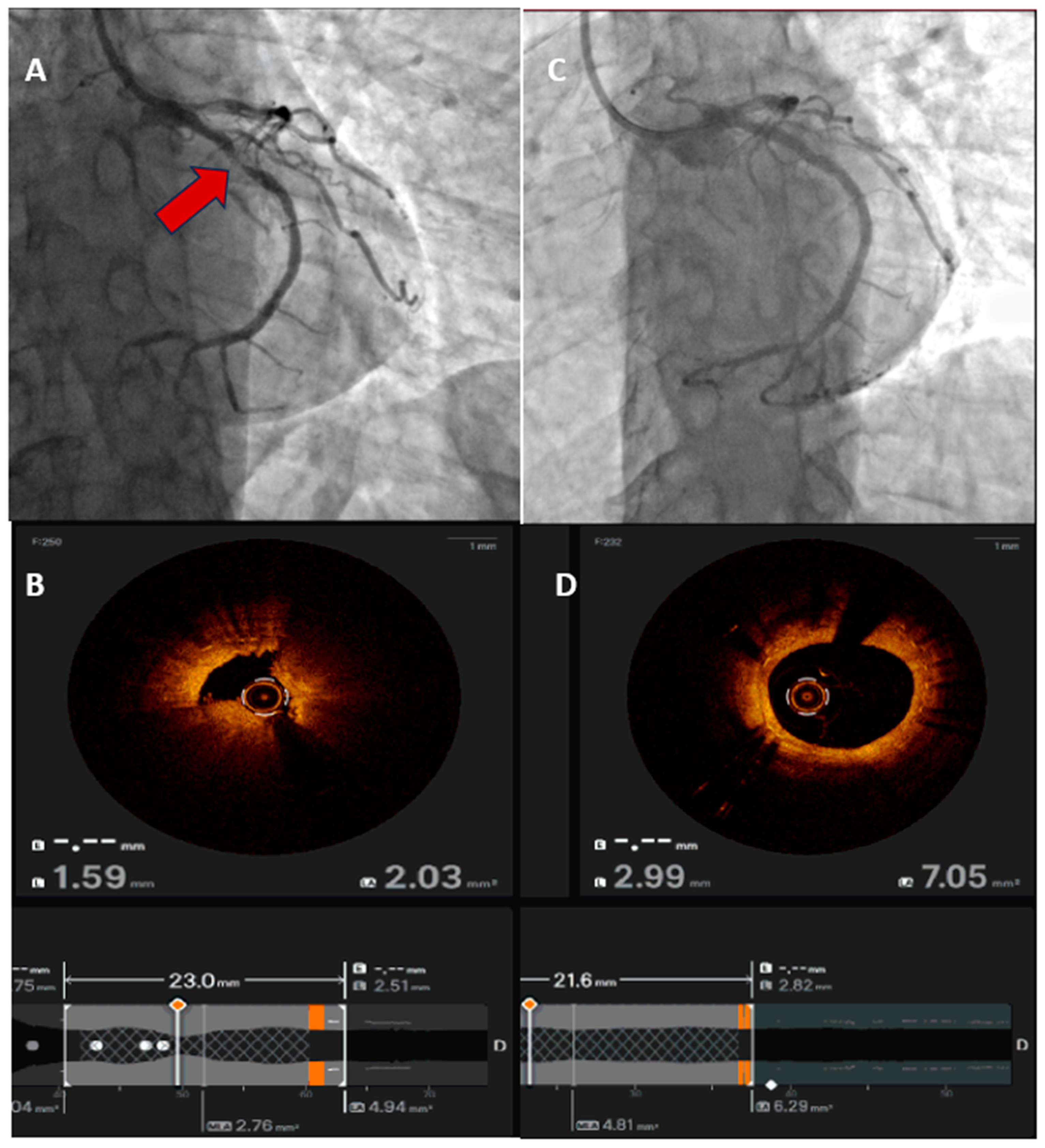
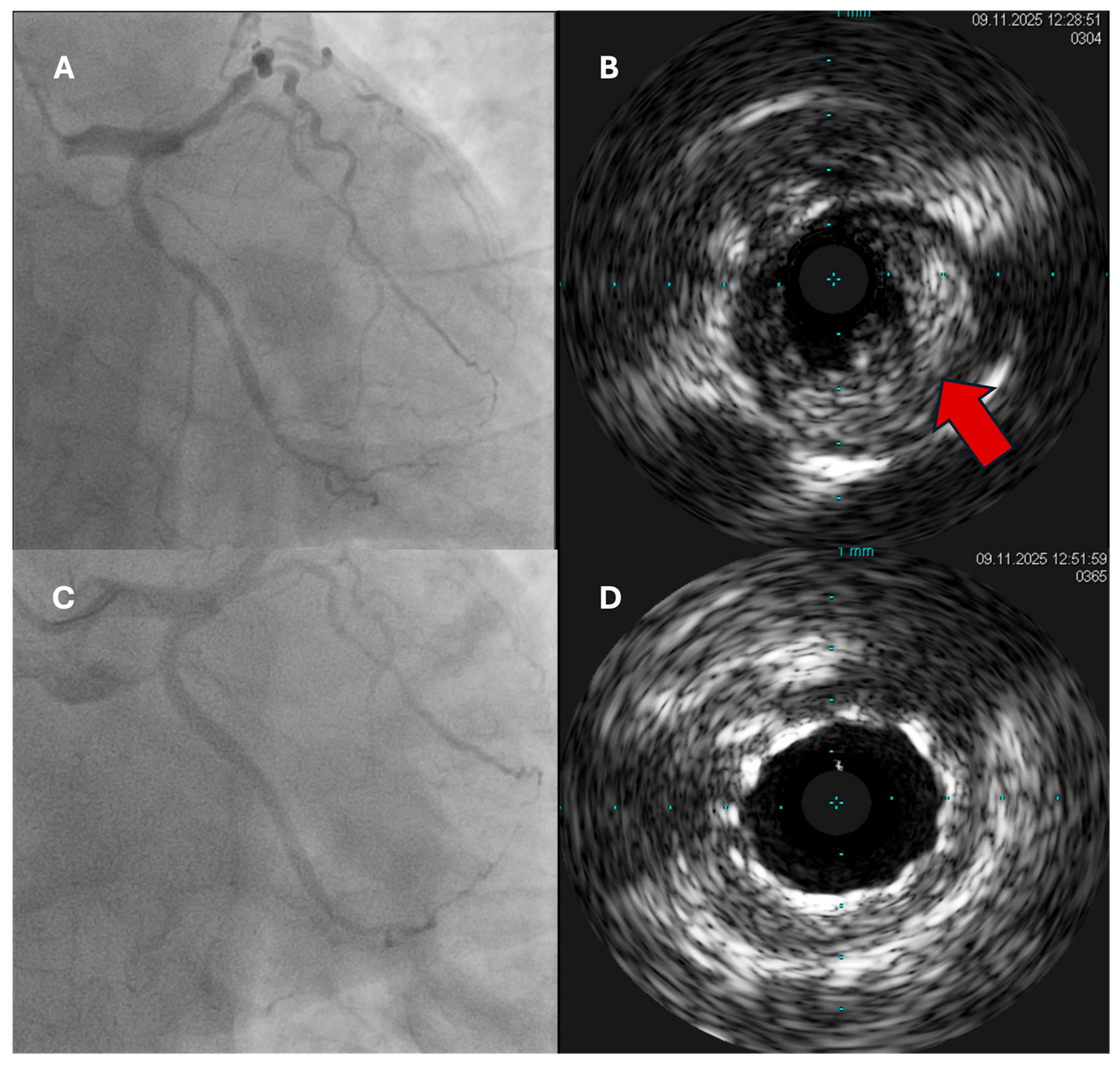
4.2. Role of Intracoronary Imaging and Coronary Physiology
4.3. Post-PCI Surveillance Imaging
5. Antithrombotic Therapy After ACS
5.1. Acute-Phase and Peri-Procedural Considerations (Including Shock)
5.2. DAPT Composition and Duration After PCI and Tailored De-Escalation
5.3. CABG After ACS
5.4. Patients Who Also Require Oral Anticoagulation
5.5. Gastrointestinal Bleeding Prevention During Antithrombotic Therapy
5.6. Where Do Factor XI/XIa Inhibitors Fit?
6. Secondary Prevention and Long-Term Care
6.1. Lipid-Lowering Strategies and Residual Cardiovascular Risk
6.2. Neurohormonal Blockade and Blood Pressure Targets
6.3. Cardiometabolic Drugs SGLT2 Inhibitors and GLP-1 Receptor Agonists
6.4. Comprehensive Cardiovascular Prevention Beyond Medication
6.5. Female Patients with ACS
6.6. Older Adults and Patients Living with Frailty
6.7. Pregnancy, Postpartum, and SCAD-Predominant ACS
6.8. Chronic Kidney Disease (CKD)
6.9. Ancestry-Specific Considerations (The “East Asian Paradox”)
6.10. Cardiogenic Shock (CS)
6.11. Health Equity and Access
7. Digital Tools and Implementation
8. Knowledge Gaps and Future Research
8.1. How Short and How “Aspirin-Free” Can We Go After ACS PCI?
8.2. When to Complete Revascularization in Multivessel STEMI
8.3. Antiplatelet Therapy After CABG (Duration, Intensity, and Timing)
8.4. Cardiogenic Shock and Immediate Platelet Inhibition
8.5. Anti-Inflammatory and Anticoagulant Innovation
8.6. Glucose–Cardiorenal Agents Early After AMI
8.7. Imaging, Surveillance, and Less-Stent Strategies
8.8. Gender- and Phenotype-Specific Secondary Prevention
8.9. Surgical Secondary Prevention and Graft Biology
9. Simple Summary
Funding
Institutional Review Board Statement
Informed Consent Statement
Data Availability Statement
Acknowledgments
Conflicts of Interest
References
- WHO. Cardiovascular Disease (CVDs). Available online: https://www.who.int/news-room/fact-sheets/detail/cardiovascular-diseases-%28cvds%29 (accessed on 15 December 2025).
- Martin, S.S.; Aday, A.W.; Almarzooq, Z.I.; Anderson, C.A.M.; Arora, P.; Avery, C.L.; Baker-Smith, C.M.; Barone Gibbs, B.; Beaton, A.Z.; Boehme, A.K.; et al. Correction to: 2024 Heart Disease and Stroke Statistics: A Report of US and Global Data From the American Heart Association. Circulation 2025, 151, e1095. [Google Scholar] [CrossRef] [PubMed]
- Di Cesare, M.; Perel, P.; Taylor, S.; Kabudula, C.; Bixby, H.; Gaziano, T.A.; McGhie, D.V.; Mwangi, J.; Pervan, B.; Narula, J.; et al. The Heart of the World. Glob. Heart 2024, 19, 11. [Google Scholar] [CrossRef]
- Zwart, B.; Claessen, B.; Damman, P.; Woudstra, P.; Vink, M.A.; Balder, J.W.; Dickinson, M.G.; Badings, E.A.; Appelman, Y.; van ’t Hof, A.W.J.; et al. 2023 European Society of Cardiology guidelines for the management of acute coronary syndromes: Statement of endorsement by the NVVC. Neth. Heart J. 2024, 32, 338–345. [Google Scholar] [CrossRef] [PubMed]
- Byrne, R.A.; Rossello, X.; Coughlan, J.J.; Barbato, E.; Berry, C.; Chieffo, A.; Claeys, M.J.; Dan, G.A.; Dweck, M.R.; Galbraith, M.; et al. 2023 ESC Guidelines for the management of acute coronary syndromes. Eur. Heart J. 2023, 44, 3720–3826. [Google Scholar] [CrossRef]
- Tarantini, G.; Honton, B.; Paradies, V.; Lemesle, G.; Range, G.; Godin, M.; Mangin, L.; Cuisset, T.; Ruiz-Nodar, J.M.; Brugaletta, S.; et al. Early Discontinuation of Aspirin after PCI in Low-Risk Acute Myocardial Infarction. N. Engl. J. Med. 2025, 393, 2083–2094. [Google Scholar] [CrossRef]
- Guimaraes, P.O.; Franken, M.; Tavares, C.A.M.; Antunes, M.O.; Silveira, F.S.; Andrade, P.B.; Bergo, R.R.; Joaquim, R.M.; Tinoco de Paula, J.E.; Nascimento, B.R.; et al. Early Withdrawal of Aspirin after PCI in Acute Coronary Syndromes. N. Engl. J. Med. 2025, 393, 2095–2106. [Google Scholar] [CrossRef] [PubMed]
- Rao, S.V.; O’Donoghue, M.L.; Ruel, M.; Rab, T.; Tamis-Holland, J.E.; Alexander, J.H.; Baber, U.; Baker, H.; Cohen, M.G.; Cruz-Ruiz, M.; et al. 2025 ACC/AHA/ACEP/NAEMSP/SCAI Guideline for the Management of Patients with Acute Coronary Syndromes: A Report of the American College of Cardiology/American Heart Association Joint Committee on Clinical Practice Guidelines. J. Am. Coll. Cardiol. 2025, 85, 2135–2237. [Google Scholar] [CrossRef]
- Nissen, S.E.; Lincoff, A.M.; Brennan, D.; Ray, K.K.; Mason, D.; Kastelein, J.J.P.; Thompson, P.D.; Libby, P.; Cho, L.; Plutzky, J.; et al. Bempedoic Acid and Cardiovascular Outcomes in Statin-Intolerant Patients. N. Engl. J. Med. 2023, 388, 1353–1364. [Google Scholar] [CrossRef]
- Roffi, M. What Is New in the 2023 European Society of Cardiology Guidelines for the Management of Acute Coronary Syndromes. Cardiol. Discov. 2023, 3, 227–231. [Google Scholar] [CrossRef]
- Thygesen, K.; Alpert, J.S.; Jaffe, A.S.; Chaitman, B.R.; Bax, J.J.; Morrow, D.A.; White, H.D.; Executive Group on behalf of the Joint European Society of Cardiology/American College of Cardiology/American Heart Association/World Heart Federation Task Force for the Universal Definition of Myocardial Infarction. Fourth Universal Definition of Myocardial Infarction (2018). Circulation 2018, 138, e618–e651. [Google Scholar] [CrossRef]
- Xing, L.; Yamamoto, E.; Sugiyama, T.; Jia, H.; Ma, L.; Hu, S.; Wang, C.; Zhu, Y.; Li, L.; Xu, M.; et al. EROSION Study (Effective Anti-Thrombotic Therapy Without Stenting: Intravascular Optical Coherence Tomography-Based Management in Plaque Erosion): A 1-Year Follow-Up Report. Circ. Cardiovasc. Interv. 2017, 10, e005860. [Google Scholar] [CrossRef]
- Sugiyama, T.; Yamamoto, E.; Fracassi, F.; Lee, H.; Yonetsu, T.; Kakuta, T.; Soeda, T.; Saito, Y.; Yan, B.P.; Kurihara, O.; et al. Calcified Plaques in Patients with Acute Coronary Syndromes. Cardiovasc. Interv. 2019, 12, 531–540. [Google Scholar] [CrossRef]
- Torii, S.; Sato, Y.; Otsuka, F.; Kolodgie, F.D.; Jinnouchi, H.; Sakamoto, A.; Park, J.; Yahagi, K.; Sakakura, K.; Cornelissen, A.; et al. Eruptive Calcified Nodules as a Potential Mechanism of Acute Coronary Thrombosis and Sudden Death. J. Am. Coll. Cardiol. 2021, 77, 1599–1611. [Google Scholar] [CrossRef]
- Yabumoto, N.; Fujino, M.; Sugane, H.; Hosoda, H.; Kitahara, S.; Fujino, Y.; Sawada, K.; Murai, K.; Iwai, T.; Honda, S.; et al. Clinical implications of calcification severity adjacent to calcified nodule: Its association with first and recurrent risks of target lesion revascularization after percutaneous coronary intervention. Atherosclerosis 2025, 402, 119116. [Google Scholar] [CrossRef] [PubMed]
- Agewall, S.; Beltrame, J.F.; Reynolds, H.R.; Niessner, A.; Rosano, G.; Caforio, A.L.; De Caterina, R.; Zimarino, M.; Roffi, M.; Kjeldsen, K.; et al. ESC working group position paper on myocardial infarction with non-obstructive coronary arteries. Eur. Heart J. 2017, 38, 143–153. [Google Scholar] [CrossRef] [PubMed]
- Ekenback, C.; Tornvall, P.; Agewall, S. MINOCA from A to Z. Available online: https://www.acc.org/Latest-in-Cardiology/Articles/2022/01/05/17/41/MINOCA-from-A-to-Z (accessed on 15 December 2025).
- Hayes, S.N.; Kim, E.S.H.; Saw, J.; Adlam, D.; Arslanian-Engoren, C.; Economy, K.E.; Ganesh, S.K.; Gulati, R.; Lindsay, M.E.; Mieres, J.H.; et al. Spontaneous Coronary Artery Dissection: Current State of the Science: A Scientific Statement From the American Heart Association. Circulation 2018, 137, e523–e557. [Google Scholar] [CrossRef] [PubMed]
- Hayes, S.N.; Tweet, M.S.; Adlam, D.; Kim, E.S.H.; Gulati, R.; Price, J.E.; Rose, C.H. Spontaneous Coronary Artery Dissection: JACC State-of-the-Art Review. J. Am. Coll. Cardiol. 2020, 76, 961–984. [Google Scholar] [CrossRef]
- Beltrame, J.F.; Crea, F.; Kaski, J.C.; Ogawa, H.; Ong, P.; Sechtem, U.; Shimokawa, H.; Bairey Merz, C.N. Coronary Vasomotion Disorders International Study Group. International standardization of diagnostic criteria for vasospastic angina. Eur. Heart J. 2017, 38, 2565–2568. [Google Scholar] [CrossRef]
- Ong, P.; Camici, P.G.; Beltrame, J.F.; Crea, F.; Shimokawa, H.; Sechtem, U.; Kaski, J.C.; Bairey Merz, C.N. Coronary Vasomotion Disorders International Study Group. International standardization of diagnostic criteria for microvascular angina. Int. J. Cardiol. 2018, 250, 16–20. [Google Scholar] [CrossRef]
- Jenkins, K.; Pompei, G.; Ganzorig, N.; Brown, S.; Beltrame, J.; Kunadian, V. Vasospastic angina: A review on diagnostic approach and management. Ther. Adv. Cardiovasc. Dis. 2024, 18, 17539447241230400. [Google Scholar] [CrossRef]
- Wu, Y.; Wei, S.; Wu, X.; Li, Y.; Han, X. Neutrophil extracellular traps in acute coronary syndrome. J. Inflamm. 2023, 20, 17. [Google Scholar] [CrossRef] [PubMed]
- Doring, Y.; Libby, P.; Soehnlein, O. Neutrophil Extracellular Traps Participate in Cardiovascular Diseases: Recent Experimental and Clinical Insights. Circ. Res. 2020, 126, 1228–1241. [Google Scholar] [CrossRef] [PubMed]
- Mitsis, A.; Kyriakou, M.; Sokratous, S.; Karmioti, G.; Drakomathioulakis, M.; Myrianthefs, M.; Ziakas, A.; Tzikas, S.; Kassimis, G. Exploring the Landscape of Anti-Inflammatory Trials: A Comprehensive Review of Strategies for Targeting Inflammation in Acute Myocardial Infraction. Biomedicines 2024, 12, 701. [Google Scholar] [CrossRef]
- Wenzl, F.A.; Kofoed, K.F.; Simonsson, M.; Ambler, G.; van der Sangen, N.M.R.; Lampa, E.; Bruno, F.; de Belder, M.A.; Hlasensky, J.; Mueller-Hennessen, M.; et al. Extension of the GRACE score for non-ST-elevation acute coronary syndrome: A development and validation study in ten countries. Lancet Digit. Health 2025, 7, 100907. [Google Scholar] [CrossRef]
- Molenaar, M.A.; Selder, J.L.; Schmidt, A.F.; Asselbergs, F.W.; Nieuwendijk, J.D.; van Dalfsen, B.; Schuuring, M.J.; Bouma, B.J.; Chamuleau, S.A.J.; Verouden, N.J. Validation of machine learning-based risk stratification scores for patients with acute coronary syndrome treated with percutaneous coronary intervention. Eur. Heart J. Digit. Health 2024, 5, 702–711. [Google Scholar] [CrossRef]
- Wenzl, F.A.; Bruno, F.; Kofoed, K.F.; Raeber, L.; Roffi, M.; Stellos, K.; Camici, G.G.; Kraler, S.; Engstroem, T.; Giannitsis, E.; et al. Validation of the GRACE 3.0 score and redefinition of the risk threshold for early invasive treatment in non-ST-segment elevation acute coronary syndromes: A modelling study from five countries. Eur. Heart J. 2023, 44, ehad655-1539. [Google Scholar] [CrossRef]
- ESC Press Office. Routine Heart CT Scanning Is not Warranted After Stenting for Left Main Coronary Artery Disease. Available online: https://www.escardio.org/The-ESC/Press-Office/Press-releases/Routine-heart-CT-scanning-is-not-warranted-after-stenting-for-left-main-coronary-artery-disease (accessed on 15 December 2025).
- Gao, X.F.; Ge, Z.; Kong, X.Q.; Kan, J.; Han, L.; Lu, S.; Tian, N.L.; Lin, S.; Lu, Q.H.; Wang, X.Y.; et al. 3-Year Outcomes of the ULTIMATE Trial Comparing Intravascular Ultrasound Versus Angiography-Guided Drug-Eluting Stent Implantation. Cardiovasc. Interv. 2021, 14, 247–257. [Google Scholar] [CrossRef] [PubMed]
- Zhang, J.; Gao, X.; Kan, J.; Ge, Z.; Han, L.; Lu, S.; Tian, N.; Lin, S.; Lu, Q.; Wu, X.; et al. Intravascular Ultrasound Versus Angiography-Guided Drug-Eluting Stent Implantation: The ULTIMATE Trial. J. Am. Coll. Cardiol. 2018, 72, 3126–3137. [Google Scholar] [CrossRef]
- Sreenivasan, J.; Reddy, R.K.; Jamil, Y.; Malik, A.; Chamie, D.; Howard, J.P.; Nanna, M.G.; Mintz, G.S.; Maehara, A.; Ali, Z.A.; et al. Intravascular Imaging-Guided Versus Angiography-Guided Percutaneous Coronary Intervention: A Systematic Review and Meta-Analysis of Randomized Trials. J. Am. Heart Assoc. 2024, 13, e031111. [Google Scholar] [CrossRef]
- Mitsis, A.; Eftychiou, C.; Kadoglou, N.P.E.; Theodoropoulos, K.C.; Karagiannidis, E.; Nasoufidou, A.; Ziakas, A.; Tzikas, S.; Kassimis, G. Innovations in Intracoronary Imaging: Present Clinical Practices and Future Outlooks. J. Clin. Med. 2024, 13, 4086. [Google Scholar] [CrossRef]
- Puymirat, E.; Cayla, G.; Simon, T.; Steg, P.G.; Montalescot, G.; Durand-Zaleski, I.; le Bras, A.; Gallet, R.; Khalife, K.; Morelle, J.F.; et al. Multivessel PCI Guided by FFR or Angiography for Myocardial Infarction. N. Engl. J. Med. 2021, 385, 297–308. [Google Scholar] [CrossRef] [PubMed]
- Mehta, S.R.; Wood, D.A.; Storey, R.F.; Mehran, R.; Bainey, K.R.; Nguyen, H.; Meeks, B.; Di Pasquale, G.; Lopez-Sendon, J.; Faxon, D.P.; et al. Complete Revascularization with Multivessel PCI for Myocardial Infarction. N. Engl. J. Med. 2019, 381, 1411–1421. [Google Scholar] [CrossRef]
- Oqab, Z.; Kunadian, V.; Wood, D.A.; Storey, R.F.; Rao, S.V.; Mehran, R.; Pinilla-Echeverri, N.; Mani, T.; Boone, R.H.; Kassam, S.; et al. Complete Revascularization Versus Culprit-Lesion-Only PCI in STEMI Patients with Diabetes and Multivessel Coronary Artery Disease: Results From the COMPLETE Trial. Circ. Cardiovasc. Interv. 2023, 16, e012867. [Google Scholar] [CrossRef] [PubMed]
- Kim, M.C.; Ahn, J.H.; Hyun, D.Y.; Lim, Y.; Cho, K.H.; Lee, S.H.; Park, S.; Oh, S.; Sim, D.S.; Hong, Y.J.; et al. Immediate versus staged complete revascularisation during index admission in patients with ST-segment elevation myocardial infarction and multivessel disease (OPTION-STEMI): A multicentre, non-inferiority, open-label, randomised trial. Lancet 2025, 406, 1032–1043. [Google Scholar] [CrossRef]
- Stone, G.W.; Christiansen, E.H.; Ali, Z.A.; Andreasen, L.N.; Maehara, A.; Ahmad, Y.; Landmesser, U.; Holm, N.R. Intravascular imaging-guided coronary drug-eluting stent implantation: An updated network meta-analysis. Lancet 2024, 403, 824–837. [Google Scholar] [CrossRef]
- D’Ascenzo, F.; Cerrato, E.; De Filippo, O.; Gaido, L.; Franze, A.; Iannaccone, M.; Wanha, W.; Santarelli, A.; Guiducci, V.; Barbero, U.; et al. Computed Tomography Angiography or Standard Care After Left Main PCI? J. Am. Coll. Cardiol. 2025, 86, 1724–1734. [Google Scholar] [CrossRef] [PubMed]
- ESC Press Office. Intravenous Blood Thinner Investigated in Cardiogenic Shock Caused by Acute Myocardial Infarction. Available online: https://www.escardio.org/The-ESC/Press-Office/Press-releases/Intravenous-blood-thinner-investigated-in-cardiogenic-shock-caused-by-acute-myocardial-infarction (accessed on 15 December 2025).
- ACC. DUAL-ACS: 12-Month vs. 3-Month DAPT Following Acute MI. Available online: https://www.acc.org/latest-in-cardiology/articles/2025/08/26/11/47/sun-309am-dual-acs-esc-2025 (accessed on 15 December 2025).
- Kang, D.Y.; Wee, S.B.; Ahn, J.M.; Park, H.; Yun, S.C.; Park, K.H.; Kang, S.H.; Suh, J.; Bae, J.W.; Park, S.; et al. Temporal modulation of antiplatelet therapy in high-risk patients undergoing complex percutaneous coronary intervention: The TAILORED-CHIP randomized clinical trial. Eur. Heart J. 2025, ehaf652. [Google Scholar] [CrossRef]
- Jeppsson, A.; James, S.; Moller, C.H.; Malm, C.J.; Dalen, M.; Vanky, F.; Modrau, I.S.; Andersen, K.; Anttila, V.; Atroshchenko, G.V.; et al. Ticagrelor and Aspirin or Aspirin Alone after Coronary Surgery for Acute Coronary Syndrome. N. Engl. J. Med. 2025, 393, 2313–2323. [Google Scholar] [CrossRef]
- Yuan, X.; Chu, Q.; Chen, K.; Wang, Y.; Zhang, L.; Zheng, Y.; Hu, S. Multicentre, randomised, double-blind, parallel controlled trial to investigate timing of platelet inhibition after coronary artery bypass grafting: TOP-CABG trial study. BMJ Open 2023, 13, e070823. [Google Scholar] [CrossRef]
- Ballesteros, R.V.; Ibanez, B. Long-Term Clinical Management After an Acute Coronary Syndrome. Available online: https://www.escardio.org/Councils/Council-for-Cardiology-Practice-%28CCP%29/Cardiopractice/long-term-clinical-management-after-an-acute-coronary-syndrome (accessed on 15 December 2025).
- Hofmann, R.; James, S.; Sundqvist, M.O.; Warme, J.; Angeras, O.; Alfredsson, J.; Erlinge, D.; Arefalk, G.; Arstad, G.; Blomberg, S.; et al. Helicobacter pylori Screening After Acute Myocardial Infarction: The Cluster Randomized Crossover HELP-MI SWEDEHEART Trial. JAMA 2025, 334, 1160–1169. [Google Scholar] [CrossRef] [PubMed]
- Rao, S.V.; Kirsch, B.; Bhatt, D.L.; Budaj, A.; Coppolecchia, R.; Eikelboom, J.; James, S.K.; Jones, W.S.; Merkely, B.; Keller, L.; et al. A Multicenter, Phase 2, Randomized, Placebo-Controlled, Double-Blind, Parallel-Group, Dose-Finding Trial of the Oral Factor XIa Inhibitor Asundexian to Prevent Adverse Cardiovascular Outcomes After Acute Myocardial Infarction. Circulation 2022, 146, 1196–1206. [Google Scholar] [CrossRef] [PubMed]
- Mach, F.; Koskinas, K.C.; Roeters van Lennep, J.E.; Tokgözoğlu, L.; Badimon, L.; Baigent, C.; Benn, M.; Binder, C.J.; Catapano, A.L.; De Backer, G.G.; et al. 2025 Focused Update of the 2019 ESC/EAS Guidelines for the management of dyslipidaemias: Developed by the task force for the management of dyslipidaemias of the European Society of Cardiology (ESC) and the European Atherosclerosis Society (EAS). Eur. Heart J. 2025, 46, 4359–4378. [Google Scholar] [CrossRef] [PubMed]
- Mach, F.; Baigent, C.; Catapano, A.L.; Koskinas, K.C.; Casula, M.; Badimon, L.; Chapman, M.J.; De Backer, G.G.; Delgado, V.; Ference, B.A.; et al. 2019 ESC/EAS Guidelines for the management of dyslipidaemias: Lipid modification to reduce cardiovascular risk. Eur. Heart J. 2020, 41, 111–188. [Google Scholar] [CrossRef]
- Bhatt, D.L.; Steg, P.G.; Miller, M.; Brinton, E.A.; Jacobson, T.A.; Ketchum, S.B.; Doyle, R.T., Jr.; Juliano, R.A.; Jiao, L.; Granowitz, C.; et al. Cardiovascular Risk Reduction with Icosapent Ethyl for Hypertriglyceridemia. N. Engl. J. Med. 2019, 380, 11–22. [Google Scholar] [CrossRef] [PubMed]
- Nicholls, S.J.; Lincoff, A.M.; Garcia, M.; Bash, D.; Ballantyne, C.M.; Barter, P.J.; Davidson, M.H.; Kastelein, J.J.P.; Koenig, W.; McGuire, D.K.; et al. Effect of High-Dose Omega-3 Fatty Acids vs Corn Oil on Major Adverse Cardiovascular Events in Patients at High Cardiovascular Risk: The STRENGTH Randomized Clinical Trial. JAMA 2020, 324, 2268–2280. [Google Scholar] [CrossRef]
- Landmesser, U.; Koenig, W.; Leiter, L.A.; Raal, F.J.; Ray, K.K.; Schwartz, G.G.; Han, J.; Conde, L.G.; Wright, R.S. Efficacy and safety of inclisiran based on background lipid-lowering treatment. Eur. J. Prev. Cardiol. 2025, zwaf214, Online ahead of print. [Google Scholar] [CrossRef]
- Wright, R.S.; Raal, F.J.; Koenig, W.; Landmesser, U.; Leiter, L.A.; Vikarunnessa, S.; Lesogor, A.; Maheux, P.; Talloczy, Z.; Zang, X.; et al. Inclisiran administration potently and durably lowers LDL-C over an extended-term follow-up: The ORION-8 trial. Cardiovasc. Res. 2024, 120, 1400–1410. [Google Scholar] [CrossRef]
- Verma, S.; Leiter, L.A.; Teoh, H.; Mancini, G.B.J.; Quan, A.; Elituv, R.; Verma, M.; Misner, E.; Szarek, M.; Thorpe, K.E.; et al. Effect of evolocumab on saphenous vein graft patency after coronary artery bypass surgery (NEWTON-CABG CardioLink-5): An international, randomised, double-blind, placebo-controlled trial. Lancet 2025, 406, 1223–1234. [Google Scholar] [CrossRef]
- Pfeffer, M.A.; Braunwald, E.; Moye, L.A.; Basta, L.; Brown, E.J., Jr.; Cuddy, T.E.; Davis, B.R.; Geltman, E.M.; Goldman, S.; Flaker, G.C.; et al. Effect of captopril on mortality and morbidity in patients with left ventricular dysfunction after myocardial infarction. Results of the survival and ventricular enlargement trial. The SAVE Investigators. N. Engl. J. Med. 1992, 327, 669–677. [Google Scholar] [CrossRef]
- Pfeffer, M.A.; McMurray, J.J.; Velazquez, E.J.; Rouleau, J.L.; Kober, L.; Maggioni, A.P.; Solomon, S.D.; Swedberg, K.; Van de Werf, F.; White, H.; et al. Valsartan, captopril, or both in myocardial infarction complicated by heart failure, left ventricular dysfunction, or both. N. Engl. J. Med. 2003, 349, 1893–1906. [Google Scholar] [CrossRef]
- Heart Outcomes Prevention Evaluation Study, I.; Yusuf, S.; Sleight, P.; Pogue, J.; Bosch, J.; Davies, R.; Dagenais, G. Effects of an angiotensin-converting-enzyme inhibitor, ramipril, on cardiovascular events in high-risk patients. N. Engl. J. Med. 2000, 342, 145–153. [Google Scholar] [CrossRef]
- Ibanez, B.; Latini, R.; Rossello, X.; Dominguez-Rodriguez, A.; Fernandez-Vazquez, F.; Pelizzoni, V.; Sanchez, P.L.; Anguita, M.; Barrabes, J.A.; Raposeiras-Roubin, S.; et al. Beta-Blockers after Myocardial Infarction without Reduced Ejection Fraction. N. Engl. J. Med. 2025, 393, 1889–1900. [Google Scholar] [CrossRef]
- Butler, J.; Jones, W.S.; Udell, J.A.; Anker, S.D.; Petrie, M.C.; Harrington, J.; Mattheus, M.; Zwiener, I.; Amir, O.; Bahit, M.C.; et al. Empagliflozin after Acute Myocardial Infarction. N. Engl. J. Med. 2024, 390, 1455–1466. [Google Scholar] [CrossRef]
- James, S.; Erlinge, D.; Storey, R.F.; McGuire, D.K.; de Belder, M.; Eriksson, N.; Andersen, K.; Austin, D.; Arefalk, G.; Carrick, D.; et al. Dapagliflozin in Myocardial Infarction without Diabetes or Heart Failure. NEJM Evid. 2024, 3, EVIDoa2300286. [Google Scholar] [CrossRef]
- Lincoff, A.M.; Brown-Frandsen, K.; Colhoun, H.M.; Deanfield, J.; Emerson, S.S.; Esbjerg, S.; Hardt-Lindberg, S.; Hovingh, G.K.; Kahn, S.E.; Kushner, R.F.; et al. Semaglutide and Cardiovascular Outcomes in Obesity without Diabetes. N. Engl. J. Med. 2023, 389, 2221–2232. [Google Scholar] [CrossRef] [PubMed]
- Dibben, G.O.; Faulkner, J.; Oldridge, N.; Rees, K.; Thompson, D.R.; Zwisler, A.D.; Taylor, R.S. Exercise-based cardiac rehabilitation for coronary heart disease: A meta-analysis. Eur. Heart J. 2023, 44, 452–469. [Google Scholar] [CrossRef] [PubMed]
- Rouleau, C.R.; Chirico, D.; Wilton, S.B.; MacDonald, M.K.; Tao, T.; Arena, R.; Campbell, T.; Aggarwal, S. Mortality Benefits of Cardiac Rehabilitation in Coronary Artery Disease Are Mediated by Comprehensive Risk Factor Modification: A Retrospective Cohort Study. J. Am. Heart Assoc. 2024, 13, e033568. [Google Scholar] [CrossRef] [PubMed]
- Theodoulou, A.; Chepkin, S.C.; Ye, W.; Fanshawe, T.R.; Bullen, C.; Hartmann-Boyce, J.; Livingstone-Banks, J.; Hajizadeh, A.; Lindson, N. Different doses, durations and modes of delivery of nicotine replacement therapy for smoking cessation. Cochrane Database Syst. Rev. 2023, 6, CD013308. [Google Scholar] [CrossRef]
- Meng, Y.; Xiang, S.; Qu, L.; Li, Y. The efficacy and acceptability of pharmacological monotherapies and e-cigarette on smoking cessation: A systemic review and network meta-analysis. Front. Public Health 2024, 12, 1361186. [Google Scholar] [CrossRef]
- Redfors, B.; Furer, A.; Selker, H.P.; Thiele, H.; Patel, M.R.; Chen, S.; Udelson, J.E.; Ohman, E.M.; Eitel, I.; Granger, C.B.; et al. Effect of Smoking on Outcomes of Primary PCI in Patients with STEMI. J. Am. Coll. Cardiol. 2020, 75, 1743–1754. [Google Scholar] [CrossRef]
- Castellano, J.M.; Pocock, S.J.; Bhatt, D.L.; Quesada, A.J.; Owen, R.; Fernandez-Ortiz, A.; Sanchez, P.L.; Marin Ortuno, F.; Vazquez Rodriguez, J.M.; Domingo-Fernandez, A.; et al. Polypill Strategy in Secondary Cardiovascular Prevention. N. Engl. J. Med. 2022, 387, 967–977. [Google Scholar] [CrossRef] [PubMed]
- Frobert, O.; Gotberg, M.; Erlinge, D.; Akhtar, Z.; Christiansen, E.H.; MacIntyre, C.R.; Oldroyd, K.G.; Motovska, Z.; Erglis, A.; Moer, R.; et al. Influenza Vaccination After Myocardial Infarction: A Randomized, Double-Blind, Placebo-Controlled, Multicenter Trial. Circulation 2021, 144, 1476–1484. [Google Scholar] [CrossRef]
- Earle, N.J.; Doughty, R.N.; Devlin, G.; White, H.; Riddell, C.; Choi, Y.; Kerr, A.J.; Poppe, K.K. Sex differences in outcomes after acute coronary syndrome vary with age: A New Zealand national study. Eur. Heart J. Acute Cardiovasc. Care 2024, 13, 284–292. [Google Scholar] [CrossRef] [PubMed]
- Zhou, S.; Zhang, Y.; Dong, X.; Zhang, X.; Ma, J.; Li, N.; Shi, H.; Yin, Z.; Xue, Y.; Hu, Y.; et al. Sex Disparities in Management and Outcomes Among Patients with Acute Coronary Syndrome. JAMA Netw. Open 2023, 6, e2338707. [Google Scholar] [CrossRef] [PubMed]
- Kraler, S.; Mueller, C.; Libby, P.; Bhatt, D.L. Acute coronary syndromes: Mechanisms, challenges, and new opportunities. Eur. Heart J. 2025, 46, 2866–2889. [Google Scholar] [CrossRef]
- Pacheco, C.; Coutinho, T.; Bastiany, A.; Beanlands, R.; Boczar, K.E.; Gulati, M.; Liu, S.; Luu, J.; Mulvagh, S.L.; Paquin, A.; et al. Canadian Cardiovascular Society/Canadian Women’s Heart Health Alliance Clinical Practice Update on Myocardial Infarction with No Obstructive Coronary Artery Disease (MINOCA). Can. J. Cardiol. 2024, 40, 953–968. [Google Scholar] [CrossRef]
- Lawless, M.; Appelman, Y.; Beltrame, J.F.; Navarese, E.P.; Ratcovich, H.; Wilkinson, C.; Kunadian, V. Sex differences in treatment and outcomes amongst myocardial infarction patients presenting with and without obstructive coronary arteries: A prospective multicentre study. Eur. Heart J. Open 2023, 3, oead033. [Google Scholar] [CrossRef]
- Paradies, V.; Masiero, G.; Rubboli, A.; Van Beusekom, H.M.M.; Costa, F.; Capranzano, P.; Degrauwe, S.; Gorog, D.A.; Jorge, C.M.; Buchanan, G.L.; et al. Antithrombotic drugs for acute coronary syndromes in women: Sex-adjusted treatment and female representation in randomised clinical trials. A clinical consensus statement of the European Association of Percutaneous Cardiovascular Interventions (EAPCI) and the ESC Working Group on Thrombosis. Eur. Heart J. 2025, 46, 2730–2741. [Google Scholar] [CrossRef]
- Costa, F.; van Klaveren, D.; James, S.; Heg, D.; Raber, L.; Feres, F.; Pilgrim, T.; Hong, M.K.; Kim, H.S.; Colombo, A.; et al. Derivation and validation of the predicting bleeding complications in patients undergoing stent implantation and subsequent dual antiplatelet therapy (PRECISE-DAPT) score: A pooled analysis of individual-patient datasets from clinical trials. Lancet 2017, 389, 1025–1034. [Google Scholar] [CrossRef]
- Urban, P.; Mehran, R.; Colleran, R.; Angiolillo, D.J.; Byrne, R.A.; Capodanno, D.; Cuisset, T.; Cutlip, D.; Eerdmans, P.; Eikelboom, J.; et al. Defining High Bleeding Risk in Patients Undergoing Percutaneous Coronary Intervention. Circulation 2019, 140, 240–261. [Google Scholar] [CrossRef]
- Kunadian, V.; Mossop, H.; Shields, C.; Bardgett, M.; Watts, P.; Teare, M.D.; Pritchard, J.; Adams-Hall, J.; Runnett, C.; Ripley, D.P.; et al. Invasive Treatment Strategy for Older Patients with Myocardial Infarction. N. Engl. J. Med. 2024, 391, 1673–1684. [Google Scholar] [CrossRef]
- Tegn, N.; Abdelnoor, M.; Aaberge, L.; Endresen, K.; Smith, P.; Aakhus, S.; Gjertsen, E.; Dahl-Hofseth, O.; Ranhoff, A.H.; Gullestad, L.; et al. Invasive versus conservative strategy in patients aged 80 years or older with non-ST-elevation myocardial infarction or unstable angina pectoris (After Eighty study): An open-label randomised controlled trial. Lancet 2016, 387, 1057–1065. [Google Scholar] [CrossRef]
- Sanchis, J.; Bueno, H.; Garcia-Blas, S.; Alegre, O.; Marti, D.; Martinez-Selles, M.; Dominguez-Perez, L.; Diez-Villanueva, P.; Barrabes, J.A.; Marin, F.; et al. Invasive Treatment Strategy in Adults with Frailty and Non-ST-Segment Elevation Myocardial Infarction: A Secondary Analysis of a Randomized Clinical Trial. JAMA Netw. Open 2024, 7, e240809. [Google Scholar] [CrossRef]
- Valgimigli, M.; Gagnor, A.; Calabro, P.; Frigoli, E.; Leonardi, S.; Zaro, T.; Rubartelli, P.; Briguori, C.; Ando, G.; Repetto, A.; et al. Radial versus femoral access in patients with acute coronary syndromes undergoing invasive management: A randomised multicentre trial. Lancet 2015, 385, 2465–2476. [Google Scholar] [CrossRef]
- De Backer, J.; Haugaa, K.H.; Hasselberg, N.E.; de Hosson, M.; Brida, M.; Castelletti, S.; Cauldwell, M.; Cerbai, E.; Crotti, L.; de Groot, N.M.S.; et al. 2025 ESC Guidelines for the management of cardiovascular disease and pregnancy: Developed by the task force on the management of cardiovascular disease and pregnancy of the European Society of Cardiology (ESC)Endorsed by the European Society of Gynecology (ESG). Eur. Heart J. 2025, 46, 4462–4568. [Google Scholar] [CrossRef]
- Adlam, D.; Alfonso, F.; Maas, A.; Vrints, C.; Committee, W. European Society of Cardiology, acute cardiovascular care association, SCAD study group: A position paper on spontaneous coronary artery dissection. Eur. Heart J. 2018, 39, 3353–3368. [Google Scholar] [CrossRef] [PubMed]
- Singulane, C.C.; Wang, S.; Watts, K.; Stahl, M.E.; Denlinger, L.; Lloyd, R.; Pallinti, P.; Preston, L.; Morsy, M.; Quesada, O.; et al. Spontaneous Coronary Artery Dissection (SCAD): Unveiling the Enigma of the Unexpected Coronary Event. Curr. Atheroscler. Rep. 2025, 27, 81. [Google Scholar] [CrossRef]
- Stefanini, G.G.; Briguori, C.; Cao, D.; Baber, U.; Sartori, S.; Zhang, Z.; Dangas, G.; Angiolillo, D.J.; Mehta, S.; Cohen, D.J.; et al. Ticagrelor monotherapy in patients with chronic kidney disease undergoing percutaneous coronary intervention: TWILIGHT-CKD. Eur. Heart J. 2021, 42, 4683–4693. [Google Scholar] [CrossRef]
- Dangas, G.; Baber, U.; Sharma, S.; Giustino, G.; Sartori, S.; Nicolas, J.; Goel, R.; Mehta, S.; Cohen, D.; Angiolillo, D.J.; et al. Safety and efficacy of ticagrelor monotherapy according to drug-eluting stent type: The TWILIGHT-STENT study. EuroIntervention 2022, 17, 1330–1339. [Google Scholar] [CrossRef] [PubMed]
- Gong, Y.; Jeong, Y.H.; Wang, T.D.; Tan, J.W.C.; Qian, J.; Yan, H.; Chan, M.Y.; Chen, Y.; Zhang, S.; Yuan, Z.; et al. Position Statement on Antiplatelet Therapy for East Asians with Coronary Artery Disease: 2025 Update. JACC Asia 2025, 5, 821–846. [Google Scholar] [CrossRef] [PubMed]
- Simoni, A.H.; Frydenlund, J.; Kragholm, K.H.; Boggild, H.; Jensen, S.E.; Johnsen, S.P. Socioeconomic inequity in incidence, outcomes and care for acute coronary syndrome: A systematic review. Int. J. Cardiol. 2022, 356, 19–29. [Google Scholar] [CrossRef]
- Hsuan, C.; Lin, M.P.; Zebrowski, A.; Hsia, R.Y.; Carr, B.G.; Vanness, D.J.; Wei, E.K.; Buckler, D.G.; Bi, H.; Rogowski, J.A. Disparities by Race and Ethnicity in Percutaneous Coronary Intervention. JAMA Netw. Open 2025, 8, e2532660. [Google Scholar] [CrossRef]
- Cascino, T.M.; Barnes, G.D. Racial Disparities in STEMI Care Process-Not All Roads Lead to Reperfusion. JAMA Netw. Open 2025, 8, e2532669. [Google Scholar] [CrossRef]
- Rossello, X.; Gonzalez-Del-Hoyo, M.; Aktaa, S.; Gale, C.P.; Barbash, I.; Claeys, M.J.; Coughlan, J.J.; Ferreira, J.P.; Galbraith, M.; Leosdottir, M.; et al. European Society of Cardiology quality indicators for the management of acute coronary syndromes: Developed in collaboration with the Association for Acute CardioVascular Care and the European Association of Percutaneous Cardiovascular Interventions of the ESC. Eur. Heart J. Acute Cardiovasc. Care 2025, 14, 145–154. [Google Scholar] [CrossRef] [PubMed]
- Cannon, C.P.; Blazing, M.A.; Giugliano, R.P.; McCagg, A.; White, J.A.; Theroux, P.; Darius, H.; Lewis, B.S.; Ophuis, T.O.; Jukema, J.W.; et al. Ezetimibe Added to Statin Therapy after Acute Coronary Syndromes. N. Engl. J. Med. 2015, 372, 2387–2397. [Google Scholar] [CrossRef]
- Koskinas, K.C.; Windecker, S.; Pedrazzini, G.; Mueller, C.; Cook, S.; Matter, C.M.; Muller, O.; Haner, J.; Gencer, B.; Crljenica, C.; et al. Evolocumab for Early Reduction of LDL Cholesterol Levels in Patients with Acute Coronary Syndromes (EVOPACS). J. Am. Coll. Cardiol. 2019, 74, 2452–2462. [Google Scholar] [CrossRef] [PubMed]
- Ogungbe, O.; Longenecker, C.T.; Beaton, A.; de Loizaga, S.; Brant, L.C.C.; Turkson Ocran, R.N.; Bastani, P.; Sarfo, F.S.; Commodore-Mensah, Y. Advancing Cardiovascular Health Equity Globally Through Digital Technologies. J. Am. Heart Assoc. 2024, 13, e031237. [Google Scholar] [CrossRef]
- McDonagh, S.T.; Dalal, H.; Moore, S.; Clark, C.E.; Dean, S.G.; Jolly, K.; Cowie, A.; Afzal, J.; Taylor, R.S. Home-based versus centre-based cardiac rehabilitation. Cochrane Database Syst. Rev. 2023, 10, CD007130. [Google Scholar] [CrossRef] [PubMed]
- Golbus, J.R.; Lopez-Jimenez, F.; Barac, A.; Cornwell, W.K., 3rd; Dunn, P.; Forman, D.E.; Martin, S.S.; Schorr, E.N.; Supervia, M.; Exercise, C.R.; et al. Digital Technologies in Cardiac Rehabilitation: A Science Advisory From the American Heart Association. Circulation 2023, 148, 95–107. [Google Scholar] [CrossRef]
- Dwiputra, B.; Santoso, A.; Purwowiyoto, B.S.; Radi, B.; Ambari, A.M.; Desandri, D.R.; Fatrin, S.; Pandhita, B.A.W. Smartphone-Based Cardiac Rehabilitation Program Improves Functional Capacity in Coronary Heart Disease Patients: A Systematic Review and Meta-Analysis. Glob. Heart 2023, 18, 42. [Google Scholar] [CrossRef]
- Shah, L.; Wu, C.; Tackett, S.; Sadauskas, L.; Martin, S.S.; Hughes, H.; Gilotra, N.A. Telemedicine Disparities in Ambulatory Cardiology Visits in a Large Academic Health System. JACC Adv. 2024, 3, 101119. [Google Scholar] [CrossRef]
- Whitehead-Clarke, T. More on Racial Bias in Pulse Oximetry Measurement. N. Engl. J. Med. 2021, 384, 1278. [Google Scholar] [CrossRef]
- Stahli, B.E.; Varbella, F.; Linke, A.; Schwarz, B.; Felix, S.B.; Seiffert, M.; Kesterke, R.; Nordbeck, P.; Witzenbichler, B.; Lang, I.M.; et al. Timing of Complete Revascularization with Multivessel PCI for Myocardial Infarction. N. Engl. J. Med. 2023, 389, 1368–1379. [Google Scholar] [CrossRef]
- Lee, J.M.; Choi, K.H.; Song, Y.B.; Lee, J.Y.; Lee, S.J.; Lee, S.Y.; Kim, S.M.; Yun, K.H.; Cho, J.Y.; Kim, C.J.; et al. Intravascular Imaging-Guided or Angiography-Guided Complex PCI. N. Engl. J. Med. 2023, 388, 1668–1679. [Google Scholar] [CrossRef]
- Motovska, Z.; Hlinomaz, O.; Mrozek, J.; Kala, P.; Geisler, T.; Hromadka, M.; Akin, I.; Precek, J.; Kettner, J.; Cervinka, P.; et al. Cangrelor versus crushed ticagrelor in patients with acute myocardial infarction and cardiogenic shock: Rationale and design of the randomised, double-blind DAPT-SHOCK-AMI trial. EuroIntervention 2024, 20, e1309–e1318. [Google Scholar] [CrossRef] [PubMed]
- Tardif, J.C.; Kouz, S.; Waters, D.D.; Bertrand, O.F.; Diaz, R.; Maggioni, A.P.; Pinto, F.J.; Ibrahim, R.; Gamra, H.; Kiwan, G.S.; et al. Efficacy and Safety of Low-Dose Colchicine after Myocardial Infarction. N. Engl. J. Med. 2019, 381, 2497–2505. [Google Scholar] [CrossRef] [PubMed]
- Nidorf, S.M.; Fiolet, A.T.L.; Mosterd, A.; Eikelboom, J.W.; Schut, A.; Opstal, T.S.J.; The, S.H.K.; Xu, X.F.; Ireland, M.A.; Lenderink, T.; et al. Colchicine in Patients with Chronic Coronary Disease. N. Engl. J. Med. 2020, 383, 1838–1847. [Google Scholar] [CrossRef] [PubMed]
- Piccini, J.P.; Patel, M.R.; Steffel, J.; Ferdinand, K.; Van Gelder, I.C.; Russo, A.M.; Ma, C.S.; Goodman, S.G.; Oldgren, J.; Hammett, C.; et al. Asundexian versus Apixaban in Patients with Atrial Fibrillation. N. Engl. J. Med. 2025, 392, 23–32. [Google Scholar] [CrossRef]
- Hernandez, A.F.; Udell, J.A.; Jones, W.S.; Anker, S.D.; Petrie, M.C.; Harrington, J.; Mattheus, M.; Seide, S.; Zwiener, I.; Amir, O.; et al. Effect of Empagliflozin on Heart Failure Outcomes After Acute Myocardial Infarction: Insights From the EMPACT-MI Trial. Circulation 2024, 149, 1627–1638. [Google Scholar] [CrossRef]
- Ali, Z.A.; Landmesser, U.; Maehara, A.; Shin, D.; Sakai, K.; Matsumura, M.; Shlofmitz, R.A.; Leistner, D.; Canova, P.; Alfonso, F.; et al. OCT-Guided vs Angiography-Guided Coronary Stent Implantation in Complex Lesions: An ILUMIEN IV Substudy. J. Am. Coll. Cardiol. 2024, 84, 368–378. [Google Scholar] [CrossRef]
- Jia, H.; Dai, J.; He, L.; Xu, Y.; Shi, Y.; Zhao, L.; Sun, Z.; Liu, Y.; Weng, Z.; Feng, X.; et al. EROSION III: A Multicenter RCT of OCT-Guided Reperfusion in STEMI with Early Infarct Artery Patency. Cardiovasc. Interv. 2022, 15, 846–856. [Google Scholar] [CrossRef]
- Munkhaugen, J.; Kristensen, A.M.D.; Halvorsen, S.; Holmager, T.; Olsen, M.H.; Bakken, A.; Sehested, T.S.G.; Ruddox, V.; Maeng, M.; Vikenes, K.; et al. Beta-Blockers after Myocardial Infarction in Patients without Heart Failure. N. Engl. J. Med. 2025, 393, 1901–1911. [Google Scholar] [CrossRef] [PubMed]
- Spadafora, L.; Pastena, P.; Cacciatore, S.; Betti, M.; Biondi-Zoccai, G.; D’Ascenzo, F.; De Ferrari, G.M.; De Filippo, O.; Versaci, F.; Sciarretta, S.; et al. One-Year Prognostic Differences and Management Strategies between ST-Elevation and Non-ST-Elevation Myocardial Infarction: Insights from the PRAISE Registry. Am. J. Cardiovasc. Drugs 2025, 25, 681–691. [Google Scholar] [CrossRef] [PubMed]


| Year of Publication | Trial | Conclusion | Guideline Contribution |
|---|---|---|---|
| 2020 | TICO (ACS PCI) | Ticagrelor monotherapy after 3 months reduced NACE vs. 12 months DAPT. | Supports shorter DAPT with early ticagrelor monotherapy in selected ACSs. |
| 2021 | FLOWER-MI | No superiority of FFR-guided strategy for 1-year MACE. | Either approach acceptable; no mandate to use FFR for non-culprit PCI in STEMI. |
| 2021 | MASTER-DAPT (HBR, ~50% ACS) | Noninferior NACE/MACCE; less major/CRNM bleeding with 1-month DAPT. | Underpins shortened DAPT in high bleeding risk (including ACS subsets). |
| 2021 | ASSAIL-MI | Increased myocardial salvage; no definitive infarct-size/MACE reduction. | Mechanistic support for IL-6 axis targeting; not practice-changing alone. |
| 2021 | IAMI | Reduced composite of death/MI/stent thrombosis at 12 months. | Supports in-hospital influenza vaccination post-MI. |
| 2022 | PACMAN-AMI | Greater plaque regression/stabilization in non-culprit vessels. | Backs early, intensive LDL-C lowering; informs 2025 dyslipidaemia intensification. |
| 2022 | SECURE | Reduced MACE and cardiovascular death. | Supports implementation tools (polypill) for secondary prevention. |
| 2023 | ILUMIEN IV | Larger minimum stent area; no overall TVF difference at 2 years. | Encourages intravascular imaging for optimization, especially in complex lesions. |
| 2023 | MULTISTARS AMI | Immediate strategy superior to weeks-later staging in stable STEMI. | Supports completion during index setting over late staging (with careful selection). |
| 2023 | CLEAR Outcomes | Reduced MACE; robust LDL-C and hs-CRP reductions. | Adds bempedoic acid to options for statin-intolerant ACS survivors. |
| 2023 | ECLS-SHOCK (AMI shock) | No 30-day mortality reduction; more complications. | No routine VA-ECMO in AMI shock; reserve for rescue/selected cases. |
| 2024 | EMPACT-MI | Neutral primary (death/first HF hospitalization); fewer HF hospitalizations; good safety. | Permits targeted SGLT2i use (HF-prone phenotypes) rather than universal early use. |
| 2024 | DAPA-MI (no diabetes/HF) | Win-ratio benefit for cardiometabolic outcomes; no MACE reduction at ~1 year. | Signals metabolic benefits; MACE-powered post-MI trials still needed. |
| 2025 | REBOOT-CNIC | No overall benefit; possible benefit in LVEF at 40–49%; potential sex differences. | Suggests no routine long-term beta-blocker at LVEF ≥ 50%; individualize at 40–49%. |
| 2025 | BETAMI–DANBLOCK | Lower death/MACE (HR ≈ 0.85); effect stronger at LVEF 40–49%. | With REBOOT, supports LVEF-stratified use (benefit mainly at 40–49%). |
| 2025 | OPTION-STEMI | Noninferiority not shown for immediate strategy; concerns in patients with HF signs. | Favours culprit-only acutely with index-stay staging in many STEMI patients. |
| 2025 | TARGET-FIRST (low-risk MI, fully revascularized) | Noninferior ischaemic outcomes; less bleeding with aspirin stopping at 1 month. | Enables 1-month aspirin discontinuation in carefully selected MI patients. |
| 2025 | NEO-MINDSET (ACS PCI) | Noninferiority not met; early ischaemic hazard despite lower bleeding. | Do not drop aspirin immediately after ACS-PCI in unselected patients. |
| 2025 | DUAL-ACS (all-comer MI) | Similar ischemia; less bleeding at 15 months; pragmatic; not powered for noninferiority. | Supports 3-month DAPT when bleeding risk predominates (hypothesis-generating). |
| 2025 | HELP-MI SWEDEHEART | No significant reduction in upper GI bleeding at 1 year overall. | Keep PPI co-therapy first-line; consider targeted H. pylori testing only. |
| 2025 | TACSI (post-CABG for ACS) | No ischaemic benefit; increased major bleeding with DAPT. | Endorses aspirin alone routinely after CABG for ACS. |
| 2025 | TOP-CABG | Noninferior SVG occlusion; less clinically relevant bleeding. | Suggests time-limited intensification then aspirin alone post-CABG. |
| 2025 | NEWTON-CABG (CardioLink-5) | No reduction in 2-year SVG disease despite ~50% LDL-C drop. | Routine PCSK9 solely for SVG patency not justified; LDL-lowering remains for event risk. |
| 2025 | DAPT-SHOCK AMI | Immediate platelet inhibition; noninferiority not met for 30-day composite; favourable secondary signals. | Reasonable bridge when enteral absorption is unreliable; outcome benefit unproven. |
| 2025 | PULSE (LM-PCI follow-up) | Negative primary; fewer spontaneous MIs with more imaging-triggered revascularization; no TLR difference. | No routine CCTA after LM-PCI; selective imaging only. |
Disclaimer/Publisher’s Note: The statements, opinions and data contained in all publications are solely those of the individual author(s) and contributor(s) and not of MDPI and/or the editor(s). MDPI and/or the editor(s) disclaim responsibility for any injury to people or property resulting from any ideas, methods, instructions or products referred to in the content. |
© 2025 by the authors. Licensee MDPI, Basel, Switzerland. This article is an open access article distributed under the terms and conditions of the Creative Commons Attribution (CC BY) license.
Share and Cite
Yuan, X.; Nienaber, S.; Akin, I.; Kabir, T.; Nienaber, C.A. Acute Coronary Syndromes: State-of-the-Art Diagnosis, Management, and Secondary Prevention. J. Clin. Med. 2026, 15, 16. https://doi.org/10.3390/jcm15010016
Yuan X, Nienaber S, Akin I, Kabir T, Nienaber CA. Acute Coronary Syndromes: State-of-the-Art Diagnosis, Management, and Secondary Prevention. Journal of Clinical Medicine. 2026; 15(1):16. https://doi.org/10.3390/jcm15010016
Chicago/Turabian StyleYuan, Xun, Stephan Nienaber, Ibrahim Akin, Tito Kabir, and Christoph A. Nienaber. 2026. "Acute Coronary Syndromes: State-of-the-Art Diagnosis, Management, and Secondary Prevention" Journal of Clinical Medicine 15, no. 1: 16. https://doi.org/10.3390/jcm15010016
APA StyleYuan, X., Nienaber, S., Akin, I., Kabir, T., & Nienaber, C. A. (2026). Acute Coronary Syndromes: State-of-the-Art Diagnosis, Management, and Secondary Prevention. Journal of Clinical Medicine, 15(1), 16. https://doi.org/10.3390/jcm15010016