Abstract
Background/Objectives: The burden of chronic obstructive pulmonary disease (COPD) in people who experience frequent moderate/severe exacerbations and frequent productive cough (FPC) while receiving triple inhaled therapy (TT) is poorly described. We aimed to examine clinical characteristics and patient-centric burden of this population. Methods: Data were drawn from the Adelphi COPD Disease-Specific Programme (DSP)™, a multinational cross-sectional survey on COPD (July 2022–January 2023). Patient characteristics and physician perceptions were described for the overall COPD cohort and subsets of those who were current/former Smokers, with ≥2 moderate or ≥1 severe Exacerbation(s) in the prior year while receiving TT and with FPC (SET+FPC) or without FPC (SET w/o FPC). Results: Of the overall cohort (N = 4372), 9.1% (n = 399) patients qualified for inclusion in the SET+FPC cohort; the mean (SD) age was 64.7 (10.9) and 69.1 (9.2) years, respectively. For the overall and SET+FPC cohorts, the mean (SD) number of exacerbations (prior year) was 1.1 (1.4) and 2.5 (1.4), respectively; median post-bronchodilator forced expiratory volume in 1 s (FEV1% predicted) was 68.0% and 49.0%, respectively, and physician-reported dyspnea grade (based on the modified Medical Research Council Dyspnea Scale) was ≥2 in 36.2% and 78.2%, respectively. Physicians were satisfied with COPD control in 76.1% of the overall and 39.6% of the SET+FPC cohorts. Conclusions: People with COPD who experience frequent moderate/severe exacerbations and FPC while receiving TT have substantial clinical and patient-centric burden and extensive unmet medical needs, suggesting inadequate disease control with current standard-of-care therapies.
1. Introduction
Chronic obstructive pulmonary disease (COPD) is the most prevalent noncommunicable respiratory disease and the third leading cause of death worldwide [1]. It is a heterogeneous lung condition characterized by chronic respiratory symptoms (dyspnea, cough, expectoration) due to persistent abnormalities of the bronchi (bronchitis), bronchioles (bronchiolitis), and/or alveoli (emphysema), which often result in progressive airflow limitation [2]. Exacerbations are also common, and over half of the people with COPD have been reported to experience exacerbations within a period of 5 years of diagnosis [3,4]. Airway inflammation and epithelial dysfunction are consistent and important features of COPD and are implicated in the pathogenesis and progression of the disease [5]. Chronic bronchitis is also prevalent in COPD, affecting 14% to 74% patients, and is associated with poor clinical outcomes [6,7,8]. Although chronic bronchitis is classically defined as having cough with sputum production for at least 3 months per year for 2 consecutive years [9], it is not always practical to capture this diagnosis in routine clinical practice.
Current COPD maintenance medication includes bronchodilation with inhaled long-acting β2-agonists and/or long-acting muscarinic antagonists. Inhaled corticosteroids are recommended treatment for people with recurrent exacerbations [9]. Beyond inhalers, oral add-on therapies (e.g., long-term macrolides, oral corticosteroids, phosphodiesterase-4 inhibitors, or mucolytics) may be considered; however, these have relatively poor risk–benefit profiles [9]. Given limited therapeutic options, it is estimated that up to 50% of individuals living with COPD and receiving triple inhaled therapy continue to experience exacerbations and remain symptomatic [10,11].
COPD is driven by multifaceted pathobiological processes involving goblet cell hyperplasia and mucous hypersecretion and multiple inflammatory pathways, including Type-1 and Type-3 (neutrophilic) inflammation, present in the majority of people with COPD, and Type-2 inflammation, present in 20% to 40% of people with COPD [12]. The pathophysiology of COPD likely varies between individuals, warranting the need for new treatments targeting the various pathobiological pathways in the airways; these are currently in development or have been recently approved and may provide disease-modifying opportunities for COPD [13,14]. Randomized controlled trials (RCTs) evaluating biologics in COPD target people who are symptomatic with a history of exacerbations while on (dual or) triple inhaled therapy. Trials of biologics in COPD targeting Type-2 inflammation include also high blood eosinophil count (BEC) as an eligibility criterion [15,16]. Notably, these RCTs often exclude clinically significant cardiovascular conditions or an asthma diagnosis, both of which are prevalent in people with COPD [13,14,15,16]. Little is known about the real-world characteristics of people who remain symptomatic and with exacerbations while on triple inhaled therapy and their disease burden beyond the frequency and severity of exacerbations. Smoking status and the presence of frequent productive cough (FPC) may also modify the real-world effectiveness of future biologics [17], warranting a more detailed understanding of the relationship of these factors with patient characteristics.
The main objective of this study was to describe people with COPD who had a history of smoking and a prescription for triple inhaled therapy and who experienced ≥2 moderate or ≥1 severe exacerbation in the past 12 months and FPC in the past 4 weeks (SET+FPC) and to contextualize their disease burden within the overall COPD population and, more specifically, with those not experiencing symptoms of FPC. Further, we have assessed the impact of smoking status within the primary SET+FPC population. The analysis captures physicians’ clinical impression correlated with patients’ symptoms, reflecting physicians’ typical assessment of COPD patients in real-world clinical practice.
2. Materials and Methods
2.1. Data Source
Data were drawn from the Adelphi Real World COPD Disease Specific Programme (DSP)™, a cross-sectional linked physician- and patient-reported survey, with retrospective data collection, of patients with COPD from France, Italy, Germany, Spain, the UK, China, and the US between July 2022 and January 2023. Adelphi Real World DSPs are set up independently of any specific study and are not designed to address any prespecified research questions or hypotheses. The methodology of the DSPs has been validated and used in previously published studies [18,19,20,21].
2.2. Source and Study Populations
2.2.1. Overall Cohort
Primary care physicians or pulmonologists/respiratory specialists managing ≥ 3 COPD patients per month completed patient record forms for 5 to 8 consecutive outpatients who had a physician-confirmed COPD diagnosis; patients were excluded if they were aged < 18 years and involved in a clinical trial at the time of data collection. Participating patients were subsequently invited to complete a voluntary patient-reported survey. Each physician also retrospectively completed 1 to 2 additional patient record forms for patients receiving fixed triple therapy (“oversample”); patient-reported data were not captured for these patients (Supplementary Table S1).
2.2.2. Study Populations
From the overall cohort, patients meeting key inclusion criteria used in RCTs for biologics were identified and classified as the “SET” subcohort (current/former Smokers, with ≥2 moderate or ≥1 severe Exacerbation in the prior year while receiving Triple inhaled therapy [22,23]. Patients in the SET subcohort had (1) a history of smoking (current or former smokers); (2) ≥2 moderate or ≥1 severe exacerbation in the 12 months preceding the survey date; and (3) a prescription for triple inhaled therapy at the date of survey. Patients in the SET subcohort were further categorized by presence of physician-reported frequent productive cough (FPC)/sputum in the 4 weeks preceding the survey date (yes or no); those with FPC were included in the “SET+FPC” subcohort, and those without FPC were included in the “SET w/o FPC” subcohort. The definition of FPC/sputum in the 4 weeks prior to survey date was chosen to highlight the burden of patients with COPD suffering from chronic cough/sputum. To avoid potential exclusion of patients who may not fulfil the strict definition for chronic bronchitis [24,25], FPC/sputum, based on physician assessment, was selected as a reasonable surrogate to chronic bronchitis in routine clinical practice. Patients in the SET+FPC subcohort were stratified also by smoking status (current or former smokers). The primary cohort of interest was the SET+FPC subcohort. Further context was provided by comparing the SET+FPC versus SET w/o FPC subcohorts and SET+FPC current versus SET+FPC former smoker subcohorts. The overall population was used to provide background burden in all COPD to better contextualize the burden experienced in these subcohorts.
2.3. Ethics
Using a checkbox, patients provided informed consent to take part in the survey. Data were collected (via assignment of a code) so that patients and physicians could not be identified directly; data were also pseudo-anonymized. Upon receipt by Adelphi Real World, data were pseudo-anonymized again to mitigate back tracing to the individual. Data were aggregated before sharing with the subscriber and/or for publication.
2.4. Measures
Physician-reported data included sociodemographics, cardiovascular conditions, asthma diagnosis, oxygen therapy use (ambulatory, long-term, or none), and COPD-related characteristics (most recent BEC and lung function, recent exacerbation patterns and severity, and impact of COPD daily symptoms). Lung function was reported using post-bronchodilator (post-BD) forced expiratory volume in 1 s (FEV1) as a percentage of the predicted value (FEV1% predicted). The degree of breathlessness was assessed by physicians based on the modified Medical Research Council (mMRC) Dyspnea Scale. Grades range from 0 to 4 (grade 0, least severe; grade 4, most severe); a dyspnea grade of ≥2 was used as a threshold for separating patients with “less breathlessness” from “more breathlessness” per the Global Initiative for Chronic Obstructive Lung Disease (GOLD) guidelines [9,26].
Additionally, physicians reported their satisfaction with the level of current COPD control for patients and whether they believed the best possible control was achieved. They provided their perception of COPD “severity” for patients at initiation of current treatment (i.e., triple inhaled therapy) and at the time of survey.
Patient-reported data included the COPD Assessment Test (CAT; scores range from 0 to 40, with higher scores reflecting greater symptom severity) and the European Quality of Life Visual Analogue Scale (EQ-VAS; scores range from 0 to 100, reflecting the worst and best imaginable health state, respectively).
Physician-reported data forms and patient-reported forms were linked via a unique, pseudo-anonymized number. All information was recorded on the survey completion date from available medical history or specified recall period for physicians and patients. No follow-up information was collected.
2.5. Data Analysis
Data were described using means (SD), medians (quartile [Q]1, Q3), or frequencies and percentages, as appropriate. Although this analysis was descriptive and cross-sectional in nature, an exploratory bivariate analysis was used to compare outcome variables between cohorts; t-tests were used for numeric variables, Fisher’s Exact tests were used for categorical variables (Chi-squared tests were used when Fisher’s Exact could not be calculated), and Mann–Whitney U (non-parametric) tests were used for ordered categorical variables. Comparisons were made between (1) the SET+FPC vs. SET w/o FPC cohorts and (2) the SET+FPC current smoker vs. SET+FPC former smoker cohorts. A significance level of α = 0.05 was used, and all tests performed were two-sided in nature.
Missing data were reported and not imputed. All statistical analyses were performed in Stata 18 (StataCorp. 2023. Stata Statistical Software: Release 18. College Station, TX, USA: StataCorp LLC). All descriptive analyses were conducted using IBM® SPSS® Data Collection Survey Reporter version 7.5.
3. Results
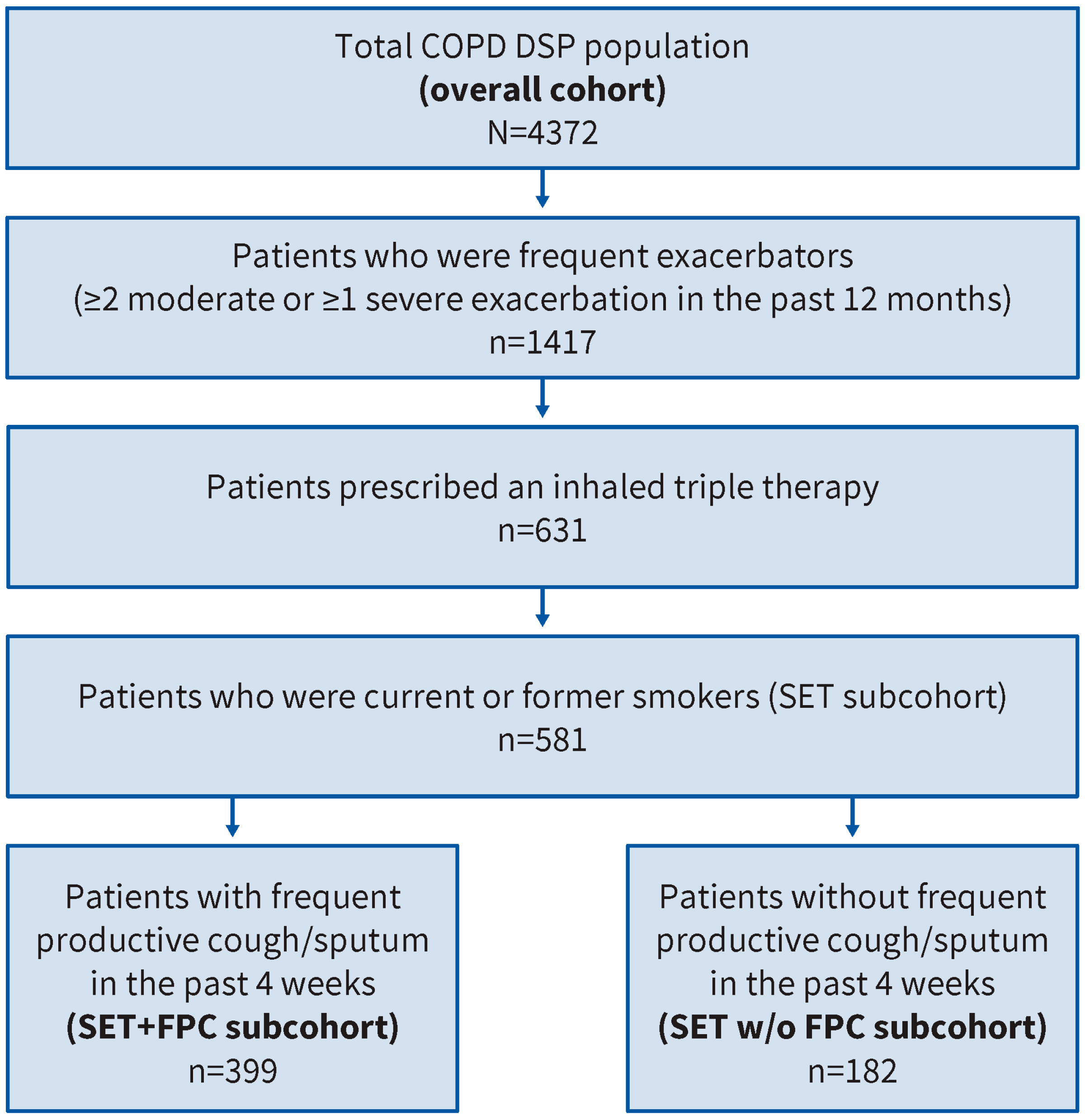
A total of 837 physicians participated in the DSP (313 primary care physicians and 524 respiratory specialists) and provided information for 4372 patients (overall cohort). From the overall cohort, 581 patients (13.3%) formed the SET subcohort; 399 patients (9.1%) also had FPC (SET+FPC subcohort), and 182 patients (4.2%) did not (SET w/o FPC subcohort) (Figure 1).
Figure 1.
Patient flow chart.
3.1. Sociodemographic and Medical Conditions
Sociodemographics, comorbid cardiovascular conditions, and COPD-related characteristics of the overall cohort and the SET+FPC subcohort are summarized in Table 1 and Supplementary Table S2. Patients in the overall cohort had a mean (SD) age of 64.7 (10.9) years with a male-to-female ratio of 2.1 to 1. Patients in the SET+FPC subcohort had a mean (SD) age of 69.1 (9.2) years and a male-to-female ratio of 2.6 to 1. In both the overall and SET+FPC subcohorts, former smokers (57.4% and 62.4%, respectively) were more prevalent than current smokers (30.7% and 37.6%, respectively). Hypertension was the most common cardiovascular condition in both the overall (49.1%) and the SET+FPC (64.2%) cohorts. Oxygen therapy was received by 16.5% and 35.1% of the overall and SET+FPC cohorts, respectively. Information on BEC was available for only 13.2% (n = 579) of the overall cohort and 14.3% (n = 57) of the SET+FPC subcohort and revealed that in both groups, nearly one-third of patients had BEC ≥ 300 cells/μL (27.1% and 29.8%, respectively). Median post-BD FEV1 (% predicted) was 68.0% in the overall cohort and 49.0% in the SET+FPC subcohort, which reflected mild, moderate, severe, and very severe airway obstruction in 24.7%, 55.7%, 15.4%, and 4.2% of patients, respectively, in the overall cohort and 7.0%, 39.0%, 44.4%, and 9.6%, respectively, in the SET+FPC subcohort. In the overall cohort, 9.6% of patients had ≥2 moderate exacerbations in the prior year (vs. 32.1% in the SET+FPC subcohort), and 22.8% had ≥1 severe exacerbation (vs. 67.9% in the SET+FPC subcohort).
Table 1.
Sociodemographics, cardiovascular conditions, COPD-related characteristics, and current treatment duration among patients in the overall, SET+FPC (current/former Smokers, with ≥2 moderate or ≥1 severe Exacerbation in the prior year while receiving Triple inhaled therapy [SET] and frequent productive cough [FPC]), and SET w/o FPC cohorts.
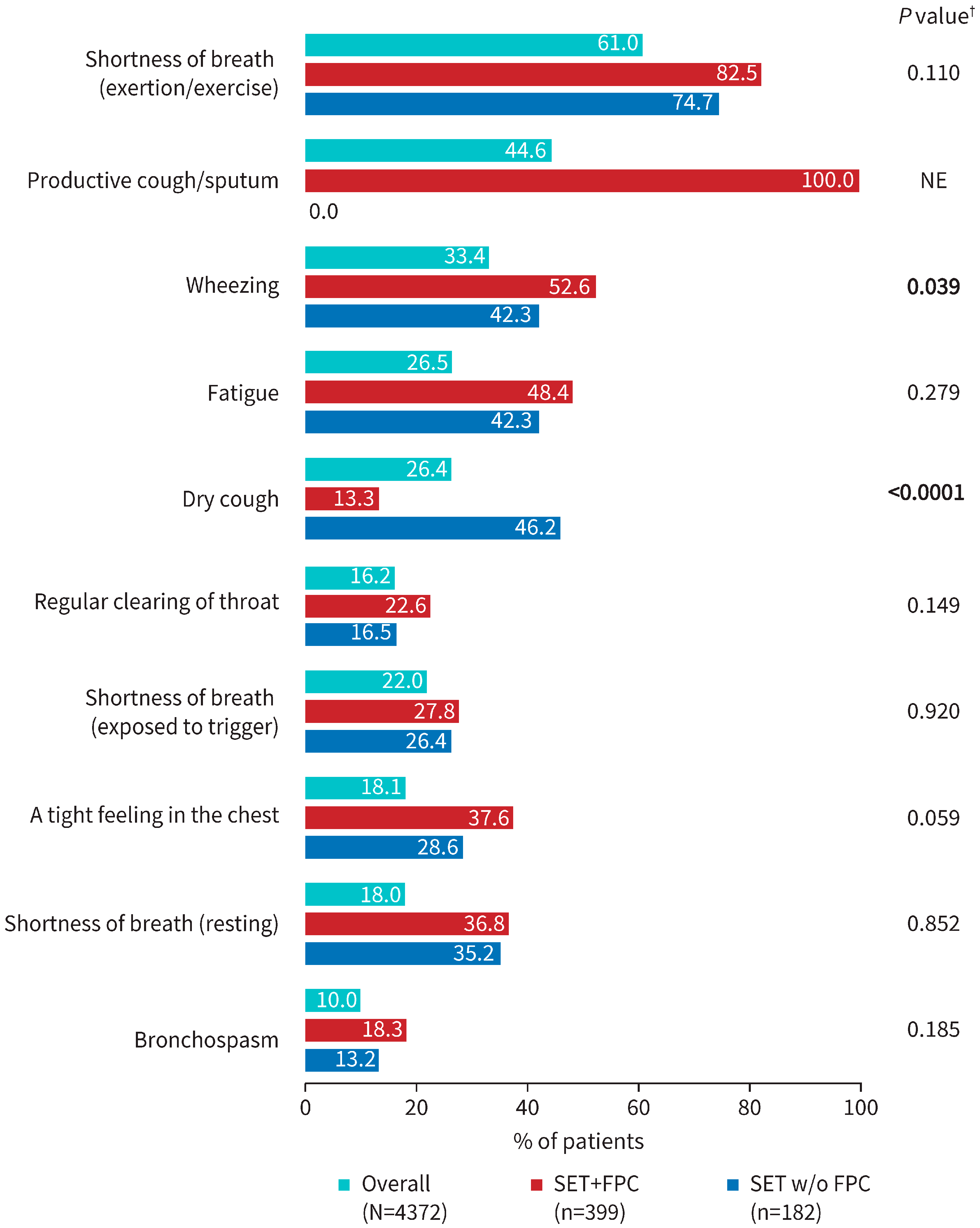
Dyspnea grade ≥ 2 was reported for 36.2% of patients in the overall cohort and 78.2% in the SET+FPC subcohort. Respiratory symptoms commonly reported by physicians are displayed in Figure 2 for the overall and SET+FPC cohorts. Shortness of breath, wheezing, and fatigue were the most frequently reported symptoms in both cohorts; FPC was present in 44.6% of overall cohort patients.
Figure 2.
Respiratory symptoms frequently reported by physicians for the overall, SET+FPC (current/former Smokers, with ≥2 moderate or ≥1 severe Exacerbation in the prior year while receiving Triple inhaled therapy [SET] and frequent productive cough [FPC]), and SET w/o FPC cohorts. † Statistical analysis was conducted for the SET+FPC (primary cohort) and SET w/o FPC cohort using Fisher’s Exact test. No comparisons with the overall cohort were conducted as it includes the SET+FPC and SET w/o FPC cohorts and is only provided for context.
The SET+FPC subcohort categorized by smoking status is described in Supplementary Table S3. Current smokers were significantly younger on average than former smokers (mean [SD] age of 65.7 [8.6] and 71.2 [9.0] years, respectively; p < 0.0001) and less frequently male (65.3% and 76.3%, respectively; p = 0.021); median post-BD FEV1 (% predicted) values were comparable (50.0% and 48.0%, respectively), and 71.3% of current smokers and 65.9% of former smokers had ≥1 severe exacerbation in the prior year. Higher proportions of former smokers had congestive heart failure (12.4% vs. 4.0%; p = 0.004) and cardiac arrhythmias (23.3% vs. 14.0%; p = 0.027) compared with current smokers. Among respiratory symptoms, dry cough was present in 12.0% and 14.1% of current and former smokers, respectively (Supplementary Figure S1).
For 182 patients in the SET w/o FPC subcohort, the mean (SD) age was 67.2 (9.3) years; 68.1% were male and 39.6% were current smokers (Table 1). Median post-BD FEV1 (% predicted) was similar to patients in the SET+FPC subcohort (49.5% vs. 49.0); however, significantly fewer patients in the SET w/o FPC subcohort (vs the SET+FPC subcohort) had dyspnea grade ≥ 2 (63.7% vs. 78.2%; p = 0.0004) and a higher proportion of patients in the SET w/o FPC subcohort had ≥1 severe exacerbation in the year prior to the survey date (79.1% vs. 67.9%; p = 0.010). Dry cough was also more prevalent in the SET w/o FPC subcohort vs. the SET+FPC subcohort (46.2% vs. 13.3%; p < 0.0001) (Figure 2).
3.2. Physicians’ Satisfaction with COPD Control
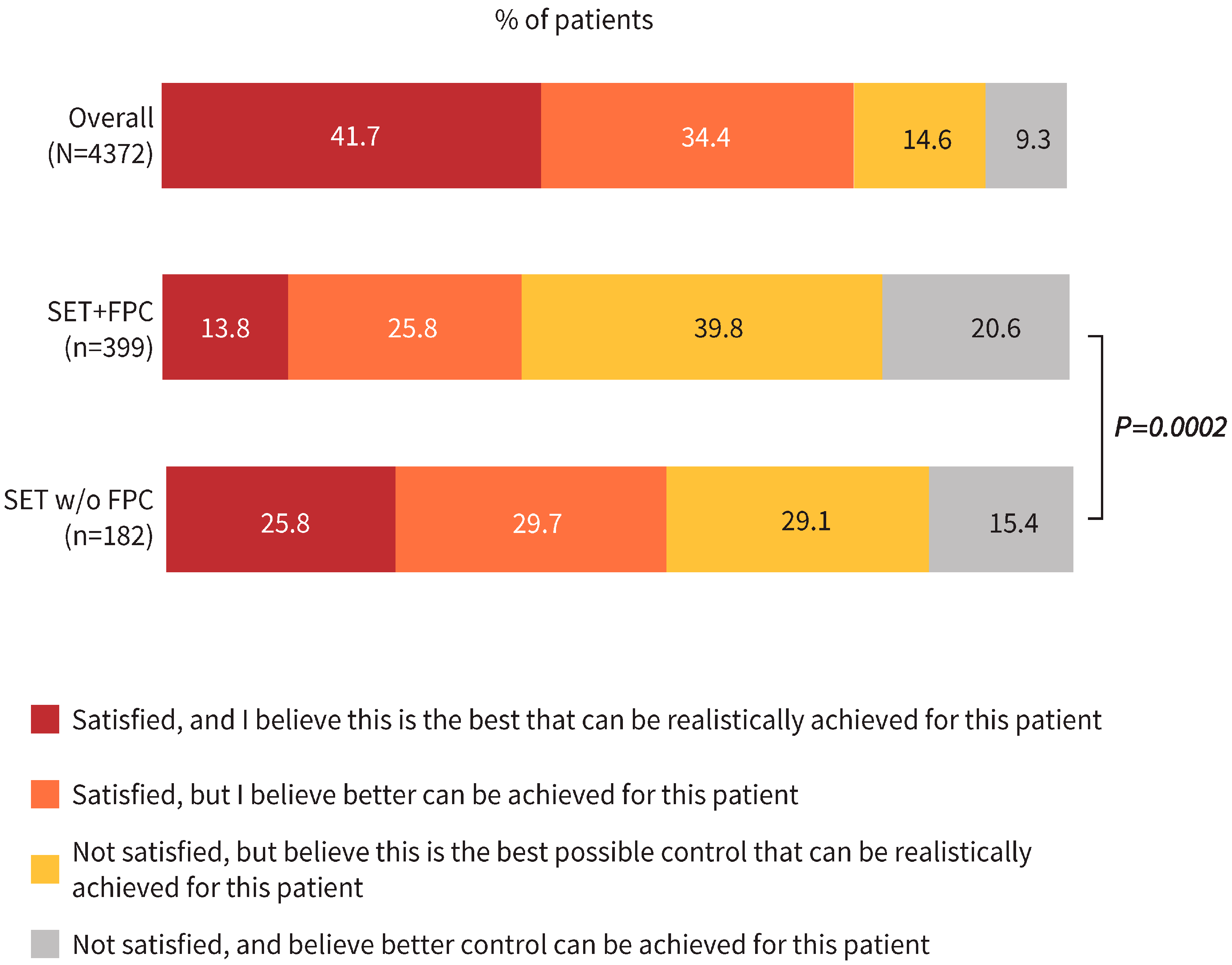
Physicians’ satisfaction with the level of COPD control and their perception on whether better control could be achieved are reported for all patient groups in Figure 3 and Figure S2. In the overall cohort, physicians were satisfied with the level of COPD control for 76.1% of patients (Figure 3). In the SET+FPC subcohort, physicians were satisfied with the level of COPD control for 39.6% of patients, including 13.8% for whom they thought that the current control level reflected the “best that could be realistically achieved.” In 20.6% of the SET+FPC subcohort (25.3% of current smokers and 17.7% of former smokers), physicians were not satisfied with COPD control and thought that “better control could be achieved” (Figure 3 and Figure S2). In the SET w/o FPC subcohort, physicians were satisfied with COPD control for 55.5% of patients, including 25.8% for whom they thought that the current control level reflected the “best that could be realistically achieved” (Figure 3). Physician responses for the SET+FPC subcohort significantly differed from responses for the SET w/o FPC subcohort (p = 0.0002), while no significant differences were observed between current and former smokers in the SET+FPC subcohort (p = 0.175) (Figure 3 and Figure S2).
Figure 3.
Physician satisfaction with COPD control for the overall, SET+FPC (current/former Smokers, with ≥2 moderate or ≥1 severe Exacerbation in the prior year while receiving Triple inhaled therapy [SET] and frequent productive cough [FPC]), and SET w/o FPC cohorts. Notes: Statistical analysis was conducted for the SET+FPC (primary cohort) and SET w/o FPC cohort using the Mann–Whitney U test. No comparisons with the overall cohort were conducted as it includes the SET+FPC and SET w/o FPC cohorts and is only provided for context.
3.3. Physician-Reported Severity of Patient COPD Symptoms
In the overall cohort, the proportion of patients considered by their physicians as having “severe” COPD was comparable at the time of current COPD treatment initiation and on the survey completion date (17.4% and 15.2%, respectively; Supplementary Figure S3). The proportion of patients considered as having “moderate” COPD was 53.1% at current treatment initiation and 45.7% at survey completion. In the SET+FPC subcohort, the proportion of patients considered as having “severe” COPD was 50.1% at current COPD treatment initiation and 50.6% at survey completion. Results for patients in the SET+FPC subcohort stratified by smoking status and SET w/o FPC subcohort are also shown in Supplementary Figure S3.
3.4. Patient-Reported Outcome Measures
Patient-reported CAT and EQ-VAS scores for the overall, SET+FPC, and SET w/o FPC cohorts are reported in Table 2. Mean (SD) CAT scores were 17.9 (8.6) for the overall cohort and 25.0 (7.6) for the SET+FPC subcohort; mean (SD) EQ-VAS scores were 67.2 (17.7) and 52.9 (17.6), respectively. CAT and EQ-VAS scores for the SET+FPC subcohort stratified by smoking status are reported in Supplementary Table S4.
Table 2.
Patient-reported CAT and EQ-VAS scores for the overall, SET+FPC (current/former Smokers, with ≥2 moderate or ≥1 severe Exacerbation in the prior year while receiving Triple inhaled therapy [SET] and frequent productive cough [FPC]), and SET w/o FPC cohorts.
4. Discussion
In this multinational cross-sectional survey of 4372 individuals with COPD, almost 1 in 10 patients had a history of smoking and continued to experience a substantial burden from COPD, with frequent moderate or severe exacerbations and FPC while on triple inhaled therapy [27,28]. More than two-thirds of patients in this subcohort had at least 1 severe exacerbation in the past year, and more than three-quarters had clinically significant dyspnea. Daily symptoms beyond dyspnea were frequent, with wheezing and fatigue experienced by approximately half of patients; patient-reported outcomes also revealed poor health-related quality of life (HRQOL) based on elevated CAT and low EQ-VAS scores. Despite having high symptom and exacerbation burden, physicians were satisfied with disease control for 1 in 4 of this patient population.
In this study, patients who had not stopped smoking (38% of the SET+FPC subcohort) were significantly younger and had lower proportions with congestive heart failure and cardiac arrhythmia than former smokers. However, physician-reported levels of dyspnea, lung function, and exacerbation frequency and patient-reported health state scores were similar between the groups. Smoking cessation is a key component of COPD management and poses a challenge for patients [9,29]. Although not significant, we found a higher proportion of physician-reported dissatisfaction with COPD control, believing that better control could be achieved, for patients who had not yet stopped smoking (25%) than those who had stopped smoking (18%). These results collectively highlight the burden of disease and the imperative to improve overall management and therapies for severe COPD patients, irrespective of smoking status.
Patients in the SET w/o FPC subcohort comprised 4% of the overall cohort and were described to gain insight into the impact of FPC on COPD symptoms, physicians’ perception, and HRQOL. In contrast with previous reports, this study revealed that severe exacerbations were more prevalent among patients without FPC than with FPC (79% vs. 68%, respectively), while lung function was similar between the cohorts [25,30,31]. The proportion of patients with clinically significant dyspnea was significantly lower in the SET w/o FPC subcohort than in the SET+FPC subcohort, and the most frequent symptom for the SET w/o FPC subcohort was dry cough. While other diagnoses should be considered, given the exacerbation profile of the SET w/o FPC cohort while on triple inhaled therapy, it is likely that some patients in the SET w/o FPC subcohort may have had silent mucous plugs (i.e., mucous plugs identified on computed tomography scans without the symptom of FPC). A recent study showed that 36% of COPD patients without FPC had silent mucous plugs, and these patients had higher odds of severe exacerbation (vs. patients without mucous plugs) [32]. Interestingly, physician satisfaction with the level of COPD control was significantly higher in the SET w/o FPC subcohort compared with the SET+FPC subcohort, demonstrating the burden of FPC in patients with COPD and the need for better management of this symptom. Disease severity may be underestimated (and disease control overestimated) in patients with silent mucous plugs; however, this study did not capture the presence of silent mucous plugs.
Of the overall cohort, about 10% met the eligibility criteria for inclusion into the SET+FPC subcohort. Although this proportion seems low, due to the cross-sectional nature of the study, this proportion is likely to be underestimated, because people with COPD at some point over the course of their disease may exhibit the required symptoms to meet these criteria. Also, considering the global prevalence of COPD (about 392 million), 10% reflects a considerable number of people living with frequent/severe exacerbations and FPC while receiving triple inhaled therapy [33].
The impact of COPD on patient HRQOL has been previously studied, and total CAT scores observed for patients in the SET+FPC subcohort align with results for “very severe” COPD patients in a cross-sectional European study [34]. While many HRQOL studies have been conducted at the national level and in broad COPD cohorts, this study offers a global view of HRQOL in patients with COPD with insights into particular subgroups (patients with frequent/severe exacerbations with or without FPC and current/former smokers). Results show that while patients in the overall cohort reported lower EQ-VAS scores compared with population norms [35], scores were further reduced in the SET+FPC subcohort. Considered in conjunction with prior studies [34,36], these data herein highlight the ongoing disease burden and need for better therapies in COPD. Overall, these findings improve our understanding of the clinical burden in COPD patients who continue to experience symptoms while receiving standard of care (i.e., triple inhaled therapy) and of their physicians’ perceptions of COPD management. The unmet needs identified in this study may act as a call to action for practitioners, payers, and policymakers and help define the size, scope, and characteristics of patients who may require additional treatment, particularly with biologics that are expected to emerge and gain approval over the next 2 to 5 years [13].
Several limitations to the study may be noted. The Adelphi COPD DSP surveys were completed by general practitioners and pulmonologists to maximize the representativeness of patients; however, physician selection bias is possible as minimal exclusion criteria governed selection, and participation was influenced by willingness to complete the survey and practical considerations such as geographical location. Patient selection bias is also possible, as participating patients were identified based on physician judgement and perception rather than medical coding (e.g., diagnostic codes); however, we believe that this process is representative of physicians’ real-world classification of patients across many countries. To minimize this bias, physicians were asked to provide data on consecutively consulting patients who met the eligibility criteria. The DSP does not represent a truly random sample of patients, as the methodology states for 5 to 8 COPD patients who consecutively consult with the physician to be included, thus restricting the generalizability of the findings. Physicians and patients were requested to capture patient information retrospectively in the survey, which may introduce recall bias, a common limitation of surveys. However, the data for these analyses were collected at the time of each patient’s consultation and physicians were able to refer to patients’ medical records while completing the patient record forms, potentially minimizing this bias. Missing data were not imputed; therefore, the sample of patients included in each analysis could vary. The presence of FPC (in the past 4 weeks) was physician-reported and based on medical records, not objective measures; however, this is likely to reflect real-world diagnostic practice. It is likely that some patients with more severe COPD may have had coexistent bronchiectasis as well as other codiagnoses, which could have contributed to the FPC noted; however, the presence of coexistent bronchiectasis was not assessed in this study. Future studies with additional computed tomography imaging are recommended to understand the impact of coexistent bronchiectasis and the presence of silent mucous plugs in COPD.
5. Conclusions
This study demonstrates the substantial clinical, societal, and healthcare burden experienced by a subset of patients experiencing exacerbations and FPC while receiving triple inhaled therapy. While around 10% of the COPD population qualified in this subcohort, this proportion might be higher in routine clinical practice. Importantly, physicians wanted better control for more than 60% of these patients but felt this was the best currently attainable for most of them. The unmet needs identified in this study may help define the COPD patient population in need of additional treatment due to inadequate symptom management. Future research into improving COPD management will likely require both targeted therapies against airway inflammation and epithelial dysfunction coupled with renewed attention to smoking cessation.
Supplementary Materials
The following supporting information can be downloaded at https://www.mdpi.com/article/10.3390/jcm14186488/s1, Table S1: Physician and patient cohorts across countries; Table S2: Additional sociodemographics of patients in the overall, SET+FPC, and SET w/o FPC cohorts; Table S3: Sociodemographics, cardiovascular conditions, COPD-related characteristics, and current treatment duration among patients in the SET+FPC subcohort stratified by smoking status; Table S4: Patient-reported CAT and EQ-VAS scores for the SET+FPC subcohort stratified by smoking status; Figure S1: Respiratory symptoms frequently reported by physicians for patients in the SET+FPC subcohort stratified by smoking status; Figure S2: Physician satisfaction with COPD control for the SET+FPC subcohort stratified by smoking status; Figure S3: Physician-reported severity of COPD in patients, from time of current treatment initiation to time of survey for the overall, SET+FPC (overall and stratified by smoking status), and SET w/o FPC cohorts.
Author Contributions
Conceptualization, A.D.S., C.N., E.C., T.P., H.M., M.F., J.A.A. and W.J.; methodology, E.C. and T.P.; software, E.C. and T.P.; validation, E.C. and T.P.; formal analysis, E.C. and T.P.; investigation, A.D.S., C.N., E.C., T.P., H.M., M.F., J.A.A. and W.J.; resources, E.C. and T.P.; data curation, E.C. and T.P.; writing—original draft preparation, A.D.S., C.N., E.C., T.P., H.M., M.F., J.A.A. and W.J.; writing—review and editing, A.D.S., C.N., E.C., T.P., H.M., M.F., J.A.A. and W.J.; visualization, A.D.S., C.N., E.C., T.P., H.M., M.F., J.A.A. and W.J.; supervision, A.D.S. and W.J.; project administration, C.N., H.M., M.F. and J.A.A.; funding acquisition, C.N., H.M., M.F. and J.A.A. All authors have read and agreed to the published version of the manuscript.
Funding
This research (the CAPELLA study) was funded by AstraZeneca. The Adelphi COPD DSP was an independent survey conducted by Adelphi Real World. AstraZeneca subscribed to the dataset from which this analysis and publication are derived.
Institutional Review Board Statement
This research was submitted to the Pearl Institutional Review Board, study protocol number #22-ADRW-147. A waiver was granted confirming that the DSP, being a healthcare market research survey and with data collection undertaken in line with European Pharmaceutical Marketing Research Association guidelines, was exempt from requiring ethics approval. Each survey was performed in full accordance with relevant legislation at the time of data collection, including the US Health Insurance Portability and Accountability Act 1996.
Informed Consent Statement
Informed consent was obtained from all subjects involved in the study.
Data Availability Statement
The authors confirm that the data supporting the findings of this study are available within the article.
Acknowledgments
Medical writing assistance was provided by Magdalene Michael, of Envision Value & Access, a part of Envision Medical Communications, and funded by AstraZeneca.
Conflicts of Interest
A.D.S. has received speaker or advisory board fees from AstraZeneca, Bayer, GSK, Insmed, Novartis, Gilead, and Zambon and has received grants from AstraZeneca, GSK, Novartis, and the US COPD Foundation. C.N., H.M., M.F., and J.A.A., are employees of AstraZeneca and may hold stocks/shares. E.C. and T.P. are employees of Adelphi Real World. W.J. has received grants from AstraZeneca, Chiesi Ltd., and Pulmonx and honoraria for advisory boards and lectures fees from AstraZeneca, GSK, Chiesi Ltd., and Sanofi.
Abbreviations
The following abbreviations are used in this manuscript:
| BD | Bronchodilator |
| BEC | Blood eosinophil count |
| CAT | COPD Assessment Test |
| COPD | Chronic obstructive pulmonary disease |
| DSP | Disease Specific Programme |
| EQ-VAS | European Quality of Life Visual Analogue Scale |
| FEV1 | Forced expiratory volume in 1 s |
| FPC | Frequent productive cough |
| GOLD | Global Initiative for Chronic Obstructive Lung Disease |
| HRQOL | Health-related quality of life |
| mMRC | Modified Medical Research Council |
| NE | Not evaluable |
| Q | Quartile |
| RCT | Randomized controlled trials |
| SET | Current or former smokers with frequent/severe exacerbations while on triple inhaled therapy |
References
- Naghavi, M.; Ong, K.L.; Aali, A.; Ababneh, H.S.; Abate, Y.H.; Abbafati, C.; Abbasgholizadeh, R.; Abbasian, M.; Abbasi-Kangevari, M.; Abbastabar, H.; et al. Global burden of 288 causes of death and life expectancy decomposition in 204 countries and territories and 811 subnational locations, 1990-2021: A systematic analysis for the Global Burden of Disease Study 2021. Lancet 2024, 403, 2100–2132. [Google Scholar] [CrossRef]
- Celli, B.; Fabbri, L.; Criner, G.; Martinez, F.J.; Mannino, D.; Vogelmeier, C.; Montes de Oca, M.; Papi, A.; Sin, D.D.; Han, M.K.; et al. Definition and nomenclature of chronic obstructive pulmonary disease: Time for its revision. Am. J. Respir. Crit. Care Med. 2022, 206, 1317–1325. [Google Scholar] [CrossRef] [PubMed]
- Hoogendoorn, M.; Feenstra, T.L.; Boland, M.; Briggs, A.H.; Borg, S.; Jansson, S.A.; Risebrough, N.A.; Slejko, J.F.; Rutten-van Mölken, M.P. Prediction models for exacerbations in different COPD patient populations: Comparing results of five large data sources. Int. J. Chron. Obstruct Pulmon Dis. 2017, 12, 3183–3194. [Google Scholar] [CrossRef] [PubMed]
- Hurst, J.R.; Skolnik, N.; Hansen, G.J.; Anzueto, A.; Donaldson, G.C.; Dransfield, M.T.; Varghese, P. Understanding the impact of chronic obstructive pulmonary disease exacerbations on patient health and quality of life. Eur. J. Intern. Med. 2020, 73, 1–6. [Google Scholar] [CrossRef]
- Brightling, C.; Greening, N. Airway inflammation in COPD: Progress to precision medicine. Eur. Respir. J. 2019, 54, 1900651. [Google Scholar] [CrossRef]
- Kim, V.; Criner, G.J. Chronic bronchitis and chronic obstructive pulmonary disease. Am. J. Respir. Crit. Care Med. 2013, 187, 228–237. [Google Scholar] [CrossRef]
- Krishnan, J.K.; Criner, G.J.; Lashari, B.H.; Martinez, F.J.; Kim, V.; Lindoulsi, A.; Khokhlovich, E.; Altman, P.; Karcher, H.; Schoenberger, M. Disease onset and burden in patients with chronic bronchitis and COPD: A Real-World Evidence Study. Chronic Obstr. Pulm. Dis. 2025, 12, 127–136. [Google Scholar] [CrossRef]
- Choi, J.Y.; Yoon, H.K.; Lee, S.Y.; Kim, J.W.; Choi, H.S.; Kim, Y.-I.; Jung, K.-S.; Yoo, K.H.; Kim, W.J.; Rhee, C.K. Comparison of clinical characteristics between chronic bronchitis and non-chronic bronchitis in patients with chronic obstructive pulmonary disease. BMC Pulm. Med. 2022, 22, 69. [Google Scholar] [CrossRef] [PubMed]
- Global Initiative for Chronic Obstructive Lung Disease. Global Strategy for the Diagnosis, Management, and Prevention of Chronic Obstructive Pulmonary Disease (2020 Report). Available online: https://goldcopd.org/wp-content/uploads/2019/11/GOLD-2020-REPORT-ver1.0wms.pdf (accessed on 28 May 2024).
- Igboekwe, E.; Verma, S.; Paczkowski, R. Real-world disease burden and healthcare resource utilization among patients with COPD and asthma using triple therapy (FF/UMEC/VI) in the United States. Int. J. Chron. Obstruct Pulmon Dis. 2024, 19, 281–296. [Google Scholar] [CrossRef]
- Chen, S.; Small, M.; Lindner, L.; Xu, X. Symptomatic burden of COPD for patients receiving dual or triple therapy. Int. J. Chron. Obstruct Pulmon Dis. 2018, 13, 1365–1376. [Google Scholar] [CrossRef]
- Rabe, K.F.; Rennard, S.; Martinez, F.J.; Celli, B.R.; Singh, D.; Papi, A.; Bafadhel, M.; Heble, J.; Radwan, A.; Soler, X.; et al. Targeting type 2 inflammation and epithelial alarmins in chronic obstructive pulmonary disease: A biologics outlook. Am. J. Respir. Crit. Care Med. 2023, 208, 395–405. [Google Scholar] [CrossRef]
- Kersul, A.L.; Cosio, B.G. Biologics in COPD. Open Respir. Arch. 2024, 6, 100306. [Google Scholar] [CrossRef]
- Plichta, J.; Kuna, P.; Panek, M. Biologic drugs in the treatment of chronic inflammatory pulmonary diseases: Recent developments and future perspectives. Front. Immunol. 2023, 14, 1207641. [Google Scholar] [CrossRef]
- Bhatt, S.P.; Rabe, K.F.; Hanania, N.A.; Vogelmeier, C.F.; Bafadhel, M.; Christenson, S.A.; Papi, A.; Singh, D.; Laws, E.; Patel, N.; et al. Dupilumab for COPD with blood eosinophil evidence of type 2 inflammation. N. Engl. J. Med. 2024, 390, 2274–2283. [Google Scholar] [CrossRef]
- Varricchi, G.; Poto, R. Towards precision medicine in COPD: Targeting type 2 cytokines and alarmins. Eur. J. Intern. Med. 2024, 125, 28–31. [Google Scholar] [CrossRef] [PubMed]
- Cayrol, C.; Girard, J.-P. Interleukin-33 (IL-33): A critical review of its biology and the mechanisms involved in its release as a potent extracellular cytokine. Cytokine 2022, 156, 155891. [Google Scholar] [CrossRef] [PubMed]
- Anderson, P.; Benford, M.; Harris, N.; Karavali, M.; Piercy, J. Real-world physician and patient behaviour across countries: Disease-Specific Programmes—A means to understand. Curr. Med. Res. Opin. 2008, 24, 3063–3072. [Google Scholar] [CrossRef] [PubMed]
- Anderson, P.; Higgins, V.; de Courcy, J.; Doslikova, K.; Davis, V.A.; Karavali, M.; Piercy, J. Real-world evidence generation from patients, their caregivers and physicians supporting clinical, regulatory and guideline decisions: An update on Disease Specific Programmes. Curr. Med. Res. Opin. 2023, 39, 1707–1715. [Google Scholar] [CrossRef]
- Babineaux, S.M.; Curtis, B.; Holbrook, T.; Milligan, G.; Piercy, J. Evidence for validity of a national physician and patient-reported, cross-sectional survey in China and UK: The Disease Specific Programme. BMJ Open 2016, 6, e010352. [Google Scholar] [CrossRef]
- Higgins, V.; Piercy, J.; Roughley, A.; Milligan, G.; Leith, A.; Siddall, J.; Benford, M. Trends in medication use in patients with type 2 diabetes mellitus: A long-term view of real-world treatment between 2000 and 2015. Diabetes Metab. Syndr. Obes. 2016, 9, 371–380. [Google Scholar] [CrossRef]
- Bhatt, S.P.; Rabe, K.F.; Hanania, N.A.; Vogelmeier, C.F.; Cole, J.; Bafadhel, M.; Christenson, S.A.; Papi, A.; Singh, D.; Laws, E.; et al. Dupilumab for COPD with Type 2 Inflammation Indicated by Eosinophil Counts. N. Engl. J. Med. 2023, 389, 205–214. [Google Scholar] [CrossRef]
- Singh, D.; Guller, P.; Reid, F.; Doffman, S.; Seppälä, U.; Psallidas, I.; Moate, R.; Smith, R.; Kiraga, J.; Jimenez, E.; et al. S92 FRONTIER-4: A phase 2a study to investigate tozorakimab (anti-IL-33 mAb) in COPD. Thorax 2024, 79, A68. [Google Scholar] [CrossRef]
- Dotan, Y.; So, J.Y.; Kim, V. Chronic Bronchitis: Where are we now? Chronic Obstr. Pulm. Dis. 2019, 6, 178–192. [Google Scholar] [CrossRef] [PubMed]
- Hughes, R.; Rapsomaniki, E.; Janson, C.; Keen, C.; Make, B.J.; Burgel, P.-R.; Tomaszewski, E.L.; Müllerová, H.; Reddel, H.K.; Benhabib, G.; et al. Frequent productive cough: Symptom burden and future exacerbation risk among patients with asthma and/or COPD in the NOVELTY study. Respir. Med. 2022, 200, 106921. [Google Scholar] [CrossRef] [PubMed]
- Jones, P.W.; Adamek, L.; Nadeau, G.; Banik, N. Comparisons of health status scores with MRC grades in COPD: Implications for the GOLD 2011 classification. Eur. Respir. J. 2013, 42, 647–654. [Google Scholar] [CrossRef]
- Janssens, W.; Nordon, C.; Coak, E.; Pennant, T.; Bell, G.; Mullerova, H.; Draffan, L.; Alves, J.A.; Fagerås, M.; De Soyza, A. Characteristics of exacerbating COPD patients with productive cough and on inhaled triple therapy, by smoking status: A real-world multi-country study. Eur. Respir. J. 2024, 64, PA1288. [Google Scholar] [CrossRef]
- De Soyza, A.; Nordon, C.; Fagerås, M.; Bell, G.; Mullerova, H.; Pennant, T.; Draffan, L.; Alves, J.A.; Coak, E.; Janssens, W. Perception of COPD control by physicians managing symptomatic exacerbating patients receiving inhaled triple therapy: A real-world multi-country 2022 survey. Eur. Respir. J. 2024, 64, PA1289. [Google Scholar] [CrossRef]
- van Eerd, E.A.; van der Meer, R.M.; van Schayck, O.C.; Kotz, D. Smoking cessation for people with chronic obstructive pulmonary disease. Cochrane Database Syst. Rev. 2016, 2016, CD010744. [Google Scholar] [CrossRef]
- Landt, E.M.; Çolak, Y.; Nordestgaard, B.G.; Lange, P.; Dahl, M. Chronic cough associated with COPD exacerbation, pneumonia and death in the general population. ERJ Open Res. 2024, 10, 00697–02023. [Google Scholar] [CrossRef]
- Miravitlles, M.; Ribera, A. Understanding the impact of symptoms on the burden of COPD. Respir. Res. 2017, 18, 67. [Google Scholar] [CrossRef]
- Mettler, S.K.; Nath, H.P.; Grumley, S.; Orejas, J.L.; Dolliver, W.R.; Nardelli, P.; Yen, A.C.; Kligerman, S.J.; Jacobs, K.; Manapragada, P.P.; et al. Silent airway mucus plugs in COPD and clinical implications. Chest 2024, 166, 1010–1019. [Google Scholar] [CrossRef] [PubMed]
- Adeloye, D.; Song, P.; Zhu, Y.; Campbell, H.; Sheikh, A.; Rudan, I. Global, regional, and national prevalence of, and risk factors for, chronic obstructive pulmonary disease (COPD) in 2019: A systematic review and modelling analysis. Lancet Respir. Med. 2022, 10, 447–458. [Google Scholar] [CrossRef] [PubMed]
- Jones, P.W.; Brusselle, G.; Dal Negro, R.W.; Ferrer, M.; Kardos, P.; Levy, M.L.; Perez, T.; Soler Cataluna, J.J.; van der Molen, T.; Adamek, L.; et al. Properties of the COPD assessment test in a cross-sectional European study. Eur. Respir. J. 2011, 38, 29–35. [Google Scholar] [CrossRef] [PubMed]
- EUROQOL 2024. EUROQOL: Population Norms. Available online: https://euroqol.org/information-and-support/resources/population-norms/ (accessed on 2 July 2024).
- Chen, S.; Miravitlles, M.; Rhee, C.K.; Pavord, I.D.; Jones, R.; Carter, V.; Emmanuel, B.; Alacqua, M.; Price, D.B. Patients with chronic obstructive pulmonary disease and evidence of eosinophilic inflammation experience exacerbations despite receiving maximal inhaled maintenance therapy. Int. J. Chron. Obstruct Pulmon Dis. 2022, 17, 2187–2200. [Google Scholar] [CrossRef]
Disclaimer/Publisher’s Note: The statements, opinions and data contained in all publications are solely those of the individual author(s) and contributor(s) and not of MDPI and/or the editor(s). MDPI and/or the editor(s) disclaim responsibility for any injury to people or property resulting from any ideas, methods, instructions or products referred to in the content. |
© 2025 by the authors. Licensee MDPI, Basel, Switzerland. This article is an open access article distributed under the terms and conditions of the Creative Commons Attribution (CC BY) license (https://creativecommons.org/licenses/by/4.0/).