


Understanding the Pathophysiology of Preeclampsia: Exploring the Role of Antiphospholipid Antibodies and Future Directions

 , ,
, , 
Abstract
1. Introduction
2. Materials and Methods
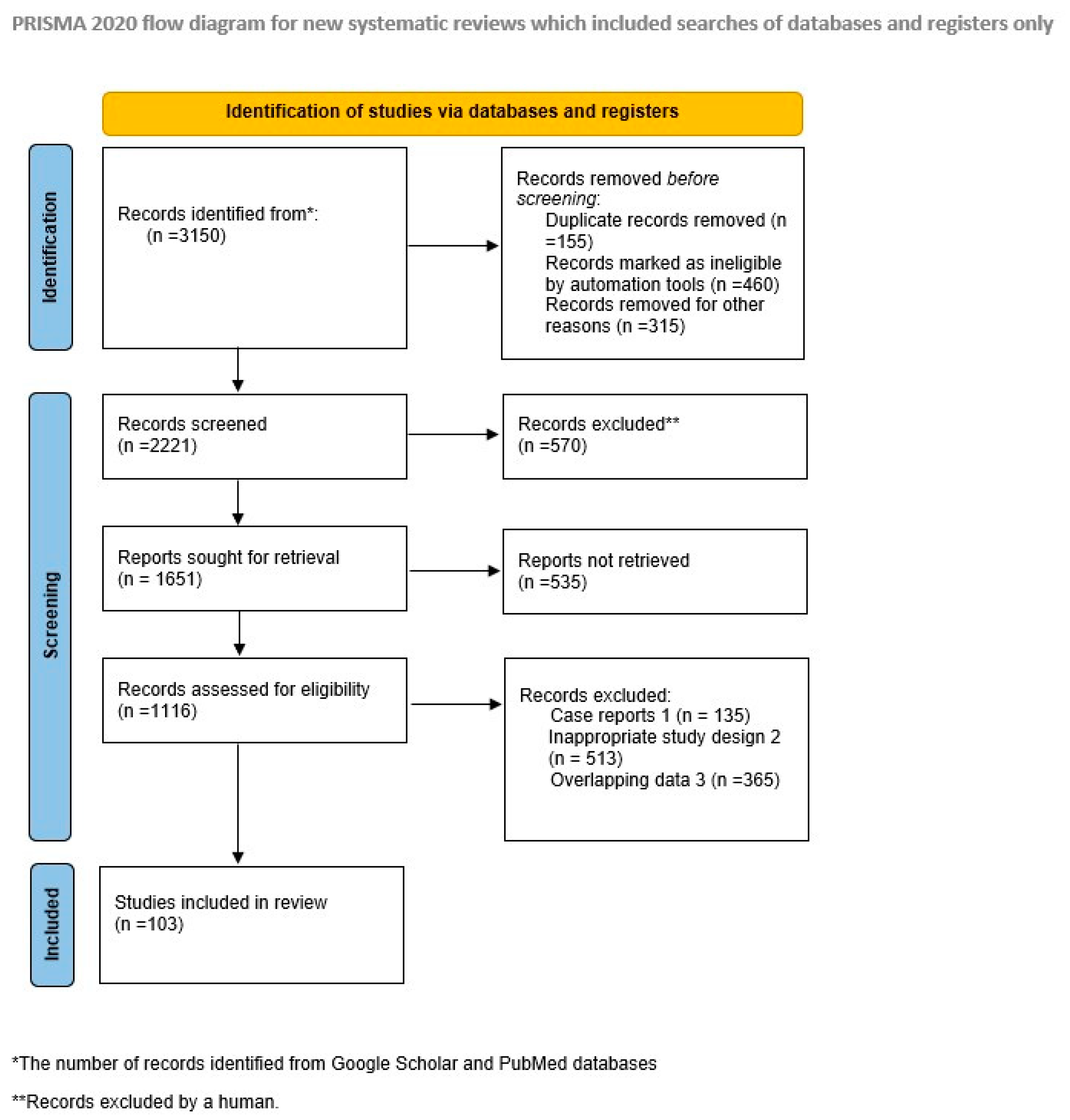
Protocol and Information Sources
3. Physiopathology of Implantation
4. Physiopathology in Preeclampsia
5. Treatment Options in APS
6. Future Directions in Pathophysiology
7. Future Directions in Therapy
7.1. Nanotechnology as a New Therapeutic Approach
7.2. Cancer-Based Therapy
7.3. Stem Cell Therapy
7.4. Angiogenic Factors
8. Discussion
9. Conclusions
Author Contributions
Funding
Institutional Review Board Statement
Informed Consent Statement
Conflicts of Interest
References
- Bastida Ruiz, D. Role of GRP78 in Trophoblastic Cell Fusion and Differentiation. Ph.D. Thesis, Universite de Geneve location, Geneva, Switzerland, 2020. [Google Scholar] [CrossRef]
- Rana, S.; Lemoine, E.; Granger, J.P.; Karumanchi, S.A. Preeclampsia: Pathophysiology, Challenges, and Perspectives. Circ. Res. 2019, 124, 1094–1112. [Google Scholar] [CrossRef] [PubMed]
- Vinketova, K.; Mourdjeva, M.; Oreshkova, T. Human Decidual Stromal Cells as a Component of the Implantation Niche and a Modulator of Maternal Immunity. J. Pregnancy 2016, 2016, 8689436. [Google Scholar] [CrossRef] [PubMed]
- Rodziewicz, M.; D’Cruz, D.P. An update on the management of antiphospholipid syndrome. Ther. Adv. Musculoskelet. Dis. 2020, 12, 1759720X20910855. [Google Scholar] [CrossRef] [PubMed]
- Luo, L.; Cai, Q.; Liu, X.; Hou, Y.; Li, C. Risk factors of first thrombosis in obstetric antiphospholipid syndrome. Lupus Sci. Med. 2024, 11, e001044. [Google Scholar] [CrossRef] [PubMed]
- Zuo, Y.; Shi, H.; Li, C.; Knight, J.S. Antiphospholipid syndrome: A clinical perspective. Chin. Med. J. 2020, 133, 929–940. [Google Scholar] [CrossRef]
- de Jesús, G.R.; Sciascia, S.; Andrade, D.; Barbhaiya, M.; Tektonidou, M.; Banzato, A.; Pengo, V.; Ji, L.; Meroni, P.L.; Ugarte, A.; et al. Factors associated with first thrombosis in patients presenting with obstetric antiphospholipid syndrome (APS) in the APS Alliance for Clinical Trials and International Networking Clinical Database and Repository: A retrospective study. BJOG 2019, 126, 656–661. [Google Scholar] [CrossRef] [PubMed]
- Larosa, M.; Le Guern, V.; Morel, N.; Belhocine, M.; Ruffatti, A.; Silva, N.M.; Paule, R.; Mouthon, L.; Dreyfus, M.; Piette, J.-C.; et al. Evaluation of the severe preeclampsia classification criterion for antiphospholipid syndrome in a study of 40 patients. Arthritis Res. Ther. 2021, 23, 134. [Google Scholar] [CrossRef]
- Belhocine, M.; Coutte, L.; Martin Silva, N.; Morel, N.; Guettrot-Imbert, G.; Paule, R.; Le Jeunne, C.; Fredi, M.; Dreyfus, M.; Piette, J.-C.; et al. Intrauterine fetal deaths related to antiphospholipid syndrome: A descriptive study of 65 women. Arthritis Res. Ther. 2018, 20, 249. [Google Scholar] [CrossRef] [PubMed]
- Barros, V.I.P.V.L.; Igai, A.M.K.; Oliveira, A.L.M.L.; Teruchkin, M.M.; Orsi, F.A. Obstetric antiphospholipid syndrome. Rev. Bras. Ginecol. Obstet. 2021, 43, 495–501. [Google Scholar] [CrossRef]
- Radu, A.; Dudu, S.C.; Ciobanu, A.; Peltecu, G.; Iancu, G.; Botezatu, R. Pregnancy Management in Women with Antiphospholidic Syndrome. Maedica 2019, 14, 148–160. [Google Scholar] [CrossRef]
- Antovic, A.; Sennström, M.; Bremme, K.; Svenungsson, E. Obstetric antiphospholipid syndrome. Lupus Sci. Med. 2018, 5, e000197. [Google Scholar] [CrossRef] [PubMed]
- Li, X.Y.; Duan, H.J.; Liu, X.Y.; Deng, X.L. Change of serum B-cell activating factor level in patients with positive antiphospholipid antibodies and previous adverse pregnancy outcomes and its significance. Chin. Med. J. 2020, 133, 2287–2294. [Google Scholar] [CrossRef] [PubMed]
- Murata, T.; Kyozuka, H.; Fukuda, T.; Yasuda, S.; Yamaguchi, A.; Sato, A.; Ogata, Y.; Kuse, M.; Hosoya, M.; Yasumura, S.; et al. Risk of adverse obstetric outcomes in Japanese women with systemic lupus erythematosus: The Japan Environment and Children’s Study. PLoS ONE 2020, 15, e0233883. [Google Scholar] [CrossRef] [PubMed]
- Alvarez, A.M.; Neubeck, S.; Parra, S.; Markert, U.R.; Cadavid, A.P. Serum Protein Profile in Women with Pregnancy Morbidity Associated with Antiphospholipid Syndrome. J. Hum. Reprod. Sci. 2017, 10, 10–17. [Google Scholar] [CrossRef] [PubMed]
- Page, M.J.; McKenzie, J.E.; Bossuyt, P.M.; Boutron, I.; Hoffmann, T.C.; Mulrow, C.D. The PRISMA 2020 statement: An updated guideline for reporting systematic reviews. BMJ 2021, 372, n71. [Google Scholar] [CrossRef] [PubMed]
- Cindrova-Davies, T.; Sferruzzi-Perri, A.N. Human placental development and function. Semin. Cell Dev. Biol. 2022, 131, 66–77. [Google Scholar] [CrossRef]
- Li, X.; Kodithuwakku, S.P.; Chan, R.W.S.; Yeung, W.S.B.; Yao, Y.; Ng, E.H.Y.; Chiu, P.C.N.; Lee, C.-L. Three-dimensional culture models of human endometrium for studying trophoblast-endometrium interaction during implantation. Reprod. Biol. Endocrinol. 2022, 20, 120. [Google Scholar] [CrossRef] [PubMed]
- Handwerger, S. New insights into the regulation of human cytotrophoblast cell differentiation. Mol. Cell. Endocrinol. 2010, 323, 94–104. [Google Scholar] [CrossRef] [PubMed]
- Guzeloglu-Kayisli, O.; Kayisli, U.A.; Taylor, H.S. The role of growth factors and cytokines during implantation: Endocrine and paracrine interactions. Semin. Reprod. Med. 2009, 27, 62–79. [Google Scholar] [CrossRef]
- Yang, F.; Zheng, Q.; Jin, L. Dynamic Function and Composition Changes of Immune Cells During Normal and Pathological Pregnancy at the Maternal-Fetal Interface. Front. Immunol. 2019, 10, 2317. [Google Scholar] [CrossRef]
- Mayoral Andrade, G.; Vásquez Martínez, G.; Pérez-Campos Mayoral, L.; Hernández-Huerta, M.T.; Zenteno, E.; Pérez-Campos Mayoral, E.; Martínez Cruz, M.; Martínez Cruz, R.; Matias-Cervantes, C.A.; Meraz Cruz, N.; et al. Molecules and Prostaglandins Related to Embryo Tolerance. Front. Immunol. 2020, 11, 555414. [Google Scholar] [CrossRef] [PubMed]
- Merviel, P.; Lourdel, E.; Cabry, R.; Boulard, V.; Brzakowski, M.; Demailly, P.; Brasseur, F.; Copin, H.; Devaux, A. Physiopathology of human embryonic implantation: Clinical incidences. Folia Histochem. Cytobiol. 2009, 47, S25–S34. [Google Scholar] [CrossRef] [PubMed][Green Version]
- Turco, M.Y.; Gardner, L.; Kay, R.G.; Hamilton, R.S.; Prater, M.; Hollinshead, M.S.; McWhinnie, A.; Esposito, L.; Fernando, R.; Skelton, H.; et al. Trophoblast organoids as a model for maternal-fetal interactions during human placentation. Nature 2018, 564, 263–267. [Google Scholar] [CrossRef] [PubMed]
- Abbas, Y.; Turco, M.Y.; Burton, G.J.; Moffett, A. Investigation of human trophoblast invasion in vitro. Hum. Reprod. Update 2020, 26, 501–513. [Google Scholar] [CrossRef] [PubMed]
- Fraser, R.; Zenclussen, A.C. Killer Timing: The Temporal Uterine Natural Killer Cell Differentiation Pathway and Implications for Female Reproductive Health. Front. Endocrinol. 2022, 13, 904744. [Google Scholar] [CrossRef] [PubMed]
- Andraweera, P.H.; Dekker, G.A.; Roberts, C.T. The vascular endothelial growth factor family in adverse pregnancy outcomes. Hum. Reprod. Update 2012, 18, 436–457. [Google Scholar] [CrossRef]
- Bazer, F.W.; Wu, G.; Spencer, T.E.; Johnson, G.A.; Burghardt, R.C.; Bayless, K. Novel pathways for implantation and establishment and maintenance of pregnancy in mammals. Mol. Hum. Reprod. 2010, 16, 135–152. [Google Scholar] [CrossRef] [PubMed]
- Bamberger, A.M.; Minas, V.; Kalantaridou, S.N.; Radde, J.; Sadeghian, H.; Löning, T.; Charalampopoulos, I.; Brümmer, J.; Wagener, C.; Bamberger, C.M.; et al. Corticotropin-releasing hormone modulates human trophoblast invasion through carcinoembryonic antigen-related cell adhesion molecule-1 regulation. Am. J. Pathol. 2006, 168, 141–150. [Google Scholar] [CrossRef]
- Luo, N.; Cheng, W.; Zhou, Y.; Gu, B.; Zhao, Z.; Zhao, Y. Screening Candidate Genes Regulating Placental Development from Trophoblast Transcriptome at Early Pregnancy in Dazu Black Goats (Capra hircus). Animals 2021, 11, 2132. [Google Scholar] [CrossRef]
- Bashiri, A.; Harlev, A.; Agarwal, A. Recurrent Pregnancy Loss: Evidence-Based Evaluation, Diagnosis and Treatment; Springer: Berlin/Heidelberg, Germany, 2016. [Google Scholar] [CrossRef]
- Chen, M.; Shi, J.L.; Zheng, Z.M.; Lin, Z.; Li, M.Q.; Shao, J. Galectins: Important Regulators in Normal and Pathologic Pregnancies. Int. J. Mol. Sci. 2022, 23, 10110. [Google Scholar] [CrossRef]
- Murthi, P.; Pinar, A.A.; Dimitriadis, E.; Samuel, C.S. Inflammasomes-A Molecular Link for Altered Immunoregulation and Inflammation Mediated Vascular Dysfunction in Preeclampsia. Int. J. Mol. Sci. 2020, 21, 1406. [Google Scholar] [CrossRef]
- Sakowicz, A.; Bralewska, M.; Rybak-Krzyszkowska, M.; Grzesiak, M.; Pietrucha, T. New Ideas for the Prevention and Treatment of Preeclampsia and Their Molecular Inspirations. Int. J. Mol. Sci. 2023, 24, 12100. [Google Scholar] [CrossRef]
- Zhang, J.Y.; Wu, P.; Chen, D.; Ning, F.; Lu, Q.; Qiu, X.; Hewison, M.; Tamblyn, J.A.; Kilby, M.D.; Lash, G.E. Vitamin D Promotes Trophoblast Cell Induced Separation of Vascular Smooth Muscle Cells in Vascular Remodeling via Induction of G-CSF. Front. Cell Dev. Biol. 2020, 8, 601043. [Google Scholar] [CrossRef] [PubMed]
- Nalli, C.; Lini, D.; Andreoli, L.; Crisafulli, F.; Fredi, M.; Lazzaroni, M.G.; Bitsadze, V.; Calligaro, A.; Canti, V.; Caporali, R.; et al. Low Preconception Complement Levels Are Associated with Adverse Pregnancy Outcomes in a Multicenter Study of 260 Pregnancies in 197 Women with Antiphospholipid Syndrome or Carriers of Antiphospholipid Antibodies. Biomedicines 2021, 9, 671. [Google Scholar] [CrossRef] [PubMed]
- Mayer-Pickel, K.; Nanda, M.; Gajic, M.; Cervar-Zivkovic, M. Preeclampsia and the Antiphospholipid Syndrome. Biomedicines 2023, 11, 2298. [Google Scholar] [CrossRef]
- Cochery-Nouvellon, É.; Mercier, É.; Bouvier, S.; Balducchi, J.-P.; Quéré, I.; Perez-Martin, A.; Mousty, E.; Letouzey, V.; Gris, J.-C. Obstetric antiphospholipid syndrome: Early variations of angiogenic factors are associated with adverse outcomes. Haematologica 2017, 102, 835–842. [Google Scholar] [CrossRef] [PubMed]
- Gibbins, K.J.; Tebo, A.E.; Nielsen, S.K.; Branch, D.W. Antiphospholipid antibodies in women with severe preeclampsia and placental insufficiency: A case-control study. Lupus 2018, 27, 1903–1910. [Google Scholar] [CrossRef] [PubMed]
- Hum, R.M.; David, T.; Lau, Y.J.; Iftikhar, H.; Thornber, S.; Simcox, L.; Bruce, I.; Tower, C.; Ho, P. Pregnancy outcomes of a joint obstetric and rheumatology clinic in a tertiary centre: A 2-year retrospective study of 98 pregnancies. Rheumatol. Adv. Pract. 2022, 6, rkac026. [Google Scholar] [CrossRef]
- Lazzaroni, M.G.; Fredi, M.; Andreoli, L.; Chighizola, C.B.; Del Ross, T.; Gerosa, M.; Kuzenko, A.; Raimondo, M.-G.; Lojacono, A.; Ramazzotto, F.; et al. Triple Antiphospholipid (aPL) Antibodies Positivity Is Associated with Pregnancy Complications in aPL Carriers: A Multicenter Study on 62 Pregnancies. Front. Immunol. 2019, 10, 1948. [Google Scholar] [CrossRef]
- Buyon, J.P.; Kim, M.Y.; Guerra, M.M.; Laskin, C.A.; Petri, M.; Lockshin, M.D.; Sammaritano, L.; Branch, D.W.; Porter, T.F.; Sawitzke, A.; et al. Predictors of Pregnancy Outcomes in Patients with Lupus: A Cohort Study. Ann. Intern. Med. 2015, 163, 153–163. [Google Scholar] [CrossRef]
- Larosa, M.; Le Guern, V.; Guettrot-Imbert, G.; Orquevaux, P.; Diot, E.; Doria, A.; Limal, N.; Queyrel, V.; Souchaud-Debouverie, O.; Sailler, L.; et al. Evaluation of lupus anticoagulant, damage, and remission as predictors of pregnancy complications in systemic lupus erythematosus: The French GR2 study. Rheumatology 2022, 61, 3657–3666. [Google Scholar] [CrossRef] [PubMed]
- Barnado, A.; Wheless, L.; Meyer, A.K.; Gilkeson, G.S.; Kamen, D.L. Pregnancy outcomes among African-American patients with systemic lupus erythematosus compared with controls. Lupus Sci. Med. 2014, 1, e000020. [Google Scholar] [CrossRef] [PubMed]
- Liu, J.; Zhang, L.; Tian, Y.; Wan, S.; Hu, M.; Song, S.; Zhang, M.; Zhou, Q.; Xia, Y.; Wang, X. Protection by hydroxychloroquine prevents placental injury in obstetric antiphospholipid syndrome. J. Cell Mol. Med. 2022, 26, 4357–4370. [Google Scholar] [CrossRef] [PubMed]
- Eid, M.I.; Abdelhafez, M.S.; El-Refaie, W.; El-Zayadi, A.A.; Samir, K.; Abdelrazik, M.M.; Thabet, M.; Wageh, A.; Fyala, E.A.; Abdeldayem, Y.; et al. Timing of initiation of low-molecular-weight heparin administration in pregnant women with antiphospholipid syndrome: A randomized clinical trial of efficacy and safety. Int. J. Womens Health 2019, 11, 41–47. [Google Scholar] [CrossRef] [PubMed]
- Lefkou, E.; Mamopoulos, A.; Dagklis, T.; Vosnakis, C.; Rousso, D.; Girardi, G. Pravastatin improves pregnancy outcomes in obstetric antiphospholipid syndrome refractory to antithrombotic therapy. J. Clin. Investig. 2016, 126, 2933–2940. [Google Scholar] [CrossRef] [PubMed]
- Chen, S.; Sun, X.; Wu, B.; Lian, X. Pregnancy in Women with Systemic Lupus Erythematosus: A Retrospective Study of 83 Pregnancies at a Single Centre. Int. J. Environ. Res. Public Health 2015, 12, 9876–9888. [Google Scholar] [CrossRef] [PubMed]
- Erton, Z.B.; Sevim, E.; de Jesús, G.R.; Cervera, R.; Ji, L.; Pengo, V.; Ugarte, A.; Andrade, D.; Andreoli, L.; Atsumi, T.; et al. Pregnancy outcomes in antiphospholipid antibody positive patients: Prospective results from the AntiPhospholipid Syndrome Alliance for Clinical Trials and InternatiOnal Networking (APS ACTION) Clinical Database and Repository (‘Registry’). Lupus Sci. Med. 2022, 9, e000633. [Google Scholar] [CrossRef]
- Tektonidou, M.G.; Andreoli, L.; Limper, M.; Tincani, A.; Ward, M.M. Management of thrombotic and obstetric antiphospholipid syndrome: A systematic literature review informing the EULAR recommendations for the management of antiphospholipid syndrome in adults. RMD Open 2019, 5, e000924. [Google Scholar] [CrossRef] [PubMed]
- Schreiber, K.; Frishman, M.; Russell, M.D.; Dey, M.; Flint, J.; Allen, A.; Crossley, A.; Gayed, M.; Hodson, K.; Khamashta, M.; et al. Executive Summary: British Society for Rheumatology guideline on prescribing drugs in pregnancy and breastfeeding: Comorbidity medications used in rheumatology practice. Rheumatology 2023, 62, 1388–1397. [Google Scholar] [CrossRef]
- Baiazid, L.; Hraib, M. Effects of low-dose aspirin and heparin on the pregnancy outcome in women with antiphospholipid syndrome. Ann. Med. Surg. 2022, 83, 104807. [Google Scholar] [CrossRef]
- Han, C.S.; Mulla, M.J.; Brosens, J.J.; Chamley, L.W.; Paidas, M.J.; Lockwood, C.J.; Abrahams, V.M. Aspirin and heparin effect on basal and antiphospholipid antibody modulation of trophoblast function. Obstet. Gynecol. 2011, 118, 1021–1028. [Google Scholar] [CrossRef]
- Lateef, A.; Petri, M. Managing lupus patients during pregnancy. Best Pract. Res. Clin. Rheumatol. 2013, 27, 435–447. [Google Scholar] [CrossRef]
- Gajić, M.; Schröder-Heurich, B.; Mayer-Pickel, K. Deciphering the immunological interactions: Targeting preeclampsia with Hydroxychloroquine’s biological mechanisms. Front. Pharmacol. 2024, 15, 1298928. [Google Scholar] [CrossRef] [PubMed]
- Rahman, R.A.; Murthi, P.; Singh, H.; Gurungsinghe, S.; Leaw, B.; Mockler, J.C.; Lim, R.; Wallace, E.M. Hydroxychloroquine Mitigates the Production of 8-Isoprostane and Improves Vascular Dysfunction: Implications for Treating Preeclampsia. Int. J. Mol. Sci. 2020, 21, 2504. [Google Scholar] [CrossRef]
- Killian, M.; van Mens, T.E. Risk of Thrombosis, Pregnancy Morbidity or Death in Antiphospholipid Syndrome. Front. Cardiovasc. Med. 2022, 9, 852777. [Google Scholar] [CrossRef] [PubMed]
- Nakai, T.; Honda, N.; Soga, E.; Fukui, S.; Kitada, A.; Yokogawa, N.; Okada, M. A retrospective analysis of the safety of tacrolimus use and its optimal cut-off concentration during pregnancy in women with systemic lupus erythematosus: Study from two Japanese tertiary referral centers. Arthritis Res. Ther. 2024, 26, 15. [Google Scholar] [CrossRef] [PubMed]
- Costantine, M.M. Pravastatin to ameliorate early-onset pre-eclampsia: Promising but not there yet. BJOG 2020, 127, 489. [Google Scholar] [CrossRef]
- Santoyo, J.M.; Noguera, J.A.; Avilés, F.; Hernández-Caselles, T.; de Paco-Matallana, C.; Delgado, J.L.; Cuevas, S.; Llinás, M.T.; Hernández, I. Pravastatin reduces plasma levels of extracellular vesicles in pregnancies at high risk of term preeclampsia. Front. Pharmacol. 2023, 14, 1166123. [Google Scholar] [CrossRef] [PubMed]
- Mészáros, B.; Veres, D.S.; Nagyistók, L.; Somogyi, A.; Rosta, K.; Herold, Z.; Kukor, Z.; Valent, S. Pravastatin in Preeclampsia: A Meta-Analysis and Systematic Review. Front. Med. 2023, 9, 1076372. [Google Scholar] [CrossRef]
- Maesawa, Y.; Deguchi, M.; Tanimura, K.; Morizane, M.; Ebina, Y.; Yamada, H. Effectiveness of High-Dose i.v. Immunoglobulin Therapy for Pregnant Women with Aspirin-Heparin-Resistant Secondary Antiphospholipid Syndrome. Reprod. Med. Biol. 2018, 17, 149–154. [Google Scholar] [CrossRef]
- Izhar, R.; Ala, S.H.; Husain, S.; Husain, S. Anti-Phospholipid Antibodies in Women Presenting with Preterm Delivery Because of Preeclampsia or Placental Insufficiency. J. Turk. Ger. Gynecol. Assoc. 2021, 22, 85–90. [Google Scholar] [CrossRef]
- Long, S.; Zhang, L.; Li, X.; He, Y.; Wen, X.; Xu, N.; Li, X.; Wang, J. Maternal and Perinatal Outcomes of Low-Dose Aspirin Plus Low-Molecular-Weight Heparin Therapy on Antiphospholipid Antibody-Positive Pregnant Women with Chronic Hypertension. Front. Pediatr. 2023, 11, 1148547. [Google Scholar] [CrossRef]
- Zhang, N.; Zhang, H.X.; Li, Y.W.; Li, Y. Benefits of Hydroxychloroquine Combined with Low-Dose Aspirin on Pregnancy Outcomes and Serum Cytokines in Pregnant Women with Systemic Lupus Erythematosus. Drugs R D 2023, 23, 35–42. [Google Scholar] [CrossRef] [PubMed]
- Abd Rahman, R.; Min Tun, K.; Kamisan Atan, I.; Mohamed Said, M.S.; Mustafar, R.; Zainuddin, A.A. New Benefits of Hydroxychloroquine in Pregnant Women with Systemic Lupus Erythematosus: A Retrospective Study in a Tertiary Centre. Rev. Bras. Ginecol. Obstet. 2020, 42, 705–711. [Google Scholar] [CrossRef]
- Centner, A.M.; Bhide, P.G.; Salazar, G. Nicotine in Senescence and Atherosclerosis. Cells 2020, 9, 1035. [Google Scholar] [CrossRef] [PubMed]
- Torres-Torres, J.; Villafan-Bernal, J.R.; Martinez-Portilla, R.J.; Hidalgo-Carrera, J.A.; Estrada-Gutierrez, G.; Adalid-Martinez-Cisneros, R.; Rojas-Zepeda, L.; Acevedo-Gallegos, S.; Camarena-Cabrera, D.M.; Cruz-Martínez, M.Y.; et al. Performance of machine-learning approach for prediction of pre-eclampsia in a middle-income country. Ultrasound Obstet. Gynecol. 2024, 63, 350–357. [Google Scholar] [CrossRef] [PubMed]
- Yoshida, K.; Tsutsumi, A.; Ohnishi, Y.; Akimoto, T.; Murata, H.; Sumida, T. T Cell Epitopes of Prothrombin in Patients with Antiphospholipid Syndrome. Ann. Rheum. Dis. 2003, 62, 905–906. [Google Scholar] [CrossRef]
- Andrade, D.; Kim, M.; Blanco, L.P.; Karumanchi, S.A.; Koo, G.C.; Redecha, P.; Kirou, K.; Alvarez, A.M.; Mulla, M.J.; Crow, M.K.; et al. Interferon-α and Angiogenic Dysregulation in Pregnant Lupus Patients Who Develop Preeclampsia. Arthritis Rheumatol. 2015, 67, 977–987. [Google Scholar] [CrossRef]
- Signorini, V.; Elefante, E.; Zucchi, D.; Trentin, F.; Bortoluzzi, A.; Tani, C. One Year in Review 2020: Systemic Lupus Erythematosus. Clin. Exp. Rheumatol. 2020, 38, 592–601. [Google Scholar]
- González-González, A.; García-Sánchez, D.; Dotta, M.; Rodríguez-Rey, J.C.; Pérez-Campo, F.M. Mesenchymal Stem Cells Secretome: The Cornerstone of Cell-Free Regenerative Medicine. World J. Stem Cells 2020, 12, 1529–1552. [Google Scholar] [CrossRef]
- Al-Jipouri, A.; Eritja, À.; Bozic, M. Unraveling the Multifaceted Roles of Extracellular Vesicles: Insights into Biology, Pharmacology, and Pharmaceutical Applications for Drug Delivery. Int. J. Mol. Sci. 2023, 25, 485. [Google Scholar] [CrossRef] [PubMed]
- Tannetta, D.; Dragovic, R.; Alyahyaei, Z.; Southcombe, J. Extracellular Vesicles and Reproduction-Promotion of Successful Pregnancy. Cell. Mol. Immunol. 2014, 11, 548–563. [Google Scholar] [CrossRef] [PubMed]
- Štok, U.; Čučnik, S.; Sodin-Šemrl, S.; Žigon, P. Extracellular Vesicles and Antiphospholipid Syndrome: State-of-the-Art and Future Challenges. Int. J. Mol. Sci. 2021, 22, 4689. [Google Scholar] [CrossRef] [PubMed]
- Tian, W.; Shi, D.; Zhang, Y.; Wang, H.; Tang, H.; Han, Z.; Wong, C.C.L.; Cui, L.; Zheng, J.; Chen, Y. Deep Proteomic Analysis of Obstetric Antiphospholipid Syndrome by DIA-MS of Extracellular Vesicle Enriched Fractions. Commun. Biol. 2024, 7, 99. [Google Scholar] [CrossRef] [PubMed]
- Beal, J.R.; Ma, Q.; Bagchi, I.C.; Bagchi, M.K. Role of Endometrial Extracellular Vesicles in Mediating Cell-to-Cell Communication in the Uterus: A Review. Cells 2023, 12, 2584. [Google Scholar] [CrossRef] [PubMed]
- Tan, Y.; Bian, Y.; Song, Y.; Zhang, Q.; Wan, X. Exosome-Contained APOH Associated with Antiphospholipid Syndrome. Front. Immunol. 2021, 12, 604222. [Google Scholar] [CrossRef] [PubMed]
- Rao, A.; Shinde, U.; Das, D.K.; Balasinor, N.; Madan, T. Early Prediction of Pre-Eclampsia Using Circulating Placental Exosomes: Newer Insights. Indian J. Med. Res. 2023, 158, 385–396. [Google Scholar] [CrossRef]
- Tong, M.; Johansson, C.; Xiao, F.; Stone, P.R.; James, J.L.; Chen, Q.; Cree, L.M.; Chamley, L.W. Antiphospholipid Antibodies Increase the Levels of Mitochondrial DNA in Placental Extracellular Vesicles: Alarmin-g for Preeclampsia. Sci. Rep. 2017, 7, 16556. [Google Scholar] [CrossRef] [PubMed]
- Kubiatowicz, L.J.; Mohapatra, A.; Krishnan, N.; Fang, R.H.; Zhang, L. mRNA Nanomedicine: Design and Recent Applications. Exploration 2022, 2, 20210217. [Google Scholar] [CrossRef]
- Mineo, C.; Lanier, L.; Jung, E.; Sengupta, S.; Ulrich, V.; Sacharidou, A.; Tarango, C.; Osunbunmi, O.; Shen, Y.-M.; Salmon, J.E.; et al. Identification of a Monoclonal Antibody That Attenuates Antiphospholipid Syndrome-Related Pregnancy Complications and Thrombosis. PLoS ONE 2016, 11, e0158757. [Google Scholar] [CrossRef]
- Janockova, J.; Slovinska, L.; Harvanova, D.; Spakova, T.; Rosocha, J. New Therapeutic Approaches of Mesenchymal Stem Cells-Derived Exosomes. J. Biomed. Sci. 2021, 28, 39. [Google Scholar] [CrossRef] [PubMed]
- Kang, D.H.; Kim, Y.G.; Andoh, T.F.; Gordon, K.L.; Suga, S.-I.; Mazzali, M.; Jefferson, J.A.; Hughes, J.; Bennett, W.M.; Schreiner, G.F.; et al. Post-Cyclosporine-Mediated Hypertension and Nephropathy: Amelioration by Vascular Endothelial Growth Factor. Am. J. Physiol. Renal Physiol. 2001, 280, F727–F736. [Google Scholar] [CrossRef] [PubMed]
- Li, Z.; Zhang, Y.; Ma, J.Y.; Kapoun, A.M.; Shao, Q.; Kerr, I.; Lam, A.; O’young, G.; Sannajust, F.; Stathis, P.; et al. Recombinant Vascular Endothelial Growth Factor 121 Attenuates Hypertension and Improves Kidney Damage in a Rat Model of Preeclampsia. Hypertension 2007, 50, 686–692. [Google Scholar] [CrossRef] [PubMed]
- Krause, M.L.; Makol, A. Management of Rheumatoid Arthritis during Pregnancy: Challenges and Solutions. Open Access Rheumatol. 2016, 8, 23–36. [Google Scholar] [CrossRef] [PubMed]
- Yamamoto, Y.; Aoki, S. Systemic Lupus Erythematosus: Strategies to Improve Pregnancy Outcomes. Int. J. Womens Health 2016, 8, 265–272. [Google Scholar] [CrossRef] [PubMed]
- Balevic, S.J.; Weiner, D.; Clowse, M.E.B.; Eudy, A.M.; Maharaj, A.R.; Hornik, C.P.; Cohen-Wolkowiez, M.; Gonzalez, D. Hydroxychloroquine PK and Exposure-Response in Pregnancies with Lupus: The Importance of Adherence for Neonatal Outcomes. Lupus Sci. Med. 2022, 9, e000602. [Google Scholar] [CrossRef] [PubMed]
- Cohen, H.; Cuadrado, M.J.; Erkan, D.; Duarte-Garcia, A.; Isenberg, D.A.; Knight, J.S.; Ortel, T.L.; Rahman, A.; Salmon, J.E.; Tektonidou, M.G.; et al. 16th International Congress on Antiphospholipid Antibodies Task Force Report on Antiphospholipid Syndrome Treatment Trends. Lupus 2020, 29, 1571–1593. [Google Scholar] [CrossRef] [PubMed]
- Zhang, F.; Zhang, B.Y.; Fan, R.; Cheng, T.; Hu, X.; Liu, Y.; Cen, X.; Bu, Y.; Cao, J.; Chen, F.; et al. Clinical Efficacy of Plasma Exchange in Systemic Lupus Erythematosus during Pregnancy. Immun. Inflamm. Dis. 2023, 11, e1041. [Google Scholar] [CrossRef] [PubMed]
- Lu, Y.; Dong, Y.; Zhang, Y.; Shen, D.; Wang, X.; Ge, R.; Zhang, M.; Xia, Y.; Wang, X. Antiphospholipid Antibody-Activated NETs Exacerbate Trophoblast and Endothelial Cell Injury in Obstetric Antiphospholipid Syndrome. J. Cell Mol. Med. 2020, 24, 6690–6703. [Google Scholar] [CrossRef]
- Liu, L.; Sun, D. Pregnancy Outcomes in Patients with Primary Antiphospholipid Syndrome: A Systematic Review and Meta-Analysis. Medicine 2019, 98, e15733. [Google Scholar] [CrossRef]
- Lee, K.; Brayboy, L.; Tripathi, A. Pre-eclampsia: A Scoping Review of Risk Factors and Suggestions for Future Research Direction. Regen. Eng. Transl. Med. 2022, 8, 394–406. [Google Scholar] [CrossRef] [PubMed]
- Andreoli, L.; Bertsias, G.K.; Agmon-Levin, N.; Brown, S.; Cervera, R.; Costedoat-Chalumeau, N.; Doria, A.; Fischer-Betz, R.; Forger, F.; Moraes-Fontes, M.F.; et al. EULAR Recommendations for Women’s Health and the Management of Family Planning, Assisted Reproduction, Pregnancy and Menopause in Patients with Systemic Lupus Erythematosus and/or Antiphospholipid Syndrome. Ann. Rheum. Dis. 2017, 76, 476–485. [Google Scholar] [CrossRef] [PubMed]
- Sobhani, N.C.; Shulman, R.; Tran, E.E.; Gonzalez, J.M. Early Onset Severe Hypertensive Disease in Pregnancy and Screening for Antiphospholipid Syndrome. AJP Rep. 2020, 10, e32–e36. [Google Scholar] [CrossRef] [PubMed]
- Piccinni, M.P.; Lombardelli, L.; Logiodice, F.; Kullolli, O.; Parronchi, P.; Romagnani, S. How Pregnancy Can Affect Autoimmune Diseases Progression? Clin. Mol. Allergy 2016, 14, 11. [Google Scholar] [CrossRef] [PubMed]
- Urban, M.L.; Bettiol, A.; Mattioli, I.; Emmi, G.; Di Scala, G.; Avagliano, L.; Lombardi, N.; Crescioli, G.; Virgili, G.; Serena, C.; et al. Comparison of Treatments for the Prevention of Fetal Growth Restriction in Obstetric Antiphospholipid Syndrome: A Systematic Review and Network Meta-Analysis. Intern. Emerg. Med. 2021, 16, 1357–1367. [Google Scholar] [CrossRef] [PubMed]
- Fazzari, M.J.; Guerra, M.M.; Salmon, J.; Kim, M.Y. Adverse Pregnancy Outcomes in Women with Systemic Lupus Erythematosus: Can We Improve Predictions with Machine Learning? Lupus Sci. Med. 2022, 9, e000769. [Google Scholar] [CrossRef] [PubMed]
- Snell, K.I.E.; Allotey, J.; Smuk, M.; Hooper, R.; Chan, C.; Ahmed, A.; Chappell, L.C.; Von Dadelszen, P.; Green, M. External Validation of Prognostic Models Predicting Pre-Eclampsia: Individual Participant Data Meta-Analysis. BMC Med. 2020, 18, 302. [Google Scholar] [CrossRef] [PubMed]
- Rybak-Krzyszkowska, M.; Staniczek, J.; Kondracka, A.; Bogusławska, J.; Kwiatkowski, S.; Góra, T.; Strus, M.; Górczewski, W. From Biomarkers to the Molecular Mechanism of Preeclampsia-A Comprehensive Literature Review. Int. J. Mol. Sci. 2023, 24, 13252. [Google Scholar] [CrossRef]
- Zeisler, H.; Llurba, E.; Chantraine, F.J.; Vatish, M.; Staff, A.C.; Sennström, M.; Olovsson, M.; Brennecke, S.P.; Stepan, H.; Allegranza, D.; et al. Soluble fms-like tyrosine kinase-1 to placental growth factor ratio: Ruling out pre-eclampsia for up to 4 weeks and value of retesting. Ultrasound Obstet. Gynecol. 2019, 53, 367–375. [Google Scholar] [CrossRef]
- David, L.S.; Beck, M.M.; Kumar, M.; Rajan, S.J.; Danda, D.; Vijayaselvi, R. Obstetric and Perinatal Outcomes in Pregnant Women with Takayasu’s Arteritis: Single Centre Experience over Five Years. J. Turk. Ger. Gynecol. Assoc. 2020, 21, 15–23. [Google Scholar] [CrossRef]
- Spinillo, A.; Beneventi, F.; Locatelli, E.; Ramoni, V.; Caporali, R.; Alpini, C.; Albonico, G.; Cavagnoli, C.; Montecucco, C. The Impact of Unrecognized Autoimmune Rheumatic Diseases on the Incidence of Preeclampsia and Fetal Growth Restriction: A Longitudinal Cohort Study. BMC Pregnancy Childbirth 2016, 16, 313. [Google Scholar] [CrossRef] [PubMed]

| Studies | Cohort | aPL Positivity | Other Antibody Positivity | ||||||
|---|---|---|---|---|---|---|---|---|---|
| Karen Gibbins 2018 [39] | 148 women with preterm delivery PREPI | 11.5% | |||||||
| 148 women with preterm delivery controls | 1.4% | ||||||||
| Ryan Malcolm Hum 2022 [40] | 98 patients with no controls | 26% | 32% Ro autoantibodies | ||||||
| Maria-Grazia Lazzaron 2019 [41] | Adverse pregnancy outcome | aPL single positive 2 (5%) | aPL double positive 0 | aPL triple positive 4 (44.4%) | |||||
| Thrombosis | 1 (2.5%) | 0 | 1 (11.1%) |
| Studies | Study Cohort | Miscarriage | Fetal Death (Stillbirth) | Neonatal Death | Preterm Delivery (PREPI) | Preeclampsia | Small for Gestational Age |
|---|---|---|---|---|---|---|---|
| Jill P Bujon 2015 [42] | 385 patients with LAC/0 controls | 0 | 4% | 1% | 9% | 9% | 10% |
| Ryan Malcolm Hum 2022 [40] | 98 patients (31 with aRo, 25 with aPL)/0 controls | 2% | 1% | 0 | 0 | 1% | 0 |
| Maddalene Larosa 2022 [43] | 238 LAC/0 controls | 3.4% | 2.9% | 0.4% | 2.9% | 2.1% | 2.1% |
| April Barnado 2014 [44] | 577 aPL or lupus | 124 (21.49%) | 16 (2.77%) | 0 | 66 (11.43%) | 45 (7.8%) | 58 (10.05%) |
| 694 controls | 85 (12.24%) | 5 (0.7%) | 0 | 29 (4.18%) | 29 (4.18%) | 28 (4.03%) | |
| Jing Liu 2022 [45] | aPL with HCQ 93 | 66.1% | 5.1% | 0 | 0 | 13.6% | 6.7% |
| aPL without HCQ 46 | 43.2% | 2.7% | 0 | 0 | 16.2% | 5.4% | |
| Mohamed Ibrahem Eid 2019 [46] | aPL-positive, LMWH at positive pregnancy test 48 | 27.08% | 0 | 0 | 10.41% | 16.66% | 14.53% |
| aPL-positive, LMWH at cardiac activity confirmation 46 | 43.47% | 0 | 0 | 8.69% | 15.21% | 10.86% | |
| Elefteria Lefkou 2016 [47] | aPL with PE during LDA plus LMWH control 10 | Not applicable | 50% | 0 | 100% | 100% | No data |
| aPL with PE during LDA plus LMWH, cohort with pravastatin 11 | Not applicable | 0 | 0 | 0 | 100% | No data | |
| Shanying Chen 2015 [48] | LAC pregnancies after 6-month remission 52 | 17.3% | 3.84% | 0 | 7.69% | 9.61% | |
| LAC with active lupus during pregnancy 13 | 61.53% | 15.38% | 0 | 15.38% | 7.69% | ||
| LAC discovered during pregnancy 19 | 42.10% | 10.52% | 0 | 26.31% | 5.26% | ||
| Zeynep Belce Erton 2021 [49] | 55 patients aPL-positive/no controls | 27% | 12.5% | 0 | 22.5% | 5.45% | 0 |
| Studies | Cohort | LMWH | HCQ | HCQ + LDA | Prednisone | LDA + LMWH | Immunosuppressive Drugs/Tacrolimus | LDA | Other Drugs/ No Drugs |
|---|---|---|---|---|---|---|---|---|---|
| Maddalena Larossa (2022) [43] | 238 women with LAC/no control (remission in 86.6%) | 0 | 98.3% | 0 | 50% | 0 | 23.5% | 69.3% | 0 |
| Rubine Izhar (2021) [63] | aPLs during pregnancy PREPI 98 | 21.4% | 0 | 0 | 0 | 0 | 0 | 41.8% | 0 |
| aPLs during pregnancy without PREPI 106 | 2.9% | 0 | 0 | 0 | 0 | 0 | 7.5% | 0 | |
| Shangqin Long (2023) [64] | aPL-positive with preeclampsia | 0 | 0 | 0 | 0 | 36.36% | 0 | 31.58% | 65% no medication |
| aPL-positive with fetal loss | 0 | 0 | 0 | 0 | 0 | 0 | 10.53% | 35% no medication | |
| Na Zhang (2022) [65] | 90 patients with LAC, adverse outcomes: HTA | 17.8% | 2.2% | ||||||
| PE | 11.1% | 0 | |||||||
| Preterm delivery | 33.3% | 17.8% | |||||||
| Small for gestational age | 18.9% | 9.5% | |||||||
| Neonatal asphyxia | 16.2% | 2.4% | |||||||
| Takehiro Nukai (2024) [58] | LAC-positive patients with Maternal APO | 44.8% (from a total of 29) | Other medication: 26.2% (from a total of 95) | ||||||
| Neonatal APO | 51.7% | 44.2% | |||||||
| Preeclampsia | 10.3% | 5.3% | |||||||
| Small for gestational age | 34.8% | 35.2% | |||||||
| Major malformations | 4.3% | 1.1% | |||||||
| Neonatal death | 4.3% | 0 | |||||||
| Maternal death | 0 | ||||||||
| Rahana Abd Rahman (2020) [66] | Patients with LAC | HCQ | non-HCQ */other medications | ||||||
| Outcomes: HTA | 6.4% from 47 | 42.9% from 35 | |||||||
| Preterm delivery | 44.68% | 60% | |||||||
| PE | 11.8% | 33.3% |
Disclaimer/Publisher’s Note: The statements, opinions and data contained in all publications are solely those of the individual author(s) and contributor(s) and not of MDPI and/or the editor(s). MDPI and/or the editor(s) disclaim responsibility for any injury to people or property resulting from any ideas, methods, instructions or products referred to in the content. |
© 2024 by the authors. Licensee MDPI, Basel, Switzerland. This article is an open access article distributed under the terms and conditions of the Creative Commons Attribution (CC BY) license (https://creativecommons.org/licenses/by/4.0/).
Share and Cite
Mitranovici, M.-I.; Chiorean, D.M.; Moraru, R.; Moraru, L.; Caravia, L.; Tiron, A.T.; Craina, M.; Cotoi, O.S. Understanding the Pathophysiology of Preeclampsia: Exploring the Role of Antiphospholipid Antibodies and Future Directions. J. Clin. Med. 2024, 13, 2668. https://doi.org/10.3390/jcm13092668
Mitranovici M-I, Chiorean DM, Moraru R, Moraru L, Caravia L, Tiron AT, Craina M, Cotoi OS. Understanding the Pathophysiology of Preeclampsia: Exploring the Role of Antiphospholipid Antibodies and Future Directions. Journal of Clinical Medicine. 2024; 13(9):2668. https://doi.org/10.3390/jcm13092668
Chicago/Turabian StyleMitranovici, Melinda-Ildiko, Diana Maria Chiorean, Raluca Moraru, Liviu Moraru, Laura Caravia, Andreea Taisia Tiron, Marius Craina, and Ovidiu Simion Cotoi. 2024. "Understanding the Pathophysiology of Preeclampsia: Exploring the Role of Antiphospholipid Antibodies and Future Directions" Journal of Clinical Medicine 13, no. 9: 2668. https://doi.org/10.3390/jcm13092668
APA StyleMitranovici, M.-I., Chiorean, D. M., Moraru, R., Moraru, L., Caravia, L., Tiron, A. T., Craina, M., & Cotoi, O. S. (2024). Understanding the Pathophysiology of Preeclampsia: Exploring the Role of Antiphospholipid Antibodies and Future Directions. Journal of Clinical Medicine, 13(9), 2668. https://doi.org/10.3390/jcm13092668

