Article

Complete Blood Count-Derived Inflammation Indexes Are Useful in Predicting Metabolic Syndrome in Children and Adolescents with Severe Obesity


1
Experimental Laboratory for Auxo-Endocrinological Research, Istituto Auxologico Italiano, IRCCS (Istituto di Ricovero e Cura a Carattere Scientifico), 28824 Verbania, Italy
2
Experimental Laboratory for Auxo-Endocrinological Research, Istituto Auxologico Italiano, IRCCS (Istituto di Ricovero e Cura a Carattere Scientifico), 20145 Milan, Italy
*
Author to whom correspondence should be addressed.
J. Clin. Med. 2024, 13(7), 2120; https://doi.org/10.3390/jcm13072120
Submission received: 12 March 2024 / Revised: 30 March 2024 / Accepted: 3 April 2024 / Published: 5 April 2024
(This article belongs to the Section Endocrinology & Metabolism)

Abstract

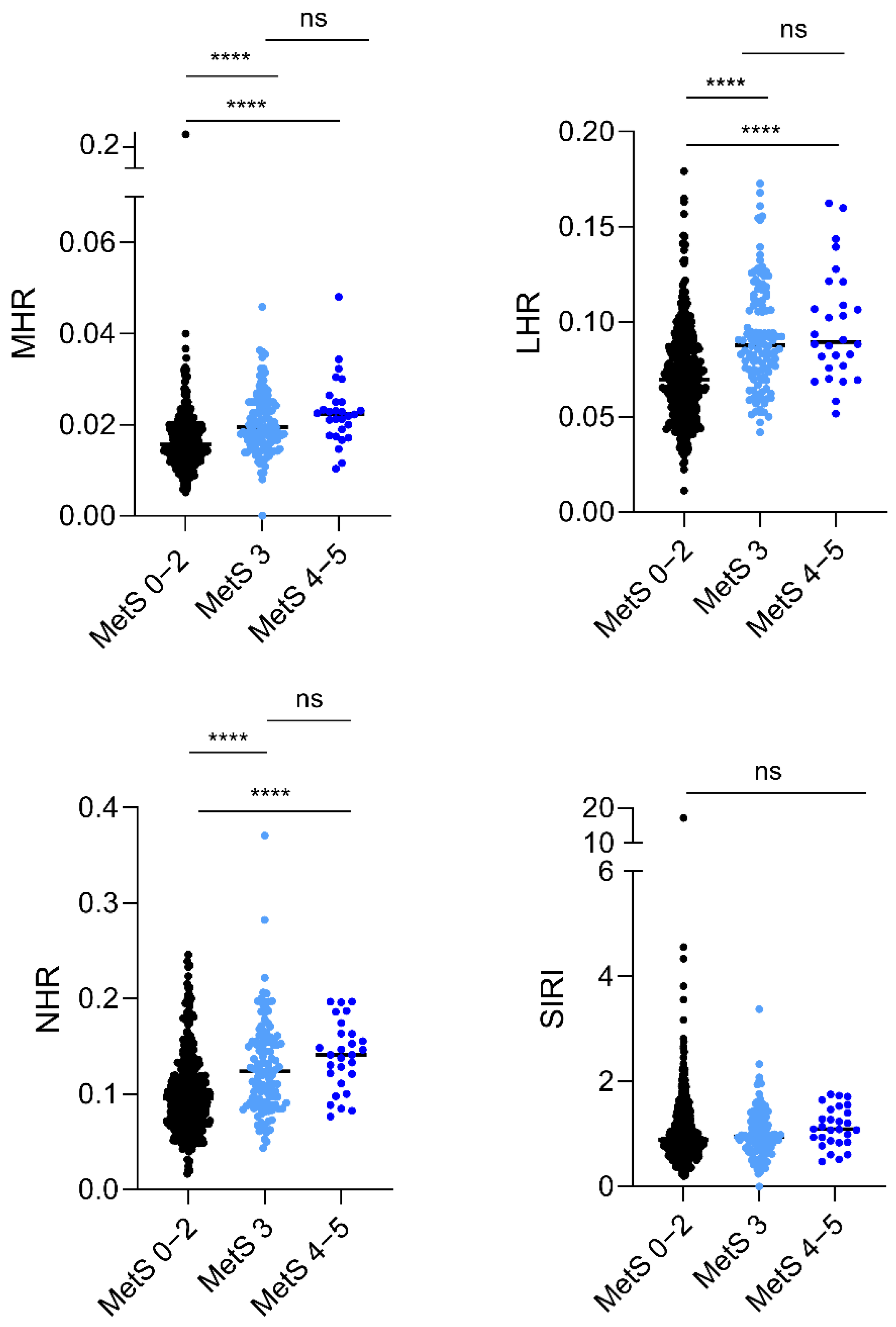
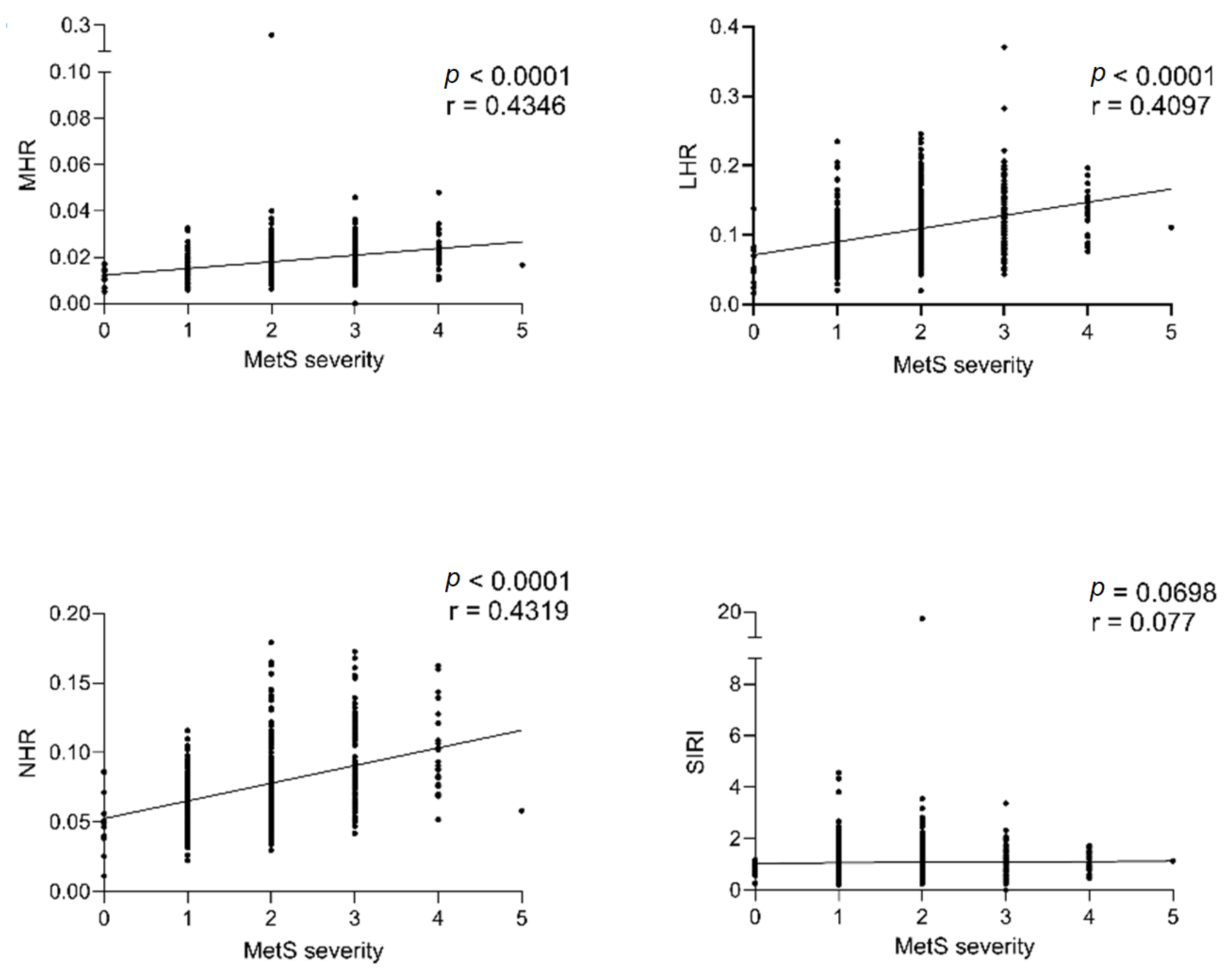
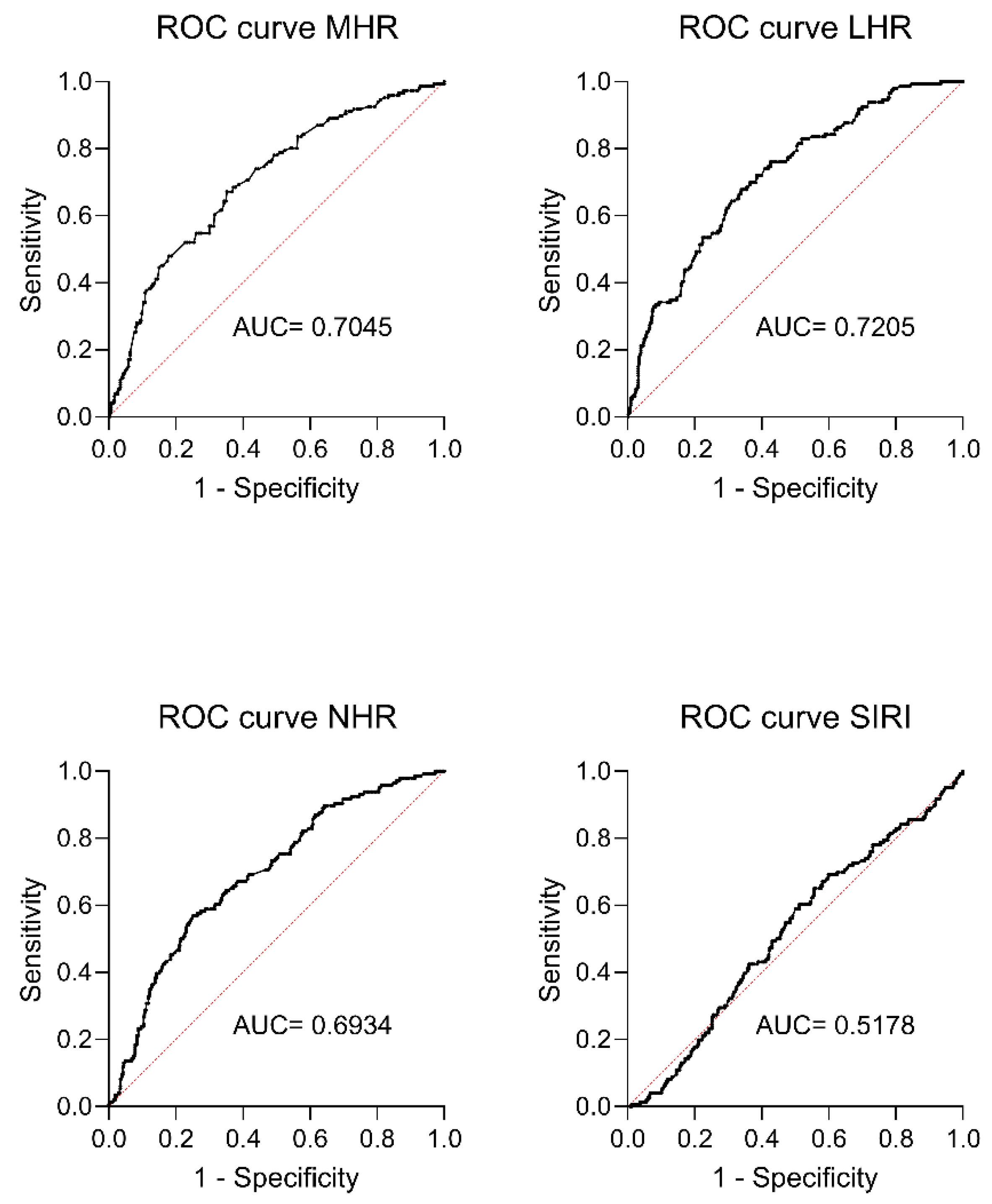
Background: Childhood obesity is a globally increasing pathological condition leading to long-term health issues such as cardiovascular diseases and metabolic syndrome (MetS). This study aimed to determine the clinical value of the Complete Blood Count-derived inflammation indexes Monocyte/HDL-C ratio (MHR), Lymphocyte/HDL-C ratio (LHR), Neutrophil/HDL-C ratio (NHR), and System Inflammation Response Index (SIRI) to predict the presence of metabolic syndrome and its association with cardiovascular risk markers (HOMA-IR, TG/HDL-C, and non-HDL-C) in children and adolescents with obesity. Methods: The study included a total of 552 children/adolescents with severe obesity (BMI: 36.4 [32.7–40.7] kg/m2; 219 males, 333 females; age: 14.8 [12.9−16.3] years), who were further subdivided based on the presence or absence of metabolic syndrome (MetS+ and MetS respectively). Results: The MHR, LHR, and NHR indexes (p < 0.0001), but not SIRI (p = 0.524), were significantly higher in the MetS+ compared to the MetS− subgroup, showing a positive correlation with the degree of MetS severity (p < 0.0001). Furthermore, MHR, LHR, and NHR were positively associated with cardiometabolic risk biomarkers (HOMA-IR: MHR p = 0.000, LHR p = 0.001, NHR p < 0.0001; TG/HDL-C: MHR, LHR, NHR p < 0.000; non-HDL-C: MHR, LHR p < 0.0001, NHR p = 0.000). Finally, the ROC curve analysis demonstrated that among the analyzed indexes, only MHR, LHR, and NHR had diagnostic value in distinguishing MetS patients among children and adolescents with obesity (MHR: AUC = 0.7045; LHR: AUC = 0.7205; NHR: AUC = 0.6934; p < 0.0001). Conclusions: In conclusion, the MHR, LHR, and NHR indexes, but not the SIRI index, can be considered useful tools for pediatricians to assess the risk of MetS and cardiometabolic diseases in children and adolescents with obesity and to develop multidisciplinary intervention strategies to counteract the widespread disease.
Keywords: pediatric obesity; metabolic syndrome; biomarkers; children; adolescents; blood cell count; high-density lipoprotein; cardiovascular risk pediatric obesity; metabolic syndrome; biomarkers; children; adolescents; blood cell count; high-density lipoprotein; cardiovascular risk