Review

Olfactory Receptors and Aortic Aneurysm: Review of Disease Pathways

by
Theodora M. Stougiannou
*,
Konstantinos C. Christodoulou
and
Dimos Karangelis
Department of Cardiothoracic Surgery, University General Hospital, Democritus University of Thrace, 68100 Alexandroupolis, Greece
*
Author to whom correspondence should be addressed.
J. Clin. Med. 2024, 13(24), 7778; https://doi.org/10.3390/jcm13247778
Submission received: 20 November 2024 / Revised: 10 December 2024 / Accepted: 17 December 2024 / Published: 19 December 2024
(This article belongs to the Section General Surgery)

Abstract

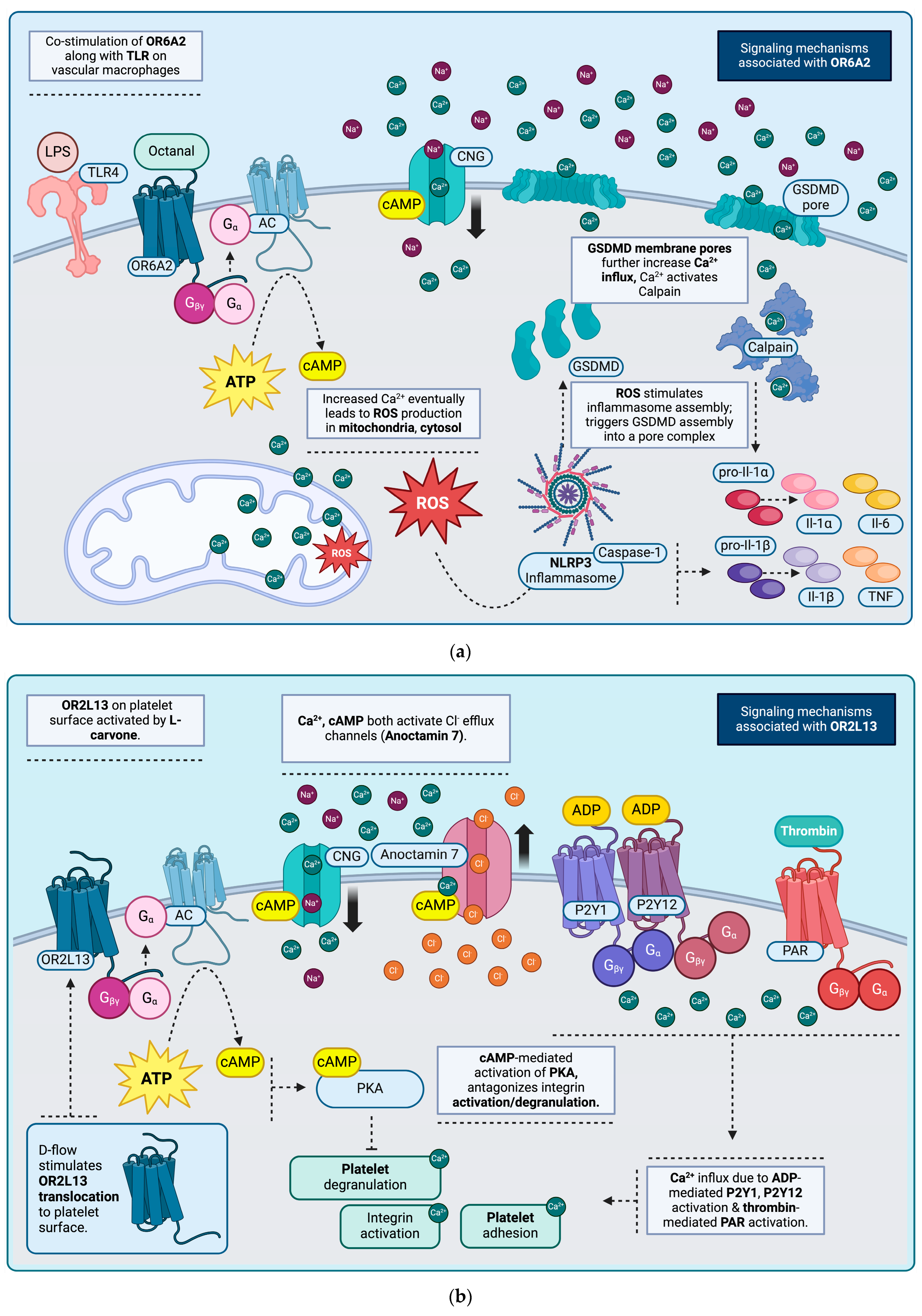
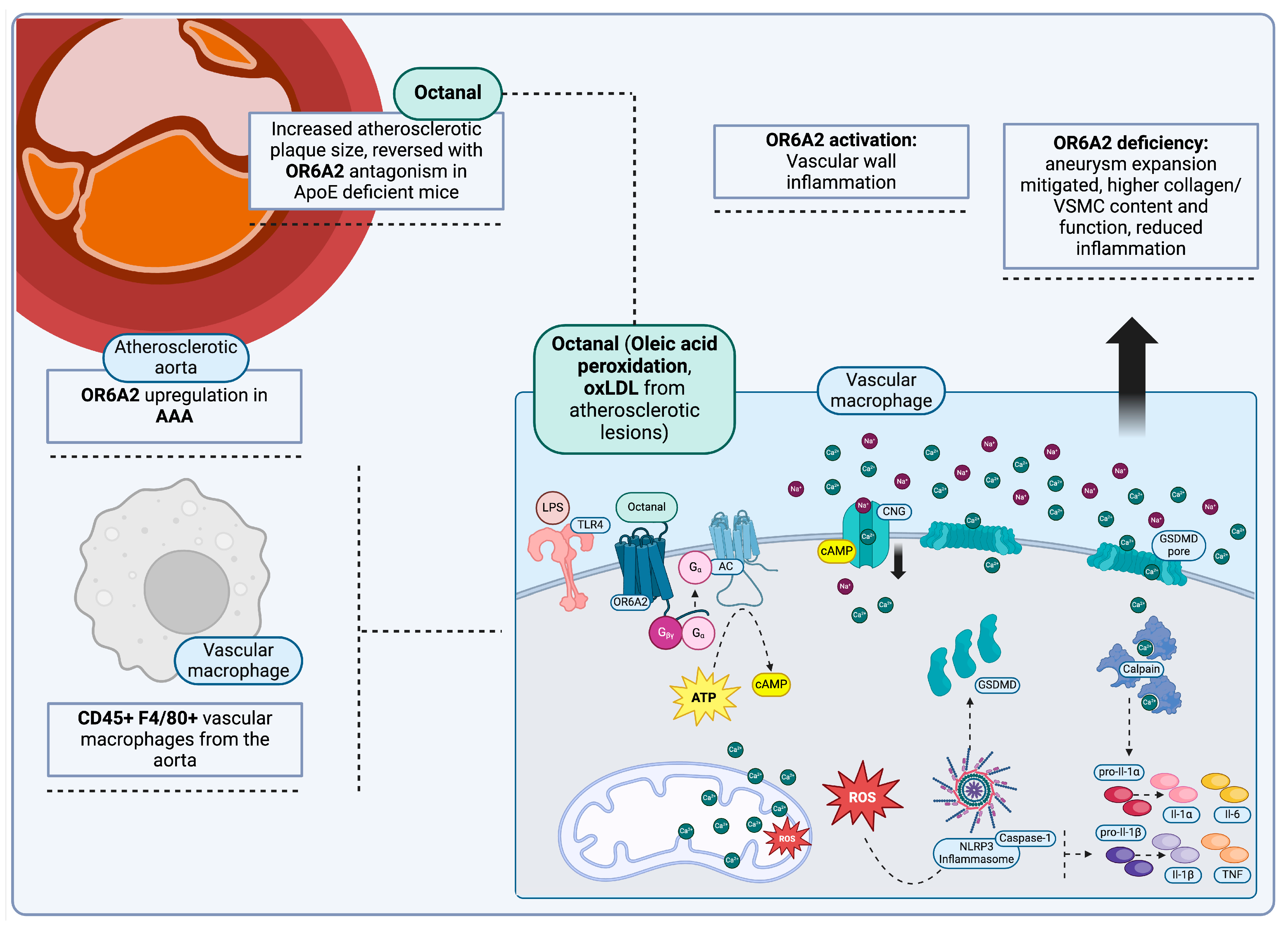
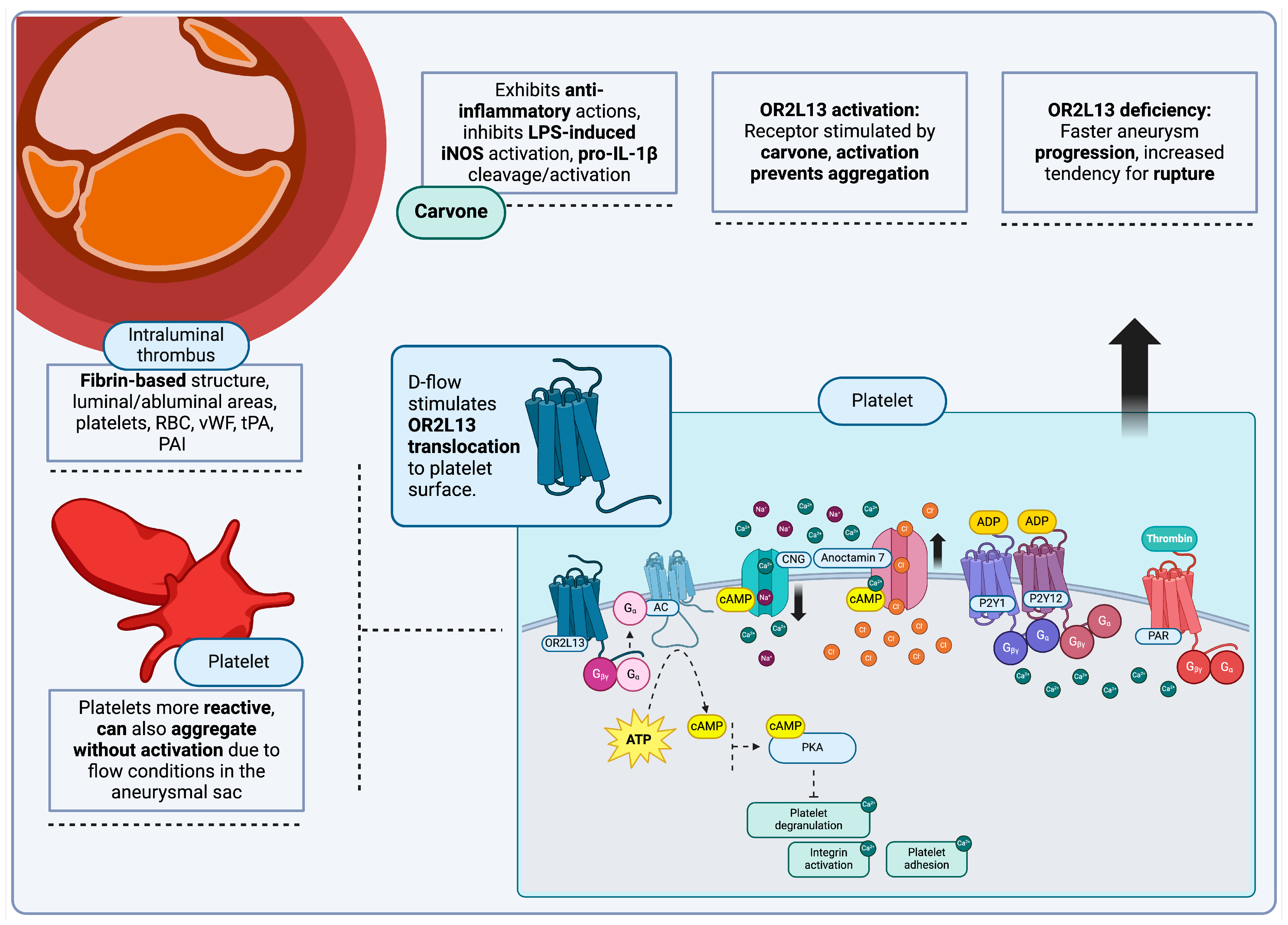
Aortic aneurysm, the pathological dilatation of the aorta at distinct locations, can be attributed to many different genetic and environmental factors. The resulting pathobiological disturbances generate a complex interplay of processes affecting cells and extracellular molecules of the tunica interna, media and externa. In short, aortic aneurysm can affect processes involving the extracellular matrix, lipid trafficking/atherosclerosis, vascular smooth muscle cells, inflammation, platelets and intraluminal thrombus formation, as well as various endothelial functions. Many of these processes are interconnected, potentiating one another. Newer discoveries, including the involvement of odorant olfactory receptors in these processes, have further shed light on disease initiation and pathology. Olfactory receptors are a varied group of G protein coupled-receptors responsible for the recognition of chemosensory information. Although they comprise many different subgroups, some of which are not well-characterized or identified in humans, odorant olfactory receptors, in particular, are most commonly associated with recognition of olfactory information. They can also be ectopically localized and thus carry out additional functions relevant to the tissue in which they are identified. It is thus the purpose of this narrative review to summarize and present pathobiological processes relevant to the initiation and propagation of aortic aneurysm, while also incorporating evidence associating these ectopically functioning odorant olfactory receptors with the overall pathology.
Keywords: aortic; aneurysm; olfactory; odorant; cardiovascular; biology; pathophysiology aortic; aneurysm; olfactory; odorant; cardiovascular; biology; pathophysiology