Review

Challenges in AAV-Based Retinal Gene Therapies and the Role of Magnetic Nanoparticle Platforms

1
Eidgenössische Technische Hochschule (ETH) Zürich, Department of Biosystems Science and Engineering, 4056 Basel, Switzerland
2
UCD Charles Institute of Dermatology, School of Medicine, University College Dublin, D04 V1W8 Dublin, Ireland
*
Author to whom correspondence should be addressed.
J. Clin. Med. 2024, 13(23), 7385; https://doi.org/10.3390/jcm13237385
Submission received: 6 November 2024 / Revised: 27 November 2024 / Accepted: 28 November 2024 / Published: 4 December 2024
(This article belongs to the Section Ophthalmology)

Abstract

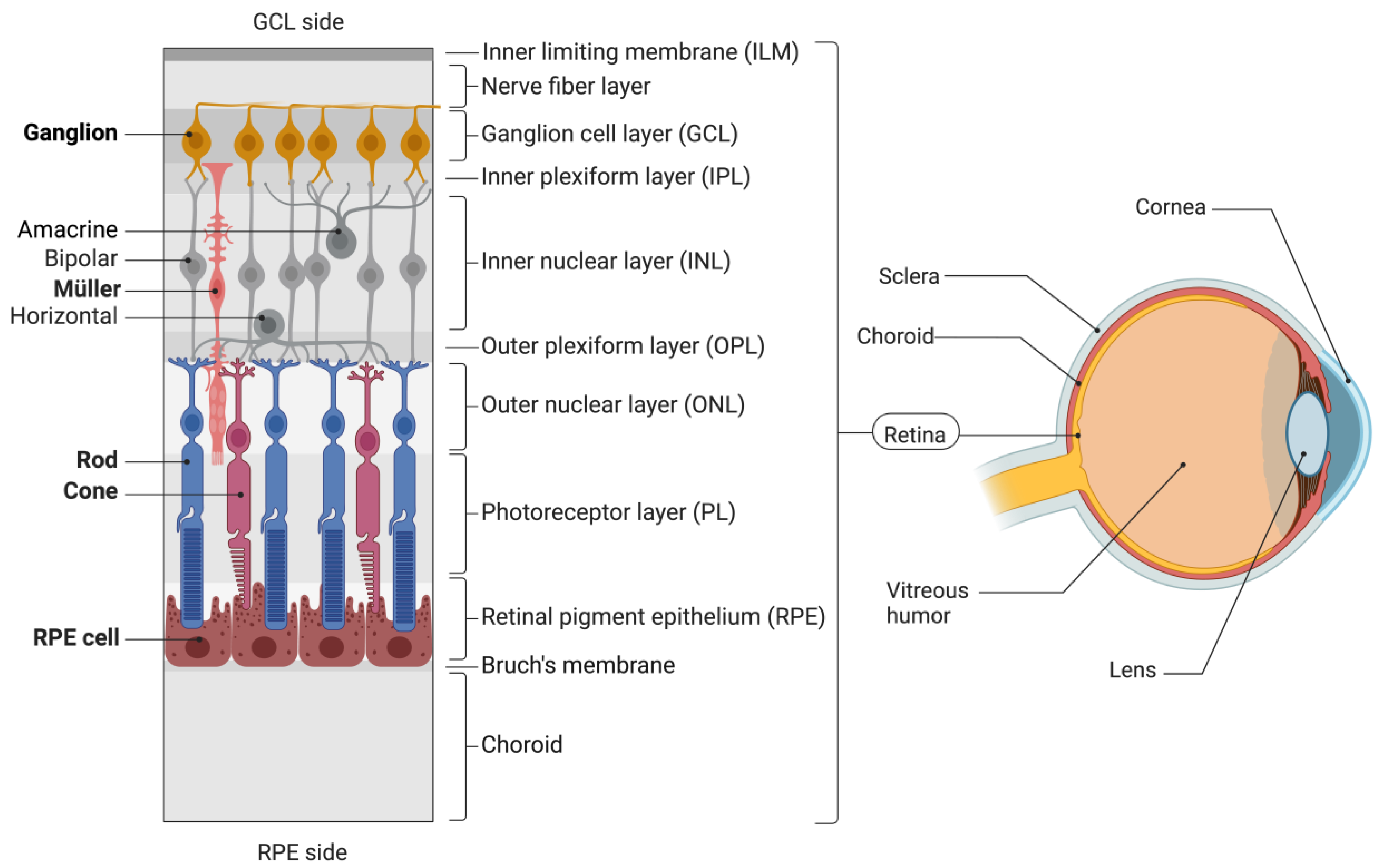
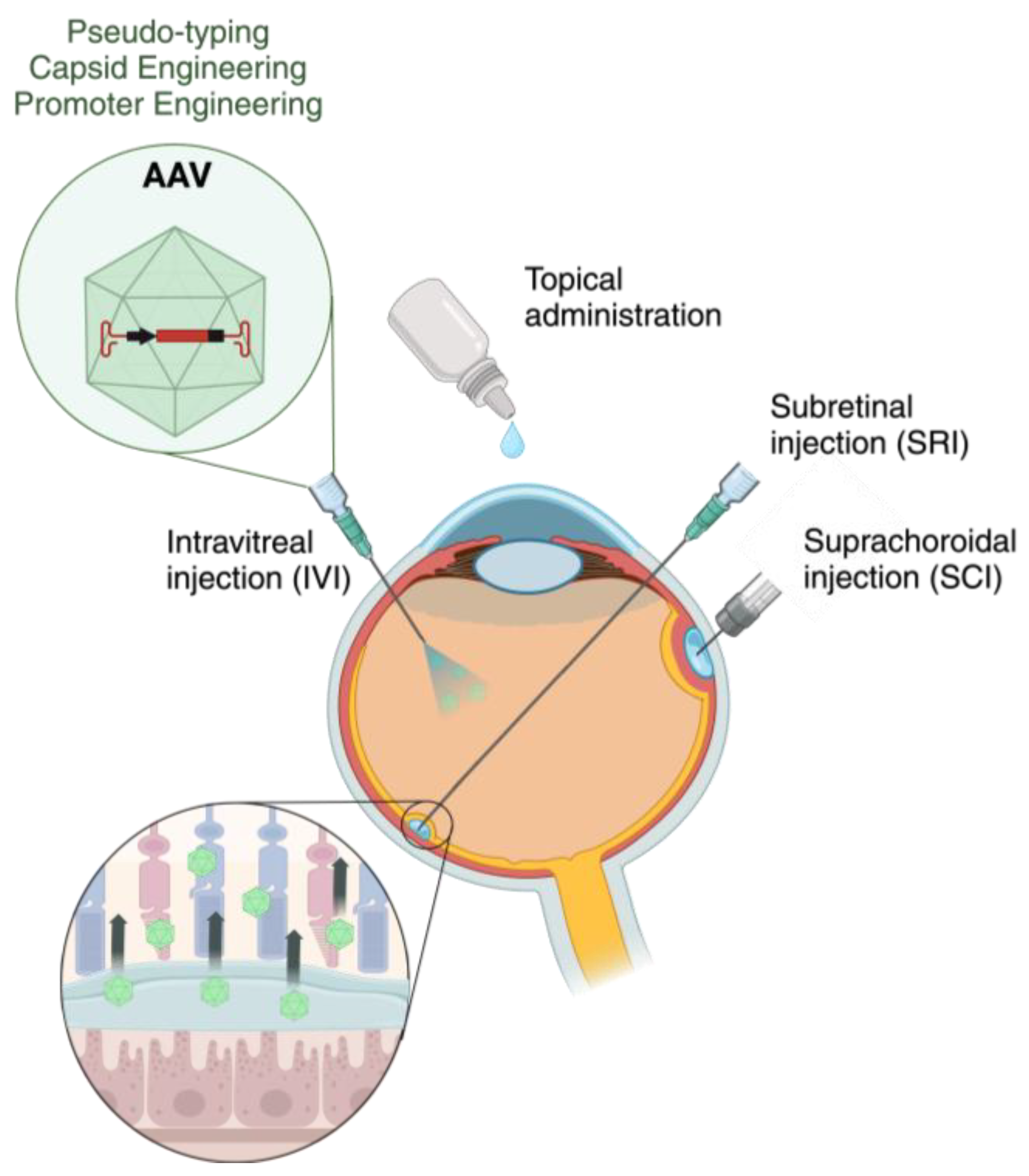
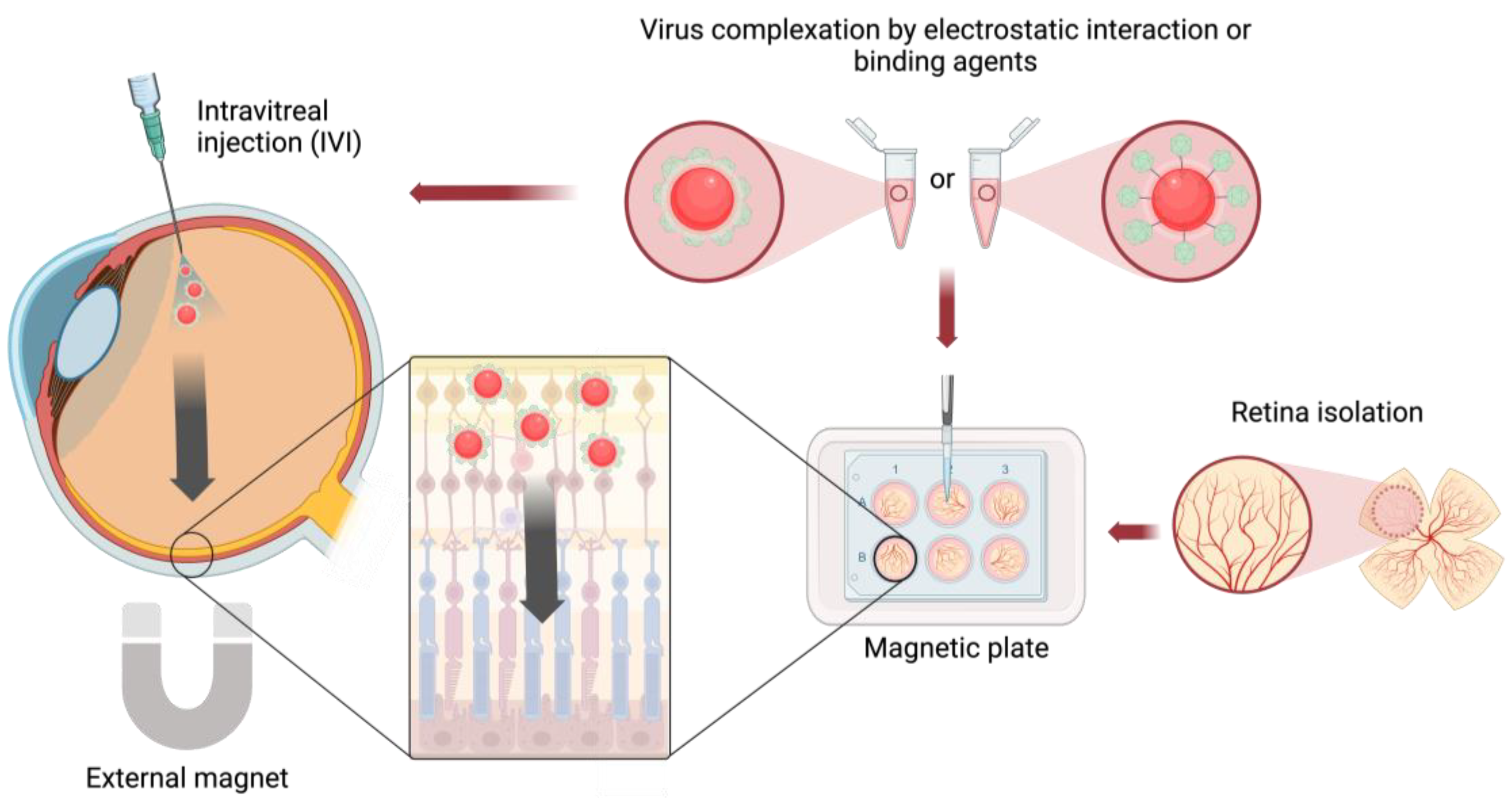
Retinal diseases, leading to various visual impairments and blindness, are on the rise. However, the advancement of retinal gene therapies offers new hope for treatment of such diseases. Among different vector systems for conferring therapeutic genetic load to retinal cells, adeno-associated viruses (AAVs) have been most intensively explored and have already successfully gained multiple clinical approvals. AAV-based retinal gene therapies have shown great promise in treating retinal disorders, but usually rely on the heavily disruptive administration methods such as subretinal injection. This is because the clinically well-established, minimally invasive alternative of intravitreal injection (IVI) necessitates AAVs to traverse the retinal inner limiting membrane (ILM), which is hard to penetrate in higher eye models, like human or porcine eyes. Additionally, AAVs’ natural transduction preference, known as tropism, is commonly not specific to cells of only one target retinal layer, which is another ongoing challenge in retinal gene therapy. This review examines strategies to overcome these obstacles with a focus on the potential of magnetic nanoparticles (MNPs) for improved retinal AAV delivery.
Keywords: eye diseases; retinal gene therapy; adeno-associated virus; magnetic nanoparticles eye diseases; retinal gene therapy; adeno-associated virus; magnetic nanoparticles