Review

The mTOR Pathway: A Common Link Between Alzheimer’s Disease and Down Syndrome

by
Abigail J. Wohlfert
1,
Jeremiah Phares
2 and
Ann-Charlotte Granholm
2,*
1
Department of Modern Human Anatomy and Cell & Developmental Biology, University of Colorado Anschutz Medical Campus, Aurora, CO 80045, USA
2
Department of Neurosurgery, University of Colorado Anschutz Medical Center, Aurora, CO 80045, USA
*
Author to whom correspondence should be addressed.
J. Clin. Med. 2024, 13(20), 6183; https://doi.org/10.3390/jcm13206183
Submission received: 4 September 2024 / Revised: 12 October 2024 / Accepted: 15 October 2024 / Published: 17 October 2024
(This article belongs to the Section Clinical Neurology)

Abstract

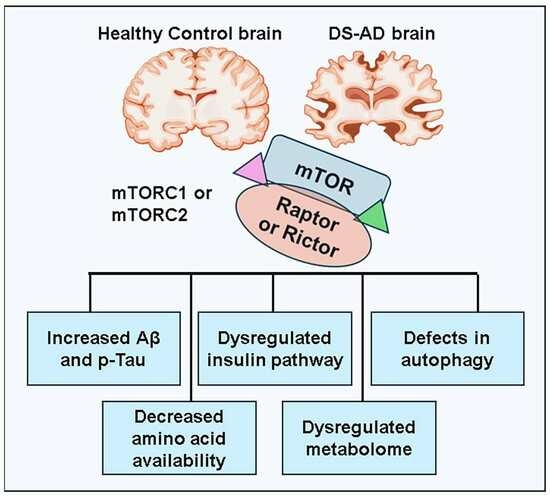
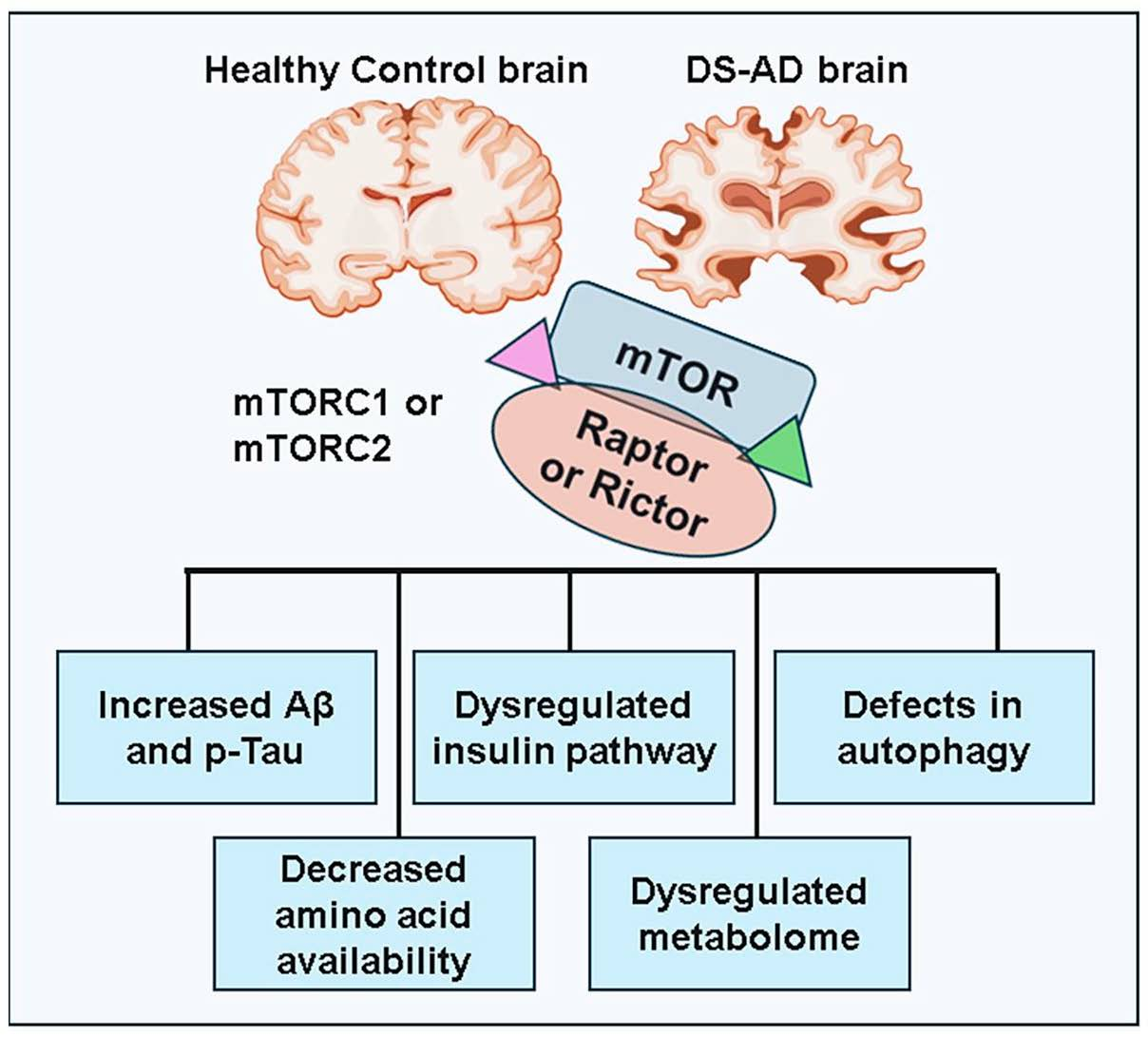
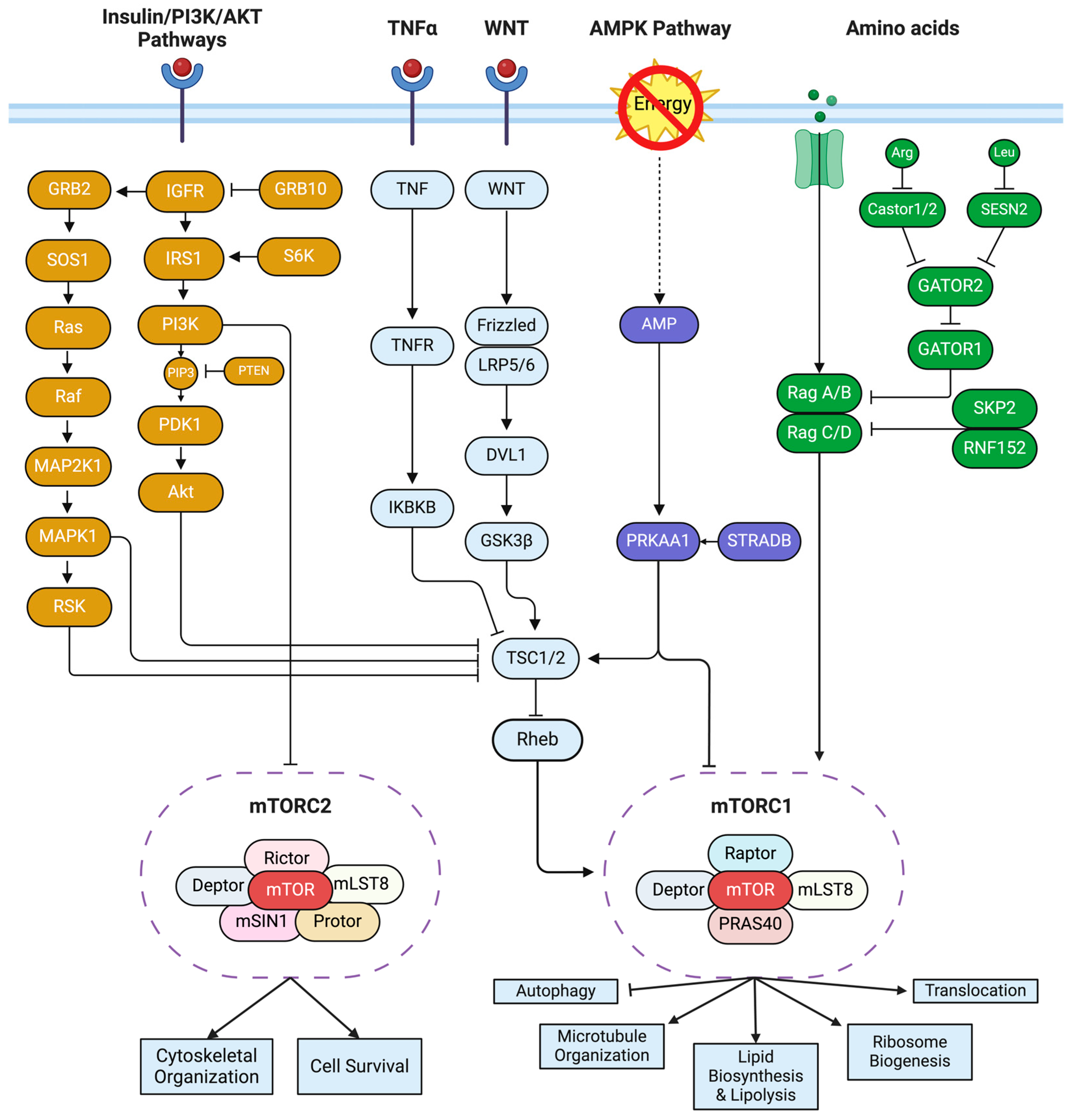
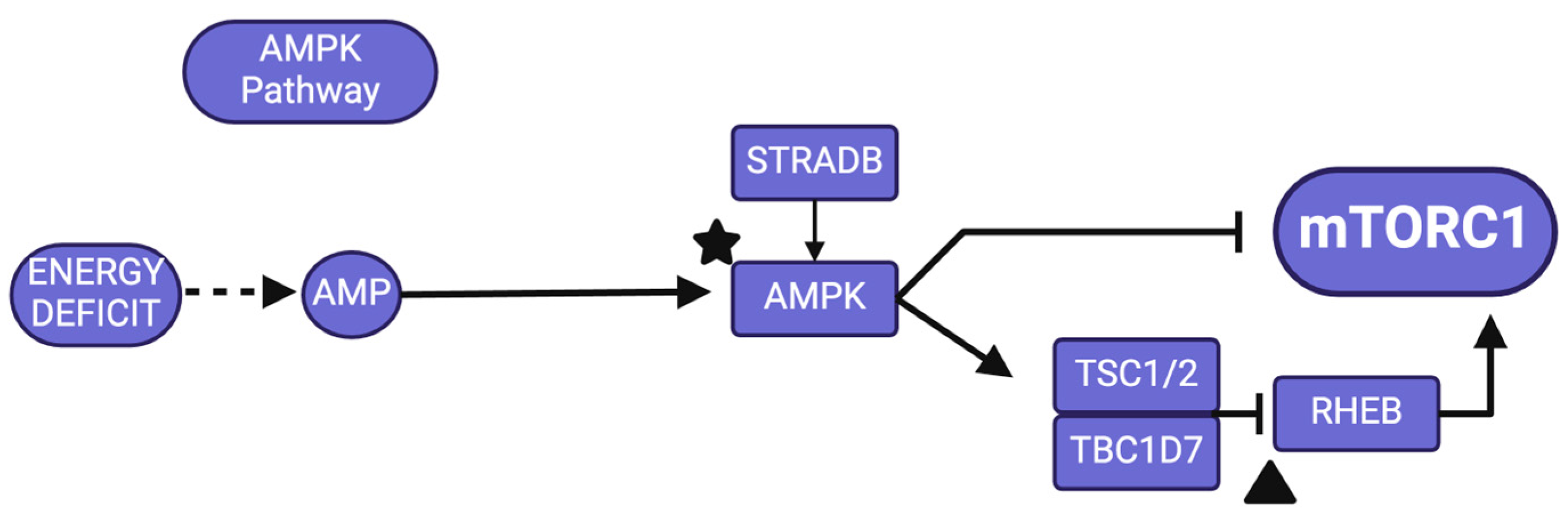
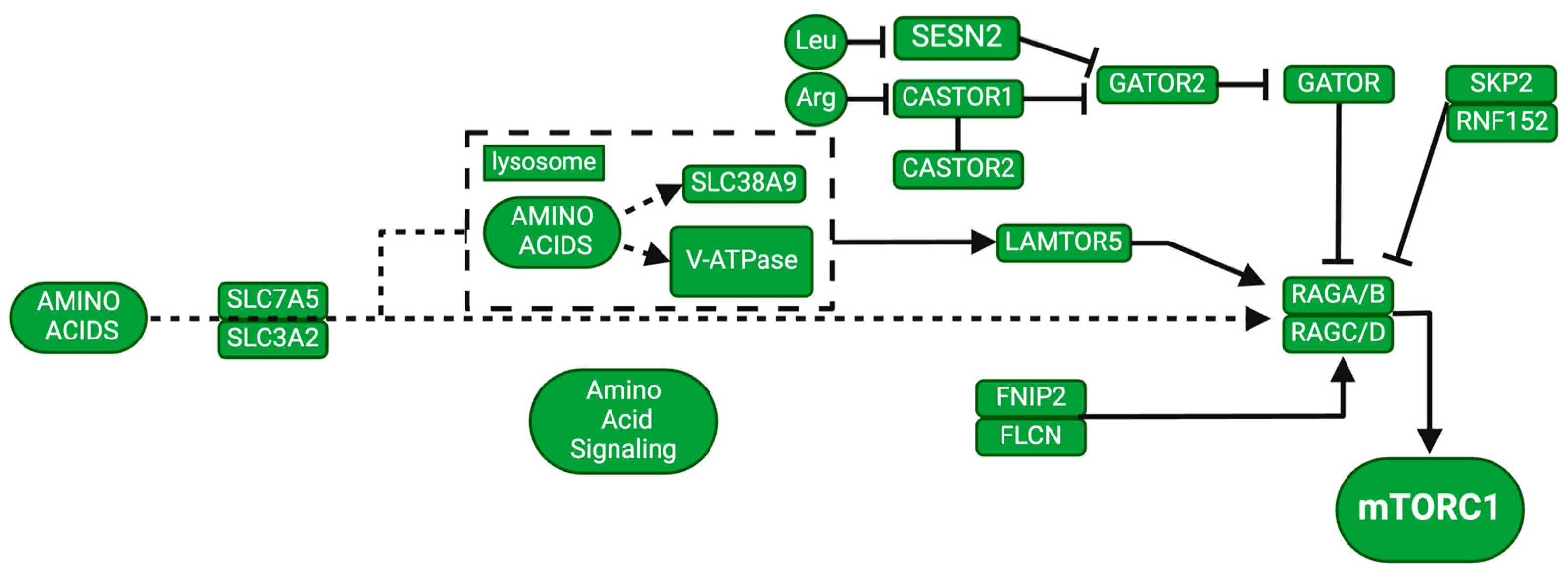
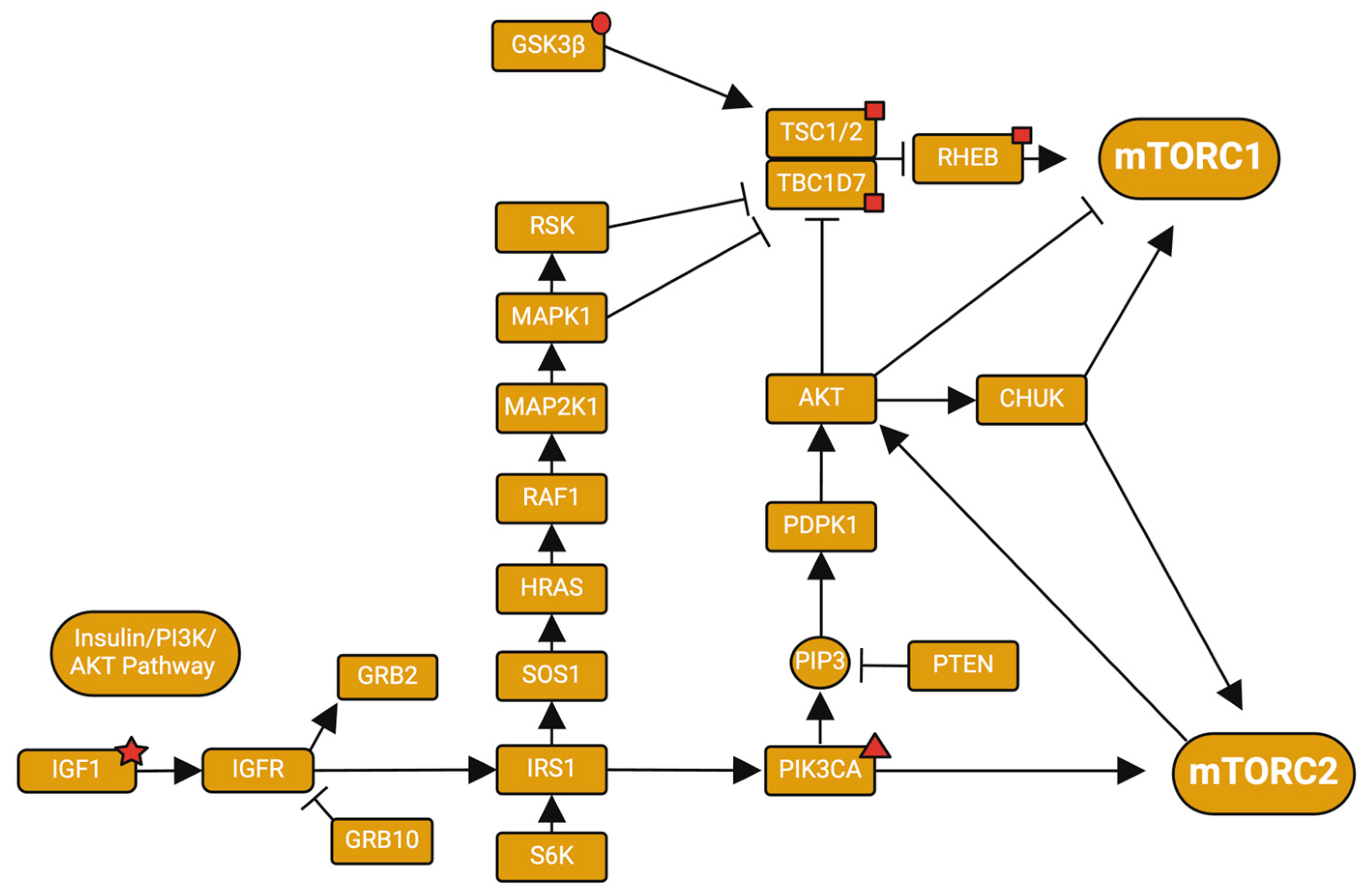
Down syndrome (DS) is a chromosomal condition that causes many systemic dysregulations, leading to several possible age-related diseases including Alzheimer’s disease (AD). This may be due to the triplication of the Amyloid precursor protein (APP) gene or other alterations in mechanistic pathways, such as the mTOR pathway. Impairments to upstream regulators of mTOR, such as insulin, PI3K/AKT, AMPK, and amino acid signaling, have been linked to amyloid beta plaques (Aβ) and neurofibrillary tangles (NFT), the most common AD pathologies. However, the mechanisms involved in the progression of pathology in human DS-related AD (DS-AD) are not fully investigated to date. Recent advancements in omics platforms are uncovering new insights into neurodegeneration. Genomics, spatial transcriptomics, proteomics, and metabolomics are novel methodologies that provide more data in greater detail than ever before; however, these methods have not been used to analyze the mTOR pathways in connection to DS-AD. Using these new techniques can unveil unexpected insights into pathological cellular mechanisms through an unbiased approach.
Keywords: mTOR; intellectual disability; neurodegeneration; spatial transcriptomics; proteomics; metabolomics mTOR; intellectual disability; neurodegeneration; spatial transcriptomics; proteomics; metabolomics
Graphical Abstract