Skip to Content
JCMJournal of Clinical Medicine
  • Article
  • Open Access

5 July 2024

Reporting of Magnetic Resonance Enterography in Inflammatory Bowel Disease: Results of an Italian Survey


,
,
,
,
,
,
,
and
1
Department of Radiology, Humanitas Research Hospital—IRCCS, Via Manzoni 56, Rozzano, 20089 Milan, Italy
2
IBD Center, Humanitas Research Hospital—IRCCS, Via Manzoni 56, Rozzano, 20089 Milan, Italy
3
Department of Biomedical Sciences, Humanitas University, Pieve Emanuele, 20072 Milan, Italy
*
Author to whom correspondence should be addressed.

Abstract

Background/Objectives: Inflammatory bowel diseases (IBDs) are chronic disorders that require close monitoring with imaging techniques such as magnetic resonance enterography (MRE). Standardization of radiological reports is crucial for the optimal management of IBD. We surveyed Italian radiologists regarding their experiences with MRE examinations and reporting for IBD. Methods: All members of the Italian Society of Medical and Interventional Radiology (SIRM) were invited to complete an anonymous questionnaire in April 2023. Comparison tests between variables were assessed using the χ2 test or Fisher exact test according to the least frequency group. Significance level was set for p-value < 0.05. Results: A total of 253 radiologists responded to the survey. Around 70% of the respondents declared personal clinical experience with IBD. Great agreement with the items included and described for both disease activity (i.e., intestinal wall thickness, presence of mucosal ulcers, presence of edema, mucous enhancement) and complications was reported. One-third of the respondents regularly used a structured MRE report. Centers with a high number of IBD patients per year (>1000) mostly used 3 T scanners or both 1.5 T and 3 T scanners (p < 0.001). The incorporation of scores of disease activity was associated with university and high-volume hospitals (p < 0.001). Conclusions: This survey highlighted the current routine practice and experience of MRE reports of IBD patients among Italian radiologists. We found deficiencies in the use of radiological scores in MRE reports and attendance at IBD multidisciplinary meetings.

1. Introduction

Inflammatory bowel diseases (IBDs) are chronic, disabling, and incurable conditions of the gastrointestinal tract that exhibit a relapsing–remitting behavior [1]. The burden of IBDs is rising globally, and the prevalence in Europe and the United States is estimated at 1 in every 200–300 people [2].
Close monitoring and adequate assessment of response to therapy through objective measures are currently the backbone of managing IBDs [3,4]. Cross-sectional imaging methods, including intestinal ultrasound (IUS), magnetic resonance enterography (MRE), and computed tomography (CT), have been demonstrated as being highly accurate for the diagnosis and assessment of disease activity and severity, and for detecting complications in IBDs [5,6]. The pooled sensitivity and specificity of cross-sectional imaging are estimated to be >85% and >95%, respectively, with few differences among the techniques regarding disease extension, location, severity, and complications [7].
Several studies have demonstrated that the achievement of transmural healing, alongside with mucosal healing, is a complementary predictor of better long-term clinical outcomes in CD (i.e., lower risk of hospitalization, surgery, and/or corticosteroid use) [8,9,10]. Indeed, transmural healing, evaluated through MRI and defined as a bowel thickness <3 mm, without an increased T2 mural intensity or increased contrast enhancement on T1 sequences, was associated with reduced hospitalization rates, surgery, and treatment escalation over 5 years of follow-up in CD patients [8].
At present, the regular assessment of radiological response is recommended after therapy starts, with modification and/or escalation in IBD patients, especially in CD [4].
Recently, both gastroenterological and radiological societies have published guidelines that establish technical standards for cross-sectional imaging in IBD, define parameters, and indicate how to report the results [11,12,13]. Standardization of radiological reports is crucial for the optimal management of IBD in order to reliably guide therapeutic decision making. At present, there are no national guidelines regarding radiological monitoring in patients with IBD and the behavior of Italian Centers towards MRE in IBD patients is unknown. The aim of this study was to investigate technical and reporting standards in the use of MRE among Italian radiologists involved in the management of IBD patients. We evaluated radiologists’ experiences with MRE examinations for IBD and with the reporting of MRE results by surveying members of the Italian Society of Medical and Interventional Radiology (SIRM).

2. Materials and Methods

To explore the application of MRE in the assessment of IBD patients by Italian radiologists, we developed an anonymous survey that was endorsed by SIRM. The questionnaire was developed using a dedicated software platform (Google forms, Google, Mountain View, CA, USA) and was anonymous.

2.1. Participants

In April 2023, a sample of SIRM members received an email invitation to complete the survey (n = 934). The survey remained available for 14 consecutive days, and participants could access it only once. A reminder was sent 4 days before the survey’s closure. All completed questionnaires were included in the analysis.

2.2. Procedures

To estimate the time needed to complete the survey (approximately 6–8 min), we asked 10 colleagues to time themselves on a test run before opening the survey to SIRM members.
The survey comprised 21 multiple choice questions, of which 14 permitted only one answer and 7 permitted more than one. The questionnaire was administered in Italian, while an English translation is provided in Table 1.
Table 1. Questions and items included in the administered questionnaire.
Overall, 10 questions inquired about the respondents’ demographics (age, professional qualifications, experience in MRE for IBD) and work setting, whereas 11 questions focused on the use of MRE for IBD (i.e., machines and protocols) and the reporting of these results (i.e., items assessed and described in the radiological report for disease activity, severity, and complications) (Table 1).
Statistical analyses were performed on survey answers as categorical data. Data were described as absolute count and relative percentages. Comparison tests between variables were assessed using the χ2 test or Fisher exact test according to the least frequency group. A significance level was set for p-value < 0.05.

3. Results

3.1. General Questions, Experience in IBD, Characteristics of the Centers

A total of 253 radiologists responded to the survey (response rate 21.7% of the invited), and 45.3% of respondents had an age between 35 and 50 years (n = 115). The study group comprised 191 radiologists (75.5%) and 62 radiology residents (24.5%). Just under half of respondents (n = 119; 47.1%) worked in a public hospital, while 92 (36.3%) worked at a university hospital and 42 (16.6%) worked at a private hospital or clinic. The respondents worked across Italy, and 188 (74.3%) claimed to have experience with IBD. Table 2 elucidates the main characteristics of the study population.
Table 2. Characteristics of the radiologists who responded to the questionnaire and of their work settings.
In terms of the participants’ place of work, 97 respondents (38.3%) worked in a setting with an IBD case load below 100 patients/year, and 80 respondents (31.6%) reported a case load between 100 and 500 patients/year, whereas 76 respondents (30.1%) reported a case load above 500 patients/year. Regarding the clinical management and discussion of imaging findings, 121 respondents (47.8%) indicated having a multidisciplinary IBD meeting in their hospital, with a higher presence in university hospitals compared with public hospitals: 76.1% and 30.0%, respectively (p < 0.001).
MRE examinations were mostly performed on 1.5 T MRI scanners (n = 189, 74.7%), while small numbers of respondents indicated that they used both 1.5 and 3 T scanners (38/253, 15.0%) or only 3 T scanners (26/253, 10.3%). The use of 1.5 T and 3 T scanners was found to be different among Centers with a higher percentage of 1.5 T in public (87.5%) and non-hospital Centers (87.5%) (p < 0.001), whereas 3 T scanners were mostly used in private hospitals (23.5%) and university hospitals (12.0%) (p < 0.001). Notably, Centers with high numbers of patients with IBD per year (>1000) were mostly associated with 3 T scanners (17.2%) or both 1.5 T and 3 T scanners (48.3%) (p < 0.001).
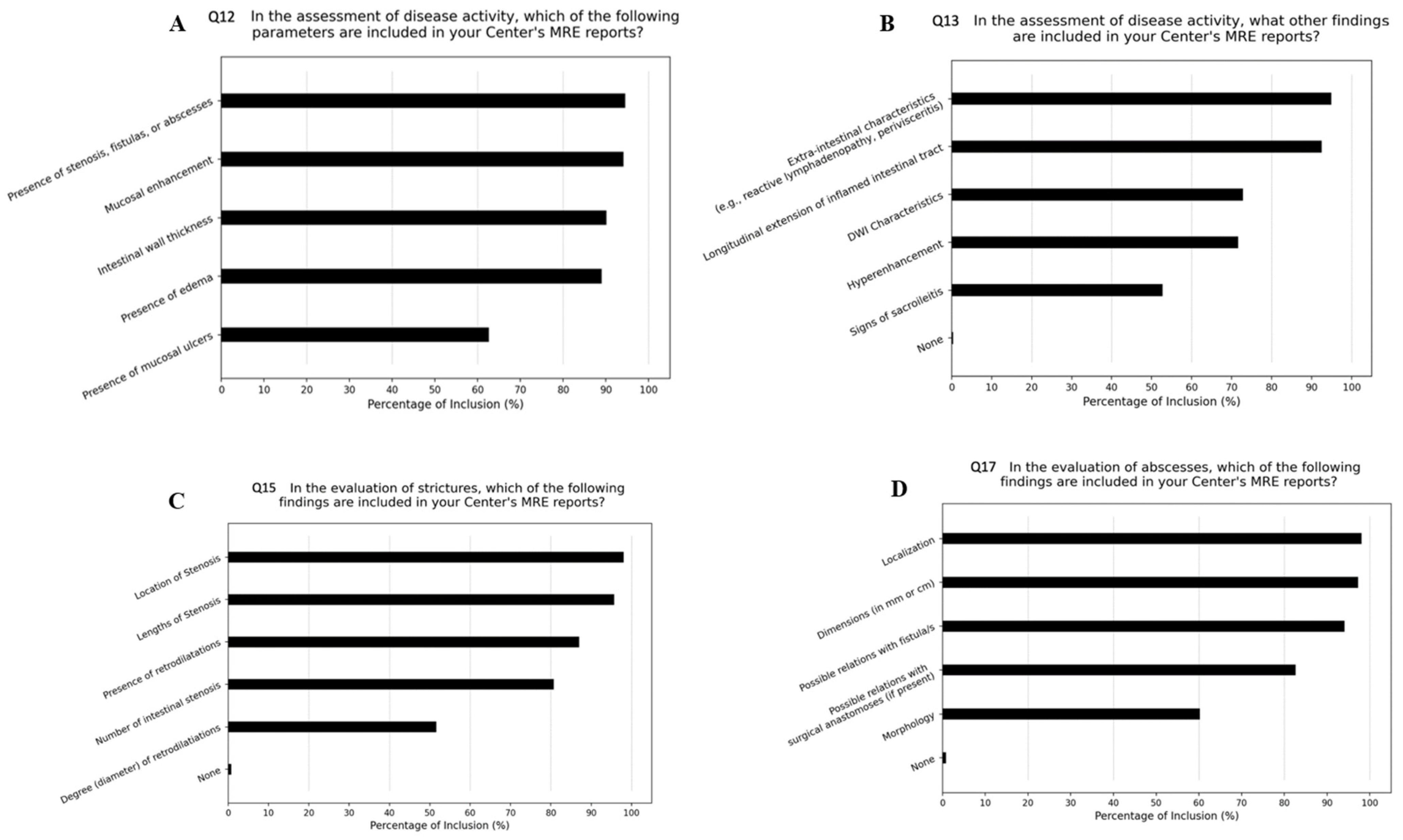
Figure 1 summarizes the answers to questions regarding the assessment of disease activity and complications.
Figure 1. Details of answers to questions regarding assessment of disease activity and complications.
In Figure 1, the main items investigated through the questions are about disease activity and complications. In Q12 (panel A), the general features of transmural activity were asked to the participants (i.e., intestinal wall thickness, mucosal enhancement, mucosal ulcers and/or complications); Q13 (panel B) addressed adjunctive radiological features of active disease (i.e., extra-intestinal characteristics, concomitant sacro-ileitis); and Q15 and Q17 (panels C and D, respectively) specifically addressed items included for describing strictures and abscess/es.

3.2. Reporting Details

The second part of the questionnaire focused on MRE examinations and reports. When asked if the results of MRE examinations for patients with IBD were reported on a structured radiological report, only 77 respondents answered yes (30.4%). No significant association was found between the use of structured forms and the geographical area of Italy (p = 0.553), type of hospital (p = 0.606), or professional qualification (p = 0.442). Even fewer respondents indicated that they routinely include IBD clinical scores in the reports (n = 26, 10.3%) or include a score only when requested by a gastroenterologist (n = 39, 15.4%). The use of IBD activity scores was highest among respondents based in Northern Italy (76.9% vs. 23.1% for Central Italy, Southern Italy and islands, p = 0.004). It was also higher for radiology residents working at university hospitals (57.7% vs. 42.3% for radiologists, p = 0.005).
Concerning the evaluation of IBD activity (Figure 1A), half of respondents (n = 138, 54.5%) reported including all the following items: intestinal wall thickness, presence of mucosal ulcers, presence of edema, mucous enhancement. Moreover, almost all respondents include the presence of fistulas or abscesses (n = 240, 94.9%). Approximately one-third of the respondents (n = 77, 30.4%) include further descriptive items in the MRE report (Figure 1B), such as extra-intestinal features (i.e., reactive lymphadenopathy, perivisceritis), hyperenhancement, DWI features, the longitudinal extent of the inflamed intestinal tract and signs of sacro-ileitis.
In the evaluation of IBD-related stenosis (Figure 1C), more than 86.5% (n = 219) of the respondents include a numerical evaluation of wall thickness (in mm). More than one-third of the respondents (n = 109, 43.1%) consider it valuable to include the following items in the radiology report: the number of intestinal strictures, the location of the stricture(s), the length of the stricture(s), the presence and the degree (diameter) of pre-stenotic dilation. Moreover, 179 (70.7%) of the respondents found it relevant to report the following findings related to stenosis in the MRE report: the relationship to surgical anastomoses (if present), the presence of signs of active inflammation within the stricture, and the presence of fistulas/abscesses adjacent to the stricture.
Concerning the evaluation of abscesses (Figure 1D), 56.1% (n = 142) included all the following findings: location, dimensions (in mm or cm), morphology, and any relationship with fistula(s) and with surgical anastomoses (if any). The most frequently included feature in the report was the location of the abscess (n = 249, 98.4%).

3.3. Structured Report, Scores of Disease Activity, and Multidisciplinary Meetings

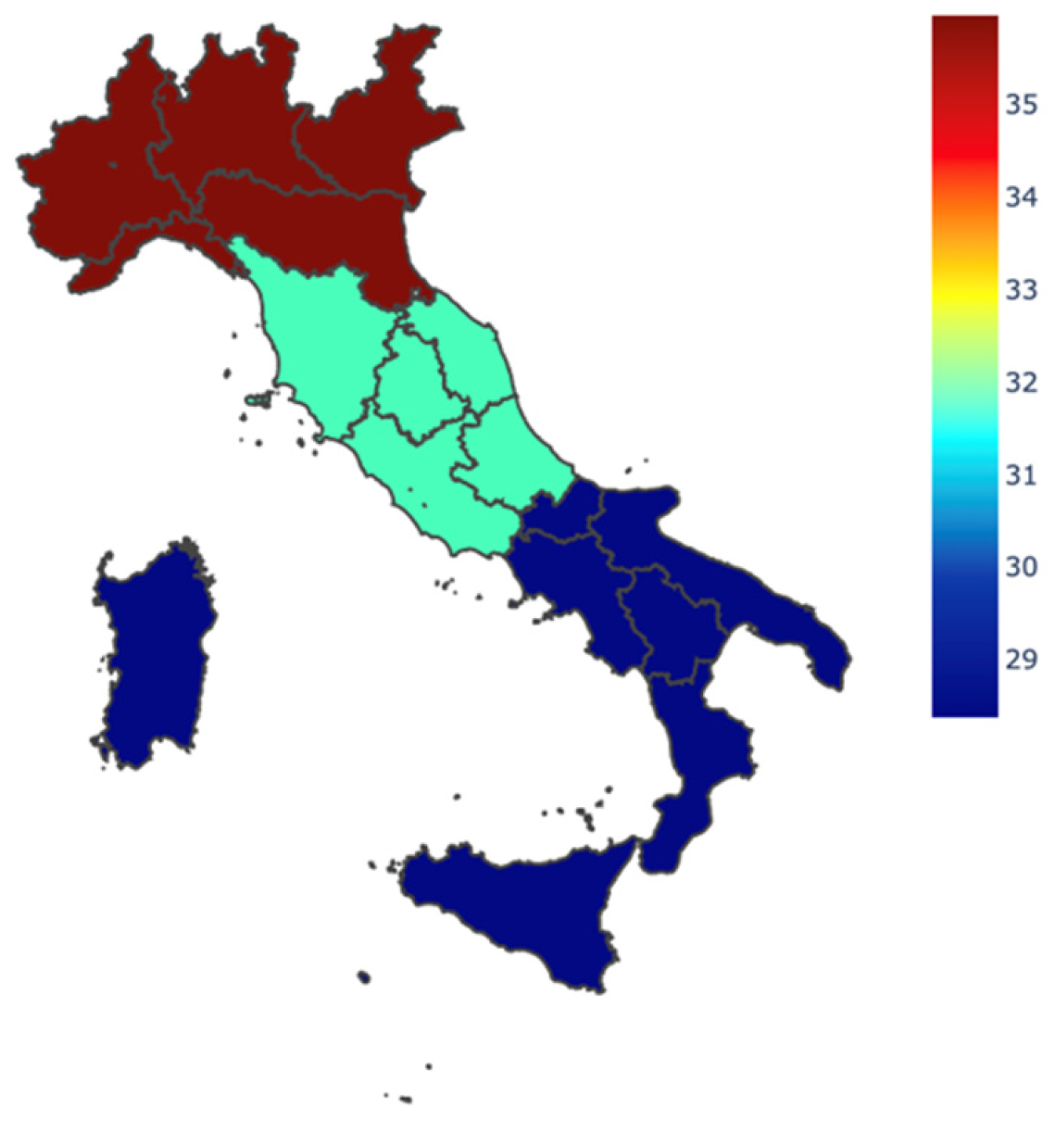
Overall, a structured MRE report was found to be used by a small percentage of respondents (n = 83, 32.8%). In more detail, 58 respondents (22.9% of the overall study population, 68.8% of users) said they use it on a daily basis, whereas the remaining 25 respondents use it only for clinical trials or upon gastroenterological request. Among the respondents, no differences were found in the use of a structured report in relation to geographical location (p = 0.553) (Figure 2), working qualification (p = 0.442), or type of Center (p = 0.606).
Figure 2. Percentage of usage of structured report for patients with IBD among geographical areas.
Regarding the adoption of scores in the MRE report, those sampled routinely include IBD clinical scores in reports (n = 26, 10.3%) in their daily practice: the use of IBD activity score/s in MRE reports is mainly adopted in the north of Italy (17.5%, p = 0.004), by radiology residents (25.4%, p < 0.001), and in university hospital (38.4%, p < 0.001) (Table 3).
Table 3. Statistical results for structured MRE report and disease activity scores.
The most adopted score is the simplified MaRIA score (n = 12/65, 46.2%), followed by the MaRIA score (n = 18/65, 27.7%) and MEGS (n = 1/65, 4%) (Table 3).
High confidence in MaRIA/sMaRIA score use was reported by only 8 respondents (30.7% of users, 3.1% of all respondents), and moderate confidence was reported by 53 respondents (81.5% of users, 20.9% of all respondents) (Table 3).
Multidisciplinary IBD meetings are accessible for 121 respondents (47.6%) (Table 2). Among those, 25 radiologists reported always participating (20.7%), 29 participate only for complex cases (24.0%), 43 are interested but not invited (35.5%), and 24 are not interested in participating (19.8%) (Table 2). Italian Centers in central regions (18,2%, p = 0.014), respondents between ages 35 and 50 years (13.0%, p < 0.001), and those working in university hospitals (18.5%, p < 0.001) were associated with higher participation in multidisciplinary IBD meetings.

4. Discussion

The increased availability and the accuracy of cross-sectional imaging in detecting complications, monitoring therapeutic response, and predicting long-term clinical outcomes place the radiologist at center stage in the management of IBD [14].
Our survey sought to highlight the current routine practice and experience with MRE reports for patients with IBD among Italian radiologists, highlighting high and low points. To the best of our knowledge, this is the first survey addressed to all members of a national Italian radiological society on this topic. This survey was mostly completed by radiologists with a declared personal expertise in IBD (>70% of the participants), thus representing a close picture of the daily clinical practice in this field.
An important result of the survey is the great agreement with the items included and described for both disease activity and complications (around 55% and 86–94% of agreement, respectively). This result lays the foundations for homogeneous and optimal MRE reporting among Italian radiologist with experience in IBD and can improve communication between different specialties. On the other hand, only 22.9% of the respondents use a structured reports in their daily practice, and most of them scarcely adopt radiological scores, with very low rates of confidence only concerning the MaRIA/sMaRIA scores. This is a relevant drawback, since it has been demonstrated that the MaRIA score is highly effective in detecting mucosal healing in CD [15,16], supporting its use as a therapeutic endpoint and maybe reducing the number of colonoscopies requested for monitoring patients. Calculating the MaRIA score can be time-consuming; however, the simplified MaRIA, which requires less time (sMaRIA: median 4.50 min vs. MaRIA: median 12.35 min), was thereafter developed to overcome this possible limitation [17,18] and can assess CD activity with a high correlation with the simple endoscopic score for CD (SES-CD) and excellent inter-rater reliability between expert and resident radiologists [6,19]. Accordingly, our survey showed that the most used score is the sMaRIA, and the adoption of scores was found to be most frequent among radiology residents (40.7%, p = 0.005), in university hospitals (38.0%, p = 0.004), and in hospitals with more than 1000 patients with IBD per year (55.2%, p < 0.001).
Another main issue of our study regards the involvement of radiologists in multidisciplinary IBD meetings, which appears to be higher in university hospitals compared with public hospitals (76.1% and 30.0%, respectively (p < 0.001)). This topic should be stressed and implemented in clinical practice as it seems that, similarly to oncology, multidisciplinary meetings can ameliorate the clinical management of IBD and represent a standard quality of care as expressed by the European Crohn’s and Colitis Organisation and European Society of Radiology [20,21,22].
Consistently with previous data [23], MRE is performed with both 1.5 T and 3 T scanners, with a wider accessibility with 1.5 T. Few data are available on the performance differences between the two scanners in IBD, showing a slight superiority of 3 T as concerns the detection of mucosal ulcers [24]. In addition, 3 T displayed a shorter scan time. Therefore, if at one’s disposal, 3 T is preferred in patients with ileo-colonic CD [24]. However, larger studies are warranted to better assess this issue.
Our study has some limitations. First, despite the declared experience with IBD of the participants, few highly specialized/third-level Centers were included (approximately 30% of high-volume IBD Centers [>500 patients treated yearly]). The members of the SIRM currently number approximately 12,000, and the participants in this survey are evidently radiologists with a specific interest in the field of IBD, with a possible associated selection bias. Secondly, few questions addressed technical aspects regarding MRE protocol. Finally, this survey did not separate pediatric from adult physicians, with possible mixed results.
Overall, this study helps to determine and understand the differences that exist in IBD diagnostic strategies between Italian Centers and radiologists, emphasizing common and widespread conduct, as well as areas for possible growth and improvement.

5. Conclusions

Our study helps provide an understanding of the current reporting standards among Italian radiologists specifically regarding MRE in patients with IBD. These data might improve radiology practices with respect to the incorporation of relevant items and descriptions to drive medical decisions more accurately, finally improving the outcomes of patients with IBD. According to our results, investing resources in dedicated educational and training programs in this field appears to be of evident importance. These findings can be used for better standardization of the reporting in MRE, specifically regarding the use of a structured report and the incorporation of MRE scores of disease activity, thus improving the quality of patients’ care.

Author Contributions

Conceptualization, C.B. (Cristiana Bonifacio), A.D.B., R.G. and R.L.; methodology, R.L.; software, formal analysis, R.L.; data curation, A.D.B. and R.L.; writing—original draft preparation, C.B. (Cristina Bezzio), A.D.B., C.R. and R.L.; writing—review and editing, R.G., M.F., A.A. and L.B. All authors have read and agreed to the published version of the manuscript.

Funding

This work was partially supported by “Ricerca Corrente” funding from Italian Ministry of Health to IRCCS Humanitas Research Hospital.

Institutional Review Board Statement

Not applicable.

Data Availability Statement

The datasets generated or analyzed during the study are available from the corresponding author on reasonable request.

Acknowledgments

The authors thank all participants to this survey. We acknowledge the Society of Medical and Interventional Radiology (SIRM) for their support in promoting the survey.

Conflicts of Interest

A. Armuzzi has received consulting fees from AbbVie, Allergan, Amgen, Arena, Biogen, Boehringer Ingelheim, Bristol-Myers Squibb, Celgene, Celltrion, Eli-Lilly, Ferring, Galapagos, Gilead, Janssen, MSD, Mylan, Pfizer, Protagonist Therapeutics, Roche, Samsung Bioepis, Sandoz, and Takeda; speaker’s fees from AbbVie, Amgen, Arena, Biogen, Bristol-Myers Squibb, Eli-Lilly, Ferring, Galapagos, Gilead, Janssen, MSD, Novartis, Pfizer, Roche, Samsung Bioepis, Sandoz, Takeda, and Tigenix; and research support from Biogen, MSD, Takeda, and Pfizer. C Bezzio received lecture fees and served as a consultant for Takeda, MSD, Ferring, Abbvie, Galapagos, and Janssen. R. Gabbiadini has received speaker’s fees from Pfizer and MSD. A. Dal Buono has received speaker’s fees from AbbVie and Galapagos. C Bonifacio has served speaker’s fees for Takeda and Janssen. M Francone has received speaker’s fees from Bracco Suisse and Bayer Pharma. R Levi has received speaker’s fees from Esaote. L Balzarini. C Reca declares no conflicts of interest.

References

  1. Roda, G.; Chien Ng, S.; Kotze, P.G.; Argollo, M.; Panaccione, R.; Spinelli, A.; Kaser, A.; Peyrin-Biroulet, L.; Danese, S. Crohn’s Disease. Nat. Rev. Dis. Primers 2020, 6, 22. [Google Scholar] [CrossRef] [PubMed]
  2. Alatab, S.; Sepanlou, S.G.; Ikuta, K.; Vahedi, H.; Bisignano, C.; Safiri, S.; Sadeghi, A.; Nixon, M.R.; Abdoli, A.; Abolhassani, H.; et al. The Global, Regional, and National Burden of Inflammatory Bowel Disease in 195 Countries and Territories, 1990–2017: A Systematic Analysis for the Global Burden of Disease Study 2017. Lancet Gastroenterol. Hepatol. 2020, 5, 17–30. [Google Scholar] [CrossRef] [PubMed]
  3. Torres, J.; Bonovas, S.; Doherty, G.; Kucharzik, T.; Gisbert, J.P.; Raine, T.; Adamina, M.; Armuzzi, A.; Bachmann, O.; Bager, P.; et al. ECCO Guidelines on Therapeutics in Crohn’s Disease: Medical Treatment. J. Crohn’s Colitis 2020, 14, 4–22. [Google Scholar] [CrossRef] [PubMed]
  4. Turner, D.; Ricciuto, A.; Lewis, A.; D’Amico, F.; Dhaliwal, J.; Griffiths, A.M.; Bettenworth, D.; Sandborn, W.J.; Sands, B.E.; Reinisch, W.; et al. STRIDE-II: An Update on the Selecting Therapeutic Targets in Inflammatory Bowel Disease (STRIDE) Initiative of the International Organization for the Study of IBD (IOIBD): Determining Therapeutic Goals for Treat-to-Target Strategies in IBD. Gastroenterology 2021, 160, 1570–1583. [Google Scholar] [CrossRef] [PubMed]
  5. Bettenworth, D.; Bokemeyer, A.; Baker, M.; Mao, R.; Parker, C.E.; Nguyen, T.; Ma, C.; Panés, J.; Rimola, J.; Fletcher, J.G.; et al. Assessment of Crohn’s Disease-Associated Small Bowel Strictures and Fibrosis on Cross-Sectional Imaging: A Systematic Review. Gut 2019, 68, 1115–1126. [Google Scholar] [CrossRef] [PubMed]
  6. Rimola, J.; Torres, J.; Kumar, S.; Taylor, S.A.; Kucharzik, T. Recent Advances in Clinical Practice: Advances in Cross-Sectional Imaging in Inflammatory Bowel Disease. Gut 2022, 71, 2587–2597. [Google Scholar] [CrossRef]
  7. Panés, J.; Bouzas, R.; Chaparro, M.; García-Sánchez, V.; Gisbert, J.P.; Martínez De Guereñu, B.; Mendoza, J.L.; Paredes, J.M.; Quiroga, S.; Ripollés, T.; et al. Systematic Review: The Use of Ultrasonography, Computed Tomography and Magnetic Resonance Imaging for the Diagnosis, Assessment of Activity and Abdominal Complications of Crohn’s Disease. Aliment. Pharmacol. Ther. 2011, 34, 125–145. [Google Scholar] [CrossRef]
  8. Fernandes, S.R.; Serrazina, J.; Botto, I.A.; Leal, T.; Guimarães, A.; Garcia, J.L.; Rosa, I.; Prata, R.; Carvalho, D.; Neves, J.; et al. Transmural Remission Improves Clinical Outcomes up to 5 Years in Crohn’s Disease. United Eur. Gastroenterol. J. 2023, 11, 51–59. [Google Scholar] [CrossRef]
  9. Deepak, P.; Fletcher, J.G.; Fidler, J.L.; Barlow, J.M.; Sheedy, S.P.; Kolbe, A.B.; Harmsen, W.S.; Loftus, E.V.; Hansel, S.L.; Becker, B.D.; et al. Radiological Response Is Associated With Better Long-Term Outcomes and Is a Potential Treatment Target in Patients With Small Bowel Crohn’s Disease. Am. J. Gastroenterol. 2016, 111, 997–1006. [Google Scholar] [CrossRef]
  10. Castiglione, F.; Imperatore, N.; Testa, A.; De Palma, G.D.; Nardone, O.M.; Pellegrini, L.; Caporaso, N.; Rispo, A. One-Year Clinical Outcomes with Biologics in Crohn’s Disease: Transmural Healing Compared with Mucosal or No Healing. Aliment. Pharmacol. Ther. 2019, 49, 1026–1039. [Google Scholar] [CrossRef]
  11. Bruining, D.H.; Zimmermann, E.M.; Loftus, E.V.; Sandborn, W.J.; Sauer, C.G.; Strong, S.A.; Fletcher, J.G. Consensus Recommendations for Evaluation, Interpretation, and Utilization of Computed Tomography and Magnetic Resonance Enterography in Patients With Small Bowel Crohn’s Disease. Radiology 2018, 286, 776–799. [Google Scholar] [CrossRef]
  12. Maaser, C.; Sturm, A.; Vavricka, S.R.; Kucharzik, T.; Fiorino, G.; Annese, V.; Calabrese, E.; Baumgart, D.C.; Bettenworth, D.; Borralho Nunes, P.; et al. ECCO-ESGAR Guideline for Diagnostic Assessment in IBD Part 1: Initial Diagnosis, Monitoring of Known IBD, Detection of Complications. J. Crohns Colitis 2019, 13, 144–164. [Google Scholar] [CrossRef]
  13. Sturm, A.; Maaser, C.; Calabrese, E.; Annese, V.; Fiorino, G.; Kucharzik, T.; Vavricka, S.R.; Verstockt, B.; Van Rheenen, P.; Tolan, D.; et al. ECCO-ESGAR Guideline for Diagnostic Assessment in IBD Part 2: IBD Scores and General Principles and Technical Aspects. J. Crohns Colitis 2019, 13, 273–284E. [Google Scholar] [CrossRef]
  14. Deepak, P.; Axelrad, J.E.; Ananthakrishnan, A.N. The Role of the Radiologist in Determining Disease Severity in Inflammatory Bowel Diseases. Gastrointest. Endosc. Clin. N. Am. 2019, 29, 447–470. [Google Scholar] [CrossRef]
  15. Buisson, A.; Pereira, B.; Goutte, M.; Reymond, M.; Allimant, C.; Obritin-Guilhen, H.; Bommelaer, G.; Hordonneau, C. Magnetic resonance index of activity (MaRIA) and Clermont score are highly and equally effective MRI indices in detecting mucosal healing in Crohn’s disease. Dig. Liver Dis. 2017, 49, 1211–1217. [Google Scholar] [CrossRef]
  16. Ordás, I.; Rimola, J.; Rodríguez, S.; Paredes, J.M.; Martínez-Pérez, M.J.; Blanc, E.; Arévalo, J.A.; Aduna, M.; Andreu, M.; Radosevic, A.; et al. Accuracy of Magnetic Resonance Enterography in Assessing Response to Therapy and Mucosal Healing in Patients with Crohn’s Disease. Gastroenterology 2014, 146, 374–382.e1. [Google Scholar] [CrossRef]
  17. Park, S.H.; Park, S.H. Simplified Magnetic Resonance Index of Activity for Crohn’s Disease—Let’s Try to Kick It Up a Notch. Gastroenterology 2020, 158, 281–282.e1. [Google Scholar] [CrossRef]
  18. Williet, N.; Jardin, S.; Roblin, X. The Simplified Magnetic Resonance Index of Activity (MARIA) for Crohn’s Disease Is Strongly Correlated with the MARIA and Clermont Score: An External Validation. Gastroenterology 2020, 158, 282–283. [Google Scholar] [CrossRef]
  19. Roseira, J.; Ventosa, A.R.; de Sousa, H.T.; Brito, J. The New Simplified MARIA Score Applies beyond Clinical Trials: A Suitable Clinical Practice Tool for Crohn’s Disease That Parallels a Simple Endoscopic Index and Fecal Calprotectin. United Eur. Gastroenterol. J. 2020, 8, 1208–1216. [Google Scholar] [CrossRef]
  20. Ferman, M.; Lim, A.H.; Hossain, M.; Siow, G.W.; Andrews, J.M. Multidisciplinary Team Meetings Appear to Be Effective in Inflammatory Bowel Disease Management: An Audit of Process and Outcomes. Intern. Med. J. 2018, 48, 1102–1108. [Google Scholar] [CrossRef]
  21. Fiorino, G.; Lytras, T.; Younge, L.; Fidalgo, C.; Coenen, S.; Chaparro, M.; Allocca, M.; Arnott, I.; Bossuyt, P.; Burisch, J.; et al. Quality of Care Standards in Inflammatory Bowel Diseases: A European Crohn’s and Colitis Organisation [ECCO] Position Paper. J. Crohn’s Colitis 2020, 14, 1037–1048. [Google Scholar] [CrossRef] [PubMed]
  22. “Role of Radiology in a Multidisciplinary Approach to Patient Care”: Summary of the ESR International Forum 2022|Enhanced Reader. Available online: https://insightsimaging.springeropen.com/articles/10.1186/s13244-023-01377-x (accessed on 12 December 2023).
  23. Gandhi, N.S.; Dillman, J.R.; Grand, D.J.; Huang, C.; Fletcher, J.G.; Al-Hawary, M.M.; Anupindi, S.A.; Baker, M.E.; Bruining, D.H.; Chatterji, M.; et al. Computed tomography and magnetic resonance enterography protocols and techniques: Survey of the Society of Abdominal Radiology Crohn’s Disease Disease-Focused Panel. Abdom. Radiol. 2020, 45, 1011–1017. [Google Scholar] [CrossRef] [PubMed]
  24. Fiorino, G.; Bonifacio, C.; Padrenostro, M.; Mrakic Sposta, F.; Spinelli, A.; Malesci, A.; Balzarini, L.; Peyrin-Biroulet, L.; Danese, S. Comparison Between 1.5 and 3.0 Tesla Magnetic Resonance Enterography for the Assessment of Disease Activity and Complications in Ileo-Colonic Crohn’s Disease. Dig. Dis. Sci. 2013, 58, 3246–3255. [Google Scholar] [CrossRef]
Disclaimer/Publisher’s Note: The statements, opinions and data contained in all publications are solely those of the individual author(s) and contributor(s) and not of MDPI and/or the editor(s). MDPI and/or the editor(s) disclaim responsibility for any injury to people or property resulting from any ideas, methods, instructions or products referred to in the content.

Article Metrics

Citations

Article Access Statistics

Multiple requests from the same IP address are counted as one view.