Review

Optimal Antithrombotic Strategies in Cardiogenic Shock

by
Michal Droppa
and
Tobias Geisler
*
Department of Cardiology and Angiology, University Hospital of Tuebingen, 72076 Tuebingen, Germany
*
Author to whom correspondence should be addressed.
J. Clin. Med. 2024, 13(1), 277; https://doi.org/10.3390/jcm13010277
Submission received: 30 November 2023 / Revised: 22 December 2023 / Accepted: 24 December 2023 / Published: 3 January 2024

Abstract

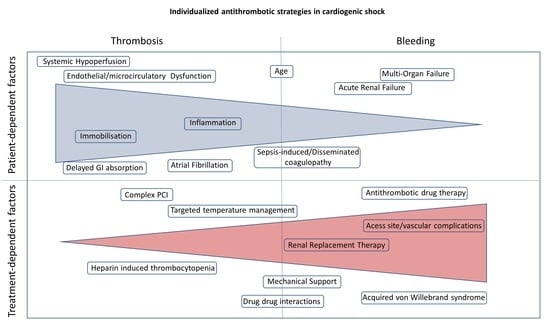
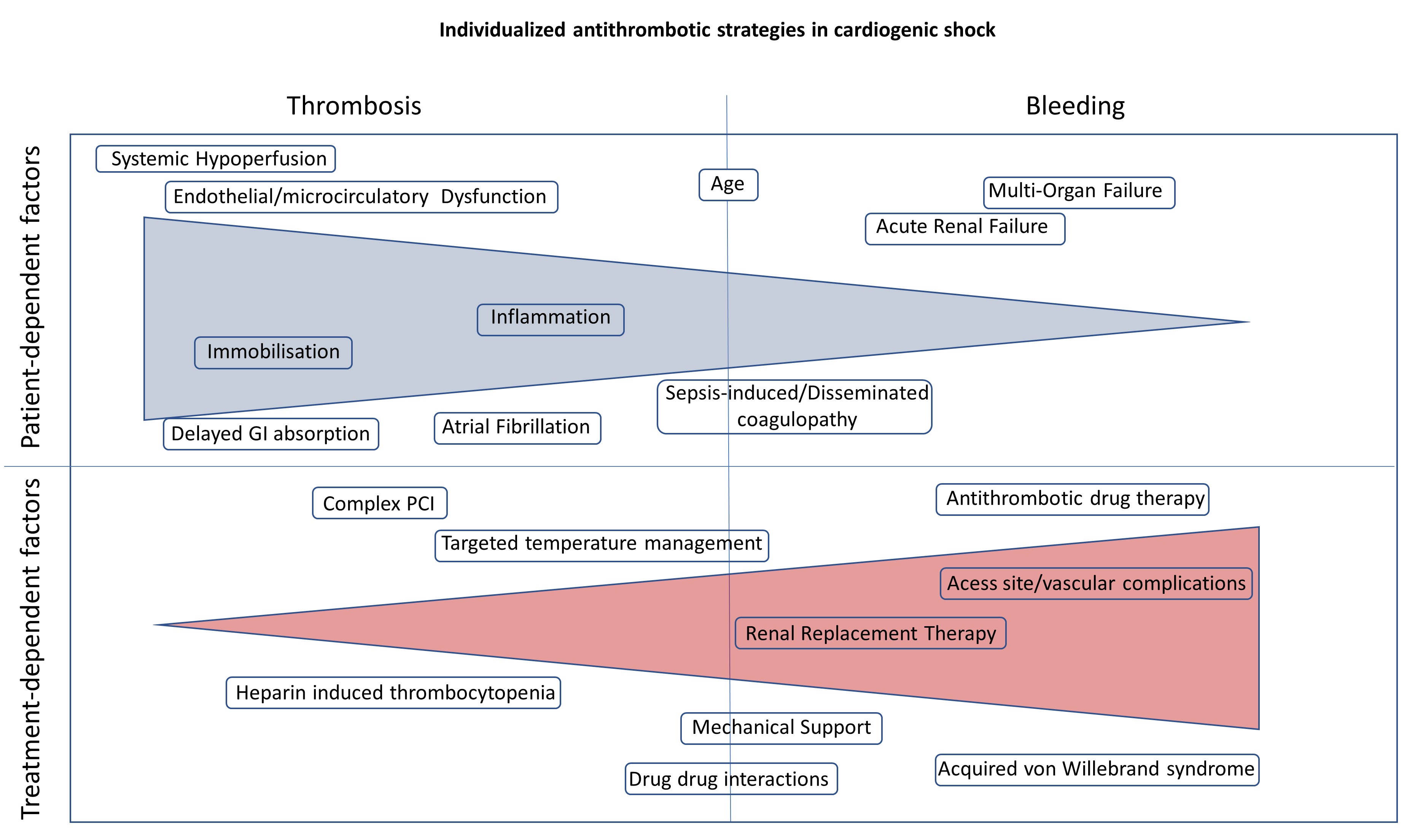
Cardiogenic shock (CS) represents a critical condition with a high mortality rate. The most common cause of CS is coronary artery disease, and patients typically present with myocardial infarction, necessitating immediate treatment through percutaneous coronary intervention (PCI) and often requiring mechanical circulatory support. CS is associated with a prothrombotic situation, while on the other hand, there is often a significant risk of bleeding. This dual challenge complicates the selection of an optimal antithrombotic strategy. The choice of antithrombotic agents must be personalized, taking into consideration all relevant conditions. Repeated risk assessment, therapeutic monitoring, and adjusting antithrombotic therapy are mandatory in these patients. This review article aims to provide an overview of the current evidence and practical guidance on antithrombotic strategies in the context of CS.
Keywords: cardiogenic shock; antithrombotic treatment; mechanical circulatory support; thrombosis; bleeding cardiogenic shock; antithrombotic treatment; mechanical circulatory support; thrombosis; bleeding
Graphical Abstract