
Performance Evaluation of Polymeric Tubular Membranes for Wastewater from Rubber Production



Abstract
1. Introduction
2. Materials and Methods
2.1. Tested Wastewater
2.2. Ultrafiltration Process
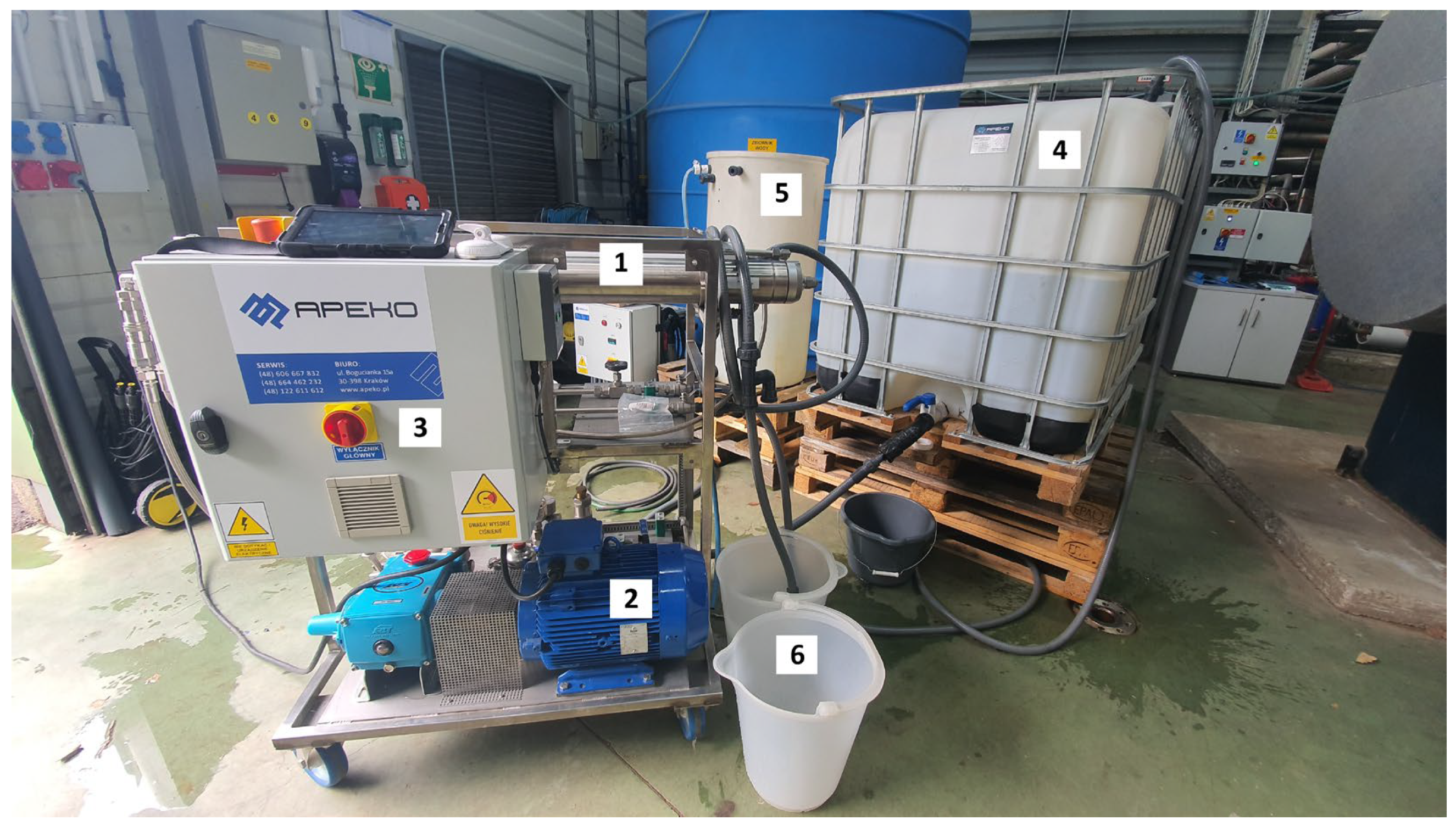
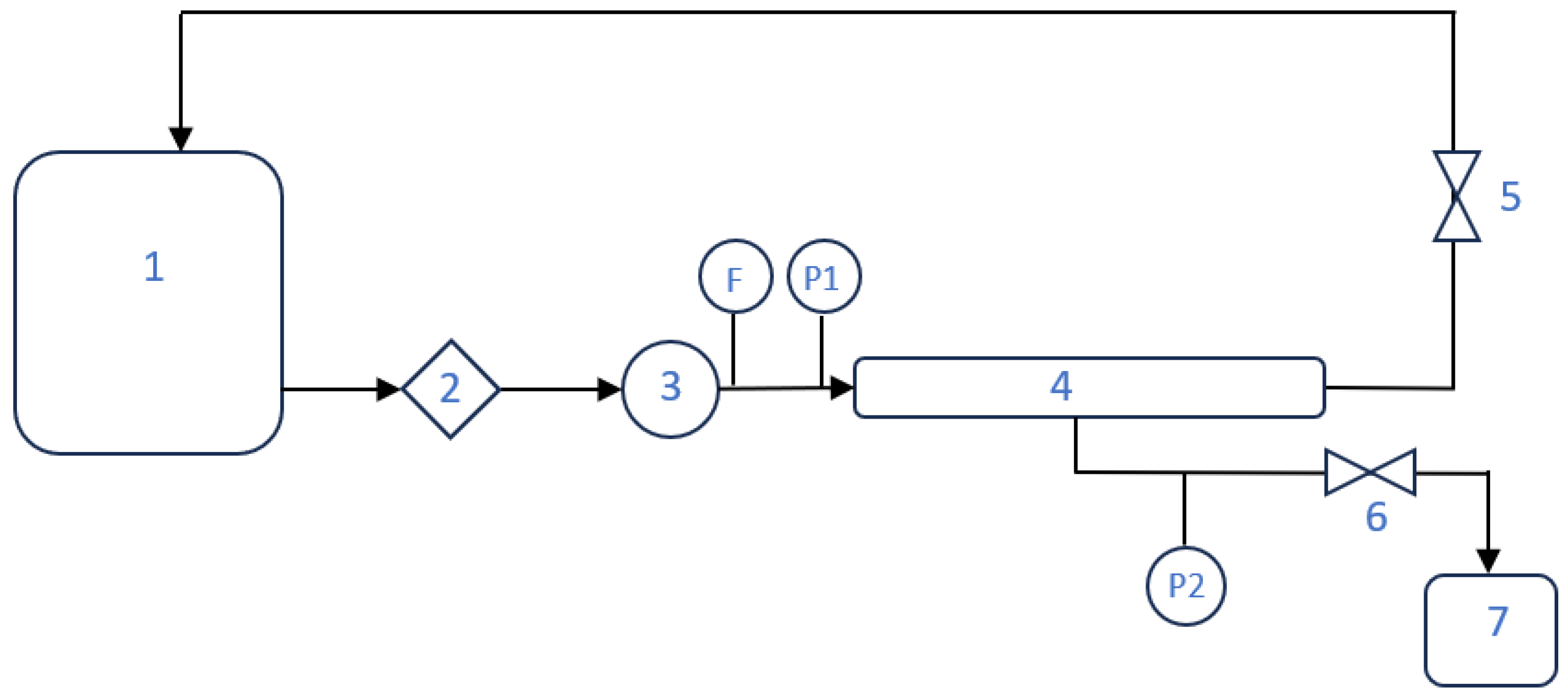
2.3. Research Installation
2.4. Parameters Analysed
2.5. Research Methodology
3. Results and Discussion
- Complete blocking (n = 2):
- Intermediate blocking (n = 1)
- Standard blocking (n = 1.5):
- Cake filtration (n = 0):
4. Conclusions
- The FP100 membranes (MWCO) exhibited higher performance, with the average permeate flux being 40–50% greater than that of the ESP04 membranes; however, they showed lower stability, as the flux was not consistently reproducible during successive wastewater feed runs.
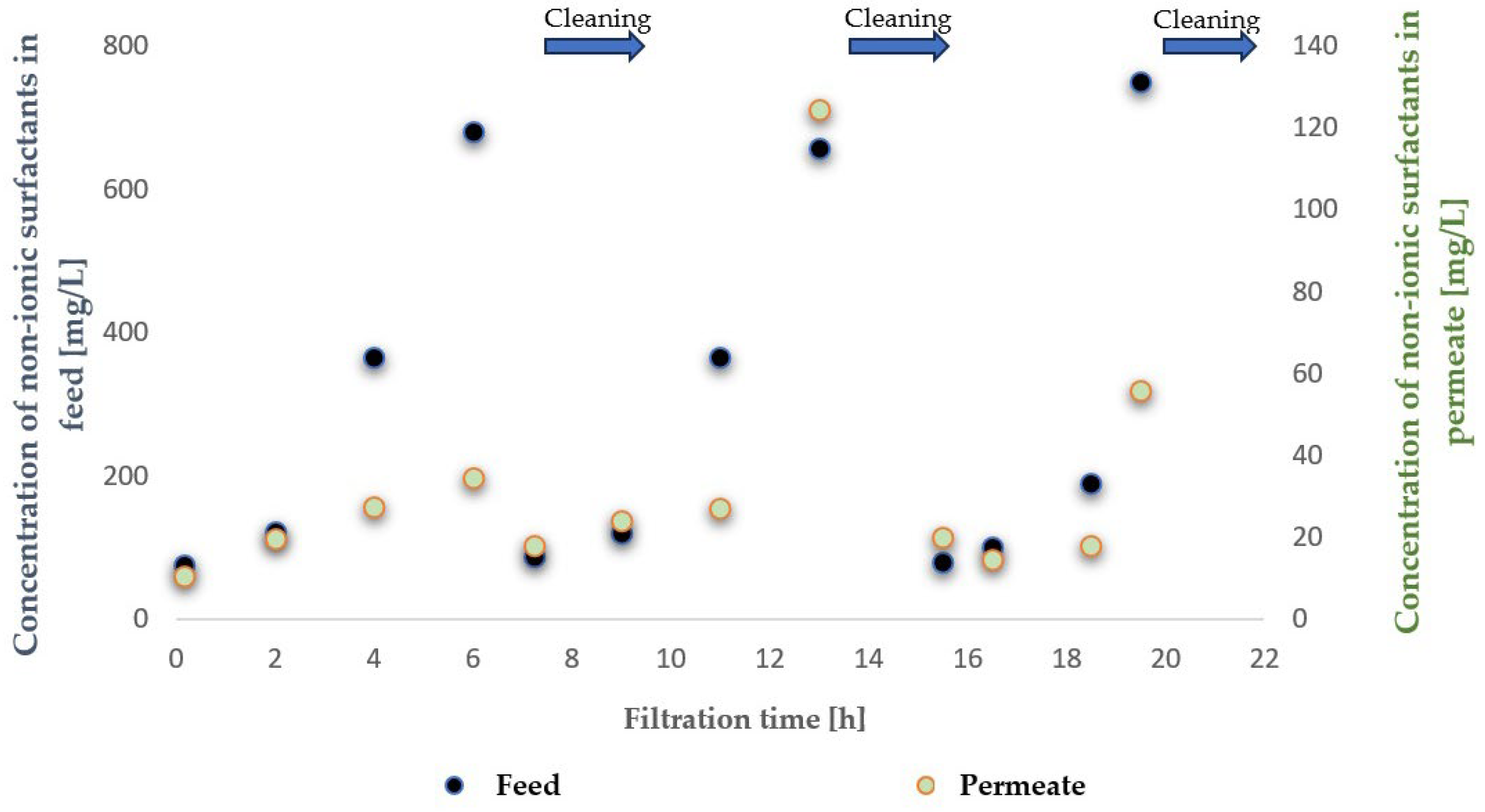
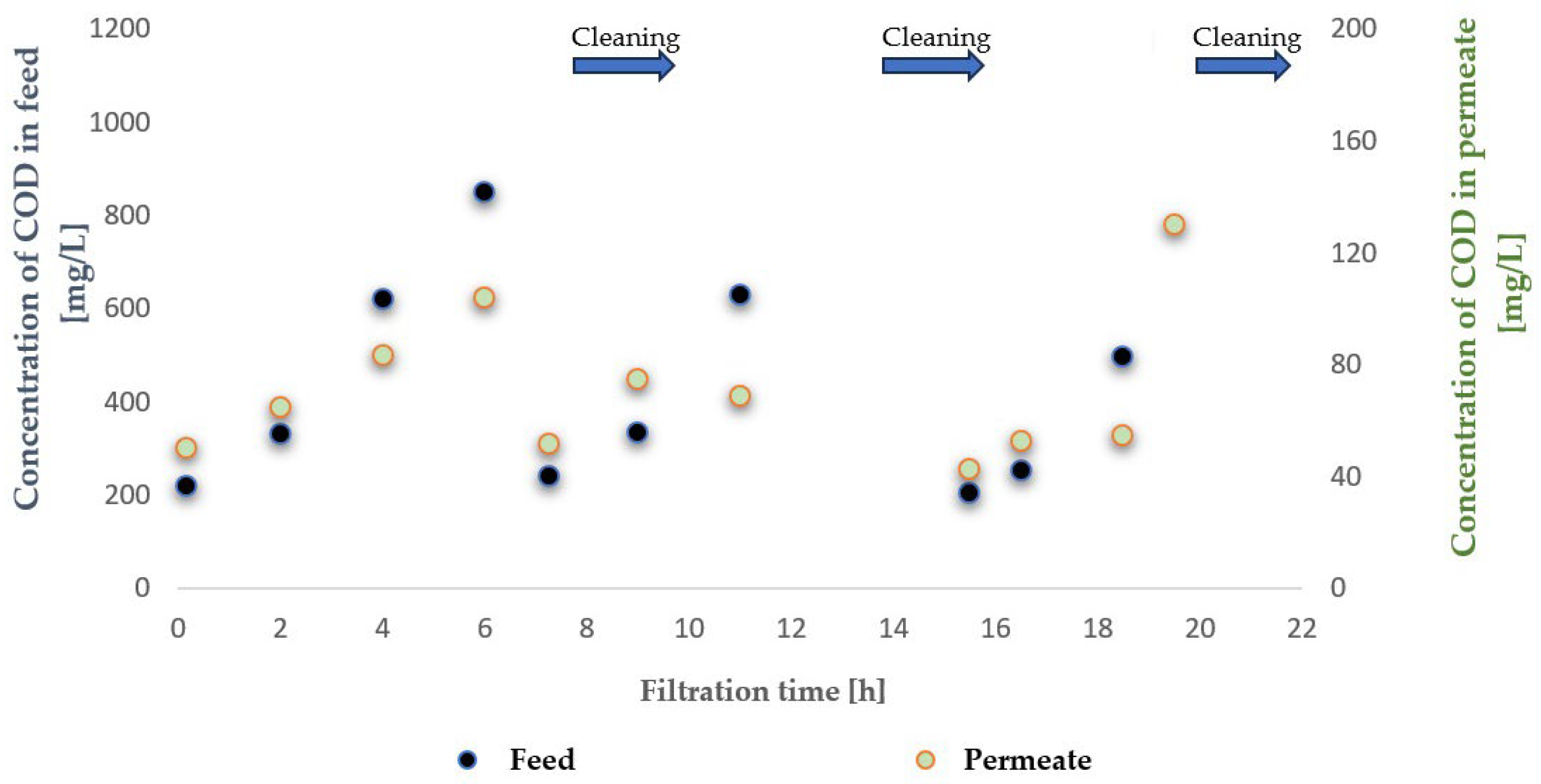
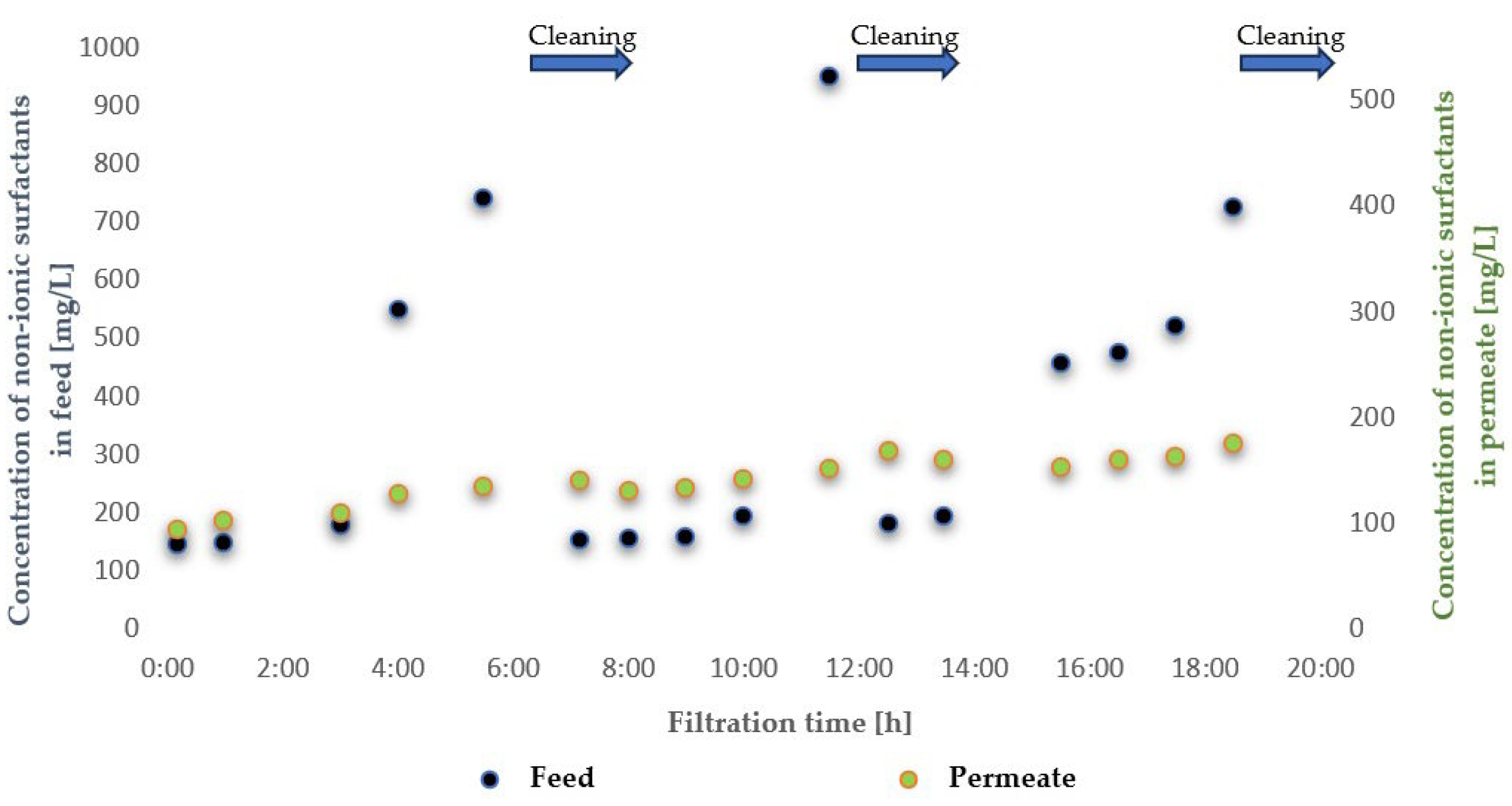
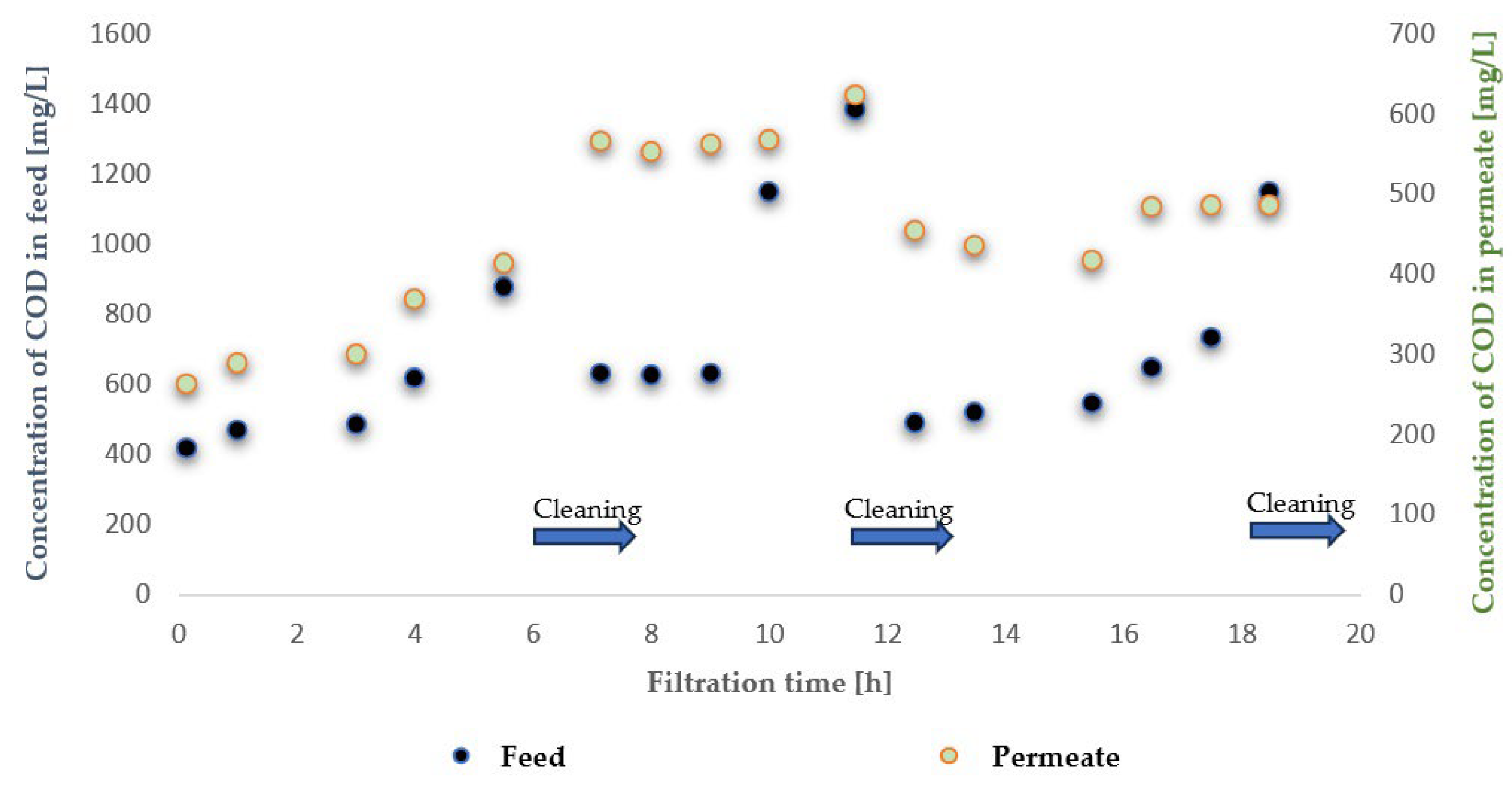
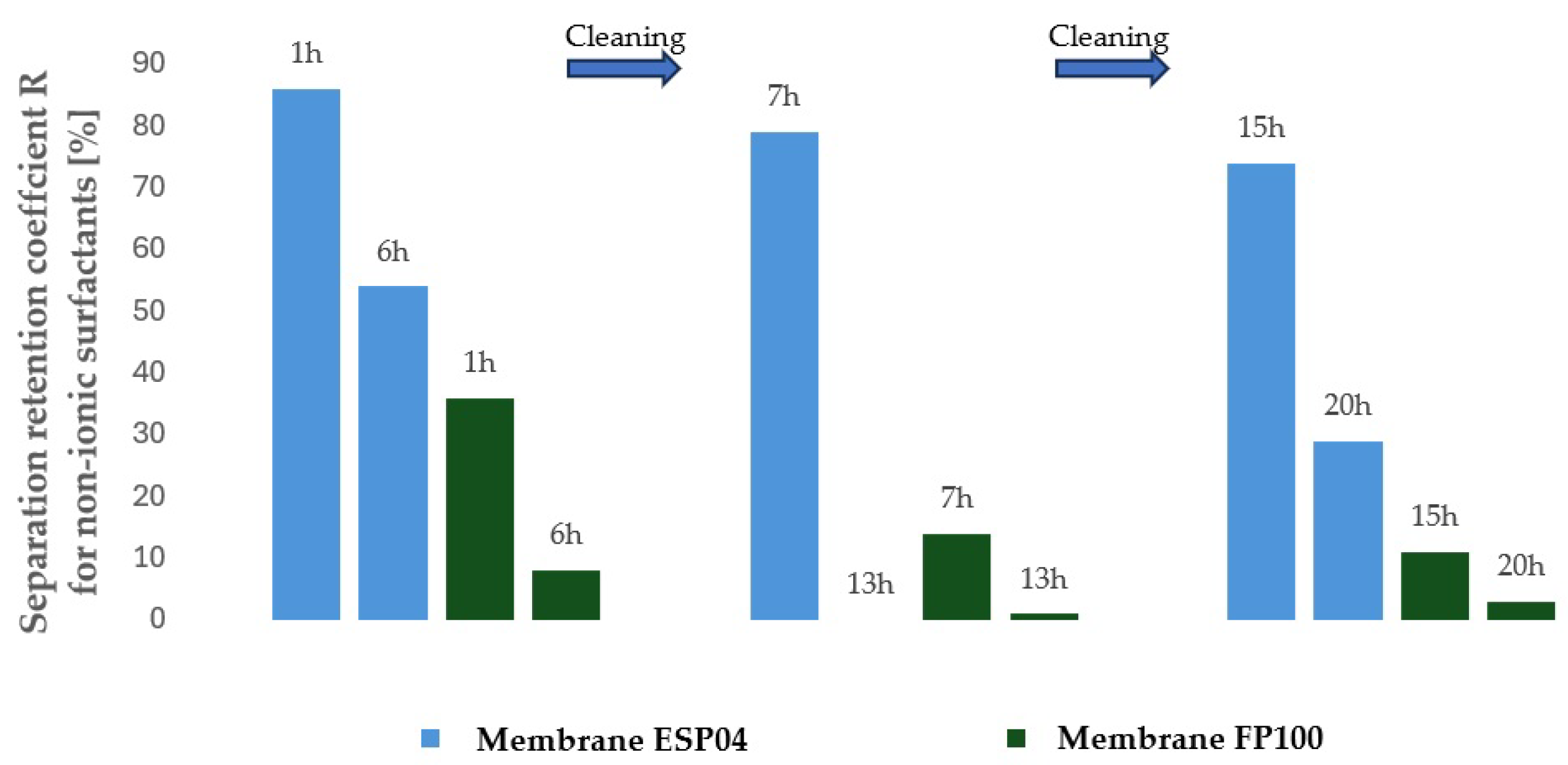
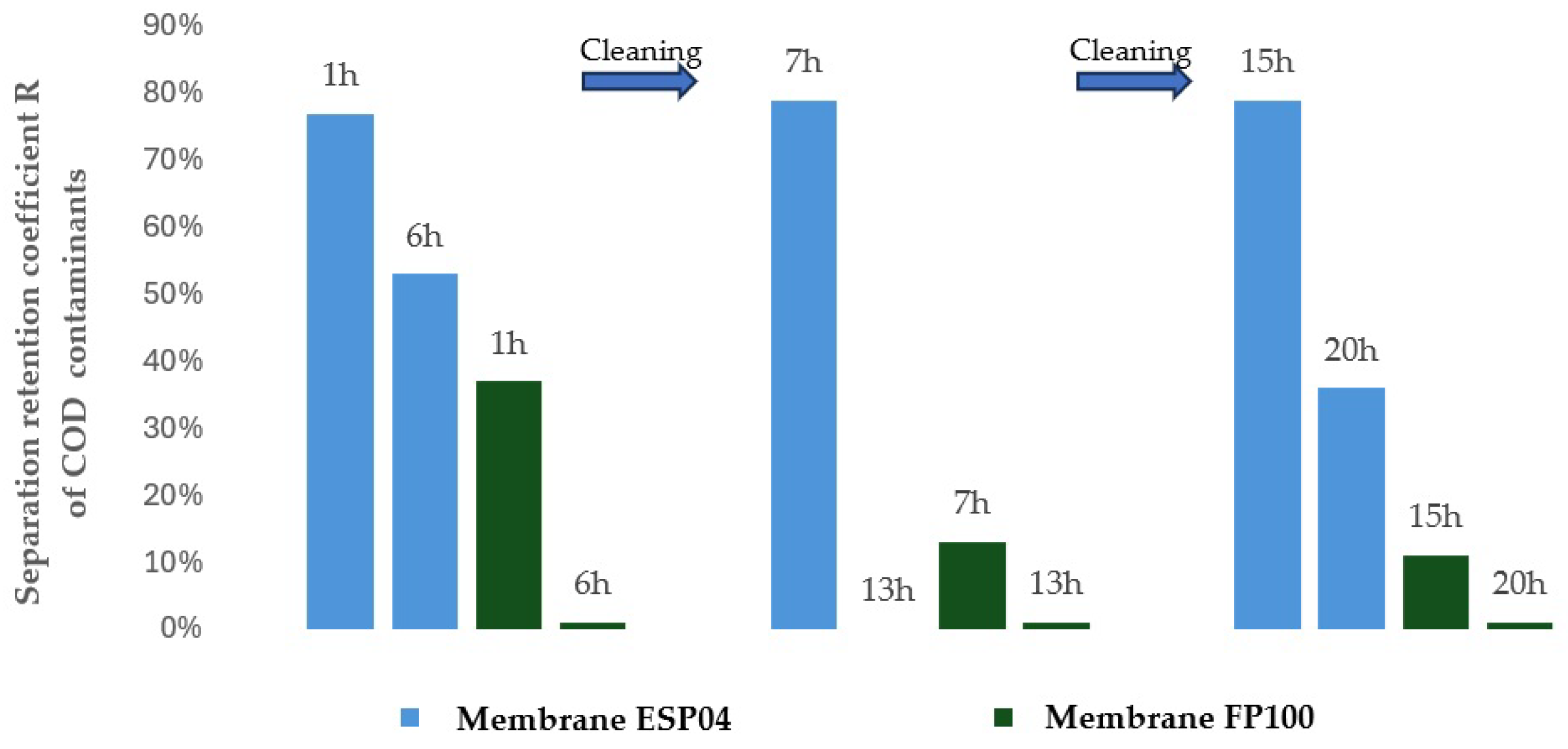
- ESP04 membranes (MWCO 4 kDa) achieved superior reductions in chemical oxygen demand (COD) and non-ionic surfactants (NIS), while FP100 membranes showed minimal separation of NIS and negligible reduction of COD.
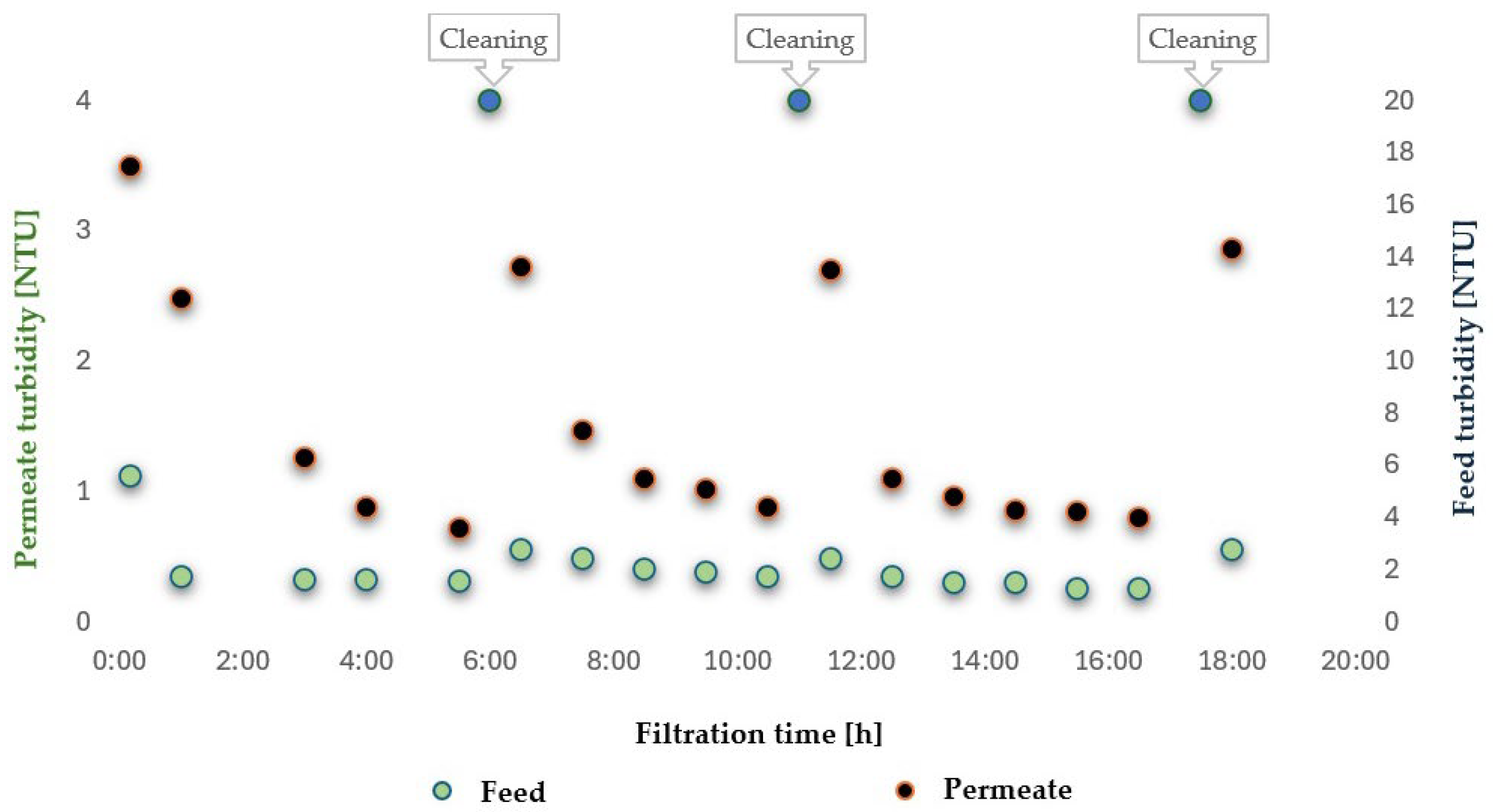
- Both membranes significantly reduced wastewater turbidity, confirming their effectiveness in removing suspensions and colloids.
- Increasing contaminant concentration in the feed due to retentate recirculation in the batch system led to increased fouling and gradual deterioration of filtration parameters over time.
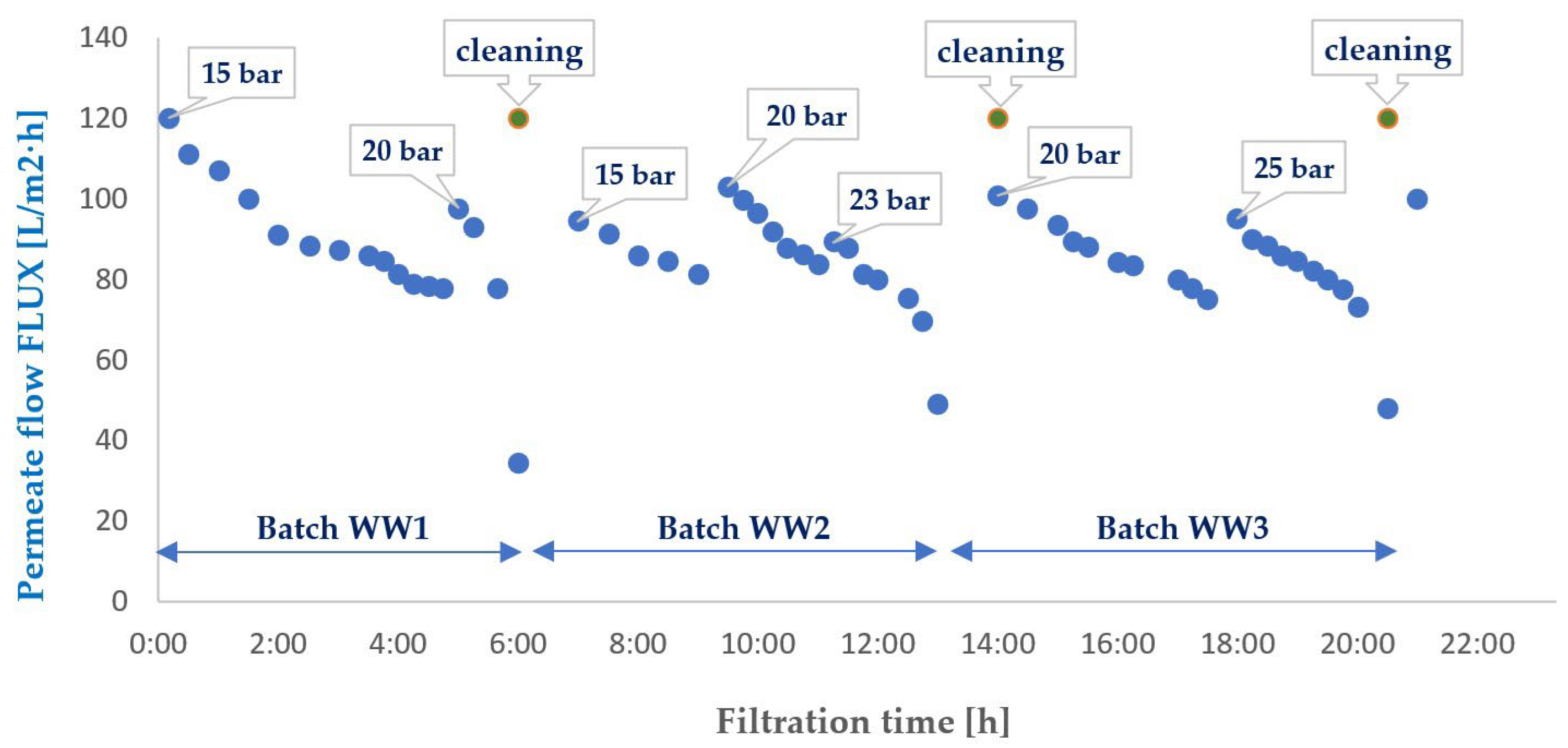
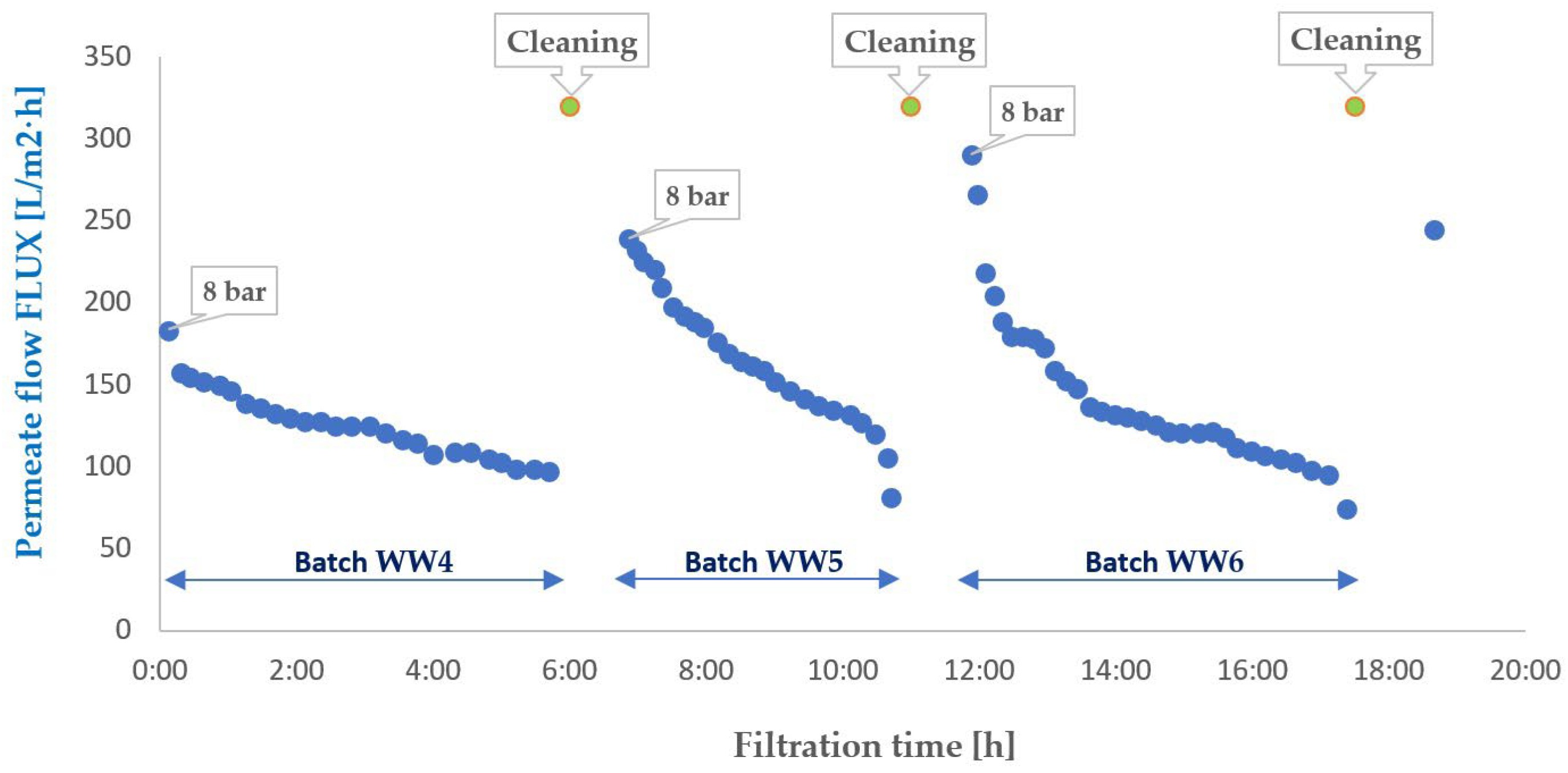
- After approximately 6 h of operation, a sharp decline in permeate flux required membrane regeneration.
- Membrane regeneration enabled the recovery of approximately 70% of the initial flux for the ESP04 membranes and about 60% for the FP100 membranes.
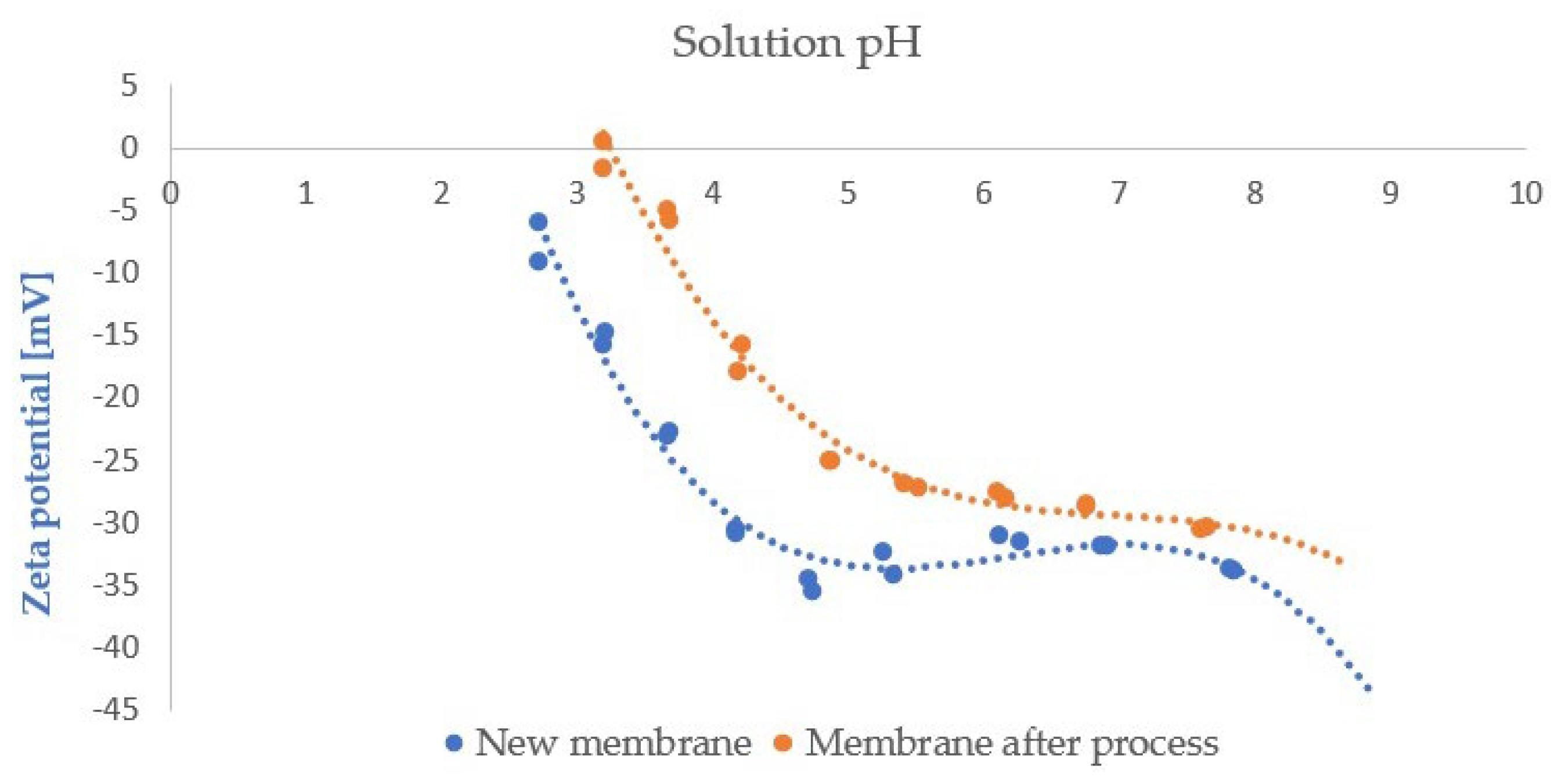
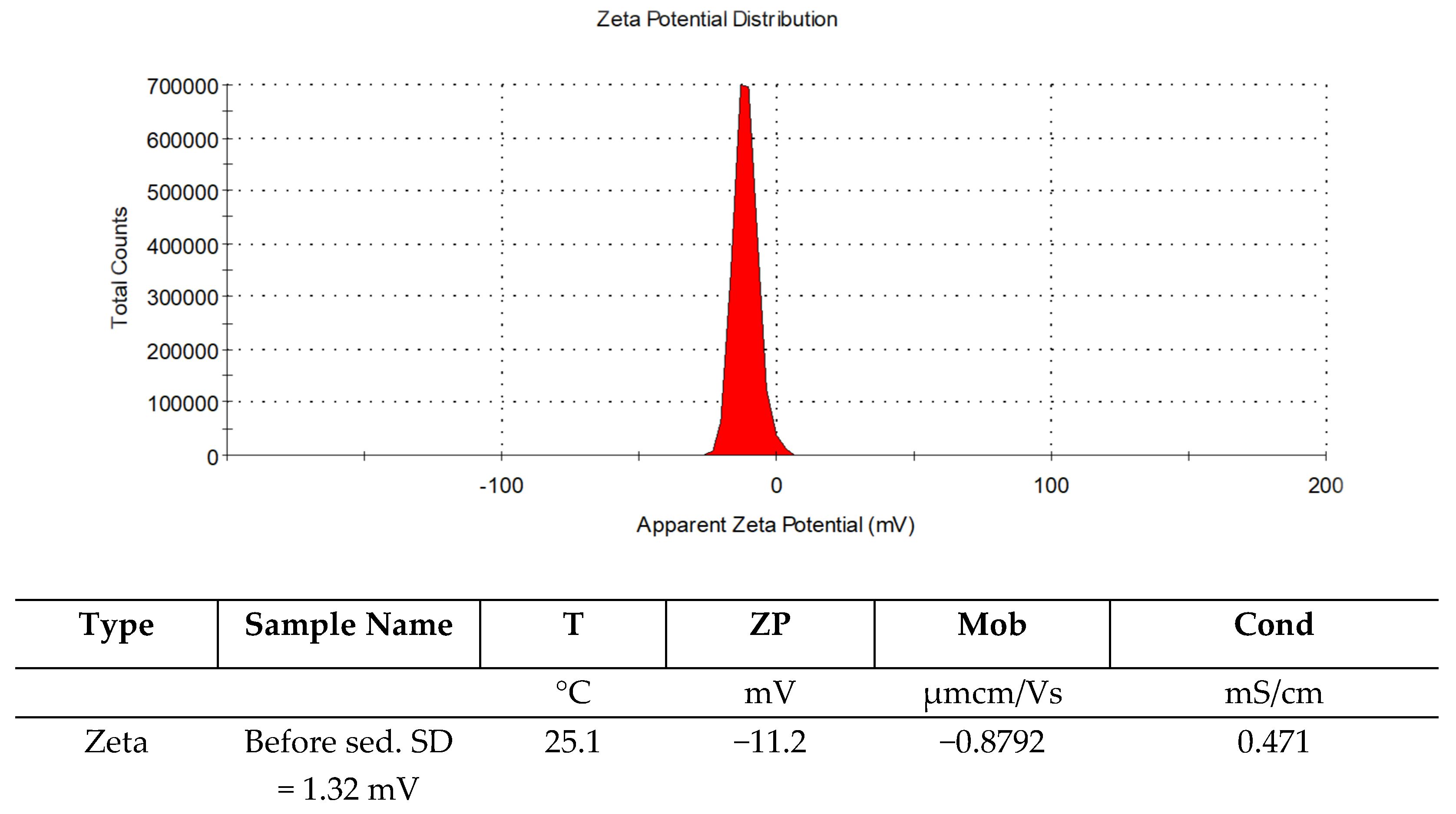
- The strongly negative zeta potential of the new FP100 membrane (−30 to −35 mV at pH values from 7 to 8 together with negative zeta potential for wastewater (−11 mV), typical for wastewater from the rubber industry at pH 7.5–7.9, provides high fouling resistance against anionic colloids and organic substances via electrostatic repulsion. However, in the presence of non-ionic surfactant contaminants, the primary fouling mechanism is the adsorption of particles onto the hydrophobic surface.
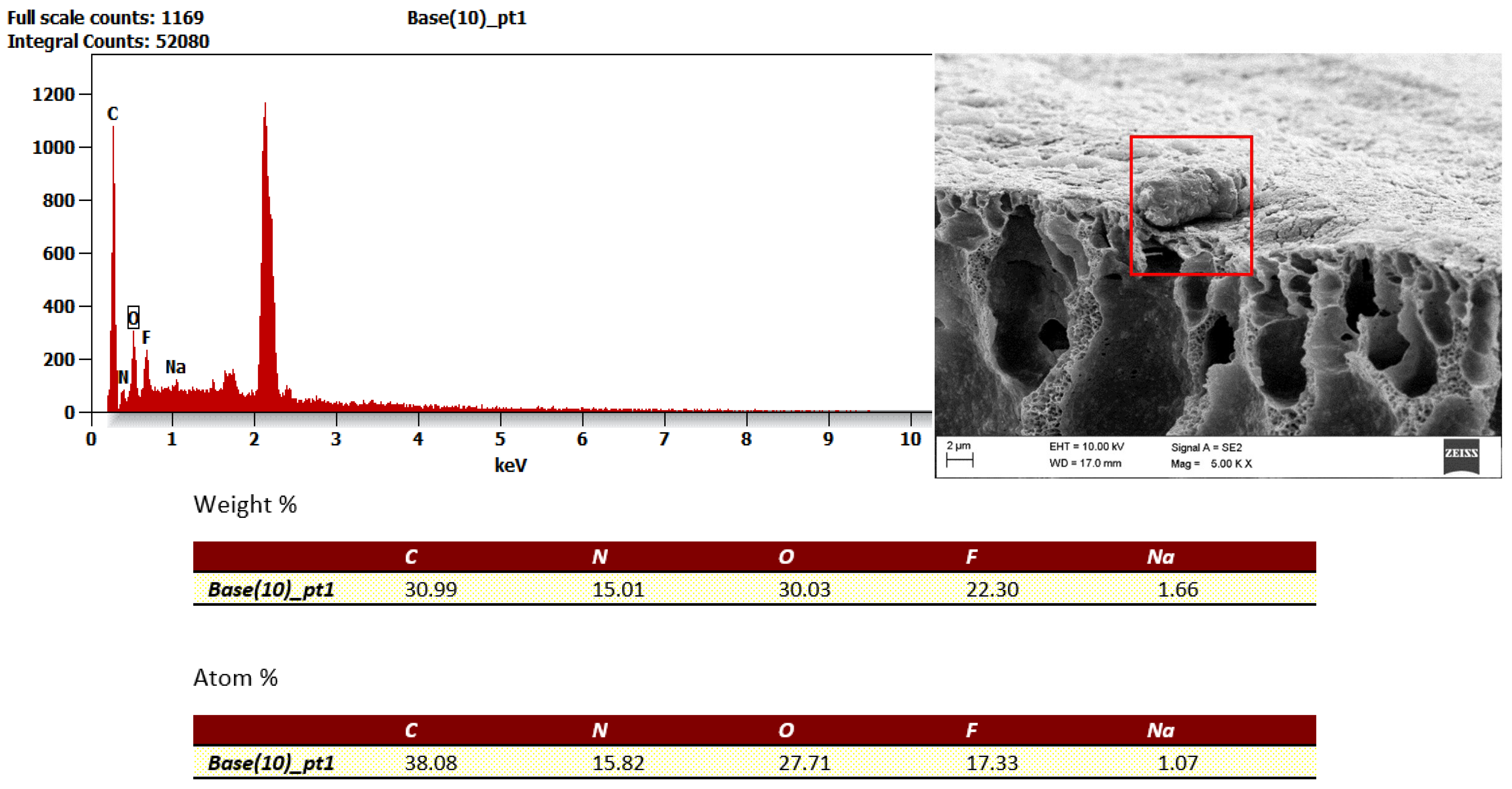
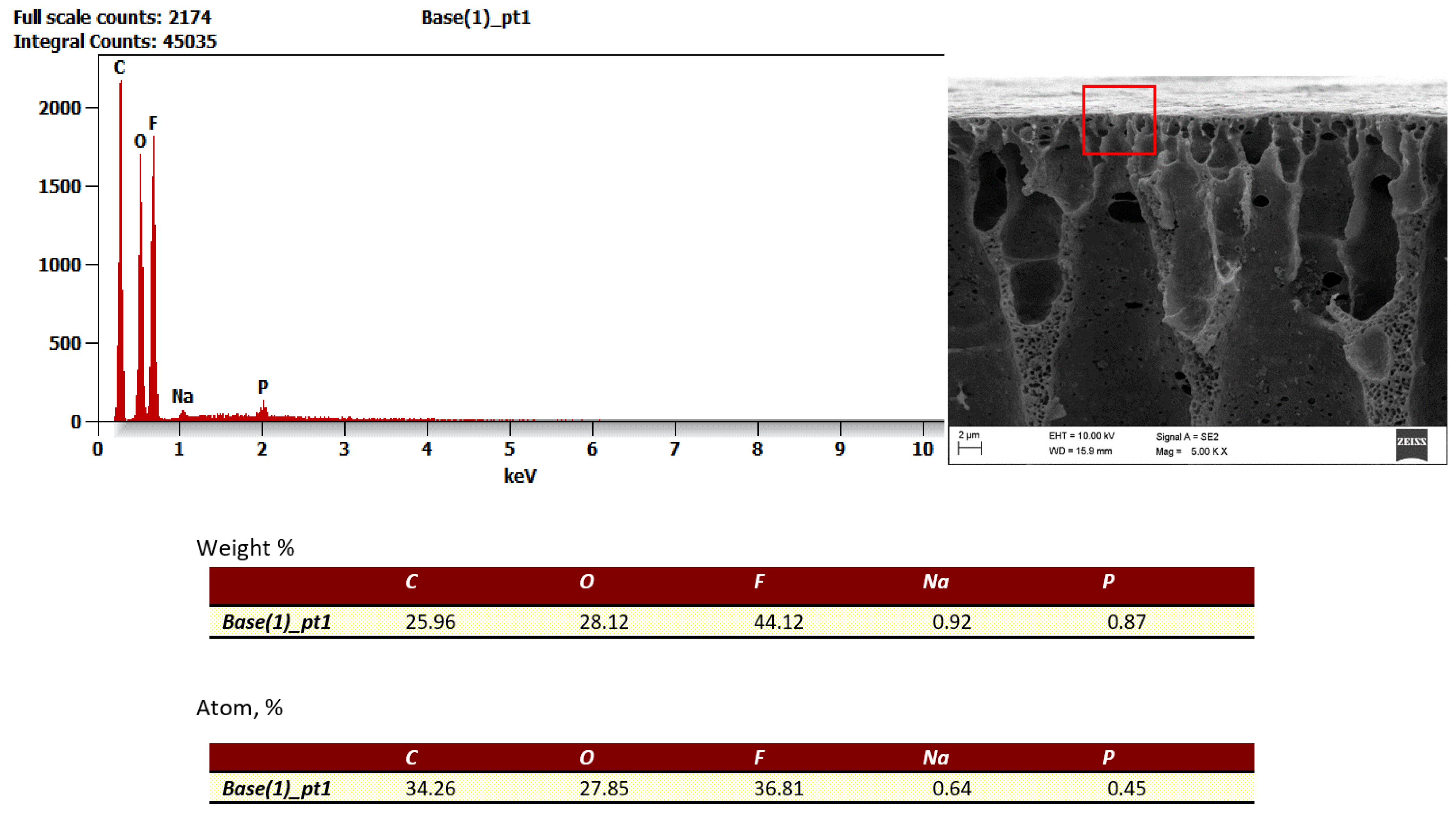
- After filtration, the zeta potential shifted towards positive values (particularly at pH < 5) due to adsorption of organic contaminants, colloids and surfactants. SEM and EDS analyses confirmed deposits (Al, Si, Na, S, Mg at 1–3%) and local accumulations, indicating the need for regular regeneration to restore hydrophilicity and separation properties.
- The permeate obtained from the FP100 membranes did not meet the quality requirements for water recovery for process reuse. In contrast, the permeate generated using the ESP04 membranes is suitable for reuse in the production process.
- Ultrafiltration employing the ESP04 membranes for this wastewater enables water recovery of approximately 95%.
Author Contributions
Funding
Institutional Review Board Statement
Informed Consent Statement
Data Availability Statement
Conflicts of Interest
References
- Wimalaweera, I.P.; Wei, Y.; Zuo, F.; Tang, Q.; Ritigala, T.; Wang, Y.; Zhong, H.; Weerasooriya, R.; Jinadasa, S.; Wergoda, S. Enhancing Rubber Industry Wastewater Treatment through an Integrated AnMBR and A/O MBR System: Performance, Membrane Fouling Analysis, and Microbial Community Evolution. Membranes 2024, 14, 130. [Google Scholar] [CrossRef]
- Mostoni, S.; D’Arienzo, M.; Di Credico, B.; Armelao, L.; Rancan, M.; Dire, S.; Callone, E.; Donetti, R.; Susanna, A.; Scotti, R. Design of a Zn Single-Site Curing Activator for a More Sustainable Sulfur Cross-Link Formation in Rubber. Ind. Eng. Chem. Res. 2021, 60, 10180–10192. [Google Scholar] [CrossRef]
- Chen, L.; Guo, X.; Luo, Y.; Jia, Z.; Chen, Y.; Jia, D. Inorganic and organic hybrid nanoparticles as multifunctional crosslinkers for rubber vulcanization with high-filler rubber interaction. Polymers 2018, 10, 1138. [Google Scholar] [CrossRef] [PubMed]
- Alam, M.N.; Kumar, V.; Jeong, S.U.; Park, S.S. Enhancing Rubber Vulcanization Cure Kinetics: Lowering Vulcanization Temperature by Addition of MgO as Co-Cure Activator in ZnO-Based Cure Activator Systems. Polymers 2024, 16, 876. [Google Scholar] [CrossRef] [PubMed]
- Liang, B.; Zhang, Z.; Yin, T.; Yang, S.; Shao, J.; Manchester, W. Research status of semi-permanent release agent. MATEC Web Conf. 2021, 353, 01004. [Google Scholar] [CrossRef]
- Yang, M.; Li, L.; Zhu, Z.; Ma, H. Research progress on eco-friendly rubber release agents. Colloid Polym. Sci. 2025, 303, 163–174. [Google Scholar] [CrossRef]
- Ezugbe, E.O.; Rathilal, S. Membrane technologies in wastewater treatment: A review. Membranes 2020, 10, 89. [Google Scholar] [CrossRef]
- Haas, R.; Opitz, R.; Grischek, T.; Otter, P. The AquaNES project: Coupling riverbank filtration and ultrafiltration in drinking water treatment. Water 2019, 11, 18. [Google Scholar] [CrossRef]
- Sathish Kumar, R.; Arthanareeswaran, G. Nano-curcumin incorporated polyethersulfone membranes for enhanced anti-biofouling in treatment of sewage plant effluent. Mater. Sci. Eng. C 2019, 94, 258–269. [Google Scholar] [CrossRef]
- Zhang, H.; Zhu, S.; Yang, J.; Ma, A. Advancing Strategies of Biofouling Control in Water-Treated Polymeric Membranes. Polymers 2022, 14, 1167. [Google Scholar] [CrossRef]
- Hernández, K.; Muro, C.; Ortega, R.E.; Velazquez, S.; Riera, F. Water recovery by treatment of food industry wastewater using membrane processes. Environ. Technol. 2021, 42, 775–788. [Google Scholar] [CrossRef] [PubMed]
- Ibrahim, M.; Nawaz, M.H.; Rout, P.R.; Lim, J.W.; Mainali, B.; Shahid, M.K. Advances in Produced Water Treatment Technologies: An In-Depth Exploration with an Emphasis on Membrane-Based Systems and Future Perspectives. Water 2023, 15, 2980. [Google Scholar] [CrossRef]
- Xue, Q.; Lim, J.L.; Wang, R. Chemically robust hollow fiber thin-film composite membranes based on polyurea selective layers for nanofiltration under extreme pH conditions. J. Membr. Sci. 2026, 738, 124818. [Google Scholar] [CrossRef]
- Ullah, I.; Naseer, M.N.; Zaidi, A.A.; Kumar, M.; Rasool, U.; Kim, B. Research hotspots and development trends in the rubber industry wastewater treatment: A quantitative analysis of literature. J. Rubber Res. 2023, 26, 249–260. [Google Scholar] [CrossRef]
- Song, X.; Ji, H.; Zhao, W.; Sun, S.; Zhao, C. Hemocompatibility enhancement of polyethersulfone membranes: Strategies and challenges. Adv. Membr. 2021, 1, 100013. [Google Scholar] [CrossRef]
- Jassim, Z.S.; Braihi, A.J.; Shabeeb, K.M. Polymeric Membranes for Industrial Wastewater Treatment: A Review. Int. J. Environ. Impacts 2024, 7, 395–408. [Google Scholar] [CrossRef]
- Daraei, P.; Madaeni, S.S.; Ghaemi, N.; Khadivi, M.A.; Astinchap, B.; Moradian, R. Enhancing antifouling capability of PES membrane via mixing with various types of polymer modified multi-walled carbon nanotube. J. Membr. Sci. 2013, 444, 184–191. [Google Scholar] [CrossRef]
- Świerczyńska, A.A.; Bohdziewicz, J.; Kamińska, G.; Wojciechowski, K. Influence of the type of membrane-forming polymer on the membrane fouling. Environ. Prot. Eng. 2016, 42, 197–210. [Google Scholar] [CrossRef]
- Dallaev, R.; Pisarenko, T.; Sobola, D.; Orudzhev, F.; Ramazanov, S.; Treka, T. Brief Review of PVDF Properties and Applications Potential. Polymers 2022, 14, 4793. [Google Scholar] [CrossRef]
- Martini, S.; Mardwita, M.; Afroze, S.; Yusmartini, E.S.; Kharismadewi, D. The use of PVDF-based membrane for treating industrial wastewater in the perspective of fabrication technique and fouling mitigation via additive blending and surface coating. J. Teknol. 2024, 86, 217–234. [Google Scholar] [CrossRef]
- Kamaludin, R.; Abdul Majid, L.; Othman, M.H.D.; Mansur, S.; Sheikh Abdul Kadir, S.H.; Wong, K.Y.; Khongnakorn, W.; Puteh, M.H. Polyvinylidene Difluoride (PVDF) Hollow Fiber Membrane Incorporated with Antibacterial and Anti-Fouling by Zinc Oxide for Water and Wastewater Treatment. Membranes 2022, 12, 110. [Google Scholar] [CrossRef]
- Proner, M.C.; Marques, I.R.; Ambrosi, A.; Rezadori, K.; Da Costa, C.; Zin, G.; Tres, M.V.; Di Luccio, M. Impact of MWCO and dopamine/polyethyleneimine concentrations on surface properties and filtration performance of modified membranes. Membranes 2020, 10, 239. [Google Scholar] [CrossRef]
- KARTA DANYCH BEZPIECZEŃSTWA Rewizja: 1.0 Rheolease ® 487LG. Available online: https://performancefluids.co.uk/ (accessed on 6 October 2025).
- Wijerathna, W.S.M.S.K.; Wimalaweera, T.I.P.; Samarajeewa, D.R.; Lindamulla, L.M.L.K.B.; Rathnayake, R.M.L.D.; Nanayakkara, K.G.N.; Jegatheesan, V.; Wei, Y.; Jinadasa, K.B.S.N. Imperative assessment of the current status of rubber wastewater treatment: Research development and future perspectives. Chemosphere 2023, 338, 139512. [Google Scholar] [CrossRef]
- Li, J.X.; Sanderson, R.D.; Chai, G.Y. A focused ultrasonic sensor for in situ detection of protein fouling on tubular ultrafiltration membranes. Sens. Actuators B Chem. 2006, 114, 182–191. [Google Scholar] [CrossRef]
- Nilusha, R.T.; Wei, Y. New Insights into the Microbial Diversity of Cake Layer in Yttria Composite Ceramic Tubular Membrane in an Anaerobic Membrane Bioreactor (AnMBR). Membranes 2021, 11, 108. [Google Scholar] [CrossRef]
- Trusek, A.; Wajsprych, M.; Noworyta, A. Low-and high-pressure membrane separation in the production of process water for coke quenching. Membranes 2021, 11, 937. [Google Scholar] [CrossRef]
- LCI 400 Chemical Oxygen Demand (COD) 0–1000 mg/L Chemical Oxygen Demand LCI 400. Available online: https://www.hach.com/ (accessed on 6 October 2025).
- LCK 433 Nonionic Surfactants 6.0–200.0 mg/L Surfactant as TRITON x 100 LCK 433. Available online: https://www.hach.com/ (accessed on 6 October 2025).
- Laera, G.; Jin, B.; Lopez, A. Application of sequencing batch membrane bioreactors (SB-MBR) for the treatment of municipal wastewater. Water Sci. Technol. 2011, 64, 391–396. [Google Scholar] [CrossRef]
- Burlace, L.; Davies, P.A. Fouling and fouling mitigation in batch reverse osmosis: Review and outlook. Desalin. Water Treat. 2022, 249, 1–22. [Google Scholar] [CrossRef]
- Szwast, M.; Suchecka, T.; Piatkiewicz, W. Membranes: Improving batch membrane filtration. Filtr. Sep. 2013, 50, 38–41. [Google Scholar] [CrossRef]
- Woźniak, P.; Gryta, M. Application of Polymeric Tubular Ultrafiltration Membranes for Separation of Car Wash Wastewater. Membranes 2024, 14, 210. [Google Scholar] [CrossRef]
- Bai, Y.; Wu, Y.; Zhang, Z.; Mao, Y.; Wang, R.; Tong, X.; Xue, S.; Wang, H.; Hu, H. Molecular weight insight into critical component contributing to reverse osmosis membrane fouling in wastewater reclamation. NPJ Clean Water 2024, 7, 62. [Google Scholar] [CrossRef]
- Xu, H.; Xiao, K.; Yu, J.; Huang, B.; Wang, X.; Liang, S.; Wei, C.; Wen, X.; Huang, X. A simple method to identify the dominant fouling mechanisms during membrane filtration based on piecewise multiple linear regression. Membranes 2020, 10, 171. [Google Scholar] [CrossRef] [PubMed]
- Miller, D.J.; Kasemset, S.; Paul, D.R.; Freeman, B.D. Comparison of membrane fouling at constant flux and constant transmembrane pressure conditions. J. Membr. Sci. 2014, 454, 505–515. [Google Scholar] [CrossRef]
- Huang, J.; Liu, L.; Zeng, G.; Li, X.; Peng, L.; Jiang, Y.; Zhao, Y.; Huang, X. Influence of feed concentration and transmembrane pressure on membrane fouling and effect of hydraulic flushing on the performance of ultrafiltration. Desalination 2014, 335, 1–8. [Google Scholar] [CrossRef]
- Stade, S.; Kallioinen, M.; Tuuva, T.; Manttari, M. Compaction and its effect on retention of ultrafiltration membranes at different temperatures. Sep. Purif. Technol. 2015, 151, 211–217. [Google Scholar] [CrossRef]
- Fan, H.; Duan, Y.; Elimelech, M. Compaction of Pressre-Driven Polymer Membranes: Measurements, Theory, and Mechanisms. Environ. Sci. Technol. 2025, 59, 14752–14763. [Google Scholar] [CrossRef]
- Tomczak, W.; Gryta, M. Long-Term Performance of Ultrafiltration Membranes: Corrosion Fouling Aspect. Materials 2023, 16, 1673. [Google Scholar] [CrossRef]
- Ruigómez, I.; González, E.; Rodríguez-Gómez, L.; Vera, L. Fouling control strategies for direct membrane ultrafiltration: Physical cleanings assisted by membrane rotational movement. Chem. Eng. J. 2022, 436, 135161. [Google Scholar] [CrossRef]
- Klimonda, A.; Kowalska, I. Separation and concentration of cationic surfactant solutions with the use of ceramic modules. Environ. Prot. Eng. 2020, 46, 41–51. [Google Scholar] [CrossRef]
- Yuliwati, E.; Ismail, A.F.; Othman, M.H.D.; Shirazi, M.M.A. Critical Flux and Fouling Analysis of PVDF-Mixed Matrix Membranes for Reclamation of Refinery-Produced Wastewater: Effect of Mixed Liquor Suspended Solids Concentration and Aeration. Membranes 2022, 12, 161. [Google Scholar] [CrossRef]
- Yu, W.; Liu, T.; Crawshaw, J.; Liu, T.; Graham, N. Ultrafiltration and nanofiltration membrane fouling by natural organic matter: Mechanism mitigation by pre-ozonation and pH. Water Res. 2018, 139, 353–362. [Google Scholar] [CrossRef] [PubMed]
- Pereira, G.L.D.; Cardozo-Filho, L.; Jegatheesan, V.; Guirardello, R. Generalization and Expansion of the Hermia Model for a Better Understanding of Membrane Fouling. Membranes 2023, 13, 290. [Google Scholar] [CrossRef] [PubMed]
- Abulkhair, H.; Moujdin, I.A.; Kaddoura, B.; Khan, M.S. Fouling Mitigation in Membrane Distillation Using Pulsation Flow Technique. Processes 2023, 11, 2759. [Google Scholar] [CrossRef]
- Benítez, F.J.; Real, F.J.; Acero, J.L.; Casas, F. Use of ultrafiltration and nanofiltration processes for the elimination of three selected emerging contaminants: Amitriptyline hydrochloride, methyl salicylate and 2-Phenoxyethanol. Environ. Prot. Eng. 2017, 43, 125–141. [Google Scholar] [CrossRef]
- Wu, Y.; Chen, M.; Lee, H.J.; Ganzoury, M.A.; Zhang, N.; De Lannoy, C.h.F. Nanocomposite Polymeric Membranes for Organic Micropollutant Removal: A Critical Review. ACS EST Eng. 2022, 2, 1574–1598. [Google Scholar] [CrossRef]
- Tomczak, W.; Gryta, M. The Application of Polyethersulfone Ultrafiltration Membranes for Separation of Car Wash Wastewaters: Experiments and Modelling. Membranes 2023, 13, 321. [Google Scholar] [CrossRef]
- Tomczak, W.; Woźniak, P.; Gryta, M.; Grzechulska-Damszel, J.; Daniluk, M. Cleaning of Ultrafiltration Membranes: Long-Term Treatment of Car Wash Wastewater as a Case Study. Membranes 2024, 14, 159. [Google Scholar] [CrossRef]
- Smułka, A.; Olejnik, A.; Zarzeczańska, D.; Wcisło, A.; Ryl, J.; Zieliński, A.; Ossowski, T. pH-mediated charge tuning of chitosan membrane: A smart approach to control electrochemical selectivity. Electrochim. Acta 2025, 533, 146541. [Google Scholar] [CrossRef]
- Martín, A.; Martinez, F.; Malfeito, J.; Palacio, L.; Pradanos, P.; Hernandez, A. Zeta Potential of Membranes as a Function of pH Optimization of Isoelectric Point Evaluation. J. Membr. Sci. 2003, 213, 225–230. [Google Scholar] [CrossRef]
- Fu, W.; Hua, L.; Zhang, W. Experimental and Modeling Assessment of the Roles of Hydrophobicity and Zeta Potential in Chemically Modified Poly(ether sulfone) Membrane Fouling Kinetics. Ind. Eng. Chem. Res. 2017, 56, 8580–8589. [Google Scholar] [CrossRef]
- Breite, D.; Went, M.; Prager, A.; Schulze, A. The critical zeta potential of polymer membranes: How electrolytes impact membrane fouling. R. Soc. Chem. 2016, 6, 98180–98189. [Google Scholar] [CrossRef]
- Cairone, S.; Naddeo, V.; Belgiorno, V.; Taherzadeh, M.J.; Mahboubi, A. Evaluating the impact of membrane properties and feed pH on concentration and fractionation of volatile fatty acid using nanofiltration. J. Water Process Eng. 2024, 65, 105793. [Google Scholar] [CrossRef]
- Nakamura, K.; Komaki, S.; Matsumoto, K. Response of Zeta Potential to the Fouling during Microfiltration of Surfactants. Membrane 2012, 37, 152–158. [Google Scholar] [CrossRef][Green Version]
- Yu, X.; Segev, N.; Sankhala, K.; Jassby, D.; Hoek, E.M.V.; Ramon, G.Z. Impact of surfactants on membrane fouling during separation of an oil-water emulsion. J. Membr. Sci. Lett. 2024, 4, 100072. [Google Scholar] [CrossRef]
- Xiarchos, I.; Doulia, D. Interaction behavior in ultrafiltration of nonionic surfactant micelles by adsorption. J. Colloid Interface Sci. 2006, 299, 102–111. [Google Scholar] [CrossRef]
- Ho, K.C.; Chan, M.K.; Chen, Y.M.; Subhramaniyun, P. Treatment of rubber industry wastewater review: Recent advances and future prospects. J. Water Process Eng. 2023, 52, 103559. [Google Scholar] [CrossRef]
- Nguyen, L.A.T.; Schwarze, M.; Schomacker, R. Adsorption of non-ionic surfactant from aqueous solution onto various ultrafiltration membranes. J. Membr. Sci. 2015, 493, 120–133. [Google Scholar] [CrossRef]
- Chen, M.; Ding, W.; Zhou, M.; Zhang, H.; Ge, C.h.; Cui, Z.; Xing, W. Fouling mechanism of PVDF ultrafiltration membrane for secondary effluent treatment from paper mills. Chem. Eng. Res. Des. 2021, 167, 37–45. [Google Scholar] [CrossRef]
- Miao, R.; Wang, L.; Feng, L.; Liu, Z.W.; Lv, Y.T. Understanding PVDF ultrafiltration membrane fouling behaviour through model solutions and secondary wastewater effluent. Desalin. Water Treat. 2014, 52, 5061–5067. [Google Scholar] [CrossRef]
- Zhang, J.; Li, G.; Yuan, X.; Li, P.; Yu, Y.; Yang, W.; Zhao, S. Reduction of Ultrafiltration Membrane Fouling by the Pretreatment Removal of Emerging Pollutants: A Review. Membranes 2023, 13, 77. [Google Scholar] [CrossRef]
- Tomczak, W.; Gryta, M.; Woźniak, P.; Daniluk, M. Changes in the Separation Properties of Aged PVDF Ultrafiltration Membranes During Long-Term Treatment of Car Wash Wastewater. Membranes 2025, 15, 66. [Google Scholar] [CrossRef]
- Finnerty, C.T.K.; Childress, A.E.; Hardy, K.M.; Hoek, E.M.V.; Mauter, M.S.; Plumlee, M.H.; Rose, J.B.; Sobsey, M.D.; Westerhoff, P.; Alvarez, P.J.J.; et al. The Future of Municipal Wastewater Reuse Concentrate Management: Drivers, Challenges, and Opportunities. Environ. Sci. Technol. 2024, 58, 3–16. [Google Scholar] [CrossRef]
- An, W.; Zhao, J.; Lu, J.; Han, Y.; Li, D. Zero-liquid discharge technologies for desulfurization wastewater. A review. J. Enviromental Manag. 2022, 321, 115953. [Google Scholar] [CrossRef]






| Parameter | COD [mg/L] | NIS [mg/L] | Turbidity [NTU] | Conductivity [µS/cm] | pH | TDS [mg/L] | TOC [mg/L] | TC [mg/L] | IC [mg/L] | Dry Mass [%] |
|---|---|---|---|---|---|---|---|---|---|---|
| WW1 * | 219.0 | 73.9 | 51.20 | 287 | 7.8 | 184 | 98.5 | 126.1 | 27.6 | 0.036 |
| WW2 | 240.0 | 86.5 | 50.30 | 295 | 7.7 | 189 | 108.0 | 135.5 | 27.3 | 0.033 |
| WW3 | 204.0 | 78.1 | 48.70 | 282 | 7.9 | 180 | 91.8 | 119.6 | 27.8 | 0.035 |
| WW4 | 418.0 | 145.0 | 52.30 | 331 | 7.9 | 212 | 94.3 | 121.9 | 27.6 | 0.038 |
| WW5 | 630.0 | 151.0 | 38.40 | 195 | 7.9 | 125 | 139.3 | 166.5 | 27.2 | 0.044 |
| WW6 | 488.0 | 180.0 | 70.30 | 318 | 7.3 | 203 | 133.7 | 162.2 | 28.5 | 0.041 |
| Membrane | MWCO | Material | Diameter | pH | Max TMP | Max T |
|---|---|---|---|---|---|---|
| ESP04 | 4 kDa | PES | 12.5 mm | 1–14 | 30 bar | 65 °C |
| FP100 | 100 kDa | PVDF | 12.5 mm | 1.5–12 | 10 bar | 80 °C |
| Membrane’s Type | Quantity of Tubes | Membrane’s Surface | TMP | * Initial Flow |
|---|---|---|---|---|
| ESP04 | 18 | 0.9 m2 | 4.0 bar | 222 L/m2/h |
| FP100 | 18 | 0.9 m2 | 4.0 bar | 762 L/m2/h |
| Wastewater Sample | Membrane Type | Average Flux at 20 °C [L/m2·h] | Initial Flux [L/m2·h] | Initial Flux at 20 °C [L/m2·h] | Final Flux [L/m2·h] | Final Flux at 20 °C [L/m2·h] | Loss of Flux [%] |
|---|---|---|---|---|---|---|---|
| WW1 | ESP04 | 82 | 160 (33 °C) | 108 | 49 (37 °C) | 34 | 69% |
| WW2 | ESP04 | 85 | 118 (34 °C) | 94 | 73 (42 °C) | 45 | 52% |
| WW3 | ESP04 | 85 | 116 (31 °C) | 100 | 100 (40 °C) | 73 | 27% |
| WW4 | FP100 | 126 | 251 (34 °C) | 183 | 140 (37 °C) | 96 | 48% |
| WW5 | FP100 | 166 | 327 (34 °C) | 239 | 117 (38 °C) | 81 | 66% |
| WW6 | FP100 | 146 | 404 (35 °C) | 290 | 104 (35 °C) | 74 | 74% |
| Membrane Type | Wastewater Batch | TMP [bar] | Fouling Type | Matching Factor R2 |
|---|---|---|---|---|
| ESP04 | WW1 | 15 | Cake filtration | 0.979 |
| WW1 | 20 | Intermediate blocking | 0.967 | |
| WW2 | 15 | Cake filtration | 0.977 | |
| WW2 | 20 | Cake filtration | 0.989 | |
| WW2 | 23 | Intermediate blocking | 0.961 | |
| WW3 | 20 | Cake filtration | 0.985 | |
| WW3 | 25 | Standard blocking | 0.973 | |
| FP100 | WW4 | 8 | Cake filtration | 0.975 |
| WW5 | 8 | Intermediate blocking | 0.983 | |
| WW6 | 8 | Cake filtration a | 0.978 |
| Membrane | Flux 20 °C | Loss of Flux |
|---|---|---|
| ESP new | 221 | - |
| ESP After 1 cleaning | 189 | 14% |
| ESP after 2 cleanings | 141 | 36% |
| ESP after 3 cleanings | 158 | 29% |
| FP100 new | 764 | - |
| FP100 After 1 cleaning | 441 | 42% |
| FP100 After 2 cleanings | 472 | 38% |
| FP100 After 3 cleanings | 453 | 41% |
| Membrane | p-Value | F | Significance of Flux Differences Between Samples |
|---|---|---|---|
| ESP04 | 0.7516 | 0.2871 | Statistically non-significant differences |
| FP100 | 0.0024 | 6.5378 | Statistically significant differences |
| Parameter | Value |
|---|---|
| pH | 6.5–8.5 |
| Conductivity | <500 µS |
| Turbidity | <1 NTU |
| Non-ionic surfactant concentration | <50 mg/L O2 |
| COD concentration | <500 mg/L O2 |
| Membrane Type | Wastewater Sample | Feed Volume [L] | Permeate Volume [L] | Concentrate Volume [L] | Recovered Water [%] |
|---|---|---|---|---|---|
| ESP04 | WW1 | 600 | 510 | 90 | 85% |
| ESP04 | WW2 | 600 | 570 | 30 | 95% |
| ESP04 | WW3 | 600 | 570 | 30 | 95% |
| FP100 | WW4 | 950 | 780 | 170 | 82% |
| FP100 | WW5 | 800 | 720 | 80 | 90% |
| FP100 | WW6 | 1000 | 930 | 70 | 93% |
Disclaimer/Publisher’s Note: The statements, opinions and data contained in all publications are solely those of the individual author(s) and contributor(s) and not of MDPI and/or the editor(s). MDPI and/or the editor(s) disclaim responsibility for any injury to people or property resulting from any ideas, methods, instructions or products referred to in the content. |
© 2026 by the authors. Licensee MDPI, Basel, Switzerland. This article is an open access article distributed under the terms and conditions of the Creative Commons Attribution (CC BY) license.
Share and Cite
Kempa, S.; Rajca, M. Performance Evaluation of Polymeric Tubular Membranes for Wastewater from Rubber Production. Membranes 2026, 16, 82. https://doi.org/10.3390/membranes16030082
Kempa S, Rajca M. Performance Evaluation of Polymeric Tubular Membranes for Wastewater from Rubber Production. Membranes. 2026; 16(3):82. https://doi.org/10.3390/membranes16030082
Chicago/Turabian StyleKempa, Sławomir, and Mariola Rajca. 2026. "Performance Evaluation of Polymeric Tubular Membranes for Wastewater from Rubber Production" Membranes 16, no. 3: 82. https://doi.org/10.3390/membranes16030082
APA StyleKempa, S., & Rajca, M. (2026). Performance Evaluation of Polymeric Tubular Membranes for Wastewater from Rubber Production. Membranes, 16(3), 82. https://doi.org/10.3390/membranes16030082