Article

Surfactant-Enhanced Cleaning Solutions for Ceramic Membranes: A Comparative Study on Humic Acid and BSA Fouling


Department of Civil and Environmental Engineering, Carleton University, 1125 Colonel by Drive, Ottawa, ON K1S 5B6, Canada
*
Author to whom correspondence should be addressed.
Membranes 2025, 15(3), 73; https://doi.org/10.3390/membranes15030073

Submission received: 14 January 2025 / Revised: 11 February 2025 / Accepted: 18 February 2025 / Published: 2 March 2025
(This article belongs to the Special Issue Ceramic Membranes for Removal of Emerging Pollutants)

Abstract

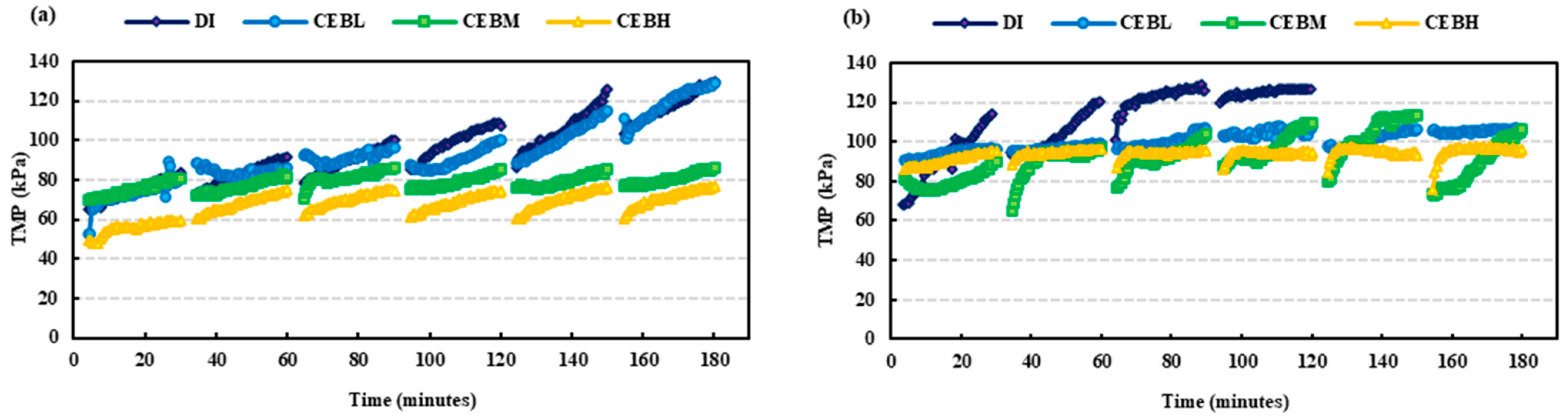
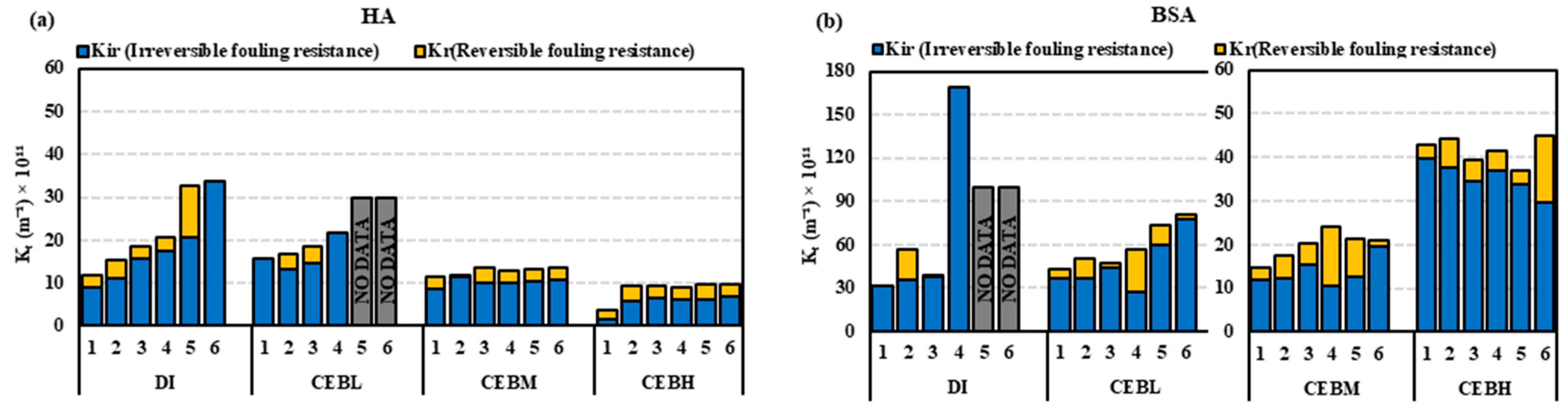
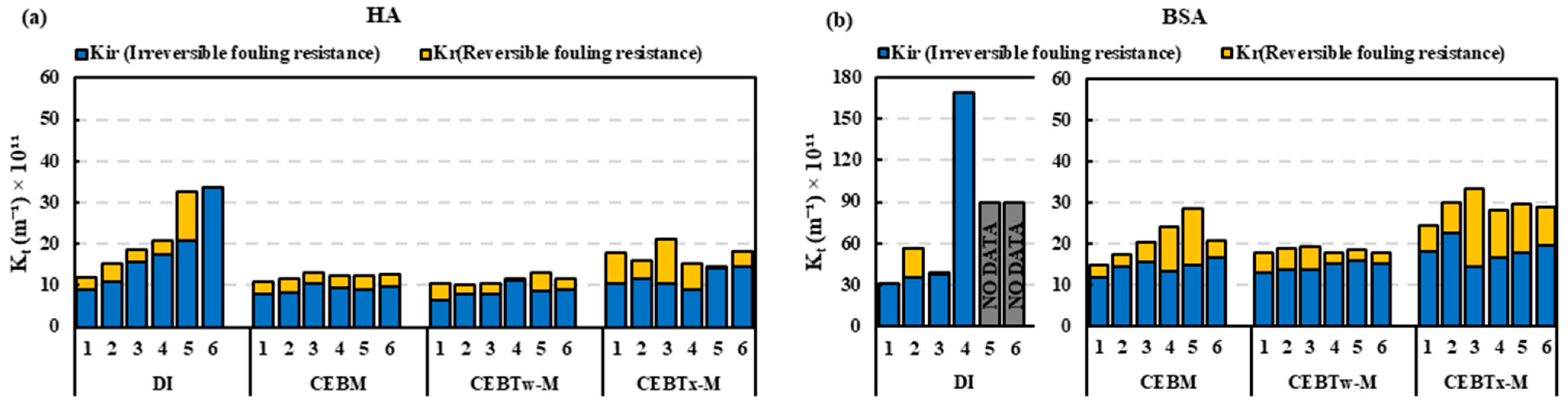
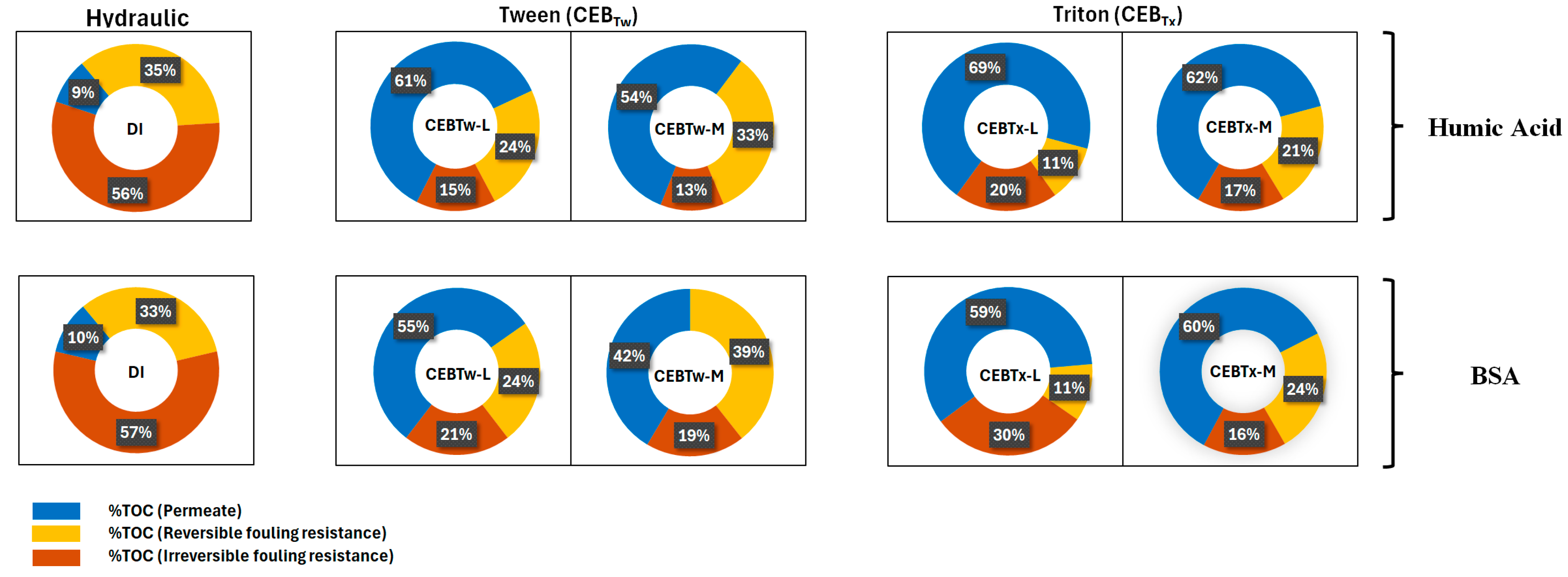
Control of natural organic matter (NOM) reversible and irreversible fouling with ceramic membranes for drinking water applications with chemically enhanced backwash (CEB) protocols is limited. This research examines the efficiency of various chemical combinations with non-ionic surfactants to control the NOM fouling caused by humic acid (HA) and protein foulants. Two commercially available non-ionic surfactants, Tween 80 and Triton X100, combined with conventional cleaning solutions, were analyzed with respect to membrane fouling and cleaning using the resistance in series (RIS) model, membrane permeability, carbon mass balance, and contact angle measurements. The results demonstrated that in all cases, CEB outperformed hydraulic backwashing; in addition, the inclusion of surfactants demonstrated enhanced the fouling control with protein foulants more than humic acid. The transmembrane pressure (TMP) with surfactant CEB was controlled to within a range of 83–105 kPa compared to hydraulic backwash at approx. 128 kPa for HA and BSA. The carbon mass balance analysis indicates that Tween 80 surfactant-based CEB demonstrated effective fouling control, leaving only 20% irreversible fouling with HA and 30% with BSA while the hydraulic backwash resulted in 57% irreversible fouling of carbon on the membrane for HA and BSA.
Keywords: NOM fouling; surfactant-based cleaning; fouling resistance; chemically enhanced backwash; ceramic membranes; drinking water NOM fouling; surfactant-based cleaning; fouling resistance; chemically enhanced backwash; ceramic membranes; drinking water