Article

Awareness and Knowledge Levels of Cervical Cancer and HPV and Attitudes Toward HPV Vaccination in Algeria

1
Department of Agro-Veterinary Sciences, Faculty of Natural and Life Sciences, University of Djelfa, P.O. Box 3117, Djelfa 17000, Algeria
2
Laboratoire d’Exploration et Valorisation des Écosystèmes Steppiques, Faculty of Natural and Life Sciences, University of Djelfa, P.O. Box 3117, Djelfa 17000, Algeria
3
Department of Biology, Faculty of Natural and Life Sciences, University of Djelfa, P.O. Box 3117, Djelfa 17000, Algeria
*
Author to whom correspondence should be addressed.
Vaccines 2026, 14(8), 676; https://doi.org/10.3390/vaccines14080676
Submission received: 7 July 2026 / Revised: 1 August 2026 / Accepted: 3 August 2026 / Published: 5 August 2026
(This article belongs to the Special Issue Prevention of Human Papillomavirus (HPV) and Vaccination)

Abstract

Background/Objectives: Cervical cancer (CC), mainly caused by human papillomavirus (HPV), is one of the major cancers threatening women’s health in Algeria. However, despite the existence of a cost-effective vaccine, it has not yet been introduced into the national vaccination program. Recent information indicated that its introduction will be imminent. Thus, the current study was conducted to evaluate the level of awareness and knowledge about CC and HPV among the Algerian population as well as its attitudes toward HPV vaccination. Methods: A cross-sectional survey was carried out between 4 November 2022 and 8 May 2023 using a self-administered questionnaire that was diffused through social media platforms. Results: A total of 414 participants were included in our sample, with the dominance of those aged 18 to 30 years old (74.6%), those with university education (75.8%), and those with a medium financial level (77.5%). A high level of awareness was reported (76.3%), especially among healthcare workers (98.4%, OR: 17.099, 95% CI: 2.294–127.476, sig. = 0.06), participants aged more than 30 years (87.6%, OR: 2.78, 95% CI: 1.313–5.883, sig. = 0.008), and females (85.1%, OR: 2.02, 95% CI: 1.15–3.548, sig. = 0.014). However, the level of knowledge did not follow, since less than a third (32.1%) of the participants only were aware of HPV, and multiple gaps were reported regarding its epidemiology and its prevention. Moreover, while 30.8% of the participants were willing to get the HPV vaccine, 40.5% were hesitant, and 27.7% were resistant. The causes of rejection/hesitancy included mainly complacency, vaccine refusal, and the lack of confidence in the vaccine. In addition, hesitant and reluctant participants have shown a low level of knowledge and a high score of conspiracy beliefs. Conclusions: These results provide new insights into knowledge and attitudes towards CC and HPV vaccination. It reported that despite the high level of awareness about CC, gaps of knowledge remain and vaccination hesitancy/reluctance is persistent. These results suggest the need for raising awareness particularly about HPV which will consequently help to increase HPV vaccine acceptance.

1. Introduction

Cancers are the second leading cause of mortality around the world, responsible for more than 10 million, or nearly 20%, of all deaths in 2023 [1]. It has been estimated that nearly 40% of all new cancer cases in 2022 were linked to preventable causes [2]. These causes comprised around 30 factors, including, among others, smoking, alcohol consumption, 13 occupational exposures, and nine infectious agents [2,3]. Lung, stomach and cervical cancers represented nearly half of all preventable cases in both men and women [2,3]. The last one, cervical cancer (CC), is the fourth most common cancer in women globally in 2023, with an estimated number of 886,538 diagnosed women, and is among the top ten in terms of mortality, with about 369,397 deaths [4]. Most of these cases and deaths are reported in low- and middle-income countries [5].
CC is overwhelmingly caused by oncogenic types of human papillomavirus (HPV), a common sexually transmitted virus with a cutaneous and mucosal tropism that could affect the skin, throat, and anal and genital areas [6]. Although HPV infects silently almost all sexually active people at some point in their lives, its persistence could cause genital warts and cancers, mainly cervical cancer in women and other less common cancers in different organs in the oropharyngeal, the anal and the genital areas in both genders [7].
Fortunately, CC is considered a highly preventable disease [6]. This could be done through HPV vaccination and early screening and treatment of precancerous lesions [8].
Vaccination is one of the most cost-effective tools to prevent CC and HPV-related cancers. Several HPV vaccines have been licensed worldwide. However, only five of them are currently prequalified by the WHO [6,9]. All these vaccines protect against highly pathogenic HPV types responsible for more than three-quarters of CC cases [6]. These vaccines, which have proved their safety, are in priority recommended for all girls aged 9–14 years, before their sexual debut. Some countries have additionally included boys in their HPV vaccination programs to further decrease HPV circulation in the population and prevent HPV-associated cancers among males [6]. Currently, more than 150 countries have included the HPV vaccine in their national immunization program [10]. However, vaccination rates remain low, particularly in low- and middle-income countries [6,11,12]. These rates are far from the 90% vaccine coverage target by the year 2030 fixed in the WHO global strategy to accelerate the elimination of cervical cancer (WHO, 2020 global). The other targets of this strategy are to achieve the screening of 70% of women by the age of 35 years, and again at 45 years old, and to treat 90% of women with cervical precancer or cancer [13]. If this goal is met in 2030, more than 300,000 deaths might be averted in the same year, over 14 million by 2070, and over 62 million by 2120 [14].
To achieve this goal, focus should remain not only on ensuring vaccine accessibility and expanding screening and treatment facilities but also on increasing awareness and knowledge about CC, HPV infection, vaccination, and CC early screening [15,16]. In fact, awareness, knowledge and conspiracy beliefs are intimately associated with vaccine and screening uptake [17,18,19,20,21,22]. In this way, several studies were undertaken to evaluate the level of knowledge, attitude, and practice throughout the world [22,23,24,25,26,27], even before the introduction of the vaccine. This type of survey is crucial for identifying who is unprepared, what misinformation is circulating, which messengers matter most, and how to tailor education and communication before rollout begins. This is the case in Algeria, where the vaccine is not yet introduced, even though CC is ranked fourth among female cancers with more than 1500 cases annually and 15.2 million women above 15 years old at risk of developing CC [28,29]. Without vaccination, the number of deaths is estimated to rise by more than 95% by 2040 compared to 2020 [30]. The prevention strategy in the country is mainly based on early screening, officially recommended since 2003 for women aged 30 to 65 years at a frequency of 3 years [30]. However, 70% of CC cases are detected late in Algeria [29]. These data suggest a lack of awareness and knowledge about CC and HPV and low adherence to early screening [22]. Thus, raising awareness and knowledge about CC and HPV may aid in the adoption of more positive attitudes and behaviors around vaccination and early screening.
In this way, this study was conducted to evaluate the level of awareness and knowledge about CC and HPV among Algerians and their attitudes toward HPV vaccination shortly before its rollout.

2. Materials and Methods

2.1. Study Design

A cross-sectional online survey was conducted between 4 November 2022 and 8 May 2023, targeting all Algerians aged 18 years or older, and currently living in the country. The questionnaire that was developed in Arabic and French languages was disseminated through social media platforms including WhatsApp, Viber, and Facebook. Participants were invited to complete the questionnaire through a Google Forms link. The study was conducted following the Strengthening of the Reporting of Observational Studies in Epidemiology (STROBE) guidelines for cross-sectional studies [31]. Participation was voluntary and without any incentives. Participants were allowed to participate after providing their consent and were able to leave the survey at any stage. They were assured that the analysis was conducted confidentially and that any personal identifiable information was requested.
The surveyMonkey online sample size calculator [32] was used to compute the required minimum sample size. The figure was 385 based on the following formula for an infinite population (N = 45,477,389 Algerians for the year 2022)
n = Z 2 p q e 2
with the following assumptions:
  • n is the minimum sample size (here, n = 385);
  • Z2 = 1.96 for α = 0.05 (confidence interval of 95%);
  • p is the proportion (p = 0.5);
  • q = 1 − p;
  • e is the accepted margin of error (ME) (here, we chose an ME of 5%, or 0.05).

2.2. Survey Instrument

The questionnaire for this study was constructed based on prior KAP surveys addressing HPV and CC [22,23,24]. It was divided into multiple sections: The first part contains a short introduction describing the objectives of the study and requiring participants’ consent. After providing their consent, participants were first asked about their sociodemographic characteristics including age, educational level, gender, marital status, area of residence, financial level, and whether they were healthcare workers.
They were then asked whether they had heard of CC, their sources of information, their knowledge of its causes, their awareness of its early screening, their statuses toward CC screening and the barriers to its uptake.
The following section sought to describe the level of awareness of the participants about HPV, their sources of information, their levels of knowledge and their attitudes toward HPV vaccines and the potential barriers causing reluctance. Lastly, vaccine beliefs were assessed using the Vaccine Conspiracy Beliefs Scale (VCBS) to evaluate potential relationships with HPV vaccine attitudes [33].

2.3. Data Management and Measures

The level of knowledge was assessed using 11 items with “yes”, “no”, or “I do not know” responses (acceptable internal consistency (Cronbach’ alpha = 0.725)). The score of knowledge was calculated by attributing points of 1 for each correct response and 0 for incorrect responses. Responses of “I do not know” were given a score of 0. The total score, ranging from 0 to 11, was calculated for each individual, and the mean score (±SD) was calculated by dividing the sum of scores by the number of respondents. This mean score was used to determine whether a difference exists between the different demographic variables (age, gender, education, marital status, financial level, residence and health professions status), and the attitude toward the HPV vaccine.
Regarding the Vaccine Conspiracy Beliefs Scale (VCBS), the seven-item previously validated scale was used. The scale demonstrated high internal consistency (Cronbach’s alpha = 0.937). Each item was rated on a seven-point Likert scale ranging from 1 for “strongly disagree” to 7 for “strongly agree” with higher scores indicating higher conspiracy beliefs. The mean VCBS (±SD) was calculated for the overall population and according to participants’ attitudes toward the HPV vaccine (willingness, hesitancy, and reluctance).

2.4. Statistical Analysis

Excel 2007 and SPSS version 22 were used to analyze the results. Descriptive analyses were first conducted to calculate numbers and frequencies classifying the participants according to their demographic characteristics. They were also used to calculate the level of awareness and the frequencies of correct/incorrect responses of items related to knowledge of different chapters of CC and HPV. Means (±SD) were also calculated for the knowledge and the VCBS scores.
Bivariate analyses were conducted using Chi-squared and Fisher tests to compare proportions while t-tests and one-way ANOVA were used to compare means.
Significant results were subjected to logistic regression analysis to identify the factors that were associated with the level of awareness of CC and HPV. All statistical analyses were done considering a significance (sig.) of 0.05.

3. Results

3.1. Demographic Characteristics

A total of 442 individuals answered the questionnaire. After excluding incomplete or suspected careless responses and those with a lack of e-consent, 414 questionnaires were subject to further analysis.
The majority of respondents were aged 18 to 30 years old (74.6%), had university education (75.8%) and reported a medium financial status (77.5%). Participants living in urban areas accounted for 93% of the study population, while males represented more than three-fifths (62.8%) of the respondents, and seven of ten participants were single (71.7%). Finally, healthcare workers constituted only 15.2% of the study population (Table 1).

3.2. Cervical Cancer Awareness and Knowledge

The results showed that, out of the 414 respondents, 76.3% declared that they had heard of CC before this study. The rate of awareness varied from 57.4% (among individuals with a low financial level) to 98.4% (among healthcare workers). High rates were also reported among participants aged more than 30 years (87.6%), females (85.1%), and married individuals (84.6%), and these results were significantly different from their counterparts with p-values of 0.002 for age and gender, 0.018 for marital status, 0.004 for financial level, and <0.001 for healthcare profession status (Table S1, Supplementary Materials).
The results of the logistic regression analysis showed that participants of more than 30 years old (OR: 2.78, 95% CI: 1.313–5.883, sig. = 0.008), females (OR: 2.02, 95% CI: 1.15–3.548, sig. = 0.014), participants reporting a medium financial status level (OR: 2.252, 95% CI: 1.149–4.413, sig. = 0.018), and healthcare workers (OR: 17.099, 95% CI: 2.294–127.476, sig. = 0.06) showed higher odds of awareness of CC than their counterparts (Table 2).
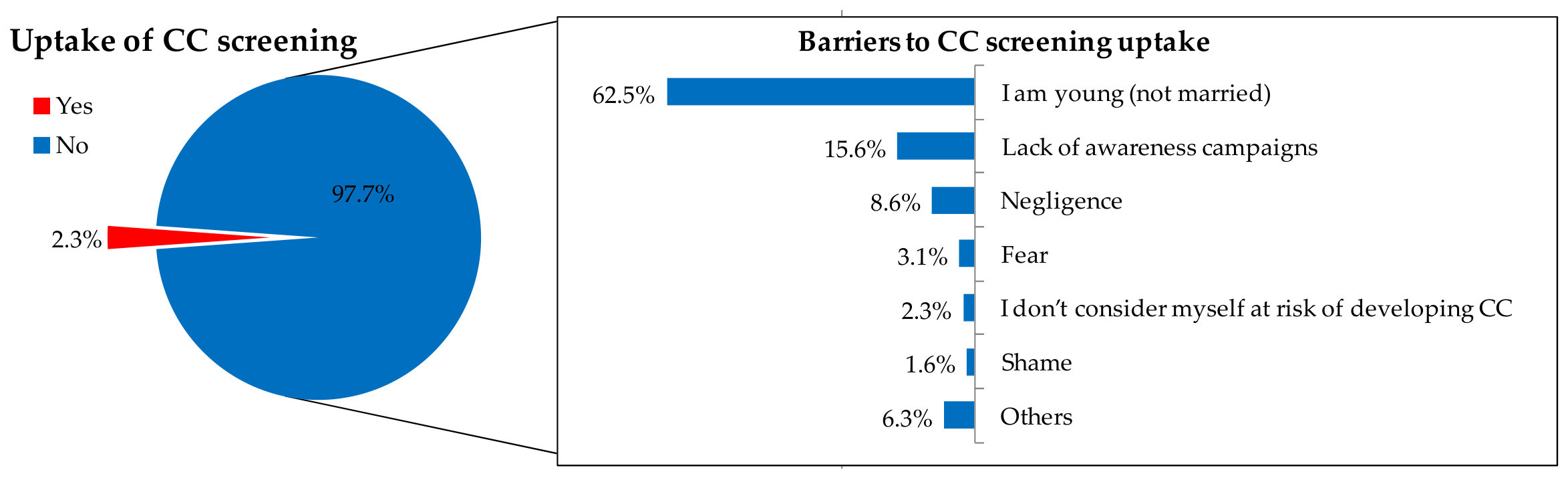
Regarding their knowledge, slightly more than half of the participants who had heard of CC, 50.9% declared knowing its cause, and 30.9% mentioned HPV. Furthermore, 58.2% of these participants were aware of CC early screening, and nearly all females reported not having undergone this test. Being young and/or single (62.5%), the lack of awareness campaigns (15.63%), and carelessness (8.6%) were the most important causes of this poor screening uptake (Figure 1).
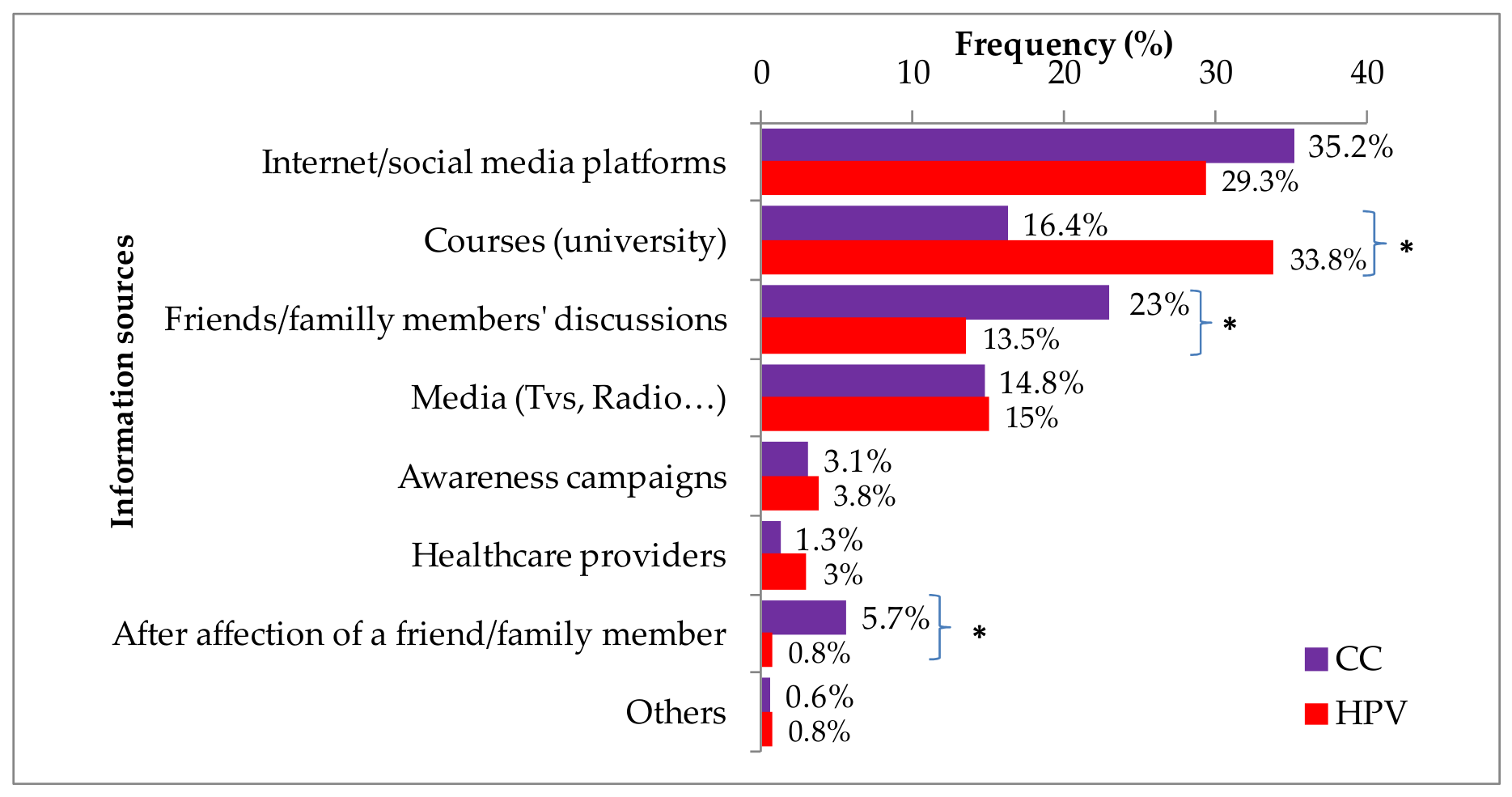
Finally, the sources of information of the participants who had heard of CC were mainly represented by the Internet and social media platforms (35.2%), courses (16.4%), friends’ and family members’ discussions (23%), and mass media (14.3%) (Figure 2).

3.3. HPV Awareness and Knowledge

The results of this study showed that more than two-thirds of the participants (67.9%) have not ever heard of HPV. Healthcare workers (79.4%) and those with a high financial level (50%) showed the highest rate of awareness whereas those with low incomes (17%) and those living in rural areas (17.2%) were less aware of this virus (Table S2, Supplementary Materials).
The rate of awareness differed substantially by age (sig. = 0.025), gender (0.022), financial status (sig. = 0.003), and healthcare profession (sig. < 0.001). These results were supported by logistic regression analysis of age (OR (over 30 years old/18–30 years old): 2.175, 95% CI: 1.272–3.719, sig. = 0.005), financial level (OR (high/low): 3.189, 95% CI: 1.162–8.751, sig. = 0.024), and health profession (OR (healthcare worker/non-healthcare workers): 12.591, 95% CI: 6.177–25.661, sig < 0.001) (Table 3).
For their sources of information about HPV, the respondents cited mainly courses (33.8%), the Internet/social media platforms (29.4%), mass media (15%), and friends’ and family members’ discussions (13.5%) (Figure 2).
Regarding the level of knowledge, the results showed a medium of correct responses of 65.4%, corresponding to a mean score of 6.54 (SD = 2.832).
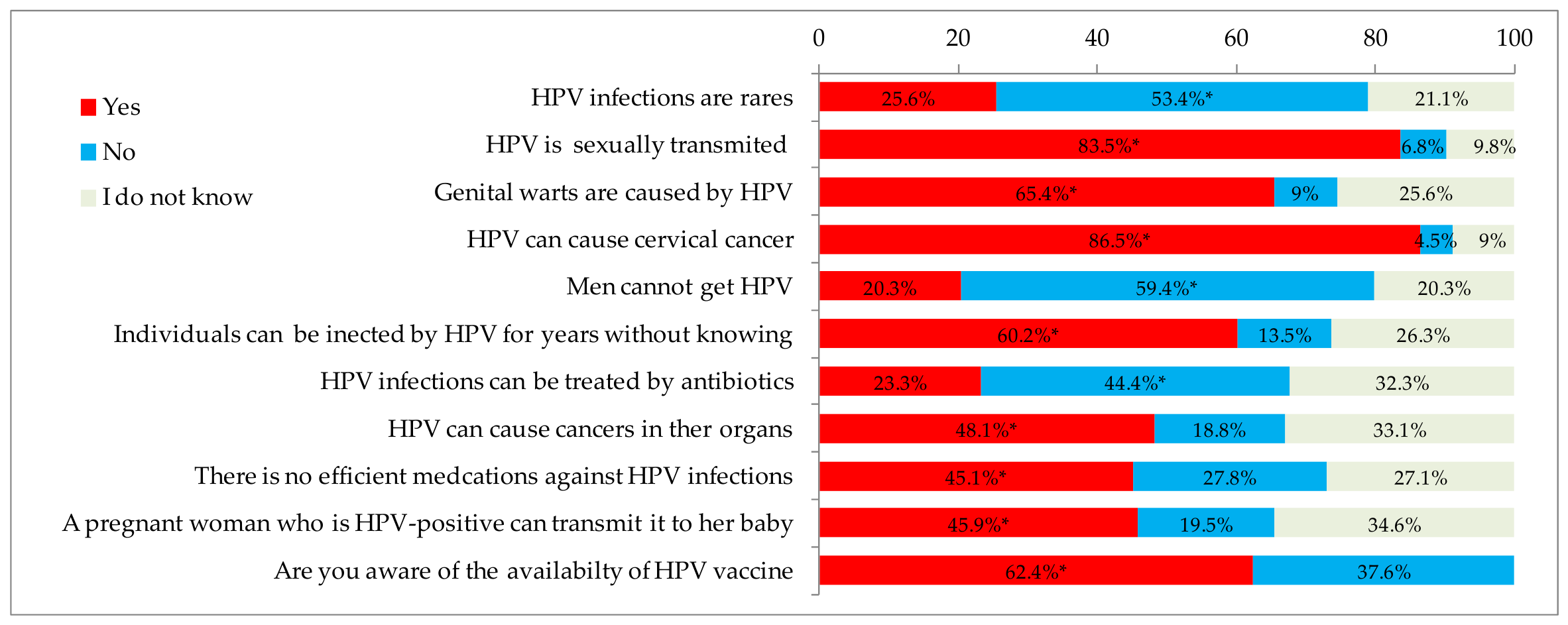
The highest rates of correct responses were obtained for the items “HPV can cause cervical cancer” (86.5%) and “HPV is sexually transmitted” (83.5%), and the lowest rates were obtained for the items “HPV infection can be cured by antibiotics” (44.4%) and “There is no efficient medication against HPV” (45.1%) (Figure 3).
The score of knowledge was significantly higher among participants with university education (sig. = 0.023), those living in urban areas (sig. = 0.04) and healthcare workers (sig. < 0.001) (Table 4).

3.4. HPV Vaccine Attitudes

The results showed that 62.4% were aware of the availability of the HPV vaccine, whereas only 2.3% had received it. Furthermore, 30.8% of the participants were willing to receive the vaccine, while 41.5% were hesitant, and 27.7% were reluctant. The most important factors of vaccine hesitancy or reluctance were “I do not consider myself at risk of HPV infection” (35.6%), “I do not consider HPV as a common infection in Algeria” (17.4%), and “Visiting a doctor makes me uncomfortable, which keep me from vaccination” (12.8%) (Table 5).
Finally, attitudes toward HPV vaccination were significantly associated with the score of knowledge and the VCBS scores (Table 6).

4. Discussion

This study provides up-to-date information regarding awareness, knowledge, and attitudes on CC and HPV in a sample of the Algerian population. The results revealed a high level of awareness of CC (76.3%). The rate of awareness was expectedly higher among females (85.1%) than males (71.1%). The same observation was reported by Mbulawa et al. [34] in South Africa and El Mansouri et al. [35] in Morocco. The rate of awareness reported among females aligns with the rate observed among female students reported previously in Algeria (88.4%%) [22], and also with the rates obtained among females in Kenya (86%) [27], in Kuwait (85.8%) [36], and among female university students in Morocco (81.1–89%) [35,37]. However, the rate of awareness could vary substantially among females according to their sociodemographic characteristics, including age, marital status, residence, and profession [38,39,40,41,42,43,44,45,46].
In contrast to the results of previous studies in Algeria [22,47], 58.2% were aware of its early detection, while nearly all female participants declared having not undergone CC screening. By omitting young age, lack of awareness was the most common barrier cited by the study participants. In the same way, a systematic review conducted in low- and middle-income countries found that the most important barrier to CC screening uptake is the lack of information and education about CC, CC screening, and prevention [48]. More intriguingly, a study in Tanzania revealed that 70.3% of university students did not think that screening helps to prevent CC [49]. In addition, a study conducted in the Eastern Cape Province rural community in South Africa revealed that women previously screened for CC had a significantly higher cervical knowledge score than those who had never been screened [34]. It is worth noting that one of the WHO objectives to eliminate CC and sexually transmitted diseases is to increase the percentage of women being screened to 70% by 2030 [13].
On the other hand, about half, 50.9%, of the participants who had heard of CC declared knowing its cause, and the majority of them incriminated HPV. Later, 115 out of the 133 students who had heard of HPV (86.5%) were aware that this virus can cause CC. Except for certain populations, including mainly medical students [23], the lack of knowledge about the link between CC and HPV is common. If this information was shared by half of female staff in a Nigerian university (50%) [46] and more than four of ten women in South Africa (43.2%) [34], low rates were reported among rural (22.9%) and urban (24.4%) women in India [45], young women of Dhulikhel municipality in Nepal (20.4%) [42], women in hard-to-reach areas of Bangladesh and their family decision-makers (~20%) [41], and women in the Caribbean indigenous community (17%) [40]. A recent systematic review reported that only 14% of Arab women knew that HPV causes CC [50]. More intriguingly, a recent study in Morocco revealed that only 10% of parents of young girls knew that cervical cancer is caused by a persistent HPV infection [51].
Of note, less than a third of the participants (32.1%) of our study declared having heard of HPV. The same rate of awareness was reported among women of the western region in Saudi Arabia (34.6%) [25], while higher rates were reported among women of reproductive age in Kiambu County, Kenya (44.7%) [27], and Kuwaiti female students (55.3%) [24]. A much higher rate of awareness of HPV was reported in the United States of America (USA), ranging from 81.8% to 95.3% among women [52] and college students [53], respectively. These high rates may certainly be related to the multiple public health campaigns designed to promote the benefits of HPV vaccination to parents and adolescents in this country [53]. This supports the idea that there is a need for awareness campaigns for the Algerian population about this infectious agent.
Higher rates were also reported among medical students in some Arab countries, including Jordan (72%) [23], Saudi Arabia (91.7%) [54], and the United Arab Emirates (97%) [55], while the rate was very low among students in the neighboring country of Morocco (10 to 14.7%) [35,37].
In our study, healthcare workers, older individuals (over 30 years old), and those with a high financial level showed the highest rates of awareness of HPV, while female gender was not a significant predictor. In a previous study among Algerian students, females were nearly two times as likely to have heard of HPV as males (OR = 1.7, 95% CI = 1.161–2.489) [22]. Regarding age, a study conducted in the western region of Saudi Arabia reported that women aged more than 40 years were less aware of HPV than younger women [25]. The same observation was reported among female caregivers in the USA, where younger ones aged 21–50 were nearly 2.5 times more likely to have heard of HPV than their counterparts (OR = 2.47, 95% CI = 1.49–4.08) [26].
In addition to the low rate of awareness about HPV reported in this survey, multiple gaps of knowledge were found among those who heard of this pathogen. Particularly, more than half of these participants were not aware that HPV can cause cancer in organs other than cervix, that HPV infection cannot be cured with medicines, and that antibiotics are not effective against HPV. Similar gaps of knowledge were previously reported among students in Algeria [22], and in other countries [23,24]. However, the striking result is the fact that nearly four of ten of those who had heard of HPV were not aware of the availability of the HPV vaccine. Even though the rate of awareness is higher than the rate reported by Bencherit et al. [22] among university students in our country, this rate remains very low when adjusted to the total number of participants in our sample. In general, awareness of HPV vaccine varied substantially, with developed countries showing the highest rates of awareness [37,51,53]. More interestingly, high proportions of participants were not aware of the national program to prevent CC and HPV infections in some low-and middle-income countries [49,51].
Not surprisingly, all but three of the participants who had heard of HPV in our study population were unvaccinated. This finding is a consequence of the absence of the HPV vaccine in the national immunization program and the lack of public awareness campaigns to promote its acceptability. However, nearly a third of these students were willing to get the vaccine if available (30.8%). This rate is higher than the rate reported among female students in our country (26.7%) [22], but remains lower than the rates reported in other African and Arabic countries including Morocco (60–67%) [37,51], Kuwait (57.4–69.8%) [24,36], the United Arab Emirates (74%) [55], Saudi Arabia (75.8%), [25] and Jordan (75%) [23]. The low rate of vaccine acceptance remains distant from the WHO 90-70-90 goal of 90% vaccinated women by 2030 [13].
This low rate of acceptance could certainly be related to the lack of education regarding CC, HPV, and HPV vaccination. The role of awareness campaigns and healthcare providers was very limited in public awareness in our study. In fact, targeted awareness campaigns and healthcare providers’ recommendations are considered key factors for vaccine acceptance and uptake [56,57]. A recent meta-analysis reported that provider recommendation increased vaccination uptake from 24% to 60% [58]. Unfortunately, the role of healthcare providers in the spreading of information tends to decrease in favor of social media platforms in multiple countries, including Algeria [22,25,50]. This shift towards informal sources of information is concerning, given the documented proliferation of misinformation about vaccine safety and efficacy on social media platforms, thus reinforcing the endorsement of conspiracy theories [50]. In our study, conspiracy beliefs were significantly associated with vaccine reluctance. Similar results were previously reported, especially among students in Algeria and in other Arab countries [22,23,24,50].
In addition, complacency, which refers to the underestimation of disease risk and doubts regarding the necessity of vaccination, was the most important factor contributing to HPV vaccine reluctance and hesitancy in our study. The same observation was reported among students in Algeria [22], female students in Kuwait [24], medical students in Jordan [23], and women in Saudi Arabia [25]. A recent study among adolescents in China revealed that high complacency, low confidence, and low HPV knowledge were significant determinants of HPV vaccine hesitancy [59].
Finally, this study has shown some limitations that could affect the quality of its results. The cross-sectional online design could be subject to multiple biases. The cross-sectional nature of this survey allows it to provide information about the period from study that may change over time. The online nature did not allow for obtaining a representative sample since it can marginalize some categories, including those with limited access to the Internet and older individuals who are generally less connected to social media than younger ones. Furthermore, the self-administered questionnaire nature of this survey could be subject to social desirability biases. Finally, due to the country’s epidemiological context and national health policy, which plans to introduce HPV vaccination primarily for cervical cancer prevention, our study focused exclusively on CC, without considering other HPV-related cancers. In addition, attitudes toward HPV vaccination were assessed only among female participants, in line with the expected target population of the future vaccination program. Consequently, our findings cannot be generalized to males, despite the fact that HPV vaccination also protects against several other HPV-related cancers affecting both sexes.


5. Conclusions

In conclusion, this study provides data regarding CC and HPV awareness and attitudes toward HPV vaccines. The results show that despite the high level of awareness about CC, an information vacuum remains, represented by the low rate of awareness of HPV and a medium level of knowledge regarding HPV importance, epidemiology, and prevention. These results were associated with a low level of vaccine acceptance and adherence to CC screening. Thus, increasing awareness about HPV and its public health importance among the Algerian population is the first step that should be engaged in the efforts of prevention that may certainly help to convince the population about the importance of HPV vaccines and consequently increasing its acceptance.

Supplementary Materials

The following supporting information can be downloaded at https://www.mdpi.com/article/10.3390/vaccines14080676/s1; Table S1: Factors influencing CC awareness; Table S2: Factors influencing HPV awareness; Questionnaire S1: Awareness and Knowledge about Cervical Cancer and HPV in Algeria.

Author Contributions

Conceptualization, M.L. and D.B.; methodology, M.L.; software, M.L.; validation, M.L.; formal analysis, M.L.; investigation, M.A., Z.B.A. and Z.G.; data curation, M.L.; writing—original draft preparation, M.L.; writing—review and editing, M.L.; visualization, M.L. and D.B.; supervision, M.L. and D.B. All authors have read and agreed to the published version of the manuscript.

Funding

This research received no external funding.

Institutional Review Board Statement

This study was conducted according to the guidelines of the Declaration of Helsinki. It was approved by the Scientific Committee of the Faculty of Natural and Life Sciences, of the University Ziane Achour, Djelfa (signed by the President of the Scientific Committee and the Dean of the Faculty) (Ref: 29/25/01/2023).

Informed Consent Statement

Informed consent was obtained from all subjects involved in the study.

Data Availability Statement

The data that support the findings of this study are available from the corresponding author upon reasonable request.

Acknowledgments

The authors would thank all persons who participated in this study.

Conflicts of Interest

The authors declare no conflicts of interest.

Abbreviations

The following abbreviations are used in this manuscript:
CCCervical Cancer
HPVHuman Papillomavirus
WHOWorld Health Organization

References

  1. Dattani, S.; Spooner, F.; Ritchie, H.; Roser, M. Causes of Death. Our World Data. 2023. Available online: https://ourworldindata.org/causes-of-death (accessed on 5 July 2026).
  2. United Nations (UN). Nearly 40 per Cent of Cancer Cases Could Be Prevented, UN Study Finds|UN News. Available online: https://news.un.org/en/story/2026/02/1166882 (accessed on 5 July 2026).
  3. Fink, H.; Langselius, O.; Vignat, J.; Rumgay, H.; Rehm, J.; Martinez, R.X.; Santero, M.; Lopez-Perez, L.; Inoue, M.; Zeng, H.; et al. Global and Regional Cancer Burden Attributable to Modifiable Risk Factors to Inform Prevention. Nat. Med. 2026, 32, 1306–1315. [Google Scholar] [CrossRef] [PubMed]
  4. Our World in Data. Number of New Cases and Deaths from Cervical Cancer. Available online: https://ourworldindata.org/grapher/number-of-new-cases-and-deaths-from-cervical-cancer (accessed on 5 July 2026).
  5. Mao, Y.; Gao, Y.; He, Y.; Wan, Z.; Li, S.; Ding, Z.; Hu, B.; Fu, L.; Luo, C.; Zhu, S.; et al. Global Burden of Cancer in Women, 1990–2021: A Systematic Analysis from the GBD 2021 Study. Front. Oncol. 2025, 15, 1633894. [Google Scholar] [CrossRef] [PubMed]
  6. World Health Organisation (WHO). Cervical Cancer. Available online: https://www.who.int/news-room/fact-sheets/detail/cervical-cancer (accessed on 5 July 2026).
  7. World Health Organisation (WHO). Human Papillomavirus and Cancer. Available online: https://www.who.int/news-room/fact-sheets/detail/human-papilloma-virus-and-cancer (accessed on 5 July 2026).
  8. World Health Organisation (WHO). Cervical Cancer Overview. Available online: https://www.who.int/health-topics/cervical-cancer (accessed on 21 June 2026).
  9. Akgör, U.; Temiz, B.E.; Cengiz, M.; Ege, H.V.; Joura, E.; Gültekin, M. New HPV Vaccines on the Market and Future Trends: A State-of-the-Art Review. Vaccines 2026, 14, 140. [Google Scholar] [CrossRef] [PubMed]
  10. World Health Organisation (WHO). WHO Immunization Data Portal—Detail Page. Available online: https://immunizationdata.who.int/global/wiise-detail-page (accessed on 21 June 2026).
  11. Asgedom, Y.S.; Kebede, T.M.; Seifu, B.L.; Mare, K.U.; Asmare, Z.A.; Asebe, H.A.; Kase, B.F.; Shibeshi, A.H.; Tebeje, T.M.; Sabo, K.G.; et al. Human Papillomavirus Vaccination Uptake and Determinant Factors among Adolescent Schoolgirls in Sub-Saharan Africa: A Systematic Review and Meta-Analysis. Hum. Vaccines Immunother. 2024, 20, 2326295. [Google Scholar] [CrossRef] [PubMed]
  12. World Health Organisation (WHO). Human Papillomavirus (HPV) Vaccination Coverage. Available online: https://immunizationdata.who.int/global/wiise-detail-page/human-papillomavirus-(hpv)-vaccination-coverage?CODE=Global&ANTIGEN=&YEAR= (accessed on 22 June 2026).
  13. World Health Organisation (WHO). Global Strategy to Accelerate the Elimination of Cervical Cancer as a Public Health Problem. Available online: https://www.who.int/publications/i/item/9789240014107 (accessed on 22 June 2026).
  14. Simms, K.T.; Steinberg, J.; Caruana, M.; Smith, M.A.; Lew, J.-B.; Soerjomataram, I.; Castle, P.E.; Bray, F.; Canfell, K. Impact of Scaled up Human Papillomavirus Vaccination and Cervical Screening and the Potential for Global Elimination of Cervical Cancer in 181 Countries, 2020–99: A Modelling Study. Lancet Oncol. 2019, 20, 394–407. [Google Scholar] [CrossRef] [PubMed]
  15. Purandare, C.N. Cervical Cancer Elimination. 90:70:90. Together We Can. J. Obstet. Gynecol. India 2024, 74, 292–294. [Google Scholar] [CrossRef] [PubMed]
  16. Wang, L. Accelerating Cervical Cancer Prevention and Control in China to Achieve Cervical Cancer Elimination Strategy Objectives. China CDC Wkly. 2022, 4, 1067–1069. [Google Scholar] [CrossRef] [PubMed]
  17. Xu, M.A.; Pant, S.; DiClemente, R.J. Factors Affecting Human Papillomavirus Vaccination: A Review of Individual, Interpersonal, and Structural Factors Affecting Vaccine Uptake among Adolescents. Vaccine 2026, 81, 128563. [Google Scholar] [CrossRef] [PubMed]
  18. Cv, S.; Prakash, G.H.; Darukaradhya, T.B. Cervical Cancer and Human Papillomavirus (HPV) Vaccination Awareness Among University Students: A Global Scoping Review of Knowledge, Attitudes, and Barriers. J. Oncol. Pharm. Pract. 2026. [Google Scholar] [CrossRef] [PubMed]
  19. Azubuike, S.; Adamu, M. Cervical Cancer Screening Uptake and Its Determinants among Rural Women in North Central Nigeria: A Cross-Sectional Study. Rural Remote Health 2026, 26, 10433. [Google Scholar] [CrossRef] [PubMed]
  20. Wanzala, J.; Anino, C.O. Uptake of Cervical Cancer Screening and Its Associated Factors among Women of Reproductive Age in Kericho County. PLoS ONE 2026, 21, e0328614. [Google Scholar] [CrossRef] [PubMed]
  21. Abdulla, M.; Shah, S.M.; Abosoudah, W.; Bader, S.; Shamsi, S.M.F.; Aldiab, R.; Alsafadi, B.; Yaqinuddin, S.A.; Hussain, S.S.M.; Chishtee, L.M.F.; et al. Breaking Barriers: Unraveling the Impact of Cultural Beliefs and Misconceptions on HPV Vaccination Uptake—The Narrative Review. Front. Public Health 2026, 14, 1788012. [Google Scholar] [CrossRef] [PubMed]
  22. Bencherit, D.; Kidar, R.; Otmani, S.; Sallam, M.; Samara, K.; Barqawi, H.J.; Lounis, M. Knowledge and Awareness of Algerian Students about Cervical Cancer, HPV and HPV Vaccines: A Cross-Sectional Study. Vaccines 2022, 10, 1420. [Google Scholar] [CrossRef] [PubMed]
  23. Sallam, M.; Al-Mahzoum, K.; Eid, H.; Assaf, A.M.; Abdaljaleel, M.; Al-Abbadi, M.; Mahafzah, A. Attitude towards HPV Vaccination and the Intention to Get Vaccinated among Female University Students in Health Schools in Jordan. Vaccines 2021, 9, 1432. [Google Scholar] [CrossRef] [PubMed]
  24. Alsanafi, M.; Salim, N.A.; Sallam, M. Willingness to Get HPV Vaccination among Female University Students in Kuwait and Its Relation to Vaccine Conspiracy Beliefs. Hum. Vaccines Immunother. 2023, 19, 2194772. [Google Scholar] [CrossRef] [PubMed]
  25. Alkhaldi, R.O.; Alzahrani, H.A.; Metwally, L.A. Awareness Level About Cervical Cancer, Human Papillomavirus (HPV) and Corresponding Vaccine Among Women Living in the Western Region of Saudi Arabia. Cureus 2023, 15, e37512. [Google Scholar] [CrossRef] [PubMed]
  26. Kim, J.; Dove, M.S.; Dang, J.H.T. Sociodemographic Factors Associated with HPV Awareness/Knowledge and Cervical Cancer Screening Behaviors among Caregivers in the U.S. BMC Women’s Health 2022, 22, 335. [Google Scholar] [CrossRef] [PubMed]
  27. Gitonga, E.; Iseme, R.; Mutisya, R.; Kodhiambo, M. Cervical Cancer Knowledge, Awareness and Related Health Behaviours amongst Women of Reproductive Age in Kiambu County, Kenya: A Cross-Sectional Study. Health Psychol. Behav. Med. 2022, 10, 1056–1070. [Google Scholar] [CrossRef] [PubMed]
  28. International Agency for Research on Cancer (IARC). Algeria: Human Papillomavirus and Related Cancers, Fact Sheet 2023; International Agency for Research on Cancer: Lyon, France, 2023. [Google Scholar]
  29. Debbih, D. Vaccination anti-HPV en Algérie: Un enjeu stratégique pour la prévention du cancer du col de l’utérus. In Proceedings of the 4ème Congrès International et 14ème Journées de La SAMIC, Faculty of Medicine, Algiers, Algeria, 31 May–1 June 2025. [Google Scholar]
  30. The MENA Coalition for HPV Elimination Group. HPV & Cervical Cancer in MENA/EMR 2024. Available online: https://www.emrncda.org/wp-content/uploads/2023/07/HPV-FACTSHEET-MENAEMR.pdf (accessed on 6 July 2026).
  31. von Elm, E.; Altman, D.G.; Egger, M.; Pocock, S.J.; Gøtzsche, P.C.; Vandenbroucke, J.P. Strengthening the Reporting of Observational Studies in Epidemiology (STROBE) Statement: Guidelines for Reporting Observational Studies. BMJ 2007, 335, 806–808. [Google Scholar] [CrossRef] [PubMed]
  32. Surveymonkey Sample Size Calculator and Tips for Determining Sample Size. Available online: https://www.surveymonkey.com/mp/sample-size-calculator/ (accessed on 6 April 2024).
  33. Shapiro, G.K.; Holding, A.; Perez, S.; Amsel, R.; Rosberger, Z. Validation of the Vaccine Conspiracy Beliefs Scale. Papillomavirus Res. 2016, 2, 167–172. [Google Scholar] [CrossRef] [PubMed]
  34. Mbulawa, Z.Z.A.; Mahlangu, L.L.; Makhabane, E.; Mavivane, S.; Nongcula, S.; Phafa, A.; Sihlobo, A.; Zide, M.; Mkiva, A.; Ngobe, T.N.; et al. Poor Cervical Cancer Knowledge and Awareness among Women and Men in the Eastern Cape Province Rural Community. Int. J. Environ. Res. Public Health 2023, 20, 6916. [Google Scholar] [CrossRef] [PubMed]
  35. El Mansouri, N.; Ferrera, L.; Kharbach, A.; Achbani, A.; Kassidi, F.; Rogua, H.; Ait Wahmane, S.; Belmouden, A.; Chouham, S.; Nejmeddine, M. Awareness and Knowledge Associated to Human Papillomavirus Infection among University Students in Morocco: A Cross-Sectional Study. PLoS ONE 2022, 17, e0271222. [Google Scholar] [CrossRef] [PubMed]
  36. Badawy, N.; Alwadaany, B.; Safar, H.; Alshammaa, M. Knowledge and Attitudes Regarding Cervical Cancer among Adult Kuwaiti Women: A Cross-Sectional Study. Sci. Rep. 2026, 16, 23942. [Google Scholar] [CrossRef] [PubMed]
  37. Yacouti, A.; Elkhoudri, N.; El Got, A.; Benider, A.; Hadrya, F.; Baddou, R.; Forster, A.; Mouallif, M. Awareness, Attitudes and Acceptability of the HPV Vaccine among Female University Students in Morocco. PLoS ONE 2022, 17, e0266081. [Google Scholar] [CrossRef] [PubMed]
  38. Maqsood, T.; Shahzad, K.; Naz, S.; Simsek, S.; Afzal, M.S.; Ali, S.; Ahmed, H.; Cao, J. A Cross-Sectional Study on the Association Between Risk Factors of Toxoplasmosis and One Health Knowledge in Pakistan. Front. Vet. Sci. 2021, 8, 751130. [Google Scholar] [CrossRef] [PubMed]
  39. Oringtho, S.; Mwaka, A.D.; Garimoi Orach, C.; Wabinga, H. Awareness of Cervical Cancer Risk Factors and Preventive Approaches, and Perceived Causes of Cervical Cancer among Secondary School Girls: A Cross-Sectional Study in Northern Uganda. Ann. Med. 2024, 56, 2374860. [Google Scholar] [CrossRef] [PubMed]
  40. Warner, Z.C.; Reid, B.; Auguste, P.; Joseph, W.; Kepka, D.; Warner, E.L. Awareness and Knowledge of HPV, HPV Vaccination, and Cervical Cancer among an Indigenous Caribbean Community. Int. J. Environ. Res. Public Health 2022, 19, 5694. [Google Scholar] [CrossRef] [PubMed]
  41. Nazrul, N.; De Fouw, M.; Beltman, J.J.; De Zeeuw, J.; Schans, J.V.D.; Koot, J.; Rasul, K.G.; Kulsum, M.U.; Ahmed, M.S.; Rahman, A.; et al. Understanding Cervical Cancer Awareness in Hard-to-Reach Areas of Bangladesh: A Cross-Sectional Study Involving Women and Household Decisionmakers. PLoS ONE 2024, 19, e0304396. [Google Scholar] [CrossRef] [PubMed]
  42. Shrestha, I.B.; Bhusal, S.; Rajbanshi, M.; Mali, P.; Shrestha, R.B.; Singh, D.R. Awareness of Cervical Cancer, Risk Perception, and Practice of Pap Smear Test among Young Adult Women of Dhulikhel Municipality, Nepal. J. Cancer Epidemiol. 2023, 2023, 6859054. [Google Scholar] [CrossRef] [PubMed]
  43. Arechkik, A.; Lahlou, L.; Kharbach, A.; Baba, M.A.; Obtel, M.; Razine, R. Awareness, Knowledge and Attitude Regarding Cervical Cancer among Women Living with HIV in the Souss-Massa Region, Southern Morocco: A Cross-Sectional Study. Asian Pac. J. Cancer Prev. 2023, 24, 2875–2884. [Google Scholar] [CrossRef] [PubMed]
  44. Sudha, B.; Kumar, N.S.; Sumathi, S. Absence of Knowledge and Awareness About Cervical Cancer Among Educated Women: A Need for Education About Cervical Cancer. Indian J. Gynecol. Oncol. 2022, 20, 11. [Google Scholar] [CrossRef]
  45. Ghosh, S.; Mallya, S.D.; Pattanshetty, S.M.; Pandey, D.; Kamath, V.G.; Kabekkodu, S.P.; Satyamoorthy, K.; Shetty, R.S. Awareness, Attitude, and Practice towards Cancer Cervix Prevention among Rural Women in Southern India: A Community-Based Study. Clin. Epidemiol. Glob. Health 2024, 26, 101546. [Google Scholar] [CrossRef]
  46. Ogundipe, L.; Ojo, T.; Oluwadare, T.; Olayemi, E.; Oluwafemi, F.; Oni, O.; Kukoyi, O.; Orok, E. Cervical Cancer Screening and Vaccination: Knowledge, Awareness, and Attitude of Female Staff in a Nigerian University. BMC Women’s Health 2023, 23, 218. [Google Scholar] [CrossRef] [PubMed]
  47. Belhadj, A.; Boublenza, L.; Sidaoui, A.; Chiah, B.; Benhamou, A.; Boulenouar, F.; Mouleshoul, S. Women’s Knowledge about Cervical Cancer and Their PAP SMEAR Test Participation in Algeria. J. Med. Health Res. 2017, 2, 65–71. [Google Scholar]
  48. Petersen, Z.; Jaca, A.; Ginindza, T.G.; Maseko, G.; Takatshana, S.; Ndlovu, P.; Zondi, N.; Zungu, N.; Varghese, C.; Hunting, G.; et al. Barriers to Uptake of Cervical Cancer Screening Services in Low-and-Middle-Income Countries: A Systematic Review. BMC Women’s Health 2022, 22, 486. [Google Scholar] [CrossRef] [PubMed]
  49. Mremi, A.; Joseph, A.P.; Njunwa, D.V.; Ntupwa, D.A.; Rwenyagila, D.G.; Mlay, J. Knowledge, Attitude and Practices towards Cervical Cancer Control among University Students in Kilimanjaro Region, Tanzania. PLoS ONE 2025, 20, e0327879. [Google Scholar] [CrossRef] [PubMed]
  50. Tabche, C.; Atwan, Z.; Al Khaldi, S.; Sidiropoulou, Z.; Sharma, I.; Kumar, S.; Al Rashdi, F.; Al Zadjali, N.; Al-Qanubi, H.; Alazemi, M.; et al. Cervical Cancer in the Arab World: Knowledge Gaps, Health System and Cultural Barriers, and the Path Forward. Cancer Treat. Res. Commun. 2026, 48, 101250. [Google Scholar] [CrossRef] [PubMed]
  51. Lemrabett, S.; Elhailouch, F.Z.; Gourinda, A.; Mezzoug, N.; Najdi, A. Awareness and Acceptability of HPV Vaccination among Parents of Young Girls in Northern Morocco: A Mixed-Methods Study. BMC Cancer 2026, 26, 854. [Google Scholar] [CrossRef] [PubMed]
  52. Dean, A.; Eldawy, N.; Mendonca, J.; Lobaina, D.; Zerrouki, Y.; Okwaraji, G.; Jhumkhawala, V.; Burgoa, S.; Ejezie, C.L.; Kitsantas, P.; et al. HPV-Related Knowledge and Impact of Patient–Provider Communication on HPV-Associated Cervical Cancer Awareness and Pap Smear Completion in US Women Aged 21–65 Years. Cancers 2025, 17, 1188. [Google Scholar] [CrossRef] [PubMed]
  53. Kasymova, S.; Harrison, S.E.; Pascal, C. Knowledge and Awareness of Human Papillomavirus Among College Students in South Carolina. Infect. Dis. 2019, 12, 1178633718825077. [Google Scholar] [CrossRef] [PubMed]
  54. Alhetheli, G.; Alhumaid, R.; Alajlan, S.; Alajlan, S.; Alharbi, L.; Allahim, L.; Alrubah, H.A. Knowledge, Awareness, and Willingness Toward the HPV Vaccine Among Medical Students at Qassim University: A Cross-Sectional Study. Vaccines 2026, 14, 529. [Google Scholar] [CrossRef] [PubMed]
  55. Ortashi, O.; Raheel, H.; Khamis, J. Acceptability of Human Papillomavirus Vaccination among Male University Students in the United Arab Emirates. Vaccine 2013, 31, 5141–5144. [Google Scholar] [CrossRef] [PubMed]
  56. Tobaiqy, M.; MacLure, K. A Systematic Review of Human Papillomavirus Vaccination Challenges and Strategies to Enhance Uptake. Vaccines 2024, 12, 746. [Google Scholar] [CrossRef] [PubMed]
  57. Aboul-Enein, B.H.; Kelly, P.J.; Almoayad, F.; Keller, T. Promoting the HPV Vaccine across the League of Arab States: A Scoping Review of Interventions. J. Cancer Policy 2026, 49, 100770. [Google Scholar] [CrossRef] [PubMed]
  58. Oh, N.L.; Biddell, C.B.; Rhodes, B.E.; Brewer, N.T. Provider Communication and HPV Vaccine Uptake: A Meta-Analysis and Systematic Review. Prev. Med. 2021, 148, 106554. [Google Scholar] [CrossRef] [PubMed]
  59. Chen, H.; Zhou, J.; Huang, Q.; Si, M.-Y.; Su, X.-Y.; Li, J. Status of Human Papillomavirus Vaccination and Knowledge, Attitudes, and Influencing Factors towards Human Papillomavirus and Its Vaccines among University Students in Western China. Zhongguo Yi Xue Ke Xue Yuan Xue Bao 2021, 43, 545–550. [Google Scholar] [CrossRef] [PubMed]
Figure 1. Screening uptake and its barriers.
Vaccines 14 00676 g001
Figure 2. Source of information about CC and HPV of the study population. (* indicated significant difference between CC and HPV).
Vaccines 14 00676 g002
Figure 3. Responses of the participants to the questions evaluating HPV knowledge. (* indicated correct responses).
Vaccines 14 00676 g003
Table 1. Participant sociodemographic characteristics.
VariableOutcomeNumberPercentage (%)
Age18–30 years old30974.6
Over 30 years old10525.4
Educational levelNo university education10024.2
University education31475.8
Gender Female15437.2
Male26062.8
Marital statusSingle29771.7
Married (divorced, widowed)11728.3
Residence Rural297.0
Urban38593.0
Financial levelLow4711.4
Medium32177.5
High4611.1
Healthcare workerNo35184.8
Yes6315.2
Table 2. Regression analysis of the factors associated with CC awareness.
VariablesBSEWaldSig.OR95% CI OR
LowerUpper
Age [>30 years old]1.0220.3837.1420.0082.781.3135.883
Age [≤30 years old]Ref.......
Gender [Female]0.7030.2875.9780.0142.021.153.548
Gender [Male]Ref.......
Marital status [Single]−0.4350.3461.5810.2090.6470.3281.276
Marital status [Married]Ref.......
Financial level [High]0.5160.4951.0850.2981.6750.6354.419
Financial level [Medium]0.8120.3435.5960.0182.2521.1494.413
Financial level [Low]Ref.......
Healthcare worker [Yes]2.8391.0257.6720.00617.0992.294127.476
Healthcare worker [No]Ref.......
Bold characters indicate significant results with a level of significance sig. ≤ 0.05.
Table 3. Regression analysis of the factors associated with HPV awareness.
VariablesBSEWaldSig.OR95% CI OR
LowerUpper
Age [>30 years old]−0.7770.2748.0510.0052.1751.2723.719
Age [≤30 years old]Ref.......
Gender [Male]0.0990.2740.1320.7161.1050.6461.889
Gender [Female]Ref.......
Financial level [High]1.160.5155.0690.0243.1891.1628.751
Financial level [Medium]0.390.4210.8580.3541.4780.6473.375
Financial level [Low]Ref.......
Healthcare worker [Yes]−2.5330.36348.612<0.00112.5916.17725.661
Healthcare worker [No]Ref.......
Bold characters indicate significant results with a level of significance of sig. ≤ 0.05.
Table 4. Score of knowledge about HPV among the study population.
VariableOutcomeMeanSESig.
Age18–30 years old6.642.8060.456
Over 30 years old6.332.909
Educational levelNo university education6.832.8060.023
University education5.462.715
GenderFemale6.772.8070.408
Male6.362.86
Marital statusSingle6.42.9810.416
Married6.822.525
ResidenceRural31.7320.04
Urban6.682.781
Financial levelLow7.352.948NS
Medium6.322.832
High72.268
Healthcare workerNo5.582.581<0.001
Yes8.142.507
Bold characters indicate significant results with a level of significance of sig. ≤ 0.05. NS: not significant.
Table 5. Attitudes toward HPV vaccines and barriers leading to reluctance.
ItemsNumberPercentage (%)
Got HPV Vaccine
Yes32.3
No13097.7
Intention to get the vaccine
Yes4030.8
No3627.7
IDK5441.5
Cause of vaccine reluctance
I do not consider myself at risk of HPV infection2225.6
I do not consider HPV as a common infection in Algeria1517.4
Visiting a doctor makes me uncomfortable, which keep me from vaccination1112.8
I am against vaccines in general910.5
I consider these vaccines ineffective89.3
I consider these vaccines unsafe67.0
I am not completely against these vaccines/I will think about them44.7
I do not feel well after being vaccinated22.3
Others910.5
Table 6. Relationship between attitudes toward HPV vaccine and knowledge and conspiracy belief scores.
ScoreAttitude Toward HPV VaccineTotal
Willing (W)Reluctant (R)Hesitant (H)
VCBSMean19.7825.1422.1722.25
SE8.95410.459.659.816
Sig.0.045 (W vs. R)0.330 (R vs. H)0.464 (W vs. H).
KnowledgeMean8.025.226.246.54
SE2.2093.0342.6422.832
Sig.0.000 (W vs. R)0.0173 (R vs. H)0.003 (W vs. H).
H: hesitant, R: reluctant, W: willing. Bold characters indicate significant results with a level of significance of sig. ≤ 0.05.
Disclaimer/Publisher’s Note: The statements, opinions and data contained in all publications are solely those of the individual author(s) and contributor(s) and not of MDPI and/or the editor(s). MDPI and/or the editor(s) disclaim responsibility for any injury to people or property resulting from any ideas, methods, instructions or products referred to in the content.