Accelerating Evidence-Informed Vaccine Introductions: Lessons from the Hexavalent Early Adopters Workshop

 , , , , , and
Abstract
1. Introduction
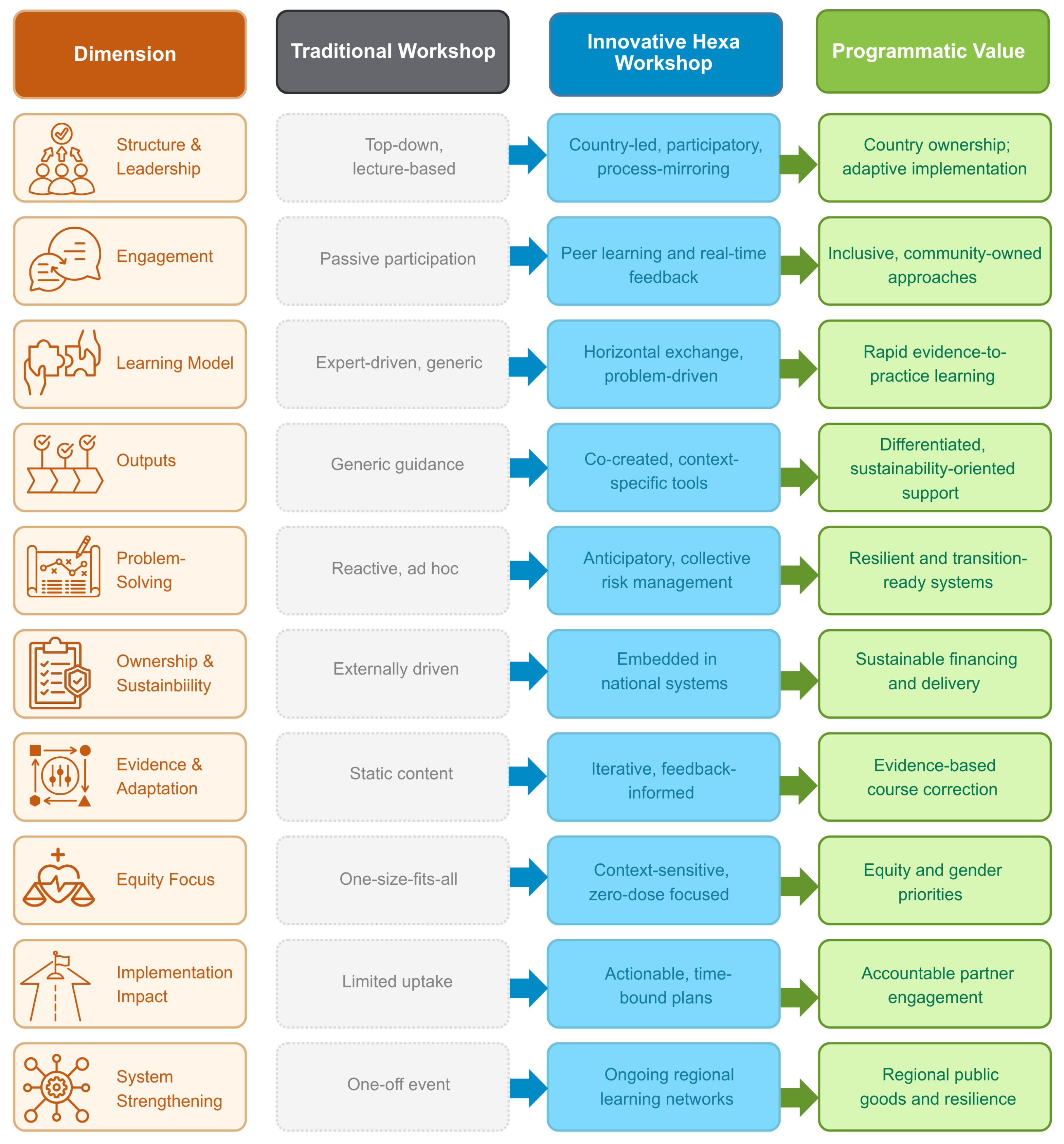
- Describe the design logic and participatory features of the Hexavalent Vaccine Switch Early Adopters Workshop;
- Synthesize key insights across decision-making, pre-implementation, and implementation stages of a vaccine switch;
- Document how regional collaboration mechanisms can promote the quality, efficiency, and sustainability of vaccine introductions;
- Discuss implications for ministries, partners, and donors, particularly in the context of Gavi 6.0’s shift toward multi-year vaccine budgets and consolidated applications.
2. Workshop Design and Methodology
2.1. Workshop Design
2.2. Data Sources
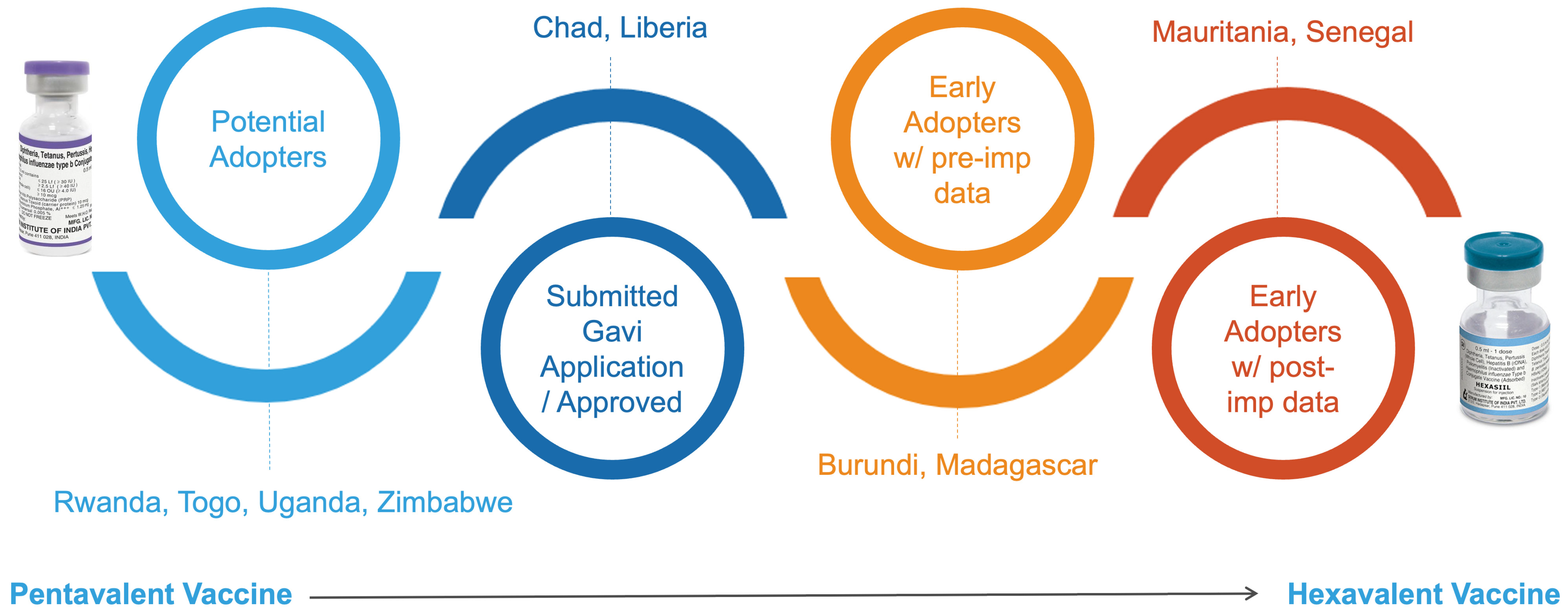
- Country case study presentations from early adopting countries (Mauritania and Senegal, switched on 1 July 2025) and countries in their pre-implementation planning phase, switching in Q1 or Q2 2026 (Madagascar and Burundi), to reflect on and surface diverse approaches, shared challenges, and innovative solutions regarding decision-making, planning, and implementation.
- Partner technical presentations on the rationale for switching to hexavalent vaccines, emphasizing disease burden, polio eradication contributions, and updated WHO SAGE recommendations; Gavi co-financial and Gavi 6.0; and World Bank macro-fiscal analysis and strategies for sustainable financing.
- Ten “process point” discussions spanning governance and policy, demand forecasting and procurement planning, logistics management, financing, health worker training and supportive supervision, immunization service delivery, communication and social mobilization, program management, monitoring, evaluation and learning/data and reporting, and vaccine safety surveillance.
- Crowdsourced outputs:
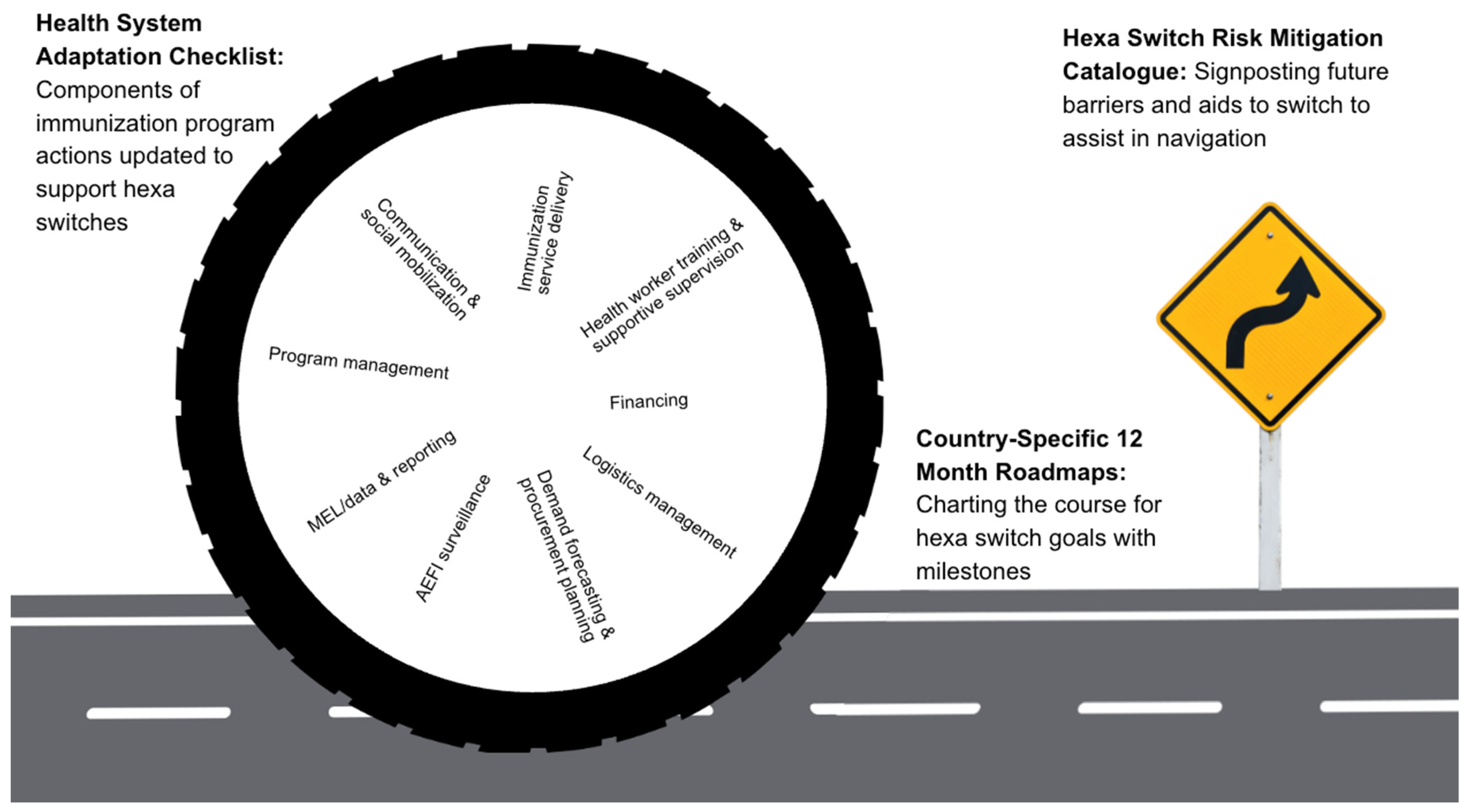
- Health System Adaptation Checklist: A practical tool to translate country experience into stepwise time-bound actions that national teams can use to strengthen readiness.
- Switch Risk Mitigation Catalogue: A consolidated set of country-level vulnerabilities and solutions across process points to provide a foundation for refining preparedness activities.
- Country roadmaps developed to transform broad workshop learnings into concrete, time-bound national plans that could be taken forward for internal validation and partner coordination. The session bridged dialog to action, equipping countries with a structured roadmap to guide technical, operational, and financial preparedness for hexavalent vaccine introductions.
- Collaborative notes and plenary summaries
- Anonymous pre-, during, and post-workshop interactive polling (via Menti) of delegate expectations, questions, workshop experiences and feedback.
2.3. Analytical Framework
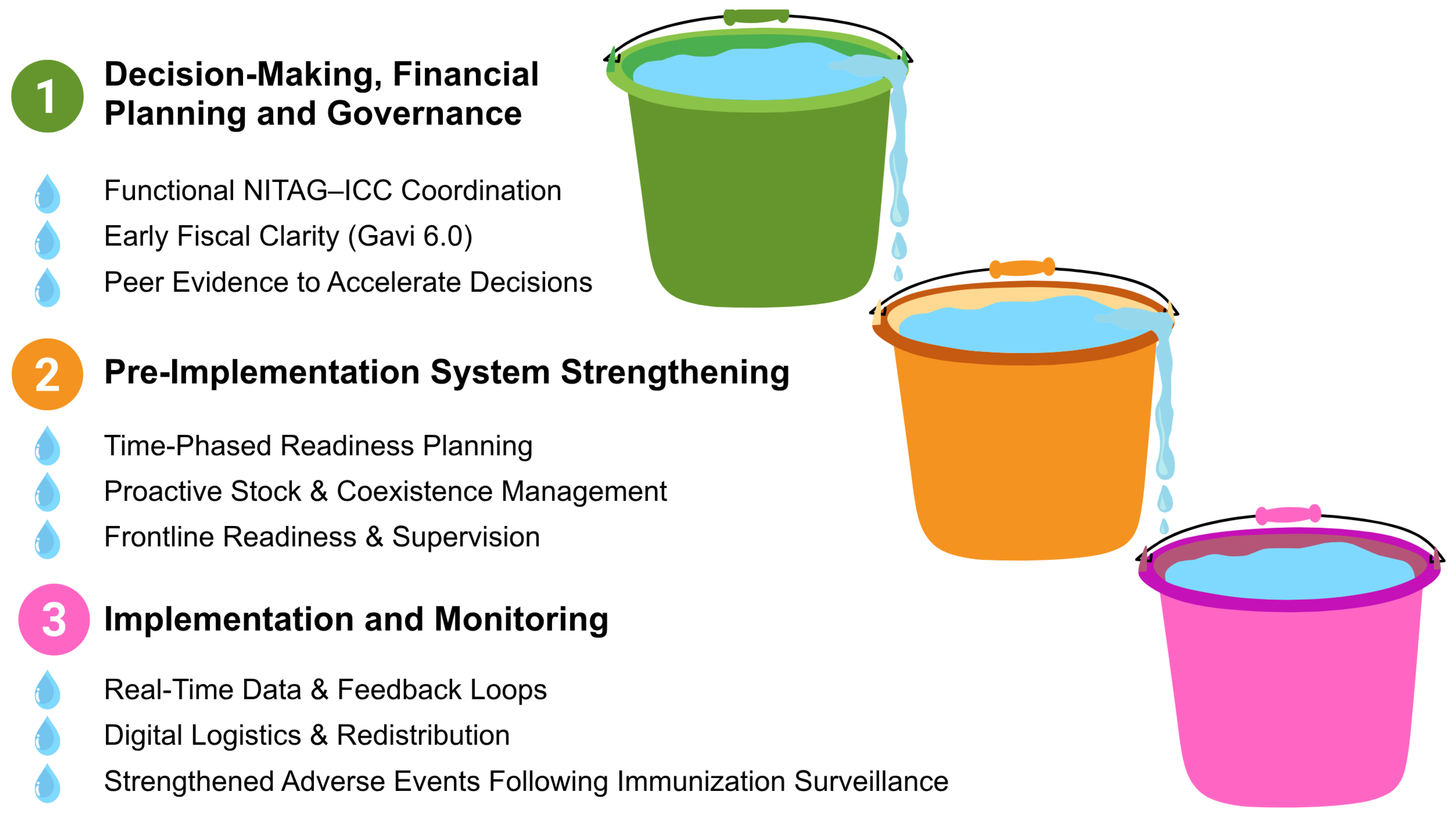
- Decision-making, financial planning, and governance;
- Pre-implementation system strengthening;
- Implementation and monitoring.
2.4. Ethical Considerations
2.5. Artificial Intelligence Use Statement
3. Results: Workshop Outcomes and Key Learnings
3.1. Decision-Making, Financial Planning and Governance
3.2. Pre-Implementation Readiness and System Strengthening
3.2.1. Demand Forecasting and Procurement Planning
3.2.2. Logistics Management, Including Cold Chain and Infrastructure
3.2.3. Health Worker Training and Supportive Supervision
3.2.4. Immunization Service Delivery Implementation
3.2.5. Communication and Social Mobilization
3.2.6. Data Systems, Monitoring and Evaluation, and Reporting
3.2.7. AEFI (Adverse Events Following Immunization) Surveillance and Reporting
3.3. Implementation Insights and Monitoring
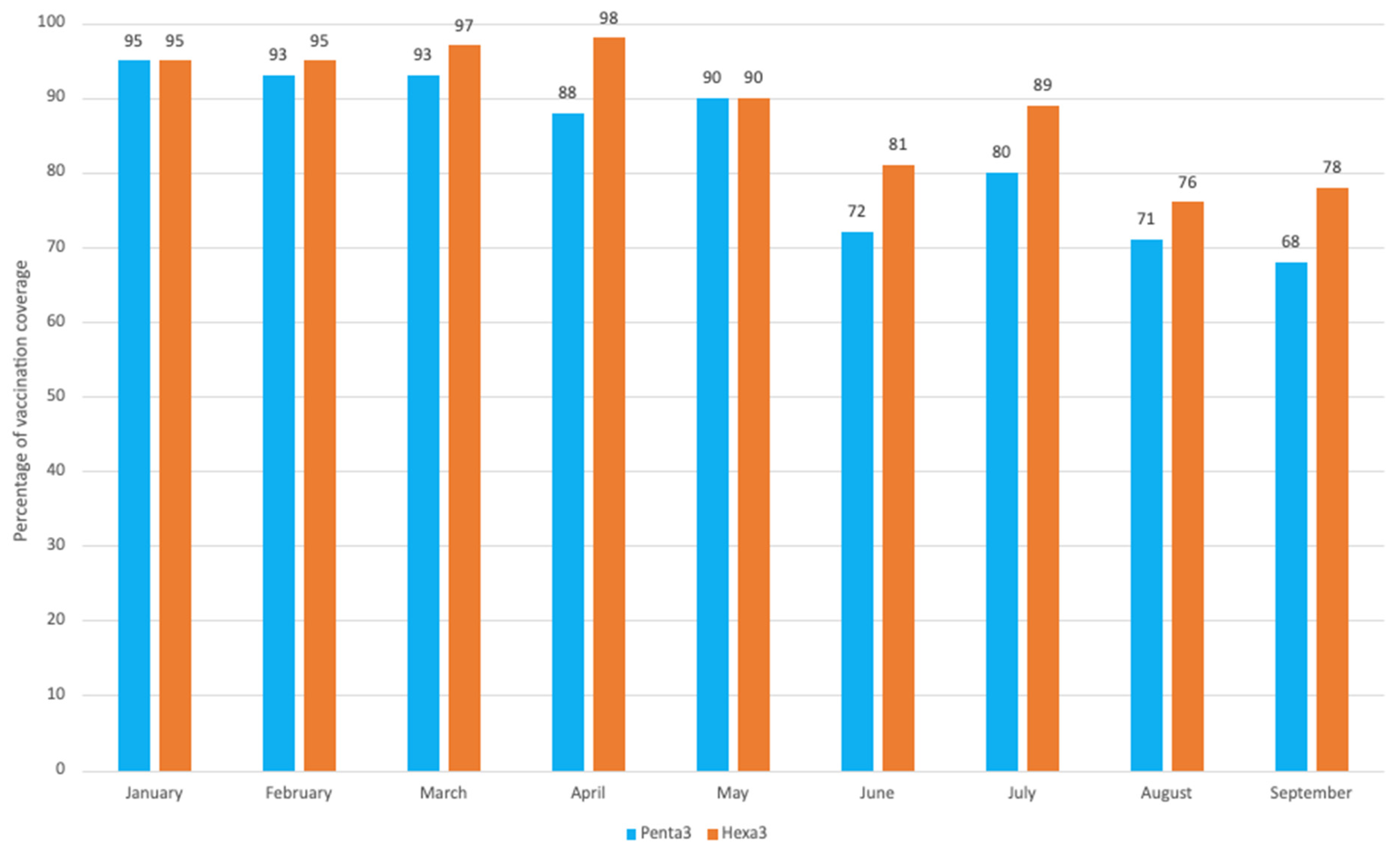
3.3.1. Real-World Evidence: Mauritania
3.3.2. Real-World Evidence: Senegal
3.4. Co-Created Tools and Outputs
3.5. Key Lessons for Countries Planning a Hexavalent (Hexa) Vaccine Switch
3.5.1. Anticipate Planning and Multisectoral Coordination Early
3.5.2. Ensure Predictable Financing and Sustained Political Commitment
3.5.3. Secure Vaccine Supply and Inputs While Minimizing Overlap Risks
3.5.4. Invest in Practical Capacity Building and Early Supportive Supervision
3.5.5. Strengthen Communication and Community Engagement Throughout the Transition
3.5.6. Establish Rigorous, Responsive Monitoring and Feedback Loops
3.5.7. Coordinate Partner Support Around Nationally Defined Priorities
4. Discussion
4.1. Workshop Learnings
4.2. Limitations
5. Conclusions
Author Contributions
Funding
Data Availability Statement
Acknowledgments
Conflicts of Interest
Abbreviations
| AEFI | Adverse Events Following Immunization |
| AI | Artificial Intelligence |
| AMP Afrique | Agence Africaine de Médecine Préventive/African Preventive Medicine Agency |
| BCU | Big Catch-Up |
| DHIS2 | District Health Information Software 2 |
| DTP | Diphtheria–Tetanus–Pertussis |
| DTP-HepB-Hib-IPV | Diphtheria–Tetanus–Pertussis–Hepatitis B–Haemophilus influenzae type b–Inactivated Poliovirus Vaccine |
| eBASE | Effective Basic Services Africa |
| EPI | Expanded Programme on Immunization |
| Gavi | Gavi, the Vaccine Alliance |
| GCEI | Groupe Consultatif d’Experts en Immunisation/National Immunization Advisory Structure (Mauritania context) |
| HeVAC | Hexavalent Vaccine (Switch) Assessment Consortium |
| HepB | Hepatitis B |
| Hib | Haemophilus influenzae type b |
| ICC | Inter-agency Coordination Committee |
| IPV | Inactivated Poliovirus Vaccine |
| MEL | Monitoring, Evaluation, and Learning |
| MOH | Ministry of Health |
| NITAG | National Immunization Technical Advisory Group |
| OPTIVAC | Optimizing Vaccine Product Choices for Low- and Middle-Income Countries |
| PIE | Post-Introduction Evaluation |
| Q1 | First Quarter |
| Q2 | Second Quarter |
| RR2 | Second Dose of Measles–Rubella Vaccine |
| SAGE | Strategic Advisory Group of Experts on Immunization |
| SOMAPED | Société Mauritanienne de Pédiatrie/Mauritanian Pediatric Society |
| UNICEF | United Nations Children’s Fund |
| WHO | World Health Organization |
| WHO AFRO | World Health Organization Regional Office for Africa |
| WP | Whole-cell Pertussis |
References
- Kaur, G.; Casey, R.M.; Patel, J.C.; Bloem, P.; Walldorf, J.A.; Hyde, T.B. Status of new vaccine introduction worldwide, 2016–2021. MMWR Morb. Mortal. Wkly. Rep. 2023, 72, 713–719. [Google Scholar] [CrossRef] [PubMed]
- Shah, M.P.; Morgan, C.; Beeson, J.G.; Peach, E.; Davis, J.; McPake, B.; Wallace, A.S. Integrated approaches for the delivery of maternal and child health services with childhood immunisation programmes in low- and middle-income countries: Systematic review update 2011–2020. Vaccines 2024, 12, 1313. [Google Scholar] [CrossRef] [PubMed]
- Luthra, K.; Jin, A.Z.; Vasudevan, P.; Kirk, K.; Marzetta, C.; Privor-Dumm, L. Assessing vaccine introduction and uptake timelines in Gavi-supported countries: Are introduction timelines accelerating across vaccine delivery platforms? BMJ Glob. Health 2021, 6, e004950. [Google Scholar] [CrossRef] [PubMed]
- Gavi, the Vaccine Alliance. A Six-in-One Vaccine is Rolling Out in Low-Income Countries: Here’s Why It’s a Game-Changer. Available online: https://www.gavi.org/ (accessed on 9 January 2026).
- World Health Organization. Meeting of the Strategic Advisory Group of Experts on Immunization, April 2025: Conclusions and recommendations. Wkly. Epidemiol. Rec. 2025, 100, 219–238. [Google Scholar]
- World Health Organization. Monitoring the Building Blocks of Health Systems: A Handbook of Indicators and Their Measurement Strategies; World Health Organization: Geneva, Switzerland, 2010.
- World Health Organization; UNICEF Supply Division. OPTIVAC: Optimizing Vaccine Product Choices for Low- and Middle-Income Countries; WHO: Geneva, Switzerland, 2019.
- Sabin Vaccine Institute (Washington, DC, USA); Effective Basic Services (Yaounde, Cameroon); Makerere University (Kampala, Uganda); Task Force for Global Health (Decatur, GA, USA); World Health Organization Regional Office for Africa (Brazzaville, Republic of Congo). Hexavalent Switch Assessment, Milestone One: Documentation of Key Findings and Recommendations for the Project: Summary of Consultations and Literature Review, 2025. Unpublished project report.
- Umbelino-Walker, I.; Szylovec, A.P.; Dakam, B.A.; Monglo, A.; Jones, I.; Mbuh, C.; Sadki, R.; Brooks, A. Towards a sustainable model for a digital learning network in support of the Immunization Agenda 2030: A mixed methods study with a transdisciplinary component. PLoS Glob. Public Health 2024, 4, e0003855. [Google Scholar] [CrossRef] [PubMed]
- The Lancet Infectious Diseases Commissioners. Reaching every child: A global call to strengthen routine immunisation systems. Lancet 2024, 404, 1443–1472. [Google Scholar] [CrossRef]



| Country | Forecasting Tool | Stock Dynamics | Coexistence Risk | Mitigation Measures |
|---|---|---|---|---|
| Senegal | Triangulation of census projections, DHIS2 data, and UNICEF/WHO quantification tools; real-time stock monitoring via Logistimo | Tight stock control enabled a clean transition; penta/IPV stocks were closely monitored and depleted before hexa launch | Very low; avoided entirely | Early cancelation of outstanding penta/IPV orders; continuous digital stock monitoring; clean-cut national withdrawal prior to hexa rollout |
| Mauritania | Census projections and DHIS2 data triangulated with UNICEF/WHO tools | Large inherited penta/IPV stock volumes; parallel use during transition | High; age-phased use of penta/IPV and hexa increased complexity | Age-phased strategy (penta/IPV for older cohorts, hexa for <12 months); enhanced supervision; intensified monitoring during BCU campaigns |
| Madagascar | Census projections, DHIS2 data, UNICEF/WHO tools | Uneven regional distribution of remaining penta/IPV stocks; staggered depletion | Moderate to high; risk varies by region | Planned staggered regional introduction; emphasis on redistribution, updated tools, and strengthened inventory management |
| Burundi | Census projections and DHIS2 data triangulated with UNICEF/WHO tools | Limited details pre-introduction; planning phase anticipates tight coordination | Anticipated but avoidable | Strict avoidance of dual administration; alignment with child health platforms; advanced updating of tools and microplans |
Disclaimer/Publisher’s Note: The statements, opinions and data contained in all publications are solely those of the individual author(s) and contributor(s) and not of MDPI and/or the editor(s). MDPI and/or the editor(s) disclaim responsibility for any injury to people or property resulting from any ideas, methods, instructions or products referred to in the content. |
© 2026 by the authors. Licensee MDPI, Basel, Switzerland. This article is an open access article distributed under the terms and conditions of the Creative Commons Attribution (CC BY) license.
Share and Cite
Hopkins, K.L.; Ndiaye, S.; Sidi Abdullah, Z.; Atugonza, R.; Badiane, O.; Ba, K.; Best, T.; Bizimana, J.C.; Cheikh, D.; Andrianirinarison, J.C.; et al. Accelerating Evidence-Informed Vaccine Introductions: Lessons from the Hexavalent Early Adopters Workshop. Vaccines 2026, 14, 452. https://doi.org/10.3390/vaccines14050452
Hopkins KL, Ndiaye S, Sidi Abdullah Z, Atugonza R, Badiane O, Ba K, Best T, Bizimana JC, Cheikh D, Andrianirinarison JC, et al. Accelerating Evidence-Informed Vaccine Introductions: Lessons from the Hexavalent Early Adopters Workshop. Vaccines. 2026; 14(5):452. https://doi.org/10.3390/vaccines14050452
Chicago/Turabian StyleHopkins, Kathryn L., Sidy Ndiaye, Zeinebou Sidi Abdullah, Rita Atugonza, Ousseynou Badiane, Khassoum Ba, Tyler Best, Jean Claude Bizimana, Dah Cheikh, Jean Claude Andrianirinarison, and et al. 2026. "Accelerating Evidence-Informed Vaccine Introductions: Lessons from the Hexavalent Early Adopters Workshop" Vaccines 14, no. 5: 452. https://doi.org/10.3390/vaccines14050452
APA StyleHopkins, K. L., Ndiaye, S., Sidi Abdullah, Z., Atugonza, R., Badiane, O., Ba, K., Best, T., Bizimana, J. C., Cheikh, D., Andrianirinarison, J. C., Rwagitare, E., Essoh, T.-A., Gonah, N., Hadler, S. C., Kagina, B. M., Lambou, L., Mangane, A., Kabweru, W. M., Sebatunzi, O. R., ... Kabore, L. (2026). Accelerating Evidence-Informed Vaccine Introductions: Lessons from the Hexavalent Early Adopters Workshop. Vaccines, 14(5), 452. https://doi.org/10.3390/vaccines14050452