1. Introduction
The yellow fever virus (YFV) is the prototypical member of genus Orthoflavivirus. It is an arthropod-borne virus (or arbovirus) primarily spread between primates and mosquitoes of the Aedes, Sabethes, and Haemagogus genera.
The flavivirus genome is a single-stranded, positive-sense RNA that is approximately 11 kilobases long. The genome consists of a 5′ untranslated region (UTR), a single open reading frame that encodes a polyprotein, and a 3′ UTR. The polyprotein is co- and post-translationally cleaved into three structural proteins (capsid (C), pre-membrane/membrane (prM/M), and envelope (E)) and seven nonstructural proteins (NS1-5). The structural proteins, together with the genomic RNA, assemble into virions that are approximately 50 nm in diameter. The E protein is responsible for binding the virus to cell receptors and fusion inside the host cell. It comprises much of the surface area of the virion, is the primary immunogen for YFV, and has many epitopes that elicit neutralizing antibodies [
1,
2,
3,
4]. The prM protein acts as an E protein chaperone during viral replication and assembly. It is cleaved to become an M as the virus matures while exiting the host cell. Although there are epitopes on M and prM proteins, they often elicit poor neutralization activity, as they are hidden and less available on the surface of the virion. The C protein forms the nucleocapsid and binds the viral genomic RNA inside the virion. The NS proteins form the replication complex and are involved in replication and inhibition of the host innate immune response, among other functions.
There are no specific antiviral treatments for yellow fever (YF), but the disease is vaccine-preventable, and the primary method for controlling the disease is widespread vaccination. The live attenuated vaccine, called 17D, was developed in the late 1930s by Max Theiler and coworkers [
5,
6], and was generated by passaging the wild-type (WT) strain Asibi 176 times in mouse and chick embryo tissue. In addition to the loss of viscerotropism, neurotropism, and vector infectivity, immunity from one dose of the 17D vaccine lasts at least 10 years, if not for life [
7]. The molecular basis of attenuation and strong immunogenicity are poorly understood because it is a legacy vaccine that was derived empirically, rather than by rational design. However, studies have shown that neutralizing antibodies are the correlate of protection [
7].
In addition to the 17D vaccine, the French neurotropic vaccine (FNV) was derived following 128 passages in mouse brain of the WT parental strain, the French viscerotropic virus (FVV) [
8,
9,
10]. Like the 17D virus, FNV had a loss of viscerotropism and vector infectivity. Unlike 17D, FNV had enhanced neurotropism and is no longer in use today.
The 17D vaccine exists as three substrains: 17D-204, 17D-213, and 17DD. There are 20 common amino acid substitutions between all the 17D substrains and the WT parent strain Asibi, including [
9] one in the E protein and one in the M protein (
Supplemental Table S1). The three 17D substrain viruses differ at 14 amino acid positions in the polyprotein, with five being in the E protein (
Supplemental Table S2). FNV also has 20 amino acid substitutions from WT FVV, including two in C, one in prM, one in M, and four in the E protein; However, these are in different amino acid positions than those that distinguish Asibi from 17D, except for two of these substitutions (M-36 and E-331) (
Supplemental Table S1) [
11].
There have been multiple studies comparing the Asibi and 17D viruses with E protein-reactive monoclonal antibodies (mAbs), utilizing methods including physical binding, competition binding assays, hemagglutination inhibition, neutralization, and passive protection in mouse models [
1,
4]. These studies identified a variety of epitopes on the E protein with different orthoflavivirus specificities, including epitopes that are 17D-204 substrain-specific, 17DD substrain-specific, 17D and FNV-specific, WT-specific, YFV type-specific, and those common to multiple orthoflaviviruses.
Schlesinger et al. in 1983 tested a panel of mouse mAbs for neutralization against the Asibi and 17D-204 viruses using a log10 neutralization index (LNI) [
1]. In this assay, the antibody quantity/concentration is held constant, while the infectivity titer of the virus is varied in the presence and absence of the mAb using ten-fold dilutions of the virus. Then, the fold-change in titer is calculated between these two values and log
10-transformed to obtain the LNI value. An LNI of 0 indicates an undetectable difference in titer after neutralization and no neutralizing activity against the virus strain, whereas an LNI of three indicates a 1000-fold difference in the infectivity titer and high levels of neutralization against the virus strain. In comparison, most neutralization assays today use a constant amount of virus and varying dilutions of antibody, e.g., the Plaque Reduction Neutralization Test (PRNT). Schlesinger and colleagues used the LNI to measure neutralization because historical studies showed that non-human primates (NHPs) are to be protected, as they produce enough neutralizing antibodies against YFV to confer an LNI of 0.7 [
12]. This is also the value that determines the cutoff of seropositivity in some clinical trials [
13]. Therefore, to maintain relatively standard methodologies between studies, in this paper, the LNI with constant antibody concentration was utilized rather than the varied antibody concentration, PRNT. Also, it was not necessary to determine the exact amount of antibody required to neutralize the virus (as in a PRNT); instead, the goal was simply to establish whether the constant quantity of antibody could neutralize the virus at all.
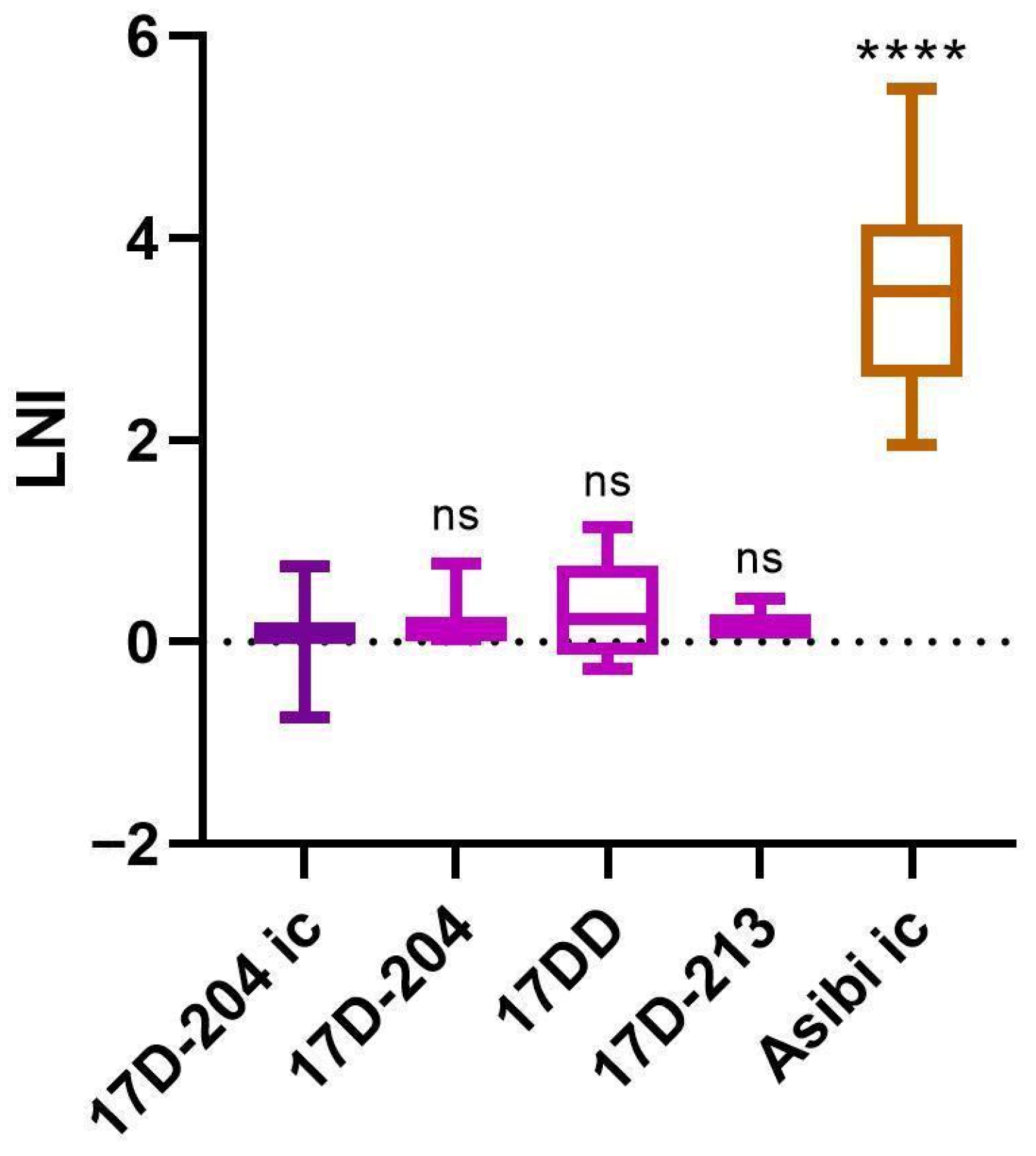
In the Schlesinger et al. studies, the panel of mAbs was split into groups A-E based on a combination of physical and biological properties. Schlesinger et al. designated groups B and C as containing mAbs that were YFV type-specific. mAbs in group B (4E8, 2C9, and 2E10) neutralized both WT Asibi and 17D-204 vaccine viruses, whilst mAbs in group C (2B8, 5E3, 2D12, 3A3, and 4E1) neutralized Asibi virus, but not 17D-204 vaccine virus in an LNI assay [
1,
4]. In particular, mAb 2D12 neutralized Asibi virus, with an LNI of 4.3, but only neutralized 17D-204 virus with an LNI of <1.3, even though this antibody was generated by immunizing mice with 17D-204 virus [
1]. In the original studies, only 17D-204 was tested, not the other two 17D substrains, nor FNV or FVV.
In this study, we sought to confirm and extend the studies of Schlesinger et al. Specifically, we aimed to investigate the ability of mAb 2D12 to neutralize the two other 17D substrains (17DD and 17D-213), plus FNV and FVV viruses, to determine whether all vaccine strains of YFV can escape neutralization by mAb 2D12 or if this biological activity is specific only to the 17D-204 vaccine strain. The findings from this study could lead to insights into the antigenic differences between the safe, immunogenic YFV vaccine strains and the pathogenic WT strains.
2. Materials and Methods
2.1. Recovery of YFV Infectious Clone (ic)
The YFV ic is a single plasmid containing the full genome of either the Asibi or 17D-204 strain [
14,
15].
E. coli XL10 gold cells from Agilent (Cedar Creek, TX, USA) were transformed with plasmids and grown with 100 µg/mL of ampicillin on Luria broth (LB) 2% agar plates. Single colonies were picked and grown overnight (14–16 h) in 200 mL LB with ampicillin in a shaker at 37 °C, 225 rpm. In total, 1 mL of bacterial stock was mixed with 50% glycerol and stored at −80 °C as a DNA stock. The bacterial cells were pelleted and resuspended in glucose-Tris-EDTA (GTE). They were then lysed with 0.2 M NaOH/1% SDS. The lysis was neutralized with 2 M KaOH, and the DNA was precipitated with isopropanol. Phenol:chloroform:isoamyl alcohol and chloroform were used to purify the DNA. It was then purified using the Qiagen (Venlo, The Netherlands) QIAquick PCR Purification Kit according to the manufacturer’s protocols.
To linearize the YFV genomes and excise them from the rest of the plasmid, 4 µg of the plasmid was digested for 2 h at 37 °C using Nru1 and Xho1 (NEB, Ipswich, MA, USA) for the Asibi ic and 17D ic, respectively. The proteins were digested with proteinase K (NEB) for one hour at 37 °C, and the DNA was purified again with phenol:chloroform and ethanol/sodium acetate precipitation. The linear DNA genomes were eluted in 10 µL of DNAse-free RNAse-free water. The DNA was transcribed into RNA using the CellScript (Madison, WI, USA) Amplicap SP6 High Yield Message Maker kit according to the manufacturer’s protocol. The RNA was added to either 6.8 × 10⁶ Vero or C6/36 cells in 0.5 mL of Dulbecco’s phosphate-buffered saline (DPBS). The cells were electroporated with 1.5 kV, 25 µF, and ∞ ohms using a Gene Pulser (Bio-Rad, Hercules, CA, USA) and incubated at room temperature (RT) for 10 min. Cells were grown as stated below until a cytopathic effect was observed, upon which the viruses were collected, aliquoted, and stored at −80 °C.
2.2. Virus Stocks
All viruses used are listed in
Supplemental Tables S3–S5. All viruses were stored at −80 °C until use. The viruses and strains used in these studies have been described previously [
11,
16,
17]. Most virus stocks used had infectivity titers greater than 5 log
10 ffu/mL to ensure accurate neutralization data.
2.3. Cell Culture
Vero monkey kidney (ATCC (Manassas, VA, USA) CCL-81) cells were grown with 5% CO2 at 37 °C in 1× minimum essential media (MEM), 8% fetal bovine serum (FBS), 100 units/mL penicillin, 100 µg/mL streptomycin, 0.1 mM non-essential amino acids (NEAAs), and 2 mM L-glutamine. When cells were infected with a virus, the same media was utilized except with 2% FBS.
2.5. Log10 Neutralization Index (LNI)
In total, 12 µL of MAB984 (Anti-Yellow Fever Virus Antibody, clone 2D12.A, ascites, EMD Millipore (St. Louis, MO, USA), neutralization (Asibi YF: 1:1000–1:3000)) or 12 µL of PBS as a control were mixed with 108 µL of YFV stocks, undiluted. Solutions were pulse-vortexed once to ensure a homogenous mixture. Solutions were incubated in a 37 °C water bath for exactly 30 min. Viruses were titrated using the FFA. The fold-change in infectivity titer between the control virus (YFV mixed with PBS) to that of the mAb 2D12-neutralized virus (YFV mixed with a constant quantity of mAb 2D12) was calculated (control infectivity titer divided by infectivity titer following neutralization by mAb 2D12) and log10-transformed to get the final LNI value.
2.6. Next-Generation Sequencing (NGS) Pipeline
Viral RNA was extracted from the undiluted virus stocks utilizing the Qiagen Viral RNA Mini Kit according to the manufacturer’s instructions. Samples were transported to the UTMB Next-Generation Sequencing Core on dry ice. cDNA libraries were prepared with random hexamer priming and sequenced on the Illumina (San Diego, CA, USA) NextSeq 550 instrument for paired-end 75 bp reads. The raw reads were trimmed using Trimmomatic (v 0.39) with a cutoff set at Q30. Reads shorter than 35 bases were discarded. The reads were aligned to published genomes of Asibi, 17D-204, FVV, and FNV viruses, and were aligned using Bowtie2 software (v 2.5.3) with paired-end, very sensitive local parameters. Picardtools MarkDuplicates was used to remove PCR duplicates (Picardtools (v 3.1.1), Broad Institute, MIT). Each sample was down-sampled to match the sample with the lowest mean coverage above 1000 (1091 for this study). Single-nucleotide variants (SNVs) were identified with the lofreq (Genome Institute of Singapore, v 2.1.0) program, and all SNVs that had greater than 1% frequency were noted. Multiple papers have been published that include deep sequencing of yellow fever virus strains and have used 1% SNV frequency as a statistical cutoff to ensure that artifacts or low-quantity variants are less likely to be included in the analysis (References [
11,
18]). All programs and scripts noted above were streamlined into a one-command pipeline by Shawn Rast. Shannon entropy was calculated in R(v 4.2.1) using custom scripts provided by Kassandra Carpio, PhD (UTMB), using a formula published by Nishijima et al. [
19].
The data for full viral genome sequences have been deposited under the NCBI GenBank accession numbers: PX648516, PX660172-PX660175, and PX766920-PX766933. Next-generation sequencing data are available through NCBI’s Sequence Read Archive (SRA) under BioProject PRJNA1401925. The SRA accession numbers are SRR36990668-SRR36990686.
2.7. Statistics
All statistical analyses were completed using GraphPad Prism 8 software (Boston, MA, USA). Normally distributed data were assessed for significance using ordinary one-way ANOVA with Dunnett’s multiple comparisons test to compare all samples to one baseline sample. Data that were not normally distributed were assessed for significance using the Brown–Forsythe and Welch ANOVA tests with Dunnett’s multiple comparisons test. Welch’s corrected t-test was used when only two samples were being compared. Samples with adjusted p-values below 0.05 were considered significant.
4. Discussion
To this day, LNI and PRNT neutralization assays have not been standardized between laboratories. Therefore, it was important to verify the results of Schlesinger et al. using the LNI [
1,
4]. Our results confirmed the findings of Schlesinger et al. (1983) [
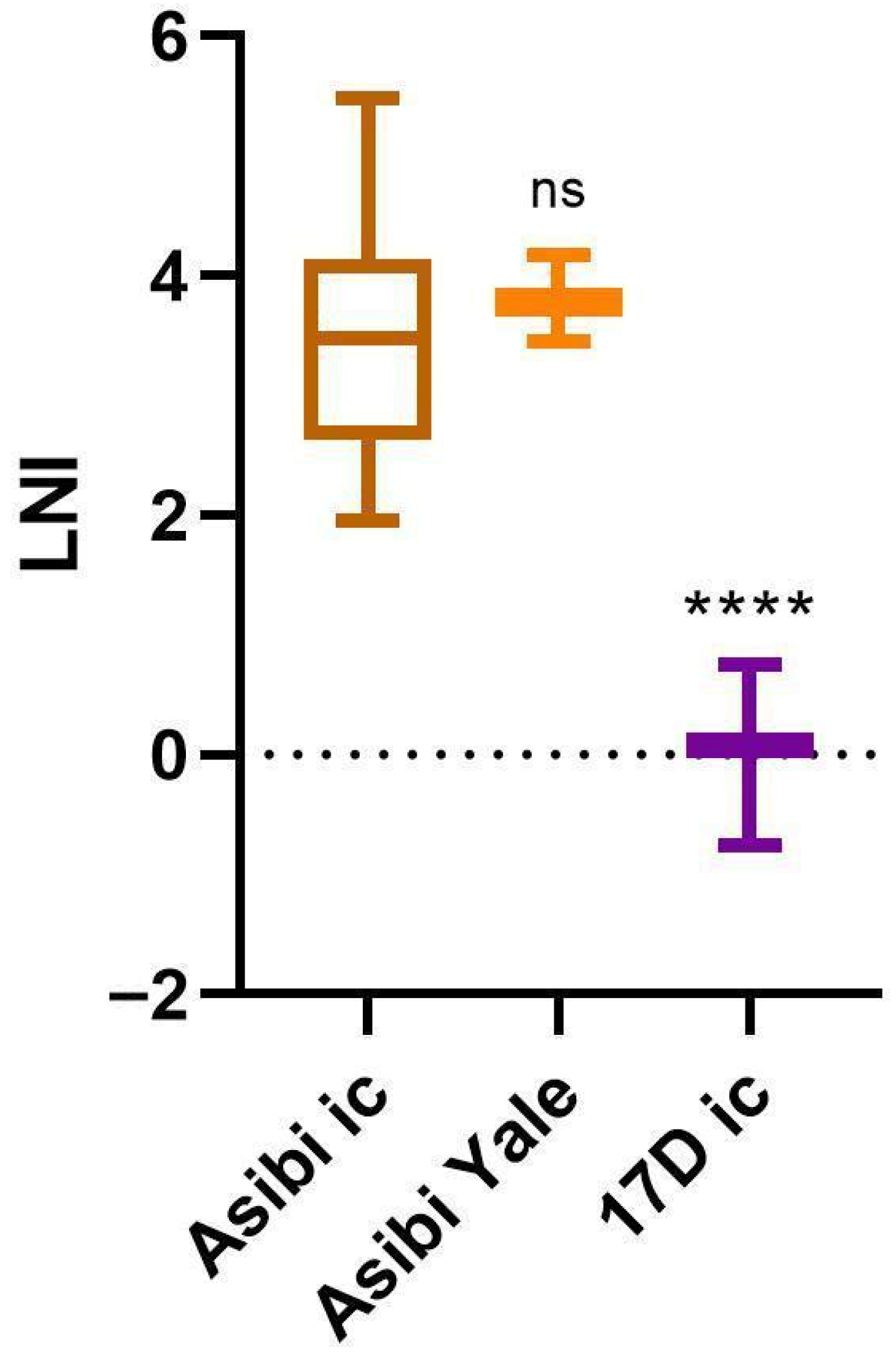
1] that the Asibi virus WT strain was highly neutralized by mAb 2D12, while the 17D vaccine strain was not. Further, the 17D results in this report give a much finer value when compared to the Schlesinger et al.’s original study (0.05 vs. <1.3), which was limited by the laboratory techniques of the time. This study confirms that there is no significant neutralization of the 17D virus by mAb 2D12 (LNI ≤ 0.31) (i.e., the highest LNI of any 17D virus tested).
The 17D-213 and 17DD viruses had similar LNI values to 17D-204, indicating that the small number of amino acid substitutions between these vaccine viruses (including those that impact glycosylation sites) are not involved in the difference in neutralization by mAb 2D12 of 17D and Asibi viruses. Similarly, since the samples of Asibi and 17D viruses derived from ics had the same LNI results as their non-ic counterparts, it is concluded that the ic-derived viruses give reliable results in these assays and can be utilized for further study with Asibi and 17D chimeric viruses in the future. There are 20 common amino acid substitutions between 17D and Asibi viruses: nine are in the structural proteins, including eight in the E protein and one in the M protein. It is likely that one or more of these amino acid substitutions contribute to the epitope of mAb 2D12 or act as modifiers of the underlying structure of the proteins and facilitate the change in the neutralization phenotype between the WT and vaccine strains of YFV.
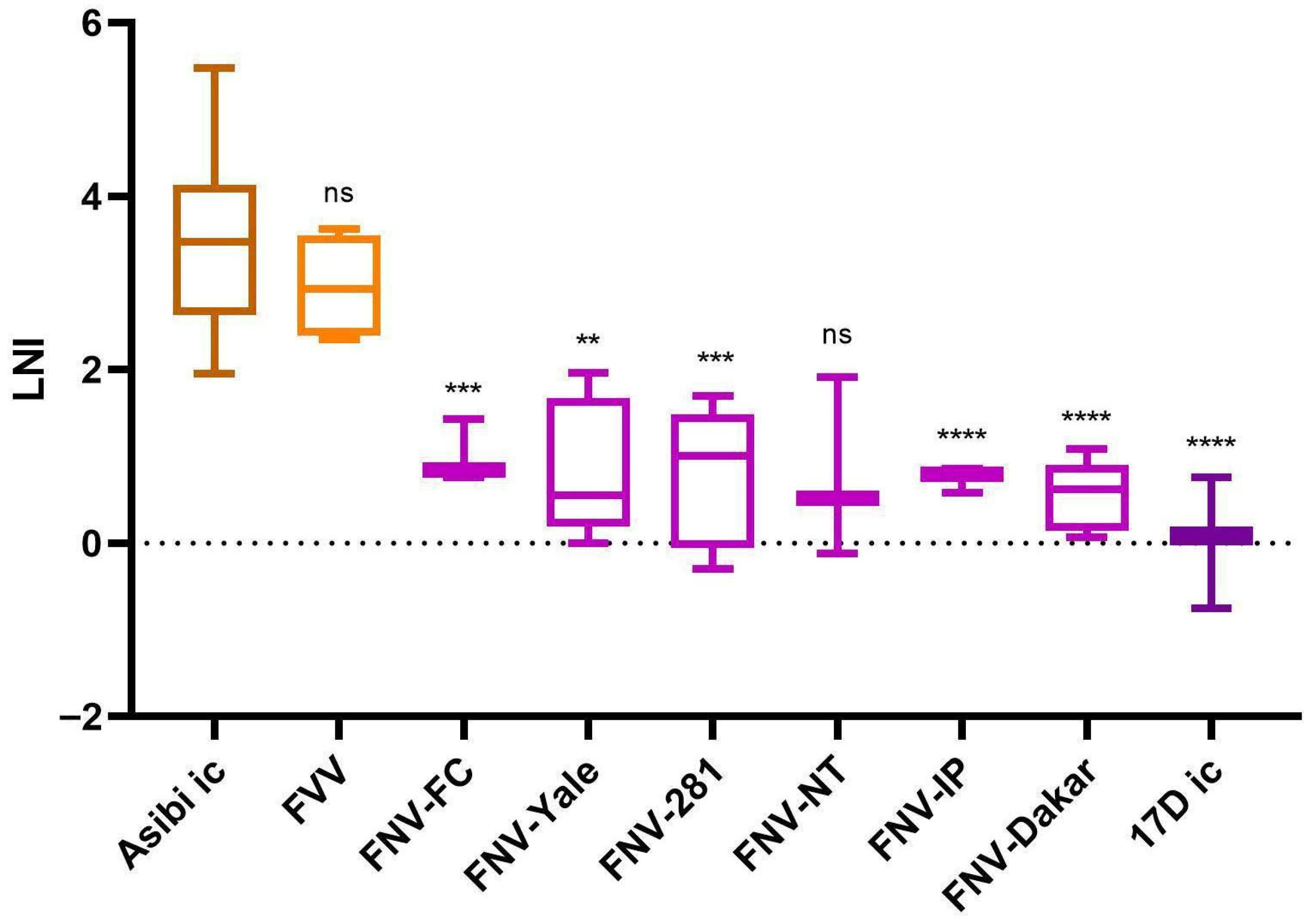
mAb 2D12 neutralized all vaccine strains of YFV (17D and FNV) to a much lower degree than their WT parent strains. The amino acid differences between the strains likely alter the epitope for mAb 2D12 such that it can neutralize WT strains of YFV and can no longer effectively neutralize the vaccine strains. The six FNV viruses utilized in this study differ by too many residues to disentangle the LNI results to determine which substitutions have the highest effect on mAb 2D12 neutralization. However, the three 17D substrain viruses and all six FNV viruses differ from both Asibi ic virus and FVV at two positions: M-36 and E-331. These residues should be utilized in future studies to determine their individual effects on neutralization.
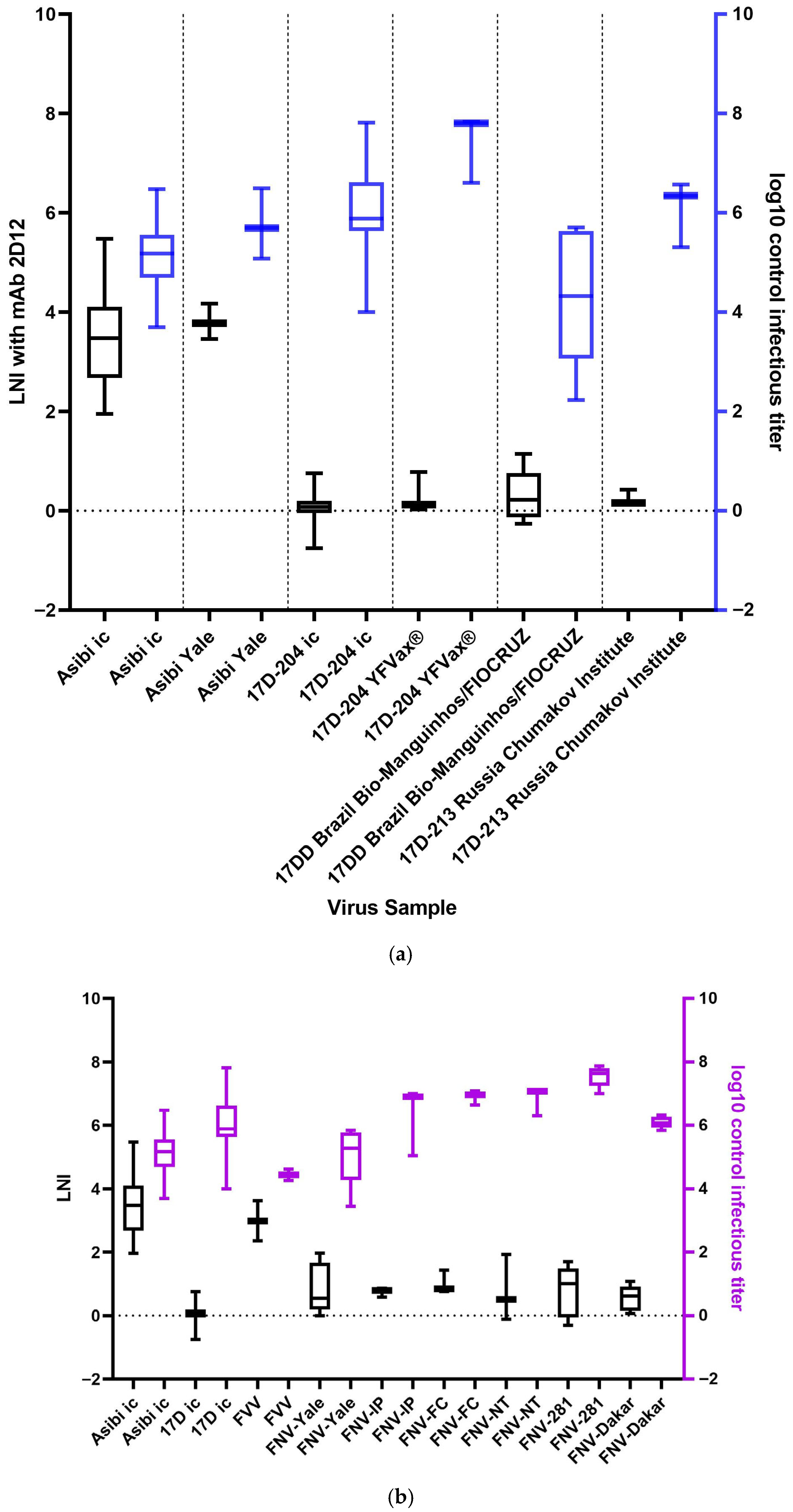
Other possibilities for the differences in neutralization also need to be considered. In addition to the amino acid differences between Asibi, 17D, FVV, and FNV viruses, at least two other factors may contribute to the neutralization phenotype differences. The first is that varying control infectivity titers of the viruses may lead to varying degrees of neutralization. To achieve accurate titration after neutralization, it is undesirable to use viruses with low titers. Therefore, the highest control infectivity titers possible were used in these assays to optimize the neutralization results. The samples of 17D-204 and Asibi viruses utilized for these experiments had a similar range of control titers but very different LNI values (
Figure 4a). Similarly, no discernible pattern was seen between the control titers and LNI values for FVV and FNV samples (
Figure 4b). Thus, there is no evidence that control infectivity titers influence the LNI in these experiments.
Asibi and FVV have previously been found to have higher genetic diversity than 17D and FNV [
11,
18]. This reduced genetic diversity is hypothesized to contribute to the attenuation of the 17D vaccine and FNV and could impact other viral features, such as structural epitopes. It has also been shown that structural proteins, as well as NS proteins, can affect viral genetic diversity. Exchanges of the prM and E genes between 17D and Asibi viruses showed intermediate genetic diversity between 17D and Asibi [
20]. Further, some E structural epitopes differ between these WT and vaccine strain viruses, and could be important to our understanding of YFV vaccine attenuation and immunogenicity [
4,
21]. At the very least, mAb 2D12 can be used as a tool to distinguish WT virulent strains of YFV from live attenuated vaccine viruses.
To determine if there is a correlation between viral population genetic diversity and mAb 2D12 neutralization, the viruses were sequenced using NGS. It was possible that viruses with higher genetic diversity would be more prone to antibody neutralization escape, because higher variability may result in a higher probability of mutations at the binding site for the antibody. However, this was determined not to be the case. NGS analysis showed each strain had a unique level of viral population genetic diversity, as measured by Shannon entropy and the percentage of SNVs in a viral population (
Supplemental Tables S6 and S7). Some were significantly more diverse than Asibi ic virus, some were less diverse, and some had approximately the same level of genetic diversity. However, none of these values trended with their respective LNI results, indicating that viral population genetic diversity did not significantly impact the neutralization of these viruses by mAb 2D12.
At present, the mechanism of neutralization by mAb 2D12 is unclear. It is unknown whether the mAb neutralizes the virus at the cell surface or within endosomes by preventing virus-to-cell fusion. One possible explanation for the difference in neutralization between WT and vaccine strains of YFV is that it has been previously reported that 17D and Asibi viruses enter host cells through distinct pathways [
22]. Asibi enters the cell through classic clathrin-mediated endocytosis while 17D enters through a clathrin-independent pathway. It is currently unknown which pathways are utilized by FNV and FVV. Future studies should investigate the neutralization and cell entry mechanisms of FVV and FNV to elucidate any other commonalities between vaccine strains and WT strains of YFV and whether these correlate with mAb neutralization activity.
There are no reports on the characterization of epitopes for mAb 2D12 and other group C antibodies. mAbs 2E10 and 2C9 in antibody group B are known to interact with the YFV E protein in domain II, specifically with residues E-71 and E-125 [
1]. Unlike group B antibodies that neutralize both vaccine strain 17D and WT strain Asibi YFV, the group C antibodies (including mAb 2D12) neutralize only Asibi. Competitive binding assays showed that mAb 2D12 and other group C antibodies do not compete for binding with antibodies from group B [
4]. This evidence suggests that the epitope for mAb 2D12—and likely the epitopes of other group C mAbs—is distinct from that recognized by group B antibodies and is an as-of-yet undiscovered YF type-specific antigenic site. Additionally, the literature regarding YFV virion and protein structures is extremely limited. Monomeric structures of the E protein have been published, but the E protein exists as a dimer in nature. There is also a lack of high-resolution images of YFV 17D virions.
The limitations of this study include the aforementioned lack of knowledge of the mAb 2D12 neutralization mechanism and the lack of epitope characterization. Additionally, larger sample sizes would increase the power of the statistical analyses. Future studies can examine how changing single or multiple amino acids in the wild-type and vaccine strains of YFV affects neutralization by mAb 2D12. However, much like the limitations of this current study, there are 12 factorial (or 479 million) possible amino acid combinations that could be tested to determine their impact on YFV structure, immunogenicity, and, ultimately, determinants of vaccine efficacy. This includes analysis not only of linear epitopes but of the impact of amino acid changes on structural epitopes.
In conclusion, this study confirmed the YFV WT neutralization by mAb 2D12 and discovered that not only 17D but also FNV strains have at least a 100-fold lower level of neutralization by the LNI when compared to the wild-type strains (LNI of 2.96 vs. 1.01).





 ,
,