Case Report

Thyroid Eye Disease Following SARS-CoV-2 Vaccination: Experience of a Case Series

by
Alin Abreu Lomba
1,2,
María Elena Tello-Cajiao
2,
Mónica Morales
1,
Alexander Martínez
3,4,
Mauricio Andrés Salazar Moreno
5,
David Alexander Vernaza Trujillo
2,6,7,
Alice Gaibor-Pazmiño
8 and
Juan S. Izquierdo-Condoy
8,*
1
Endocrinology Department, Clínica Imbanaco Grupo QuirónSalud, Cali 760042, Colombia
2
Department of Internal Medicine, Universidad Libre, Cali 760043, Colombia
3
Vision and Eye Health Research Group-VISOC, Universidad del Valle, Cali 760001, Colombia
4
Department of Ophthalmology, Clínica Imbanaco Grupo QuirónSalud, Cali 760042, Colombia
5
Department of Internal Medicine, Geriatrician, Universidad de Caldas, Manizales 170001, Colombia
6
Department of Public Health, Pontificia Universidad Javeriana, Cali 760035, Colombia
7
Clinical Research Center, Clínica Imbanaco, Cali 760042, Colombia
8
One Health Research Group, Universidad de las Américas, Quito 170124, Ecuador
*
Author to whom correspondence should be addressed.
Vaccines 2026, 14(1), 37; https://doi.org/10.3390/vaccines14010037 (registering DOI)
Submission received: 23 November 2025 / Revised: 22 December 2025 / Accepted: 23 December 2025 / Published: 28 December 2025
(This article belongs to the Special Issue 3rd Edition: Safety and Autoimmune Response to SARS-CoV-2 Vaccination)

Abstract

Background: Thyroid eye disease (TED), or Graves’ orbitopathy, is the most common extra-thyroidal manifestation of Graves’ disease, but it has only rarely been reported after SARS-CoV-2 vaccination. Autoimmune thyroid disease, including subacute thyroiditis and Graves’ disease, has been described following COVID-19 vaccination; we present a case series of TED occurring shortly after different COVID-19 vaccines to provide clinical data on this potential safety signal. Case presentation: We describe five women (mean age 47 years; range 27–69) who developed TED 3–20 days after COVID-19 vaccination with mRNA or adenoviral vector vaccines, three of whom had pre-existing thyroid disease. Presentations included ocular and retro-orbital pain, exophthalmos, headache, goiter, tremor, depressive symptoms, and, in one case, anterior neck pain and fever. TED severity (ETA/EUGOGO) ranged from mild to severe, with frequent findings of suppressed TSH, elevated thyroid autoantibodies, and inflammatory markers, as well as imaging evidence of exophthalmos, extraocular muscle enlargement, and diffuse or multinodular goiter. Management with intravenous corticosteroids, selenium, levothyroxine adjustment, and/or intramuscular corticosteroids led to improvement in thyroid function and inflammation by 3 months, although mild TED often persisted. Conclusions: This case series supports a temporal association between COVID-19 vaccination and new-onset or exacerbated TED in individuals with autoimmune thyroid disease. Although vaccination benefits outweigh potential risks, clinicians should remain alert to ocular and thyroid symptoms after immunization to ensure timely diagnosis and management.

1. Introduction

Vaccines against severe acute respiratory syndrome coronavirus 2 (SARS-CoV-2) have demonstrated their safety and efficacy in preventing infection and severe disease [1,2]. Currently, four major vaccine platforms are used worldwide: messenger RNA (mRNA) vaccines (Pfizer–BioNTech, Moderna), adenoviral vector vaccines (AstraZeneca, Janssen), inactivated virus vaccines, and protein subunit vaccines. Although mRNA and vector-based vaccines are highly effective, several reports have described autoimmune and thyroid-related complications following immunization, including subacute thyroiditis, Graves’ disease, and, more rarely, thyroid eye disease (TED) [3,4,5,6,7]. Beyond preventing severe acute disease, COVID-19 vaccination has also been associated with a lower burden of long COVID symptoms, while most vaccine-related adverse events are mild and self-limited [8,9].
TED, also known as Graves’ orbitopathy (GO), is the most common extra-thyroidal manifestation of Graves’ disease (GD). It can occur less frequently in patients with chronic autoimmune thyroiditis (CAT) [10] and, more rarely, in euthyroid or hypothyroid patients with CAT [11].
GO is relatively uncommon, with an estimated incidence of 0.54–0.9 cases per 100,000 men per year and 2.67–3.3 cases per 100,000 women per year [10]. Known risk factors include smoking, thyroid dysfunction, and elevated serum levels of thyrotropin receptor antibodies. Most patients have a history of thyroid disease, and the main clinical manifestations include exophthalmos, blurred vision, eyelid swelling, diplopia, and strabismus [12,13].
Since Rubinstein et al. reported the first case of TED after anti–SARS-CoV-2 vaccination in a patient with GD [14], an increasing number of case reports and series have described new diagnoses, recurrences, and relapses of GD following the administration of anti–SARS-CoV-2 vaccines, including presentations with TED [13,14,15,16,17,18].
Although a temporal association between vaccination and thyroid disorders has been observed, a clear causal relationship has not yet been established due to the limited size and quality of the published data [3]. Previous reports describing thyroid eye disease or autoimmune thyroid disorders following SARS-CoV-2 vaccination have been limited to isolated case reports and small case series. Across published reports, onset has most often occurred within the first 1–3 weeks after vaccination and ranged from mild ocular discomfort to moderate to severe orbitopathy [19,20]. Most cases showed partial or complete improvement following standard medical management, including corticosteroids or conservative therapy, although persistent or recurrent symptoms have also been described [21]. With the following five cases of TED after COVID-19 vaccination, we aim to contribute to the understanding of the possible relationship between SARS-CoV-2 vaccination and thyroid eye disease.

2. Case Presentation

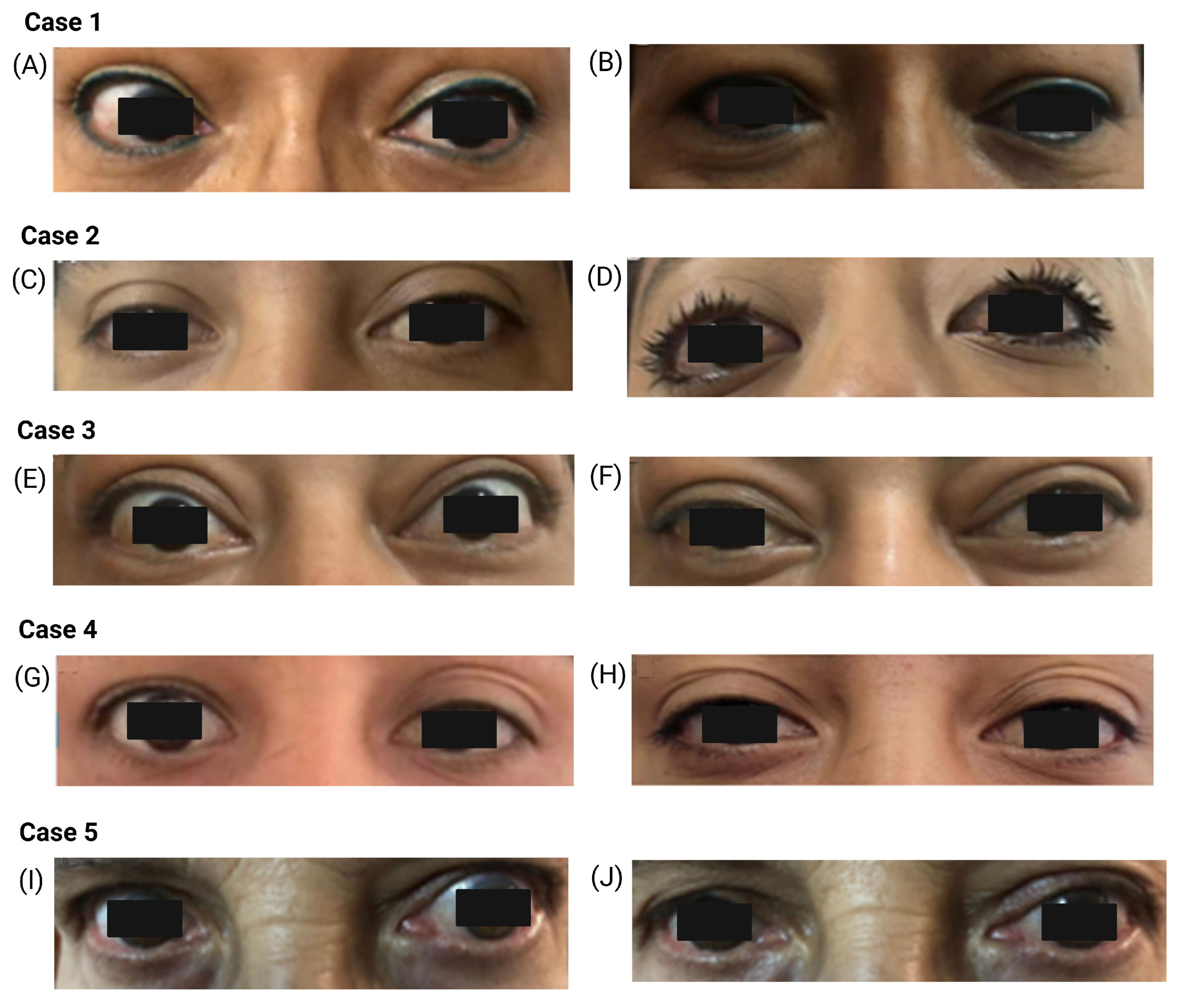
A series of five cases is presented; all patients were women with a mean age of 47 years (range 27–69 years). TED occurred between 3 and 20 days after receiving a COVID-19 vaccine. These patients were referred to the ophthalmology service, and TED was classified using the European Thyroid Association/European Group on Graves’ Orbitopathy (ETA/EUGOGO) scale (EUGOGO) [22]. Individualized management was provided, and patients were followed for 3 months. Baseline sociodemographic, clinical, laboratory, and imaging characteristics are summarized in Table 1, and representative clinical and radiologic findings are shown in Figure 1.

2.1. Case 1

2.1.1. Evaluation and Diagnosis

A 63-year-old woman with a history of primary hypothyroidism, hypertension, unspecified dyslipidemia, type 2 diabetes mellitus, nephrolithiasis, and cholelithiasis, under regular internal medicine follow-up, presented with no previous history of thyroid eye disease or other orbital pathology.
She developed right retro-orbital pain and ipsilateral hemicranial headache 3 days after receiving the third dose of a COVID-19 vaccine (mRNA-1273, Moderna). She had previously received two doses of the AstraZeneca vaccine. Vaccination history was obtained from the patient and confirmed through available medical records.
On physical examination, she was classified as having grade I obesity. Vital signs revealed mildly elevated blood pressure with heart rate within normal limits. Ophthalmologic examination showed bilateral exophthalmos, more marked on the right side. Laboratory tests revealed normal TSH, free T4, free T3, Anti-TPO, and Anti-Tg levels, with elevated ESR and CRP. Orbital computed tomography (CT) demonstrated bilateral exophthalmos with right predominance. The ophthalmology team diagnosed moderate-to-severe TED according to the EUGOGO classification, with exophthalmos < 23 mm and 2 mm of eyelid retraction, without diplopia. Thyroid ultrasound revealed a diffuse hypoechoic goiter.

2.1.2. Therapeutic Intervention

The patient received intravenous methylprednisolone at a dose of 500 mg weekly for 6 doses, followed by 250 mg weekly for 6 additional doses.

2.1.3. Follow-Up

At the 3-month follow-up, the patient was asymptomatic. Thyroid function tests and acute-phase reactants were within normal ranges. Her baseline treatments for comorbidities were continued, and gradual tapering of oral corticosteroids was initiated.

2.2. Case 2

2.2.1. Evaluation and Diagnosis

A 29-year-old woman with no significant past medical history and no prior thyroid dysfunction or thyroid eye disease presented 5 days after receiving the third dose of a COVID-19 vaccine (BNT162b2, Pfizer–BioNTech). She had previously received two doses of the AstraZeneca vaccine. She complained of frontal headache, bilateral eye pain, goiter, and upper limb tremors. Vaccination history was obtained from the patient and confirmed through medical records.
Physical examination revealed no significant abnormalities. Laboratory tests showed suppressed TSH, normal free T4, elevated Anti-TPO and Anti-Tg antibodies, and increased TRAb. Ophthalmologic examination demonstrated bilateral exophthalmos. Orbital CT revealed bilateral exophthalmos with increased volume of the medial rectus muscles, consistent with grade 4 exophthalmos and severe TED. Thyroid ultrasound performed by the internal medicine team showed a vascularized diffuse goiter with heterogeneous echogenicity. The right lobe measured 5 cm, the left lobe 4.9 cm, and the isthmus 3 cm.

2.2.2. Therapeutic Intervention

Intravenous corticosteroids were administered for 12 weeks: 500 mg weekly for 6 doses, followed by 250 mg weekly for 6 additional doses. During ophthalmologic follow-up, a 4 mm reduction in exophthalmos volume was documented, with an improvement from severe to moderate TED according to the EUGOGO classification. Subsequently, 1 mL of intramuscular corticosteroid was prescribed monthly for three months.

2.2.3. Follow-Up

At the 3-month follow-up with internal medicine, the patient remained hemodynamically stable and clinically improved. Laboratory tests showed recovery of thyroid function and improvement in acute-phase reactants.

2.3. Case 3

2.3.1. Evaluation and Diagnosis

A 47-year-old woman with controlled hypertension, managed by internal medicine, and no previous history of thyroid dysfunction or thyroid eye disease presented 20 days after receiving a single dose of a COVID-19 vaccine (Ad26.COV2.S, Janssen) with mild bilateral exophthalmos. Vaccination history was corroborated with medical records.
Ophthalmologic examination confirmed mild bilateral exophthalmos. Laboratory tests showed normal TSH, low free T4 and total T3, elevated Anti-TPO and Anti-Tg antibodies, normal TRAb, and increased ESR and CRP. Orbital CT demonstrated left-sided exophthalmos with hypertrophy of the ipsilateral oblique and rectus muscles, leading to a diagnosis of moderate-to-severe TED.

2.3.2. Therapeutic Intervention

Management consisted of selenium supplementation. Thyroid ultrasound performed by the internal medicine team revealed a normal-sized gland with sonographic features of chronic thyroiditis.

2.3.3. Follow-Up

At the first 3-month follow-up, TSH was within the normal range, free T4 remained slightly below normal, Anti-TPO was persistently elevated, and Anti-Tg had normalized. The patient continued selenium therapy without significant clinical improvement in exophthalmos.

2.4. Case 4

2.4.1. Evaluation and Diagnosis

A 27-year-old woman with a history of primary hypothyroidism, under internal medicine control and on levothyroxine, with no previous thyroid eye disease, presented 18 days after receiving the second dose of a COVID-19 vaccine (BNT162b2, Pfizer–BioNTech). She reported weakness, drowsiness, and low mood. Vaccination history was obtained from the patient and verified through medical records.
Physical examination was unremarkable. Ophthalmologic evaluation identified mild right-sided exophthalmos. Laboratory tests showed low TSH, normal free T4, normal Anti-TPO, Anti-Tg antibodies, and TRAb, with elevated CRP and normal ESR. Orbital CT revealed orbitopathy with enlargement of the rectus muscles and no changes in the oblique muscles, consistent with mild TED.

2.4.2. Therapeutic Intervention

Treatment included selenium supplementation and reduction of the levothyroxine dose. Thyroid ultrasound showed findings compatible with chronic thyroiditis.

2.4.3. Follow-Up

At the 3-month follow-up, thyroid function had normalized, ESR remained unchanged, and CRP was slightly elevated. Selenium and levothyroxine therapy continued due to persistent, although mild, exophthalmos.

2.5. Case 5

2.5.1. Evaluation and Diagnosis

A 69-year-old woman with a history of hypothyroidism, previous multinodular goiter, and grade I obesity, without prior thyroid eye disease, presented 19 days after receiving the third dose of a COVID-19 vaccine (BNT162b2, Pfizer–BioNTech). She complained of neck pain, odynophagia, headache, and fever. Vaccination history was derived from patient report and confirmed in the medical record.
Initially, she was diagnosed with tonsillitis in the emergency department and received empirical treatment. Four days after initiating therapy, her pain improved, but she developed mild bilateral exophthalmos. Physical examination revealed obesity, normal vital signs, mild bilateral exophthalmos, and a tender goiter on palpation. Laboratory tests showed low TSH, normal free T4, elevated Anti-TPO and Anti-Tg antibodies, normal TRAb, and increased ESR and CRP. Orbital CT demonstrated bilateral orbitopathy with enlargement of the rectus muscles, consistent with mild bilateral TED. Thyroid ultrasound revealed a multinodular goiter classified as TIRADS 2. Thyroid scintigraphy with Tc-99 showed 1% uptake, consistent with a hypofunctioning goiter and subacute thyroiditis.

2.5.2. Therapeutic Intervention

Management consisted of intramuscular corticosteroids and oral analgesics every 6 h for one month.

2.5.3. Follow-Up

At the 3-month follow-up, TSH and free T4 were slightly decreased, ESR and CRP remained elevated, Anti-Tg levels were within normal limits, and Anti-TPO and TRAb were elevated, with persistent mild exophthalmos.

2.5.4. CAS (Clinical Activity Score)

A retrospective 7-item CAS (0–7) [23] was conservatively estimated from explicitly documented ocular inflammatory signs and symptoms (retrobulbar pain, pain on eye movements, eyelid erythema, conjunctival erythema, eyelid swelling, chemosis, and caruncle/plica inflammation). Because CAS was not prospectively recorded and some items were not systematically documented, missing CAS items were not assumed to be present; therefore, CAS may be underestimated. Based on the available documentation, patients 1, 2, and 5 were classified as having higher inflammatory activity (estimated CAS ≥ 3/7) and received systemic corticosteroid therapy, whereas patients 3 and 4 had lower inflammatory activity (estimated CAS ≤ 2/7) and were managed conservatively with selenium and optimization of thyroid function (Table 2).

3. Discussion

This study describes the cases of five women who developed TED within days to weeks after receiving SARS-CoV-2 vaccination. Overall, we observed a spectrum of TED severity from mild to severe, frequent evidence of underlying or newly unmasked AITD, and only partial improvement in some patients despite guideline-based management.
Most cases of TED are mild and non-progressive, whereas moderate-to-severe forms occur in approximately 5–6% of patients. Even mild disease represents a substantial public health burden due to both direct and indirect costs, and moderate-to-severe TED poses a major therapeutic challenge because of its often-incomplete response to available treatments. Therapeutic decisions are based on the clinical presentation, activity, severity, and duration of the disease [15,24].
In our series of five patients, two primarily presented with ocular and retro-orbital pain accompanied by exophthalmos. Additional symptoms across the series included hemicranial and frontal headache, goiter, tremor, depressive symptoms (fatigue, drowsiness, low mood), and, in one patient, anterior neck pain, odynophagia, and fever suggestive of thyroiditis. One patient presented with severe bilateral TED that improved to moderate disease following high-dose intravenous corticosteroid therapy. Another had moderate bilateral TED, and the remaining three had mild TED, one of them with bilateral involvement. The patient with predominant depressive symptoms presented with unilateral exophthalmos. Imaging studies demonstrated bilateral exophthalmos in two patients, unilateral exophthalmos in two patients, and bilateral orbitopathy in one patient. Additional findings included enlargement of the rectus and oblique extraocular muscles.
Thyroid ultrasound in three patients revealed goiter (two diffuse and one multinodular), and in two patients, sonographic findings were consistent with chronic thyroiditis. Biochemically, most patients had suppressed TSH with variable free T4 and T3 levels, and several showed positive Anti-TPO and Anti-Tg antibodies, supporting the diagnosis of AITD. Some patients had positive TRAb, suggesting an underlying Graves’ disease component, whereas others had negative TRAb and a biochemical profile more suggestive of subacute or autoimmune thyroiditis with associated TED. Corticosteroid therapy was reserved for patients with more active or severe TED, whereas selenium supplementation and adjustment of levothyroxine dosing were preferred in cases of milder disease or underlying Graves’ hyperthyroidism.
Management decisions in our case series were guided by disease activity and severity, in accordance with current EUGOGO recommendations [24]. Patients with moderate-to-severe active TED, characterized by higher estimated Clinical Activity Scores (CAS ≥ 3), received systemic corticosteroid therapy, whereas those with mild or less active disease (CAS ≤ 2) were managed conservatively with selenium supplementation and optimization of thyroid function [23]. These differences in clinical severity, inflammatory activity, and therapeutic response raise important questions regarding the immunopathogenic mechanisms that may link SARS-CoV-2 vaccination with the development or exacerbation of thyroid eye disease [25,26].
COVID-19 vaccines induce a strong innate immune response, activating pattern recognition receptors and promoting the release of pro-inflammatory cytokines. In predisposed individuals, this immune activation may facilitate bystander activation of autoreactive lymphocytes, contributing to the loss of tolerance against thyroid and orbital antigens. Molecular mimicry between SARS-CoV-2 spike protein epitopes and self-antigens has also been proposed as a potential mechanism underlying vaccine-associated autoimmune thyroid disorders [20,25,27]. Although mRNA vaccines do not contain classical adjuvants, lipid nanoparticles exhibit adjuvant-like properties, enhancing antigen presentation and immune stimulation. Viral vector vaccines similarly activate innate immune pathways. This heightened immune activation may promote orbital fibroblast stimulation via TSHR and IGF-1R signaling, a central mechanism in TED pathophysiology [28].
Importantly, in our series, patients with higher estimated inflammatory activity (CAS ≥ 3) exhibited a more aggressive clinical presentation and required systemic corticosteroid therapy, with partial to significant improvement. In contrast, patients with lower estimated CAS (≤2) showed milder disease and persistent but stable symptoms under conservative management with selenium. This clinical pattern supports the concept that vaccine-related immune activation may preferentially unmask or exacerbate active inflammatory disease rather than induce de novo severe TED.
As reported in the literature, autoimmune thyroid disease (AITD) can develop or worsen after receiving the COVID-19 vaccine, in patients with or without a history of thyroid disease [29,30]. In our report, three out of five patients had a history of thyroid disease: two with hypothyroidism treated with levothyroxine and one with a history of multinodular goiter. At the time of consultation, two patients were euthyroid, one had hyperthyroidism, and one had overtreated hypothyroidism requiring a reduction in levothyroxine dose. Three patients had elevated Anti-TPO levels, one had elevated Anti-Tg levels, and three had elevated TRAb, further supporting AITD [31]. Four patients had elevated CRP levels, and three had elevated ESR levels. These findings suggest that vaccination may act as an immune trigger capable of unmasking or exacerbating pre-existing thyroid autoimmunity rather than inducing de novo disease.
These findings should be interpreted with caution, as they do not negate the substantial public health impact of COVID-19 vaccination. Large cohort studies have shown that most vaccine-related adverse events are mild or moderate and that serious reactions are uncommon [32]. In contrast, absence or incompleteness of vaccination has been associated with a higher burden of long COVID, encompassing a wide spectrum of persistent symptoms, and with an increased risk of acute cardiovascular events such as myocardial infarction [8,33,34].
Finally, while ocular inflammatory conditions such as uveitis, scleritis, and posterior neuritis have been reported following administration of the COVID-19 vaccine, Graves’ orbitopathy associated with immunization against the same pathogen has not yet been widely considered among the recognized adverse effects. In our report, TED occurred in temporal association with vaccination. Despite appropriate treatment, complete improvement was not achieved in all patients after the 3-month follow-up. Differences between vaccine platforms may influence the risk of post-vaccination autoimmune reactions. mRNA vaccines have been more frequently associated with autoimmune thyroid events, possibly due to robust innate immune activation and adjuvant-like effects mediated by lipid nanoparticles that deliver the mRNA sequence [29,31]. Adenoviral vector vaccines have also been implicated, although less frequently, suggesting that immune dysregulation rather than a single specific vaccine component may underlie these phenomena [28]. However, currently available data remains limited, and a causal relationship has not been established.
Limitations
This study has several limitations inherent to its design. As a descriptive case series, it does not allow estimation of incidence, risk, or causal relationships between SARS-CoV-2 vaccination and TED. Background rates of TED in the source population were not available; therefore, a coincidental temporal association cannot be excluded. Accordingly, our findings should be interpreted as hypothesis-generating rather than confirmation.
Complete pre-vaccination thyroid and ophthalmologic data were not available for all patients. In our series, three patients had a documented history of thyroid disease, whereas two had no known prior thyroid disorder. Importantly, one patient with multinodular goiter had documented negative anti-thyroid antibodies several years before vaccination. These findings suggest that SARS-CoV-2 vaccination may have acted as an immune trigger capable of unmasking previously subclinical disease or accelerating an underlying autoimmune process rather than uniformly inducing de novo pathology; however, this hypothesis cannot be formally tested within the constraints of the present study.
Finally, the small sample size and short follow-up period limit the generalizability of our findings and our ability to assess long-term outcomes. Larger, controlled studies with systematic baseline and longitudinal follow-up are needed to better characterize the relationship between SARS-CoV-2 vaccination and TED.

4. Conclusions

An increasing number of cases of thyroid disorders, including TED, have been reported in association with SARS-CoV-2 infection and, more recently, following immunization with different COVID-19 vaccines. In our case series, TED developed within days to weeks after vaccination across different vaccine platforms, including predominantly mRNA- and adenoviral vector-based vaccines, affecting women and frequently occurring in the context of underlying or newly unmasked autoimmune thyroid disease.
Although the benefits of COVID-19 vaccination clearly outweigh the risks associated with infection, healthcare professionals should remain aware of potential autoimmune-related manifestations following vaccination. Early recognition of symptoms suggestive of TED or thyroid dysfunction is essential to allow timely diagnosis and initiation of appropriate management, with the aim of improving prognosis and quality of life. Further research in larger, controlled studies is warranted to better clarify the relationship between different vaccine platforms, immune activation, and autoimmune thyroid disease. Our observations should be interpreted as hypothesis-generating rather than causal.

Author Contributions

Conceptualization, A.A.L., M.E.T.-C., M.M., A.M., D.A.V.T.; methodology, M.E.T.-C., M.M., A.M., M.A.S.M., D.A.V.T., A.G.-P., J.S.I.-C.; software, A.A.L., M.E.T.-C., M.M., A.M., M.A.S.M., D.A.V.T., A.G.-P., J.S.I.-C.; validation, A.A.L., J.S.I.-C.; formal analysis, D.A.V.T., J.S.I.-C.; investigation, A.A.L., M.E.T.-C., M.M., A.M., M.A.S.M., D.A.V.T., A.G.-P., J.S.I.-C.; resources, A.A.L., M.E.T.-C., M.M., A.M., M.A.S.M.; data curation, A.A.L., M.E.T.-C., M.M., A.M., M.A.S.M.; writing—original draft preparation, A.A.L., M.E.T.-C., M.M., A.M., M.A.S.M., D.A.V.T., A.G.-P.; writing—review and editing, J.S.I.-C.; visualization, J.S.I.-C.; supervision, A.A.L., D.A.V.T., J.S.I.-C.; project administration, A.A.L.; funding acquisition, J.S.I.-C. All authors have read and agreed to the published version of the manuscript.

Funding

This research received no external funding.

Institutional Review Board Statement

This study was classified as minimal-risk research. No interventions beyond those routinely required for standard patient care were performed, and no additional diagnostic or therapeutic procedures were introduced. All patients provided consent for the use and processing of their clinical data for research purposes. No images or personal information that could compromise patient confidentiality were included; only secondary analysis of anonymized clinical data was carried out. For these reasons, formal ethics committee review was not required according to local regulations. The study was conducted in accordance with the principles of the Declaration of Helsinki (latest revision).

Informed Consent Statement

Informed consent was obtained from all subjects involved in the study.

Data Availability Statement

The original contributions presented in this study are included in the article. Further inquiries can be directed to the corresponding author.

Conflicts of Interest

The authors declare no conflicts of interest.

Abbreviations

ACTComputed Axial Tomography
Anti-TgAnti-thyroglobulin antibodies
Anti-TPOAnti-thyroid peroxidase antibodies
ATArterial Tension
BMIBody Mass Index
CFCardiac Frequency
CRPC-Reactive Protein
ESRErythrocyte Sedimentation Rate
IMIntramuscular
LELeft Eye
RERight Eye
Tc-99Technetium 99
TRAbThyroid-Stimulating Hormone Receptor Antibodies
TSHThyroid-Stimulating Hormone

References

  1. Tau, N.; Yahav, D.; Shepshelovich, D. Vaccine safety-is the SARS-CoV-2 vaccine any different? Hum. Vaccin Immunother. 2021, 17, 1322–1325. [Google Scholar] [CrossRef]
  2. Zheng, C.; Shao, W.; Chen, X.; Zhang, B.; Wang, G.; Zhang, W. Real-world effectiveness of COVID-19 vaccines: A literature review and meta-analysis. Int. J. Infect. Dis. 2022, 114, 252–260. [Google Scholar] [CrossRef]
  3. Caironi, V.; Pitoia, F.; Trimboli, P. Thyroid Inconveniences With Vaccination Against SARS-CoV-2: The Size of the Matter. A Systematic Review. Front. Endocrinol. 2022, 13, 900964. [Google Scholar] [CrossRef] [PubMed]
  4. Mungmunpuntipantip, R.; Wiwanitkit, V. Thyrotoxicosis after COVID-19 vaccination. Endocrine 2022, 75, 22. [Google Scholar] [CrossRef]
  5. Gupta, T.; Gupta, S.K. Potential adjuvants for the development of a SARS-CoV-2 vaccine based on experimental results from similar coronaviruses. Int. Immunopharmacol. 2020, 86, 106717. [Google Scholar] [CrossRef]
  6. İremli, B.G.; Şendur, S.N.; Ünlütürk, U. Three Cases of Subacute Thyroiditis Following SARS-CoV-2 Vaccine: Postvaccination ASIA Syndrome. J. Clin. Endocrinol. Metab. 2021, 106, 2600–2605. [Google Scholar] [CrossRef]
  7. Neag, E.J.; Smith, T.J. 2021 Update on Thyroid-Associated Ophthalmopathy. J. Endocrinol. Investig. 2022, 45, 235–259. [Google Scholar] [CrossRef] [PubMed]
  8. Izquierdo-Condoy, J.S.; Fernandez-Naranjo, R.; Vasconez-González, E.; Cordovez, S.; Tello-De-la-Torre, A.; Paz, C.; Delgado-Moreira, K.; Carrington, S.; Viscor, G.; Ortiz-Prado, E. Long COVID at Different Altitudes: A Countrywide Epidemiological Analysis. Int. J. Environ. Res. Public Health 2022, 19, 14673. [Google Scholar] [CrossRef] [PubMed]
  9. Yaamika, H.; Muralidas, D.; Elumalai, K. Review of adverse events associated with COVID-19 vaccines, highlighting their frequencies and reported cases. J. Taibah Univ. Med Sci. 2023, 18, 1646–1661. [Google Scholar] [CrossRef]
  10. Shih, S.-R.; Wang, C.-Y. SARS-CoV-2 vaccination related hyperthyroidism of Graves’ disease. J. Formos. Med. Assoc. 2022, 121, 1881–1882. [Google Scholar] [CrossRef]
  11. Abeillon-du Payrat, J.; Grunenwald, S.; Gall, E.; Ladsous, M.; Raingeard, I.; Caron, P. Graves’ orbitopathy post-SARS-CoV-2 vaccines: Report on six patients. J. Endocrinol. Investig. 2023, 46, 617–627. [Google Scholar] [CrossRef] [PubMed]
  12. Patrizio, A.; Ferrari, S.M.; Antonelli, A.; Fallahi, P. Worsening of Graves’ ophthalmopathy after SARS-CoV-2 mRNA vaccination. Autoimmun. Rev. 2022, 21, 103096. [Google Scholar] [CrossRef] [PubMed]
  13. Vera-Lastra, O.; Ordinola Navarro, A.; Cruz Domiguez, M.P.; Medina, G.; Sánchez Valadez, T.I.; Jara, L.J. Two Cases of Graves’ Disease Following SARS-CoV-2 Vaccination: An Autoimmune/Inflammatory Syndrome Induced by Adjuvants. Thyroid 2021, 31, 1436–1439. [Google Scholar] [CrossRef]
  14. Rubinstein, T.J. Thyroid Eye Disease Following COVID-19 Vaccine in a Patient with a History Graves’ Disease: A Case Report. Ophthalmic Plast. Reconstr. Surg. 2021, 37, e221–e223. [Google Scholar] [CrossRef]
  15. Bartalena, L.; Piantanida, E.; Gallo, D.; Lai, A.; Tanda, M.L. Epidemiology, Natural History, Risk Factors, and Prevention of Graves’ Orbitopathy. Front. Endocrinol. 2020, 11, 615993. [Google Scholar] [CrossRef]
  16. Ruggeri, R.M.; Giovanellla, L.; Campennì, A. SARS-CoV-2 vaccine may trigger thyroid autoimmunity: Real-life experience and review of the literature. J. Endocrinol. Investig. 2022, 45, 2283–2289. [Google Scholar] [CrossRef]
  17. Jafarzadeh, A.; Nemati, M.; Jafarzadeh, S.; Nozari, P.; Mortazavi, S.M.J. Thyroid dysfunction following vaccination with COVID-19 vaccines: A basic review of the preliminary evidence. J. Endocrinol. Investig. 2022, 45, 1835–1863. [Google Scholar] [CrossRef] [PubMed]
  18. Kyriakidis, N.C.; López-Cortés, A.; González, E.V.; Grimaldos, A.B.; Prado, E.O. SARS-CoV-2 vaccines strategies: A comprehensive review of phase 3 candidates. npj Vaccines 2021, 6, 28. [Google Scholar] [CrossRef]
  19. Vaccinations and Autoimmune Diseases. Available online: https://www.mdpi.com/2076-393X/9/8/815 (accessed on 20 November 2025).
  20. Ishay, A.; Oleinikov, K.; Chertok Shacham, E. SARS-CoV-2-Vaccine-Related Endocrine Disorders: An Updated Narrative Review. Vaccines 2024, 12, 750. [Google Scholar] [CrossRef]
  21. Murugan, A.K.; Alzahrani, A.S. COVID-19 vaccine-induced autoimmune hyperthyroidism: Graves’ disease. Front. Immunol. 2025, 16, 1699210. [Google Scholar] [CrossRef]
  22. Muller, I.; Consonni, D.; Crivicich, E.; Di Marco, F.; Currò, N.; Salvi, M. Increased Risk of Thyroid Eye Disease Following COVID-19 Vaccination. J. Clin. Endocrinol. Metab. 2024, 109, 516–526. [Google Scholar] [CrossRef]
  23. Bartalena, L.; Kahaly, G.J.; Baldeschi, L.; Dayan, C.M.; Eckstein, A.; Marcocci, C.; Marinò, M.; Vaidya, B.; Wiersinga, W.M.; EUGOGO. The 2021 European Group on Graves’ orbitopathy (EUGOGO) clinical practice guidelines for the medical management of Graves’ orbitopathy. Eur. J. Endocrinol. 2021, 185, G43–G67. [Google Scholar] [CrossRef]
  24. Mourits, M.P.; Prummel, M.F.; Wiersinga, W.M.; Koornneef, L. Clinical activity score as a guide in the management of patients with Graves’ ophthalmopathy. Clin. Endocrinol. 1997, 47, 9–14. [Google Scholar] [CrossRef] [PubMed]
  25. Ciarmatori, N.; Quaranta Leoni, F.; Quaranta Leoni, F.M. Redefining Treatment Paradigms in Thyroid Eye Disease: Current and Future Therapeutic Strategies. J. Clin. Med. 2025, 14, 5528. [Google Scholar] [CrossRef] [PubMed]
  26. American Academy of Ophthalmology. COVID-19 Vaccination and Asymmetric Thyroid Eye Disease. 2024. Available online: https://www.aao.org/eyenet/article/covid-19-vaccination-asymmetric-ted (accessed on 17 December 2025).
  27. Im Teoh, J.H.; Mustafa, N.; Wahab, N. New-onset Thyroid Eye Disease after COVID-19 Vaccination in a Radioactive Iodine-Treated Graves’ Disease Patient: A Case Report and Literature Review. J. ASEAN Fed. Endocr. Soc. 2023, 38, 125–130. [Google Scholar] [CrossRef] [PubMed]
  28. Peng, M.; Wang, Z. Vaccine-Associated Autoimmunity: From Clinical Signals to Immune Pathways. Vaccines 2025, 13, 1112. [Google Scholar] [CrossRef]
  29. Lavelle, E.C.; McEntee, C.P. Vaccine adjuvants: Tailoring innate recognition to send the right message. Immunity 2024, 57, 772–789. [Google Scholar] [CrossRef]
  30. Fröhlich, E.; Wahl, R. Thyroid Autoimmunity: Role of Anti-thyroid Antibodies in Thyroid and Extra-Thyroidal Diseases. Front. Immunol. 2017, 8, 521. [Google Scholar] [CrossRef]
  31. Fernández-Hermida, R.V.; Pinar, S.; Muruzábal, N. Manifestaciones clínicas de la oftalmopatía tiroidea. An. Sist. Sanit. Navar 2008, 31, 45–56. [Google Scholar] [CrossRef]
  32. Ortiz-Prado, E.; Izquierdo-Condoy, J.S.; Fernandez-Naranjo, R.; Simbaña-Rivera, K.; Vásconez-González, J.; Naranjo, E.P.L.; Cordovez, S.; Coronel, B.; Delgado-Moreira, K.; Jimbo-Sotomayor, R. A Comparative Analysis of a Self-Reported Adverse Events Analysis after Receiving One of the Available SARS-CoV-2 Vaccine Schemes in Ecuador. Vaccines 2022, 10, 1047. [Google Scholar] [CrossRef]
  33. Izquierdo-Condoy, J.S.; Vásconez-Gonzáles, J.; Morales-Lapo, E.; Tello-De-la-Torre, A.; Naranjo-Lara, P.; Fernández, R.; Hidalgo, M.R.; Escobar, A.; Yépez, V.H.; Díaz, A.M.; et al. Beyond the acute phase: A comprehensive literature review of long-term sequelae resulting from infectious diseases. Front. Cell. Infect. Microbiol. 2024, 14, 1293782. [Google Scholar] [CrossRef] [PubMed]
  34. Ortiz-Prado, E.; Ullauri Solorzano, V.; Moreira-Vera, D.; Vasconez-Gonzalez, J.; Izquierdo-Condoy, J.S. SARS-CoV-2 infection, not vaccination, the true association between COVID-19 and myocardial infarction mortality: A nationwide study in Ecuador. Int. J. Cardiol. Cardiovasc. Risk Prev. 2025, 27, 200496. [Google Scholar] [CrossRef] [PubMed]
Figure 1. Clinical photographs of patients with thyroid eye disease after COVID-19 vaccination. Images at presentation (A,C,E,G,I) and at 3-month follow-up after treatment (B,D,F,H,J) are shown for Case 1–5. The images illustrate upper eyelid retraction, periorbital edema, and exophthalmos at baseline, with partial improvement after corticosteroid or selenium therapy. Black rectangles were added to protect patient identity.
Vaccines 14 00037 g001
Table 1. Baseline sociodemographic, clinical, laboratory, imaging, treatment, and outcome characteristics of patients with thyroid eye disease after COVID-19 vaccination.
Case 1Case 2Case 3Case 4Case 5Reference Values/Units
Demographics and vaccination
Age6329472769years
SexFemaleFemaleFemaleFemaleFemale
Total COVID-19 vaccine doses before symptom onset33123doses
Vaccine regimenChAdOx1 nCoV-19 × 2; mRNA-1273 (3rd dose)ChAdOx1 nCoV-19 × 2; BNT162b2 (3rd dose)Ad26.COV2.S (single dose)BNT162b2 × 2BNT162b2 × 3
Days from last vaccine dose to symptom onset35201819days
Clinical presentation and past medical history
Main presenting symptomsRight retro-orbital pain; ipsilateral hemicranial headacheBilateral eye pain; frontal headache; goiter; tremorMild bilateral exophthalmosFatigue; drowsiness; low moodAnterior neck pain; odynophagia; headache; fever (39 °C)
Exophthalmos at presentationBilateral, right-sided predominanceBilateralUnilateral (left eye, mild)Unilateral (right eye, mild)Bilateral (mild)
Past medical historyPrimary hypothyroidism; hypertension; dyslipidemia; type 2 diabetes mellitus; nephrolithiasis; cholelithiasisNoneHypertensionPrimary hypothyroidism, well controlled for 10 yearsPrevious multinodular goiter (negative Anti-TPO and Anti-Tg in 2019); obesity grade I
Chronic medicationLevothyroxine 50 µg/day; losartanNoneTelmisartan 80 mg/dayLevothyroxine 88 µg/dayNone
Anthropometrics and vital signs
Weight8267626983kg
Height1.561.651.541.701.62m
BMI33.724.626.123.931.6kg/m2
Blood pressure140/80112/76130/71130/70126/82≈120/80 mmHg
Heart rate866886989660–80 bpm
Thyroid function tests
TSH1.710.120.800.200.100.54–4.07 µIU/mL
Free T41.381.501.161.712.100.92–1.53 ng/dL
Free T32.102.0–4.4 pg/mL
Total T380(laboratory-specific range, ng/dL)
Thyroid autoantibodies and inflammatory markers
Anti-TPO64.01.827612.0576<35 IU/mL
Anti-Tg18.014.0674.06.0<40 IU/mL
TRAb6.86.00.30.48.0<1.75 U/L
ESR106982701360–20 mm/h
CRP1814261418<5 mg/dL
Imaging
Orbital CTBilateral exophthalmos with right-sided predominanceBilateral exophthalmos with increased volume of the medial rectus musclesLeft-sided exophthalmos with hypertrophy of left oblique and rectus musclesOrbitopathy with enlargement of rectus muscles; oblique muscles unchangedBilateral thyroid orbitopathy with enlargement of rectus muscles in both orbits
Thyroid ultrasoundDiffuse hypoechoic goiterDiffusely vascularized goiter on Doppler; heterogeneous echogenicity (right lobe 5 cm, left lobe 4.9 cm, isthmus 3 cm)Normal-sized gland with features of thyroiditisFindings consistent with chronic thyroiditisMultinodular goiter (TI-RADS 2)
Thyroid scintigraphy (Tc-99)Goiter with 1% uptake on Tc-99, consistent with hypofunctioning goiter and subacute thyroiditis
Ophthalmologic assessment, treatment, and outcome
Ophthalmologic assessmentModerate Graves’ orbitopathy with soft-tissue involvement; right-dominant exophthalmos < 23 mm; 2 mm eyelid retraction; no diplopiaSevere TED with grade 4 exophthalmosMild TEDMild TED, right eyeMild bilateral TED
TreatmentIntravenous methylprednisolone 500 mg weekly × 6, then 250 mg weekly × 6Intravenous methylprednisolone 500 mg weekly × 6, then 250 mg weekly × 6Selenium 200 µg/daySelenium 200 µg/day; levothyroxine dose reduced after 2 monthsBetamethasone (Diprofos) 7 mg IM
Short-term outcomeImproved; asymptomatic at 4 months; thyroid function and inflammatory markers normalized; tapering of oral prednisone to 5 mg/dayImproved; 4 mm reduction in exophthalmos; TED improved from severe to moderateThyroid function normalized at 3 months; Anti-TPO remained elevated but decreasing; exophthalmos persisted; continued seleniumImproved; thyroid function and inflammatory markers normal; mild exophthalmos persisted; continued selenium and levothyroxinePartial improvement at 4 months with persistent mild bilateral exophthalmos and elevated Anti-TPO; at 1-year follow-up asymptomatic with normal thyroid function and antibodies; ultrasound showed small nodular goiter with chronic thyroiditis
Abbreviations: Anti-Tg, anti-thyroglobulin antibodies; Anti-TPO, anti-thyroid peroxidase antibodies; BMI, body mass index; CRP, C-reactive protein; CT, computed tomography; ESR, erythrocyte sedimentation rate; IM, intramuscular; LE, left eye; RE, right eye; Tc-99, technetium-99 m; TED, thyroid eye disease; TRAb, thyroid-stimulating hormone receptor antibodies; TSH, thyroid-stimulating hormone.
Table 2. Retrospective Clinical Activity Score (CAS), treatment approach, and short-term outcomes in patients with thyroid eye disease following SARS-CoV-2 vaccination.
Estimated CAS (0–7)PatientsCASTreatmentOutcome
CAS ≥ 31, 2, 5ActiveCorticosteroidsPartial to significant improvement
CAS ≤ 23, 4Low activitySeleniumPersistent mild disease
Disclaimer/Publisher’s Note: The statements, opinions and data contained in all publications are solely those of the individual author(s) and contributor(s) and not of MDPI and/or the editor(s). MDPI and/or the editor(s) disclaim responsibility for any injury to people or property resulting from any ideas, methods, instructions or products referred to in the content.