


Abstract
New technological platforms, such as mRNA and adenoviral vector vaccines, have been utilized to develop coronavirus disease 2019 (COVID-19) vaccines. These new modalities enable rapid and flexible vaccine design and cost-effective and swift manufacturing, effectively combating pandemics caused by mutating viruses. Innovation ecosystems, including universities, startups, investors, and governments are crucial for developing these cutting-edge technologies. This review summarizes the research and development trajectory of these vaccine technologies, their investments, and the support surrounding them, in addition to the technological details of each technology. In addition, this study examines the importance of an innovation ecosystem in developing novel technologies, comparing it with the case of Japan, which has lagged behind in COVID-19 vaccine development. It also explores the direction of vaccine development in the post-COVID-19 era.
1. Introduction
In the vaccine development against severe acute respiratory syndrome coronavirus 2 (SARS-CoV-2), vaccines using novel pharmaceutical modalities, such as mRNA and adenoviral vector vaccines, have been developed most rapidly and used globally. mRNA vaccines approved for coronavirus disease 2019 (COVID-19) were the first example of mRNA therapeutics in clinical use [1]. The adenoviral vector vaccine is a novel vaccine platform with one approved example of the Ebola virus [2]. As such, the progress in novel vaccine technology platforms for clinical application is a significant feature of COVID-19 vaccine development. These novel modality technologies enabled the success of unusually rapid vaccine development, which took only one year from the first report of infection to the emergency use approval of the vaccines [3]. This example reminds us of the power of cutting-edge pharmaceutical technology in providing solutions for public health crises.
Confirming the definition of the vaccine technology platform used in this manuscript, it is essential to clarify the distinctions. Vaccines can be produced either from the pathogen itself or from a part of the pathogen. Inactivated vaccines and live-attenuated vaccines represent the killed or weakened forms of the pathogen, respectively. Protein subunit vaccines and virus-like particles (VLPs) vaccines are types of vaccines that utilize specific components of the pathogen. These vaccines are produced through a protein expression system to generate recombinant proteins. On the other hand, mRNA and adenoviral vector vaccines represent vaccine processing technologies in which the gene expression formulates vaccines in vivo. This review focuses on discussing mRNA and adenoviral vector vaccines as vaccine technology platforms.
Vaccine technology platforms using mRNA and viral vectors are particularly useful during pandemics. Urgent vaccine development is highly desired to prevent further spread of the infection when the virus spreads quickly and has a high mortality rate. Vaccine development is a time-consuming process that usually takes 10–15 years. Unlike traditional inactivated vaccines, mRNA and viral vector vaccines do not require the cultivation of the pathogen, as they use mRNA or DNA encoding the antigenic proteins of the virus. These vaccines can be designed quickly by determining the inserted gene sequence once the whole-genome sequence of the targeted virus is identified. In recent years, next-generation sequencing (NGS) has advanced, allowing for the rapid identification of viral genome sequences [4]. These rapid vaccine development technologies are also useful for developing vaccines against variants of pathogens that frequently undergo mutations. mRNA vaccines can be manufactured relatively quickly due to the fact that mRNA can be duplicated in a cell-free situation by in vitro translation [5]. Thus, mRNA and viral vector vaccines offer advantages as technological platforms for pandemic vaccines that require speed. The mRNA and adenoviral vector vaccine technology, established during COVID-19, will likely become the cornerstone of future pandemic vaccine development strategies.
The technological development of mRNA and adenoviral vector vaccines has taken a long time and has been tested for various disease applications [6,7]. Usually, new modality technologies used for new drugs require long-term research and development before they can be put into practical use [8,9,10,11]. Additionally, optimal applications are often uncertain during the early stages of technology development, requiring various research and development approaches before practical implementation [12]. Furthermore, the practical application of cutting-edge technologies significantly relies on technology transfer from universities. Many novel technologies are invented in universities, and applied research and development of those technologies to translate them into products are frequently undertaken by university startups. Moderna and BioNTech, the companies that developed COVID-19 mRNA vaccines ahead of the world, are biotechnology startups founded by university researchers. In the case of vaccines, national security aspect necessitates government involvement. Thus, the presence of an ecosystem that includes startups founded on university technologies, investments in long-term applied research and development, government policies, and public-private partnerships plays a crucial role in advancing cutting-edge pharmaceutical technology development.
This review explains the new vaccine technology platforms established through COVID-19 vaccine development and discusses the detailed development process. It also discusses the technological strategy of vaccine development in the post-COVID-19 era and the ecosystem that supports it. The following section reviews COVID-19 vaccines approved by December 2022 and the technology platforms used for these vaccines. In the third section, the technological details and development history of mRNA and adenoviral vector vaccines, both newly established as vaccine technologies, are reviewed. The fourth section describes the detailed processes of vaccine technology development and the ecosystems supporting them in the cases of Moderna and BioNTech, which developed mRNA vaccines, and the University of Oxford, which developed ChAdOx1 nCoV-19, an adenoviral virus vector vaccine for COVID-19. In addition, the case of Japan, which has lagged behind in the development of COVID-19 vaccines, including mRNA vaccine, is described. Based on the above, the future technological direction of vaccine development and the significance of the ecosystem for technological development are discussed in the final section.
2. COVID-19 Vaccines Approved by the End of Year 2022
According to the COVID-19 Vaccine Tracker website (https://covid19.trackvaccines.org/, accessed on 12 September 2023), fifty COVID-19 vaccines had been approved in at least one country worldwide by 2 December 2022. This site double counts vaccines with the same ingredients in the cases where different companies developed the vaccine in different countries, the dose regimen of the vaccine was different, and the dosing route of the vaccine was different. After eliminating the duplicates, forty-two COVID-19 vaccines with different ingredients were identified (Table 1). Among the 42 vaccines, 8 were mRNA, 5 were viral vectors, 1 was DNA, 10 were inactivated, 17 were protein subunits, and 1 was a VLP vaccine.
Table 1.
COVID-19 vaccine ingredients approved as of 2 December 2022.
Among the 42 vaccines, Spikevax and Comirnaty, both of which received emergency use authorization from the U.S. Food and Drug Administration (FDA) in December, 2020, and Vaxzevria, which received authorization from the Medicines and Healthcare Products Regulatory Agency at approximately the same time, were the earliest to be globally inoculated. Spikevax and Comirnaty are mRNA vaccines that originated from Moderna and BioNTech, respectively. These two mRNA vaccines are the first examples of mRNA therapeutics used clinically. Vaxzevria is an adenoviral vector vaccine that originated at the University of Oxford. The adenoviral vector vaccine is a new type of vaccine that was approved for the Ebola vaccine using human adenovirus type 26 in 2022 and has paved the way for clinical application [2]. Vaxzevria is a viral vector vaccine that uses ChAdOx1, an adenoviral vector modified from the chimpanzee adenovirus. The Jenner Institute at the University of Oxford has progressed in the development of ChAdOx1 as a new vaccine platform [13]. These examples indicate that newly introduced, cutting-edge pharmaceutical technologies have resolved the global crisis caused by unprecedented pandemics, reminding us of the importance of pharmaceutical innovations in solving medical and social issues.
Inactivated, protein subunit, and VLP vaccines have been used for many vaccines. Inactivated pathogens are used as antigens in inactivated vaccines. An inactivated vaccine is a traditional vaccine technology superior to a live-attenuated vaccine in terms of safety and has been applied to many vaccines. The manufacturing method for inactivated vaccines using embryonated eggs was established in the 1940s, and a new method using cell culture was developed in the 2000s [14]. The disadvantage of inactivated vaccines is that the culture of antigen pathogens requires considerable time and cost. During the 2009 Influenza A (H1N1) pandemic, vaccine supply fell short as a result of insufficient vaccine production capacity [15]. It has also been noted that the inactivation of the pathogens sometimes loses their antigenicity. Therefore, adjuvant administration is required to induce strong immunogenicity, and that inactivation by exposure to chemical or physical inactivating agents can induce irreversible changes in viral antigens, resulting in poor immunogenicity and weak cell-mediated and mucosal immune responses even with adjuvant administration.
A protein subunit vaccine is produced by creating recombinant proteins that possess viral antigens and using them as vaccines. Protein subunit vaccines were approved for hepatitis B and papillomaviruses and have been developed for various infectious diseases [16]. A protein subunit vaccine uses only an antigen protein. Therefore, it does not possess pathogenicity, and rapid scale-up is possible in manufacturing since antigen protein is produced in prokaryotic or eukaryotic cells [17]. However, the administration of antigen proteins does not induce strong immunogenicity; requiring the co-administration of adjuvants [18]. Protein subunit vaccines have been used in a limited number of countries and patients compared with other vaccine platforms among COVID-19 vaccines [16].
VLP vaccines are produced by expressing genes that encode viral structural proteins. VLP vaccines were approved for hepatitis B, human papillomavirus, and hepatitis E. VLP vaccines have an advantage over live-attenuated vaccines since they do not exhibit pathogenicity [19]. Furthermore, in the case of inactivated vaccines, there may be instances in which structural proteins are modified during the inactivation process. However, VLP vaccines can more closely mimic the structure of authentic vaccines, allowing for the maintenance of higher immunogenicity [19]. In addition, stronger immune responses can be expected since VLP vaccines induce immunity via the same mechanism as natural viruses due to their size, surface geometry and ability to induce both innate and adaptive immune responses [20]. At least six VLP vaccines have been developed for COVID-19 [21], and Medicago’s vaccine was approved (Table 1). Medicago possesses a unique vaccine production technology using tobacco plants, which enables easy manipulation and infiltration procedures and high expression efficiency for introduced genes [22].
Conventional vaccines have several disadvantages. The immunogenicity induced by inactivated vaccines is moderate. Therefore, a combination of adjuvant treatment and booster administration is required [23]. Pathogen inactivation is a time-consuming and costly process, making urgent vaccine development and distribution difficult [24]. Due to their low immunogenicity, the protein subunit vaccines require co-treatment with a suitable adjuvant [18]. The downstream processing is technically difficult, and a high production cost is required for the VLPs vaccine [25]. These challenges hinder the rapid development of potent vaccines to swiftly prevent the worldwide propagation of COVID-19.
mRNA and viral vector vaccines were suitable technological platforms for overcoming these challenges and rapidly developing effective COVID-19 vaccines. The first reason is that mRNA vaccines can be manufactured faster and at a lower cost than other vaccines [26]. The adenovirus vector vaccine also requires a relatively short manufacturing time, and Vaxzevria has been successfully produced at a low cost, making it suitable for meeting global needs [27]. The second reason is that a strong immune response is expected without adjuvant administration. The protein subunit vaccine requires the co-administration of an adjuvant to induce a strong immune response, as only specific antigen proteins of interest are administered. mRNA and viral vector vaccines are similar to protein subunit vaccines in that only specific antigen proteins of interest are presented within the body. However, lipid nanoparticles (LNPs), a component of the delivery vehicle, show an adjuvant-like effect. Therefore, mRNA vaccines can induce a strong immune response without adjuvant co-administration [28]. Adenoviral vector vaccines can induce a strong immune response by exhibiting an adjuvant effect through the adenovirus vector, which triggers immune reactions similar to those observed during viral infection [29]. Third, mRNA and viral vector vaccines can be designed rapidly once the viral genome sequence is identified. These vaccines can be flexibly designed for various pathogens by altering the sequences of the carried mRNA or DNA [30,31]. For the case of the COVID19 mRNA vaccine, the genetic sequence of SARS-CoV-2 was disclosed by the Chinese authorities on 11 January, 2020. On 13 January, only two days after the disclosure, Moderna announced that they had finalized the sequence for the SARS-CoV-2 vaccine [32]. This speed of the design process implies that vaccines can be rapidly developed in response to the emergence of new variants. In the case of COVID-19, the Omicron variant was first detected in late 2021 and became dominant in mid-2022. Moderna and BioNTech swiftly developed variant-adapted vaccines using their respective mRNA vaccine platforms, which were subsequently approved [33].
Including non-vaccine medications, no mRNA therapeutics were approved before the COVID-19 vaccines. Approved adenoviral vector vaccines were limited before COVID-19. Therefore, there should have been concerns regarding the urgent authorization of Spikevax, Comirnaty, and Vaxzevria. Such a rapid approval may not have been possible under normal circumstances. However, in the face of the unprecedented emergence of the COVID-19 pandemic, these three vaccines obtained emergency use authorization within a remarkably short period of just one year from the onset of the outbreak. Their effectiveness and safety have been proven in clinical settings, saving countless lives from infections. The mRNA vaccine technology has also enabled the rapid development of vaccines against mutant strains. Moderna and BioNTech, utilizing the mRNA vaccine platform, have successfully developed and obtained approval for a combination vaccine targeting the COVID-19 Omicron variant by December 2022 (Table 1). mRNA and viral vector vaccines can be seen as a new trend in post-COVID-19 vaccine development. As shown in Table 1, many inactivated and protein subunit vaccines have also been developed and used in clinical settings. In the future, a new standard vaccine development strategy will likely emerge, where various old and new vaccine platforms will be utilized to comprehensively combat emerging infectious diseases. The development of cutting-edge pharmaceutical technologies, such as mRNA therapeutics and viral vector vaccines, does not occur overnight. New innovative technologies often originate in public research institutions, such as universities. These technologies are then applied, developed, and eventually translated into practical use through collaborations between academia and industry or by transferring them to startup companies. The initial discovery leading to the idea of mRNA therapeutics was made in 1989 [34], and it took approximately 30 years until the first practical use of mRNA in COVID-19 vaccines. BioNTech was founded in 2008 and Moderna in 2010, which means that it took approximately a decade from its inception to the practical application of mRNA vaccines. The Jenner Institute initiated research on ChAdOx1 in the early 2000s [13], with nearly 20 years spent on the clinical application of viral vectors. Thus, translating cutting-edge pharmaceutical technologies into practical applications takes a long time and substantial research and development investments. Without the necessary resources for talent, funding, and infrastructure to support long-term and large-scale research and development efforts, the successful implementation of innovative pharmaceutical technologies is unlikely. In the case of COVID-19 vaccines, the long-term accumulation of technological developments under normal circumstances enabled the rapid use of innovative technologies during the pandemic. The existence of an ecosystem that made this possible has played a crucial role in the development of innovative technology.
However, Japan has failed to rapidly develop innovative pharmaceutical technologies and has lagged behind in COVID-19 vaccine development. In Japan, the startup ecosystem that bridges universities’ innovative technology seeds into applications has not matured, and the total amount of startup investment is about 1/100th that in the U.S. [35]. Consequently, in drug discovery, in which startups, including those originating from universities, play a significant role, Japan lacks international competitiveness [36]. In the case of COVID-19 vaccines, Japan failed to develop domestically produced vaccines and instead imported or clinically developed the vaccines that originated from non-Japanese companies for its citizens. Consequently, the trade deficit in pharmaceuticals expanded, exposing the weakness of Japan’s drug discovery capabilities [37]. In Japan, a pharmaceutical company began the research and development of mRNA vaccines shortly after the onset of COVID-19. However, owing to a lack of technological accumulation, they could not develop a vaccine quickly and meet the demand for vaccine administration (discussed later). Revealing the reality of COVID-19 vaccine development in Japan and comparing it to the situation in Europe and the United States serves as valuable information for contemplating the importance of the startup ecosystem in translating innovative pharmaceutical technologies into practical applications.
The following chapters focus on COVID-19 vaccine development at Moderna, BioNTech and the University of Oxford. The mRNA and adenoviral vector vaccine technologies are explained, along with a detailed account of the development process, key players, and funding sources that supported technology development. The developmental history and current status of mRNA vaccines in Japan are also discussed. Based on these insights, the direction of vaccine development in the post-COVID-19 era and the significance of the ecosystem in supporting the development of innovative pharmaceutical technologies are discussed.
3. New Vaccine Technology Platforms Established through COVID-19 Vaccines
3.1. mRNA Vaccine
mRNA therapeutics involves encapsulating exogenous mRNA within LNPs and introducing it into living organism to express a desired protein, thereby achieving therapeutic effects. This technology is also used in vaccines in which mRNA encoding the antigen protein of interest is administered to the body. This leads to the expression of the antigen protein within the body, ultimately imparting immunity to the host, thereby exerting the effect of the vaccine. The mRNA vaccine technology has been applied to COVID-19 vaccines. Two COVID-19 mRNA vaccines, originating from Moderna and BioNTech, received emergency use authorization from the FDA just one year after the onset of COVID-19. These became the first two COVID-19 vaccines widely administered globally [38]. No mRNA therapeutics were approved for commercial use before the approval of these two [6].
mRNA vaccines are safe since the mRNA encoding the antigen protein is relatively short-lived, and the risk of integrating exogenous genes into the genome is extremely low since the mRNA would not enter the nucleus [16]. The proteins expressed in the introduced mRNA induce the production of neutralizing antibodies and prevent infection. In COVID-19 mRNA vaccines, anti-spike IgG levels are associated with protection against infection [39]. The activation of innate immune pathways also contributes to increased adaptive immunity in mRNA vaccine responses. In mRNA vaccines, it is believed that in addition to the mRNA itself, LNPs activate innate immunity and function as adjuvants, resulting in robust immunostimulatory activity [28]. mRNA vaccines offer advantages in terms of manufacturing. It has a high level of safety in the manufacturing process since it does not require large-scale culture of highly pathogenic organisms and it mitigates the risk of contamination with live infectious reagents [40]. In addition, speedy manufacturing is possible, and the manufacturing cost is relatively low [26].
The concept of mRNA application in medicine has been used for approximately 30 years. The encapsulation of mRNA in cationic lipids to introduce it into cells and express proteins was first reported in 1989 [34]. Simultaneously, Malone, a researcher who reported this discovery, noted that treating RNA as a drug might be possible if cells could create proteins from the mRNA delivered [6]. In 1990, it was reported that mRNA could be administered in vivo and used to express the luciferase protein in mouse muscle tissue, suggesting the potential application of mRNA as a drug by introducing it into living organisms and expressing proteins [41]. However, mRNAs introduced from outside the body are unstable, the duration of protein expression is short, and the amount of expression is insufficient. Owing to these limitations, the practical application of mRNA therapeutics has not progressed significantly for a long time.
Several technological breakthroughs have enabled the clinical application of mRNA therapeutics. The first breakthrough was the control of immunogenicity. mRNA activates pattern recognition receptors, such as Toll-like receptors 7 and 8, and retinoic acid-inducible gene I [42,43]. This activation induces an innate immune response and causes fever. It was also a problem that administrated mRNAs were quickly broken down, resulting in insufficient protein expression. Kariko et al. found that the substitution of a modified uridine, called pseudo-uridine, for the natural uridine residue of mRNA reduces the immunogenicity of the mRNA [44]. Furthermore, mRNA with uridine replaced with pseudo-uridine has been demonstrated to have a higher translation efficiency into proteins than conventional mRNA [45]. However, the intrinsic immunostimulatory activity of mRNA can help induce productive immunity. Moreover, the innate immune activation ability of mRNA vaccines can vary depending on their combination with LNP composition. The optimization of modified nucleotides has progressed, and N1-methyl pseudo-uridine has been utilized in several mRNA vaccines, including Spikevax and Comirnaty [46,47].
The second technological breakthrough was progress in the optimization of mRNA structures. The mRNA used in mRNA therapeutics is produced from template DNA via in vitro transcription. To translate mRNA into protein within cells, it is necessary to add a cap structure at the 5′ end. However, the capping direction cannot be traditionally controlled. In 2001, the anti-reverse cap analogs method was developed, allowing for the efficient attachment of the cap structure at the 5’ end. This significantly increased mRNA synthesis efficiency [48]. Subsequently, further optimization of cap analogs occurred, and in the case of COVID-19 vaccines, analogs with a Cap1 structure where the 2’ hydroxyl group of the 5’ cap is methylated have been utilized. This improved the capping efficiency and translational properties [49]. In addition, optimization of the poly(A) tail and 3’ and 5’ untranslated regions has been pursued to enhance mRNA stability and translation efficiency [50]. The codon composition of the open reading frame is important for mRNA translation efficiency. GC-rich sequences have been shown to increase translation efficiency 100-fold compared with less GC-rich sequences [51].
The third technological breakthrough was the progress in mRNA purification methods. Double-stranded RNA (dsRNA) generated as a byproduct of mRNA synthesis induces type I interferon, reducing mRNA vaccine efficacy [52]. Therefore, dsRNA must be removed during purification [53]. Methods such as high-performance liquid chromatography [54] and cellulose adsorption [55] have been developed.
The fourth technological breakthrough was the progress in delivery technology. mRNA is unstable in the human body and it cannot penetrate the cell membrane. Therefore, mRNA must be incorporated into the LNPs for their introduction into the body. LNPs are carrier molecules made primarily from lipids, essential components of cell membranes, and are formulated with various functional molecules. Neutral nanoparticles are used in LNPs since electrostatic interactions with mRNA inhibit mRNA translation within the cytoplasm [56]. In contrast, LNPs must be positively charged in the acidic environments within the endosome. They interact with the negatively charged endosomal membrane, disrupting the endosome and facilitating the uptake of mRNA into the cytoplasm. Tertiary amines positively charged pH-dependently have been identified as LNP components [57]. Lipids, including tertiary amines, have been used by Spikevax and Comirnaty [58].
Through the various technological improvements described above, Spikevax and Comirnaty were commercialized as mRNA vaccines. Both vaccines used the same mRNA sequences. The full-length sequence of the spike protein of SARS-CoV-2 was used with two amino acid substitutions from the wild-type sequence to stabilize the expressed protein structure [59]. Spikevax and Comirnaty used nucleotides modified by substituting N1-methylpseudouridine for uridine to reduce the innate immune response of unmodified mRNA [60]. In a phase 3 study of Spikevax, the vaccine efficacy in the prevention of COVID-19 with onset at least 14 days after the second injection was 94.1%, with rare serious adverse events [61]. In a phase 3 study of Comirnaty, the vaccine efficacy in the prevention of COVID-19 with onset at least seven days after the second injection was 95% with a low incidence of serious adverse events [62]. These results have led to the clinical demonstration of the high efficacy and safety of mRNA vaccines against COVID-19.
3.2. Viral Vector Vaccine
Live-attenuated or inactivated pathogens have been generally used as vaccines. The main mechanism of immune response induction for live-attenuated or inactivated vaccines is their structural proteins. Although the innate immune system can sense virus-derived DNA and RNA through pattern-recognition receptors (PRPs), it is not likely that these vaccines are sensed by PRPs [63]. SARS-CoV-2 contains four major structural proteins (spike, membrane, envelop and nucleocapsid) and these proteins could mainly serve as targets of vaccine-induced immune responses [64]. However, pathogens must be cultured and proliferated in live-attenuated and inactivated vaccines, which requires considerable time and cost. Therefore, those vaccines cannot be developed rapidly when urgent vaccine development is desired during pandemics such as the COVID-19 outbreak [65].
In the case of vaccines using viral vectors as carriers, the viral vector mimics the immune responses induced by natural viral infection. Therefore, strong vaccine efficacy is expected [66]. Furthermore, the pathogenesis of the virus itself is not considered the gene encoding the antigen of the pathogens of interest that is delivered by the viral vector and expressed in the body [67]. The sequence encoding an antigen can be easily designed once the genome sequence of the pathogen is identified, and various antigen sequences can be tested [67]. Currently, a whole genome sequencing of a virus is possible within a short time, owing to progress in next-generation sequencers [68]. For these reasons, viral vector vaccines have been highly anticipated as a vaccine technology that induces a strong immune response, is safe, and enables rapid and simultaneous vaccine development. Many viral vectors derived from adenovirus, vaccinia virus, measles virus, and vesicular stomatitis virus have been tested as vaccines [40]. Viral vector vaccines using vesicular stomatitis virus were developed and commercialized and contributed to the prevention of spread of the Ebola virus outbreak in 2014 [69].
Among the viral vectors, many technological developments have been made in adenoviral vectors in recent years. Adenoviruses are double-stranded DNA viruses with a genome of approximately 34–43 kb, amenable to easy manipulation [70]. With the exception of vaccines, drugs using adenoviral vectors have been studied and developed for various diseases, including cancer, cardiovascular diseases, metabolic diseases, neurological diseases, muscular diseases, and immune deficiency [71]. Several drugs have been approved for use in the field of oncology. Gendicine is a gene therapy that delivers p53, a tumor suppressor gene, to cancer cells using adenoviral vectors to arrest their cell cycle. Gendicine was approved as the first commercial gene therapy product for head and neck squamous cell carcinoma by the Chinese State Food and Drug Administration (SFDA) in 2003 [72]. Oncorine is an oncolytic virus transmitted to cancer cells to induce cell death. This drug uses a gene-manipulated adenovirus called H101 and was approved for nasopharyngeal carcinoma by the SFDA in 2005 [73].
The adenoviral vector has been successfully used clinically, and its safety in humans has been secured. Therefore, it has been used as a technological platform for vaccines [70]. Chimpanzee’s adenovirus and human adenovirus type-5 and type-26 have been mainly used as vaccines. ChAdOx1, a chimpanzee’s adenovirus developed by the University of Oxford, was used for Vaxzevria. The issue with using human-derived adenoviruses as vectors is that humans may already have neutralizing antibodies against the adenovirus, which raises concerns about a weakened clinical effect [74]. To avoid this issue, ChAdOx1 was established based on simian adenovirus type-Y25, a neutralizing antibody against which exists in 0% of UK adult sera and 9% of Gambian adult sera [75]. Vaxzevria is a viral vector vaccine that incorporates the full-length sequence of the spike protein of SARS-CoV-2 into the ChAdOx1 [76]. In a phase 3 study of Vaxzevria, the vaccine efficacy in the prevention of COVID-19 with onset 15 days or more after the second injection was 74% [77].
Adenovirus type 5 (Ad5) is one of the most common and well-characterized human adenoviruses [78]. Viral vector vaccines based on Ad5 have been developed for various pathogens, including Ebola [79] and Trypanosoma cruzi [80]. However, pre-existing anti-vector immunity can attenuate the immunogenicity of the Ad5 vector vaccine [81]. In the development of an Ad5 vector vaccine for HIV, clinical trials were halted, particularly in the group of subjects who had pre-existing antibodies against Ad5, as an increase in HIV infection rates was observed compared with the placebo group [82]. For COVID-19, CanSino Biologics and the Beijing Institute of Biotechnology developed a vaccine using an Ad5-based vector with E1/E3 deletions to eliminate replicability, carrying the gene encoding the spike protein of SARS-CoV-2 [83]. In contrast to HIV, this vaccine demonstrates sufficient efficacy against SARS-CoV-2 infection. In a phase 3 study, one dose of this vaccine showed 57.5% efficacy against symptomatic COVID-19 infection [84]. It has been reported that the vaccine’s efficacy decreases in individuals with strongly positive pre-existing antibodies against Ad5 [85].
To overcome pre-existing immunity issue of Ad5, vector development using adenovirus serotypes with lower prevalence in humans has also been pursued. One of them is Ad26 [86]. Human Ad26 has a low prevalence of pre-existing antibodies, and antibody titers are low even if present. Therefore, Ad26 vectors have been widely used for vaccine development. Vaccines against Ebola hemorrhagic fever have been approved in the EU, and clinical development is underway for HIV, malaria, RS virus, Filo virus, Zika virus, and human papillomavirus using Ad26 vectors [87]. For COVID-19, Janssen developed Jcovden, a viral vector vaccine that utilizes a modified Ad26 vector with E1/E3 deletions and incorporates a sequence of the SARS-CoV-2 spike protein with amino acid substitutions for stabilization [88]. This vaccine protects against moderate to severe-critical COVID-19 with an onset of at least 14 days after administration, with 66.9% efficacy [89]. Gamaleya developed gam-COVID-vac, a viral vector vaccine for COVID-19. This vaccine consists of Ad26-based vector for the prime dose and an Ad5-based vector for the boost dose [90].
5. Vaccine Development in the Post-COVID-19 Era
Although a vaccine was approved in an extremely short period of approximately one year from the onset of COVID-19, more than 70 million infectious cases and 1.6 million resulting deaths were reported [140]. To accelerate vaccine development and distribution, a strategy was proposed to develop a vaccine within 100 days of the next pandemic [141]. In this regard, the popularization of mRNA and adenoviral vector vaccines has provided a new direction for pandemic vaccine strategies in the post-COVID-19 era. As mentioned, mRNA and viral vector vaccines can be designed rapidly once the viral genome sequence is identified. As seen with COVID-19, viral infections during pandemics can spread rapidly globally, and mutant strains frequently emerge. To address this, it is important to promptly identify the viral genome sequence and take measures, such as vaccine development. In recent years, the development of NGS technology has been instrumental in the rapid identification of genetic sequences of new viruses [142]. In the case of COVID-19, NGS has played a crucial role in the rapid identification of the virus after the outbreak [143]. RNA viruses frequently undergo mutations, making the rapid identification and characterization of mutant strains important. NGS technology has contributed significantly to the detection and identification of new variants of SARS-CoV-2 [144]. Production speed is also an advantage of mRNA and adenoviral vector vaccines. Inactivated vaccines require the cultivation of vaccine strains, which can be time-consuming due to the need for cell cultures or chicken eggs. Moreover, since they require high containment, investments in facility infrastructure are time-consuming and costly. However, the mRNA used in mRNA vaccines is produced in vitro, and their scale-up is relatively straightforward, making the manufacturing process simpler than other vaccines [5]. The adenoviruses used in adenoviral vector vaccines are produced by cell culture. The production method is well established, and several improvements have been made to increase the yield and reduce manufacturing cost [145]. Neither technology involves handling actual pathogens, which enhances safety during production. Therefore, mRNA vaccines and viral vector vaccines, which can be designed and manufactured relatively quickly, are well suited for rapid response during pandemic outbreaks and are likely to become standard technology platforms for future pandemic vaccines. Furthermore, it is important to emphasize the exploration of next-generation technologies, such as self-replicating RNA vectors.
For the accelerated approval of the COVID-19 vaccines, the specific regulatory policies also played a crucial role. In the United States, the Operation Warp Speed (OWS) initiative was taken as a national project to accelerate the development and distribution of COVID-19 vaccines [146]. This initiative allowed pharmaceutical companies to utilize data from other vaccines using similar technology platforms and initiate clinical trials in parallel with non-clinical studies [147,148]. The government enhanced the procurement of equipment and materials required for vaccine production and guaranteed the purchase of large quantities of vaccines before the completion of clinical trials [147,148]. These regulatory breakthroughs significantly contributed to the rapid development of the COVID-19 vaccines and could be vaccine development standards in the post-COVID-19 era. The speed of design and production of mRNA and adenoviral vector vaccines align well with new regulatory environments.
However, the emergence of mRNA and viral vector vaccines has not diminished the importance of conventional vaccination technologies. In the case of COVID-19 vaccines, following the global deployment of mRNA vaccines and adenoviral vector vaccines, many inactivated and protein subunit vaccines have been developed (Table 1). Vaccines based on these conventional technologies are necessary even after the practical use of mRNA and viral vector vaccines. This is due to the safety concerns associated with mRNA and viral vector vaccines, which are not observed with traditional vaccines. In the United States, a study investigating the occurrence of myocarditis after administration of Comirnaty or Spikevax found that the risk of myocarditis after receiving mRNA-based COVID-19 vaccines increased across multiple age and sex strata [149]. Data from Denmark showed that vaccination with Spikevax was associated with a significantly increased risk of myocarditis and myopericarditis [150]. In Hong Kong, there is an increased risk of carditis associated with the Comirnaty vaccination, despite no association between CoronaVac and carditis [151]. The increased risk of venous thrombosis and thrombocytopenia is a concern associated with the ChAdOX1 COVID-19 vaccine. A national cohort study in England showed an increased risk of thrombotic episodes and thrombocytopenia within one month of the first dose of the ChAdOx1 vaccine [152]. The risk of thrombosis is supported by a worldwide review of published cases of cerebral venous sinus thrombosis after COVID-19 vaccination [153]. To date, these side effects have not been reported for inactivated vaccines or protein subunit vaccines. Vaccines using conventional technologies have a long record of accomplishment, and knowledge regarding the risks associated with these modalities has accumulated. During periods when a new pathogen is rapidly spreading or when the mortality rate is high, prioritizing speed by rapidly developing and disseminating mRNA or adenoviral vector vaccines is advisable. Subsequently, once the infection rates have subsided and vaccination has become a routine practice, transitioning to vaccines based on conventional technologies with a more accumulated safety profile will likely become common.
The development of the COVID-19 vaccine exemplifies how cutting-edge medical technology saved the world from an unprecedented crisis and served as an opportunity to reevaluate how innovation using advanced science and technology can effectively address societal challenges. Advanced technology development has not occurred overnight, as explained in detail in this study. The practical application of mRNA therapeutics required breakthroughs in various technological aspects and the accumulation of long-term research and development. It took approximately 30 years from the initial concept of mRNA therapeutics at the animal level to the approval of the first mRNA vaccine, while companies such as BioNTech and Moderna took approximately 10 years from their founding to the approval of mRNA therapeutics. Research on ChAdOx1 began in the early 2000s, and it took nearly 20 years to apply to a COVID-19 vaccine. It is important to note that these technologies were not initially developed for COVID-19 vaccines. As detailed in this article, mRNA therapeutics have been explored for many years owing to their potential as cancer vaccines and treatments for rare diseases and others. ChAdOx1 has been tested for the clinical development of various infectious diseases and cancer vaccines. Cutting-edge science and technology often face the challenge of not initially identifying the best applications due to their innovative nature. Technology evolves by exploring various possibilities, and appropriate applications can be discovered through this persistent effort. The accumulation of dedicated research and development over the years is indispensable for the practical application of cutting-edge science and technology. In vaccine development, it is important to continue developing promising foundational technologies invented at universities and other research institutions during peacetime in preparation for a pandemic outbreak. As mentioned earlier, a pharmaceutical company developed a COVID-19 mRNA vaccine in Japan. However, the technological infrastructure was fragile, and rapid vaccine development was not possible. No patents or published papers related to mRNA therapeutics under the name of the pharmaceutical company were identified before the emergence of COVID-19, suggesting that vaccine development was conducted reactively, without sufficient accumulation of technical developments during peacetime. Consequently, mRNA vaccine development lagged significantly behind that of Moderna and BioNTech. By the time the Japanese pharmaceutical company obtained approval, the demand for vaccines against the originally targeted strains had disappeared, leading to a situation in which, despite obtaining approval, the company did not ship the vaccine. The company also applied for the approval of the same vaccine against mutant strains. However, the Japanese government has already imported vaccines for mutant strains from Pfizer and Moderna. As symbolized by this case, it is essential to develop cutting-edge technologies during peacetime to enable swift technological utilization during crises. The presence or absence of such preparedness can sometimes make a significant difference to a nation’s capacity. Emerging technologies may have limited applications and carry risks in their early stages. Nevertheless, policymakers and companies should understand that investing in such early-stage technologies and nurturing them diligently is paramount for future pandemic preparedness. Therefore, it is crucial to allocate appropriate resources for long-term forward thinking and advanced technology development during peacetime.
University startups play an extremely important role in the development of cutting-edge technologies. Many innovative technologies have stemmed from university research. The role of university startups is to explore their applicability and bridge the so-called “valley of death” to practical implementation. In the case of mRNA vaccines, basic research results, such as the discovery of pseudo-uridine by Kariko et al., served as the basis for the establishment of university startups, such as Moderna and BioNTech, leading to the practical application of mRNA therapeutics. ChAdOx1 was developed at the University of Oxford, and Vaccitech, a university startup, played a crucial role in bridging the gap between technology and practical implementation. When university startups make significant progress in research and development, large pharmaceutical companies often provide the substantial funding for clinical trials through licensing or joint development. Pfizer was responsible for the late-stage clinical development of the BioNTech vaccine, whereas AstraZeneca was responsible for the development of the ChAdOx1 vaccine. The research and development efforts for university startups are funded through investments. Moderna received prominent venture capital support at its inception and successfully raised substantial funds from the market. Additionally, they have received significant financial and human resource support from pharmaceutical companies and government agencies. At its inception, BioNTech secured substantial investments from notable investors and received significant market funding. Thus, technological development in university-based ventures would not be viable without a robust investment system to support long-term research and development. The presence of leaders who drive innovation is also crucial. Afeyan, a renowned serial entrepreneur, became the co-founder of Moderna. The husband-and-wife team Şahin and Türeci, who founded BioNTech, were serial entrepreneurs who had previously launched another venture and achieved a successful exit. The development of entrepreneurial talent with a deep understanding of science and technology and a strong commitment to its societal implementation is essential for the practical application of cutting-edge technologies. In other words, an ecosystem that includes university startups that bridge the gap between university technologies and practical implementation, investors and government support for research and development, and entrepreneurial researchers capable of realizing societal implementation must be established and operational. Practical application of advanced technologies cannot be achieved without such a functioning ecosystem. In Japan, which has lagged behind in the development of COVID-19 vaccines, such a drug development ecosystem has not yet been established. University startups are inactive, and the creation of new drugs is still handled by well-established pharmaceutical companies [134]. The venture investment amount in Japan is only 1/100th of that in the United States [35]. Japan’s entrepreneurial activity is significantly lower than the global average [154]. The fragility of the drug development ecosystem is linked to Japan’s weak drug discovery capabilities [36]. The trade deficit in pharmaceuticals has been increasing annually and has further increased due to the import of COVID-19 vaccines [37]. Without the promotion of university startups and their surrounding environments, Japan is likely to lag behind in vaccine development during the next pandemic. The establishment and operation of a startup ecosystem aimed at further advancing vaccine technology is an urgent task for the country.
This article discusses two new vaccine technology platforms, the mRNA and the adenoviral vector vaccines, established through COVID-19 vaccines. The technological details of these platforms are provided, and the direction of future vaccine development strategies is outlined. In addition, this article documents the developmental history of these cutting-edge technologies and emphasizes the importance of an ecosystem comprising universities, investors, governments, and entrepreneurial talent for developing advanced pharmaceutical technologies. This article is expected to provide valuable insights for considering pandemic preparedness in the aftermath of the COVID-19 pandemic.
Funding
This research received no external funding.
Informed Consent Statement
Not applicable.
Data Availability Statement
All new data are included in the manuscript.
Conflicts of Interest
The author declares no conflict of interest.
References
- Zhang, C.; Zhang, B. RNA therapeutics: Updates and future potential. Sci. China Life Sci. 2023, 66, 12–30. [Google Scholar] [CrossRef]
- Majhen, D. Human adenovirus type 26 basic biology and its usage as vaccine vector. Rev. Med. Virol. 2022, 32, e2338. [Google Scholar] [CrossRef]
- Chilamakuri, R.; Agarwal, S. COVID-19: Characteristics and Therapeutics. Cells 2021, 10, 206. [Google Scholar] [CrossRef]
- Ma, L.; Li, H.; Lan, J.; Hao, X.; Liu, H.; Wang, X.; Huang, Y. Comprehensive analyses of bioinformatics applications in the fight against COVID-19 pandemic. Comput. Biol. Chem. 2021, 95, 107599. [Google Scholar] [CrossRef]
- Rosa, S.S.; Prazeres, D.; Azevedo, A.M.; Marques, M. mRNA vaccines manufacturing: Challenges and bottlenecks. Vaccine 2021, 39, 2190–2200. [Google Scholar] [CrossRef]
- Dolgin, E. The tangled history of mRNA vaccines. Nature 2021, 597, 318–324. [Google Scholar] [CrossRef]
- Syyam, A.; Nawaz, A.; Ijaz, A.; Sajjad, U.; Fazil, A.; Irfan, S.; Muzaffar, A.; Shahid, M.; Idrees, M.; Malik, K.; et al. Adenovirus vector system: Construction, history and therapeutic applications. Biotechniques 2022, 73, 297–305. [Google Scholar] [CrossRef]
- Buss, N.; Henderson, S.J.; McFarlane, M.; Shenton, J.M.; Haan, L. Monoclonal antibody therapeutics: History and future. Curr. Opin. Pharmacol. 2012, 12, 615–622. [Google Scholar] [CrossRef]
- Wirth, T.; Parker, N.; Yla-Herttuala, S. History of gene therapy. Gene 2013, 525, 162–169. [Google Scholar] [CrossRef]
- Hu, B.; Zhong, L.; Weng, Y.; Peng, L.; Huang, Y.; Zhao, Y.; Liang, X.J. Therapeutic siRNA: State of the art. Signal Transduct. Target. Ther. 2020, 19, 101. [Google Scholar] [CrossRef]
- Beck, J.D.; Reidenbach, D.; Salomon, N.; Sahin, U.; Tureci, O.; Vormehr, M.; Kranz, L.M. mRNA therapeutics in cancer immunotherapy. Mol. Cancer 2021, 20, 69. [Google Scholar] [CrossRef]
- Okuyama, R. Nurturing deep tech to solve social problems: Learning from COVID-19 mRNA vaccine development. Pathogens 2022, 11, 1469. [Google Scholar] [CrossRef]
- Development of the ChAdOx Vaccine Platform. Available online: https://www.jenner.ac.uk/about/the-oxford-astrazeneca-covid-19-vaccine/ChAdOx-platform (accessed on 12 September 2023).
- Plotkin, S. History of vaccination. Proc. Natl. Acad. Sci. USA 2014, 111, 12283–12287. [Google Scholar] [CrossRef]
- Ankomah, A.A.; Moa, A.; Chughtai, A.A. The long road of pandemic vaccine development to rollout: A systematic review on the lessons learnt from the 2009 H1N1 influenza pandemic. Am. J. Infect. Control 2022, 50, 735–742. [Google Scholar] [CrossRef]
- Bayani, F.; Hashkavaei, N.S.; Arjmand, S.; Rezaei, S.; Uskokovic, V.; Alijanianzadeh, M.; Uversky, V.N.; Siadat, S.O.R.; Mozaffari-Jovin, S.; Sefidbakht, Y. An overview of the vaccine platforms to combat COVID-19 with a focus on the subunit vaccines. Prog. Biophys. Mol. Biol. 2023, 178, 32–49. [Google Scholar] [CrossRef]
- Wang, M.; Jiang, S.; Wang, Y. Recent advances in the production of recombinant subunit vaccines in Pichia pastoris. Bioengineered 2016, 7, 155–165. [Google Scholar] [CrossRef]
- Vartak, A.; Sucheck, S.J. Recent Advances in Subunit Vaccine Carriers. Vaccines 2016, 4, 12. [Google Scholar] [CrossRef]
- Kheirvari, M.; Liu, H.; Tumban, E. Virus-like Particle Vaccines and Platforms for Vaccine Development. Viruses 2023, 15, 1109. [Google Scholar] [CrossRef]
- Mohsen, M.O.; Zha, L.; Cabral-Miranda, G.; Bachmann, M.F. Major findings and recent advances in virus-like particle (VLP)-based vaccines. Semin. Immunol. 2017, 34, 123–134. [Google Scholar] [CrossRef]
- Sharifzadeh, M.; Mottaghi-Dastjerdi, N.; Raad, M.S.R. A Review of Virus-Like Particle-Based SARS-CoV-2 Vaccines in Clinical Trial Phases. Iran. J. Pharm. Res. 2022, 21, e127042. [Google Scholar] [CrossRef]
- Takeyama, N.; Kiyono, H.; Yuki, Y. Plant-based vaccines for animals and humans: Recent advances in technology and clinical trials. Ther. Adv. Vaccines 2015, 3, 139–154. [Google Scholar] [CrossRef]
- Ghasemiyeh, P.; Mohammade-Samani, S.; Firouzabadi, N.; Dehshahri, A.; Vazin, A. A focused review on technologies, mechanisms, safety, and efficacy of available COVID-19 vaccines. Int. Immunopharmacol. 2021, 100, 108162. [Google Scholar] [CrossRef]
- Kumar, P.; Bird, C.; Holland, D.; Joshi, S.B.; Volkin, D.B. Current and next-generation formulation strategies for inactivated polio vaccines to lower costs, increase coverage, and facilitate polio eradication. Hum. Vaccin. Immunother. 2022, 18, 2154100. [Google Scholar] [CrossRef]
- Donaldson, B.; Lateef, Z.; Walker, G.; Young, S.L.; Ward, V.K. Virus-like particle vaccines: Immunology and formulation for clinical translation. Expert. Rev. Vaccines 2018, 17, 833–849. [Google Scholar] [CrossRef]
- Vasireddy, D.; Atluri, P.; Malayala, S.V.; Vanaparthy, R.; Mohan, G. Review of COVID-19 Vaccines Approved in the United States of America for Emergency Use. J. Clin. Med. Res. 2021, 13, 204–213. [Google Scholar] [CrossRef]
- Joe, C.C.; Jiang, J.; Linke, T.; Li, Y.; Fedosyuk, S.; Gupta, G.; Berg, A.; Segireddy, R.R.; Mainwaring, D.; Joshi, A.; et al. Manufacturing a chimpanzee adenovirus-vectored SARS-CoV-2 vaccine to meet global needs. Biotechnol. Bioeng. 2022, 119, 48–58. [Google Scholar] [CrossRef]
- Verbeke, R.; Hogan, M.J.; Lore, K.; Pardi, N. Innate immune mechanisms of mRNA vaccines. Immunity 2022, 55, 1993–2005. [Google Scholar] [CrossRef]
- Travieso, T.; Li, J.; Mahesh, S.; Mello, J.D.F.R.E.; Blasi, M. The use of viral vectors in vaccine development. NPJ Vaccines 2022, 7, 75. [Google Scholar] [CrossRef]
- Schlake, T.; Thess, A.; Fotin-Mleczek, M.; Kallen, K.J. Developing mRNA-vaccine technologies. RNA Biol. 2012, 9, 1319–1330. [Google Scholar] [CrossRef]
- Stephenson, J.R. Genetically modified viruses: Vaccines by design. Curr. Pharm. Biotechnol. 2001, 2, 47–76. [Google Scholar] [CrossRef]
- Moderna Announces First Participant Dosed in NIH-Led Phase 1 Study of mRNA Vaccine (mRNA-1273) against Novel Coronavirus. Available online: https://www.businesswire.com/news/home/20200316005666/en/Moderna-Announces-First-Participant-Dosed-in-NIH-led-Phase-1-Study-of-mRNA-Vaccine-mRNA-1273-Against-Novel-Coronavirus (accessed on 12 September 2023).
- Pather, S.; Madhi, S.A.; Cowling, B.J.; Moss, P.; Kamil, J.P.; Ciesek, S.; Muik, A.; Tureci, O. SARS-CoV-2 Omicron variants: Burden of disease, impact on vaccine effectiveness and need for variant-adapted vaccines. Front. Immunol. 2023, 14, 1130539. [Google Scholar] [CrossRef]
- Malone, R.W.; Felgner, P.L.; Verma, I.M. Cationic liposome-mediated RNA transfection. Proc. Natl. Acad. Sci. USA 1989, 86, 6077–6081. [Google Scholar] [CrossRef]
- NIKKEI. 7 May 2022. Available online: https://www.nikkei.com/article/DGKKZO60565180W2A500C2TB0000/ (accessed on 14 September 2023).
- Japanese Science and Technology Indicators 2022. Available online: https://www.nistep.go.jp/research/science-and-technology-indicators-and-scientometrics/indicators (accessed on 14 September 2023).
- Okuyama, R. Academia’s contribution to drug discovery: Current status and perspectives in Japan. Translat. Regulat. Sci. 2023, 5. in press. [Google Scholar] [CrossRef]
- Jain, S.; Venkataraman, A.; Wechsler, M.E.; Peppas, N. Messenger RNA-based vaccines: Past, present, and future directions in the context of the COVID-19 pandemic. Adv. Drug Deliv. Rev. 2021, 179, 114000. [Google Scholar] [CrossRef]
- Wei, J.; Pouwels, K.B.; Stoesser, N.; Matthews, P.C.; Diamond, I.; Studley, R.; Rourke, E.; Cook, D.; Bell, J.I.; Newton, J.N.; et al. Antibody responses and correlates of protection in the general population after two doses of the ChAdOx1 or BNT162b2 vaccines. Nat. Med. 2022, 28, 1072–1082. [Google Scholar] [CrossRef]
- Rauch, S.; Jasny, E.; Schmidt, K.E.; Petsch, B. New Vaccine Technologies to Combat Outbreak Situations. Front. Immunol. 2018, 9, 1963. [Google Scholar] [CrossRef]
- Wolff, J.A.; Malone, R.W.; Williams, P.; Chong, W.; Acsadi, G.; Jani, A.; Felgner, P.L. Direct gene transfer into mouse muscle in vivo. Science 1990, 247, 1465–1468. [Google Scholar] [CrossRef]
- Heil, F.; Hemmi, H.; Hochrein, H.; Ampenberger, F.; Kirschning, C.; Akira, S.; Lipford, G.; Wagner, H.; Bauer, S. Species-specific recognition of single-stranded RNA via toll-like receptor 7 and 8. Science 2004, 303, 1526–1529. [Google Scholar] [CrossRef]
- Hornung, V.; Ellegast, J.; Kim, S.; Brzózka, K.; Jung, A.; Kato, H.; Poeck, H.; Akira, S.; Conzelmann, K.K.; Schlee, M.; et al. 5′-Triphosphate RNA is the ligand for RIG-I. Science 2006, 314, 994–997. [Google Scholar] [CrossRef]
- Kariko, K.; Buckstein, M.; Ni, H.; Weissman, D. Suppression of RNA recognition by Toll-like receptors: The impact of nucleoside modification and the evolutionary origin of RNA. Immunity 2005, 23, 165–175. [Google Scholar] [CrossRef]
- Karikó, K.; Muramatsu, H.; Welsh, F.A.; Ludwig, J.; Kato, H.; Akira, S.; Weissman, D. Incorporation of pseudouridine into mRNA yields superior nonimmunogenic vector with increased translational capacity and biological stability. Mol. Ther. 2008, 16, 1833–1840. [Google Scholar] [CrossRef]
- Bernard, M.C.; Bazin, E.; Petiot, N.; Lemdani, K.; Commandeur, S.; Verdelet, C.; Margot, S.; Perkov, V.; Ripoll, M.; Garinot, M.; et al. The impact of nucleoside base modification in mRNA vaccine is influenced by the chemistry of its lipid nanoparticle delivery system. Mol. Ther. Nucleic Acids 2023, 32, 794–806. [Google Scholar] [CrossRef]
- Nance, K.D.; Meier, J.L. Modifications in an Emergency: The Role of N1-Methylpseudouridine in COVID-19 Vaccines. ACS Cent. Sci. 2021, 7, 748–756. [Google Scholar] [CrossRef]
- Stepinski, J.; Waddell, C.; Stolarski, R.; Darzynkiewicz, E.; Rhoads, R.E. Synthesis and properties of mRNAs containing the novel “anti-reverse” cap analogs 7-methyl(3′-O-methyl)GpppG and 7-methyl (3′-deoxy)GpppG. RNA 2001, 7, 1486–1495. [Google Scholar]
- Shanmugasundaram, M.; Senthilvelan, A.; Kore, A.R. Recent Advances in Modified Cap Analogs: Synthesis, Biochemical Properties, and mRNA Based Vaccines. Chem. Rec. 2022, 22, e202200005. [Google Scholar] [CrossRef]
- Kim, S.C.; Sekhon, S.S.; Shin, W.R.; Ahn, G.; Cho, B.K.; Ahn, J.Y.; Kim, Y.H. Modifications of mRNA vaccine structural elements for improving mRNA stability and translation efficiency. Mol. Cell Toxicol. 2022, 18, 1–8. [Google Scholar] [CrossRef]
- Kudla, G.; Lipinski, L.; Caffin, F.; Helwak, A.; Zylicz, M. High guanine and cytosine content increases mRNA levels in mammalian cells. PLoS Biol. 2006, 4, e180. [Google Scholar] [CrossRef]
- Pollard, C.; Rejman, J.; De Haes, W.; Verrier, B.; Van Gulck, E.; Naessens, T.; De Smedt, S.; Bogaert, P.; Grooten, J.; Vanham, G.; et al. Type I IFN counteracts the induction of antigen-specific immune responses by lipid-based delivery of mRNA vaccines. Mol. Ther. 2013, 21, 251–259. [Google Scholar] [CrossRef]
- Kariko, K.; Muramatsu, H.; Ludwig, J.; Weissman, D. Generating the optimal mRNA for therapy: HPLC purification eliminates immune activation and improves translation of nucleoside-modified, protein-encoding mRNA. Nucleic Acids Res. 2011, 39, e142. [Google Scholar] [CrossRef]
- Weissman, D.; Pardi, N.; Muramatsu, H.; Kariko, K. HPLC purification of in vitro transcribed long RNA. Methods Mol. Biol. 2013, 969, 43–54. [Google Scholar]
- Baiersdörfer, M.; Boros, G.; Muramatsu, H.; Mahiny, A.; Vlatkovic, I.; Sahin, U.; Karikó, K. A Facile Method for the Removal of dsRNA Contaminant from In Vitro-Transcribed mRNA. Mol. Ther. Nucleic Acids 2019, 15, 26–35. [Google Scholar] [CrossRef]
- Hama, S.; Akita, H.; Iida, S.; Mizuguchi, H.; Harashima, H. Quantitative and mechanism-based investigation of post-nuclear delivery events between adenovirus and lipoplex. Nucleic Acids Res. 2007, 35, 1533–1543. [Google Scholar] [CrossRef]
- Jayaraman, M.; Ansell, S.M.; Mui, B.L.; Tam, Y.K.; Chen, J.; Du, X.; Butler, D.; Eltepu, L.; Matsuda, S.; Narayanannair, J.K.; et al. Maximizing the potency of siRNA lipid nanoparticles for hepatic gene silencing in vivo. Angew. Chem. Int. Ed. Engl. 2012, 51, 8529–8533. [Google Scholar] [CrossRef]
- Schoenmaker, L.; Witzigmann, D.; Kulkarni, J.A.; Verbeke, R.; Kersten, G.; Jiskoot, W.; Crommelin, D.J. mRNA-lipid nanoparticle COVID-19 vaccines: Structure and stability. Int. J. Pharm. 2021, 601, 120586. [Google Scholar] [CrossRef]
- Verbeke, R.; Lentacker, I.; Smedt, S.C.D.; Dewitte, H. The dawn of mRNA vaccines: The COVID-19 case. J. Control. Release 2021, 333, 511–520. [Google Scholar] [CrossRef]
- Nelson, J.; Sorensen, E.W.; Mintri, S.; Rabideau, A.E.; Zheng, W.; Besin, G.; Khatwani, N.; Su, S.V.; Miracco, E.J.; Issa, W.J.; et al. Impact of mRNA chemistry and manufacturing process on innate immune activation. Sci. Adv. 2020, 6, eaaz6893. [Google Scholar] [CrossRef]
- Baden, L.R.; El Sahly, H.M.; Essink, B.; Kotloff, K.; Frey, S.; Novak, R.; Diemert, D.; Spector, S.A.; Rouphael, N.; Creech, C.B.; et al. Efficacy and Safety of the mRNA-1273 SARS-CoV-2 Vaccine. N. Engl. J. Med. 2021, 384, 403–416. [Google Scholar] [CrossRef]
- Polack, F.P.; Thomas, S.J.; Kitchin, N.; Absalon, J.; Gurtman, A.; Lockhart, S.; Perez, J.L.; Pérez Marc, G.; Moreira, E.D.; Zerbini, C.; et al. Safety and Efficacy of the BNT162b2 mRNA Covid-19 Vaccine. N. Engl. J. Med. 2020, 383, 2603–2615. [Google Scholar] [CrossRef]
- Pulendran, B.; Ahmed, R. Immunological mechanisms of vaccination. Nat. Immunol. 2011, 12, 509–517. [Google Scholar] [CrossRef]
- Dai, L.; Gao, G.F. Viral targets for vaccines against COVID-19. Nat. Rev. Immunol. 2021, 21, 73–82. [Google Scholar] [CrossRef]
- Dong, Y.; Dai, T.; Wei, Y.; Zhang, L.; Zheng, M.; Zhou, F. A systematic review of SARS-CoV-2 vaccine candidates. Signal Transduct. Target. Ther. 2020, 5, 237. [Google Scholar] [CrossRef]
- Milicic, A.; Rollier, C.S.; Tang, C.K.; Longley, R.; Hill, A.V.S.; Reyes-Sandoval, A. Adjuvanting a viral vectored vaccine against pre-erythrocytic malaria. Sci. Rep. 2017, 7, 7284. [Google Scholar] [CrossRef]
- Ghattas, M.; Dwivedi, G.; Lavertu, M.; Alameh, M.-G. Vaccine Technologies and Platforms for Infectious Diseases: Current Progress, Challenges, and Opportunities. Vaccines 2021, 9, 1490. [Google Scholar] [CrossRef]
- Pham, J.; Su, L.D.; Hanson, K.E.; Hogan, C.A. Sequence-based diagnostics and precision medicine in bacterial and viral infections: From bench to bedside. Curr. Opin. Infect. Dis. 2023, 36, 228–234. [Google Scholar] [CrossRef]
- Henao-Restrepo, A.M.; Camacho, A.; Longini, I.M.; Watson, C.H.; Edmunds, W.J.; Egger, M.; Carroll, M.W.; Dean, N.E.; Diatta, I.; Doumbia, M.; et al. Efficacy and effectiveness of an rVSV-vectored vaccine in preventing Ebola virus disease: Final results from the Guinea ring vaccination, open-label, cluster-randomised trial (Ebola Ça Suffit!). Lancet 2017, 389, 505–518. [Google Scholar] [CrossRef]
- Tatsis, N.; Ertl, H.C. Adenoviruses as vaccine vectors. Mol. Ther. 2004, 10, 616–629. [Google Scholar] [CrossRef]
- Lundstrom, K. Viral Vectors in Gene Therapy: Where Do We Stand in 2023? Viruses 2023, 15, 698. [Google Scholar] [CrossRef]
- Wilson, J.M. Gendicine: The first commercial gene therapy product. Hum. Gene Ther. 2005, 16, 1014–1015. [Google Scholar] [CrossRef]
- Liang, M. Oncorine, the World First Oncolytic Virus Medicine and its Update in China. Curr. Cancer Drug Targets 2018, 18, 171–176. [Google Scholar] [CrossRef]
- Mendonga, S.A.; Lorincz, R.; Boucher, P.; Curiel, D.T. Adenoviral vector vaccine platforms in the SARS-CoV-2 pandemic. NPJ Vaccines 2021, 6, 97. [Google Scholar] [CrossRef]
- Dicks, M.D.; Spencer, A.J.; Edwards, N.J.; Wadell, G.; Bojang, K.; Gilbert, S.C.; Hill, A.V.; Cottingham, M.G. A novel chimpanzee adenovirus vector with low human seroprevalence: Improved systems for vector derivation and comparative immunogenicity. PLoS ONE 2012, 7, e40385. [Google Scholar] [CrossRef]
- Graham, S.P.; McLean, R.K.; Spencer, A.J.; Belij-Rammerstorfer, S.; Wright, D.; Ulaszewska, M.; Edwards, J.C.; Hayes, J.W.; Martini, V.; Thakur, N.; et al. Evaluation of the immunogenicity of prime-boost vaccination with the replication-deficient viral vectored COVID-19 vaccine candidate ChAdOx1 nCoV-19. NPJ Vaccines 2020, 5, 69. [Google Scholar] [CrossRef]
- Falsey, A.R.; Sobieszczyk, M.E.; Hirsch, I.; Sproule, S.; Robb, M.L.; Corey, L.; Neuzil, K.M.; Hahn, W.; Hunt, J.; Mulligan, M.J.; et al. Phase 3 Safety and Efficacy of AZD1222 (ChAdOx1 nCoV-19) COVID-19 Vaccine. N. Engl. J. Med. 2021, 385, 2348–2360. [Google Scholar] [CrossRef]
- Wold, W.S.; Gooding, L.R. Adenovirus region E3 proteins that prevent cytolysis by cytotoxic T cells and tumor necrosis factor. Mol. Biol. Med. 1989, 6, 433–452. [Google Scholar]
- Sullivan, N.J.; Hensley, L.; Asiedu, C.; Geisbert, T.W.; Stanley, D.; Johnson, J.; Honko, A.; Olinger, G.; Bailey, M.; Geisbert, J.B.; et al. CD8+ cellular immunity mediates rAd5 vaccine protection against Ebola virus infection of nonhuman primates. Nat. Med. 2011, 17, 1128–1131. [Google Scholar] [CrossRef]
- Pereira, I.R.; Vilar-Pereira, G.; Marques, V.; da Silva, A.A.; Caetano, B.; Moreira, O.C.; Machado, A.V.; Bruna-Romero, O.; Rodrigues, M.M.; Gazzinelli, R.T.; et al. A human type 5 adenovirus-based Trypanosoma cruzi therapeutic vaccine re-programs immune response and reverses chronic cardiomyopathy. PLoS Pathog. 2015, 11, e1004594. [Google Scholar] [CrossRef]
- Roberts, D.M.; Nanda, A.; Havenga, M.J.; Abbink, P.; Lynch, D.M.; Ewald, B.A.; Liu, J.; Thorner, A.R.; Swanson, P.E.; Gorgone, D.A.; et al. Hexon-chimaeric adenovirus serotype 5 vectors circumvent pre-existing anti-vector immunity. Nature 2006, 441, 239–243. [Google Scholar] [CrossRef]
- Barough, D.H. Challenges in the development of an HIV-1 vaccine. Nature 2008, 455, 613–619. [Google Scholar] [CrossRef]
- Zhu, F.C.; Li, Y.H.; Guan, X.H.; Hou, L.H.; Wang, W.J.; Li, J.X.; Wu, S.P.; Wang, B.S.; Wang, Z.; Wang, L.; et al. Safety, tolerability, and immunogenicity of a recombinant adenovirus type-5 vectored COVID-19 vaccine: A dose-escalation, open-label, non-randomised, first-in-human trial. Lancet 2020, 395, 1845–1854. [Google Scholar] [CrossRef]
- Halperin, S.A.; Ye, L.; MacKinnon-Cameron, D.; Smith, B.; Cahn, P.E.; Ruiz-Palacios, G.M.; Ikram, A.; Lanas, F.; Guerrero, M.L.; Navarro, S.R.M.; et al. Final efficacy analysis, interim safety analysis, and immunogenicity of a single dose of recombinant novel coronavirus vaccine (adenovirus type 5 vector) in adults 18 years and older: An international, multicentre, randomised, double-blinded, placebo-controlled phase 3 trial. Lancet 2022, 399, 237–248. [Google Scholar]
- Zhu, F.C.; Guan, X.H.; Li, Y.H.; Huang, J.Y.; Jiang, T.; Hou, L.H.; Li, J.X.; Yang, B.F.; Wang, L.; Wang, W.J.; et al. Immunogenicity and safety of a recombinant adenovirus type-5-vectored COVID-19 vaccine in healthy adults aged 18 years or older: A randomised, double-blind, placebo-controlled, phase 2 trial. Lancet 2020, 396, 479–488. [Google Scholar] [CrossRef]
- Geisbert, T.W.; Bailey, M.; Hensley, L.; Asiedu, C.; Geisbert, J.; Stanley, D.; Honko, A.; Johnson, J.; Mulangu, S.; Pau, M.G.; et al. Recombinant adenovirus serotype 26 (Ad26) and Ad35 vaccine vectors bypass immunity to Ad5 and protect nonhuman primates against ebolavirus challenge. J. Virol. 2011, 85, 4222–4233. [Google Scholar] [CrossRef]
- Custers, J.; Kim, D.; Leyssen, M.; Gurwith, M.; Tomaka, F.; Robertson, J.; Heijnen, E.; Condit, R.; Shukarev, G.; Heerwegh, D.; et al. Vaccines based on replication incompetent Ad26 viral vectors: Standardized template with key considerations for a risk/benefit assessment. Vaccine 2021, 39, 3081–3101. [Google Scholar] [CrossRef]
- Bos, R.; Rutten, L.; van der Lubbe, J.E.M.; Bakkers, M.J.G.; Hardenberg, G.; Wegmann, F.; Zuijdgeest, D.; de Wilde, A.H.; Koornneef, A.; Verwilligen, A.; et al. Ad26 vector-based COVID-19 vaccine encoding a prefusion-stabilized SARS-CoV-2 Spike immunogen induces potent humoral and cellular immune responses. NPJ Vaccines 2020, 5, 91. [Google Scholar] [CrossRef]
- Sadoff, J.; Gray, G.; Vandebosch, A.; Cárdenas, V.; Shukarev, G.; Grinsztejn, B.; Goepfert, P.A.; Truyers, C.; Fennema, H.; Spiessens, B.; et al. Safety and Efficacy of Single-Dose Ad26.COV2.S Vaccine against COVID-19. N. Engl. J. Med. 2021, 384, 2187–2201. [Google Scholar] [CrossRef]
- Tomas-Grau, R.H.; Maldonado-Galdeano, C.; López, M.A.; Pingitore, E.V.; Aznar, P.; Alcorta, M.E.; del Mar Vélez, E.M.; Stagnetto, A.; Soliz-Santander, S.E.; Ávila, C.L.; et al. Humoral immunoresponse elicited against an adenoviral-based SARS-CoV-2 coronavirus vaccine in elderly patients. Aging 2022, 14, 7193–7205. [Google Scholar] [CrossRef]
- Freeman, C. The ‘National System of Innovation’ in historical perspective. Camb. J. Econ. 1995, 19, 5–24. [Google Scholar]
- An Interview with Dr. Derrick Rossi, Co-Founder of Moderna Therapeutics. Available online: http://www.simplyblood.org/2021/03/an-interview-with-dr-derrick-rossi-co.html (accessed on 4 October 2023).
- Warren, L.; Manos, P.D.; Ahfeldt, T.; Loh, Y.H.; Li, H.; Lau, F.; Ebina, W.; Mandal, P.K.; Smith, Z.D.; Meissner, A.; et al. Highly efficient reprogramming to pluripotency and directed differentiation of human cells with synthetic modified mRNA. Cell Stem Cell 2010, 7, 618–630. [Google Scholar] [CrossRef]
- Person of the Year 2010. Available online: https://content.time.com/time/specials/packages/article/0,28804,2036683_2036767_2037437,00.html (accessed on 4 October 2023).
- Dolgin, E. Business: The billion-dollar biotech. Nature 2015, 522, 26–28. [Google Scholar] [CrossRef]
- Flagship Pioneering, HP. Available online: https://www.flagshippioneering.com/people/noubar-afeyan/ (accessed on 4 October 2023).
- Interview: Moderna Co-founder Robert Ranger. Available online: https://www.theguardian.com/society/2022/mar/12/moderna-co-founder-robert-langer-covid-19-coronavirus-interview (accessed on 4 October 2023).
- AstraZeneca Press Release. Available online: https://www.astrazeneca.com/media-centre/press-releases/2013/astrazeneca-moderna-therapeutics-cardiometabolic-diseases-cancer-treatment-21032013.html# (accessed on 6 October 2023).
- Alexion Press Release. Available online: https://media.alexion.com/news-releases/news-release-details/alexion-pharmaceuticals-and-moderna-therapeutics-announce (accessed on 6 October 2023).
- Merck Press Release. Available online: https://www.merck.com/news/merck-and-moderna-announce-strategic-collaboration-to-advance-novel-mrna-based-personalized-cancer-vaccines-with-keytruda-pembrolizumab-for-the-treatment-of-multiple-types-of-cancer/ (accessed on 6 October 2023).
- Merck Press Release. Available online: https://www.merck.com/news/moderna-and-merck-expand-mrna-cancer-vaccines-collaboration/ (accessed on 6 October 2023).
- Moran, N. AstraZeneca juggernaut heads for Cambridge. Nat. Biotechnol. 2013, 31, 476–478. [Google Scholar] [CrossRef]
- Moderna Homepage. Available online: https://www.modernatx.com/partnerships/strategic-collaborators (accessed on 6 October 2023).
- Moderna feud with NIH over COVID vaccine. Nat. Biotechnol. 2021, 39, 1481.
- NIAID News Release. Available online: https://www.niaid.nih.gov/news-events/statement-nih-and-barda-fda-emergency-use-authorization-moderna-covid-19-vaccine (accessed on 6 October 2023).
- New York Times. 23 February 2023. Available online: https://www.nytimes.com/2023/02/23/science/moderna-covid-vaccine-patent-nih.html (accessed on 6 October 2023).
- Moderna Homepage. Available online: https://www.modernatx.com/power-of-mrna/modernas-mrna-platform (accessed on 7 October 2023).
- Chaudhary, N.; Weissman, D.; Whitehead, K.A. mRNA vaccines for infectious diseases: Principles, delivery and clinical translation. Nat. Rev. Drug Discov. 2021, 20, 817–838. [Google Scholar] [CrossRef]
- The Woman Developing the Next Generation of Cancer Immunotherapy. Available online: https://www.labiotech.eu/interview/ozlem-tureci-cancer-immunotherapy (accessed on 15 August 2023).
- Wöll, S.; Schlitter, A.M.; Dhaene, K.; Roller, M.; Esposito, I.; Sahin, U.; Tuereci, O. Claudin 18.2 is a target for IMAB362 antibody in pancreatic neoplasms. Int. J. Cancer 2014, 134, 731–739. [Google Scholar] [CrossRef]
- Al-Batran, S.E.; Schuler, M.H.; Zvirbule, Z.; Manikhas, G.; Lordick, F.; Rusyn, A.; Vynnyk, Y.; Vynnychenko, I.; Fadeeva, N.; Nechaeva, M.; et al. FAST: An international, multicenter, randomized, phase II trial of epirubicin, oxaliplatin, and capecitabine (EOX) with or without IMAB362, a first-in-class anti-CLDN18.2 antibody, as first-line therapy in patients with advanced CLDN18.2+ gastric and gastroesophageal junction (GEJ) adenocarcinoma. J. Clin. Oncol. 2016, 34. [Google Scholar] [CrossRef]
- Ganymed’s Claudin win. Nat. Biotechnol. 2017, 35, 5.
- Boczkowski, D.; Nair, S.K.; Snyder, D.; Gilboa, E. Dendritic cells pulsed with RNA are potent antigen-presenting cells in vitro and in vivo. J. Exp. Med. 1996, 184, 465–472. [Google Scholar] [CrossRef]
- Pascolo, S. The messenger’s great message for vaccination. Expert Rev. Vaccines 2015, 14, 153–156. [Google Scholar] [CrossRef]
- Orosz, M. German Billionaire Thomas Struengmann Says a Coronavirus Vaccine from His Biotech Firm Would Be a Dream Come True. Forbes, 1 April 2020. [Google Scholar]
- BioNTech Homepage. Available online: https://www.biontech.com/int/en/home/about/who-we-are/history.html (accessed on 7 October 2023).
- Pfizer Press Release. Available online: https://www.pfizer.com/news/press-release/press-release-detail/biontech-signs-collaboration-agreement-pfizer-develop-mrna (accessed on 7 October 2023).
- Their Coronavirus Vaccine Candidate Has Made Them Billionaires. This Modest German Turkish Couple Doesn’t Own a Car. The Washington Post, 12 November 2020.
- COVID-19 and Cancer Vaccines with Immunotherapy Pioneers Ugur Şahin and Özlem Türeci. Available online: https://www.cancerresearch.org/blog/december-2021/mrna-covid-cancer-vaccines-ugur-sahin-ozlem-tureci (accessed on 8 October 2023).
- Pardi, N.; Hogan, M.J.; Pelc, R.S.; Muramatsu, H.; Andersen, H.; DeMaso, C.R.; Dowd, K.A.; Sutherland, L.L.; Scearce, R.M.; Parks, R.; et al. Zika virus protection by a single low-dose nucleoside-modified mRNA vaccination. Nature 2017, 543, 248–251. [Google Scholar] [CrossRef]
- Nair, P. QnAs with Katalin Karikó. Proc. Natl. Acad. Sci. USA 2021, 118, e2119757118. [Google Scholar] [CrossRef]
- Neill, U.S. A conversation with Katalin Karikó. J. Clin. Investig. 2021, 131, e155559. [Google Scholar] [CrossRef]
- O’Hara, G.A.; Duncan, C.J.; Ewer, K.J.; Collins, K.A.; Elias, S.C.; Halstead, F.D.; Goodman, A.L.; Edwards, N.J.; Reyes-Sandoval, A.; Bird, P.; et al. Clinical assessment of a recombinant simian adenovirus ChAd63: A potent new vaccine vector. J. Infect. Dis. 2012, 205, 772–781. [Google Scholar] [CrossRef]
- Folegatti, P.M.; Jenkin, D.; Morris, S.; Gilbert, S.; Kim, D.; Robertson, J.S.; Smith, E.R.; Martin, E.; Gurwith, M.; Chen, R.T. Vaccines based on the replication-deficient simian adenoviral vector ChAdOx1: Standardized template with key considerations for a risk/benefit assessment. Vaccine 2022, 40, 5248–5262. [Google Scholar] [CrossRef]
- The Jenner Institute Press Release. Available online: https://www.jenner.ac.uk/about/newsletter/jenner-institute-newsletter-autumn-2016/vaccitech-spin-out-kick-starts-with-ps10m-from-oxford-sciences-innovation (accessed on 8 October 2023).
- Vaccitech Homepage. Available online: https://www.vactitech.co.uk/about/ (accessed on 8 October 2023).
- Oxford University Innovation Press Release. Available online: https://innovation.ox.ac.uk/news/vaccitech-20m-series-a/ (accessed on 8 October 2023).
- Vaccitech Completes $168 Million Series B Financing to Advance Three Clinical Programs through Phase 2 Results. Bloomberg 17 March 2021. Available online: https://www.bloomberg.com/press-releases/2021-03-17/vaccitech-completes-168-million-series-b-financing-to-advance-three-clinical-programs-through-phase-2-results (accessed on 8 October 2023).
- UK Research and Innovation. The Story behind the Oxford-AstraZeneca COVID-19 Vaccine Success. Available online: https://www.ukri.org/news-and-events/tackling-the-impact-of-covid-19/vaccines-and-treatments/the-story-behind-the-oxford-astrazeneca-covid-19-vaccine-success/ (accessed on 9 October 2023).
- ChAdOx1: More than a Coronavirus Vaccine. Available online: https://www.nature.com/articles/d42473-021-00625-2 (accessed on 9 October 2023).
- IQVIA. The Global Use of Medicines 2022. Available online: https://www.iqvia.com/-/media/iqvia/pdfs/library/publications/the-global-use-of-medicines-2022.pdf (accessed on 9 October 2023).
- Kneller, R. The importance of new companies for drug discovery: Origins of a decade of new drugs. Nat. Rev. Drug Discov. 2010, 9, 867–882. [Google Scholar] [CrossRef]
- Okuyama, R. Chronological Analysis of First-in-Class Drugs Approved from 2011 to 2022: Their Technological Trend and Origin. Pharmaceutics 2023, 15, 1794. [Google Scholar] [CrossRef]
- Okuyama, R. Strengthening the Competitiveness of Japan’s Pharmaceutical Industry: Analysis of Country Differences in the Origin of New Drugs and Japan’s Highly Productive Firm. Biol. Pharm. Bull. 2023, 46, 718–724. [Google Scholar] [CrossRef]
- Mainichi Newspaper. 7 May 2022. Available online: https://mainichi.jp/articles/20220507/ddm/002/010/126000c (accessed on 9 October 2023).
- NIKKEI Newspaper. 10 May 2021. Available online: https://www.nikkei.com/article/DGKKZO71685240Y1A500C2TL5000/ (accessed on 9 October 2023).
- NIKKEI Newspaper. 2 August 2023. Available online: https://www.nikkei.com/article/DGXZQOUC026GZ0S3A800C2000000/ (accessed on 9 October 2023).
- Ministry of Health, Labour and Welfare Homepage. Available online: https://www.cov19-vaccine.mhlw.go.jp/qa/0137.html (accessed on 9 October 2023).
- Ministry of Health, Labour and Welfare News Release. Available online: https://www.mhlw.go.jp/stf/newpage_34457.html (accessed on 9 October 2023).
- World Health Organization. WHO Coronavirus (COVID-19) Dashboard. Available online: https://covid19.who.int/ (accessed on 12 October 2023).
- Saville, M.; Cramer, J.P.; Downham, M.; Hacker, A.; Lurie, N.; Van der Veken, L.; Whelan, M.; Hatchett, R. Delivering Pandemic Vaccines in 100 Days—What Will It Take? N. Engl. J. Med. 2022, 387, e3. [Google Scholar] [CrossRef]
- Handel, A.S.; Muller, W.J.; Planet, P.J. Metagenomic Next-Generation Sequencing (mNGS): SARS-CoV-2 as an Example of the Technology’s Potential Pediatric Infectious Disease Applications. J. Pediatr. Infect. Dis. Soc. 2021, 10 (Suppl. S4), S69–S70. [Google Scholar] [CrossRef]
- Wu, F.; Zhao, S.; Yu, B.; Chen, Y.M.; Wang, W.; Song, Z.G.; Hu, Y.; Tao, Z.W.; Tian, J.H.; Pei, Y.Y.; et al. A new coronavirus associated with human respiratory disease in China. Nature 2020, 579, 265–269. [Google Scholar] [CrossRef]
- Quer, J.; Colomer-Castell, S.; Campos, C.; Andrés, C.; Piñana, M.; Cortese, M.F.; González-Sánchez, A.; Garcia-Cehic, D.; Ibáñez, M.; Pumarola, T. Next-Generation Sequencing for Confronting Virus Pandemics. Viruses 2022, 14, 600. [Google Scholar] [CrossRef]
- Kallel, H.; Kamen, A.A. Large-scale adenovirus and poxvirus-vectored vaccine manufacturing to enable clinical trials. Biotechnol. J. 2015, 10, 741–747. [Google Scholar] [CrossRef]
- Slaoui, M.; Hepburn, M. Developing Safe and Effective Covid Vaccines—Operation Warp Speed’s Strategy and Approach. N. Engl. J. Med. 2020, 383, 1701–1703. [Google Scholar] [CrossRef]
- Winch, G.M.; Dao, D.; Maytorea-Sanchez, E.; Pinto, J.; Sergeeva, N.; Zhang, S. Operation Warp Speed: Projects responding to the COVID-19 pandemic. Proj. Leadersh. Soc. 2021, 2, 100019. [Google Scholar] [CrossRef]
- Ho, R.J.Y. Warp-Speed COVID-19 Vaccine Development: Beneficiaries of Maturation in Biopharmaceutical Technologies and Public-Private Partnerships. J. Pharm. Sci. 2021, 110, 615–618. [Google Scholar] [CrossRef]
- Oster, M.E.; Shay, D.K.; Su, J.R.; Gee, J.; Creech, C.B.; Broder, K.R.; Edwards, K.; Soslow, J.H.; Dendy, J.M.; Schlaudecker, E.; et al. Myocarditis Cases Reported After mRNA-Based COVID-19 Vaccination in the US From December 2020 to August 2021. JAMA 2022, 327, 331–340. [Google Scholar] [CrossRef]
- Husby, A.; Hansen, J.V.; Fosbøl, E.; Thiesson, E.M.; Madsen, M.; Thomsen, R.W.; Sørensen, H.T.; Andersen, M.; Wohlfahrt, J.; Gislason, G.; et al. SARS-CoV-2 vaccination and myocarditis or myopericarditis: Population based cohort study. BMJ 2021, 375, e068665. [Google Scholar] [CrossRef]
- Lai, F.T.T.; Li, X.; Peng, K.; Huang, L.; Ip, P.; Tong, X.; Chui, C.S.L.; Wan, E.Y.F.; Wong, C.K.H.; Chan, E.W.Y.; et al. Carditis After COVID-19 Vaccination with a Messenger RNA Vaccine and an Inactivated Virus Vaccine: A Case-Control Study. Ann. Intern. Med. 2022, 175, 362–370. [Google Scholar] [CrossRef]
- Andrews, N.J.; Stowe, J.; Ramsay, M.E.; Miller, E. Risk of venous thrombotic events and thrombocytopenia in sequential time periods after ChAdOx1 and BNT162b2 COVID-19 vaccines: A national cohort study in England. Lancet Reg. Health Eur. 2022, 13, 100260. [Google Scholar] [CrossRef]
- de Gregorio, C.; Colarusso, L.; Calcaterra, G.; Bassareo, P.P.; Ieni, A.; Mazzeo, A.T.; Ferrazzo, G.; Noto, A.; Koniari, I.; Mehta, J.L.; et al. Cerebral Venous Sinus Thrombosis following COVID-19 Vaccination: Analysis of 552 Worldwide Cases. Vaccines 2022, 10, 232. [Google Scholar] [CrossRef]
- Global Entrepreneurship Monitor. Entrepreneurial Behavior and Attitudes. Available online: https://gemconsortium.org/economy-profiles/japan-2 (accessed on 14 October 2023).
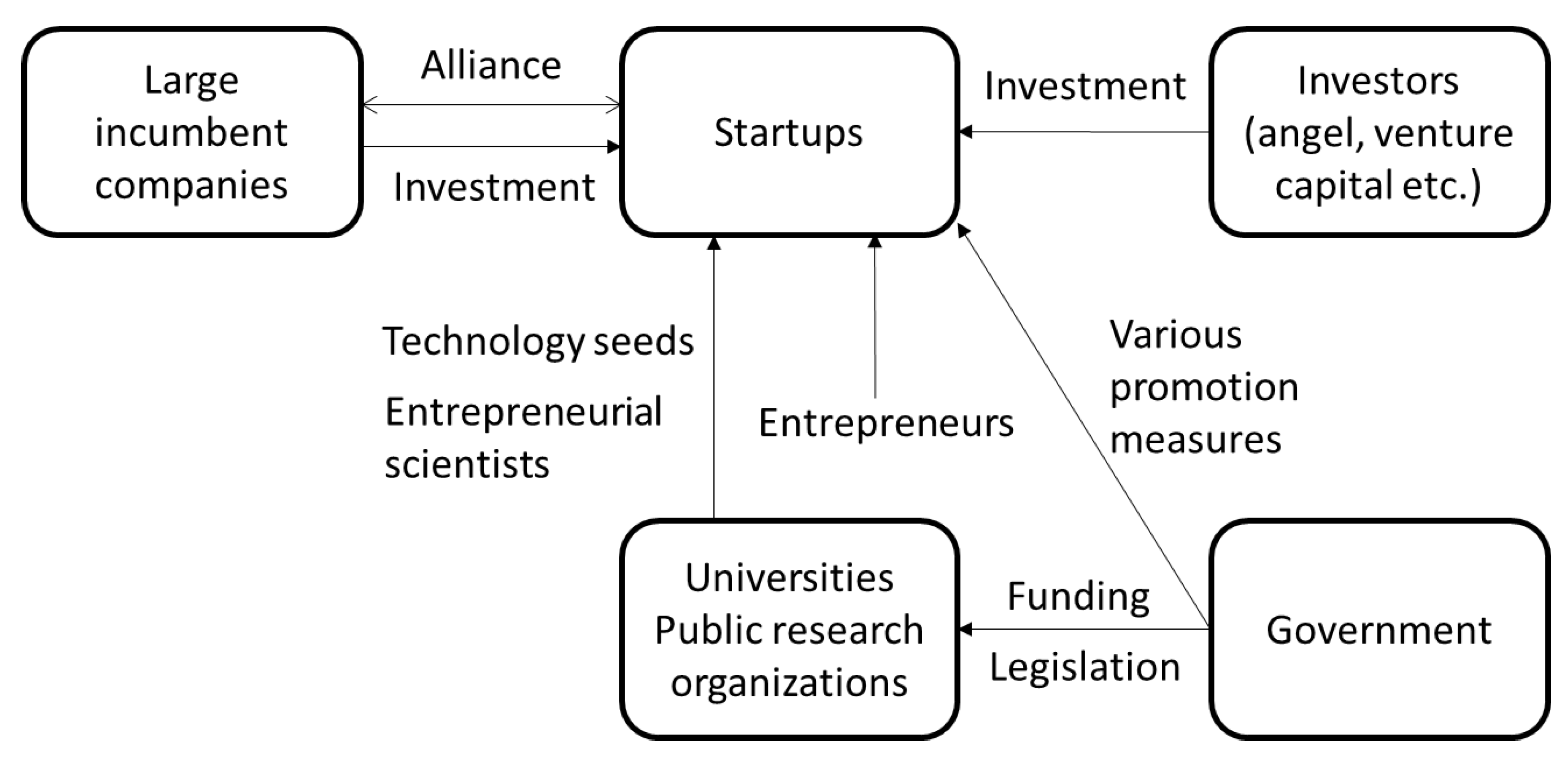
Disclaimer/Publisher’s Note: The statements, opinions and data contained in all publications are solely those of the individual author(s) and contributor(s) and not of MDPI and/or the editor(s). MDPI and/or the editor(s) disclaim responsibility for any injury to people or property resulting from any ideas, methods, instructions or products referred to in the content. |
© 2023 by the author. Licensee MDPI, Basel, Switzerland. This article is an open access article distributed under the terms and conditions of the Creative Commons Attribution (CC BY) license (https://creativecommons.org/licenses/by/4.0/).


