Review

Nurses’ Influenza Vaccination and Hesitancy: A Systematic Review of Qualitative Literature
1
Department of General Practice, Faculty of Medicine Jacques Lisfranc, University Jean Monnet, 42000 Saint-Etienne, France
2
Laboratory of Infectious Agents and Hygiene, University Hospital of Saint-Etienne, 42000 Saint-Etienne, France
3
SNA-EPIS EA4607 Laboratory, 42000 Saint-Etienne, France
*
Author to whom correspondence should be addressed.
Vaccines 2022, 10(7), 997; https://doi.org/10.3390/vaccines10070997

Submission received: 13 April 2022 / Revised: 19 June 2022 / Accepted: 21 June 2022 / Published: 22 June 2022
(This article belongs to the Special Issue Knowledge and Beliefs on Vaccines)

Abstract

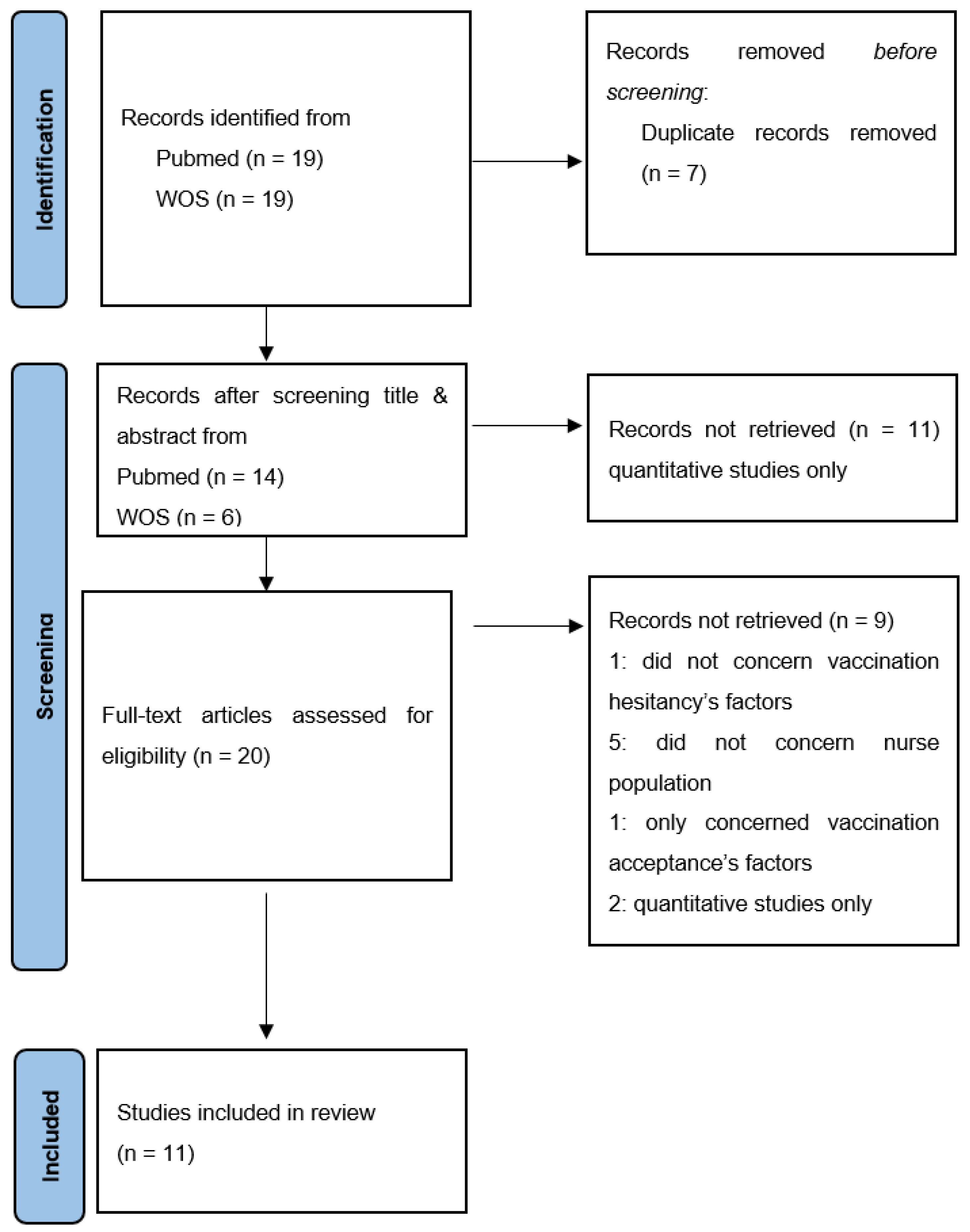
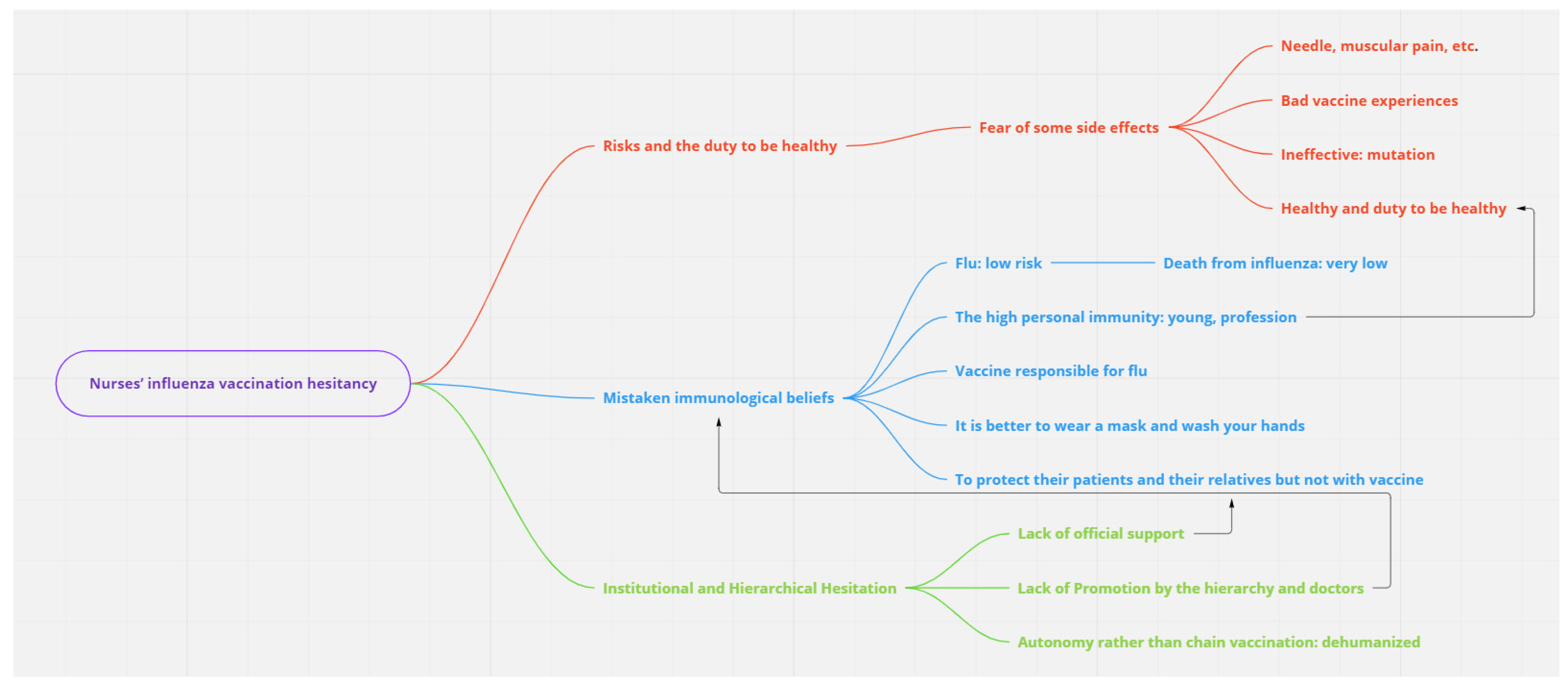
Vaccine hesitancy (VH) is defined as “delaying or refusing a secure vaccine despite its availability”. This hesitancy affects caregivers and more specifically nurses. The purpose of this study is to assess determinants of influenza VH in the nurse’s community. We conducted a systematic review of qualitative literature according to criteria of Preferred Reporting Items for Systematic Review and Meta-Analysis and Enhancing Transparency in Reporting the synthesis of Qualitative Research from 2009 until October 2020. Eleven qualitative studies analysed (ten thematic content analyses and one grounded theory method) found three main factors in VH. The first determinant was the benefit–risk equation considered as unfavourable due to an ineffective vaccine and fears about adverse effects as the pain of the injection. Wrong immunological beliefs brought into hesitancy. Disease barriers (hand washing and masks) and personal immunity were regarded as more effective than the vaccine. Lastly, dehumanised vaccination and the difficulties of access to healthcare were institutional determinants. Nurses ask for a vaccine promotion by hierarchy and doctors with transparent information and respect for autonomy. The availability of vaccines and methods of pain control seem to be some tracks to reduce nurses’ VH.
Keywords: vaccine hesitancy; flu/influenza vaccines; qualitative research vaccine hesitancy; flu/influenza vaccines; qualitative research