Article

Opinion Polls and Antibody Response Dynamics of Vaccination with COVID-19 Booster Vaccines
1
School of Medicine, Cheeloo College of Medicine, Shandong University, 44 West Wenhua Road, Jinan 250012, China
2
Medical Research and Laboratory Diagnostic Center, Jinan Central Hospital Affiliated Shandong First Medical University, 105 Jiefang Road, Jinan 250013, China
3
Department of Epidemiology, School of Public Health, Cheeloo College of Medicine, Shandong University, 44 West Wenhua Road, Jinan 250012, China
*
Authors to whom correspondence should be addressed.
Vaccines 2022, 10(5), 647; https://doi.org/10.3390/vaccines10050647

Submission received: 29 March 2022 / Revised: 14 April 2022 / Accepted: 18 April 2022 / Published: 20 April 2022
(This article belongs to the Topic Global Analysis of SARS-CoV-2 Serology)

Abstract

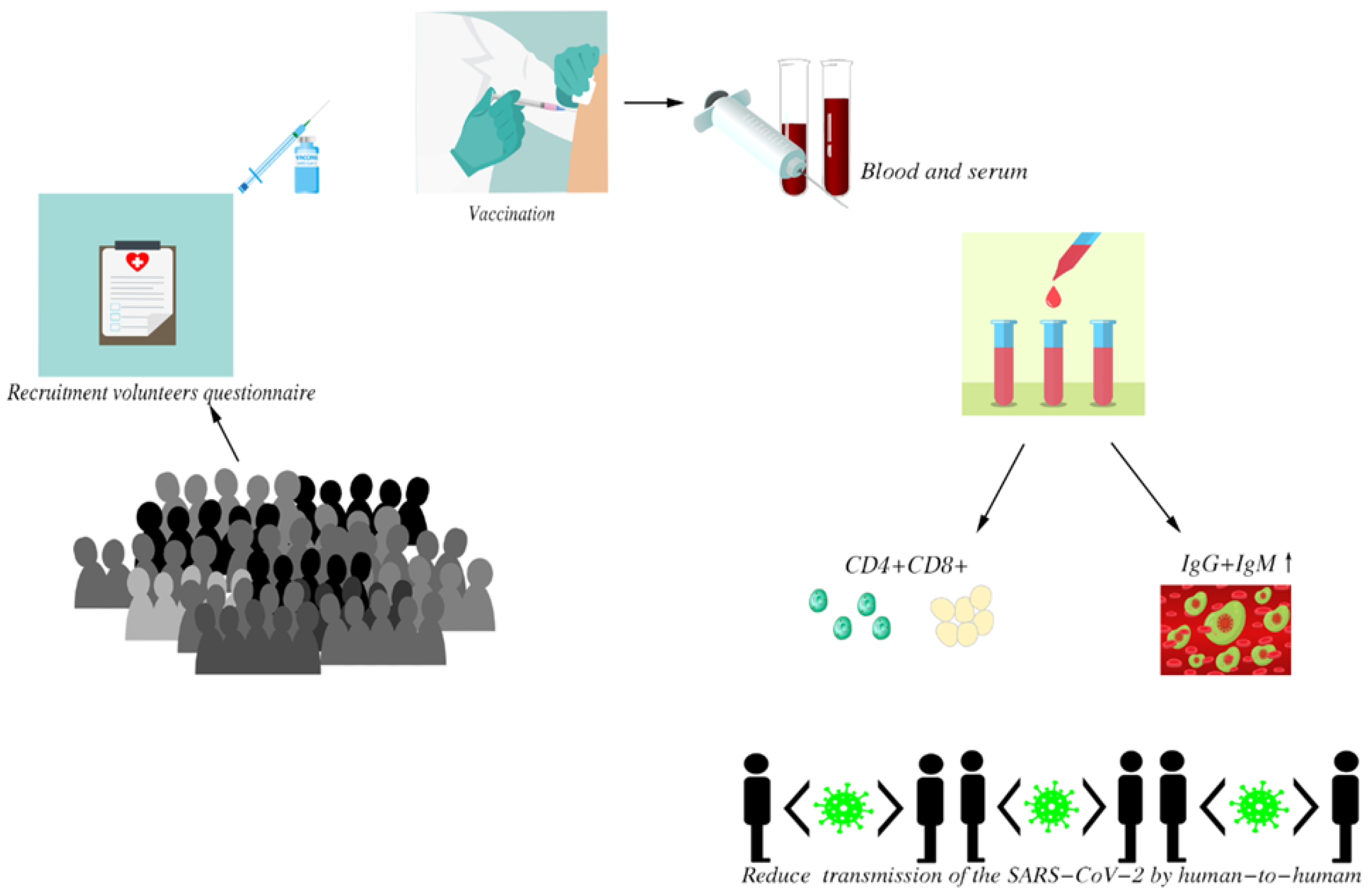
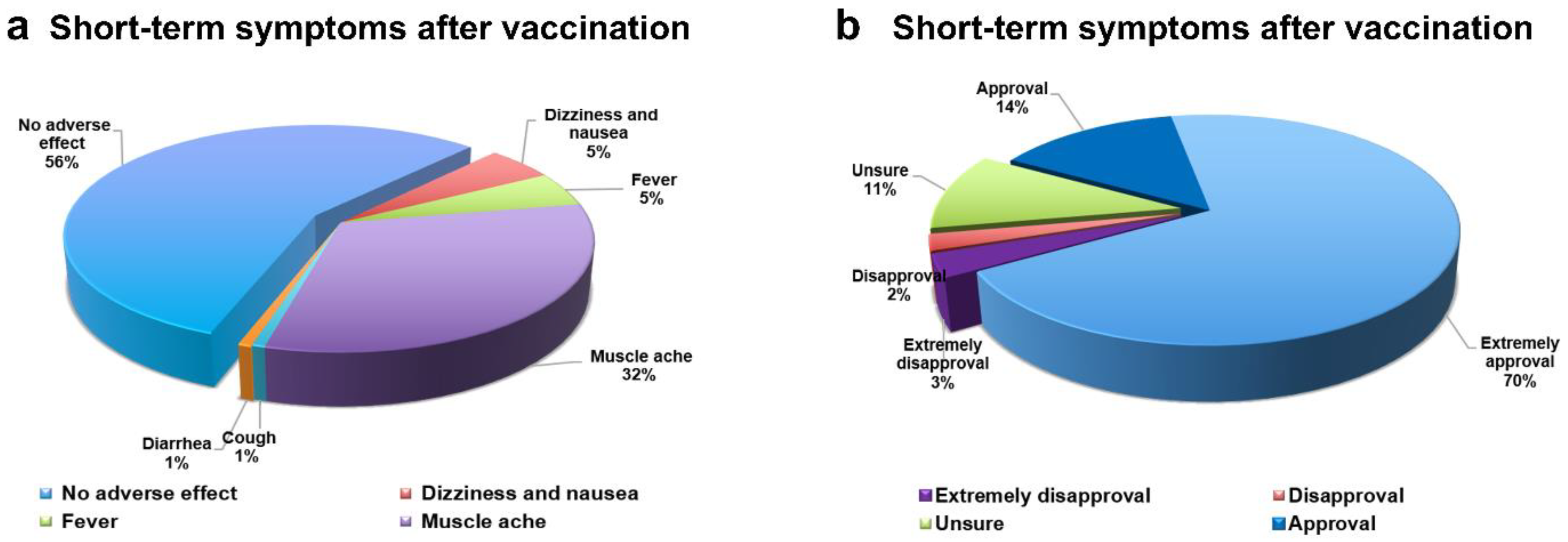
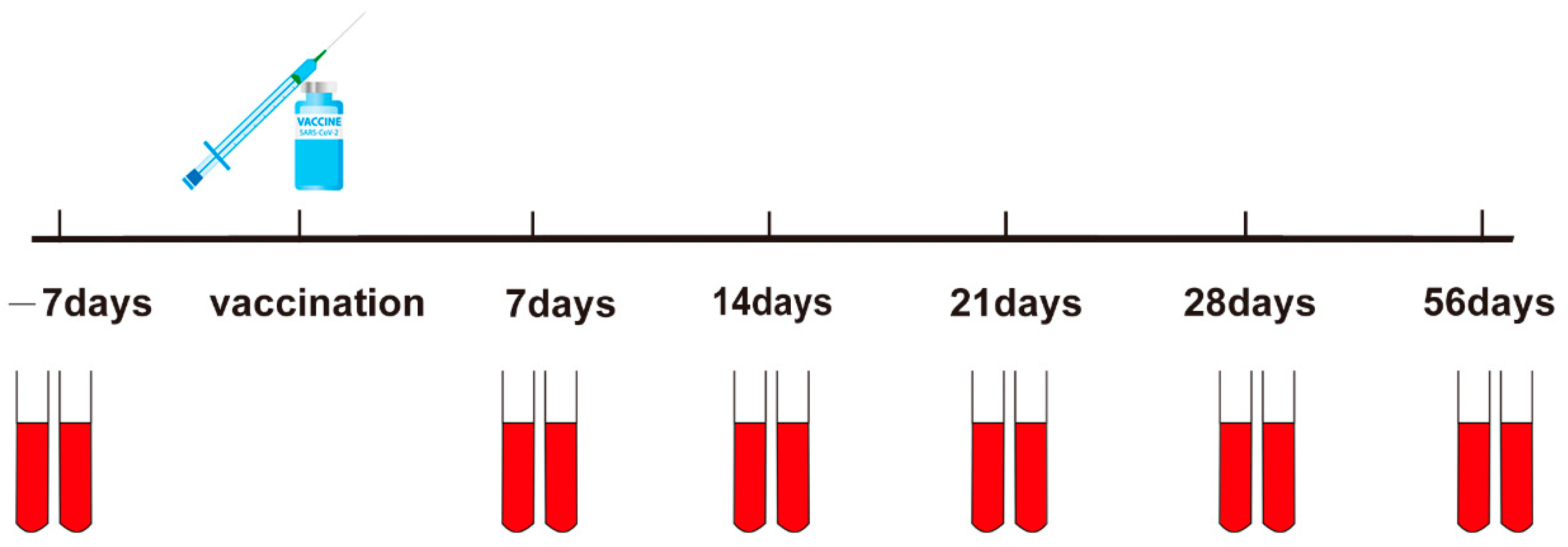
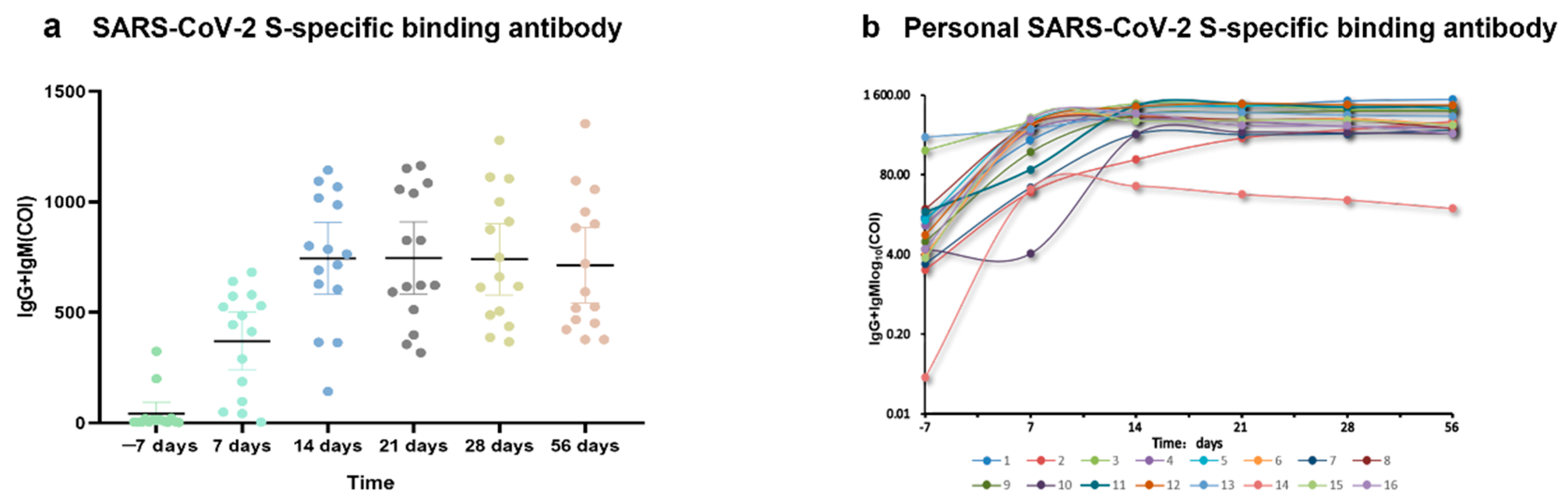
As the third year of the global COVID-19 pandemic, vaccination remains the most effective tool against infections and symptomatic illness. Comprehension regarding immunity to SARS-CoV-2 is limited, and the durability of immune responses after vaccination is currently not clear. In this study, we randomly collected 395 questionnaires to analyze the current state of COVID-19 vaccination. At the same time, the serum of 16 individuals who had received two doses of the COVID-19 vaccine were collected at different times before and after the booster vaccination. We analyzed the dynamic changes of SARS-CoV-2 S-specific binding antibodies in serum and immunological indicators. By collecting public opinion surveys and analyzing variational trends of SARS-CoV-2 S-specific binding antibodies and immune indicators after COVID-19 booster vaccination, we endeavored to demonstrate the concerns affecting people’s booster vaccinations, as well as the frequency, timing, and necessity of COVID-19 booster vaccinations. The analysis of antibody results in 16 vaccinated volunteers showed that the antibody concentration decreased six months after the second dose and the protective effect of the virus was reduced. The third dose of COVID-19 vaccination is necessary to maintain the antibody concentration and the protective effect of the virus. The vaccination with the vaccine booster depends not only on the time interval but also on the initial concentration of the SARS-CoV-2 S-specific binding antibody before the booster. Our study has important implications for raising public awareness of vaccinating against SARS-CoV-2 and the necessity of COVID-19 booster vaccinations.
Keywords: COVID-19; SARS-CoV-2; booster vaccines; antibody response dynamics COVID-19; SARS-CoV-2; booster vaccines; antibody response dynamics