
Surviving the Storm: Cytokine Biosignature in SARS-CoV-2 Severity Prediction

1
Department of Physiology, Medical College for Women and Hospital, Plot No 4 Road 8/9, Sector-1, Dhaka 1230, Bangladesh
2
Unit of Pharmacology, Faculty of Medicine and Defence Health, Universiti Pertahanan Nasional Malaysia (National Defence University of Malaysia), Kem Perdana Sungai Besi, Kuala Lumpur 57000, Malaysia
*
Author to whom correspondence should be addressed.
Vaccines 2022, 10(4), 614; https://doi.org/10.3390/vaccines10040614
Submission received: 10 March 2022
/
Revised: 8 April 2022
/
Accepted: 12 April 2022
/
Published: 14 April 2022
(This article belongs to the Special Issue Host Innate Immune Responses against SARS-CoV-2)
Simple Summary
The world has been stricken mentally, physically, and economically by the COVID-19 virus. However, while SARS-CoV-2 viral infection results in mild flu-like symptoms in most patients, a number of those infected develop severe illness. These patients require hospitalization and intensive care. The severe disease can spiral downwards with eventual severe damage to the lungs and failure of multiple organs, leading to the individual’s demise. It is necessary to identify those who are developing a severe form of illness to provide early management. Therefore, it is crucial to learn about the mechanisms and chemical mediators that lead to critical conditions in SARS-CoV-2 infection. This paper reviews studies regarding the individual chemical mediators, pathways, and means that contribute to worsening health conditions in SARS-CoV-2 infection.
Abstract
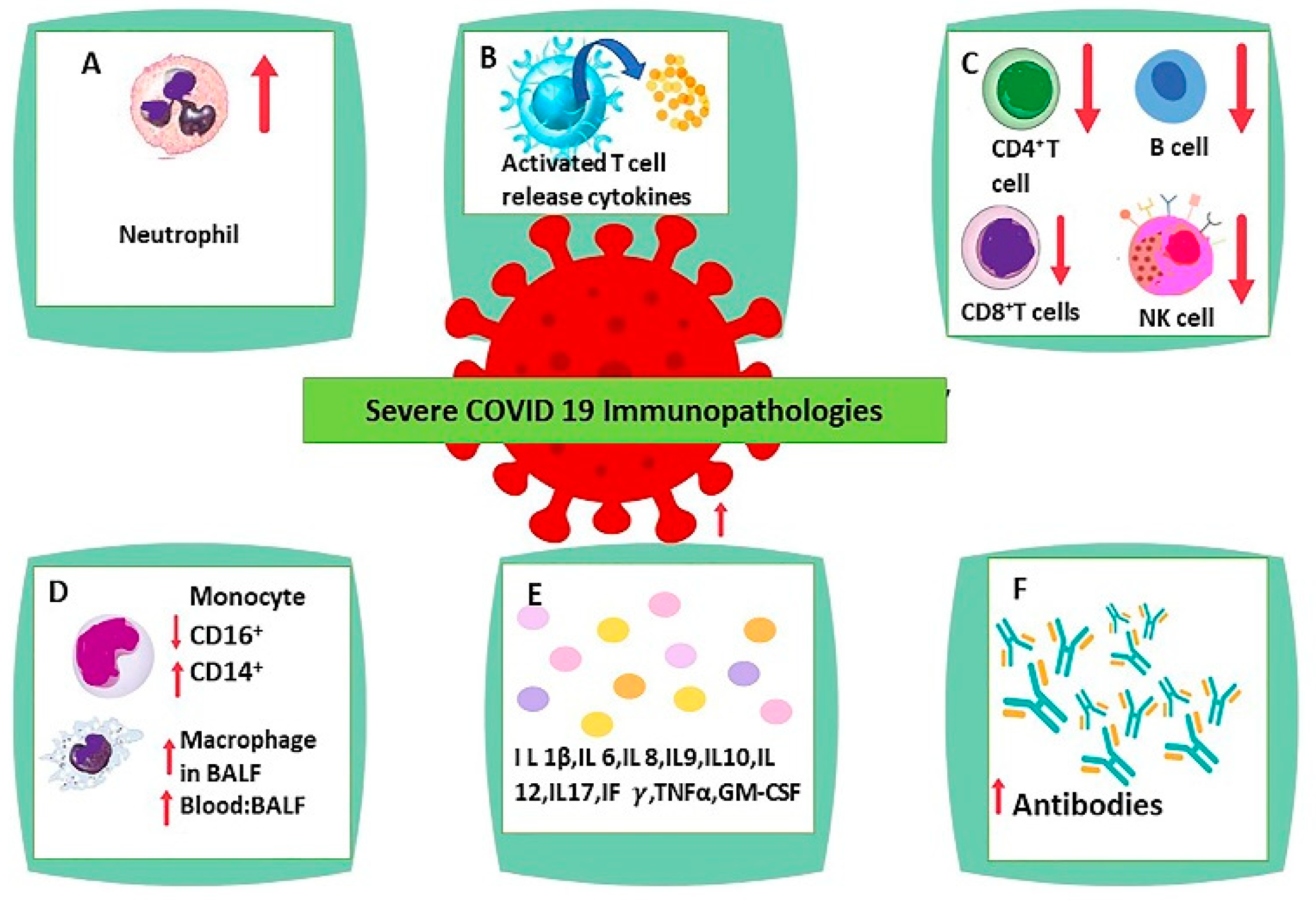
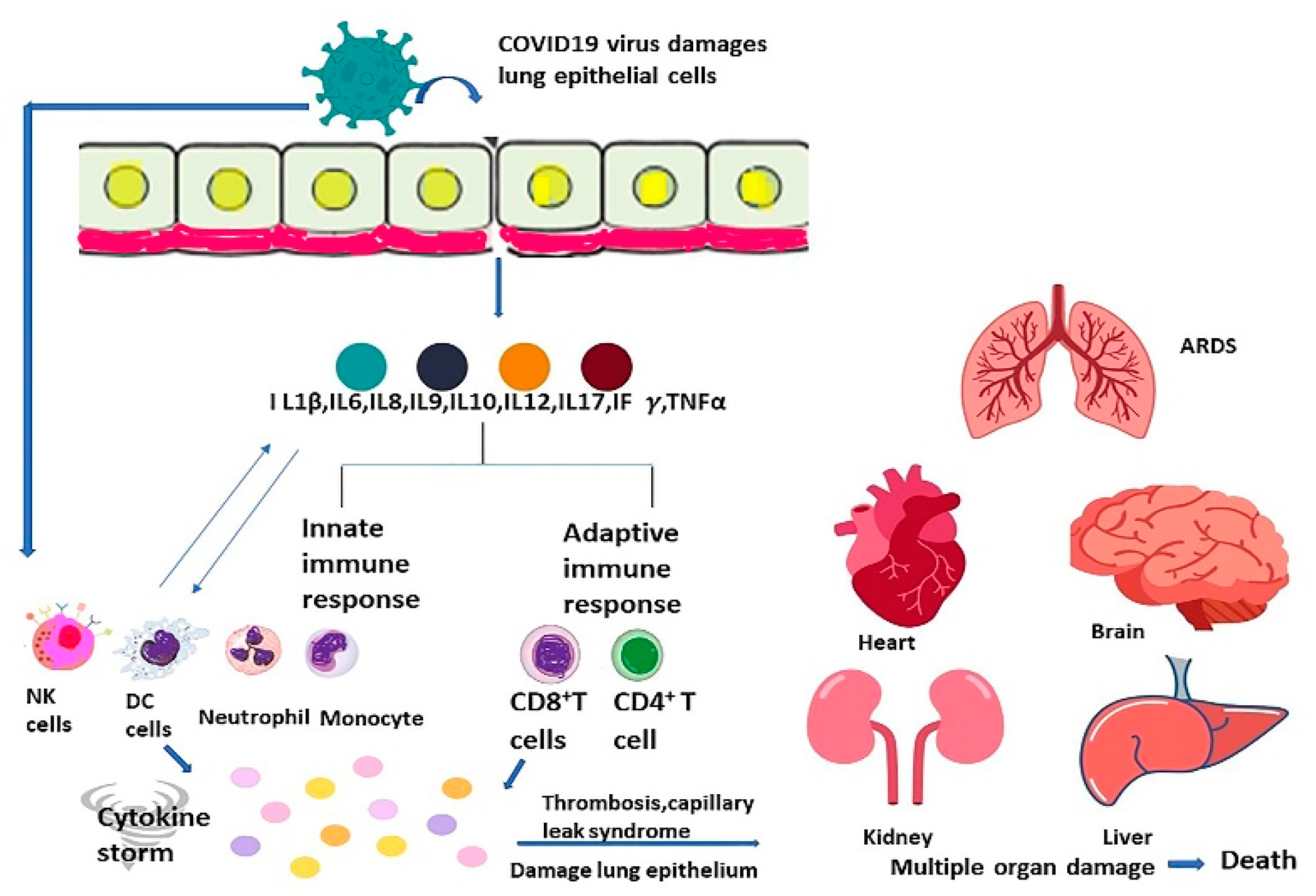
A significant part of the world population has been affected by the devastating SARS-CoV-2 infection. It has deleterious effects on mental and physical health and global economic conditions. Evidence suggests that the pathogenesis of SARS-CoV-2 infection may result in immunopathology such as neutrophilia, lymphopenia, decreased response of type I interferon, monocyte, and macrophage dysregulation. Even though most individuals infected with the SARS-CoV-2 virus suffer mild symptoms similar to flu, severe illness develops in some cases, including dysfunction of multiple organs. Excessive production of different inflammatory cytokines leads to a cytokine storm in COVID-19 infection. The large quantities of inflammatory cytokines trigger several inflammation pathways through tissue cell and immune cell receptors. Such mechanisms eventually lead to complications such as acute respiratory distress syndrome, intravascular coagulation, capillary leak syndrome, failure of multiple organs, and, in severe cases, death. Thus, to devise an effective management plan for SARS-CoV-2 infection, it is necessary to comprehend the start and pathways of signaling for the SARS-CoV-2 infection-induced cytokine storm. This article discusses the current findings of SARS-CoV-2 related to immunopathology, the different paths of signaling and other cytokines that result in a cytokine storm, and biomarkers that can act as early signs of warning for severe illness. A detailed understanding of the cytokine storm may aid in the development of effective means for controlling the disease’s immunopathology. In addition, noting the biomarkers and pathophysiology of severe SARS-CoV-2 infection as early warning signs can help prevent severe complications.