Article

Global Dynamics of SARS-CoV-2 Infection with Antibody Response and the Impact of Impulsive Drug Therapy


by
Amar Nath Chatterjee
1,
Fahad Al Basir
2,*,
Dibyendu Biswas
3 and
Teklebirhan Abraha
4,5
1
Department of Mathematics, K.L.S. College, Nawada, Magadh University, Bodhgaya 805110, Bihar, India
2
Department of Mathematics, Asansol Girls’ College, Asansol 713304, West Bengal, India
3
Department of Mathematics, City College of Commerce and Business Administration, 13, Surya Sen Street, Kolkata 700012, West Bengal, India
4
Department of Mathematics, Addis Ababa Science and Technology University, Addis Ababa P.O. Box 16417, Ethiopia
5
Department of Mathematics, Aksum University, Aksum P.O. Box 1010, Ethiopia
*
Author to whom correspondence should be addressed.
Vaccines 2022, 10(11), 1846; https://doi.org/10.3390/vaccines10111846

Submission received: 2 September 2022 / Revised: 25 October 2022 / Accepted: 27 October 2022 / Published: 31 October 2022
(This article belongs to the Special Issue Dynamic Models in Viral Immunology)

Abstract

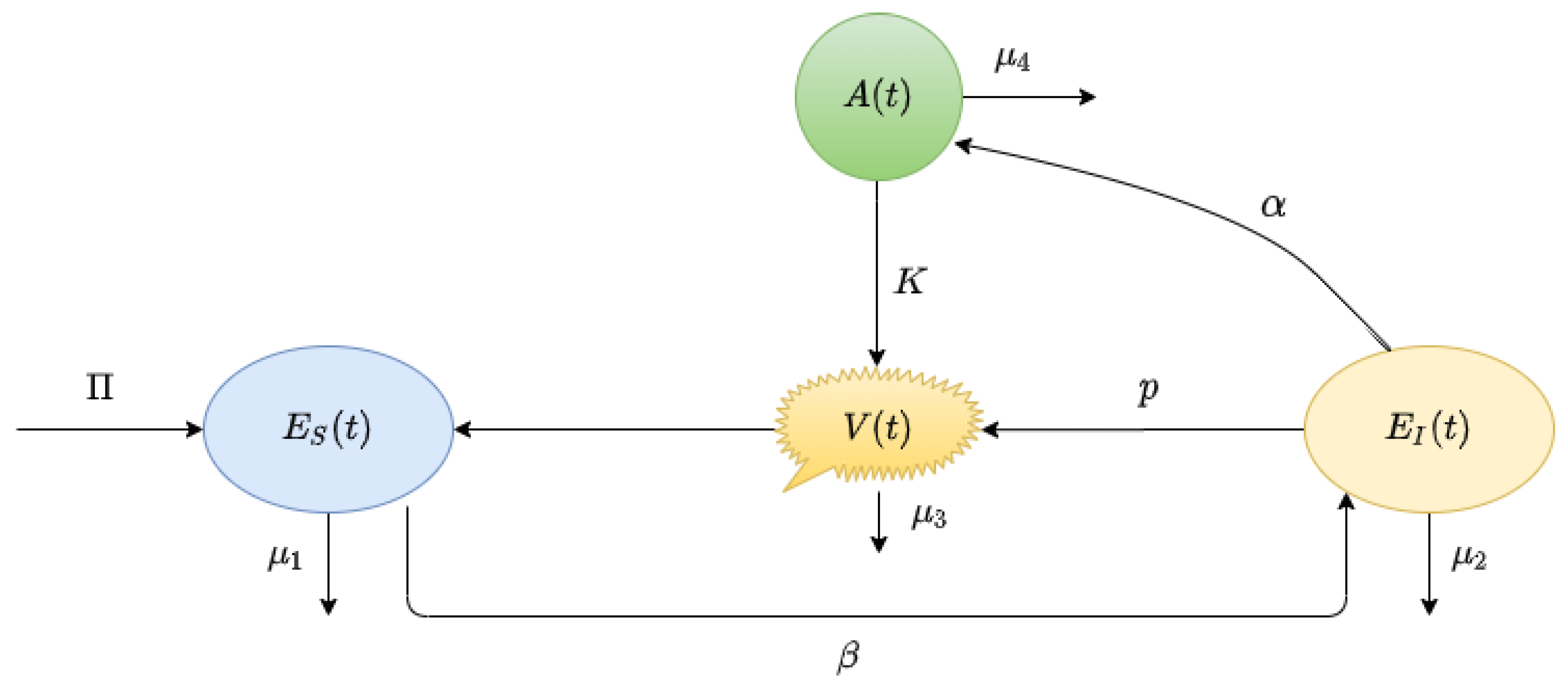
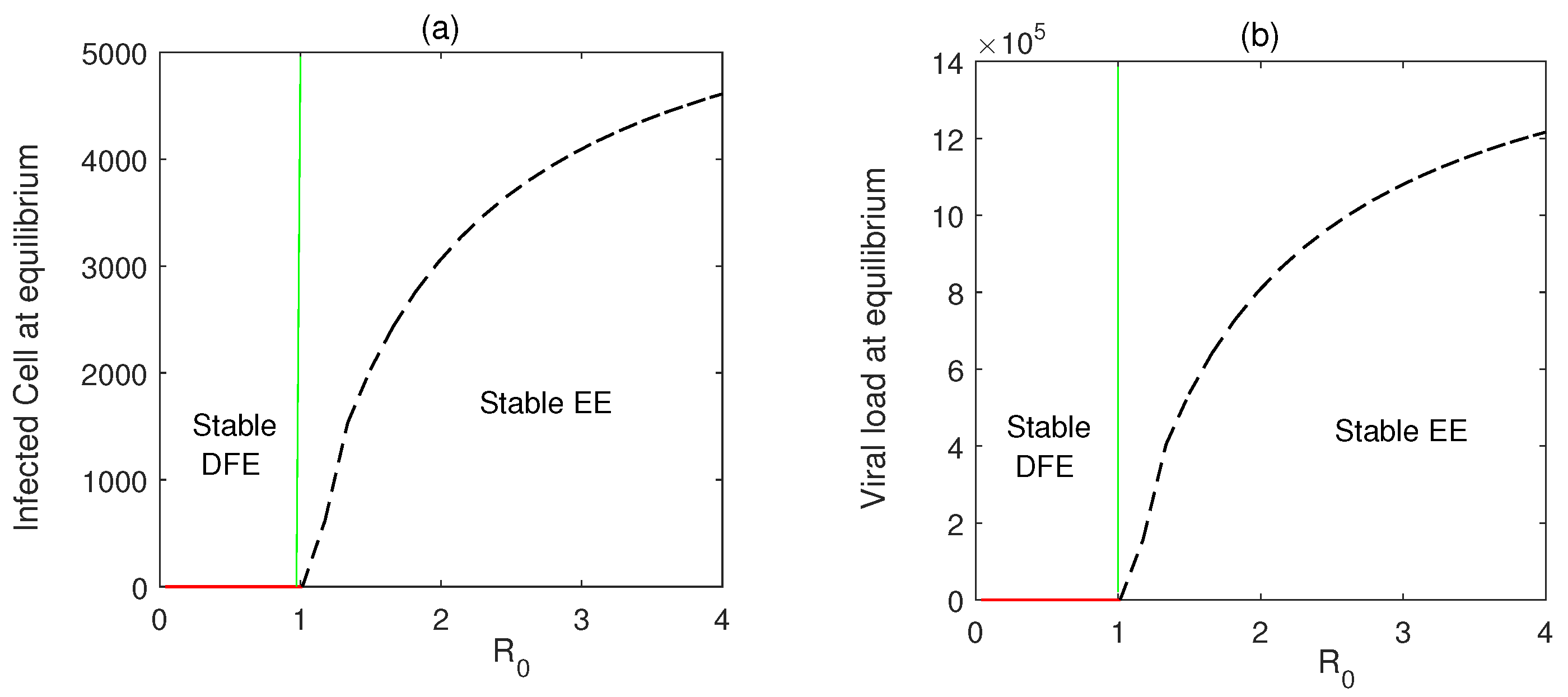
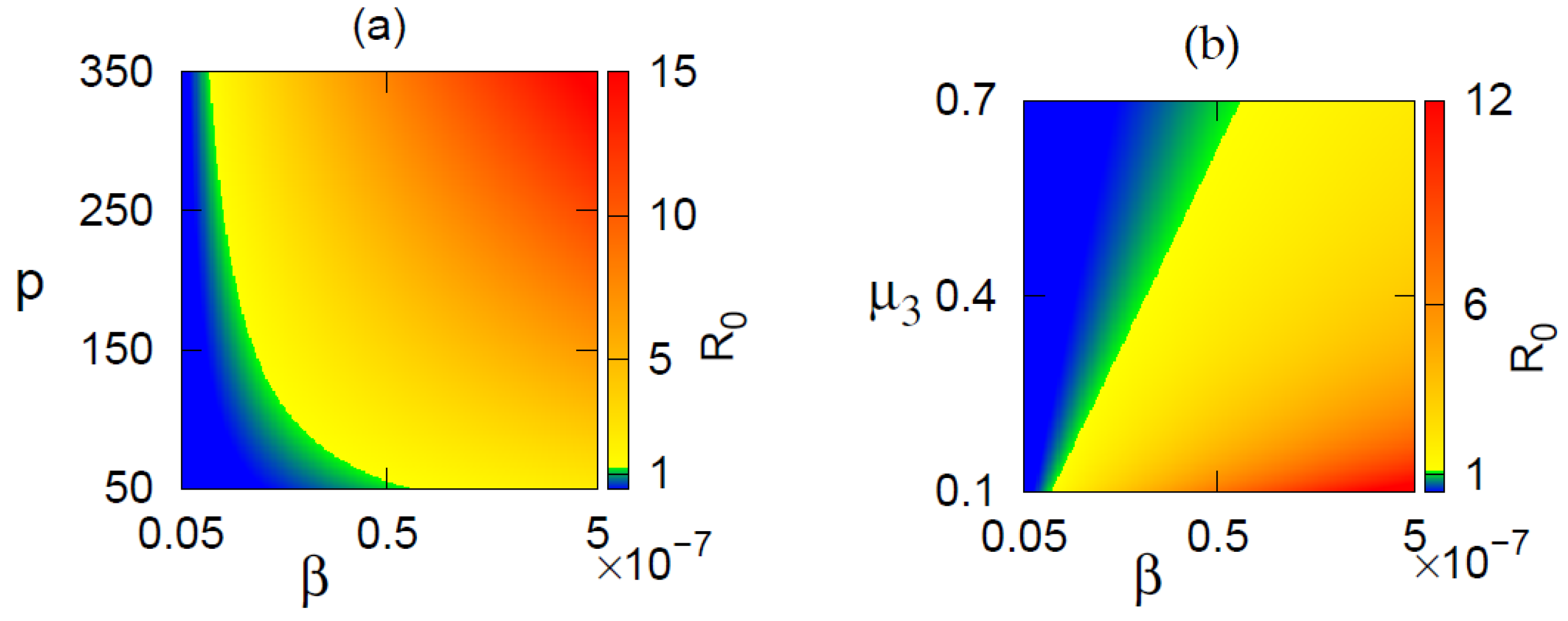
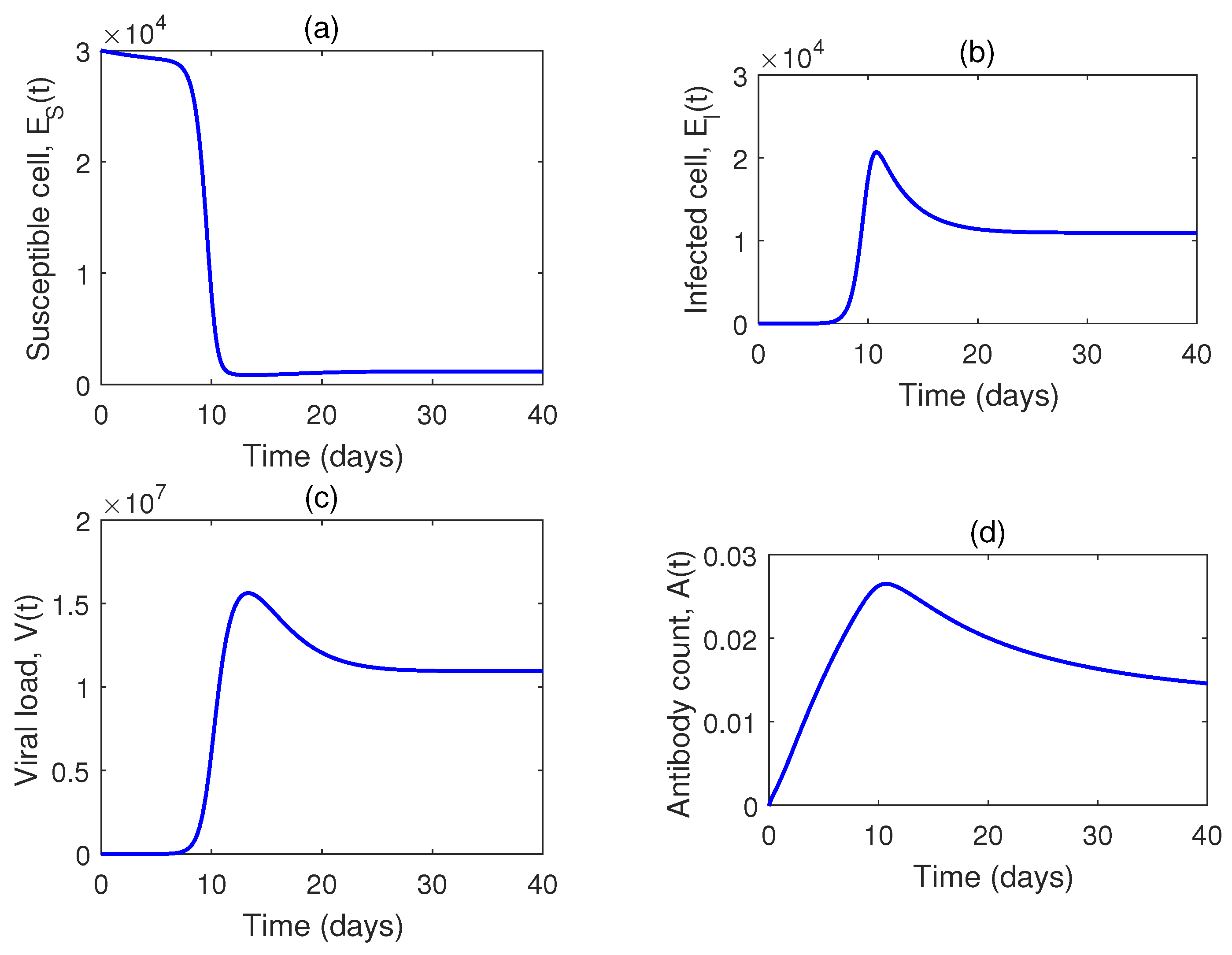
Mathematical modeling is crucial to investigating tthe ongoing coronavirus disease 2019 (COVID-19) pandemic. The primary target area of the SARS-CoV-2 virus is epithelial cells in the human lower respiratory tract. During this viral infection, infected cells can activate innate and adaptive immune responses to viral infection. Immune response in COVID-19 infection can lead to longer recovery time and more severe secondary complications. We formulate a micro-level mathematical model by incorporating a saturation term for SARS-CoV-2-infected epithelial cell loss reliant on infected cell levels. Forward and backward bifurcation between disease-free and endemic equilibrium points have been analyzed. Global stability of both disease-free and endemic equilibrium is provided. We have seen that the disease-free equilibrium is globally stable for R0<1, and endemic equilibrium exists and is globally stable for R0>1. Impulsive application of drug dosing has been applied for the treatment of COVID-19 patients. Additionally, the dynamics of the impulsive system are discussed when a patient takes drug holidays. Numerical simulations support the analytical findings and the dynamical regimes in the systems.
Keywords: epithelial cell; antibody response; basic reproduction number; transcritical bifurcation; impulsive control; drug holidays epithelial cell; antibody response; basic reproduction number; transcritical bifurcation; impulsive control; drug holidays