
Review

Subtype H3N2 Influenza A Viruses: An Unmet Challenge in the Western Pacific
1
School of Public Health, Southern Medical University, Guangzhou 510515, China
2
Guangdong Center for Disease Control and Prevention, Guangzhou 511430, China
3
State Key Laboratory for Respiratory Diseases and National Clinical Research Centre for Respiratory Disease, Guangzhou Medical University, 195 Dongfengxi Road, Guangzhou 511436, China
4
School of Public Health, The University of Hong Kong, 7 Sassoon Road, Pokfulam, Hong Kong, China
*
Author to whom correspondence should be addressed.
All authors contributed equally.
Vaccines 2022, 10(1), 112; https://doi.org/10.3390/vaccines10010112

Submission received: 29 November 2021 / Revised: 7 January 2022 / Accepted: 7 January 2022 / Published: 12 January 2022
(This article belongs to the Special Issue Feature Papers Collection on Influenza Vaccines)

Abstract

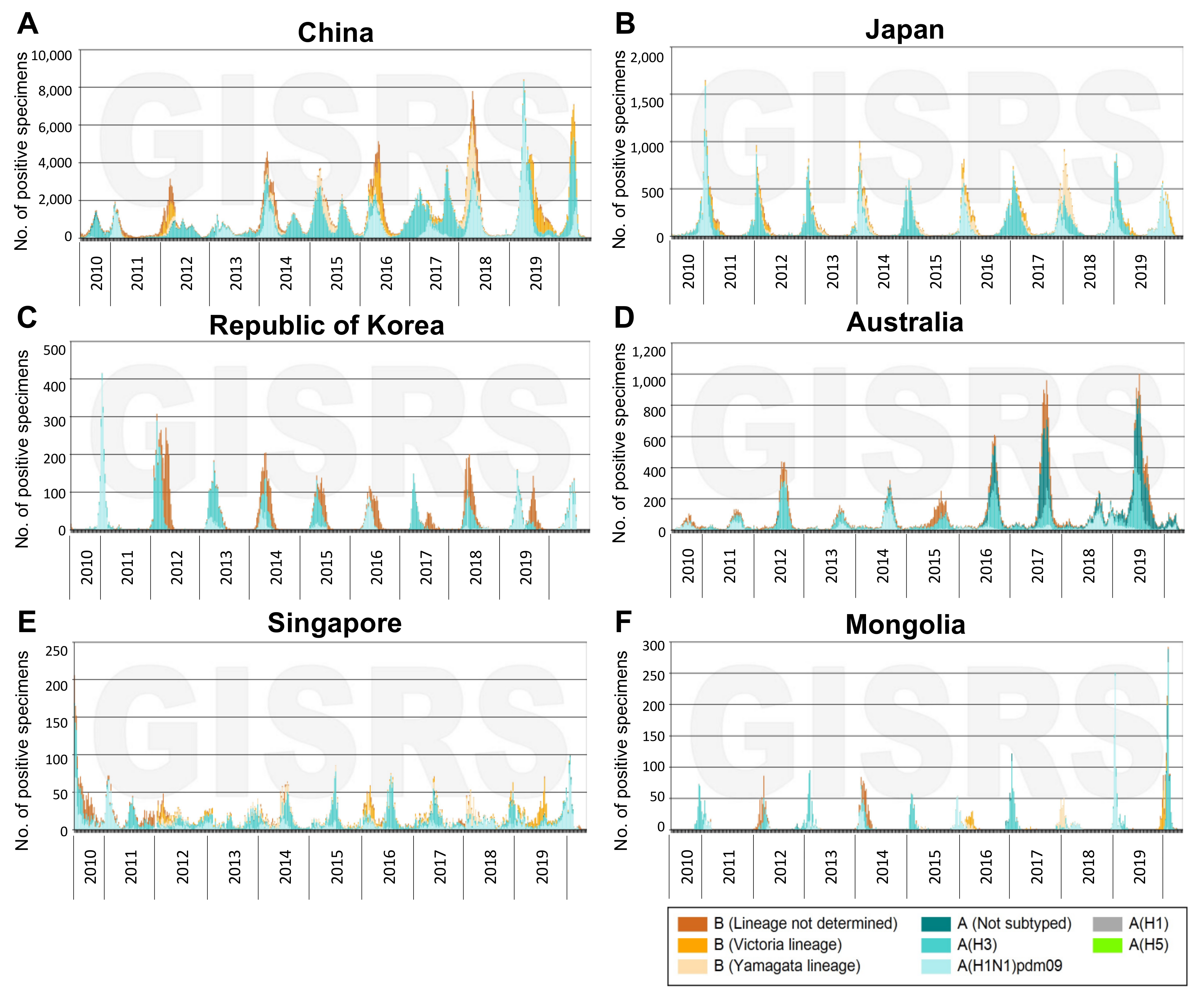
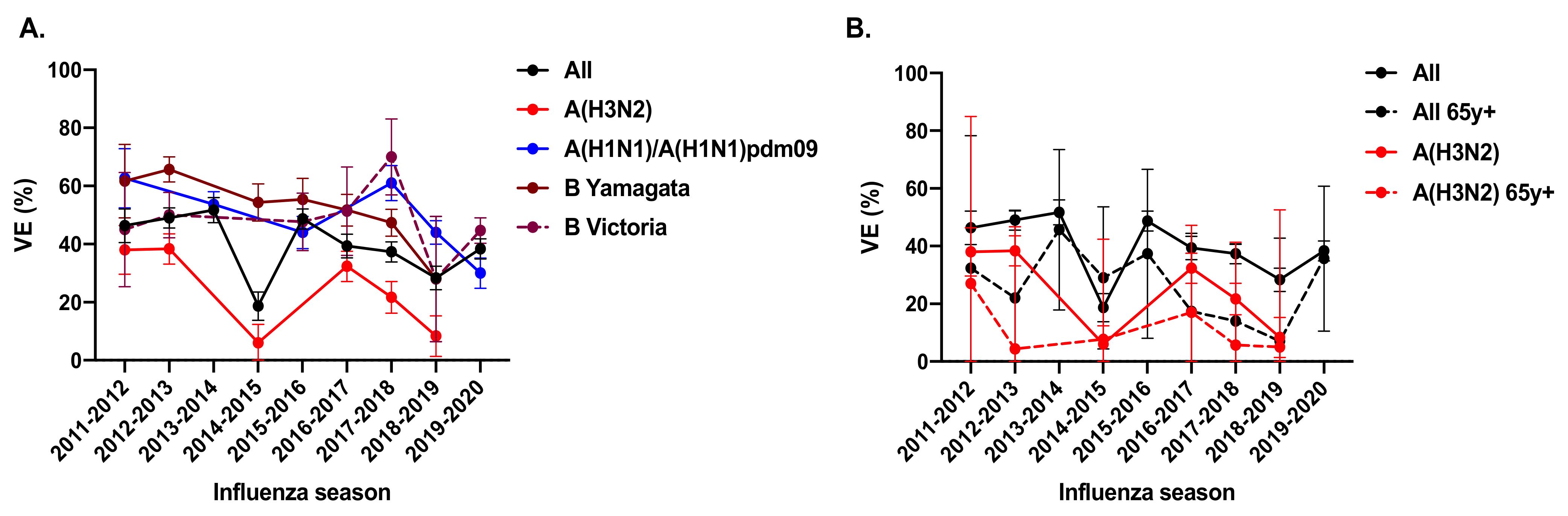
Subtype H3N2 influenza A viruses (A(H3N2)) have been the dominant strain in some countries in the Western Pacific region since the 2009 influenza A(H1N1) pandemic. Vaccination is the most effective way to prevent influenza; however, low vaccine effectiveness has been reported in some influenza seasons, especially for A(H3N2). Antigenic mismatch introduced by egg-adaptation during vaccine production between the vaccine and circulating viral stains is one of the reasons for low vaccine effectiveness. Here we review the extent of this phenomenon, the underlying molecular mechanisms and discuss recent strategies to ameliorate this, including new vaccine platforms that may provide better protection and should be considered to reduce the impact of A(H3N2) in the Western Pacific region.
Keywords: influenza A(H3N2); vaccine effectiveness; western pacific; egg-adaptation; novel vaccine platforms influenza A(H3N2); vaccine effectiveness; western pacific; egg-adaptation; novel vaccine platforms