

Review

Carotenoids and Markers of Oxidative Stress in Human Observational Studies and Intervention Trials: Implications for Chronic Diseases


Department of Population Health, Luxembourg Institute of Health, L-1445 Strassen, Luxembourg
Antioxidants 2019, 8(6), 179; https://doi.org/10.3390/antiox8060179
Submission received: 30 May 2019 / Revised: 12 June 2019 / Accepted: 14 June 2019 / Published: 17 June 2019
(This article belongs to the Special Issue Antioxidants in Oxidative Stress Diseases)

Abstract

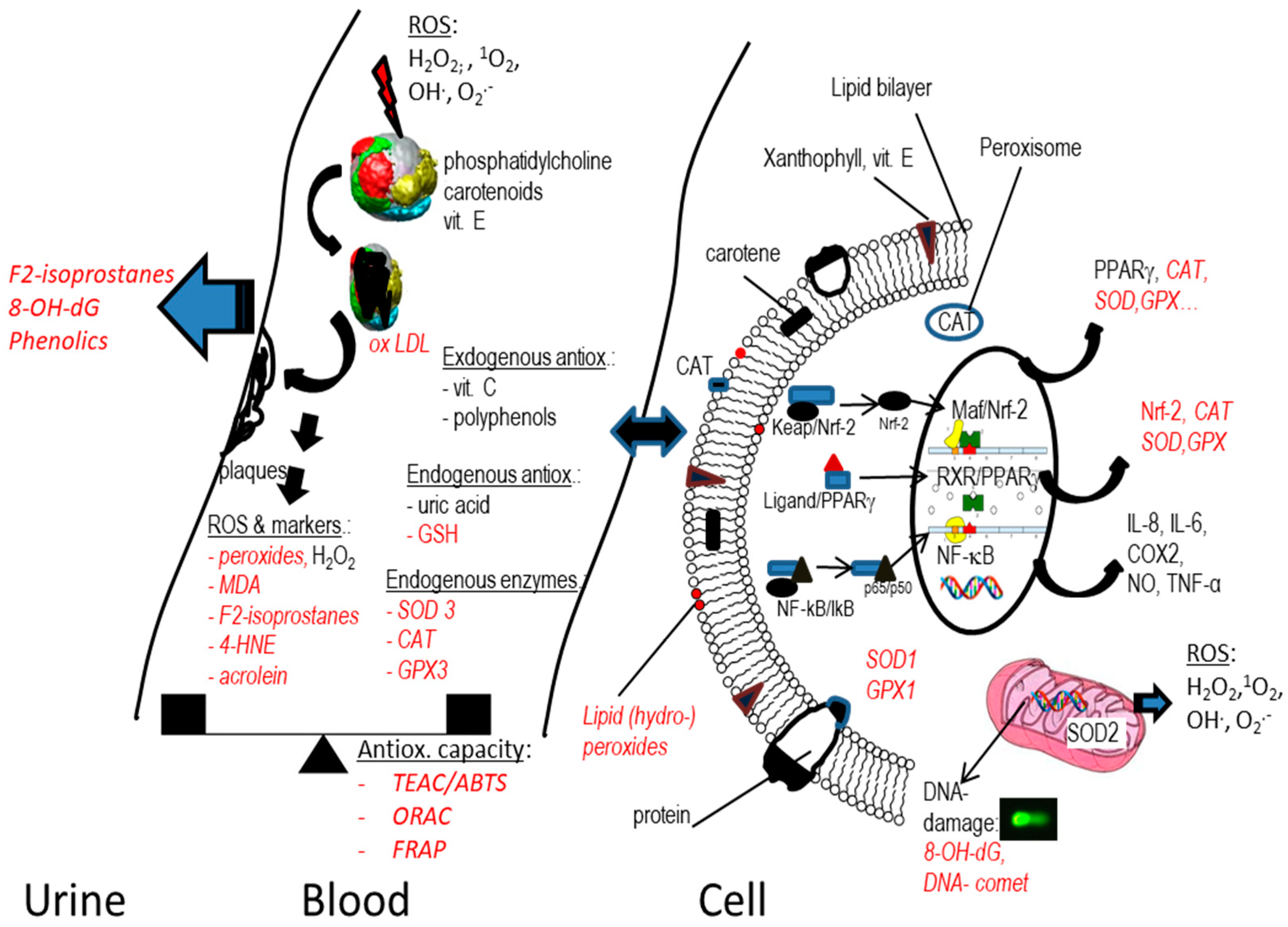
Carotenoids include C30, C40 and C50 terpenoid-based molecules, many of which constitute coloured pigments. However, >1100 of these are known to occur in nature and only about a dozen are known to play a role in our daily diet. Carotenoids have received much attention due to their proposed health benefits, including reducing the incidence of chronic diseases, such as cardiovascular disease and diabetes. Many of these diseases are characterized by chronic inflammation co-occurring with oxidative stress, characterized by, for example, enhanced plasma F2-isoprostane concentrations, malondialdehyde, and 8-hydroxyguanosine. Though carotenoids can act as direct antioxidants, quenching, for example, singlet oxygen and peroxide radicals, an important biological function appears to rest also in the activation of the body’s own antioxidant defence system, related to superoxide-dismutase, catalase, and glutathione-peroxidase expression, likely due to the interaction with transcription factors, such as nuclear-factor erythroid 2-related factor 2 (Nrf-2). Though mostly based on small-scale and observational studies which do not allow for drawing conclusions regarding causality, several supplementation trials with isolated carotenoids or food items suggest positive health effects. However, negative effects have also been reported, especially regarding beta-carotene for smokers. This review is aimed at summarizing the results from human observational studies/intervention trials targeting carotenoids in relation to chronic diseases characterized by oxidative stress and markers thereof.
Keywords: carotenes; xanthophylls; beta-carotene; lycopene; cardio-metabolic diseases; tissue concentrations; metabolites; nuclear factors; transcription factors; cytokines; biomarkers; humans carotenes; xanthophylls; beta-carotene; lycopene; cardio-metabolic diseases; tissue concentrations; metabolites; nuclear factors; transcription factors; cytokines; biomarkers; humans

