1. Introduction
Autoimmune diseases, such as primary Sjögren’s syndrome (pSS), are chronic systemic disorders driven by aberrant activation of the innate and adaptive immune system, often leading to multi-organ damage. Although pSS primarily targets exocrine glands, causing dry mouth (xerostomia) and dry eyes (keratoconjunctivitis sicca), systemic extra-glandular manifestations are common. Hepatic involvement is one of the most frequent organ complications, reported in 27–49% of pSS patients, and is characterized by inflammatory infiltration, hepatocyte damage, and progressive dysfunction, which significantly impairs patient prognosis and quality of life [
1,
2]. Current clinical management primarily relies on glucocorticoids and non-specific immunosuppressants, which are limited by long-term toxicity and lack of targeted efficacy. Despite its clinical relevance, the mechanisms driving pSS-associated liver injury remain poorly understood, and no targeted therapies are currently available. Investigating this specific extra-glandular complication is therefore of considerable translational significance.
Mitochondrial dysfunction and excessive reactive oxygen species (ROS) accumulation are now recognized as central pathogenic events linking immune dysregulation to tissue injury in autoimmune settings [
3,
4]. As organelles of high abundance in metabolically active tissues, mitochondria serve not only as the primary source of cellular ROS but also as early targets of oxidative damage. Disruption of mitochondrial membrane potential (ΔΨm) and electron transport chain integrity promotes the release of mitochondrial DNA (mtDNA) into the cytosol, where it acts as a potent damage-associated molecular pattern. Cytosolic mtDNA, together with elevated ROS, synergistically activates cyclic GMP-AMP synthase (cGAS), a critical cytosolic DNA sensor. This triggers the synthesis of cyclic GMP-AMP (cGAMP), which in turn activates stimulator of interferon genes (STING). Activated STING recruits and phosphorylates TANK-binding kinase 1 (TBK1), leading to phosphorylation of interferon regulatory factor 3 (IRF3) and the subsequent production of type I interferons and pro-inflammatory cytokines [
5,
6]. This self-amplifying loop of “ROS overproduction → mitochondrial damage → cGAS-STING hyperactivation” has been functionally implicated in several autoimmune and inflammatory liver diseases, positioning the ROS/cGAS-STING axis as a promising therapeutic target [
7,
8]. Given that hepatocytes are exceptionally rich in mitochondria and highly susceptible to oxidative stress, the liver represents an ideal model organ in which to investigate interventions aimed at preserving mitochondrial integrity and interrupting this pathogenic cascade.
Trifolirhizin is a natural pterocarpan flavonoid isolated from leguminous plants, with documented antioxidant, anti-inflammatory, and anti-tumor activities [
9]. Our interest in this compound was initiated by an unexpected observation in our prior work: a Chinese herbal formula demonstrated remarkable preservation of mitochondrial ultrastructure in non-obese diabetic (NOD) mice, a spontaneous model recapitulating features of both pSS and T1DM. Following reviewer recommendations to identify the active constituent(s) responsible, we performed targeted computational screening of the flavonoid constituents within the formula, when molecular docking techniques have become increasingly important tools for target discovery [
10].
Trifolirhizin emerged as a top candidate, displaying favorable molecular docking scores with key targets involved in mitochondrial quality control and redox regulation [
11], findings further supported by molecular dynamics simulations. Despite these bioinformatic predictions and the known pharmacological profile of trifolirhizin, its role in autoimmune-associated organ injury—and specifically its effects on mitochondrial function—remains entirely unexplored. We hypothesized that trifolirhizin may exert protective effects in pSS and its associated hepatic complications by modulating mitochondrial integrity and the ROS/cGAS-STING signaling pathway.
In this study, we employed the NOD mouse, a well-characterized spontaneous model of primary Sjögren’s syndrome (pSS), to investigate the hepatoprotective effects of trifolirhizin in vivo. Given its high mitochondrial content and susceptibility to immune-mediated injury, the liver was selected as the target organ. Treatment was initiated at 8 weeks of age and continued for 4 weeks, a time window that precedes the onset of overt type 1 diabetes in this strain. Weekly blood glucose monitoring confirmed that all NOD groups remained normoglycemic throughout the experiment, thereby excluding metabolic improvement as a confounding factor. The pSS-like phenotype was verified by stimulated salivary flow measurements. We systematically evaluated hepatic histopathology, inflammatory cytokine profiles, mitochondrial ultrastructure, ΔΨm, and ROS levels. To gain unbiased and systems-level mechanistic insight, we performed integrated transcriptomic and metabolomic profiling of liver tissues from NOD mice. Parallel in vitro experiments using H2O2-induced oxidative stress in HepG2 cells were designed to dissect the underlying molecular machinery. Seahorse extracellular flux analysis was employed to quantitatively assess glycolytic function and mitochondrial respiratory capacity, and Western blotting was used to examine core components of the cGAS-STING-TBK1-IRF3 pathway. Pharmacological rescue experiments with the cGAS agonist cGAMP were conducted to validate the functional relevance of this signaling axis. Our findings identify trifolirhizin as a novel mitochondrial-protective agent that attenuates pSS-associated liver injury and provide mechanistic insights into the therapeutic targeting of the ROS/cGAS-STING pathway in autoimmune disease complications.
3. Results
3.1. Trifolirhizin Attenuates Hepatic Inflammation
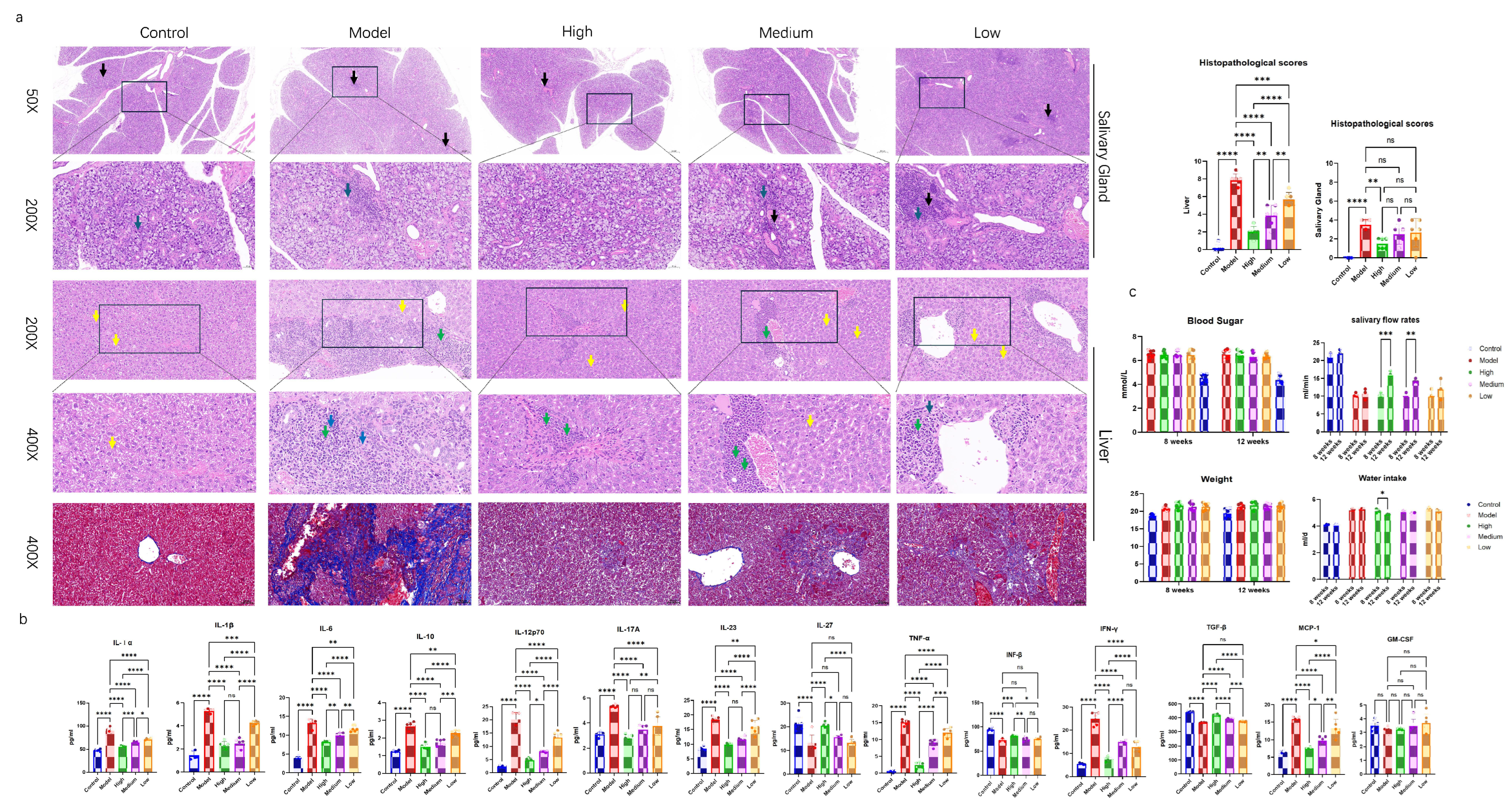
Compared with C57BL/6J controls, NOD mice exhibited significantly reduced stimulated salivary flow rates and increased daily water consumption, consistent with the classic pSS-like phenotype. Notably, high-dose trifolirhizin treatment (20 mg/kg/d) significantly improved salivary secretion and reduced polydipsia compared to the untreated NOD model group. These data indicate that trifolirhizin effectively attenuates the exocrine dysfunction characteristic of pSS in this model.
H&E staining revealed that NOD mice (model group) exhibited marked hepatocellular edema (yellow arrows), extensive perivascular inflammatory infiltration (green arrows), and marked connective tissue proliferation (blue arrows), indicating severe hepatic pathology. In the high-dose group, hepatocellular edema was markedly improved (yellow arrows), with only mildly loosened cytoplasm and a small amount of peri-vascular inflammatory infiltration (green arrows). The medium-dose group showed slight improvement, displaying hepatocellular edema (yellow arrows) with mildly loosened cytoplasm, and a moderate amount of perivascular inflammatory infiltration (green arrows). In the low-dose group, hepatocellular edema persisted (yellow arrows), accompanied by abundant perivascular inflammatory infiltration (green arrows) and a small amount of connective tissue proliferation (blue arrows). Masson’s trichrome staining further demonstrated that in the model group, extensive hepatocellular necrosis and lysis were present, with nuclear pyknosis or karyorrhexis, residual cell debris, and infiltration of inflammatory cells and erythrocytes, replaced by large areas of blue-green collagen fiber deposition; fiber bundles extended from the portal area into the hepatic parenchyma, with bridging fibrosis in some areas, and the hepatic lobular architecture was disorganized. In the high-dose group, only focal hepatocellular necrosis and lysis were observed, along with nuclear pyknosis or karyorrhexis, residual cell debris, and inflammatory cell and erythrocyte infiltration, which were replaced by small areas of blue-green collagen fibers; the hepatic lobular architecture remained disorganized. The medium-dose group showed focal hepatocellular necrosis and lysis with similar features, replaced by medium-sized areas of blue-green collagen deposition, with fiber bundles extending from the portal area into the parenchyma and disorganized hepatic lobular structure. In the low-dose group, multifocal hepatocellular necrosis and lysis were evident, replaced by large areas of blue-green collagen fibers, with fiber bundles extending from the portal area and disorganized lobular architecture. Trifolirhizin treatment dose-dependently ameliorated these liver histological abnormalities, with the high-dose group showing only mild lesions (
Figure 1a). In the salivary glands, H&E staining of the model group showed multifocal inflammatory cell infiltration (black arrows), with occasional atrophy and reduced volume of surrounding acinar cells. The high-dose trifolirhizin group displayed marked improvement, exhibiting only rare, small focal inflammatory cell infiltration (black arrows) and no obvious abnormalities in acinar cells. The medium-dose group also demonstrated notable improvement, characterized by rare, small focal inflammatory cell infiltration (black arrows) and occasional acinar cell atrophy (blue arrows) with reduced volume. Cytokine analysis using a cytometric bead array showed that, except for IL-17A and GM-CSF, levels of the measured inflammatory factors were significantly altered among groups. The high-dose trifolirhizin group exhibited the most pronounced regulatory effects, with significant alterations in all measured factors compared with the model group, and also differed significantly from the other treatment groups except for IL-10 and IL-1β (
Figure 1b). These results collectively demonstrate that trifolirhizin effectively alleviates hepatic inflammation and fibrosis and ameliorates salivary gland pathology.
3.2. Trifolirhizin Preserves Mitochondrial Function and Inhibits ROS Accumulation in the Liver of NOD Mice
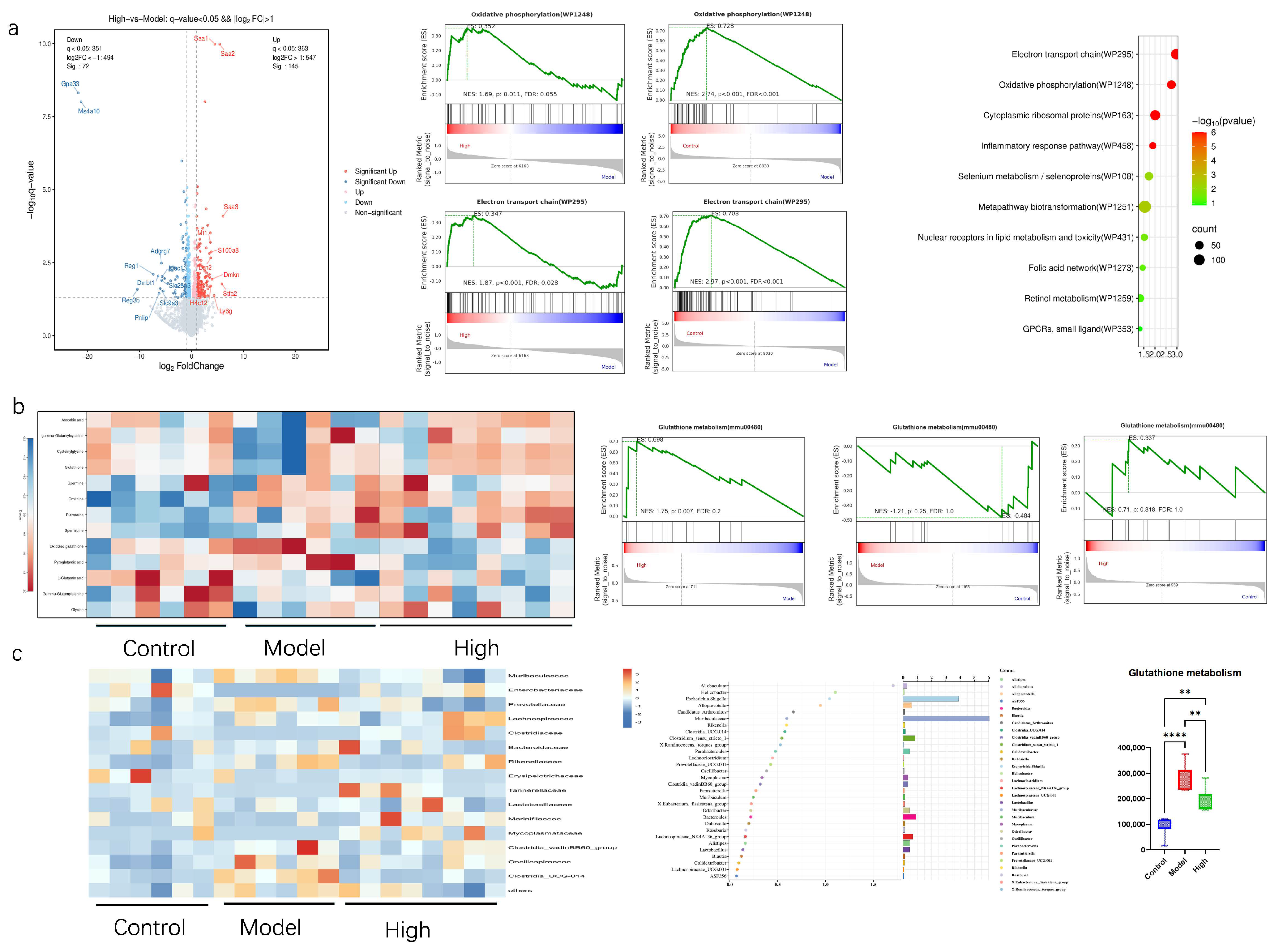
Mitochondrial dysfunction and excessive ROS accumulation are core upstream drivers of autoimmune liver injury, which not only directly cause hepatocyte damage but also activate the downstream cGAS-STING inflammatory cascade. To gain insight into the hepatoprotective action of trifolirhizin, we first performed transcriptomic analysis of liver tissues from the Model and high-dose trifolirhizin groups. Independent GSEA of the transcriptomic data revealed that oxidative phosphorylation and mitochondrial electron transport chain were the top differentially enriched biological processes between the Model and Control groups (
Figure 2a). Notably, gene sets associated with oxidative phosphorylation and the electron transport chain were significantly downregulated in the Model group compared with healthy controls. High-dose trifolirhizin treatment restored the expression of these genes, returning them toward the Control level.
Glutathione metabolism emerged as a shared signal across host and microbial compartments, albeit with distinct regulatory patterns. Metabolomic profiling revealed that glutathione metabolism did not differ significantly between the Model and Control groups, yet was significantly altered following high-dose trifolirhizin treatment compared with the Model group (
Figure 2b). Notably, the treated group also showed no significant difference from the Control group, indicating that the drug-induced shift was moderate and did not drive glutathione metabolism beyond the physiological range. In the gut microbiota, metagenomic functional prediction of fecal DNA revealed a more pronounced remodeling: glutathione metabolism was significantly altered both between the Model and Control groups and between the Model and High-dose groups (
Figure 2c). Importantly, the microbial glutathione metabolism signature in the High-dose group remained significantly different from that of the Control group. These findings suggest that glutathione metabolism is differentially engaged across tissues—the liver maintains partial homeostatic control that is reinforced by trifolirhizin, whereas the gut microbiota undergoes more extensive remodeling that does not simply revert to the healthy baseline. The co-occurrence of glutathione pathway alterations in both compartments points to a coordinated, yet compartment-specific, redox metabolic response to trifolirhizin treatment in autoimmune liver injury.
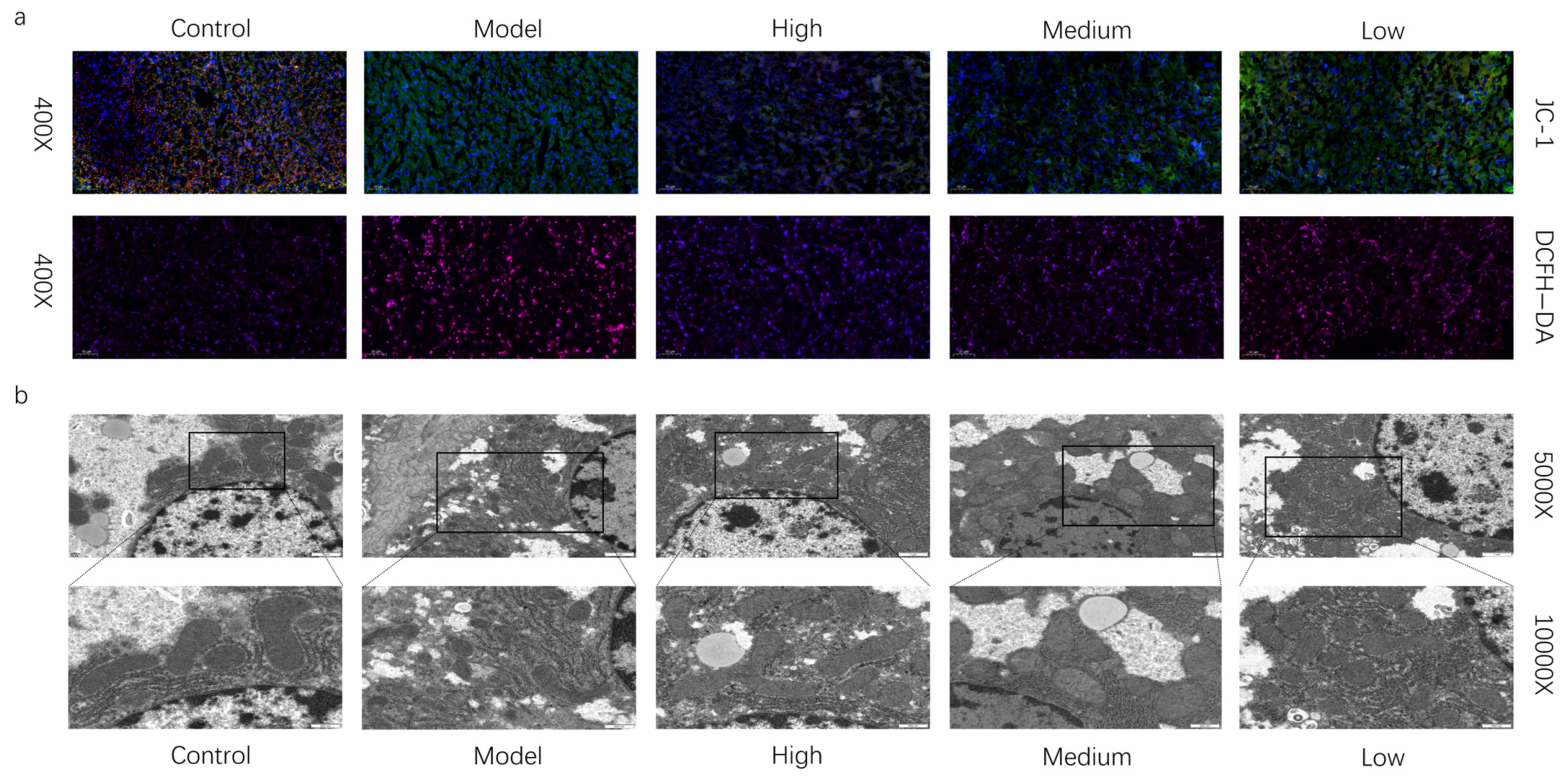
These multi-omics findings prompted us to directly evaluate mitochondrial integrity and redox status in the liver. We therefore examined ΔΨm, ROS levels, and mitochondrial ultrastructure in the liver tissues of NOD mice. As shown in
Figure 3a, JC-1 staining revealed that the Control group exhibited strong red/orange fluorescence, indicating intact mitochondrial function and high ΔΨm. In contrast, the Model group showed a dramatic shift to green fluorescence, confirming severe mitochondrial depolarization and ΔΨm collapse. Trifolirhizin treatment dose-dependently restored ΔΨm: the High-dose group displayed fluorescence intensity comparable to the Control group, while the Medium and Low-dose groups exhibited gradual recovery of red/orange fluorescence with residual green signal. For ROS detection, DCFH-DA staining demonstrated that the Model group had markedly enhanced fluorescence, reflecting massive ROS accumulation in hepatic tissue. Trifolirhizin treatment significantly reduced ROS fluorescence intensity in a dose-dependent manner, with the High-dose group showing the most potent ROS-scavenging effect, nearly returning to the Control level.
Transmission electron microscopy (TEM) was performed to directly visualize the ultrastructural consequences of these functional changes (
Figure 3b). In the Control group, mitochondria presented normal morphology with intact double membranes and clear, dense cristae. The Model group exhibited severe mitochondrial damage, including marked swelling, vacuolization, membrane rupture, and cristae disappearance, consistent with the ΔΨm collapse and ROS overproduction described above. High-dose trifolirhizin treatment effectively reversed these ultrastructural injuries: mitochondria displayed intact membranes, well-organized cristae, and normal morphology, closely resembling the Control group. The Medium-dose group showed moderate structural improvement, while the Low-dose group still exhibited obvious mitochondrial swelling and structural damage, similar to the Model group.
Taken together, these multi-omics and imaging findings systematically establish that trifolirhizin restores hepatic redox homeostasis and mitochondrial bioenergetics. The transcriptional restoration of oxidative phosphorylation and electron transport chain genes, the coordinated alterations in glutathione metabolism across liver and gut microbiota, and the structural and functional preservation of mitochondria converge to identify redox regulation and mitochondrial integrity as the central targets of trifolirhizin in autoimmune liver injury.
3.3. Regulatory Effects of Trifolirhizin on the cGAS-STING Inflammatory Axis in the NOD Mouse Model
The cGAS-STING signaling axis is a central regulator of innate immune and inflammatory responses, whose aberrant activation is critically implicated in the pathogenesis of autoimmune diseases in NOD mice. To elucidate the immunomodulatory mechanism of Trifolirhizin in the NOD model, we evaluated the protein expression of core components in the cGAS-STING signaling pathway using Western blotting.
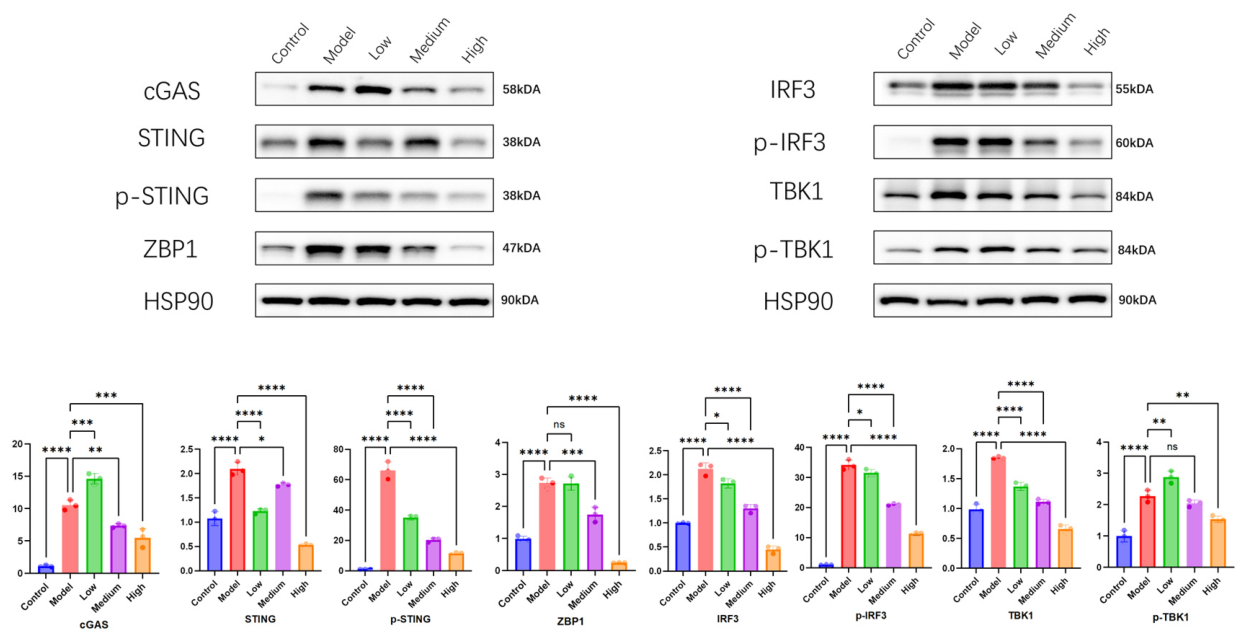
As shown in
Figure 4, compared with the normal Control group, the NOD model group exhibited a remarkable upregulation in the protein levels of cGAS, total STING, phosphorylated STING (p-STING), and ZBP1 (
p < 0.0001), indicating robust activation of the cGAS-STING pathway in the NOD model. Treatment with Trifolirhizin exerted a dose-dependent regulatory effect on these proteins: the Low-dose Trifolirhizin group showed no inhibitory effect, and even further increased cGAS expression compared with the Model group; in contrast, Medium and High doses of Trifolirhizin significantly downregulated the protein levels of cGAS, p-STING, and ZBP1 (
p < 0.01,
p < 0.001 or
p < 0.0001 vs. Model group).
We further examined the downstream effector molecules of the cGAS-STING pathway, namely TBK1 and IRF3. Compared with the Control group, the protein levels of total IRF3, phosphorylated IRF3 (p-IRF3), total TBK1, and phosphorylated TBK1 (p-TBK1) were all significantly elevated in the Model group (p < 0.05, p < 0.01 or p < 0.0001), confirming the excessive activation of the downstream inflammatory cascade in NOD mice. Consistent with the upstream molecules, Low-dose Trifolirhizin did not suppress the upregulation of these proteins, and even slightly increased the expression of p-IRF3, total TBK1, and p-TBK1 compared with the Model group. In contrast, Medium and High doses of Trifolirhizin significantly inhibited the phosphorylation of TBK1 and IRF3 in a dose-dependent manner, with marked reductions in p-TBK1 and p-IRF3 levels observed in the High-dose groups (p < 0.01, p < 0.001 or p < 0.0001 vs. Model group). It is worth noting that there was no significant difference in p-TBK1 expression between the Medium-dose Trifolirhizin group and the Model group, suggesting that Trifolirhizin mainly modulates TBK1 activity by inhibiting its phosphorylation, rather than affecting its total protein expression.
Taken together, these findings demonstrate that Medium and High doses of Trifolirhizin can effectively inhibit the hyperactivation of the cGAS-STING inflammatory signaling pathway in NOD mice, which may serve as a key molecular mechanism underlying the protective effect of Trifolirhizin against autoimmune injury in the NOD model.
3.4. High-Dose Trifolirhizin (25 µM) Optimally Protects Antioxidant Enzymes and Suppresses the cGAS-STING Axis in H2O2-Treated HepG2 Cells
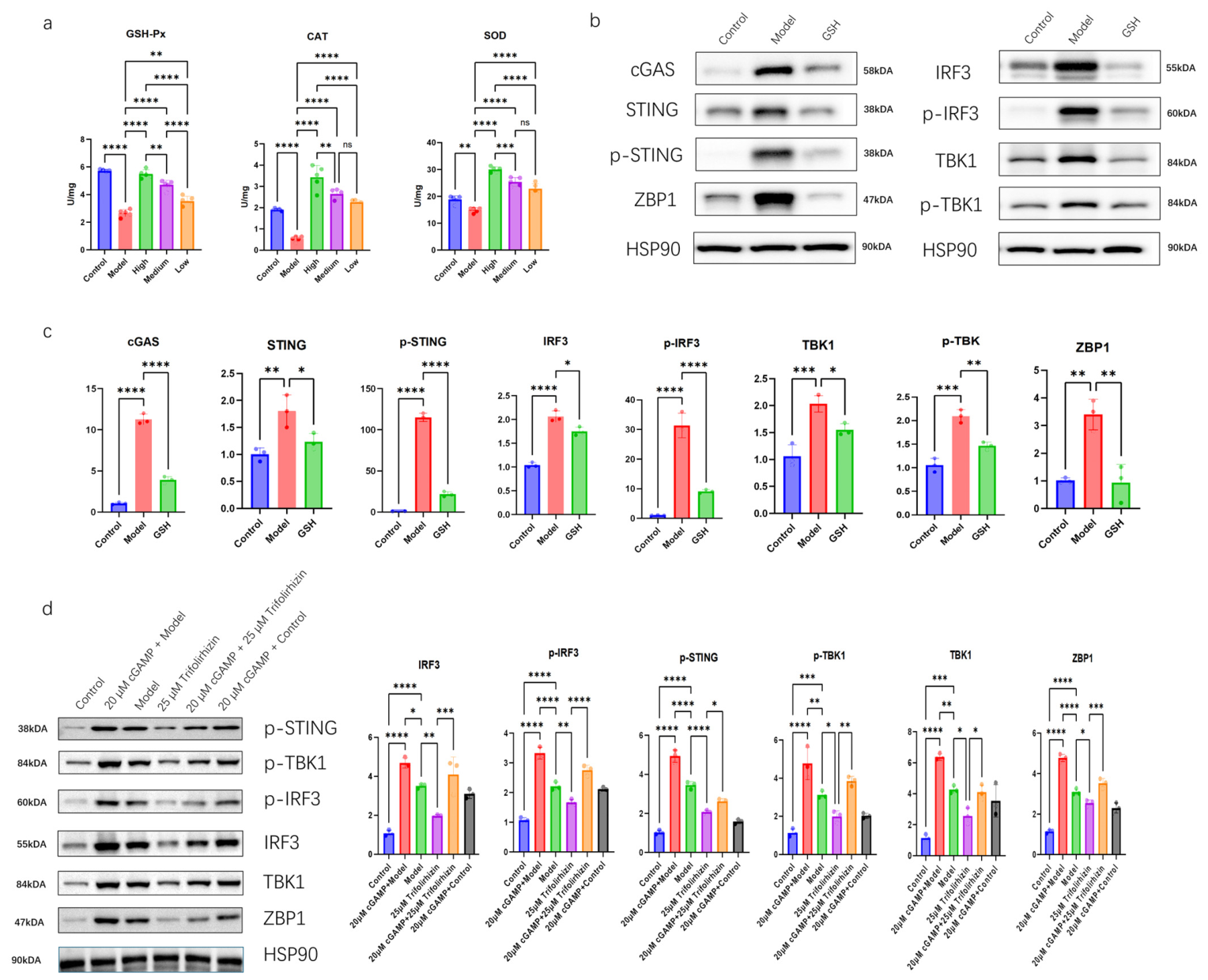
Oxidative stress is driven by the imbalance between reactive oxygen species accumulation and cellular antioxidant defense capacity, where SOD, CAT, and GSH-Px are the core endogenous antioxidant enzymes that maintain cellular redox homeostasis [
17]. To evaluate the antioxidant effect of Trifolirhizin and screen the optimal intervention dose for subsequent mechanistic studies, we first detected the activities of these three antioxidant enzymes in H
2O
2-induced oxidative stress HepG2 cells treated with gradient doses of Trifolirhizin.
As shown in
Figure 5a, compared with the normal Control group, the H
2O
2-stimulated Model group exhibited a dramatic and significant reduction in the activities of SOD, CAT, and GSH-Px, indicating severe impairment of the cellular antioxidant system under oxidative stress. Trifolirhizin treatment exerted a dose-dependent protective effect on antioxidant enzyme activities: Low and Medium doses of Trifolirhizin moderately but significantly increased the activities of SOD, CAT, and GSH-Px compared with the Model group, while High-dose (25 µM) Trifolirhizin showed the most potent recovery effect. Notably, the activities of SOD and CAT in the High-dose Trifolirhizin group were significantly better than those of the Medium and Low-dose groups. Given the optimal antioxidant performance of High-dose Trifolirhizin in restoring cellular antioxidant defense capacity, we selected the high-dose intervention for subsequent molecular mechanism studies.
To determine whether ROS serves as a key upstream trigger for the cGAS-STING pathway, we examined the effect of glutathione (GSH) in H
2O
2-challenged HepG2 cells, a well-established model of oxidative stress. As shown in
Figure 5b,c, the protein levels of cGAS, total STING, p-STING, and ZBP1 were markedly elevated in the Model group compared with the Control group, confirming that H
2O
2-derived ROS are sufficient to activate this pathway. This activation was functionally propagated to downstream signaling, evidenced by significantly increased phosphorylation of TBK1 and IRF3 in the Model group. Moreover, GSH similarly attenuated cGAS-STING activation, further reinforcing that the removal of ROS is necessary and sufficient to block this pathway (
Figure 5b,c).
We next sought to determine whether Trifolirhizin exerts its protective effect specifically through targeting this pathway, using a pharmacological rescue experiment with the selective cGAS agonist 2′,3′-cGAMP (hereinafter referred to as cGAMP).
As shown in
Figure 5d, consistent with our previous results, H
2O
2 stimulation significantly upregulated the protein expression of total IRF3, TBK1, and ZBP1, as well as the phosphorylation levels of STING (p-STING), TBK1 (p-TBK1), and IRF3 (p-IRF3) in the Model group compared with the Control group (all ****
p < 0.0001). Treatment with 20 μM cGAMP further exacerbated the activation of the cGAS-STING pathway in H
2O
2-challenged cells, leading to an even more pronounced increase in the expression of all detected proteins compared with the Model group (**
p < 0.01 or ***
p < 0.001). In contrast, 25 μM Trifolirhizin treatment significantly attenuated the abnormal activation of the cGAS-STING-ZBP1 pathway induced by H
2O
2, reducing the expression levels of these proteins to near-normal levels.
Most critically, the rescue experiment revealed that co-treatment with cGAMP completely reversed the inhibitory effect of Trifolirhizin on the cGAS-STING pathway. The protein expression levels of p-STING, p-TBK1, p-IRF3, total IRF3, TBK1, and ZBP1 in the cGAMP + Trifolirhizin co-treatment group were significantly higher than those in the Trifolirhizin alone treatment group (** p < 0.01 or *** p < 0.001) and were statistically indistinguishable from those in the cGAMP alone treatment group. Additionally, treatment of normal HepG2 cells with cGAMP alone only slightly activated the cGAS-STING pathway, with a much lower activation degree than that observed in the H2O2-induced Model group.
These results provide pharmacological evidence that trifolirhizin acts upstream of STING, most likely by preserving mitochondrial integrity and limiting ROS/mtDNA leakage, thereby suppressing cGAS-STING signaling. The ability of cGAMP to abrogate the protective effect of trifolirhizin confirms that the cGAS-STING pathway is functionally required for its action, downstream of mitochondrial protection.
3.5. Trifolirhizin Mitigates Oxidative Stress Damage in HepG2 Cells Through Modulating Mitochondrial Function and Intracellular ROS Levels
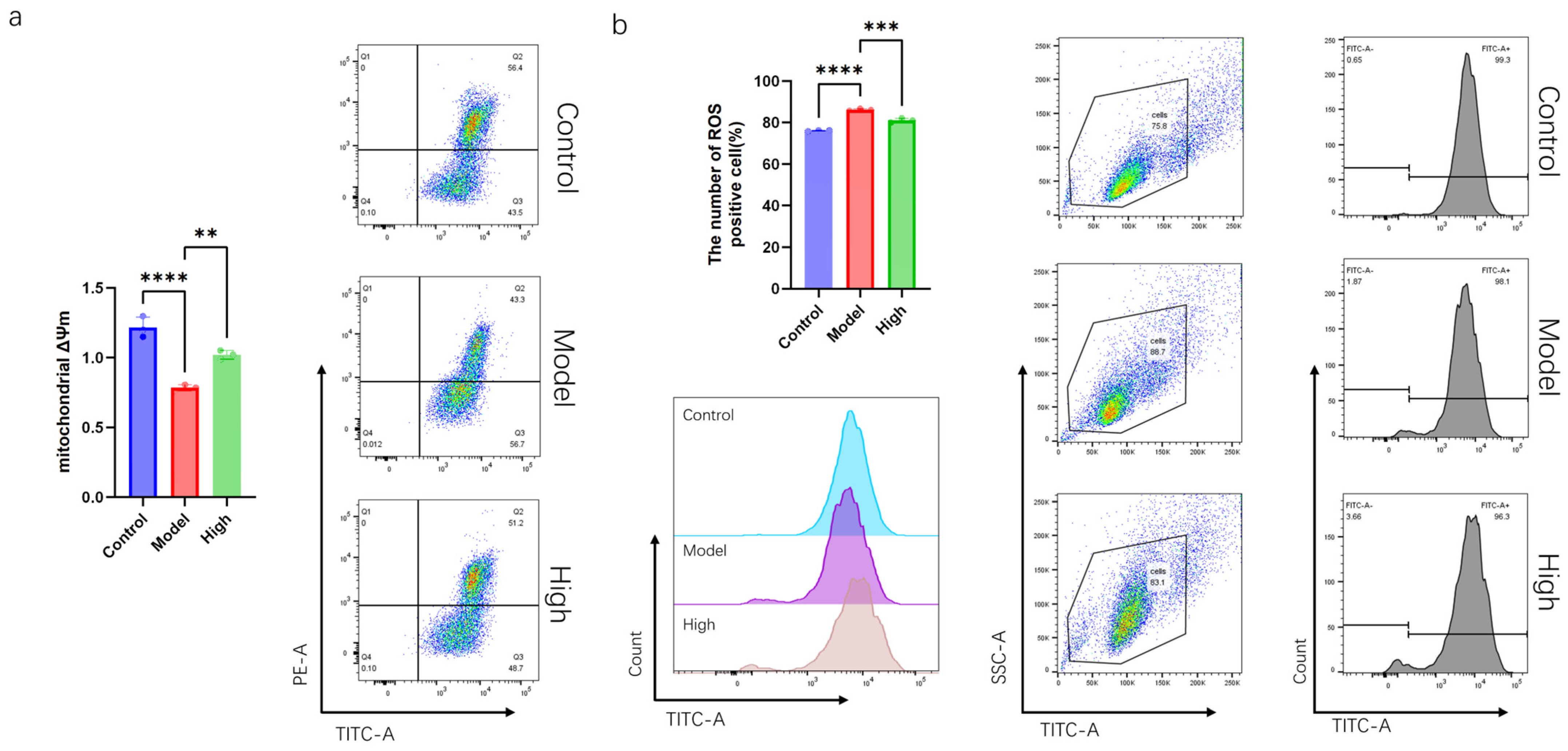
To investigate the protective mechanism of Trifolirhizin against oxidative stress in hepatocytes, flow cytometry was performed to assess mitochondrial function and intracellular ROS levels in H
2O
2-induced oxidative stress HepG2 cell models. As shown in
Figure 6a, JC-1 staining was used to evaluate ΔΨm, a critical indicator of mitochondrial integrity and function. Compared with the untreated Control group, the Model group exhibited a significant reduction in ΔΨm, confirming severe mitochondrial damage triggered by oxidative stress in HepG2 cells. Notably, treatment with high-dose Trifolirhizin effectively restored ΔΨm levels, with a statistically significant increase compared to the Model group, demonstrating its protective effect on mitochondrial function in hepatocytes.
For intracellular ROS detection, DCFH-DA staining was applied to quantify ROS-positive cells. As presented in
Figure 6b, the Model group showed a marked elevation in the percentage of ROS-positive cells, verifying the successful establishment of the oxidative stress model in HepG2 cells. Trifolirhizin treatment significantly decreased the proportion of ROS-positive cells, accompanied by a leftward shift in the ROS fluorescence intensity histogram, which further confirmed its robust ROS-scavenging activity in hepatocytes. Collectively, these results indicate that Trifolirhizin alleviates oxidative stress injury in HepG2 cells by inhibiting intracellular ROS accumulation and preserving mitochondrial membrane potential, highlighting its potential as a hepatoprotective agent against oxidative stress-related liver damage.
3.6. Trifolirhizin Restores Glycolytic Function and Mitochondrial Respiratory Capacity in Oxidative Stress-Injured HepG2 Cells
Cellular energy homeostasis, mainly sustained by glycolysis and mitochondrial oxidative phosphorylation (OXPHOS), is tightly coupled with cellular redox state, and mitochondrial dysfunction is a core hallmark of oxidative stress-induced hepatocyte injury [
18]. To further elucidate the protective mechanism of Trifolirhizin against oxidative stress in HepG2 cells, we performed a Seahorse extracellular flux assay to systematically evaluate the effects of Trifolirhizin on glycolytic function and mitochondrial respiratory capacity.
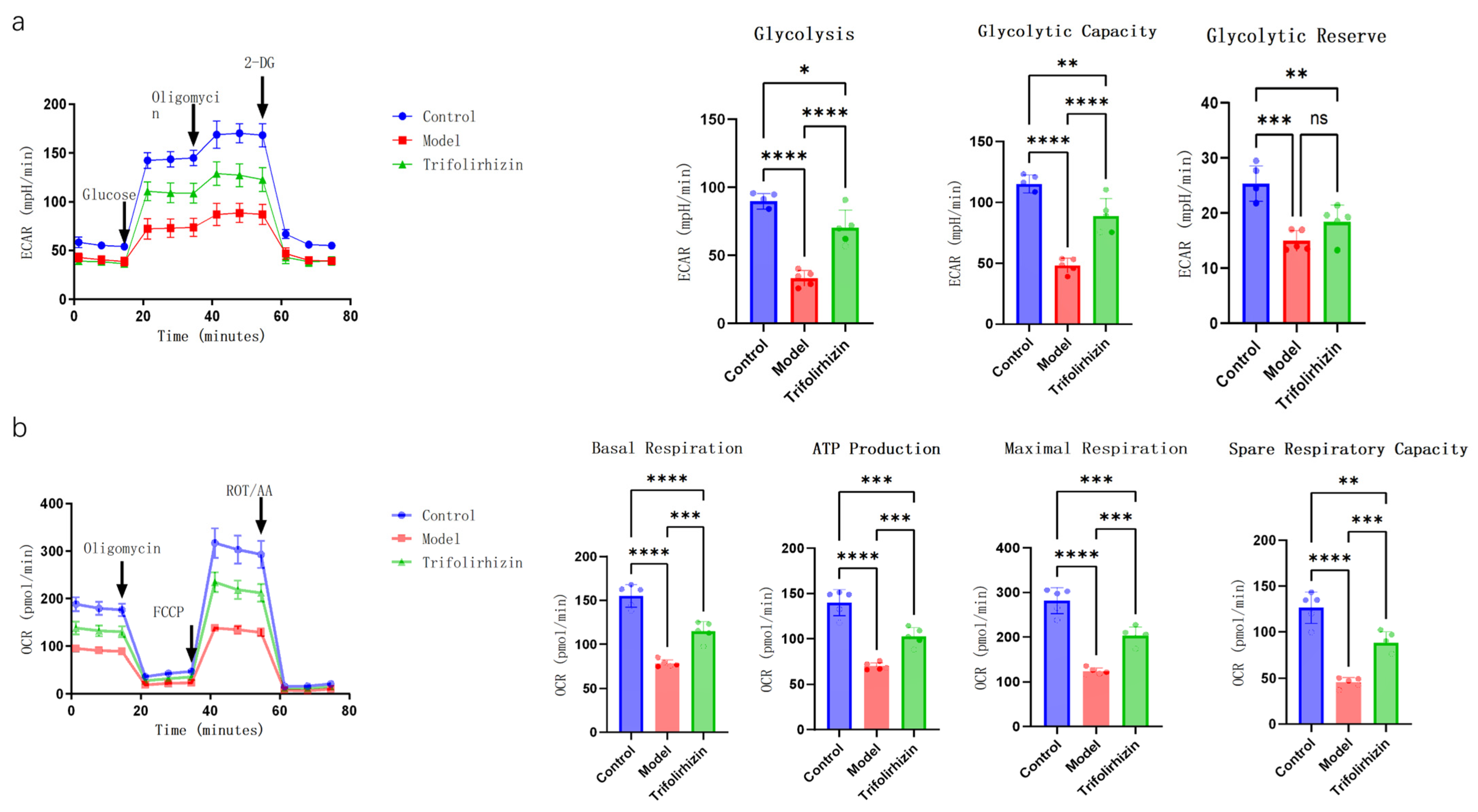
As shown in
Figure 7a, extracellular acidification rate (ECAR) was continuously monitored to assess glycolytic function via sequential drug intervention. Compared with the normal Control group, the H
2O
2-induced Model group exhibited a dramatic and global impairment of glycolytic function, with significant reductions in Glycolysis, Glycolytic Capacity, and Glycolytic Reserve. These results indicated that oxidative stress severely disrupted the glycolytic energy supply system in HepG2 cells. Encouragingly, High-dose Trifolirhizin treatment effectively reversed these glycolytic defects: it markedly elevated the levels of Glycolysis and Glycolytic Capacity compared with the Model group, demonstrating that Trifolirhizin effectively preserved the glycolytic function and adaptive capacity of hepatocytes under oxidative stress.
We further evaluated mitochondrial oxidative phosphorylation function by measuring the OCR (
Figure 7b). Compared with the Control group, the Model group showed severe mitochondrial respiratory dysfunction, with remarkable decreases in all core respiratory indicators: Basal Respiration, ATP Production, Maximal Respiration, and Spare Respiratory Capacity. These findings confirmed that oxidative stress caused irreversible damage to mitochondrial electron transport chain function, leading to defective mitochondrial energy production and reduced stress tolerance in HepG2 cells. Notably, Trifolirhizin treatment significantly mitigated this mitochondrial injury: it markedly upregulated all the above mitochondrial respiratory parameters compared with the Model group, indicating that Trifolirhizin could effectively restore mitochondrial oxidative phosphorylation capacity, maintain cellular ATP supply, and enhance the respiratory reserve capacity of hepatocytes under oxidative stress.
Collectively, these results demonstrate that Trifolirhizin can preserve both glycolytic function and mitochondrial respiratory capacity in oxidative stress-injured HepG2 cells, thereby maintaining cellular energy homeostasis, which is highly consistent with our previous findings that Trifolirhizin protects mitochondrial membrane potential and inhibits intracellular ROS accumulation.
4. Discussion
In the present study, we systematically demonstrated that trifolirhizin not only ameliorates pSS-like manifestations—as evidenced by improved salivary flow and reduced polydipsia—but also attenuates the associated hepatic injury in NOD mice. The hepatoprotective effect is underpinned by preservation of mitochondrial integrity and suppression of the ROS/cGAS-STING signaling cascade.
The NOD mouse is a well-established spontaneous model that recapitulates both primary Sjögren’s syndrome (pSS)-like exocrinopathy and systemic autoimmune features. In female NOD mice, overt type 1 diabetes (T1D) typically develops after 12–14 weeks of age [
19]. Notably, early hepatic injury in NOD mice has been shown to be accompanied by oxidative stress and mitochondrial damage [
20,
21]. In the present study, we therefore selected an 8–12-week treatment window, a period that precedes the onset of overt diabetes in this strain. Blood glucose monitoring confirmed that all NOD groups remained normoglycemic throughout the experiment, thereby excluding confounding metabolic improvement. This design allows us to specifically investigate autoimmune-driven, rather than hyperglycemia-driven, liver injury in the context of pSS.
A central finding of this study is the remarkable preservation of mitochondrial structure and function by trifolirhizin in the face of autoimmune oxidative stress. Mitochondrial swelling, cristae loss, and membrane rupture, as visualized by TEM, are hallmarks of severe hepatocyte injury in the NOD model. Trifolirhizin reversed these ultrastructural defects, restored ΔΨm, and effectively scavenged excessive ROS in both liver tissue and cultured hepatocytes. Crucially, we extended these morphological and biochemical observations to the functional level: Seahorse extracellular flux analysis demonstrated that trifolirhizin rescues both glycolytic function and mitochondrial respiratory capacity in oxidatively stressed HepG2 cells. The significant recovery of basal respiration, ATP production, maximal respiration, and spare respiratory capacity indicates that trifolirhizin not only protects the structural integrity of mitochondria but also preserves the bioenergetic flexibility required for hepatocyte survival under stress. These functional data provide a robust mechanistic bridge between the observed ultrastructural improvements and the attenuation of cell death and inflammation.
To gain a systems-level understanding of the protective mechanism, we performed integrated transcriptomic and metabolomic profiling of liver tissues [
22]. The multi-omics data independently converged on pathways central to our hypothesis: gene set enrichment analysis highlighted oxidative stress responses and the mitochondrial electron transport chain as the most significantly altered biological processes after trifolirhizin treatment, while metabolomic analysis pinpointed glutathione metabolism as the core differentially regulated pathway. ROS are widely regarded as detrimental factors involved in cellular dysfunction [
23,
24]. The restoration of glutathione levels and the transcriptional upregulation of oxidative phosphorylation genes provide convergent evidence that trifolirhizin rewires the hepatic redox and energy homeostasis networks disrupted by autoimmune inflammation. This approach not only corroborates our targeted measurements of antioxidant enzyme activities (SOD, CAT, GSH-Px) but also reveals the broader metabolic landscape upon which trifolirhizin exerts its protective effects. The independent enrichment of oxidative phosphorylation in the gut microbiota provides additional systems-level support for a redox-centric mechanism. Although prokaryotic oxidative phosphorylation differs structurally from mitochondrial OXPHOS, its prominence as the top-ranked altered microbial pathway implies a broad “energy-redox remodeling” effect of trifolirhizin. Given the gut–liver metabolic axis, it is plausible that restoration of microbial energy metabolism contributes to the systemic antioxidant environment and the replenishment of GSH precursors, thereby indirectly reinforcing hepatic mitochondrial protection.
The mechanistic link between mitochondrial protection and suppression of innate immune signaling was established through our investigation of the cGAS-STING pathway. We found that the cGAS-STING axis was robustly activated in the livers of NOD mice, as evidenced by upregulated cGAS, phosphorylated STING, ZBP1, and the downstream phosphorylation of TBK1 and IRF3. Trifolirhizin dose-dependently suppressed this hyperactivation. In vitro, H2O2-derived ROS were sufficient to trigger the cGAS-STING pathway, and the antioxidant glutathione similarly attenuated this activation, confirming that ROS is a requisite upstream signal. The pharmacological rescue experiment using the cGAS agonist cGAMP further demonstrated that exogenous cGAMP overrides the inhibitory effect of trifolirhizin on STING, TBK1, and IRF3 phosphorylation, indicating that trifolirhizin acts at or upstream of cGAS to prevent signal propagation along this axis. However, we explicitly note that while the cGAMP rescue experiment establishes the functional relevance of the cGAS-STING pathway to trifolirhizin’s protective effects, it does not prove that this axis is the exclusive or indispensable mediator. The restoration of pathway activity by exogenous cGAMP could equally be explained by the fact that cGAMP bypasses the mitochondrial protection afforded by trifolirhizin, rather than indicating direct pharmacological targeting of cGAS itself. It remains plausible that the primary action of trifolirhizin lies in preserving mitochondrial membrane integrity and reducing mtDNA/ROS leakage, with the consequent dampening of cGAS-STING signaling being a critical downstream consequence. Definitive discrimination between these possibilities will require complementary loss-of-function approaches, such as siRNA-mediated silencing or genetic knockout of cGAS or STING, which constitute the logical next step of this investigation.
At the lowest dose of trifolirhizin, we observed an unexpected pattern: cGAS protein expression was increased, whereas STING expression was decreased; moreover, p-IRF3, total TBK1, and p-TBK1 were not reduced and even mildly elevated compared with the model group. Importantly, this paradoxical upregulation was not observed in the rescue experiments, suggesting that it is unlikely to reflect a canonical pharmacological action of trifolirhizin on the cGAS–STING axis. We therefore speculate that this low-dose phenomenon may be attributable to two interrelated factors. First, low-dose trifolirhizin may induce mild cellular stress or subclinical toxicity, which could non-specifically perturb intracellular homeostasis and trigger compensatory innate immune responses, including cGAS upregulation. Second, natural small molecules frequently exhibit polypharmacology, and dose-dependent multi-target effects are also commonly observed, as exemplified by metformin’s activation of AMPK [
25,
26]. At low concentrations, trifolirhizin might engage off-target pathways that intersect with TBK1–IRF3 signaling independently of STING, while its primary on-target STING inhibition becomes dominant only at higher doses. Consistent with this interpretation, the discrepancies disappeared at medium and high doses and were absent in the rescue setting. Taken together, the low-dose effects likely represent off-target or stress-related responses rather than a specific regulatory feature of trifolirhizin on the cGAS–STING pathway. Caution is therefore warranted when interpreting pharmacological effects observed only at the lowest dose.
The present study has several additional limitations that should inform future work. First, although we focused on the liver as a mitochondria-rich model organ well-suited for mechanistic validation, we did not evaluate the protective efficacy of trifolirhizin in the canonical target organs of NOD mice, specifically the pancreas and salivary glands. Establishing whether the mitochondrial protection observed in hepatocytes translates to these tissues will be essential for determining the full therapeutic potential of trifolirhizin in pSS and T1DM. Second, pharmacokinetic and long-term toxicity studies of trifolirhizin were not conducted, and its in vivo metabolic fate and chronic safety profile remain to be clarified before clinical translation can be contemplated. Third, beyond the cGAS-STING axis, other ROS-responsive innate immune sensors (e.g., NLRP3 inflammasome) may also be modulated by trifolirhizin and contribute to its anti-inflammatory effects; broader pathway profiling is warranted. Another limitation of the present study is that we did not include a drug withdrawal phase; therefore, the durability of the beneficial effects of trifolirhizin on liver integrity and function after treatment cessation remains unknown. Future studies incorporating a washout or post-treatment follow-up design will be necessary to determine the persistence of its hepatoprotective action. Furthermore, while we monitored blood glucose and body weight without detecting inter-group differences, more comprehensive metabolic profiling (e.g., fructosamine, insulin levels) would further strengthen the conclusion that the hepatoprotective effects are independent of glycemic control. Future studies should also examine the effect of trifolirhizin on other pSS-target organs, such as the lacrimal glands and pancreas, to comprehensively assess its therapeutic potential.




 ,
,