Influence of Excipients on the Release Kinetics and Antioxidant Activity of Encapsulated Propolis Phenolic Compounds
 and
and
Abstract
1. Introduction
2. Materials and Methods
2.1. Materials
2.2. Preparation of Propolis Extract
2.3. Encapsulation Process
2.4. Disintegration Test
2.5. Dissolution Test
2.6. Determination of Total Phenolic Content
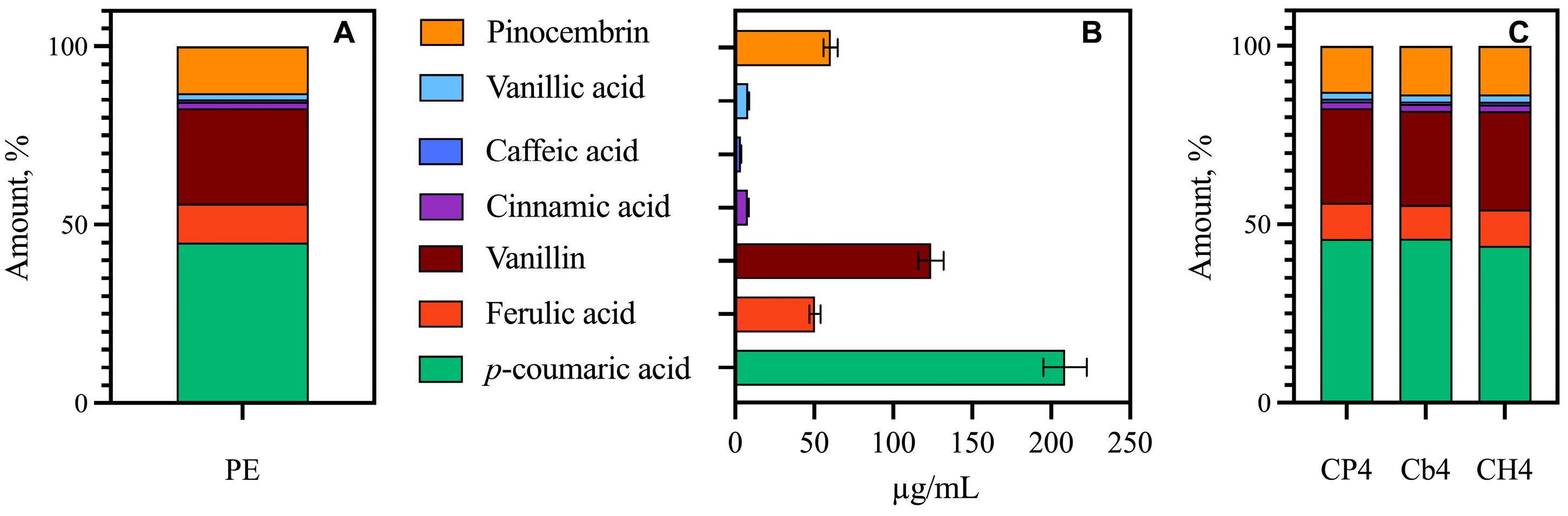
2.7. Phenolic Compounds Determination by HPLC
2.8. Determination of Antioxidant Activity by DPPH and ABTS Radical Scavenging Assay
2.9. Statistical Analysis
3. Results and Discussion
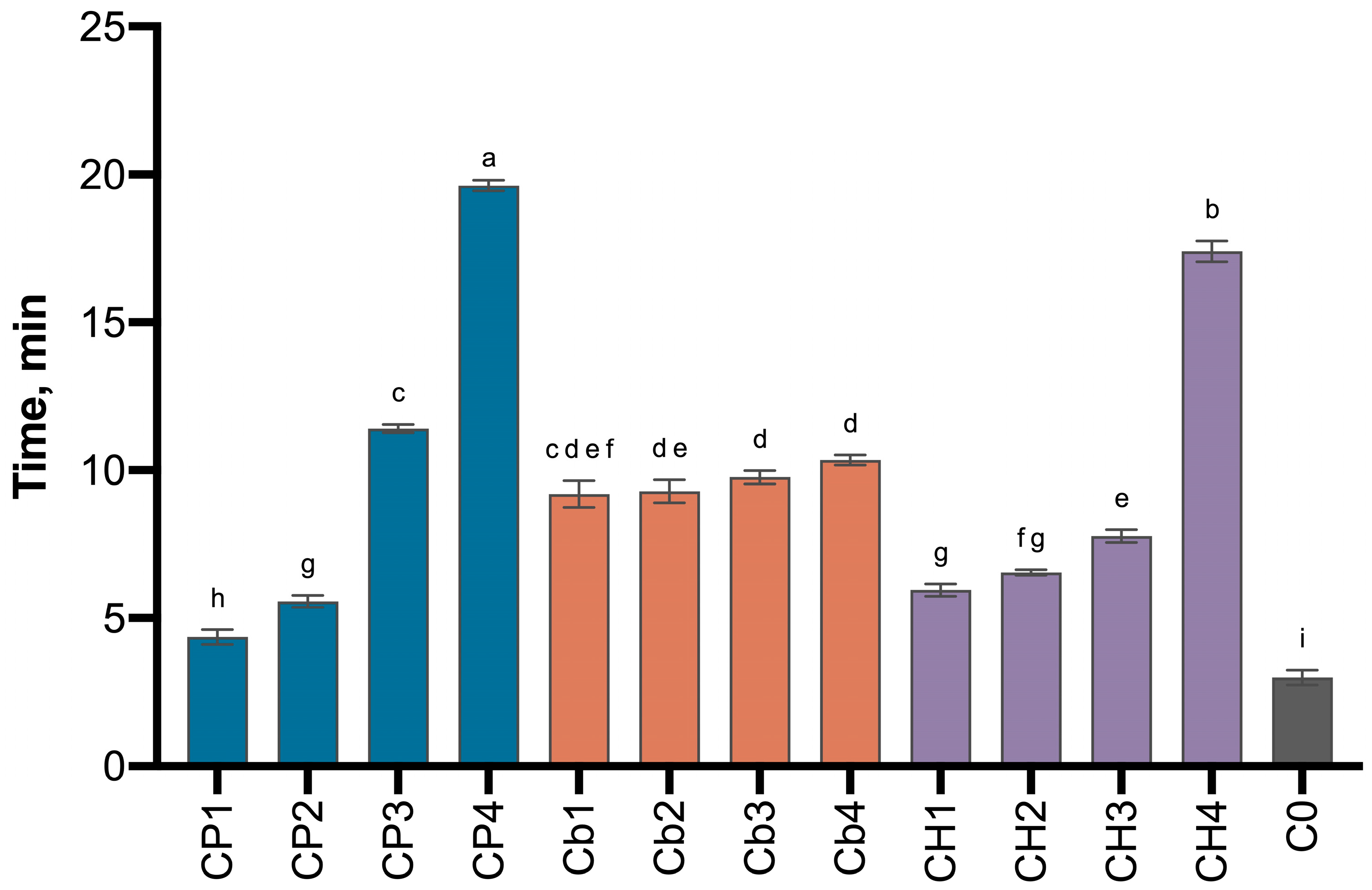
3.1. Disintegration of Encapsulated Propolis Dry Extract Formulations
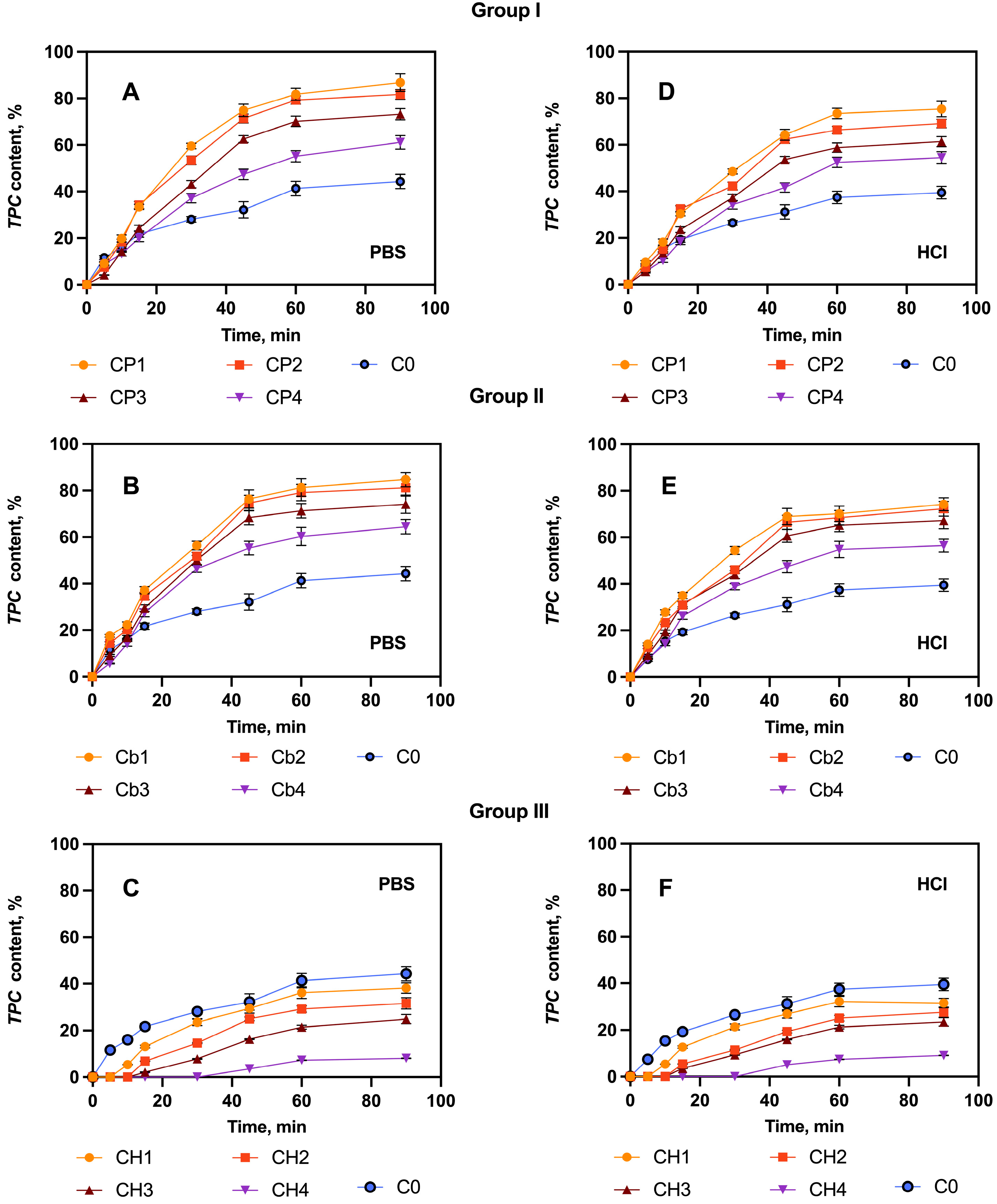
3.2. Dissolution of Encapsulated Propolis Dry Extract Formulations
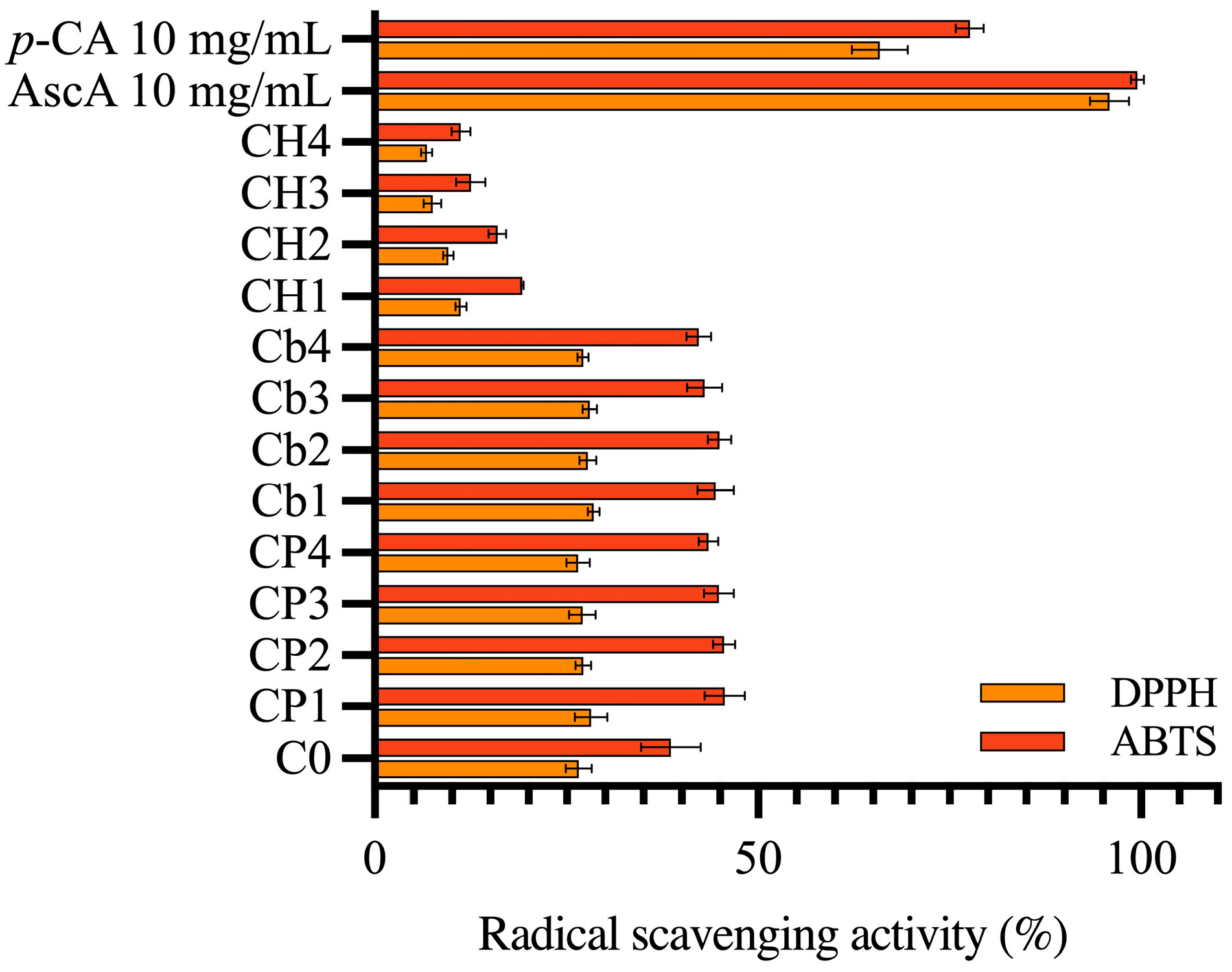
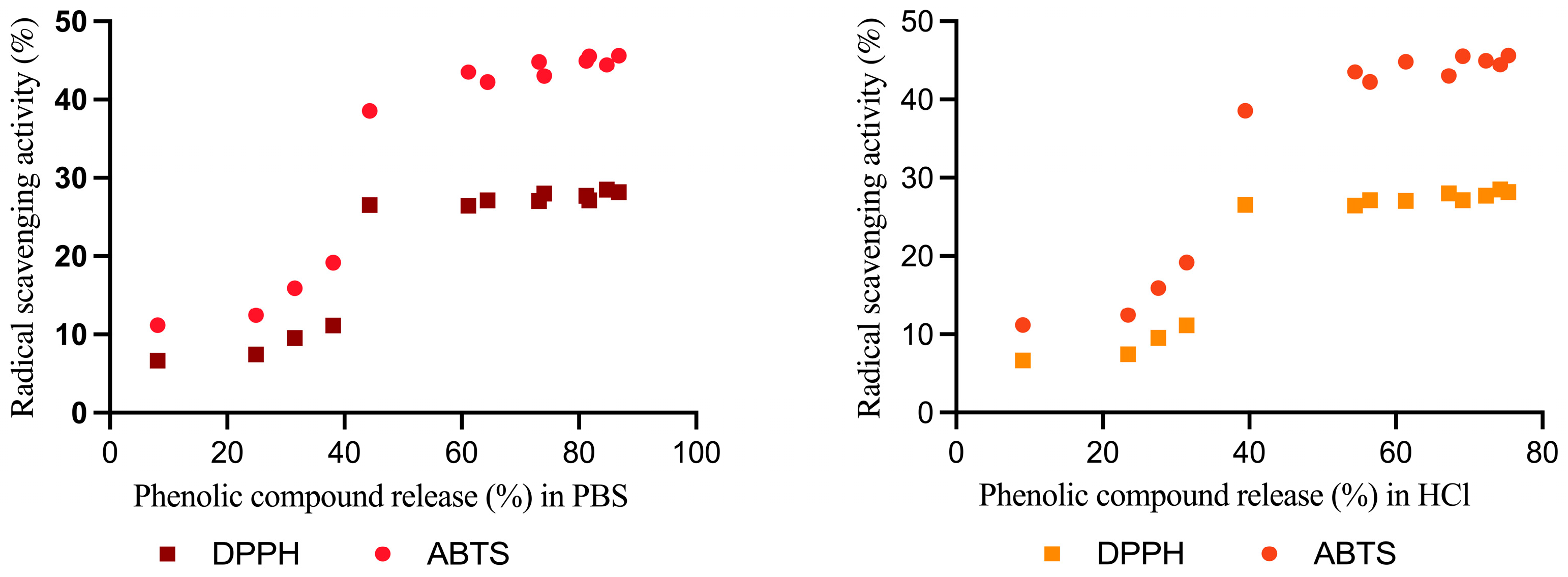
3.3. Antioxidant Activity
4. Conclusions
Author Contributions
Funding
Institutional Review Board Statement
Informed Consent Statement
Data Availability Statement
Conflicts of Interest
References
- Almuhayawi, M.S. Propolis as a Novel Antibacterial Agent. Saudi J. Biol. Sci. 2020, 27, 3079–3086. [Google Scholar] [CrossRef] [PubMed]
- Alpat, U.; Nar, T.; Karasu, S.; Sagdic, O. Optimization of Propolis Extraction with Natural Deep Eutectic Solvents Using Central Composite Design. Phytochem. Lett. 2023, 58, 49–59. [Google Scholar] [CrossRef]
- Balica, G.; Vostinaru, O.; Stefanescu, C.; Mogosan, C.; Iaru, I.; Cristina, A.; Pop, C.E. Potential Role of Propolis in the Prevention and Treatment of Metabolic Diseases. Plants 2021, 10, 883. [Google Scholar] [CrossRef] [PubMed]
- Bankova, V.S.; de Castro, S.L.; Marcucci, M.C. Propolis: Recent Advances in Chemistry and Plant Origin. Apidologie 2000, 31, 3–15. [Google Scholar] [CrossRef]
- da Rosa, C.; Bueno, I.L.; Quaresma, A.C.; Longato, G.B. Healing Potential of Propolis in Skin Wounds Evidenced by Clinical Studies. Pharmaceuticals 2022, 15, 1143. [Google Scholar] [CrossRef] [PubMed]
- Alanazi, S.; Alenzi, N.D. Phytochemical Profiling and Characterization of Flavonoid Derivatives from Propolis Sample and Investigation of Cytotoxic and Antiprotozoal Activities. Sci. Rep. 2024, 14, 21295. [Google Scholar] [CrossRef] [PubMed]
- Oršolić, N.; Jazvinšćak Jembrek, M. Molecular and Cellular Mechanisms of Propolis and Its Polyphenolic Compounds against Cancer. Int. J. Mol. Sci. 2022, 23, 10479. [Google Scholar] [CrossRef] [PubMed]
- Ahangari, Z.; Naseri, M.; Vatandoost, F. Propolis: Chemical Composition and Its Applications in Endodontics. Iran. Endod. J. 2018, 13, 285–292. [Google Scholar] [CrossRef] [PubMed]
- Dezmirean, D.S.; Paşca, C.; Moise, A.R.; Bobiş, O. Plant Sources Responsible for the Chemical Composition and Main Bioactive Properties of Poplar-Type Propolis. Plants 2021, 10, 22. [Google Scholar] [CrossRef]
- Gregoris, E.; Stevanato, R. Correlations between Polyphenolic Composition and Antioxidant Activity of Venetian Propolis. Food Chem. Toxicol. 2010, 48, 76–82. [Google Scholar] [CrossRef] [PubMed]
- Bankova, V. Chemical Diversity of Propolis and the Problem of Standardization. J. Ethnopharmacol. 2005, 100, 114–117. [Google Scholar] [CrossRef] [PubMed]
- Cao, X.-P.; Chen, Y.-F.; Zhang, J.-L.; You, M.-M.; Wang, K.; Hu, F.-L. Mechanisms Underlying the Wound Healing Potential of Propolis Based on Its in Vitro Antioxidant Activity. Phytomedicine 2017, 34, 76–84. [Google Scholar] [CrossRef] [PubMed]
- Hossain, R.; Quispe, C.; Khan, R.A.; Saikat, A.S.M.; Ray, P.; Ongalbek, D.; Yeskaliyeva, B.; Jain, D.; Smeriglio, A.; Trombetta, D.; et al. Propolis: An Update on Its Chemistry and Pharmacological Applications. Chin. Med. 2022, 17, 100. [Google Scholar] [CrossRef] [PubMed]
- Ayad, A.S.; Benchaabane, S.; Daas, T.; Smagghe, G.; Loucif-Ayad, W. Propolis Stands out as a Multifaceted Natural Product: Meta-Analysis on Its Sources, Bioactivities, Applications, and Future Perspectives. Life 2025, 15, 764. [Google Scholar] [CrossRef] [PubMed]
- Irigoiti, Y.; Navarro, A.; Yamul, D.; Libonatti, C.; Tabera, A.; Basualdo, M. The Use of Propolis as a Functional Food Ingredient: A Review. Trends Food Sci. Technol. 2021, 115, 297–306. [Google Scholar] [CrossRef]
- Wieczorek, P.P.; Hudz, N.; Yezerska, O.; Horčinová-Sedláčková, V.; Shanaida, M.; Korytniuk, O.; Jasicka-Misiak, I. Chemical Variability and Pharmacological Potential of Propolis as a Source for the Development of New Pharmaceutical Products. Molecules 2022, 27, 1600. [Google Scholar] [CrossRef] [PubMed]
- Gomes Sá, S.H.; Chalella Mazzocato, M.; Saliba, A.S.M.C.; Alencar, S.M.; Sílvia Favaro-Trindade, C. Evaluation of the Release, Stability and Antioxidant Activity of Brazilian Red Propolis Extract Encapsulated by Spray-Drying, Spray-Chilling and Using the Combination of Both Techniques. Food Res. Int. 2023, 164, 112423. [Google Scholar] [CrossRef] [PubMed]
- Bruschi, M.L. Recent Advances and Future Directions of Propolis Delivery. Expert Opin. Drug Deliv. 2025, 22, 1689–1708. [Google Scholar] [CrossRef] [PubMed]
- Shin, S.-B.; Lee, J.-K.; Ko, M.-J. Enhanced Extraction of Bioactive Compounds from Propolis (Apis mellifera L.) Using Subcritical Water. Sci. Rep. 2023, 13, 15038. [Google Scholar] [CrossRef] [PubMed]
- Kubiliene, L.; Laugaliene, V.; Pavilonis, A.; Maruska, A.; Majiene, D.; Barcauskaite, K.; Kubilius, R.; Kasparaviciene, G.; Savickas, A. Alternative Preparation of Propolis Extracts: Comparison of Their Composition and Biological Activities. BMC Complement. Altern. Med. 2015, 15, 156. [Google Scholar] [CrossRef] [PubMed]
- Curti, V.; Zaccaria, V.; Tsetegho Sokeng, A.J.; Dacrema, M.; Masiello, I.; Mascaro, A.; D’Antona, G.; Daglia, M. Bioavailability and In Vivo Antioxidant Activity of a Standardized Polyphenol Mixture Extracted from Brown Propolis. Int. J. Mol. Sci. 2019, 20, 1250. [Google Scholar] [CrossRef] [PubMed]
- Etebarian, A.; Alhouei, B.; Mohammadi-Nasrabadi, F.; Esfarjani, F. Propolis as a Functional Food and Promising Agent for Oral Health and Microbiota Balance: A Review Study. Food Sci. Nutr. 2024, 12, 5329–5340. [Google Scholar] [CrossRef] [PubMed]
- Tavares, L.; Smaoui, S.; Lima, P.S.; De Oliveira, M.M.; Santos, L. Propolis: Encapsulation and Application in the Food and Pharmaceutical Industries. Trends Food Sci. Technol. 2022, 127, 169–180. [Google Scholar] [CrossRef]
- González Montiel, L.; León-López, A.; García-Ceja, A.; Franco-Fernández, M.J.; Pérez-Soto, E.; Cenobio-Galindo, A.D.J.; Campos-Montiel, R.G.; Aguirre-Álvarez, G. Stability, Content of Bioactive Compounds and Antioxidant Activity of Emulsions with Propolis Extracts during Simulated In Vitro Digestion. Foods 2024, 13, 779. [Google Scholar] [CrossRef] [PubMed]
- Anvarifard, P.; Anbari, M.; Ostadrahimi, A.; Ardalan, M.; Ghoreishi, Z. A Comprehensive Insight into the Molecular and Cellular Mechanisms of the Effects of Propolis on Preserving Renal Function: A Systematic Review. Nutr. Metab. 2022, 19, 6. [Google Scholar] [CrossRef] [PubMed]
- Costa, S.; Barreto, I.C.; Gama, N.; Santos, K.; de Oliveira, C.M.; Costa, I.S.; Nova, M.V.; Santos, R.; Borges, A.; Filho, J.M.T.d.A.; et al. Patent-Based Technological Overview of Propolis–Cyclodextrin Inclusion Complexes with Pharmaceutical Potential. Pharmaceutics 2025, 17, 898. [Google Scholar] [CrossRef] [PubMed]
- Shah, T.J.; Amin, A.F.; Parikh, J.R.; Parikh, R.H. Process Optimization and Characterization of Poloxamer Solid Dispersions of a Poorly Water-Soluble Drug. AAPS PharmSciTech 2007, 8, E18–E24. [Google Scholar] [CrossRef] [PubMed]
- Tommasini, S.; Raneri, D.; Ficarra, R.; Calabrò, M.L.; Stancanelli, R.; Ficarra, P. Improvement in Solubility and Dissolution Rate of Flavonoids by Complexation with β-Cyclodextrin. J. Pharm. Biomed. Anal. 2004, 35, 379–387. [Google Scholar] [CrossRef] [PubMed]
- Fenyvesi, F.; Klusóczki, Á.; Rusznyák, Á.; Zsebik, B.; Bácskay, I.; Váradi, J. Cyclodextrin-Based Delivery Systems for Flavonoids: Mechanisms, Advances, Formulation, and Application Opportunities. Antioxidants 2025, 14, 998. [Google Scholar] [CrossRef] [PubMed]
- Xu, Y.; Wang, Y.; Li, C.; Han, T.; Chen, H.; Chen, W.; Zhong, Q.; Pei, J.; Haenen, G.R.M.M.; Li, Z.; et al. Preparation, Characterization, and Biological Activity of the Inclusion Complex of Dihydroquercetin and β-Cyclodextrin. AAPS Open 2023, 9, 16. [Google Scholar] [CrossRef]
- da Silva, J.B.; Cook, M.T.; Bruschi, M.L. Thermoresponsive Systems Composed of Poloxamer 407 and HPMC or NaCMC: Mechanical, Rheological and Sol-Gel Transition Analysis. Carbohydr. Polym. 2020, 240, 116268. [Google Scholar] [CrossRef] [PubMed]
- Siepmann, J.; Peppas, N.A. Modeling of Drug Release from Delivery Systems Based on Hydroxypropyl Methylcellulose (HPMC). Adv. Drug Deliv. Rev. 2012, 64, 163–174. [Google Scholar] [CrossRef]
- Vlad, R.-A.; Pintea, A.; Pintea, C.; Rédai, E.-M.; Antonoaea, P.; Bîrsan, M.; Ciurba, A. Hydroxypropyl Methylcellulose—A Key Excipient in Pharmaceutical Drug Delivery Systems. Pharmaceutics 2025, 17, 784. [Google Scholar] [CrossRef] [PubMed]
- Stanciauskaite, M.; Poskute, M.; Kurapkiene, V.; Marksa, M.; Jakstas, V.; Ivanauskas, L.; Kersiene, M.; Leskauskaite, D.; Ramanauskiene, K. Optimization of Delivery and Bioavailability of Encapsulated Caffeic Acid. Foods 2023, 12, 1993. [Google Scholar] [CrossRef] [PubMed]
- Jokubaite, M.; Jokubaityte-Tunkeviciene, V.; Ramanauskiene, K. Influence of Polymers Diversity on the Dissolution Kinetics of Encapsulated P-Coumaric Acid in Oral Systems. Gels 2025, 11, 983. [Google Scholar] [CrossRef] [PubMed]
- European Directorate for the Quality of Medicines & HealthCare (EDQM). European Pharmacopoeia, 11th ed.; Council of Europe: Strasbourg, France, 2023. [Google Scholar]
- Siepmann, J.; Peppas, N.A. Higuchi Equation: Derivation, Applications, Use and Misuse. Int. J. Pharm. 2011, 418, 6–12. [Google Scholar] [CrossRef] [PubMed]
- Laracuente, M.-L.; Yu, M.H.; McHugh, K.J. Zero-Order Drug Delivery: State of the Art and Future Prospects. J. Control. Release 2020, 327, 834–856. [Google Scholar] [CrossRef] [PubMed]
- Singleton, V.L.; Orthofer, R.; Lamuela-Raventós, R.M. [14] Analysis of Total Phenols and Other Oxidation Substrates and Antioxidants by Means of Folin-Ciocalteu Reagent. In Oxidants and Antioxidants Part A; Academic Press: Cambridge, MA, USA, 1999; Volume 299, pp. 152–178. [Google Scholar] [CrossRef]
- Ramanauskiene, K.; Savickas, A.; Inkeniene, A.; Vitkevicius, K.; Kasparaviciene, G.; Briedis, V.; Amsiejus, A. Analysis of Content of Phenolic Acids in Lithuanian Propolis Using High-Performance Liquid Chromatography Technique. Medicina 2009, 45, 712. [Google Scholar] [CrossRef]
- Stanciauskaite, M.; Marksa, M.; Rimkiene, L.; Ramanauskiene, K. Evaluation of Chemical Composition, Sun Protection Factor and Antioxidant Activity of Lithuanian Propolis and Its Plant Precursors. Plants 2022, 11, 3558. [Google Scholar] [CrossRef] [PubMed]
- Re, R.; Pellegrini, N.; Proteggente, A.; Pannala, A.; Yang, M.; Rice-Evans, C. Antioxidant Activity Applying an Improved ABTS Radical Cation Decolorization Assay. Free Radic. Biol. Med. 1999, 26, 1231–1237. [Google Scholar] [CrossRef] [PubMed]
- Brand-Williams, W.; Cuvelier, M.E.; Berset, C. Use of a Free Radical Method to Evaluate Antioxidant Activity. LWT—Food Sci. Technol. 1995, 28, 25–30. [Google Scholar] [CrossRef]
- Kedare, S.B.; Singh, R.P. Genesis and Development of DPPH Method of Antioxidant Assay. J. Food Sci. Technol. 2011, 48, 412–422. [Google Scholar] [CrossRef] [PubMed]
- Markl, D.; Zeitler, J.A. A Review of Disintegration Mechanisms and Measurement Techniques. Pharm. Res. 2017, 34, 890–917. [Google Scholar] [CrossRef] [PubMed]
- Beard, M.C.; Cobb, L.H.; Grant, C.S.; Varadarajan, A.; Henry, T.; Swanson, E.A.; Kundu, S.; Priddy, L.B. Autoclaving of Poloxamer 407 Hydrogel and Its Use as a Drug Delivery Vehicle. J. Biomed. Mater. Res. Part B Appl. Biomater. 2021, 109, 338–347. [Google Scholar] [CrossRef]
- Conceição, J.; Adeoye, O.; Cabral-Marques, H.M.; Lobo, J.M.S. Cyclodextrins as Excipients in Tablet Formulations. Drug Discov. Today 2018, 23, 1274–1284. [Google Scholar] [CrossRef] [PubMed]
- Del Valle, E.M.M. Cyclodextrins and Their Uses: A Review. Process Biochem. 2004, 39, 1033–1046. [Google Scholar] [CrossRef]
- Dressman, J.J.; Kramer, J. (Eds.) Pharmaceutical Dissolution Testing; CRC Press: Boca Raton, FL, USA, 2005. [Google Scholar] [CrossRef]
- Siepmann, J.; Siepmann, F. Modeling of Diffusion Controlled Drug Delivery. J. Control. Release 2012, 161, 351–362. [Google Scholar] [CrossRef] [PubMed]
- Gray, V.A. Power of the Dissolution Test in Distinguishing a Change in Dosage Form Critical Quality Attributes. AAPS PharmSciTech 2018, 19, 3328–3332. [Google Scholar] [CrossRef] [PubMed]
- Sayedipour, S.S.; Schomann, T.; Van De Looij, S.M.; Rezaie, S.; Ramos, Y.F.M.; Vermonden, T.; Van Der Weerd, L.; Meulenbelt, I.; Cruz, L.J. Poloxamer-Based Thermosensitive Injectable Hydrogels Containing a Self-Assembling Peptide for In Situ Gelation. Comput. Struct. Biotechnol. J. 2025, 29, 248–257. [Google Scholar] [CrossRef] [PubMed]
- Dumortier, G.; Grossiord, J.L.; Agnely, F.; Chaumeil, J.C. A Review of Poloxamer 407 Pharmaceutical and Pharmacological Characteristics. Pharm. Res. 2006, 23, 2709–2728. [Google Scholar] [CrossRef] [PubMed]
- Pourbakhsh, M.; Jabraili, M.; Akbari, M.; Jaymand, M.; Esfahlan, R.J. Poloxamer-Based Drug Delivery Systems: Frontiers for Treatment of Solid Tumors. Mater. Today Bio 2025, 32, 101727. [Google Scholar] [CrossRef] [PubMed]
- Szafraniec, J.; Antosik, A.; Knapik-Kowalczuk, J.; Chmiel, K.; Kurek, M.; Gawlak, K.; Odrobińska, J.; Paluch, M.; Jachowicz, R. The Self-Assembly Phenomenon of Poloxamers and Its Effect on the Dissolution of a Poorly Soluble Drug from Solid Dispersions Obtained by Solvent Methods. Pharmaceutics 2019, 11, 130. [Google Scholar] [CrossRef] [PubMed]
- Muankaew, C.; Saokham, P.; Jansook, P.; Loftsson, T. Self-Assembly of Cyclodextrin Complexes: Detection, Obstacles and Benefits. Pharmazie 2020, 75, 307–312. [Google Scholar] [CrossRef]
- Hoti, G.; Bajwa, N.; Caldera, F.; Singh, P.A.; Hussein, I.; Cecone, C.; Matencio, A.; Spagnolo, R.; Argenziano, M.; Cavalli, R.; et al. Cyclodextrin-Based Therapeutics Delivery Systems: A Review of Current Clinical Trials. Curr. Res. Pharmacol. Drug Discov. 2025, 9, 100232. [Google Scholar] [CrossRef] [PubMed]
- Alloush, T.; Demiralp, B. A Review of Formulation Strategies for Cyclodextrin-Enhanced Solid Lipid Nanoparticles (SLNs) and Nanostructured Lipid Carriers (NLCs). Int. J. Mol. Sci. 2025, 26, 6509. [Google Scholar] [CrossRef] [PubMed]
- Cid-Samamed, A.; Rakmai, J.; Mejuto, J.C.; Simal-Gandara, J.; Astray, G. Cyclodextrins Inclusion Complex: Preparation Methods, Analytical Techniques and Food Industry Applications. Food Chem. 2022, 384, 132467. [Google Scholar] [CrossRef] [PubMed]
- Hadinugroho, W.; Martodihardjo, S.; Fudholi, A.; Riyanto, S.; Prasetyo, J. Hydroxypropyl Methylcellulose as Hydrogel Matrix and Citric Acid-Locust Bean Gum as Negative Matrix for Controlled Release Tablet. ACS Omega 2023, 8, 7767–7778. [Google Scholar] [CrossRef] [PubMed]
- Hirun, N.; Kraisit, P. Drug-Polymers Composite Matrix Tablets: Effect of Hydroxypropyl Methylcellulose (HPMC) K-Series on Porosity, Compatibility, and Release Behavior of the Tablet Containing a BCS Class I Drug. Polymers 2022, 14, 3406. [Google Scholar] [CrossRef] [PubMed]
- Zheng, M.; Liu, Y.; Zhang, G.; Yang, Z.; Xu, W.; Chen, Q. The Antioxidant Properties, Metabolism, Application and Mechanism of Ferulic Acid in Medicine, Food, Cosmetics, Livestock and Poultry. Antioxidants 2024, 13, 853. [Google Scholar] [CrossRef] [PubMed]
- Halpani, C.G.; Mishra, S. Design, Synthesis, Characterization of Ferulic Acid and p-Coumaric Acid Amide Derivatives as an Antibacterial/Antioxidant Agent. Pharm. Sci. Adv. 2024, 2, 100023. [Google Scholar] [CrossRef] [PubMed]
- Moazzen, A.; Öztinen, N.; Ak-Sakalli, E.; Koşar, M. Structure-Antiradical Activity Relationships of 25 Natural Antioxidant Phenolic Compounds from Different Classes. Heliyon 2022, 8, e10467. [Google Scholar] [CrossRef] [PubMed]
- Platzer, M.; Kiese, S.; Herfellner, T.; Schweiggert-Weisz, U.; Miesbauer, O.; Eisner, P. Common Trends and Differences in Antioxidant Activity Analysis of Phenolic Substances Using Single Electron Transfer Based Assays. Molecules 2021, 26, 1244. [Google Scholar] [CrossRef] [PubMed]



| Propolis | P407 | Prosolv | β-Cyclodextrins | HPMC | Total Mass | ||
|---|---|---|---|---|---|---|---|
| C0 | 200 | 200 | |||||
| Group I | CP1 | 200 | 10 | 90 | 300 | ||
| CP2 | 200 | 25 | 75 | ||||
| CP3 | 200 | 50 | 50 | ||||
| CP4 | 200 | 75 | 25 | ||||
| Group II | Cb1 | 200 | 90 | 10 | |||
| Cb2 | 200 | 75 | 25 | ||||
| Cb3 | 200 | 50 | 50 | ||||
| Cb4 | 200 | 25 | 75 | ||||
| Group III | CH1 | 200 | 90 | 10 | |||
| CH2 | 200 | 75 | 25 | ||||
| CH3 | 200 | 50 | 50 | ||||
| CH4 | 200 | 25 | 75 |
| Formulation | Zero-Order R2 | Higuchi R2 | Korsmeyer–Peppas R2 | n | |
|---|---|---|---|---|---|
| PBS | CP1 | 0.858 | 0.950 | 0.998 | 1.170 |
| CP2 | 0.969 | 0.947 | 0.998 | 1.365 | |
| CP3 | 0.883 | 0.943 | 0.994 | 1.620 | |
| CP4 | 0.948 | 0.972 | 0.924 | 0.887 | |
| Cb1 | 0.847 | 0.959 | 0.880 | 0.648 | |
| Cb2 | 0.937 | 0.951 | 0.924 | 0.766 | |
| Cb3 | 0.843 | 0.941 | 0.984 | 1.034 | |
| Cb4 | 0.840 | 0.942 | 0.997 | 1.434 | |
| CH1 | 0.886 | 0.935 | N/A | N/A | |
| CH2 | 0.414 | 0.899 | N/A | N/A | |
| CH3 | 0.951 | 0.878 | N/A | N/A | |
| CH4 | 0.882 | 0.731 | N/A | N/A | |
| C0 | 0.869 | 0.986 | 0.983 | 0.559 | |
| HCl | CP1 | 0.867 | 0.957 | 0.993 | 1.046 |
| CP2 | 0.810 | 0.942 | 0.973 | 1.313 | |
| CP3 | 0.896 | 0.949 | 1.000 | 1.318 | |
| CP4 | 0.883 | 0.956 | 0.966 | 1.261 | |
| Cb1 | 0.808 | 0.954 | 0.984 | 0.839 | |
| Cb2 | 0.847 | 0.960 | 0.996 | 0.807 | |
| Cb3 | 0.840 | 0.954 | 0.999 | 1.091 | |
| Cb4 | 0.644 | 0.957 | 0.979 | 1.081 | |
| CH1 | 0.396 | 0.918 | N/A | N/A | |
| CH2 | 0.935 | 0.902 | N/A | N/A | |
| CH3 | 0.940 | 0.895 | N/A | N/A | |
| CH4 | 0.896 | 0.754 | N/A | N/A | |
| C0 | 0.848 | 0.977 | 0.886 | 0.886 |
Disclaimer/Publisher’s Note: The statements, opinions and data contained in all publications are solely those of the individual author(s) and contributor(s) and not of MDPI and/or the editor(s). MDPI and/or the editor(s) disclaim responsibility for any injury to people or property resulting from any ideas, methods, instructions or products referred to in the content. |
© 2026 by the authors. Licensee MDPI, Basel, Switzerland. This article is an open access article distributed under the terms and conditions of the Creative Commons Attribution (CC BY) license.
Share and Cite
Jokubaite, M.; Marksa, M.; Nefodov, O.; Sakharova, T.; Ramanauskiene, K. Influence of Excipients on the Release Kinetics and Antioxidant Activity of Encapsulated Propolis Phenolic Compounds. Antioxidants 2026, 15, 767. https://doi.org/10.3390/antiox15060767
Jokubaite M, Marksa M, Nefodov O, Sakharova T, Ramanauskiene K. Influence of Excipients on the Release Kinetics and Antioxidant Activity of Encapsulated Propolis Phenolic Compounds. Antioxidants. 2026; 15(6):767. https://doi.org/10.3390/antiox15060767
Chicago/Turabian StyleJokubaite, Monika, Mindaugas Marksa, Olexandr Nefodov, Tetiana Sakharova, and Kristina Ramanauskiene. 2026. "Influence of Excipients on the Release Kinetics and Antioxidant Activity of Encapsulated Propolis Phenolic Compounds" Antioxidants 15, no. 6: 767. https://doi.org/10.3390/antiox15060767
APA StyleJokubaite, M., Marksa, M., Nefodov, O., Sakharova, T., & Ramanauskiene, K. (2026). Influence of Excipients on the Release Kinetics and Antioxidant Activity of Encapsulated Propolis Phenolic Compounds. Antioxidants, 15(6), 767. https://doi.org/10.3390/antiox15060767