Pyrrolizidine Alkaloid-Induced Hepatotoxicity: A Narrative Review on Molecular Mechanisms and Detoxification Strategies



Abstract
1. Introduction
2. Overview of PA-Induced Hepatotoxic Effects and Diagnosis
3. Metabolism and Biotransformation of PAs
3.1. Metabolism and Biological Activation of PAs
3.2. Binding Reactions in Necine Bases of PAs
3.2.1. Formation of Adducts Between PAs and DNA, Proteins, and Other Biomolecules
3.2.2. PA-Induced Macromolecular Cross-Linking
4. Molecular Mechanisms of PA-Induced Hepatotoxicity
4.1. Oxidative Stress
4.2. Mitochondrial Dysfunction and Apoptosis
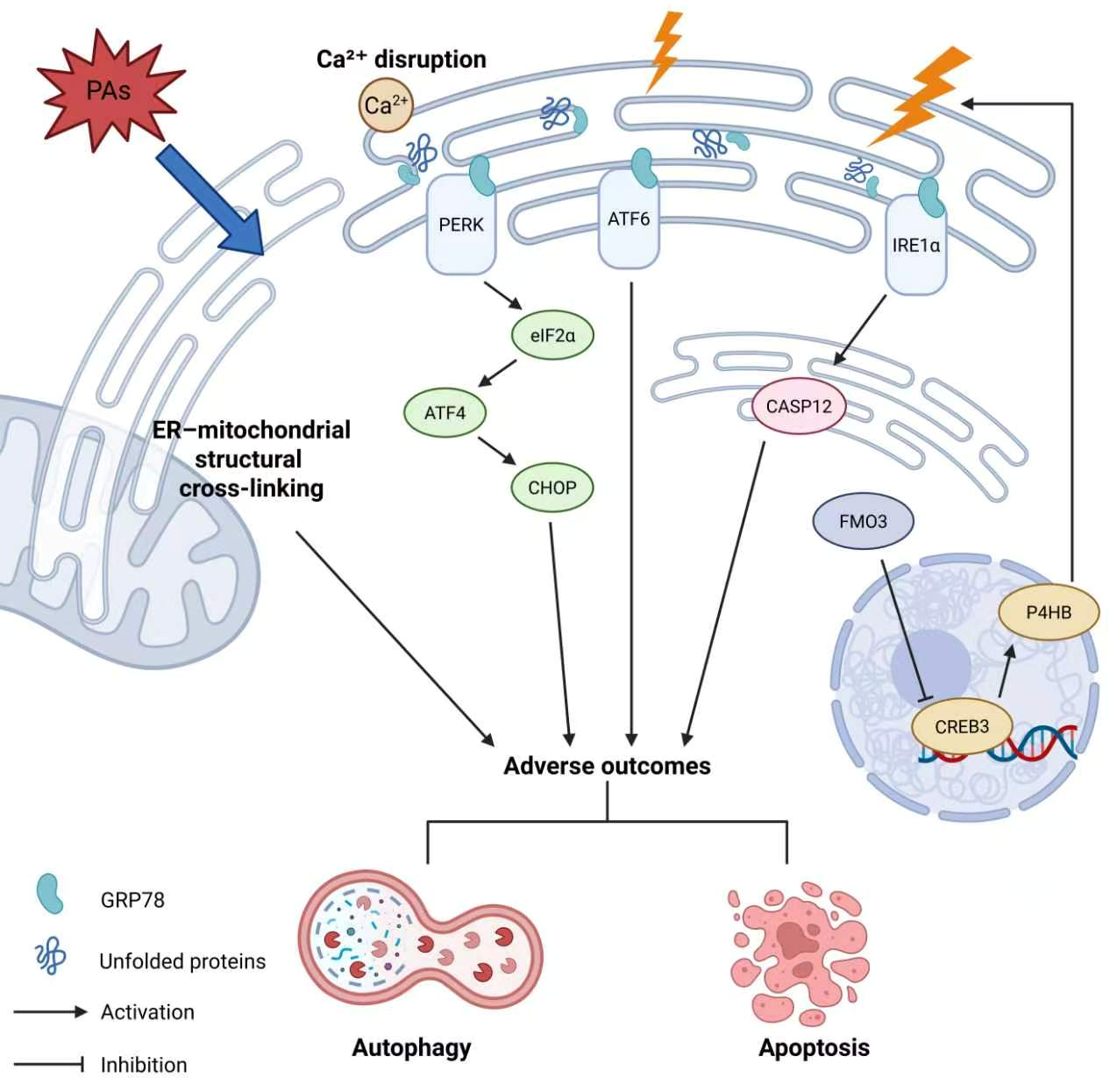
4.3. ER Stress
4.4. Inflammation and Fibrosis
4.5. Ferroptosis
4.6. Autophagy
4.7. Cell Cycle Arrest and DNA Damage
4.8. Metabolic Disorder
4.9. Others
5. Detoxification Strategy
5.1. Targeted Treatment of Oxidative Stress and Mitochondrial Damage
5.2. Natural Product Therapeutic Approaches
5.3. Small-Molecule Inhibitors/Agonists and Others
6. Regulation and Prevention in China
7. Conclusions and Prospects
Author Contributions
Funding
Institutional Review Board Statement
Informed Consent Statement
Data Availability Statement
Conflicts of Interest
Abbreviations
| AhR | Aryl hydrocarbon receptor |
| Abc | ATP-binding cassette subfamily |
| Akt | Protein kinase B |
| ALB | Albumin |
| ALP | Alkaline phosphatase |
| ALT | Alanine transaminase |
| ARE | Antioxidant response element |
| AST | Aspartate transaminase |
| ATF | Activating transcription factor |
| ATP | Adenosine triphosphate |
| Bak | Bcl-2 homologous antagonist killer |
| Bax | BCL2-associated X |
| BCL-2 | B-cell lymphoma-2 |
| Bcl-XL | B-cell lymphoma-extra large |
| BSO | Buthionine sulfonimine |
| CAT | Catalase |
| CHOP | C/EBP homologous protein |
| CYP | Cytochrome P450 enzymes |
| Cytc | Cytochrome c |
| DAMPs | Damage-associated molecular patterns |
| DB | Direct bilirubin |
| DHP | Dehydropyrrolizidine |
| Drp1 | Dynamin-related protein 1 |
| eIF-2α | Eukaryotic initiation factor-2α |
| ER | Endoplasmic reticulum |
| ERK | Extracellular signal-regulated kinase |
| FADD | Fas-associated death domain |
| Fas | Fas cell surface death receptor |
| FasL | Fas ligand |
| FMO | Flavin-containing monooxygenase |
| FoxO | Forkhead box protein O |
| FXR | Farnesoid X receptor |
| GCL | glutathione-cysteine lyase |
| GGT | Gamma-glutamyl transferase |
| GLCC | Glutamate–cysteine ligase catalytic subunit |
| GLCM | Glutamate–cysteine ligase modifier subunit |
| GPx | Glutathione peroxidase |
| GR | Glutathione reductase |
| GSH | Glutathione |
| GSSG | Glutathione oxidized |
| GST | Glutathione S-transferase |
| HILI | Herbal-induced liver injury |
| HSOS | Hepatic sinusoidal obstruction syndrome |
| IPA | Ingenuity Pathway Analysis |
| IRE1 | Inositol-requiring enzyme 1 |
| JNK | c-Jun N-terminal kinase |
| Keap1 | Kelch-like ECH-associated protein 1 |
| LC3 | Microtubule-associated protein light chain 3 |
| LDH | Lactate dehydrogenase |
| MAPK | Mitogen-activated protein kinase |
| MDA | Malondialdehyde |
| MDM2 | Mouse double minute 2 homolog |
| MLKL | Mixed-lineage kinase domain-like protein |
| mTOR | Mammalian target of rapamycin |
| Myd88 | Myeloid differentiation primary response protein 88 |
| NAC | N-acetylcysteine |
| NADPH | Nicotinamide adenine dinucleotide phosphate |
| NF-κB | Nuclear factor kappa-B |
| NQO1 | NAD(P)H dehydrogenase quinone 1 |
| Nrf2 | Nuclear factor erythroid 2-related factor 2 |
| 1-Oct | Organic cation transporter 1 |
| p38 | Mitogen-activated protein kinase 14 |
| p53 | Tumor protein 53 |
| PAs | Pyrrolizidine alkaloids |
| PERK | Protein kinase R-like endoplasmic reticulum kinase |
| PSRC1 | Proline/serine-rich coiled-coil 1 |
| PXR | Pregnanediol X receptor |
| RID | Riddelliine |
| RIP | Receptor-interacting protein |
| RIPK3 | Receptor-interacting serine/threonine kinase 3 |
| ROS | Reactive oxygen species |
| RUCAM | Roussel Uclaf Causality Assessment Method |
| SAM | S-adenosyl methionine |
| SIRT | Sirtuin |
| Slc | Solute carrier family |
| Smad | Mothers against decapentaplegic homolog |
| SOD | Superoxide dismutase |
| TBA | Total bile acid |
| TBIL | Total bilirubin |
| TFEB | Transcription factor EB |
| TGF-β | Transforming growth factor-β |
| TLR | Toll-like receptors |
| TNF | Tumor necrosis factor |
| TP | Total protein |
| TRADD | TNFRSF1A-associated death domain |
References
- Robins, D.J. Pyrrolizidine alkaloids. Nat. Prod. Rep. 1987, 4, 577–590. [Google Scholar] [CrossRef] [PubMed]
- Moreira, R.; Pereira, D.M.; Valentao, P.; Andrade, P.B. Pyrrolizidine Alkaloids: Chemistry, Pharmacology, Toxicology and Food Safety. Int. J. Mol. Sci. 2018, 19, 1668. [Google Scholar] [CrossRef] [PubMed]
- Robertson, J.; Stevens, K. Pyrrolizidine alkaloids: Occurrence, biology, and chemical synthesis. Nat. Prod. Rep. 2017, 34, 62–89. [Google Scholar] [CrossRef]
- Xiong, F.; Jiang, K.Y.; Chen, Y.; Ju, Z.C.; Yang, L.; Xiong, A.Z.; Wang, Z.T. Protein cross-linking in primary cultured mouse hepatocytes by dehydropyrrolizidine alkaloids: Structure-toxicity relationship. Toxicon 2020, 186, 4–11. [Google Scholar] [CrossRef] [PubMed]
- Yang, M.B.; Ruan, J.Q.; Gao, H.; Li, N.; Ma, J.; Xue, J.Y.; Ye, Y.; Fu, P.P.C.; Wang, J.Y.; Lin, G. First evidence of pyrrolizidine alkaloid N-oxide-induced hepatic sinusoidal obstruction syndrome in humans. Arch. Toxicol. 2017, 91, 3913–3925. [Google Scholar] [CrossRef]
- Teschke, R.; Vongdala, N.; Quan, N.V.; Quy, T.N.; Xuan, T.D. Metabolic Toxification of 1,2-Unsaturated Pyrrolizidine Alkaloids Causes Human Hepatic Sinusoidal Obstruction Syndrome: The Update. Int. J. Mol. Sci. 2021, 22, 10419. [Google Scholar] [CrossRef]
- Jiao, W.-T.; Zhu, L.; Shen, T.-T.; Wang, L.-Y.; Li, Q.X.; Wang, C.; Wu, X.-W.; Chen, H.-P.; Hua, R.-M. Simultaneous determination of 15 pyrrolizidine alkaloids and their N-oxides in weeds, soil, fresh tea leaves, and tea: Exploring the pollution source of pyrrolizidine alkaloids in tea. Food Chem. 2024, 434, 137305. [Google Scholar] [CrossRef]
- Nowak, M.; Wittke, C.; Lederer, I.; Klier, B.; Kleinwächter, M.; Selmar, D. Interspecific transfer of pyrrolizidine alkaloids: An unconsidered source of contaminations of phytopharmaceuticals and plant derived commodities. Food Chem. 2016, 213, 163–168. [Google Scholar] [CrossRef]
- Selmar, D.; Wittke, C.; Beck-von Wolffersdorff, I.; Klier, B.; Lewerenz, L.; Kleinwächter, M.; Nowak, M. Transfer of pyrrolizidine alkaloids between living plants: A disregarded source of contaminations. Environ. Pollut. 2019, 248, 456–461. [Google Scholar] [CrossRef]
- Zhu, L.; Xue, J.Y.; Xia, Q.S.; Fu, P.P.; Lin, G. The long persistence of pyrrolizidine alkaloid-derived DNA adducts in vivo: Kinetic study following single and multiple exposures in male ICR mice. Arch. Toxicol. 2017, 91, 949–965. [Google Scholar] [CrossRef]
- Song, Z.J.; He, Y.S.; Ma, J.; Fu, P.P.; Lin, G. Pulmonary toxicity is a common phenomenon of toxic pyrrolizidine alkaloids. J. Environ. Sci. Health Part C—Toxicol. Carcinog. 2020, 38, 124–140. [Google Scholar] [CrossRef]
- He, Y.S.; Zhu, L.; Ma, J.; Lin, G. Metabolism-mediated cytotoxicity and genotoxicity of pyrrolizidine alkaloids. Arch. Toxicol. 2021, 95, 1917–1942. [Google Scholar] [CrossRef]
- Schoental, R. Liver Changes and Primary Liver Tumours in Rats Given Toxic Guinea Pig Diet (M.R.C. Diet 18). Br. J. Cancer 1961, 15, 812–815. [Google Scholar] [CrossRef] [PubMed]
- Lin, G.; Wang, J.Y.; Li, N.; Li, M.; Gao, H.; Ji, Y.A.; Zhang, F.; Wang, H.L.; Zhou, Y.; Ye, Y.; et al. Hepatic sinusoidal obstruction syndrome associated with consumption of Gynura segetum. J. Hepatol. 2011, 54, 666–673. [Google Scholar] [CrossRef]
- Zhuge, Y.Z.; Liu, Y.L.; Xie, W.F.; Zou, X.P.; Xu, J.M.; Wang, J.Y.; Chinese Society of Gastroenterology Committee of Hepatobiliary Disease. Expert consensus on the clinical management of pyrrolizidine alkaloid-induced hepatic sinusoidal obstruction syndrome. J. Gastroenterol. Hepatol. 2019, 34, 634–642. [Google Scholar] [CrossRef] [PubMed]
- Yang, M.B.; Ruan, J.Q.; Fu, P.P.; Lin, G. Cytotoxicity of pyrrolizidine alkaloid in human hepatic parenchymal and sinusoidal endothelial cells: Firm evidence for the reactive metabolites mediated pyrrolizidine alkaloid-induced hepatotoxicity. Chem.-Biol. Interact. 2016, 243, 119–126. [Google Scholar] [CrossRef] [PubMed]
- Ruan, J.Q.; Liao, C.S.; Ye, Y.; Lin, G. Lack of Metabolic Activation and Predominant Formation of an Excreted Metabolite of Nontoxic Platynecine-Type Pyrrolizidine Alkaloids. Chem. Res. Toxicol. 2014, 27, 7–16. [Google Scholar] [CrossRef]
- Li, N.; Xia, Q.S.; Ruan, J.Q.; Fu, P.P.; Lin, G. Hepatotoxicity and Tumorigenicity Induced by Metabolic Activation of Pyrrolizidine Alkaloids in Herbs. Curr. Drug Metab. 2011, 12, 823–834. [Google Scholar] [CrossRef]
- Rech, C.; Ribeiro, L.D.; Bento, J.M.S.; Crevelin, E.J.; Pott, C.A.; Nardi, C. Crotalaria juncea reduces larval survival and adult fecundity of Diabrotica speciosa. J. Pest. Sci. 2025, 98, 1251–1261. [Google Scholar] [CrossRef]
- Eröksüz, Y.; Çeribasi, A.O.; Çevik, A.; Eröksüz, H.; Tosun, F.; Tamer, U. Toxicity of Heliotropium dolosum, Heliotropium circinatum, and Senecio vernalis in Parental Quail and Their Progeny, with Residue Evaluation of Eggs. Turk. J. Vet. Anim. Sci. 2008, 32, 475–482. [Google Scholar]
- Cheeke, P.R.; Pierson-Goeger, M.L. Toxicity of Senecio jacobaea and pyrrolizidine alkaloids in various laboratory animals and avian species. Toxicol. Lett. 1983, 18, 343–349. [Google Scholar] [CrossRef] [PubMed]
- Liu, F.; Rong, X.X.; Guo, H.; Xu, D.; Liu, C.; Meng, L.L.; Yang, X.Q.; Guo, T.T.; Kan, X.F.; Song, Y.H. Clinical characteristics, CT signs, and pathological findings of Pyrrolizidine alkaloids-induced sinusoidal obstructive syndrome: A retrospective study. BMC Gastroenterol. 2020, 20, 30. [Google Scholar] [CrossRef]
- Zhang, W.; Liu, L.; Zhang, M.; Zhang, F.; Peng, C.Y.; Zhang, B.; Chen, J.; Li, L.; He, J.; Xiao, J.Q.; et al. Validation of the Nanjing Criteria for Diagnosing Pyrrolizidine Alkaloids-induced Hepatic Sinusoidal Obstruction Syndrome. J. Clin. Transl. Hepatol. 2021, 9, 345–352. [Google Scholar] [CrossRef] [PubMed]
- Liang, Q.N.; Sheng, Y.C.; Jiang, P.; Ji, L.L.; Xia, Y.Y.; Min, Y.; Wang, Z.T. The gender-dependent difference of liver GSH antioxidant system in mice and its influence on isoline-induced liver injury. Toxicology 2011, 280, 61–69. [Google Scholar] [CrossRef] [PubMed]
- Huan, J.Y.; Miranda, C.L.; Buhler, D.R.; Cheeke, P.R. Species differences in the hepatic microsomal enzyme metabolism of the pyrrolizidine alkaloids. Toxicol. Lett. 1998, 99, 127–137. [Google Scholar] [CrossRef]
- Shubat, P.J.; Hubbard, A.K.; Huxtable, R.J. Dose-response relationship in intoxication by the pyrrolizidine alkaloid monocrotaline. J. Toxicol. Environ. Health 1989, 28, 445–460. [Google Scholar] [CrossRef]
- Copple, B.L.; Ganey, P.E.; Roth, R.A. Liver inflammation during monocrotaline hepatotoxicity. Toxicology 2003, 190, 155–169. [Google Scholar] [CrossRef]
- Ovelar, M.F.; García, J.A.; Cook, D.; Gardner, D.; Stegelmeier, B.; de Ulzurrun, P.D.; Tettamanti, A.; Balbuena, D.; Lita, E.V.; Poo, J.I.; et al. Senecio pampeanus poisoning in beef cattle: Case report and toxicological evaluation. Vet. Res. Commun. 2025, 49, 205. [Google Scholar] [CrossRef]
- Ribeiro, M.; Bianchi, I.N.; Silva, W.D.M.; Cavasani, J.P.S.; Santos, I.G.; Dias, L.; Colodel, E.M.; Furlan, F.H. Subacute and chronic toxic hepatopathy in cattle grazing pasture with Crotalaria spectabilis. Vet. Pathol. 2025, 62, 82–86. [Google Scholar] [CrossRef]
- He, Y.S.; Zhang, W.; Ma, J.; Xia, Q.S.; Song, Z.J.; Zhu, L.; Zhang, C.Y.; Liu, J.; Ye, Y.; Fu, P.P.; et al. Blood Pyrrole-DNA Adducts Define the Early Tumorigenic Risk in Patients with Pyrrolizidine Alkaloid-Induced Liver Injury. Environ. Sci. Technol. Lett. 2021, 8, 551–557. [Google Scholar] [CrossRef]
- Wen, C.L.; Zhou, T.; Chang, Y.Q.; Wei, Y.; Zhang, H.D.; Yang, Z.F. Exposure to Gynura japonica (Thunb.) Juel plants induces hepatoxicity in rats and Buffalo rat liver cells. J. Ethnopharmacol. 2024, 335, 118692. [Google Scholar] [CrossRef] [PubMed]
- Chen, Y.; Xiong, F.; Wang, W.Q.; Jiang, K.Y.; Ye, X.L.; Deng, G.; Wang, C.H.; Yang, L.; Xiong, A.Z.; Wang, Z.T. The long persistence of pyrrolizidine alkaloid-derived pyrrole-protein adducts in vivo: Kinetic study following multiple exposures of a pyrrolizidine alkaloid containing extract of Gynura japonica. Toxicol. Lett. 2020, 323, 41–47. [Google Scholar] [CrossRef]
- Xiong, A.Z.; Shao, Y.L.; Fang, L.X.; Yang, X.; Zhang, S.C.; Zheng, J.; Ding, W.X.; Yang, L.; Wang, Z.T. Comparative analysis of toxic components in different medicinal parts of Gynura japonica and its toxicity assessment on mice. Phytomedicine 2019, 54, 77–88. [Google Scholar] [CrossRef] [PubMed]
- Knoop, K.; Frahm, J.; Kersten, S.; Kluess, J.; Meyer, U.; von Soosten, D.; Beineke, A.; Saltzmann, J.; Dänicke, S. Short-term exposure of dairy cows to pyrrolizidine alkaloids from tansy ragwort (Jacobaea vulgaris Gaertn.): Effects on organs and indicators of energy metabolism. Arch. Anim. Nutr. 2024, 78, 109–124. [Google Scholar] [CrossRef]
- Knoop, K.; Knappstein, K.; Kaltner, F.; Gabler, A.M.; Taenzer, J.; These, A.; Kersten, S.; Meyer, U.; Frahm, J.; Kluess, J.; et al. Short-term exposure of dairy cows to pyrrolizidine alkaloids from tansy ragwort (Jacobaea vulgaris Gaertn.): Effects on health and performance. Arch. Anim. Nutr. 2023, 77, 363–384. [Google Scholar] [CrossRef]
- Zheng, Q.; Zhang, H.Y. Gynura segetum induces hepatic sinusoidal obstruction syndrome in a child: A case report. Medicine 2024, 103, e37341. [Google Scholar] [CrossRef] [PubMed]
- Jiang, M.J.; Wang, L.Y.; Du, X.D.; Hao, M.M.; Gao, P.J. Low molecular weight heparin in the treatment of pyrrolizidine alkaloid-induced hepatic sinusoidal obstruction syndrome: Five case reports. J. Int. Med. Res. 2020, 48, 300060520961916. [Google Scholar] [CrossRef]
- Gu, X.Y.; Li, S.W.; Lu, M.N.; Li, Y.; Wang, Q.X.; Chen, L.; Jia, Y.Q.; Cao, S.; Zhang, T.; Zhou, M.M.; et al. Investigation of Gynura segetum root extract (GSrE) induced hepatotoxicity based on metabolomic signatures and microbial community profiling in rats. Front. Microbiol. 2022, 13, 947757. [Google Scholar] [CrossRef]
- Zhang, H.; Jia, S.; Jin, L.Y.; Yao, J.Z.; Shen, Z.H.; Wu, J.Y.; Yao, X.K.; Chen, D.W.; Zhang, C.C.; Yu, S.F.; et al. Gynura segetum induces hepatic sinusoidal obstruction syndrome in mice by impairing autophagy. Acta Cir. Bras. 2021, 36, e361104. [Google Scholar] [CrossRef]
- Zan, K.; Lei, W.; Li, Y.L.; Wang, Y.; Liu, L.A.; Zuo, T.T.; Jin, H.Y.; Ma, S.C. Integrative Metabolomics and Proteomics Detected Hepatotoxicity in Mice Associated with Alkaloids from Eupatorium fortunei Turcz. Toxins 2022, 14, 765. [Google Scholar] [CrossRef] [PubMed]
- García, J.A.; Rosas, J.E.; Santos, C.G.Y.; Streitenberger, N.; Feijoo, M.; Dutra, F. Senecio spp. transboundary introduction and expansion affecting cattle in Uruguay: Clinico-pathological, epidemiological and genetic survey, and experimental intoxication with Senecio oxyphyllus. Toxicon 2020, 173, 68–74. [Google Scholar] [CrossRef] [PubMed]
- Canugovi, C.; Stevenson, M.D.; Vendrov, A.E.; Hayami, T.; Robidoux, J.; Xiao, H.; Zhang, Y.Y.; Eitzman, D.T.; Runge, M.S.; Madamanchi, N.R. Increased mitochondrial NADPH oxidase 4 (NOX4) expression in aging is a causative factor in aortic stiffening. Redox Biol. 2019, 26, 101288. [Google Scholar] [CrossRef]
- Barcelos, S.T.A.; Dall’Oglio, V.M.; de Araújo, A.; Cerski, C.T.S.; Alvares-da-Silva, M.R. Sinusoidal obstruction syndrome secondary the intake of Senecio brasiliensis: A case report. Ann. Hepatol. 2021, 20, 100138. [Google Scholar] [CrossRef]
- Wu, D.; Gao, J. Hepatic sinusoidal obstruction syndrome related to Tusanqi: Clinical analysis of 19 cases. Advers. Drug React. J. 2018, 20, 176–180. [Google Scholar]
- Dau, S.L.; Machado, T.P.; dos Santos, E.D.; Setim, D.H.; Sakis, E.R.; Alves, L.P.; da Motta, A.C. Poisoning by Senecio brasiliensis in Horses in Northern Rio Grande do Sul. Acta Sci. Vet. 2019, 47, 392. [Google Scholar] [CrossRef]
- Panziera, W.; Bianchi, R.M.; Mazaro, R.D.; Giaretta, P.R.; Silva, G.B.; Silva, D.R.P.; Fighera, R.A. Natural poisoning by Senecio brasiliensis in horses. Pesqui. Vet. Bras. 2017, 37, 313–318. [Google Scholar] [CrossRef][Green Version]
- Panziera, W.; Gonçalves, M.A.; Oliveira, L.G.S.; Lorenzett, M.P.; Reis, M.; Harnmerschmitt, M.E.; Pavarini, S.P.; Driemeier, D. Senecio brasiliensis poisoning in calves: Pattern and evolution of hepatic lesions. Pesqui. Vet. Bras. 2017, 37, 8–16. [Google Scholar] [CrossRef][Green Version]
- Leal, P.V.; de Melo, G.K.A.; Pott, A.; Martins, T.B.; Gardner, D.; de Barros, C.S.L.; de Lemos, R.A.A. Hepatic Encephalopathy Secondary to Chronic Liver Lesions Caused by Crotalaria incana in a Bovine. Acta Sci. Vet. 2019, 47, 352. [Google Scholar] [CrossRef]
- Cagin, Y.F.; Seckin, Y.; Firat, F.; Samdanci, E. Acute toxic hepatitis induced by a herbal medicine: Anchusa Boraginaceae. Acta Gastro-Enterol. Belg. 2017, 80, 533–536. [Google Scholar]
- Preliasco, M.; Gardner, D.; Moraes, J.; González, A.C.; Uriarte, G.; Rivero, R. Senecio grisebachii Baker: Pyrrolizidine alkaloids and experimental poisoning in calves. Toxicon 2017, 133, 68–73. [Google Scholar] [CrossRef]
- Lakshmanan, H.; Raman, J.; Pandian, A.; Kuppamuthu, K.; Nanjian, R.; Sabaratam, V.; Naidu, M. Aqueous extract of Senecio candicans DC induce liver and kidney damage in a sub-chronic oral toxicity study in Wistar rats. Regul. Toxicol. Pharmacol. 2016, 79, 25–34. [Google Scholar] [CrossRef] [PubMed]
- Danan, G.; Teschke, R. RUCAM in Drug and Herb Induced Liver Injury: The Update. Int. J. Mol. Sci. 2016, 17, 14. [Google Scholar] [CrossRef] [PubMed]
- Zhou, Z.; Yang, D.F.; Chu, T.; Zheng, D.Y.; Zhang, K.Y.; Liang, S.K.; Yang, L.; Yang, Y.C.; Ma, W.Z. Hepatic Sinusoidal Obstruction Syndrome Induced by Pyrrolizidine Alkaloids from Gynura segetum: Mechanisms and Therapeutic Advances. Molecules 2026, 31, 410. [Google Scholar] [CrossRef]
- Lin, G.; Cui, Y.Y.; Liu, X.Q.; Wang, Z.T. Species differences in the in vitro metabolic activation of the hepatotoxic pyrrolizidine alkaloid clivorine. Chem. Res. Toxicol. 2002, 15, 1421–1428. [Google Scholar] [CrossRef]
- Dueker, S.R.; Lame, M.W.; Segall, H.J. Hydrolysis of pyrrolizidine alkaloids by guinea pig hepatic carboxylesterases. Toxicol. Appl. Pharmacol. 1992, 117, 116–121. [Google Scholar] [CrossRef]
- Mattocks, A.R. Hydrolysis and hepatotoxicity of retronecine diesters. Toxicol. Lett. 1982, 14, 111–116. [Google Scholar] [CrossRef]
- Chung, W.G.; Buhler, D.R. Major factors for the susceptibility of guinea pig to the pyrrolizidine alkaloid jacobine. Drug Metab. Dispos. 1995, 23, 1263–1267. [Google Scholar] [CrossRef]
- Chung, W.G.; Buhler, D.R. Differential metabolism of the pyrrolizidine alkaloid, senecionine, in Fischer 344 and Sprague-Dawley rats. Arch. Pharm. Res. 2004, 27, 547–553. [Google Scholar] [CrossRef] [PubMed]
- Duringer, J.M.; Buhler, D.R.; Craig, A.M. Comparison of hepatic in vitro metabolism of the pyrrolizidine alkaloid senecionine in sheep and cattle. Am. J. Vet. Res. 2004, 65, 1563–1572. [Google Scholar] [CrossRef]
- Yang, M.B.; Ma, J.; Ruan, J.Q.; Ye, Y.; Fu, P.P.C.; Lin, G. Intestinal and hepatic biotransformation of pyrrolizidine alkaloid N-oxides to toxic pyrrolizidine alkaloids. Arch. Toxicol. 2019, 93, 2197–2209. [Google Scholar] [CrossRef]
- Fu, P.P.; Xia, Q.S.; Lin, G.; Chou, M.W. Genotoxic Pyrrolizidine Alkaloids—Mechanisms Leading to DNA Adduct Formation and Tumorigenicity. Int. J. Mol. Sci. 2002, 3, 948–964. [Google Scholar] [CrossRef]
- Fu, P.P.; Xia, Q.S.; Lin, G.; Chou, M.W. Pyrrolizidine alkaloids—Genotoxicity, metabolism enzymes, metabolic activation, and mechanisms. Drug Metab. Rev. 2004, 36, 1–55. [Google Scholar] [CrossRef]
- Tepe, J.J.; Williams, R.M. Reductive activation of a hydroxylamine hemiacetal derivative of dehydromonocrotaline: The first reductively activated pyrrolizidine alkaloid capable of cross-linking DNA. Angew. Chem.-Int. Ed. 1999, 38, 3501–3503. [Google Scholar] [CrossRef]
- Hessel-Pras, S.; Braeuning, A.; Guenther, G.; Adawy, A.; Enge, A.M.; Ebmeyer, J.; Henderson, C.J.; Hengstler, J.G.; Lampen, A.; Reif, R. The pyrrolizidine alkaloid senecionine induces CYP-dependent destruction of sinusoidal endothelial cells and cholestasis in mice. Arch. Toxicol. 2020, 94, 219–229. [Google Scholar] [CrossRef]
- Yao, J.; Li, C.G.; Gong, L.K.; Feng, C.C.; Li, C.Z.; Gao, M.; Luan, Y.; Qi, X.M.; Ren, J. Hepatic cytochrome P450s play a major role in monocrotaline-induced renal toxicity in mice. Acta Pharmacol. Sin. 2014, 35, 292–300. [Google Scholar] [CrossRef] [PubMed]
- Ji, L.L.; Zhao, X.G.; Chen, L.; Zhang, M.; Wang, Z.T. Pyrrolizidine alkaloid clivorine inhibits human normal liver L-02 cells growth and activates p38 mitogen-activated protein kinase in L-02 cells. Toxicon 2002, 40, 1685–1690. [Google Scholar] [CrossRef]
- Rakba, N.; Melhaoui, A.; Rissel, M.; Morel, I.; Loyer, P.; Lescoat, G. Irniine, a pyrrolidine alkaloid, isolated from Arisarum vulgare can induce apoptosis and/or necrosis in rat hepatocyte cultures. Toxicon 2000, 38, 1389–1402. [Google Scholar] [CrossRef] [PubMed]
- He, Y.Q.; Yang, L.; Liu, H.X.; Zhang, J.W.; Liu, Y.; Fong, A.; Xiong, A.Z.; Lu, Y.L.; Yang, L.; Wang, C.H.; et al. Glucuronidation, a New Metabolic Pathway for Pyrrolizidine Alkaloids. Chem. Res. Toxicol. 2010, 23, 591–599. [Google Scholar] [CrossRef]
- Chen, Y.; Wang, W.Q.; Jia, X.L.; Wang, C.H.; Yang, L.; Wang, Z.T.; Xiong, A.Z. Firm evidence for the detoxification of senecionine-induced hepatotoxicity via N-glucuronidation in UGT1A4-humanized transgenic mice. Food Chem. Toxicol. 2022, 165, 113185. [Google Scholar] [CrossRef]
- Tang, J.; Akao, T.; Nakamura, N.; Wang, Z.T.; Takagawa, K.; Sasahara, M.; Hattori, M. In vitro metabolism of isoline, a pyrrolizidine alkaloid from Ligularia duciformis, by rodent liver microsomal esterase and enhanced hepatotoxicity by esterase inhibitors. Drug Metab. Dispos. 2007, 35, 1832–1839. [Google Scholar] [CrossRef]
- Geburek, I.; Schrenk, D.; These, A. In vitro biotransformation of pyrrolizidine alkaloids in different species: Part II-identification and quantitative assessment of the metabolite profile of six structurally different pyrrolizidine alkaloids. Arch. Toxicol. 2020, 94, 3759–3774. [Google Scholar] [CrossRef]
- Edgar, J.A.; Molyneux, R.J.; Colegate, S.M. Pyrrolizidine Alkaloids: Potential Role in the Etiology of Cancers, Pulmonary Hypertension, Congenital Anomalies, and Liver Disease. Chem. Res. Toxicol. 2015, 28, 4–20. [Google Scholar] [CrossRef]
- Xia, Q.S.; Zhao, Y.W.; Von Tungeln, L.S.; Doerge, D.R.; Lin, G.; Cai, L.N.; Fu, P.P. Pyrrolizidine Alkaloid-Derived DNA Adducts as a Common Biological Biomarker of Pyrrolizidine Alkaloid-Induced Tumorigenicity. Chem. Res. Toxicol. 2013, 26, 1384–1396. [Google Scholar] [CrossRef]
- Zhao, Y.W.; Xia, Q.S.; da Costa, G.G.; Yu, H.T.; Cai, L.N.; Fu, P.P. Full Structure Assignments of Pyrrolizidine Alkaloid DNA Adducts and Mechanism of Tumor Initiation. Chem. Res. Toxicol. 2012, 25, 1985–1996. [Google Scholar] [CrossRef]
- Ma, J.; Xia, Q.S.; Fu, P.P.; Lin, G. Pyrrole-protein adducts—A biomarker of pyrrolizidine alkaloid-induced hepatotoxicity. J. Food Drug Anal. 2018, 26, 965–972. [Google Scholar] [CrossRef] [PubMed]
- Wang, W.Q.; Chen, Y.; Yin, Y.; Wang, X.J.; Ye, X.L.; Jiang, K.Y.; Zhang, Y.; Zhang, J.W.; Zhang, W.; Zhuge, Y.Z.; et al. A TMT-based shotgun proteomics uncovers overexpression of thrombospondin 1 as a contributor in pyrrolizidine alkaloid-induced hepatic sinusoidal obstruction syndrome. Arch. Toxicol. 2022, 96, 2003–2019. [Google Scholar] [CrossRef] [PubMed]
- Lu, Y.; Ma, J.; Song, Z.J.; Ye, Y.; Fu, P.P.; Lin, G. The role of formation of pyrrole-ATP synthase subunit beta adduct in pyrrolizidine alkaloid-induced hepatotoxicity. Arch. Toxicol. 2018, 92, 3403–3414. [Google Scholar] [CrossRef] [PubMed]
- Li, Y.H.; Tai, W.C.S.; Xue, J.Y.; Wong, W.Y.; Lu, C.; Ruan, J.Q.; Li, N.; Wan, T.F.; Chan, W.Y.; Hsiao, W.L.W.; et al. Proteomic Study of Pyrrolizidine Alkaloid-Induced Hepatic Sinusoidal Obstruction Syndrome in Rats. Chem. Res. Toxicol. 2015, 28, 1715–1727. [Google Scholar] [CrossRef]
- Ruan, J.Q.; Gao, H.; Li, N.; Xue, J.Y.; Chen, J.; Ke, C.Q.; Ye, Y.; Fu, P.P.C.; Zheng, J.; Wang, J.Y.; et al. Blood Pyrrole-Protein Adducts-A Biomarker of Pyrrolizidine Alkaloid-Induced Liver Injury in Humans. J. Environ. Sci. Health Part C—Environ. Carcinog. Ecotoxicol. Rev. 2015, 33, 404–421. [Google Scholar] [CrossRef]
- Gao, H.; Ruan, J.Q.Q.; Chen, J.; Li, N.; Ke, C.Q.Q.; Ye, Y.; Lin, G.; Wang, J.Y.Y. Blood pyrrole-protein adducts as a diagnostic and prognostic index in pyrrolizidine alkaloid-hepatic sinusoidal obstruction syndrome. Drug Des. Dev. Ther. 2015, 9, 4861–4868. [Google Scholar] [CrossRef]
- Xia, Q.S.; Zhao, Y.W.; Lin, G.; Beland, F.A.; Cai, L.N.; Fu, P.P. Pyrrolizidine Alkaloid-Protein Adducts: Potential Non-invasive Biomarkers of Pyrrolizidine Alkaloid-Induced Liver Toxicity and Exposure. Chem. Res. Toxicol. 2016, 29, 1282–1292. [Google Scholar] [CrossRef]
- Li, W.W.; Cheng, T.; Jiang, T.T.; Zhou, M.Y.; Gong, B.W.; Zhao, G.D.; Li, J.; Tan, R.; Yang, X.J.; Joshi, K.; et al. Hepatic RNA adduction derived from metabolic activation of retrorsine in vitro and in vivo. Chem.-Biol. Interact. 2022, 365, 110047. [Google Scholar] [CrossRef]
- Chen, M.X.; Li, L.; Zhong, D.F.; Shen, S.J.; Zheng, J.; Chen, X.Y. 9-Glutathiony1-6,7-dihydro-1-hydroxymethy1-5H-pyrrolizine Is the Major Pyrrolic Glutathione Conjugate of Retronecine-Type Pyrrolizidine Alkaloids in Liver Microsomes and in Rats. Chem. Res. Toxicol. 2016, 29, 180–189. [Google Scholar] [CrossRef]
- Zhu, L.; Zhang, C.Y.; Zhang, W.; Xia, Q.S.; Ma, J.; He, X.; He, Y.S.; Fu, P.P.; Jia, W.; Zhuge, Y.Z.; et al. Developing urinary pyrrole-amino acid adducts as non-invasive biomarkers for identifying pyrrolizidine alkaloids-induced liver injury in human. Arch. Toxicol. 2021, 95, 3191–3204. [Google Scholar] [CrossRef]
- He, X.B.; Xia, Q.S.; Ma, L.; Fu, P.P. 7-cysteine-pyrrole conjugate: A new potential DNA reactive metabolite of pyrrolizidine alkaloids. J. Environ. Sci. Health Part C—Environ. Carcinog. Ecotoxicol. Rev. 2016, 34, 57–76. [Google Scholar] [CrossRef]
- He, X.B.; Xia, Q.S.; Shi, Q.; Fu, P.P. Effects of glutathione and cysteine on pyrrolizidine alkaloid-induced hepatotoxicity and DNA adduct formation in rat primary hepatocytes. J. Environ. Sci. Health Part C—Toxicol. Carcinog. 2020, 38, 109–123. [Google Scholar] [CrossRef]
- He, X.B.; Xia, Q.S.; Fu, P.P. 7-Glutathione-pyrrole and 7-cysteine-pyrrole are potential carcinogenic metabolites of pyrrolizidine alkaloids. J. Environ. Sci. Health Part C—Environ. Carcinog. Ecotoxicol. Rev. 2017, 35, 69–83. [Google Scholar] [CrossRef]
- Hincks, J.R.; Kim, H.Y.; Segall, H.J.; Molyneux, R.J.; Stermitz, F.R.; Coulombe, R.A. DNA cross-linking in mammalian cells by pyrrolizidine alkaloids: Structure-activity relationships. Toxicol. Appl. Pharmacol. 1991, 111, 90–98. [Google Scholar] [CrossRef] [PubMed]
- Petry, T.W.; Bowden, G.T.; Huxtable, R.J.; Sipes, I.G. Characterization of hepatic DNA damage induced in rats by the pyrrolizidine alkaloid monocrotaline. Cancer Res. 1984, 44, 1505–1509. [Google Scholar] [PubMed]
- Petry, T.W.; Bowden, G.T.; Buhler, D.R.; Sipes, K.G. Genotoxicity of the pyrrolizidine alkaloid jacobine in rats. Toxicol. Lett. 1986, 32, 275–281. [Google Scholar] [CrossRef]
- Kim, H.Y.; Stermitz, F.R.; Coulombe, R.A. Pyrrolizidine alkaloid-induced DNA-protein cross-links. Carcinogenesis 1995, 16, 2691–2697. [Google Scholar] [CrossRef] [PubMed]
- Thomas, H.C.; Lame, M.W.; Wilson, D.W.; Segall, H.J. Cell cycle alterations associated with covalent binding of monocrotaline pyrrole to pulmonary artery endothelial cell DNA. Toxicol. Appl. Pharmacol. 1996, 141, 319–329. [Google Scholar] [CrossRef]
- Tang, Y.H.; Li, J.; Gao, C.; Xu, Y.Y.; Li, Y.Y.; Yu, X.; Wang, J.; Liu, L.G.; Yao, P. Hepatoprotective Effect of Quercetin on Endoplasmic Reticulum Stress and Inflammation after Intense Exercise in Mice through Phosphoinositide 3-Kinase and Nuclear Factor-Kappa B. Oxidative Med. Cell. Longev. 2016, 2016, 8696587. [Google Scholar] [CrossRef]
- Kim, H.Y.; Stermitz, F.R.; Li, J.K.K.; Coulombe, R.A. Comparative DNA cross-linking by activated pyrrolizidine alkaloids. Food Chem. Toxicol. 1999, 37, 619–625. [Google Scholar] [CrossRef]
- Abdelfatah, S.; Nass, J.; Knorz, C.; Klauck, S.M.; Küpper, J.H.; Efferth, T. Pyrrolizidine alkaloids cause cell cycle and DNA damage repair defects as analyzed by transcriptomics in cytochrome P450 3A4-overexpressing HepG2 clone 9 cells. Cell Biol. Toxicol. 2022, 38, 325–345. [Google Scholar] [CrossRef] [PubMed]
- Rieben, W.K., Jr.; Coulombe, R.A., Jr. DNA cross-linking by dehydromonocrotaline lacks apparent base sequence preference. Toxicol. Sci. 2004, 82, 497–503. [Google Scholar] [CrossRef]
- Allameh, A.; Niayesh-Mehr, R.; Aliarab, A.; Sebastiani, G.; Pantopoulos, K. Oxidative Stress in Liver Pathophysiology and Disease. Antioxidants 2023, 12, 1653. [Google Scholar] [CrossRef]
- Wang, Z.Q.; Han, H.L.; Wang, C.; Zheng, Q.Q.; Chen, H.P.; Zhang, X.C.; Hou, R.Y. Hepatotoxicity of Pyrrolizidine Alkaloid Compound Intermedine: Comparison with Other Pyrrolizidine Alkaloids and Its Toxicological Mechanism. Toxins 2021, 13, 849. [Google Scholar] [CrossRef] [PubMed]
- Zhu, Y.L.; Zhang, S.H.; Shao, Y.; Tang, L.H.; Zhang, C.C.; Tang, S.Y.; Lu, H. Regulatory role of oxidative stress in retrorsine—Induced apoptosis and autophagy in primary rat hepatocytes. Ecotox. Environ. Safe. 2024, 279, 116515. [Google Scholar] [CrossRef]
- Su, L.J.; Zhang, J.H.; Gomez, H.; Murugan, R.; Hong, X.; Xu, D.X.; Jiang, F.; Peng, Z.Y. Reactive Oxygen Species-Induced Lipid Peroxidation in Apoptosis, Autophagy, and Ferroptosis. Oxidative Med. Cell. Longev. 2019, 2019, 5080843. [Google Scholar] [CrossRef]
- Ji, L.L.; Liu, T.Y.; Wang, Z.T. Pyrrolizidine alkaloid clivorine induced oxidative injury on primary cultured rat hepatocytes. Hum. Exp. Toxicol. 2010, 29, 303–309. [Google Scholar] [CrossRef]
- Liu, T.Y.; Chen, Y.; Wang, Z.Y.; Ji, L.L.; Wang, Z.T. Pyrrolizidine alkaloid isoline-induced oxidative injury in various mouse tissues. Exp. Toxicol. Pathol. 2010, 62, 251–257. [Google Scholar] [CrossRef]
- Wang, Z.Y.; Kang, H.; Ji, L.L.; Yang, Y.Q.; Liu, T.Y.; Cao, Z.W.; Morahan, G.; Wang, Z.T. Proteomic characterization of the possible molecular targets of pyrrolizidine alkaloid isoline-induced hepatotoxicity. Environ. Toxicol. Pharmacol. 2012, 34, 608–617. [Google Scholar] [CrossRef] [PubMed]
- Yan, X.M.; Kang, H.; Feng, J.; Yang, Y.Y.; Tang, K.L.; Zhu, R.X.; Yang, L.; Wang, Z.T.; Cao, Z.W. Identification of Toxic Pyrrolizidine Alkaloids and Their Common Hepatotoxicity Mechanism. Int. J. Mol. Sci. 2016, 17, 318. [Google Scholar] [CrossRef]
- Li, D.P.; Chen, Y.L.; Jiang, H.Y.; Chen, Y.; Zeng, X.Q.; Xu, L.L.; Ye, Y.; Ke, C.Q.; Lin, G.; Wang, J.Y.; et al. Phosphocreatine attenuates Gynura segetum-induced hepatocyte apoptosis via a SIRT3-SOD2-mitochondrial reactive oxygen species pathway. Drug Des. Dev. Ther. 2019, 13, 2081–2096. [Google Scholar] [CrossRef] [PubMed]
- Bause, A.S.; Haigis, M.C. SIRT3 regulation of mitochondrial oxidative stress. Exp. Gerontol. 2013, 48, 634–639. [Google Scholar] [CrossRef]
- Tonelli, C.; Chio, I.I.C.; Tuveson, D.A. Transcriptional Regulation by Nrf2. Antioxid. Redox Signal. 2018, 29, 1727–1745. [Google Scholar] [CrossRef] [PubMed]
- Huang, Z.L.; Chen, M.W.; Wei, M.J.; Lu, B.; Wu, X.J.; Wang, Z.T.; Ji, L.L. Liver Inflammatory Injury Initiated by DAMPs-TLR4-MyD88/TRIF-NFκB Signaling Pathway Is Involved in Monocrotaline-Induced HSOS. Toxicol. Sci. 2019, 172, 385–397. [Google Scholar] [CrossRef]
- Zhang, J.Q.; Sheng, Y.C.; Shi, L.; Zheng, Z.Y.; Chen, M.W.; Lu, B.; Ji, L.J. Quercetin and baicalein suppress monocrotaline-induced hepatic sinusoidal obstruction syndrome in rats. Eur. J. Pharmacol. 2017, 795, 160–168. [Google Scholar] [CrossRef]
- Wang, Z.T.; Ma, J.; He, Y.S.; Miu, K.K.; Yao, S.; Tang, C.P.; Ye, Y.; Lin, G. Nrf2-mediated liver protection by 18β-glycyrrhetinic acid against pyrrolizidine alkaloid-induced toxicity through PI3K/Akt/GSK3β pathway. Phytomedicine 2022, 102, 154162. [Google Scholar] [CrossRef]
- Shang, H.T.; Huang, C.; Xiao, Z.L.; Yang, P.C.; Zhang, S.Y.; Hou, X.H.; Zhang, L. Gut microbiota-derived tryptophan metabolites alleviate liver injury via AhR/Nrf2 activation in pyrrolizidine alkaloids-induced sinusoidal obstruction syndrome. Cell Biosci. 2023, 13, 127. [Google Scholar] [CrossRef] [PubMed]
- Dukhande, V.V.; Malthankar-Phatak, G.H.; Hugus, J.J.; Daniels, C.K.; Lai, J.C.K. Manganese-induced neurotoxicity is differentially enhanced by glutathione depletion in astrocytoma and neuroblastoma cells. Neurochem. Res. 2006, 31, 1349–1357. [Google Scholar] [CrossRef] [PubMed]
- Ji, L.L.; Chen, Y.; Wang, Z.T. Intracellular glutathione plays important roles in pyrrolizidine alkaloid clivorine-induced toxicity on L-02 hepatocytes. Toxicol. Mech. Methods 2008, 18, 661–664. [Google Scholar] [CrossRef]
- Chen, Y.; Ji, L.L.; Wang, H.T.; Wang, Z.T. Intracellular glutathione plays important roles in pyrrolizidine alkaloids-induced growth inhibition on hepatocytes. Environ. Toxicol. Pharmacol. 2009, 28, 357–362. [Google Scholar] [CrossRef] [PubMed]
- Ji, L.L.; Chen, Y.; Wang, Z.T. Protection of S-adenosyl methionine against the toxicity of clivorine on hepatocytes. Environ. Toxicol. Pharmacol. 2008, 26, 331–335. [Google Scholar] [CrossRef]
- Ji, L.L.; Liu, T.Y.; Chen, Y.; Wang, Z.T. Protective Mechanisms of N-Acetyl-Cysteine Against Pyrrolizidine Alkaloid Clivorine-Induced Hepatotoxicity. J. Cell. Biochem. 2009, 108, 424–432. [Google Scholar] [CrossRef]
- Steenkamp, V.; Stewart, M.J.; van der Merwe, S.; Zuckerman, M.; Crowther, N.J. The effect of Senecio latifolius a plant used as a South African traditional medicine, on a human hepatoma cell line. J. Ethnopharmacol. 2001, 78, 51–58. [Google Scholar] [CrossRef]
- Yee, S.B.; Kinser, S.; Hill, D.A.; Barton, C.C.; Hotchkiss, J.A.; Harkema, J.R.; Ganey, P.E.; Roth, R.A. Synergistic hepatotoxicity from coexposure to bacterial endotoxin and the pyrrolizidine alkaloid monocrotaline. Toxicol. Appl. Pharmacol. 2000, 166, 173–185. [Google Scholar] [CrossRef]
- Copple, B.L.; Rondelli, C.M.; Maddox, J.F.; Hoglen, N.C.; Ganey, P.E.; Roth, R.A. Modes of cell death in rat liver after monocrotaline exposure. Toxicol. Sci. 2004, 77, 172–182. [Google Scholar] [CrossRef]
- Lossi, L. The concept of intrinsic versus extrinsic apoptosis. Biochem. J. 2022, 479, 357–384. [Google Scholar] [CrossRef]
- Gordon, G.J.; Coleman, W.B.; Grisham, J.W. Bax-mediated apoptosis in the livers of rats after partial hepatectomy in the retrorsine model of hepatocellular injury. Hepatology 2000, 32, 312–320. [Google Scholar] [CrossRef]
- Soylu, S.; Çevik, A.; Timurkaan, N. Pathological and immunohistochemical changes in the liver of monocrotaline-treated rats. Turk. J. Vet. Anim. Sci. 2022, 46, 795–802. [Google Scholar] [CrossRef]
- Ji, L.L.; Chen, Y.; Liu, T.Y.; Wang, Z.T.Z. Involvement of Bcl-xL degradation and mitochondrial-mediated apoptotic pathway in pyrrolizidine alkaloids-induced apoptosis in hepatocytes. Toxicol. Appl. Pharmacol. 2008, 231, 393–400. [Google Scholar] [CrossRef] [PubMed]
- Ji, L.L.; Zhang, M.; Sheng, Y.C.; Wang, Z.T. Pyrrolizidine alkaloid clivorine induces apoptosis in human normal liver L-02 cells and reduces the expression of p53 protein. Toxicol. Vitr. 2005, 19, 41–46. [Google Scholar] [CrossRef]
- Haas, M.; Ackermann, G.; Küpper, J.H.; Glatt, H.; Schrenk, D.; Fahrer, J. OCT1-dependent uptake of structurally diverse pyrrolizidine alkaloids in human liver cells is crucial for their genotoxic and cytotoxic effects. Arch. Toxicol. 2023, 97, 3259–3271. [Google Scholar] [CrossRef] [PubMed]
- Ebmeyer, J.; Rasinger, J.D.; Hengstler, J.G.; Schaudien, D.; Creutzenberg, O.; Lampen, A.; Braeuning, A.; Hessel-Pras, S. Hepatotoxic pyrrolizidine alkaloids induce DNA damage response in rat liver in a 28-day feeding study. Arch. Toxicol. 2020, 94, 1739–1751. [Google Scholar] [CrossRef] [PubMed]
- Gao, X.G.; Wei, M.X.; Shan, W.H.; Liu, Q.; Gao, J.; Liu, Y.; Zhu, S.L.; Yao, H. An oral 2-hydroxypropyl-β-cyclodextrin-loaded spirooxindole-pyrrolizidine derivative restores p53 activity via targeting MDM2 and JNK1/2 in hepatocellular carcinoma. Pharmacol. Res. 2019, 148, 104400. [Google Scholar] [CrossRef]
- Galluzzi, L.; Vitale, I.; Aaronson, S.A.; Abrams, J.M.; Adam, D.; Agostinis, P.; Alnemri, E.S.; Altucci, L.; Amelio, I.; Andrews, D.W.; et al. Molecular mechanisms of cell death: Recommendations of the Nomenclature Committee on Cell Death 2018. Cell Death Differ. 2018, 25, 486–541. [Google Scholar] [CrossRef]
- Waizenegger, J.; Braeuning, A.; Templin, M.; Lampen, A.; Hessel-Pras, S. Structure-dependent induction of apoptosis by hepatotoxic pyrrolizidine alkaloids in the human hepatoma cell line HepaRG: Single versus repeated exposure. Food Chem. Toxicol. 2018, 114, 215–226. [Google Scholar] [CrossRef]
- Cassidy-Stone, A.; Chipuk, J.E.; Ingerman, E.; Song, C.; Yoo, C.; Kuwana, T.; Kurth, M.J.; Shaw, J.T.; Hinshaw, J.E.; Green, D.R.; et al. Chemical inhibition of the mitochondrial division dynamin reveals its role in Bax/Bak-dependent mitochondrial outer membrane permeabilization. Dev. Cell 2008, 14, 193–204. [Google Scholar] [CrossRef] [PubMed]
- Wang, W.Q.; Yang, X.; Chen, Y.; Ye, X.L.; Jiang, K.Y.; Xiong, A.Z.; Yang, L.; Wang, Z.T. Seneciphylline, a main pyrrolizidine alkaloid in Gynura japonica, induces hepatotoxicity in mice and primary hepatocytes via activating mitochondria-mediated apoptosis. J. Appl. Toxicol. 2020, 40, 1534–1544. [Google Scholar] [CrossRef]
- Yang, X.; Wang, H.; Ni, H.M.; Xiong, A.Z.; Wang, Z.T.; Sesaki, H.; Ding, W.X.; Yang, L. Inhibition of Drp1 protects against senecionine-induced mitochondria-mediated apoptosis in primary hepatocytes and in mice. Redox Biol. 2017, 12, 264–273. [Google Scholar] [CrossRef]
- Liu, Z.G. Molecular mechanism of TNF signaling and beyond. Cell Res. 2005, 15, 24–27. [Google Scholar] [CrossRef]
- Gluck, J.; Waizenegger, J.; Braeuning, A.; Hessel-Pras, S. Pyrrolizidine Alkaloids Induce Cell Death in Human HepaRG Cells in a Structure-Dependent Manner. Int. J. Mol. Sci. 2021, 22, 202. [Google Scholar] [CrossRef]
- Ebmeyer, J.; Franz, L.; Lim, R.; Niemann, B.; Glatt, H.; Braeuning, A.; Lampen, A.; Hessel-Pras, S. Sensitization of Human Liver Cells Toward Fas-Mediated Apoptosis by the Metabolically Activated Pyrrolizidine Alkaloid Lasiocarpine. Mol. Nutr. Food Res. 2019, 63, e1801206. [Google Scholar] [CrossRef]
- Higashi, Y.; Munesue, S.; Saeki, M.; Harashima, A.; Kimura, K.; Oshima, Y.; Takei, R.; Takada, S.; Nakanuma, S.; Makino, I.; et al. Platelet aggregation elicits FasL expression and hepatocyte apoptosis in sinusoidal obstruction syndrome. Sci. Rep. 2025, 15, 18859. [Google Scholar] [CrossRef]
- Ji, L.L.; Chen, Y.; Wang, Z.T. The toxic effect of pyrrolizidine alkaloid clivorine on the human embryonic kidney 293 cells and its primary mechanism. Exp. Toxicol. Pathol. 2008, 60, 87–93. [Google Scholar] [CrossRef] [PubMed]
- Yue, J.C.; López, J.M. Understanding MAPK Signaling Pathways in Apoptosis. Int. J. Mol. Sci. 2020, 21, 2346. [Google Scholar] [CrossRef] [PubMed]
- Tsuruta, F.; Sunayama, J.; Mori, Y.; Hattori, S.; Shimizu, S.; Tsujimoto, Y.; Yoshioka, K.; Masuyama, N.; Gotoh, Y. JNK promotes Bax translocation to mitochondria through phosphorylation of 14-3-3 proteins. Embo J. 2004, 23, 1889–1899. [Google Scholar] [CrossRef] [PubMed]
- Kim, B.J.; Ryu, S.W.; Song, B.J. JNK- and p38 kinase-mediated phosphorylation of Bax leads to its activation and mitochondrial translocation and to apoptosis of human hepatoma HepG2 cells. J. Biol. Chem. 2006, 281, 21256–21265. [Google Scholar] [CrossRef] [PubMed]
- Chang, L.F.; Kamata, H.; Solinas, G.; Luo, J.L.; Maeda, S.; Venuprasad, K.; Liu, Y.C.; Karin, M. The E3 ubiquitin ligase itch couples JNK activation to TNFα-induced cell death by inducing c-FLIPL turnover. Cell 2006, 124, 601–613. [Google Scholar] [CrossRef]
- Senft, D.; Ronai, Z.A. UPR, autophagy, and mitochondria crosstalk underlies the ER stress response. Trends Biochem. Sci. 2015, 40, 141–148. [Google Scholar] [CrossRef] [PubMed]
- Hu, H.; Tian, M.X.; Ding, C.; Yu, S.Q. The C/EBP Homologous Protein (CHOP) Transcription Factor Functions in Endoplasmic Reticulum Stress-Induced Apoptosis and Microbial Infection. Front. Immunol. 2019, 9, 3083. [Google Scholar] [CrossRef]
- Wang, Z.Q.; Qiao, L.; Zheng, Q.Q.; Han, H.L.; Li, Z.G.; Zhang, X.C.; Chen, H.P. Combined Hepatotoxicity and Toxicity Mechanism of Intermedine and Lycopsamine. Toxins 2022, 14, 633. [Google Scholar] [CrossRef]
- Guo, Y.Z.; Guo, R.; Su, Y.X.; Fu, J.J.; Wang, S.; Kong, Y.Z.; Wu, C.C.; Wang, J.G.; Tan, C.J.; Mo, C.H.; et al. The PERK/eIF2α/ATF4/CHOP pathway plays a role in regulating monocrotaline-induced endoplasmic reticulum stress in rat liver. Res. Vet. Sci. 2020, 130, 237–239. [Google Scholar] [CrossRef]
- Han, J.; Kaufman, R.J. The role of ER stress in lipid metabolism and lipotoxicity. J. Lipid Res. 2016, 57, 1329–1338. [Google Scholar] [CrossRef]
- Zhang, J.; Guo, J.F.; Yang, N.N.; Huang, Y.; Hu, T.T.; Rao, C.L. Endoplasmic reticulum stress-mediated cell death in liver injury. Cell Death Dis. 2022, 13, 1051. [Google Scholar] [CrossRef]
- Guo, Y.Z.; Yang, C.; Guo, R.; Huang, R.J.; Su, Y.X.; Wang, S.; Kong, Y.Z.; Wang, J.G.; Tan, C.J.; Mo, C.H.; et al. CHOP Regulates Endoplasmic Reticulum Stress-Mediated Hepatoxicity Induced by Monocrotaline. Front. Pharmacol. 2021, 12, 685895. [Google Scholar] [CrossRef]
- Groenendyk, J.; Michalak, M. Endoplasmic reticulum quality control and apoptosis. Acta Biochim. Pol. 2005, 52, 381–395. [Google Scholar] [CrossRef] [PubMed]
- Lamkanfi, M.; Kalai, M.; Vandenabeele, P. Caspase-12: An overview. Cell Death Differ. 2004, 11, 365–368. [Google Scholar] [CrossRef] [PubMed]
- Zhang, H.; Zhao, S.; Fang, R.; Wang, X.; Chen, H.; Cai, Z.H.; Liu, Y.; Tu, J.J.; Zhang, F.; Zhang, W.; et al. FMO3 exacerbates hepatic endoplasmic reticulum stress in drug-induced liver injury by inhibiting CREB3/P4HB axis and activating TMAO-mediated PERK pathway. Life Sci. 2025, 374, 123699. [Google Scholar] [CrossRef]
- Yang, R.K.; Tonnesseen, T.I. DAMPs and sterile inflammation in drug hepatotoxicity. Hepatol. Int. 2019, 13, 42–50. [Google Scholar] [CrossRef] [PubMed]
- Xiao, L.; Hu, L.L.; Chu, H.K.; Chen, L.Y.; Yan, J.J.; Wang, W.J.; Yang, X.Q.; Zhu, Q.J.; Du, F.; Song, Y.H.; et al. Retrorsine Cooperates with Gut Microbiota to Promote Hepatic Sinusoidal Obstruction Syndrome by Disrupting the Gut Barrier. J. Clin. Transl. Hepatol. 2022, 10, 1086–1098. [Google Scholar] [CrossRef]
- Cao, Y.H.; Liu, M.; Wu, S.Y.; Xu, J.J.; Wang, W.J.; Qi, X.M.; Ren, J.; Sun, J.H.; Chen, J.; Gong, L.K. Kupffer cells play a crucial role in monocrotaline-induced liver injury by producing TNF-α. Toxicology 2022, 468, 153101. [Google Scholar] [CrossRef]
- Baybutt, R.C.; Rosales, C.; Brady, H.; Molteni, A. Dietary fish oil protects against lung and liver inflammation and fibrosis in monocrotaline treated rats. Toxicology 2002, 175, 1–13. [Google Scholar] [CrossRef]
- Small, A.C.; Kelly, W.R.; Seawright, A.A.; Mattocks, A.R.; Jukes, R. PYRROLIZIDINE ALKALOIDOSIS IN A 2 MONTH OLD FOAL. J. Vet. Med. Ser. A—Physiol. Pathol. Clin. Med. 1993, 40, 213–218. [Google Scholar] [CrossRef]
- Chen, X.M.; Ma, J.; He, Y.S.; Xue, J.Y.; Song, Z.J.; Xu, Q.H.; Lin, G. Characterization of liver injury induced by a pyrrolizidine alkaloid in rats. Phytomedicine 2021, 89, 153595. [Google Scholar] [CrossRef] [PubMed]
- Kang, H.R.; Lee, C.G.; Homer, R.J.; Elias, J.A. Semaphorin 7A plays a critical role in TGF-β1-induced pulmonary fibrosis. J. Exp. Med. 2007, 204, 1083–1093. [Google Scholar] [CrossRef]
- Zheng, J.S.; Conrad, M. Ferroptosis: When metabolism meets cell death. Physiol. Rev. 2025, 105, 651–706. [Google Scholar] [CrossRef]
- Liu, X.; Chen, G.Z.; Yang, Y.Q.; Liu, F.; Wu, G.Z.; An, L.L.; Tang, T.; Zhang, J.Q. Comprehensive multi-omics analysis reveals the mechanism of hepatotoxicity induced by Emilia sonchifolia (L.) DC. J. Ethnopharmacol. 2025, 342, 119371. [Google Scholar] [CrossRef] [PubMed]
- Hu, L.L.; Yang, L. Polyene phosphatidylcholine ameliorates hepatic sinusoidal obstruction syndrome caused by retrorsine through inhibiting hepatic ferroptosis in mice. Gastroenterology 2024, 166, S1527. [Google Scholar] [CrossRef]
- Liu, W.J.; Li, X.; Zhou, B.; Fang, S.C.; Ho, W.Z.; Chen, H.; Liang, H.; Ye, L.; Tang, J. Differential induction of apoptosis and autophagy by pyrrolizidine alkaloid clivorine in human hepatoma Huh-7.5 cells and its toxic implication. PLoS ONE 2017, 12, e0179379. [Google Scholar] [CrossRef]
- Guo, Y.Z.; Yuan, Y.; Wang, R.B.; Bai, J.; Jia, Y.Q.; Qiu, X.X.; Niu, H.F.; Li, L.; Luo, Y.; Zhao, B.Y.; et al. Monocrotaline-mediated autophagy via inhibiting PI3K/AKT/mTOR pathway induces apoptosis in rat hepatocytes. Front. Pharmacol. 2024, 15, 1499116. [Google Scholar] [CrossRef]
- Basu, A.K. DNA Damage, Mutagenesis and Cancer. Int. J. Mol. Sci. 2018, 19, 970. [Google Scholar] [CrossRef] [PubMed]
- Zheng, P.M.; Xu, Y.L.; Ren, Z.H.; Wang, Z.L.; Wang, S.H.; Xiong, J.C.; Zhang, H.X.; Jiang, H.Y. Toxic Prediction of Pyrrolizidine Alkaloids and Structure-Dependent Induction of Apoptosis in HepaRG Cells. Oxidative Med. Cell. Longev. 2021, 2021, 8822304. [Google Scholar] [CrossRef]
- Hessel-Pras, S.; Beckschulte, M.; Peters, A.; Koellner, A.; Rosskopp, B.; Stahl, A.; Templin, M.; Sprenger, H.; Boehmert, L.; Kuepper, J.H.; et al. The pyrrolizidine alkaloid lasiocarpine impairs cell cycle progression in vitro. Arch. Toxicol. 2025, 99, 4955–4971. [Google Scholar] [CrossRef] [PubMed]
- Nyska, A.; Moomaw, C.R.; Foley, J.F.; Maronpot, R.R.; Malarkey, D.E.; Cummings, C.A.; Peddada, S.; Moyer, C.F.; Allen, D.G.; Travlos, G.; et al. The hepatic endothelial carcinogen riddelliine induces endothelial apoptosis, mitosis, S phase, and p53 and hepatocytic vascular endothelial growth factor expression after short-term exposure. Toxicol. Appl. Pharmacol. 2002, 184, 153–164. [Google Scholar] [CrossRef]
- Mukhopadhyay, S.; Shah, M.; Patel, K.; Sehgal, P.B. Monocrotaline pyrrole-induced megalocytosis of lung and breast epithelial cells: Disruption of plasma membrane and Golgi dynamics and an enhanced unfolded protein response. Toxicol. Appl. Pharmacol. 2006, 211, 209–220. [Google Scholar] [CrossRef]
- Shah, M.; Patel, K.; Sehgal, P.B. Monocrotaline pyrrole-induced endothelial cell megalocytosis involves a Golgi blockade mechanism. Am. J. Physiol.—Cell Physiol. 2005, 288, C850–C862. [Google Scholar] [CrossRef]
- Mathew, R.; Huang, J.; Shah, M.; Patel, K.; Gewitz, M.; Sehgal, P.B. Disruption of endothelial-cell caveolin-1α/raft scaffolding during development of monocrotaline-induced pulmonary hypertension. Circulation 2004, 110, 1499–1506. [Google Scholar] [CrossRef]
- Long, Y.; Wang, Y.W.; Song, Z.J.; He, X.; He, Y.S.; Lin, G. Repair of Retrorsine-Induced DNA Damage in Rat Livers: Insights Gained from Transcriptomic and Proteomic Studies. Toxins 2024, 16, 538. [Google Scholar] [CrossRef] [PubMed]
- Yan, J.; Xia, Q.; Chou, M.W.; Fu, P.P. Metabolic activation of retronecine and retronecine N-oxide—formation of DHP-derived DNA adducts. Toxicol. Ind. Health 2008, 24, 181–188. [Google Scholar] [CrossRef]
- Chou, M.W.; Fu, P.P. Formation of DHP-derived DNA adducts in vivo from dietary supplements and Chinese herbal plant extracts containing carcinogenic pyrrolizidine alkaloids. Toxicol. Ind. Health 2006, 22, 321–327. [Google Scholar] [CrossRef]
- Guo, L.; Mei, N.; Dial, S.; Fuscoe, J.; Chen, T. Comparison of gene expression profiles altered by comfrey and riddelliine in rat liver. BMC Bioinform. 2007, 8, S22. [Google Scholar] [CrossRef]
- Brown, A.W.; Stegelmeier, B.L.; Colegate, S.M.; Panter, K.E.; Knoppel, E.L.; Hall, J.O. Heterozygous p53 knockout mouse model for dehydropyrrolizidine alkaloid-induced carcinogenesis. J. Appl. Toxicol. 2015, 35, 1557–1563. [Google Scholar] [CrossRef]
- He, Y.S.; Shi, M.; Wu, X.; Ma, J.; Ng, K.T.P.; Xia, Q.S.; Zhu, L.; Fu, P.P.C.; Man, K.; Tsui, S.K.W.; et al. Mutational Signature Analysis Reveals Widespread Contribution of Pyrrolizidine Alkaloid Exposure to Human Liver Cancer. Hepatology 2021, 74, 264–280. [Google Scholar] [CrossRef]
- Dorchies, O.; Perin-Roussel, O.; Gillardeaux, O.; Vericat, J.A.; Roome, N.O.; Prenez, A.; Perin, F. Induction of DNA synthesis in mouse liver following increases of DNA adduct levels elicited by very low cumulative doses of the genotoxic hepatocarcinogen 7H-dibenzo c,g carbazole. Toxicol. Pathol. 2001, 29, 528–534. [Google Scholar] [CrossRef] [PubMed]
- Luo, J.Y.; Yang, X.J.; Qiu, S.K.; Li, X.; Xiang, E.; Fang, Y.; Wang, Y.Q.; Zhang, L.; Wang, H.; Zheng, J.; et al. Sex difference in monocrotaline-induced developmental toxicity and fetal hepatotoxicity in rats. Toxicology 2019, 418, 32–40. [Google Scholar] [CrossRef]
- Dai, Y.G.; Luo, J.Y.; Xiang, E.; Guo, Q.; He, Z.; Gong, Z.; Sun, X.X.; Kou, H.; Xu, K.Q.; Fan, C.P.; et al. Prenatal Exposure to Retrorsine Induces Developmental Toxicity and Hepatotoxicity of Fetal Rats in a Sex-Dependent Manner: The Role of Pregnane X Receptor Activation. J. Agric. Food Chem. 2021, 69, 3219–3231. [Google Scholar] [CrossRef] [PubMed]
- Waizenegger, J.; Glück, J.; Henricsson, M.; Luckert, C.; Braeuning, A.; Hessel-Pras, S. Pyrrolizidine Alkaloids Disturb Bile Acid Homeostasis in the Human Hepatoma Cell Line HepaRG. Foods 2021, 10, 161. [Google Scholar] [CrossRef]
- Xiong, A.Z.; Yang, F.; Fang, L.X.; Yang, L.; He, Y.Q.; Wan, Y.Y.J.; Xu, Y.; Qi, M.; Wang, X.L.; Yu, K.T.; et al. Metabolomic and Genomic Evidence for Compromised Bile Acid Homeostasis by Senecionine, a Hepatotoxic Pyrrolizidine Alkaloid. Chem. Res. Toxicol. 2014, 27, 775–786, Correction in Chem. Res. Toxicol. 2014, 27, 1458. https://doi.org/10.1021/tx500270p. [Google Scholar] [CrossRef]
- Xiong, A.Z.; Lu, L.H.; Jiang, K.Y.; Wang, X.N.; Chen, Y.; Wang, X.J.; Zhang, W.; Zhuge, Y.Z.; Huang, W.D.; Li, L.J.; et al. Functional metabolomics characterizes the contribution of farnesoid X receptor in pyrrolizidine alkaloid-induced hepatic sinusoidal obstruction syndrome. Arch. Toxicol. 2024, 98, 2557–2576. [Google Scholar] [CrossRef] [PubMed]
- Huang, Z.L.; Chen, M.W.; Zhang, J.Q.; Sheng, Y.C.; Ji, L.L. Integrative analysis of hepatic microRNA and mRNA to identify potential biological pathways associated with monocrotaline-induced liver injury in mice. Toxicol. Appl. Pharmacol. 2017, 333, 35–42. [Google Scholar] [CrossRef]
- Enge, A.M.; Sprenger, H.; Braeuning, A.; Hessel-Pras, S. Identification of microRNAs Implicated in Modulating Senecionine-Induced Liver Toxicity in HepaRG Cells. Foods 2022, 11, 532. [Google Scholar] [CrossRef]
- Zhao, S.; Zhang, H.; Zhu, H.L.; Zhao, T.M.; Tu, J.J.; Yin, X.C.; Yang, S.Z.; Zhang, W.; Zhang, F.; Zhang, M.; et al. Gut microbiota promotes macrophage M1 polarization in hepatic sinusoidal obstruction syndrome via regulating intestinal barrier function mediated by butyrate. Gut Microbes 2024, 16, 2377567. [Google Scholar] [CrossRef]
- Lame, M.W.; Morin, D.; Jones, A.D.; Segall, H.J.; Wilson, D.W. Isolation and identification of a pyrrolic glutathione conjugate metabolite of the pyrrolizidine alkaloid monocrotaline. Toxicol. Lett. 1990, 51, 321–329. [Google Scholar] [CrossRef] [PubMed]
- Estep, J.E.; Lame, M.W.; Jones, A.D.; Segall, H.J. N-Acetylcysteine-conjugated pyrrole identified in rat urine following administration of two pyrrolizidine alkaloids, monocrotaline and senecionine. Toxicol. Lett. 1990, 54, 61–69. [Google Scholar] [CrossRef]
- Cuce, G.; Canbaz, H.T.; Sozen, M.E.; Yerlikaya, F.H.; Kalkan, S. Vitamin E and selenium treatment of monocrotaline induced hepatotoxicity in rats. Biotech. Histochem. 2017, 92, 59–67. [Google Scholar] [CrossRef] [PubMed]
- Maioli, M.A.; Alves, L.C.; Perandin, D.; Garcia, A.F.; Pereira, F.T.V.; Mingatto, F.E. Cytotoxicity of monocrotaline in isolated rat hepatocytes: Effects of dithiothreitol and fructose. Toxicon 2011, 57, 1057–1064. [Google Scholar] [CrossRef]
- Chen, S.N.; Ma, Y.F.; Ji, M.Y.; Wang, H.M.; Chen, Y.; Li, D.P.; Jiang, H.Y.; Song, G.Q.; Xia, J.L.; Gao, H. Phosphocreatine alleviates monocrotaline-induced liver injury dependent on PSRC1-regulated endoplasmic reticulum stress. Biochem. Pharmacol. 2025, 237, 116915. [Google Scholar] [CrossRef]
- Amin, K.A.; Hassan, M.S.; Awad, E.T.; Hashem, K.S. The protective effects of cerium oxide nanoparticles against hepatic oxidative damage induced by monocrotaline. Int. J. Nanomed. 2011, 6, 143–149. [Google Scholar] [CrossRef]
- Ji, L.L.; Ma, Y.B.; Wang, Z.Y.; Cai, Z.X.; Pang, C.; Wang, Z.T. Quercetin Prevents Pyrrolizidine Alkaloid Clivorine-Induced Liver Injury in Mice by Elevating Body Defense Capacity. PLoS ONE 2014, 9, e98970. [Google Scholar] [CrossRef]
- Wang, Z.T.; Ma, J.; Yao, S.; He, Y.S.; Miu, K.K.; Xia, Q.S.; Fu, P.P.; Ye, Y.; Lin, G. Liquorice Extract and 18β-Glycyrrhetinic Acid Protect Against Experimental Pyrrolizidine Alkaloid-Induced Hepatotoxicity in Rats Through Inhibiting Cytochrome P450-Mediated Metabolic Activation. Front. Pharmacol. 2022, 13, 850859. [Google Scholar] [CrossRef]
- Xu, J.; Xiong, A.Z.; Wang, X.J.; Yan, X.; Chen, Y.L.; Ye, X.L.; Wang, Z.T.; Ding, L.L.; Yang, L. Hyperoside attenuates pyrrolizidine alkaloids-induced liver injury by ameliorating TFEB-mediated mitochondrial dysfunction. Arch. Pharm. Res. 2023, 46, 694–712. [Google Scholar] [CrossRef]
- Jiang, K.Y.; Zhang, Y.; Ye, X.L.; Xiong, F.; Chen, Y.; Jia, X.L.; Zhang, Y.X.; Yang, L.; Xiong, A.Z.; Wang, Z.T. Bear bile powder attenuates senecionine-induced hepatic sinusoidal obstruction syndrome in mice. Chin. J. Nat. Med. 2022, 20, 270–281. [Google Scholar] [CrossRef]
- Xu, J.; Xue, Q.W.; Xiong, A.Z.; Chen, Y.L.; Wang, X.J.; Yan, X.; Ruan, D.Q.; Zhang, Y.M.; Wang, Z.T.; Ding, L.L.; et al. Chlorogenic acid attenuates pyrrolizidine alkaloid-induced liver injury through modulation of the SIRT1/FXR signaling pathway. Chin. Med. 2025, 20, 34. [Google Scholar] [CrossRef] [PubMed]
- Zhu, H.Y.; Chu, Y.; Huo, J.R.; Chen, Z.; Yang, L. Effect of prednisone on transforming growth factor-β1, connective tissue growth factor, nuclear factor-κBp65 and tumor necrosis factor-α expression in a murine model of hepatic sinusoidal obstruction syndrome induced by Gynura segetum. Hepatol. Res. 2011, 41, 795–803. [Google Scholar] [CrossRef]
- Chen, Y.; Ye, X.-L.; Wang, X.-J.; Yang, L.; Xiong, A.-Z.; Wang, C.-H.; Wang, Z.-T. The protective effect of ritonavir against Gynura japonica-induced liver injury in rats. Acta Pharm. Sin. 2022, 57, 392–398. [Google Scholar] [CrossRef]
- Tu, M.J.; Sun, S.Y.; Wang, K.; Peng, X.Y.; Wang, R.H.; Li, L.P.; Zeng, S.; Zhou, H.; Jiang, H.D. Organic cation transporter 1 mediates the uptake of monocrotaline and plays an important role in its hepatotoxicity. Toxicology 2013, 311, 225–230. [Google Scholar] [CrossRef] [PubMed]
- Tu, M.J.; Li, L.P.; Lei, H.M.; Ma, Z.Y.; Chen, Z.J.; Sun, S.Y.; Xu, S.Y.; Zhou, H.; Zeng, S.; Jiang, H.D. Involvement of organic cation transporter 1 and CYP3A4 in retrorsine-induced toxicity. Toxicology 2014, 322, 34–42. [Google Scholar] [CrossRef]
- Lu, L.-H.; Zhang, F.; Zhan, C.-S.; Xiong, A.-Z.; Yang, L.; Wang, Z.-T. The protective effect of Danning tablet against hepatic sinusoidal obstruction syndrome induced by Gynura Rhizoma. Acta Pharm. Sin. 2019, 54, 494–501. [Google Scholar] [CrossRef]
- Jiang, K.-Y.; Ye, X.-L.; Xiong, F.; Zhang, Y.; Yang, L.; Xiong, A.-Z.; Wang, Z.-T. The protective effects and mechanism of Alismatis Rhizoma extracts against senecionine-induced acute liver injury in mice. Acta Pharm. Sin. 2021, 56, 823–830. [Google Scholar] [CrossRef]
- Xiang, H.Y.; Liu, C.; Xiao, Z.L.; Du, L.; Wei, N.; Liu, F.; Song, Y.H. Enoxaparin attenuates pyrrolizidine alkaloids-induced hepatic sinusoidal obstruction syndrome by inhibiting oncostatin M expression. Liver Int. 2023, 43, 626–638. [Google Scholar] [CrossRef]
- Chen, Y.; Jia, X.-L.; Xiong, A.-Z.; Wang, C.-H.; Yang, L.; Wang, Z.-T. The protective effect of schisandrol A against senecionine-induced hepatotoxicity in mice. Acta Pharm. Sin. 2022, 57, 3626–3633. [Google Scholar] [CrossRef]
- Tang, Y.-Y.; Jia, X.-L.; Wang, J.-Y.; Dong, K.; Chen, Y.; Ding, L.-L.; Xiong, A.-Z.; Yang, L.; Wang, Z.-T. Effects of alisol B 23-acetate on water-liquid balance in mice with senecionine-induced acute liver injury. Acta Pharm. Sin. 2024, 59, 1982–1992. [Google Scholar] [CrossRef]
- Tábuas, B.; Barros, S.C.; Diogo, C.; Cavaleiro, C.; Silva, A.S. Pyrrolizidine Alkaloids in Foods, Herbal Drugs, and Food Supplements: Chemistry, Metabolism, Toxicological Significance, Analytical Methods, Occurrence, and Challenges for Future. Toxins 2024, 16, 79. [Google Scholar] [CrossRef] [PubMed]
- Tang, J.; Hattori, M. Pyrrolizidine alkaloids-containing Chinese medicines in the Chinese Pharmacopoeia and related safety concerns. Yao Xue Xue Bao Acta Pharm. Sin. 2011, 46, 762–772. [Google Scholar]
- CFS Announces Risk Assessment Study Results on Pyrrolizidine Alkaloids in Food. Available online: https://www.cfs.gov.hk/english/press/20170106_0738.html (accessed on 30 March 2026).
- Code of Practice for Weed Control to Prevent and Reduce Pyrrolizidine Alkaloid Contamination in Food and Feed. Available online: https://www.fao.org/fao-who-codexalimentarius/sh-proxy/en/?lnk=1&url=https%253A%252F%252Fworkspace.fao.org%252Fsites%252Fcodex%252FStandards%252FCXC%2B74-2014%252FCXC_074e.pdf (accessed on 30 March 2026).
- Rapid Alert System for Food and Feed (RASFF). Available online: https://food.ec.europa.eu/food-safety/rasff_en (accessed on 30 March 2026).



| Plant | Animal | Exposure Method | PAs Content and Consumption | Biochemical, Pathological Characteristics, or Clinical Symptoms | Reference |
|---|---|---|---|---|---|
| Senecio pampeanus | Cattle/Hereford heifer | Grazing in native grassland, for a period of 5 months. | Each gram of plant contains 0.4 mg total PAs (including Florosenine, doronine, otosenine, desacetyldoronine). | Biochemical characteristics: ↑ AST; ↓ TP, ALB. Pathological characteristics: Fibrosis, bile duct proliferation, and hepatomegaly. | [28] |
| Crotalaria spectabilis | Cattle/Nellore cattle | Grazing in native grassland for 20 days. | Monocrotaline. | Clinical symptoms: Rough hair coat, anorexia, isolation from the herd, weight loss, jaundice, recumbency, and death. Pathological characteristics: Centrilobular and bridging hepatocyte loss, sinusoids dilation, fibrosis, hepatomegalocytosis, and cholestasis. | [29] |
| Gynura japonica (Thunb.) Juel | Human | Oral administration of Gynura japonica decoction or herb wine for 7–90 days. | / | Clinical symptoms: Ascites, abdominal distension, jaundice and hepatomegaly, with Rucam score between 6 and 10. Biochemical characteristics: ↑ AST, ALT, ALP, TBIL. Pathological characteristics: Hepatic sinusoidal dilation, hepatocyte necrosis, hemorrhage, and congestion. | [30] |
| Sprague-Dawley rat | Oral administration of decoction at 1500 mg/kg/d for 7–14 days. | Senecionine at 28.2 mg/kg, seneciphylline at 110.38 mg/kg, seneciphylline N-oxide at 43.9 mg/kg, and jacobine N-oxide at 20 mg/kg in decoction. | Biochemical characteristics: ↑ AST, ALT, ALP, DB, TBIL; ↓ ALB. Pathological characteristics: Granulomas, inflammatory cell infiltration, congestion, sinusoidal dilation, and cholestasis. | [31] | |
| Mouse | Single oral dose of extracts at 0.5, 1, and 2 g/kg, or multiple oral doses at 0.5 g/kg/d for 1–8 weeks. | Extract contains 4.65% total PAs (including senecionine and its N-oxide at 2.72%, seneciphylline and its N-oxide at 0.33%). | Pathological characteristics: Inflammatory cell infiltration, apoptosis, sinusoidal hemorrhage, hepatocyte necrosis, hepatocellular balloon-like lesions, endothelial injury of central venules, and collagen enrichment. | [32] | |
| Mouse | Single oral administration of total extracts at 1.0 g/kg or total alkaloids at 60 mg/kg. | Each gram of total alkaloids contains 1.74–7.42 mg total PAs (including seneciphylline N-oxide, senecionine N-oxide, and spartioidine, etc.). | Biochemical characteristics: ↑ ALT, AST, TBIL, TBA. Pathological characteristics: Hepatic sinusoidal hemostasis, deposition of erythrocytes, endothelial injury of central venules, destruction of hepatocytes, inflammatory cell infiltration in hepatic lobules, and collagen enrichment at sinusoidal and venous lumens | [33] | |
| Jacobaea vulgaris Gaertn | Cow/Holstein cow | Oral administration for 7, 14, 21, and 28 days. | The exposure to total PAs (including Jaconine, Jaconine N-oxide, Seneciphylline N-oxide, etc.) at the level of 4184.4 mg/kg diet. | Biochemical characteristics: ↑ AST, GGT; disturbance of ALT, TP, ALB, TBIL, ALP. Pathological characteristics: Hepatocyte nucleus enlargement and macrophage infiltration. | [34,35] |
| Gynura segetum | Human | Oral administration of extract at 100 mL on day 3 before the onset of disease. | / | Biochemical characteristics: ↑ DB, AST, ALT; ↓ TP, ALB. Clinical symptoms: Abdominal distension, weakness, poor appetite, intermittent vomiting, and sinusoidal dilation. Pathological characteristics: Hepatocellular hydropic degeneration, necrosis, and inflammatory cell infiltration. The case meets Nanjing criteria. | [36] |
| Human | Oral administration of Gynura segetum for 8–90 days. | / | Biochemical characteristics: ↑ AST, ALT; GGT, TBIL. Clinical symptoms: Enlarged liver, ascites, abdominal pain, abdominal distension, nausea, vomiting and jaundice. Pathological characteristics: Hepatic lobules, central vein fibrosis, hepatic sinusoids dilatation and congestion, hepatocytes atrophy, and lymphocytes and foam cells infiltration. All cases meet Nanjing criteria. | [37] | |
| Rat | Oral administration of decoction at 7.5 or 15 g/kg/d for 21 days. | It contains seneciphylline, senecionine, and seneciphylline N-oxide. | Biochemical characteristics: ↑ AST, ALT. Pathological characteristics: Disordered arrangement of hepatocytes, necrosis, vacuolar degeneration, sinusoidal hemorrhage, and decreased diversity of gut microbiota. | [38] | |
| Mouse | Oral administration of decoction at 30 g/kg/d for 5 weeks. | It contains seneciphylline, senecionine, and seneciphylline N-oxide. | Biochemical characteristics: ↑ AST, ALT; ↓ Triglyceride. Clinical symptoms: Abdominal distension, ascites, and weight gain. Pathological characteristics: Lobule structure destruction, hepatocyte nucleus pyknosis, inflammatory cell accumulation in the portal, fibrosis, fatty degeneration, and sinusoidal congestion. | [39] | |
| Eupatorium fortune Turcz | Mouse | Oral administration of total alkaloids at 25 mg/kg/d for 4 weeks. | Total alkaloids contain 29.55% echinatine N-oxide, 17.28% echinatine, and 14.47% lycopsamine N-oxide. | Biochemical characteristics: ↑ AST, ALT, GST, LDH, GSSG/GSH. Pathological characteristics: Hepatocyte nucleus and cytoplasm enlargement, vacuolation, and hepatocyte apoptosis. | [40] |
| Senecio oxyphyllus | Cow/Holstein cow | Oral administration of dry plant at 4 g/kg/d for 24 days. | Each gram of dry plant body contains 2.6 mg retrorsine. | Clinical symptoms: Lethargy, weight loss, abdominal distension, and ascites. Pathological characteristics: Hepatomegalocytosis, fibrosis, hepatocyte necrosis and degeneration, and bile duct epithelial proliferation. | [41] |
| Gynura rhizoma | Mouse | Oral administration of extracts at 1.0 g/kg/d for 40 days. | Each gram of extracts contains 15.9 mg Senecionine, 15.9 mg seneciphylline, and 25.9 mg seneciphylline N-oxide. | Clinical symptoms: Piloerection, decreased movement, abdominal distension, and ascites. Pathological characteristics: Lobular structure damage, coagulative necrosis, sinusoid hemorrhage, endothelial damage, and fibrosis. | [42] |
| Senecio brasiliensis | Human/woman | Oral administration of a homemade tea of Senecio brasiliensis for 20 days. | / | Clinical symptoms: Jaundice, ascites and bilateral pleural effusion, with a RUCAM score of 6. Biochemical characteristics: ↑ AST, ALT, TBIL, ALP, GGT. Pathological characteristics: Lobular center vein sclerosis. | [43] |
| Human | Oral administration of Senecio brasiliensis steeping in water, decocting in water or soaking in wine. | / | Clinical symptoms: Abdominal distension, poor appetite, jaundice, hepatomegaly, ascites, and edema of both lower limbs, with a RUCAM score between 4 and 8. Biochemical characteristics: ↑ AST, ALT, TBIL. Pathological characteristics: Lobular center vein sclerosis. | [44] | |
| Horse | Free feeding in the enclosure. | / | Clinical symptoms: Anorexia, weight loss, dysmetria, proprioceptive deficit, and signs suggestive of colic. Pathological characteristics: Megalocytosis, fibrosis, and bile duct hyperplasia. | [45] | |
| Horse | Grazing in native grassland for 8 months. | / | Biochemical characteristics: ↑ GGT, ALP; ↓ ALB. Pathological characteristics: Fibrosis, coagulative necrosis, biliary duct hyperplasia, megalocytosis, and cholestasis. | [46] | |
| Cattle | Grazing in native grassland. | / | Clinical symptoms: Weight loss, weakness, diarrhea, edema, photophobia, tearing, salivation, and neurological symptoms Pathological characteristics: Vacuolation, hepatomegalocytosis, bile duct proliferation, and fibrosis. | [47] | |
| Crotalaria incana | Cattle | Grazing in native grassland for 6 months. | Each gram of plant contains 10–870 µg total PAs (including Usaramine and usaramine N-oxide). | Clinical symptoms: Depression, weight loss. Pathological characteristics: Bile duct proliferation, fibrosis, vacuolation, and hepatomegalocytosis. | [48] |
| Anchusa boraginaceae | Human/man | Oral administration of the extract via drinking water for 14 days. | / | Clinical symptoms: Nausea, fatigue, jaundice. Biochemical characteristics: ↑ AST, ALT, ALP, GGT, and TBIL. Pathological characteristics: Portal inflammation, feathery degeneration, cholestasis. | [49] |
| Senecio grisebachii | Cow/Holstein or Holstein × Jersey cow | Oral administration of 30% decoction at 15 g/kg per 48 h for 6 days, 24 g/kg per 48 h for 10 days, or 45 g/kg per 48 h for 20 days. | It contains 0.29% total PAs (senecionine, seneciophylline, retrosine, etc.). | Clinical symptoms: Depression, anorexia, weight loss, abdominal pain, tenesmus, submandibular edema, colic, and lateral recumbency. Biochemical characteristics: ↑ AST, ALT, and GGT. Pathological characteristics: Bile duct proliferation, hepatocyte necrosis, hepatomegalocytosis, fibrosis, granular degeneration, and vacuolation. | [50] |
| Senecio candicans | Rat | Oral administration of extracts at 250–750 mg/kg/d for 90 days. | Each gram of the leaf extract of Senecio candicans contains 280 μg total PAs. | Biochemical characteristics: ↑ AST, ALT, ALP, and LDH. Pathological characteristics: Monocyte infiltration, nucleus enlargement, hepatocyte architecture loss, vessel dilation, and hepatocyte hydropic change. | [51] |
| PA-Induced Liver Injury Models | Treatment | Therapeutic Effect | Reference |
|---|---|---|---|
| Treatment of clivorine at 5–100 μM for 48 h in L-02 cells. | Pretreatment of s-adenosyl methionine at 5 μM for 2 h. | It significantly rescues cytotoxicity in a concentration-dependent manner and enhances GSH content. | [115] |
| Intraperitoneal injection of monocrotaline at 300 mg/kg on day 0 in Wistar albino rats. | Oral administration of selenium at 0.25 mg/kg or vitamin E at 200 mg/kg for 7 days. | It improves the serum GSH level, liver histopathological score, and partially rescues apoptosis, GPx, and CAT activities. | [188] |
| Treatment of monocrotaline at 5 mM for 90 min in rat primary hepatocytes. | Pretreatment of dithiothreitol at 10 mM for 15 min. | It prevents cytotoxicity and loss of intracellular ATP, inhibits the oxidation of protein thiol groups, and evaluates GSH. | [189] |
| Intraperitoneal injection of monocrotaline at 10 mg/kg on day 4 in rats. | Intraperitoneal injection of cerium oxide nanoparticles at 0.01 ng/kg on days 1, 3, 5, and 7. | It restores GSH content, and GR, GPX, GST, CAT, and SOD activities. | [191] |
| Oral administration of Gynura segetum extraction at 30 g/kg/d for 30 days in mice. | Oral administration of prednisone at 5 mg/kg/d for 30 days. | It partially improves liver endothelial damage, necrosis, fibrosis, and inflammation, and reduces the expression of TGF-β1, CTGF, TNF-α, and NF-κB p65. | [197] |
| Treatment of monocrotaline at 50–200 μM or retrorsine at 10–50 μM for 48 h in rat primary hepatocytes. | Treatment of D-tetrahydropalmatine (OCT1 inhibitor) at 40 μM or quinidine (OCT1 inhibitor) at 20 μM for 48 h. | It attenuates PA-induced hepatotoxicity. | [199,200] |
| Oral administration of clivorine at 210 mg/kg after quercetin pretreatment in mice. | Oral administration of quercetin at 40, 60, and 90 mg/kg/d for 7 days. | It decreases serum ALT and AST activity and TB level, reverses intrahepatic hemorrhage, destruction of liver structure, GSH depletion, lipid peroxidation, and apoptosis, which involves regulation of mRNA level, such as Fmo5, Sod2, Hmox2, Hmox1, Cyp2b10, Cyp1b1, Hspa5, and Hspa1l. | [192] |
| Oral administration of monocrotaline at 90 mg/kg on hour 0. | Oral administration of quercetin or baicalein at 40 mg/kg on hours 6 and 30. | It inhibits HSOS symptoms, eliminates monocrotaline-induced NFκB p65 nuclear translocation, Egr1 activation, upregulation of MAPKs and PI3K/AKT signaling cascade, and promotes Nrf2 activation. | [109] |
| Oral administration of Gynura segetum extracts at 30 g/kg/d for 3 weeks in mice. | Oral administration of phosphocreatine at 50 or 100 mg/kg/d for 3 weeks. | It improves liver function and pathological damage, as well as oxidative stress states, which involves the SIRT3-SOD2–mitochondrial ROS pathway and apoptosis. | [105] |
| Oral administration of Gynura rhizoma at 100 μL 30 g/kg/d for 40 days in mice. | Oral administration of Danning tablet powder at 30 g/kg for 40 days. | It improves symptoms of HSOS, including sinusoidal/subendothelial hemorrhage and fibrosis, and it involves inhibition of TGF-β/p-Smad3 pathway and inflammation-related factors. | [201] |
| Oral administration of senecionine at 50 mg/kg/d on day 6 in mice. | Oral administration of Alismatis rhizoma water or ethanol extract at 18 g/kg/d on days 1–5. | It improves pathological liver damage and serum bile acid levels, involving restoring bile excretion and metabolic detoxification of bile acids. | [202] |
| Oral administration of Gynura japonica extracts at 8 mg/kg in rats. | Single oral dose of ritonavir (CYP3A4 inhibitor) at 30 mg/kg 1 h before modeling. | It reduces pathological sinusoidal hemorrhage, spotty necrosis, vacuolization, and bile acid disorders. | [198] |
| Oral administration of retrorsine at 40 mg/kg 2 h after the last dose of the drug in rats. | Oral administration of liquorice extract at 500 mg/kg/d or 18β-glycyrrhetinic acid at 50 mg/kg/d for 5 days. | It dose-dependently improves cellular necrosis, hemorrhage, and serum liver injury markers, which involves oxidative stress responses associated with Nrf2-ARE and upstream PI3K/Akt/GSK3β signaling pathway. | [110,193] |
| Oral administration of senecionine at 50 g/kg in mice. | Intraperitoneal injection of leucine–serine–lysine–leucine peptide (TSP1 inhibitor) at 50 mg/kg on 0.25 and 6 h. | It reduces serum liver injury markers and damage of sinusoidal endothelium, involving blocking the action of TSP1. | [76] |
| Oral administration of senecionine at 50 g/kg i.g. on day 3 in mice. | Oral administration of bear bile powder at 250/500/1250 mg/kg on days 1 and 4. | It improves histological, serum symptoms of HSOS, bile acid homeostasis, inflammation, and fibrosis. | [195] |
| Oral administration of monocrotaline at 90 g/kg i.g. on day 1 in rats. | Subcutaneous injection of enoxaparin at 8 mg/ kg/d on days 2–8. | It alleviates sinusoidal dilatation and endothelial hemorrhage, and improves serum indicators, which may involve the suppression of oncostatin M expression (a member of the pleiotropic interleukin family). | [203] |
| Oral administration of senecionine at 150 μmol/kg on day 7 in mice. | Oral administration of schisandrol A at 116 μmol/kg on days 1–7. | It improves hepatic necrosis, sinusoidal congestion, and serum indicators, involving the inhibitory effect on enzymes related to the metabolic activation of PAs. | [204] |
| Oral administration of monocrotaline at 90 mg/kg on day 6 in SD rats. | Oral administration of indole-3-acetaldehyde or indole acetic acid at 20 mg/kg on days 1–5. | It eliminates PA-induced sinusoidal congestion, necrosis, and endothelial injury, which involves AhR/Nrf2 signaling-mediated alleviation of oxidative stress. | [111] |
| Single oral dose of total alkaloid extracts isolated from Gynura japonica at 100 mg/kg in mice. | Two oral doses of hyperoside at 20, 40, or 80 mg/kg on hours 6 and 30. | It dose-dependently reverses hepatic pathological damage, improves mitochondrial morphology, and enhances autophagy to achieve a protective effect. | [194] |
| Oral administration of senecionine at 50 mg/kg on day 5 in mice. | Oral administration of alisol B 23-acetate at 40 mg/kg on days 1–5. | It improves pathological liver damage and secondary electrolyte imbalances in the organism, which are related to the regulation of the AQP2 water transport pathway. | [205] |
| Single oral dose of senecionine at 50 mg/kg in mice. | Pretreatment (for 3 days) or post-treatment (on hours 6 and 30) of obeticholic acid (FXR agonist) at 20 mg/kg. | It reduces damage in the sinusoidal endothelium and abnormal serum markers, which involves improvement of FXR activity and excessive synthesis of downstream cholic acid species. | [182] |
| Treatment of clivorine at 50 μM for 48 h in L-02 cells. | Treatment of NAC at 5 mM for 24 h. | It decreases the DNA apoptotic ladder, expression of caspase-3 and caspase-9, and Cytc release. It rescues cellular GSH depletion. | [116] |
| Treatment of retrorsine at 50 μM for 24 h in primary rat hepatocytes. | Treatment of NAC at 2.5 mM for 24 h. | It alleviates oxidative stress, apoptosis, and autophagy. | [99] |
| Two oral doses of monocrotaline at 400 mg/kg/w for 1 week in mice. | Oral administration of sodium butyrate via drinking water at 200 mM for 1 week. | It delays PA-induced progression of HSOS, reduces mRNA expression of pro-inflammatory cytokines, which involves protection of the intestinal barrier, and reduces M1 liver macrophage polarization in the liver–gut axis. | [185] |
| Single oral dose of total alkaloid extracts of Gynura japonica at 100 mg/kg in mice. | Oral administration of chlorogenic acid at 20, 40, or 80 mg/kg for 2 times (at 6th and 30th hour) after total alkaloid extract exposure. | It reduces hepatic pathological changes and improves the imbalance of bile acid homeostasis, which involves activation of SIRT1/FXR pathway. | [196] |
Disclaimer/Publisher’s Note: The statements, opinions and data contained in all publications are solely those of the individual author(s) and contributor(s) and not of MDPI and/or the editor(s). MDPI and/or the editor(s) disclaim responsibility for any injury to people or property resulting from any ideas, methods, instructions or products referred to in the content. |
© 2026 by the authors. Licensee MDPI, Basel, Switzerland. This article is an open access article distributed under the terms and conditions of the Creative Commons Attribution (CC BY) license.
Share and Cite
Fang, Y.; Zhang, X.; Dai, C.; Hao, Z. Pyrrolizidine Alkaloid-Induced Hepatotoxicity: A Narrative Review on Molecular Mechanisms and Detoxification Strategies. Antioxidants 2026, 15, 635. https://doi.org/10.3390/antiox15050635
Fang Y, Zhang X, Dai C, Hao Z. Pyrrolizidine Alkaloid-Induced Hepatotoxicity: A Narrative Review on Molecular Mechanisms and Detoxification Strategies. Antioxidants. 2026; 15(5):635. https://doi.org/10.3390/antiox15050635
Chicago/Turabian StyleFang, Yizhuo, Xiaosong Zhang, Chongshan Dai, and Zhihui Hao. 2026. "Pyrrolizidine Alkaloid-Induced Hepatotoxicity: A Narrative Review on Molecular Mechanisms and Detoxification Strategies" Antioxidants 15, no. 5: 635. https://doi.org/10.3390/antiox15050635
APA StyleFang, Y., Zhang, X., Dai, C., & Hao, Z. (2026). Pyrrolizidine Alkaloid-Induced Hepatotoxicity: A Narrative Review on Molecular Mechanisms and Detoxification Strategies. Antioxidants, 15(5), 635. https://doi.org/10.3390/antiox15050635