Inhibition of EPAC1 Prevents Neuronal Death Mediated by Diesel Exhaust Particles in Ferroptotic Cell Death Conditions
 , , , , ,
  , , and
Abstract
1. Introduction
2. Materials and Methods
2.1. Particle Preparation
2.2. Cell Culture and Treatment
2.3. Cell Metabolic Assay
2.4. Double Staining with Hoechst 33258 and PI
2.5. cAMP Measurements
2.6. Intracellular Ca2+ Level Detection
2.7. mtROS Measurement
2.8. Lipid Peroxidation Assay
2.9. Thiobarbituric Acid Reactive Substances (TBARS)
2.10. Immunofluorescence
2.11. Western Blotting
2.12. LysoTracker Staining and Lysosomal Analysis
2.13. Statistical Analysis
3. Results
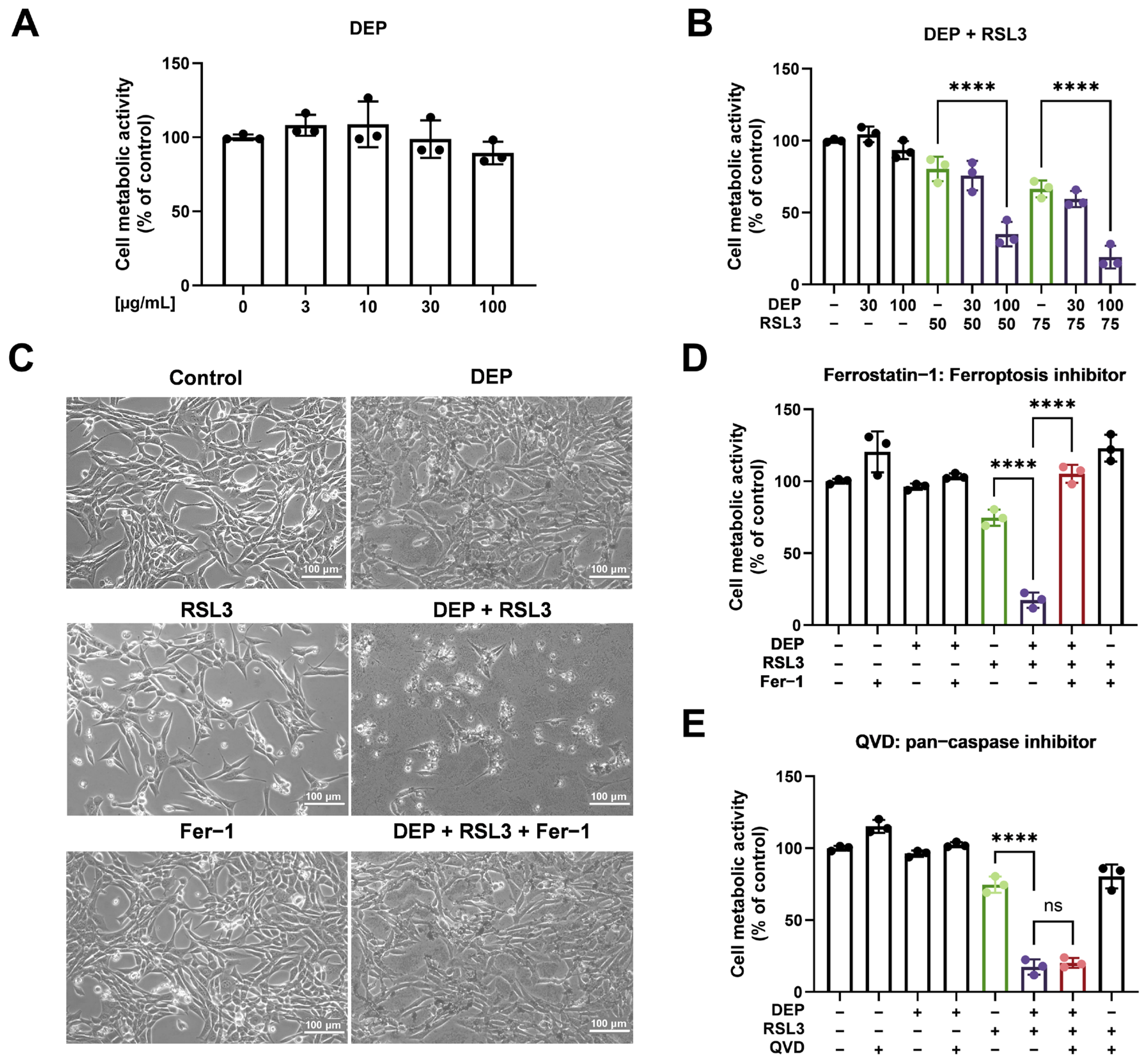
3.1. DEP Sensitizes RSL3-Induced HT22 Ferroptotic Cell Death
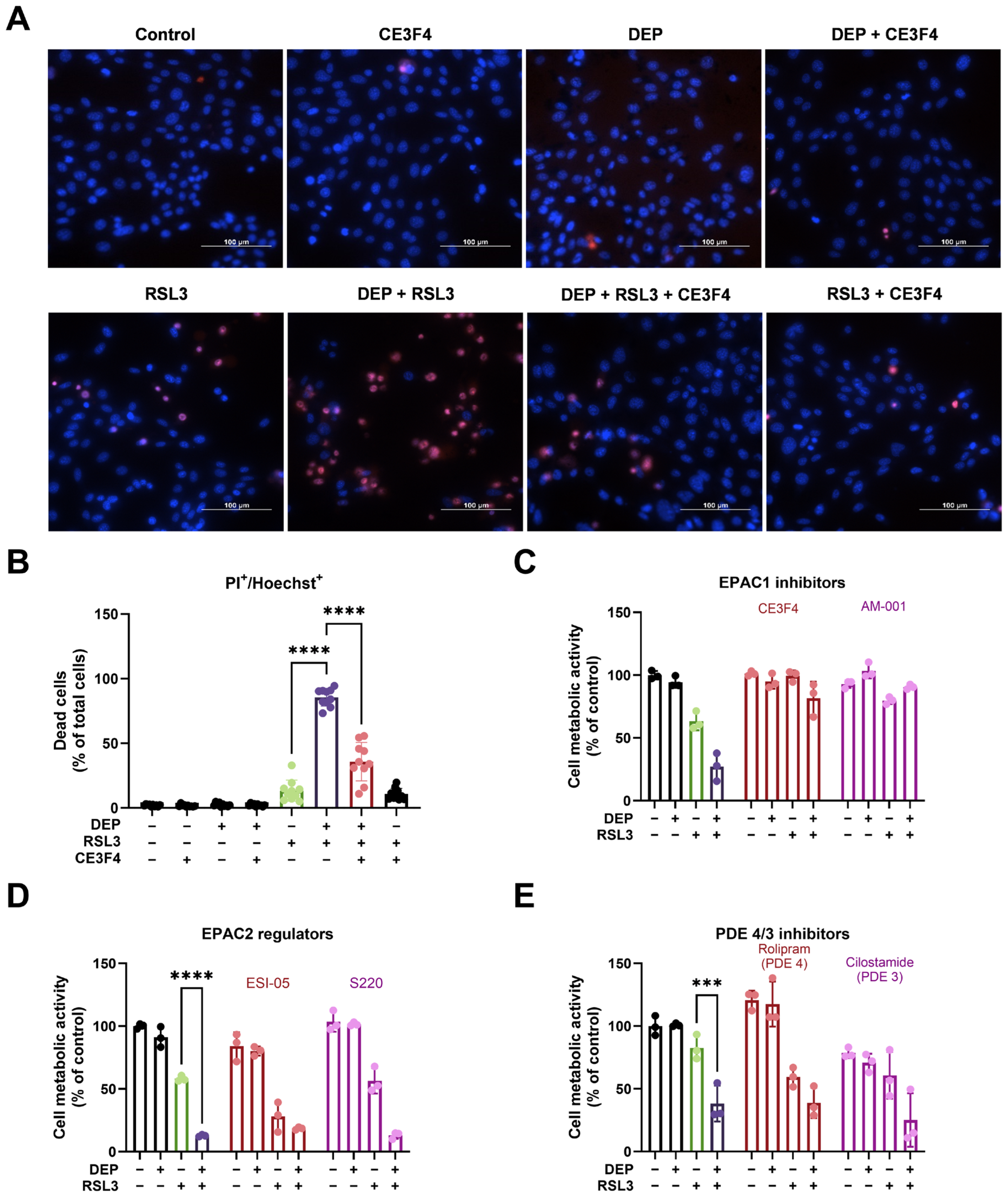
3.2. DEP and RSL3 Induced EPAC1-Dependent HT22 Cell Death
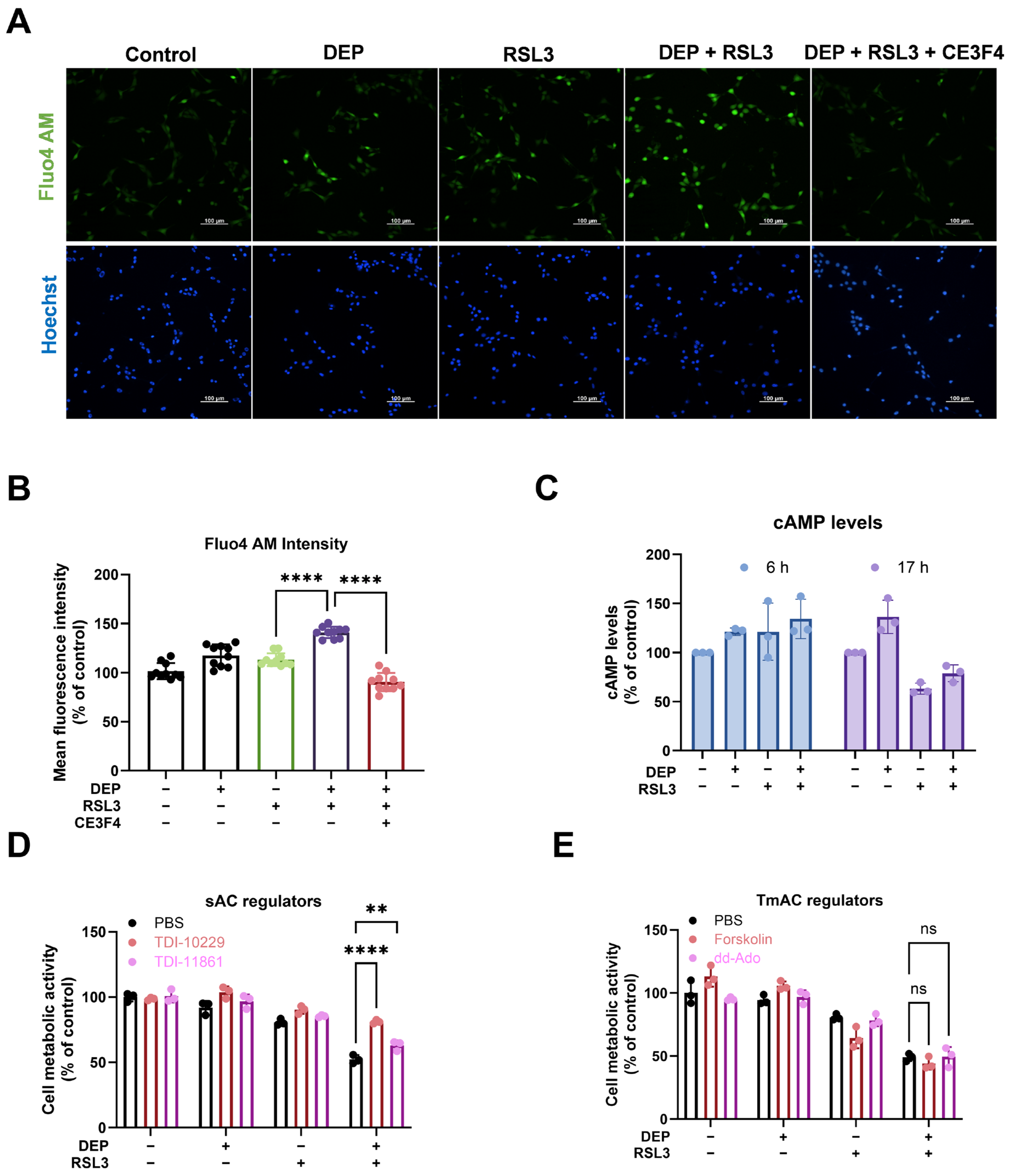
3.3. DEP and RSL3 Combined Exposure Increase Ca2+ and Induces sAC Activation
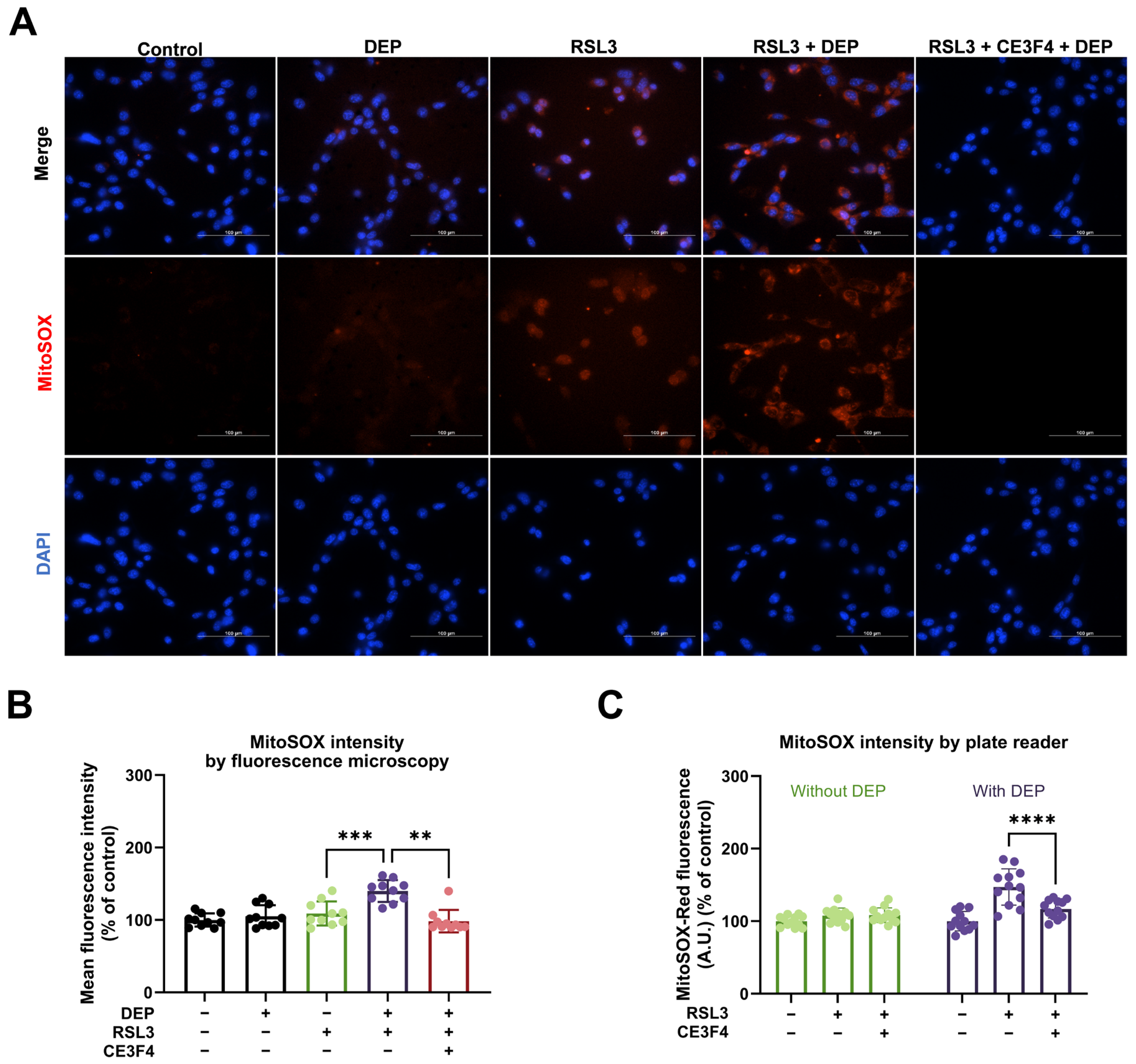
3.4. Combined Exposure of DEP and RSL3 Increases Mitochondrial ROS
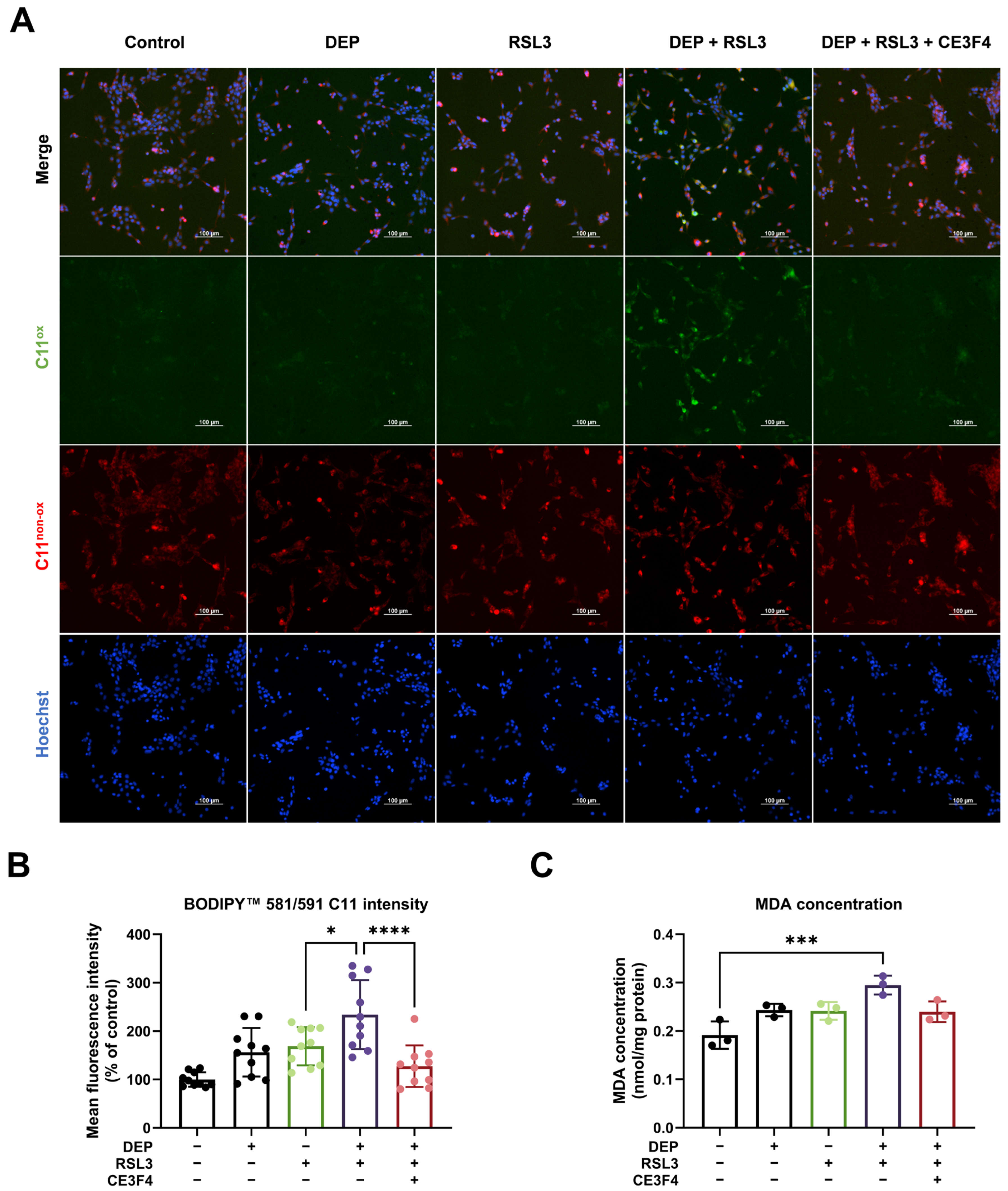
3.5. Combined Exposure to DEP and RSL3-Induced Lipid Peroxidation
4. Discussion
5. Conclusions
Supplementary Materials
Author Contributions
Funding
Institutional Review Board Statement
Informed Consent Statement
Data Availability Statement
Acknowledgments
Conflicts of Interest
Abbreviations
| AC | adenylyl cyclase |
| AD | Alzheimer’s disease |
| ATP | adenosine triphosphate |
| Ca2+ | calcium ion |
| cAMP | cyclic adenosine monophosphate |
| CNS | central nervous system |
| Cys | cysteine |
| DEP | diesel exhaust particles |
| EPAC | exchange protein directly activated by cAMP |
| Glu | glutamate |
| GPX4 | glutathione peroxidase 4 |
| GSH | glutathione |
| HBSS | Hanks’ balanced salt solution |
| HCO3− | bicarbonate |
| LC-MS/MS | liquid chromatography with tandem mass spectrometry |
| MDA | malondialdehyde |
| mtROS | mitochondrial ROS |
| MTT | the 3-[4,5-dimethylthiazol-2-yl]-2,5-diphenyl-2H-tetrazolium bromide |
| NIST | National Institute of Standards and Technology |
| PD | Parkinson’s disease |
| PDEs | phosphodiesterases |
| PKA | protein kinase A |
| PM | particulate matter |
| ROS | reactive oxygen species |
| RT | room temperature |
| sAC | soluble adenylyl cyclase |
| SRM | standard reference material |
| TBARS | thiobarbituric acid reactive substances |
| TmAC | transmembrane adenylyl cyclases |
| WHO | World Health Organization |
References
- World Health Organization. Ambient (Outdoor) Air Pollution. Available online: https://www.who.int/news-room/fact-sheets/detail/ambient-(outdoor)-air-quality-and-health (accessed on 22 September 2025).
- Health Effects Institute. State of Global Air 2025. Available online: https://www.stateofglobalair.org/resources/report/state-global-air-report-2025 (accessed on 10 March 2026).
- World Health Organization. 7 Million Premature Deaths Annually Linked to Air Pollution. Available online: https://www.who.int/news/item/25-03-2014-7-million-premature-deaths-annually-linked-to-air-pollution (accessed on 25 March 2026).
- Wyzga, R.E.; Rohr, A.C. Long-term particulate matter exposure: Attributing health effects to individual PM components. J. Air Waste Manag. Assoc. 2015, 65, 523–543. [Google Scholar] [CrossRef] [PubMed]
- Manzano-Covarrubias, A.L.; Yan, H.; Luu, M.D.A.; Gadjdjoe, P.S.; Dolga, A.M.; Schmidt, M. Unravelling the signaling power of pollutants. Trends Pharmacol. Sci. 2023, 44, 917–933. [Google Scholar] [CrossRef]
- Vilas-Boas, V.; Chatterjee, N.; Carvalho, A.; Alfaro-Moreno, E. Particulate matter-induced oxidative stress—Mechanistic insights and antioxidant approaches reported in in vitro studies. Environ. Toxicol. Pharmacol. 2024, 110, 104529. [Google Scholar] [CrossRef] [PubMed]
- Oberdörster, G.; Sharp, Z.; Atudorei, V.; Elder, A.; Gelein, R.; Kreyling, W.; Cox, C. Translocation of inhaled ultrafine particles to the brain. Inhal. Toxicol. 2004, 16, 437–445. [Google Scholar] [CrossRef]
- Maher, B.A.; Ahmed, I.A.M.; Karloukovski, V.; MacLaren, D.A.; Foulds, P.G.; Allsop, D.; Mann, D.M.A.; Torres-Jardón, R.; Calderon-Garciduenas, L. Magnetite pollution nanoparticles in the human brain. Proc. Natl. Acad. Sci. USA 2016, 113, 10797–10801. [Google Scholar] [CrossRef]
- Arias-Pérez, R.D.; Taborda, N.A.; Gómez, D.M.; Narvaez, J.F.; Porras, J.; Hernandez, J.C. Inflammatory effects of particulate matter air pollution. Environ. Sci. Pollut. Res. Int. 2020, 27, 42390–42404. [Google Scholar] [CrossRef]
- Lee, J.; Weerasinghe-Mudiyanselage, P.D.E.; Kim, B.; Kang, S.; Kim, J.-S.; Moon, C. Particulate matter exposure and neurodegenerative diseases: A comprehensive update on toxicity and mechanisms. Ecotoxicol. Environ. Saf. 2023, 266, 115565. [Google Scholar] [CrossRef] [PubMed]
- Sahu, B.; Mackos, A.R.; Floden, A.M.; Wold, L.E.; Combs, C.K. Particulate matter exposure exacerbates amyloid-β plaque deposition and gliosis in APP/PS1 mice. J. Alzheimer’s Dis. 2021, 80, 761–774. [Google Scholar] [CrossRef]
- Yuan, X.; Yang, Y.; Liu, C.; Tian, Y.; Xia, D.; Liu, Z.; Pan, L.; Xiong, M.; Xiong, J.; Meng, L. Fine particulate matter triggers α-Synuclein fibrillization and parkinson-like neurodegeneration. Mov. Disord. 2022, 37, 1817–1830. [Google Scholar] [CrossRef]
- Maher, P.; van Leyen, K.; Dey, P.N.; Honrath, B.; Dolga, A.; Methner, A. The role of Ca2+ in cell death caused by oxidative glutamate toxicity and ferroptosis. Cell Calcium 2018, 70, 47–55. [Google Scholar] [CrossRef]
- Yang, L.; Cai, X.; Li, R. Ferroptosis induced by pollutants: An emerging mechanism in environmental toxicology. Environ. Sci. Technol. 2024, 58, 2166–2184. [Google Scholar] [CrossRef]
- Guo, C.; Lyu, Y.; Xia, S.; Ren, X.; Li, Z.; Tian, F.; Zheng, J. Organic extracts in PM2.5 are the major triggers to induce ferroptosis in SH-SY5Y cells. Ecotoxicol. Environ. Saf. 2023, 249, 114350. [Google Scholar] [CrossRef]
- Zhang, H.; Liu, Y.; Liu, J.; Chen, J.; Wang, J.; Hua, H.; Jiang, Y. cAMP-PKA/EPAC signaling and cancer: The interplay in tumor microenvironment. J. Hematol. Oncol. 2024, 17, 5. [Google Scholar] [CrossRef]
- Lee, K. Epac: New emerging cAMP-binding protein. BMB Rep. 2021, 54, 149–156. [Google Scholar] [CrossRef] [PubMed]
- Pan, Y.; Liu, J.; Ren, J.; Luo, Y.; Sun, X. Epac: A promising therapeutic target for vascular diseases: A review. Front. Pharmacol. 2022, 13, 929152. [Google Scholar] [CrossRef]
- McPhee, I.; Gibson, L.; Kewney, J.; Darroch, C.; Stevens, P.; Spinks, D.; Cooreman, A.; MacKenzie, S. Cyclic nucleotide signalling: A molecular approach to drug discovery for Alzheimer’s disease. Biochem. Soc. Trans. 2005, 33, 1330–1332. [Google Scholar] [CrossRef]
- Wang, C.; Gu, Y.; Li, G.W.; Huang, L.Y. A critical role of the cAMP sensor Epac in switching protein kinase signalling in prostaglandin E2-induced potentiation of P2X3 receptor currents in inflamed rats. J. Physiol. 2007, 584, 191–203. [Google Scholar] [CrossRef] [PubMed]
- Zhang, T.; Musheshe, N.; van der Veen, C.H.J.T.M.; Kessels, H.W.; Dolga, A.; De Deyn, P.; Eisel, U.; Schmidt, M. The expression of Epac2 and GluA3 in an Alzheimer’s disease experimental model and postmortem patient samples. Biomedicines 2023, 11, 2096. [Google Scholar] [CrossRef] [PubMed]
- Zhang, T.; Dolga, A.M.; Eisel, U.L.M.; Schmidt, M. Novel crosstalk mechanisms between GluA3 and Epac2 in synaptic plasticity and memory in Alzheimer’s disease. Neurobiol. Dis. 2024, 191, 106389. [Google Scholar] [CrossRef]
- Suzuki, S.; Yokoyama, U.; Abe, T.; Kiyonari, H.; Yamashita, N.; Kato, Y.; Kurotani, R.; Sato, M.; Okumura, S.; Ishikawa, Y. Differential roles of Epac in regulating cell death in neuronal and myocardial cells. J. Biol. Chem. 2010, 285, 24248–24259. [Google Scholar] [CrossRef] [PubMed]
- Sarkar, S.; Ravikumar, B.; Floto, R.A.; Rubinsztein, D.C. Rapamycin and mTOR-independent autophagy inducers ameliorate toxicity of polyglutamine-expanded huntingtin and related proteinopathies. Cell Death Differ. 2009, 16, 46–56. [Google Scholar] [CrossRef] [PubMed]
- Musheshe, N.; Oun, A.; Sabogal-Guáqueta, A.M.; Trombetta-Lima, M.; Mitchel, S.C.; Adzemovic, A.; Speek, O.; Morra, F.; van der Veen, C.; Lezoualc’h, F.; et al. Pharmacological inhibition of Epac1 averts ferroptosis cell death by preserving mitochondrial integrity. Antioxidants 2022, 11, 314. [Google Scholar] [CrossRef]
- Devasani, K.; Yao, Y. Expression and functions of adenylyl cyclases in the CNS. Fluids Barriers CNS 2022, 19, 23. [Google Scholar] [CrossRef] [PubMed]
- Wiggins, S.V.; Steegborn, C.; Levin, L.R.; Buck, J. Pharmacological modulation of the CO2/HCO3−/pH-, calcium-, and ATP-sensing soluble adenylyl cyclase. Pharmacol. Ther. 2018, 190, 173–186. [Google Scholar] [CrossRef]
- Kosuru, R.; Chrzanowska, M. Integration of Rap1 and calcium signaling. Int. J. Mol. Sci. 2020, 21, 1616. [Google Scholar] [CrossRef]
- Block, M.L.; Wu, X.; Pei, Z.; Li, G.; Wang, T.; Qin, L.; Wilson, B.; Yang, J.; Hong, J.S.; Veronesi, B. Nanometer size diesel exhaust particles are selectively toxic to dopaminergic neurons: The role of microglia, phagocytosis, and NADPH oxidase. FASEB J. 2004, 18, 1618–1620. [Google Scholar] [CrossRef] [PubMed]
- Gillespie, P.; Tajuba, J.; Lippmann, M.; Chen, L.C.; Veronesi, B. Particulate matter neurotoxicity in culture is size-dependent. Neurotoxicology 2013, 36, 112–117. [Google Scholar] [CrossRef]
- Yan, H.; Zhang, L.; Bergsma, D.P.; Gadjdjoe, P.S.; Tosato, A.; Rahman, M.S.; Mulder, K.; van Trigt, J.; Rafie, K.; Mol-van der Veen, C.H.T.J.; et al. Exposure to diesel exhaust particles accelerated neuronal cell death in xenoferroptosis-susceptible cells. J. Environ. Sci. 2026, 163, 22–36. [Google Scholar] [CrossRef]
- National Institute of Standards and Technology. Certificate of Analysis: Standard Reference Material 2975 Diesel Particulate Matter (Industrial Forklift); U.S. Department of Commerce: Gaithersburg, MD, USA, 2021.
- Park, S.Y.; An, K.S.; Lee, B.; Kang, J.-H.; Jung, H.J.; Kim, M.W.; Ryu, H.Y.; Shim, K.-S.; Nam, K.T.; Yoon, Y.S.; et al. Establishment of particulate matter-induced lung injury model in mouse. Lab. Anim. Res. 2021, 37, 20. [Google Scholar] [CrossRef]
- Bihari, P.; Vippola, M.; Schultes, S.; Praetner, M.; Khandoga, A.G.; Reichel, C.A.; Coester, C.; Tuomi, T.; Rehberg, M.; Krombach, F. Optimized dispersion of nanoparticles for biological in vitro and in vivo studies. Part. Fibre Toxicol. 2008, 5, 14. [Google Scholar] [CrossRef]
- Ramgolam, K.; Favez, O.; Cachier, H.; Gaudichet, A.; Marano, F.; Martinon, L.; Baeza-Squiban, A. Size-partitioning of an urban aerosol to identify particle determinants involved in the proinflammatory response induced in airway epithelial cells. Part. Fibre Toxicol. 2009, 6, 10. [Google Scholar] [CrossRef]
- Chen, T.; Majerníková, N.; Marmolejo-Garza, A.; Trombetta-Lima, M.; Sabogal-Guáqueta, A.M.; Zhang, Y.; Ten Kate, R.; Zuidema, M.; Mulder, P.P.M.F.A.; den Dunnen, W.; et al. Mitochondrial transplantation rescues neuronal cells from ferroptosis. Free Radic. Biol. Med. 2023, 208, 62–72. [Google Scholar] [CrossRef] [PubMed]
- Richter, M.; Nickel, C.; Apel, L.; Kaas, A.; Dodel, R.; Culmsee, C.; Dolga, A.M. SK channel activation modulates mitochondrial respiration and attenuates neuronal HT-22 cell damage induced by H2O2. Neurochem. Int. 2015, 81, 63–75. [Google Scholar] [CrossRef] [PubMed]
- Li, N.; Hao, M.; Phalen, R.F.; Hinds, W.C.; Nel, A.E. Particulate air pollutants and asthma: A paradigm for the role of oxidative stress in PM-induced adverse health effects. Clin. Immunol. 2003, 109, 250–265. [Google Scholar] [CrossRef]
- Kreyling, W.G.; Semmler-Behnke, M.; Seitz, J.; Scymczak, W.; Wenk, A.; Mayer, P.; Takenaka, S.; Oberdörster, G. Size dependence of the translocation of inhaled iridium and carbon nanoparticle aggregates from the lung of rats to the blood and secondary target organs. Inhal. Toxicol. 2009, 21, 55–60. [Google Scholar] [CrossRef]
- Wang, Y.; Zhang, M.; Li, Z.; Yue, J.; Xu, M.; Zhang, Y.; Yung, K.K.L.; Li, R. Fine particulate matter induces mitochondrial dysfunction and oxidative stress in human SH-SY5Y cells. Chemosphere 2019, 218, 577–588. [Google Scholar] [CrossRef] [PubMed]
- Wei, M.; Bao, G.; Li, S.; Yang, Z.; Cheng, C.; Le, W. PM2.5 exposure triggers cell death through lysosomal membrane permeabilization and leads to ferroptosis insensitivity via the autophagy dysfunction/p62-KEAP1-NRF2 activation in neuronal cells. Ecotoxicol. Environ. Saf. 2022, 248, 114333. [Google Scholar] [CrossRef]
- Dawar, S.; Benitez, M.C.; Lim, Y.; Dite, T.A.; Yousef, J.M.; Thio, N.; Garciaz, S.; Jackson, T.D.; Milne, J.V.; Dagley, L.F.; et al. Caspase-2 protects against ferroptotic cell death. Cell Death Dis. 2024, 15, 182. [Google Scholar] [CrossRef]
- Courilleau, D.; Bisserier, M.; Jullian, J.C.; Lucas, A.; Bouyssou, P.; Fischmeister, R.; Blondeau, J.P.; Lezoualc’h, F. Identification of a tetrahydroquinoline analog as a pharmacological inhibitor of the cAMP-binding protein. Epac. J. Biol. Chem. 2012, 287, 44192–44202. [Google Scholar] [CrossRef]
- Laudette, M.; Coluccia, A.; Sainte-Marie, Y.; Solari, A.; Fazal, L.; Sicard, P.; Silvestri, R.; Mialet-Perez, J.; Pons, S.; Ghaleh, B.; et al. Identification of a pharmacological inhibitor of Epac1 that protects the heart against acute and chronic models of cardiac stress. Cardiovasc. Res. 2019, 115, 1766–1777. [Google Scholar] [CrossRef]
- Roscioni, S.S.; Kistemaker, L.E.M.; Menzen, M.H.; Elzinga, C.R.S.; Gosens, R.; Halayko, A.J.; Meurs, H.; Schmidt, M. PKA and Epac cooperate to augment bradykinin-induced interleukin-8 release from human airway smooth muscle cells. Respir. Res. 2009, 10, 88. [Google Scholar] [CrossRef]
- Zhang, L.; Yan, H.; Rahman, M.S.; Mol-van der Veen, C.H.T.J.; Covarrubias, A.M.; Rafie, K.; Pendin, D.; Schmidt, M.; Dolga, A.M. Regulation of calcium signaling prevents neuronal death mediated by NIST DEP in xenoferroptotic cell death conditions. J. Hazard. Mater. 2025, 488, 137374. [Google Scholar] [CrossRef]
- Zuo, H.; Han, B.; Poppinga, W.J.; Ringnalda, L.; Kistemaker, L.E.M.; Halayko, A.J.; Gosens, R.; Nikolaev, V.O.; Schmidt, M. Cigarette smoke up-regulates PDE3 and PDE4 to decrease cAMP in airway cells. Br. J. Pharmacol. 2018, 175, 2988–3006. [Google Scholar] [CrossRef]
- Beaumont, V.; Park, L.; Rassoulpour, A.; Dijkman, U.; Heikkinen, T.; Lehtimaki, K.; Kontkanen, O.; Al Nackkash, R.; Bates, G.P.; Gleyzes, M.; et al. The PDE1/5 inhibitor SCH-51866 does not modify disease progression in the R6/2 mouse model of Huntington’s disease. PLoS Curr. 2014, 6, ecurrents.hd.3304e87e460b4bb0dc519a29f4deccca. [Google Scholar] [CrossRef]
- Chen, J.; Tabatabaei, A.; Zook, D.; Wang, Y.; Danks, A.; Stauber, K. A surrogate analyte-based liquid chromatography-tandem mass spectrometry method for the determination of endogenous cyclic nucleotides in rat brain. J. Pharm. Biomed. Anal. 2017, 146, 361–368. [Google Scholar] [CrossRef]
- Pedrera, L.; Espiritu, R.A.; Ros, U.; Weber, J.; Schmitt, A.; Stroh, J.; Hailfinger, S.; von Karstedt, S.; García-Sáez, A.J. Ferroptotic pores induce Ca2+ fluxes and ESCRT-III activation to modulate cell death kinetics. Cell Death Differ. 2021, 28, 1644–1657. [Google Scholar] [CrossRef]
- Liang, Z.; Soriano-Castell, D.; Kepchia, D.; Duggan, B.M.; Currais, A.; Schubert, D.; Maher, P. Cannabinol inhibits oxytosis/ferroptosis by directly targeting mitochondria independently of cannabinoid receptors. Free Radic. Biol. Med. 2022, 180, 33–51, Erratum in Free Radic. Biol. Med. 2022, 184, 16. [Google Scholar] [CrossRef]
- Huang, L.; McClatchy, D.B.; Maher, P.; Liang, Z.; Diedrich, J.K.; Soriano-Castell, D.; Goldberg, J.; Shokhirev, M.; Yates, J.R., 3rd; Schubert, D.; et al. Intracellular amyloid toxicity induces oxytosis/ferroptosis regulated cell death. Cell Death Dis. 2020, 11, 828. [Google Scholar] [CrossRef] [PubMed]
- Murray, M.B.; Leak, L.B.; Lee, W.C.; Dixon, S.J. Protocol for detection of ferroptosis in cultured cells. STAR Protoc. 2023, 4, 102457. [Google Scholar] [CrossRef] [PubMed]
- Aguilar Diaz De Leon, J.; Borges, C.R. Evaluation of oxidative stress in biological samples using the thiobarbituric acid reactive substances assay. J. Vis. Exp. 2020, 159, e61122. [Google Scholar] [CrossRef] [PubMed]
- Milani, C.; Corsetto, P.A.; Farina, F.; Botto, L.; Lonati, E.; Massimino, L.; Rizzo, A.M.; Bulbarelli, A.; Palestini, P. Early evidence of stress in immortalized neurons exposed to diesel particles: The role of lipid reshaping behind oxidative stress and inflammation. Toxicology 2018, 409, 63–72. [Google Scholar] [CrossRef]
- Farina, F.; Lonati, E.; Brambilla, A.; Dal Magro, R.; Milani, C.; Botto, L.; Sancini, G.; Palestini, P.; Bulbarelli, A. Diesel exhaust particles (DEP) pre-exposure contributes to the anti-oxidant response impairment in hCMEC/D3 during post-oxygen and glucose deprivation damage. Toxicol. Lett. 2017, 274, 1–7. [Google Scholar] [CrossRef]
- Cattani-Cavalieri, I.; Trombetta-Lima, M.; Yan, H.; Manzano-Covarrubias, A.L.; Baarsma, H.A.; Oun, A.; Van Der Veen, C.H.; Oosterhout, E.; Dolga, A.M.; Ostrom, R.S.; et al. Diesel exhaust particles alter mitochondrial bioenergetics and cAMP producing capacity in human bronchial epithelial cells. Front. Toxicol. 2024, 6, 1412864. [Google Scholar] [CrossRef]
- Zhang, Y.; Shaabani, S.; Vowinkel, K.; Trombetta-Lima, M.; Sabogal-Guáqueta, A.M.; Chen, T.; Hoekstra, J.; Lembeck, J.; Schmidt, M.; Decher, N.; et al. Novel SK channel positive modulators prevent ferroptosis and excitotoxicity in neuronal cells. Biomed. Pharmacother. 2024, 171, 116163. [Google Scholar] [CrossRef]
- Yan, K.; Gao, L.N.; Cui, Y.L.; Zhang, Y.; Zhou, X. The cyclic AMP signaling pathway: Exploring targets for successful drug discovery (Review). Mol. Med. Rep. 2016, 13, 3715–3723. [Google Scholar] [CrossRef] [PubMed]
- Patten, K.T.; Valenzuela, A.E.; Wallis, C.; Berg, E.L.; Silverman, J.L.; Bein, K.J.; Wexler, A.S.; Lein, P.J. The Effects of chronic exposure to ambient traffic-related air pollution on Alzheimer’s disease phenotypes in wildtype and genetically predisposed male and female rats. Environ. Health Perspect. 2021, 129, 057005. [Google Scholar] [CrossRef]
- Cacciottolo, M.; Wang, X.; Driscoll, I.; Woodward, N.; Saffari, A.; Reyes, J.; Serre, M.L.; Vizuete, W.; Sioutas, C.; Morgan, T.E.; et al. Particulate air pollutants, APOE alleles and their contributions to cognitive impairment in older women and to amyloidogenesis in experimental models. Transl. Psychiatry 2017, 7, e1022. [Google Scholar] [CrossRef] [PubMed]
- Zheng, R.; Zhang, J.; Han, X.; Wu, Y.; Yan, J.; Song, P.; Wang, Y.; Wu, X.; Zhang, H. Particulate matter aggravates Alzheimer’s disease by activating the NLRP3 inflammasome to release ASC specks. Environ. Sci. Nano 2021, 8, 2177–2190. [Google Scholar] [CrossRef]
- Choi, D.; Lee, G.; Kim, K.H.; Bae, H. Particulate matter exacerbates the death of dopaminergic neurons in Parkinson’s disease through an inflammatory response. Int. J. Mol. Sci. 2022, 23, 6487. [Google Scholar] [CrossRef]
- Fagundes, L.S.; Fleck, A.d.S.; Zanchi, A.C.; Saldiva, P.H.N.; Rhoden, C.R. Direct contact with particulate matter increases oxidative stress in different brain structures. Inhal. Toxicol. 2015, 27, 462–467. [Google Scholar] [CrossRef]
- Dixon, S.J.; Lemberg, K.M.; Lamprecht, M.R.; Skouta, R.; Zaitsev, E.M.; Gleason, C.E.; Patel, D.N.; Bauer, A.J.; Cantley, A.M.; Yang, W.S.; et al. Ferroptosis: An iron-dependent form of nonapoptotic cell death. Cell 2012, 149, 1060–1072. [Google Scholar] [CrossRef] [PubMed]
- Bouvet, M.; Blondeau, J.P.; Lezoualc’h, F. The Epac1 Protein: Pharmacological Modulators, Cardiac Signalosome and Pathophysiology. Cells 2019, 8, 1543. [Google Scholar] [CrossRef]
- Yang, W.; Xia, F.; Mei, F.; Shi, S.; Robichaux, W.G., III; Lin, W.; Zhang, W.; Liu, H.; Cheng, X. Upregulation of Epac1 promotes pericyte loss by inducing mitochondrial fission, reactive oxygen species production, and apoptosis. Invest. Ophthalmol. Vis. Sci. 2023, 64, 34. [Google Scholar] [CrossRef] [PubMed]
- Laudette, M.; Sainte-Marie, Y.; Cousin, G.; Bergonnier, D.; Belhabib, I.; Brun, S.; Formoso, K.; Laib, L.; Tortosa, F.; Bergoglio, C.; et al. Cyclic AMP-binding protein Epac1 acts as a metabolic sensor to promote cardiomyocyte lipotoxicity. Cell Death Dis. 2021, 12, 824. [Google Scholar] [CrossRef]
- Tsalkova, T.; Mei, F.C.; Li, S.; Chepurny, O.G.; Leech, C.A.; Liu, T.; Holz, G.G.; Woods, V.L., Jr.; Cheng, X. Isoform-specific antagonists of exchange proteins directly activated by cAMP. Proc. Natl. Acad. Sci. USA 2012, 109, 18613–18618. [Google Scholar] [CrossRef]
- Schwede, F.; Bertinetti, D.; Langerijs, C.N.; Hadders, M.A.; Wienk, H.; Ellenbroek, J.H.; de Koning, E.J.; Bos, J.L.; Herberg, F.W.; Genieser, H.G.; et al. Structure-guided design of selective Epac1 and Epac2 agonists. PLoS Biol. 2015, 13, e1002038. [Google Scholar] [CrossRef]
- Zhu, J.; Mix, E.; Winblad, B. The antidepressant and antiinflammatory effects of rolipram in the central nervous system. CNS Drug Rev. 2001, 7, 387–398. [Google Scholar] [CrossRef]
- Sahu, A. Intracellular leptin-signaling pathways in hypothalamic neurons: The emerging role of phosphatidylinositol-3 kinase-phosphodiesterase-3B-cAMP pathway. Neuroendocrinology 2011, 93, 201–210. [Google Scholar] [CrossRef]
- Guan, Q.; Wang, Z.; Hu, K.; Cao, J.; Dong, Y.; Chen, Y. Melatonin ameliorates hepatic ferroptosis in NAFLD by inhibiting ER Stress via the MT2/cAMP/PKA/IRE1 signaling pathway. Int. J. Biol. Sci. 2023, 19, 3937–3950. [Google Scholar] [CrossRef]
- Zhuang, Y.; Xu, H.; Richard, S.A.; Cao, J.; Li, H.; Shen, H.; Yu, Z.; Zhang, J.; Wang, Z.; Li, X.; et al. Inhibition of EPAC2 attenuates intracerebral hemorrhage-induced secondary brain injury via the p38/BIM/Caspase-3 pathway. J. Mol. Neurosci. 2019, 67, 353–363. [Google Scholar] [CrossRef] [PubMed]
- Chang, J.C.; Go, S.; Gilglioni, E.H.; Duijst, S.; Panneman, D.M.; Rodenburg, R.J.; Li, H.L.; Huang, H.L.; Levin, L.R.; Buck, J.; et al. Soluble adenylyl cyclase regulates the cytosolic NADH/NAD+ redox state and the bioenergetic switch between glycolysis and oxidative phosphorylation. Biochim. Biophys. Acta Bioenerg. 2021, 1862, 148367. [Google Scholar] [CrossRef]
- Mayati, A.; Levoin, N.; Paris, H.; N’Diaye, M.; Courtois, A.; Uriac, P.; Lagadic-Gossmann, D.; Fardel, O.; Le Ferrec, E. Induction of intracellular calcium concentration by environmental benzo (a) pyrene involves a β2-adrenergic receptor/adenylyl cyclase/Epac-1/inositol 1, 4, 5-trisphosphate pathway in endothelial cells. J. Biol. Chem. 2012, 287, 4041–4052. [Google Scholar] [CrossRef]
- Shim, M.S.; Kim, K.-Y.; Bu, J.H.; Nam, H.S.; Jeong, S.W.; Park, T.L.; Ellisman, M.H.; Weinreb, R.N.; Ju, W.-K. Elevated intracellular cAMP exacerbates vulnerability to oxidative stress in optic nerve head astrocytes. Cell Death Dis. 2018, 9, 285. [Google Scholar] [CrossRef] [PubMed]
- Shin, S.; Hwang, S.K.; Mun, J.Y. Changes of lysosome by L-serine in rotenone-treated hippocampal neurons. Appl. Microsc. 2023, 53, 1. [Google Scholar] [CrossRef] [PubMed]
- Song, J.; Wang, T.; Hong, J.-S.; Wang, Y.; Feng, J. TFEB-dependent autophagy-lysosomal pathway is required for NRF2-driven antioxidative action in obstructive sleep apnea-induced neuronal injury. Cell. Signal. 2025, 128, 111630. [Google Scholar] [CrossRef] [PubMed]
- Lakpa, K.L.; Khan, N.; Afghah, Z.; Chen, X.; Geiger, J.D. Lysosomal Stress Response (LSR): Physiological Importance and Pathological Relevance. J. Neuroimmune Pharmacol. 2021, 16, 219–237. [Google Scholar] [CrossRef]
- Wei, H.; Chen, C.; Di, F.; Sun, C.; Wang, X.; Sun, M.; Liu, N.; Zhang, M.; Li, M.; Zhang, J.; et al. PM2.5-induced ferroptosis by Nrf2/Hmox1 signaling pathway led to inflammation in microglia. Environ. Pollut. 2024, 352, 124130. [Google Scholar] [CrossRef]


Disclaimer/Publisher’s Note: The statements, opinions and data contained in all publications are solely those of the individual author(s) and contributor(s) and not of MDPI and/or the editor(s). MDPI and/or the editor(s) disclaim responsibility for any injury to people or property resulting from any ideas, methods, instructions or products referred to in the content. |
© 2026 by the authors. Licensee MDPI, Basel, Switzerland. This article is an open access article distributed under the terms and conditions of the Creative Commons Attribution (CC BY) license.
Share and Cite
Yan, H.; Zhang, L.; Manzano-Covarrubias, A.L.; Gadjdjoe, P.S.; Land, A.; M. van der Veen, C.H.J.T.; Mitchell-Garcia, T.; Fayyaz, H.A.; Venema, M.; Åberg, C.; et al. Inhibition of EPAC1 Prevents Neuronal Death Mediated by Diesel Exhaust Particles in Ferroptotic Cell Death Conditions. Antioxidants 2026, 15, 566. https://doi.org/10.3390/antiox15050566
Yan H, Zhang L, Manzano-Covarrubias AL, Gadjdjoe PS, Land A, M. van der Veen CHJT, Mitchell-Garcia T, Fayyaz HA, Venema M, Åberg C, et al. Inhibition of EPAC1 Prevents Neuronal Death Mediated by Diesel Exhaust Particles in Ferroptotic Cell Death Conditions. Antioxidants. 2026; 15(5):566. https://doi.org/10.3390/antiox15050566
Chicago/Turabian StyleYan, Hong, Leshan Zhang, Ana L. Manzano-Covarrubias, Phoeja S. Gadjdjoe, Anja Land, Christina H. J. T. M. van der Veen, Teresa Mitchell-Garcia, Heba A. Fayyaz, Marco Venema, Christoffer Åberg, and et al. 2026. "Inhibition of EPAC1 Prevents Neuronal Death Mediated by Diesel Exhaust Particles in Ferroptotic Cell Death Conditions" Antioxidants 15, no. 5: 566. https://doi.org/10.3390/antiox15050566
APA StyleYan, H., Zhang, L., Manzano-Covarrubias, A. L., Gadjdjoe, P. S., Land, A., M. van der Veen, C. H. J. T., Mitchell-Garcia, T., Fayyaz, H. A., Venema, M., Åberg, C., van der Hart, M., Lezoualc’h, F., Cheng, X., Dolga, A. M., & Schmidt, M. (2026). Inhibition of EPAC1 Prevents Neuronal Death Mediated by Diesel Exhaust Particles in Ferroptotic Cell Death Conditions. Antioxidants, 15(5), 566. https://doi.org/10.3390/antiox15050566